Breaking News
Performance-based incentives for EPFO managers in works


Performance-based incentives for EPFO managers in works

NEW DELHI: The Employees’ Provident Fund Organisation (EPFO) is examining a proposal to introduce ‘performance-linked incentives’ for its fund managers, which will see it allocate more funds to those who give better returns. This is part of the new benchmark methodology being developed for debt investments, officials told TOI. It is also assessing benchmarks for the Employees’ Provident Fund (EPF) and Employees’ Pension Scheme (EPS), as the latter has a substantially longer investment horizon. “In the earlier benchmark, the portfolio yield of a fund manager was a tenor-weighted yield. In the new benchmark, the tenor has been separated from the portfolio yield. Also, a clause has been added that the allocation of the portfolio will vary according to their performance,” an official said. The Investment Committee (IC) of the EPFO, which manages assets worth Rs 30 lakh crore, is expected to deliberate and examine the available options at an upcoming meeting on Feb 10, weeks before it is slated to announce the annual interest rate for its nearly 30 crore members for the financial year ending March 31. Besides, in previous committee meetings, consultant Crisil was asked to assess the feasibility of investing in emerging, sunrise sectors such as rare earths, railways and defence, along with examining yields of sectoral, factor and style-based indices. Some of the sectoral indices evaluated by Crisil include those tracking banking and financial services, IT, global indices, and FMCG. It also assessed indices that track momentum stocks, value stocks, low volatility stocks, and ranked some of them on the basis of their risk-adjusted returns. These proposals are part of a wider consultation process underway in the retirement fund body as it is also looking to diversify its equity investments beyond exchange traded funds tracking the benchmark NSE Nifty and BSE sensex indices, in a bid to earn greater income as it is announcing higher annual returns than prevailing yields on govt bonds in recent years.


Source link

Tariff-ied? No more! Exporters look to encash duty advantage


Tariff-ied? No more! Exporters look to encash duty advantage

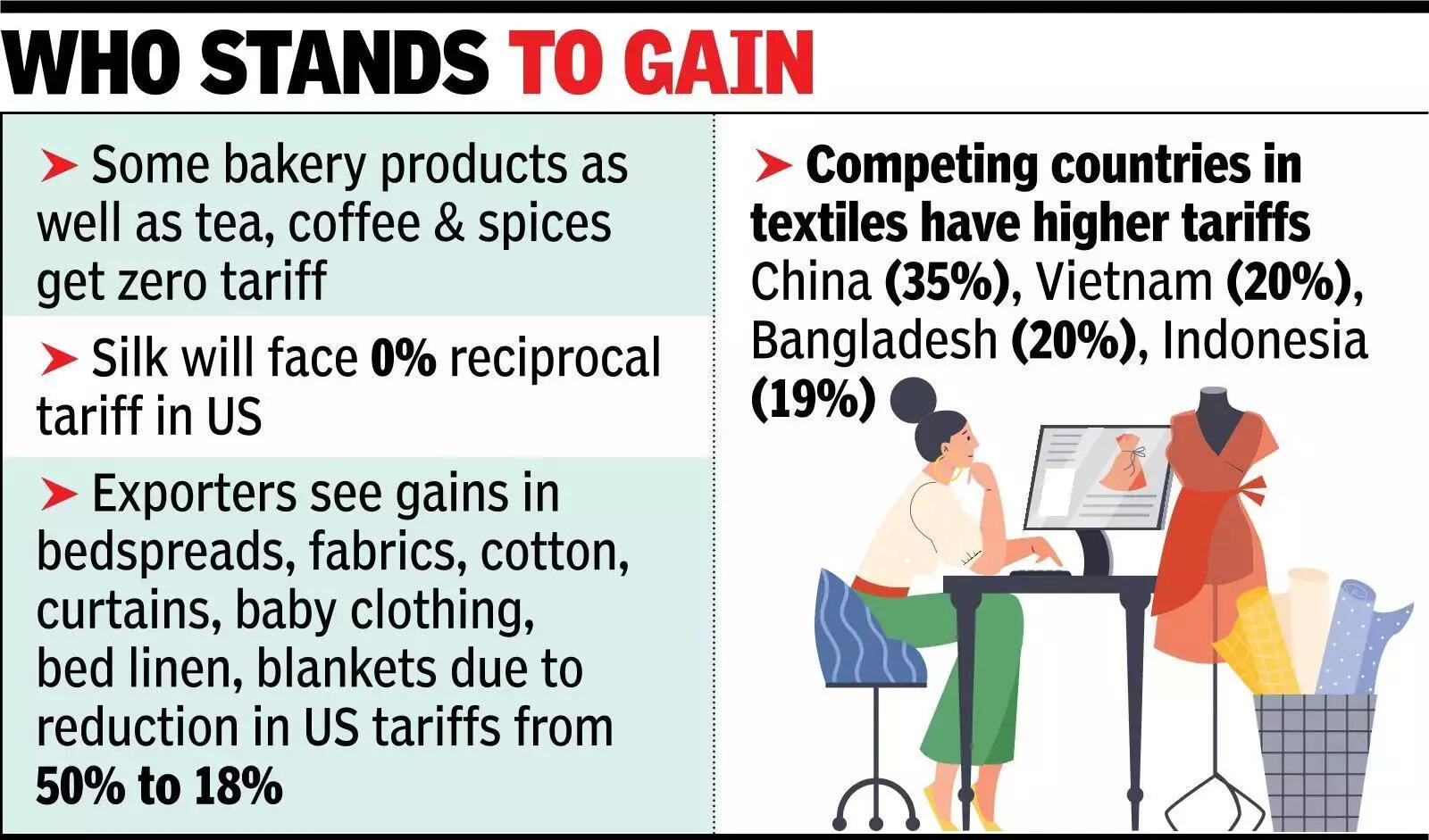
NEW DELHI: Mrs. Bectors Food Specialities’ new plant in Indore had just started production for some American buyers when the US announced 50% tariffs on Indian imports. With the trade deal likely to be implemented soon, the company is now hoping that things will slowly fall into place. “Under development business had come to a standstill, but the project will now start immediately,” said Anoop Bector, the company’s MD, adding that he now intends to work on a distribution network in the US and also open warehouses. “We are hoping to treble our exports to the US in two years,” he said. Mrs. Bectors Food Specialities, the makers of Cremica and English Oven brands of biscuits, exports biscuits and cookies worth around Rs 100 crore to American retailers and had to take a hit of around 5-7% by offering discount to offset the impact of tariffs. While the US is going to offer duty-free access to some Indian bakery products, Bector is waiting for the list.

Tariff-ied_ No more! Exporters look to encash duty advantage.

Tea growers too are celebrating duty-free access, more so because of the tariff advantage compared to competitors from Sri Lanka, Kenya and China. Sri Lanka was hit due to their ‘tea-for-oil’ barter deal with Iran, resulting in a 25% tariff penalty. Kenya, which enjoyed duty-free access under AGOA, now has to contend with 10% baseline reciprocal tariff. “The ‘Golden Letter’ exemption restores the price competitiveness of Indian Orthodox and specialty teas against rivals like Kenya and Sri Lanka. By securing zero-duty access, while Sri Lanka is trapped at 25% and Kenya at 10%, India has effectively become the lowest-cost premium producer for the North American market. Furthermore, with Chinese tea facing even steeper tariffs of 33-35%, India has a historic window. While we currently produce lower volumes of green and oolong teas, this tariff advantage provides the perfect incentive for Indian estates to diversify and become the lead specialty supplier to the US,” said Ajay Jalan, MD of Mokalbari Kanoi Tea Estate. A lot of exporters will get clarity when American buyers return to offices on Monday, especially those which were offering steep discounts and have goods in transit. Texport Industries CMD Narendra Goenka wants to know the fate of discounts on goods in transit or ones that are ready to be dispatched. Most players in the textiles business were offering 15-18% discount to retain buyers. “With tension in Iran rising, some of the buyers were getting even more anxious but we somehow managed to hold on to most of them, although we did lose some order, which we will have to work on,” said Goenka. Most textiles players have taken a hit on their bottom lines due to the hefty discount so that they could retain buyers and did not have to retrench too many workers. “This will be the first time in several years that the balance sheet will show a loss. We were doing minimum business, but now volumes will come in a big way,” says Puran Dawar, an Agra-based leather footwear exporter. In Tiruppur, K M Knitwear CMD KM Subramanian is seeing enquiries from buyers and is hoping to reach last year’s level of exports after losing nearly half the US orders in the last few months due to tariffs. But he is unsure if the buyers are going to adjust the orders. “It is a buyer’s market, we may seek compensation in the new orders through 3-4% price increase,” he said over the phone. With the joint statement signed over the weekend, companies have much greater clarity in talking to their buyers in the US. The reduction in additional tariffs from 50% to 18% is expected to ensure that many factory jobs, which would have been lost as buyers moved orders out of India, are now safe.


Source link

Dhakshineswar Suresh scripts Davis Cup heroics as India stun Netherlands 3-2 | Tennis News


Dhakshineswar Suresh scripts Davis Cup heroics as India stun Netherlands 3-2
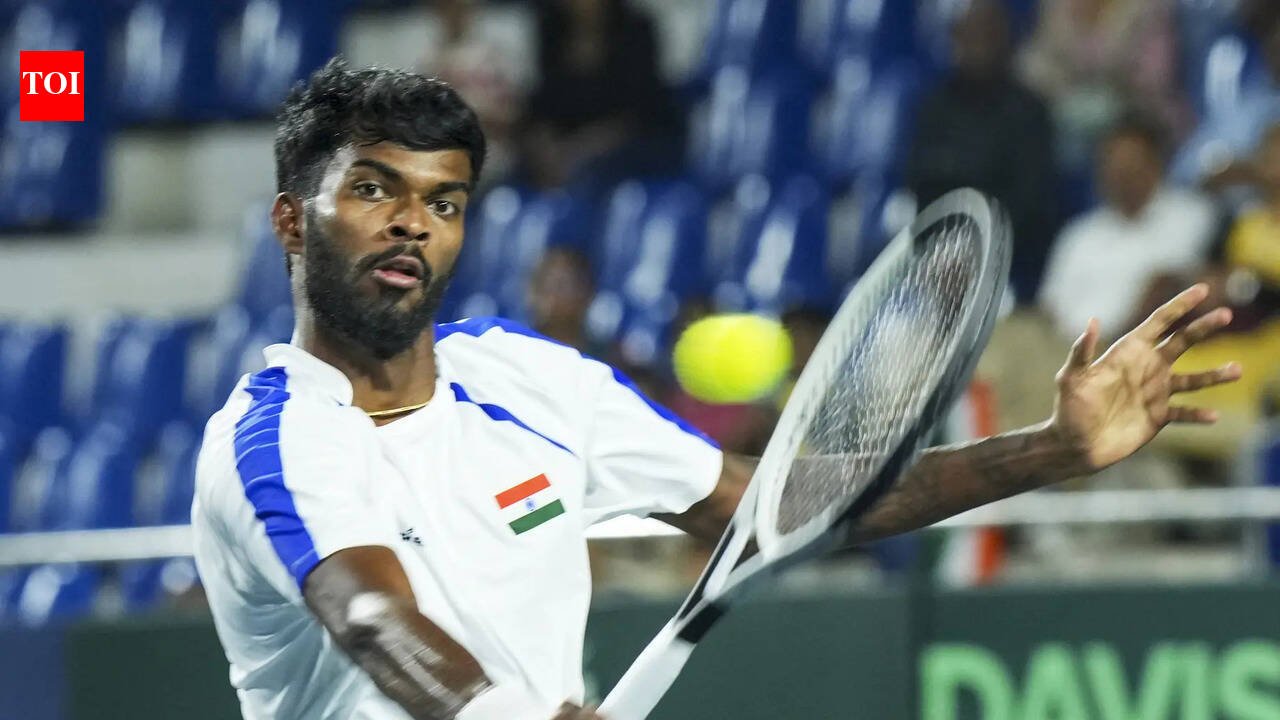
Bengaluru: India’s Dhakshineswar Suresh (PTI Photo/Shailendra Bhojak)

Dhakshineswar Suresh announced himself as India’s newest Davis Cup match-winner on Sunday, sealing a stirring 3-2 victory over the Netherlands by clinching the decisive fifth rubber and guiding the hosts into Qualifiers Round 2. In just his second Davis Cup appearance, the 25-year-old delivered a performance that will be remembered for years. Dhakshineswar won both his singles matches and partnered Yuki Bhambri to victory in the doubles, completing a rare three-win haul in a single tie for India. The feat inevitably drew comparisons with Leander Paes’ legendary heroics against Japan in 2004, when Paes single-handedly won two singles and the doubles to carry India through. More than 20 years later, Dhakshineswar produced a similarly defining moment. Ranked as low as 465, he held his nerve under immense pressure in the final rubber against Guy de Ouden, winning 6-4, 7-6 (4). As his final forehand winner landed in, Dhakshineswar collapsed onto his back before being engulfed by teammates and lifted onto their shoulders, the celebrations marking another memorable European scalp for India. India had begun the tie as underdogs but found an opening when the Netherlands arrived without their top two singles players, world number 29 Tallon Griekspoor and world number 67 Botic van de Zandschulp. The absence gave India, ranked 33 in the Davis Cup standings, a genuine opportunity and they seized it, defeating the world number six team. The win also carried historic significance. It marked the first time India have reached the second round of the Qualifiers since the revamped Davis Cup format was introduced in 2019, moving them a step closer to the elite eight-team Finals. Korea are expected to be their next opponents. The tie was delicately poised at 1-1 at the start of Sunday’s play. Dhakshineswar and Bhambri then edged a gripping doubles contest, outlasting David Pel and Sander Arends 7-6 (0), 3-6, 7-6 (1) to give India a 2-1 lead. The match lasted nearly three hours and swung repeatedly before the home pair held their nerve in both tie-breaks. Sumit Nagal had a chance to close out the tie in the first reverse singles but could not capitalise. After taking the opening set, he went down 7-5, 1-6, 4-6 to world number 88 Jesper de Jong in a physically draining contest that stretched close to three hours. It was Nagal’s second loss of the tie, having also fallen in the opening singles. That left the responsibility squarely on Dhakshineswar, whom captain Rohit Rajpal had described as his “trump card”. Despite having already spent close to three hours on court earlier in the day in the doubles, Dhakshineswar showed no signs of fatigue as he walked out for the deciding rubber. His serve once again proved decisive. Dhakshineswar struck 15 aces and consistently dictated play behind his delivery. He earned the crucial break in the opening set in the seventh game when De Ouden committed back-to-back backhand errors. Although Dhakshineswar missed a set point in the ninth game, he regrouped immediately and sealed the set with an ace on his second chance. The second set was tighter. De Ouden fought hard to stay alive, saving a break point in the fifth game with a running forehand winner. Dhakshineswar broke again at 4-4 but then faced pressure while serving out the match, only to hold firm and force a tie-break. There, his composure and power stood out as he pulled away to close out the contest and complete a memorable win for the hosts. Earlier in the day, the doubles match had set the tone for India’s success. Rajpal’s bold decision to field Dhakshineswar in place of N Sriram Balaji for the high-stakes rubber proved inspired. The opening set was a test of patience. Bhambri’s serve came under sustained pressure, particularly in a long seventh game that featured multiple break points. Despite double faults and missed chances, the Indian pair survived, aided by Dhakshineswar’s sharp work at the net. Neither side could force a breakthrough, and the set went to a tie-break. There, the Indians suddenly surged ahead, racing to a 4-0 lead and closing it out without conceding a point, highlighted by a sharply angled passing winner from Dhakshineswar and a clean return winner from Bhambri. Momentum shifted in the second set as the Netherlands tightened up. Bhambri’s first-serve struggles returned, and the visitors secured a crucial break to level the match. The deciding set became a battle of endurance. India created several early opportunities, including a 0-40 opening on Pel’s serve, but failed to convert. Dhakshineswar then saved a break point in the next game, keeping India alive. More chances came and went before a turning point arrived when Arends took a medical timeout to receive treatment on his left hand. From that moment, his serve dipped, and the Indians finally seized control, closing out the match in the tie-break to put India within one win of victory. Dhakshineswar ensured there was no delay after that, delivering under pressure to script one of India’s most memorable Davis Cup wins in recent years.


Source link

Dalal-Steet likely to cheer trade deal progress


Dalal-Steet likely to cheer trade deal progress

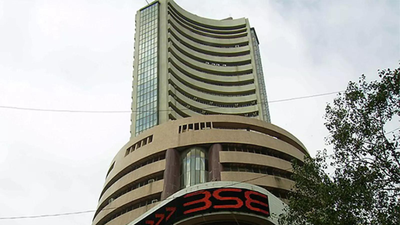
MUMBAI: With the US-India trade deal taking another major step towards closure, Dalal Street investors are expecting a positive opening for the leading indices on Monday. Gift Nifty, used by traders for short term market direction, closed 0.7% up on Saturday, which is providing confidence to investors about a higher opening for the week. On Friday, after a soft opening and then sliding in to the red zone, sensex closed 266 points up at 83,580 points. The late recovery was on the back of expectations of constructive developments relating to the India-US trade agreement.

-

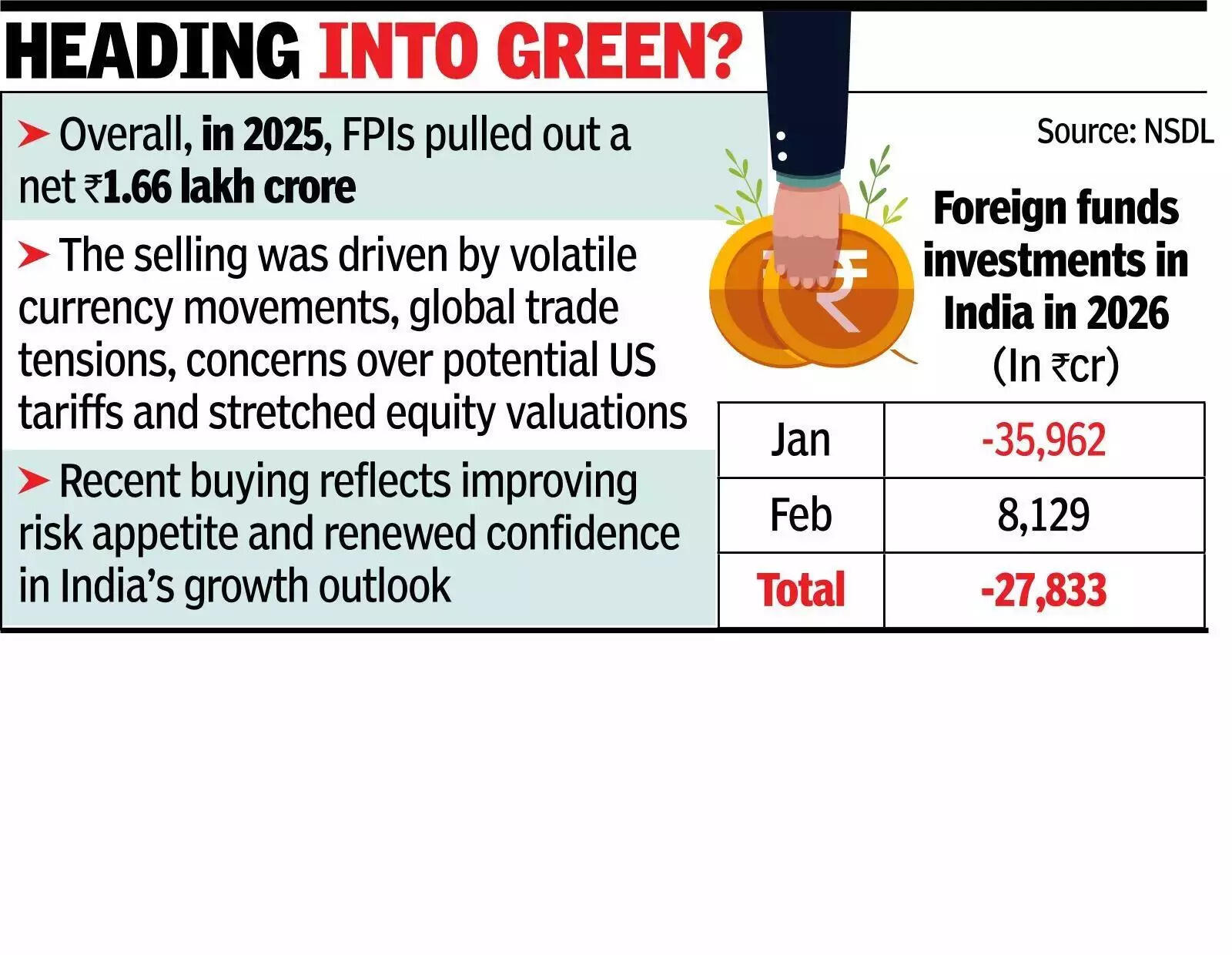
Early on Saturday, the two countries jointly came out with a statement about agreeing on some areas of bilateral trades. In addition to lower tariffs, India could also gain from higher exports to the US and more employment because of expanded exports, analysts said. This also has the potential for more foreign flows, market players said. According to VK Vijayakumar, chief investment strategist, Geojit Investments, during the past week, the Budget and the news about the India-EU trade deal, and the much-awaited India-US trade deal had a major impact on the market. “The market reacted negatively to the hike in STT on F&O trades but smartly recovered on news of the US-India trade deal.” Early signs show a marked change in foreign fund flows during the current month. During the first week of the month, net buying by foreign funds was Rs 8,129 crore, data from NSDL showed. In the previous month they had withdrawn close to Rs 36,000 crore from the market. An important factor that changed the market sentiment was the appreciation in rupee from a record low of 91.72 to the dollar to 90.30, Vijayakumar said. Even though rupee weakened again to close the week at 90.70, the currency is expected to stabilise and gradually appreciate to below 90 to the dollar by end March 2026, he said. “This has the potential to trigger more (foreign) inflows into India. However, a lot will depend on how the AI trade pans out.


Source link

Three organ donations in 24 hrs; 10 in city this year | Mumbai News


Mumbai: The city saw three organ donations in a span of 24 hours. All three donors were men.The families of a 48-year-old and a 70-year-old donated kidneys, liver, cornea and skin at Hira Mongi Hospital in Mulund and Fortis Hospital in Navi Mumbai. Another 52-year-old donated kidneys at SL Raheja Hospital in Mahim. “We wanted to donate any two organs. While there were no hurdles in it, the time taken for the process can be long. There are also consent forms that families need to fill each time. But we were told our donation helped two patients in need. That was our intent,” said his family member. With the three, the city has reported 10 donations this year. One organ donor can save up to eight lives. There were 53 organ donors last year. As per the trend, most deceased organ donations have taken place at private hospitals. A transplant surgeon told TOI, “There needs to be more effort on the part of govt hospitals to encourage organ donations. Tamil Nadu is the only state where this happens.” In 2024, one donation took place at a public facility, when BMC-run KEM Hospital performed its first heart transplant.

Banner Insert


Source link

Teen stabs four Indian students in Russia, drew Nazi symbol with victims’ blood on wall


A 15-year-old youth allegedly linked to a banned neo-Nazi organisation went on a stabbing spree at a university dormitory in Russia’s Bashkortostan Republic on Saturday, injuring at least six people, including four Indian students. The attacker reportedly shouted nationalist slogans about the Holocaust and drew a Nazi symbol using the victims’ blood.According to preliminary reports, the teenager armed with a knife entered a dormitory of the State Medical University in Ufa and attacked students living there. Eyewitnesses described scenes of panic and chaos inside the hostel. “There was blood all around,” Ren TV reported, showing footage of the injured being rushed to hospitals in ambulance vans.The Baza channel claimed the attacker was linked to extremist ideology. “He belonged to the banned NS/WP neoNazi organisation. During the frenzy of attack, he was shouting nationalist slogans about (the) Holocaust,” it said, sharing a photo of a Nazi symbol drawn on a wall with the blood of the victims.

NYC ‘Mayor’ Mamdani’s 1st Big Challenge; Vows Action After Jewish School Defaced With Nazi Swastikas

The attacker continued to resist even after police intervened. “The attacker resisted arrest, during which two police officers were stabbed. Furthermore, the suspect also inflicted bodily harm on himself,” interior ministry spokesperson Maj General Irina Volk was quoted as saying by RTVI.com webportal, as cited by PTI.In a release, the Russian Federal Health Ministry said one of the four injured is in serious condition, while three others are in moderate condition. The attacker, identified as a 15-year-old youth, has also been admitted to a local children’s hospital in serious condition, according to the Baza telegram channel.The Indian Embassy termed it an “unfortunate incident” and confirmed that “several persons including four Indian students have been injured.” It said it is in touch with Russian authorities and that officials from the Indian Consulate in Kazan are travelling to Ufa to provide assistance to the injured students.Authorities in Ufa, the capital of the Bashkortostan Republic located about 1,200 km east of Moscow, have launched a high-level probe into the incident.


Source link

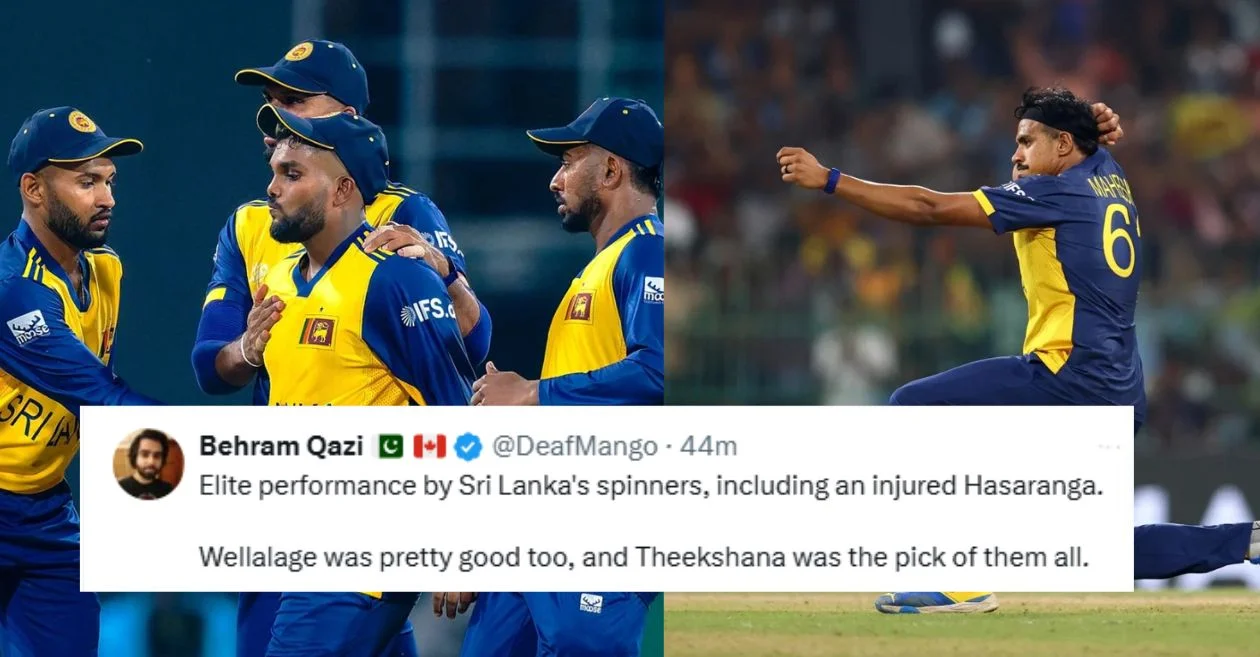
Fans react after Sri Lanka begin T20 World Cup 2026 with win over Ireland as Maheesh Theekshana and Wanindu Hasaranga star with ball


Sri Lanka opened their T20 World Cup 2026 campaign with a hard-fought 20-run victory over Ireland in Colombo. After being put in to bat, the co-hosts recovered from a mid-innings slump to post a competitive 163/6, thanks to vital half-centuries from Kusal Mendis and Kamindu Mendis.

Ireland’s chase looked promising at 104/2, but the introduction of Sri Lanka’s elite spin duo turned the game on its head. Maheesh Theekshana and Wanindu Hasaranga dismantled the middle order, taking three wickets apiece to trigger a dramatic collapse. Ireland eventually finished on 143/9 as the required run rate climbed out of reach in the final overs. This win marks a perfect start for the Lions in front of their home crowd, securing two crucial points in Group B.

T20 World Cup 2026: Mendis duo rescues Sri Lanka after middle-order stutter against Ireland 

The Sri Lankan innings began with high energy but quickly faced resistance from a disciplined Irish bowling attack led by Mark Adair and George Dockrell. After losing Kamil Mishara early, Pathum Nissanka and Mendis attempted to stabilize, yet Dockrell’s double strike in the middle overs left the co-hosts reeling at 86/4 by the 14th over. Just as the run rate began to stagnate, Kamindu entered and completely shifted the momentum with a blistering 44 off just 19 balls, including four boundaries and two massive sixes.

His aggression allowed Mendis to anchor the other end, eventually finishing unbeaten on 56 off 43 deliveries to guide the team to a defendable total of 163. The final flourish was particularly chaotic, as Barry McCarthy bowled a record-tying 11-ball 19th over that featured multiple wides but also the key wickets of Kamindu and captain Dasun Shanaka. Despite the inconsistencies, Sri Lanka’s late-over surge provided their bowlers with the cushion needed to apply pressure on a slowing Premadasa surface.

Also WATCH: T20 World Cup 2026: Maheesh Theekshana castles Paul Stirling with deadly yorker; unleashes iconic ‘archer’ celebration during SL vs IRE clash

T20 World Cup 2206: Spin twins Maheesh Theekshana and Wanindu Hasaranga trigger Ireland collapse

Ireland’s pursuit of 164 started with intent as Ross Adair provided a fiery start, and the partnership between Harry Tector (40) and Lorcan Tucker (21) placed them in a position of strength at 104/2. However, the game transformed in the 15th over when Hasaranga removed Tector, sparking a collapse that saw Ireland lose seven wickets for just 39 runs. Theekshana was equally lethal, removing Paul Stirling early before returning to clean up the lower middle order with his trademark mystery spin, finishing with elite figures of 3/23.

Hasaranga’s third wicket, dismissing Curtis Campher, was a personal milestone as it marked his 40th career wicket in T20 World Cups, moving him to second on the all-time list behind Shakib Al Hasan. Dushmantha Chameera and Matheesha Pathirana provided the pace support to ensure there was no late-order miracle for the visitors. By the time the final over arrived, the equation of 27 runs was too much for Dockrell and Adair to handle against Pathirana’s pinpoint yorkers.

Here’s how fans reacted: 

Also WATCH: T20 World Cup 2026: Pavan Rathnayake throws away wicket with reckless shot during SL vs IRE clash


Source link

Young J&K MLA draws praise from across the aisle for House speech | India News


Young J&K MLA draws praise from across the aisle for House speech

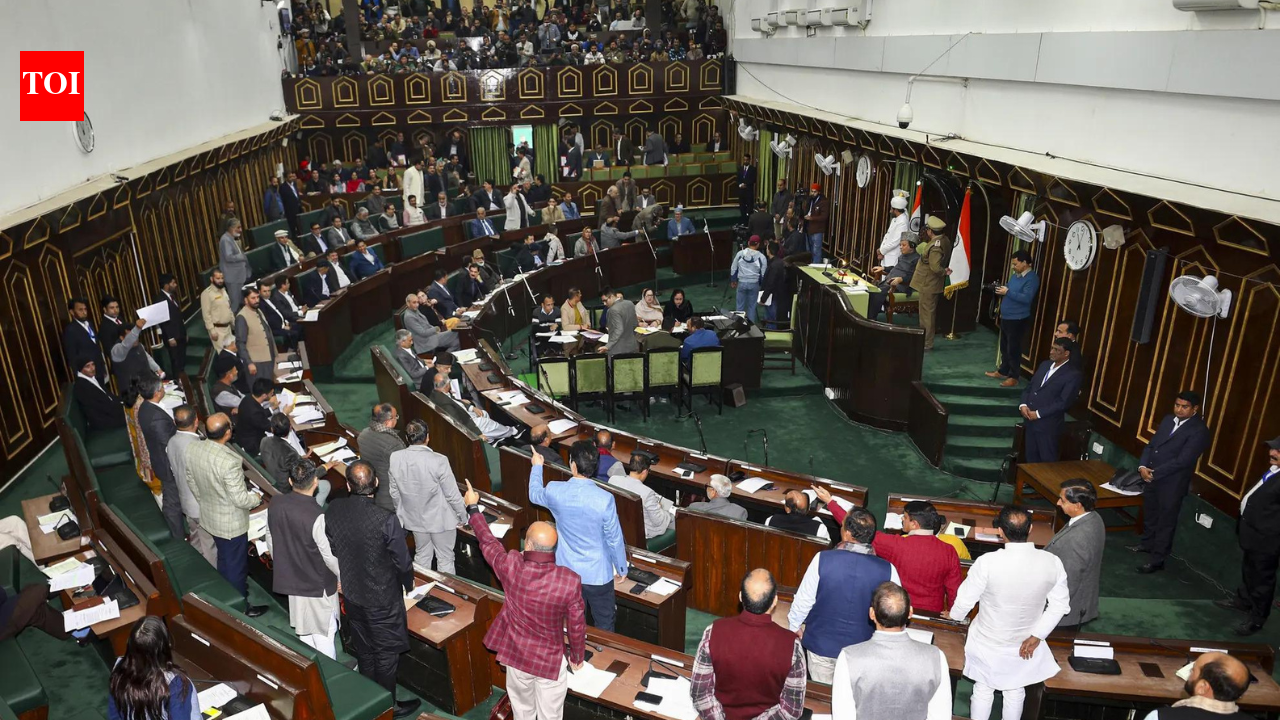
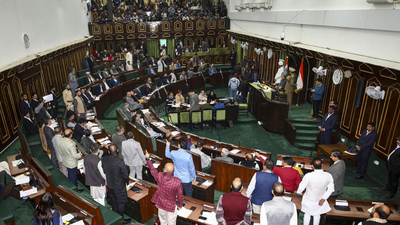
JAMMU: A young BJP legislator in J&K Saturday drew rare praise from across the political aisle with her speech in the Assembly, which she confined strictly to budgetary issues in the otherwise highly polarised House.Devyani Singh Rana, 31, is the daughter of former Nagrota MLA Devender Rana, who died in 2024 after winning the assembly election. In Oct 2025, BJP fielded Devyani from Nagrota in the bypoll, which she won. After her father’s death, Devyani had joined BJP and was appointed vice-president of the J&K BJP Yuva Morcha in Jan 2025.While governing National Conference legislators focused on J&K’s special status, BJP used the debate to highlight what it described as developmental gains after the abrogation of Article 370.Devyani, however, flagged electricity shortages, raised concerns over the union territory’s growing climate vulnerabilities, education sector and transportation as members listened to her raptly for around 12 minutes.In her speech, she deprecated Rs 271-cr reduction in disaster management, relief and rehabilitation department allocation, saying the sharp cut comes in a year that saw unprecedented and intense rainfall that devastated large parts of rural Jammu.Referring to tragedies in her constituency, she cited the death of three-year-old Mahi in a landslide and 28-year-old Sheer Khan, who drowned in a river. “These names represent the lives lost in the Jammu division,” she said, calling for stronger flood and landslide management measures.About flash floods that hit Jammu last year, Rana said, people lost their lives, bridges were damaged, roads became unsafe and houses were destroyed. “Our children were stranded at home and in colleges. Apple trucks were stuck on the Jammu–Srinagar National Highway (NH-44), and our traders suffered losses,” she said. She called for more allocation in disaster management as Jammu and Kashmir, she said, is “earthquake-prone, landslide-prone and fire-prone.Devyani also flagged under-spending in the social sectors. “If around Ra 193 crore is spent less on education, then how will the children of poor families be uplifted,” she said.She also pointed to a reduction of Rs 782.8 crore in power capital expenditure, saying it comes at a time when voltage remains unstable and transformers frequently fail.While welcoming the initiative of free bus travel for persons with disabilities, the MLA questioned its effective implementation. “Are these buses adequately equipped with ramps and access mechanisms? And when there have been documented cases of buses failing to stop even for women, what deterrent exists to ensure compliance?” she asked.As she ended her speech, members from the NC, BJP and PDP thumped their tables and crossed over to her seat to congratulate her.Devyani holds a degree in economics from the University of California. The eldest of three siblings — two sisters and a brother — she is a businesswoman who took over the management of the family business after her father’s death. “I feel humbled and very blessed by the response to my speech. We all work for the public good,” Devyani told TOI.She said since the ongoing Assembly session is the budget session, she preferred to focus on the budget only to identify problem areas that could be addressed in coming years. “I chose to speak in English because the budget across all quarters is presented and discussed in English,” she said.


Source link

Highway builders seek PM’s intervention on PPP project timelines, arbitration curbs | India News


Highway builders seek PM’s intervention on PPP project timelines, arbitration curbs

NEW DELHI: Country’s apex highway builders organisation has sought PM Narendra Modi’s intervention to review the squeezed construction timelines for big highway projects on PPP, their overall bankability and modification in dispute redressal through arbitration.The National Highways Builders Federation (NHBF), in a letter addressed to the PM, has referred to a recently floated tender for a 200-km greenfield project on Public Private Partnership (PPP) in which a two-year construction period has been set.“Considering the scale of such projects and the scope of activities involving land availability, utility shifting, major and minor structures, interchanges, safety provisions and stringent quality standards, the industry apprehends that such timelines may pose significant execution challenges, even best efforts,” NHBF said.It has cited how the Delhi-Vadodara Greenfield Expressway, despite focused attention and continuous efforts by stakeholders, is yet to be completed even after more than five years from commencement. It has urged govt to set realistic construction timelines to ensure quality and timely completion.It has also raised its concern over the recent amendments to dispute resolution provisions of PPP agreements, wherein arbitration for disputes above Rs 10 crore has been restricted. The changes have been made with reference to the finance ministry’s June 2024 circular.NHBF has said that while arbitration has been curtailed, “well-advised and financially strong participants may still bid, but disputes — if they arise — are likely to go to courts”. It said in such a scenario, even relatively small contractual issues may result in prolonged litigation, disruption to project execution and escalation of claim values, ultimately leading to higher fiscal exposure for govt, rather than faster or more efficient dispute resolution.“There is also a concern that such a framework may inadvertently encourage the emergence of entities oriented more towards litigation-driven outcomes than execution, and that even minor disputes could potentially lead to complete stalling of projects, which may not align with the original objectives of the PPP highway programme,” the highway builders body said.


Source link

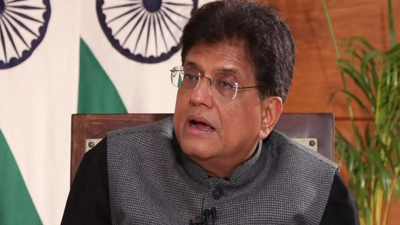
Oil imports decided by buyers, trade deal doesn’t decide: Piyush Goyal says diversification is in India’s strategic interest


‘India Has A Preference Over...’: Piyush Goyal On US Trade Deal, Trump’s ‘Russian Oil’ Claim

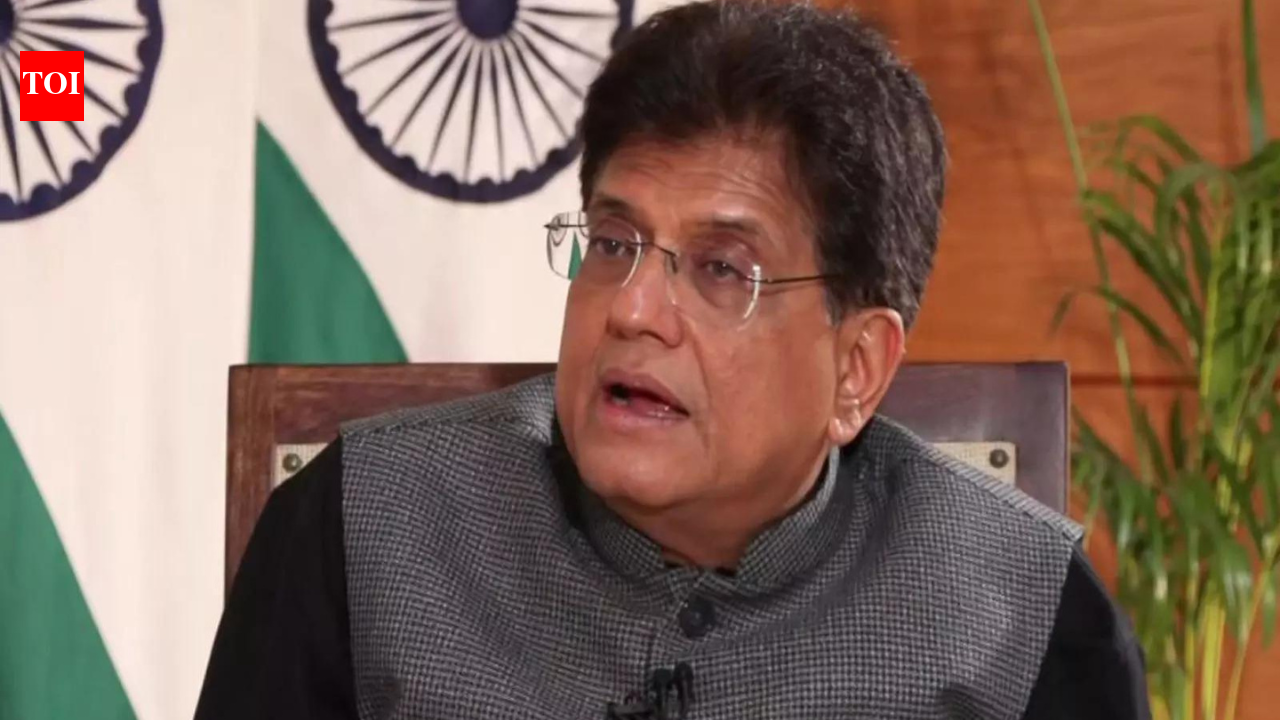
Union Commerce and industry minister Piyush Goyal said decisions related to India’s imports of Russian crude oil are taken by domestic buyers and are not dictated by the recently concluded India-US interim trade agreement framework, while stressing that diversification into energy supplies including LNG and oil is in India’s strategic interest.Speaking to ANI, Goyal addressed concerns over whether the bilateral trade framework has any bearing on India’s energy sourcing decisions.

‘India Has A Preference Over…’: Piyush Goyal On US Trade Deal, Trump’s ‘Russian Oil’ Claim

“The buying of crude oil, LNG, or LPG from the US is in India’s strategic interest as we diversify sources. But the decisions are taken by the buyers themselves. The trade deal does not decide who will buy what and from where,” Goyal said.He said the agreement is aimed at facilitating smoother trade flows and improving market access advantages for Indian exporters.“The trade deal ensures that the pathway to trade is smooth and ensures preferential access. FTAs are all about preferential access to your competition. So today, when we’ve got an 18 per cent reciprocal tariff, we have a preference over other developing nations who are usually our competition. And that’s why the free trade deal becomes very attractive,” Goyal added.On whether the trade framework influences India’s approach towards Russian oil imports, the minister said, “I don’t deal with that,” adding that such matters fall under the purview of the Ministry of External Affairs.He said ministries coordinate on broader issues, but domain-specific matters are handled by respective departments.“We all work together. But if there’s a nuance or a detail about the trade deal, obviously, if you ask, let’s say the agriculture minister, or you ask the rural development minister, or you ask the telecom minister, or you ask the foreign minister, he wouldn’t know the nuances of the trade deal. Obviously, he will direct it to me, just as I will direct the issues related to geopolitics to the foreign minister,” he added.India and the United States recently announced a framework for an Interim Agreement on reciprocal and mutually beneficial trade, reaffirming commitment to a broader Bilateral Trade Agreement launched by US President Donald Trump and Prime Minister Narendra Modi on February 13, 2025.Under the framework, India has agreed to eliminate or reduce tariffs on all US industrial goods and a wide range of agricultural and food products, including dried distillers’ grains, red sorghum for animal feed, tree nuts, fresh and processed fruits, soybean oil, wine and spirits, along with additional products.The United States will impose an 18 per cent reciprocal tariff on goods originating in India, including textiles and apparel, leather and footwear, plastic and rubber products, organic chemicals, home décor items, artisanal goods and certain machinery. The US has also indicated that reciprocal tariffs may later be removed on select products including generic pharmaceuticals, gems and diamonds, and aircraft parts, subject to successful conclusion of the Interim Agreement.India has also indicated plans to purchase USD 500 billion worth of US energy products, aircraft and aircraft parts, precious metals, technology products and coking coal over the next five years, according to the agreement framework.


Source link