Breaking News
Raj Thackeray slams Mohan Bhagwat’s ‘language as disease’ remark; says Marathi identity non-negotiable | Mumbai News


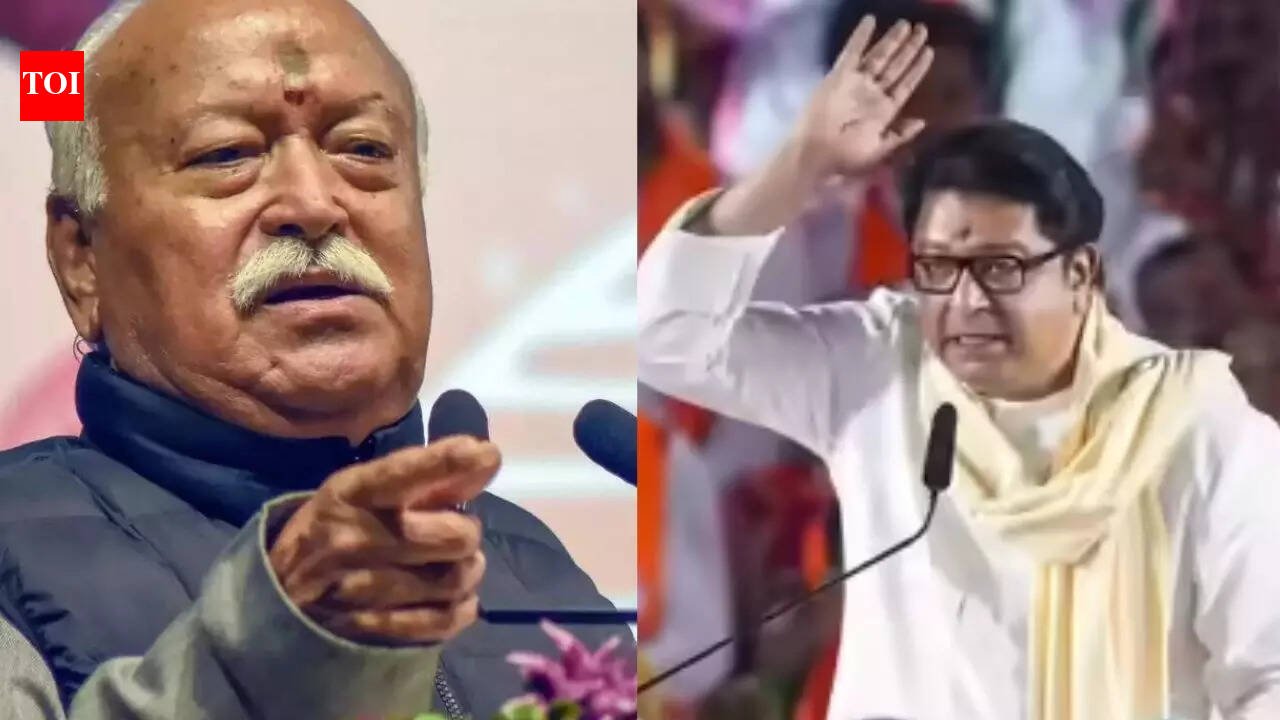
MUMBAI: Maharashtra Navnirman Sena (MNS) chief Raj Thackeray on Sunday launched a sharp attack on RSS chief Mohan Bhagwat over his recent remarks describing linguistic assertion and agitations as a “kind of disease”, calling the statement dismissive of India’s federal and linguistic realities.Reacting to Bhagwat’s comment made at an event in Mumbai on February 8, Thackeray said love for one’s language and region could not be trivialised as a disorder, arguing that strong linguistic and provincial identities exist across the country. “If love for one’s language is a disease, then this disease has spread across most Indian states,” Thackeray said in a strongly worded statement.The MNS chief questioned the presence of several prominent personalities at the RSS event, claiming their attendance stemmed not from admiration for Bhagwat but from fear of the Narendra Modi-led government. “Otherwise, why did nobody attend such dull and boring sermons earlier?” he said, asking the RSS chief to “come out of this misconception”.Thackeray said Bhagwat, given his stature, ought to be aware of the historical reasons that led to the reorganisation of states on linguistic lines. He cited examples from Karnataka, Tamil Nadu, West Bengal, Punjab and Gujarat to underline that linguistic pride and regional identity were not unique to Maharashtra.He also pointed to tensions arising when large groups of migrants move to other states, allegedly disregard local culture and language, and attempt to build political vote banks. Such behaviour, he said, naturally leads to resentment among locals. “You call this a disease?” Thackeray asked, adding that similar incidents had occurred in Gujarat when migrants from Uttar Pradesh and Bihar were driven out. “Why didn’t you go there to preach harmony?” he asked.Accusing the ruling establishment in Maharashtra of weakness, Thackeray said Bhagwat would not dare make such statements in other states. He referred to remarks made by RSS leader Bhaiyyaji Joshi before elections suggesting that Mumbai’s language was not limited to Marathi, alleging that such comments were aimed at indirectly benefiting the BJP. Thackeray questioned why the RSS, which claims to be a non-political organisation, was involving itself in such issues.While asserting respect for the Sangh’s work, Thackeray said it should refrain from taking indirect political positions. He further challenged Bhagwat to first criticise the government for what he described as the imposition of Hindi across the country, noting that Hindi is not India’s national language.Thackeray also warned against what he called the “force-fitting” of Hindutva into linguistic debates. Reiterating the MNS’s past actions, he said the party had taken stands against communal riots, loudspeakers at religious places, and noise pollution during festivals, irrespective of religion. “What is wrong is wrong — we say it plainly,” he said.He accused the RSS chief of remaining silent on what he described as chaos unfolding in the name of Hindutva across the country, citing incidents during Kanwar Yatras, rising beef exports, and politicisation of cow slaughter as examples. Thackeray questioned when the RSS would hold the government and traders accountable on these issues.Concluding his statement, Thackeray said the Marathi language and the Marathi people remained the MNS’s supreme priority. “Linguistic and regional identities will continue to exist in this country and in Maharashtra,” he said, warning that such sentiments form the party’s very reason for existence. “Whenever such situations arise, Maharashtra will rise with fury.”

Banner Insert


Source link

Happy Streets is all about fun and togetherness: Dipshikkha Nagppal | Mumbai News


The Times of India’s Happy Streets initiative transformed Chembur’s RCF Road into a vibrant, vehicle-free community hub on February 1. Residents of all ages enjoyed a morning filled with fitness, art, and shared experiences, including a Zumba session with actress Dipshikkha Nagpal and a refreshing laughter club session.

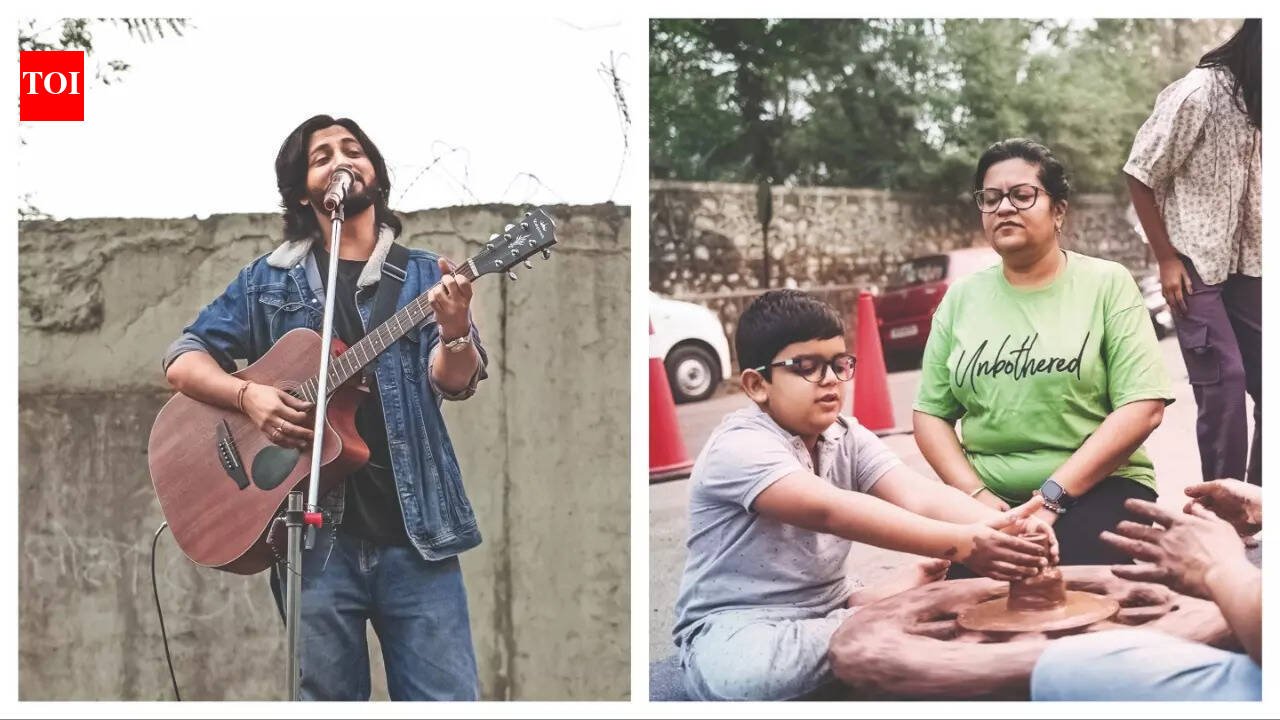
Happy Streets, an initiative by The Times of India, returned to Chembur on February 1 once again, turning RCF Road, near Chandak Highscape City into a lively, vehicle-free community space. The initiative brought together residents across age groups for a morning of fitness, art and shared experiences, reinforcing the idea of streets as inclusive public spaces meant for people.Actress Dipshikkha Nagppal joined the celebrations and participated in the activities. She danced with the crowd during the Zumba session, cheering and motivating participants. She said, “When we were growing up, there were no such activities. At Happy Streets, Sundays come alive with fun and togetherness. This is a great initiative. I had a lot of fun.”I envy everyone who gets to have such fun on Sunday mornings. Happy Streets is a great initiative and I’m glad I experienced all the fun and camaraderie between the participants— Dipshikkha NagppalRamesh Kulkarni (68), a long-time Chembur resident, who attended the laughter club, said, “Laughing openly with so many people early in the morning felt refreshing. It reminded me how simple joy can bring everyone together. I truly enjoyed myself.”From exciting games to music, pottery and Zumba sessions, the initiative saw the street transform.

Banner Insert


Source link

Minerals, militants, US-made guns: Why Donald Trump’s bet on Asim Munir is set to fail


Minerals, militants, US-made guns: Why Trump’s bet on Munir is set to fail

The blast that tore through a Shia mosque on the edge of Islamabad on Friday was not only an act of mass murder. It was also a reminder of the limits of power in a country whose generals speak confidently about security, minerals, and strategic partnerships, even as the ground beneath them remains unstable.

Driving the news

A suicide bombing at a Shia mosque on the outskirts of Islamabad that killed more than 30 has jolted Pakistan’s capital and underscored a deeper problem for the country’s leadership: the state’s inability to guarantee security even at the heart of power.

From Minerals Gift To Diplomatic Snub: Pakistan Misses Out On Key US Meet While India Takes Seat

The Islamic State claimed responsibility for the attack, which Pakistani authorities say involved a bomber who opened fire before detonating an explosive vest. Interior minister Mohsin Naqvi said four suspects- including an alleged mastermind – were arrested after raids in Peshawar and Nowshera, adding at a press conference, “Yesterday’s suicide attack has rattled us.”

A quick catch up on Munir’s minerals

Pakistan has offered Washington a glittering bargain: access to some of the world’s richest untapped deposits of copper and other critical minerals at a moment when the United States is desperate to loosen China’s grip on the global supply chain.

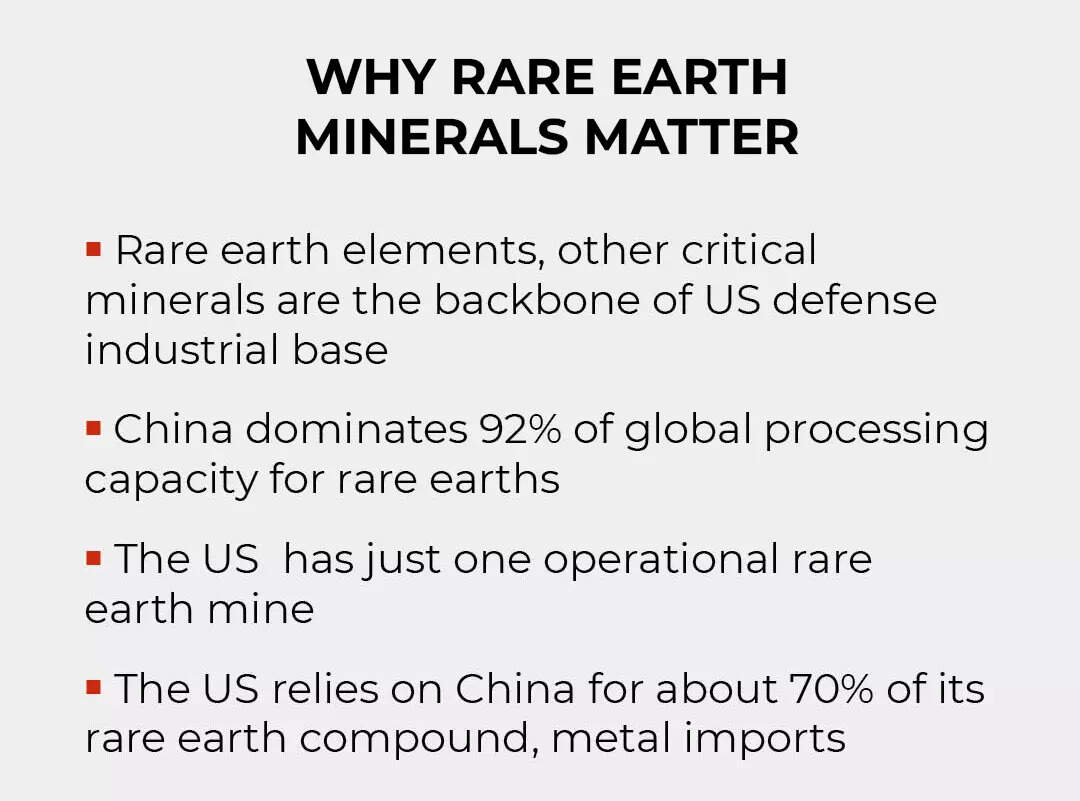
Why rare earth minerals matter

Yet the promise that Field Marshal Asim Munir carried into the Oval Office is colliding with a brutal reality on the ground – an insurgency in Balochistan and the western borderlands that is increasingly better armed, better coordinated, and, paradoxically, equipped with weapons originally supplied by the United States.In December, the US Export-Import Bank approved $1.25 billion in financing to support development of the Reko Diq project in southwestern Balochistan, described by Canadian miner Barrick as the world’s largest undeveloped copper reserve. Reko Diq, one of the world’s largest undeveloped gold-copper deposits, is structured as a joint venture: Barrick holds 50%, three Pakistani federal state-owned enterprises collectively own 25%, and the remaining 25% belongs to the Government of Balochistan.In parallel, Pakistani officials have been touting up to $8 trillion in potential reserves of copper, lithium, cobalt, gold, antimony and other strategic minerals. For President Donald Trump, who has placed resource acquisition at the center of US foreign policy, the pitch has been compelling.But just as Washington leans in, Pakistan’s security environment is deteriorating. Along the Afghanistan border and across Balochistan’s mineral belt, militants are operating with US-made rifles, night-vision equipment, and long-range capabilities left behind after the chaotic 2021 withdrawal from Kabul, a CNN report said. The result: a resource opportunity that looks transformative on paper but increasingly untenable in practice.

The big picture

Pakistan’s mineral diplomacy collides with a deteriorating security environment on three fronts:Urban vulnerability: Bombings in Islamabad are rare, which is precisely why this attack reverberates. It was the second suicide attack in the capital in three months, triggering fears of a return to violence in major cities.Peripheral insurgency: Balochistan and the western borderlands – where the most valuable mineral deposits lie – are experiencing some of the deadliest militant activity in years.Militant capability: Security officials and analysts say insurgents are increasingly equipped with US-made rifles, machine guns, and night-vision devices left behind after the 2021 Afghanistan withdrawal.Together, these dynamics weaken Munir’s central argument to Trump: that Pakistan can secure large-scale extraction projects critical to US supply chains.

Why it matters

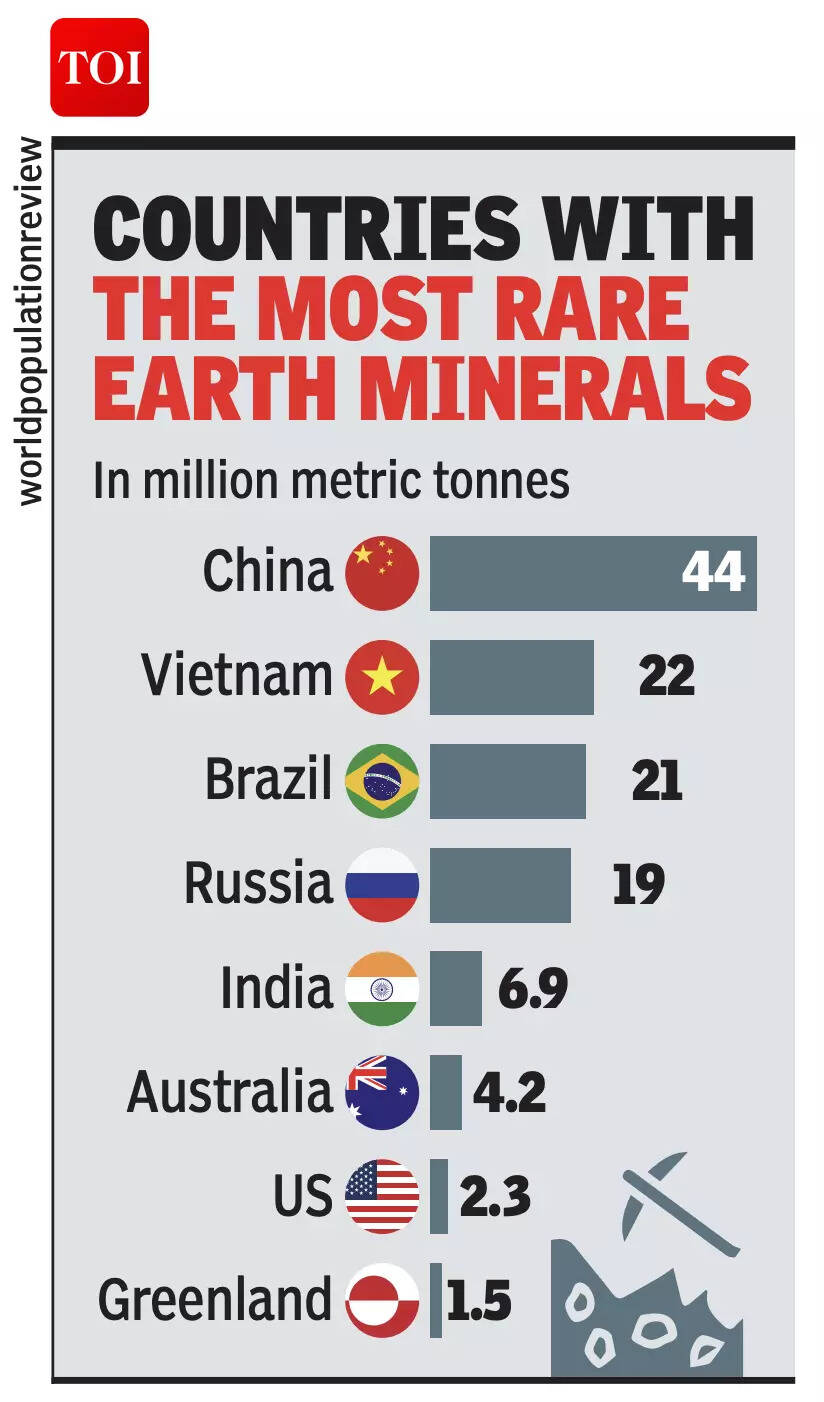
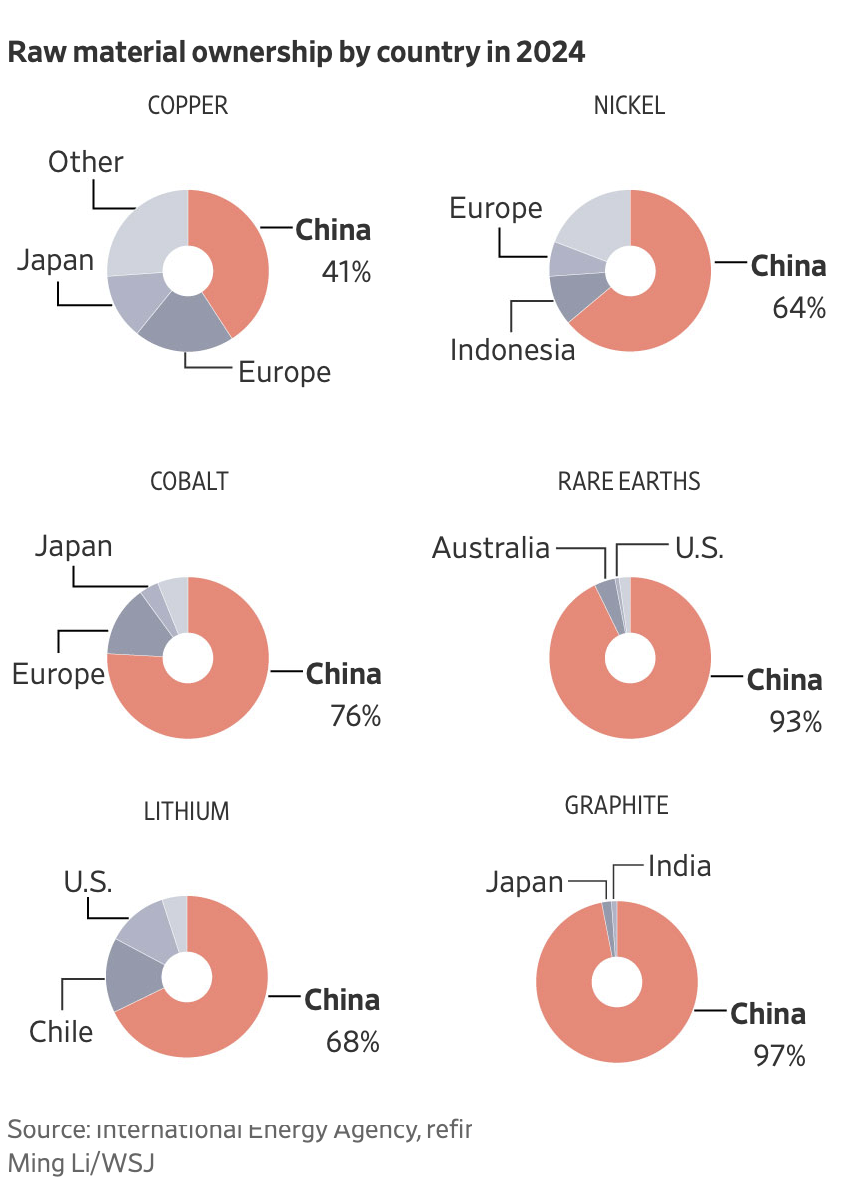
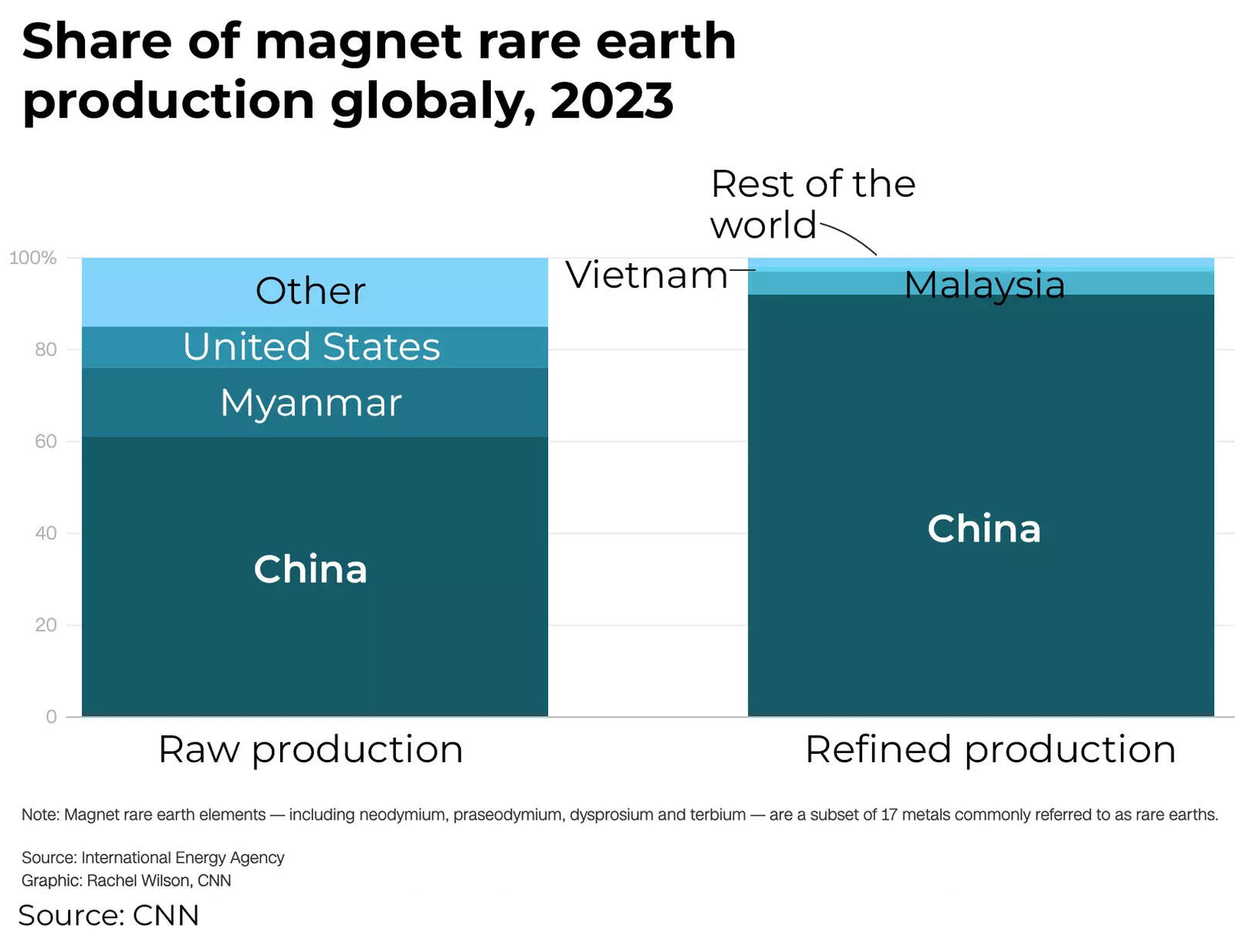
The stakes extend far beyond Pakistan. More than 90% of the world’s refined rare earths are processed in China, giving Beijing leverage over everything from smartphones to electric vehicles and advanced defense systems.

Countries with the most Rare Earth Minerals

Trump has made breaking that near-monopoly a strategic priority, signing deals with Australia, Cambodia, and Thailand and vowing to secure “more than you’ll know what to do with.”Copper is emerging as just as critical. Global demand is projected to surge from roughly 30 million tons today to around 50 million tons by 2050 as economies electrify and digitize.As Dr Gracelin Baskaran, director of the Critical Minerals Security Program at the Center for Strategic and International Studies, told CNN, “Copper will fuel every part of our modern economy, and we’re at a structural shortage.” She added that this shortage undermines US competitiveness in processing rare earths as well.

Raw material ownership by country in 2024

Pakistan’s deposits – particularly Reko Diq and Muhammad Khel – therefore look like a geopolitical prize. Yet they sit in territory that has been wracked by decades of insurgency, now intensified by the unintended consequences of America’s own war in Afghanistan.

Zoom in: The mines and the money

The Muhammad Khel copper mine, tucked into the rugged Hindu Kush near the Afghan border, produced hundreds of millions of dollars’ worth of copper last year, much of it shipped to China. Nearby, Reko Diq in Balochistan holds far greater promise, with reserves that could equal roughly a fifth of annual US copper consumption.These sites are not just commercial projects; they are potential pillars of Pakistan’s economic recovery in a country that has turned to the International Monetary Fund 24 times since 1958. For Islamabad, minerals are a lifeline. For Washington, they are a strategic hedge against China.

Rare earth production globally, 2023

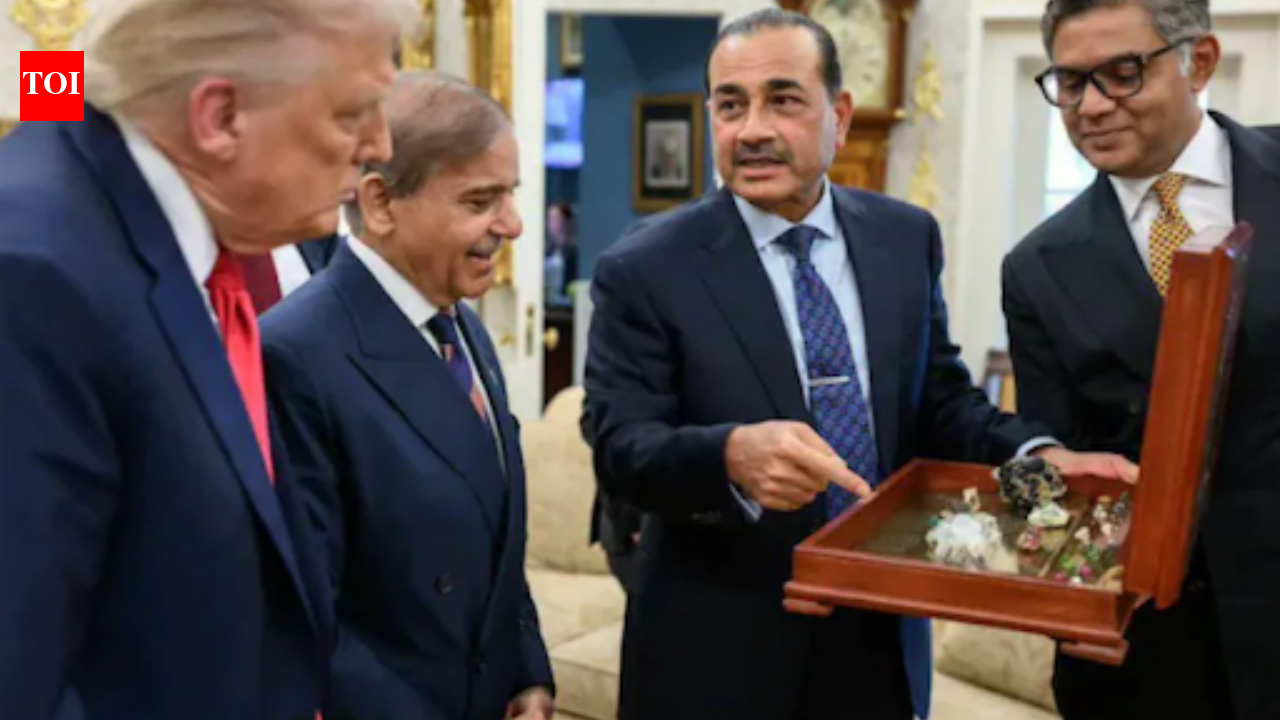
That alignment helped produce an unusual diplomatic moment in September, when Prime Minister Shehbaz Sharif and Field Marshal Munir arrived at the White House carrying a chest of rare earth samples. Trump was reportedly delighted, later calling Munir “My favorite field marshal.”Yet the optics of partnership mask a harsher truth: the roads to these mines run through some of the most dangerous terrain in South Asia.

Between the lines: America’s weapons, Pakistan’s war

What is increasingly shaping events is not geology but weaponry.On a recent visit to Pakistan’s border regions, CNN was shown more than 100 seized firearms – M-16s, M-4 carbines, M249 machine guns, and Remington sniper rifles – all stamped “Property of US Govt. Manufactured in Columbia, South Carolina.” These were not isolated finds. According to defense analyst Muhammad Mubasher, US-made weapons have become routine in clashes with militants since 2022–23.At Wana, near Muhammad Khel, Pakistani officers displayed three M-16s recovered after a suicide attack on a military cadet college. CNN traced their serial numbers through a Freedom of Information Act request to US Army Material Command at Redstone Arsenal, which confirmed that the rifles had been supplied to Afghan security forces years before the 2021 withdrawal. The Pentagon declined to comment further.The impact is visible in Pakistan’s hospitals. Colonel Bilal Saeed, the military’s general surgeon in Peshawar, told CNN that instead of primarily treating IED blast injuries, his teams are now “receiving patients with long range gunshot wounds, (or) sniper hits.” He added that the wounded increasingly arrive at night because insurgents now possess “night vision devices.”For 30-year-old Allah Uddin, a soldier guarding a convoy near Muhammad Khel, that technological edge proved devastating. After losing both legs in an ambush, he told CNN: “I don’t know where they were from but the weapons that they had… were different and better.” Later, reflecting on his condition, he said, “I am very angry, have you seen my condition?… I’ve seen my wounded companions around me, and it makes me even angrier.

What they are saying

As per a Reuters report, Barrick Gold’s leadership says it is taking a hard look at its flagship Reko Diq mine in Balochistan as the security environment deteriorates. Chief executive Mark Hill said on a recent post-earnings call that the company’s board is “reviewing all aspects” of the project – including how much money it is willing to commit – after a sharp rise in militant violence. Barrick noted that the review was triggered by a recent escalation in security risks in the province.The company said its reassessment will cover the project’s security arrangements, construction timeline and overall capital budget, and that this process would start immediately, with a public update once the review is complete.Pakistani officials, however, publicly project confidence. Army spokesperson Lt General Ahmed Sharif Choudhry told CNN that the United States “has lot to offer for the people and stability and prosperity of Pakistan.” He insists Islamabad will secure mining areas and make infrastructure “world class,” adding bluntly, “We will resolve it. We have no other option.”But retired US Air Force Colonel Scott Yeatmen, who advised the Afghan Air Force until weeks before Kabul fell, offered a different perspective on how this situation arose. “You are not planning for a collapse. You’re planning to continue to execute operations and prevent the collapse,” he told CNN, underscoring how little the US anticipated the rapid disintegration of Afghan forces.John Sopko, former Special Inspector General for Afghanistan Reconstruction, has been even more stark. He estimates that roughly 300,000 US small arms were left behind in 2021, along with “communication stuff, rocket launchers, grenade launchers, mortars, cannons, heavy machine guns, surveillance equipment (and) night vision equipment.” In his words, Afghanistan is now “effectively… the world’s largest arms bazaar,” and “If you want … to outfit your terrorist or insurgency organization, Afghanistan is the place to go.Afghan Taliban officials told CNN that all leftover weapons are under their “control and protection,” but Islamabad has long accused Kabul of providing sanctuary to militants – a charge Kabul denies.

The Balochistan front

The problem is not limited to the Pakistan Taliban (TTP). US-made weapons have also appeared in the hands of the Balochistan Liberation Army (BLA), which has fought for decades for greater autonomy and a larger share of the province’s resource wealth.Michael Kugelman of the Atlantic Council told CNN that Balochistan is both “ground zero for critical mineral opportunities, but it’s also ground zero when it comes to militant threats.” That duality now defines Pakistan’s dilemma.In late January, the BLA launched coordinated attacks across Balochistan, killing 33 people according to the Pakistani military. Islamabad responded with “Operation Radd-ul-Fitna-1,” claiming 216 militants were killed. In a press release, the Inter-Services Public Relations (ISPR) said operations were “intelligence-driven” and had “significantly degrad[ed] the leadership, command-and-control structures and operational capabilities of terrorist networks,” while acknowledging 36 civilian deaths and 22 security personnel killed. Balochistan chief minister Sarfaraz Bugti later wrote that the operation sent “a clear message to those committing acts of bloodshed in Balochistan,” calling the BLA “a fitna targeting innocent civilians and labourers” and warning that any hand raised against Pakistan “will not only be dealt with law and full force but will be broken.”Yet the violence has not abated. Dawn reports that 2025 was Balochistan’s deadliest year on record, with at least 254 attacks – a 26% increase – and more than 400 deaths. Militants have begun briefly seizing territory, storming district headquarters, blocking highways, and even hijacking passenger trains.

Between Trump, Beijing and Kabul

All of this complicates Washington’s mineral strategy.Beijing has watched developments closely, insisting that its “all-weather” partnership with Islamabad remains intact despite Pakistan’s courtship of Trump. China already dominates rare-earth processing and remains deeply invested in CPEC. Any large-scale US-backed mining push in Balochistan would therefore play out against a backdrop of US-China rivalry.At the same time, Trump has publicly demanded that the Afghan Taliban return abandoned US weapons – so far unsuccessfully. In August, his administration designated the BLA as a terrorist organization and held a Counterterrorism Dialogue with Pakistan focused on the BLA, TTP, and Islamic State Khorasan (ISKP). In January, US and Pakistani forces completed joint infantry and counterterrorism training.Yet none of this changes the basic arithmetic: as long as militants are well-armed and local grievances remain unaddressed, securing mines like Reko Diq will be extraordinarily difficult.

What’s next

Field Marshal Munir faces three simultaneous tests.First, he must fight a better-equipped insurgency along Pakistan’s western frontier – one increasingly using American-made weapons and night-fighting capabilities.Second, he must persuade skeptical Baloch communities that mining projects will genuinely benefit them, not just Islamabad, Beijing, or Washington.Third, he must balance Pakistan’s deep ties with China against a new, Trump-driven courtship from the United States – all while keeping the country stable enough for investors.So far, Islamabad is doubling down on security. Internet shutdowns, sweeping military operations, and high-profile offensives like Radd-ul-Fitna-1 suggest little appetite for political compromise.But without a parallel strategy of dialogue, development, and genuine power-sharing in Balochistan, the very minerals Trump wants may remain buried – not because they are inaccessible, but because Pakistan cannot safely reach them.Munir may have the minerals Trump wants. He does not yet control the ground they lie in.


Source link

SA-W vs PAK-W, T20I Series: Date, Match Time, Broadcast & Live Streaming details


The South Africa Women vs Pakistan Women T20I series kicks off today, February 10, 2026, at the JB Marks Oval in Potchefstroom. This three-match series serves as a vital preparation ground for both teams ahead of the ICC Women’s World Cup in June.

South Africa’s home dominance meets Pakistan’s fearless transition

South Africa enters the series as favorites, especially playing in home conditions. They recently secured a 2-0 series win against Ireland and boast a powerhouse top order. However, Pakistan has proven to be a “banana skin” opponent in the past; they famously swept the Proteas 3-0 in Karachi in 2023.

The narrative of this series centers on South Africa’s consistency versus Pakistan’s “fearless” transition. South Africa have recalled veteran stars like Marizanne Kapp and Chloe Tryon, while Pakistan are experimenting with fresh pace talent like Humna Bilal and Tasmia Rubab.

Key players to watch

  • Laura Wolvaardt (SA): The world-class opener is in peak form, recently smashing centuries against Ireland. She is the anchor around which the Proteas build their innings.
  • Fatima Sana (PAK): The young captain is Pakistan’s most impactful all-rounder. Her ability to take wickets in the powerplay and score quick runs late in the order is crucial.
  • Marizanne Kapp (SA): Arguably the best all-rounder in the world, her aggressive seam bowling and clinical middle-order batting make her a match-winner in any condition.
  • Sadia Iqbal (PAK): The left-arm spinner has a fantastic record against South Africa (10 wickets in 6 matches) and will be Pakistan’s primary weapon to stifle the scoring rate.

SA-W vs PAK-W T20I series, complete schedule

Date Match details Timings (IST / GMT / Local)
Mon, Feb 10 2026 1st T20I – South Africa Women vs Pakistan Women
Potchefstroom, Senwes Park
9:30 PM IST / 4:00 PM GMT / 6:00 PM Local
Fri, Feb 13 2026 2nd T20I – South Africa Women vs Pakistan Women
Benoni, Willowmoore Park
9:30 PM IST / 4:00 PM GMT / 6:00 PM Local
Mon, Feb 16 2026 3rd T20I – South Africa Women vs Pakistan Women
Kimberley, Diamond Oval
9:30 PM IST / 4:00 PM GMT / 6:00 PM Local

Also READ: From MVP to Purple Cap: Full List of WPL 2026 Award Winners and Prize Money

SA-W vs PAK-W, T20I series Squads

South Africa Women: Laura Wolvaardt (c), Tazmin Brits, Nadine de Klerk, Sinalo Jafta (wk), Kayla Reyneke, Sune Luus, Marizanne Kapp, Chloe Tryon, Annerie Dercksen, Masabata Klaas, Ayabonga Khaka, Dane van Niekerk, Nonkululeko Mlaba, Ayanda Hlubi, Karabo Meso

Pakistan Women: Sidra Amin, Ayesha Zafar, Muneeba Ali (wk), Aliya Riaz, Eyman Fatima, Natalia Pervaiz, Fatima Sana (c), Nashra Sandhu, Rameen Shamim, Sadia Iqbal, Tuba Hassan, Gull Feroza, Tasmia Rubab, Humna Bilal, Saira Jabeen

Broadcast & Live Streaming Details:

  • South Africa: SuperSport Grandstand and SABC 3
  • Pakistan: A Sports

Also READ: AB de Villiers, Ashwin and others in awe as Smriti Mandhana and Georgia Voll drive RCB to 2nd WPL triumph

This article was first published at WomenCricket.com, a Cricket Times company.


Source link

Dubai’s new property resale rule 2026: What UAE residents, expats should know about tokenised assets, secondary market activation


Dubai’s new property resale rule 2026: What UAE residents, expats should know about tokenised assets, secondary market activation
Dubai’s new property resale rule 2026: What UAE residents and expats should know before participating

Long known for its dynamism, transparency and global investor appeal, Dubai’s property market has taken another step toward modernisation and liquidity with the rollout of a new resale rule aimed at activating the secondary property market. This rule, part of the Dubai Land Department’s (DLD) real estate innovation agenda, has the potential to reshape how residents and expatriates invest, sell and trade real estate in the emirate.At its core, the rule targets the secondary market where off-plan or newly built units are resold to buyers and is tied to Dubai’s broader digital transformation and tokenisation efforts in real estate.

What is the new resale rule in Dubai?

The recently announced rule, coming in Phase 2 of Dubai’s property tokenisation project, aims to activate resale activity in the secondary market by enabling the resale of millions of digital property tokens linked to real estate title deeds. It is scheduled to go live from February 20, 2026 and covers approximately 7.8 million tokenised real estate assets under a controlled pilot framework led by the DLD in partnership with the Virtual Assets Regulatory Authority (Vara).Dubai has already been experimenting with real estate tokens, which represent digital shares of property ownership. These digital tokens make property investment more accessible, divisible and transparent, allowing buyers to invest in smaller fractions of real estate rather than only whole properties.The new resale rule essentially enables the secondary trading of these tokens, meaning investors can buy and sell their tokenised property shares, much like trading stocks, under a regulated marketplace environment.

What this new resale rule means for residents and expats in Dubai

Traditionally, selling a property in Dubai’s real estate market could be constrained by limited buyer pools or long transaction times. The introduction of tokenised resale, under this rule, brings greater liquidity as fractional owners can trade parts of an asset quickly and efficiently. This can be especially beneficial for UAE residents and expatriates who may not want or afford a full property but are interested in real estate as an investment asset. Tokenised resale reduces entry barriers and opens the door to diversified portfolios without requiring full property ownership.

Dubai's Property Tokenisation: A Risky Gamble or a Market Revolution?

Dubai’s Property Tokenisation: A Risky Gamble or a Market Revolution?

By anchoring resale on a tokenised ledger, Dubai seeks to enhance price transparency, traceability and governance. Transactions under the pilot are expected to be recorded with higher accuracy, helping protect buyers and sellers from fraud or opaque dealings that sometimes plague secondary markets. Enhanced transparency also aligns with other regulatory improvements in the emirate, such as crackdowns on fake property listings and clearer listing rules for brokers, aimed at boosting confidence among local and international buyers.For many expatriates, including long-term residents and professionals, this rule introduces new avenues to enter the property sector without needing significant upfront capital. Rather than saving for a full down payment or qualifying for large mortgages, individuals can buy small portions of real estate through tokens that are legally backed by title deeds. This builds on Dubai’s broader trend of expanding property ownership opportunities for residents. For instance, the First-Time Home Buyer Programme saw more than 2,000 residents purchase property in six months by making ownership more accessible through incentives and support structures.

Real estate trends in Dubai 2026

Dubai’s secondary market is already showing strong signs of resilience and profitable activity. According to market data from late 2025, the secondary property market recorded significant transaction growth, with investors showing heightened interest in resale units that offer liquidity and immediate occupancy.Properties in the secondary market, especially ready-to-move-in units, have been attractive for both capital returns and rental income, drawing both local and foreign investors. The new resale rule dovetails with this trend by formalising and expanding avenues for selling and trading units beyond traditional whole-property transactions.

What Dubai residents and expats should know before participating in new resale rule

  • Regulatory Pilot, Not Full Rollout: It is important to note that the resale rule is part of a pilot phase that Dubai’s regulators are using to test efficiency, safeguards and operational readiness before potentially scaling up. This means that residents and expats should monitor official DLD guidance for updates on eligibility criteria, transaction costs, compliance requirements and legal protections as the pilot evolves.
  • Traditional Transactions Still Prevail: While tokenised resale is a breakthrough, traditional property transactions (buying and selling whole units through brokers and title deeds) will continue to coexist. Investors who prefer conventional ownership structures still have strong liquidity given Dubai’s active market and substantial buyer demand.
  • Investment Mindset and Long-Term Planning: Experts advise that property investment, tokenised or traditional, should be part of well-planned financial strategies. This is particularly true for expatriates whose residency status may be tied to employment or lifestyle considerations.

Dubai’s property market also offers a path to long-term UAE residency through visa programs linked to property investment, such as the Golden Visa for qualifying investors, though eligibility rules and investment thresholds change periodically.

Dubai’s evolving property ecosystem

Dubai’s property market has been consistently repositioning itself as a global investment hub, supported by strategic reforms and innovative programmes.

  • First-Time Home Buyer initiatives have boosted resident ownership.
  • Digital transaction innovations, including blockchain and faster registration systems, have made buying easier and more transparent.
  • Market controls on listings and advertising are improving trust and fairness in buying decisions.

These innovations help ensure that Dubai remains an attractive destination for both domestic and international property investment. By enabling resale of tokenised property assets, Dubai is testing a future where real estate liquidity rivals that of digital financial markets. This could attract new classes of investors who previously avoided real estate due to high entry costs or low turnover.

Dubai's New Property Resale Rule: Will Tokenised Assets Reshape Real Estate Investment?​

Dubai’s New Property Resale Rule: Will Tokenised Assets Reshape Real Estate Investment?

If the pilot proves successful, tokenised resale could one day become a mainstay of Dubai’s property market, complementing traditional transactions while giving residents and expats more flexibility, transparency and control over how they buy, hold and sell real estate. Dubai’s new property resale rule, particularly the Phase 2 tokenised resale launch, marks a significant milestone in the emirate’s real estate evolution. For UAE residents and expatriates, it opens fresh opportunities to participate in the market with greater financial flexibility and transaction speed.As Dubai continues to refine its regulatory frameworks, property owners and investors should stay informed about rolling updates from the Dubai Land Department and related authorities.


Source link

Russian oil imports: Trump administration may give refunds for small penalties on India – check details


Russian oil imports: Trump administration may give refunds for small penalties on India - check details
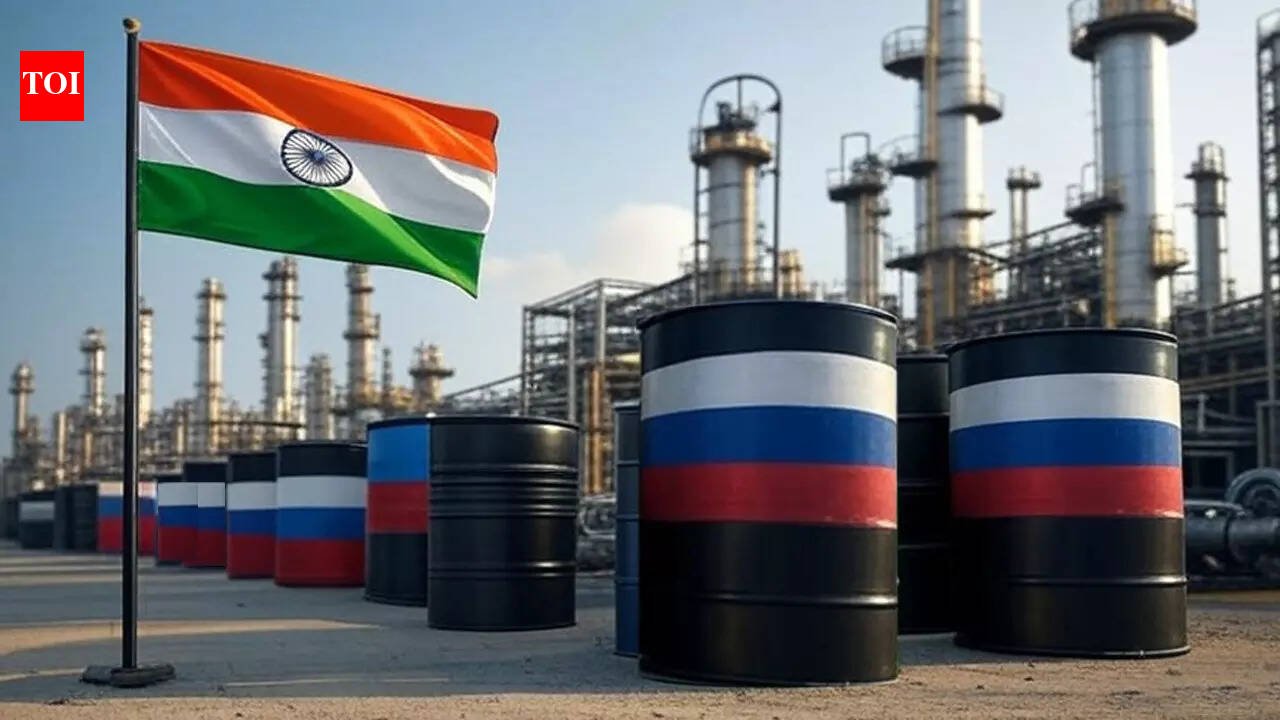
The exact size of any potential refund remains uncertain. (AI image)

The Donald Trump administration may go ahead and refund India for small amounts of penalties it may have collected for the 25% tariff related to imports of Russian crude oil. The US could return a portion of the penalty levied on India for importing Russian crude oil in cases where the shipments were after February 7, the date on which President Donald Trump’s executive order removing the additional 25% duty on Indian imports related to such purchases came into effect.The exact size of any potential refund remains uncertain. One person familiar with the matter told ET that the refund would apply only to a limited number of transactions where tariffs may have already been collected before the order became effective, even though the actual imports happened after midnight on February 7. This is a transitional arrangement rather than a broader policy change.

India & Trump’s Russian Oil Trade Claims CLASH | ‘Energy Security Of 1.4 Bn Supreme Priority’

On Saturday, India and the United States announced an interim trade framework that reduced tariffs on Indian exports to the US to 18%. The arrangement is intended to pave the way for a bilateral trade agreement, with the interim deal addressing tariff reductions and non-tariff barriers, while a wider legally binding agreement is expected to cover goods, supply chains and digital trade.Separately, through another executive order, the US scrapped the additional 25% tariffs imposed on India over purchases of Russian oil from February 7 onward, while adding that it would continue to observe whether India resumes direct or indirect imports of Russian crude.In an executive order issued on February 6, the Trump administration said that Indian goods entering the US for consumption, or released from warehouses for consumption, on or after 12:01 a.m. Eastern Standard Time on February 7, 2026, would no longer be subject to the additional 25% ad valorem duty previously imposed.The order also clarified that if its implementation results in duties having been collected that must be returned, such refunds would be handled in accordance with applicable laws and the established procedures followed by US Customs and Border Protection.The reciprocal tariff rate is expected to be lowered to 18% from 25% once a related executive order is formally issued by the US.Another person familiar with the matter noted that the executive order does not indicate any retrospective application, adding that the final trade agreement is likely to include provisions dealing with dispute resolution at a later stage.Ajay Sahai, director general of the Federation of Indian Export Organisations, said the executive order removing the additional tariff refers to provisions allowing refunds for duties collected while the higher levy was in force. However, he pointed out that the detailed legal and procedural framework for claiming such refunds has not yet been fully clarified. According to him, while the US intends to permit refunds for duties collected during that period, uncertainty over the process and timelines has created concern among exporters.A trade expert explained that the withdrawal of duties applies only prospectively, meaning it covers Indian goods entering the United States from 12:01 a.m. EST on February 7 onward. In certain cases where duties were imposed even after the order took effect, those amounts may be eligible for refund to importers.


Source link

What happened on Feb 4 in Lok Sabha? Rijiju shares video of chaos that unfolded; Cong hits back | India News


Kiren Rijiju Slams Congress, Shares Video Of Women MPs At PM Modi's Lok Sabha Seat

Glimpse from video shared by Kiren Rijiju

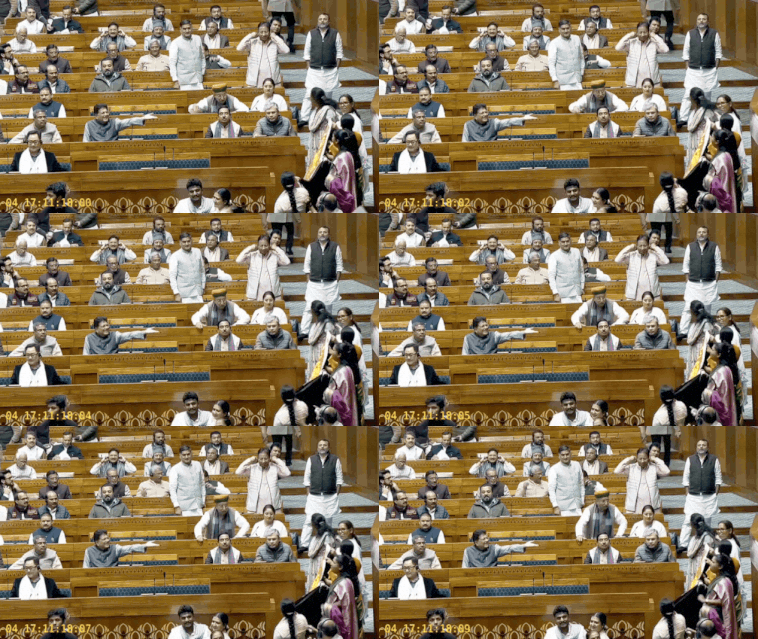
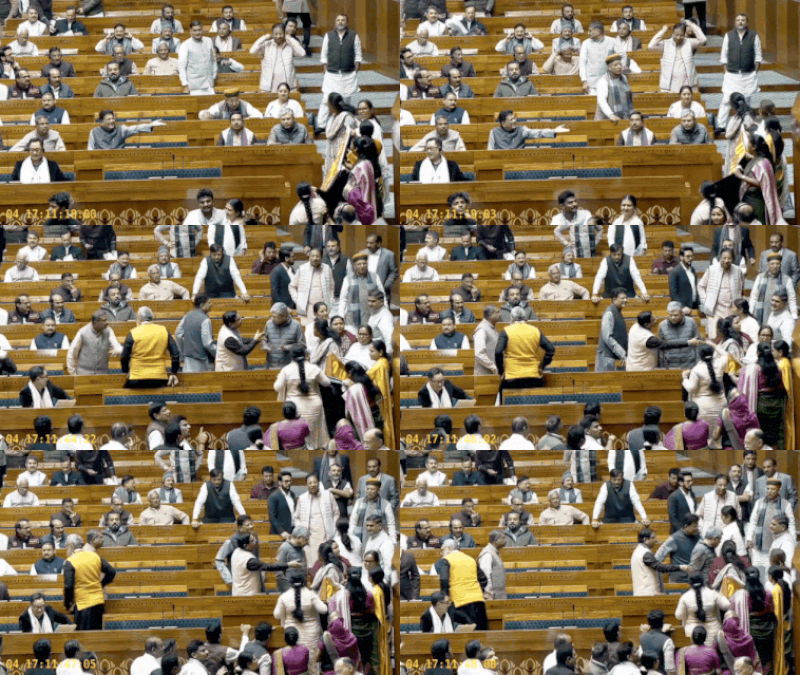
NEW DELHI: Union parliamentary affairs minister Kiren Rijiju on Tuesday released a video of the February 4 Lok Sabha proceedings, alleging that Congress MPs created a situation that forced Prime Minister Narendra Modi to skip his scheduled reply to the President’s Address.Sharing the footage on X, Rijiju claimed the video showed Congress women MPs crossing over to the treasury benches, holding banners and placards, and surrounding the Prime Minister’s seat.

Kiren Rijiju Slams Congress, Shares Video Of Women MPs At PM Modi’s Lok Sabha Seat

“Congress Party is proud of the most degrading behaviour by their MPs! If we had not stopped all the BJP MPs and allowed the women MPs to confront Cong MPs, it would have led to a very ugly scene,” Rijiju wrote on X.

He also alleged that BJP MPs had to be restrained to avoid a confrontation inside the House.“We had to control our BJP NDA MPs. BJP women MPs were very agitated at this behaviour of the Congress MPs. We stopped our MPs from physical confrontation. Then these MPs went to the Speaker’s Chamber and threatened the Speaker. The BJP women MPs have lodged a complaint. Let us see how the Speaker takes action and the steps he takes forward,” Rijiju said.The minister also reposted another video shared by the Congress, which showed Speaker Om Birla saying that he had requested the Prime Minister not to attend the House after receiving inputs that some Opposition MPs might approach his seat and create an “unprecedented incident.”“We have very high consideration to protect the dignity and sanctity of the Parliament,” Rijiju added.The controversy dates back to February 4, when Prime Minister Modi was scheduled to reply to the Motion of Thanks to the President’s Address. However, the address was cancelled after Speaker Birla stated that he had received “concrete information” suggesting that certain Congress MPs might attempt to disrupt the proceedings.Reacting to the video, Congress MP Varsha Gaikwad dismissed the “baseless allegations” and questioned whether there is anything wrong with “holding a banner.”“Wasn’t Kiren Rijiju present in the House that day? What is new in the video? Didn’t he see the video already? Baseless allegations are being put on us… We didn’t go to assault anyone; we were just holding a banner. He (PM Modi) got scared because of a banner. He got scared of taking a book. He doesn’t want to talk about tariffs or China,” she said while speaking to news agency ANI.On Monday, Congress women MPs wrote to Birla strongly objecting to what they called “grave allegations” that they had threatened or attempted to obstruct the Prime Minister inside the House.Rejecting the claims, Congress leaders said the Prime Minister avoided the House because he was “too scared to speak.”The issue escalated further on Tuesday when BJP women MPs wrote to the Speaker backing Birla and accusing Opposition members of unruly conduct. In their letter, the BJP MPs alleged that Congress women MPs had entered the Well of the House, thrown papers towards the Chair, and later surrounded the Prime Minister’s seat.They urged Birla to take “the strongest possible action” against those involved.The BJP letter came as a counter to the Congress MPs’ communication accusing the Speaker of making “false, baseless, and defamatory” claims under pressure from the ruling party.Meanwhile, opposition leaders are planning to submit a notice seeking a resolution to remove the Lok Sabha Speaker from office.


Source link

Harshit Rana undergoes surgery, may miss major part of IPL too | Cricket News


Harshit Rana undergoes surgery, may miss major part of IPL too

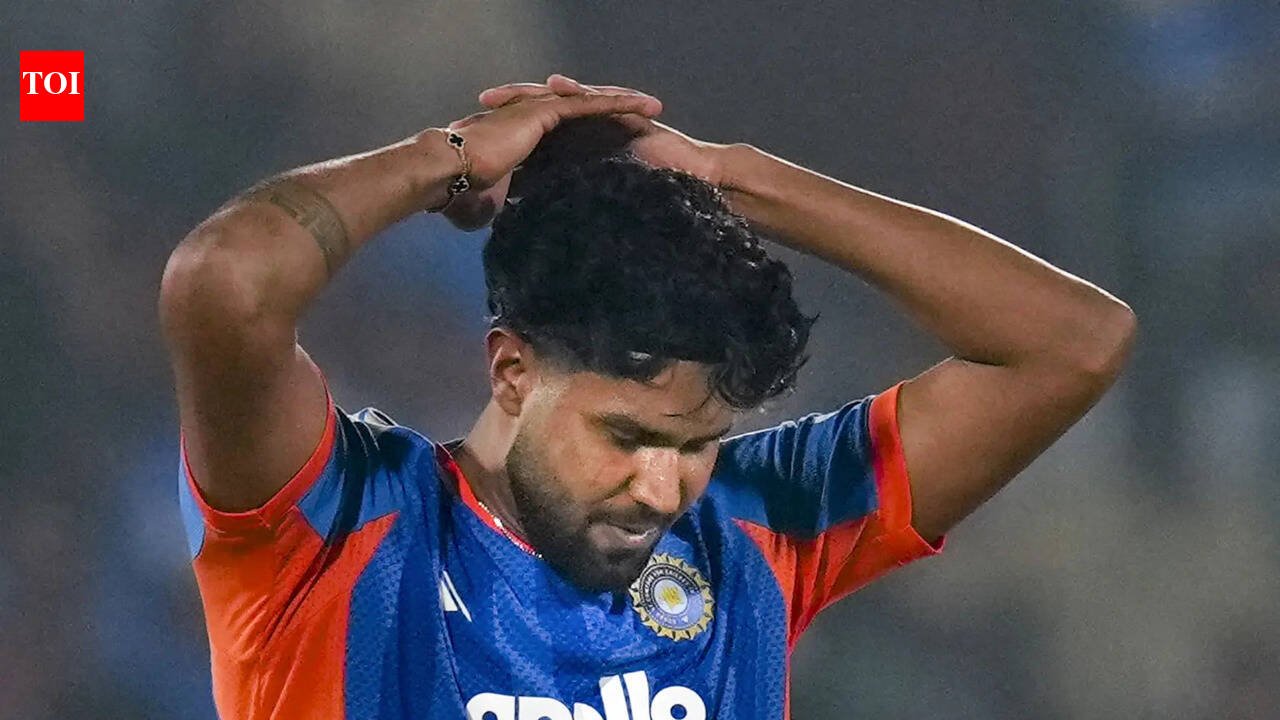
MUMBAI: Fast bowler Harshit Rana underwent surgery for a knee injury on Monday which will keep him out of the T20 World Cup and also a major part of the subsequent Indian Premier League (IPL) season.Go Beyond The Boundary with our YouTube channel. SUBSCRIBE NOW!Rana was ruled out on the eve of India’s opening fixture against USA here after sustaining the injury during a warm-up match against South Africa at the DY Patil Stadium.

Special dinner for Team India at Gautam Gambhir’s house in Delhi | T20 World Cup

“Rana’s surgery was performed by Dinshaw Pardiwalla at the Kokilaben Dhirubhai Ambani Hospital. He was advised surgical repair of the lateral meniscus. Following surgery and a period of rest, he will begin rehabilitation and report to the BCCI’s Centre of Excellence (CoE) in Bengaluru,” sources told TOI.“While Rana has missed the T20 World Cup, he is also likely to be sidelined for a significant portion of the upcoming IPL, if not the entire tournament,” sources added.


Source link

NCP leader Sunetra Pawar takes charge as Maharashtra deputy chief minister; to attend cabinet meeting today | Mumbai News


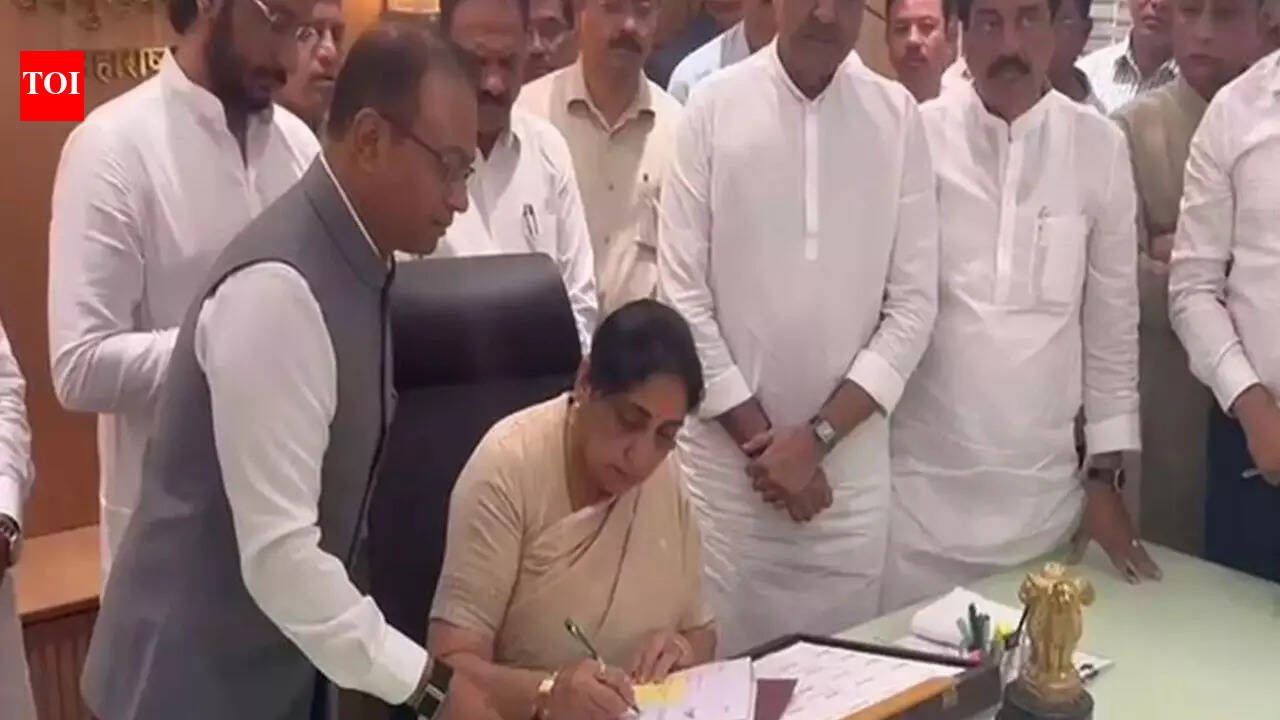
MUMBAI: Maharashtra deputy chief Minister Sunetra Pawar on Tuesday assumed charge at the state secretariat, Mantralaya, 13 days after the death of her husband and deputy CM Ajit Pawar.She was accompanied by senior Nationalist Congress Party (NCP) leaders and her elder son, Parth Pawar, as she took her seat in the deputy chief minister’s office, marking a poignant moment in the state’s political landscape.

Sunetra Pawar To Be Named NCP Leader, Dy CM Oath Likely Tomorrow: Chhagan Bhujbal

Senior NCP leaders, including Praful Patel, Sunil Tatkare, Chhagan Bhujbal and Dhananjay Munde, were present on the occasion.Sunetra Pawar will attend the cabinet meeting scheduled on Tuesday, the first to be held since Ajit Pawar’s death.She will also participate in the business advisory committee meeting for the February 23 budget session.NCP leader Ajit Pawar was killed in a plane crash at Baramati in Pune district on January 28.Sunetra Pawar took oath as the state’s first woman deputy chief minister on January 31. She has been allotted the excise, sports, minority welfare and wakf departments, and has also been appointed guardian minister of Beed and Pune.She arrived in Mumbai from Pune early on Tuesday and offered prayers at the Siddhivinayak temple and at B R Ambedkar’s memorial, Chaityabhoomi, in the Dadar area.Accompanied by her elder son, the deputy chief minister later visited the NCP office, where she met party MLAs and ministers, before proceeding to the Mantralaya.In the first election held on February 7 after the death of Ajit Pawar, his party retained the Pune Zilla Parishad by securing 51 of 73 seats, as per the results declared on Monday. The NCP and Sharad Pawar’s NCP (SP) had contested together on the ‘clock’ symbol. (With agency inputs)

Banner Insert


Source link

‘Part of election is fought in Supreme Court’: CJI on plea against Assam CM Himanta over ‘point-blank’ video | India News


'Part of election is fought in Supreme Court': CJI on plea against Assam CM Himanta over 'point-blank' video

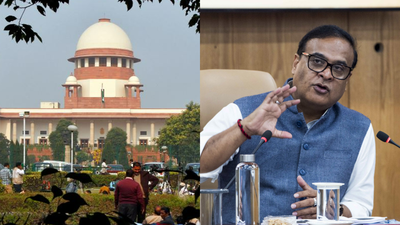
NEW DELHI: Leaders from the Left parties on Tuesday approached the Supreme Court seeking action against Assam chief minister Himanta Biswa Sarma over a now-deleted video that allegedly depicted violence against Muslims.A bench comprising Chief Justice of India Surya Kant and Justices Joymalya Bagchi and N V Anjaria took note of the plea after senior advocate Nizam Pasha, appearing for CPI and CPM leaders, requested urgent intervention.Pasha informed the court that the petitioners had filed complaints regarding the video but no FIR had been registered so far.“We seek urgent intervention of this court with respect to disturbing speeches made by sitting CM of Assam, including a recent video posted where he is shown as shooting at members of a particular community. Complaints filed, but no FIR is registered,” the lawyer submitted.Responding to the request, the CJI remarked that such petitions often coincide with the election season.“The problem is, as soon as elections come, part of the election is fought in the Supreme Court. That is the problem. We will find out and will give a date,” he said.The controversy relates to a video shared on February 7 from the official X handle of the Assam BJP. The clip purportedly showed Sarma taking aim with a rifle and firing at two individuals — one wearing a skull cap and the other sporting a beard — with the caption “point-blank shot.”The post triggered widespread backlash and allegations that it promoted communal hatred. Following the uproar, the BJP deleted the video from its social media account.Asked about the matter, Sarma denied having any knowledge of the video.“I don’t know anything about any video,” the chief minister said when questioned by reporters.The Supreme Court is expected to decide on a date for hearing the matter in the coming days.


Source link