Breaking News
T20 World Cup: Crushing Nepal by nine wickets, West Indies become first to reach Super 8s | Cricket News


T20 World Cup: Crushing Nepal by nine wickets, West Indies become first to reach Super 8s
West Indies’ Shimron Hetmyer hits a six (AP Photo/Rafiq Maqbool)

West Indies became the first team to reach the Super Eights stage of the T20 World Cup after an easy nine-wicket win over Nepal at the Wankhede Stadium in Mumbai. They dominated the match from start to finish and chased down the target comfortably.Nepal batted first and struggled badly against the West Indies bowlers. They lost early wickets and were in trouble at 22 for 3 and then 46 for 5, putting them under heavy pressure.

Abhishek Sharma is back and India to unravel a mystery slinger

Dipendra Singh Airee was the only batter who fought back, scoring 58 runs and helping Nepal cross 100. Sompal Kami also contributed with 26 not out, but the rest of the team failed to score much. Nepal finished with 133 runs for 8 wickets in their 20 overs.West Indies’ bowlers were impressive. Jason Holder was the standout performer with figures of 4 wickets for 27 runs, while Matthew Forde bowled very tightly and took one wicket for just 10 runs in his four overs.In reply, West Indies made the chase look very easy. Captain Shai Hope played a calm and confident innings, scoring 61 not out with five fours and three sixes. Shimron Hetmyer supported him well with 46 not out, and together they added an unbeaten partnership of 91 runs. West Indies reached the target in just 15.2 overs, with 28 balls left, losing only one wicket.With this win, West Indies topped their group and became the first team to qualify for the Super Eights. On the other hand, Nepal were knocked out of the tournament and can no longer move to the next stage.


Source link

Railways rolls out tech-enabled onboard cleaning reform for long distance trains


Railways rolls out tech-enabled onboard cleaning reform for long distance trains

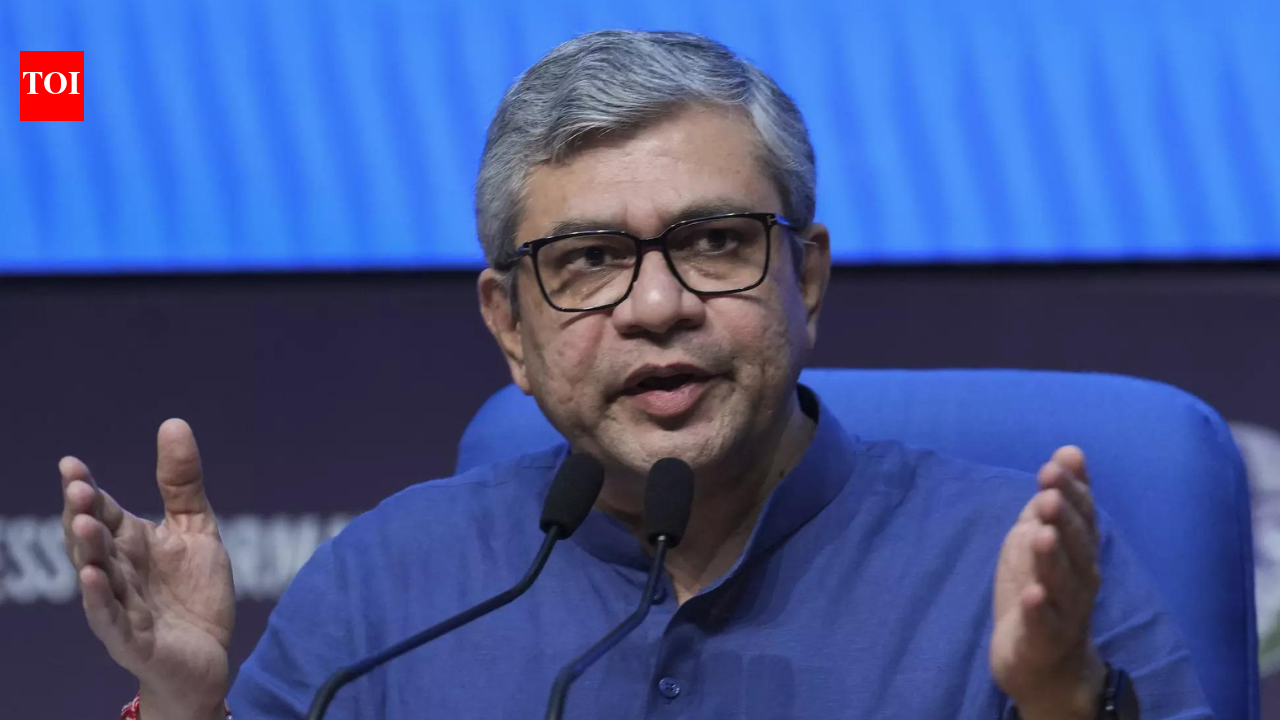
The railway ministry on Saturday launched a reform to improve cleanliness on long-distance trains by deploying tech-enabled professional teams onboard.Railway minister Ashwini Vaishnaw said all coaches, including general class, will now be cleaned as and when required during the journey.Under the existing Clean Train Station scheme, trains are cleaned at designated stations en route. Under the new system, trained staff deployed onboard will carry out cleaning at hourly intervals or as required, he said.“This will be done by establishing clear responsibility and accountability for deployed service providers and engaging professional, self-disciplined and proactive teams that exceed customer expectations,” Vaishnaw told reporters.Monitoring, feedback and performance management will be conducted on a real-time basis with the help of technology, he added.The services will include cleaning of coaches, toilets and basins; garbage collection; attending to minor repairs; coordinating water refilling as required; and checking and reporting the status of safety equipment. Trained supervisors and service staff will carry out the work.“Frequency of cleaning will be regulated based on peak and non-peak hours, and war rooms will be created to monitor the cleaning process with the help of technology,” Vaishnaw said.According to the minister, 80 trains have been identified for implementation of the reform. Based on the experience, the system will be extended to other trains.In a separate reform, Vaishnaw announced that cargo-related facilities will be permitted on spare railway land to boost freight operations. Development of warehouses, grinding units, and processing and aggregation units will be allowed. Underutilised godowns will be developed as Gati Shakti Cargo Terminals and cargo facilities.Efforts will be made to facilitate easier migration of sidings and private freight terminals into Gati Shakti Cargo Terminals through a simplified process, he said. A framework for dispute prevention has also been outlined in the policy, with dispute resolution powers delegated to divisional railway managers.(With inputs from PTI)


Source link

‘Betraying farmers’ vs ‘spreading lies’: Rahul Gandhi, Amit Shah clash over India–US deal | India News


'Betraying farmers' vs 'spreading lies': Rahul Gandhi, Amit Shah clash over India–US deal
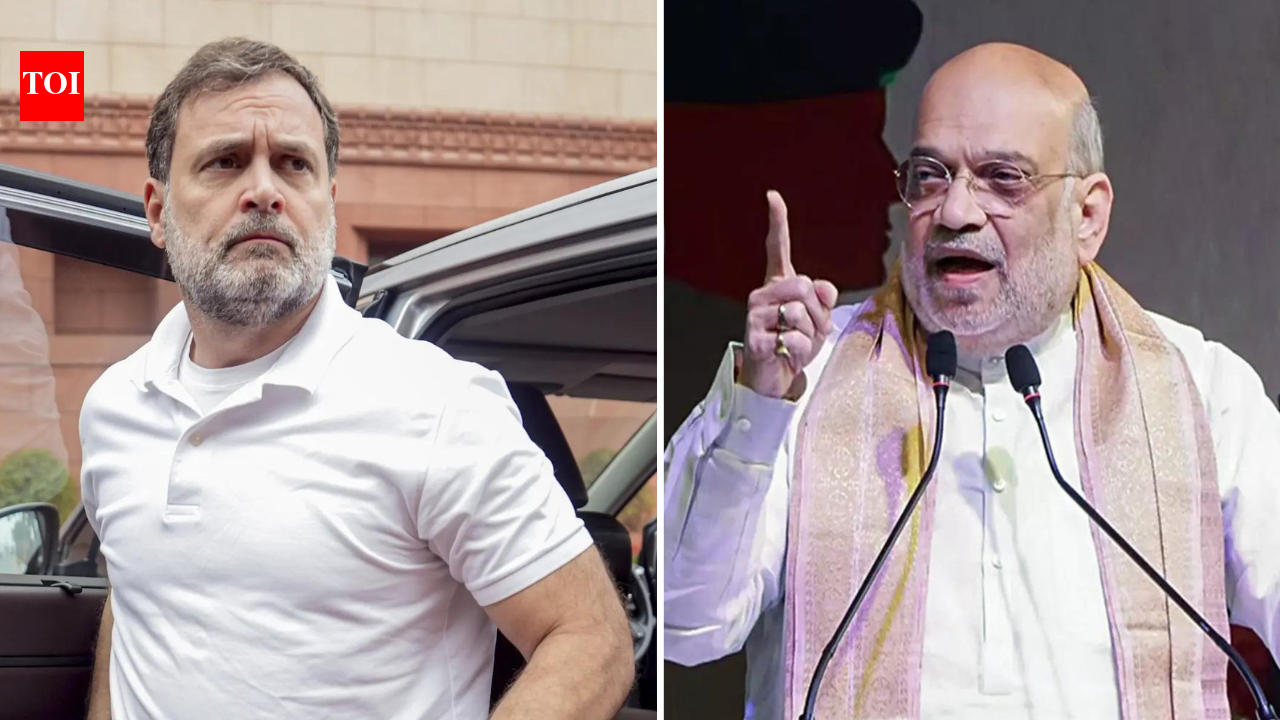
Rahul Gandhi and Amit Shah (R)

NEW DELHI: Lok Sabha leader of opposition Rahul Gandhi on Sunday continued his attacks on the Centre over the India–US trade deal, reiterating his charge that the PM Modi-led government has “betrayed farmers” in the name of the agreement. He also posed some “straightforward questions” directly to the prime minister.However, Union home minister Amit Shah hit back at Rahul, accusing the Congress leader of “spreading lies” about India’s recent trade deals with the United States and the European Union.In a lengthy post on X, the former Congress president raised five questions addressed to PM Modi. He wrote:1. “What does importing DDG actually mean? Does it mean that Indian livestock will be fed distillers’ grain made from GM American maize? Won’t this effectively make our dairy products dependent on the American agricultural industry?”2. “If we allow imports of GM soya oil, what will happen to our soya farmers in Madhya Pradesh, Maharashtra, Rajasthan, and across the country? How will they cope with yet another price shock?”3. “When you say ‘additional products’, what exactly does that include? Is this a sign of future pressure to open up pulses and other crops to American imports over time?”4. “What does removing ‘non-trade barriers’ mean? Will there be pressure on India in future to loosen its stance on GM crops, weaken procurement, or reduce MSP and bonuses?”5. “Once this door is open, how will we stop it from opening wider every year? Will there be safeguards, or will more and more crops be gradually put on the table in every deal?”He added that farmers deserve clarity on these issues.Rahul ended his post by raising a broader concern about India’s sovereign decision-making in trade matters, saying: “This isn’t just about today. It’s about the future too – are we allowing another country to gain long-term control over India’s agricultural industry?”Meanwhile, Amit Shah, speaking at the launch event of Gujarat’s Central Bank Digital Currency, said: “He (Rahul Gandhi) is misleading people about the FTA with the European Union and the UK, and claiming that the trade agreement with the United States has harmed farmers’ interests. I want to challenge Rahul Gandhi: set up any platform, and the president of the BJP’s youth wing will come and debate with you on who has actually caused harm.Dismissing the Congress leader’s criticism of the India–US trade pact as “laughable lies” aimed at misleading rural voters, Shah asserted that the agreements have been carefully structured to protect core agricultural interests while expanding India’s global trade footprint.He added: “Today, I have come to this platform to tell the farmers of the country that Rahul Gandhi is lying; he is misleading them. In the FTAs with the UK and the European Union, and the trade deal with the US, farmers have been fully protected by PM Modi. No one needs to worry.”


Source link

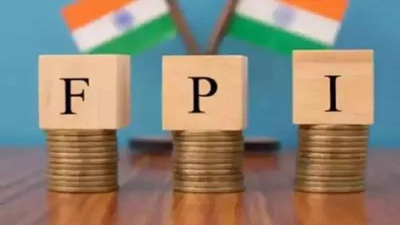
FPIs infuse Rs 19,675 crore in early February after months of heavy selling


FPIs infuse Rs 19,675 crore in early February after months of heavy selling

Foreign Portfolio Investors (FPIs) staged a sharp turnaround in early February, infusing Rs 19,675 crore into Indian equities in the first fortnight, buoyed by the US-India trade deal and easing global macroeconomic concerns.The inflows come after three consecutive months of significant outflows. FPIs had pulled out Rs 35,962 crore in January, Rs 22,611 crore in December, and Rs 3,765 crore in November, as per data from depositories.

2025 sees steep net outflows despite February buying

Despite the recent buying, overall foreign investor sentiment in 2025 has remained weak. FPIs have pulled out a net Rs 1.66 lakh crore ($18.9 billion) from Indian equities so far this year, marking one of the worst phases for foreign fund flows.The earlier selling was attributed to volatile currency movements, global trade tensions, concerns over potential US tariffs, and stretched equity valuations.As per the depository data, FPIs invested Rs 19,675 crore in February so far (till February 13).

Softer US inflation, stable domestic macros aid sentiment

According to news agency PTI, Himanshu Srivastava, principal manager–research at Morningstar Investment Research India, said the recent buying was supported by easing global macro concerns, particularly softer US inflation data.This, he noted, led to positive sentiment around the interest rate cycle, helping stabilise bond yields and the US dollar, thereby improving risk appetite toward emerging markets, including India.He added that steady domestic macroeconomic indicators, stable inflation, and broadly in-line corporate earnings reinforced confidence in India’s growth outlook.Echoing similar views, Vaqarjaved Khan, senior fundamental analyst at Angel One, said the inflows were triggered by the US-India trade deal, a supportive Union Budget 2026 with fiscal stimulus measures, easing global trade uncertainties, and stable domestic interest rates.

Selling pressure persists despite positive sessions

However, despite the positive headline inflow figure, FPIs have remained net sellers on a month-to-date basis.According to PTI, FPIs were net buyers on seven of the eleven trading sessions in February up to the 13th, turning sellers on only four occasions. Yet, data shows they have net sold equities worth Rs 1,374 crore so far this month.The overall figure was skewed by a sharp sell-off of Rs 7,395 crore on February 13, when the Nifty 50 declined by 336 points.The week also witnessed heavy selling in IT stocks amid the so-called “Anthropic shock”. VK Vijayakumar, chief investment strategist at Geojit Investments, said it is likely that FPIs aggressively offloaded IT stocks in the cash market, as the IT index plunged 8.2 per cent during the week ended February 13.


Source link

4 family members die after consuming methanol ‘mistaken for liquor’; chemical seller booked | Jaipur News


BHILWARA: Four members of a family, including three women, died in Aloli village under the Gangapur police station area of Rajasthan’s Bhilwara district Friday morning after allegedly consuming a fuel chemical used for heating food, mistaking it for liquor, officials said.The victims had been working on contract as dishwashers at a wedding ceremony for the past three days. Officials said that late Thursday night they brought the chemical from the wedding venue to their home and drank it, after which their condition deteriorated and they died.

Jaipur: NSUI Epstein Files Protest, 5 Dead In Car Crash, 4 Die From Methanol Poisoning and More

The deceased were identified as Ratan Kanjar (49), Sushila Devi (48), Jamni Devi (62) and Badami Devi Kanjar (60), all residents of Aloli village. Bhilwara district collector Jasmeet Singh Sandhu and Superintendent of Police Dharmendra Singh Yadav visited the village along with teams from the excise and the medical departments. The collector directed health check-ups for residents in every house in the village. Police said the chemical substance was “methanol organic salt.” A case was registered against shop owner Anuj, 38, for allegedly not having a valid licence to sell chemicals. During the investigation, a team led by the drug controller officer reached the shop and seized 20 bottles of methanol. The shopkeeper was being questioned as part of the investigation.A forensic science laboratory team also reached the spot and collected evidence. Post-mortems were conducted by a medical board, and the bodies were handed over to family members for last rites. Collector Sandhu announced plans for financial assistance, noting that since the victims were not registered under the Chief Minister Ayushman Arogya Yojana, proposals are being prepared to provide Rs 1 lakh to each family from the Chief Minister’s Relief Fund. He emphasized that preliminary investigations indicate the deaths were indeed caused by the consumption of the toxic chemical, mistaken for alcohol.


Source link

‘The ball is in America’s court’: Iran signals readiness to compromise in nuclear deal if US lifts sanctions


'The ball is in America's court': Iran signals readiness to compromise in nuclear deal if US lifts sanctions
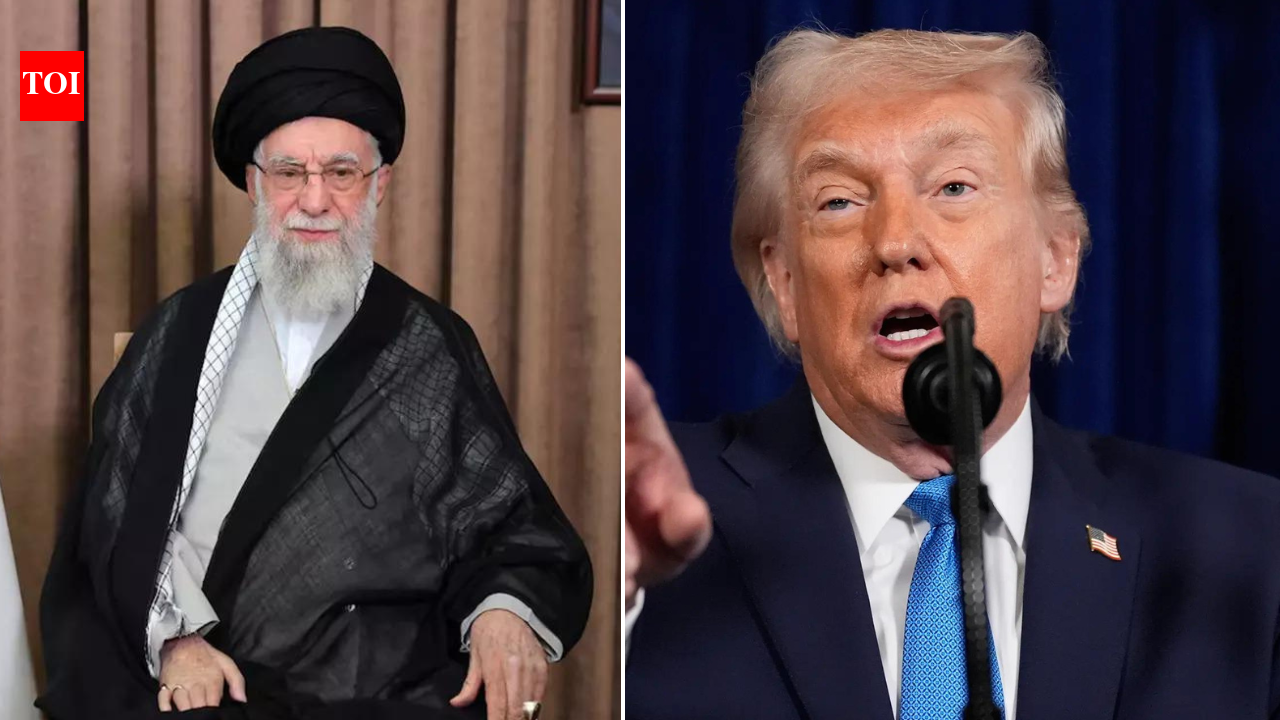
Ali Khamenei and Donald Trump (AP images)

Iran’s deputy foreign minister Majid Takht-Ravanchi said that Tehran is ready to consider compromises to reach a nuclear deal with the United States, provided Washington is willing to discuss lifting sanctions.Speaking in an interview with the BBC in Tehran, Takht-Ravanchi said that the responsibility now lay with Washington. “The ball is in America’s court to prove that they want to do a deal. If they are sincere, I’m sure we will be on the road to an agreement,” he said.His remarks come amid renewed diplomatic efforts between the long-time adversaries. Iran and the United States held indirect talks in Oman earlier this month and are set to meet again in Geneva on Tuesday. Takht-Ravanchi described the initial discussions as “more or less in a positive direction but it is too early to judge.” US President Donald Trump has also characterised the talks as positive, though he has warned that failure to reach a deal could result in military strikes.At the centre of the dispute is Iran’s nuclear programme. Tehran has enriched uranium to levels of up to 60%, close to weapons-grade, raising international concerns that it could move towards developing a nuclear weapon, an accusation Iran has consistently denied.The Iranian official highlighted Tehran’s flexibility, pointing to its offer to dilute highly enriched uranium as an example of willingness to compromise.“We are ready to discuss this and other issues related to our programme if they are ready to talk about sanctions,” he said. He also said that it was “too early to say” whether Iran would agree to ship out its stockpile of more than 400kg of highly enriched uranium, as it did under the 2015 nuclear accord. That agreement, formally known as the Joint Comprehensive Plan of Action, was signed between Iran and world powers but later abandoned by President Trump during his first term. The deal had eased sanctions in exchange for strict limits on Iran’s nuclear activities. Russia, which previously accepted low-enriched uranium from Iran under the accord, has offered to do so again.Iran insists that any new negotiations must focus solely on the nuclear issue. “Our understanding is that they have come to the conclusion that if you want to have a deal you have to focus on the nuclear issue,” Takht-Ravanchi said. He stressed that zero enrichment was not acceptable to Tehran, calling it a red line and a violation of Iran’s rights under the Nuclear Non-Proliferation Treaty. “The issue of zero enrichment is not an issue anymore and as far as Iran is concerned, it is not on the table anymore,” he said, a position that contrasts with President Trump’s recent public remarks that “we don’t want any enrichment.”Takht-Ravanchi also reiterated that Iran would not discuss its ballistic missile programme, despite pressure from Washington and Israel. “When we were attacked by Israelis and Americans, our missiles came to our rescue so how can we accept depriving ourselves of our defensive capabilities,” he said.US officials, including Secretary of State Marco Rubio, have maintained that Iran is responsible for delays in the protracted negotiations.President Donald Trump has expressed support for a deal but warned that achieving one is “very hard to do” and has threatened military action if a satisfactory agreement cannot be reached. The US has also built up its military presence in the region, a move Takht-Ravanchi described as a “potentially traumatic scenario” that would harm all parties involved.The deputy foreign minister expressed concern over what he described as mixed messages from Washington, particularly references by President Trump to possible regime change. “We are hearing that they are interested in negotiations. They have said it publicly; they have said it in private conversations through Oman that they are interested to have these matters resolved peacefully,” he said.He added that such regime change rhetoric was not reflected in private messages conveyed via Oman’s foreign minister.Despite deep mistrust and lingering differences, Takht-Ravanchi said that Iran would approach the upcoming Geneva talks with cautious hope. “We will do our best but the other side also has to prove that they are also sincere,” he said.The second round of talks in Geneva is expected to include US envoys Steve Witkoff and Jared Kushner, with Omani representatives mediating the discussions. Regional powers, including Qatar, are also playing a role in facilitating the dialogue.


Source link

Jason Holder stars with 4-wicket haul as West Indies outclass Nepal to seal the Super 8 spot in T20 World Cup 2026


The ICC Men’s T20 World Cup 2026 has witnessed its first major statement of intent as the West Indies dismantled Nepal in a Group C encounter at the iconic Wankhede Stadium. In the 25th match of the tournament, the Caribbean side showcased a masterclass in disciplined bowling and clinical finishing, securing a 9-wicket victory that officially books their place in the Super 8 stage.

The atmosphere in Mumbai was electric as the start saw the Windies’ pace battery exploit the early moisture and bounce of the Wankhede deck. Nepal, hoping to play the role of giant-killers, found themselves suffocated by a professional West Indian outfit that left no room for error.

Jason holder rips through Nepal with a sensational spell at Wankhede

The narrative of the first innings was written almost entirely by the towering figure of Jason Holder. While Akeal Hosein provided the initial breakthrough by cleaning up Kushal Bhurtel in the very first over, it was Holder who broke the back of the Nepalese batting order. Utilizing his height to extract uncomfortable steep bounce, Holder finished with sensational figures of 4/27 in his four-over quota.

Nepal struggled to build any momentum, collapsing to a precarious 23/4 by the seventh over. Holder’s victims included the dangerous Aasif Sheikh and the set Dipendra Singh Airee, the latter being the only Nepalese batter to offer significant resistance. Airee’s gritty 58 off 47 balls (including three boundaries and two maximums) and a late unbeaten cameo from Sompal Kami (26 off 15) pushed the total to a respectable 133/8. However, against a powerhouse West Indian lineup, a target of 134 always felt sub-par on a ground known for its high-scoring nature.

Also WATCH: Dipendra Singh Airee anchors Nepal with a thrilling counterattack against West Indies at Wankhede

Dominant chase propels West Indies into the Super 8s of T20 World Cup 2026

If the first half of the match belonged to the bowlers, the second was a testament to the West Indies’ batting depth and composure. The chase began with a brief flourish from Brandon King, who struck 22 off 17 before falling to Nandan Yadav in the 6th over. From that point on, it was a one-sided affair as Shai Hope and Shimron Hetmyer orchestrated an unbeaten 91-run partnership.

Skipper Shai Hope led from the front, anchoring the innings with a sophisticated 61 off 44 balls, reaching his half-century with a mix of elegant drives and calculated aggression. At the other end, Shimron Hetmyer played the aggressor role to perfection, bludgeoning 46 off 32 balls to ensure the net run rate remained healthy.

The Windies reached the target of 134 with 28 balls to spare, finishing the game in just 15.2 overs. This victory not only cements their dominance in Group C but also sends a clear message to their upcoming Super 8 rivals. For Nepal, the match served as a harsh lesson in competing against elite Tier-1 nations, though the fight shown by Airee and Kami provided a silver lining to an otherwise tough day at the office.

Also READ: WI vs NEP, T20 World Cup 2026: Here’s why Romario Shepherd is not playing today’s match


Source link

USA 0/0 in 0.0 Overs | USA vs Namibia Live Score, T20 World Cup 2026: USA captain Monank Patel wins toss, opts to bat in Mumbai


USA vs Namibia Live Score, T20 World Cup 2026: The United States of America will look to end their group-stage campaign on a winning note when they take on Namibia in the 26th match of the ICC T20 World Cup 2026 at the MA Chidambaram Stadium in Chennai on Sunday.

The match will start at 3:00 PM and could be crucial for the USA, who still have an outside chance of qualifying for the Super 8 stage.

Namibia, on the other hand, are still searching for their first victory in the tournament. They suffered a seven-wicket loss to the Netherlands in their opening match and then went down to the defending champions in their second game. With nothing to lose, Namibia will be looking to play freely and finish their campaign on a positive note.

The USA’s journey has been up and down. They impressed early against India by reducing the defending champions to 77/6, but Suryakumar Yadav’s unbeaten 84 helped India win by 29 runs. Pakistan then defeated them by 32 runs in their second match. However, Monank Patel’s side made a strong comeback in their third game, registering a massive 93-run victory, their biggest win of the tournament.

In head-to-head meetings, the USA have a clear edge over Namibia, winning both previous encounters. With contrasting campaigns so far, both teams will be eager to secure a win and end the group stage on a high at the iconic Chepauk Stadium.

Squads:

Namibia Squad: Louren Steenkamp, Jan Frylinck, Jan Nicol Loftie-Eaton, Gerhard Erasmus(c), JJ Smit, Zane Green(w), Malan Kruger, Ruben Trumpelmann, Bernard Scholtz, Ben Shikongo, Max Heingo, Dylan Leicher, Jack Brassell, Jan Balt, Willem Myburgh

USA Squad: Monank Patel(w/c), Shayan Jahangir, Saiteja Mukkamalla, Sanjay Krishnamurthi, Shubham Ranjane, Milind Kumar, Harmeet Singh, Mohammad Mohsin, Shadley van Schalkwyk, Nosthush Kenjige, Ali Khan, Shehan Jayasuriya, Ehsan Adil, Saurabh Netravalkar, Andries Gous


Source link

Access Denied


Access Denied

You don’t have permission to access “http://www.ndtv.com/india-news/for-ai-by-ai-hi-tech-security-at-delhi-summit-11006346” on this server.

Reference #18.c7f5d217.1771150772.dcf6704c

https://errors.edgesuite.net/18.c7f5d217.1771150772.dcf6704c


Source link

US, UK universities open offshore campuses in Mumbai; programmes, fees, intake explained | Mumbai News


Image used for representational purpose only.

‘Transnational model of higher edu offers a viable alternative amid immigration curbs’MUMBAI: International universities allowed by the University Grants Commission to set up offshore campuses in Mumbai have begun accepting applications for their first cohort, marking a significant step in the country’s push to attract global higher-education brands. Amid tightening of immigration laws by many countries, such transnational education with universities operating both domestic and offshore campuses offers a practical and forward-looking alternative, a university representative noted.These universities, which will offer undergraduate programmes ranging from computer science, artificial intelligence, economics to business administration and creative industries for annual fees of Rs 12-18 lakh and postgraduate courses for up to Rs 20 lakh, plan to open for the 2026 fall intake (Aug-Sept) in Mumbai. Most are setting up campuses in the eastern suburbs in and around Vikhroli and Powai. They are expected to move to the proposed EduCity in Navi Mumbai, closer to the airport, in coming years.Campus of Illinois Tech is set to open in Vikhroli while University of Aberdeen and UK’s University of York will come up in Powai. York has taken up close to 38,000 sq feet in Powai.Illinois has entered into an MoU with Jamshyd N Godrej, chairman and managing director of Godrej & Boyce, even as they inaugurated the Mumbai campus on Tuesday. President of Illinois Tech, Prof Raj Echambadi, who was part of an interaction, said the 90,000 sq feet space in Vikhroli will have learning facilities and capabilities similar to the main Chicago campus. While the institute opened for admissions this week, a soft launch with campus inquiries started a couple of months ago, said Mallik Sundharam, vice president for enrolment management and student affairs, Illinois Tech. He added that they have close to a thousand plus inquiries from students in India and countries including the Middle East, Africa and southeast Asia. “We have seen students of Indian origin in the US who wanted to come to India for the experience too,” said Mallik.The Tech university will have seconded faculty from the main campus in Chicago. “We are in the process of recruiting foreign faculty from US and other parts of the world. We are also in search of high-talented faculty with US degrees in India…,” said Mallik.Most of the universities are planning intake of 30-40 seats. For undergraduate courses, candidates will need at least 75% in Class XII, while some programmes specify qualifications in mathematics and English. Admissions will be open to international students.At Illinois Tech admissions will be based on high school scores, personal essays, and/or scores in other tests. Its online prospectus says annual fee for the four-year undergrad programme is Rs 16 lakh and fees for graduate programmes is Rs 20 lakh per year.UK’s University of York will be offering BSc (honours) and MSc programmes in finance, cyber security, computer science, artificial intelligence and economics. Their online brochure pegged fees for most UG programmes at Rs 12.5 lakh per annum and the one-year master’s programme at Rs 15-16.5 lakh.According to the provost of York University, Prof Lindsay Oades, it will prioritise research from day one. Prof Oades, who was deputy dean in Department of Education, University of Melbourne, earlier told TOI that it is an exciting time to be in India and be part of the development of higher education following the implementation of the National Education Policy.He said with a global shift towards transnational education, it is increasingly common for universities to operate both offshore and onshore campuses, and for students to complete parts of their degrees across countries. Prof Oades said he finds the model practical as it offers both local and international exposure at a time when several govts are wary about immigration. The university will initially offer courses on business and computer science and expand based on demand. It has already begun recruitment of both Indian and foreign faculty.Scotland’s 500-year-old University of Aberdeen will also be setting up its Mumbai campus in Powai. Aberdeen will offer programmes in data science and computing science, AI and business management, with fees starting at Rs 12 lakh for Indian students. Most universities are also planning to offer scholarships.


Source link