Breaking News
A lot needs to be done, but sports feels like my safe space: Nicolas Keenan | Hockey News


A lot needs to be done, but sports feels like my safe space: Nicolas Keenan
Nicolas Keenan (left) with Rob Jetten and (pic right) the Argentine midfielder during the Paris Olympics. (Credit: Instagram)

Nicolas Keenan, Argentina hockey star and partner of Dutch PM-elect, Rob Jetten, reflects on navigating LGBTQ+ identity in the world of international sportROURKELA: In the keenly-viewed, often-forbidding, rough and tumble world of international sports, it takes courage coming out. Argentina midfielder Nicolas Keenan is among the few openly gay players in men’s hockey. The two-time Olympian came out publicly about his sexuality sometime around 2023, when his relationship with Dutch politician Rob Jetten became public.Go Beyond The Boundary with our YouTube channel. SUBSCRIBE NOW!Leader of the centrist liberal party Democrats 66, Jetten is set to become the youngest prime minister of the Netherlands when his government will be sworn in later this month.Keenan, a regular face on the international hockey turfs of India — the 2016 junior World Cup his first stint here, currently playing the ongoing FIH Pro League — opened up to TOI on what it means to be a professional player from the LGBTQ+ community, FIH’s lack of recognition and how he sees himself as someone who can bring about change in society. Excerpts from an exclusive interview:How does it feel to be part of the LGBTQ+ community as a hockey player, especially since not many players are open about it?Before saying it out loud, it felt a little bit lonely because as you said, not many players were there that I could look up to. But when I started to explain my story, I began getting lots of messages from people in similar situations in hockey, other sports and different walks of life. So, it felt that the community was really supportive and that I was not alone on my journey.Several players, including Nike Lorenz, Mats Grambusch and Kaitlin Nobbs, have worn rainbow bands during matches. How important are symbols like these?I think symbols are important. I wish when I was growing up as a young hockey player, I had more of these around. But even now, as an experienced player, I feel there is a lot of work to be done. It’s nice to see and visualise these symbols, but at the same time, they can feel quite superficial in some ways.How can international sports federations, and the FIH in particular, do more to support the community?If you talk about FIH (International Hockey Federation), I really don’t know who FIH is. I wish I would have heard from them the moment my story came out, but I’ve never been reached. But other federations have reached out to me and I think it’s really important that federations in general try to create safe environments where people feel safe enough to be their true selves.What kind of response did you get from the Argentine and Dutch federations where you play club hockey for HC Klein Zwitserland?The president of the Argentinian federation was the minister that passed the law of equal marriage in Argentina. So, he was one of the first to text me. The Dutch federation has a special group that works on these kinds of issues. They always ask me how they can do better. But I tell them, don’t put all the weight on your shoulders, because it’s not just about the federation or the sport. There need to be changes in society. It’s something deeper.How does it feel to be in a position to inspire others?At the beginning, I was shy. But after I started receiving messages from people saying, ‘You made my day’ or ‘I can finally look up to someone’, I spoke with my partner. It was tricky at first because it made me sad to see so many people going through difficult situations. But after that conversation, I realised that if I can change someone’s day, it also makes mine. It’s not about becoming a figure or trying to reach a certain status. It’s about that young kid who might not even notice it now, but in 10 or 15 years might think, ‘Oh, Nico was there’.Could you tells us a bit about Rob Jetten, your partner, who is going to be the youngest PM in the Netherlands?As a young kid his passion was politics and to help people. So, it’s inspiring to see how he made his way being himself till he reached the top. Even if we come from two completely separate worlds, sports and politics, we have some similarities. Being with him inspired me to be myself and knowing that no matter who I am, who I love, I can still reach the top and be the best version of myself.And what it was like being in Buenos Aires in your youth and how did sport play a role in your growing up?We have a big club culture in Argentina. So, I played for the club Ciudad de Buenos Aires where my parents and grandparents played. It was a safe environment where my parents would just drop me off and I would be there the whole weekend playing different sports, mainly hockey. It’s where I made friends. So, sports for me feels like home. It feels like a safe space I can be in.


Source link

Rohit Shetty residence firing case: 6 more arrested from Rajasthan; total arrests 11 | Mumbai News


MUMBAI: Six more accused have been arrested in connection with the firing incident outside filmmaker Rohit Shetty’s house on Monday.The individuals were apprehended from Rajasthan and are being brought to Mumbai, the Mumbai Crime Branch said, according to news agency ANI.“A total of 11 people have been arrested so far,” officials added.

Rohit Shetty firing case takes a stunning turn; Crime branch traces trail to Bishnoi gang

Earlier, the five accused were produced before a special Maharashtra Control of Organised Crime Act (MCOCA) court on Wednesday.The Mumbai Police have invoked sections of the Maharashtra Control of Organised Crime Act (MCOCA), suspecting an organised crime network is behind the attack. The court remanded all five accused to police custody until February 17.Following the invocation of MCOCA, defence advocate Ajinkya Mirgal said, “MCOCA has been added today…They( police) said in the court that the weapon recovered from accused number one, Sakat, was given to him by Praveen Lonkar, who is involved in the Baba Siddique murder case and has been in jail for one and a half years. We stated that he has been in jail for a year and a half. When and how did he get the weapon? This possibility seems a little doubtful to us.”The arrests follow the February 1 incident when Mumbai Police apprehended four individuals shortly after assailants fired four rounds outside Shetty’s residence. They were sent to police custody. The fifth accused was arrested on February 5 and produced before the court along with the others.After the hearing, the judge remanded them to police custody until February 11, 2026, citing the seriousness of the offence and the criminal conspiracy. The court also noted the need for a detailed investigation and joint interrogation and ordered custody of the five accused. During the hearing, police informed the court that a social media post had claimed responsibility for the incident.Police said the accused communicated via the Signal app to maintain secrecy and are seeking additional deleted chats with Shubham Lonkar. They requested maximum custody for the four individuals previously arrested and a 10-day custody for the fifth accused, Asaram Fasle alias Babu.The Mumbai Crime Branch’s investigation revealed that the accused weapon supplier, Asaram Fasle, had been working as a garage mechanic for the Bishnoi gang for the past four years. He joined the gang under the influence of Shubham Lonkar, alleged to be the mastermind behind both the Baba Siddique murder case and the Rohit Shetty firing incident, police said.The Crime Branch claims that Fasle, on Lonkar’s instructions, handed over weapons to Swapnil Sakat, which were later used by the unidentified shooter in the firing.For the first accused, his lawyer argued that he was not present at the scene during the incident and was arrested on circumstantial evidence. He also stated that there is no established link between the accused and Shubham Lonkar.


Source link

Revealed! India storm into Super 8s after Pakistan thrashing: Who’s next? | Cricket News


Revealed! India storm into Super 8s after Pakistan thrashing: Who's next?
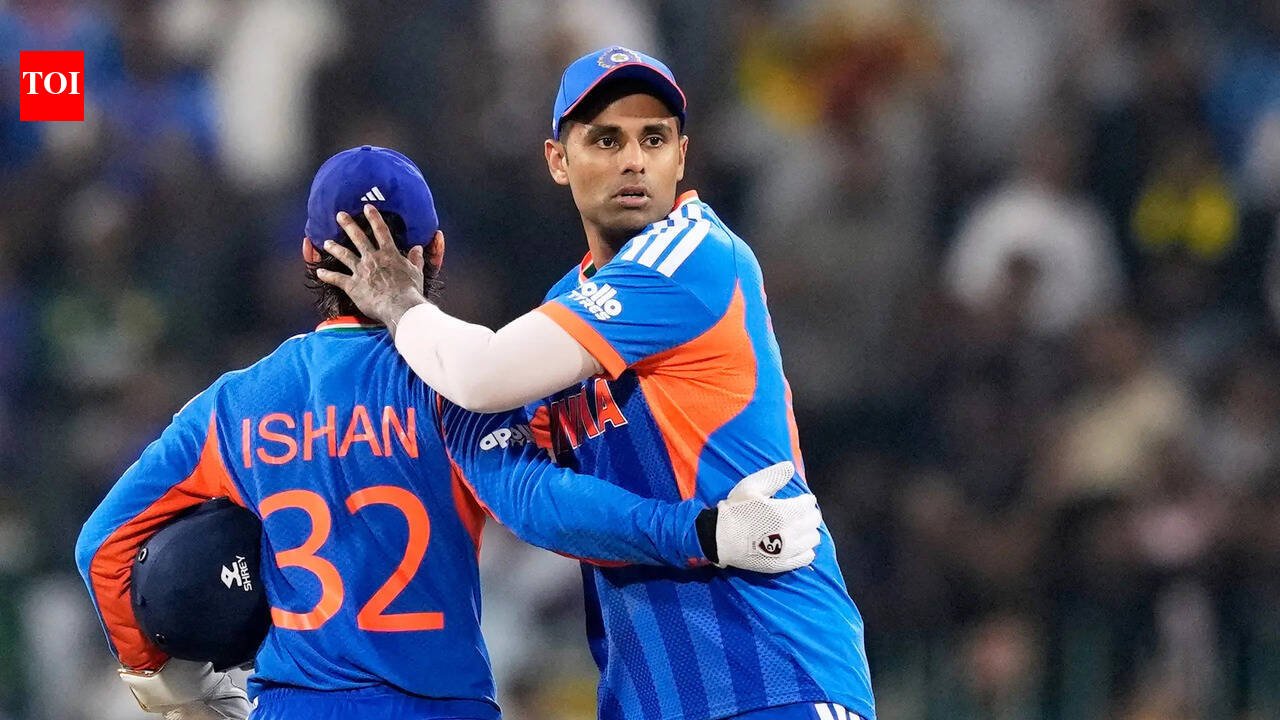
India’s captain Suryakumar Yadav, right, and Ishan Kishan celebrate against Pakistan (AP Photo/Eranga Jayawardena)

NEW DELHI: India crushed Pakistan by 61 runs to secure a place in the Super 8s stage of the T20 World Cup on Sunday. Ishan Kishan starred with a brilliant 77, helping India reach 175/7, before the bowlers dismissed Pakistan for just 114 in 18 overs.After qualifying, India captain Suryakumar Yadav praised his team and said, “I think this is for India,” adding, “Batting first was (the) better option on this wicket.”

Axar Patel press conference: ‘We see them as a team, don’t see rivalry’ after India beat Pakistan

He also praised Kishan’s knock, saying, “Ishan thought outside the box. After we were 0-1, someone had to take responsibility and the way he took it was amazing.”With the win, India have qualified for the Super 8s. Their schedule in the next round includes matches against South Africa, one of Zimbabwe or Australia, and West Indies, as they continue their title defence.India’s matches in Super 8s of T20 World Cup 2026

  • IND vs SA (Feb 22, Ahmedabad)
  • IND vs ZIM/AUS (Feb 26, Chennai)
  • IND vs WI (Mar 1, Kolkata)

However, before beginning their journey in the Super 8s, Team India will play against Netherlands on Wednesday at the Narendra Modi Stadium in Ahmedabad On Sunday, Pakistan’s chase fell apart quickly. They lost three wickets in the first two overs, including captain Salman Agha and opener Sahibzada Farhan. When Babar Azam was bowled for five, Pakistan were in deep trouble. Usman Khan tried to fight back with 44, but once he was stumped, the rest of the batting collapsed.Earlier in the match, the two captains again avoided shaking hands at the toss, continuing a pattern seen in the Asia Cup last year. The match itself was confirmed only days earlier after political uncertainty about Pakistan’s participation.Kishan played fearlessly, scoring his fifty in just 27 balls and attacking the bowlers all around the ground. His innings gave India a strong base, and the bowlers made sure Pakistan never came close in the chase.


Source link

‘Will not take any step in secrecy’: Former Assam Congress chief Bhupen Borah resigns ahead of assembly elections | India News


'Will not take any step in secrecy': Former Assam Congress chief Bhupen Borah resigns ahead of assembly elections
File photo of Bhupen Borah (PTI photo)

NEW DELHI: Former Assam Congress chief Bhupen Kumar Borah resigned from the party ahead of the upcoming elections in the state.In his letter to the Congress, he claimed that he was being “ignored” by the party leadership and was not being accorded his due in the state unit.“I sent my resignation to the Congress High Command at 8 am this morning and explained in detail why I was compelled to take this stand. This is not a personal decision. I have given 32 years to the party and joined it in 1994. This principle is not merely personal; it is driven by concern for the party’s future. That is why I conveyed everything in detail to the Congress High Command,” Borah told reporters.Borah was the president of Assam Congress unit from 2021 to 2025 and was replaced by Gaurav Gogoi last year. He has been a two-time legislator in Assam. Asked if we would join any other party before the elections, Borah said no party has given him ”any proposal till now”.“There has been no formal proposal from any political party, but it is a fact that I have not taken the decision to resign to bid farewell to politics,” he said. The Assam assembly elections for 126 constituencies are likely to take place in March-April this year, and the Congress is looking to contest the polls in an alliance with several other opposition parties.Presently, the ruling BJP’s strength in the 126-member Assam Assembly is 64, while its allies AGP has nine MLAs, UPPL has seven, and BPF has three members.In the opposition camp, the Congress has 26 members, AIUDF 15 and CPI(M) has one MLA. There is one Independent legislator also.


Source link

What will humans look like in a million years? The answer may surprise you |


What will humans look like in a million years? The answer may surprise you

Thinking about human appearance far into the future tends to drift into science fiction, but the question is rooted in real science. Human bodies have never been fixed. They have shifted with climate, food supply, disease, movement and technology. A million years ago, humans did not look as they do today, and there is little reason to assume today’s form will last unchanged. Genetics, population growth and medical intervention all continue to shape people in quiet ways. Scientists are cautious about long-range predictions, yet patterns can be observed. By looking at fossils, recent human history and present demographic trends, researchers can outline pressures that may influence future human appearance. The picture that emerges is uncertain, uneven and shaped as much by choice and technology as by natural evolution itself.

Smaller bodies, darker skin, and tech-enhanced brains: How humans could evolve next

According to an article published on BBC Earth a million years ago, modern humans were absent. Instead, species such as Homo erectus and later Homo heidelbergensis lived across parts of Africa and Eurasia. They had heavier bones, stronger brow ridges and different body proportions. Homo sapiens appeared much later. The fossil record suggests slow shifts rather than sudden transformations.In the last 10,000 years, agriculture reshaped daily life. Reliable food supplies changed height and weight patterns. Some populations grew taller, others heavier. Diseases linked to diet increased, but medicine allowed many people to survive and reproduce. Evolution did not stop. It simply took a different route.

Crowded living might be a new environment that favours new traits

Our daily life requires us to be in constant social contact with others. This situation is considered a novelty in evolutionary terms. Some researchers think that abilities related to memory, communication and stress tolerance might become more significant. Also, there might be a change in the physical size as smaller bodies may need less energy in crowded places.

Human biology is getting merged with technology

Medical implants nowadays help to support hearts and joints as well as hearing. In the future, technology may not only be about repair but will also focus on enhancement. Brain implants and artificial eyes are currently being researched, but they are still at an experimental stage. If such devices become widespread, the exterior appearance could show technology as much as biology.

Population trends are the major influencers of the global features

The growth rate of the population varies drastically in different parts of the world. The fast growth of some parts of Africa indicates that some genetic traits may increase globally. Scientists suppose that darker skin tones may become more prevalent as demographic patterns have more influence than selection alone on the change.

Extra, terrestrial Life would cause a reshaping of the body

Living for an extended period on a planet like Mars may lead to muscle and bone atrophy due to lower gravity. Such alterations would most probably take place gradually, over many generations.Human variability is on the rise instead of decreasing. The destiny of the shape of humans is thus not predetermined and is continuously influenced by movement, free will and time rather than a single path.


Source link

‘Concerns wrong’: Why Nasscom president is not worried about AI taking tech jobs


'Concerns wrong': Why Nasscom president is not worried about AI taking tech jobs

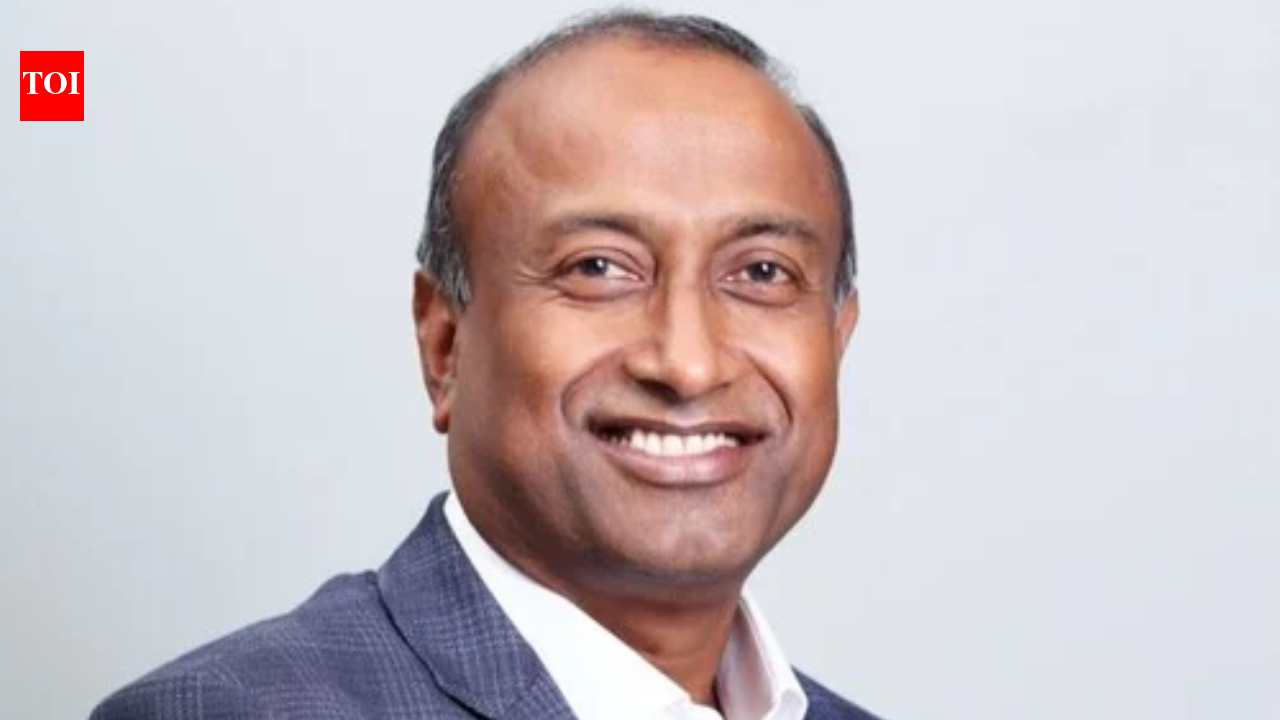
Rajesh Nambiar Nasscom president

Nasscom President Rajesh Nambiar has strongly dismissed fears that AI tools will eliminate technology services jobs, despite market concerns wiping out $50 billion from Indian IT companies’ market value since 2025. He emphasizes that large enterprises’ complex technology needs and regulatory requirements make IT services essential, even as AI adoption grows.“Concerns that such tools, whether it is Claude Cowork or something else, will eliminate technology services are strongly wrong,” Nambiar told ET, highlighting the vital role IT companies play in managing enterprise systems.While analysts predict AI tools like Anthropic’s Cowork plugins and Palantir’s ERP software could reduce revenue growth by 2% annually over the next few years, Nambiar believes the $283 billion industry can adapt successfully.He explains that IT service companies need to shift from being system integrators to AI orchestration partners. Their value comes from deep enterprise knowledge, which becomes more important as AI tools become common.“Tech adoption among enterprises is moving from experimentation to large-scale deployment. When they do, service companies will play a critical role in making sure that they can help these companies make the transition,” Nambiar explained.Companies that have invested in platforms, people, and partnerships with global corporations are better positioned to succeed. India’s large talent pool gives it a significant advantage in this transition.Addressing concerns about US H-1B visa interviews, Nambiar remained optimistic. He noted that IT companies have enough local capacity in the US to handle their needs.Nasscom is preparing to share its yearly strategic review at its upcoming Technology and Leadership Forum in February, where these industry trends will be discussed in detail.


Source link

Absence of saptapadi alone cannot invalidate marriage: What Delhi High Court said on a Hindu marriage


Absence of saptapadi alone cannot invalidate marriage: What Delhi High Court said on a Hindu marriage
The Court emphasized that Section 7 does not prescribe a uniform ritual requirement but recognizes diversity of customary practices. (AI image)

Restating the legal presumption in favor of the validity of marriage, the Delhi High Court has held that, in the absence of direct evidence showing performance of Saptapadi, the traditional taking of seven steps before the sacred fire, such absence alone does not render a Hindu marriage invalid. The Court noted that when the circumstances show that the parties did undergo some sort of marriage ritual and then proceeded to live together as a married couple, the presumption of legitimacy remains strong, particularly when a child has been born from the union.Delivering judgement on 27.08.2025 in an appeal under Section 19 of the Family Courts Act, a Division Bench comprising of Justice Anil Kshetrapal and Justice Harish Vaidyanathan Shankar dismissed a husband’s challenge to a Family Court ruling which had rejected his plea seeking declaration that his marriage was null and void on the ground that Saptapadi had not been performed.The appeal arose from proceedings in which the appellant sought declaratory relief and a permanent injunction, arguing that the essential marriage ceremonies were absent. The Family Court had ruled the claim was unfounded based on oral and documentary evidence, leading to the present appeal.Before examining the factual controversy, the High Court analyzed the statutory scheme under Section 7 of the Hindu Marriage Act, 1955, which governs ceremonies required for solemnization. The Bench noted that the provision grants flexibility regarding rites and ceremonies rather than mandating uniform ritual compliance.Referring to the statute, the Court observed:“Sub-section (1) of Section 7 confers discretion on the parties to solemnise marriage as per the customs and ceremonies of either party, without mandating any particular ceremony.”It further clarified the role of Saptapadi within this framework:“Thus, performance of Saptapadi is not an indispensable requirement in every case to establish a valid marriage. Sub-section (2) only clarifies that where Saptapadi is a part of the customary rites performed, the marriage attains completeness and binding force with the seventh step.”This interpretation of the statute was the basis of further consideration of the Court on the argument that the non-performance of Saptapadi by the appellant made the marriage void.The Court emphasized that Section 7 does not prescribe a uniform ritual requirement but recognizes diversity of customary practices governing solemnization. The provision, therefore, requires examination of surrounding circumstances and evidence rather than mechanical insistence on proof of a specific ceremony.As per the pleading before the Court, the parties exchanged garlands in Delhi on 19.06.2016. According to the appellant, ceremonies, which are in accordance with the relevant customs, such as the Saptapadi, were never performed. It was admitted, however, that thereafter, the parties continued to stay together and that the marriage was consummated and a daughter was born out of marriage.Appellant argued that he lived with the respondent until October 2016 but subsequently decided that the marriage was invalid because it did not include necessary rituals. The respondent refuted this version, saying that in October 2017, she had been pushed out of her matrimonial home and that ceremonies were actually conducted, including the Saptapadi ceremony.Following trial, the Family Court dismissed the husband’s suit, holding that he failed to substantiate his allegations. The appellate proceedings therefore centred on whether this conclusion suffered from legal or evidentiary infirmity.Evidentiary Contentions Before the High CourtThe main argument of the appellant was based on the inference of evidence. Counsel argued that the respondent had failed to produce a marriage album documenting the ceremony and the court ought to have made an adverse inference against the respondent. It was submitted that absence of proof of Saptapadi indicated that the marriage lacked legal validity.Opposing the appeal, the counsel for the respondent argued that the appellant bore the burden of proof and that no ceremonies were performed, especially when he was the one who wanted to have marital status nullified. The respondent insisted that rituals were carried out and stressed the fact that cohabitation and a child was born.After examining the record, the High Court observed that there were some significant weaknesses in the approach of the appellant to evidence. In the process of entering the witness box and submitting the affidavit reiterating his claim, he did not even examine any priest, guest or elder that was there at the ceremony to substantiate his statements. The Bench noted that these omissions were significant weakening factors to the plea that the necessary rites were not performed.Presumption of Marriage and LegitimacyThe Court’s reasoning then shifted to the doctrine of presumption favoring marriage validity. Referring to established jurisprudence, including precedent from the Bombay High Court, the Bench emphasized the legal principle that long cohabitation and societal recognition reinforce presumptions of lawful marriage.The Court highlighted:“When a man and a woman live together as husband and wife for sufficiently long time and were treated as husband and wife… there is always a presumption in favour of their marriage. If children are born to such a couple, there is a further presumption in favour of their legitimacy.”Using this doctrine and the facts, the Bench observed that the appellant himself admitted cohabitation and marital relationship. The birth of a child further strengthened the presumption of a valid marriage. The Court said that such presumption is not weakened merely by absence of direct proof of Saptapadi or similar ceremony, especially when some form of marriage ceremony is acknowledged.On the submission involving the failure to produce a marriage album, the Court rejected the argument that an adverse inference ought to be drawn. It held that the onus was on the appellant to prove the absence of ceremony and not on the respondent to prove it took place.The bench observed:“The burden of proof being on the Appellant to establish that no Saptapadi was performed, an adverse inference cannot be drawn against the Respondent for not producing the marriage album.”It further noted that even production of photographs would not conclusively determine whether Saptapadi occurred, underscoring limitations of such evidence.Final DeterminationAfter an examination of statutory provisions, evidence, and presumptive doctrines, the Court determined whether it was appropriate to interfere with the findings of the Family Court. It held that the trial court had made a decision resting on a plausible evaluation of the evidence, and that the decision had not revealed an error to be corrected by the court of appeals.The Bench recorded that the appellant failed to discharge the burden of proof necessary to invalidate the marriage and that the presumption of legitimacy remained intact in light of admitted cohabitation and parenthood.Accordingly, the Court held:“We do not find any reason to interfere with the impugned judgement because the conclusion of the Family Court is plausible and possible.”The appeal was dismissed, affirming the Family Court’s rejection of the husband’s suit seeking declaration of nullity.MAT.APP. (F.C.) 317/2023 X vs YFor Appellant: Mr. Deepak Kumar Sharma, AdvocateFor Respondent: Mr. S.P. Yadav and Mr.Deepak Kumar, Advocates(Vatsal Chandra is a Delhi-based Advocate practicing before the courts of Delhi NCR.)


Source link

Parbhani mayor pick ‘reward for Muslims’ support to UBT’ | Mumbai News


MUMBAI: The anointment by Shiv Sena (UBT) of its Muslim corporator Syed Iqbal Syed Khwaja as mayor of Parbhani shows the party’s acknowledgement of the contribution of Muslims in strengthening the party in the town in Marathwada, UBT functionaries said. Khwaja is the first Muslim mayor in Parbhani’s history. In the 65-member house, Sena (UBT) has 25 corporators, Congress 12, NC, BJP 12, Janswaraj Paksha 3, Ratnakar Yashwant Sena 1 and independent 1. Once part of the Nizam state, Parbhani became a bastion of the undivided Shiv Sena from 2014, when its candidate Sanjay Jadhav became MP with substantial Muslim support. Later, Dr Rahul Patil became Sena (UBT) MLA from Parbhani town, retaining the party’s influence among Muslims. “Udhhav Thackerayji has rewarded our loyalty to him. There were attempts to divide us, but we got the lead and I was elected mayor,” Khwaja said.Khwaja’s elder brother Syed Qadar Khwaja, an education activist in Parbhani, is credited with Sena (UBT)’s good performance there. “Syed Qadar Khwaja has been at the forefront of many campaigns and worked hard to get so many seats for Sena (UBT),” said local Urdu journalist Syed Yousuf. Khwaja’s election as mayor has come as a shot in the arm of Muslims in the Sena (UBT). “This shows Udhhav Thackeray sahab’s sense of justice. He acknowledged the contribution of Muslims in strengthening his party in Parbhani and rewarded this. This will help the party spread its footprint among Muslims,” said Sajid Supariwala, Sena (UBT)’s “Muslim voice.” He added that in Mumbai, with three Muslim corporators-Sakina Ayub Shaikh, Zeeshan Changez Multani and Saba Haroon Shaikh–the party has already proved that its appeal in the community is increasing, “no matter how much the BJP mocks us.”A BJP leader reportedly criticized Sena (UBT) after it made a Muslim mayor in Parbhani by saying that “from now, Uddhav’s party should be called ‘Janab Sena’.” Another BJP leader said Uddhav has made a “Khan (read Muslim) a mayor in Parbhani, something he could not achieve in Mumbai.” New Delhi: More than 75% of state real estate regulators, Reras, have either never published annual reports, discontinued their publication or not updated them despite statutory obligation and directions from the housing and urban affairs ministry, claimed homebuyers’ body Forum For People’s Collective Efforts (FPCE) on Friday. It released status report of 21 Reras as of Feb 13.The availability of updated annual reports is crucial as these contain details of data on performance of Reras, including project completion status categorised by timely completion, completion with extensions, and incomplete projects. The ministry’s format for publishing these reports also specifies providing details such as actual execution status of refund, possession and compensation orders as well as recovery warrant execution details with values and list of defaulting builders.“Unless we have credible data proving that after Rera the real estate sector has improved in terms of delivery, fairness, and keeping its promises, we are merely firing in the air,” said FPCE president Abhay Upadhyay, who is also a member of the govt’s Central Advisory Council on Rera.As per details shared by the entity, seven states – Karnataka, TN, WB, Andhra Pradesh, Himachal Pradesh and Goa – have never published a single annual report since Rera’s implementation, and nine states, including Maharashtra, UP and Telangana, which initially published reports, have discontinued the practice. FPCE said annual report data is not only vital for homebuyers, but is also necessary for framing policies.


Source link

Stocks to buy: What’s the outlook for Nifty for February 16-20 week? Check list of top stock recommendations


Stocks to buy: What's the outlook for Nifty for February 16-20 week? Check list of top stock recommendations

Top stocks to buy (AI image)

Stock market recommendations: Arvind, and Bajaj Finance are the top stock picks by Sudeep Shah, Head – Technical Research and Derivatives, SBI Securities for the week starting February 16, 2026. He also shares his views and outlook on Nifty, Bank Nifty:Index View: NiftyLast week, the Nifty once again struggled to hold above the psychologically important 26000 mark, triggering a fresh wave of profit booking. After briefly touching 26009, the index slipped nearly 550 points in the final two sessions alone—a swift reversal that clearly reflects supply pressure at higher levels. While the headline decline may appear routine, the forces driving this correction point to deeper shifts beneath the surface.A major drag came from the Nifty IT index, which suffered a steep 8% weekly fall and is now down more than 14% month-to-date, making it one of the sharpest sectoral losers in recent months. The sell-off has been aggravated by growing concerns over the rapid rise of AIled start-ups, which investors increasingly view as structurally disruptive to traditional IT services. The speed and extent of the decline suggest this may not just be a short-lived pullback, raising the critical question of whether the sector has fully priced in the evolving risks.Technically, the IT space continues to flash strong warning signals. Every key constituent of the Nifty IT index is now trading below its major moving averages, all of which are trending firmly downward. Momentum indicators remain deeply bearish, with no signs of stabilization or reversal. In this environment, bottomfishing attempts could prove premature unless charts begin to show a meaningful shift.Turning back to the broader Nifty, the index has slipped below its 20day, 50day, and 100day EMAs, reflecting clear deterioration in both short and medium term trend strength. Notably, the 20day and 50day EMAs have also begun to slope downward—an early yet powerful indication of weakening momentum. The daily RSI’s failure to reclaim the 60 level during the recent pullback, followed by a dip below its 9day average, suggests that upside potential may remain restricted for now.Looking ahead, the 25350–25300 zone is expected to act as immediate support. A decisive break below 25300 could pave the way for a deeper slide toward 25100, and subsequently the key 24900 level. On the upside, the 50day EMA zone at 25650–25700 now stands as a stiff barrier and will need to be cleared for the index to regain any meaningful momentum.Bank Nifty ViewThe Bank Nifty outperformed the frontline indices last week, ending the week on a flat note despite heightened volatility in the broader market. For most of the week, the index remained stuck in a narrow 431point range, signalling a clear phase of consolidation. This stability, however, broke on Friday as the index slipped into a range breakdown, indicating the first signs of weakness after several sessions of subdued price action.Despite Friday’s dip, Bank Nifty continues to hold above all its major moving averages, which remain in an upward trajectory—underscoring that the broader trend structure is still intact. However, momentum indicators and oscillators are pointing towards a sideways-to-neutral bias, suggesting that the index may continue to consolidate before any meaningful directional move emerges.In the days ahead, the 20day EMA zone of 60000–59900 will act as immediate support. A sustained breakdown below 59900 could open the gates for further decline towards the 50day EMA, currently placed near 59467. On the upside, the 60600–60700 zone remains a critical resistance area, and only a decisive close above this band may set the stage for a fresh upward move.

Stock recommendations:

ArvindArvind has delivered a downward sloping trendline breakout on the weekly chart, backed by strong follow-through price action and rising volumes, which adds credibility to the move. Weekly RSI has jumped from 43 to 65, signalling a sharp improvement in bullish momentum and a shift toward strength territory. ADX is rising steadily, indicating that trend strength is expanding on the upside. Rising MACD histogram bars further show increasing positive momentum and growing bullish control. Overall, the price structure and indicator alignment suggest the stock is well positioned to extend its up move in the coming sessions. Hence, we recommend to accumulate the stock in the zone of 386-383 with a stoploss of 370. On the upside, it is likely to test the level of 420 in the short term. Bajaj FinanceBajaj Finance has broken out above a downward sloping trendline on the daily chart, pointing to a potential shift from correction to fresh uptrend. On the weekly chart, a three outside up candle pattern is visible, where a strong bullish candle fully engulfs the prior bearish candle and is followed by further upside, a classic bullish reversal structure. RSI has surged from 39 to 56 in three sessions, reflecting sharp momentum recovery. In ADX, DI+ crossing above DI− shows bullish directional strength is building. Meanwhile, shrinking red MACD histogram bars indicate that downside momentum is fading and buyers are gradually taking control. Hence, we recommend to accumulate the stock in the zone of 1025-1035 with a stoploss of 1000. On the upside, it is likely to test the level of 1100 in the short term.(Disclaimer: Recommendations and views on the stock market, other asset classes or personal finance management tips given by experts are their own. These opinions do not represent the views of The Times of India)


Source link

Over 300 prisons running at twice their capacity | India News


Over 300 prisons running at twice their capacity

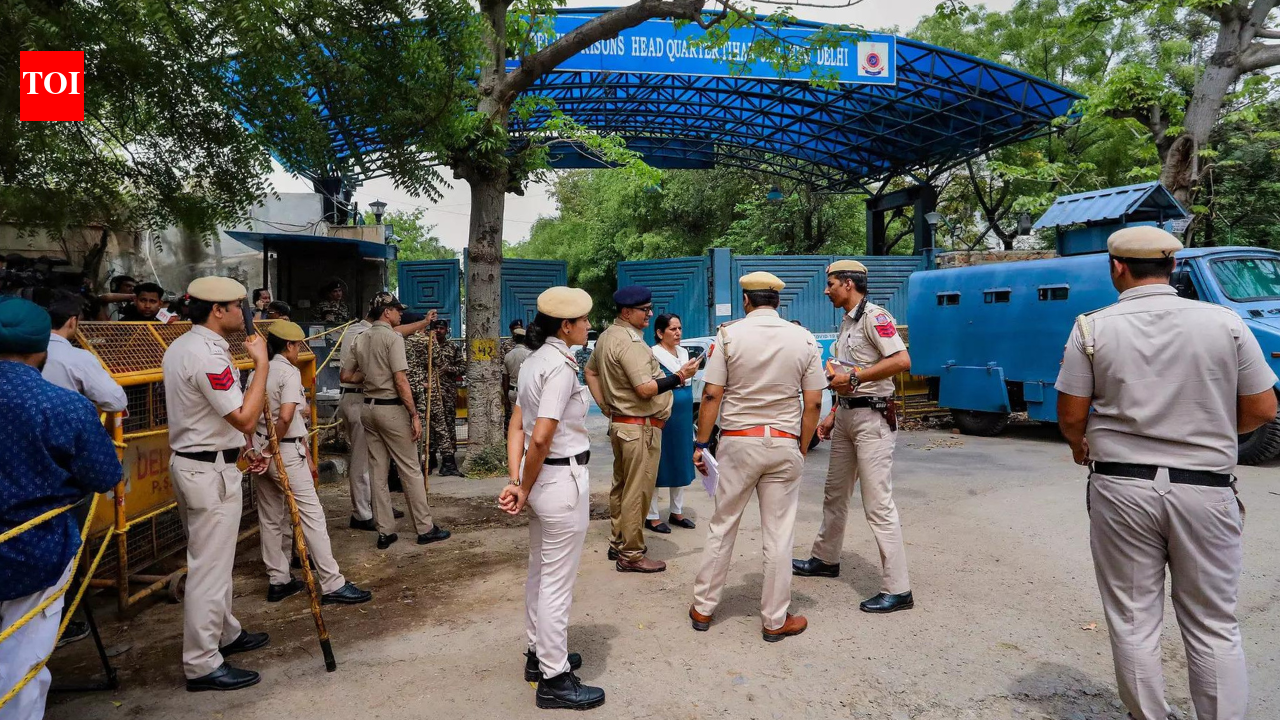
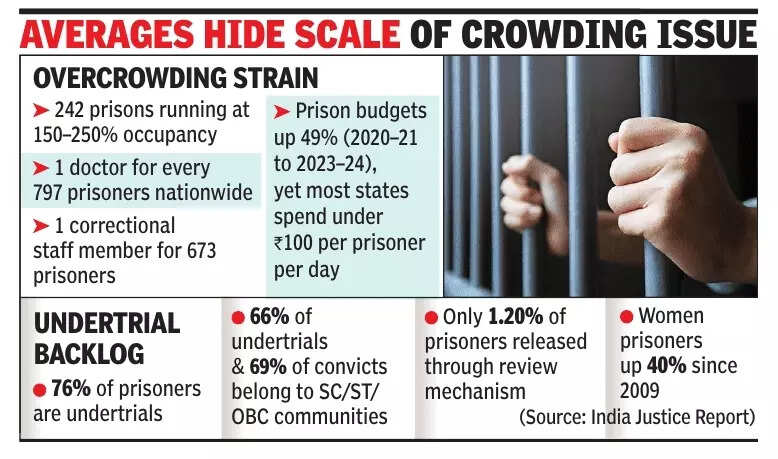
On paper, India’s prison crisis is usually flattened into neat averages. Occupancy hovers at 121%, budgets have inched up, new capacity added. The lived reality is less reassuring.In parts of the country, jails are operating without doctors, without counsellors, and with inmates left in limbo even as the barracks continue to fill.New data presented last week at a national consultation on prison overcrowding by the India Justice Report in collaboration with Prayas, a field action project of the Tata Institute of Social Sciences, shows the scale of the strain. Over 300 prisons across India are running at twice their capacity, a level at which even basics like sleeping space, healthcare and supervision become difficult.The report on prison capacities cautions that state and national averages often mask ground realities. Individual jails reveal far more extreme pressure points. In Delhi’s Central Jail No. 4, overcrowding has risen steadily since 2020, reaching 550% in 2023. Danapur Sub-Jail in Bihar and Gumla district jail in Jharkhand have operated at over 300% capacity, while Kandi Sub-Jail in West Bengal peaked at 450% in 2022.The biggest reason prisons remain this crowded is not a surge in convictions, but delay. Around 76% of India’s prison population consists of undertrials, many of whom have not been found guilty of any crime. They are also spending longer periods inside. The share of undertrials jailed for three to five years has nearly doubled over the past decade, and in 2023, nearly one in four undertrials nationwide had already spent between one and three years in prison. In West Bengal, Manipur and Jammu & Kashmir, the proportion is even higher.Who stays stuck in this waiting room of justice is not random. Around two-thirds of undertrials and nearly 70% of convicts come from SC, ST or OBC communities that often have less access to legal help and fewer resources to secure bail quickly. While caste data is unavailable, the overrepresentation of marginalised communities inside prisons is telling of social inequalities.Around 30% of guarding staff posts are vacant nationwide, while 29 states have not sanctioned even a single mental health professional for prisons, despite rising stress and self-harm among inmates. Although the model prison manual mandates 1,150 psychiatrists nationwide, only 65 posts have been sanctioned and just 35 filled, leaving a policy vacuum in prison mental healthcare. Medical care is similarly stretched, with one doctor for every 797 prisoners on average and far worse ratios in some states. Karnataka and Nagaland report having no prison doctors at all, and rely instead on occasional visits from district hospitals.For Prof Vijay Raghavan, project director of Prayas (TISS), the problem lies in how prison reform is framed. “Typically when you talk of overcrowding, you say we need more space, toilets, beds… But how can we look at it from a different perspective where even if the prison capacity doesn’t increase too much, we can still have better living conditions and fewer people in our prisons,” he said, arguing that the focus must shift from building more jails to non-custodial alternatives.Around 30 NGOs at the consultation, many of them working inside prisons, said these shortages are worsened by restricted access. Human rights advocate Ajay Verma pointed out that while states like Maharashtra and Karnataka still allow social workers into prisons, many others do not. “Security concerns could be addressed through police verification rather than blanket denial,” he argued. What irks Raghavan is that religious groups are often allowed entry, while trained social workers are kept out.Verma’s teams meet prisoners regularly during mulaqat. Once trust is built, prisoners begin to talk. “Regular, sustained meetings, once every fortnight for a few focused hours, can make the difference between prolonged detention and a workable bail application,” he said.

India Prison

A CSO working in Karnataka recommends creating a social and economic profile of every undertrial at the point of admission, recording family ties, housing and livelihood. When shared with courts, this data can support bail on personal bond. Southern states often show lower occupancy rates, sometimes under 100%, but the same CSOs caution that this is partly because new prisons have been built and not necessarily real reduction in incarceration.For Murali Karnam of National Academy of Legal Studies and Research, meaningful reform depends on how early civil society intervenes. “There is no point in getting a bail under trial after three months. You are expected to be there for three months in any case. But because of our intervention, we are able to get it after 15 days of arrest, that’s the hallmark of intervention,” he said, stressing on the need to strengthen prison legal aid clinics.Karnam argued that social workers are often more effective than lawyers in the early stages. “They’re able to identify multiple needs,” he said, pointing at the many undertrials who remain inside despite having bail orders simply because families are not informed or cannot navigate the system. Money alone, however, cannot solve the problem. Although prison budgets have increased in recent years, many states still spend less than Rs 100 a day on each prisoner, even as new criminal laws under the BNNS Act are expected to push numbers up further.At the consultation, Salman Azmi, member secretary of the Maharashtra State Legal Services Authority, said judges today are more sensitised to prison conditions, partly because jail visits are now institutionalised. But the real challenge, he argued, is stopping incarceration before it begins. “Many problems start at the police station. A structured pre-arrest legal aid mechanism could prevent thousands from entering overcrowded prisons in the first place.For now, review committees meant to ease pressure have made only a small dent, with just over 1% of prisoners released nationwide, which isn’t merely a numbers problem, but one that plays out daily behind prison walls.


Source link