Breaking News
Mahayuti govt cancels 5% Muslim quota: What was it, why it was scrapped and why opposition is angry | India News


Mahayuti govt cancels 5% Muslim quota: What was it, why it was scrapped and why opposition is angry

NEW DELHI: The Mahayuti government in Maharashtra has formally cancelled the five per cent reservation for Muslims in jobs and education.The Social Justice Department on Tuesday issued a Government Resolution (GR) cancelling its 2014 order that had granted a 5 per cent reservation to the Muslim community in educational institutions and government and semi-government jobs — a provision that had already been legally invalidated over a decade ago.The reservation was introduced in July 2014 through an ordinance, classifying Muslims under the Special Backward Class-A (SBC-A) category. However, the policy was challenged in the Bombay High Court, which stayed its implementation in November 2014.What was the 5% Muslim quotaThe five per cent reservation for Muslims was introduced in July 2014 by the then Congress–NCP government through an ordinance. The move came alongside a 16 per cent reservation for Marathas and was pitched as a response to socio-economic data indicating backwardness among sections of the Muslim community.The quota was not framed as religion-based. Muslims were classified under a new category, Special Backward Class-A (SBC-A), and the benefits were to apply to government jobs, semi-government posts and admissions to educational institutions.The ordinance was cleared just months before the 2014 assembly elections, making it politically contentious from the outset.The legal troubleAlmost immediately after the ordinance was issued, it was challenged in court. Petitioners argued that reservations based on religion violated constitutional principles and that the quota breached the 50 per cent ceiling on reservations laid down by the Supreme Court in earlier judgments.In November 2014, the Bombay High Court stayed the implementation of the ordinance. This meant the quota could not be operationalised unless the stay was vacated or the policy was reworked.Meanwhile, the ordinance also faced a procedural hurdle. Under the Constitution, an ordinance must be converted into law by being passed in the legislature within a stipulated period. The Maharashtra legislature did not take up the ordinance before the deadline of December 23, 2014, causing it to lapse automatically.Subsequently, Supreme Court, while deciding a Special Leave Petition against the high court’s order, effectively upheld the legal position that the quota could not continue.As a result, the five per cent Muslim reservation never came into force in practice.Why cancel it nowDespite the ordinance having lapsed and the courts having stayed its implementation, the original 2014 government resolution was never formally withdrawn. Over the years, this created administrative ambiguity, with sporadic applications for caste or validity certificates under the SBC-A category.The Maharashtra government said the latest GR is meant to remove this ambiguity by formally cancelling all decisions and communications linked to a quota that has no legal standing.What is the GR The new directive:

  • Cancels the 2014 GR granting five per cent reservation to Muslims
  • Nullifies all circulars and administrative instructions related to the quota
  • Stops issuance of caste and non-creamy layer certificates under SBC-A
  • Declares all pending or future claims under this category invalid

The government has underlined that no existing benefits are being withdrawn, since the quota was never operational.Opposition protestsCongress leaders have strongly criticised the move, arguing that even if the quota was legally stalled, formally scrapping it sends a political message of exclusion.Mumbai Congress MP Varsha Gaikwad described the decision as “harmful to democracy” and said it would push Muslims away from the mainstream. She argued that instead of cancelling the quota, successive BJP-led governments should have explored legally sustainable ways to address backwardness among Muslims.NCP (SP) spokesperson Crasto said the decision proves that the BJP doesn’t value Muslim leaders of the party and its allies. “It also shows that these Muslim leaders won’t get justice from the BJP,” he claimed.(With agency inputs)


Source link

Four ducks in 7 innings, no problem: Abhishek Sharma remains No. 1 T20I batter; Ishan Kishan breaks into top 10 | Cricket News


Four ducks in 7 innings, no problem: Abhishek Sharma remains No. 1 T20I batter; Ishan Kishan breaks into top 10
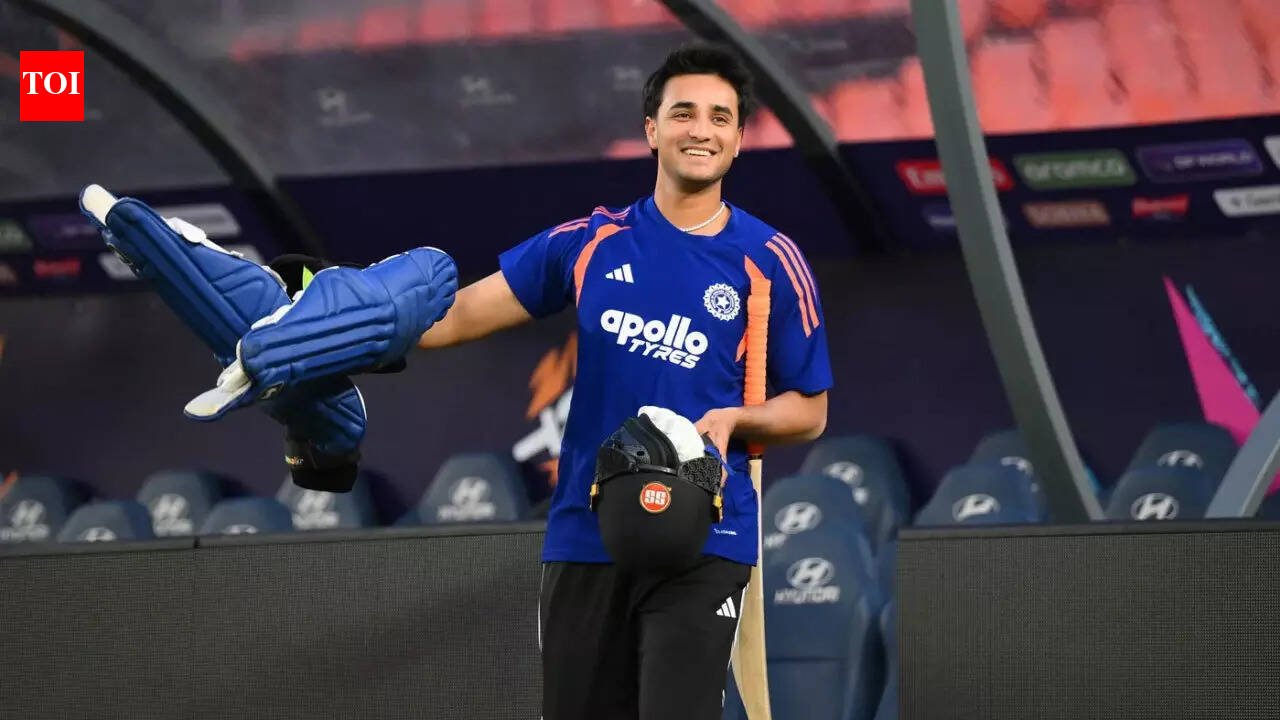
Abhishek Sharma (ICC Photo)

NEW DELHI: India opener Abhishek Sharma retained his position at the top of the ICC T20I batter rankings despite recent struggles, while wicketkeeper-batter Ishan Kishan broke into the top 10 in the latest update.Abhishek has endured a difficult T20 World Cup campaign so far. He began with a golden duck against USA in India’s opening match and was later hospitalised in New Delhi due to a stomach infection, which ruled him out of the clash against Namibia. On his return against Pakistan, he was dismissed for another duck.

T20 World Cup | Sitanshu Kotak press conference: ‘He has his own plans sorted,’ on Abhishek Sharma

Despite the lean patch, the young left-hander continues to hold on to the No. 1 ranking.Ishan, meanwhile, surged 17 places to eighth overall after scoring his second successive half-century of the tournament. His blistering 77 off just 40 balls earned him the Player of the Match award and significantly boosted his ranking.Sri Lanka’s Pathum Nissanka climbed three spots to third among T20I batters following his outstanding century against Australia in Kandy.There were notable gains elsewhere as well. South Africa’s Ryan Rickelton jumped 22 places to 11th, while Aiden Markram moved up six spots to joint 15th. USA batter Saiteja Mukkamalla rose 16 places to 21st, and England youngster Jacob Bethell advanced 22 spots to 32nd after impressive outings at the T20 World Cup.The race for the No. 1 T20I all-rounder ranking remains intense, with Pakistan’s Saim Ayub reclaiming the top spot in the updated list. Ayub overtook Zimbabwe captain Sikandar Raza after his three-wicket haul against India in Colombo.Raza slipped to second, while Nepal’s Dipendra Singh Airee (up two places) and Afghanistan’s Azmatullah Omarzai (up four) are joint fourth following consistent performances.The battle is equally close in the bowling rankings. Afghanistan spinner Rashid Khan moved up one place to second and is closing in on India’s Varun Chakravarthy at the summit.Zimbabwe pacer Brad Evans leapt 10 spots to fifth after back-to-back three-wicket hauls at the T20 World Cup. India’s Axar Patel (up four places to 14th) and Jasprit Bumrah (up six to 15th), along with Ireland spinner Matthew Humphreys (up 23 to 23rd), also registered significant gains.


Source link

Access Denied


Access Denied

You don’t have permission to access “http://www.ndtv.com/education/reserve-bank-of-india-assistant-recruitment-2026-650-vacancies-announced-apply-online-by-march-8-11053575” on this server.

Reference #18.adf5d217.1771416001.1457e6d2

https://errors.edgesuite.net/18.adf5d217.1771416001.1457e6d2


Source link

Rashmika Mandana and Vijay Deverakonda wedding: Couple opts for no-phone policy; even photographer teams signed NDAs-Report | Telugu Movie News


Excitement is in the air as Rashmika Mandanna and Vijay Deverakonda prepare to tie the knot in a romantic Udaipur ceremony on February 26, 2026. This private event will maintain an exclusive invitation-only policy, welcoming only their nearest and dearest, while a spectacular reception for the entertainment industry is scheduled for March 4 in Hyderabad.

Rashmika Mandanna and Vijay Deverakonda are rocking the headlines for their wedding rumors. If reports are to be believed, the couple is set to tie the knot in Udaipur on February 26, 2026. And now another detail about the upcoming event has been leaked. Reportedly, the duo has opted for a no-phone policy for their wedding. Let’s learn more about it.

No phone policy at Rashmika Mandanna and Vijay Deverakonda’s wedding

According to the India Today report, Rashmika Mandanna and Vijay Deverakonda’s wedding will be an intimate event. Reportedly, only family members and close friends will be attending the ceremony. The festivities are set to kick off on February 24, and the marriage will take place on February 26. The report further stated that no one from the film fraternity has been invited for the ceremony.

Vijay Deverakonda Kisses Rashmika Mandanna’s Hand At Success Event!

A source told the publication, “It’s a very small guest list. No phones will be allowed. Even the team capturing the wedding has signed NDAs (Non-Disclosure Agreements).”See More: Vijay Deverakonda and Rashmika Mandanna’s rumoured wedding venue can cost nearly Rs 1 lakh- Reports

More details about the wedding

The insider further told the website that both actors have taken a month off their busy schedule after the wedding. Reportedly, two pre-wedding celebrations were held recently. One was hosted by Rashmika’s maternal family at her home, while another was by Vijay’s family. The couple reportedly sent out handwritten notes to their friends asking for their blessing and no gifts.After the Udaipur wedding, the couple is set to host a reception in Hyderabad on March 4 at Taj Krishna. Reportedly, this event will see the presence of people from the film industry. Meanwhile, a wedding invite, allegedly of the couple, is doing rounds on the internet.

More about Rashmika Mandanna and Vijay Deverakonda’s projects

Vijay and Rashmika are set to feature together in the film titled ‘Rana Baali’. Apart from this, Vijay has ‘Rowdy Janardhana’ in the pipeline, while Rashmika will star in Homi Adajania’s ‘Cocktail 2’ and Allu Arjun’s untitled film, directed by Atlee.


Source link

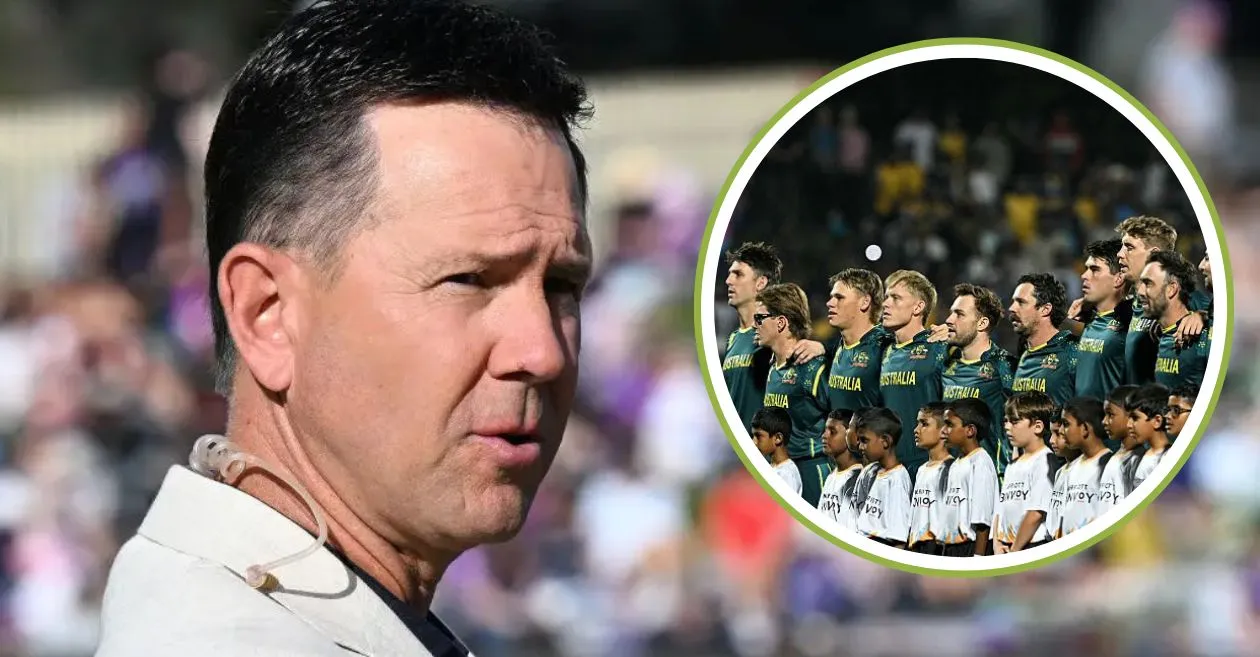
Ricky Ponting explains the reason behind Australia’s shocking T20 World Cup 2026 exit


Australian cricket community is reeling after a historic collapse in the ICC Men’s T20 World Cup 2026, marking only the second time in the tournament’s history that the Aussies have failed to progress past the group stage. Following a devastating eight-wicket loss to co-hosts Sri Lanka and a shock defeat to Zimbabwe, Australia’s fate was officially sealed when a rain-abandoned match between Zimbabwe and Ireland pushed the African nation out of reach on the points table.

In the wake of this early exit, legendary former captain Ricky Ponting sat down with host Sanjana Ganesan on the latest episode of The ICC Review to dissect what he described as a “really poor campaign.” With the blunt honesty that defined his captaincy, Ponting identified the structural and situational failures that led to Australia’s downfall.

Ricky Ponting analyzes the causes of Australia’s disappointing T20 World Cup 2026 campaign

Ponting was quick to note that the campaign was handicapped from the outset. “They had some injury concerns at the start with Josh Hazlewood and Pat Cummins being ruled out,” he noted, adding that the absence of finisher Tim David in the opening fixtures disrupted the team’s balance. However, the two-time World Cup-winning skipper refused to use injuries as a total scapegoat.

According to Ponting, the defining moment of the disaster wasn’t the loss to a powerhouse like Sri Lanka, but the upset against Zimbabwe.

Losing to Zimbabwe like they did, that’s going to be the game that they’re going to think back and think like that’s our World Cup gone, there and then,” he added.

He highlighted a concerning lack of “aura” in the current squad, suggesting that this iteration of the Australian team lacks the psychological edge that once intimidated opponents in ICC events.

Tactically, Ponting pointed to a specific failure in the top order and a lack of late-innings momentum. In the must-win clash against Sri Lanka, Australia was cruising at 104/0 before losing six wickets for just 20 runs in the death overs.

You need to have your best players and your most experienced players standing up and winning big moments… Australia haven’t had that,” Ponting lamented.

He specifically noted that Cameron Green at No. 3 and David at No. 4 failed to provide the middle-order stability required on spin-friendly South Asian tracks.

Also READ: Fans react as Australia faces elimination from T20 World Cup 2026 after rain washes Ireland vs Zimbabwe clash in Pallekele

Ponting predicts future of some senior Australian players for the 2028 Olympic and World Cup Squad

With the next T20 World Cup scheduled for 2028 in Australia and New Zealand, and cricket making its debut at the 2028 Los Angeles Olympics, Ponting believes the national selectors are facing a necessary reset. When asked about the longevity of the current roster, Ponting predicted a significant shift in personnel.

While he expects core pillars like Mitchell Marsh, Travis Head, and Josh Inglis to remain central to the T20 setup, he cast doubt on some of the game’s biggest icons.

I think Glenn Maxwell… it looks to me like his career is coming towards an end,” Ponting observed. He also placed a “question mark” over Marcus Stoinis, despite his status as a global T20 specialist.

Interestingly, Ponting touched on the Olympic aspirations of Steve Smith, who remains vocal about wanting to represent Australia in LA. However, whether the 38-year-old Smith will fit into a “younger, more adaptable” side remains to be seen. Looking toward the future, Ponting identified Nathan Ellis, Xavier Bartlett, and young sensation Cooper Connolly as the faces of the next generation, provided Australia can move away from the rigid selection policies that haunted their 2026 campaign.

Also READ: BCCI vice-president Rajeev Shukla hails Zimbabwe’s rise after Australia’s dramatic exit from T20 World Cup 2026


Source link

Gold price today: How much 22K, 24K gold costs in Delhi, Mumbai & other cities – check rates


Gold price today: How much 22K, 24K gold costs in Delhi, Mumbai & other cities – check rates

Gold price today: Gold prices surged on Wednesday, rising Rs 1,297 to Rs 1,52,715 per 10 grams in futures trade, driven by firm spot demand and fresh buying by speculators.On the Multi Commodity Exchange (MCX), gold contracts for April delivery climbed Rs 1,297, or 0.86%, to Rs 1,52,715 per 10 grams, with a business turnover of 1,557 lots.Fresh positions built up by participants led to a rise in gold prices,’ analysts told PTI.In the global markets, gold prices also moved higher. Spot gold rose 0.8% to $4,915.90 per ounce by 0914 GMT, after gaining more than 1% earlier in the session. US gold futures for April delivery advanced 0.6% to $4,936.30.Silver prices saw stronger gains, with spot silver rising 2.8% .Overall, gold prices climbed sharply on Wednesday, supported by strong spot demand and renewed buying interest in the futures market.

Gold prices in major Indian cities

Gold price today in Delhi

In the national capital, 24K gold is priced at Rs 15,435 per gram. The rate for 22K gold stands at Rs 14,150 per gram, while 18K gold is selling at Rs 11,580 per gram.

Gold price today in Ahmedabad

In Ahmedabad, 24K gold is available at Rs 15,425 per gram. The 22K variant is priced at Rs 14,140 per gram, and 18K gold costs Rs 11,570 per gram.

Gold price today in Bengaluru

Gold prices in Bengaluru are Rs 15,420 per gram for 24K purity. The 22K gold rate is Rs 14,135 per gram, while 18K gold is retailing at Rs 11,565 per gram.

Gold price today in Mumbai

In Mumbai, 24K gold is trading at Rs 15,420 per gram. The 22K variant costs Rs 14,135 per gram, and 18K gold is priced at Rs 11,565 per gram.

Gold price today in Hyderabad

Hyderabad mirrors similar trends, with 24K gold at Rs 15,420 per gram. The 22K rate stands at Rs 14,135 per gram, and 18K gold is selling at Rs 11,565 per gram.

Gold price today in Chennai

Chennai continues to record slightly higher prices, with 24K gold at Rs 15,524 per gram. The 22K rate is Rs 14,230 per gram, while 18K gold is priced at Rs 12,180 per gram.

Gold price today in Kolkata

In Kolkata, 24K gold is priced at Rs 15,420 per gram. The 22K variant costs Rs 14,135 per gram, and 18K gold is available at Rs 11,565 per gram.

Gold price today in Pune

In Pune, 24K gold stands at Rs 15,420 per gram. The 22K rate is Rs 14,135 per gram, and 18K gold is priced at Rs 11,565 per gram.


Source link

AI boom! What Nvidia wants from India to put New Delhi on the global manufacturing map


AI boom! What Nvidia wants from India to put New Delhi on the global manufacturing map

A senior executive of NVIDIA said on Wednesday India needs to significantly scale up its investment in Artificial Intelligence (AI) infrastructure from the current $1.2 billion to align with global levels, describing the Union Budget’s 20-year tax holiday for foreign companies as a major opportunity to build foundational AI capacity. Speaking at the AI Impact Summit 2026, Shanker Trivedi, senior vice president, Enterprise Business at NVIDIA, said the tax incentive could help expand what he termed “foundational infrastructure” for AI in India, reported PTI.

From Trust To Technology: How India’s Digital Media Is Redefining Power In The Age Of AI Disruption

“Everyone of these global capability centres needs their own local AI factory from which they will take their data, their business processes, their IP, and convert it into intelligence. And, so, this (Budget announcement) is a very big opportunity here in India. And as we describe, this is foundational infrastructure,” Trivedi said.According to Trivedi, of the 2,000 global corporations worldwide, about 1,800 have a major global capability centre (GCC) in India. These centres currently employ over 2 million people, a number he said is expected to rise to 3 million in the near term.He underlined that each of these GCCs would require dedicated AI infrastructure to process data and develop intelligence-led business processes, pointing to the need for higher capital allocation towards AI in the country. India’s current AI investment stands at $1.2 billion, he noted, suggesting that scaling this up is essential for matching global benchmarks. The recent Budget announcement offering a 20-year tax holiday to foreign companies, he said, provides a structural incentive to expand AI-related infrastructure in India.


Source link

Buying a house? Location, legal checks and more; what to keep in mind


Buying a house? Location, legal checks and more; what to keep in mind

Buying a home remains one of the most significant financial and emotional milestones for many Indians. However, real estate experts caution that overlooking due diligence—particularly on location, legal clearances and financial planning—can turn a dream purchase into a long-term liability.Industry advisers say careful research and patience are essential to ensure that a property remains both livable and financially rewarding over time.

Location first, property next

Real estate advisers emphasise that a property’s locality often determines its long-term value more than the home itself.Emerging localities, while often more affordable than established neighbourhoods, can offer strong appreciation potential if connectivity and civic infrastructure are improving. However, experts warn that ignoring poor roads, weak transport links, or inadequate civic amenities may limit future resale value and rental demand.Prospective buyers are advised to visit shortlisted locations at different times of the day to better understand traffic conditions, safety, noise levels and overall livability. Areas with expanding infrastructure, good connectivity and a healthy social environment typically see stronger long-term demand.

Legal checks that cannot be ignored

On the legal front, specialists stress that verifying ownership and documentation is non-negotiable. Buyers must ensure that the seller has a clear title and full rights to transfer the property.In the case of land purchases, it is critical to confirm that the plot is approved for residential use, as agricultural land requires formal conversion before housing construction.Projects, particularly in smaller towns and tier-III cities, must also have necessary approvals and no-objection certificates from local authorities.For apartment buyers, reviewing sanctioned building plans, title deeds, land-use permissions and occupation or completion certificates is essential. With most urban projects now governed by the Real Estate (Regulation and Development) Act, 2016 (RERA), buyers are advised to independently verify the project’s registration on the relevant state portal rather than relying solely on developer claims.

Ready-to-move vs under-construction homes

The choice between ready-to-move and under-construction properties often depends on a buyer’s financial position and risk appetite. Ready homes provide immediate possession and eliminate uncertainties related to construction delays or changes in specifications, though they typically command higher prices.Under-construction properties are generally 10–20% cheaper and offer flexible payment schedules linked to construction progress. They may also feature newer designs and amenities. However, such properties attract 5% GST and carry risks related to project timelines and delivery, making the developer’s track record a critical factor.Experts advise buyers to visit completed projects by the same builder, interact with existing residents and verify compliance with RERA norms and industry bodies such as CREDAI. Plot buyers, meanwhile, should confirm that the land is free from encumbrances and aligned with intended usage.

Budgeting beyond the base price

Financial planning is another area where buyers often underestimate costs. Apart from the down payment—typically around 20% of the property value—buyers must account for stamp duty, registration charges, maintenance deposits, loan processing fees, interior work and recurring expenses such as EMIs and property taxes.Stamp duty and registration alone can add 5–8% to the property cost, while GST applies to most under-construction homes. Overall acquisition costs may rise by 10–20% above the quoted price, making it essential to maintain a financial buffer for unforeseen expenses.Loan eligibility is closely linked to credit health, with experts noting that a credit score around 750 improves approval chances and helps secure better interest rates. Financial advisers also recommend keeping EMI commitments within 40% of monthly income and avoiding unrecorded cash transactions to prevent legal complications.

Due diligence over mpulse Buying

Across industry advisories, one consistent message stands out: avoid rushing into property decisions. Experts warn against aggressive sales tactics and limited-time offers that discourage thorough scrutiny of documents and property conditions.From consulting legal professionals and verifying RERA details to speaking with future neighbours and inspecting the property independently, buyers are encouraged to prioritise preparation over speed. As advisers note, purchasing a home is not a race but a long-term investment decision—one where careful research today can prevent years of financial and legal stress later.


Source link

Happy Streets is therapeutic and fun, says Manish Goel | Mumbai News


Chembur’s St. Sebastian School Road buzzed with life as Happy Streets transformed it into a car-free haven. Residents of all ages enjoyed exercise, art, and community bonding. Actor Manish Goel energized the crowd with a dance performance, calling the event therapeutic and fun.

Happy Streets ended its Sunday run in Chembur recently, transforming St. Sebastian School Road near Chandak Highscape City into a vehicle-free zone filled with movement, music and community participation. The initiative, supported by The Times of India, created an open environment where residents of all ages came together to exercise, create art and interact freely — away from traffic and daily pressures.Actor Manish Goel added to the morning’s energy by getting the crowd on its feet. He pumped up participants by dancing to his song Dil Le Gai Kudi Gujarat Di, encouraging everyone around to join in. Speaking at the event, Manish said, “With people being stressed and busy all the time, Happy Streets is therapeutic and fun. Seeing so many people out on a Sunday morning creates great energy. Watching people dance along and enjoy themselves truly made my Sunday morning special. This is a great initiative.”A lively morning atmosphereThe interactive atmosphere resonated with participants. Smriti Das (30) shared, “The Zumba session was a lot of fun and dancing with Manish was an absolute blast.” Neha Patil (39), who attended with her young son, said, “My son loved the art and craft activities and just running around freely. These are things children don’t usually get to do. It was a very special Sunday morning for us.”


Source link

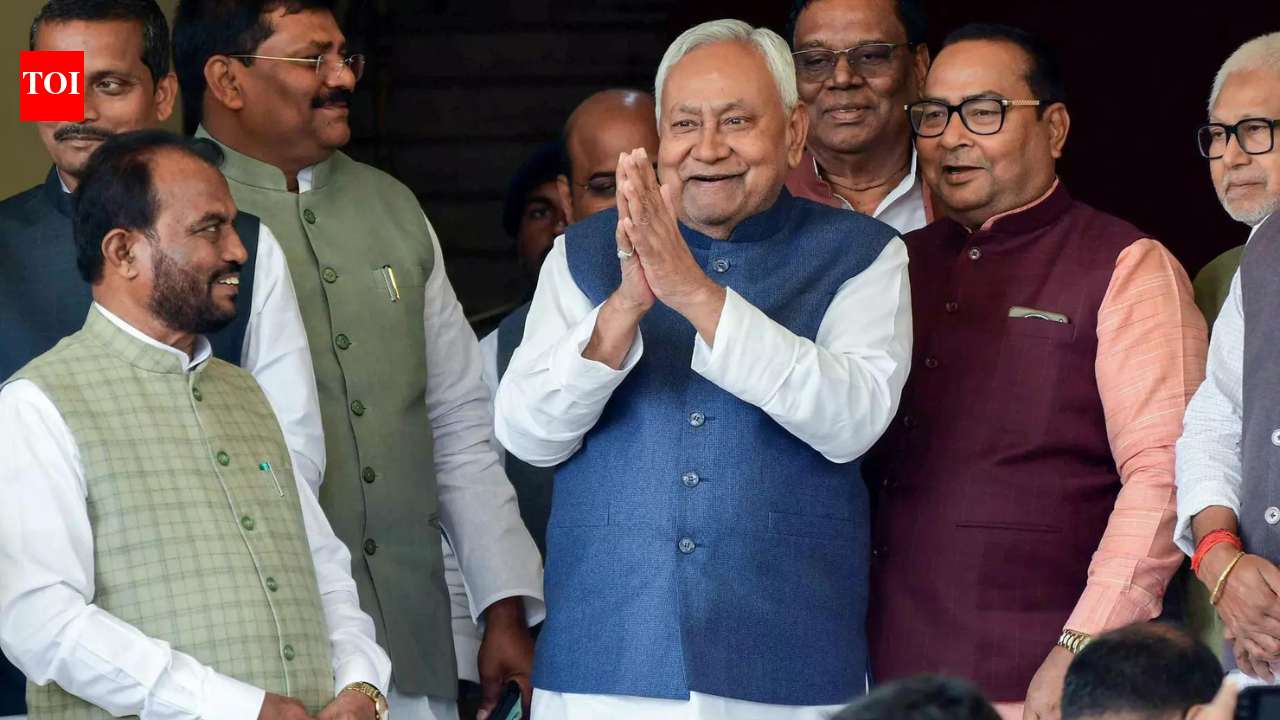
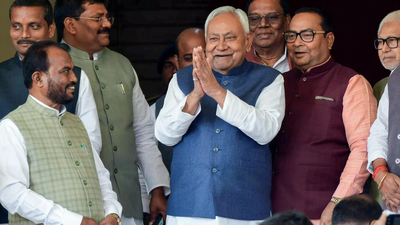
‘Prohibition causing significant financial losses’: NDA allies nudge Nitish Kumar to reconsider liquor ban | India News


'Prohibition causing significant financial losses': NDA allies nudge Nitish Kumar to reconsider liquor ban

NEW DELHI: Calls for a rethink of Bihar’s decade-old liquor ban have resurfaced within the ruling alliance, with NDA allies urging chief minister Nitish Kumar to review the policy. Union minister Jitan Ram Manjhi said the principle of prohibition was not flawed but its implementation had gone awry. “We have been saying for a long time that the liquor policy is not wrong, and prohibition should be implemented. However, there are flaws in its implementation,” he said.“In our state, the enforcement officers catch those very people, while those who do large-scale smuggling are being let off after taking money. Nitish Kumar should take action. Prohibition is causing significant financial losses to the Bihar government, and Nitish Kumar should address this,” Manjhi told ANI“Prohibition is causing significant financial losses to the Bihar government, and Nitish Kumar should address this,” Manjhi said, urging stricter action against corruption in enforcement.The ban, introduced in 2016 when Nitish Kumar was heading the Mahagathbandhan government, has led to more than 8.43 lakh cases and nearly 12.8 lakh arrests, as per an earlier report by TOI. Yet concerns over revenue have intensified. Before prohibition, Bihar earned over Rs 3,000 crore annually from liquor sales. With fresh welfare commitments likely to cost upwards of Rs 28,000 crore — including direct cash transfers to women, higher pensions and electricity subsidies — the state’s stretched finances have prompted murmurs within the NDA about whether the ban is sustainable. Bihar’s fiscal deficit stood at 9.2% of GSDP last year.Rashtriya Lok Morcha MLA Madhav Anand, also an NDA ally, called in the Assembly for a “detailed review” of the law. “It is 10 years since the prohibition law was enacted… An assessment should be made as to what we have gained and lost in the last ten years,” he said, claiming liquor remained available through home delivery and that drug use among youths had risen.


Source link