Breaking News
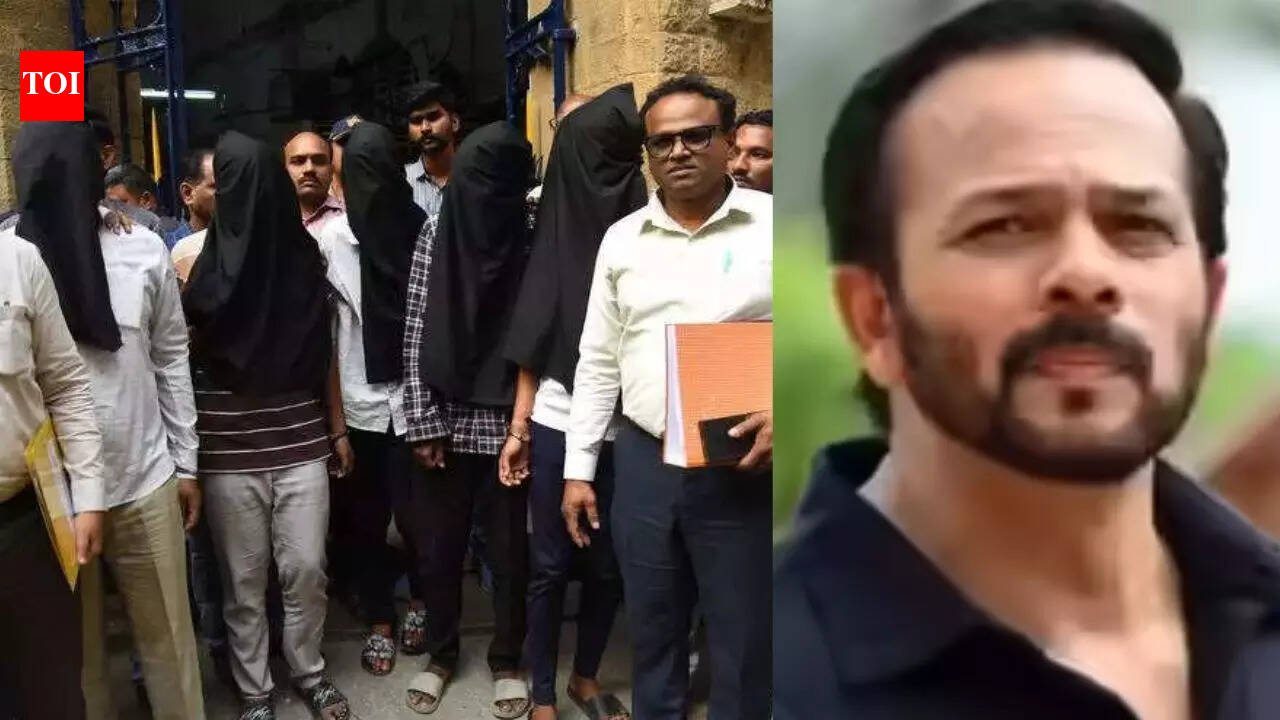
Rohit Shetty house firing: 7 lured with quick money for ‘mission’ by ‘Hindu Sainiks’ to spread fear, say cops | Mumbai News


MUMBAI: Investigations into the Feb 1 firing outside filmmaker Rohit Shetty’s residence indicate the main shooter and six other accused were recruited by the Shubham Lonkar gang through social media and local contacts, and were lured with promises of quick money, fame, and a sense of identity.Police sources said the youths were allegedly indoctrinated with messaging that framed the act as a “mission” by “Hindu sainiks” to create fear and gain notoriety. The main shooter was reportedly paid Rs 50,000 in advance and promised a larger payout after the attack.The Mumbai Crime Branch, along with the UP Special Task Force, arrested seven more people on Monday in connection with the incident. Police said two modules were involved: a Pune module that provided logistical support and a North India module that executed the attack. The shooter, Deepak Chandra Sharma, and others including Sonu Thakur, Hrithik Yadav, Vinshu Kushwaha, Jatin Bhardwaj, and Vishal Thakur are from Agra, Etawah, and Haryana. Sources said the Pune module received around Rs 60,000, while the UP module of seven people got Rs 1 lakh to carry out the firing, though police cautioned these figures are yet to be verified as the accused have been changing their statements.


Source link

CBSE Class 10 Maths Paper 2026 analysis: Students find paper difficult, competency-based questions challenging; demand re-exam


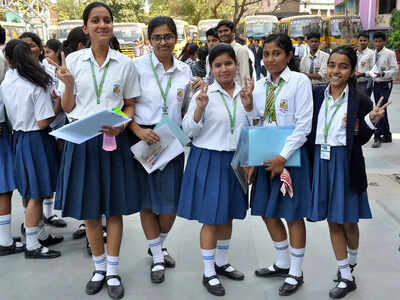
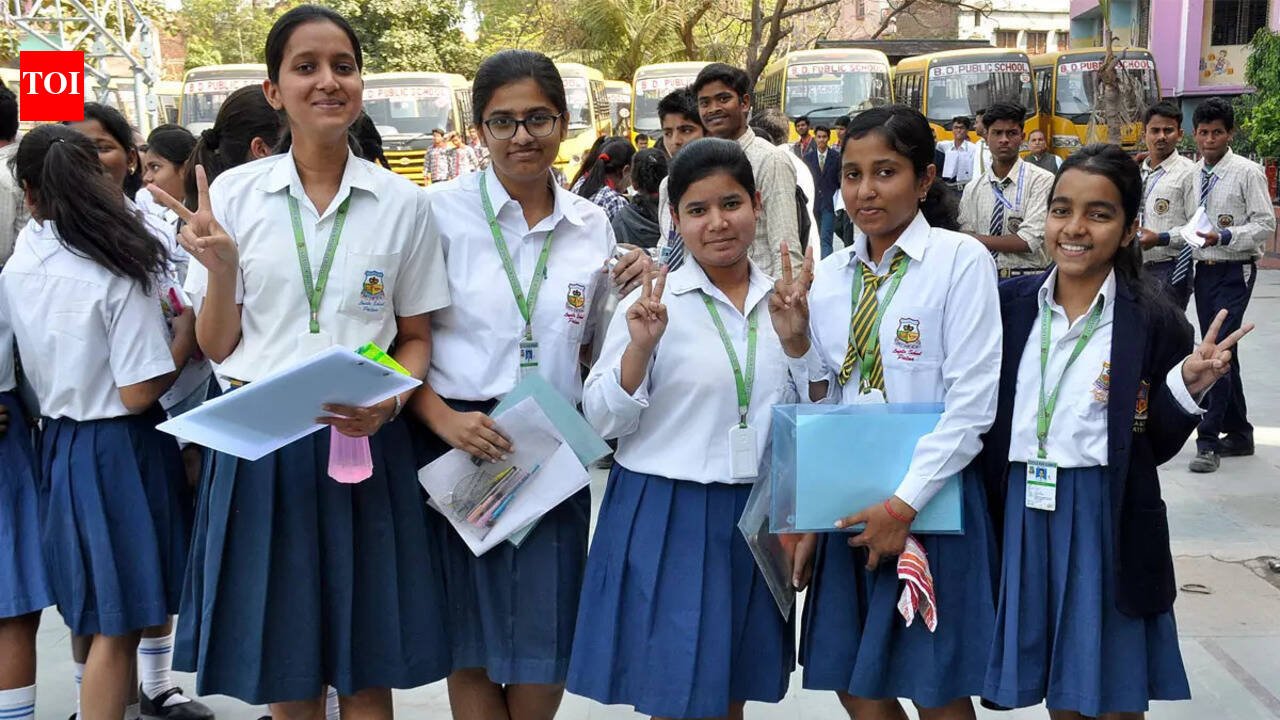
CBSE Class 10 Maths exam 2026 moderately difficult, competency-based questions challenge students. (Representative Image)

The Central Board of Secondary Education (CBSE) conducted the Class 10 Mathematics examination today, February 17, 2026, in both Standard and Basic formats. Early reactions from students and teachers indicate a noticeable difference in difficulty levels between the two papers. While the Standard paper was largely balanced and manageable, the Basic paper drew criticism for being lengthy and challenging.CBSE Class 10 Maths Basic Paper 2026: Check and download question paper, students call it moderately difficultPrincipal Dr. Alka Kapur of Modern Public School shared with TOI, “The Standard paper was balanced, well-structured, and manageable within the allotted time, while the Basic paper was relatively tough and lengthy, with graph-based questions proving particularly challenging.” Several teachers across India also shared their analyses. Manpreet Kaur, TGT Mathematics at Global Indian International School, noted, “The Grade 10 Mathematics board exam paper was balanced and prepared according to the prescribed board pattern. Overall difficulty was easy to moderate. Most questions were concept-based and straightforward, though a Triangles question and a Probability question were tricky. Time management was important, but well-prepared students could attempt most questions confidently.”CBSE Class 10 Maths Standard Paper 2026: Check and download question paper, students find it difficultSimilarly, Suneeti Sharma, TGT Mathematics at Global Indian International School, said, “The paper was moderate in difficulty, with some sections leaning toward easy. Case-study and application-based questions, particularly from Trigonometry, required careful thinking. Students who had practised NCERT examples thoroughly found the paper manageable.” From JAIN International Residential School, Bengaluru, Vamanrao S Patil and Benasir P A described the paper as “moderate and largely NCERT-focused. While MCQs and two-mark questions were accessible, Section D and the case-based Section E required deeper analysis, careful reading, and effective time management.”Shaifali Bhatt, HOD Mathematics at DPS Sector 45, shared her expert view on the exam: “The Class X Mathematics examination, both Standard and Basic, was well-structured and strictly aligned with the NCERT curriculum. The paper was balanced in difficulty, covering all key concepts fairly. Importantly, no questions were outside the prescribed syllabus, and both papers maintained consistency in structure and conceptual clarity, effectively assessing students’ understanding and application skills without being unpredictable. Students also expressed their views. Abhhisek Sen, a Class 10 student, said, “The paper set 430/2/2 was extremely lengthy and also difficult, especially when it is a Basic paper. CBSE should shed its ego and reconduct the exam and this time must set the difficulty level equivalent to basic level.”Teacher Sanjay Sharma from Yamuna Vihar added, “The Basic paper demanded extensive calculations, whereas the Standard paper tested conceptual clarity without being overly lengthy.”Competency-Based Questions Test Conceptual ClarityOne of the key highlights of this year’s paper was the presence of competency-based questions. Teachers noted that these questions required students to apply concepts rather than rely solely on memorisation.“The competency-based questions were thoughtfully framed. They tested students’ understanding of concepts in real-life contexts,” said Mr. Abhishek Mehra, PGT Mathematics. “CBSE is clearly moving towards assessing application skills.”In particular, some word problems and case-study based questions required step-by-step reasoning. Students who had practised exemplar problems reportedly found these manageable.Challenging Areas: Circles and Lengthy MCQsWhile the overall paper was accessible, early reviews of the Mathematics Basic paper highlighted that a few questions from the ‘Circles’ chapter posed challenges. Some students felt that these questions required deeper conceptual understanding.“I was slightly confused in one of the questions from Circles, but after re-reading it, I could attempt it,” said another student from Yamuna Vihar.Additionally, a section of Multiple-Choice Questions (MCQs) was described as lengthy. Though not necessarily difficult, these questions required time and careful calculation. Time management, therefore, played an important role. Another student from Mumbai told TOI, “Section E was difficult while the rest of the paper was moderate. Many students looked tense, and some were even crying after coming out of the exam hall.What Lies AheadWith Mathematics marking the beginning of the board exams, students seem relieved and hopeful about the upcoming subjects. As the board exams progress, expert analyses and actual question papers are expected to be out soon.On the whole, the Central Board of Secondary Education (CBSE) Class 10 Maths Paper 2026 has been termed as moderately difficult, with a mix of direct and application-based questions. Although some students found the paper manageable with proper preparation, certain parts of the paper demanded a better understanding of concepts and time management. Despite its difficulties, the paper was found to be fair and in line with the syllabus, marking a steady start to this year’s board exams.In conclusion, while the Standard paper was largely fair and student-friendly, the Basic paper challenged many learners. Competency-based and application-driven questions tested conceptual understanding and time management. Students and educators alike are now analysing both papers to gauge performance and prepare for upcoming subjects.


Source link

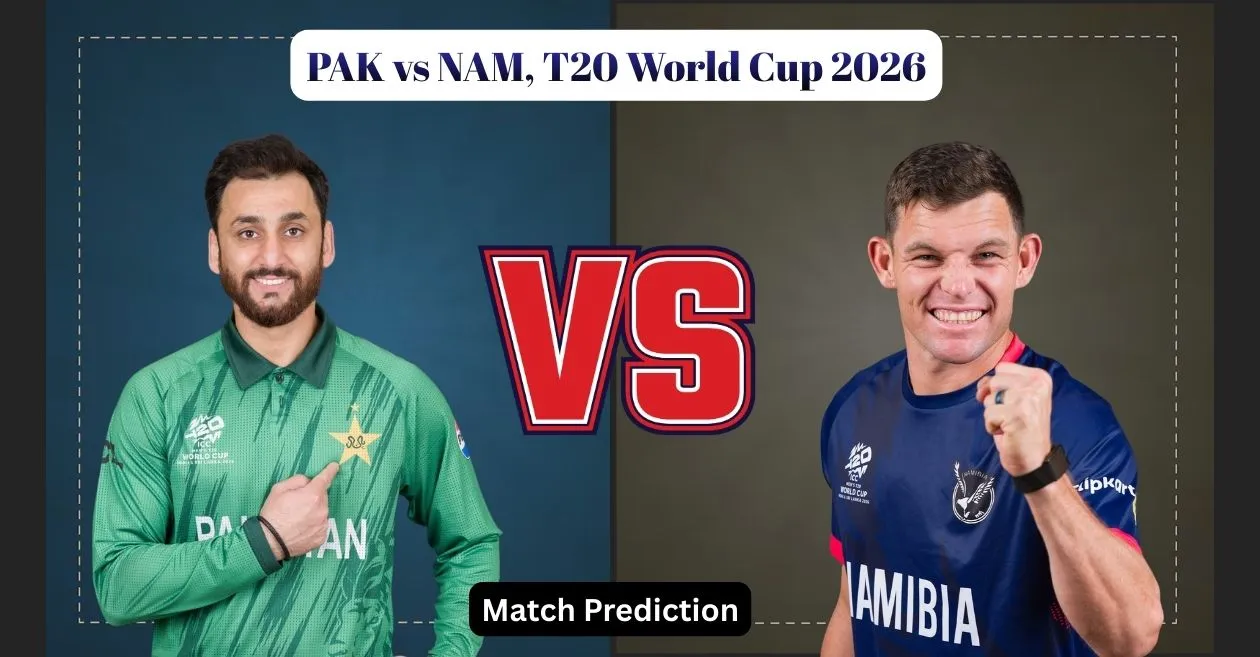
PAK vs NAM, T20 World Cup 2026, Match Prediction: Who will win today’s game between Pakistan and Namibia?


It’s a high-stakes Wednesday in Colombo for the Men in Green. Following a bruising 61-run defeat to arch-rivals India, Pakistan find themselves in a must-win territory. With two wins and one loss, Salman Ali Agha’s side needs a clinical performance to secure their spot in the Super Eights and avoid a repeat of their 2024 heartbreak.

Namibia, meanwhile, have shown they aren’t here just to make up the numbers. While they’ve struggled against the heavyweights in Group A, Gerhard Erasmus’s men are notorious for being giant-killers in tournament play. With nothing to lose and a chance to play spoiler, they’ll be looking to exploit any lingering nerves in the Pakistan camp.

PAK vs NAM, T20 World Cup 2026: Match Details

  • Date and Time: February 18 (Wednesday); 3:00 pm IST / 9:30 am GMT
  • Venue: Sinhalese Sports Club, Colombo

PAK vs NAM, Head-to-Head Record (T20Is)

Matches played: 1 | Pakistan won: 1 | Namibia won: 0

Sinhalese Sports Club Pitch Report

The surface at the Sinhalese Sports Club in Colombo generally offers a contest that changes character as the match unfolds. Early on, batters benefit from true bounce and a quick outfield, turning the Powerplay into a productive phase where clean hitting and stroke-play are rewarded. As the innings wears on, however, the pitch tends to lose pace, with dry areas beginning to assist turn and grip.

That gradual slowdown often shifts the balance towards the spinners, who become increasingly influential through the middle overs and at the back end. Tournament trends indicate that while teams have often preferred chasing, a first-innings score in excess of 170 can become tough to overhaul once the surface starts breaking up. Adding another layer to the contest, dew is forecast to play a part, which may tempt captains winning the toss to field first and take advantage of potentially easier batting conditions later on.

Also READ: Top 5 youngest centurions in T20 World Cup history ft. Yuvraj Samra

Squads: 

Pakistan: Salman Ali Agha (c), Abrar Ahmed, Babar Azam, Faheem Ashraf, Fakhar Zaman, Khawaja Nafay, Mohammad Nawaz, Mohammad Salman Mirza, Naseem Shah, Sahibzada Farhan, Saim Ayub, Shaheen Shah Afridi, Shadab Khan, Usman Khan, Usman Tariq

Namibia: Louren Steenkamp, Jan Frylinck, Jan Nicol Loftie-Eaton, Gerhard Erasmus (c), JJ Smit, Zane Green (wk), Ruben Trumpelmann, Dylan Leicher, Willem Myburgh, Bernard Scholtz, Max Heingo, Malan Kruger, Alexander Volschenk, Jack Brassell, Jan Balt

PAK vs NAM, T20 World Cup 2026: Today’s Match Prediction

Case 1:

  • Pakistan wins the toss and bowls first
  • Namibia powerplay score: 40-50 (6 overs)
  • Namibia total score: 160-170

Case 2:

  • Namibia wins the toss and bowls first
  • Pakistan powerplay score: 45-55 (6 overs)
  • Pakistan total score: 170-180

Match result: Team bowling first to win the contest. 

Also READ: Yuvraj Samra’s ton goes in vain as Glenn Phillips steers New Zealand to dominant win over Canada in T20 World Cup 2026

Source link

Access Denied


Access Denied

You don’t have permission to access “http://www.ndtv.com/world-news/special-partnership-india-france-elevate-ties-with-big-push-on-defence-ai-and-nukes-11051680” on this server.

Reference #18.c7f5d217.1771386729.3e03d3b8

https://errors.edgesuite.net/18.c7f5d217.1771386729.3e03d3b8


Source link

5% reservation for Muslims scrapped in Maharashtra | Mumbai News


MUMBAI: Maharashtra government’s Social Justice Department has issued a Government Resolution (GR) cancelling its earlier GR that granted 5% reservation to the Muslim community, as reported by news agency ANI.The department issued a government order late on Tuesday cancelling the 5% SEBC (Socially and Educationally Backward Class) reservation that had been granted to certain sections of the Muslim community.The decision was taken based on court rulings and the prevailing legal position related to the 2014 policy.The quota was applied on admissions in educational institutions and recruitment in government and semi-government jobs.


Source link

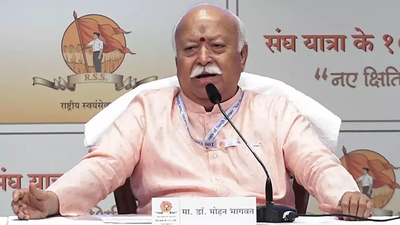
‘No threat but vigilance is necessary’: RSS chief renews ‘united Hindus’ pitch, backs 3-child policy | India News


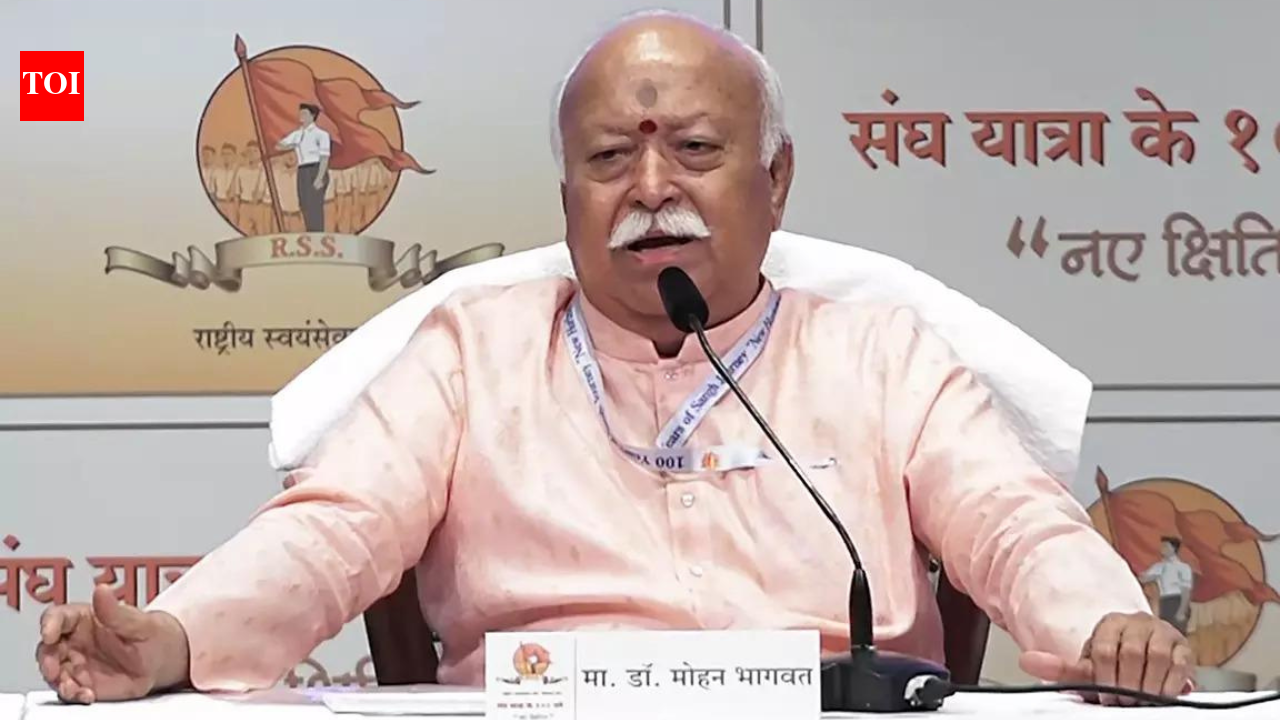
'No threat but vigilance is necessary': RSS chief renews 'united Hindus' pitch, backs 3-child policy

NEW DELHI: Rashtriya Swayamsevak Sangh chief Mohan Bhagwat on Tuesday reiterated that Hindu families should consider having at least three children.Addressing a social-harmony meeting at the Saraswati Shishu Mandir in Lucknow, Bhagwat expressed concerns over what he described as a declining Hindu population and called for uniting and empowering the Hindu society.“There is a need to unite and empower Hindus. There is no threat to us but vigilance is necessary,” Bhagwat said.Raising concerns over infiltration, Bhagwat said infiltrators should be “detected, deleted and deported”, and should not be provided employment.He also said Hindu families should consider having at least three children, citing scientific opinions that societies with an average fertility rate of below three could disappear in the future.Bhagwat said newly-married couples should be made aware of this and added that the purpose of marriage is to carry forward creation, not merely fulfilling one’s own desires.He said a lack of harmony leads to discrimination and stressed that all citizens share one country and one motherland.“The Sanatan thought is a philosophy of harmony,” Bhagwat said, adding that differences that have emerged over time must be addressed through understanding and practice.Responding to a question on University Grants Commission (UGC) guidelines, Bhagwat said laws must be obeyed and if a law is flawed, there are constitutional ways to change it.He said caste divisions should not become a cause of conflict and called for uplifting the disadvantaged with a sense of belonging.Bhagwat said India would guide the world in the near future and that solutions to many global problems lie within the country’s civilisational ethos.He said regular community-level meetings should promote social harmony, remove misconceptions and address social issues, while extending support to the weaker sections of the society.The RSS chief cautioned that some elements in the United States and China are working against India’s social harmony, and called for vigilance and mutual trust.


Source link

Security breach at Capitol: 18-year-old held after running toward federal building with loaded shotgun


Security breach at Capitol: 18-year-old held after running toward federal building with loaded shotgun

The US Capitol police detained an 18-year-old man after he ran toward the west side of the Capitol building, carrying a loaded shotgun, prompting a swift law enforcement response.Authorities said the incident is under investigation, including whether members of Congress were the intended target. The arrest comes a week before President Donald Trump’s scheduled State of the Union address, though officials said security plans remain unchanged.

How the events unfolded

According to Capitol police chief Michael Sullivan, the suspect parked a Mercedes SUV near the Capitol before exiting the vehicle and running several hundred yards toward the building while armed with a shotgun.Officers quickly intercepted him and ordered him to drop the weapon and lie on the ground, after which he was taken into custody without injuries.Sullivan said the shotgun was loaded, and the suspect was carrying additional ammunition.Police also recovered a tactical vest and gloves worn by the suspect, while a Kevlar helmet and gas mask were found inside the vehicle.Authorities said they have video footage of the incident and have appealed to members of the public to share any additional recordings that may assist the investigation.

Who is the detainee?

The suspect has been identified as Carter Camacho, an 18-year-old from Smyrna, Georgia.Police said he was not previously known to authorities and was not from the Washington area. Officials also noted that the vehicle used in the incident was not registered in his name and that he has multiple listed addresses.Camacho is currently being held on charges including unlawful activities, carrying a rifle without a license, possession of an unregistered firearm and possession of unregistered ammunition, according to a Capitol Police press release.

Preparations and past scares at Capitol

Chief Sullivan said the department had recently conducted active shooter drills in nearly the same area where the incident occurred, highlighting the preparedness of officers on duty. “Who knows what would have happened if we hadn’t had officers standing here?” he said during a press briefing.The Capitol has seen similar security incidents in recent years. In 2023, Capitol Police arrested an Atlanta man armed with a rifle after he was spotted in a park near the Senate.Officials emphasised that Tuesday’s arrest will not affect security arrangements for the upcoming State of the Union address, noting that the event is treated with the highest level of security planning.

Federal oversight

The incident comes amid broader discussions around crime and security in Washington DC.Authorities said crime levels in the city have declined significantly in 2026 compared with 2025, which itself saw a sharp drop from the previous year. Last August, President Trump declared an emergency in the city to address crime, leading to the deployment of more than 2,000 National Guard members along with additional federal law enforcement personnel, many of whom remain stationed across Washington.Separately, a recent encounter involving US Marshals resulted in the death of a Washington resident after authorities responded to a report of a person allegedly threatening to kidnap and harm someone while armed.The incident is under investigation, and local activists have called for greater transparency from officials.


Source link

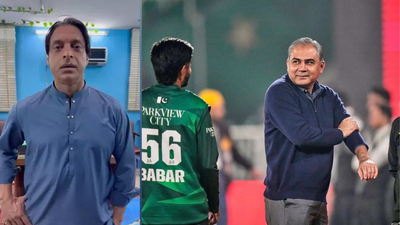
Shoaib Akhtar takes 360-degree U-turn after calling Mohsin Naqvi ‘illiterate’ | Cricket News


Shoaib Akhtar takes 360-degree U-turn after calling Mohsin Naqvi 'illiterate'
Shoaib Akhtar and Mohsin Naqvi (Agency Image)

Shoaib Akhtar made headlines again this week after appearing to backtrack on his scathing remarks about Pakistan Cricket Board (PCB) chairman Mohsin Naqvi. The former pacer, who had called Naqvi “incompetent and illiterate” during an appearance on an Indian news channel, attempted a delicate retraction less than 24 hours later on Pakistani television. His effort, however, came across as fumbling and awkward.Speaking on ARY News, Akhtar insisted that his harsh words were aimed at the broader state of cricket administration in Pakistan, not Naqvi personally.

Inside Pakistan’s camp What is the Naqvi problem

“The words ‘incompetent and jaahil (illiterate)’ that I used were not meant for Mohsin Naqvi bhai. It looked like I said those words for him. The incompetency topic I spoke about was from a broader perspective: that such a person can destroy any institution. My hint was not towards Mohsin Naqvi (said while fumbling repeatedly) but the top brass that is running international cricket. But the television channel twisted it. In the same programme, I also said that we should not say wrong things about Mohsin Naqvi, he is a good guy. He wants to help Pakistan cricket but does not get the right advice,” Akhtar explained.He added that his frustration with Naqvi was limited to the PCB chief’s sudden U-turn on the boycott stance against India in the T20 World Cup. “I am angry with him as he took a stand but did not stick with it. The entire community was with him. He could have asked me about taking the U-turn,” he said.

What Shoaib Akhtar originally said on Mohsin Naqvi

Akhtar’s initial criticism had been blunt. On ABP News, he questioned Naqvi’s suitability for the PCB chairman role. “If you make me the chairman of a channel, how would I know how to run it? Now there is a person who does not know, and he is the chairman of the Pakistan Cricket Board. So what can be done now? How will the team function like this?” he asked. “Do you know what the biggest crime in the world is? Giving a big job to an incompetent and illiterate person.The former pacer also weighed in on the criticism surrounding Pakistan’s star players Babar Azam and Shaheen Afridi following the defeat to India. “Shaheen is not fit. He is not able to bowl over 125 kmph. Secondly, Babar Azam is not going to deliver until you play him as an opener. He is of no use in the middle order. This format is not made for him. Shadab is also an unusual choice, I do not understand it. I do not think we are compatible against India. They are playing a cricket that is 50 years ahead of us.”He concluded with a sweeping assessment of Pakistan cricket. “Everyone is to be blamed for this – myself, the cricket board, media, everyone. We picked the wrong people, made them stars. We did not invest in cricketing infrastructure.”


Source link

US, Japan seal ‘massive’ trade deal; Tokyo to invest $550 billion in America; key details of the pact


US, Japan seal ‘massive’ trade deal; Tokyo to invest $550 billion in America; key details of the pact

US President Donald Trump on Tuesday announced a “MASSIVE Trade Deal with Japan,” under which Tokyo will make a “$550 BILLION commitment to invest in the United States of America.” The White House unveiled three large-scale investment projects backed by Tokyo with a combined value of $36 billion, representing the first tranche under Japan’s $550 billion commitment to invest in the United States as part of the newly agreed trade arrangement. Under the trade deal, the US will slash tariffs on Japanese imports to 15%.The initiatives cover energy exports, power generation and advanced manufacturing, spread across Texas, Ohio and Georgia.Announcing the development on Truth Social, President Donald Trump said, “Our MASSIVE Trade Deal with Japan has just launched! Japan is now officially, and financially, moving forward with the FIRST set of Investments under its $550 BILLION Dollar Commitment to invest in the United States of America — part of our Historic Trade Deal to REVITALIZE the American Industrial Base, create HUNDREDS OF THOUSANDS of GREAT American Jobs, and strengthen our National and Economic Security like never before..”He added that the projects would focus on “Oil & Gas in the Great State of Texas, Power Generation in the Great State of Ohio, and Critical Minerals in the Great State of Georgia.”The announcement also includes a $33 billion natural gas-fired power plant in Portsmouth, Ohio. Commerce secretary Howard Lutnick said that the facility would generate 9.2 gigawatts of electricity annually, describing it as the largest natural gas-fired generating facility in US history. According to him, the output would be more than enough to power all homes in Ohio.The plant will be operated by SB Energy, a subsidiary of Japanese technology investor SoftBank Group. The additional capacity is expected to strengthen baseload supply at a time when electricity demand is rising quickly, driven by data centres supporting artificial intelligence applications, Reuters reported.Referring to the Ohio facility in his post, Trump wrote, “The scale of these projects are so large, and could not be done without one very special word, TARIFFS. The Gas Power Plant in Ohio (A State I won THREE TIMES!) will be the largest in History, the LNG Facility in the Gulf of America will drive Exports, and further our Country’s Energy DOMINANCE, and our Critical Minerals Facility will end our FOOLISH dependance on Foreign Sources.A second major project involves Japan’s investment in the $2.1 billion Texas GulfLink deepwater crude oil export terminal off the Texas coast. The White House said the funding would support the development of the offshore facility.Lutnick, as cited by Reuters, stated, “This project is expected to generate $20–30 billion annually in U.S. crude exports, secure export capacity for our refineries, and reinforce America’s position as the world’s leading energy supplier.”Texas GulfLink, being developed by Sentinel Midstream, confirmed its participation in the initiative and said it was “honored to be a trusted partner with the US department of commerce and the government of Japan.”The third project will see the establishment of a synthetic industrial diamond manufacturing plant in Georgia, valued at around $600 million. Lutnick said the high-pressure facility would meet 100 per cent of US demand for synthetic diamond grit, a material used in advanced manufacturing and semiconductor production. The United States currently relies largely on China for such supplies.The White House said the plant would be operated by Element Six, an industrial diamond company and a unit of De Beers Group, the world’s largest diamond producer.It remains unclear how much of the total project costs will be financed directly by Japanese entities and under what specific conditions. Under an earlier US-Japan agreement, profits from such ventures were to be shared equally until Japan’s initial investment was recovered, after which the split would shift to 90-10 in favour of the United States.The announcements followed meetings last week between Lutnick and Japan’s economic and trade minister, Ryosei Akazawa. Speaking to reporters on Thursday, Akazawa said that several issues were still unresolved before deals could be formally announced.


Source link

Silent chanting vs Loud chanting: Meaning, benefits and what works better


Silent chanting vs Loud chanting: Meaning, benefits and what works better

Chanting is not just about repeating a mantra. It is traditional science which aligns human body to universe and cosmic order. A human body can be visualzied with Panchakosha are Annamaya, Pranamaya, Manomaya, Vijnanamaya and Anandamaya, and the Tri Sharira are Sthula Sharira, Sukshma Sharira and Karana Sharira. Chanting helps in aligning everything with the universe. Most often mantra is seen as collection of letters, however, it is collection of sound (naad) and letters. This is why there are broadly two types of chanting i.e Silent Chanting and Lound Chanting

Loud Chanting (Vaikhari)

Vaikhari means the mantra is spoken clearly so the sound is heard. This stage is important because it engages the body first. The breath becomes rhythmic, the chest opens, and the vibration moves through the physical system. It also prepares the space itself. Sound has a clearing effect, so loud chanting helps create a supportive atmosphere for practice rather than starting in a scattered environment. When the mind is dull or distracted, Vaikhari brings it back quickly because the body, breath and voice all participate. For that reason it is always useful at the beginning of chanting.

Silent Chanting (Upanshu)

Upanshu is when the mantra is repeated very softly, almost like a whisper or lip movement without sound. Here the work begins shifting inward. The rhythm remains, but the attention turns toward the mind and emotional field. Upanshu helps stabilize thought flow and creates alignment between the mantra and inner feeling. It reduces restlessness without breaking continuity, that is why it acts as a bridge between loud chanting and mental repetition.

Silent Chanting (Manasika)

Manasika means the mantra is repeated entirely in the mind. There is no sound and no movement, only awareness holding the repetition. At this stage the mantra begins working on the subtle body, the ukshma sharir, and influences deeper layers of the panchakosha. It refines thought patterns and steadies attention of thoughts. With regular and consistent practice, the repetition can continue quietly even outside formal chanting, shaping perception and emotional response at a subtle level.

How to Use Them Together

The simplest method is to begin with a few minutes of Vaikhari so the body and space are prepared. Then allow the chant to soften into Upanshu as the mind steadies. From there it naturally moves into Manasika, where the repetition becomes internal. In this progression the mantra moves from sound to mind to subtle awareness of person.


Source link