Breaking News
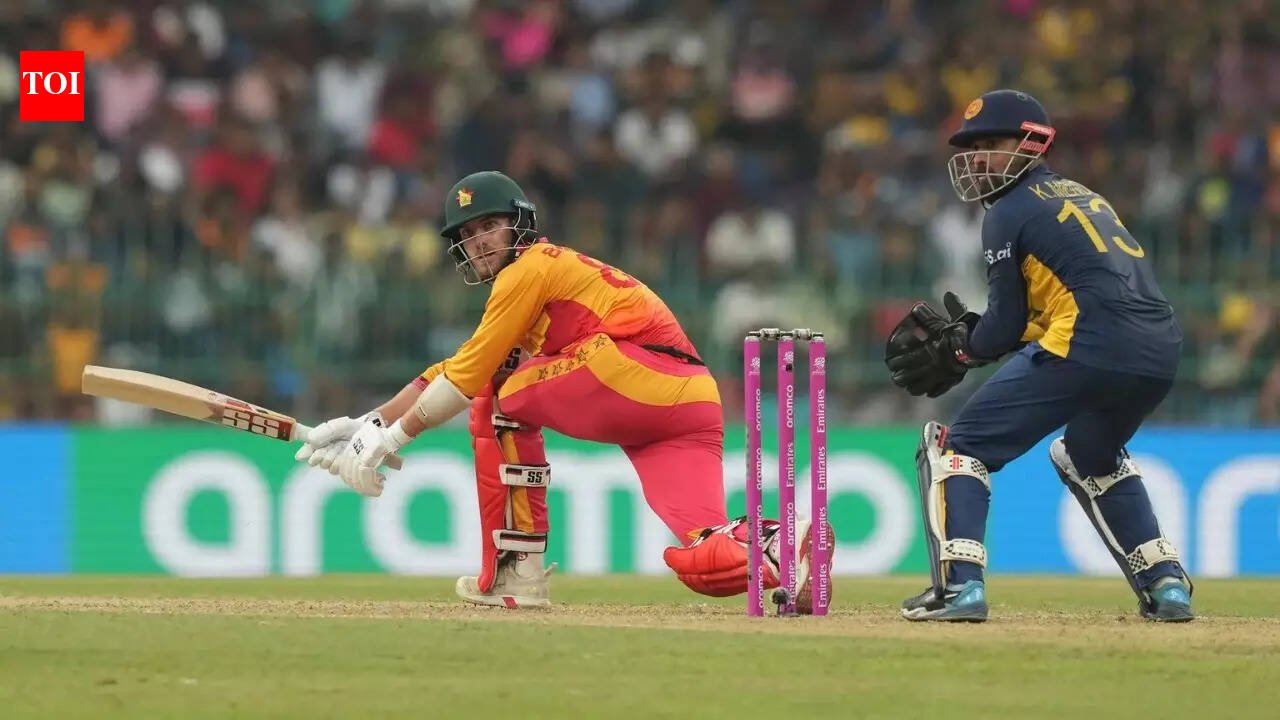
T20 World Cup 2026: Fans go berserk as Zimbabwe thump Sri Lanka to remain unbeaten in Group B


Zimbabwe produced a clinical run chase to defeat Sri Lanka by six wickets in the 38th match of the ICC Men’s T20 World Cup 2026 at the R. Premadasa Stadium in Colombo. Chasing a competitive target of 179, Zimbabwe reached 182/4 in 19.3 overs, sealing a memorable win with three balls to spare in a pulsating contest.

After Sri Lanka posted 178/7 in their 20 overs, Zimbabwe’s top and middle order combined with composure and calculated aggression to complete one of their most impressive chases of the tournament.

Sri Lanka post 178/7 after steady top-order contributions

Opting to bat first after winning the toss, Sri Lanka got off to a brisk start. Pathum Nissanka led the charge with a fluent 62 off 41 balls, striking eight boundaries and maintaining a strike rate above 150. His intent during the powerplay ensured Sri Lanka reached 61 runs in the first six overs.

Kusal Perera added early momentum with 22 from 14 deliveries, including four crisp boundaries, before falling to Blessing Muzarabani. The opening stand of 54 laid a solid foundation, but Zimbabwe’s bowlers gradually tightened their grip.

Kusal Mendis struggled for fluency, managing 14 from 20 balls before being stumped off Ryan Burl. The middle overs saw Zimbabwe claw back through disciplined spin bowling, with Graeme Cremer delivering a key spell. Cremer finished with impressive figures of 2 for 27 in four overs, removing both Nissanka and Kamindu Mendis at crucial junctures.

Pavan Rathnayake provided late acceleration with a dynamic 44 off 25 balls, hitting three fours and two sixes. However, Sri Lanka lost wickets in clusters during the death overs, slipping from 164/6 to 164/7 in the space of two deliveries.

Blessing Muzarabani and Brad Evans claimed two wickets each, ensuring Sri Lanka did not breach the 180-mark. Despite Dunith Wellalage’s unbeaten 15 off eight balls, Sri Lanka’s total of 178/7 appeared competitive but not overwhelming on a batting-friendly surface.

Zimbabwe’s calm and calculated chase of 179

Zimbabwe began their chase positively, reaching 55 in the mandatory powerplay. Tadiwanashe Marumani contributed a lively 34 off 26 balls, including five fours and a six, before falling to Dunith Wellalage at 69/1.

Brian Bennett anchored the innings superbly. The right-hander remained unbeaten on 63 from 48 deliveries, striking eight boundaries. His steady presence ensured Zimbabwe maintained control even when wickets fell at the other end.

Ryan Burl injected momentum into the chase with a quickfire 23 off just 12 balls. His aggressive cameo lifted Zimbabwe to 98/2 before Dasun Shanaka dismissed him. However, the match-defining partnership came between Bennett and captain Sikandar Raza.

Raza delivered a captain’s knock, smashing 45 from 26 balls at a strike rate exceeding 170. His innings featured 2 fours and 4 towering sixes, turning the game decisively in Zimbabwe’s favor. The duo added 69 runs for the third wicket, taking Zimbabwe within touching distance of victory.

Although Raza fell in the 19th over, Zimbabwe required only a handful of runs. Tony Munyonga’s unbeaten eight off three balls, including a six, ensured the target was surpassed in 19.3 overs.

Sri Lanka’s bowlers found it difficult to contain Zimbabwe’s batters during key phases of the chase. Dushan Hemantha was the most successful, claiming 2 for 36 in four overs, while Wellalage and Shanaka picked up a wicket each.

Maheesh Theekshana endured a challenging outing, conceding 47 runs in 3.3 overs at an economy rate of 13.40. Pramod Madushan and Dilshan Madushanka also struggled to stem the flow of boundaries, allowing Zimbabwe to dictate terms.

Also WATCH: Ryan Burl’s magical leg spin results in Kusal Mendis’ stumping during SL vs ZIM T20 World Cup 2026 clash

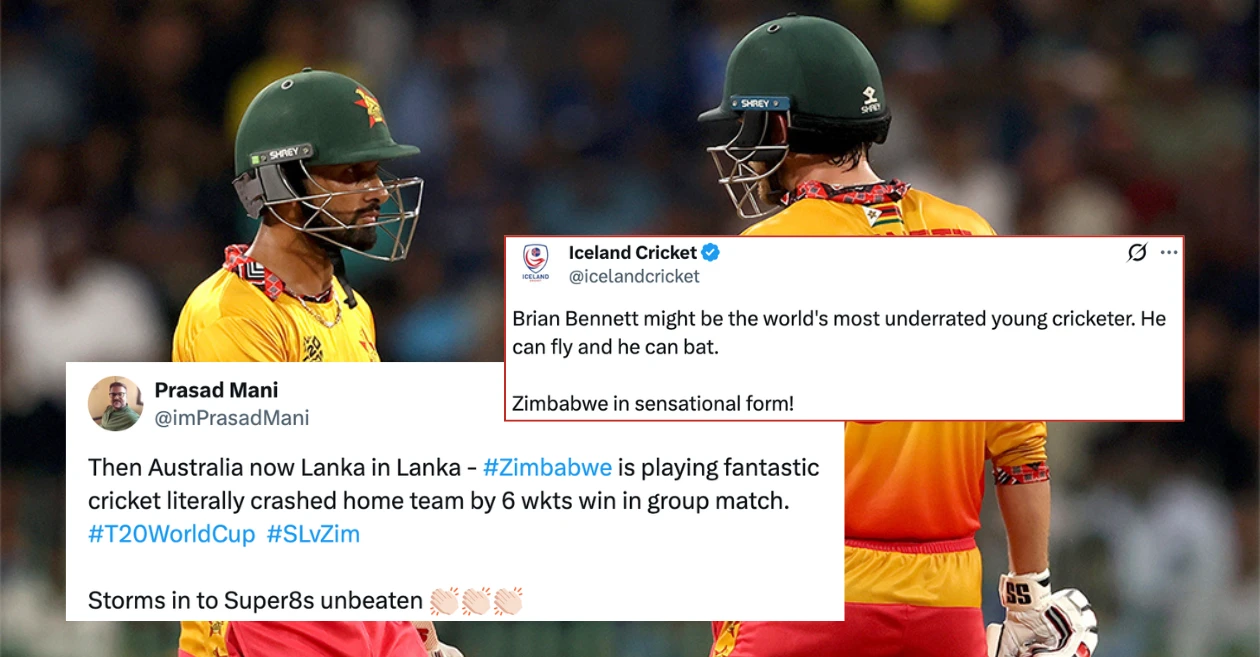
Here’s how fans reacted:

Also READ: What can stop India in T20 World Cup 2026? Ryan ten Doeschate explains ahead of Super 8 vs South Africa


Source link

US trade gap widens as goods deficit hits record $1.24 trillion in 2025


US trade gap widens as goods deficit hits record $1.24 trillion in 2025

The US trade deficit in goods widened to a record level in 2025 even as overall trade flows expanded, underscoring persistent import strength despite tariffs imposed during President Donald Trump’s first year back in office, according to the US government data.Data released by the Commerce Department showed the US goods deficit reached $1.24 trillion in 2025, slightly wider than the previous year’s level. The figures come despite sweeping tariffs introduced by the administration during the year.Separate data from the US Census Bureau and the Bureau of Economic Analysis showed the overall goods and services trade deficit stood at $70.3 billion in December, rising $17.3 billion from a revised $53.0 billion in November.Exports in December totalled $287.3 billion, down $5.0 billion from the previous month, while imports climbed $12.3 billion to $357.6 billion, driving the widening imbalance. The increase reflected a $15.7 billion jump in the goods deficit to $99.3 billion alongside a narrowing services surplus, which fell $1.6 billion to $29.0 billion.For the full year, however, the combined goods and services deficit edged lower by $2.1 billion to $901.5 billion in 2025. Exports rose strongly by $199.8 billion, or 6.2 per cent, to $3,432.3 billion, while imports increased $197.8 billion, or 4.8 per cent, to $4,333.8 billion.The annual decline in the overall deficit reflected a larger services surplus, which expanded by $27.6 billion to $339.5 billion, partly offsetting a $25.5 billion increase in the goods deficit.Trade flows showed mixed trends across sectors. Goods exports were lifted by gains in capital goods, computers, civilian aircraft and industrial supplies, while imports surged in capital equipment, telecommunications gear and computer accessories. Services exports also strengthened, led by growth in business services, intellectual property charges and financial services.Monthly data indicated shifting trade balances with key partners. In December, the United States recorded trade deficits with Taiwan ($19.8 billion), Vietnam ($17.6 billion), Mexico ($14.5 billion), China ($12.4 billion) and the European Union ($11.1 billion), while posting surpluses with the Netherlands, the United Kingdom and Brazil.Over a three-month average basis, the goods and services deficit widened to $50.7 billion by December, as average imports rose while exports softened modestly.The report noted that all figures were seasonally adjusted and that the next release schedule remains uncertain following a recent lapse in federal funding.


Source link

More lethal than Jasprit Bumrah? Ex-India captain makes big claim on Varun Chakravarthy | Cricket News


More lethal than Jasprit Bumrah? Ex-India captain makes big claim on Varun Chakravarthy
India’s Varun Chakravarthy (AP Photo)

Former India captain Kris Srikkanth has backed Varun Chakravarthy as India’s most dangerous weapon at the moment, even suggesting that the mystery spinner is proving more lethal than Jasprit Bumrah in the ongoing T20 World Cup 2026. Srikkanth also expressed surprise that Varun is not receiving the recognition he deserves.Varun has been in exceptional form, claiming nine wickets in four matches at an average of 6.88 and an economy rate of 5.16. In India’s game against the Netherlands, he returned outstanding figures of three for 14 from three overs.

How Suryakumar Yadav and Tilak Varma are hurting India | T20 World Cup

Interestingly, in the 21 matches where Varun and Bumrah have featured together, the spinner leads the wicket tally 30-22. Speaking on his YouTube channel, Srikkanth said that batters are still unable to decipher Varun’s variations.“Look at the pitch maps — most of his deliveries are around off-stump and middle-stump. Against right-handers, the ball just angles in slightly and then turns. His googly comes in sharply. Most of his wickets are from good length or just short of good length. Not even full deliveries. Even his so-called short balls are deceptive.”“People don’t know what he’s bowling. Is it a googly? Is it the straight one? Is it slower? Is it quicker? No one knows. Suddenly he bowls one faster. Then he changes speed again. Multiple speeds. Long run-up, relaxed action — but incredibly deceptive.”“Frankly speaking, he doesn’t get enough credit. Bumrah is fantastic. You won’t easily find a bowler like Bumrah,” said Srikkanth.Although Shivam Dube was named Player of the Match against the Netherlands, Srikkanth felt Varun was equally deserving.“Today, yes, Shivam Dube played a blinder and deserved Man of the Match. I’m not denying that. But if you look at Varun’s figures — three wickets for very few runs, all top-order wickets — why wasn’t he even considered a contender for Man of the Match? No one even thought about it,” he said.Since making a comeback after an underwhelming start to his international career, Varun has taken 47 wickets in 27 matches across 2024 and 2025. In 2026 alone, he already has 13 wickets from seven games. Srikkanth believes that if India lift the trophy, Varun could well be Player of the Tournament.“Hundred percent (he can be the Player Of The Tournament). Because of consistency. In every match he plays, even on a bad day, he gives away only 34 or 35 runs. For a spinner, four overs for 36 runs is absolutely acceptable in T20 cricket. But within that, he still takes one or two wickets.”“He’s casually delivering match-winning performances. But he’s not celebrated enough,” said Srikkanth.The former chief selector went a step further, calling Varun a modern-day great in the format and comparing his current impact to what Bumrah delivered in T20Is a few years ago.“Varun, you are a modern-day great. I’m telling you honestly from my heart — not because you’re Tamil, not because you’re from Tamil Nadu or Chennai. No. Purely because of ability. Every batter is struggling. They don’t know how to face him. They don’t know whether to defend. They don’t know whether to attack. They don’t know what to do against him.”“That’s exactly what Bumrah used to be a couple of years ago. Bumrah is still doing brilliantly,” said Srikkanth.Varun will next feature in India’s Super 8 encounter against South Africa on Sunday, February 22.


Source link

Wake-up call for individual taxpayers! Foreign assets reporting in focus – what you should know


Wake-up call for individual taxpayers! Foreign assets reporting in focus - what you should know
Individual taxpayers often struggle with determining the correct reportable value of foreign assets. (AI image)

India’s foreign assets reporting is no longer evolving quietly in the background; it has entered an era of assertive enforcement. Budget 2026 reinforced that overseas income/ asset disclosure is not merely a procedural obligation to disclose in the Income tax return forms, but a core compliance priority. The finance minister through her Budget speech clarified a shift towards technology-driven, non-intrusive compliance powered by data analytics. The implication is clear; with Indian tax authorities now equipped with extensive information through global reporting frameworks, non-disclosure of foreign income/ assets reporting is a quantifiable and traceable risk.As a quick snapshot, the major milestones in India’s foreign asset reporting framework to strengthen compliance, is outlined below:

Year Key milestone
2011-12 Schedule FA introduced in ITR forms
2015 Black Money (Undisclosed Foreign Income and Assets) Act, 2015 enacted (effective 1 July 2015)
2015 India adopts CRS under OECD
2016 FATCA inter-governmental agreement operationalized
2017 First automatic exchange of financial account information under CRS begins
2021-22 CBDT clarifies calendar-year reporting for Schedule FA
2024-25 CBDT compliance-cum-awareness campaign & NUDGE initiative launched
2026 FAST-DS 2026: One-time amnesty/ disclosure window for small taxpayers

The enforcement architectureIndia today operates within a global financial transparency architecture whereby it receives through international information exchange mechanisms such as the Common Reporting Standard (CRS) and Foreign Account Tax Compliance Act (FATCA). The relevant authorities receive granular, account level data on overseas financial assets, ranging from foreign bank accounts, investment portfolios, immovable properties, beneficial ownership etc. This information is not episodic – it is received in a structured way. Therefore, enforcement is no longer limited to suspicion-based audits or investigations, instead, discrepancies are detected systematically, as overseas financial data is matched against Income-tax returns filed in India, algorithmically.The legal foundation: foreign income /asset mandatory disclosureAs per domestic tax laws in India, individual taxpayers who qualify as Resident and Ordinarily Resident (ROR) are taxed on their global income are mandatorily required to disclose foreign income and assets in their Income-tax return forms in FSI & FA schedule.The disclosure and reporting are quite wide, covering foreign bank accounts – whether held individually or jointly or custodian, ESOP/ ESPP/ RSU’s granted of foreign parent entity, shares and securities of foreign enterprises, immovable property, trusts, retirement pension accounts like 401k etc. held outside India. The disclosure obligations are not only linked to income generation or asset value, even dormant or low-balance accounts or assets that yield no income etc., are required to be reported. Foreign assets reporting: India in a Global ContextIndia’s foreign asset reporting regime has progressively aligned with global transparency standards, though its structural design differs from mature jurisdictions such as the United States.While India requires Resident taxpayers to disclose foreign assets and income in Schedule FA and FSI schedule within the Income tax return form, with stringent consequences under the Black Money Act, the US reporting is citizenship & residency based. Besides FATCA reporting with IRS US also requires reporting via FinCEN form 114 to US Treasury under Bank Secrecy Act. Both jurisdictions emphasize transparency and global information exchange, the US regime is threshold-driven and dual-reported (IRS and FinCEN), India integrates disclosure within the tax return but couples it with a separate penal statute for undisclosed foreign assets. Practical challenges in Foreign Asset ReportingIndividual taxpayers often struggle with determining the correct reportable value of foreign assets, particularly in cases involving dormant bank accounts, inherited holdings, or investments acquired over multiple years. Currency conversion methodology and availability of historical documentation further complicate accurate disclosure.While income in the tax return is reported on a financial year basis (April to March of subsequent year), disclosures in Schedule FA require details relating to the calendar year (i.e., January to December). This mismatch frequently results in reconciliation challenges, especially where overseas financial statements follow a different reporting cycle.In addition, inconsistencies may arise where foreign income has been offered to tax but the corresponding asset was omitted in Schedule FA exposing taxpayers to technical non-compliance, despite absence of concealment intent.CBDT’s NUDGE initiative: From awareness to enforcementThe CBDT had already demonstrated the data-driven model in action. Through its Compliance-cum-Awareness Campaign and the Non-Intrusive Usage of Data to Guide and Enable (‘NUDGE’) initiative, overseas financial information received under CRS was used to flag discrepancies and encouraged prompt voluntary correction.The response was significant: in the first phase alone, 24,678 taxpayers revised their returns, disclosing foreign assets worth over ₹29,200 crore and foreign income of over ₹1,089 crore.While the campaign was positioned as NUDGE by the CBDT, it sent signals for more assertive enforcement.Why the Black Money Act raises the stakesThe Black Money Act operates parallel to the Income-tax Act, 1961 and carries a significantly harsher compliance. Under this, even mere non-reporting of a foreign asset, irrespective of whether it has generated income or not, would attract penalty exposure. An undisclosed foreign asset may be taxed at a flat rate of 30% of its Fair Market Value (FMV), with penalties for non-reporting of ₹10 lakhs, even where no income has arisen.To balance the stringent penalties under the Black Money Act, the proposed Finance Bill 2026 also introduces targeted relief for small taxpayers. Prosecution will not be initiated where the aggregate value of undisclosed foreign assets (other than immovable property) does not exceed ₹20 lakh, and this change applies retrospectively from October 01, 2024.Finance Bill, 2026: A calibrated amnesty opportunityThe Finance Bill, 2026 also proposed a targeted compliance reset through ‘The Foreign Assets of Small Taxpayers Disclosure Scheme, 2026 (FAST-DS 2026)’. The scheme provides a one-time opportunity to disclose specified foreign income and assets acquired up to March 31, 2026, with immunity from further proceedings under the Black Money Act, subject to prescribed conditions. The scheme will come into force from a date to be notified by the Central Government.The scheme’s objective is to address legacy reporting gaps of foreign income and assets through a structured correction window rather than prolonged enforcement. This amnesty scheme is clearly positioned as a limited correction, and not a recurring compliance facility with it being operative for a 6-month window. The scheme applies to individual taxpayers who are/ were ROR when the foreign income accrued/ earned or asset was acquired, irrespective of their current residential status. Accordingly, even those who are presently Non-Residents or Resident but Not Ordinarily Resident may avail the scheme if the non-disclosure pertains to a period when they qualified as ROR in India.The scheme has two categories tabulated below for easy comprehension:

Category A – Undisclosed foreign assets or income up to ₹1 crore Category B – Foreign income has been disclosed, but the corresponding foreign assets (value up to ₹5 crore) were not reported
Income Tax @ 30% on:

FMV of the undisclosed foreign asset as on 31 March 2026, and/ or

Undisclosed foreign income

Penalty equal to 100% of the tax payable, as determined above.

Effective outflow: 60% of the value of the foreign asset or foreign income, as applicable.

Flat fee of ₹1 lakh

The payment of the above provides immunity from further tax, penalty, and prosecution under the Black Money Act. For taxpayers, this may be the last opportunity to regularize legacy foreign reporting gaps within a structured immunity framework. However, the relief is not universal: the scheme excludes assets that constitute proceeds of crime under the Prevention of Money Laundering Act, 2002, and does not extend to cases where assessment proceedings under the Black Money Act have already been concluded.What FAQs clarifiesThe Budget 2026 FAQs offer some interpretative guidance. Importantly, the FAQ confirms that valuation under Category A is linked to the FMV of the asset as on 31 March 2026, not its original acquisition cost. It further clarifies that individual taxpayers who were Resident at the time of acquiring remain eligible, even if they are currently Non-Resident. While these clarifications are welcome, several operational and implementation questions remain open.Areas that require clarificationsWhile the disclosure window offers an opportunity for course correction. The clarity on the 6-month timeline commencement date and procedural mechanics is yet to be notified. Likewise, the requirement of valuing foreign assets at FMV as of March 31, 2026, raises practical questions around valuation methodology, currency conversion rates, particularly for assets such as foreign securities, immovable properties, employer provided stocks etc.Further, ambiguities remain if an individual taxpayer has multiple foreign assets acquired over several years, whether – one fee applies for all assets, or separate fee apply per asset / per year of non-disclosure. Lastly, while the scheme grants immunity from penalties and prosecution for disclosed income and assets, there are questions whether this will fully shield against reassessment under the existing Income tax Act. While the amnesty scheme is intended to make compliance easier for small taxpayers and those with inadvertent or legacy non-disclosures, it requires more detailing from CBDT to provide clarity on its practical implementation.What should individual taxpayers do now?In this evolving compliance landscape, individual taxpayers with overseas financial interests should undertake a prompt and structured review. Residential status must be reassessed for each relevant financial year with careful consideration, as the reporting obligations will depend entirely on it. A comprehensive inventory of all foreign assets including bank accounts, investments in foreign securities, pension funds, trusts, immovable property etc., should be prepared to evaluate reporting exposure.The disclosure window proposed in Budget 2026 presents an opportunity to revisit and regularise past positions, but it demands taxpayers to seek informed guidance from experienced tax professionals before taking any action. In a data-driven enforcement environment, proactive correction today is far preferable than facing disproportionate consequences later.(Ravi Jain is Tax Partner at Vialto Partners. Vikas Narang, Director at Vialto Partners and Pawan Digga, Manager at Vialto Partners have contributed to the article. Views are personal.)


Source link

Indian visas in Bangladesh likely to be ‘fully restored’ soon as Tarique Rahman takes charge | India News


Indian visas in Bangladesh likely to be 'fully restored' soon as Tarique Rahman takes charge
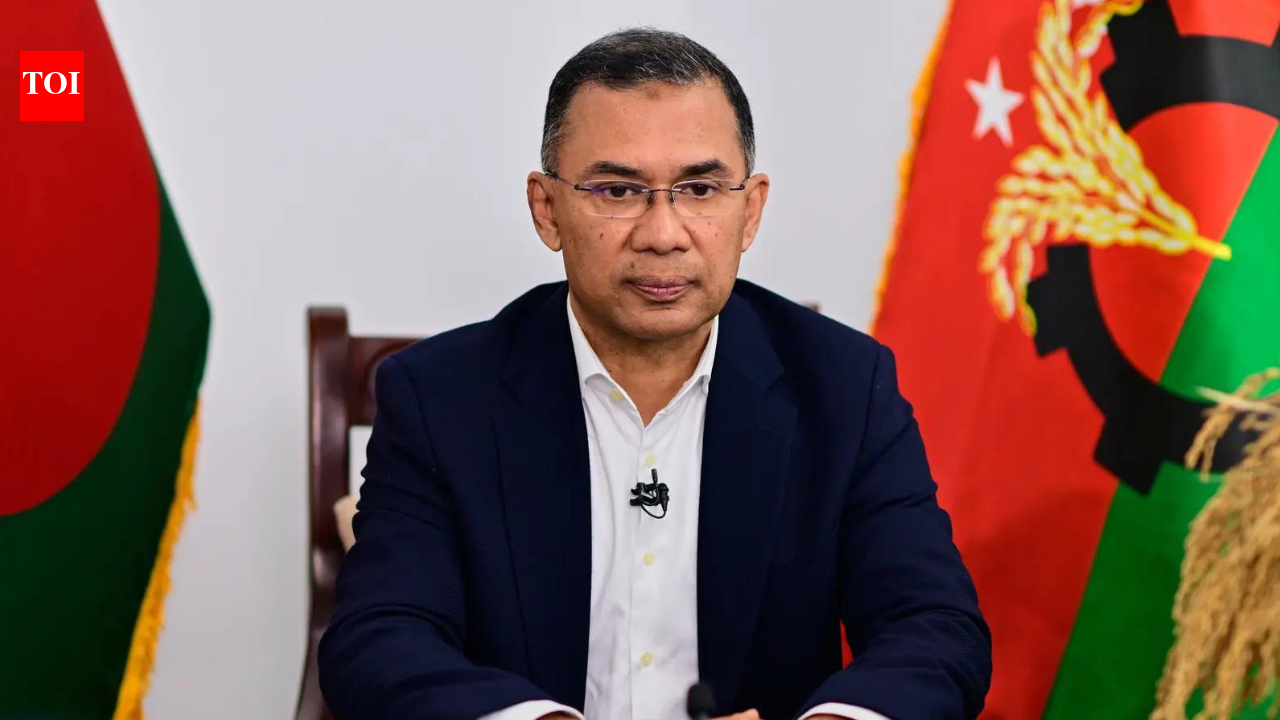
BNP chief Tarique Rahman (PTI photo)

NEW DELHI: With Muhammad Yunus’ departure from the power centre in Dhaka, steps are under way to “fully restore” all Indian visa services, India’s senior consular official in Sylhet, Aniruddha Das, has confirmed.Aniruddha Roy on Thursday assured full cooperation to strengthen India-Bangladesh relations and said efforts are being made to ease visa services.Speaking at the Sylhet District Press Club, he said medical and double-entry visas are currently being issued, and steps are under way to resume other categories, including travel visas.“Medical and double-entry visas are being issued now, and steps are under way to resume other categories, including travel visas,” BD News24 quoted him saying.He said India-Bangladesh ties are based on mutual respect and shared interests.“India-Bangladesh relations stand on the foundation of mutual respect and honour. The people of both countries will be the principal stakeholders of a stable, positive, constructive, long-term and mutually beneficial relationship,” he said.He added that both countries share cultural links and common goals, and cooperation can help create new opportunities.“We should transform our geographical and cultural proximity, growing economic capacity, and future aspirations into new opportunities through cooperation,” he said.He also said journalists can play an important role in strengthening ties between the two countries.“Through objective reporting and constructive criticism, journalists can further reinforce and strengthen this relationship,” he added.Days earlier, Bangladesh entered a new political phase after Tarique Rahman took charge as the country’s new prime minister. Following the Bangladesh Nationalist Party’s landslide victory, securing a two-thirds majority, Rahman invited Prime Minister Narendra Modi to attend his swearing-in ceremony.Prime Minister Modi congratulated Rahman on his party’s victory and later invited him to visit India after he took oath.India-Bangladesh relations had come under strain after Sheikh Hasina’s exile in August 2024. Ties were affected during the interim government led by Nobel laureate Muhammad Yunus, particularly after India provided refuge to the former prime minister Hasina. This led to tensions between the two countries, with several reports highlighting diplomatic unease in recent months.India had also expressed concern over incidents of violence against minorities, especially the Hindu community, during the period of unrest in Bangladesh under Yunus’ interim government.


Source link

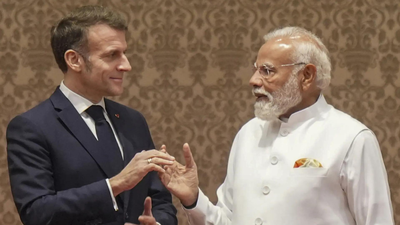
‘Makes your country stronger’: French President Emmanuel Macron on criticism over Rafale deal in India | India News


'Makes your country stronger': French President Emmanuel Macron on criticism over Rafale deal in India

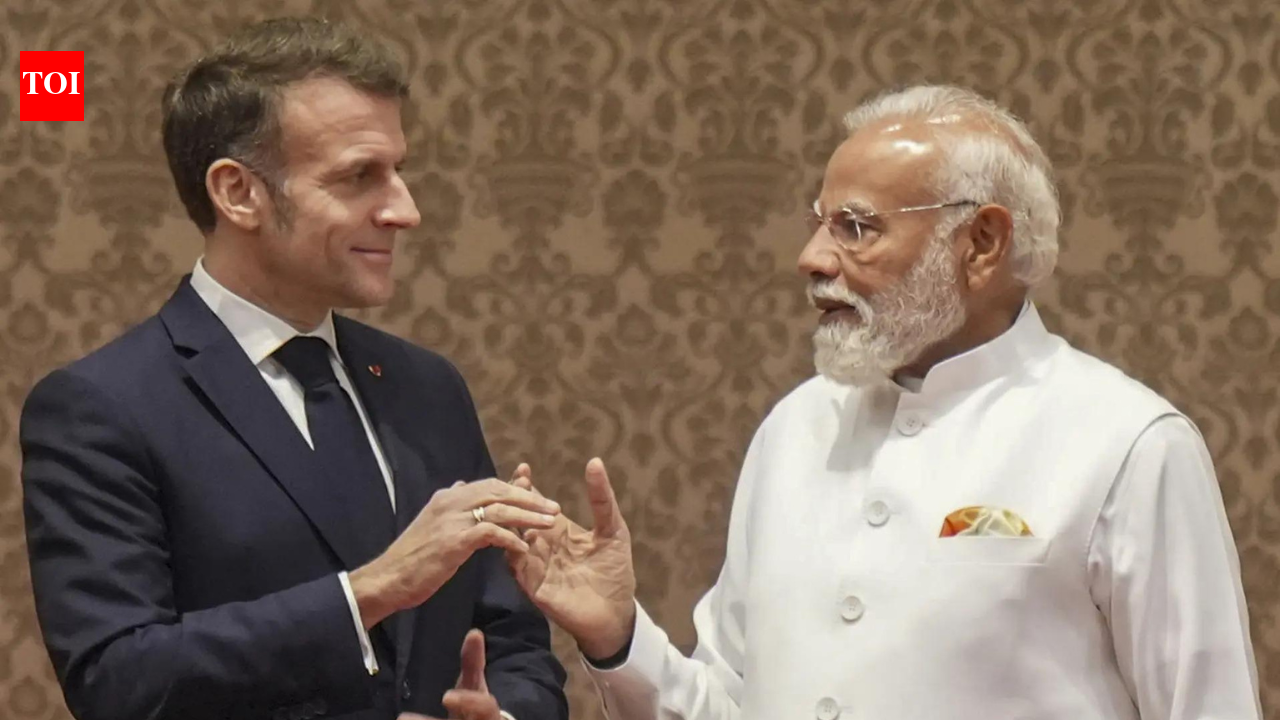
NEW DELHI: French President Emmanuel Macron on Thursday dismissed the criticisms on Rafale deal with India, saying that it only made “your country stronger”.“We are always increasing indigenous components. It’s part of the dialogue between the company and your government. I don’t see how people can criticise because it makes your country stronger, it increases the strategic coordination between us, and it creates more jobs here,” he said, speaking to the reporters.“Very clearly, we are extremely committed to having the maximum number of Indian components and manufacturing the maximum number of critical devices in India,” he added.“The Indians, who are currently customers, want to co-produce with us; we have seen the Rafale here, but they want to co-produce combat aircraft in India. They want to handle more of the maintenance, which is legitimate,” Macron said.Defence ministry, earlier this month, cleared the path for what officials describe as the “mother of all defence deals,” with the Defence Acquisition Council (DAC) approving the procurement of 114 Rafale fighter jets from France.

Why it matters for India

The deal marks a major step in strengthening the Indian Air Force’s (IAF) combat capability at a critical juncture. Although the United States and Russia had offered their fifth-generation fighters — the F-35 and Su-57 — defence planners ultimately viewed the Dassault Rafale as a proven, combat-ready platform capable of being inducted without the long timelines associated with newer-generation aircraft.The decision comes as India works to bridge a widening capability gap. While New Delhi has placed orders for 180 Tejas Mark 1A jets under its indigenous programme, production delays linked to engine supplies have slowed deliveries. The Advanced Medium Combat Aircraft (AMCA), India’s proposed fifth-generation stealth fighter, is not expected to enter operational service before the mid-2030s. In that context, the Rafale acquisition serves as a critical stopgap, ensuring the IAF maintains squadron strength and technological superiority during the transition.The Rafale’s operational value has already been demonstrated. During Operation Sindoor, Rafale jets deployed 250-km-range SCALP cruise missiles in precision strikes on terror infrastructure in Pakistan’s Muridke and Bahawalpur districts. The missile system — guided by inertial navigation, GPS, terrain-referenced navigation and an infrared imaging seeker — enabled deep-penetration attacks with high accuracy.


Source link

Taliban New Law: Now, domestic violence legal in Taliban-led Afghanistan — as long as no ‘broken bones, open wounds’ | World News


The Taliban has issued a new penal code in Afghanistan that codifies some of its most restrictive practices, raising alarm among rights groups over its impact on women and children.Signed by supreme leader Hibatullah Akhundzada, the 90-page criminal code permits husbands to physically abuse their wives and children, provided it does not cause “broken bones or open wounds.”

Taliban Declare They Will Back Iran If U.S. Military Strikes Islamic Republic Amid Nuke Standoff

Citing Islamic scripture, the 90-page code prescribes different penalties depending on whether an offender is considered “free” or “a slave,” formalising inequality within the justice system, as cited by the Independent. The code does not explicitly prohibit psychological or sexual violence against women, leaving significant gaps in legal protection. Violators face a maximum penalty of 15 days in prison, and only in cases involving what the code describes as “obscene force,” such as visible fractures or serious injuries.Even when abuse meets that threshold, a conviction depends on the wife proving it in court by presenting her injuries to a judge, a process that is nearly impossible under Taliban restrictions. Women are required to remain fully covered in public and must appear in court with a husband or male guardian, even when the alleged abuser is the husband.The regulations also allow a married woman to be jailed for up to three months if she visits relatives without her husband’s permission, including when she is seeking refuge from violence.A legal adviser in Kabul, speaking on condition of anonymity, said that women face an “extremely lengthy and difficult” process to obtain justice for assault under Taliban law.She cited a recent case in which a woman was beaten by a Taliban guard while visiting her husband in prison. When the woman filed a complaint, authorities told her it would not be considered unless she appeared with a male chaperone, her husband, who was incarcerated.The woman responded that if she had been accompanied by a mahram, the guard would not have assaulted her, the legal adviser said. “She cried and shouted in the public that death is better [than the process she is going through],” she was quoted as saying by The Independent. “It is impossible for women to get any justice for an assault that happens to them.”The law effectively treats wives as the “property” of their husbands and removes earlier legal protections, including the Elimination of Violence Against Women (EVAW) law introduced in 2009 under the former US-backed government. That legislation criminalised practices such as forced marriage, rape and other forms of gender-based abuse.Campaigners from the exiled human rights group Rawadari warned that the new penal code legitimises the “abuse, maltreatment, and punishment” of women and children, exposing them to “continued domestic violence.” The group has called for the “immediate halt of the implementation of the criminal procedure code” in Taliban courts, as cited by The Sun.Women’s lives plagued by restrictionsAlmost five years after the Taliban seized power in Afghanistan for the second time, the country’s de facto authorities have issued dozens of decrees stripping women and girls of fundamental rights, from education and employment to freedom of movement and participation in public life.Education bans and early dropoutsGirls are banned from secondary schools and universities, effectively ending formal education for most Afghan girls after grade six. Nearly 30 per cent of girls never begin primary school due to poverty, safety concerns and restrictive social norms, while child marriage is rising as families grapple with economic hardship.Restrictions on work and public lifeWomen are barred from most jobs and public spaces, including parks, gyms and sports clubs. Taliban decrees have also closed off sectors that once employed women, such as civil service roles, NGOs and beauty salons, contributing to one of the world’s largest gender gaps in workforce participation.Healthcare access under strainAccess to healthcare has become increasingly difficult for women, as mobility restrictions and the ban on treatment by male doctors in some areas coincide with a shortage of female health workers. Fear and systemic discrimination continue to prevent many women and girls from receiving essential medical care.


Source link

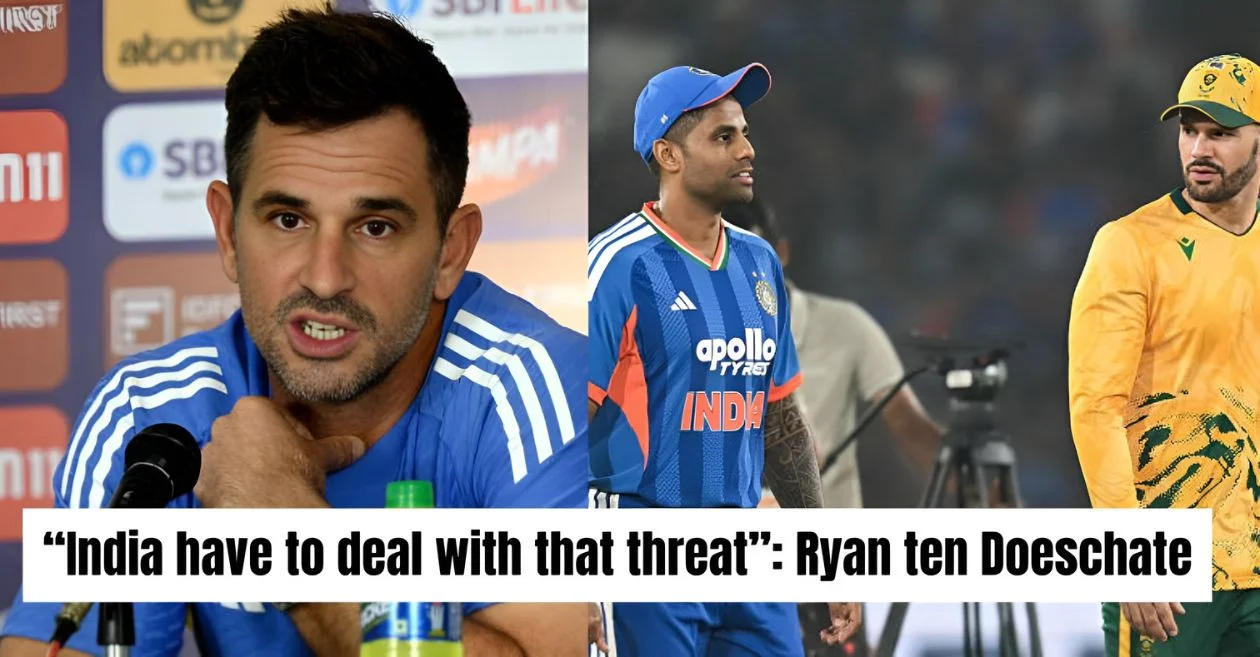
What can stop India in T20 World Cup 2026? Ryan ten Doeschate explains ahead of Super 8 vs South Africa


India heads into the Super 8 stage of the T20 World Cup 2026 with a perfect record after a hard-fought victory over the Netherlands at the Narendra Modi Stadium. While the 17-run win secured their fourth consecutive victory of the tournament, the team management is already looking toward the tactical refinements necessary for the business end of the competition. Following the game, assistant coach Ryan ten Doeschate provided a candid assessment of the journey ahead, emphasizing that the team’s ‘best, most complete performance is still to come’ as they prepare for a rematch of the 2024 final against South Africa this Sunday.

T20 World Cup 2026: Ryan ten Doeschate flags major obstacle for unbeaten India before South Africa Super 8 showdown

During the group stage, India faced more off-spin than any other team, often struggling to maintain a high scoring rate during the middle overs on sticky wickets. Assistant coach Ryan ten Doeschate noted that while flat pitches allow batters to “hit through the line with more confidence,” the real test lies in adapting to surfaces where the ball holds.

“I think on better wickets, you won’t see it [batters struggling against spin]. You can hit through the line with more confidence. But the point is that we need to have plans where the wickets do hold and the [longer] boundaries are there. We need to be able to have a game plan to deal with that threat. I wouldn’t say [there are struggles against] offspin, I’d say fingerspin [on the whole].” Ten Doeschate was quoted as saying by ESPNcricinfo.

Ten Doeschate pointed out that opponents are intentionally utilizing finger spinners to target India’s left-hand dominant top order, citing the recent clash in Colombo as a prime example:

“Colombo [against Pakistan] was a particularly difficult wicket… I think Pakistan bowled 14 [17] overs of fingerspin in the last game, and off the top of my head, I want to say [they got] something like 4 for 78 or something like that [5 for 125]. So it’s not great numbers [for India]. It’s been a trend in this World Cup… teams are getting a lot more clever now.” Ten Doeschate added.

Also READ: EXPLAINED: Did Abhishek Sharma break ICC rules by wearing Mohammed Siraj’s jersey?

‘Teams are getting cleverer’: India assistant coach Ryan ten Doeschate admits

India’s unbeaten run to the Super 8s has been shadowed by a clear vulnerability against finger spin. This trend began against the USA, where spinners squeezed India for three middle-order wickets, and continued against Namibia as Gerhard Erasmus’ four-wicket haul nearly derailed a strong start. Rival captains have clearly identified India’s left-hand heavy top order as a tactical weakness to be exploited on holding surfaces.

The struggle reached a peak in Colombo, where Pakistan deployed 18 overs of spin on a sticky pitch to dismantle the top order, including the prized wickets of Abhishek Sharma and Ishan Kishan. Most recently in Ahmedabad, the Netherlands’ Aryan Dutt used the new ball to remove both openers early, further highlighting the ‘squeeze’ India faces when they cannot hit through the line. Assistant coach Ryan ten Doeschate admitted that “teams are getting cleverer,” using finger spin to stifle India’s power hitters on wickets that offer even a hint of grip.

“It’s been a trend in this World Cup. In IPL or bilateral series, the pace of the innings carries through from powerplay. Across all games, particularly across Sri Lanka [at this World Cup], you get off the books quickly, and batting becomes difficult through the middle phase, and teams are getting a lot more clever now,” Ten Doeschate concluded.

Also READ: IND vs NED: Fans express shock as Abhishek Sharma records third consecutive duck in T20 World Cup 2026


Source link

Sikandar roars in Colombo: Zimbabwe stun Sri Lanka, fire warning shot at India | Cricket News


Sikandar roars in Colombo: Zimbabwe stun Sri Lanka, fire warning shot at India
Zimbabwe’s Brian Bennett plays a shot during the T20 World Cup cricket match between Sri Lanka and Zimbabwe in Colombo, Sri Lanka, Thursday, Feb. 19, 2026.

TimesofIndia.com in Colombo: At the end of the first innings, Zimbabwe leg-spinner Graeme Cremer voiced confidence about chasing down Sri Lanka’s 178 in their final group match at the R Premadasa Stadium in Colombo. “We thought it was a good batting wicket. We feel it’s a very chaseable score. If we bat well, we should be able to get it done,” said Cremer.Every word Cremer said proved prophetic. It was once again the 39-year-old warhorse Sikandar Raza who stepped up and played a blistering 26-ball 45 to set the chase. Opener Brian Bennett (60 not out) stayed at the end to take Zimbabwe with three balls to spare. Zimbabwe defeated co-hosts Sri Lanka by six-wickets and finished the group stage unbeaten with three wins, including a statement victory over Australia.

Captain fantastic

On the sidelines of the SA20, where Raza was playing for Paarl Royals, he had told TimesofIndia.com what it means for him to wear the Zimbabwean jersey. “The World Cup is really crucial in every cricketer’s life. And I always think for Zimbabwe to gain more respect in world cricket, World Cups play a huge part. So we have the mindset to go there and try and do really well so that we can come back with our goals set high and so that our people back home can hold their heads high as well,” Raza had said.On a windy Thursday evening in Colombo, he took matters into his own hands. When he walked into the ground, Zimbabwe needed 81 runs off 50 balls and the match was evenly poised, but Raza decided not today.Sikandar Raza’s innings was a masterclass in control, awareness and ruthless finishing. He began in measured fashion, rotating the strike against the spinners. Against Dunith Wellalage and Dasun Shanaka, he was content to work the ball into gaps, nudging singles and ensuring the asking rate never climbed. His early approach was built on soft hands, late cuts and quiet punches square of the wicket, allowing Zimbabwe to consolidate without risk.As Zimbabwe crossed the 100-run mark, Raza subtly shifted gears. Sensing Sri Lanka’s bowlers searching for breakthroughs, he began manipulating the field with ease.Maheesh Theekshana, brought back to stem the flow, missed his lengths ever so slightly and Raza pounced. A wide full toss was sliced through backward point, followed by a towering lofted drive over long-on. In a blink, a tight over turned expensive and Sri Lanka’s grip on the game loosened.The decisive blow came against Dushan Hemantha. Raza read him early, picked the dragged-down wrong’un and dispatched it over mid-wicket. When Hemantha dared to pitch it up, Raza responded with disdain, launching a 101-metre straight hit back over the bowler’s head. Colombo fell silent as the contest tilted decisively Zimbabwe’s way.Dilshan Madushanka’s variations offered brief resistance, with a slower ball beating Raza’s big swing, but the Zimbabwe captain was already locked in. The very next delivery that sat up was punished, rolled wrists, perfect balance and a ferocious pull dumped over square leg for six.When Raza got out, Zimbabwe needed 12 runs off 10 balls and after a slight hiccup, Tony Munyonga’s six off the first ball of the 20th over sealed the win for Zimbabwe. It was fitting that the winning shot came off Brian Bennett’s bat.After the match, Raza said he had wanted to stay till the end. “I wanted to finish the game, but we’ll take it,” Raza said.He also revealed how he kept communicating with opener Brian Bennett in the middle. “I kept saying to Benny that if you find a ball, hit it for a boundary. Otherwise, it’s really important that you bat through. I felt like I’d let you down at the start, but I’m starting to find my rhythm, so just please hang in there. If you stay at one end, we can win the game from the other end. Credit to Benny, he keeps doing that role really well, and I think he’s going to get better and better with every game.Interestingly, the Zimbabwe team did not over-celebrate and their batters walked off as if it were just another match.Watch out, teams in the Super Eight, including favourites India, will face Zimbabwe exactly a week later at the MA Chidambaram Stadium in Chennai.

Sri Lanka stutters in the middle

Earlier, Sri Lanka capped their innings with a strong late surge to post an above-par 178 for 7, smashing 30 runs off the final two overs to wrest back momentum after a prolonged middle-overs squeeze.Opting to bat first after winning the toss, Sri Lanka wanted to challenge themselves by setting a target on a surface that wasn’t easy for strokeplay. Openers Pathum Nissanka and Kusal Perera made the most of the harder new ball, timing it sweetly and finding gaps with regularity. Their fluent 54-run opening stand laid a solid foundation before Blessing Muzarabani broke through in the fifth over, dismissing Perera for 22. Despite that setback, Sri Lanka closed the powerplay in a commanding position at 61 for 1.The game shifted decisively after the field spread. Zimbabwe’s spinners tightened the screws on a surface that offered grip and turn, choking the boundary flow and forcing Sri Lanka into a period of consolidation. While runs came largely through sharp singles and twos, the lack of boundaries slowed the scoring rate. Nissanka, continuing his rich vein of form after a century in the previous match, held the innings together with another composed knock, raising a well-crafted half-century.Sri Lanka were pegged back further when Ryan Burl removed Kusal Mendis for a laboured 14 off 20 balls. Soon after, Graeme Cremer accounted for Nissanka, dismissing the opener for 62, a blow that drained momentum. From that point on, the innings stagnated, with Sri Lanka managing just 81 runs in the 11 overs following the powerplay.Brief Scores: Sri Lanka: 178 for 7 in 20 overs (Pathum Nissanka 62, Pavan Rathnayake 44; Graeme Cremer 2/27, Blessing Muzarabani 2/38)Zimbabwe: 182 for 4 in 19.3 overs (Brian Bennett 63 not out, Sikandar Raza 45; Dushan Hemantha 2/36)


Source link

Rs 11,000 crore pulled out! FIIs exit IT stocks as AI threat rattles outlook


Rs 11,000 crore pulled out! FIIs exit IT stocks as AI threat rattles outlook

Foreign institutional investors (FIIs) are sharply reducing exposure to technology sector, amid rising concerns that advances in artificial intelligence could disrupt traditional software services business models that have long powered the country’s IT industry.FIIs pulled out Rs 10,956 crore from Indian IT stocks in the first fortnight of February alone, as the launch of new AI models such as Claude Cowork and tools developed by Palantir intensified fears that highly autonomous systems could reduce dependence on conventional IT services providers.The latest selling adds to sustained outflows from the sector. Foreign investors had already offloaded IT shares worth Rs 74,698 crore through 2025, followed by additional selling of Rs 1,835 crore in January, reflecting growing scepticism about the long-term relevance of legacy outsourcing models.

IT stocks under pressure

The Nifty IT index has declined about 13 per cent so far this calendar year, with several frontline stocks witnessing sharp corrections. Wipro has fallen 19 per cent, LTIMindtree 22 per cent and LTTS 14.5 per cent, while Infosys and other major counters have also registered double-digit losses.The sectoral sell-off contrasts with overall foreign investor behaviour in India. FIIs turned net buyers in equities worth Rs 19,675 crore during the same fortnight following the announcement of an interim US-India trade deal, which also supported the rupee.Capital goods stocks attracted more than Rs 8,000 crore in inflows, while financials saw buying worth Rs 6,175 crore. Oil and gas, metals, power and construction sectors also recorded inflows, ET reported. FMCG and healthcare segments witnessed outflows of over Rs 1,000 crore each, though far smaller than the IT exodus.

AI disruption debate

Analysts remain divided on whether artificial intelligence poses an existential threat to Indian IT services firms.Global brokerage Nomura said fears of rapid displacement may be overstated, arguing that large enterprises are unlikely to replace complex technology ecosystems quickly.“We believe these concerns are oversimplifying the role of IT services companies,” Nomura said, as quoted ET, adding that enterprise buyers prioritise stability and risk reduction over experimentation. “It is easier said than done that a SaaS product and IT vendors can be replaced by vibe-coded apps, given that enterprise IT buyers optimise for career risk — reducing risks of failures — and not costs and innovations necessarily.Nomura outlined three possible scenarios for the sector. In a pessimistic outcome marked by structural decline, revenue growth could slow to 2–3 per cent or even contract, with valuation multiples falling to 10–12 times earnings as automation erodes routine work.In a middle scenario, companies successfully pivot towards data and AI-led services, allowing growth to recover to high single digits and valuations to stabilise in the early-20 multiples range.The most optimistic case envisions IT firms evolving into AI orchestrators, shifting from billing for effort to delivering outcome-based services. Under such a model, the addressable market could expand from about $1.5 trillion in traditional technology services to nearly $4.5 trillion linked to augmenting or replacing human enterprise labour.“The current sell-off in IT services stocks appears to be a case of front-loading of pains — pricing in extinction of old business models before gains from new business models emerge,” Nomura said, noting valuations have corrected below 12-year averages and now trade at a 12–39 per cent discount to five-year averages.The brokerage identified Infosys and Cognizant among preferred large-cap picks, Coforge among mid-caps and eClerx among small-cap opportunities.Industry players, meanwhile, are positioning themselves to capture emerging AI opportunities. Companies including TCS and Infosys have outlined strategies to expand AI-led consulting, automation and transformation services.Brokerage Emkay Global said IT services firms retain structural advantages despite technological disruption.“IT Services companies have the advantage of contextual understanding of enterprises’ complex environment, domain knowledge, and clients’ trust; hence, they would remain relevant even in the AI era, in our view,” it said.(Disclaimer: Recommendations and views on the stock market, other asset classes or personal finance management tips given by experts are their own. These opinions do not represent the views of The Times of India)


Source link