Breaking News
Egg extraction & sale racket in Badlapur busted; 3 women held | Mumbai News


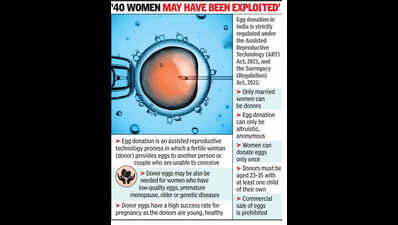
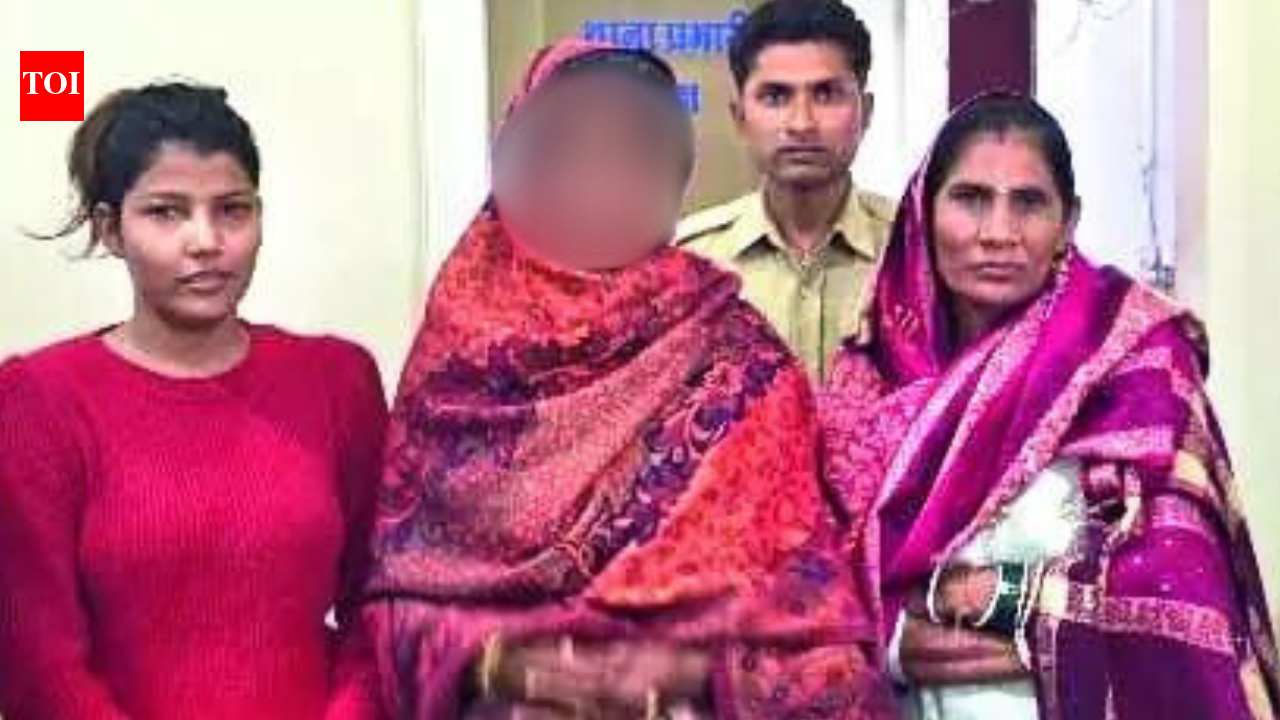
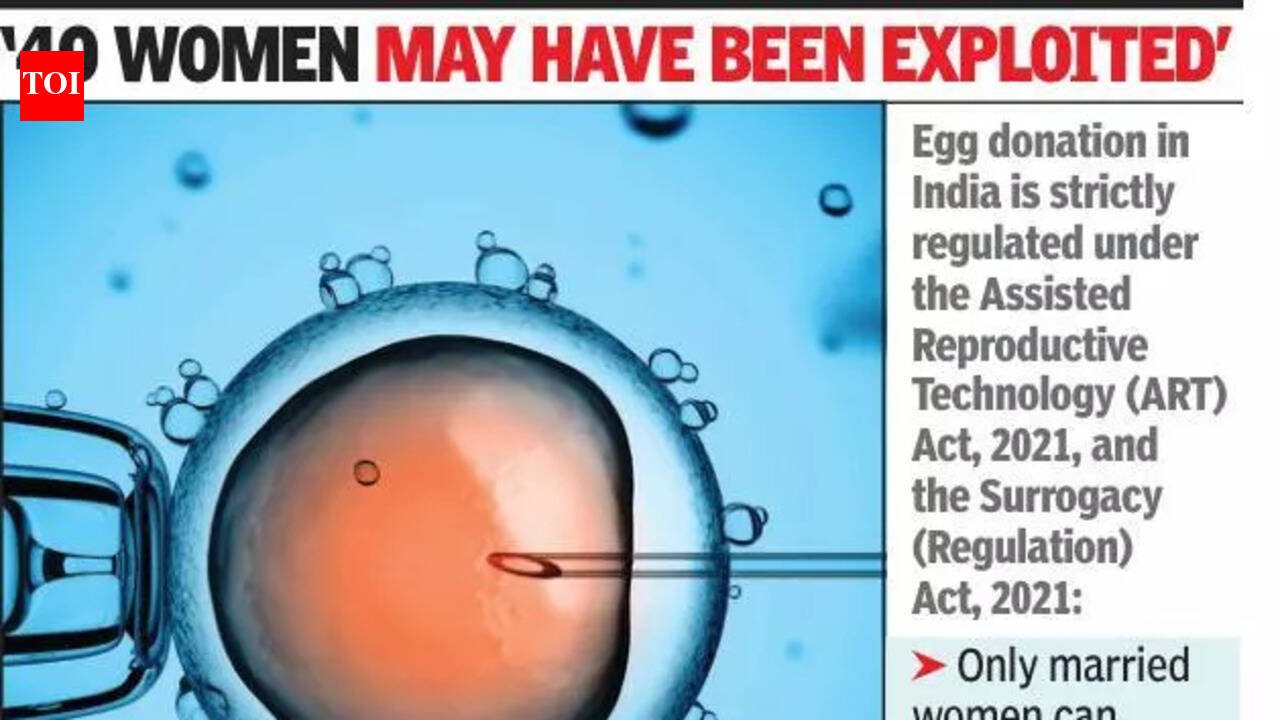
Thane: In a major crackdown, police have unearthed an alleged racket involving illegal stimulation, extraction and sale of human eggs and arrested 3 women in Badlapur East, exposing what officials described as exploitation of economically vulnerable women.Initial investigations have found agents identified women willing to “sell” eggs for Rs 25,000 to Rs 30,000.At least 40 women may have been exploited, said a senior police officer. In one case, a donor underwent egg extraction 33 times—even though the Assisted Reproductive Technology (Regulation) Act, 2021, allows women to donate eggs only once in their lifetime, that too not for financial gains.The case surfaced after one of the women approached the Badlapur primary health centre, claiming she had not been paid as promised. The primary health centre doctor, Jyotsna Sawant, alerted the local police, leading to the arrest of 3 women.Acting on the specific inputs, police raided the residence of Sulakshana Gadekar, who is believed to be the kingpin running an illegal operation from her home, where she stored injections used for stimulating ovulation.Investigators claimed Gadekar lured financially distressed women by offering money and administered ovulation-stimulating injections without proper medical consultation. The women then underwent illegal sonography-guided procedures conducted without proper doctors’ authorisation. The women were sent to IVF/ART centres where doctors extracted their eggs in operation theatres for sale.Police said the accused’s mobile phone contained photographs of injections used in pregnancy-related treatments, images captured during sonography procedures, photos of women, as well as of forged affidavits and other fabricated documents. Officers also recovered records indicating financial transactions linked to the alleged racket.The police complaint further alleged that Gadekar acted in collusion with individuals associated with sonography centres, IVF/ART centres, suppliers of hormonal injections, and those involved in preparing forged documents. Officials suspect multiple women were repeatedly used as donors, raising concerns of physical exploitation and serious health risks.Apart from Gadekar (44), police have also arrested Ashwini Chabuskwar (29) and Manjusha Wankhede (46). Police said Gadekar allegedly operated the racket, while the other two acted as agents, identifying and bringing women willing to undergo procedures in exchange for payment ranging from Rs 25,000 to Rs 30,000. On Saturday, the accused were produced before a local court, which remanded them to seven days’ police custody. Police said custodial interrogation would help uncover the financial trail and identify other members of the network.Deputy commissioner of police Sachin Gore, Zone 3, Thane, said, “Three teams have been formed for a comprehensive investigation into the case. Further arrests are likely.” Police suspect the racket could be part of a wider, possibly national-level network involving illegal fertility-related practices. Further investigation is underway.


Source link

Shiny flat, steep outgoings: Life after redevelopment in Mumbai | Mumbai News


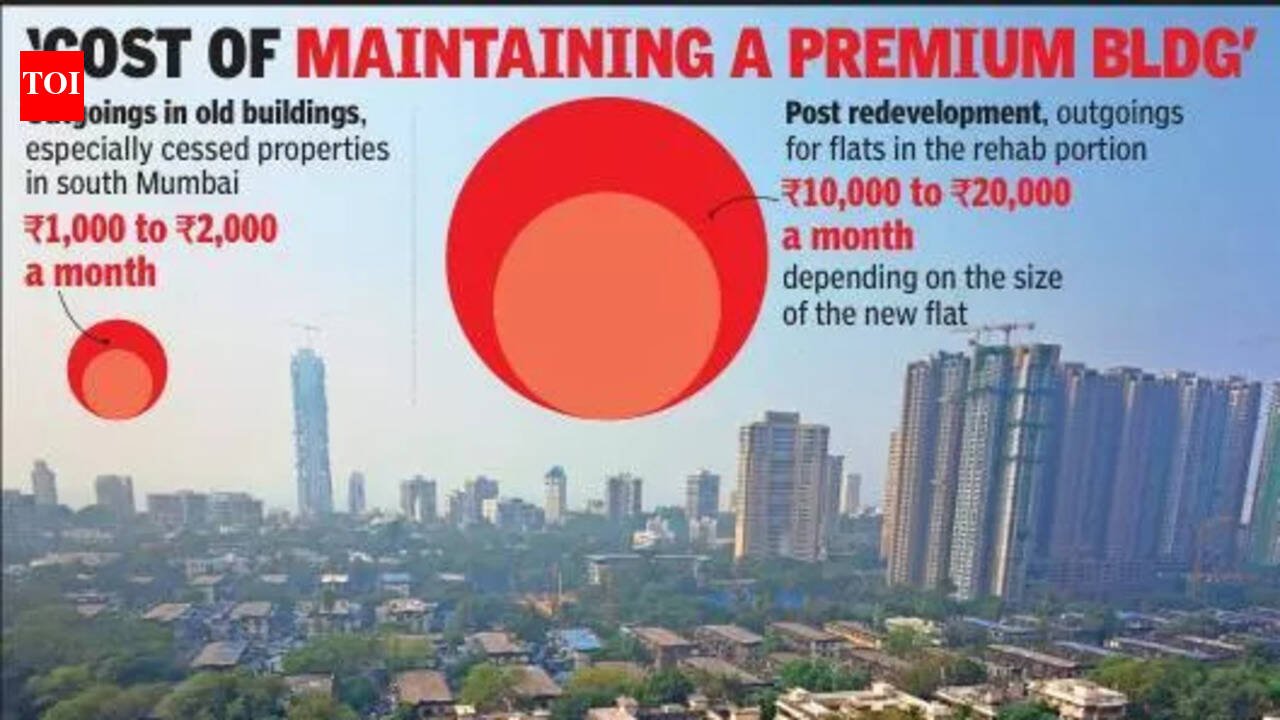
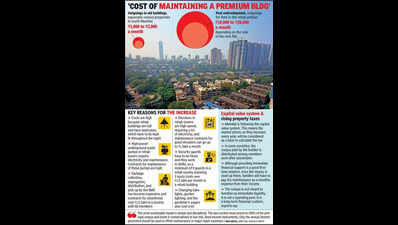
Mumbai: Middle-class housing societies are enticed with tempting redevelopment offers of larger flats in brand new buildings equipped with banquet halls, gyms and swimming pools.But realisation dawns much later when the project is complete, and old residents shift into their new apartments. In Mumbai’s redevelopment market, a little-known and not talked about issue is the crushing increase in monthly outgoings and property taxes families must pay for moving into a new tower.In a brand-new luxury tower in Bandra West, original residents who got 20% larger apartments in the redeveloped property are paying outgoings and municipal taxes up to Rs 26,000 a month. In the old building, each flat owner paid barely Rs 5,000 a month, inclusive of taxes. In another redeveloped Bandra building, the average outgoings per month (excluding property tax) for an owner is Rs 12 per sq ft. Earlier, it was just Rs 3 per sq ft.In south Mumbai, tenants of old cessed buildings protected under the Rent Act pay barely Rs 100 to Rs 200 a month as rent. However, once their properties are redeveloped, their monthly outgoings can shoot up to Rs 10,000 to Rs 20,000 a month for a 1,000-sq-ft flat, while a 2,000 sq ft home in a more luxurious home could incur Rs 30,000-Rs 40,000 per month.Property experts said maintenance in rehab buildings in south Mumbai typically ranges between Rs 10–Rs 30 per sq ft. And in premium south Mumbai buildings, operational expenses can range between Rs 60,000-Rs 75,000 per month or more, depending on scale and amenities.Property market sources said these costs reflect the reality of maintaining modern infrastructure and amenities. “Post possession, many residents notice an increase in maintenance charges. This increase is not arbitrary; it reflects the true cost of maintaining a premium building. In older structures, maintenance was low because facilities were minimal,” they said.Developer Sanjay Devnani said maintenance charges in a new building often increase drastically after redevelopment, sometimes by more than three times.“There are multiple factors responsible for this significant rise. In older buildings, if maintenance standards are low, monthly maintenance charges are usually minimal. Additionally, property taxes are calculated based on older ready reckoner rates as applicable to aged buildings. In such cases, maintenance charges may be around Rs 2,500 per month. However, once the building is redeveloped, the quality of maintenance improves significantly,” he said.Anuj Mehta, director, Dhuleva Group, demonstrated a “simple” sustainable model. He said if, for instance, a society receives Rs 2 crore as principal corpus and invests it at 7–8% annually, it can generate Rs 14 to Rs 16 lakh per year. “That recurring income can meaningfully cushion operational expenses without eroding the principal. Once the corpus is depleted, the society loses its financial safety net.” After redevelopment, flats are typically larger in size and are assessed at current ready reckoner rates for property tax purposes. One of the major escalations is due to high property taxes. Furthermore, the addition of modern amenities in larger projects significantly increases the maintenance cost per sq ft, going up 5-6 times the older rates.“We recommend the corpus to be kept with society rather than being given to individuals to help in maintenance-free society, but most societies disagree due to some members’ greed,” added Devnani.Housing expert Chandrashekhar Prabhu said what appears to be a hunky-dory affair may not be in the best interests of the so-called beneficiaries. “Mumbai is following the capital value system. This means market prices, as they increase every year, will be considered as a base to calculate the tax. Earlier, it was the rateable value system, when the rateable value was equivalent to 11 months’ rent. When we switched from rateable value to capital value, we did not realise the taxes would increase on the basis of the latest sale transactions and everyone, irrespective of when the building is built, will have to pay as per the market. The depreciation clause does very little to ease the burden, leaving the resident to wonder what crime he has committed to be forced to pay unexplainable increases without an increase in amenities. In order to avoid a public outcry, the govt has exempted flats less than 500 sq ft from payment of property taxes. But the rest of the city has to suffer,” said Prabhu.However, developer Nayan Shah said, “If the corpus amount is invested wisely, almost 80% of the monthly costs can be covered.”


Source link

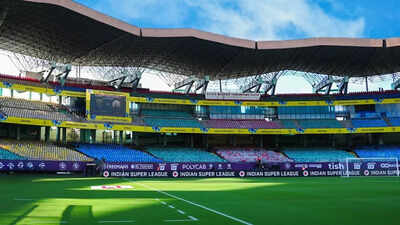
Kerala Blasters first ISL home game on track, but stadium rent row casts shadow over future matches | Football News


Kerala Blasters first ISL home game on track, but stadium rent row casts shadow over future matches
Photo credit: X/@KeralaBlasters

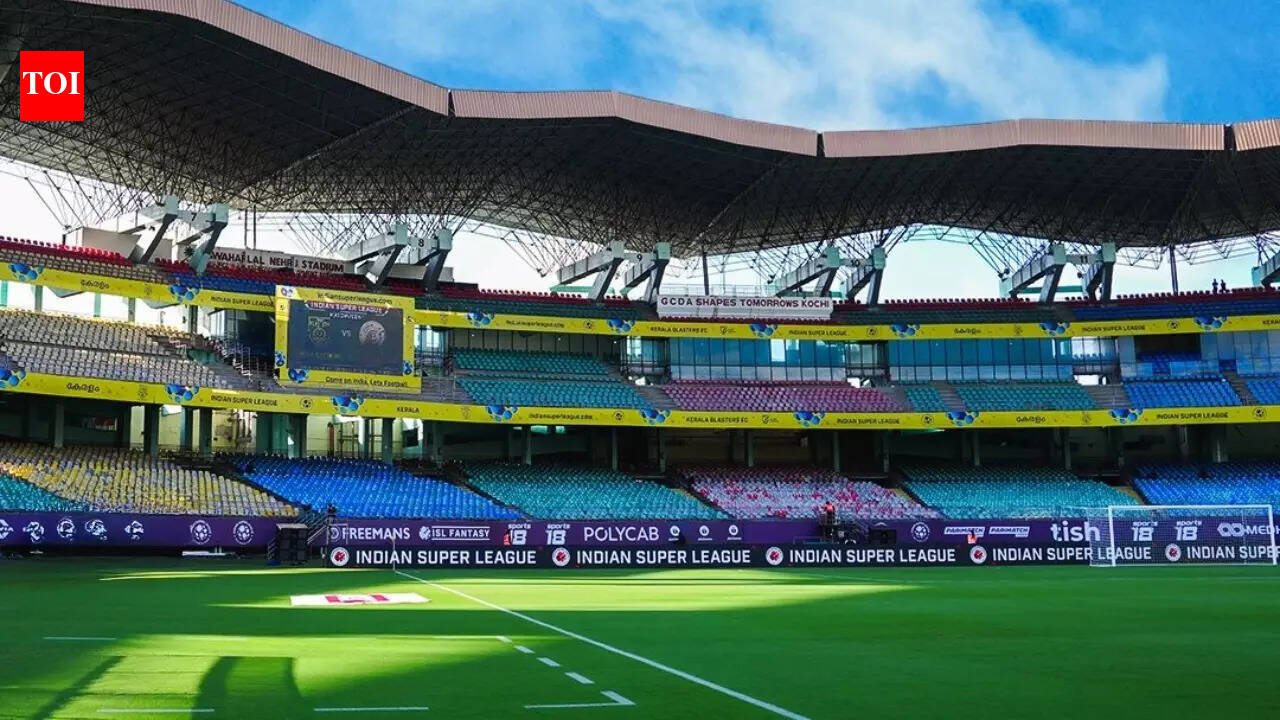
KOCHI: Preparations for Kerala Blasters’ first home match of the new Indian Super League (ISL) season against Mumbai City FC were thrown into turmoil on the eve of the fixture on Saturday, following an unexpected standoff with the Greater Cochin Development Authority (GCDA), which owns the Jawaharlal Nehru International Stadium in Kochi.GCDA denied permission for a pre-arranged pre-match press conference to be held inside the stadium, forcing the club to shift the interaction online at short notice.Tensions escalated later in the evening when GCDA officials reportedly asked All India Football Federation (AIFF) personnel, including match commissioner Arunava Bhattacharya, to vacate the premises. The authority also allegedly ordered the closure of the club’s administrative office operating within the stadium complex.Amid speculation that the match could be called off, the Blasters clarified in a late evening statement that the game would proceed as per schedule. “In the end, football is the winner. We will take to the field against Mumbai City FC tomorrow for our first home game of the season,” the club said.However, a source close to the management indicated that the understanding applies only for the opening fixture, with no clarity yet on arrangements for the remaining home games.The uncertainty stems from a dispute over stadium rent and pending payments.Last week, GCDA chairman K Chandran Pillai announced in a joint press conference with club officials that Rs 2 lakh would be charged as a one-time concession for this season, instead of Rs 8 lakh that was charged during the previous seasons.However, the authority’s executive committee, which met on Thursday, reportedly reversed the decision and fixed the rent at Rs 4.2 lakh per match.In addition to the revised match-day rent, GCDA is said to have demanded that the Blasters clear the full amount and settle an additional Rs 22 lakh as liability fees from the previous season within a week.According to a source within the club, the disputed sum relates to losses and additional expenses arising from a Bharatanatyam event held at the stadium in December last year.“Since the event happened in the middle of the season, they are asking us to pay that amount. Why should we pay the liability for an event that had no connection with us?” the source said.TOI reached out to GCDA officials, but they were not available for comment.The standoff played out publicly earlier in the day when GCDA security personnel asked journalists to vacate the hall designated for the pre-match press conference before locking up the venue. Blasters head coach David Catala and midfielder Rowllin Borges reportedly waited for over 30 minutes before leaving, once it became clear the interaction would not be allowed to proceed.The club subsequently conducted the media briefing online. During the session, Catala was asked pointedly by a reporter: “Which is your home ground?”The Spaniard kept his focus on football. His priority, he said, was preparing the squad and playing in front of their supporters at the stadium. He exuded confidence that the match would go ahead at the venue despite the uncertainty off the pitch.For now, the Blasters’ home opener will go ahead as per schedule, but the dispute on rent remains unresolved, casting a shadow over the rest of their ISL campaign.


Source link

Access Denied


Access Denied

You don’t have permission to access “http://www.ndtv.com/india-news/business-leadership-is-built-by-people-and-values-says-karan-adani-11118764” on this server.

Reference #18.34a21ab8.1771698220.117dc4f9

https://errors.edgesuite.net/18.34a21ab8.1771698220.117dc4f9


Source link

India, Brazil discuss US Supreme Court striking down reciprocal tariffs, set $30 billion trade goal


'We Will Continue To Fight': Brazil President Lula Backs India's UN Security Council Reform Push

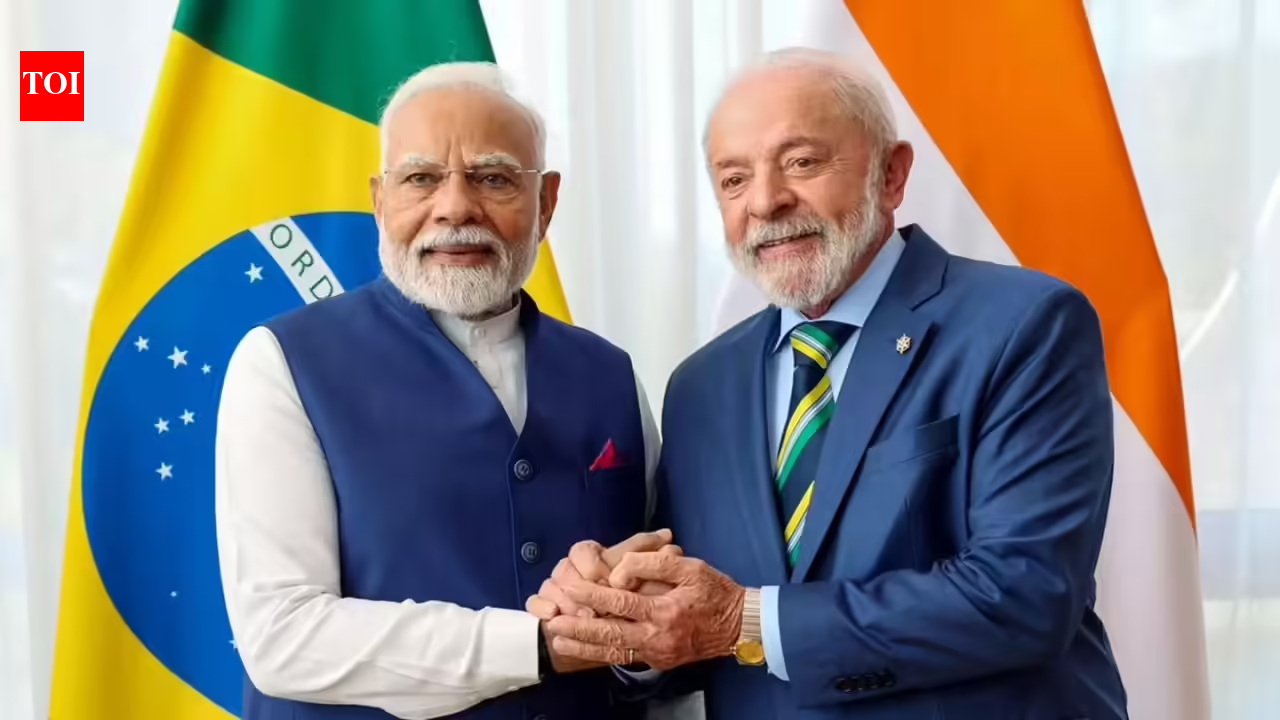
India and Brazil on Saturday agreed to scale up bilateral trade to $30 billion annually by 2030 and signed a key cooperation pact on critical minerals, with Prime Minister Narendra Modi and Brazilian President Luiz Inacio Lula da Silva pledging to deepen strategic ties amid a shifting global economic landscape.The two leaders also discussed the implications of the US Supreme Court striking down reciprocal tariffs imposed by President Donald Trump during their wide-ranging talks in the capital.

‘We Will Continue To Fight’: Brazil President Lula Backs India’s UN Security Council Reform Push

Secretary (East) in the ministry of external affairs P Kumaran said both sides reviewed developments in US trade policy and agreed to closely monitor the situation.“Both leaders agreed that it is a rather new development that both sides need to study its implications and wait for further developments by the US administration,” he said, PTI reported.“We will be essentially in wait and watch mode on how the administration responds to this judgement and whether any further steps are taken and to study the implications for our trade,” Kumaran added.The discussions came after the US administration imposed a new 10 per cent global tariff following the Supreme Court’s decision striking down earlier reciprocal tariffs.

Trade target reset, strategic sectors in focus

Kumaran said Modi and Lula agreed that bilateral trade should at least double to $30 billion by 2030. India and Brazil recorded bilateral trade of $12 billion in 2024–25, including Indian exports of $6.77 billion and imports worth $5.43 billion.“Brazil is India’s largest trading partner in Latin America. We are committed to taking bilateral trade beyond USD 20 billion in the next five years. Our trade is not just a figure, it’s a reflection of trust,” Modi said in his media statement alongside Lula.Following the talks, the two countries signed nine agreements, including cooperation in rare earth and critical minerals and a joint declaration on a digital partnership. Memoranda of understanding were also concluded in mining, MSMEs, healthcare and traditional knowledge systems.The leaders agreed to expand cooperation across defence, energy, healthcare and digital public infrastructure, emphasising stronger India-Brazil coordination to navigate geopolitical uncertainties.“The agreement on critical minerals and rare earth is a major step towards building resilient supply chains,” Modi said.

Global South cooperation and security focus

Modi said India and Brazil share common positions on global governance and security challenges, stressing that reform of international institutions is necessary to address contemporary global issues.“We believe that every problem must be resolved through dialogue and diplomacy. India and Brazil are unanimous that terrorism and its supporters are enemies of all humanity,” he said.Lula, who is on a five-day visit to India to attend the AI Impact Summit and hold bilateral talks, condemned terror attacks in Kashmir and said terrorism must not be linked to any religion or nationality.“The turbulent global environment requires India and Brazil to deepen our strategic ties,” Lula said, describing engagement between the two countries as a partnership of “superlatives”.“We are not just the two biggest democracies of the Global South. This is a meeting of a digital superpower with a renewable energy superpower,” he said.The Brazilian president also emphasised the need for reform of global institutions, including the UN Security Council.“We emphasised our commitment to the UN reform, particularly of the UN Security Council so that it represents the interests of the Global South. Brazil and India are natural candidates to become permanent members of the Security Council,” he said.

Expanding cooperation across sectors

The talks also covered defence cooperation, including maintenance collaboration for French-origin Scorpene submarines under a tripartite arrangement involving Mazagon Dock Shipbuilders Limited and the Indian and Brazilian navies.Brazilian aerospace company Embraer’s proposal to establish an assembly line for its E175 regional jet in India and the creation of a maintenance, repair and overhaul facility were also discussed.Modi said cooperation in technology and innovation would benefit both nations and the broader Global South.“We are also prioritizing our cooperation in areas such as Artificial Intelligence, supercomputers, semiconductors, and blockchain. We both believe that technology must be inclusive and it must become a bridge for shared progress,” he said.The prime minister described energy cooperation as a key pillar of bilateral ties, highlighting collaboration in renewable energy, ethanol blending and sustainable aviation fuel, while welcoming Brazil’s participation in the Global Biofuel Alliance.Brazil also proposed co-chairing the India-backed Coalition for Disaster Resilient Infrastructure (CDRI), an initiative Modi said would further strengthen global cooperation in disaster resilience.Modi said Lula’s visit had infused new momentum into India-Brazil relations, adding that the partnership continues to play an influential role on the global stage and in advancing the aspirations of the Global South.


Source link

Mahim police book man for abetment to suicide after harassment complaint by in laws | Mumbai News


Mumbai: The Mahim police booked a man for abetment to suicide after in-laws lodged a complaint of harassment and torture.A 40-year-old vegetable seller from Raigad lodged a police complaint alleging that her sister was driven to suicide due to sustained harassment by her husband in Mahim.

Mumbai: Violent Clash, Transport Fines, City Development & More

Manda Hari Mhatre alleged that her sister, Yashoda Pednekar (35), who married Shrikant Vinayak Pednekar in 2013, faced repeated physical and mental harassment over the years, including allegations of an extramarital affair and domestic abuse.The complainant stated that Yashoda earlier returned to her parental home in Raigad in 2016 after she was assaulted and thrown out, following which a court complaint was filed and a settlement was reached in 2017. However, in 2023, Yashoda again informed her family about ongoing fights and beatings by her husband and mother-in-law, after which she briefly stayed with her sister before she was taken back to Mumbai by her husband.On Jan 1, 2026, the family was informed by the accused’s mother that Yashoda allegedly hanged herself at their Mahim residence and was taken to Sion Hospital. The complainant claimed that the suicide, which occurred between the night of Dec 31, 2025 and the morning of Jan 1, 2026, was a result of continuous harassment and sought legal action against Shrikant Pednekar for abetment to suicide.


Source link

Mistaken as child lifter & beaten: Indore assault video reunites missing Meerut woman with kin after 18 months | Indore News


INDORE: What began as a disturbing viral video ended in an emotional reunion for a Meerut family after an 18-month search for their missing mother.This viral video showing a middle-aged woman being assaulted in Indore over suspicions of child lifting helped reunite her with her family. The video came to the attention of the victim’s daughter in Meerut. After verifying the footage, she travelled to Indore and brought her mother, who had been missing for over a year and a half, safely back home.The woman, 45-year-old Rekha Devi from Railway Road Colony in Meerut, had disappeared nearly 18 months ago after battling severe emotional distress following the deaths of her son and brother. Her family had filed a missing complaint, but despite repeated efforts, there was no breakthrough and hope gradually began to dim.On Feb 6, Rekha was found wandering in Jeet Nagar under Bhanwarkuan police station limits in Indore. Mistaking her for a child lifter, some residents assaulted her. The shocking video of the attack soon spread across social media.After the assault, Rekha was taken to Bhanwarkuan police station, where officers determined that she was mentally unstable and had no connection to any crime. With no one to claim her, she was released and wandered off again.Hundreds of kilometres away in Meerut, her daughter Shivani froze when she saw the viral clip. Through the chaos in the video, she recognised her missing mother. Desperate but hopeful, she contacted those who had shared the footage and rushed to Indore with her family.Following directions from Indore Police Commissioner Santosh Kumar Singh, the family reached Bhanwarkuan police station. Police traced Rekha’s last known location to the Baigram area of Simrol and launched a search, asking the anxious family to wait at a nearby temple.After two days, personnel from Simrol and Barwaha police stations, searching alongside the family, found Rekha at Khedighat in Barwaha.


Source link

T20 World Cup 2026: Varun Aaron names biggest threat for India in Super 8 match against South Africa


The Super 8 stage of the ICC Men’s T20 World Cup 2026 is heating up, and one of the most anticipated contests sees India take on South Africa in a high-stakes encounter. With both teams carrying strong momentum into the second phase, the fixture is being viewed as a potential preview of the final.

India, the defending champions, have looked composed and confident so far, while South Africa have once again showcased their depth in both departments. When these two cricketing giants collide, margins are slim and moments of brilliance often determine the outcome. The clash is expected to test India’s batting depth against South Africa’s versatile bowling attack on a surface that could offer assistance to seamers early on.

With knockout implications looming, every session, every over and every tactical decision will carry enormous weight.

Varun Aaron on biggest threat for Team India for South Africa clash

Former India pacer Varun Aaron believes South Africa’s left-arm quick Marco Jansen could pose the biggest threat to India’s top order in this crucial Super 8 fixture.

Speaking on ESPNcricinfo, Aaron pointed out that Jansen’s unique attributes make him particularly dangerous against India’s opening pair. According to him, Jansen does more than just extract bounce from his towering height — he also generates sharp deviation off the surface, especially moving the ball away from left-handed batters.

Aaron specifically highlighted how the angle and movement away from Ishan Kishan and Abhishek Sharma could create problems. While both batters are aggressive and capable of taking the game away in the powerplay, Aaron noted that deliveries that “nibble away off the deck” can occasionally trouble them.

“I just feel with their bowlers, I think Marco Jansen poses the biggest threat because he’s somebody who just doesn’t get bounce. He also gets a lot of deviation off the surface, especially away to Ishan and Abhishek. And if you talk about Ishan and Abhishek, they’re really good players, but if as a bowler you can get the ball to nibble away off the deck away from them, that’s where they slightly struggle,” said Aaron.

He emphasized that if India manage to neutralize Jansen’s early spell and blunt his impact with the new ball, they would significantly improve their chances of dominating the contest. In a match where early wickets could shift momentum dramatically, handling Jansen’s threat could be the key to setting up or chasing a competitive total.

South Africa’s bowling attack, featuring experienced campaigners and quality seam options, adds another layer of challenge. But in Aaron’s view, Jansen’s combination of height, seam movement and ability to exploit conditions makes him the standout danger man for India.

“So I feel if they can negate that Jansen threat, I think they’ll be flying,” added Aaron.

Also READ: Sunil Gavaskar predicts one change in India’s playing XI for the Super 8 clash against South Africa in T20 World Cup 2026

Expectations high from defending champions

As the Super 8 stage begins, the tournament has undeniably entered its most serious phase. Expectations are sky-high from defending champions India, who carry both the confidence of past success and the pressure of living up to it.

Led by the dynamic Suryakumar Yadav, India boast a line-up packed with match-winners. The squad includes explosive batters, versatile all-rounders and a pace attack capable of delivering under pressure. Players like Hardik Pandya and Jasprit Bumrah add balance and experience, while the young core provides fearlessness and flair.

Fans believe this team has the tools to shine on the big stage once again. However, the Super 8 phase demands adaptability and composure against elite opposition. South Africa will not make things easy, and India must bring their A-game to maintain their title defence momentum.

Also READ: T20 World Cup 2026: Shaun Pollock names two key bowlers for India in the Super 8 game against South Africa


Source link

BMC demolishes illegal structures and unauthorised stalls in Borivli and Kandivli | Mumbai News


Mumbai: A total of 25 illegal structures and 35 unauthorised stalls in the Mahavir Nagar area of Borivali (West) and Kandivali (West) were demolished on Friday, February 20, by the civic ‘R/Central’ ward of the BMC.Officers and staff from the Vigilance, Encroachment Removal, Building and Factories, and Solid Waste Management departments jointly carried out the operation. Around 50 officers, along with 3 JCB machines and 5 dumpers, as well as adequate police security, were deployed during the operation.The municipal administration stated that such removal drives against illegal constructions and unauthorised hawkers will continue in the coming days as well.


Source link

‘Extraordinarily anti-American decision’: Trump unleashes fury at US Supreme Court after hiking global tariffs from 10% to 15%


'Extraordinarily anti-American decision': Trump unleashes fury at US Supreme Court after hiking global tariffs from 10% to 15%
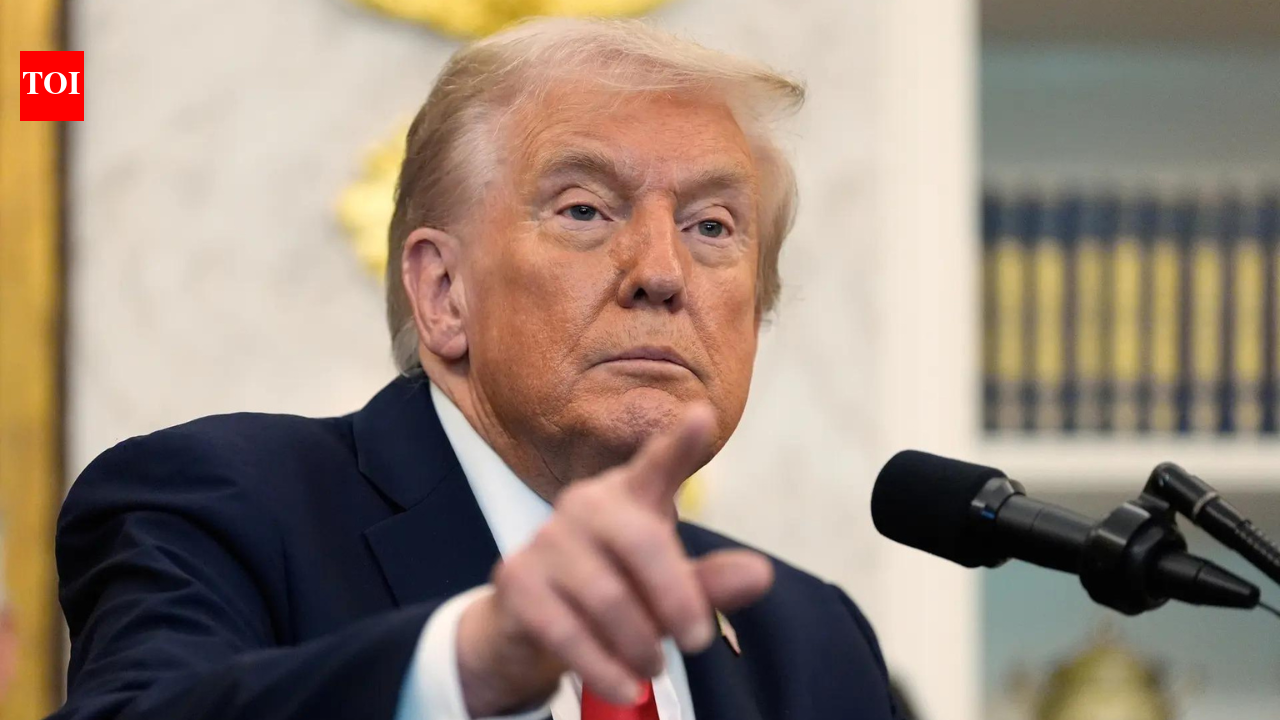
US President Donald Trump (File photo)

US President Donald Trump on Saturday increased the global tariff he had announced a day earlier from 10% to 15%, in a strong reaction to the US Supreme Court’s landmark ruling that dealt a stinging blow to his second tenure as president.In a post on Truth Social, the MAGA supremo blasted the Supreme Court’s ruling as “ridiculous and poorly written” and declared it “extraordinarily anti-American.” A furious Trump wrote, “Based on a thorough, detailed, and complete review of the ridiculous, poorly written, and extraordinarily anti-American decision on tariffs issued yesterday, after MANY months of contemplation, by the United States Supreme Court, please let this statement serve to represent that I, as President of the United States of America, will be, effective immediately, raising the 10% Worldwide Tariff on Countries, many of which have been ‘ripping’ the US off for decades, without retribution (until I came along!), to the fully allowed, and legally tested, 15% level.“During the next short number of months, the Trump Administration will determine and issue the new and legally permissible tariffs, which will continue our extraordinarily successful process of Making America Great Again — GREATER THAN EVER BEFORE!!!,” he added further.

Explained: How US tariffs on India evolved amid Supreme Court ruling and trade disputes

The move came after the US Supreme Court declared Trump’s tariff actions illegal and questioned his authority to impose sweeping import duties without congressional approval.Immediately after the ruling, Trump expressed his “deep disappointment” in an agitated tone and said he was “ashamed” of the Supreme Court. He alleged that the judgment had been influenced by “foreign interests.”Taking a jibe at the bench that delivered the 6–3 ruling, Trump said, “They’re so happy. And they’re dancing in the streets, but they won’t be dancing for long. That I can assure you. The Democrats on the court are thrilled, but they will automatically vote no. They’re an automatic no, just like in Congress. They’re an automatic no. They’re against anything that makes America strong, healthy, and great again.”The enraged US president also declared, “I can do anything I want.” Moving ahead using tariff as weapon, Trump invoked Section 122 of the Trade Act of 1974 to impose a fresh 10 per cent global tariff on imports, which he revised on Saturday to 15 per cent.

Supreme Court’s ruling on Trump tariffs

In a strong rebuttal to Trump, chief justice John Roberts, writing for the majority, said the President does not have the authority under the International Emergency Economic Powers Act (IEEPA) of 1977 to impose tariffs. The court stated that “had Congress intended to convey the distinct and extraordinary power to impose tariffs, it would have done so expressly.”The ruling supports earlier decisions by the US Court of International Trade and a federal appeals court. Both courts had found that IEEPA, a law usually used to freeze assets or block financial transactions during national emergencies, does not automatically give the President the power to impose tariffs.Three conservative justices, Clarence Thomas, Samuel Alito, and Brett Kavanaugh, disagreed with the majority opinion. In their dissent, they argued that the law’s broad language allowing the President to “regulate” economic transactions during a declared emergency should be understood to include the power to impose tariffs.


Source link