Breaking News
Police attach Pakistan-based terror handler’s Kathua property | India News


Police attach Pakistan-based terror handler’s Kathua property

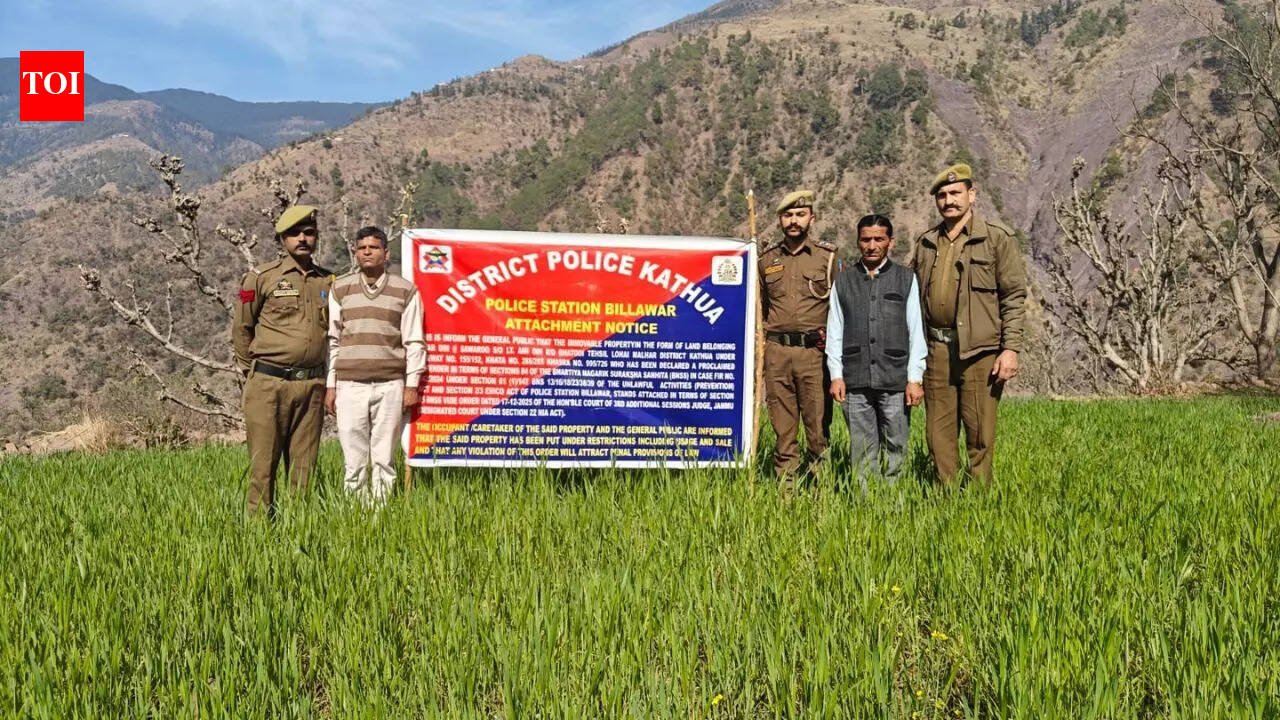
JAMMU: Kathua Police Tuesday attached property belonging to a Pakistan-based terror handler in the district’s Lohai Malhar tehsil on orders of the additional sessions court, Jammu.The attachment of the land (approximately 7.5 marlas) owned by the accused, Swar Din, in Bhatodi area was carried out in connection with an FIR registered at Billawar PS under relevant sections of BNS, Unlawful Activities (Prevention) Act and Egress and Internal Movement (Control) Ordinance Act.Police said Swar Din had earlier moved to Pakistan or Pakistan-occupied Kashmir, and had, since then, been involved in activities inimical to the security and sovereignty of India. The court declared him a “proclaimed offender” due to his continuous evasion of the legal process. “Despite sustained efforts by Kathua Police to secure his arrest, he remained untraceable, prompting the court to order attachment of his immovable property,” a police spokesperson said.The attachment was executed by Billawar SHO Inspector Zaheer Mushtaq, under the guidance of Billawar SDPO Neeraj Padyar, in close coordination with the revenue department, and by following all due legal procedures, verification, and documentation, police stated.Cops said the action was part of a broader and sustained strategy to dismantle the financial and logistical support structures of terror networks, and to ensure that those involved in subversive activities were deprived of resources.


Source link

Will India venue ticket holders get refunds if Pakistan reach T20 World Cup semis and final? | Cricket News


Will India venue ticket holders get refunds if Pakistan reach T20 World Cup semis and final?
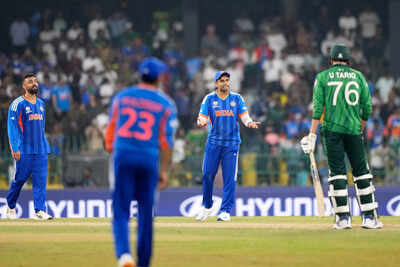
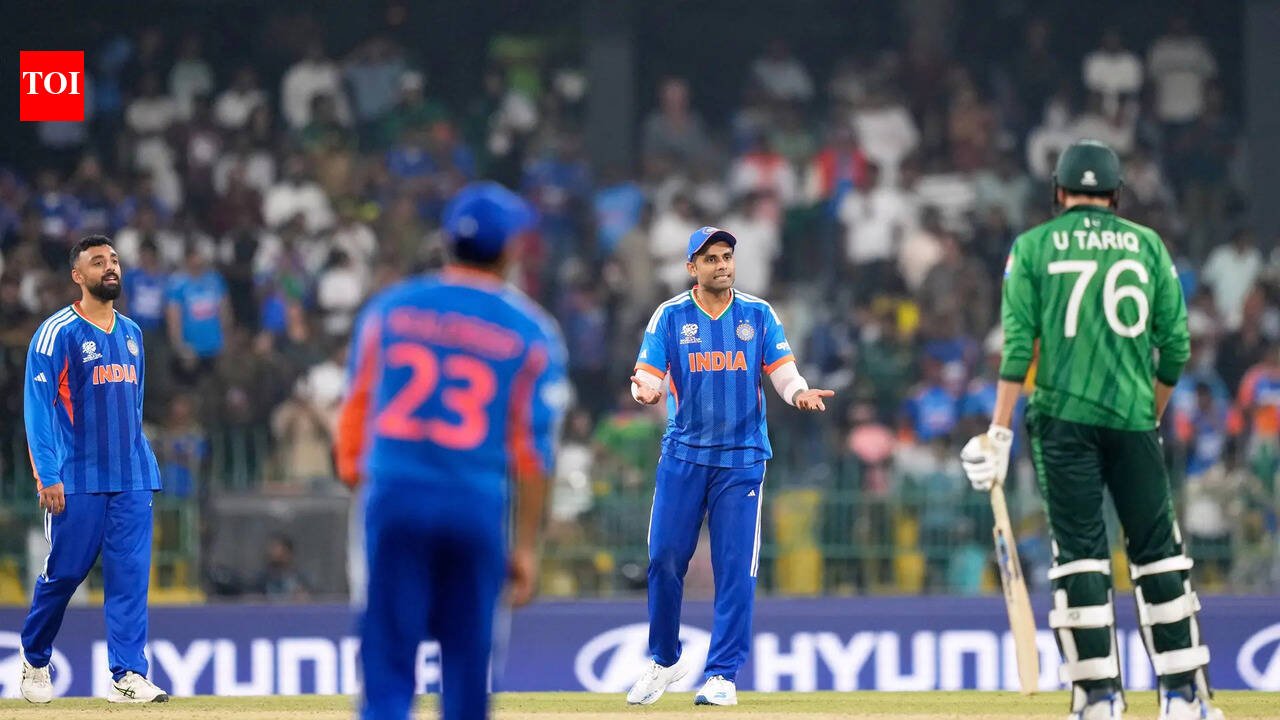
India vs Pakistan (AP Photo/Eranga Jayawardena)

NEW DELHI: Tickets for the T20 World Cup semi-finals and final went on sale on Tuesday, but the ICC announced special conditions that could affect the match venues depending on which teams qualify, especially Pakistan and Sri Lanka. Fans can purchase tickets for the first semi-final on March 4, the second semi-final on March 5, and the final on March 8.

Long hits for Sanju Samson, Ishan Kishan and Tilak Varma

The first semi-final has been kept as a “floating venue”, meaning it could be held either in Colombo or Kolkata. The final venue will depend on the teams that make it to the knockout stage. The second semi-final, however, is fixed and will be played at the Wankhede Stadium in Mumbai. The final is currently scheduled to take place in Ahmedabad, but that could also change.If Pakistan qualify for the semi-finals, they will play the first semi-final in Colombo on March 4. In that case, any tickets bought for the Kolkata match will be refunded. Similarly, if Sri Lanka qualify and are drawn to play a team other than India in the first semi-final, that match will also be moved to Colombo, and Kolkata ticket holders will get their money back. If neither Pakistan nor Sri Lanka qualify for that slot, or if India are drawn against Sri Lanka, the first semi-final will go ahead in Kolkata as planned.For the final, Ahmedabad will host the match unless Pakistan reach the final. If Pakistan do qualify for the summit clash, the final will be shifted to Colombo, and fans who bought tickets for Ahmedabad will receive refunds.The ICC has assured fans that any tickets purchased for venues that do not end up hosting the matches will be fully refunded, ensuring buyers are not left at a loss due to venue changes.


Source link

Omar Abdullah urges Kashmiri students to leave Iran soon | India News


Omar Abdullah urges Kashmiri students to leave Iran soon

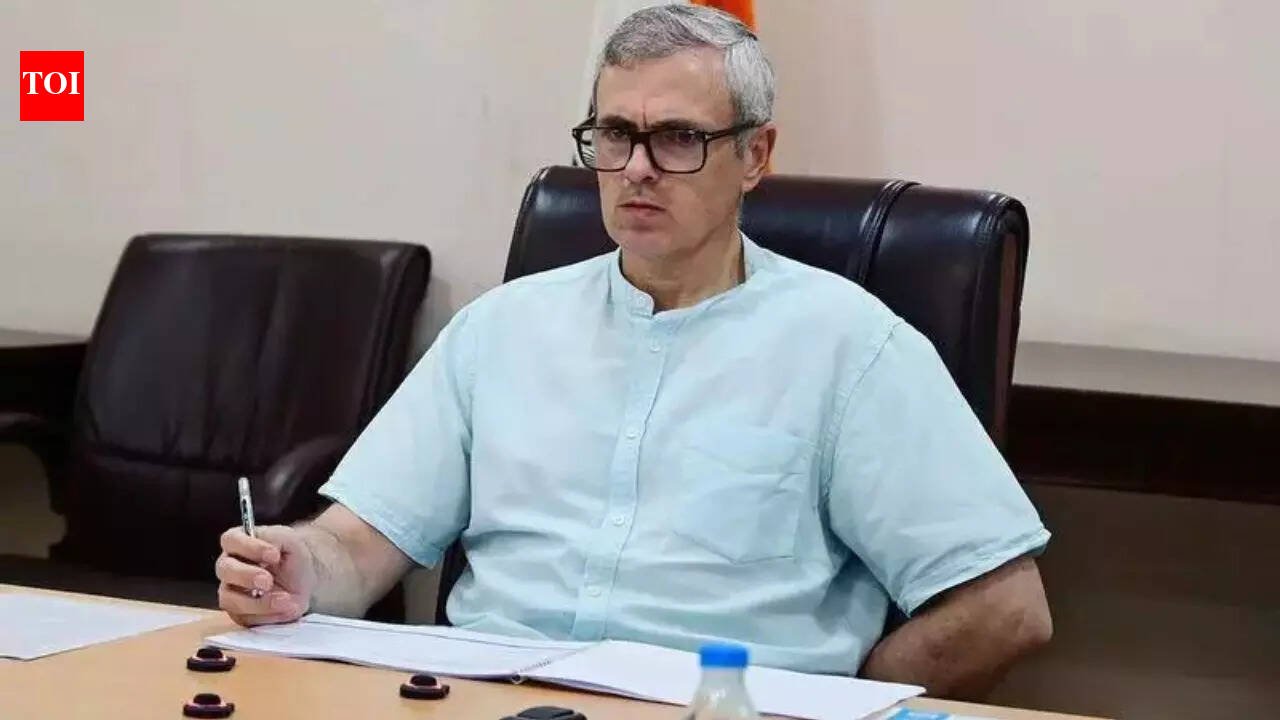
SRINAGAR: Jammu and Kashmir CM Omar Abdullah Tuesday urged Kashmiri students studying in Iran to leave the country at the earliest. “I am saying this very clearly, they should not ignore the govt of India’s advisory. Otherwise, it could become an issue for us tomorrow,” Omar told reporters.He said the students should act swiftly while the situation in Iran is stable and the airports are open. “They should book their tickets and return. If the situation remains normal, they can always go back,” he said. “The Ministry of External Affairs has not issued this advisory without reason. If the situation worsens in Iran later, it will become difficult to ensure their safe evacuation.”National Conference president Dr Farooq Abdullah also appealed to students to return as soon as possible. “If the airspace is closed tomorrow, their parents will be anxious and raise noise here. It is better to leave early because once flights are suspended, evacuation becomes extremely difficult. The advisory has already been issued, and it should be taken seriously,” he said.


Source link

Delhi high court: Refusing to marry after physical relations due to ‘kundali’ mismatch can attract BNS charges |


NEW DELHI: Refusing to marry due to a ‘kundali’ (horoscope) mismatch after establishing physical relationship based on an assurance of marriage can attract Section 69 of the Bharatiya Nyaya Sanhita which criminalises sexual intercourse through deceitful means, the Delhi High Court has said.Justice Swarana Kanta Sharma made the observation while declining bail to a man accused of engaging in physical relations with a woman and subsequently refusing to marry her, citing a mismatch in their birth charts. The judge observed that physical relations were established over a period of time on the basis of the accused’s repeated assurance to the prosecutrix there was no impediment to their marriage, including ‘kundali’ matching, and therefore, at this stage, his conduct would attract the offence under Section 69 of the BNS.The accused, who has been in judicial custody since January 4, sought bail contending that the relationship was consensual and that the two had known each other for eight years.His counsel argued that the offence of rape on the false promise of marriage was not made out and that he should be granted regular bail.In its order dated February 17, the court observed that the prosecutrix had initially filed a complaint in November 2025, which she later withdrew based on an assurance of marriage allegedly given by the accused and his family. However, the accused subsequently refused to marry her, citing a mismatch of ‘kundalis’. The present FIR was lodged in January 2026 for offences under Section 376 (rape) of IPC and Section 69 of BNS. The court opined that the sequence of events showed that it was not a mere case of “relationship turning sour” but of repeated assurances of marriage despite the applicant being aware of the insistence of his family on ‘kundali’-matching.In its order dated February 17, the court observed that the prosecutrix had initially filed a complaint in November 2025, which she later withdrew based on an assurance of marriage allegedly given by the accused and his family. However, the accused subsequently refused to marry her, citing a mismatch of ‘kundalis’. “There can be no quarrel with the proposition that criminal law cannot be invoked merely because a relationship fails or marriage does not materialise. However, the present case, at this stage, stands on a different footing,” the court stated. “The subsequent refusal to marry on the ground of non-matching of kundalis, despite earlier assurances to the contrary, prima facie raises a question as to the nature and genuineness of the promise extended by the applicant. Such conduct, at this stage, would attract the offence under Section 69 of the BNS,” it said. The court dismissed the bail application, saying it was not inclined to give relief on account of the nature of allegations, the material collected during investigation, and the fact that chargesheet in the case was yet to be filed. (With agency inputs)


Source link

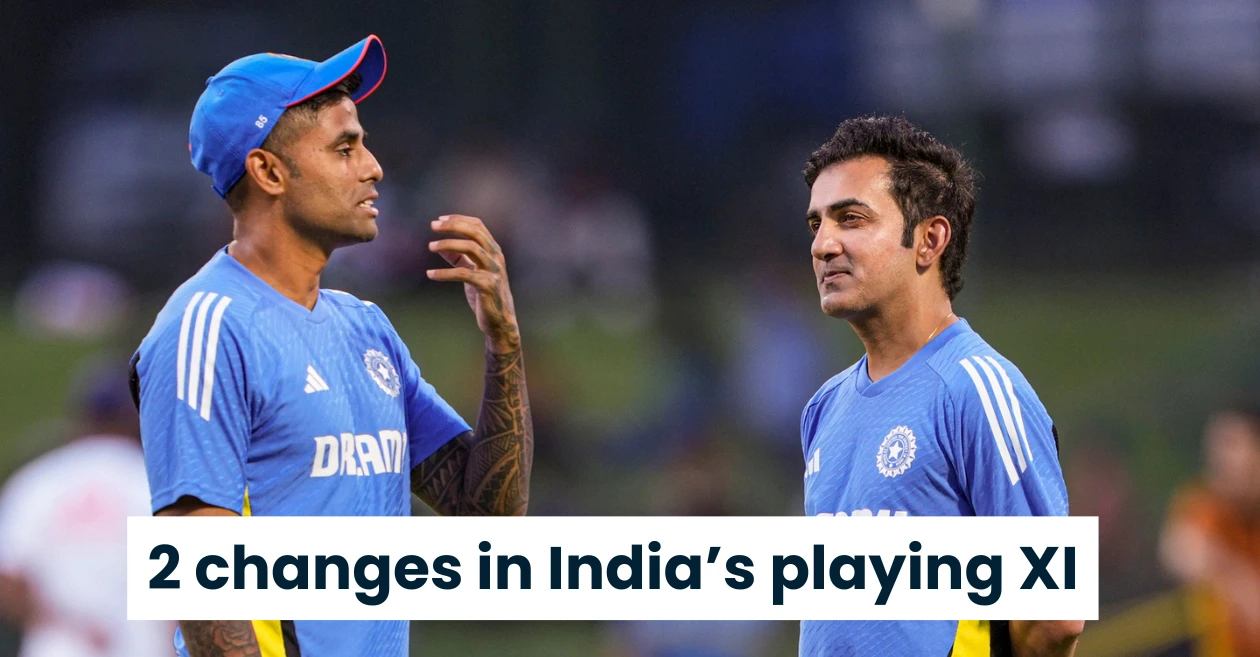
T20 World Cup 2026: 2 changes India should make in their playing XI for must-win Zimbabwe clash


Following a humiliating 76-run defeat against South Africa that has left India’s T20 World Cup title defence hanging by a thread, the team management faces crucial selection decisions ahead of Thursday’s must-win Super 8 clash against Zimbabwe at the MA Chidambaram Stadium. With semifinal qualification no longer in their own hands, two significant changes could restore balance to a side that looked completely out of sorts in Ahmedabad.

What changes should India make in their playing XI for Zimbabwe clash?

Change 1: Sanju Samson in for Tilak Varma to break left-hander logjam

The most pressing issue confronting India is the overabundance of left-handers in the top order, which opposition teams have ruthlessly exploited by opening with off-spin. In four of India’s five matches, they have lost a wicket in the very first over – all to spin, and all for ducks . This alarming pattern has left the middle order perpetually rebuilding rather than attacking.

Tilak Verma’s tournament numbers make a compelling case for his omission. Across five innings, the left-hander has managed just 107 runs at an average of 21.40 and a strike rate of 118.88 – well below par for the No. 3 position. His reckless charge at Marco Jansen against South Africa, which yielded a two-ball duck, exemplified his poor decision-making under pressure.

Meanwhile, Sanju Samson’s only appearance this tournament was a blistering 22 off eight balls against Namibia. It demonstrates the kind of explosive intent India desperately need at the top. His inclusion would allow India to counter Zimbabwe’s likely tactic of opening with Sikandar Raza or Brian Bennett’s off-spin .

Change 2: Axar Patel returns for Washington Sundar to strengthen spin department

The decision to bench vice-captain Axar Patel against South Africa was widely criticised as a tactical blunder, and the team management is expected to rectify it for the Chennai encounter. Washington Sundar, selected based on match-ups against South Africa’s left-handers, contributed little – conceding 17 runs in two wicketless overs and scoring 11 off 11 balls with the bat.

Against a Zimbabwe top order featuring predominantly right-handers, Axar’s left-arm orthodox spin and lower-order batting prowess make him the ideal replacement. His ability to contribute with the bat at No. 7 or 8 adds crucial depth that was missing against South Africa.

Also READ: T20 World Cup 2026 – Sunil Gavaskar slams star India batter following humiliating defeat against South Africa

Spinners expected to play decisive role in Chennai

The MA Chidambaram Stadium historically assists spinners, and India may opt for a three-pronged spin attack featuring Axar, Varun Chakravarthy and Kuldeep Yadav. The left-arm wrist-spinner has played only once in the tournament – returning 1 for 14 against Pakistan – but could be devastating on a turning Chepauk surface.

A probable XI could see Ishan Kishan retaining the wicketkeeping spot, with Samson opening alongside Abhishek Sharma or moving to No. 3 depending on match situations . Suryakumar Yadav must anchor the innings amid recurring early collapses, while Hardik Pandya, Shivam Dube and Rinku Singh provide firepower in the death overs.

With their net run rate plummeting to -3.800 and West Indies soaring after a 107-run thrashing of Zimbabwe, India not only need to win both remaining matches but also hope for favourable results elsewhere. The time for bold decisions has arrived.

Also WATCH: Pakistan TV channel dubs Mohammad Amir an ‘astrologer,’ credits him for India’s defeat to South Africa


Source link

Access Denied


Access Denied

You don’t have permission to access “http://www.ndtv.com/world-news/louvres-director-resigns-months-after-mega-jewels-heist-in-paris-11131949” on this server.

Reference #18.4cfdd417.1771975132.8e14c5eb

https://errors.edgesuite.net/18.4cfdd417.1771975132.8e14c5eb


Source link

Four dead, 11 injured after speeding bus hits two vehicles on NH-31 in Bihar’s Bhagalpur | India News


Four dead, 11 injured after speeding bus hits two vehicles on NH-31 in Bihar’s Bhagalpur

NEW DELHI: Four people, including a six-year-old boy, were killed and 11 others injured after a speeding bus collided head-on with two smaller vehicles on National Highway 31 near Bagri Pul in Bihar’s Bhagalpur district on Tuesday evening, officials said.The accident took place around 6:30 pm in the Jhandapur police station area of Naugachia subdivision. According to authorities, the bus struck a small commercial vehicle and an e-rickshaw, leaving multiple passengers trapped and injured.Bhagalpur District Magistrate Nawal Kishor Choudhary told reporters, “In a head-on collision between a bus and two small vehicles, four people were killed and 11 others injured. The deceased include a six-year-old child and a woman.”In a separate statement from the spot, he said, “A head-on collision occurred between a big bus and two small vehicles. Four people have died; two of them have been identified – one of them was from Katihar and another from Khagaria. We are looking for documents in the vehicle but we have not found any. We will hand over the bodies to their families once they are identified…11 people are injured and they have been sent to hospital..,”The deceased have been identified as Arvind Mandal, 40, from Katihar district, Kunal Kumar, 6, from Khagaria district, and Purmi Devi, 35, and her husband Sunil Das, 40, both from Bhagalpur district.Of the 11 injured, eight are undergoing treatment at Jawahar Lal Nehru Medical College and Hospital in Bhagalpur, while three have been discharged. The district magistrate said all the injured are out of danger. He added that the administration is informing the victims’ families, including those residing outside Bhagalpur, through the concerned officials.Naugachia police district SP Prerna Kumar said, “Prima facie, it appears that two small vehicles were hit by a speeding bus on NH-31 around 6:30 pm.” She added, “We received information of a collision between a private bus and two autorickshaws. We reached there. Looking at the seriousness of the incident, all of us reached here…Prima facie, this looks like a speeding bus hitting the smaller vehicles. 4 people have died. Others have been referred to Bhagalpur for better medical treatment…”Police said an FIR will be registered and the driver and the bus owner will be identified for further legal action.Responding to concerns over frequent accidents on the highway, Choudhary said, “There is a lot of traffic on this road. On my request, the government has approved the proposal to widen it. Work will start on this very soon.” He urged motorists to drive safely.


Source link

T20 World Cup: Harry Brook’s scintillating knock dents Pakistan’s semi-final hopes; England cement last-four berth | Cricket News


T20 World Cup: Harry Brook’s scintillating knock dents Pakistan’s semi-final hopes; England cement last-four berth
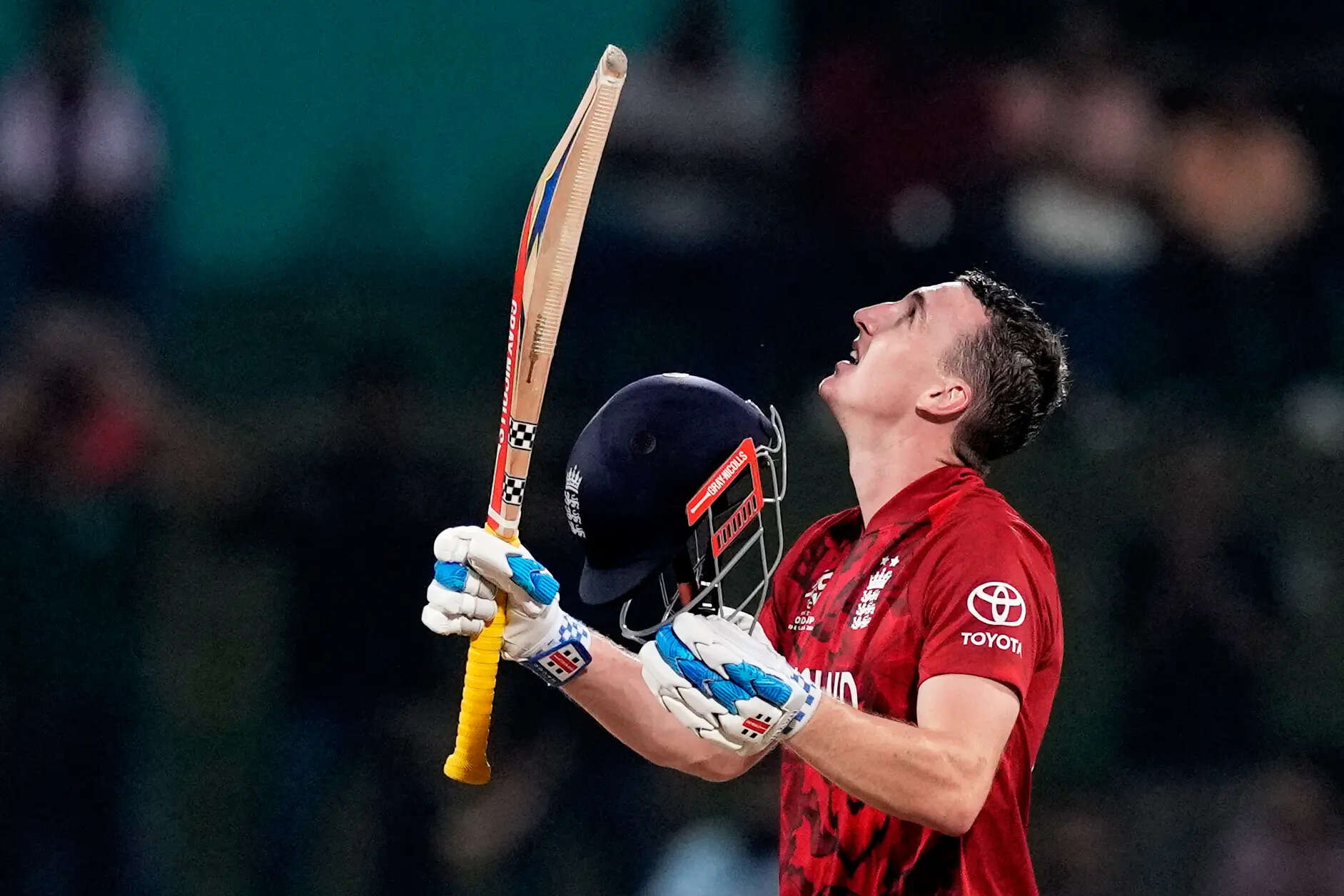
England’s captain Harry Brook celebrates (AP Photo)

TimesofIndia.com in Kandy: Walking out to bat off just the second ball of England’s chase, after Shaheen Shah Afridi had removed Phil Salt first up, Harry Brook made a statement before he even took guard. Promoted to number three instead of being held back as a finisher, Brook seized control of a tricky chase at the Pallekele International Cricket Stadium and shaped it entirely on his terms. What followed was a captain’s innings of the highest order. Calm under early pressure after Shaheen struck three times in the Powerplay, Brook absorbed the heat, counter-attacked with breathtaking clarity, and unfurled a range of scintillating strokes without ever losing control of the chase.

A loss against England in Kandy will end Pakistan’s hope for the semifinals | T20 World Cup

His unbeaten century was not just about power, but about intent, tempo, and tireless running between the wickets that kept Pakistan constantly on the back foot. In standing tall when England briefly looked vulnerable, Brook became the immovable barrier between Pakistan and their fading semi-final hopes. England, with this two-wicket win, have all but cemented their place in the final four. For Pakistan, the door is now virtually shut.Brook scored a sublime 100 and not only registered his highest score in T20 cricket but also became the first captain to hit a century in the World Cup.On a tricky surface, Pakistan could not have asked for a better start. Shaheen Shah Afridi struck with the very first ball, finding just enough outswing for Phil Salt to feather an edge behind. Moments later, the decision by Harry Brook to promote himself to number three was put to the test. Brook began watchfully, working singles and missing a couple outside off, but never looked flustered by the early movement.

England Pakistan T20 WCup Cricket

Pakistan’s Shaheen Shah Afridi (AP Photo/Eranga Jayawardena)

Shaheen soon delivered another major blow, removing Jos Buttler, whose difficult World Cup continued. Buttler slashed at an away-swinger and inside-edged it to the keeper, leaving England wobbling despite the positive start. Pakistan sensed an opening, but Brook had other ideas.With a flick of the wrists, Brook got off the mark with a boundary through square leg and quickly found his rhythm. He judged pace superbly, punishing anything short and using his feet confidently against spin. Pakistan were briefly gifted hope when Jacob Bethell survived a spilled chance off Usman Tariq, but the reprieve was short-lived as Shaheen returned to claim his third wicket, ending Bethell’s scratchy stay.Brook, meanwhile, kept the chase ticking at a brisk rate. He tore into Mohammad Nawaz for 17 in an over, sweeping, lofting, and muscling boundaries with effortless range. At the end of the Powerplay, England were 53 for 3, firmly back in control. Brook brought up a 28-ball fifty, fully justifying his tactical promotion and underlining his value as an innings shaper rather than a late-order hitter.Pakistan’s hopes briefly flickered when Tariq removed Sam Curran, breaking a 45-run stand, but Brook simply recalibrated. He absorbed pressure, ran relentlessly between the wickets, and then exploded again. His assault on Shadab Khan was decisive, highlighted by a clean strike straight back over the bowler’s head into the sightscreen and a boundary to finish a 17-run over.
T20 WCup Cricket: ENG vs PAK

England’s captain Harry Brook (AP Photo)

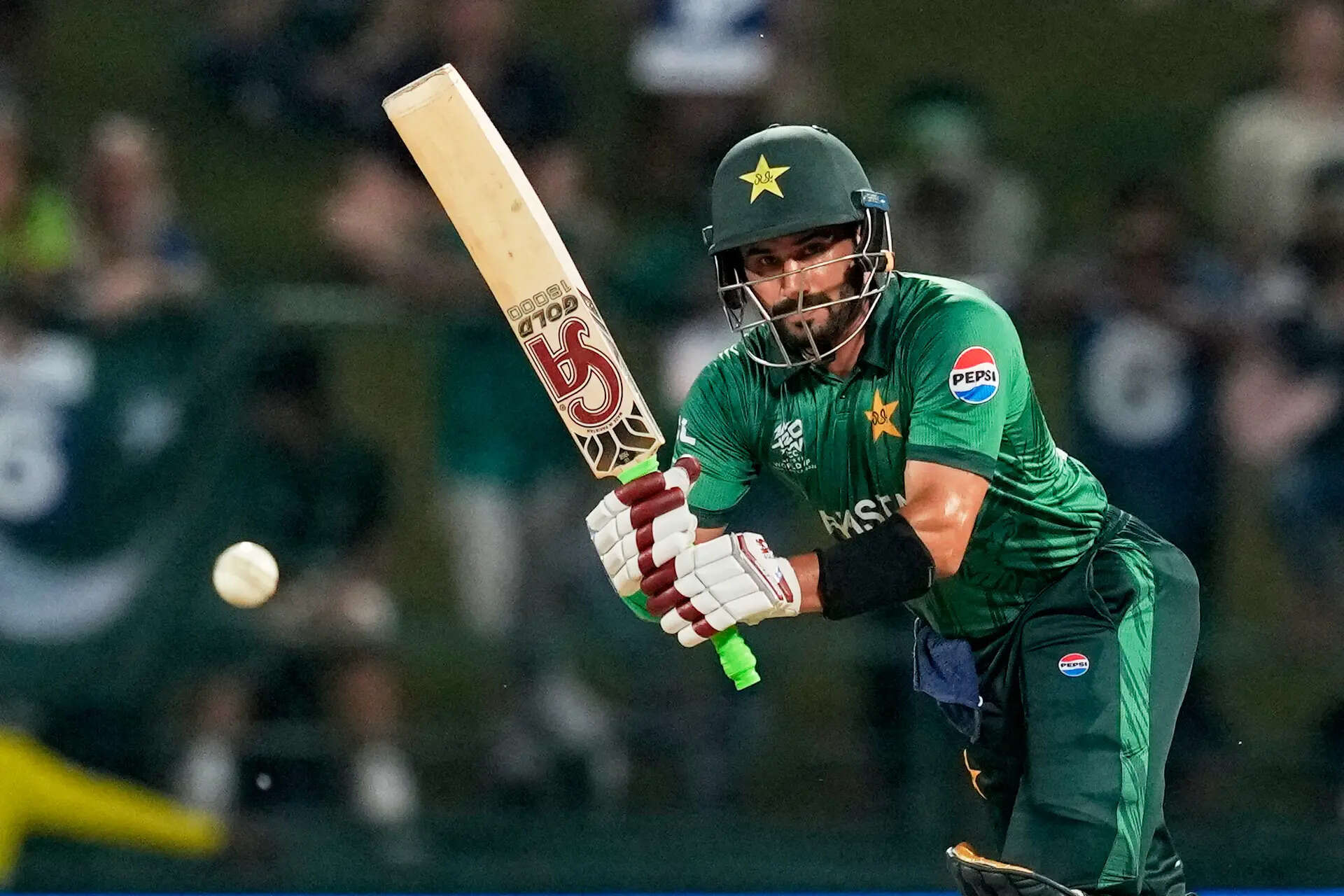
Brook saved his most emphatic statement for Shaheen’s final spell. Reading the slower balls early, he launched one over extra cover for six and then drilled another to bring up his maiden T20I hundred off just 50 balls. The innings was a masterclass in modern white-ball batting, blending power with intelligence and elite game awareness.Shaheen eventually castled Brook, who departed to a standing ovation after a knock studded with ten fours and four sixes. By then, the damage was irreparable. Although Nawaz later removed Will Jacks and Jamie Overton in quick succession to bring some spice to the chase, Brook’s brilliance had already sealed the contest.Earlier, Pakistan’s innings in Kandy unfolded in two sharply contrasting halves, with early promise and middle-overs momentum undone by a familiar collapse at the back end, leaving them with a scrappy but competitive 164 for 9 after captain Salman Ali Agha won the toss and opted to bat.The tone was set early by Jofra Archer, whose extra pace and movement made batting an uneasy proposition. There was just enough nibble to keep Pakistan’s openers guessing, and while Saim Ayub never looked comfortable, the real resistance came from Sahibzada Farhan. Farhan rode his luck at times, surviving edges and mistimed pulls, but showed the clarity of intent that has marked his World Cup.Archer accounted for Ayub with a sharp short ball, while England rotated their bowlers smartly through the Powerplay. Pakistan reached 46 for 2, steady rather than explosive, before Farhan began to take control. He drove straight with authority, swept confidently against spin, and used the pace of the bowlers to good effect. His third fifty of the tournament came off just 37 balls, a fluent knock that underlined his growing importance in Pakistan’s batting order.
England Pakistan T20 WCup Cricket

Pakistan’s Sahibzada Farhan (AP Photo/Eranga Jayawardena)

If Farhan was Pakistan’s backbone, Liam Dawson was England’s quiet strangler. Bowling in all three phases, Dawson varied his pace intelligently, firing the ball in flat and quick when batters looked to line him up. His figures of four overs, 24 runs, and three wickets did not fully capture his impact. He removed Salman Ali Agha, dismissed Fakhar Zaman just as he threatened to accelerate, and later surprised Mohammad Nawaz with a darted-in delivery. Each strike stalled Pakistan’s momentum.The defining moment of the innings came with the dismissal of Babar Azam. Struggling to impose himself against spin, Babar’s attempted release shot against Jamie Overton ended in an ugly miscue that signalled the beginning of the slide. From 122 for 3 after 15.3 overs, Pakistan lost six wickets for 27 runs, their innings unravelling under pressure.Farhan was dismissed for a well-made 63 off 45 balls. Despite some late hitting from Shadab Khan, England’s bowlers, backed by Dawson’s control and Archer’s hostility, kept the damage in check.Brief Scores Pakistan: 164 for 9 in 20 overs (Sahibzada Farhan 63, Fakhar Zaman 25; Liam Dawson 3/24, Jamie Overton 2/26, Jofra Archer 2/32) England: 166 for 8 in 20 overs (Harry Brook 100, Will Jacks 28; Shaheen Shah Afridi 4/30, Mohammad Nawaz 2/26, Usman Tariq 2/31)

Source link

After IBM’s worst day on stock market, IBM senior vice-president Rob Thomas to everyone betting on AI: New AI tools emerge every week, what they do not change is …


After IBM's worst day on stock market, IBM senior vice-president Rob Thomas to everyone betting on AI: New AI tools emerge every week, what they do not change is ...

IBM or International Business Machines Corp had its worst day on stock market in more than 25 years on Monday, February 23. The 100-year-old IT giant saw its market value plunge by billions on fears that a new tool from Anthropic could up-end its dominance of corporate IT. The carnage started after AI startup Anthropic said in a blog post that its Claude Code tool can help modernize COBOL, a dated programming language that’s run on IBM computers. The stock plunged 13% — its biggest single-day percentage loss since October 2000. IBM defended the company’s prospects saying its core mainframe computer business offers a platform that provides the same quality of performance and security for various programming languages and not just COBOL. “The value IBM mainframe delivers has nothing to do with Cobol,” IBM Senior Vice President Rob Thomas wrote in a blog post. “Whether the application is written in COBOL, Java, or any other language, the platform provides the same guarantees. The language is not the source of that value. The platform is.” IBM told Yahoo Finance on the stock market rout, “IBM has been investing in code modernization for years – both through skilling initiatives and through our own generative AI capabilities. More than two years ago, we launched Watsonx Code Assistant for Z (IBM’s mainframe) because we understand the benefit of AI in modernizing code. New AI tools emerge every week, including our own. What they do not change is the fundamental engineering challenge of running mission-critical workloads at scale. Translating COBOL is the easy part. The real work is data architecture redesign, runtime replacement, transaction processing integrity, and hardware-accelerated performance built over decades of tight software and hardware coupling. That is the problem IBM has spent decades learning to solve, and AI is the most powerful tool we have ever had to do it.”In a blog post titled, ‘Lost in Translation: What the AI code debate keeps getting wrong’, IBM VP Thomas gave five reasons to stress what the entire AI debate gets wrong about AI coding and the America’s oldest technology company IBM.

Here’s Rob Thomas’ blog post for almost everyone saying a big chunk of IBM business is over as well as that software industry is dead

AI has sparked a new round of conversation about COBOL, with tools emerging that claim to translate legacy code and, with it, solve the modernization challenge. It is worth being precise about what that means and what it does not. Translating code is one thing. Modernizing a platform is something else entirely. The two are not the same, and the gap between them is where most enterprises run into trouble. But the value IBM mainframe delivers has nothing to do with COBOL. It has to do with what the platform is: a purpose-built architecture from silicon through the operating system for unmatched transactional resilience, security, performance, and efficiency at scale that no other distributed environment has been able to deliver. Whether the application is written in COBOL, Java, or any other language, the platform provides the same guarantees. The language is not the source of that value. The platform is. Here is where the translation argument falls short, and why it matters:Translation captures almost none of the actual complexity. The modernization challenge is not a COBOL language problem. It is everything the application runs on and integrates with. Enterprise COBOL on IBM Z sits inside a vertically integrated stack: z/OS, CICS, IMS, Db2, RACF, MQ, Parallel Sysplex, and Cybervault with DS8K Storage. That stack is what enables 25 billion encrypted transactions per day on a single system, 450 billion AI inferences per day at 1ms response time, up to eight nines of availability, quantum-safe encryption, and sustained 100 percent utilization without impacting SLAs. Translating COBOL does not move any of that. The real work is data architecture redesign, runtime replacement, transaction processing integrity, and non-functional requirements baked into the platform itself. That is system-level engineering, not language conversion. Decades of hardware-software integration cannot be replicated by moving code. COBOL on IBM Z is code optimized over decades of tight coupling between software and hardware. An analogy is the iOS and iPhone: someone could build an alternative, but it is unlikely to displace a billion iPhones. The performance derives from tight coupling of software and hardware, processor-level acceleration, I/O subsystem optimization, and decades of performance tuning. AI strengthens the mainframe case, it does not weaken it. Code refactoring, DevOps modernization, knowledge preservation, and quality-of-service improvements are all on-platform opportunities that AI accelerates. It compresses timelines and addresses the skills gap as experienced COBOL developers retire. Each of these is an argument for doing more on IBM Z, not less. SaaS-only solution does not hold up under scrutiny. Given the depth of on-premises dependencies, it is difficult to see how a SaaS-only solution can replace the COBOL applications on the mainframe, meeting the demands of the enterprise. And given everything happening around digital sovereignty and data residency, would an organization make its most critical transactions dependent on a provider operating in a jurisdiction it does not control? Some of this conversation is not about the mainframe. Roughly 40 percent of COBOL runs on Windows, Linux, and other distributed platforms. A large portion of the AI-and-COBOL story is a distributed systems problem that has been folded into a mainframe headline. The two challenges require different approaches and conflating them leads to the wrong solution. The tools that translate COBOL are solving a real problem. Just not the one that matters the most for enterprises running IBM Z. Most of the headlines are about the code, but the engineers doing this work know the code is the starting point, not the destination. What the application runs on, how it scales, how it recovers, how it is encrypted, and how it integrates with everything around it – that is the real modernization work. Understanding that difference is where the work actually starts. This isn’t theoretical. Clients are already proving these points: Royal Bank of Canada – Utilized watsonx Code Assistant for Z to proactively identify dependencies, data flows, structure and organization of existing applications, creating an in-depth blueprint for the modernization and management of changes to core system applications. Learn more. National Organization for Social Insurance – NOSI observed up to a 94% reduction in time to analyze and locate superfluous COBOL code and programmatic routines, reducing the identification time from approximately 8 hours to nearer to 30 minutes using watsonx Code Assistant for Z. Learn more. ANZ Bank – uses modern DevOps tools to reduce manual operations by 60% and accelerate application modernization. Learn more. In summary, the AI debate is real and AI for code will drive substantial value creation, but neither should be lost in translation.


Source link

HC reserves order on Rahul plea against summons | Mumbai News


Mumbai: Justice N R Borkar of Bombay HC on Tuesday reserved for order a petition filed by Congress MP Rahul Gandhi against summons issued to him by a court over a criminal defamation complaint.Gandhi, leader of the opposition in Lok Sabha, had challenged a Girgaum magistrate’s Aug 28, 2019, order for a process against him on a complaint filed by a BJP politician, M H Shrishrimal. The complaint alleged that Gandhi had defamed PM Minister Narendra Modi in a public speech in Sept 2018 in Rajasthan. In July 2021, the magistrate summoned the Congress MP in a complaint that is “baseless and vexatious”, said Gandhi’s counsel Sudeep Pasbola and advocate Kushal Mor. The complainant through advocate Rohan Mahadik opposed Gandhi’s quashing petition on preliminary grounds of maintainability. Advocate general Milind Sathe appeared in the matter to assist on legal issues, and on concluding the hearing on maintainability on Tuesday, HC reserved it for orders. TNN


Source link