Breaking News
PAK vs ENG: Pakistan fan’s hilarious reaction after Saim Ayub dismissal goes viral – Watch | Cricket News


PAK vs ENG: Pakistan fan's hilarious reaction after Saim Ayub dismissal goes viral - Watch
Pakistan fan’s hilarious reaction after Saim Ayub dismissal goes viral

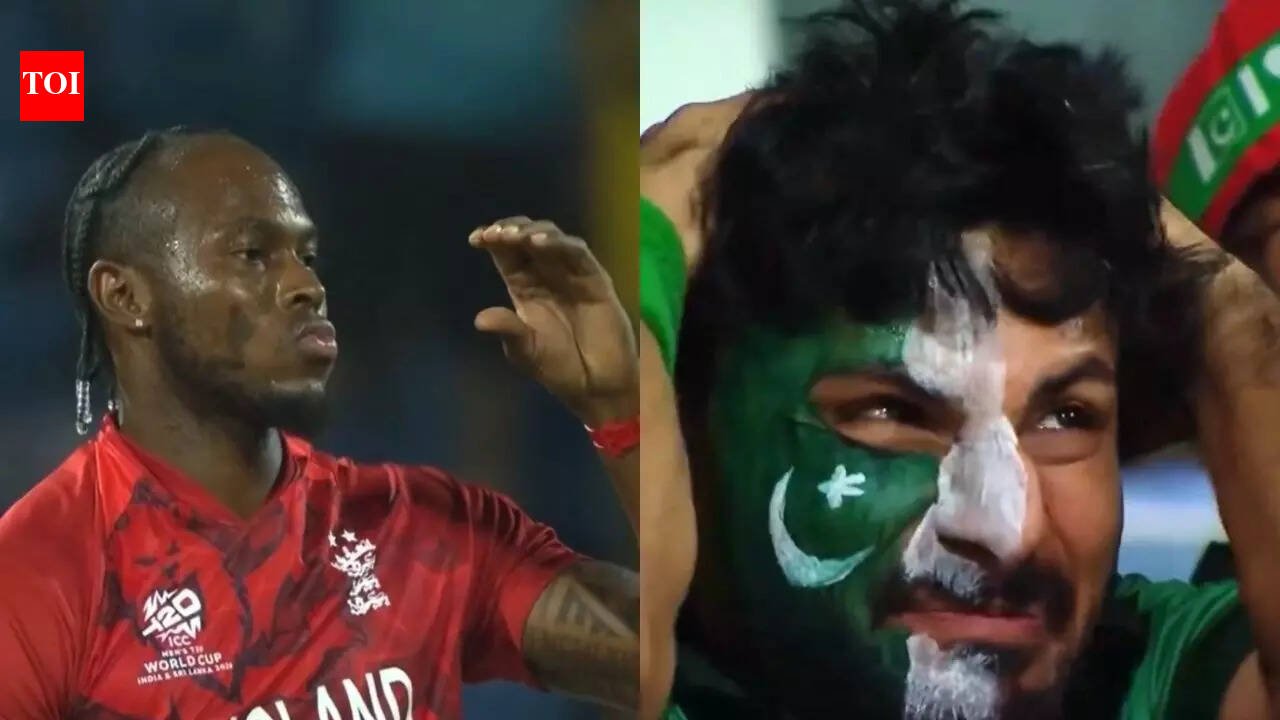
NEW DELHI: A hilarious moment from Pakistan’s match against England in the T20 World Cup went viral after a fan’s shocked reaction was caught on camera when opener Saim Ayub got out early at the Pallekele International Cricket Stadium on Tuesday. Ayub was dismissed by Jofra Archer for just 7 runs, caught while trying to pull a fast short ball. Archer embraced the occasion with a unique celebration.

T20 World Cup: Sahibzada Farman press conference ahead of Pakistan vs England

A few seconds later, the camera caught a Pakistani fan’s disappointed and stunned expression, which quickly became a hit on social media.Watch the fan’s reaction to the dismissal:In the match, Pakistan chose to bat first on a good pitch but struggled to score quickly as England kept taking wickets at regular intervals. Sahibzada Farhan was the standout batter, scoring 63 off 45 balls with several boundaries. He added a 46-run partnership with Babar Azam, but England’s bowlers kept things under control. Babar Azam had another slow innings, making 25 off 24 balls before being bowled by Jamie Overton. Spinner Liam Dawson was the pick of the bowlers, taking three wickets for 24 runs, while Archer and Overton also took two wickets each. Fakhar Zaman added a quick 25 off 16 balls, and Shadab Khan stayed unbeaten on 23, helping Pakistan reach 164/9 by the end of their innings. However, Pakistan never really accelerated, and England’s disciplined bowling kept them under pressure throughout.ALSO READ: Hilarious Babar Azam memes take over internet after another flop show in T20 World CupEngland had already beaten Sri Lanka earlier in the Super Eights, while Pakistan’s previous match against New Zealand was washed out, making this game important for both teams’ qualification hopes.


Source link

MPCB cuts wait time for industrial nods by over 50% | Mumbai News


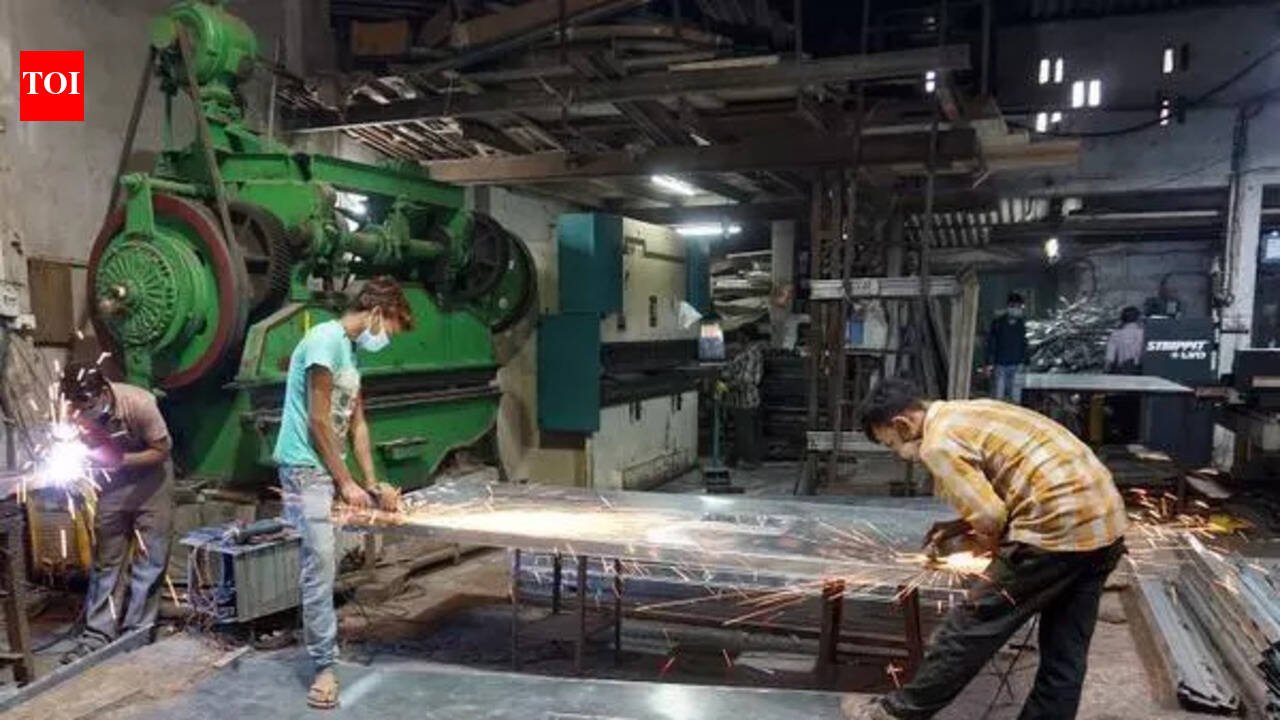
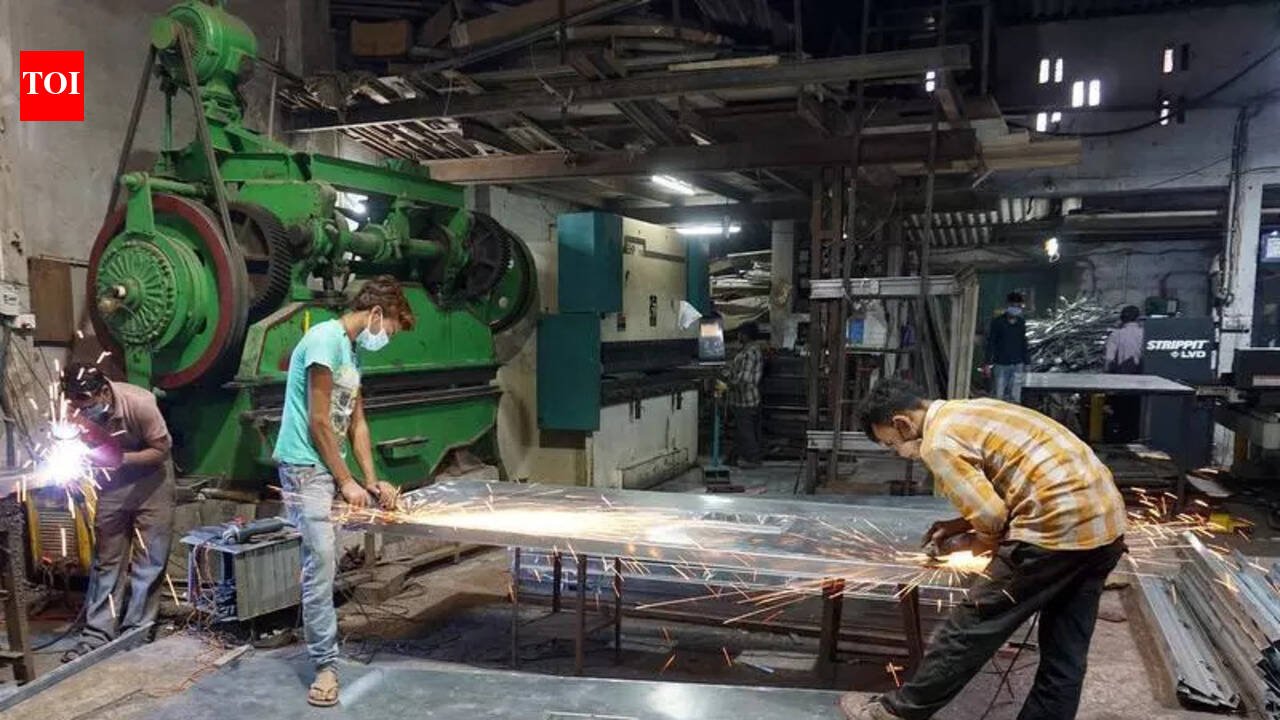
Mumbai: To improve ease of doing business, Maharashtra Pollution Control Board has reduced approval and renewal timelines for industrial consent letters by over 50% across red, orange and green categories.Red category industries —classified as highly polluting and including cement plants, pesticide manufacturing units, nuclear power plants and oil and gas extraction projects—will receive consent to establish within 40 days, instead of 60. Timelines for consent to operate and renewals have been reduced from 90 days and 120 days, respectively, to 40 days.

From Politics to Markets: India’s Big Day of Action & Accidents

For orange category establishments, such as building construction projects, glass manufacturing units and cotton spinning and weaving industries, the time limit for consent to establish has been cut from 45 days to 24 days, while nod to operate and renewals will be granted within 24 days, instead of 60. Green category units —considered least polluting and including aluminium utensil manufacturing, oil and gas transportation and tea processing—will get nods in 15 days, instead of 30. White category units, like waste paper baling, stay exempt from consent obligations. —Mahiyar Patel


Source link

Court cites international treaty obligations in Hong Kong national Kumar Pillai’s warrant cancellation order | Mumbai News


Mumbai: A sessions court that ordered the cancellation of an open-dated arrest warrant against Kumar Pillai, cited international treaty obligations and the “Doctrine of Specialty” under the Extradition Act. In a detailed order made available on Tuesday, the judge noted that Pillai, an individual of Indian origin holding Hong Kong citizenship, was acquitted in all three criminal cases for which he was originally extradited from Singapore to India in 2016. The prosecution contended an open-dated warrant was necessary to seek fresh permission from the Singapore govt to try Pillai for the remaining cases, including allegations of murder and attempted murder.

From Politics to Markets: India’s Big Day of Action & Accidents

However, the judge rejected the prosecution’s submissions, noting the legal framework provides strict protections for fugitive criminals brought into the country under specific decrees. Referring to established precedents by the Supreme Court of India, the judge observed, “The provision of the… section places restrictions on the trial of the person extradited and it operates as a bar to the trial of the fugitive criminal for any other offence until the condition of restoration or opportunity to return is satisfied.” The court clarified without the explicit consent of the foreign state that granted the extradition, Indian courts lack the authority to proceed.While the warrant was cancelled on Monday, the detailed order was made available on Tuesday. The judge noted that that the Doctrine of Specialty is a cornerstone of international law, ensuring that a requesting state honours the terms under which a prisoner is handed over. The court noted that while the prosecution had been aware of the pending cases since 2016, no successful efforts were made to obtain consent from Singapore or Hong Kong to expand the scope of the trial. “A fugitive brought into this country under an Extradition Decree can be tried only for the offences mentioned in the Extradition Decree and for no other offence and the Criminal Courts of this country will have no jurisdiction to try such fugitive for any other offence,” the judge said. The court also took note of a recent order by a special MCOCA court which directed the police commissioner to take necessary steps to repatriate Pillai to Hong Kong. Finding that the continued issuance of an arrest warrant would frustrate both the law and international treaties, the judge said, “The Extradition Treaty and Extradition Decree needs to be honoured. Therefore, considering legal aspects and the Extradition Decree and facts and circumstances of the case, it is necessary to cancel the open dated arrest warrant.” While the warrant was cancelled, the court allowed the prosecution the liberty to follow the proper legal channels as prescribed under the Extradition Act for any future proceedings.


Source link

Govt to sell up to 4% stake in IRFC via OFS; floor price set at Rs 104 per share


Govt to sell up to 4% stake in IRFC via OFS; floor price set at Rs 104 per share

The government will divest up to a 4 per cent stake in state-owned Indian Railway Finance Corporation Ltd (IRFC) through an Offer for Sale (OFS) beginning Wednesday, according to a regulatory filing by the company.The floor price for the OFS has been fixed at Rs 104 per equity share, IRFC said, adding that the stake sale could help the government raise about Rs 5,430 crore if the full 4 per cent is divested, reported PTI.The offer will open first for non-retail investors, while retail investors will be able to bid the following day.“Offer for Sale for Indian Railway Finance Corporation (IRFC) opens tomorrow for Non-Retail investors. Retail investors can bid on Thursday. Government offers to disinvest 2% equity in the IRFC with an additional 2% as green shoe option,” Department of Investment and Public Asset Management (DIPAM) Secretary Arunish Chawla said in a post on X.Under the OFS, the government proposes to sell up to 26.13 crore shares, representing a 2 per cent base offer size, with an additional 26.13 crore shares available under a green shoe option, equivalent to another 2 per cent of the company’s total issued and paid-up equity share capital.The government currently holds an 86.36 per cent stake in IRFC, which will decline to 82.36 per cent after completion of the share sale.Shares of IRFC ended at Rs 109.40 apiece on the BSE, down 2.19 per cent in the latest trading session.


Source link

‘National Declaration 2026’: EC, State poll panels move to align Panchayat, assembly election laws after 27 years | India News


‘National Declaration 2026’: EC, State poll panels move to align Panchayat, assembly election laws after 27 years

NEW DELHI: The Election Commission (EC), which conducts elections to Lok Sabha and state assemblies, and the state election commissions (SECs), tasked with holding panchayat and municipal polls, on Wednesday reached a broad agreement to work on synergising the laws relating to elections to panchayats and municipal bodies with those relevant to parliamentary and state polls. A ‘national declaration 2026’ adopted at the national roundtable conference of EC and SECs here — held after a gap of 27 years — underlined their concurrence that pure electoral roll and transparent conduct of elections are the bedrock of democracy. EC suggested that acceptable mechanisms and legally viable frameworks be worked out “in Constitutional and national interest” by all SECs, for synergising election processes, including the sharing of ECINET, EVMs, electoral rolls and training resources.All suggestions given by SECs will be studied by a team of legal and technical officers led by senior EC officials, and a state/UT-wise way forward will be submitted to EC in three months “for the best possible decision”.While Lok Sabha and assembly polls are conducted as per provisions of the Representation of the People Act and Conduct of Election Rules, panchayat and municipal elections are held as per laws and rules enacted by the relevant state/UT. Thus, the processes relating to preparation of electoral rolls, conduct of polls and method of voting for parliamentary/assembly polls may differ from those used in panchayat and urban body polls within the same state/UT, even though the pool of state/UT officers engaged is common. “Making the legal frameworks synchronous would ensure logistical ease and pure electoral rolls,” an officer told TOI. Sources said the SECs of BJP-governed states/UTs on Wednesday unanimously backed this proposal. Addressing the SEC’s conference, chief election commissioner Gyanesh Kumar called for institutional coordination between the EC and SECs, within their respective constitutional mandates. He advocated a harmonised approach to electoral roll management, adoption of technology and sharing of best practices to enhance the efficiency of electoral processes.


Source link

‘Push Class 4, 7 scholarship exams to July to avoid clash’ | Mumbai News


Mumbai: The state govt’s decision to conduct Class 4 and 7 scholarship examinations on April 26 has raised concerns among parents and educationists. They pointed out that the date clashes directly with end-of-year semester examinations, result processing and other administrative work in schools. They warned that the overlap will create a dual academic burden for students and add to the workload of teachers, leaving little structured time for focused preparation. “The decision should be reconsidered,” said Madhav Suryavanshi, chief coordinator, Shikshan Vikas Manch, a consortium of educators, urging the state govt to push the scholarship examinations to July. This year, govt has also gone back to the old pattern of holding the exams in Classes 7 and 7, instead of Classes 5 and 8. —Mahiyar Patel


Source link

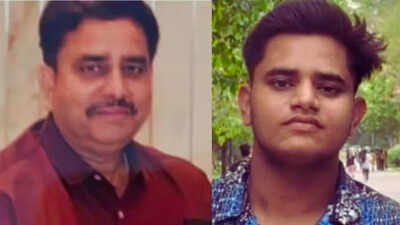
Lucknow Murder News: ‘Pressure to crack NEET’: Lucknow man shoots father dead in front of sister; chops up body and stuffs it into blue drum | Lucknow News


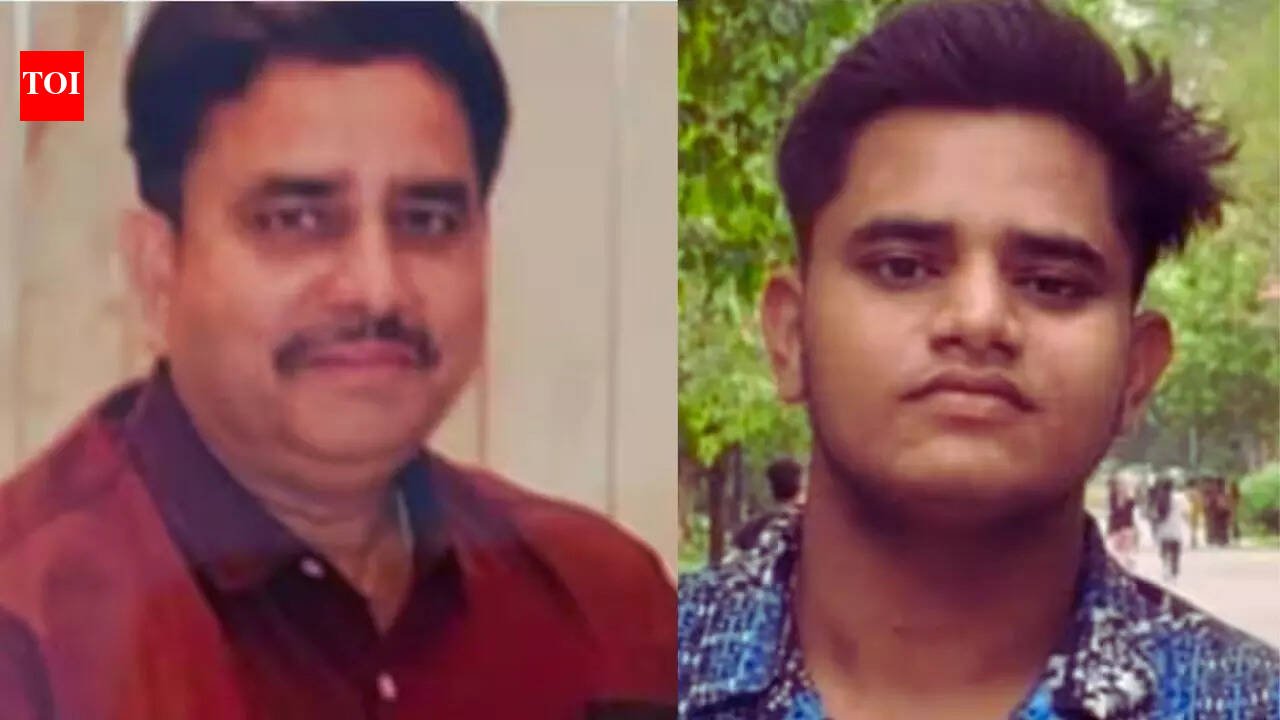
A 19-year-old youth shot his father, a pathology lab owner, dismembered the body, and hid parts in a drum at their residence in Aashiana, police said on Monday.

LUCKNOW: A 19-year-old youth shot his father, a pathology lab owner, dismembered the body and hid parts in a blue drum at their residence in Aashiana, police said on Monday. He later confessed to police that he killed his father after he was pressuring him to crack the National Eligibility Cum Entrance Test (NEET).

Lucknow: Academic Stress Turns Fatal, Expressway Mishaps, Safety Concerns & More

The teen himself had lodged a missing person complaint after his 49-year-old father went missing on Feb 20. However, while he was going to dispose the torso on Monday evening, a police patrol stopped him because of his suspicious activity. After prolonged questioning he confessed.Also read: Liquor shop job, NEET pressure, then bloodshed: Why teen shot bizman father; dark secrets spill outAccording to police, the incident took place around 4:30 am on Feb 20 following a heated argument, allegedly over pressure to crack the NEET. In a fit of rage, Akshat used a licensed rifle to shoot his father. He then dragged the body from the third floor to the ground floor, where he dismembered it. Thereafter, he loaded some parts into his car and drove to Sadrauna, a remote area, where he dumped them, including the head, which is yet to be found. The remaining torso was stuffed into a plastic drum, hidden in the same room. Akshat planned to dispose it later but was accidentally caught by cops patrolling in the area before he could do so. “He was in the process of getting rid of the body part when we intervened,” a police source revealed.“His inconsistent statements raised red flags. Strict interrogation led to his confession,” said DCP Central Zone, Vikrant Vir.On Monday evening, officers raided the home with Akshat in custody and recovered the drum containing the mutilated remains.Forensic experts are examining bloodstains in the car and house, while teams are searching Sadrauna for the missing parts.Police said the accused shot his father in front of his sister and threatened her to remain silent. Forensic teams are examining the scene, and efforts are underway to recover the remaining body parts and establish the full sequence of events.Police said that the boy was also in charge of a liquor store run by his father and was given Rs 17,000 as a monthly salary, but he was not happy.A senior officer privy to the probe revealed that cops recovered a ricochet bullet from the room where the shooting took place. The rifle and the bullet were sent for forensic examination.The victim was originally a resident of Jalaun district. His father is a retired cop. His wife passed away nine years ago. Police say that the boy scored well in class XII and his father wanted him to crack the NEET.The family comprised a son and a daughter, who is a class 11 student. His younger brother is also serving in UP Police and is posted at the secretariat.


Source link

Capillary Technologies to acquire Mastercard’s Session M for $20 mn


Capillary Technologies to acquire Mastercard’s Session M for $20 mn

BENGALURU: Loyalty management platform operator Capillary Technologies India late Tuesday announced the acquisition of Mastercard-owned Session M, in an all-cash $20 million deal.The Bengaluru-headquartered company, which went public in November 2025, will invest into Session M Inc and related entity Session M Czech Republic, through Capillary Pte Ltd, as per a stock exchange disclosure.Founded in 2011 and acquired by NYSE-listed Mastercard in 2019, US-headquartered Session M also operates in the loyalty software-as-a-service (SaaS) space. It reported a turnover of $50.5 million in the calendar year of 2025, compared with $54.5 million in 2024 and $57 million in 2023.The deal is valued at $20 million upfront, with the final payout subject to adjustments at closing for debt, working capital and related factors. Session M has a significant presence in North America, along with Latin America and Asia Pacific markets, as per the disclosure. It serves clients across food and beverages, consumer goods and retail, airlines, and oil and gas.Capillary said the acquisition forms part of its inorganic growth strategy to strengthen its footprint in North American and Latin American loyalty markets while adding to its APAC portfolio. It added that Session M’s complementary business model and long-tenured blue-chip clientele are expected to support post-acquisition efficiencies in the loyalty segment.Post-acquisition, the combined entity is expected to have over $115 million in annual recurring revenue and serve more than 150 customers globally, an investor presentation on the deal said.


Source link

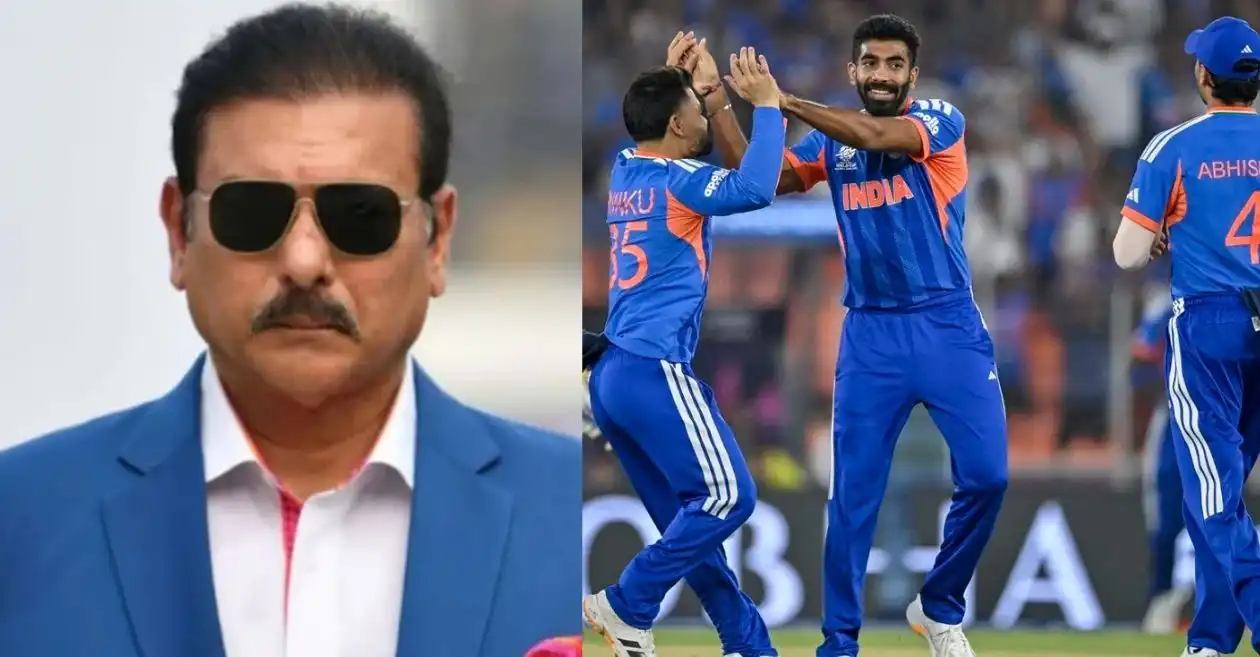
T20 World Cup 2026: Ravi Shastri proposes tactical shake-up in India’s playing XI for Super 8 game against Zimbabwe


With India’s T20 World Cup 2026 campaign hanging in the balance, former head coach Ravi Shastri has suggested a bold tactical rethink for the upcoming Super 8 encounter against Zimbabwe. After the heavy defeat to South Africa, Shastri believes India must strengthen their bowling resources — even if it means sacrificing a specialist batter like Rinku Singh.

India are in a must-win situation, and according to Shastri, flexibility and depth in bowling could make the difference between survival and elimination.

Ravi Shastri backs two-spinner strategy for Zimbabwe clash

Speaking to the ICC, Shastri emphasized the importance of having an additional bowling option in T20 cricket, particularly in high-pressure matches.

“I would say play both. Give yourself that extra option because on a given day, you’re bound to have one bowler who’s going to have an off-day,” Shastri explained.

His remarks were in reference to India’s spin department, particularly after Varun Chakaravarthy struggled to make an impact against South Africa. The mystery spinner was not at his best and ended up conceding crucial runs — something Shastri believes could have been mitigated with stronger bowling cover.

In modern T20 cricket, where margins are razor-thin, one bowler having an off day can tilt the entire contest. Shastri’s solution is simple: build insurance into the playing XI.

Also READ: 2007 reloaded? Here’s how Team India’s T20 World Cup 2026 campaign mirrors a legendary comeback

Shastri hints at Rinku Singh’s exclusion

However, adding an extra bowler comes at a cost. Shastri hinted that Rinku might have to sit out if India choose to strengthen their bowling attack.

“Which means Rinku Singh might have to miss out. But if he has to come in, he has to come in place of a specialist batter,” Shastri stated.

India’s middle order already boasts significant firepower with Hardik Pandya, Shivam Dube, and Washington Sundar likely occupying the No. 5, 6, and 7 slots. With Axar Patel also capable of batting higher up the order, Shastri believes India already possess enough depth in their batting lineup.

“If Axar Patel is playing, he might be batting at 8. You’ve got Hardik Pandya, Shivam Dube, and Washington Sundar at 5, 6, and 7. And Axar can go at 5 as well. Now, if eight batters can’t do the job in T20 cricket, then you know something is wrong,” he added.

His message was clear — India’s issue is not lack of batting power, but insufficient bowling options.

India’s defeat to South Africa exposed cracks in both bowling execution and tactical balance. With a poor Net Run Rate and zero points in the Super 8 stage, the margin for error is virtually non-existent. Zimbabwe could play fearless cricket without scoreboard pressure. That unpredictability makes tactical preparation even more crucial.

Also READ: T20 World Cup 2026: Sahibzada Farhan opens up on chasing Virat Kohli’s iconic world record


Source link

MIDC may take back 134 Thane industrial plots | Mumbai News


Kalyan: MIDC has begun issuing show-cause notices to allottees of 134 industrial plots found to be non-operational in Ambernath, Kalyan, Bhiwandi and Murbad talukas in Thane-II region. “In cases where responses are unsatisfactory or production is not commenced within the extended timeline, MIDC will proceed to resume possession of the plots as per regulations,” said Nitin Chavan, deputy collector and regional officer, MIDC, Thane-II. He said such plots will be re-allotted. Officials said allottees have to complete construction and begin production within deadlines. —Pradeep Gupta

From Politics to Markets: India’s Big Day of Action & Accidents


Source link