Breaking News
Income Tax out, Import Tax in? Trump’s tariff torment rolls on


Income Tax out, Import Tax in? Trump’s tariff torment rolls on

The TOI correspondent from Washington: In an exhaustive State of the Union address lasting nearly two hours on Tuesday night, US president Donald Trump issued a stark warning to America’s trading partners: stick to the existing trade deals and continue negotiations along the established path, or face far harsher terms in any new agreements. “Don’t even think about ripping up what we’ve built,” Trump declared from the House chamber podium, his voice booming with characteristic bravado in remarks aimed at the EU, India, and other nations that have agreed on framework deals. “Those deals are the best you’ll ever get. Try for something new, and it’ll be worse for you.” “The good news is that almost all countries and corporations want to keep the deal they already made. They know the legal power that I have to make a new deal could be far worse for them. They will continue to work along the same successful path we negotiated, or they will find the next chapter far more painful,” he warned.The remarks early in his speech set the tone for an economically charged address that emphasised protectionism as the cornerstone of US prosperity, doubling down on tariffs as a multifaceted economic weapon as he asserted boldly that escalating tariffs on imports could eventually eliminate the need for federal income taxes. “Imagine an America where hardworking folks keep every penny they earn, and we fund our great nation through smart tariffs on foreign goods,” Trump proclaimed, eliciting cheers from Republican lawmakers who gave him multiple standing ovations for all his claims. He painted a vision of a tariff-driven revenue system that would “make America rich again” by shifting the tax burden to overseas competitors. “As time goes by, I believe the tariffs paid for by foreign countries will, like in the past, substantially replace the modern-day system of income tax,” Trump said. He framed the shift as a “liberation of the American worker,” arguing that taxing imports rather than domestic labour would ignite a “Golden Age” of manufacturing. While economists warn that such a shift would require a mathematical leap—tariffs currently provide only a fraction of the revenue generated by income taxes and the jury is still out on the return of manufacturing —the president remained undeterred, claiming a “stunning economic turnaround” and a Dow Jones index that recently cleared the 50,000 mark.The tariff roadmap Trump referred to has been clouded by a landmark 6-3 Supreme Court ruling issued just four days ago, which struck down the administration’s use of emergency powers to bypass Congress on trade levies. There was palpable suspense in the chamber as Trump walked in for his address past four of the Supreme Court justices in attendance, including chief justice John Roberts and justices Amy Coney Barrett, conservatives who ruled against him. The president offered a quick perfunctory handshake to them before labeling the ruling “very unfortunate” and “defective,” early in his speech, signalling that the judiciary would not be the final word on his trade agenda.He confirmed he has already pivoted to Section 122 of the Trade Act of 1974 to implement a new 15% global tariff surcharge. “Congressional action will not be necessary,” he added, a line that drew thunderous applause from the Republican side and stone-faced silence from the black-robed jurists and Democrat lawmakers, many of whom boycotted the address.


Source link

Chennai Airport Indigo flight: Over 200 passengers made to wait 5 hours inside flight at Chennai airport | Chennai News


IndiGo Chennai-Singapore flight delayed 5 hrs, 200 affected

CHENNAI: Over 200 IndiGo passengers who were bound for Singapore from Chennai were made to wait on the flight for about 5 hours—more than their actual journey time—on Tuesday, and a video of passengers shouting at airline staff out of despair went viral.However, IndiGo’s official response was that the pilot noticed the cabin temperature was above normal and informed the engineering team, and that the cockpit crew’s duty hours exceeded the Flight Duty Time Limitations (FDTL) before the issue was fixed. “We had to arrange an alternate crew, which took time,” the response said.In the 1-minute video shared on social media, passengers were heard claiming they were made to suffocate as the air conditioning switched on and off, and that they were threatened with CISF personnel without being given a valid explanation for why the flight was delayed inordinately.The Singapore-bound flight (Flight No: 6E1025) was scheduled to depart at 7.30 am, and passengers were allowed to board from 6.30 am onwards, but the flight did not take off as scheduled. “There was no clear explanation and no transparent communication. The cabin air conditioning repeatedly switched on and off. Infants, children, elderly passengers and working professionals were onboard. Passengers who requested to deboard due to discomfort were not permitted to do so for a considerable period,” one of the passengers posted on social media.According to the passengers, the pilot who boarded the flight left in the middle of the delay, citing work-hour restrictions, and an alternate pilot reported for duty at 11 am before the flight finally took off at 12 noon.IndiGo sources, however, maintained that passengers were updated on the situation from time to time and were provided with refreshments.


Source link

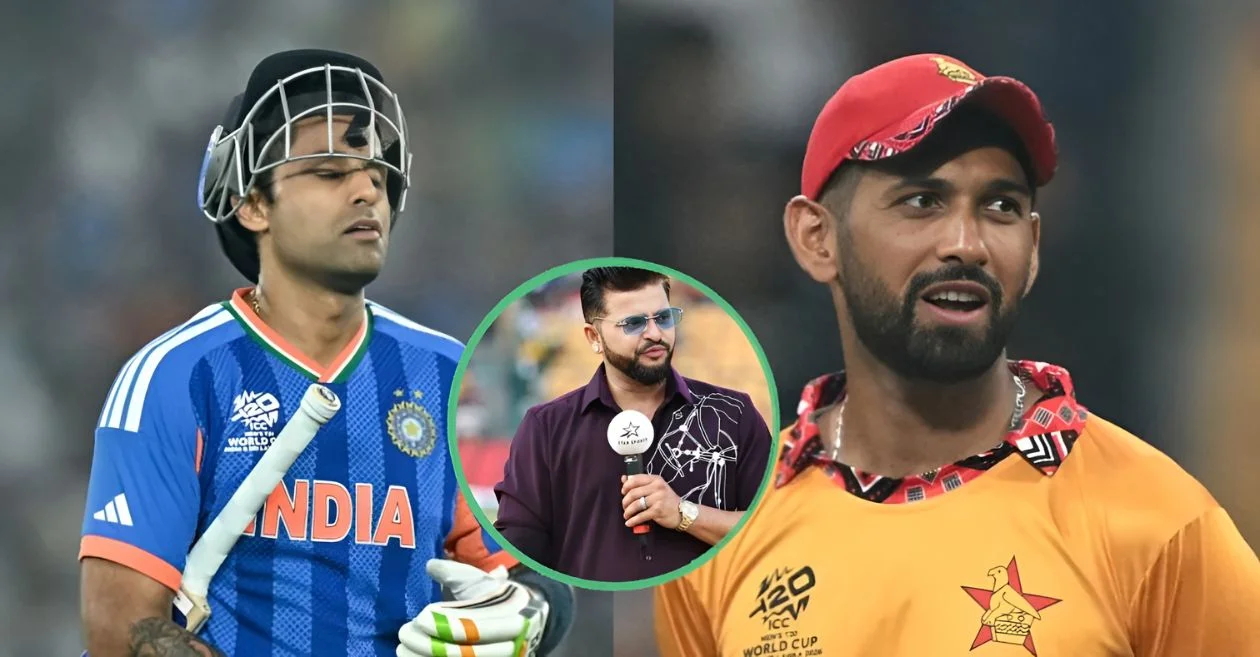
T20 World Cup 2026: Suresh Raina suggests 2 key changes in India’s XI for Zimbabwe Super 8 clash


As India gears up for their crucial T20 World Cup 2026 Super Eight clash against Zimbabwe in Chennai on February 26, former all-rounder Suresh Raina has suggested two strategic changes to the playing XI. Following India’s 76-run loss to South Africa, Raina believes the team needs to balance their batting order and bolster their bowling depth to remain competitive in the race for the semi-finals. Raina’s primary focus is on injecting ‘X-factor’ energy into the middle order and utilizing players who have the local support of the Chennai crowd.

T20 World Cup 2026: Suresh Raina names 2 changes India must make for Zimbabwe Super 8 game

The X-factor move: Sanju Samson in for Tilak Varma

During a discussion on Jiohotstar, Raina has strongly advocated for the inclusion of Sanju Samson at the No. 3 position, replacing Tilak Varma, who managed only 1 run in the previous outing. Raina pointed out that with two left-handers already at the top of the order, bringing in a right-handed batter like Samson would provide much-needed variety and disrupt the opposition’s rhythm. Additionally, Raina noted that since Samson was picked by CSK for the IPL 2026 season, the Chennai fans at the Chepauk Stadium would provide him with massive vocal support, potentially boosting his confidence to deliver a match-winning performance.

“You will have to first bring in Axar Patel. Will Tilak Varma play at No. 3 or will Sanju Samson be added there? CSK have taken him this year. So it remains to be seen how he performs there. The fans will definitely support him. I feel you should bring in Sanju at No. 3 because you already have two left-handers at the top. Suryakumar Yadav is batting well,” Raina said.

Strengthening the spin attack: Axar Patel over Washington Sundar

The second change proposed by Raina involves the spin department, where he wants to see Axar Patel return to the lineup in place of Washington Sundar. While Sundar played the last two matches against the Netherlands and South Africa, he remained wicketless in the latter, conceding 17 runs in two overs. Raina believes Axar offers a more reliable all-round package, particularly with his ability to strike lower down the order and his proven track record in high-pressure T20 scenarios. By bringing in Axar, India would gain a more potent bowling option that complements the ‘hard-hitting’ style of Shivam Dube and the finishing skills of Rinku Singh.

“Rinku Singh is there down the order, and if Axar comes in place of Washington Sundar, he also plays well. The hard-hitting Shivam Dube is batting differently. However, can Sanju Samson be the X-factor if a right-handed batter comes there? I feel two changes here – bring Sanju at No. 3 and Axar Patel in place of Washi,” he added.

Also READ: Faf du Plessis makes bold all-time T20 opener pick; Virat Kohli ignored

India vs Zimbabwe: T20 World Cup 2026 Super Eight match in Chennai

The Super 8 stage of the T20 World Cup moves to Chennai for a critical encounter between India and Zimbabwe. Both teams are seeking their first points in this round after suffering heavy defeats in their opening matches. India are coming off a 76-run loss to South Africa, which significantly impacted their Net Run Rate (NRR) to -3.800. Zimbabwe also faced a setback, losing to the West Indies by 107 runs after conceding a tournament-high total of 254.

For India, this match is a must-win to remain in contention for the semi-finals. Beyond just securing two points, the team needs a substantial margin of victory to begin repairing their NRR before their final group game against the West Indies. Zimbabwe, having already caused an upset against Australia earlier in the tournament, will look to exploit the spin-friendly conditions at Chepauk to stay alive in the competition. A loss for either side would likely result in mathematical elimination from the tournament.

Also READ: What does Jofra Archer’s ‘C’ celebration mean? England pacer sparks buzz after Saim Ayub’s wicket in T20 World Cup 2026


Source link

This mechanical engineer from Bihar chose to become a househusband, and why every man should read his story |


This mechanical engineer from Bihar chose to become a househusband, and why every man should read his story

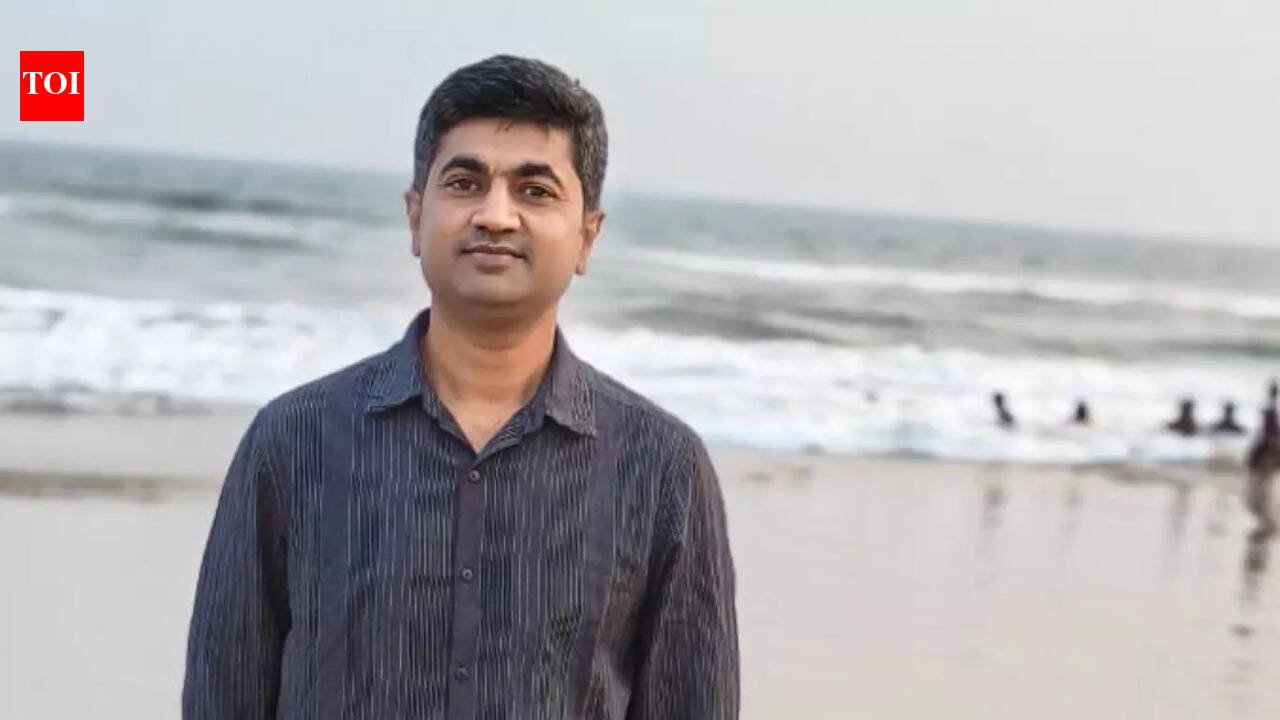
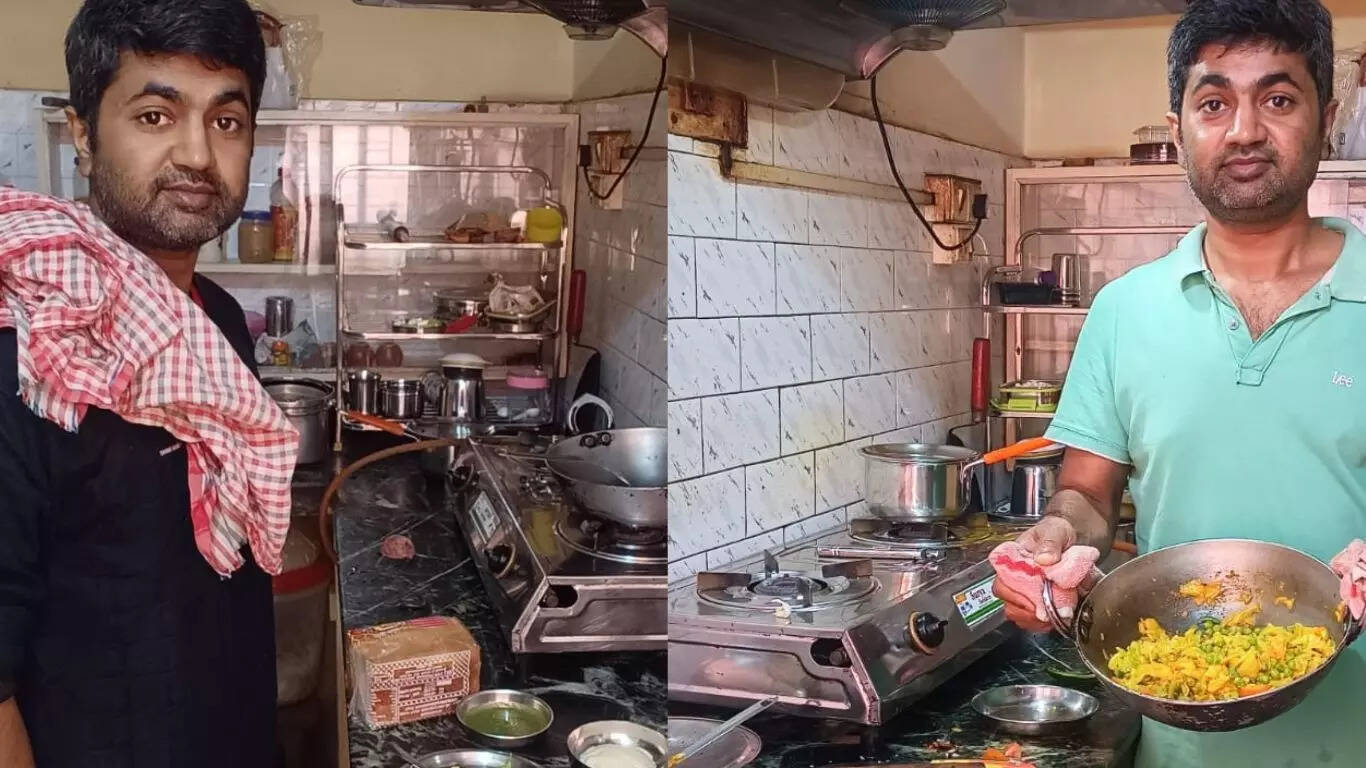
He is a househusband and he proudly calls himself one. He does not work outside the home. Instead, he takes care of his household full-time. From cooking and cleaning to looking after his daughter and preparing meals for his working wife, Amit Kumar Dubey from Champaran, Motihari, Bihar, has redefined the role of men in marriage. The most remarkable part is that he does it all very naturally.When The Times of India reached out to him for an interview, Amit was surprised. He wondered what was so unique about what he was doing. Wasn’t it a natural thing? To manage home if one’s partner is working?

Amit with his wife

Amit chose a path that many men would find unthinkable. He gave up his job so that his wife could continue hers. He shares that his was a love marriage that eventually became an arranged one. His wife had one condition — she would marry only if her family agreed. They finally did, and the couple got married in December 2015.Amit, who holds a diploma in mechanical engineering, was working in a pharmaceutical company in Baddi, Himachal Pradesh. However, certain family circumstances prevented him from returning to his job. His wife needed support, and he did not want to abandon her during a difficult phase.

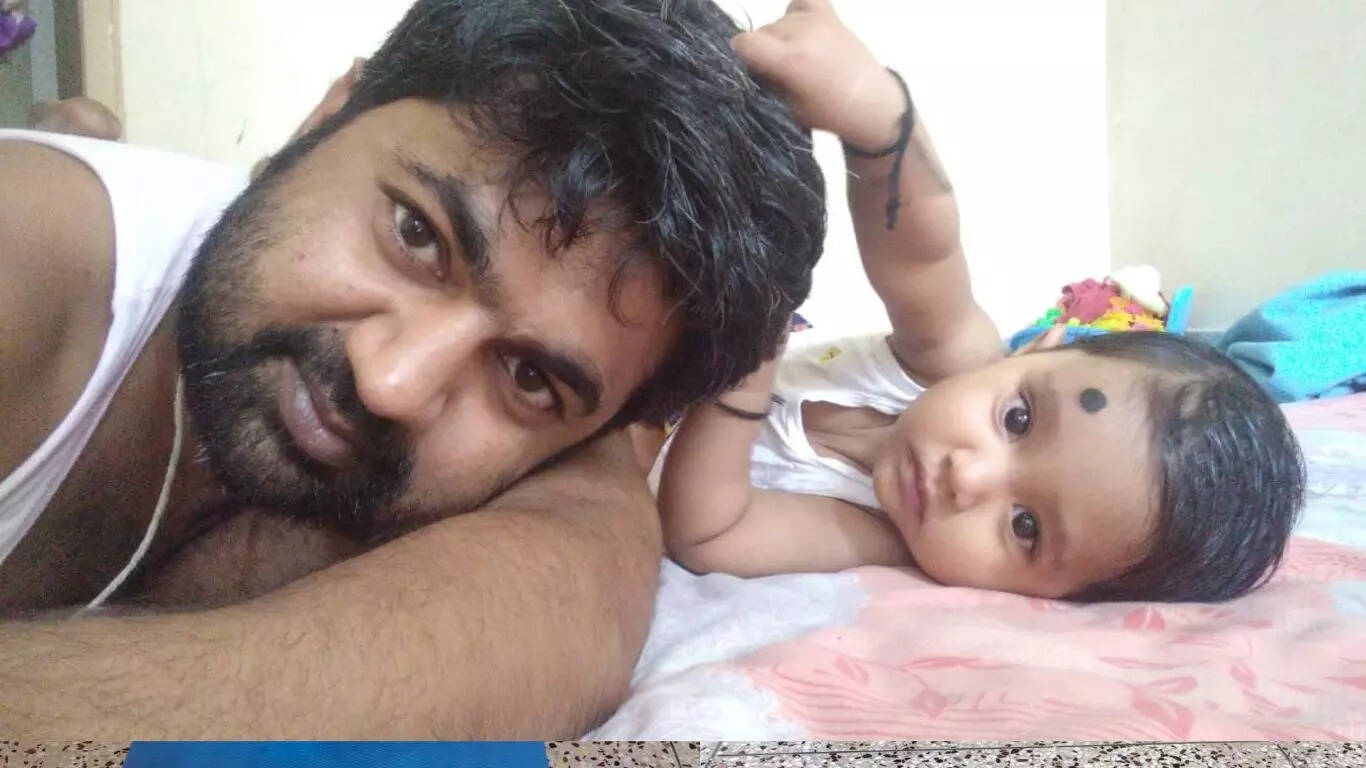
Amit with is daughter

“Some situations happened in the family, and I could not go back to join my job. My wife needed support, and I couldn’t leave her at that time. She is very gentle and was handling a lot on her family front. I have never spoken about these things to anyone before,” he says.Later, his wife was transferred to Kolkata, where she was posted as a clerk in a bank. Amit followed her and found a job there. But a few months later, they had to return home after his wife suffered a miscarriage and became very weak. Amit again chose to stay by her side, as his private job would not have allowed him extended leave.

Image: Amit Dubey

When their daughter was born, Amit made the decision to become a full-time homemaker. For his wife, it was difficult to manage a government job along with raising a child, and he stepped in without hesitation.Does he have any regrets?“Yes, sometimes when I am alone, I worry about my family. My parents and younger brothers have never questioned my decision and have always supported me. But as the eldest son, I feel I should be fulfilling my responsibilities toward them. That thought troubles me at times,” he admits.

Image: Amit Dubey

When asked whether his wife expects him to work, he says, “She has never said anything. We have a perfect understanding.”Amit becomes emotional while speaking about his mother. “I was the eldest child in a family with no sisters, and naturally I used to help my mother with household chores. Today, I am doing the same for my wife.”

Image: Amit Dubey

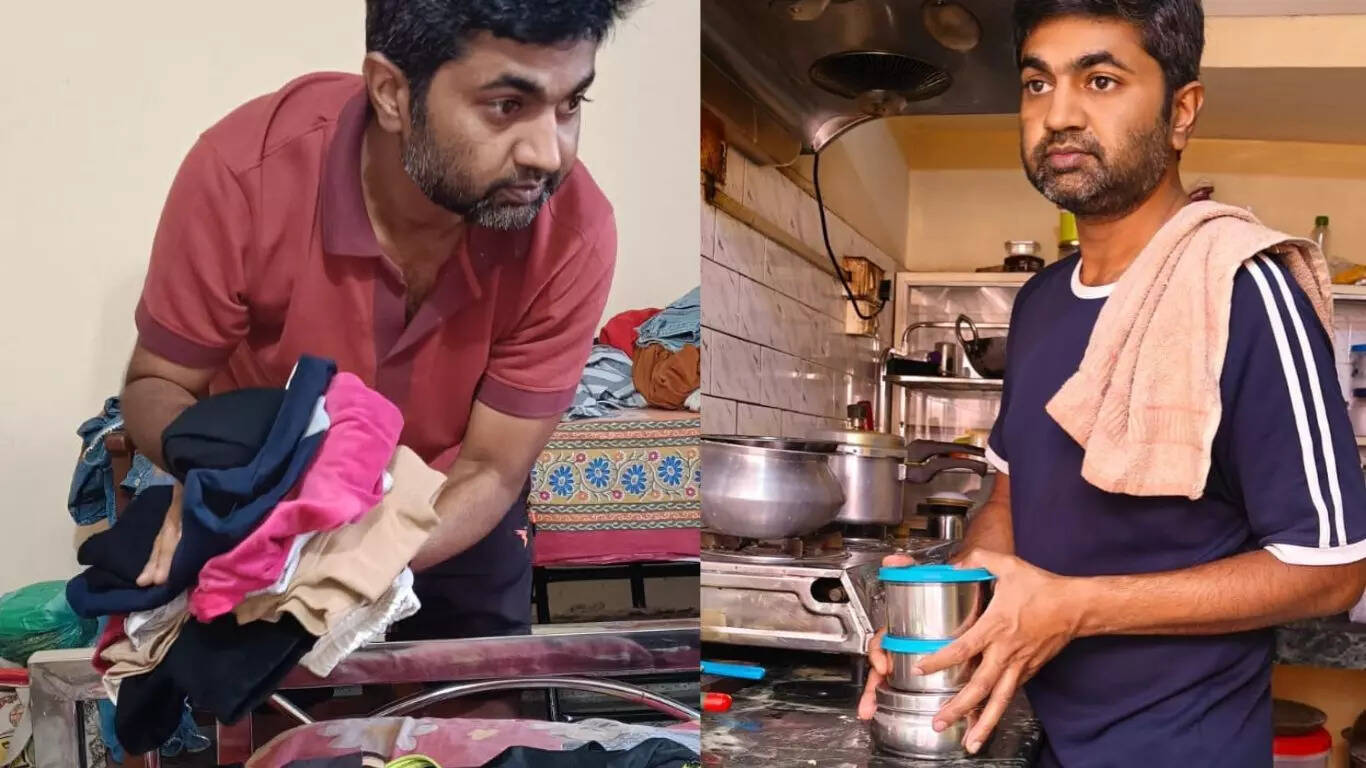
Amit spends his day cooking food for his wife and daughter, cleaning, helping his daughter with homework and managing every other household chore. He says he feels guilty about keeping a house help as he feels since he is not working, he must help at home as much as possible. “I had almost planned a food business in my free time when the idea of starting an Instagram page occurred to me and I am so overwhelmed by the love that I am getting! There are so many people who validate what I am doing and this is so overwhelming,” says Amit. Amit is truly an inspiration. He chose partnership over pride and responsibility over social expectations. Despite being a mechanical engineer, he stepped away from his career to support his wife and raise their daughter, without feeling insecure about his role. He proves that true strength in a marriage lies in mutual support, understanding, and breaking stereotypes. By embracing homemaking with dignity, he sets an example for men and women that caring for family is not about gender, it’s about commitment and love.


Source link

India Playing XI puzzle vs Zimbabwe: Sanju Samson a strong contender, Axar Patel likely to return | Cricket News


India Playing XI puzzle vs Zimbabwe: Sanju Samson a strong contender, Axar Patel likely to return
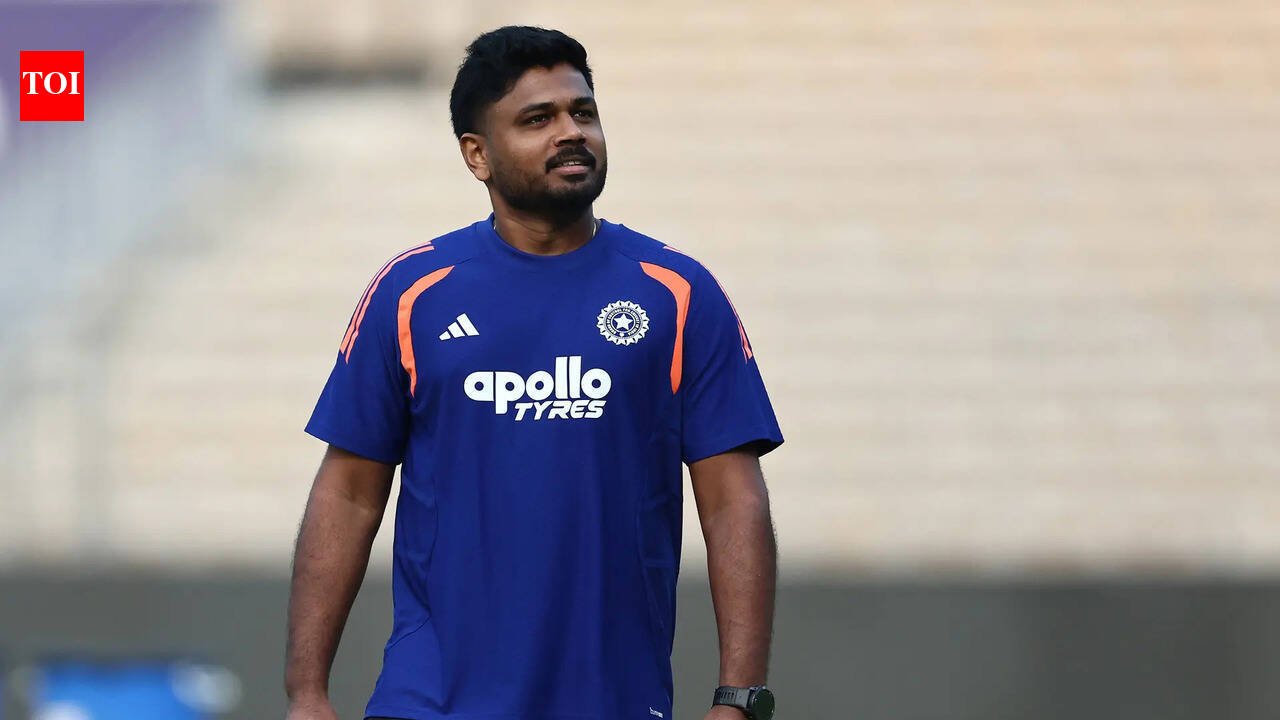
Sanju Samson during an India net session at MA Chidambaram Stadium in Chennai. (Getty Images)

TimesofIndia.com in Chennai: The stakes are high. The remaining Super Eight matches are must-win games, contingent on South Africa’s results going in their favour. The situation wasn’t this desperate but the “worst game in the last two years” has now put the Indian cricket team in a tight spot ahead of clash against Zimbabwe in Chennai. The last five matches showed the defending champions were tactically predictable due to an overdose of left-handers. Ever since the debacle in Ahmedabad on Sunday, calls to add a right-hander have only grown louder. Not that Sanju Samson is the answer to all problems but he gives you a tactical edge and could well force the oppositions to move away from the predictable off-spinner plan.The wicketkeeper-batter had a long hit in the nets on Tuesday and strong Playing XI hint emerged when he donned the big gloves for the drills towards the fag end of the session. He faced a mix of pace and spin during the marathon hit and grew more confident as he played against Varun Chakravarthy, Axar Patel, Kuldeep Yadav and Washington Sundar. India assistant coach Ryan ten Doeschate said after the South Africa game that Samson would be a talking point in the next few days and batting coach Sitanshu Kotak confirmed that the discussions have revolved around the right-hander. Kotak, however, kept the Playing XI cards close to his chest.

T20 World Cup: Sitanshu Kotak press conference before India vs Zimbabwe

“There can be changes, yes. It goes without saying that we discussed, because there are two lefty openers, number three is also left-handed and opposition is bowling off-spin. I personally don’t think that there is any problem there also. But because we lost wicket in first over, obviously any team would think. So we are thinking and we will see how it goes because we never decide the team too early and obviously it is not fair to start telling your plannings also in so advance. But yes, definitely there will be thoughts,” said Kotak on eve of the match.If Sanju returns to the India XI, it will balance the left-right issue, but the entry points for the middle order, especially the firing lower-order, led by Shivam Dube, could become interesting for the remaining two games. Dropping Tilak Varma for Samson and moving Ishan Kishan to No. 3 could have been another option but Kotak’s backing for the left-hander didn’t point in that direction. This is despite a sorry showing this tournament – 107 runs in five innings at a strike-rate of 118.88. Kotak supported Tilak and watched over him during the side’s optional practice session in the afternoon.

Net Sessions - ICC Men's T20 World Cup India & Sri Lanka 2026

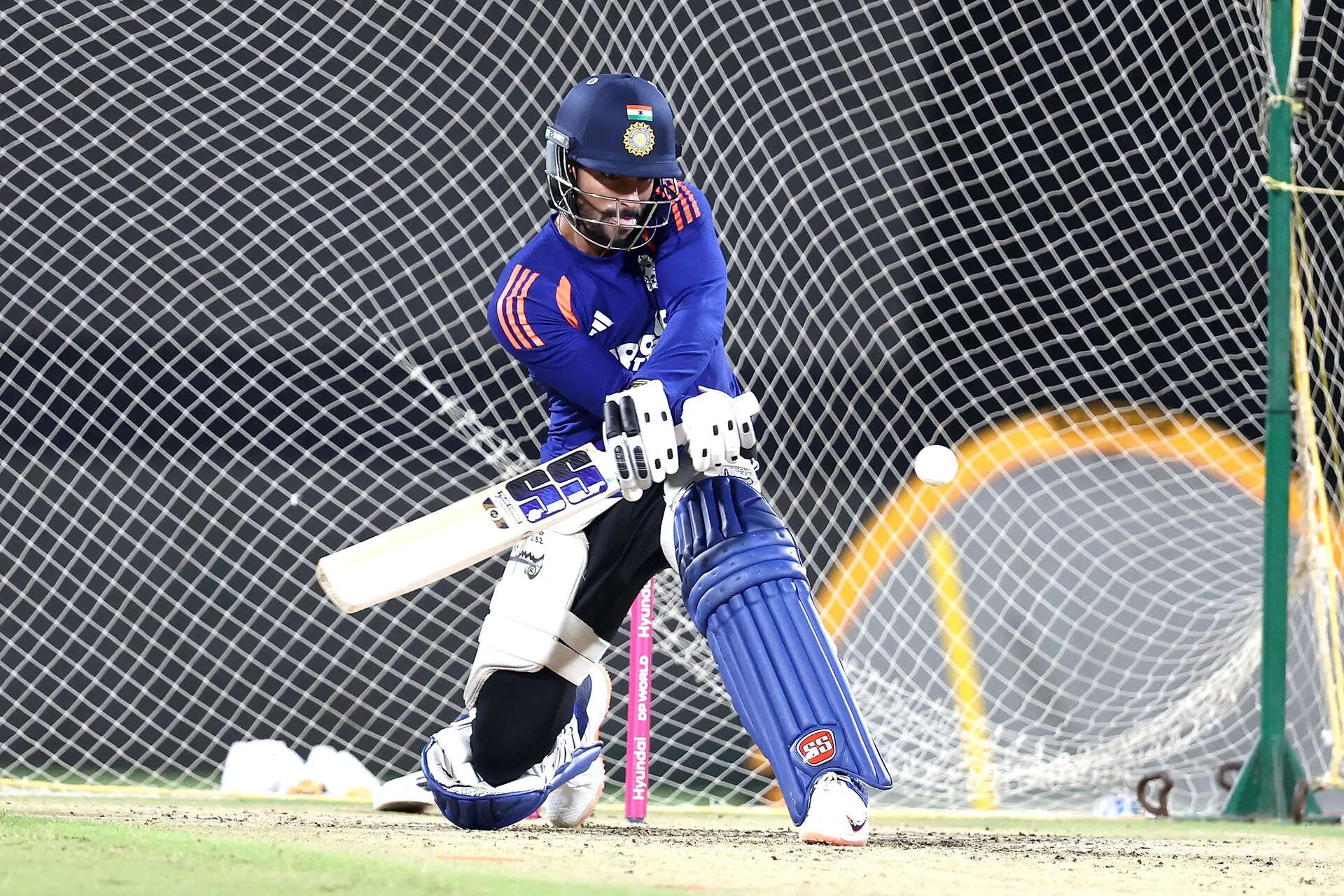
Tilak Varma during an India net session at MA Chidambaram Stadium. (Getty Images)

“Tilak has no such issues. In the Pakistan game, our target was good. I said earlier that 175 on that wicket was good enough. And we followed the planning. Because the same thing – and there the ball was actually spinning. And after that start, any team wouldn’t want is 3-4 wickets to go at once. So Tilak… it is a matter of two boundaries. Sometimes a batsman doesn’t get those balls. If he is at 34-35 in 30 – 32 balls or at 26 in 28 balls – if he gets one or two boundaries and a six, he will be at 38.“So I don’t think it is a question of run a ball. Neither he has any such instruction, neither he himself is thinking like that. Sometimes depending on wickets and depending on situation, I think there was more about partnerships in that game in Colombo and I think we achieved that. Yes, if Hardik had clicked more, who got out on the first ball, then we were hoping for 190 and we knew that was above par score and everyone knows that. So, there is no such tension of Tilak or Abhishek or even of losing one match.”The other talking point would be Rinku Singh and his place in the playing XI. The left-hander has had mediocre returns in the tournament and missed both team training sessions due to a personal emergency. Although he is set to rejoin the side on Wednesday evening, holding on to the spot looks highly unlikely at this stage. This could leave management with another change. If Samson walks in with Tilak holding his spot, the two players on their way out could well be Rinku Singh and Washington Sundar, making room for all-rounder and vice-captain Axar Patel.

T20 WCup: IND traning

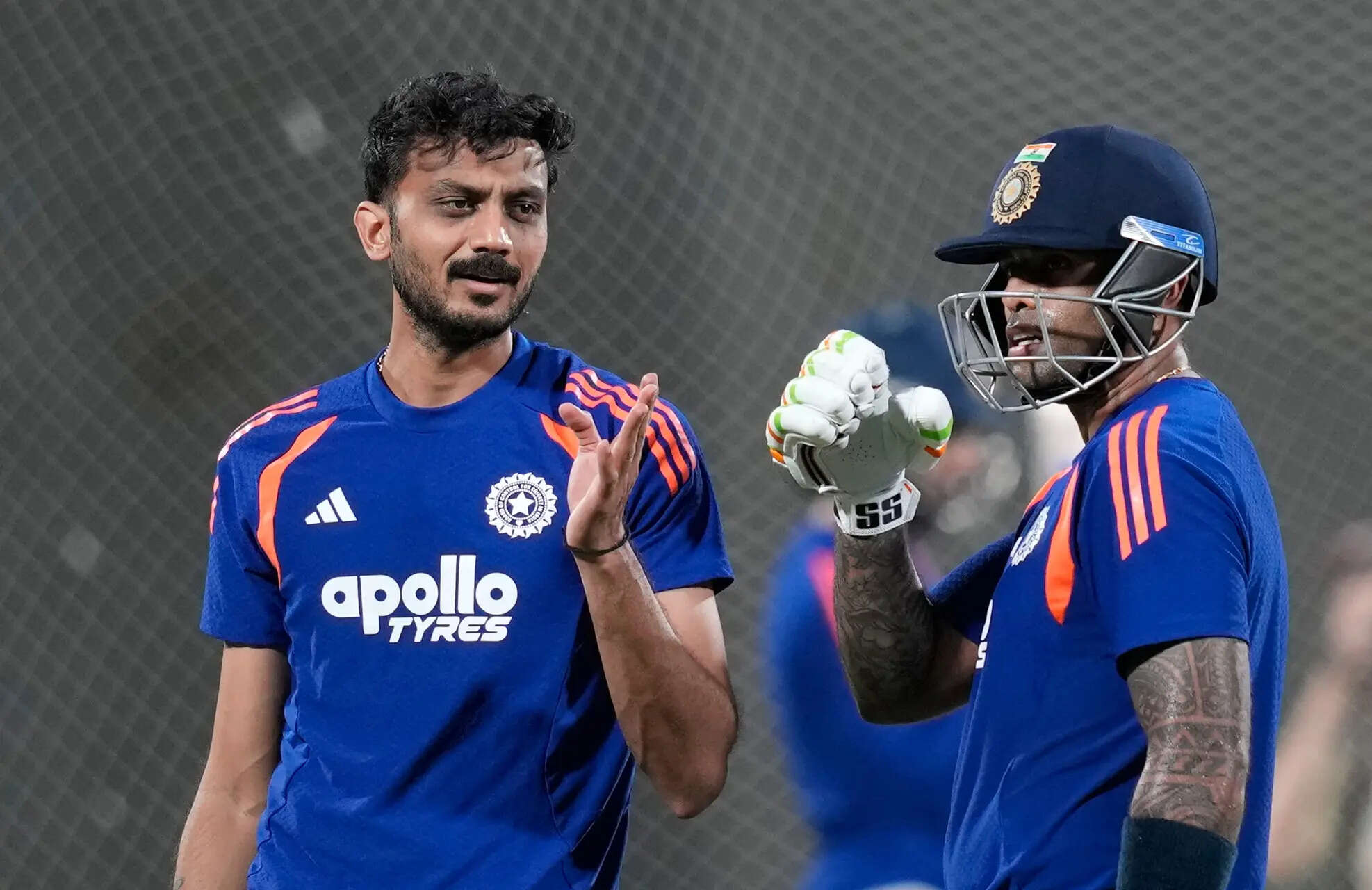
Axar Patel (L) is slated to come into the India XI vs Zimbabwe in Chennai. (PTI)

It will be interesting to see what kind of batting order they opt for but adding a right-hander in the mix gives them a tactical edge — something that has indeed been a talking point recently.“The discussions, to be very honest, if I tell you, it is more about tactical. A lot of tactical discussion goes on, the guys are bowling here, this is how we are approaching, this is how you are approaching, what other options you have for any batsman. Not just for Tilak, for Abhishek also, if you would have seen yesterday, it was the same thing we talked. So those things are more about planning, what a batsman can prepare and how much he actually wants to do that because end of the day it is batsman’s thing to decide what he likes, what he wants to do. But to give different ideas is obviously our job,” explained Kotak.Apart from lacking the fire and confidence of the preceding bilaterals, India have been tactically questionable. Thursday presents an opportunity not only to address that but also to find the XI which can help them cover all bases, and stay ahead of the opposition.


Source link

Stock market today: Which are top gainers and losers on NSE and BSE on February 25? Check list


Stock market today: Which are top gainers and losers on NSE and BSE on February 25? Check list

Benchmark equity indices Sensex and Nifty ended marginally higher on Wednesday after a volatile trading session, as profit-booking wiped out most of the sharp intra-day gains.The 30-share Sensex rose 50.15 points, or 0.06 per cent, to close at 82,276.07. During the day, the index had jumped 731.99 points, or 0.89 per cent, to hit 82,957.91. Meanwhile, the Nifty advanced 57.85 points, or 0.23 per cent, to settle at 25,482.50. Market participants remained cautious amid mixed global cues, with analysts noting that the Nifty’s range-bound movement has kept investors largely on the sidelines. Experts said the index has been trading within a narrow band in recent sessions and is likely to continue consolidating in the near term. Here are the top gainers and loser of the day:

Nifty50 top gainers:

  • HCL Tech (2.74%)
  • Bajaj Auto (2.74%)
  • Tata Steel (2.43%)
  • Shriram Finance (2.19%)
  • Tata Consultancy Services (2.15%)
  • IndiGo (1.95%)
  • Adani Enterprises (1.92%)
  • Sun Pharma (1.82%)
  • JSW Steel (1.55%)
  • Coal India (1.52%)

Nifty50 top losers:

  • Reliance Industries (-1.96%)
  • State Bank of India (-1.96%)
  • Adani Ports (-1.70%)
  • Eternal (-1.54%)
  • ITC (-1.33%)
  • Bharti Airtel (-1.25%)
  • Kotak Mahindra Bank (-0.95%)
  • SBI Life (-0.38%)
  • HDFC Bank (-0.34%)
  • Bajaj Finance (-0.31%)

BSE Sensex top gainers

  • HCL Tech (+2.80%)
  • Tata Steel (+2.63%)
  • Tata Consultancy Services (+2.14%)
  • IndiGo (+1.95%)
  • Sun Pharma (+1.84%)
  • Mahindra & Mahindra (+1.65%)
  • Maruti Suzuki (+1.45%)
  • Tech Mahindra (+1.13%)
  • Axis Bank (+1.11%)
  • ICICI Bank (+1.10%)

BSE Sensex top losers

  • Bajaj Finserv (-0.15%)
  • Trent (-0.27%)
  • Bajaj Finance (-0.29%)
  • HDFC Bank (-0.32%)
  • Kotak Mahindra Bank (-0.60%)
  • ITC (-1.22%)
  • Bharti Airtel (-1.39%)
  • Eternal (-1.46%)
  • Adani Ports (-1.72%)
  • State Bank of India (-1.93%)


Source link

Friedrich Merz China Visit: ‘Great potential for growth’: Germany’s Friedrich Merz seeks closer China ties, presses Beijing on Ukraine


‘Great potential for growth’: Germany’s Friedrich Merz seeks closer China ties, presses Beijing on Ukraine

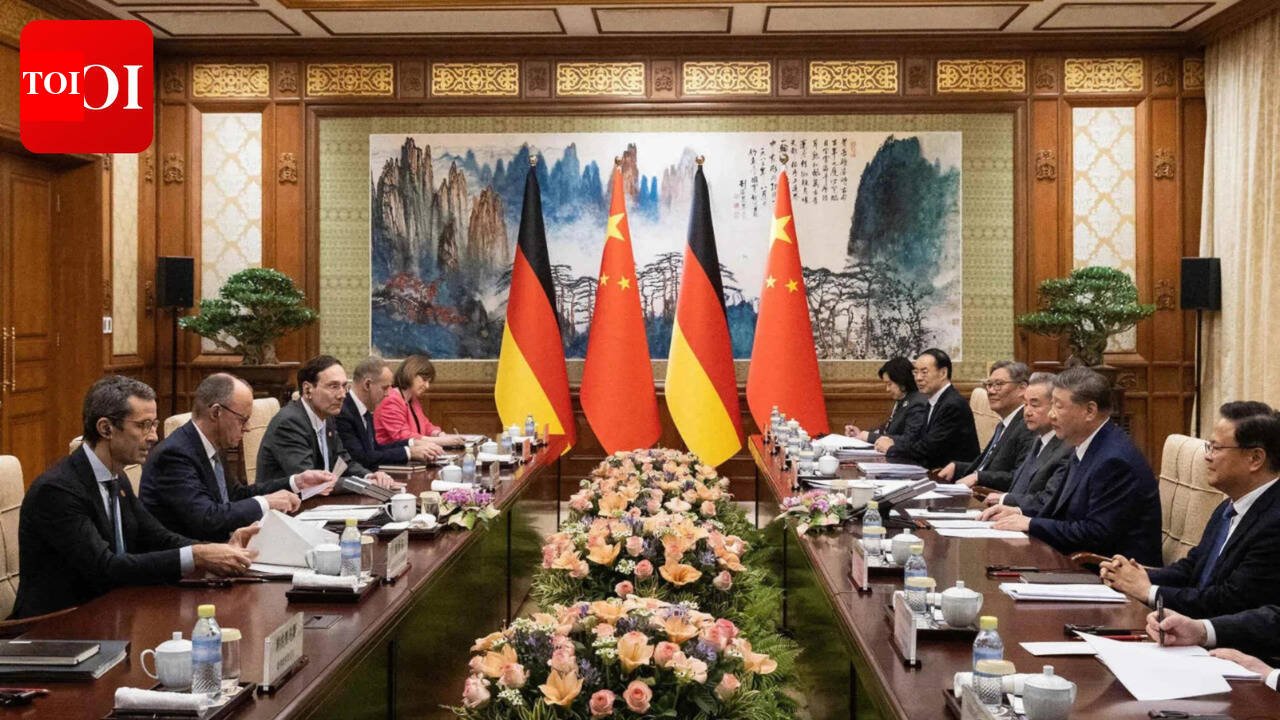
Chinese President Xi Jinping, second from right meets with German Chancellor Friedrich Merz, second left, at the Diaoyutai State Guesthouse in Beijing, China (Picture credit: AP)

German Chancellor Friedrich Merz on Wednesday called for closer cooperation with China while pressing for fairer trade rules and urging Beijing to use its influence to help end the war in Ukraine.Merz, on his first trip to China since taking office in May last year, met Premier Li Qiang and later President Xi Jinping in Beijing during a two-day visit aimed at strengthening ties with Germany’s largest trading partner even as Berlin views Beijing as a systemic rival.“We have a few issues that we need to talk about today in the course of my visit,” Merz told Li, according to news agency AP. “But I think there is also great potential for further growth of both our economies.” He added that collaboration should continue “wherever possible.”Xi told Merz he was willing to take bilateral relations to “new levels” and stressed that he “always attached great importance to Sino-German relations,” reported news agency AFP. Merz described the trip as a “great opportunity” to boost economic ties and said he hoped joint intergovernmental consultations, paused due to political changes and the pandemic, would resume “very soon.”

Pressing China on Ukraine

Merz indicated before landing in Beijing that he would seek China’s assistance in bringing about an end to Russia’s four-year-old war in Ukraine.He stressed that despite differences, “the big global political problems can no longer be tackled today without involving Beijing,” noting that “Beijing’s voice is heard, including in Moscow.”Many European governments have expressed frustration that China has not done more to pressure Russia. Beijing has maintained close diplomatic and trade ties with Moscow and says its stance on the conflict is impartial.Chinese foreign ministry spokesperson Mao Ning said earlier this week, “We hope all parties will seize the opportunity to reach a comprehensive, lasting and binding peace agreement”.

Trade tensions and tariffs backdrop

Merz’s visit comes amid global economic uncertainty triggered by US President Donald Trump’s tariffs and demands that allies shoulder more responsibility for their own security.China has sought to rally support from other nations to push back against what it sees as rising unilateralism and protectionism. In an apparent reference to the United States, Li said that “unilateralism and protectionism have gained ground and even become prevalent in some countries and regions,” adding that China and Germany should “jointly safeguard multilateralism and free trade”.Merz emphasised that Germany’s China policy must be framed within a broader European approach. “Our message from a European point of view is the same: We want a balanced, reliable, regulated and fair partnership with China,” he said, according to AP. “This is our offer. At the same time, it is what we also hope for and expect from the Chinese side.”

Trade imbalance and overcapacity concerns

Economic imbalances remain a key sticking point. According to AP, Germany’s imports from China rose 8.8 per cent to €170.6 billion ($201 billion) last year, while exports to China fell 9.7 per cent to €81.3 billion ($96 billion).Germany’s trade deficit with China hit a record €89 billion ($105 billion) last year.European leaders, including Merz, are seeking improved market access for their companies and reductions in what they describe as systemic overcapacity in sectors such as electric vehicles and solar panels. “We also want to discuss how we can find a remedy, for example, where systemic overcapacities have arisen, where there are export restrictions and where there are access restrictions … that distort and prevent competition,” Merz said.German industry representatives have urged Merz to address “overcapacity, distortions of competition, and export controls on critical raw materials,” AFP reported, warning of potential new trade conflicts with the European Union if structural reforms are not undertaken.

Strategic rivalry amid economic interdependence

While China overtook the United States to become Germany’s biggest trade partner last year, Berlin also views Beijing as a strategic and systemic rival.Merz acknowledged before departure that China “claims the right to define a new multilateral order according to its own rules,” cautioning against illusions even as he stressed the need for global economic ties.The chancellor is accompanied by a large business delegation, including executives from major German automakers and industrial firms, underscoring the economic stakes of the visit.


Source link

Where to invest Rs 1 lakh right now – gold, silver, stocks, mutual funds? 7 wealth and fund managers decode the correct mix


Where to invest Rs 1 lakh right now - gold, silver, stocks, mutual funds? 7 wealth and fund managers decode the correct mix
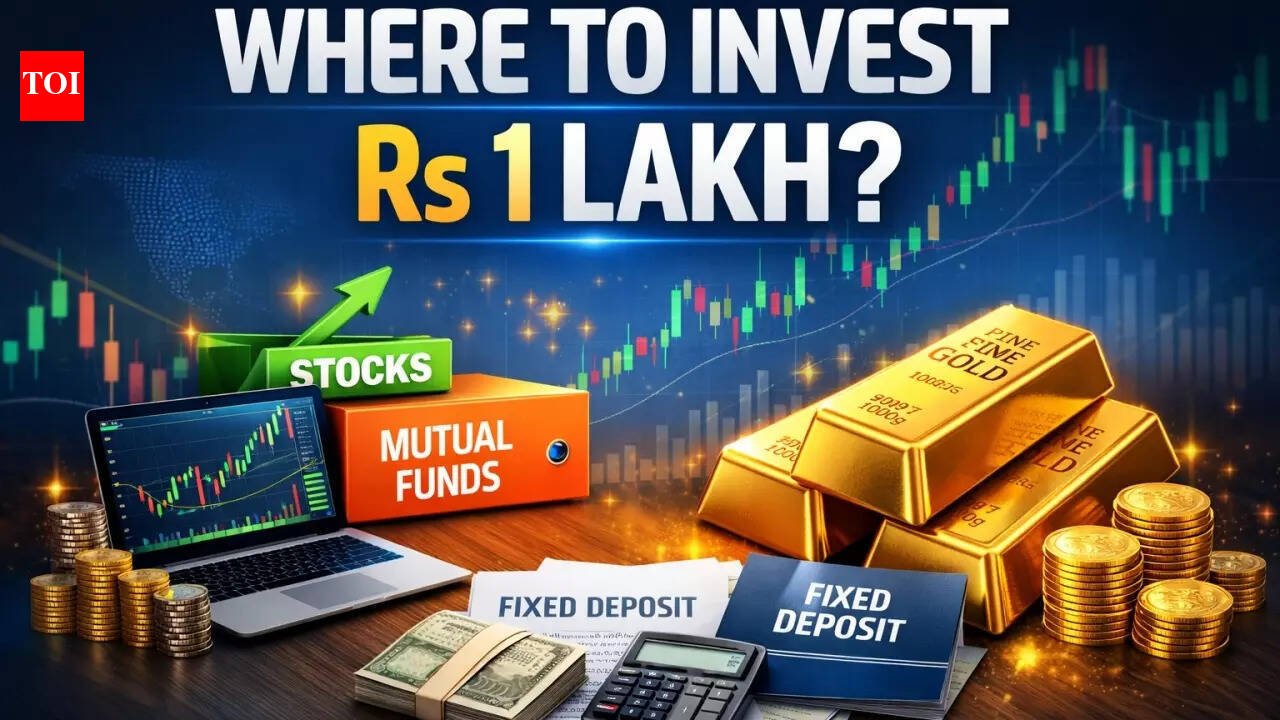
We asked 7 wealth and fund managers from leading brokerages for where investors should invest Rs 1 lakh right now. (AI image)

Wealth creation can seem intimidating for many – where should you put your money for steady returns over short-term, medium and long term? In today’s world of heightened uncertainty, the question becomes even more pertinent. Are stocks the right way to go or are they too risky? Gold and silver have been rising at a record breaking speed – should your hard earned money be invested in them? And what about the age old wisdom of putting money in fixed deposits?While experts believe that one investment strategy doesn’t work for everyone, and risk profile and time horizon play a crucial role, they are broadly in consensus on what a large part of your portfolio should look like. One lesson is clear: Don’t chase asset classes with recent highs, instead focus on long-term wealth creation.We asked 7 wealth and fund managers from leading brokerages for where investors should invest Rs 1 lakh right now – here’s what they had to say:Prashant Joshi, Head of Products – Active Funds, Motilal Oswal Asset Management CompanyInvesting ₹1 lakh with a long-term horizon should focus on wealth creation, and historically equities have been the most effective asset class for long-term growth. Depending on risk appetite and financial knowledge, investors may allocate some portion directly to stocks, though for most, mutual funds offer a more practical and diversified approach. A mix of active, sectoral or thematic, and low-cost index funds or ETFs can provide both growth potential and broad market exposure.Since no single asset class outperforms in every cycle, diversification is essential to smooth returns and reduce volatility. A practical allocation could involve a majority in equities for growth, around ~20% in commodities like gold for diversification and inflation protection, and about ~10% in debt instruments for stability and liquidity. This balanced approach keeps the portfolio growth-oriented while providing resilience during market uncertainty.

  • Equities (70%): The Growth Engine

Equities are the foundation of long-term wealth creation due to their strong inflation-beating potential. A diversified mix of active funds (across market caps and strategies) along with index funds and selective sector exposure enables broad market participation. The Nifty 50 Total Return Index has delivered about ~12% CAGR over the past 25 years, highlighting equities’ long-term growth power. Investing through SIPs helps average costs, reduce timing risk, and benefit from different market cycles.

  • Commodities (10–20%): Diversification & Hedge

The recent rally in commodities underscores their importance in a diversified portfolio, particularly assets like gold and silver. Over the long term, they can deliver solid returns while also acting as a hedge against inflation and market volatility. During periods when equities underperform, gold often serves as a safe-haven asset, helping stabilize portfolio performance.

  • Debt / Fixed Income / Arbitrage (10–20%): Stability & Liquidity

Allocating 10–20% to debt instruments such as government bonds, FDs, PPF, or arbitrage funds provides stable and predictable returns. With bond yields around 6–7% and PPF offering ~7.1% tax-free interest, this portion helps reduce portfolio volatility and serves as a liquidity buffer during market stress or unexpected cash needs.Rahul Jain, President & Head, Nuvama WealthIf you have a moderate risk profile and plan to invest for 3-5 years, consider dividing your investment as follows:Equity (50% – ₹50,000): Invest in well-managed flexicap funds with a largecap bias. These funds offer stability and valuation comfort. Besides, fund managers can easily change their investments between large, mid, and small companies based on market trends.Debt (40% – ₹40,000): This portion helps keep your portfolio stable and provides regular income, which is helpful when stock markets are volatile. Use a mix of bank fixed deposits for quick access to cash and high-quality non-convertible debentures (NCDs) for better interest rates than inflation.Gold (10% – ₹ 10,000) acts as an anchor in the portfolio, providing protection against geopolitical risks, currency depreciation, and market volatility. Investors can gain exposure through gold ETFs, which track gold prices, offer liquidity, and are relatively tax-efficient compared to physical gold.Disclaimer: Asset allocation will depend on age and a variety of other factors. The above is for illustration purposes only. Please consult a registered financial advisor or wealth manager before investing.Gautam Kalia, CAIA, Chief Investment Solution Officer, Mirae Asset SharekhanThe market returns across large cap to small cap are in negative trajectory from last 3 months as Nifty 50 TRI delivered -2.3%, Nifty Midcap 150 – TRI at -2% and Nifty Smallcap 250 – TRI is at -5.7% as on 20th Feb 2026.Despite a good earnings season, the India- US trade deal, the FTA between India and EU, a pro-growth Union Budget and benign inflation data, the market is still showing weakness. This time correction and price correction across the market may persist because of geopolitical issues as well as fear of rising crude oil prices.
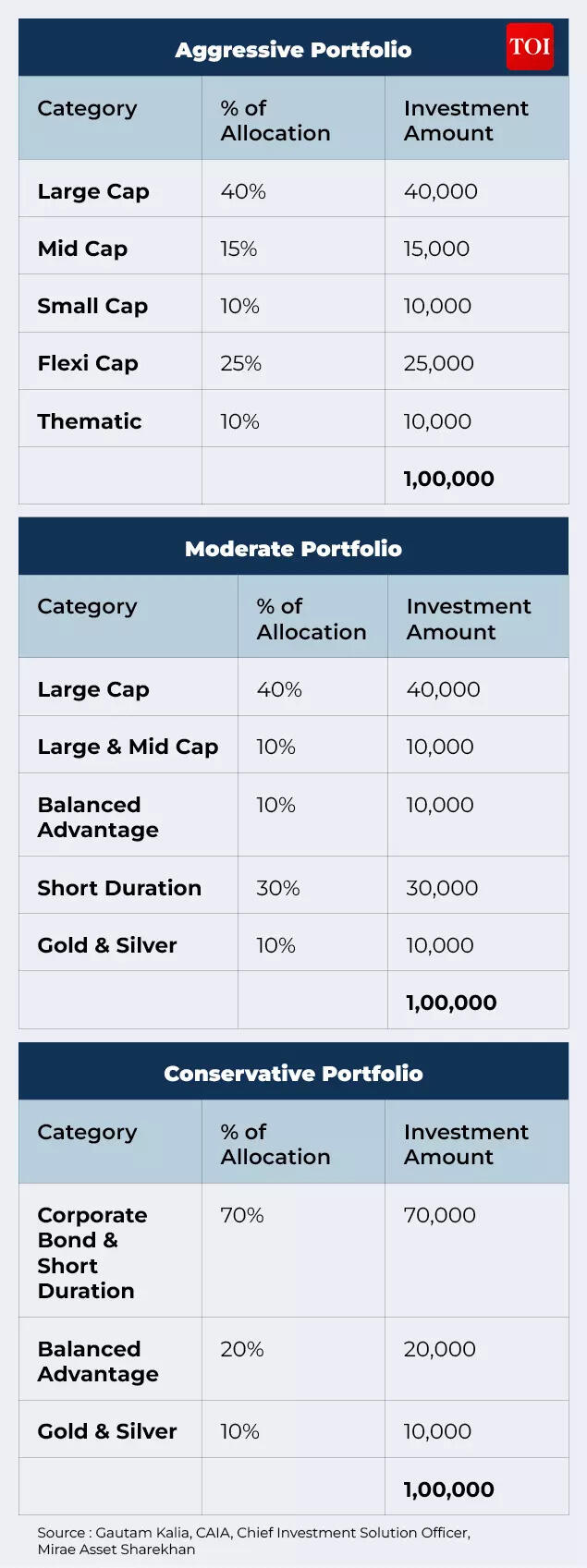
Where to invest Rs 1 lakh? 3 types of portfolios

Where to invest Rs 1 lakh? 3 types of portfolios

Allocation to Equity: If your investment tenure is more than 5 years and you have a high risk appetite, then you should allocate predominantly to equity with a large cap bias and build allocation to mid and small caps in a staggered manner.Allocation to Debt: Despite multiple rate cuts by RBI, yields are at elevated levels and the RBI would keep enough liquidity and focus on transmission of the rate cuts. Considering current yields and global crude oil uncertainty, one should have allocation to the short end of the yield curve. Accrual strategy (Corporate bond and short duration debt schemes) preferred.Allocation to commodities: Gold and silver prices remain volatile. Investors should continue to maintain around 10% of their portfolio as hedge against global uncertainties and continued US dollar weakening.Akshat Garg, Head-Research & Product, Choice WealthIf I had ₹1 lakh to invest right now, I wouldn’t chase what’s trending. I’d focus on balance. Markets are never perfectly calm, so the idea is to participate in growth while managing risk sensibly.I would allocate about half the amount — ₹50,000 — to equities through a combination of a large-cap and a quality multi-cap or focused fund, with a minimum time horizon of five to seven years. Equity remains the most reliable way to create real wealth over the long term, provided you stay patient through volatility. Around ₹25,000 would go into short-duration debt funds or a 1–2 year fixed deposit. This portion acts as a stabiliser and is suitable for a one- to three-year horizon.I would allocate roughly ₹15,000 to gold, preferably via Sovereign Gold Bonds or a gold ETF, with a three- to five-year view. Gold isn’t about high returns; it’s about protection during uncertain phases. The remaining ₹10,000 would stay in a liquid fund or savings account as a buffer for immediate needs or opportunities.In terms of execution, I’d deploy a majority upfront if comfortable, and stagger the rest over a few months. Most importantly, the investment should align with a clear goal and time frame. Discipline matters more than timing.Sunny Agrawal, Head – Fundamental Research, SBI SecuritiesInvestors can create well balanced multi asset portfolio and allocate funds as follows:Equity: 75%Within equity investors can allocate funds towards fundamentally sound businesses across sectors like Auto/Auto Ancillary (M&M, Bajaj Auto, Lumax Industries, Pricol, SJS Ent etc), Defence (BEL, Solar Industries), Metals/Mining (Nalco, Tata Steel, IMFA, GPIL), Fin.Serices (BoB, ICICI Bank, Shriram Finance, 360 WAM, NAM India, KFIN etc), Consumption/Diversified (Reliance,. CCL Products, Varun Beverages, Voltas, Titan, Bajaj Consumer, Swiggy etc), Telecom (Bharti, Indus Tower), Oil & Gas (HPCL), IT (HCL Tech) etc.Debt: 15% In the current uncertain global environment, exposure to debt will offer stability to the portfolio.Gold: 10%Exposure to gold offers a hedge against the unforeseen global events and trend of de- dollarisation.
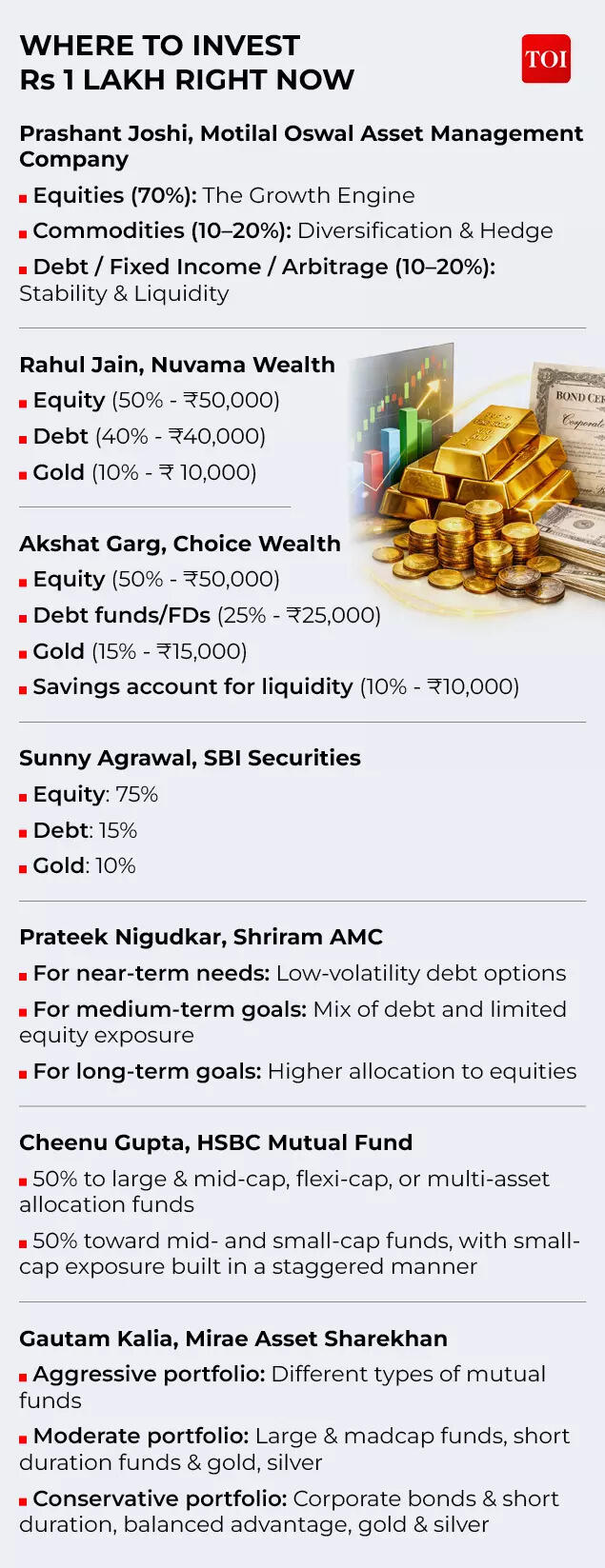
Where to invest Rs 1 lakh? What 7 experts say

Where to invest Rs 1 lakh? What 7 experts say

Prateek Nigudkar, Senior Fund Manager, Shriram AMCThere is no one-size-fits-all way to invest ₹1 lakh. The appropriate asset mix depends not just on time horizon, but also on an investor’s risk appetite, liquidity needs, existing asset allocation, income stability, and financial goals. For near-term needs, the focus should be on liquidity and capital protection through low-volatility debt options. For medium-term goals, a mix of debt and limited equity exposure can help balance stability and return potential. For long-term goals, a higher allocation to equities may be considered to participate in growth, with some debt for stability. The key is aligning the asset mix to the investor’s time horizon and risk appetite, rather than trying to time markets or chase returns. Investors should assess suitability and consult a financial advisor before investing.In 2026, amid shifting interest rates and elevated valuations, investors should prioritise disciplined asset allocation over short-term market reactions. Portfolio positioning should remain aligned with individual risk appetite, investment horizon and financial goals. Conservative investors typically structure portfolios with a greater emphasis on stability-oriented assets, keeping exposure to growth assets limited to manage volatility. Moderate investors usually follow a balanced approach, with diversification across growth and stability-oriented assets, segments and styles.Aggressive investors, given their higher risk tolerance and longer investment horizons, generally maintain higher exposure to growth-oriented assets, while continuing to benefit from diversification and periodic portfolio reviews. Across all profiles, regular rebalancing is essential to keep portfolios aligned with long-term objectives.As for mutual funds, investors need not rethink the product itself in 2026. Instead, the focus should return to fundamentals such as asset allocation, diversification and suitability.Rather than favouring or avoiding specific fund categories based on market conditions, aligning mutual fund investments with risk appetite, time horizon and financial goals, combined with periodic review, can help navigate varying market environments more effectively.Cheenu Gupta, Fund Manager, HSBC Mutual FundWe have already experienced nearly 18 months of time correction, and with Q3 FY26 earnings showing encouraging strength and FY27 earnings growth expected to improve meaningfully over FY25 and FY26, the earnings cycle seems to be turning. With valuations having moderated and earnings visibility improving, this appears to be an opportune phase for investors to begin accumulating mid- and small-cap exposure. Mid-caps can be considered for selective lump-sum allocation given their improving fundamentals, while small caps, being more sensitive to liquidity and sentiment cycles, are better accumulated gradually through SIPs or STPs.Additionally, given the evolving geopolitical landscape and global uncertainties, maintaining allocation to equities alongside precious metals like gold appears prudent for long-term portfolio resilience.Therefore, for an investment of ₹1 lakh today, a balanced approach could involve allocating 50% to diversified options such as large & mid-cap, flexi-cap, or multi-asset allocation funds — the latter offering exposure to equity along with gold and other asset classes — and the remaining 50% toward mid- and small-cap funds, with small-cap exposure built in a staggered manner. A disciplined 3–5 year investment horizon will be key to realizing the potential of this allocation strategy.(Disclaimer: Recommendations and views on the stock market, other asset classes or personal finance management tips given by experts are their own. These opinions do not represent the views of The Times of India)


Source link

Cigarettes after tax: The post-February crisis, and how smokers are reacting | India News


Cigarettes after tax: The post-February crisis, and how smokers are reacting

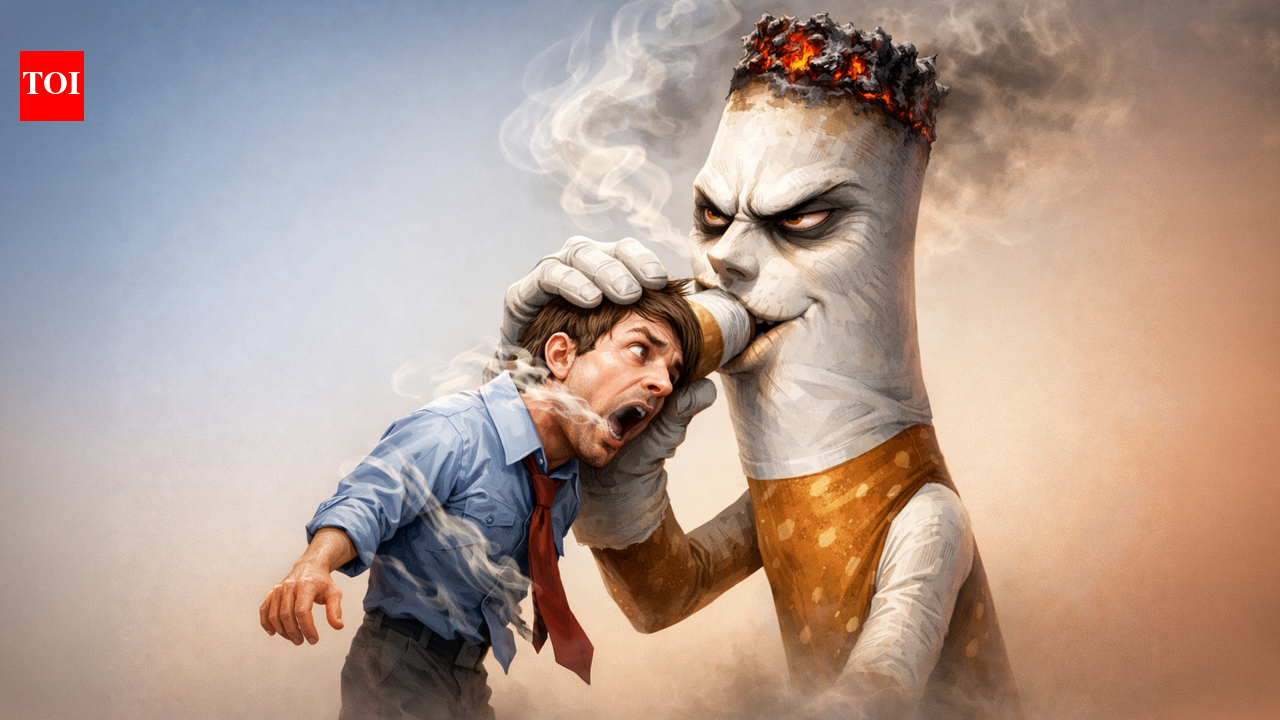
When cigarette prices began climbing across India in early February, the effect was immediate and oddly chaotic. Smokers paid different prices for the same pack on the same street. Retailers blamed wholesalers. Wholesalers blamed the new tax regime. What was framed as a clean public health reform quickly revealed a messier economic story.Popular culture has long understood what policymakers sometimes underestimate. In Money Heist, the Professor insists the real vulnerability is never the vault but the system around it. Apply enough pressure and the cracks appear elsewhere. In The Wolf of Wall Street, excess is not driven by morality but by margins; when the spread is wide enough, someone will step in to capture it. And in Gangs of Wasseypur, power does not shift with speeches but with control over supply. Whoever controls distribution controls the street.India’s 2026 tobacco overhaul sits at the intersection of those three insights. Raise taxes sharply and you do not just change behaviour. You change incentives, redistribute margins and test the resilience of the supply chain. What follows is less a story about cigarettes than about what happens when policy pressure meets market reality.

The scale of the problem

Although the most recent nationally representative surveys predate the 2026 reforms, they remain the clearest benchmark of India’s tobacco burden. According to the Global Adult Tobacco Survey (2016–17), approximately 267 million individuals aged 15 and above, nearly 29% of the adult population, consume tobacco in some form in India. Of these, an estimated 130 million are smokers. The World Health Organisation (WHO) reports that India accounts for nearly 12% of the world’s total smokers.Tobacco use patterns vary significantly across regions and demographics. A survey from 2013 conducted by the International Institute of Population Sciences in collaboration with the ministry of health and family welfare found that Kolkata records the highest smoking rate in the country, with 56.6% of its population identified as smokers. The data further reveals a stark gender disparity in the city: 82% of men and 23.5% of women smoke. Meanwhile, Uttarakhand reports the highest prevalence of beedi smoking. A 2008 health ministry report estimated that around 100 million people — largely from economically disadvantaged and less educated communities — smoke beedis. The report also linked beedi smoking to approximately 200,000 deaths due to tuberculosis, highlighting the severe health consequences associated with tobacco use in India.Since February 1, the legal trade has fractured into what smokers describe as a landscape of sticker-shock and secrecy: packs sold at more than 20 % above MRP, wholesalers hoarding stock, retailers charging different prices to different customers, and a growing presence of non-compliant foreign brands entering through porous borders.

India’s 2026 cigarette tax hike takes effect

In late 2025, the government enacted a sweeping tax reform to raise cigarette prices further. A December 2025 order imposed high specific excise duties (Rs2,050–8,500 per 1,000 sticks, depending on length) effective Feb 1, 2026. This stacked atop the existing 40% goods-and-services tax (GST). After implementation, the total tax share on cigarettes will jump from roughly 55% to about 66% of retail price. GST on cigarettes was hiked from 28% to 40%, and a new National Health Cess was introduced.Finance Minister Nirmala Sitharaman, announcing major Goods and Services Tax (GST) rate cuts, said the new two-tier system would ease the burden on the common man. “That special rate of 40% has also been proposed, and it’s been cleared and will apply only to paan masala, cigarettes, gutka, and other tobacco products such as chewing tobacco, products like zarda, unmanufactured tobacco, and Bidi,” she said during the GST Council meeting.Cigarette prices have increased by a minimum of Rs 22 to 25 per pack of 10 sticks following the implementation of additional excise duty from Sunday.

Cigarette prices- Before & After

What happened on the ground

The immediate aftermath of the February 2026 tax announcement was marked by confusion and disruption across several Indian cities. Even before the revised duties formally came into effect, retailers began reporting acute shortages and sharp price increases. In Ahmedabad, paan-shop owners said cigarette and paan masala stocks had “virtually disappeared” from shelves in the days leading up to the deadline. Wholesalers were accused of hoarding inventory or supplying retailers only at the full printed maximum retail price, and in some cases above it, in anticipation of the higher taxes.Several shopkeepers reported being forced to procure stock at or near MRP, effectively paying around Rs 10 more per pack than usual, which eroded their margins. To compensate, they began charging customers a premium. Cigarettes were sold at Rs 1–2 above the printed price per stick, with loose cigarettes sometimes marked up by Rs 2–4. One retailer noted that when he ordered ten packs, he often received only six or seven. Consumers, meanwhile, complained that full packs were frequently unavailable and that they were offered only loose cigarettes at inflated rates.Similar accounts emerged from Delhi. In Mayur Vihar, street vendors said wholesalers had abruptly “stopped giving cigarettes”, creating what they described as artificial scarcity. One shopkeeper, who previously sold around 15 packets a day, said sales had fallen to just three after the tax hike announcement. Eventually, he stopped stocking cigarettes altogether, citing constant disputes with customers over prices. Vendors also observed that the price of a popular pack had jumped from roughly Rs 200 to Rs 360 even before the new tax structure officially took effect, almost doubling in a matter of weeks. As prices rose, consumption appeared to fall. Customers who once bought five cigarettes a day were now purchasing only two or three.Reports from other regions, including parts of Kullu district, reflected the same pattern. Stocks began disappearing from shelves in mid-January as the tax increase became imminent. Smokers alleged that both wholesalers and retailers were deliberately withholding supply in anticipation of higher margins once the revised prices were implemented.After the hike, cigarettes were routinely sold at more than 20 per cent above the printed MRP, with sellers citing “new rates” or ongoing shortages. Yet some traders privately admitted that profiteering, rather than taxation alone, was driving the spike. One conceded that in many outlets the prevailing selling price already exceeded what the officially revised prices would be.Consumers described the situation as exploitative. “You cannot justify overcharging simply because the product is taxed more,” said one smoker. “If the government revises GST, that is one thing, but selling cigarettes above the MRP is illegal and unfair.” Another regular smoker pointed to the lack of clarity in policy communication. Although the new rates were effective from 1 February, sellers began raising prices immediately after the January announcement, despite regulations requiring existing stock with old MRPs to be sold at the printed price. The result, he said, was “mayhem, chaos and confusion.” In February, he claimed to have paid four different prices for the same brand, including two different prices at the same shop on the same day.The absence of consistent interpretation and enforcement created extraordinary price variation, sometimes even within individual outlets. On the ground, both smokers and shopkeepers focused less on public health objectives and more on immediate financial pressures. As one Delhi retailer put it, the tax hike “did not increase my income; it only increased the income of the people above us,” a reference to manufacturers and wholesalers.

Rising taxes, rising illicit trade in India

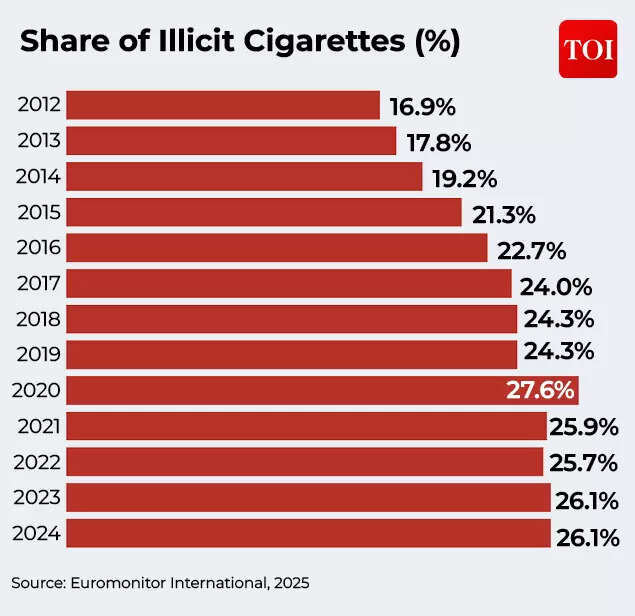
India saw the surge coming. Illicit cigarettes already account for 26.1 % of the market by volume, according to Euromonitor International, making the country the world’s fourth-largest illicit cigarette market. The Tobacco Institute of India estimates illicit volumes are now nearly one-third of legal cigarette sales, more than double the 12.6 % share recorded in 2012.Industry estimates put annual tax losses at Rs 21,000–23,000 crore through 2024.The core economic mechanism is straightforward. When taxes push up legal cigarette prices, illicit cigarettes (untaxed and cheaper) also rise in price because of demand, but remain relatively affordable. That widening price differential increases profit margins for illegal sellers, encouraging smuggling and counterfeiting.

Share of Illicit Cigarettes (%)

Australia’s $40 cigarettes and the rise of tobacco smugglers

The trajectory mirrors developments in Australia, where cigarette taxes rose steeply over a decade, eight hikes in ten years, to drive smoking down. The policy worked and smoking rates declined steadily.But the unintended consequence was dramatic. Australia now has the most expensive cigarettes in the world: a mid-market pack averages about 55 Australian dollars (nearly US $40), almost double the price in New York City. Those prices created a powerful incentive for illicit supply.However, economists warn Australia’s tobacco tax has now “passed a tipping point”. Regular excise hikes have not further reduced smoking rates (already low) but have exploded the black market. The Australian Treasury estimates that roughly 20% of cigarettes for sale are now illegal. Some state officials claim it may be even higher. In 2024 police seized illicit stock worth A$1.8m in Sydney alone (piles of contraband packs). Organized crime has moved in: state premiers reported tobacco smuggling linked to syndicates, and even firebomb attacks on shops selling contraband.The financial fallout is stark. Federal tax receipts peaked in 2019-20 and have since plummeted. By 2024, the Budget forecast tobacco excise will fall from A$7.4bn to A$6.7bn over the next few years – the lowest real revenue in a decade, despite higher rates. Economists like Bob Breunig of ANU argue that each further tax increase is now merely shifting consumers to illicit sources, with “every time we raise excise at this point we are not reducing smoking at all”. In short, Australia’s case shows how relentless tax hikes can top out: once legal cigarette prices become wildly higher than alternatives (licit or illicit), the fiscal incentive tips the balance to the black market.

The UK and other high-tax markets

Australia’s experience is mirrored in other high-tax countries. Take the United Kingdom, which has among the highest cigarette prices in Europe (regular hikes and plain packaging rules). Legal sales in the UK have collapsed in recent years: HM Revenue & Customs data show duty-paid cigarettes fell by ~45% from 2021 (23.6 billion sticks) to 2024 (13.2 billion). A KPMG study (for industry) found that by 2024 over one in four cigarettes consumed in the UK was illicit. (Illicit packs can sell for as little as £5–7, versus ~£15 legal.) The lost tax revenue was enormous – on the order of £3–4 billion per year. Here again, aggressive anti-smoking policies (taxes, flavours ban, generational restrictions) have driven some smokers underground. The lesson is that when demand persists, a parallel contraband market will emerge if it’s profitable and enforcement is stretched.Other countries tell similar stories. For example, illicit cigarettes from Eastern Europe and Asia circulate widely across the EU, wherever prices differ. In the US, high-tax states (New York, California) see border smuggling from low-tax states, though data suggest tight enforcement can mitigate it. Even in Singapore and Malaysia (with notorious price gaps) sophisticated smuggling networks exist. On the prohibition side, Bhutan’s decade-long sales ban (2010–21) offers a cautionary tale: despite a strict ban and high taxes on imports, smuggling became rampant and tobacco use barely fell (prevalence ~25% before and after). Bhutan eventually lifted its ban (after 2021) partly because illicit trade overwhelmed the legal gap. In short, any extreme measure – very high taxes or total bans – can invite a persistent black market unless accompanied by robust enforcement and viable legal alternatives.

Disclaimer

India approaching the same crossroads

India’s tobacco curb has entered a delicate phase. The intent behind the 2026 overhaul is clear: discourage consumption, raise revenue and align policy with global public-health standards. But markets rarely respond in straight lines. They respond to incentives.The early signs, hoarding, arbitrary pricing, shrinking legal supply and a visible uptick in untaxed brands, suggest that taxation alone cannot carry the burden of reform. If price becomes the only instrument, the system strains at its weakest points: border controls, supply chains and enforcement capacity. The result is not simply fewer cigarettes, but a reshaped market.The lesson from Australia, the United Kingdom and elsewhere is not that taxes fail. It is that taxes, when pushed beyond a threshold without equal investment in enforcement and cessation support, change who profits from smoking. The lesson from high-tax economies is not that taxes fail. It is that taxes without enforcement capacity create parallel markets. India’s real test is not how high it can push prices, but whether it can prevent its own policy from financing the shadow economy.


Source link

Rajpal Yadav Cheque Bounce Case: Breaking down Rajpal Yadav’s fees from last five big-budget films amid Rs 9 crore cheque bounce controversy |


Actor Rajpal Yadav faces a Rs 9 crore cheque bounce case, leading to a surrender at Tihar Jail and subsequent bail for his niece’s wedding. The next hearing is March 18, 2026. His earnings from recent big-budget films reportedly range from Rs 1 crore to Rs 3 crore per project. Read the full article to know more in detail.

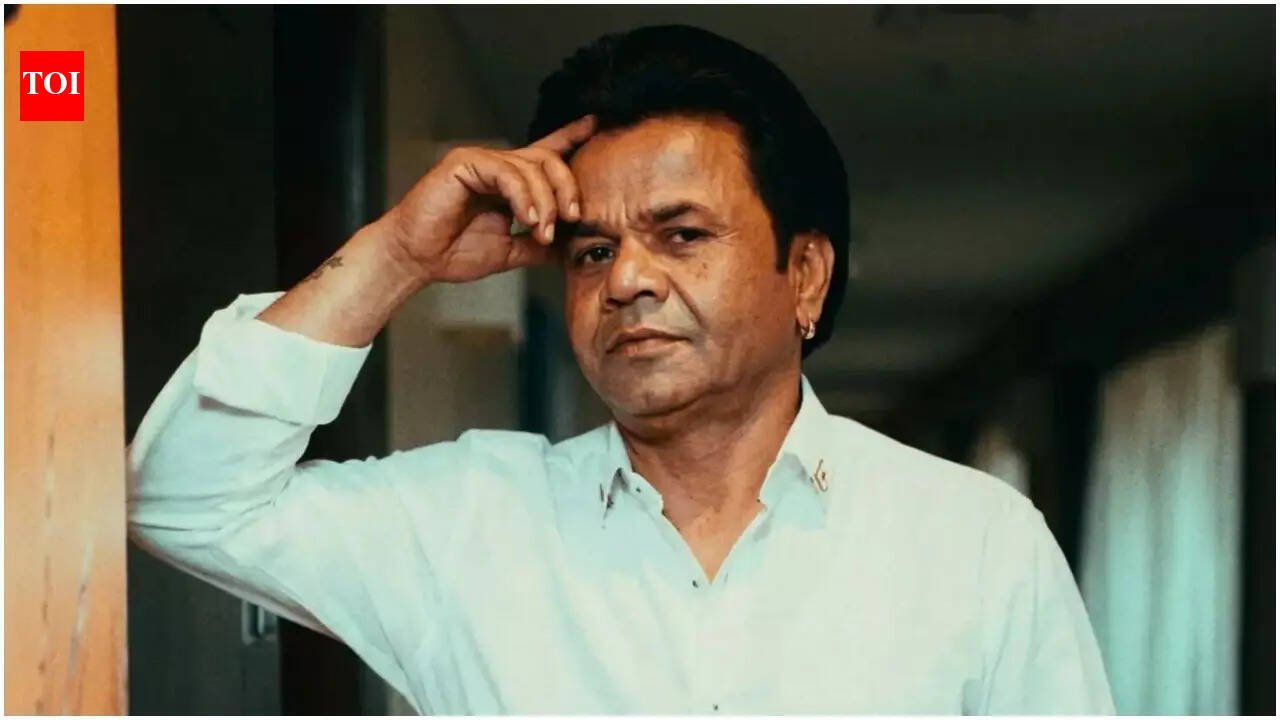
Rajpal Yadav is currently in the headlines for his Rs 9 crore cheque bounce case. After the actor failed to repay a loan he took in 2010, the Delhi High Court asked him to surrender at the Tihar jail. He is currently out on bail, which he applied for to attend his niece’s wedding. Now, the next hearing of the case is set for March 18, 2026. Amidst the controversy, let’s take a look at the reported remuneration of the actor for the last five big-budget films.

Rajpal Yadav’s earnings from his last big-budget films

According to the Koimoi report, the actor has earned over Rs 7-8 crore by featuring in big-budget movies. Reportedly, the actor received Rs 1 crore for his role in Varun Dhawan’s ‘Baby John’. For ‘Bhool Bhulaiyaa 3’, in which he reprised his role as Chhote Pandit, he took home Rs 2-3 crore. For featuring in Kartik Aaryan’s ‘Chandu Champion’, Rajpal Yadav reportedly charged Rs 2 crore. For his role in Ayushmann Khurrana’s ‘Dream Girl 2’, the actor was paid Rs 1 crore. Meanwhile, for the OTT movie ‘Kathal’, he received Rs 1 crore as his fees.

Rajpal Yadav Walks Out Of Jail With Bold Comeback Message Amid Explosive Rs 9 Crore Case

More about Rajpal Yadav’s case

According to the report, Rajpal Yadav borrowed a loan of Rs 5 crore for his directorial debut, ‘Ata Pataa Laapata’, in 2010. The film was released in 2012 but failed to pull the audience into theaters. As a result, the actor couldn’t repay the loan amount. Over the years, the interest piled up, and the checks that were issued by the lender bounced. Due to this, the debt amount has now reached almost Rs 9 crore.After the actor surrendered himself at the Tihar Jail earlier this month, several celebs of the film fraternity came forward to help in his tough phase. After securing bail, the actor thanked everyone who extended help to him without naming anyone.

Rajpal Yadav’s upcoming projects

Reportedly, the actor has started shooting for the upcoming film ‘Welcome to the Jungle’, directed by Ahmed Khan. Apart from this, he will also feature in ‘Bhooth Bangla’, starring Akshay Kumar in the lead. Directed by Priyadarshan, the film is scheduled for an April 2026 release. He will also be part of another Priyadarshan film starring Pankaj Tripathi.


Source link