Breaking News
How Venezuela is chartering very large crude carriers – with focus on boosting oil exports to India


How Venezuela is chartering very large crude carriers - with focus on boosting oil exports to India
Before US sanctions were imposed in 2019, India was the third-largest importer of Venezuelan crude. (AI image)

Venezuelan crude oil flows to India again: Trading firms and purchasers of Venezuelan crude have started hiring very large crude carriers to move oil from the South American country for the first time since a supply arrangement between Caracas and Washington came into effectThe move is expected to increase shipments to India, according to a Reuters report.Before US sanctions were imposed in 2019, India was the third-largest importer of Venezuelan crude. Venezuela’s oil exports rose to about 800,000 barrels per day in January after US restrictions were lifted, compared with around 500,000 barrels per day in December.Since January, most Venezuelan crude exports have been transported on medium-sized tankers such as Panamax and Aframax vessels, which typically carry between 450,000 and 700,000 barrels of heavy crude, largely destined for US refineries. Some shipments have also been moved on Suezmax tankers, which can transport up to 1 million barrels, to storage terminals in the Caribbean, from where traders have shipped the oil onward to ports in the United States and Europe, according to vessel movement records.

Venezuela Looks To Boost Oil Exports To India

Large vehicles, each capable of carrying as much as 2 million barrels of crude, are likely to reduce freight costs for traders and buyers, ease the shortage of smaller vessels and quicken deliveries from next month. Faster shipments could also help draw down the large volumes of crude currently stored in Venezuela.At least three very large crude carriers chartered by Vitol and Trafigura have been allotted loading schedules for March at Jose, Venezuela’s main crude export terminal. Operated by state energy company PDVSA, the facility handles as much as 70% of the country’s oil exports. The cargoes are expected to head to India, sources told Reuters.Another supertanker, Olympic Lion, indicated Venezuela as its destination this week and is projected to reach the country in the latter part of March, according to LSEG ship-tracking data quoted in the report.Moving crude in larger volumes could help trading firms lower expenses, particularly as some have argued that the roughly $15-per-barrel discount to Brent agreed last month for early purchases of Venezuela’s Merey heavy crude has become less appealing. This is partly due to the backward dated structure of the market, where cargoes scheduled for later delivery are priced lower than those available for immediate shipment.According to shipping records and two sources, US oil company Chevron has sold Venezuelan crude cargo to Reliance Industries for the first time since December 2023. The shipment consists of Boscan crude and is expected to be transported aboard the vessel Ottoman Sincerity. The deal represents the first sale of this heavy crude grade in nearly six years.Sources told Reuters that Reliance has purchased a 2-million-barrel cargo from Vitol for loading in March and is exploring the possibility of sourcing crude directly from PDVSA.Trading companies Vitol and Trafigura have been exporting Venezuelan crude this year under a $2-billion agreement between the United States and Venezuela. They have recently sold heavy Venezuelan crude cargoes to Indian refiners, including Indian Oil Corp, Bharat Petroleum Corp and HPCL Mittal Energy, as India seeks to reduce its dependence on Russian oil, the report said.Meanwhile, Chevron and several US-based refiners, including Valero Energy, Phillips 66 and Citgo Petroleum, are making preparations to increase the volume of Venezuelan crude processed at their facilities, a step that is expected to support higher export levels.Two sources said Chevron and some US refiners have chartered dozens of Aframax and Panamax tankers, largely through time-charter arrangements tied to Venezuela. These agreements mean the vessels will be used exclusively to transport Venezuelan crude during the contract period.


Source link

Pentagon head Pete Hegseth gives an ultimatum to Anthropic CEO Dario Amodei: Get on board or the government will …


Pentagon head Pete Hegseth gives an ultimatum to Anthropic CEO Dario Amodei: Get on board or the government will …

The showdown between the Pentagon and Anthropic over the use of its AI solutions in US military for “all lawful purposes” which reportedly include mass surveillance of American citizens and fully autonomous weapons shows no signs of cooling down. According to a report by news agency Reuters, in a tense meeting on Tuesday, Defense Secretary Pete Hegseth delivered a strict ultimatum to Anthropic CEO Dario Amodei: drop the company’s strict AI safety rules by Friday (February 27), or face severe government retaliation.Citing sources, Reuters said that Anthropic has no intention of backing down on its usage restrictions as the AI startup has refused to remove safeguards that would prevent its technology from being used to target weapons autonomously and conduct domestic surveillance.

What Pentagon head Pete Hegseth told Anthropic CEO

Reportedly, the Pentagon argues that AI companies working with the military should only be required to follow standard US law, rather than imposing their own corporate ethical guidelines. Hegseth has given Amodei until 5:00 p.m. on Friday to comply. If Anthropic refuses, the government is threatening two massive actions.The first is invoking the Defense Production Act – a Cold War-era law to legally force Anthropic to change its rules and provide unrestricted technology. The second is the “Supply-Chain Risk” Label on Anthropic. This label is normally reserved for foreign adversaries and would effectively destroy Anthropic’s ability to do business with any other company tied to the US government.

What caused tensions between Anthropic and the Pentagon

Tensions between the two sides ‘exploded’ earlier this month over an international military operation, reports said. The Pentagon believed Anthropic was asking questions about whether its AI was used during a US military raid in Venezuela that resulted in the capture of President Nicolas Maduro.During the meeting, Amodei reportedly pushed back, telling Hegseth that Anthropic never questioned the Pentagon or its contractor, Palantir, about the raid, the report said.Meanwhile, the Pentagon is said to be negotiating with other major tech players like Elon Musk’s xAI Google and OpenAI. Axios reported that xAI and the Pentagon have agreed to the technology for “all lawful purposes”. “This specific scenario is unprecedented. It will almost certainly trigger a raft of downstream litigation if the Administration takes adverse action against Anthropic here,” warned Franklin Turner, a government contracts lawyer, as per Reuters.

‘DESTROY THE ENEMY’: U.S. Defence Chief Hegseth To Pentagon Commanders As Iran War Looms


Source link

Uttarakhand High Court: Can a POCSO case be dropped after couple marries? Uttarakhand HC explains |


Can a POCSO case be dropped after couple marries? Uttarakhand HC explains
A file photo of Uttarakhand high court

The Uttarakhand high court has quashed criminal proceedings in a POCSO-linked case against a 21-year-old man from Udham Singh Nagar, holding that the continuation of prosecution would serve no meaningful purpose where the parties have since lawfully married, are cohabiting peacefully, and the woman is carrying a pregnancy. In an order dated February 20, 2026, Justice Alok Mahra allowed a compounding application and set aside the charge sheet dated 30.12.2022, the summoning order dated 23.01.2023, and the entire proceedings of S.S.T. No.101 of 2023 pending before the Fast Track Court/Special Judge (POCSO)/Additional Sessions Judge, Udham Singh Nagar. The court’s reasoning, as recorded in the order, turned on the present matrimonial status of the parties, the stability of their cohabitation, and the court’s view that allowing the case to proceed would amount to a “denial of complete justice,” warranting exercise of inherent jurisdiction to do “real and substantial justice.”

Background of the case

The proceedings arose from an FIR lodged on October 17, 2022 by the father of the girl (respondent no.3), invoking IPC Sections 376 (rape) and 363 (kidnapping) along with provisions of the POCSO Act. As recorded in the case narrative placed before the court, at the time of the FIR the accused was 19 and the girl was 17.The matter progressed to a charge sheet dated 30.12.2022 and a summoning order dated 23.01.2023, culminating in S.S.T. No.101 of 2023 before the designated POCSO court in Udham Singh Nagar. The applicant approached the high court through a C-528 application seeking quashing of the charge sheet, summoning order, and the entire trial proceedings on the basis of a compromise between the parties, supported by affidavits.

Key procedural points reflected in the order:

  • C-528 application sought quashing of charge sheet (30.12.2022) and summoning order (23.01.2023)
  • Compounding application (I.A. No.1 of 2026) sought permission to compound offenses
  • Parties appeared virtually and were identified by counsel
  • Affidavits were filed by the parties stating the compromise

Appellant’s argumentsThe applicant’s counsel argued that the relationship between the applicant and respondent no.3 was consensual and that, on the date of the FIR, respondent no.3 was “above 17 years of age” and “competent to understand the nature and consequences of her actions.” The defence further submitted that after registration of the FIR, the parties “solemnized their marriage of their own free will” and were residing together as husband and wife. A central plank of the plea was the present circumstance that respondent no.3 was “carrying a pregnancy,” and that continuation of criminal proceedings would adversely affect:

  • Their matrimonial life
  • The well-being of the unborn child

These submissions were placed to support the request that the court permit compounding and quash the proceedings in exercise of its inherent jurisdiction.What respondents saidThe State, through its counsel, “vehemently opposed” the compounding application. The opposition, as reflected in the narrative of the case and consistent with the order’s framing, was that offences under the POCSO Act are serious and that proceedings should not be quashed merely on the basis of compromise between parties. The order also notes the context of a “recent judgment” of the Supreme Court addressing the limits of quashing in POCSO matters, indicating that the State’s resistance was anchored in the seriousness attached to such offences and the general principle that compromise alone is not determinative.HC’s analysisThe high court’s analysis proceeds in two linked steps: first, acknowledging the Supreme Court’s approach in a recent judgment; and second, applying that ratio to the facts before it.The order records that the Supreme Court recognised that even where a serious offence under the POCSO Act is involved, proceedings “could not be quashed solely on compromise.” At the same time, the Supreme Court emphasized “compassion and practicality” in a situation where the accused and victim were legally married and expecting a child, observing that the crime arose “from love, not lust,” and that continuing prosecution or imprisonment would “disrupt the family unit.” The high court then notes that the present case mirrors those stabilizing factors: lawful marriage, cohabitation as husband and wife, and pregnancy.

On facts, the court records:

  • The parties have “lawfully solemnized their marriage”
  • They are “presently residing together as husband and wife”
  • Respondent no.3 is “carrying a pregnancy”
  • They are “cohabiting peacefully and leading a stable matrimonial life”

On that basis, the court concludef that if proceedings are allowed to continue, it “would amount to denial of complete justice to the parties,” and therefore it is a fit case to exercise inherent jurisdiction to do “real and substantial justice.”Legal significanceThe order is significant for how it frames the court’s power to bring a POCSO-linked prosecution to an end in a post-marriage, post-compromise setting, not by treating compromise as sufficient in itself, but by anchoring the outcome in:

  • The “ratio” of the Supreme Court’s recent judgment as summarized in the order
  • The present, recorded circumstances of lawful marriage, pregnancy, and stable cohabitation
  • The court’s assessment of “complete justice” and the need to prevent disruption of the family unit

The final orderThe high court allowed the compounding application (I.A. No.1 of 2026), permitted the offences between the parties to be compounded, and quashed the entire proceedings of S.S.T. No.101 of 2023 pending before the Fast Track Court/Special Judge (POCSO)/Additional Sessions Judge, Udham Singh Nagar. The C-528 application was disposed of accordingly.

Operative directions recorded:

  • Compounding application allowed
  • Offences permitted to be compounded
  • Entire proceedings in S.S.T. No.101 of 2023 quashed
  • C-528 application disposed of

Key takeaways

  • The court treated the present marital status, pregnancy, and stable cohabitation as decisive contextual factors.
  • The order records that quashing is not justified “solely on compromise,” but may be considered where the broader circumstances align with the Supreme Court’s compassion-and-practicality approach as summarized.
  • The court explicitly invoked inherent jurisdiction to secure “real and substantial justice” and avoid “denial of complete justice.”
  • The court accepted that continuing the proceedings would disrupt the family unit, a consideration expressly reflected in the order’s reasoning.

Why this mattersThe ruling underscores how the high court, on the facts recorded before it, weighed the continuation of a POCSO-linked prosecution against the present reality of a lawfully married couple expecting a child and living in a stable matrimonial arrangement. It highlights a judicial approach that, while acknowledging the seriousness of POCSO offences and the State’s opposition to compromise-based quashing, still permits termination of proceedings where the court finds that continuing the case would undermine complete justice and destabilise an existing family unit, as reflected in the order’s own language and the Supreme Court ratio it cites.


Source link

Ajmer Sharif Dargah: The woman who keeps Ramzan time with a cannon | India News


The woman who keeps Ramzan time with a cannon

In the heart of Ajmer, the constant bustle and buzz of devotees at Ajmer Sharif Dargah is periodically broken by an unusual sound. It may catch visitors by surprise, but regulars at the shrine and people in the city at large know the unmistakable boom of Fauzia Khan’s cannon, which she has been firing off to mark the beginning of important occasions. With Ramzan under way, she’ll be at it again, diligently fulfilling a labour of love that has earned her the moniker, ‘Topchi’.Every year during the Urs of Khawaja Garib Nawaz, every Friday before Jumma prayers, and through Ramzan, 37-year-old Fauzia fires the ceremonial cannon from the Dargah complex. The blast announces Sehri and Iftar timings and signals prayer hours, continuing a tradition that predates modern clocks and loudspeakers. “ Ye ibadat ka kaam hai, zimmedaari bhi hai aur samman bhi (This is an act of worship, a responsibility and also an honour),” Fauzia says.Dressed in a long kurta, her face covered with a dupatta to shield herself from smoke and sparks, Fauzia prepares the cannon with precision. The tradition dates back to the Mughal era. Emperor Akbar is believed to have introduced it to manage prayer timings during large religious events, especially the Urs and Ramzan. Fauzia learned the work early. She was eight when she began assisting her father, Mohammad Hafeez Khan. “Abba trusted me. He taught me the science, the respect, the devotion behind it,” she says.When her father died in 2008, many assumed the responsibility would pass to a male relative. Instead, Fauzia stepped forward. Dargah officials accepted her claim, and Ajmer saw its first woman artillery keeper. “There were people who said this was not a woman’s job,” she recalls. “But I had grown up doing it.”During Ramzan, her day begins around 2am. She cleans the cannon, prepares the gunpowder, and positions herself on the terrace. The first blast signals Sehri and is followed up by a second to mark the end of eating time. At sunset, the cannon fires again for Iftar.The cannon Fauzia uses today weighs about 35kg and is handheld — a safer version of the older, 53kg wheeled cannon used before Independence. Fauzia’s family follows a rotation system. She performs the duty for two consecutive years, followed by a year when it’s handled by her cousin. She receives Rs 1,500 during Ramzan — an amount she says barely covers the cost of gunpowder. Often, she meets the expenses out of her own pocket. To earn a living, she runs a small tea-and-snack stall. “People think I probably get a lot of respect and money. I do get respect, but not money,” she smiles.She has received no formal recognition from govt or religious institutions. Her only wish, she says, is to perform Umrah (visit Mecca) and receive acknowledgement for her service.The strongest opposition she has faced came from within her extended family. Yet, she has never stepped away — not even on the day her father died. “His body was at home,” she says. “But the cannon had to be fired. Duty comes first. I knew he would want that.”She also says that she doesn’t believe in roles, or symbols. “Roles do not belong to men or women. They belong to those who do them with sincerity. I am not doing this for feminism. I am fighting for tradition. And tradition is stronger when it includes everyone.”


Source link

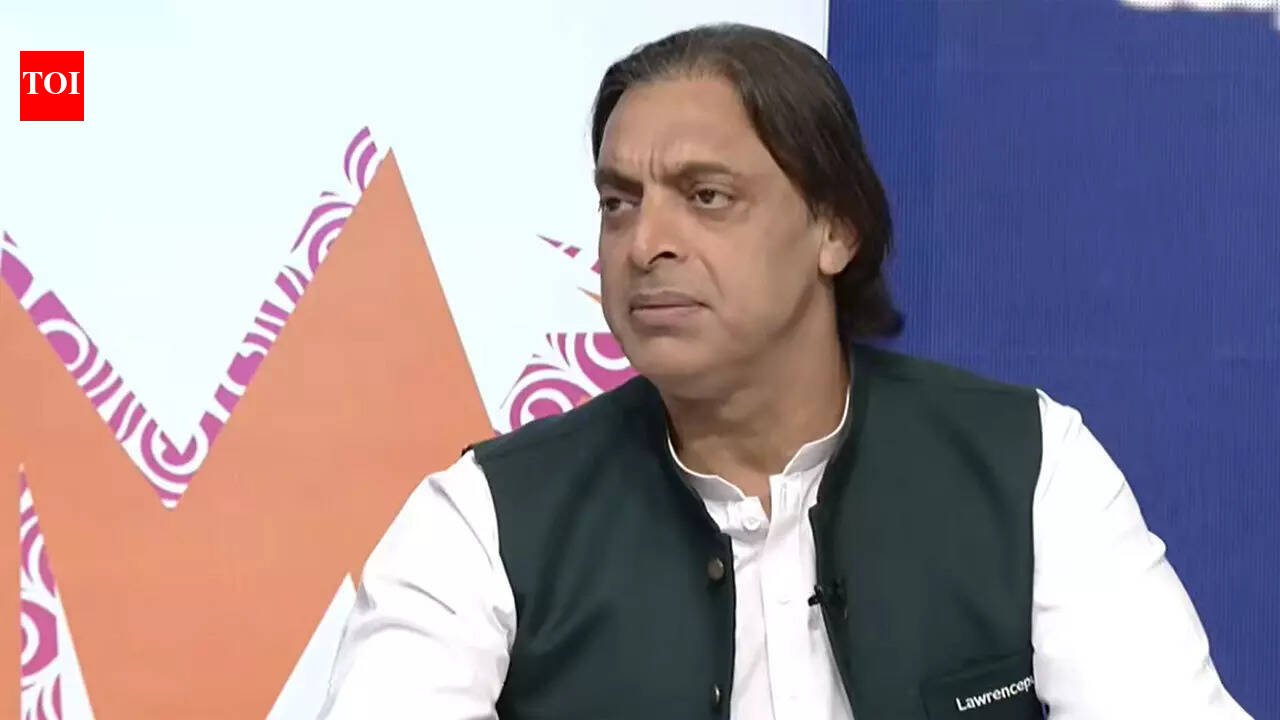
From ‘if India get knocked out’ to ‘Salman is not captaincy material’: Shoaib Akhtar’s meltdown after Pakistan loss goes viral | Cricket News


From ‘if India get knocked out’ to ‘Salman is not captaincy material’: Shoaib Akhtar’s meltdown after Pakistan loss goes viral
Shoaib Akhtar (Video grab)

Former Pakistan speedster Shoaib Akhtar unleashed a furious on-air rant after Pakistan’s heartbreaking defeat to England in the T20 World Cup Super 8s, questioning captain Salman Ali Agha’s leadership and lamenting his team’s fading semi-final hopes.Go Beyond The Boundary with our YouTube channel. SUBSCRIBE NOW!Even before the match, Akhtar had revealed his emotional investment and rivalry-fuelled hopes on the ‘Game On Hai’ show. “I just hope England play poorly so we can take the two points happily,” he had said. “Our joy will know no bounds if India get knocked out and we make it to the semi-finals.”

T20 World Cup: Shaheen Shah Afridi press conference after England vs Pakistan

But those hopes were shattered in dramatic fashion in Pallekele as England pulled off a tense chase of 166, powered by captain Harry Brook’s stunning 100 off 51 balls — the first century by a captain in T20 World Cup history.Pakistan had England in trouble at 58/4, but Brook’s composure and key partnerships turned the match on its head, sealing England’s semi-final spot and leaving Pakistan’s campaign hanging by a thread.The defeat triggered an emotional meltdown from Akhtar, who openly questioned Salman’s credentials.In a viral reaction, Akhtar suggested Salman was “not captaincy material,” a remarkable U-turn given he had earlier supported the Pakistan Cricket Board’s decision to appoint him.Pakistan’s situation is now precarious. Following the loss and an earlier washout against New Zealand, their semi-final fate is no longer in their own hands. They must beat Sri Lanka and hope other results go their way.Two wins for New Zealand would eliminate Pakistan outright, while other combinations could bring net run rate into play.


Source link

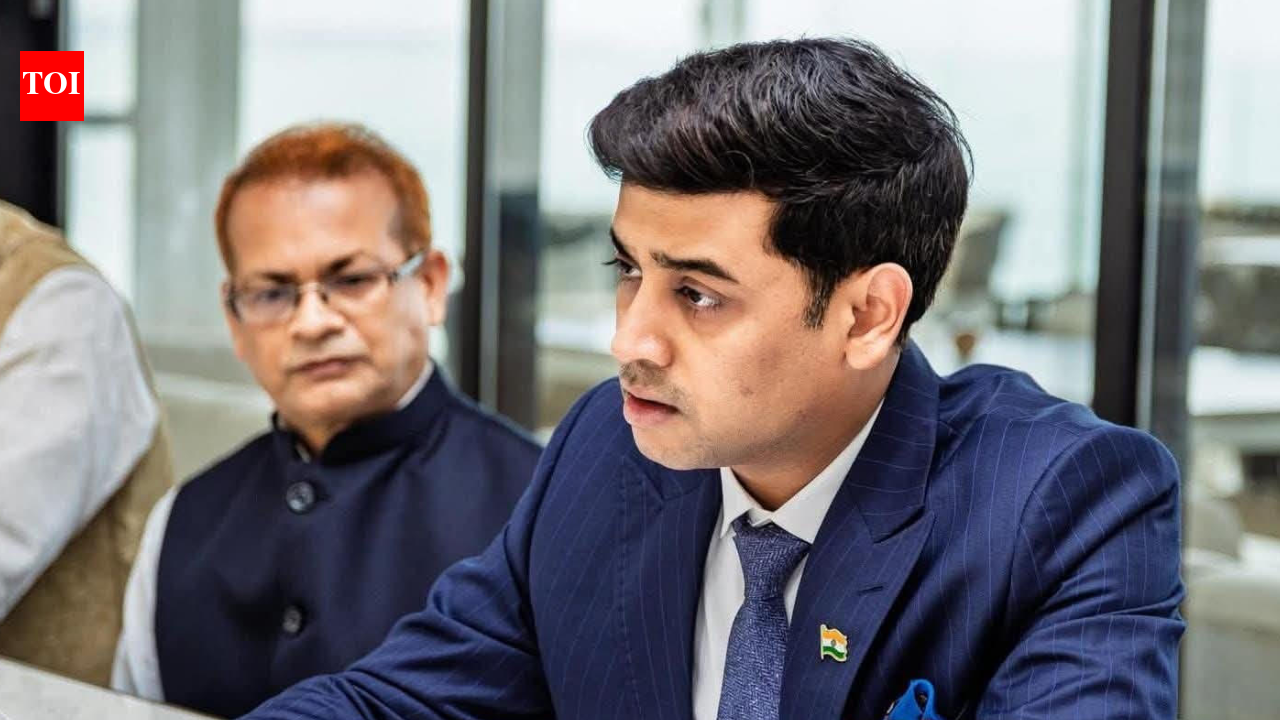
Shrikant Shinde: Shiv Sena MP Shrikant Shinde becomes youngest to lead India–Indonesia Parliamentary Friendship Group | Thane News


KALYAN: Shiv Sena MP Shrikant Shinde from the Kalyan Lok Sabha constituency has been appointed president of the India–Indonesia Parliamentary Friendship Group, becoming the youngest Member of Parliament currently chosen to lead one of the parliamentary friendship platforms.At 39, Shinde — a three-term Lok Sabha member from Maharashtra — also serves as the Shiv Sena’s group leader in Parliament. His nomination is seen as a significant boost to India’s parliamentary outreach efforts aimed at strengthening ties with partner nations.Reacting to his appointment, Shinde described the move as a “moment of pride” for his party and the people of Maharashtra. In a post on X, he noted that Parliamentary Friendship Groups act as vital channels for advancing India’s diplomatic engagement while promoting democratic exchanges and people-to-people connections. He said he looks forward to working with colleagues across party lines to deepen cooperation between India and Indonesia in cultural, economic, and social spheres.The India–Indonesia group comprises 10 MPs from multiple parties, including Trinamool Congress MP Sagarika Ghose.This is the second time Shinde has been selected to lead an international parliamentary delegation. Previously, he headed an all-party delegation formed after Operation Sindoor. During that outreach in May 2025, the delegation visited the United Arab Emirates, Sierra Leone, Liberia, and the Democratic Republic of the Congo, where members articulated India’s position on key strategic and diplomatic issues.Shrikant Shinde is the son of Maharashtra Deputy Chief Minister Eknath Shinde.

‘BJP Won By Betrayal’: Uddhav Thackeray’s First Reaction On Mumbai Civic Poll Results

Banner Insert


Source link

BMC budget: Rs 4,248 crore earmarked for education; NCC units, 20,000 tablets, CBSE school, AI lab on cards | Mumbai News


Mumbai’s civic body plans a significant education budget increase for 2026-27

MUMBAI: The Brihanmumbai Municipal Corporation (BMC) has proposed an education outlay of Rs 4,248.08 crore for 2026-27, a 7.4% increase over last year’s budget estimate of Rs 3,955.64 crore. The allocation includes a slew of initiatives ranging from National Cadet Corps (NCC) units in schools to digital classrooms, English language labs and a new CBSE school.Under the plan, NCC squads will be introduced for students of standards VIII and IX in BMC schools. Special coaching classes will be organised for students appearing for government drawing grade examinations, and three art excellence centres — one each in south Mumbai (city), eastern suburbs and western suburbs — will offer specialised training.A new CBSE board school under the Mumbai Public School model will be set up at Kondivita in K-East ward in the coming academic year. Rajshree Shirwadkar, newly elected chairperson of the BMC education committee, said, “Students and parents have responded very well to ICSE and CBSE boards. The IB board has seen a relatively muted response because of its different curriculum. That is why we have introduced another CBSE school.The civic body will distribute 20,000 tablets to Std IX students and digitise 7,953 classrooms across 1,203 schools with LED interactive panels. As many as 479 English language labs for Std VIII to X students are being set up at a cost of Rs 3.87 crore. Science laboratories in 190 schools will be upgraded, while a science park will be launched on a pilot basis in two schools at Rs 5 crore.After 55 schools set up astronomical laboratories last year, 40 more have been added this year at a cost of Rs 3 crore. The Scout Guide Camp at Filterpada in Goregaon will be upgraded with better facilities.Infrastructure works including repairs, reconstruction and new construction in 72 schools will be undertaken at Rs 340 crore. CCTV cameras will be installed in all suburban division school buildings at Rs 42 crore, after city division schools were covered last year. Contracts for maintenance, cleaning and security of 469 school buildings will be awarded at Rs 180 crore.The BMC’s 19 public libraries will receive Rs 39 lakh, while the Asiatic Society of Mumbai has been granted Rs 75 lakh. Libraries will be upgraded with competitive exam material and improved facilities. Musical instruments including harmonium, tabla, dholki, tarpora, keyboard, flute, manjira, cymbals, conga and dholak will also be procured for schools.The civic body will continue its free bus travel scheme for students in uniform through Brihanmumbai Electric Supply and Transport (BEST). Last year, 9,627 students availed of the service.Shirwadkar said the budget was prepared entirely by the administration before the new corporators took charge. “Setting up an artificial intelligence lab is a passion project, and I will try to see it through. One of my key priorities is to stop the shutting down of Marathi schools, which is possible only if we increase enrolment in Marathi medium schools,” she said.


Source link

Axar Patel snub raises questions: Why was Washington Sundar picked ahead of India vice-captain? | Cricket News


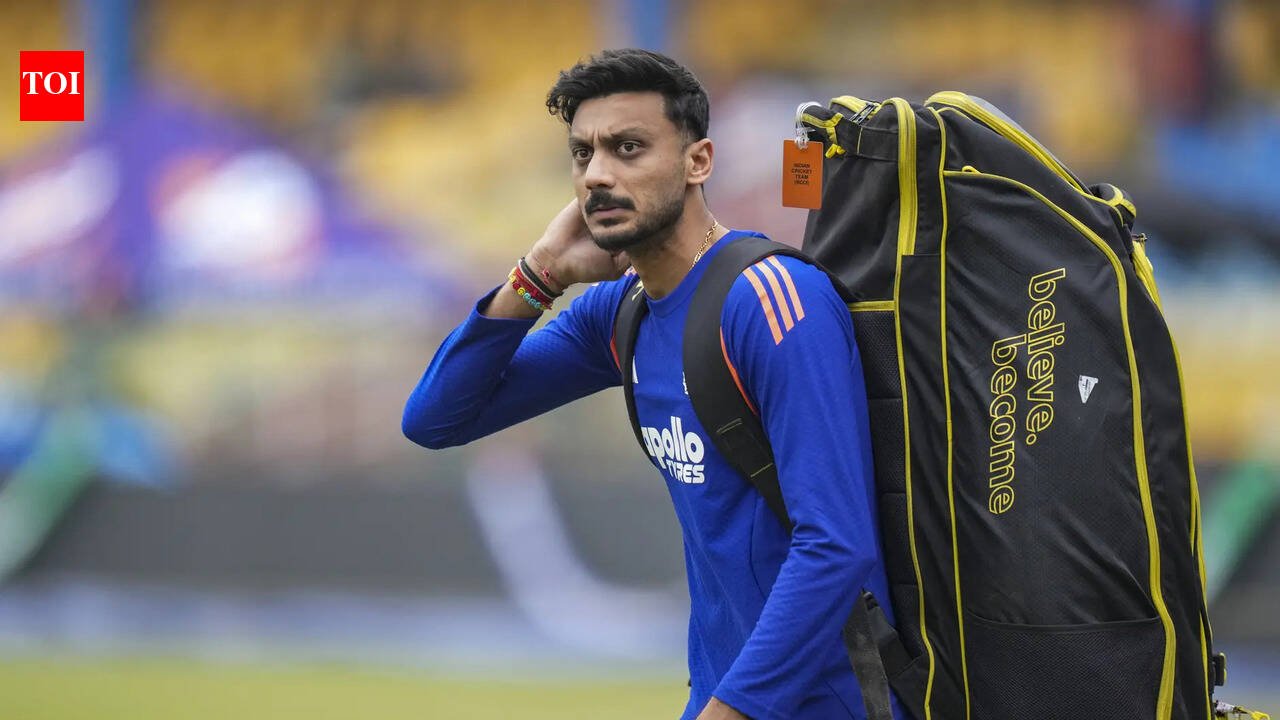
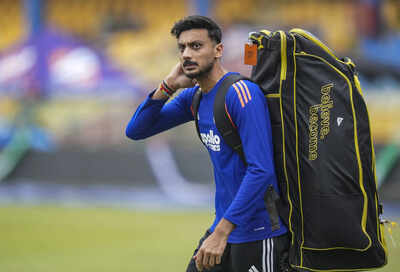
Axar Patel during a practice session. (PTI Photo)

AHMEDABAD: The Indian team management likes to put the team above the player. Be it Shubman Gill’s ascension as ODI captain over Rohit Sharma or his eventual axing from the T20 World Cup team despite being the vice-captain, it was all branded as an endeavour to wipe out the team’s ‘superstar culture’ and put the team’s needs first.Go Beyond The Boundary with our YouTube channel. SUBSCRIBE NOW!That very line of thinking underlined the call to bench Axar Patel, India’s designated vice-captain for the T20 World Cup, and play Washington Sundar in his place for the Super 8 match against South Africa.Axar’s surge as an international cricketer started when he resurrected India’s innings while batting at No. 5 in the last edition’s final against the same opposition. Yet, the team management went by match-ups and brought in Sundar, who recovered from a rib fracture barely 12 days ago.

T20 World Cup: Ryan ten Doeschate press conference after India’s loss against South Africa

“I don’t think it’s as straightforward as that,” was all assistant coach Ryan ten Doeschate could say about the treatment meted out to the vice-captains.Meanwhile, batting coach Sitanshu Kotak said, “Axar has played so much cricket that his confidence won’t be dented because of this move. As I said, coach and captain must have clearly told him why they took such a call.”It’s perplexing why Washington’s off-spin was perceived to be more potent against the three left-handers in South Africa’s batting order.

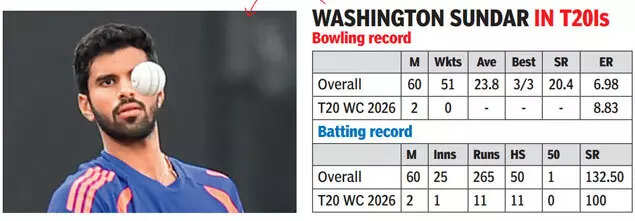
Washington Sundar

“We were kind of looking at match-ups more in the middle order. In hindsight it looks like the right decision (to play Axar), but at the time we felt we needed Rinku as an eighth batter,” Doeschate said. “Axar only occasionally bowls in the Powerplay but we felt that we have got Washy to a point where he’s found a way of being effective there,” he added.“Now both De Kock and Ricketon were dismissed by Bumrah and hence Washy wasn’t required to bowl more than two overs (in the game). The actual plan was to bowl Washy inside the Powerplay but that, you know, can change as per match situation,” Kotak said.Interestingly, Washington was bowled for just two overs even when Miller was going strong.

Axar Patel

Scratch the surface and it will emerge that Axar has a good record bowling his flattish left-arm spin against left-handers. Interestingly, Washington was not even considered for the Asia Cup on spin-friendly pitches in UAE last Sept. That South Africa stuck with their experienced left-arm spinner Keshav Maharaj against six powerful left-handed Indian batters shows up the error in the Indian team management’s thought process.The bowling match-ups aside, Doeschate offered a vague response to a query on why Washington was sent at No. 5 with a career average of 16 and strike-rate of 130 while the asking rate had shot above 10 runs per over. “Had Axar played, we would have used him at that position because we try to extend our power hitting,” Doeschate said. Doeschate insisted there was no panic in the camp. However, as India enter the business end of the tournament, there needs to be more clarity.


Source link

SL vs NZ, T20 World Cup 2026: R. Premadasa Stadium Pitch Report, T20I Stats and Records


All eyes turn to Colombo’s R. Premadasa Stadium on Wednesday (February 25) as the ICC Men’s T20 World Cup 2026 co-hosts Sri Lanka lock horns with New Zealand in a must-win Super 8 clash. With semifinal spots on the line, this contest feels less like a league game and more like a knockout. The venue’s tendency to assist spinners as the game progresses could play a huge role in shaping the outcome.

Sri Lanka arrive under pressure after a crushing defeat to England, where their batting line-up collapsed for just 95. The loss exposed vulnerabilities, particularly against disciplined bowling, and left them with no margin for error. To stay alive in the tournament, they must win their remaining matches.

New Zealand’s campaign, meanwhile, has been stalled rather than shaken. Their fixture against Pakistan was washed out, denying them a chance to build momentum. With only shared points to show so far, Mitchell Santner’s side knows another setback could seriously dent their hopes of reaching the semifinals.

R. Premadasa Stadium Pitch Report

The R. Premadasa Stadium has built a reputation for offering T20I pitches that keep both batters and bowlers in the game. Early on, the surface is usually good for stroke-making. The ball comes nicely onto the bat, allowing confident players to play their shots freely and score at a brisk pace. If batters settle in and time the ball well, the powerplay overs can be especially productive.

But as the match wears on, the character of the pitch begins to change. The surface tends to slow down, and that’s when spinners start to come into the contest. The ball grips a bit more, making big hitting tougher and forcing batters to rely on placement rather than pure power. Under lights, chasing can become challenging, as the pitch offers extra assistance to bowlers who vary their pace and use side-spin cleverly. It’s a venue where adapting quickly often makes all the difference.

Also READ: From Mayanti Langer, Laura McGoldrick to Grace Hayden – Complete list of presenters for T20 World Cup 2026

R. Premadasa Stadium T20I Stats and Records

  • Matches played: 64
  • Matches won batting first: 27
  • Matches won bowling first: 36
  • Average 1st innings score: 144
  • Average 2nd innings Score: 129
  • Highest total recorded: 215/5 (19.4 Overs) by Bangladesh vs Sri Lanka
  • Lowest total recorded: 80/10 (17.2 Overs) by Afghanistan vs England
  • Highest score chased: 215/5 (19.4 Overs) by Bangladesh vs Sri Lanka
  • Lowest score defended: 115/6 (20 Overs) by South Africa vs Sri Lanka

Also READ: Fans go gaga after Harry Brook’s historic ton sends England into T20 World Cup 2026 semifinal as Pakistan collapse in thriller


Source link

Access Denied


Access Denied

You don’t have permission to access “http://www.ndtv.com/world-news/luxury-car-maker-aston-martin-to-cut-20-of-staff-after-trump-tariffs-11133949” on this server.

Reference #18.c7f5d217.1772009180.2d751033

https://errors.edgesuite.net/18.c7f5d217.1772009180.2d751033


Source link