Breaking News
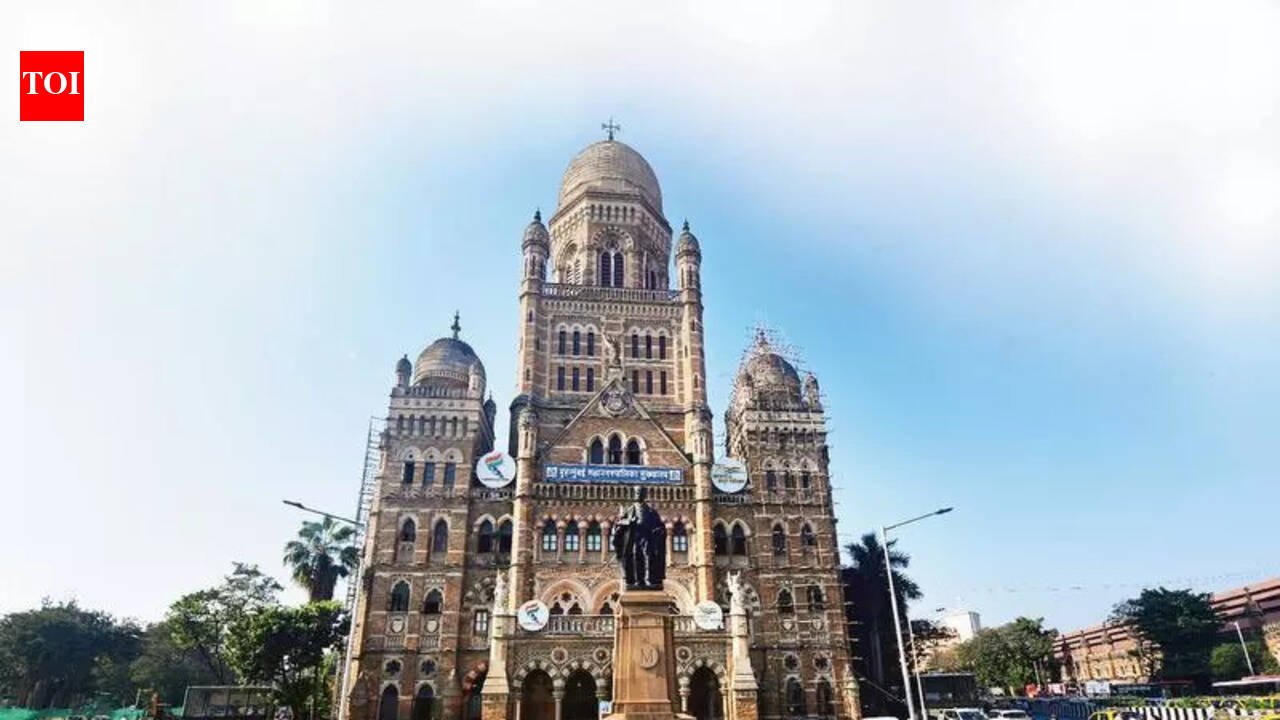
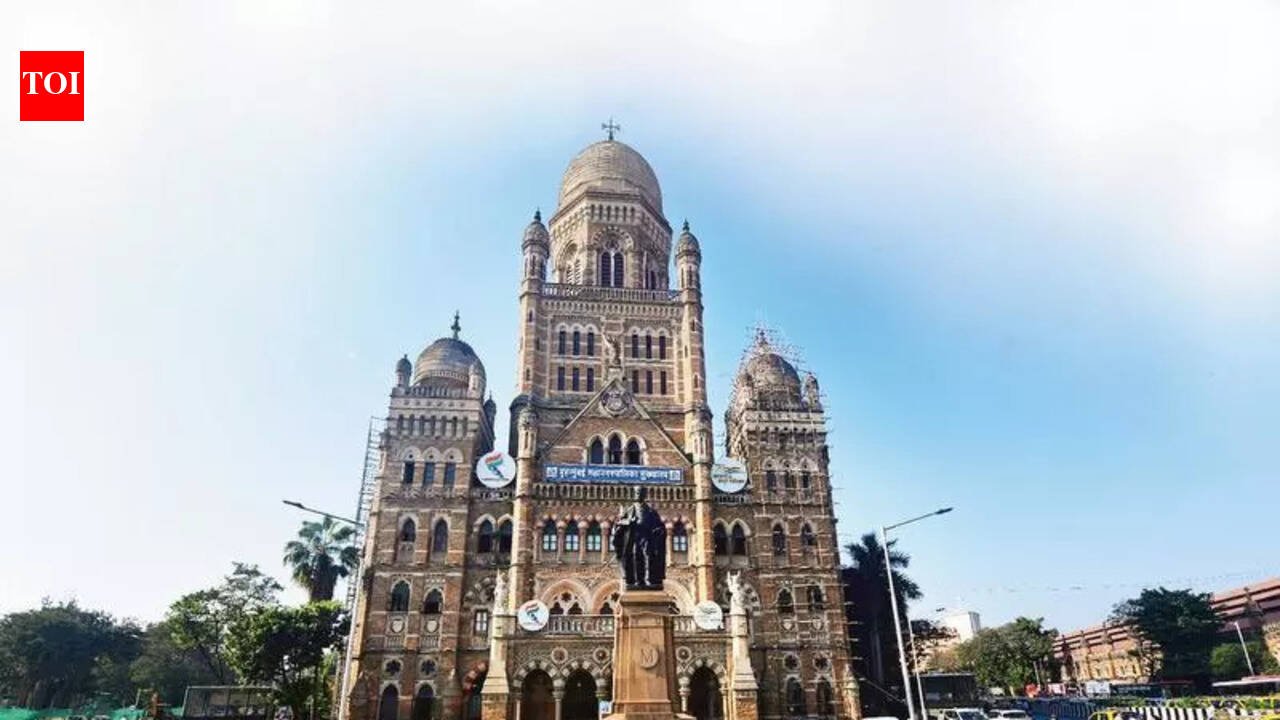
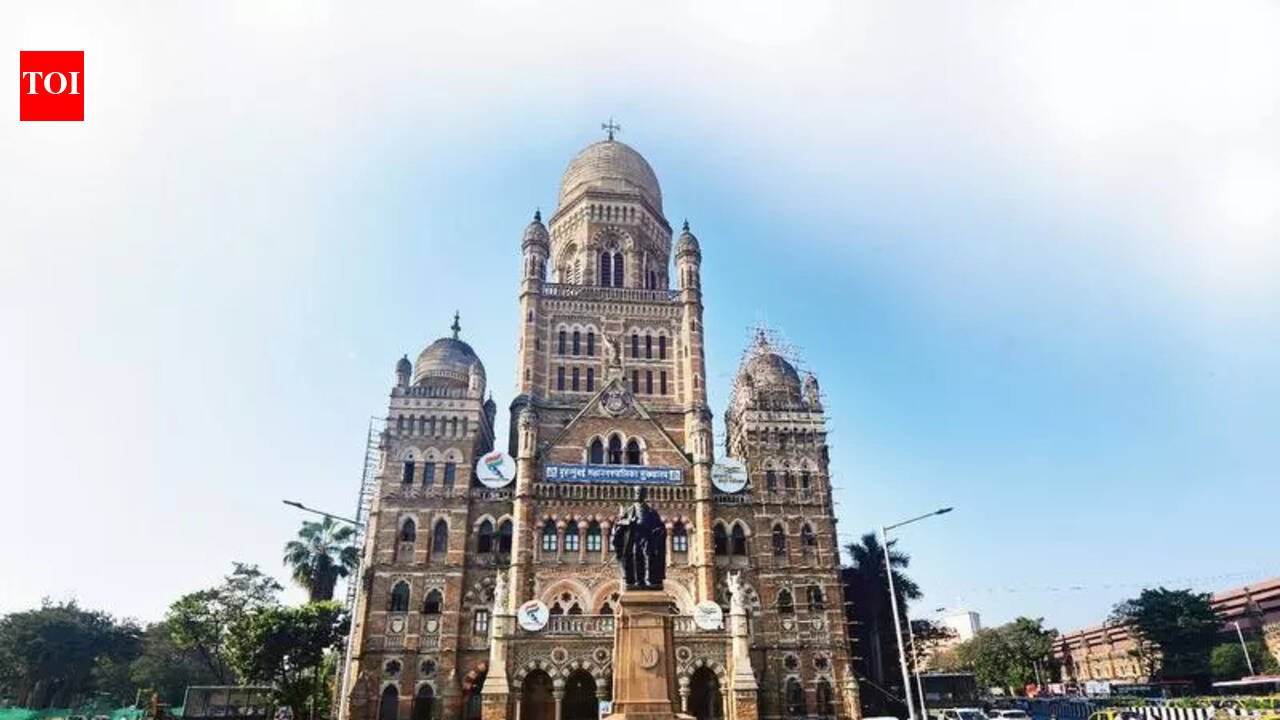
BMC budget 2026-27: A multi-deck tunnel system proposed to ease road traffic in Mumbai | Mumbai News


Mumbai: The BMC budget has proposed a multimodal, multi-deck underground tunnel connectivity project to tackle traffic congestion. The system will be designed to carry vehicular traffic on one level, and utilities and drainage systems on another. The drainage system will also serve in flood mitigation during heavy rainfall.“Underground tunnel-based connectivity will be constructed at traffic choke points to relieve congestion. As constructing tunnels is an expensive affair, we need to use them for other purposes too. In case of the Goregaon-Mulund Link Road (GMLR), we have a water pipeline under the tunnel. So, on similar lines, we intend to have utilities under the tunnel used for transport. Several countries like Singapore have multimodal or multi-utility tunnels, for transport and draining rainwater, etc. We have not identified the locations; the project management consultant will do it for us,” said a civic official. The estimated tunnel cost per km is Rs 732 crore. The work order has been issued to the consultant for a feasibility study, master plan and DPR, bid process management and supervise construction. tnn


Source link

T20 World Cup 2026: Salman Agha’s wife hits back at trolls for targeting their child after Pakistan’s Super 8 loss to England


In the high-stakes arena of international cricket, the boundary between professional critique and personal harassment often becomes dangerously blurred. Following Pakistan’s narrow two-wicket defeat to England in the Super 8 stage of the ICC Men’s T20 World Cup 2026, the spotlight shifted from the pitch at Pallekele to a more distressing scene on social media. Sabba Manzer, the wife of Pakistan captain Salman Ali Agha, took a courageous stand against online trolls after they targeted her and her young son with a barrage of abusive messages.

Salman Agha’s wife Sabba Manzerr calls out online trolls targeting her family via social media post

As the dust settled on a pulsating encounter that saw England’s Harry Brook snatch victory with a masterclass century, the digital fallout for the Pakistani leadership was swift and severe. Agha, who took over the T20 captaincy in late 2024 following the dismissal of Mohammad Rizwan, became the primary target for frustrated fans. However, the vitriol quickly spilled over to his family, prompting his wife, Sabba Manzer, to break her silence.

Taking to Instagram, Manzer shared a powerful message that cut through the toxicity: “Sending me or my innocent son abuse is not going to win you the World Cup, Pakistani fans.” Her statement highlighted a growing and disturbing trend in South Asian cricket culture where families, who have no hand in the team’s on-field execution, are subjected to harassment during periods of sporting failure.

(Image source: Instagram)

The backlash comes at a time when Agha’s leadership is under intense scrutiny. Having already seen the likes of Babar Azam and Shaheen Afridi lose their captaincy roles due to inconsistent results, Agha is now facing the same pressure. The targeting of his child, however, has drawn widespread condemnation from the cricketing community, shifting the conversation from tactical errors to the moral conduct of the “Green Shirts” faithful.

Also WATCH: Mohammad Hafeez humbles Saqlain Mushtaq in a fiery exchange after Pakistan’s T20 World Cup Super 8 defeat to England

Pakistan’s T20 World Cup campaign teeters on the brink

The loss to England has left the 2009 champions in a precarious position. Pakistan’s journey in the Super 8s has been hampered by inconsistency and a stroke of bad luck; after a rain-affected washout against New Zealand, they now sit with just one point from two matches. The road to the semi-finals is no longer in their own hands, and the mathematical miracles that often define Pakistan’s tournament history are once again their only hope.

To advance, Agha’s men must secure a commanding victory against Sri Lanka in their final fixture on February 28. Even then, they require England to defeat New Zealand and hope that other results in Group 2 keep their Net Run Rate (NRR) competitive. Despite the bleak outlook, Agha remains defiant. “Cricket is a fun game; anything is possible. There is always hope, and as a team, we will always keep believing,” the skipper noted post-match.

This struggle follows a disappointing pattern for Pakistan, who failed to reach the knockout stages in the 2024 T20 World Cup and the 2025 Champions Trophy. As the team prepares for their do-or-die clash in Colombo, the focus remains on whether they can channel the external pressure into on-field performance or if another early exit will trigger a total overhaul of the squad.

Also READ: Pakistan’s T20 World Cup 2026 semi-final qualification scenario after falling to England in Super 8


Source link

Sawantwadi-Dodamarg Wildlife Corridor: Ecologically sensitive area around Sawantwadi-Dodamarg wildlife corridor set at 212 sq km | Mumbai News


Mumbai: The ecologically sensitive area (ESA) around the Sawantwadi-Dodamarg wildlife corridor has been set at 212.59 sq km spread over 25 villages in Sindhdurg district.The Union Ministry of Environment Forest and Climate Change (MoEFCC) issued the final notification on Tuesday. The draft notification had been issued in March last year.

India: PM Modi’s Israel Visit, Chennai Indigo Chaos, Yogi In Tokyo On Security & Investment And More

In a PIL filed by NGOs Vanashakti and Awaaz Foundation the Bombay High Court had directed the Centre to declare the wildlife corridor as an ESA for the protection and conservation of the entire ecosystem including wildlife and its corridors. The wildlife corridor is part of the Western Ghats, a biodiversity hot spot. The corridor has dense tropical and semi-evergreen forests, facilitates essential wildlife movement between protected areas and maintains healthy, viable populations of threatened or endemic species, states the gazette notification. Major fauna include tiger, leopard, elephant and Bonnet macaque.


Source link

Bmc Budget 2026-27: BMC budget 2026-27: Provision for environment & climate dept more than doubled to 160cr | Mumbai News


Mumbai: A provision of about Rs 160 crore for the environment and climate change department in the BMC budget for 2026-27 is more than double that of about Rs 76 crore made in the revised estimates for 2025-26. The BMC said it aims to leverage climate budgeting as a governance system, to allocate resources to climate-relevant measures and projects on an annual basis.

India: PM Modi’s Israel Visit, Chennai Indigo Chaos, Yogi In Tokyo On Security & Investment And More

This would enable the integration of climate priorities into the city’s planning and budgeting cycles.As part of its efforts to improve the city’s air quality, the BMC has deployed advanced electric sweepers and mechanical power sweepers designed to capture Particulate Matter, specifically PM2.5 and PM10, supported by litter-picker machines. Washing of major roads is carried out to maintain cleanliness in high-footfall areas. Besides, the BMC has also deployed misting machines in each ward.It is also implementing the MANAS (Mumbai Air Network for Advanced Sciences) project in association with IIT-Kanpur, where a network of 75 low-cost sensors is being installed, operated and maintained by IIT Kanpur, across Mumbai. The project work, which is in progress, is intended to help the BMC identify air pollution hotspots through hyperlocal monitoring.


Source link

‘Can’t let craziest regime to have nuclear weapons’: JD Vance ahead of US-Iran talks in Geneva


'Can’t let craziest regime to have nuclear weapons': JD Vance ahead of US-Iran talks in Geneva

US Vice President JD Vance on Wednesday said, “You can’t let the craziest and the worst regime in the world have nuclear weapons,” asserting that the Trump administration is determined to stop Iran from acquiring nuclear capability while maintaining that President Donald Trump still prefers a diplomatic solution.In an interview with Fox News, Vance said President Donald Trump was seeking a diplomatic resolution even as negotiations with Tehran continue.

Iran Carries Out Mock Attack On America’s Al Dhafra Air Base In UAE Amid Nuclear Tensions

“And it’s very simple. I think most Americans understand that you can’t let the craziest and worst regime in the world have nuclear weapons. That’s what the president is accomplishing. That’s what the president has set as our goal. He’s going to try to accomplish it diplomatically. But as we all know, Bill, the president has a number of other tools at his disposal to ensure this doesn’t happen. He’s shown a willingness to use them, and I hope the Iranians take it seriously in their negotiations tomorrow, because that’s certainly what the president prefers.Vance also said, “We have to get to a position where Iran, the largest state sponsor of terrorism in the world, cannot threaten the world with nuclear terrorism.”He added separately, “You can’t let the craziest and the worst regime in the world have nuclear weapons.”His remarks come days after he said Iran had not yet accepted all of Trump’s “red lines” following a second round of talks in Geneva, Switzerland. At the time, Vance said the discussions had produced mixed results, noting that while both sides agreed to continue talks, Tehran was not prepared to acknowledge key US demands.The negotiations, mediated by Oman, are aimed at averting potential US military action over Iran’s nuclear programme. Iranian foreign minister Abbas Araghchi said after the Geneva meeting that Tehran and Washington had reached agreement on “guiding principles” for a possible deal, though he cautioned that narrowing differences would take time.For years, Iran has sought relief from sweeping US sanctions, including restrictions on its oil exports, as part of any broader agreement with Washington.


Source link

T20 World Cup: Mitchell Santner and Rachin Ravindra dismantle Sri Lanka, keep New Zealand in the hunt for semis | Cricket News


T20 World Cup: Mitchell Santner and Rachin Ravindra dismantle Sri Lanka, keep New Zealand in the hunt for semis
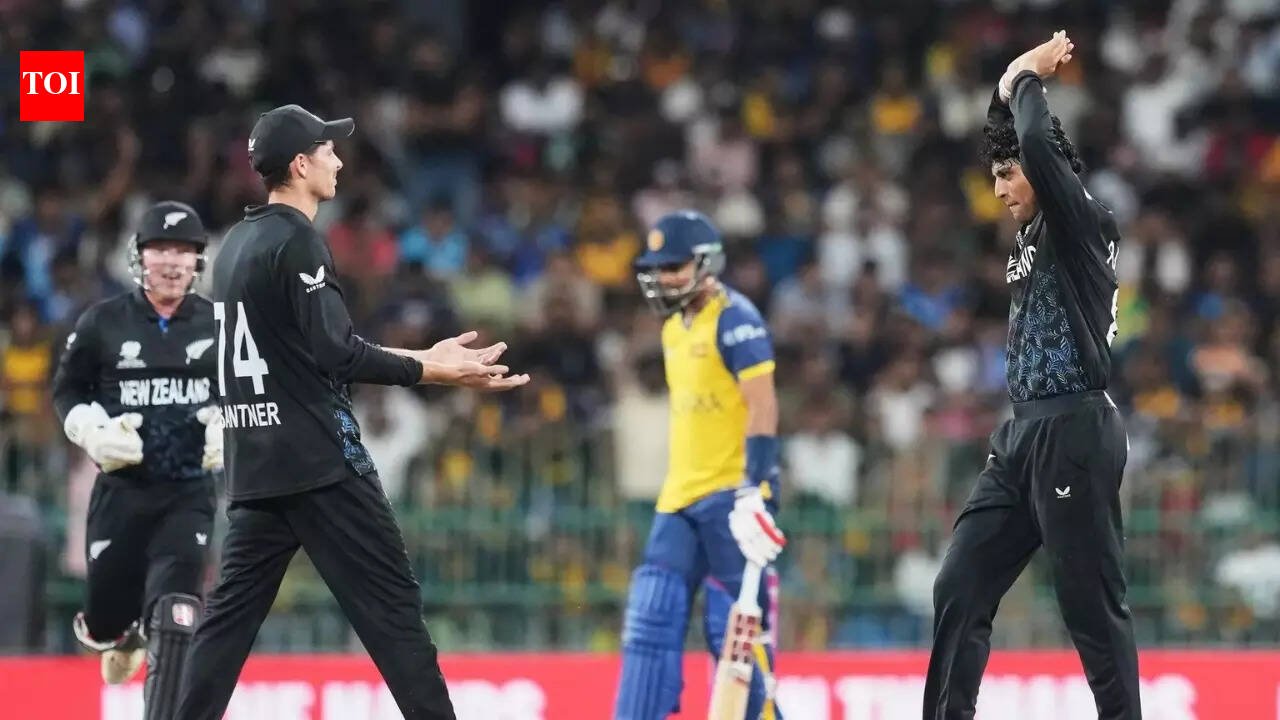
New Zealand’s Rachin Ravindra, right, celebrates with teammates the wicket of Sri Lanka’s captain Dasun Shanaka, centre, during the T20 World Cup cricket match between Sri Lanka and New Zealand in Colombo, Sri Lanka, Wednesday, Feb. 25, 2026. (AP Photo)

TimesofIndia.com in Colombo: New Zealand kept their T20 World Cup campaign alive with a commanding 61-run win over Sri Lanka at the R Premadasa Stadium in Colombo on Wednesday, a result shaped by composure under pressure with the bat, clinical precision with the ball, and an atmosphere driven relentlessly by Sri Lankan fans who refused to drift away even as the contest slipped beyond their team.Long after the outcome appeared inevitable, the stands remained full, the drums kept beating and the trumpets echoed through the Colombo night. Every boundary was still applauded, every piece of good fielding acknowledged. Wins or losses have never defined Sri Lankan fandom, and even as their World Cup campaign came to an end, the loyalty did not waver. Covering a Sri Lanka match is rarely just about cricket. It feels like a festival, and on this night, the celebration continued despite the pain.

T20 World Cup: Sitanshu Kotak press conference before India vs Zimbabwe

Santner, McConchie turn the innings

Earlier, put in to bat on a surface that offered grip and variable bounce, the visitors began with intent. Finn Allen counterpunched sharply against Dilshan Madushanka, taking on the movement with instinctive aggression. But as quickly as the tempo rose, it dipped. Allen’s dismissal triggered a brief wobble, Tim Seifert followed soon after, and Sri Lanka sensed an opening.Rachin Ravindra brought fluency through the middle overs, rotating strike and finding the occasional boundary, but the introduction of spin shifted the balance decisively. Maheesh Theekshana, operating with subtle changes of pace and trajectory, strangled New Zealand’s scoring options. Ravindra fell attempting a cut hit too flat, Mark Chapman was undone by turn and bounce, and Daryl Mitchell was beaten by skid rather than spin. From a position of comfort at 75 for 2, New Zealand slid to 84 for 6 in the space of nine deliveries.It was here that Mitchell Santner and Cole McConchie stepped in to rescue the innings. The approach was uncomplicated and clear-headed. Survival came first. Boundaries were not chased, singles were valued and dot balls were absorbed without panic. McConchie, playing his first major role of the tournament, broke a 33-ball boundary drought late in the 16th over with a crisp strike through the infield. The release was immediate. Santner followed by reading length early and targeting the shorter leg side boundary with authority. The momentum swing was sudden and decisive. Santner went after Theekshana, who had been Sri Lanka’s most economical bowler until then, muscling slog sweeps and punishing full tosses. McConchie matched him stroke for stroke, using clever bat angles and strong bottom-hand hits to exploit gaps behind square.What had begun as a recovery turned into a late surge. In the final four overs, the seventh-wicket pair plundered 70 runs, transforming New Zealand’s total from fragile to formidable. Santner’s 47 from 26 balls anchored the charge, while McConchie’s unbeaten 31 ensured there was no late collapse. Together, they added 84 in 47 deliveries and lifted New Zealand to a competitive 168 for 7.

Henry sets up the defence

In reply, Sri Lanka’s chase never truly found its feet and was disrupted from the first ball. Matt Henry bowled Pathum Nissanka with a delivery that jagged back to hit middle stump. It was a classic seam bowler’s dismissal and a psychological blow that stunned a full house.Henry followed it up with a wicket maiden and then struck again with the first ball of his second over, removing Charith Asalanka. Two overs, two wickets and just three runs conceded summed up his impact. Sri Lanka limped to 20 for 2 at the end of the powerplay, their lowest such total in the tournament, and the uphill climb became steeper with every over.The squeeze never eased. Lockie Ferguson’s pace added urgency without sacrificing control, while Santner and Ish Sodhi closed down scoring options from either end. The fielding mirrored the bowling intensity, with sharp catching and athletic work inside the ring ensuring Sri Lanka were forced to take risks rather than accumulate.The decisive blow came through Rachin Ravindra, whose left-arm spin turned pressure into collapse. Varying his pace and width cleverly, Ravindra lured batters out of their crease and allowed Tim Seifert to shine behind the stumps. Kusal Mendis and Pavan Rathnayake were both stumped, beaten by flight, drift and turn. Ravindra struck again when Dasun Shanaka top-edged a cut, and completed his four-wicket haul by dismissing Dushan Hemantha. His figures of 4 for 27 reflected not just wickets, but an ability to sense panic and exploit it ruthlessly.Kamindu Mendis offered brief resistance, but wickets continued to fall at regular intervals. Glenn Phillips and Daryl Mitchell ensured chances were taken, Santner chipped in to close out the innings and Sri Lanka were eventually bowled out for 107.For New Zealand, the victory does more than end Sri Lanka’s campaign. It keeps their own semifinal hopes alive in a tightly contested Super Eight phase. Their blueprint is now clear. Strike early with the new ball, suffocate through the middle overs and trust the depth in their batting to recover from adversity.For Sri Lanka, the tournament ends with disappointment, but also with a reminder of what remains unbreakable. Even as the final wickets fell, the crowd stayed. The band played on, the trumpets rang out and the applause continued. The result belonged to New Zealand, but the night, as always in Colombo, belonged to the fans.Brief Scores New Zealand: 168/7 in 20 overs (Mitchell Santner 47, Cole McConchie 31 not out; Maheesh Theekshana 3/30, Dushmantha Chameera 3/38)Sri Lanka: 107/8 in 20 overs (Kamindu Mendis 31; Rachin Ravindra 4/27, Matt Henry 2/14)



Source link

Samsung Galaxy S26 Ultra launched: Price, specifications, features and all you need to know about latest flagship ‘Agentic AI phone’


Samsung Galaxy S26 Ultra is none officially launch worldwide, including in India. The South Korean giant launched the Samsung Galaxy S26 Ultra along with Samsung Galaxy S26 and Samsung Galaxy S26+ at its Galaxy Unpacked event in San Francisco. The phone arrives as the company’s most capable flagship yet, combining an upgraded chipset, ‘intuitive Galaxy AI’ features and a first-of-its-kind built-in Privacy Display. Here is everything you need to know:

Samsung Galaxy S26 Ultra price, availability and colour options

Samsung Galaxy S26 Ultra price starts at Rs 1,39,999 for the 256GB variant, Rs 1,59,999 for the 512GB version and Rs 1,89,999 for the 1TB version. Samsung has opened pre-orders for the Galaxy S26 Ultra starting February 25. The phone will be available in four colours: Cobalt Violet, White, Black and Sky Blue. Pink Gold and Silver Shadow have been reserved exclusively for purchases made through Samsung.com. Buyers can also opt for Samsung Care+, which covers accidental damage repairs, extended warranty, and expert support both domestically and internationally, Samsung said

Samsung Galaxy S26 Ultra specifications

The Samsung Galaxy S26 Ultra is the first mobile phone in the world to feature a built-in Privacy Display – a hardware and software achievement that Samsung claims as a big change in how personal data is protected on a smartphone. This tech in the display is integrated at the pixel level, controlling how light is dispersed so that the screen remains clear and comfortable for the user while restricting visibility from side angles.Furthermore, users can decide when the feature activates — such as when entering PINs or opening specific apps — and choose between two modes: Partial Screen Privacy, which limits visibility for notification pop-ups, and Maximum Privacy Protection, which further blackens the screen from side views. The feature works in both portrait and landscape orientation with minimal impact on battery or usability, Samsung claims.Under the hood, the Samsung Galaxy S26 Ultra gets a Snapdragon 8 Elite Gen 5 SoC, which is customised specifically for Galaxy devices. According to the company, the chipset brings gains in CPU performance by 19%, NPU performance by 39% and GPU performance by 24%. To cool the phone, Samsung says it has fitted a redesigned Vapor Chamber with thermal interface material placed along the sides of the processor. Now coming to the camera, the Galaxy S26 Ultra carries a quad-camera setup: a 200MP primary sensor, a 50MP ultra-wide camera, a 50MP telephoto lens with 5x optical zoom, and a 10MP shooter. Video recording has been upgraded with Enhanced Nightography Video and Super Steady mode with a horizontal lock option. The Galaxy S26 Ultra houses a 5,000mAh battery with support for 60W wired charging – up from 45W on the Galaxy S25 Ultra – and 20W wireless charging. Samsung says that the phone also introduces Super Fast Charging 3.0, which can bring the battery to 75% in just 30 minutes.


Source link

BMC budget 2026-27: Infra to boost Mumbai’s water supply by 800 MLD in 5 years | Mumbai News


Mumbai: The BMC in its budget has stated its focus is on creating infrastructure to increase water supply in Mumbai by around 800 million litres a day (MLD) in next 4 to 5 years.To upgrade the water supply and sewerage system and meet growing needs, the BMC proposed a capital expenditure budget of Rs 16092 crore. This includes water supply (Rs 7,805 crore), sewerage treatment (Rs 5,690 crore) and sewerage project/ operation (Rs 2,569.3 crore). The objective is to improve water supply, bridge the demand-supply gap and to extend a sustainable sewerage management system. Further, to augment water supply and develop a reliable and climate-resilient source, the BMC has proposed a 200 MLD desalination project at Manori, with a provision for expansion up to 400 MLD capacity. The work has been recently awarded and preliminary activities are being taken up. The period for this work is 48 months. Mumbai’s water supply will increase by 200 MLD after completion of Phase I.A provision of Rs 500 crore has been proposed in the 2026-27 budget for this work.


Source link

Shikhar Dhawan Ex-Wife: Delhi court directs cricketer Shikhar Dhawan’s ex-wife to return Rs 5.7cr | Delhi News


NEW DELHI: A court in Delhi has ordered the former wife of cricketer Shikhar Dhawan to return approximately Rs 5.7 crore, holding that orders passed by an Australian family court under the concept of “property settlement” are contrary to Indian law and unenforceable in India.Family court judge Devender Kumar Garg also directed that she couldn’t demand Rs 16.9 crore as awarded by the Australian court. The judge observed that the concept of “property settlement” under Family Law Act 1975 was alien to Indian matrimonial law, including Hindu Marriage Act 1955.

Delhi: Youth Congress Chief In Custody, Court Orders ₹5.7Cr Return, Indian Students’ Plight And More

The court said that under the Australian law, all properties of the husband were brought into a “marital pool” and the court might award up to 60% of total properties in India and abroad to the wife. In Dhawan’s case, the Australian court invoked Section 79 of the 1975 Act to direct payment of AU $8,12,397.50 from the sale of property. The judge noted that the former wife didn’t appear before the court. He recorded that the Australian court had directed Dhawan to pay sale proceeds of two properties in Australia under “interim property settlement”, which the cricketer claimed he hadn’t consented to. The court also held that Dhawan proved AU $82,000 was forcibly retained.


Source link

Oil market price battle: Russia and Iran offer deeper discounts to China as crude piles up at sea


Oil market price battle: Russia and Iran offer deeper discounts to China as crude piles up at sea

Russian and Iranian oil producers are reportedly offering deeper discounts to compete for the same limited pool of Chinese buyers after India pulled back from purchases. Analysts say India’s imports from Russia could fall by 40 per cent from January levels, to around 600,000 barrels a day, according to a scenario from Rystad Energy, as reported by Bloomberg.Much of the displaced crude is heading east, sparking a price war with Iranian suppliers, long favoured by China’s independent refiners, known as teapots. Russian Urals crude is reportedly selling at about $12 a barrel below ICE Brent, up from a $10 discount last month. Iranian Light crude is going for as much as $11 below the global benchmark, widening from $8–$9 in December, according to traders.

Russia Affirms India Still Buys Russian Oil, Rejects Recent US Statements

“The Chinese private refiners cannot take in much more as their capacity is likely maxed out,” said Jianan Sun, an analyst at Energy Aspects, noting that sanctioned barrels are building up in both onshore and offshore storage.China’s teapots historically act as a pressure valve, absorbing barrels shunned by others, but their capacity is limited; they account for roughly a quarter of the country’s refining capacity and are also subject to government import quotas. Major state-owned refiners, meanwhile, have traditionally avoided Iranian crude and have recently largely stayed away from Russian barrels as well.With China unable to fully absorb the displaced supply, unsold oil is piling up in Asian waters, leaving Russia and Iran scrambling. The Kremlin has already cut output, depriving it of funds for its war in Ukraine, while Iran is trying to ship as much oil as possible amid fears of a potential US strike.Data shows Russian oil deliveries to Chinese ports rose to 2.09 million barrels a day in the first 18 days of February, a roughly 20 per cent increase from January and nearly 50 per cent higher than December. By contrast, Iranian exports to China have fallen about 12 per cent from a year earlier, to roughly 1.2 million barrels a day, according to Kpler. The firm estimates nearly 48 million barrels of Iranian crude are now at sea, up from about 33 million in early February. Russian cargoes sitting in Asian waters total around 9.5 million barrels.A potential US strike on Iran could disrupt exports if oil facilities are targeted or shipments through the Strait of Hormuz are blocked. Russian barrels carry a “relatively lower level of risk” for Chinese buyers compared with Iranian crude, said Lin Ye, vice president of oil markets at consultancy Rystad Energy, citing optimism over a potential ceasefire in Ukraine.


Source link