Breaking News
IPL 2026: RCB ownership race heats up as US billionaire enters $1.8 billion bidding war


The race to acquire a majority stake in Royal Challengers Bengaluru (RCB) has officially transformed into a global bidding war, making it the most coveted asset ahead of the IPL 2026 season.

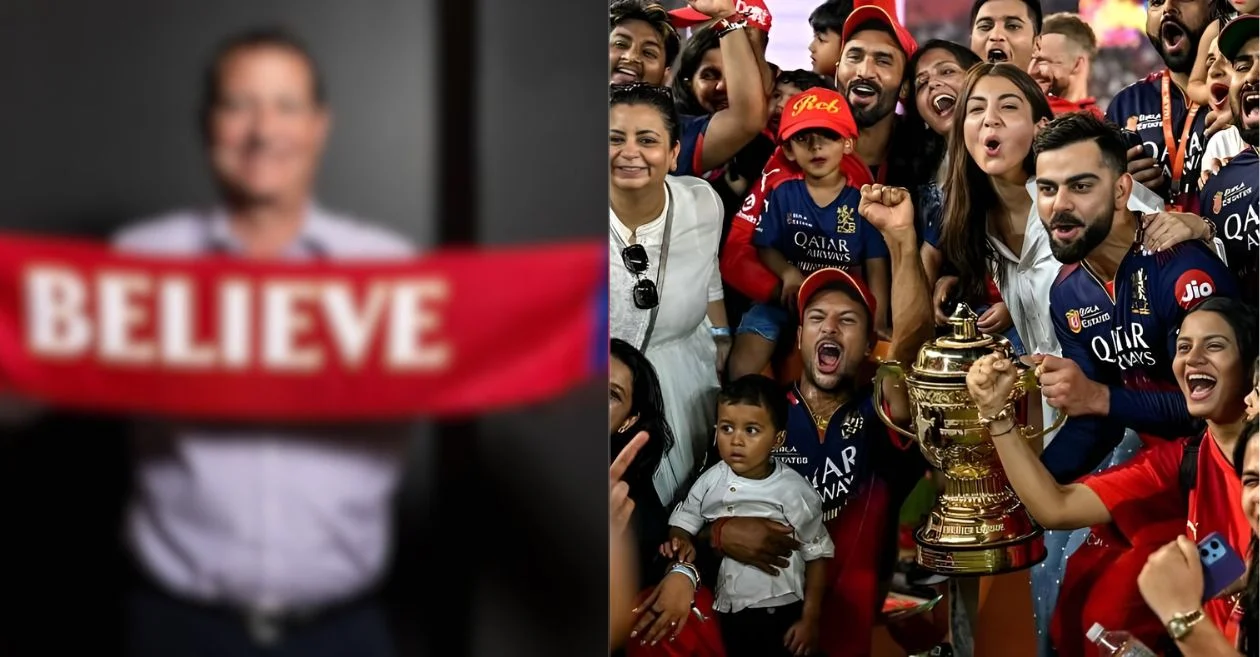
Following their historic IPL 2025 title win, RCB’s market appeal has surged to unprecedented heights, drawing intense interest from international sports moguls and local industrial titans alike. As the March 31, 2026, deadline for the sale approaches, the franchise is no longer just a cricket team, it is a billion-dollar crown jewel that has reset the financial benchmarks of the league.

IPL 2026: The $1.8 Billion valuation and the global bidding war for Royal Challengers Bengaluru (RCB)

The financial stakes for RCB have reached unprecedented levels, with current reports from Reuters and Bloomberg valuing the franchise at approximately $1.8 billion. This mammoth figure is a direct result of the team’s recent championship success and its unrivaled commercial pull, anchored by the enduring brand power of Virat Kohli.

Diageo, which controls the team through its Indian arm United Spirits, has officially moved the franchise into an ‘active sale’ phase, seeking to divest what it now labels a ‘non-core’ asset. This move has triggered a fierce bidding war, as the IPL’s overall business valuation has reportedly surged to $18.5 billion, placing it among the most lucrative sports leagues in the world.

IPL 2026: US billionaire steps into $1.8 billion RCB ownership race

As per NDTV Sports report, Adding a fresh and formidable dimension to the race, US billionaire David Blitzer has officially entered the fray. Blitzer, the co-founder of Harris Blitzer Sports & Entertainment and an executive at Blackstone Group, is conducting serious due diligence on RCB as he seeks to diversify his already massive sports portfolio, which includes the NBA’s Philadelphia 76ers and the NHL’s New Jersey Devils. His entry through his family office, BOLT Ventures, signifies a major shift toward American institutional capital in the IPL. He faces a direct challenge from fellow American Avram Glazer, the Manchester United co-chairman who has reportedly submitted a leading bid through Lancer Capital.

Also READ: IPL 2026: Are KGF and Kantara creators Hombale Films planning to buy RCB? Here’s what we know so far

Old players already in the race: Indian tycoons vs Manchester United & global moguls

While American moguls dominate the international headlines, the quest for RCB remains a matter of pride for India’s top industrialist. Adar Poonawalla, CEO of the Serum Institute of India, has been a vocal frontrunner, publicly declaring his intent to keep the franchise under Indian leadership. He is joined by other local heavyweights like Ranjan Pai of the Manipal Group and interest from the JSW and Adani Groups.

However, the strongest international threat comes from Manchester United co-owner Avram Glazer, who is reportedly willing to pay a premium to expand his sporting empire into the Indian subcontinent. With the mid-March deadline for final bids fast approaching, the battle has become a symbol of the IPL’s global prestige, pitting the “sports empire” builders of the West against the ‘home-grown’ industrial titans of India.

Also READ: IPL 2026: RCB up for sale? Here’s the full list of potential bidders looking to acquire Royal Challengers Bengaluru


Source link

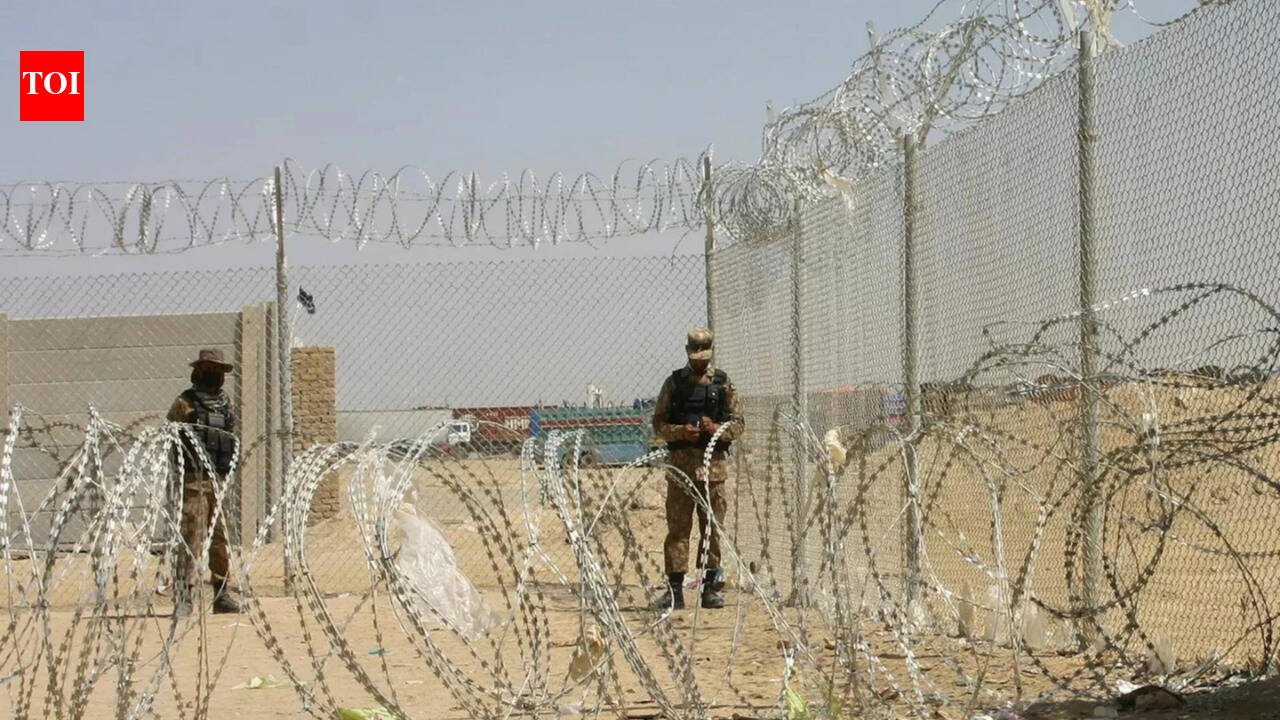
Afghanistan Pakistan Border Clashes: ‘Heavy clashes’: Afghanistan says it has launched retaliatory strikes after Pakistani air raids


Pakistan Strikes Afghanistan; Massive Civilian Casualties Reported In Overnight Air Attacks | WATCH

Afghanistan’s military authorities have said they have begun carrying out strikes against Pakistan in response to recent Pakistani airstrikes on Afghan territory.In a statement issued by the media office of a military corps in eastern Afghanistan, officials said “heavy clashes” broke out on Thursday night.

Pakistan Strikes Afghanistan; Massive Civilian Casualties Reported In Overnight Air Attacks | WATCH

The fighting, they said, was “in response to the recent airstrikes carried out by Pakistani forces in Nangarhar and Paktia” provinces, according to news agency AP.There was no immediate confirmation from Pakistan, and no details were available on casualties at the time of reporting.

Trigger: Cross-border airstrikes

The latest escalation follows Pakistani military strikes along the border with Afghanistan on Sunday. Pakistan’s military said it had killed at least 70 militants in those operations.Kabul rejected that claim, insisting that the air raids had instead killed dozens of civilians, including women and children.Afghanistan’s government spokesperson Zabihullah Mujahid said on X: “Last night, they bombed our civilian compatriots in Nangarhar and Paktika provinces, martyring and wounding dozens of people, including women and children.”Afghanistan’s defence ministry also said that “dozens of innocent civilians, including women and children, were martyred and wounded” after airstrikes hit a school and residential homes in eastern provinces.Afghan media outlet Tolo News reported that a civilian house in Behsud district of Nangarhar province was targeted, with 23 members of a family reportedly buried under rubble. The broadcaster also said the Pakistani Air Force struck a religious seminary in Bermal district of Paktika province and carried out multiple airstrikes in Khogyani district of Nangarhar.Pakistan confirmed that it had conducted cross-border strikes in Bermal and Argun districts of Paktika, as well as in Khogyani, Bahsod and Ghani Khel districts of Nangarhar since Saturday.

Pakistan cites militant targets

Islamabad said the operations were aimed at militant groups it blames for a series of recent suicide attacks inside Pakistan.Geo News, citing Pakistan’s ministry of information, reported that seven camps and hideouts of Fitna al Khwarij (a term used by Pakistan for the banned Tehreek-e-Taliban Pakistan), its affiliates and Daesh Khorasan Province were hit. The ministry described the action as carried out “with precision and accuracy” in response to suicide attacks in Islamabad, Bajaur and Bannu during Ramadan.Pakistan’s state minister for interior, Talal Chaudhry, said the country had “conclusive evidence” that recent attacks — including a suicide bombing at a Shiite mosque in Islamabad that killed 31 worshippers — were carried out by militants acting on the direction of Afghanistan-based leadership and handlers.The Pakistani government has repeatedly urged Afghanistan’s Taliban authorities to prevent militant groups from using Afghan soil to launch attacks, and has called on the international community to press Kabul to honour commitments under the Doha Agreement.

Rising tensions on both sides

The cross-border strikes came days after a suicide bomber drove an explosives-laden vehicle into a security post in Bajaur district of Khyber Pakhtunkhwa province, killing 11 soldiers and a child. Authorities later said the attacker was an Afghan national.Another suicide bombing in Bannu killed two soldiers, including a lieutenant colonel.Following those incidents, Pakistan’s military warned it would not “exercise any restraint” and would continue operations against those responsible “irrespective of their location”, signalling growing tensions between Islamabad and Kabul.Afghanistan has consistently denied allegations that armed groups are using its territory to carry out attacks against Pakistan.India also reacted to the situation. Ministry of external affairs said it “strongly condemns Pakistan’s airstrikes on Afghan territory that have resulted in civilian casualties, including women and children, during the holy month of Ramadan.”Relations between Pakistan and Afghanistan have remained strained in recent months, with earlier border clashes resulting in casualties among soldiers, civilians and suspected militants on both sides. The latest exchanges now mark one of the most serious escalations between the two neighbours in recent times.


Source link

Access Denied


Access Denied

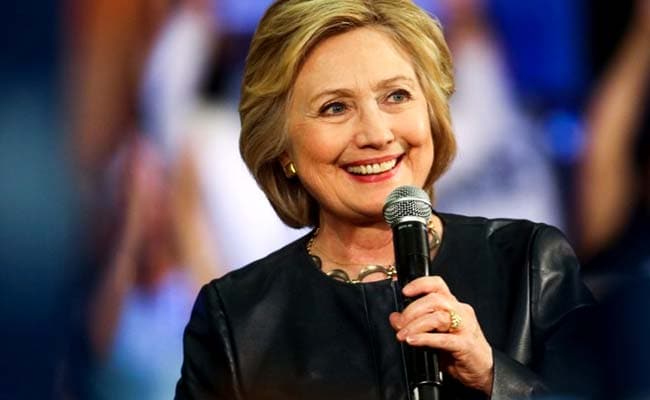
You don’t have permission to access “http://www.ndtv.com/world-news/heinous-individual-didnt-know-about-criminal-acts-hillary-clinton-on-epstein-11141729” on this server.

Reference #18.adf5d217.1772127352.1ff71b38

https://errors.edgesuite.net/18.adf5d217.1772127352.1ff71b38


Source link

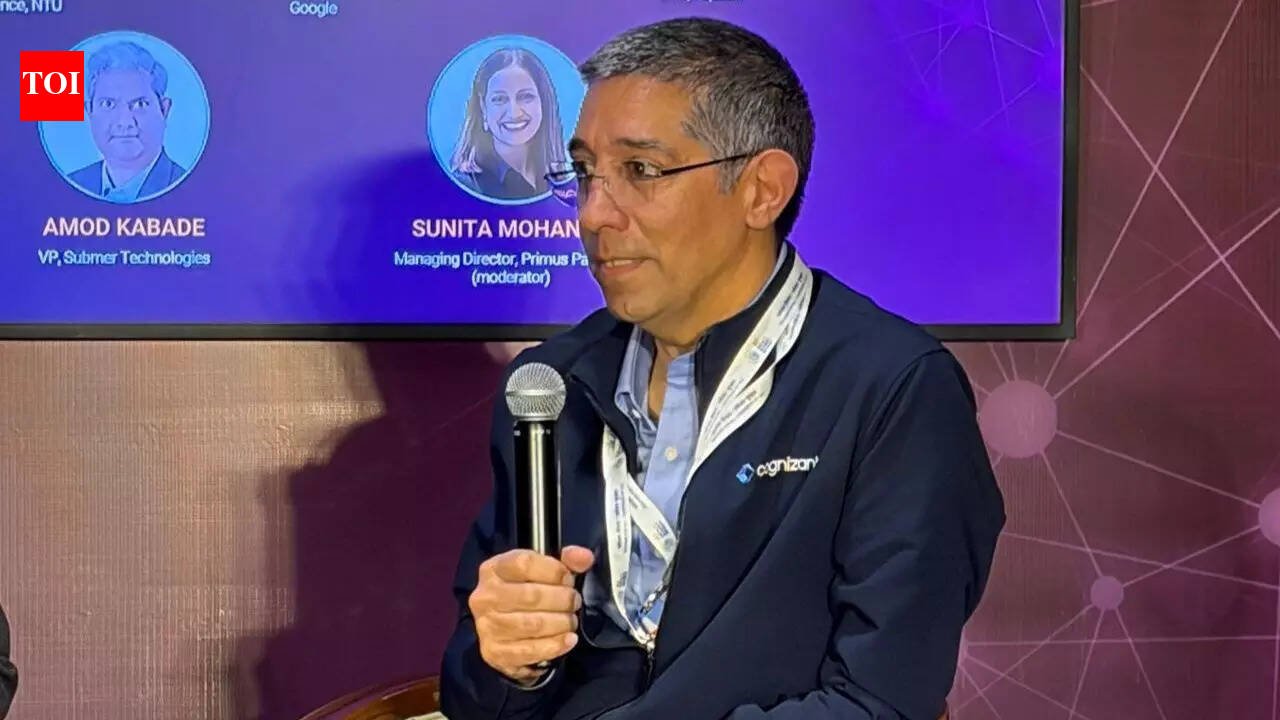
Cognizant AI chief has one word for trillion-dollar wipeout in stock market triggered by Anthropic’s Claude AI tools


Cognizant AI chief has one word for trillion-dollar wipeout in stock market triggered by Anthropic's Claude AI tools
Image credit: X (Twitter)

Cognizant‘s chief AI officer, Babak Hodjat, has described concerns that artificial intelligence will disrupt IT services companies as “overblown.” This comes after Anthropic’s Claude AI tools wiped out more than a trillion dollars from the stock market. Speaking to Reuters, Hodjat said enterprises still require significant support to deploy, integrate, and manage AI systems, despite advances in automated tools from startups such as Anthropic.Hodjat noted that businesses are still far from relying on a single, all-purpose AI agent, adding, “That mapping is our job; it does not come just automatically out of the box,” he told Reuters. Hodjat, whose earlier work contributed to Apple’s Siri voice assistant, said demand for AI-led transformation continues to support growth for services firms. Cognizant, which has more than 70% of its workforce in India, has predicted annual revenue above Wall Street estimates.Meanwhile, rivals such as TCS and Wipro have also said AI adoption is expected to expand demand for software services rather than reduce it.

How AI has already impacted multiple jobs already

Hodjat’s comments supporting the continued role of services companies come even as AI-related job reductions begin to emerge across the industry. Shipping and logistics software firm WiseTech Global said it plans to lay off nearly one-third of its workforce as it integrates AI into customer software and internal operations. TCS announced 12,000 job cuts last year, though the company later said that the layoffs were not linked to AI.Cognizant, which currently generates around 30% of its code using AI and aims to increase this to 50%, said it does not see automation eliminating entry-level roles. CEO Ravi Kumar S said during the company’s earnings call earlier this month that Cognizant hired 25,000 fresh graduates in 2025 and expects to exceed that number in 2026.Hodjat also told Reuters that almost all of Cognizant’s clients have experimented with AI agents but recognise that they still need support to deploy these systems effectively within their existing infrastructure to generate returns


Source link

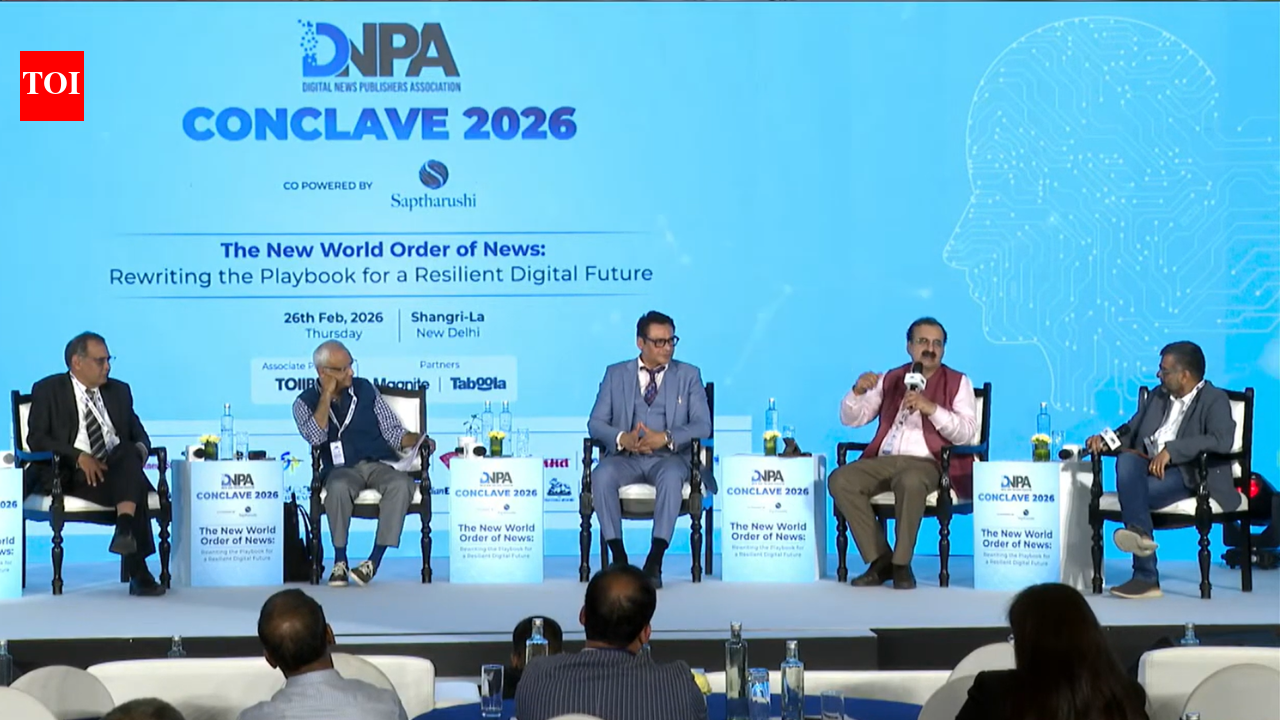
DNPA Conclave 2026: Evolving regulations a big enabler for innovation in news media | India News


DNPA Conclave 2026: Evolving regulations a big enabler for innovation in news media

At the ourth Digital News Publishers Association (DNPA) Conclave 2026, industry leaders and policy experts came together to discuss the current regulatory environment in the country and the kind of impact it is having over the media industry and publishers. Speaking on the question of whether the conditions serve as a hurdle or as a mechanism for publishers to survive, Rajnish Gupta, Partner and Leader, Economic Policy, EY India, said “it depends on from the lens you’re looking at it.” He emphasized, it needs to be understood that the outcome of every policy is going to be different from everyone, saying “we’re in an evolving space, it’s not set. For example if you’re a platform you might not like the guidelines that have come about these intermediaries. Whereas you look from the shoes of digital media, in an age of AI, deepfakes, the credibility, research and authenticity of work is in question.” Highlighting his journey through different media platforms Shivnath Thukral, VP Public Policy & Government Affairs, PhonePe (former Public Policy VP at Meta), said after working through different mediums “I can hardly complain that policy hasn’t been an enabler.” He went on to say, “there must be a reason why all the platforms like Facebook, Google, and all have the largest market base in India. There must be a reason why RBI is working towards policy enabling with the Government of India support. India has the largest digital payment ecosystem,” adding, “regulation follows innovation. The regulation in the digital ecosystem including digital media has created a lot of space for innovation.Asserting the importance of regulation for a good economy Supreme Court lawyer, Vivek Narayan Sharma, said “there is no question of no regulation and operating, for good economy and a stable economy regulations have to be in place. If they are not in place everything will go haywire, everyone will do what they want and there will be no control.”Sharma also spoke about an important question that how much control should be there and to what extent. He said, “control should be exercised with the barometer of the fundamental rights enshrined in the Constitution. So regulation with an end so that people can operate their businesses, so these are very very important regulations.”Adding another perspective, Founder & Chairman, International Commission on Cyber Security Law, Pavan Duggal, said “don’t wait for regulations.” He added, “ that current regulations are neither adequate, nor sufficient, nor can be termed as over -regulations.”Duggal talking about the newly introduced rules by the Centre to counter the AI content said, “these are not going to be enough, so if you think it’s the end of rules on the subject it’s surely not…But we need to make sure are we actually complying with the already existing rules.”


Source link

From Baramulla to the brink of history: Auqib Nabi’s defining Ranji Trophy season | Cricket News


From Baramulla to the brink of history: Auqib Nabi's defining Ranji Trophy season
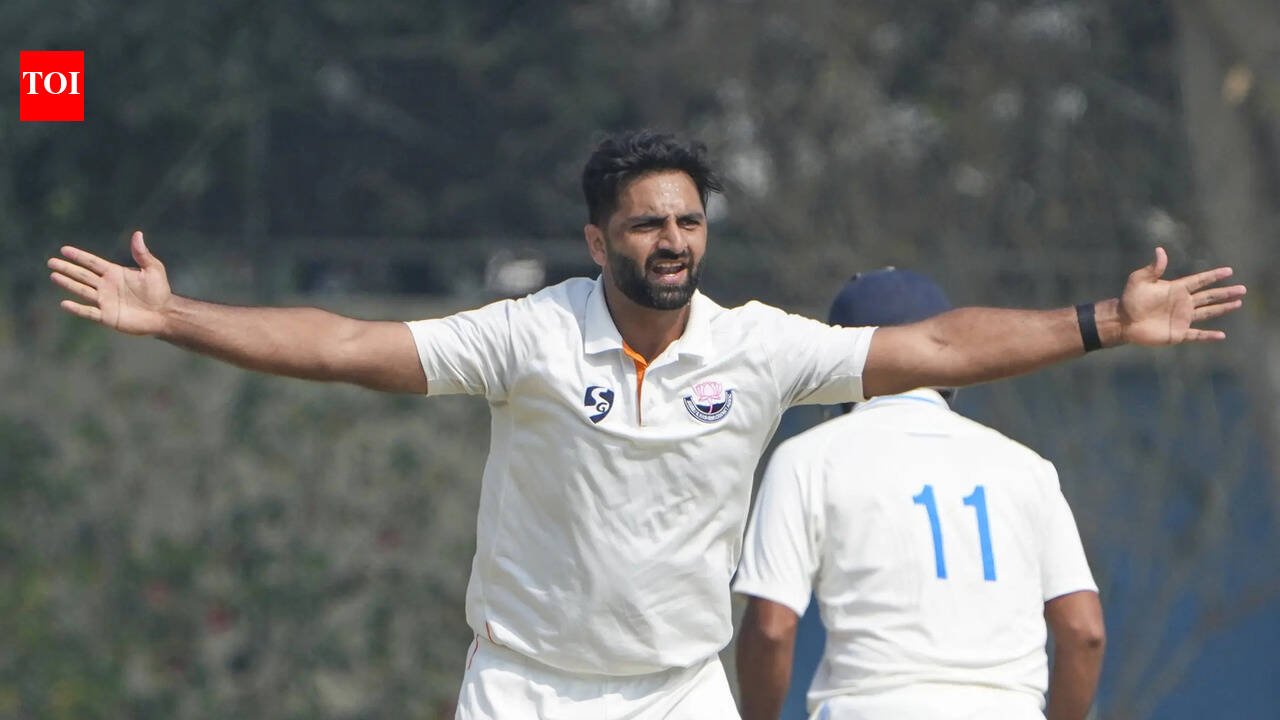
J&K’s Auqib Nabi (PTI Photo/Manvender Vashist Lav)

Hubballi: Auqib Nabi — a name that has echoed across the Indian domestic circuit over the past couple of seasons — is one the Karnataka camp will want to forget in a hurry.The 29-year-old seamer from Baramulla ripped through Karnataka’s formidable batting line-up on Thursday, pushing Jammu & Kashmir to the brink of a historic maiden Ranji Trophy title. Nabi, however, played down his heroics, insisting that his approach was based on keeping things simple, even if his bowling proved anything but.

India Playing XI drama: How three players are fighting for two spots | Sanju Samson IN?

With pronounced swing, late movement and the ability to hit the seam consistently with a strong wrist position, Nabi kept Karnataka’s leading run-getters under relentless pressure on Day 3 of the final.Coming into the title contest with 55 wickets this season — including 21 across the quarterfinal and semifinal — Nabi is two wicket short to surpass Uttarakhand spinner Mayank Mishra (59 wickets) to become the leading wicket taker of the competition.Outlining his approach, Nabi said the J&K attack operated with a collective plan.“In our team, all of us follow the same plan, sticking to a particular line and length. Even if the batters try to go after us, we continue to bowl in the same channel,” he explained.Much of the build-up to the final centred on Nabi’s anticipated contest with KL Rahul, and the seamer acknowledged the attention surrounding the duel.“I was confident because I have been taking wickets. I went in with a positive frame of mind and just wanted to keep it simple. Before the match, I got a lot of messages about getting Rahul out, but I just wanted to bowl in a good channel and not focus on the batter,” he said.Nabi emphasised the importance of wrist position in generating movement, a technical aspect that has become central to his success.“Wrist position is very important. If you have a straight wrist, everything else becomes easier. The ball moves with the wrist, so a straight wrist is very important for a fast bowler,” he said.With the visitors now within touching distance of their first Ranji Trophy triumph, anticipation is building. Prominent personalities from J&K are expected to arrive in Hubballi on Friday on what could be the eve of a historic moment.For Nabi, the possibility of lifting the trophy represents the fulfilment of a long-held ambition.“When I represented J&K for the first time, it was my dream to win a trophy, especially in red-ball cricket. Growing up, I always knew we hadn’t won a trophy, so this means a lot,” he said.


Source link

At first meeting of new BEST committee, Sena (UBT) flags discrepancies in compensation figures for mishap victims | Mumbai News


Mumbai: The first meeting of the newly constituted BEST committee turned into an attack on the administration after Shiv Sena (UBT) members flagged discrepancies in compensation figures proposed for accident victims, including what they alleged was an inflated payout in a case that went before the National Lok Adalat in December.Opposition members pointed to one instance where the claim amount was shown as Rs 3 lakh but the finalised disbursement figure in BEST’s proposal was Rs 4 lakh. Calling the mismatch “strange”, Sena (UBT) corporators demanded that the administration submit complete documentation for each case, including Aadhaar details of beneficiaries, FIR copies, accident particulars, and supporting papers to ensure compensation is released to the rightful recipients. The overall compensation to be paid in various mishaps totals nearly Rs 2 crore.Committee chairperson Trushna Vishwasrao acknowledged discrepancies but said the proposal needed in-principle clearance as compensation had been pending for nearly two months and must be processed within 45 days. While clearing the proposal, she directed the administration to submit FIR copies, stamp duty receipts and detailed explanations for each case within 15 days, with opposition members warning they would escalate the matter to the mayor, municipal commissioner and chief minister if irregularities persist.Said Sena (UBT) member Nitin Nandgaonkar: “It is confusing. You bring in a single-page document with just the name of the victim/family member, the FIR number (and not details), the claim amount, and the amount finalised for disbursal, amount given so far and balance left. Apart from these columns with figures, there is no information to apprise us about the particular accident.” He argued that the committee cannot clear large payouts without basic verification.Sunil Ahir of Sena (UBT) asked why a lower amount was reflected as the claim and a higher amount as the disbursement, and demanded an inquiry to determine whether it was an error or a deliberate manipulation by officials handling legal matters and payments.A BEST official maintained that the Rs 3 lakh figure pertained to the stamp duty stage, and that when the matter came up for hearing, an order was passed for a higher amount of Rs 4 lakh. “We will provide all documents to the panel members as requested,” he added. Separately, corporator Amey Ghole wrote to Vishwasrao seeking adequate compensation for those injured in the Bhandup bus crash near the railway station last year and jobs in BEST for the next of kin of those who died. BEST Kamgar Sena also petitioned mayor Ritu Tawde and municipal commissioner Bhushan Gagrani, demanding the civic budget grant to BEST for 2026-27 be raised from Rs 1,000 crore to Rs 3,000 crore.


Source link

This sea creature survived for over 500 years beneath the Atlantic Ocean |


This sea creature survived for over 500 years beneath the Atlantic Ocean
This sea creature survived for over 500 years beneath the Atlantic Ocean (Image Source – Museum Wales)

Cold Atlantic waters do not often produce headlines, yet one clam drawn from the seabed near Iceland shifted scientific records. In 2006, researchers collected a specimen later named Ming. At first, growth rings on its shell suggested an age of about 405 years. That alone would have placed it among the oldest animals ever recorded. A later reassessment in 2013, using more precise counting methods, extended the estimate to 507 years. The species, known as the ocean quahog, now holds the Guinness World Record for the oldest non-colonial animal. Unlike corals, which are colonies of many polyps living together, this clam lived as a single organism. Its lifespan has since shaped research into ageing, climate history and deep-sea survival.

Ming the clam became the oldest recorded animal at 507 years

The clam belonged to the species Arctica islandica, commonly called the ocean quahog. Scientists determine age by counting annual growth bands in the shell, similar in principle to tree rings. When Ming was first examined, researchers miscounted some of the early bands. Improved techniques later corrected the figure to 507 years.The shell itself remains part of the scientific record. It offers a physical timeline of changing ocean conditions. Each layer reflects shifts in temperature and chemistry over centuries. That slow accumulation of detail explains why the species draws attention beyond its age alone.Among animals that live as individuals, the ocean quahog stands at the top. The Greenland shark is often cited as the next longest lived vertebrate, with estimates of around 400 years.

Ocean quahogs live buried deep below the surface

An ocean quahog does not look remarkable at first glance. It is a rounded clam with two hinged shell halves known as valves. When alive, the outer surface is covered by a dark layer called the periostracum, which gives it a black or mahogany appearance.Older specimens can measure more than 13 centimetres across and over 5 centimetres thick. Most people never see them alive. They bury themselves in sediment between 400 and 500 metres underwater in the North Atlantic. Empty shells sometimes wash ashore, but the living animal remains out of sight.Life at that depth moves slowly. Water temperatures stay low. Light barely reaches the seabed. Growth is steady rather than rapid.

Filter feeding supports a lifespan measured in centuries

Ocean quahogs feed by filtering water. They draw seawater in through an inhalant siphon. Tiny hair like structures called cilia create a current that carries water across the gills. There, mucus traps algae and organic particles. Food moves towards the mouth while filtered water exits through a separate opening.The process repeats almost constantly. It is simple and energy efficient. Environmental changes such as shifts in water temperature or currents may interrupt the routine, but otherwise the clam continues quietly.That steady rhythm, repeated over centuries, is part of what allows the ocean quahog to endure. Its record lifespan remains a reminder that longevity in the natural world often depends on patience rather than speed.


Source link

Un-fare deal: Bengalureans restart own vehicles | Bengaluru News


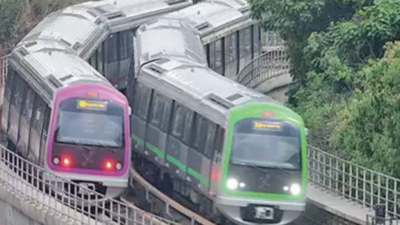
File photo of Namma Metro

BENGALURU: The huge gains of Metro as a friendly and efficient public transport are being undone by frequent fare hikes and last-mile connectivity woes. The perception that commuting by Metro in Bengaluru is becoming increasingly expensive is gaining ground: More commuters are returning to their personal vehicles, worsening traffic congestion across the city.While there is no data-based quantification yet (such as new vehicle sales in the recent past), both motorists and traffic police say they are witnessing a perceptible slowdown in traffic flow. Officers note a visible surge in the number of two-wheelers on city roads, especially during peak hours. Once seen as faster, safer and relatively affordable, Namma Metro is no longer the obvious first choice for many commuters.According to transport department data, Bengaluru city has over 80 lakh registered two-wheelers as of 2026. Traffic police fear that a renewed reliance on private vehicles will translate into longer travel times and mounting congestion in the coming months.Unni Krishna Menon, who earlier commuted by Metro between Jalahalli and Indiranagar, has now switched back to his car. “While the Metro is convenient, the proposed fare hikes and last-mile connectivity gaps would make it less viable for me. Travelling from Jalahalli to Indiranagar costs around Rs 70 one way, and I pay Rs 30 for the first four hours of parking. On reaching Indiranagar, I still need an autorickshaw or a cab to reach my office in Domlur. Each day cost me Rs 220, but if I fill my car with Rs 500 petrol, I can go for 2.5 days, which is cheaper,” Menon explained the commute math to TOI.Echoing this sentiment, college student Jatin Polanki said he has shifted to his bike, well almost. “I used to take the Metro regularly in my first year, travelling from Pattanagere to Majestic for about Rs 30 one way. After the initial hike in fares and early classes, I started using a bike. In Rs 100, I can go to college, roam around, and come back.”Resident welfare groups warn that higher user charges for essential services could prove counterproductive. Christopher Cruz of NERWA said, “Public transport is any city’s lifeline and critical to decongesting the city. Revenue cannot be a consideration. Making the Metro expensive in a city like Bengaluru, already infamous for traffic, is counterproductive.”Some commuters argue that cost alone is not the deciding factor. Techie Naresh Sadasivan said, “Public transport will win 10 out of 10 times if it offers good connectivity and user experience. What pushes people to private transport is unpredictability and poor interconnectivity. Fix that, and people will pay a fair price.”Namma Metro Fare hike that was proposed 0–2 km: Rs 11 (previously Rs 10) 2–4 km: Rs 21 (previously Rs 20) 4–6 km: Rs 32 (previously Rs 30) 6–8 km: Rs 42 (previously Rs 40) 8–10 km: Rs 53 (previously Rs 50) 10–15 km: Rs 63 (previously Rs 60) 15–20 km: Rs 74 (previously Rs 70) 20–25 km: Rs 84 (previously Rs 80) 25–30 km / Above 30 km: Rs 95 (previously Rs 90) Reactions with mugshots:Ramdev Satyanarayana, RWA, Konankunte“The Metro fare hike is concerning for the commuter. Though I have access to both a car and a two-wheeler, I consciously chose Metro because it is safer, faster, and far more convenient. However, fare hikes leave commuters like me with little choice but to reconsider our travel options. Such increases risk discouraging daily commuters who depend on affordable public transport. Keeping the Metro accessible is crucial not just for commuters, but also for reducing traffic congestion and promoting sustainable urban mobility.Shivkumar V, general secretary, Domlur Layout Resident Welfare Association“The repeated fare increases place a direct burden on the common man, another steep revision is unfair. This will inevitably push people back to private vehicles or already overcrowded public buses, worsening road congestion.”Shany Sunny, Joint Secretary, Indiranagar Stage 1 RWA“I know of friends and family members who shifted back to bikes. The primary reason is the increase in fares — for many, travelling by bike is cost-effective. An overcrowded Metro no longer feels like a comfortable escape from the daily commute rush. While it may help avoid vehicular pollution, the experience itself is stressful due to the heavy crowd.”


Source link

West Indies umpire Steve Bucknor breaks silence on the infamous Sachin Tendulkar dismissal


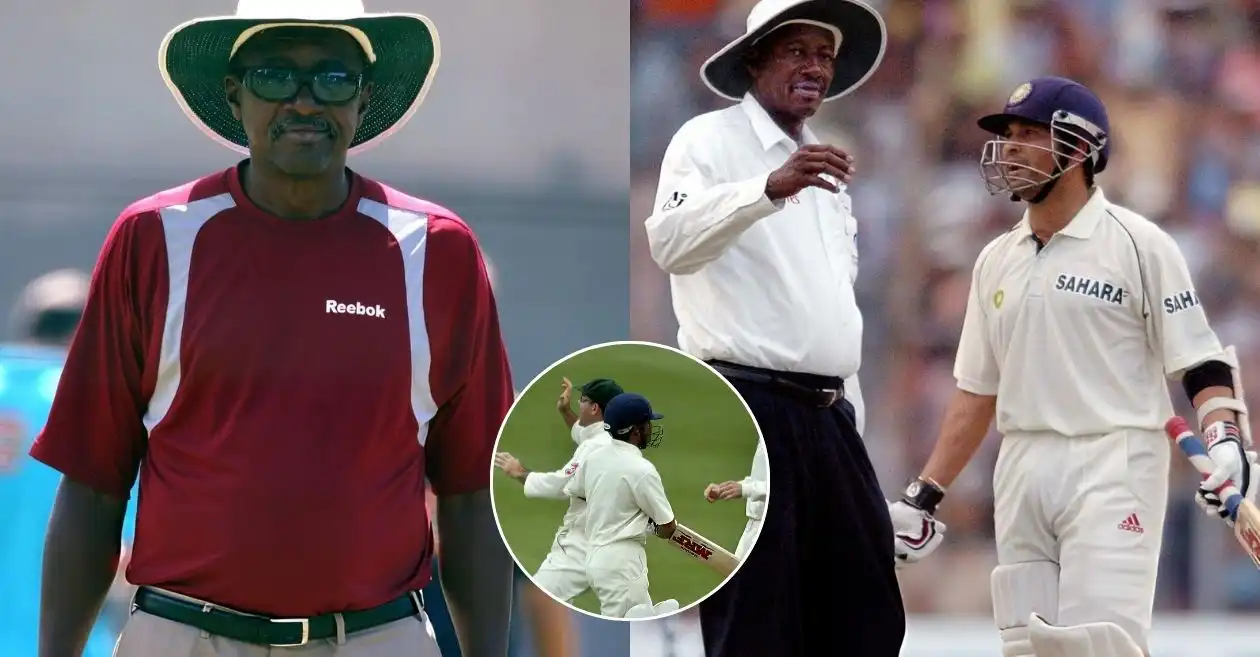
More than 20 years after one of cricket’s most controversial umpiring decisions, former West Indies official Steve Bucknor has admitted he made a mistake. In a recent interview, the 79-year-old said that giving Sachin Tendulkar out during the 2003–04 Brisbane Test was the wrong decision, a call that had sparked huge debate at the time.

The controversial call from Steve Bucknor to dismiss Sachin Tendulkar

The incident took place during the first Test of the 2003–04 Border-Gavaskar Trophy at the Gabba in Brisbane. Tendulkar was facing Australian fast bowler Jason Gillespie when he decided to leave a delivery that came back sharply and hit him high on the pads.

On a bouncy Brisbane pitch, the ball looked like it was going over the stumps. However, after a loud appeal from the Australian players, umpire Bucknor gave Tendulkar out LBW. The decision surprised everyone, as it seemed the ball was too high to hit the stumps. Tendulkar had to walk back without scoring, dismissed for a three-ball duck.

The decision stunned the commentators and fans watching around the world. Former England captain Tony Greig, who was in the commentary box, called it a dreadful decision on air. Years later, Bucknor himself has agreed that it was indeed the wrong call, admitting that he made a mistake that day.

Also WATCH: Arjun Tendulkar makes headlines after dismissing Yashasvi Jaiswal’s brother in DY Patil T20 Cup 2026

Buckor opens up on his contentious decision

While speaking to the West Indies Cricket Umpires’ Association on February 24, 2026, Bucknor openly talked about the controversial decision that continues to follow him even after so many years. The former umpire admitted that the call to give Sachin Tendulkar out LBW in Brisbane is something he has never been able to completely forget.

Bucknor said that the incident still comes up in conversations almost every day. Fans, journalists, and cricket lovers often remind him of that moment and question why he made that decision. He acknowledged that it was indeed an error and accepted responsibility for it.

“Giving Sachin Tendulkar out leg before wicket… it’s a matter of knowing that it was a mistake. Until this day, every day, people talk about it. Why did I give him out? Was he out and so on? But then in life, mistakes happen. I have accepted that it was a mistake, and life goes on,” said Bucknor.

Also WATCH: Sachin Tendulkar turns emotional for son Arjun at pre-wedding bash with Saaniya Chandhok in Jamnagar


Source link