Breaking News
How much prize money will Jammu & Kashmir get for winning the Ranji Trophy? | Cricket News


How much prize money will Jammu & Kashmir get for winning the Ranji Trophy?
Jammu & Kashmir (PTI Photo)

NEW DELHI: Jammu and Kashmir scripted history by winning their first-ever Ranji Trophy title after their final against Karnataka ended in a draw on Saturday. They were declared champions because of a massive first-innings lead, which proved decisive in the summit clash.In terms of prize money, the BCCI had increased domestic rewards in April 2023. The Ranji Trophy winners will now receive Rs 5 crore, runners-up get Rs 3 crore, and losing semi-finalists earn Rs 1 crore.

J&K CM Omar Abdullah lands in Karnataka for Ranji Trophy final

J&K had put themselves in a strong position by scoring a huge 584 in their first innings. In response, Karnataka were bowled out for 293 in 93.3 overs. Pacer Auqib Nabi led the bowling attack brilliantly. The right-arm pacer picked up five wickets for 54 runs and handed his team a commanding 291-run lead.Despite having the option to enforce the follow-on, J&K chose to bat again and bat Karnataka completely out of the contest. On the fifth and final day, they resumed their second innings at 186 for four. Qamran Iqbal, who was unbeaten on 94 overnight, and Sahil Lotra, who was on 16, turned the game firmly in their side’s favour with superb centuries.Iqbal remained unbeaten on 160 while Lotra stayed not out on 101 as J&K reached 342/4, stretching their overall lead to a massive 633 runs. With no realistic chance for Karnataka to chase the target, the two captains agreed to shake hands.The triumph is a landmark moment for Jammu and Kashmir, coming 67 years after they began competing in the tournament.


Source link

Stock market holidays in March: When will NSE, BSE remain closed for trading? Check list


Stock market holidays in March: When will NSE, BSE remain closed for trading? Check list

As March begins, investors and traders in India’s equities market are advised to carefully plan their schedules around the upcoming public holidays. Trading on the equities segment takes place on all weekdays, with the exception of Saturdays, Sundays, and those holidays that have been officially declared in advance by the Exchange. Being aware of these non-trading days is essential, as it enables market participants to schedule their transactions and investment moves without disruption, ensuring they stay on top of key trading opportunities. Familiarity with the holiday calendar, along with the specific timings of trading sessions, allows investors to prepare in advance, manage their activities smoothly, and make well-timed decisions when buying or selling equities.

When will stock market remain closed in March?

  • March 03, Tuesday – Holi
  • March 26, Thursday – Shri Ram Navami
  • March 31, Tuesday – Shri Mahavir Jayanti

In addition, Id-Ul-Fitr (Ramadan Eid) would have been observed as a market holiday, however, since it falls on Saturday, March 21, the market is already closed, making it a non-trading day by default.Upcoming holidays in the year:

  • April 3, Friday – Good Friday
  • April 14, Monday – Ambedkar Jayanti
  • May 1, Thursday – Maharashtra Day
  • May 28, Wednesday – Bakri Id
  • June 26, Friday – Muharram
  • September 14, Sunday – Ganesh Chaturthi
  • October 2, Thursday – Gandhi Jayanti
  • October 20, Monday – Dussehra
  • November 10, Monday – Diwali Balipratipada
  • November 24, Monday – Guru Nanak Jayanti
  • December 25, Thursday – Christmas


Source link

US, Israel strike Iran: What do rising Middle East tensions mean for Indian stock markets next week? Here’s what experts say


US, Israel strike Iran: What do rising Middle East tensions mean for Indian stock markets next week? Here’s what experts say

Escalating tensions between Israel and Iran are set to test investor nerves at the start of the week, with Indian equities likely to open sharply lower amid a risk-off mood across global markets.The nervousness follows Israel’s preemptive strikes on Iran after nuclear deal talks with the US failed to yield a breakthrough. President Donald Trump described the action as a “major combat operations in Iran” in a video posted on social media after the strikes were launched near the offices of Supreme Leader Ayatollah Ali Khamenei.Global cues remain weak and are expected to weigh on domestic equities despite India’s Q3 GDP growth of 7.8%, which reflected broad-based strength in the economy.Kranthi Bathini, Director–Equity Strategy at WealthMills Securities, said markets had been bracing for such an escalation. “Finally the inevitable happened after weeks of uncertainty. The Street was anticipating conflict blowing into war sooner or later,” he said, quoted ET.Bathini expects choppy trade with sharp cuts likely in the near term. He said crude oil prices will be the key trigger for Indian markets, warning that levels around $80 per barrel could turn strongly negative. His advice to investors is to remain invested and use corrections to buy on dips for the long term.“The Iranian response will decide the course of the conflict,” Bathini added.Market expert Anuj Gupta also expects a weak opening and advised investors to trim existing positions and wait for clarity before initiating fresh trades.

Benchmarks ended weak on Friday

Indian benchmarks had already closed lower on Friday amid broad-based selling pressure. The Nifty fell 317.90 points, or 1.25%, to end at 25,178.65, while the 30-share Sensex dropped 961.42 points, or 1.17%, to settle at 81,287.19. Auto, financial and FMCG stocks were major laggards, while IT saw selective buying.

Geopolitical risks intensify

According to news agency AP report, Iran currently maintains a self-imposed limit of 2,000 kilometres on its ballistic missile programme, placing much of the Middle East and parts of eastern Europe within reach. Iran has said it no longer enriches uranium but has blocked international inspectors from visiting sites targeted during earlier US strikes.AP reported that satellite images showed fresh activity at two such sites, suggesting Iran may be assessing or recovering material.Ahead of the strikes, the US had built up a large military presence in the Middle East, including the aircraft carrier USS Abraham Lincoln and guided-missile destroyers.Explosions were reported in northern Israel as air defence systems intercepted incoming Iranian missiles, with nationwide warnings issued. There was no immediate confirmation of casualties.

Global markets signal caution

Wall Street ended lower on Friday. The Dow Jones fell 521.28 points, or 1%, to 48,977.90. The Nasdaq Composite dropped about 210 points, or 1%, to 22,668.20. The S&P 500 declined 0.43%.European markets were mixed, while Asian cues remained cautious.

Technical levels in focus

Bajaj Broking said volatility is likely to stay elevated amid uncertain global cues, adding that the 25,400–25,500 zone may act as immediate resistance.Dr Ravi Singh, Chief Research Officer at Master Capital Services, told ET the index has breached its critical 25,300 support and the 200-day EMA, signalling a bearish shift in short-term momentum.“For the coming week, the 25,000 psychological mark stands as the make-or-break level and a breakdown here could drag prices toward the 24,800 area,” Singh said. “Strategy remains sell on rises until the index decisively reclaims 25,600. Expect continued volatility as the market searches for a stable bottom.”(Disclaimer: Recommendations and views on the stock market, other asset classes or personal finance management tips given by experts are their own. These opinions do not represent the views of The Times of India)


Source link

Us Strikes On Iran: First Taliban, now Iran: Why it could be a double whammy for Pakistan


First Taliban, now Iran: Why it could be a double whammy for Pakistan

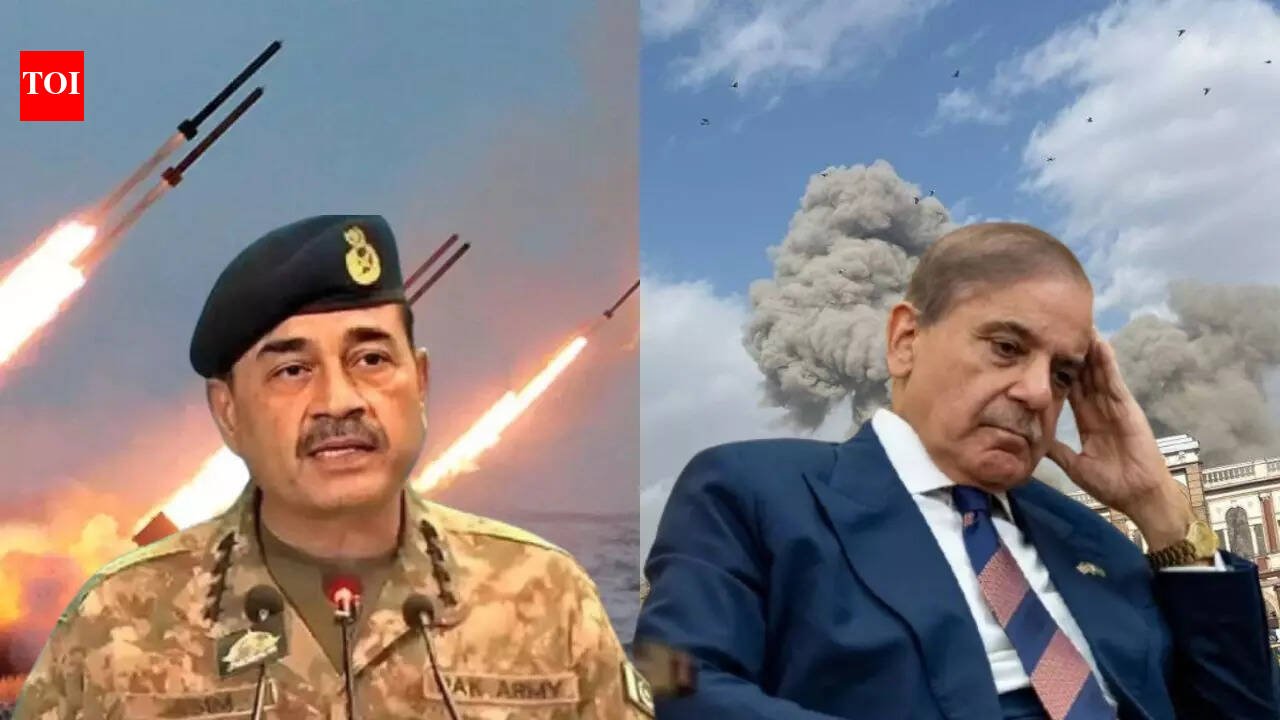
NEW DELHI: As the United States and Israel launched coordinated strikes on Iran , Pakistan finds itself staring at the prospect of a two-front strategic squeeze. What began as cross-border clashes with the Afghan Taliban has now coincided with a rapidly expanding conflict to Pakistan’s west, raising fears of a “double whammy” that could destabilise its already fragile security and economic landscape.With tensions simmering on the eastern border with India and domestic militancy resurging, a new war in Iran threatens to compound Pakistan’s vulnerabilities in ways that could reshape its regional calculus.

A region on the brink

The crisis escalated dramatically after Israel launched preventive missile strikes on Iran, with US media reporting that Washington had begun coordinated strikes alongside its ally. Explosions were reported in Tehran, while Israel declared a nationwide state of emergency and shifted its Home Front Command guidelines from full activity to essential activity.Iranian state media confirmed blasts in the capital, and connectivity disruptions were reported across parts of Tehran. Iran vowed a “crushing response,” while the Israel Defense Forces said it had detected ballistic missiles launched from Iran toward Israeli territory, urging citizens to move into protected spaces.US President Donald Trump confirmed that the United States had initiated “major combat operations in Iran,” describing Tehran as “very difficult” and “very dangerous” and stating that Washington faced a “big decision” in negotiations.
US (2)

.

The strikes come even as diplomatic efforts between the US and Iran faltered. A third round of talks was held in Geneva, but the sudden escalation has cast doubt over any immediate diplomatic breakthrough.For Pakistan, which shares a long and porous border with Iran’s restive Sistan-Baluchestan province, the implications are immediate and serious.

Already at war with Afghanistan

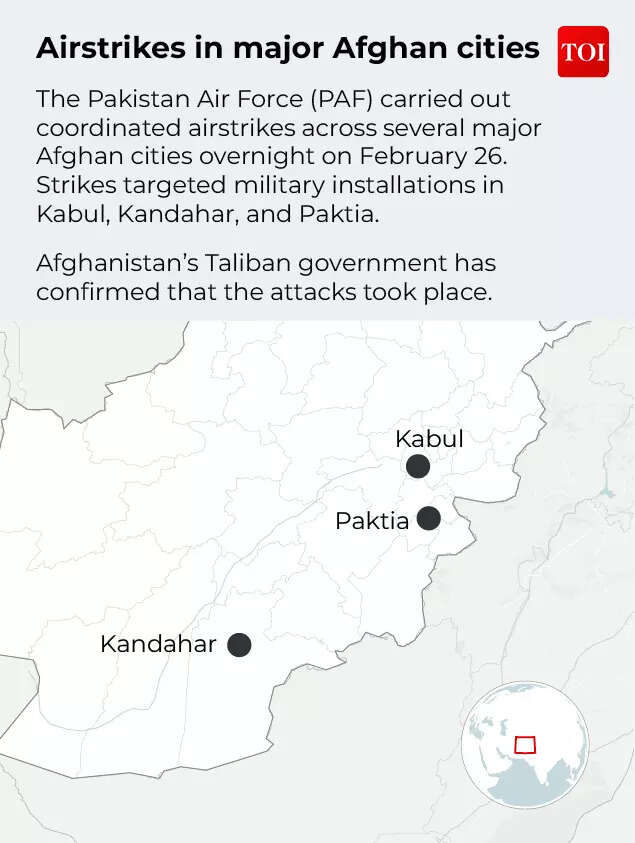
Even before the Iran escalation, Pakistan had launched air strikes on cities in neighbouring Afghanistan following months of cross-border attacks. Islamabad’s Information Minister Attaullah Tarar described the situation bluntly, stating on X that “now it is open war.”The fighting followed retaliatory exchanges between Afghan forces and Pakistani troops along their disputed frontier. Casualty figures from both sides remain contested, with sharply different claims about losses inflicted.At the heart of the dispute is Pakistan’s long-standing accusation that the Afghan Taliban government has failed to rein in the Tehreek-e-Taliban Pakistan (TTP), which has stepped up attacks inside Pakistan since the Taliban returned to power in Kabul in 2021.
gfx (1)

.

Afghanistan’s Taliban authorities deny allowing their territory to be used against Pakistan. However, militant violence inside Pakistan has surged, deepening mistrust between the two neighbours.Diplomatic efforts involving Qatar, Turkey, Saudi Arabia and Iran have failed to produce a durable ceasefire. China has called for restraint and urged both sides to resolve disputes through dialogue.The clashes mark what analysts describe as the most serious confrontation between Pakistan and the Afghan Taliban regime in months, with Pakistan reportedly targeting Taliban government sites rather than just alleged TTP positions.

The Balochistan factor

The most immediate concern for Pakistan in the event of a prolonged Iran conflict is spillover into Balochistan.Balochistan borders both Afghanistan and Iran and has long been a theatre of insurgency led by groups such as the Baloch Liberation Army (BLA). The province is strategically crucial, hosting the China-Pakistan Economic Corridor (CPEC) and the Gwadar port.Unrest in Iran’s Sistan-Baluchestan province could energise cross-border ethnic linkages and embolden separatist elements on both sides of the border. Any weakening of Iranian state control in border areas could create operational space for militants, smugglers and insurgent networks.Pakistan has historically cooperated with Iran on border security, including joint patrols and intelligence sharing. However, if Iran becomes consumed by war with Israel and the US, its ability to coordinate on border control may be severely reduced.An emboldened BLA, operating in tandem with other militant groups, could stretch Pakistani security forces thin at a time when they are already heavily deployed along the Afghan frontier.

Strategic overstretch

Pakistan’s military doctrine has traditionally been India-centric, focusing on deterrence along its eastern border. But recent years have forced a recalibration toward internal security and western border management.Relations with India remain in deep freeze less than a year after their worst conflict since 1971. Cross-border exchanges and diplomatic ties have remained limited, and trust is minimal.A simultaneous crisis with Afghanistan and instability spilling over from Iran would leave Pakistan managing acute tensions on its western front while keeping a wary eye on India.This scenario risks strategic overstretch. Troop deployments, intelligence resources and air assets would need to be divided across multiple theatres. Any miscalculation could prove costly.

Economic shockwaves

Beyond security concerns, a war involving Iran has significant economic ramifications for Pakistan.Iran is a key regional energy player. Any disruption to oil supplies or a spike in global crude prices would hit Pakistan’s already fragile economy. Islamabad is struggling with inflation, external debt and currency pressures.The Strait of Hormuz, through which a substantial portion of global oil shipments pass, could become a flashpoint. Escalation in the Gulf would ripple across energy markets, driving up import costs.Pakistan also shares trade routes and informal cross-border commerce with Iran. Border closures or insecurity could disrupt livelihoods in already impoverished regions.Foreign investment could suffer further setbacks as investors reassess risk in a region marked by simultaneous conflicts.

China’s delicate position

China, a close partner of Pakistan, has urged both Pakistan and Afghanistan to exercise restraint and reach a ceasefire. Beijing maintains ties with both Kabul and Islamabad through a tripartite mechanism.However, China also has substantial energy and infrastructure interests in the Gulf. An expanded Iran conflict complicates Beijing’s regional balancing act.For Pakistan, which relies heavily on Chinese investment and diplomatic backing, Beijing’s priorities will matter. If China shifts focus toward stabilising the Gulf or protecting its own assets, Islamabad may find itself with less direct support in managing western border turbulence.

Diplomacy on life support

With the US-Iran nuclear talks disrupted and the Pakistan-Afghanistan dialogue stalled, diplomacy appears increasingly marginalised.Regional actors such as Saudi Arabia, Qatar and Turkey have attempted mediation in the Pakistan-Afghanistan dispute. Iran had also signalled willingness to facilitate dialogue.Now, with Tehran under direct military pressure, its capacity to play mediator is diminished.Pakistan’s options are narrowing. It must manage tensions with Kabul, prevent insurgent escalation in Balochistan, guard against spillover from Iran and avoid provoking instability along the eastern front.

Oil shock and Hormuz risk: A fresh blow to Pakistan’s fragile recovery

A sustained rise in global oil prices, coupled with any disruption in the Strait of Hormuz, could deliver a sharp external shock to Pakistan’s already fragile recovery. The country imports the bulk of its crude oil and refined petroleum, making it highly vulnerable to price volatility. Even a moderate spike in Brent crude can widen Pakistan’s import bill by billions of dollars annually, exerting fresh pressure on its current account and foreign exchange reserves.Higher energy costs would likely feed directly into inflation, reversing recent gains in price stability. Transport, electricity generation and fertiliser production are heavily dependent on imported fuel. As input costs rise, the impact would cascade through food prices and manufacturing, squeezing household purchasing power and dampening consumer demand. For a government attempting fiscal consolidation under IMF oversight, the dilemma becomes acute: either pass on higher fuel prices to consumers and risk public anger, or absorb part of the shock through subsidies, thereby straining public finances.The Strait of Hormuz is particularly critical. A substantial portion of global oil shipments transits this narrow waterway. Any military escalation that disrupts tanker traffic would not only drive up crude prices but also increase freight and insurance premiums. For Pakistan, this means higher landed costs even if supply volumes remain intact.Investor confidence could also suffer. Currency markets tend to react swiftly to oil shocks in energy-importing economies. A weaker rupee would further inflate import costs and complicate debt servicing, especially on dollar-denominated obligations.In short, an oil shock tied to Hormuz instability would not just be an energy problem for Pakistan. It would threaten macroeconomic stability, strain fiscal space, revive inflationary pressures and slow growth at a moment when policymakers are struggling to restore confidence and momentum.

A dangerous convergence and an uncertain road ahead

What makes this moment particularly perilous for Pakistan is the convergence of multiple crises unfolding at once. An active conflict with Afghanistan has already heated up one western front, while a war involving Iran threatens to destabilise another. At the same time, the eastern border with India remains tense, with relations still strained after recent hostilities. The cumulative effect is strategic compression, with Islamabad facing pressure from nearly every direction.Domestically, the situation is no less challenging. Militant violence has resurged, political divisions persist and economic stress continues to weigh on governance. If unrest in Iran spills into Balochistan and emboldens separatist outfits such as the BLA, Pakistan could confront escalating violence in both its northwest and southwest simultaneously. Such a scenario would stretch security forces and intelligence resources, potentially forcing reactive deployments rather than long-term strategic planning.Much will depend on whether the Iran-Israel-US confrontation is contained or turns into a prolonged campaign. A limited exchange might restrict regional fallout, but an extended conflict could fundamentally alter the security environment along Pakistan’s western flank. In that context, de-escalation with Afghanistan becomes even more urgent. Strengthening border management, preventing militant exploitation and coordinating with regional partners, including China and Gulf states, will be crucial.Ultimately, Pakistan’s room for manoeuvre lies in balancing deterrence with restraint while avoiding strategic overextension. As instability spreads across its western neighbourhood, Islamabad faces a stark reality: first the Taliban challenge, now a potential Iran war. Together, they risk becoming a destabilising double blow at a time when the country can least afford it.



Source link

Man Injured: Man injured after iron rod bounces off barricade during construction at Mumbai construction site | Mumbai News


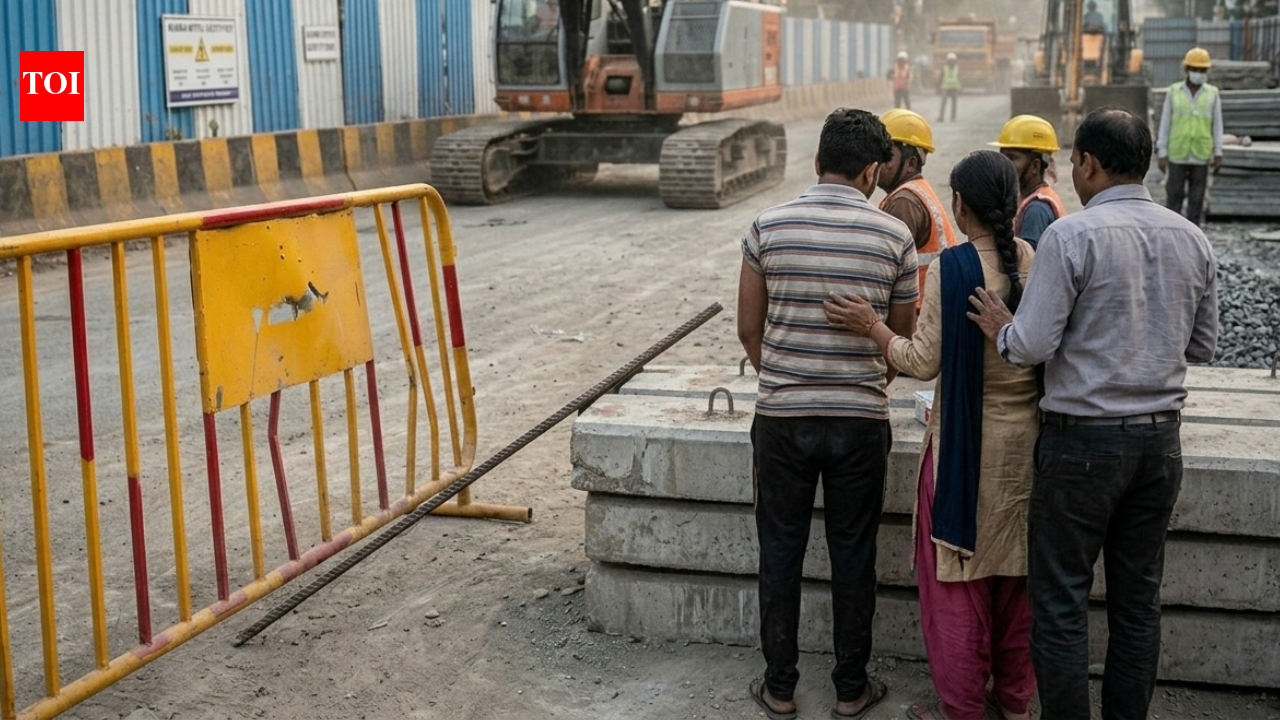
MUMBAI: A man was injured after an iron rod rebounded off a barricade during construction work on the Worli–Sewri elevated corridor near the KEM Hospital area on Friday.According to officials, reinforcement work was under way at the site when an iron rod being used for structural support accidentally slipped and fell. Instead of landing directly on the road, the rod first struck a barricade placed around the construction zone. Due to the impact, it bounced back — in a boomerang-like effect — and hit a passer-by on the head.The man sustained a head injury and required four stitches. He was initially rushed to Gleneagles Hospital for treatment and was later shifted to Global Hospital in Parel, where he is reported to be in a stable condition.The incident has raised concerns about on-site safety measures, particularly in areas with pedestrian movement. Authorities are understood to be reviewing the circumstances that led to the accident.


Source link

‘Operation Epic Fury’: How US, Israel encircled Iran before joint strikes


BOOM! Shocking Video Shows MISSILES OVER U.S Ally Nation As Iran War Explodes; Mideast Airspace Shut

The Middle East has entered a new spell of conflict as Israel and the US launched a joint operation against Iran on Saturday. In an operation named “Epic Fury,” the first of many strikes occurred near the offices of Supreme Leader Ayatollah Ali Khamenei in Tehran.In his first statement following the strikes, US President Donald Trump said that the US had begun “major combat operations in Iran.” He claimed Iran has continued to develop its nuclear programme and plans to develop missiles capable of reaching the US, and appealed to the Iranian people to “take over your government — it will be yours to take.”

BOOM! Shocking Video Shows MISSILES OVER U.S Ally Nation As Iran War Explodes; Mideast Airspace Shut

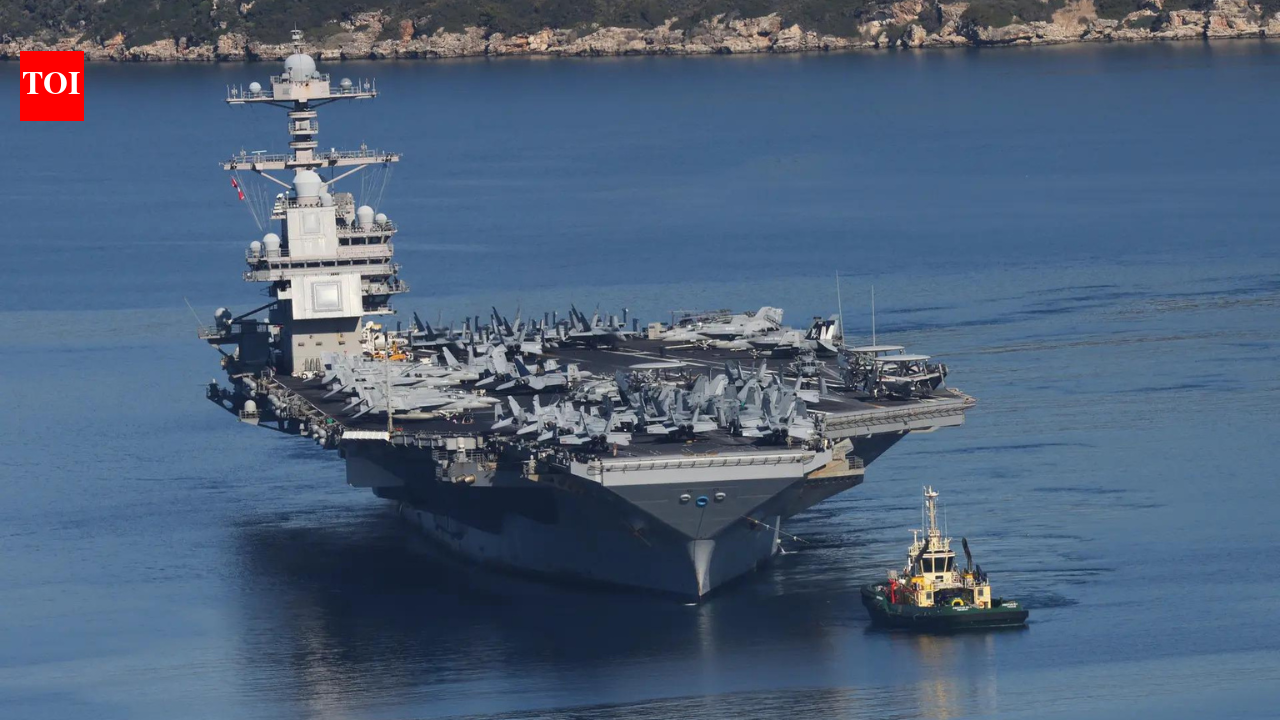
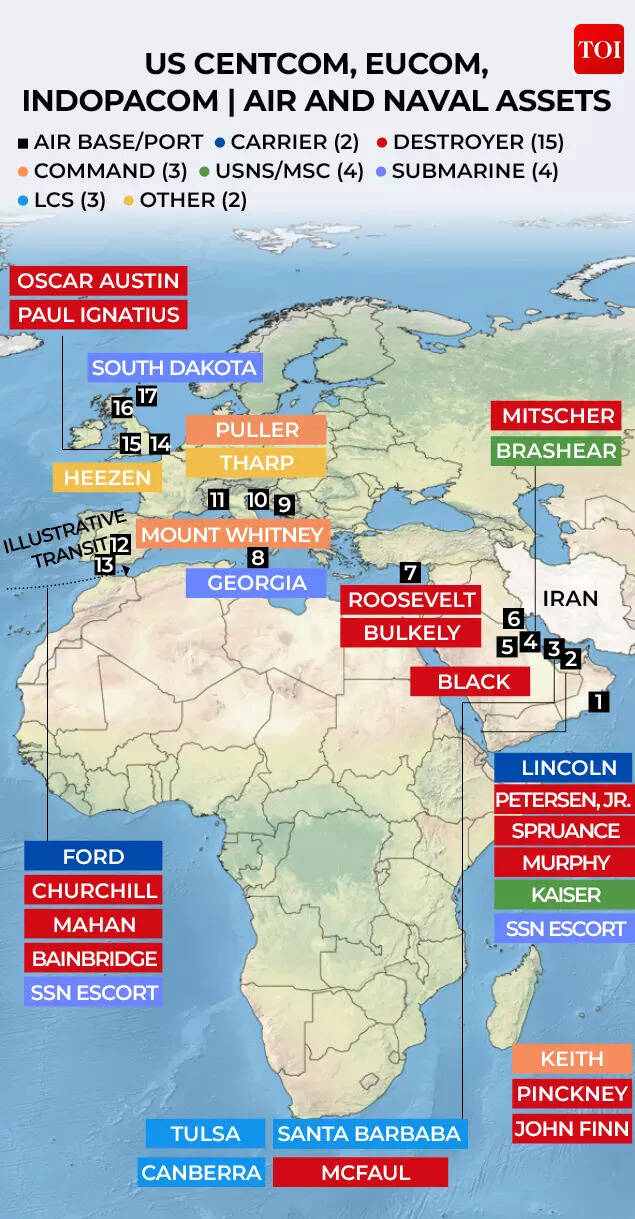
Meanwhile, Israeli Prime Minister Benjamin Netanyahu also hailed the joint Israel–US offensive, saying Iran’s “murderous terrorist regime” cannot be allowed to arm itself with nuclear weapons.“Israel and the United States embarked on an operation to remove the existential threat posed by the terrorist regime in Iran. I thank our great friend, President Donald Trump, for his historic leadership,” Netanyahu said in a video message released after Trump’s remarks.This comes as the United States has deployed aircraft carriers, fighter jets, guided-missile destroyers and other capabilities to the Middle East in recent weeks. It includes two of the largest US warships — the Gerald R. Ford and the Abraham Lincoln.How US encircles IranAccording to news agency Reuters, the strikes are being carried out by air and sea. An Israeli defence official told the agency that the operation had been planned for months in coordination with Washington, and that the launch date was decided weeks ago.Another source told Israeli media outlet The Times of Israel that the “initial phase” of the joint attack is planned to last for at least four days.Iran is located on the northern shore of the strategic Strait of Hormuz, a key passageway for global shipments of oil and liquefied natural gas. This makes Iran a central actor in global energy security calculations.

.

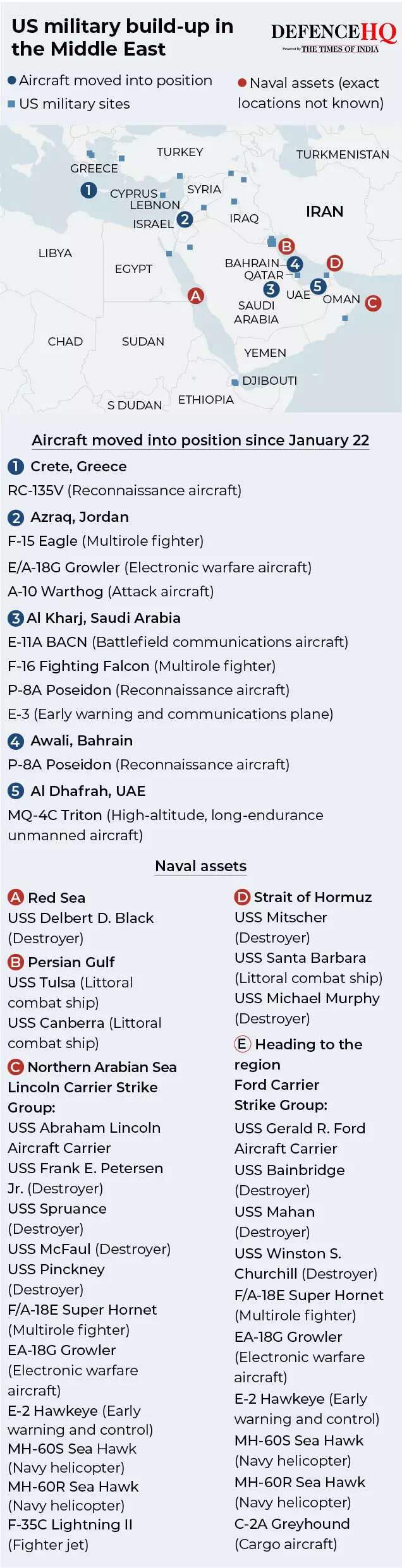
Iran also borders the Caspian Sea, the world’s largest inland body of water, shared with Russia and several Central Asian states.Amid its ongoing tensions with Washington, the US has encircled Iran from over 30 military bases and key naval assets.Aircraft moved into position

  • At Crete, Greece, the US deployed the RC-135V reconnaissance aircraft.
  • In Azraq, Jordan, assets include the F-15 Eagle multirole fighter, the E/A-18G Growler electronic warfare aircraft, and the A-10 Warthog attack aircraft.
  • At Al Kharj, Saudi Arabia, the US positioned the E-11A BACN battlefield communication aircraft, F-16 Fighting Falcon multirole fighters, P-8A Poseidon reconnaissance aircraft, and the E-3 early warning and command aircraft.
  • In Awali, Bahrain, P-8A Poseidon reconnaissance aircraft have been stationed.
  • Meanwhile, at Al Dhafrah, UAE, the MQ-4C Triton high-altitude, long-endurance unmanned aircraft has been deployed.

.

Naval assets

  • In the Red Sea, the USS Delbert D. Black, a guided-missile destroyer, is deployed.
  • In the Persian Gulf, the USS Tulsa and the USS Canberra, both littoral combat ships, are operating.
  • In the Northern Arabian Sea, the Lincoln Carrier Strike Group is stationed. It is led by the aircraft carrier USS Abraham Lincoln and includes the destroyers USS Frank E Petersen Jr, USS Spruance, USS McFaul, and USS Pinckney. The group’s air wing comprises F/A-18E Super Hornet multirole fighters, EA-18G Growler electronic warfare aircraft, E-2 Hawkeye early warning and control aircraft, MH-60S and MH-60R Sea Hawk helicopters, and F-35C Lightning II fighter jets.
  • In the Strait of Hormuz, the destroyer USS Mitscher is deployed along with the littoral combat ship USS Santa Barbara and the destroyer USS Michael Murphy.
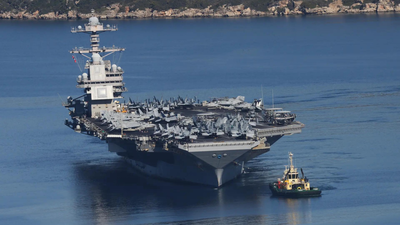
  • The United States has also moved its most advanced Ford Carrier Strike Group, led by the aircraft carrier USS Gerald R Ford, from its position near Greece toward waters closer to Israel. It includes the destroyers USS Bainbridge, USS Mahan, and USS Winston S Churchill.
  • Its air component features F/A-18E Super Hornet multirole fighters, EA-18G Growler electronic warfare aircraft, E-2 Hawkeye early warning and control aircraft, MH-60S and MH-60R Sea Hawk helicopters, and C-2A Greyhound cargo aircraft.


Source link

Delhi Fake Ed Raid: Uniforms, fake IDs, pistol: How maid plotted ‘ED’ raid in south Delhi; lawyer grandson exposes bluff | Delhi News


A domestic help teamed up with relatives and associates to stage a fake Enforcement Directorate (ED) raid at the residence of her employer, an 86-year-old retired architect in southeast Delhi’s New Friends Colony.

NEW DELHI: A domestic help teamed up with relatives and associates to stage a fake Enforcement Directorate (ED) raid at the residence of her employer, an 86-year-old retired architect in southeast Delhi’s New Friends Colony. The victim’s grandson, an ED lawyer, confronted them on the phone, forcing them to flee with part of the cash.

Delhi Excise Policy, Pak- Afghanistan Tensions, GDP growth & More

The maid, Rekha Devi (40), and her sister-in-law, Pooja Rajput (45), have been arrested. The plot also involved Pooja’s husband, an ITBP constable, and two others.Around 10am on Feb 11, three people in police uniform forcibly entered the home, claiming to be ED officials who’d been asked to conduct a search. They did not show any warrant, authorisation letter, or identity proof.They allegedly intimidated the family, confiscated their mobile phones, and prevented them from seeking help. The trio demanded that all cash and valuables in the house be handed over. When a bag containing Rs 10-12 lakh was given to them, they arranged the cash on the dining table and took pictures, threatening the family with arrest.The victim’s wife, meanwhile, managed to contact her grandson, a lawyer affiliated with ED, who confronted the group over the phone. The suspects then fled in a car with Rs 3-4 lakh. A case has been registered.Deputy commissioner of police (Southeast) Hemant Tiwari said a team was formed under SHO Rajender Kumar Jain. Investigators analysed over 350 CCTV cameras. By stitching the footage together, they mapped the suspects’ movements from the crime scene.“The trail extended beyond Delhi, showing the car passing through Sarai Kale Khan, crossing the Ghazipur border, and entering Uttar Pradesh, finally stopping at sector 4, Vaishali, Ghaziabad. Footage also helped capture the vehicle’s registration number,” DCP Tiwari said.Once the car was located in Ghaziabad, technical surveillance using mobile tower data and IMEI tracking identifiedmobile numbers active at both the New Friends Colony crime scene and the Vaishali parking location at the relevant times.This led investigators to Pooja’s residence in Ghaziabad. Local intelligence confirmed that Rekha frequently visited the address, indicating an insider connection. During the raid on Pooja’s house, police recovered a deputy commandant’s uniform and ID card, a wireless set box, jewellery and a pistol with an expired licence.Interrogation revealed that Rekha, who had been working as the maid for two years, was the mastermind of the plot. She shared it with Pooja, who then involved her husband, Prakash, who’s in ITBP. Prakash recruited Updesh Singh Thapa (a retiredarmyman) and Manish.Rekha, who hails from Chamoli, Uttarakhand, reportedly provided detailed information about the household, including the number of residents and their daily routines. “She wanted to exploit the situation as the owner was elderly and had no help, seeing it as an opportunity to steal cash and valuables,” a police official said.On the day of the incident, Rekha alerted her associates, after which the three male accomplices arrived in Updesh’s vehicle and entered the house. “Rekha, as part of the plan, remained in the house, acting terrified. The group then robbed the house and fled,” police added. Police are verifying whether the complainant had conducted any prior checks on the maid.


Source link

‘Death warrant for farmers’: Rahul Gandhi attacks PM Modi at Punjab rally; questions Indo-US trade deal | India News


'Death warrant for farmers': Rahul Gandhi attacks PM Modi at Punjab rally; questions Indo-US trade deal
Rahul Gandhi at the rally (ANI photo)

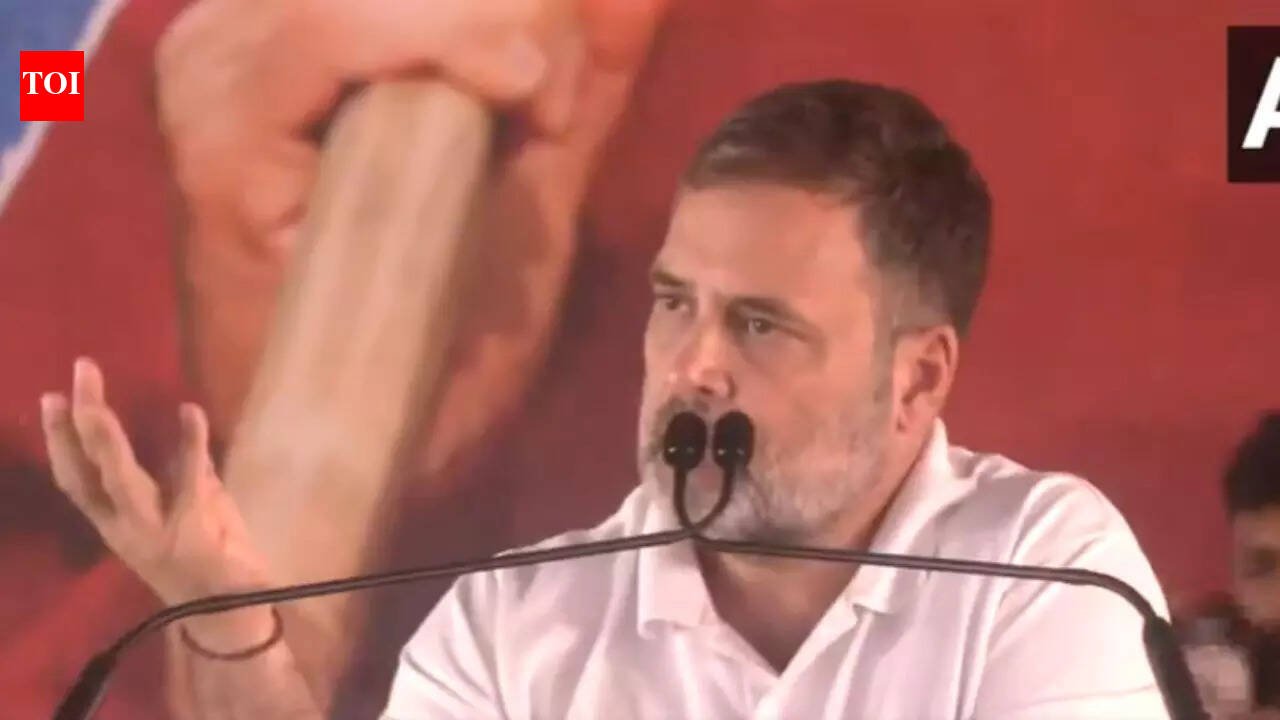
NEW DELHI: Congress leader Rahul Gandhi on Saturday questioned Prime Minister Narendra Modi over the timing of the Indo-US interim trade deal.Addressing the Mazdoor Kissan Maha Rally in Barnala, Punjab, Rahul said the deal had been stalled for four months due to disagreements over opening the agriculture sector.

From Epstein Files to Trade Deal, Rahul Gandhi Launches All-Out Attack on PM Modi

“So the question arises, the work which PM did not do for four months, why did he do it within 15 minutes?” he asked. “What was the pressure that the prime minister of India signed a death warrant for our country there. He signed a death warrant for our farmers. He gave away our data. He signed a death warrant for our small and medium industries,” he alleged.Rahul further said that the prime minister gave a guarantee to US president Donald Trump that India would buy US products worth Rs 9 lakh crore every year. He said opening the agricultural sector would allow American goods to enter the Indian market and harm farmers in Himachal Pradesh, Punjab, Haryana, Madhya Pradesh, Maharashtra, Rajasthan, Chhattisgarh and Odisha.“Narendra Modi has opened the door of the agricultural sector. American goods will flow in, and our farmers will be ruined,” he said. “No prime minister of India, whether from the Congress Party, the BJP, or any other party, can open the agricultural sector. No prime minister can.”Rahul further claimed he was not allowed to speak in the Lok Sabha after the president’s address because he wanted to refer to an unpublished book by former army chief general Manoj Naravane (retd). He alleged that the memoir described a lack of response from the political leadership during Chinese troop movements near the border.“Only the prime minister of the country can give the order to fire upon the Chinese army. Neither the army chief nor the defence minister can give it. Naravane ji asked the prime minister whether we can fire and stop them. There was no response for 2 hours. After that, Naravane ji gets the order to do whatever he deems appropriate,” he said.


Source link

Kayla Reyneke earns maiden ODI call-up as South Africa announce squad for New Zealand tour


South Africa Women have handed a maiden ODI call-up to promising all-rounder Kayla Reyneke for their upcoming white-ball tour of New Zealand next month. The 20-year-old’s inclusion headlines a 15-member squad that will compete in five T20Is and three ODIs during a nearly three-week tour, with the 50-over matches forming part of the ICC Women’s Championship.

Captain Laura Wolvaardt will lead the side, which blends youth and experience as the Proteas aim to build momentum in challenging overseas conditions.

Kayla Reyneke’s rapid rise rewarded

Reyneke’s selection comes on the back of a memorable T20I debut against Pakistan earlier this month. The offspin-bowling allrounder made an immediate impact, returning impressive figures of 2 for 13 from her four overs in the opening match of the series. Not content with that, she also played a fearless unbeaten knock of 29 off just 16 deliveries to guide South Africa home in a tense chase.

Her match-winning performance earned her the Player of the Match award and marked her as one of the brightest emerging talents in the setup. The selectors have now shown faith in her ability to transition into the 50-over format, where her dual skills could prove vital in New Zealand’s seam-friendly conditions.

Also WATCH: Georgia Voll receives standing ovation at Bellerive Oval; Australia seals the ODI series against India

Key absences and important returns

While Reyneke celebrates a career milestone, the squad will travel without senior all-rounder Marizanne Kapp. Kapp fell ill during the third T20I against Pakistan and has since been sidelined. She will continue her rehabilitation and is expected to begin her return-to-play protocol ahead of South Africa’s future tours once her recovery is complete.

However, there is encouraging news for the Proteas with the return of experienced campaigners Ayabonga Khaka, Masabata Klaas and Dané van Niekerk to the ODI side after missing the Pakistan series. Their inclusion bolsters both the bowling attack and the leadership depth within the squad.

Van Niekerk’s comeback, in particular, adds valuable experience to the middle order and offers another spin option, while Khaka and Klaas strengthen the pace unit that will be tested on New Zealand’s lively pitches.

The five-match T20I series will be played as double-headers alongside the men’s fixtures between March 15 and 25. Matches are scheduled in Mount Maunganui, Hamilton, Auckland, Wellington and Christchurch, promising strong crowds and competitive cricket. Following the T20Is, the focus will shift to the three ODIs on March 29 in Christchurch, and April 1 and 4 in Wellington. With ICC Women’s Championship points at stake, the 50-over leg of the tour carries significant importance for World Cup qualification standings.

South Africa Women squad for New Zealand series: Laura Wolvaardt (c), Tazmin Brits, Nadine de Klerk, Annerie Dercksen, Ayanda Hlubi, Sinalo Jafta, Ayabonga Khaka, Masabata Klaas, Suné Luus, Karabo Meso, Nonkululeko Mlaba, Kayla Reyneke, Tumi Sekhukhune, Chloé Tryon and Dané van Niekerk.

Also WATCH: Well-settled Pratika Rawal’s brain fade moment results in her run-out during AUS-W vs IND-W 2nd ODI

This article was first published at WomenCricket.com, a Cricket Times company.


Source link

Iran war: Jairam Ramesh calls PM Modi’s Israel visit ‘shameful’, says he showed ‘moral cowardice’ | India News


Iran war: Jairam Ramesh calls PM Modi’s Israel visit ‘shameful’, says he showed ‘moral cowardice’
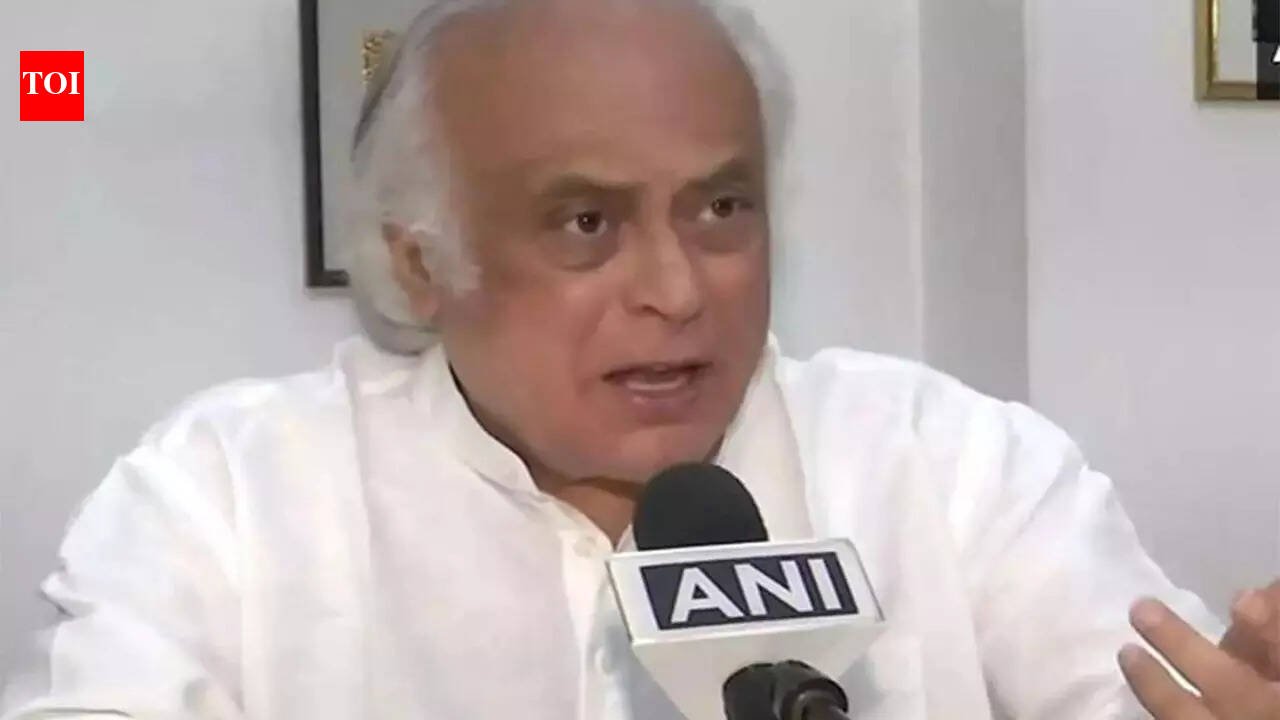
Jaira Ramesh (ANI file photo)

NEW DELHI: Congress leader Jairam Ramesh on Saturday criticised Prime Minister Narendra Modi’s recent visit to Israel after Israel and the United States launched a joint military strike on Iran.In a post on X, Ramesh said, “Two days after Mr. Modi celebrated his visit to Israel, Israel and the US have begun their joint assault on Iran. This was fully expected given their military build-up in the last few months. Mr. Modi nevertheless chose to go to Israel, where he displayed the highest moral cowardice. He declared that India stood with Israel and got himself an award for saying so. This Israel visit was shameful, and it is even more so in light of the war that has been launched by two of Mr. Modi’s ‘good friends’.”

Jairam Ramesh Questions Modi Govt On US Trade Deal, Tariffs And Russia Oil Claims

Israel and the United States launched a joint military strike on Iran on Saturday, codenamed Operation Roaring Lion. The strikes targeted military sites, missile production facilities and areas near the office of Iran’s supreme leader Khamenei.Several ministries in southern Tehran were reportedly struck, and residents heard powerful blasts. Israel declared a nationwide state of emergency, moved hospitals underground and activated sirens. Iran, Israel and Iraq closed their airspace and suspended flights. Prime Minister Narendra Modi had concluded his visit to Israel on Thursday. During the visit, India and Israel agreed to elevate their relationship to a special strategic partnership. The two sides signed 27 agreements in areas including innovation, cultural exchange, manufacturing and artificial intelligence.PM Modi and Israeli prime minister Benjamin Netanyahu discussed cooperation in artificial intelligence, quantum computing, economic and security collaboration. The prime minister also said that India and Israel would soon finalise a mutually beneficial free trade agreement and announced a critical and emerging technology partnership.


Source link