Breaking News
‘India diversifying oil sourcing’: US envoy Sergio Gor notes Russia shift – what he said on Venezuela option


'India diversifying oil sourcing': US envoy Sergio Gor notes Russia shift - what he said on Venezuela option

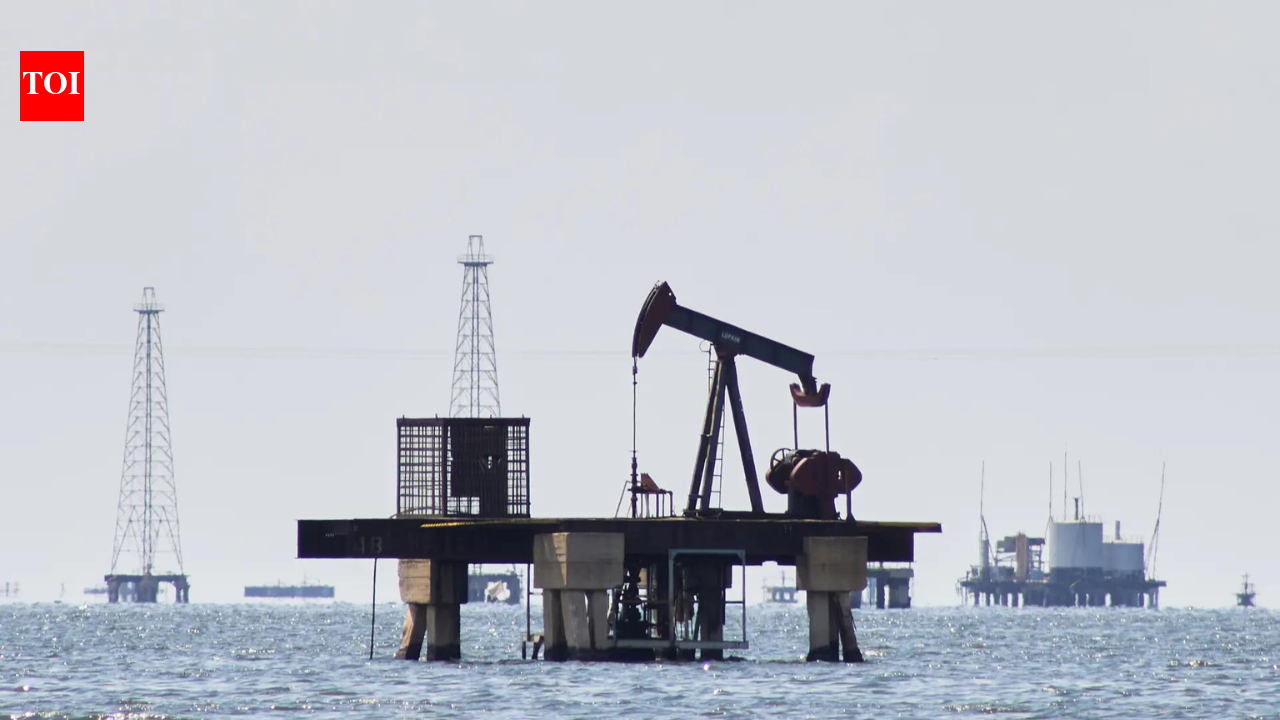
NEW DELHI: India on Friday reiterated its position on Russian oil purchases and the possibility of sourcing crude from Venezuela, after remarks by US envoy Sergio Gor. Clarifying New Delhi’s stance, ministry of external affairs spokesperson Randhir Jaiswal said India would consider Venezuelan crude if it was “commercially viable,” reaffirming the government’s earlier position on the matter.In an official statement, the MEA said, “On Russian oil and on Venezuelan oil, we have issued statements and have made our position very clear. I would once again request you to look at what we have said in the last few weeks on both these subjects. On Venezuela, we had said that if it is commercially viable, then we are exploring buying oil from Venezuela. We clarified our position on Venezuelan oil as also on the other question that you asked. Our position remains the same.”Earlier in the day, the United States reiterated its claim, projecting India’s commitment regarding oil purchases from its long-time trade partner Russia as part of the much-awaited interim trade agreement between New Delhi and Washington. US envoy Sergio Gor expressed confidence, saying the US had “seen India diversify the sourcing of oil.” He also said there were “active negotiations” underway for the potential sale of Venezuelan oil to India, adding that the final trade deal would be signed soon.He also strongly emphasised President Donald Trump’s position, stating that the United States “does not want any country to buy Russian oil.”

PM Modi-Trump Meeting Speculation Grows As US Envoy Sergio Gor Drops Massive Hint, Says ‘Stay Tuned’

Gor made these remarks while addressing a presser on the sidelines of the Global AI Summit taking place in New Delhi.Stressing on India’s oil commitments and the US position, Gor told reporters, “On oil, there’s an agreement. We have seen India diversify their oil. There is a commitment. This is not about India. The United States doesn’t want anyone buying Russian oil. The President has been very clear on this—he wants this war to end. Anyone still involved with that conflict is something the President wants to see come to an end, in hopes that peace will follow.On the possibility of Venezuelan oil being supplied to India, Gor highlighted the ongoing discussions, saying, “The department of energy is speaking to the ministry of energy here, and we’re hoping to have some news on that very soon.”A final trade deal with India will be signed “sooner rather than later,” as only “a few tweaking points” remain, Gor said, adding that President Trump has been invited to India by Prime Minister Modi.The US had proposed supplying Venezuelan crude to India as an alternative to Russian imports, Reuters reported last month. It also granted licences to trading firms Vitol and Trafigura to market and sell millions of barrels of Venezuelan crude following the capture of President Nicolas Maduro and a supply arrangement with interim President Delcy Rodriguez.State refiners Indian Oil Corp, Hindustan Petroleum and Bharat Petroleum, along with private players Reliance Industries and HPCL-Mittal Energy, have already placed orders for Venezuelan crude, according to the Reuters report.Meanwhile, the US has consistently opposed the purchase of Russian oil by other countries, arguing that such transactions support Russia’s war effort in Ukraine. Trump has repeatedly presented himself as committed to ending the conflict and has pushed for reducing global dependence on Russian energy.In a bid to resolve the Russia–Ukraine crisis, Trump has consistently advocated energy decoupling from Russia, with several officials in his second-term administration repeatedly calling for a halt to Russian oil exports.The US has maintained that India would reduce its dependence on Russian oil following the conclusion of the India–US trade deal earlier this month, which came after nearly a year of negotiations between the two major economies.Under the agreement, the Trump administration reduced tariffs on Indian goods and lifted punitive trade measures linked to India’s oil trade with Russia, lowering tariffs from 50% to 18%.Gor also spoke about the possibility of a meeting between PM Modi and President Trump, saying it would take place “at the right time.”


Source link

Margot Robbie’s ‘Wuthering Heights’ dance video goes viral; Bollywood fans say Kareena Kapoor Khan ‘did it first’ in ‘Jab We Met’ – WATCH |


Margot Robbie‘s new romance drama ‘Wuthering Heights’ debuted in cinemas last weekend and topped the global box office with a USD 83 million haul. To celebrate the release, a behind-the-scenes video of the actress dancing at the moores went viral. Interestingly, the video sparked an unexpected Bollywood comparison online.

Margot Robbie’s dance video goes viral

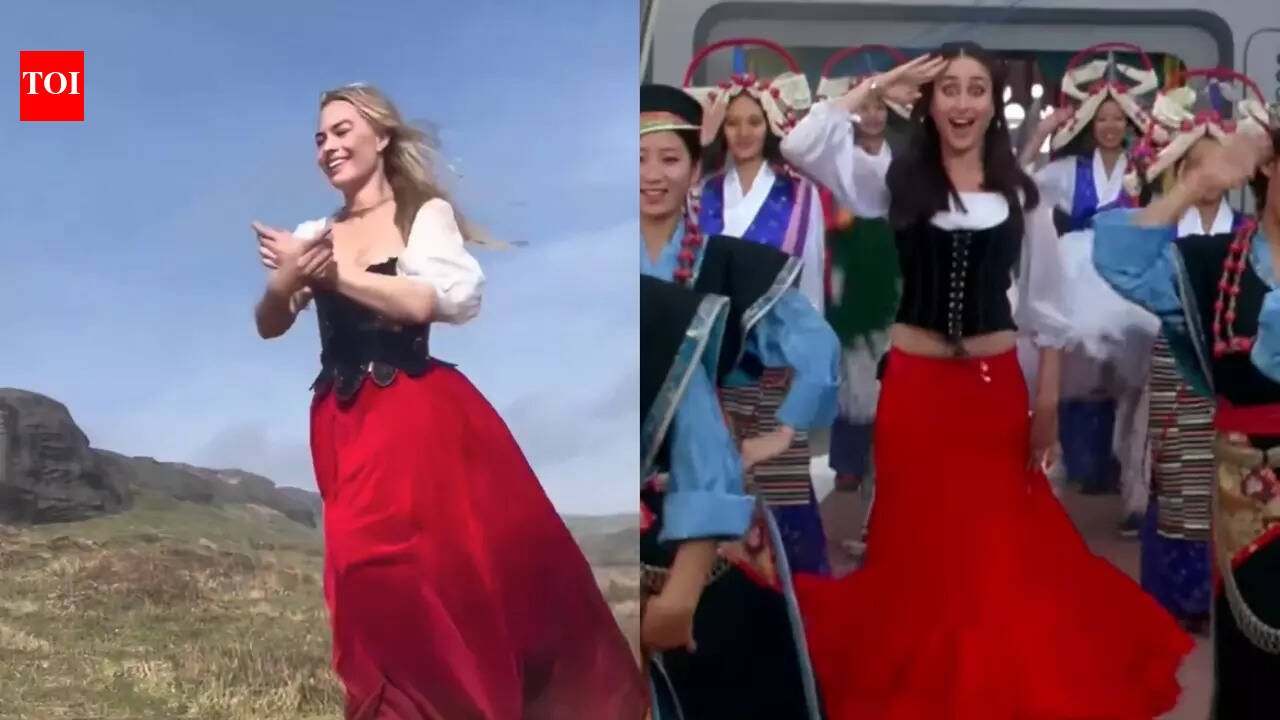
The clip, which surfaced days after the film hit theatres, shows Robbie twirling and showing off her dramatic improvised choreograpy to Kate Bush’s iconic track. The clip was from a day on the set shooting a crutial scene with Jacob Elordi‘s character. For the scene, she was dressed in a red flared skirt paired with a white top and black leather corset.

Margot Robbie’s video compared to Kareena Kapoor’s dance track

However, Indian fans who watched the clip were instantly reminded of another icon – Kareena Kapoor Khan. The video had Bollywood fans pointing out similarities between Robbie’s outfit and dance moves and that of Kareena’s character Geet in the song “Yeh Ishq Hai” from the 2007 hit ‘Jab We Met’.

Margot Robbie lands Queen Elizabeth’s role in ‘Mary Queen of Scots’

In the film, Kareena famously donned a flowing red skirt with a puffed top and black corset for the song sequence that also featured Shahid Kapoor. Social media users flooded comment sections with playful reactions, with remarks such as “So Kareena Kapoor coded outfit,” and “THE BEBO aka Kareena did that in 2007.”

About ‘Wuthering Heights’

‘Wuthering Heights’, directed by Emerald Fennell, is adapted from Wuthering Heights, the 1847 Gothic novel by Emily Bronte. The film, released on February 13, 2026, opened to mixed reviews, but still managed to rake in the big bucks over the Valentine’s Day weekend, earning USD 83 million from a budget of USD 80 million. It remains to be seen if the film can maintain its grip over the box office and score big in the weeks ahead.


Source link

T20 World Cup 2026 [EXPLAINED]: Why all group stage toppers are placed together in single Super 8 group


The T20 World Cup 2026 was supposed to be a celebration of cricket at its finest. Co-hosted across two passionate nations, filled with electric atmospheres and genuine upsets, the group stage delivered everything fans could have asked for. Then came the Super 8 draw,  and the celebration turned into a controversy.

All four teams that won their groups India, Zimbabwe, West Indies and South Africa have been thrown into the same Super 8 bracket. Meanwhile the teams that actually lost matches in the group stage are sitting in a comparatively comfortable second bracket. Fans are furious, former players are baffled and the ICC is on the defensive. To understand how this happened, one needs to understand a single decision the ICC made before a single ball was bowled.

How the ICC T20 World Cup 2026 pre-seeding format creates a Super 8 group with all group winners

Before the tournament began, the ICC assigned fixed seeds to the top eight teams in the world based on their historical rankings. India were locked in as A1. England as C1. Australia as B1. New Zealand as D1. These designations were permanent meaning no matter how these teams performed in the group stage, their Super 8 slot was already decided.

The idea made practical sense on paper. If India’s Super 8 position is fixed in advance, broadcasters can sell prime-time advertising slots months ahead. Fans can book flights and hotels without gambling on whether their team qualifies or which city they will play in. Sponsors get certainty. Venues get preparation time. The entire commercial machinery of a modern World Cup runs more smoothly.

The problem arrived when Australia pre-seeded as B1 crashed out of the group stage entirely. Under this system, whoever replaced them simply inherited Australia’s slot. That team was Zimbabwe. And suddenly a side that had never reached a Super 8 in their history was dropped into a bracket position built for one of the world’s top teams, sitting alongside India, West Indies and South Africa.

Pre-Seed Team and Super 8 Slot

Pre-Seed Team Super 8 Slot
A1 India Locked as X1
B1 Australia Replaced by Zimbabwe as X2
C1 England Locked as Y1
D1 New Zealand Locked as Y2

Fans logic: Why winning your T20 World Cup 2026 group became a punishment

This is where the system truly broke down. In any fair tournament structure, finishing first in a group earns a reward, an easier path, a better draw, some recognition of superior performance. In the T20 World Cup 2026, it earned teams a nightmare.

Because the pre-seeded slots were fixed around historical rankings rather than actual group stage results, the four teams that genuinely topped their groups all ended up on the same side of the bracket. India, Zimbabwe, West Indies and South Africa, all unbeaten, all deserving of recognition, are now being forced to eliminate each other before the semi-finals even begin.

South Africa won every match they played. West Indies were dominant from start to finish. Yet because New Zealand and England were pre-seeded into the other bracket before the tournament started, these genuine group winners are being treated as the harder draw. Two of these four unbeaten teams will be going home before the last four not because they were not good enough, but because a spreadsheet decided their fate in advance.

  • The unfairness: South Africa and West Indies finished first in their groups but are seeded below England and New Zealand who both lost matches
  • The competitive cost: Teams in the first round had no real incentive to win their group because finishing second actually leads to an easier Super 8 path
  • The dead rubber problem: Several final group stage matches lost their edge entirely once teams realised topping the group could work against them

Group 1 – The Powerhouse Bracket

Team Group Stage Finish Record
India 1st in Group A Unbeaten
Zimbabwe 1st in Group B Unbeaten
West Indies 1st in Group C Unbeaten
South Africa 1st in Group D Unbeaten

Also READ: Pakistan to lift T20 World Cup 2026? Here’s how Australia’s group stage exit benefits Salman Ali Agha’s side

How 2nd place teams got an easier path to the T20 World Cup 2026 semis

While Group 1 resembles a war zone, Group 2 tells a completely different story. Pakistan, Sri Lanka, England and New Zealand,  every single one of them a second-place finisher, have been handed what many are calling a gift-wrapped route to the semi-finals.

Pakistan lost a match in the group stage. Sri Lanka did too. England and New Zealand, despite their pre-seeded status, were far from convincing. Yet all four find themselves grouped together in a bracket that is statistically far less threatening than the one containing four unbeaten sides. A team in Group 2 has a significantly better chance of reaching the last four than any team in Group 1,  purely because of where the ICC placed them before the tournament started.

  • Group 2 makeup: Pakistan (A2), Sri Lanka (B2), England (C1 pre-seed), New Zealand (D1 pre-seed)
  • The pathway problem: Second place finishers face a softer route to the semis than first place finishers
  • The incentive damage: The entire purpose of a group stage competing to finish first has been rendered meaningless

Sri Lanka may not play a single T20 World Cup 2026 semi-final at home

Perhaps the strangest casualty of this entire system is Sri Lanka themselves,  one of the two host nations. A co-host would reasonably expect some guarantee of playing their biggest matches on home soil. In 1996 and 2011, co-hosts were given exactly that assurance. Not in 2026.

The pre-determined bracket structure means that if Sri Lanka advances to the semi-finals, they must travel to India to play their match. At the same time, a separate pre-existing agreement guarantees that if Pakistan reaches the semis, the Colombo venue is reserved specifically for their game. Since Pakistan and Sri Lanka are both in Group 2 and cannot face each other in the semi-finals, the result is almost surreal, Sri Lanka could end up watching another team play a semi-final in their own stadium while they travel to a foreign country for theirs.

  • The travel reality: Sri Lanka must travel to India for their semi-final if they qualify
  • The Pakistan clause: Colombo is pre-allocated to Pakistan’s semi-final regardless of Sri Lanka’s progress
  • The historical comparison: Previous co-hosts in 1996 and 2011 were protected from exactly this situation.

Also READ: Explained: Which teams will India face in Super 8 of T20 World Cup 2026?


Source link

‘PM Modi torn between grips of US & China’: Rahul returns with jiu-jitsu analogy; explains why he used it in Parliament | India News


'PM Modi torn between grips of US & China': Rahul returns with jiu-jitsu analogy; explains why he used it in Parliament

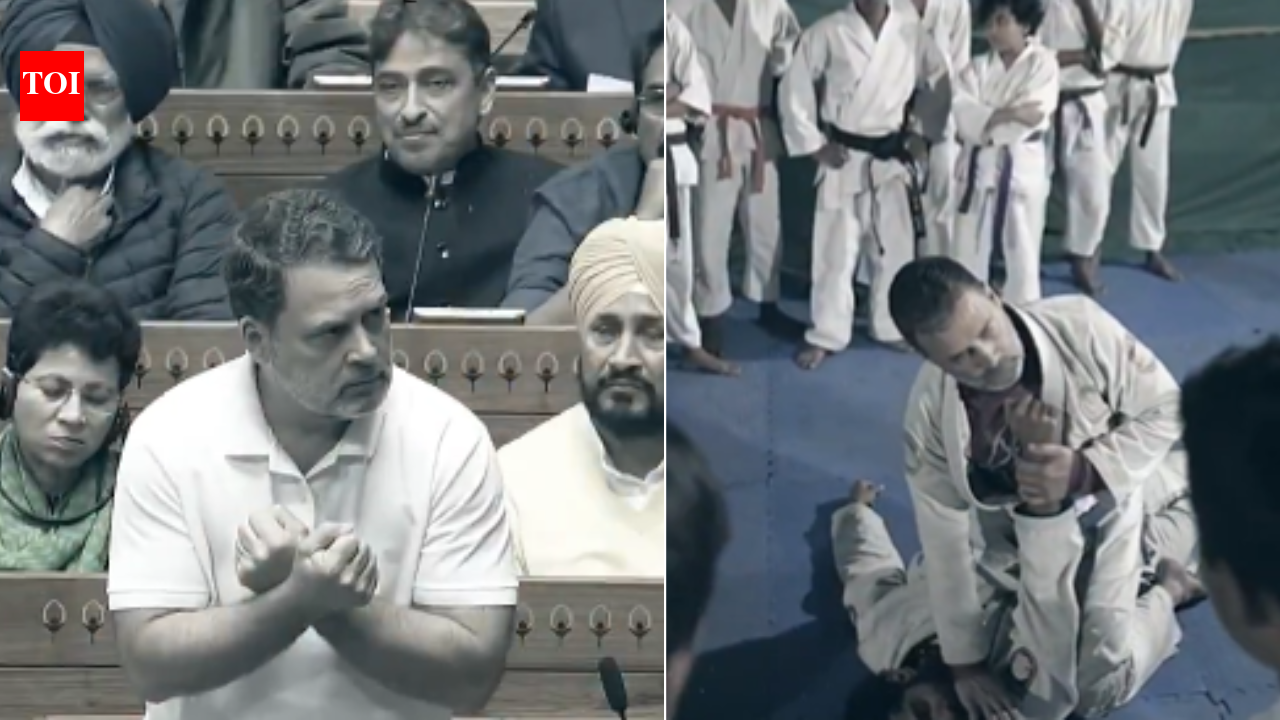
NEW DELHI: Lok Sabha Leader of Opposition on Friday unpacked his fiery “jiu-jitsu” analogy from the Budget Session speech, detailing the “political grips and chokes” squeezing Prime Minister Narendra Modi. In a video post on X, Gandhi highlighted the Gautam Adani indictment, plus the Epstein files that mention Union minister Hardeep Singh Puri and Anil Ambani. He also slammed the India-US trade deal as lopsided, heavily favoring American interests over India’s.“On one side, there is China sitting on our border, and on the other side, there’s the USA. And our Prime Minister is torn between these grips. He’s trapped,” Rahul said, explaining why he used the jiu-jitsu analogy in his Parliament speech during the Budget Session.“The real grip on Mr Narendra Modi is the fake image he has built, that has been built for him. An image that has required huge amounts of money. The key to that image is now in the hands of the US. And that’s why Indian farmers are going to suffer. Indian textiles are going to suffer. We will be forced into buying imports from the US,” he added.

Lok Sabha Sees Massive Ruckus As Rahul Gandhi Mentions Epstein Files, Adani Case; Slams PM Modi

“Why did I use a Jiu-Jitsu analogy in my Parliament speech on the trade deal? The reason I used the idea of grips and a choke is because these exist in the sport of Jiu-Jitsu and it is how you control an opponent in this sport,” he said.“But they also exist in the political realm. In my experience of politics, political grips and chokes are mostly hidden. The average person can’t see them. And you have to look carefully to see where the choke is being applied. It expressed very powerfully what our Prime Minister is going through,” he added.In a post on X, he raised several questions: “Why were our farmers sacrificed to please the Americans? Why was India’s energy security compromised by allowing the US to dictate our oil supplies? Why agree to increase US imports by $100 billion a year without a reciprocal promise? Why did I say this deal could turn India into a data colony?”“Why would Modi ji agree to a deal where India gives so much and appears to get so little?” he asked, before he went to reply “the answer to this abject surrender lies in the ‘grips’ and ‘chokes’ placed on the PM.”“But most important is the data. The fact that our data is being handed over by Mr Narendra Modi to American companies to the United States for a pittance. And mark my words, we are going to become a data colony,” he added.Earlier, Rahul had criticised the government over the organisation of the AI Summit, calling it a “chaotic PR exercise” and alleging that instead of harnessing India’s talent and data, the event put Indian data at risk while promoting Chinese products.On Friday, members of the Indian Youth Congress staged a shirtless protest at Bharat Mandapam against Prime Minister Modi, targeting the AI Impact Summit and accusing him of being “compromised.” As part of the demonstration, party workers took off their shirts to signal dissent.


Source link

Access Denied


Access Denied

You don’t have permission to access “http://www.ndtv.com/world-news/2-indians-thrashed-in-racial-assault-in-israel-attack-planned-on-whatsapp-11112614” on this server.

Reference #18.34a21ab8.1771587302.ec52926

https://errors.edgesuite.net/18.34a21ab8.1771587302.ec52926


Source link

Who after Vijayan? Left’s tryst with first-time voters and survival in Kerala | India News


Who after Vijayan? Left’s tryst with first-time voters and survival in Kerala

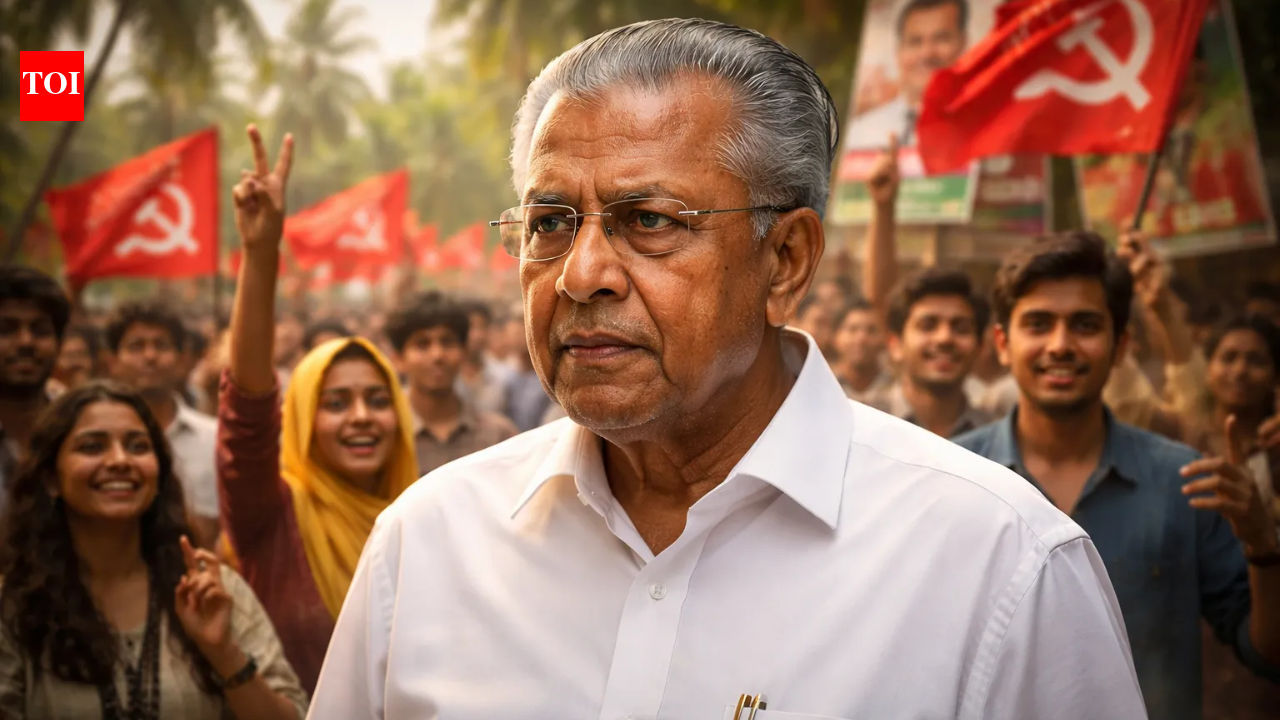
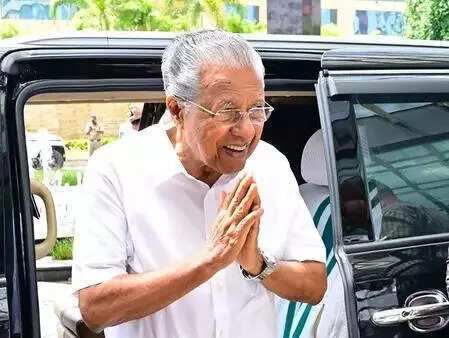
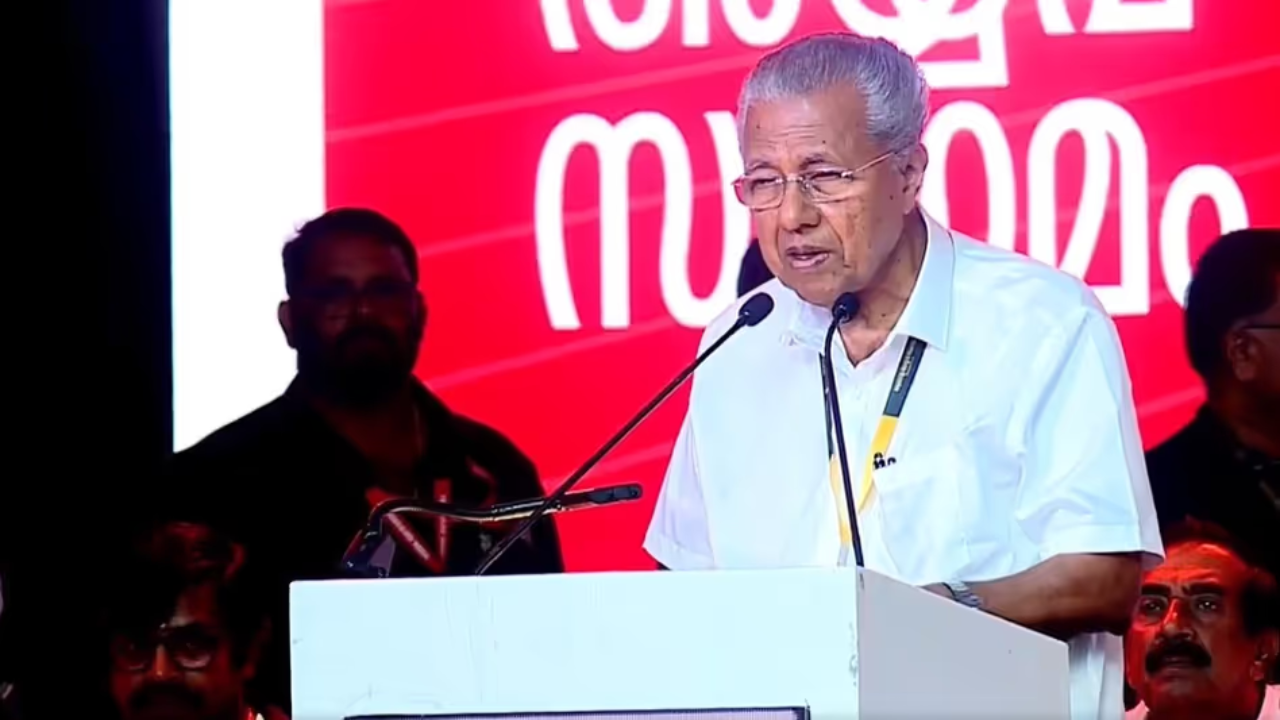
As Kerala heads toward the 2026 assembly elections, a question hangs over the state’s political landscape: what does the future of the Left look like beyond Pinarayi Vijayan?For nearly a decade, Vijayan has been the undisputed face of the Left Democratic Front (LDF), steering it through floods, a pandemic, fiscal strain and, in 2021, a historic re-election that broke Kerala’s four-decade pattern of alternating governments. But as the chief minister approaches 81, the conversation within party ranks and among voters has quietly shifted from governance to succession.

Congress In Damage Control Mode After Mani Shankar Aiyar’s Baton Remark To Kerala Chief Minister

Vijayan

Kerala remains the only state currently governed by the Left. That makes the 2026 election more than a routine contest; it is a referendum on the future of communist politics in India, and on whether the LDF can renew itself in time to connect with a new generation of voters.

Vijayan factor: Age, authority and continuity

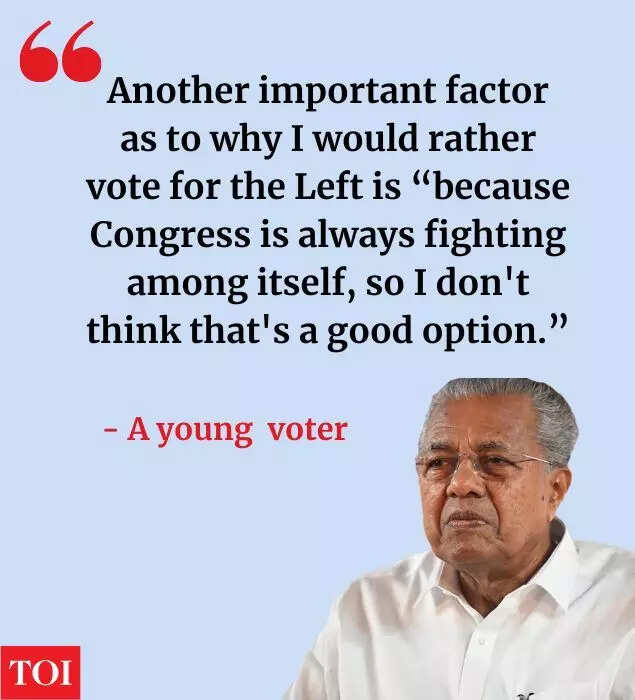
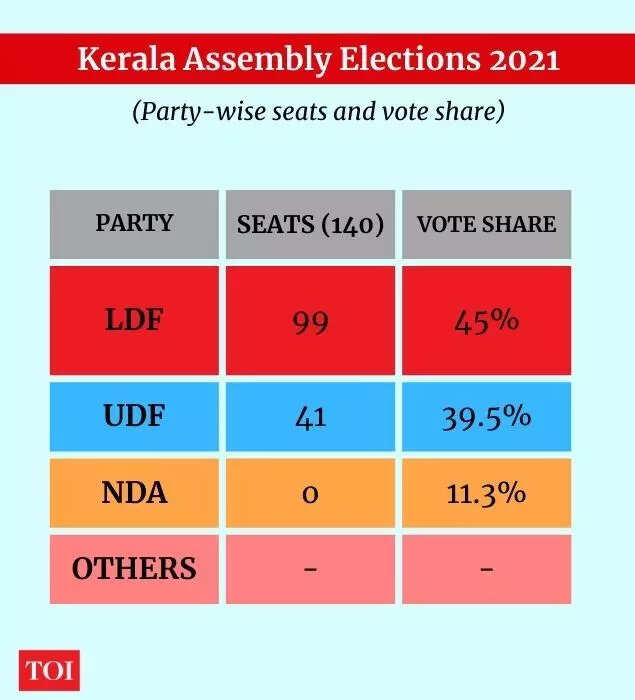
At 80, Vijayan remains the central pivot of the LDF’s campaign and governance narrative. His leadership received wide credit for the LDF’s 2021 victory, when the front secured 99 of 140 seats, the first time in four decades that an incumbent returned to power in Kerala.The government has since highlighted welfare expansion, including raising social security pensions from Rs 600 to Rs 2,000, infrastructure spending estimated at nearly Rs 2 lakh crore through budgetary and extra-budgetary resources, and a push towards a “knowledge economy”.Yet, the question is less about performance and more about continuity. “Leadership transition is a structural issue for cadre-based parties,” said a political science professor at Delhi University. “The Left’s strength has always been collective leadership, but electorally, Kerala voters increasingly respond to identifiable faces.” Sherwin, a young freelancer from Thrissur based in Delhi, believes, “If not for Vijayan, the Left possibly won’t be coming back to power.” He highlights another important reason he would rather vote for the Left: “because Congress is always fighting among itself, so I don’t think that’s a good option.”He adds, “It’s always the least bad option you vote for, not the best, that is the case in politics, I think, everywhere now.”

What voters say

Dhristi, a member of a Left student group, says, “Vijayan is not all that glossy it might look, maybe right now there is nobody to replace him, but that doesn’t make him a good choice.” She adds, “I think it’s time that more young faces are given a chance, just look at the politburo, the people sitting there just have no connection with the ground and the kind of issues youths are facing.”

The missing second rung

Unlike previous phases in Kerala politics, no widely projected younger leader is positioned as Vijayan’s natural successor. While several senior ministers and party leaders remain influential within the Communist Party of India (Marxist), the bigger partner in LDF, none currently command statewide mass appeal comparable to the chief minister.A member of the Left’s student wing says that projecting a successor prematurely could trigger factional tensions. “The party prefers continuity and collective functioning. The focus is on policies, not personalities,” he said.

Nearing 81, can Pinarayi Vijayan still defy Kerala’s political gravity.

But electoral politics is increasingly personality-driven. The absence of a clearly visible next-generation face may complicate outreach to first-time voters, particularly in urban constituencies where three-cornered contests are sharpening, with an increasing BJP/NDA footprint.

First-time voters: A shifting electorate

The scale of the youth electorate is becoming clearer. According to official figures cited by AIR News following the publication of draft electoral rolls for the state, over 1,21,000 applications have been received for updates and corrections. Of these, 96,785 were submitted for the inclusion of first-time voters who have turned 18 or sought constituency transfers. For the LDF, engaging Gen Z voters presents both opportunity and challenge. This demographic has grown up in a hyper-connected political environment, shaped as much by social media narratives as by traditional cadre networks. Increasingly, these first-time voters have become the most sought-after political entity that every party wants to sway on their side. Vishnu, a 22-year-old first-time voter from Alappuzha studying in Delhi, said, “Development and jobs matter more to us than ideology. We want to see opportunities in the state so we don’t have to leave Kerala.” Another student from Kozhikode noted that while welfare measures are important, “the conversation online is different, people talk about entrepreneurship, start-ups, global exposure.”The LDF has responded with a renewed focus on digital outreach, alongside its traditional house-visit programme, where leaders, from state-level figures to branch secretaries, are engaging households directly to gather feedback.But Sherwin says, “although there is a very active young group of people working for Left on ground, and they always come up with different schemes of things, but the Congress does the same as well, so I don’t see anything different that they are doing to woo the youths.”

Local body polls 2025

If the 2021 assembly verdict was historic for the LDF, the 2025 local government elections served as a reality check.The scale of losses was significant. LDF’s control in grama panchayats fell from 577 to 340, in block panchayats from 111 to 63, and in district panchayats from 11 to 7. In urban Kerala, the slide was steeper: municipal corporations under LDF control dropped from five to one, while municipalities declined from 43 to 29.The most symbolic blow came in Thiruvananthapuram, where the BJP captured the Corporation for the first time, winning 50 of 101 wards. For a front that had dominated the capital’s civic body since 1980, the loss carried political weight beyond numbers.However, vote share data tells a more nuanced story. Despite seat losses, the LDF polled close to 40% of the vote statewide. The UDF secured 43.21%, maintaining a lead but not a landslide margin. The BJP-led NDA’s vote share remained around 16%, marginally higher than in previous local polls, and lower than its 19.4% performance in the 2024 Lok Sabha election. The party’s gains came from concentrated seat conversion rather than dramatic vote expansion.In assembly segment terms, the UDF held leads in 81 constituencies, while the LDF led in 57. However, in 32 constituencies, the margin of defeat for the LDF was between 1,000 and 10,000 votes, indicating that micro-swings could reshape the 2026 map.There were also demographic undercurrents. With minorities constituting nearly half the state’s population, the LDF’s near-40% vote share suggests that it retained a substantial segment of minority voters as well among other sections, even as sections appeared to consolidate behind the UDF in parliamentary-style contests. The data indicates shifts, but not collapse.From the Left’s point of view, the local body verdict reflects three trends:

  • Sharper three-cornered contests
  • More efficient seat conversion by the UDF and BJP, and
  • Vulnerability in urban middle-class pockets, especially among younger voters

Whether the 2025 results were a precursor to 2026 or a mid-term correction remains an open question.

Between welfare and perception

The DU professor argues that anti-incumbency alone does not explain the LDF’s recent setbacks. Instead, “electoral shifts reflect layered dynamics, consolidation of minority votes behind the UDF, sharper arithmetic in urban areas, and the BJP’s targeted expansion”. Adding, at the same time, it seems, after two consecutive terms, the LDF is recalibrating its political messaging amid demographic and ideological churn.

.

That recalibration became visible to the world during the row over Jamaat-e-Islami Hind. The CPM and the BJP accused the Congress-led UDF of accepting support from the organisation. The controversy escalated when senior CPM leader A K Balan warned that a UDF government could allow Jamaat influence over the home ministry and lead to incidents like the 2002–03 Marad riots. CM Vijayan backed Balan’s remarks, though the CPM later described them as his “personal view” after criticism that the rhetoric echoed narratives usually associated with the Sangh Parivar. But, the incident was uncharacteristic of the Left, who compared to much of the country’s political landscape has avoided getting into the arena of communal/polarising rhetoric. Simultaneously, the Left moved to reinforce ties with sections of influential Muslim bodies such as Samastha, including the nomination of Ummer Faizi Mukkam to the Kerala State Waqf Board, a step widely interpreted as calibrated engagement with constituencies seen as distinct from the IUML.On the majority side, the government’s role in facilitating the Global Ayyappa Sangamam, linked to the Sabarimala temple managed by the Travancore Devaswom Board, drew attention given the Left’s earlier strong backing of the 2018 Supreme Court verdict allowing entry of women of all ages. Meanwhile, as the polls approach and Sabrimala snowballs into a larger electoral issue, the Left is increasingly taking a vague stand, with its ministers straightly refusing to give any clarity.

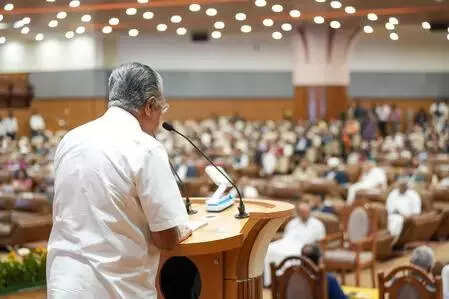
Pinarayi Vijayan speaks at Ayyappa Sangamam

Taken together, these episodes reflect the LDF’s attempt to navigate a more polarised landscape, balancing welfare governance with identity-sensitive politics, as it prepares for 2026.

Revival playbook

Party leaders have acknowledged the need to “learn from the people” and correct gaps in policy implementation and political communication. A statewide house-visit programme has been launched. Parallelly, the LDF has intensified its campaign against what it terms fiscal discrimination by the Centre. Issue-based mobilisation is also being sharpened, including campaigns around MGNREGA allocations and the implementation of labour codes. The deeper challenge, however, is political positioning. The Left’s historical growth in Kerala was rooted in class mobilisation cutting across caste and religion. Recent elections exposed tensions between welfare-driven governance, secular positioning, minority anxieties, and attempts at broader social outreach. A sustainable revival may require clarity in ideological messaging as much as administrative efficiency.The revival question, therefore, is less about arithmetic and more about adaptability.

What next for the Left?

For the Left, 2026 is not merely about retaining power but about redefining relevance. The stakes are national: Kerala is the last state under communist governance. A defeat would mean the absence of a Left-led state government anywhere in India.The immediate strategy appears two-fold: consolidating welfare beneficiaries through grassroots engagement, and countering opposition narratives via coordinated political campaigns and social media mobilisation.But the structural question remains unresolved: can the LDF transition from a leadership model anchored in Vijayan’s authority to one that inspires confidence among younger voters?As Kerala’s electorate expands with tens of thousands of first-time voters, the 2026 contest may hinge less on legacy and more on generational trust. Whether the Left can bridge that gap, organisationally and politically, will determine if its red bastion remains intact or enters a new phase of churn.The question, for now, is simple and unavoidable: After Vijayan, who?


Source link

Access Denied


Access Denied

You don’t have permission to access “http://www.ndtv.com/india-news/16-000-vehicles-have-same-chassis-engine-numbers-in-northeast-cag-report-11112528” on this server.

Reference #18.bc2fc917.1771586080.3e8540e

https://errors.edgesuite.net/18.bc2fc917.1771586080.3e8540e


Source link

Norway Chess 2026: From D Gukesh to Divya Deshmukh – full list of players in open and women’s category | Chess News


Norway Chess 2026: From D Gukesh to Divya Deshmukh - full list of players in open and women's category
Norway Chess 2026 will take place in Oslo from May 25 to June 5, featuring elite men’s and women’s tournaments with equal prize money and format. Six players in each event will compete in a double round-robin with Armageddon tiebreaks. Stars include Magnus Carlsen, Gukesh, Praggnanandhaa, and Wesley So, plus Ju Wenjun, Zhu Jiner, Humpy Koneru, and Divya Deshmukh in the women’s field.

NEW DELHI: Norway Chess 2026 will be held in Oslo from May 25 to June 5, 2026, and it will bring together some of the best chess players in the world. The event includes two tournaments: Norway Chess for men and Norway Chess Women for women. Both events follow the same format, prize money system, and playing conditions, which highlights the focus on fairness and equality.Each tournament will feature six players who will face each other twice in a double round-robin format. If a classical game ends in a draw, players will play an Armageddon game to decide a winner.In the open category, big names like Magnus Carlsen, Vincent Keymer, Alireza Firouzja, Praggnanandhaa Rameshbabu, Gukesh Dommaraju, and Wesley So will compete. Carlsen is a multiple-time world champion and Norway Chess winner.Norway Chess 2026 – Open Category

  • Magnus Carlsen (Norway)
  • Vincent Keymer (Germany)
  • Alireza Firouzja (France)
  • Praggnanandhaa Rameshbabu (India)
  • Gukesh Dommaraju (India)
  • Wesley So (USA)

Praggnanandhaa and Gukesh represent India’s new chess generation, with Gukesh being the current world champion. Wesley So is a consistent top player with many international titles.The women’s tournament also features a strong lineup. Zhu Jiner will make her debut after rising quickly to World No. 2. Women’s World Champion Ju Wenjun will return, along with experienced stars like Humpy Koneru and Anna Muzychuk. Young talents such as Divya Deshmukh and Bibisara Assaubayeva will also compete, adding fresh energy to the event.Norway Chess Women 2026

  • Zhu Jiner (China)
  • Ju Wenjun (China)
  • Humpy Koneru (India)
  • Anna Muzychuk (Ukraine)
  • Divya Deshmukh (India)
  • Bibisara Assaubayeva (Kazakhstan)

Norway Chess Women started in 2024 and has already become one of the most important women’s chess tournaments. With top players, equal prize money, and a unique format, Norway Chess 2026 promises to be one of the most exciting chess events of the year.


Source link

T20 World Cup: No fuss, no noise, just business – the New Zealand way | Cricket News


T20 World Cup: No fuss, no noise, just business - the New Zealand way
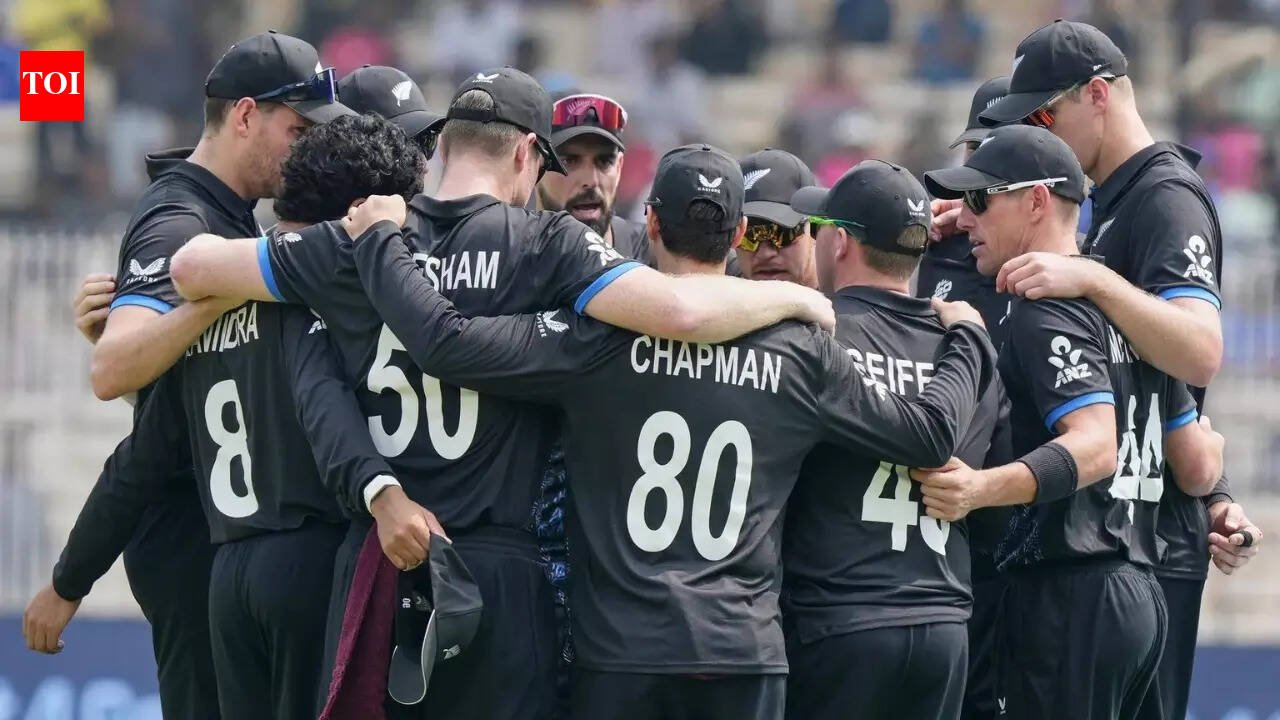
New Zealand’s team huddles before the start of the T20 World Cup cricket match between Canada and New Zealand in Chennai, India, Tuesday, Feb. 17, 2026. (AP)

TimesofIndia.com in Colombo: New Zealand middle-order batter Mark Chapman looked perplexed when he was asked about the Super Eight groups, where all four table-toppers, who have done well in their respective groups, will end up facing each other. It has been done because of the pre-tournament seedings.The 31-year-old smiled and replied, “When it comes to scheduling and planning, that’s not really in my domain.”

Why Pakistan don’t trust Babar Azam any more | T20 World Cup 2026

Chapman’s response sums up the way New Zealand play their cricket. No fuss, no theatrics, just straight down to business.After playing three matches in Chennai and one in Ahmedabad, all on red-soil pitches, the Kiwis had only one training session to adapt to the conditions ahead of their first Super Eight match against Pakistan at the R Premadasa Stadium.

Did they look bothered?

None of them rushed towards the pitch for a closer look. Once warm-ups were done, the players moved to the indoor nets. About an hour later, Daryl Mitchell came out barefoot to inspect the surface, spending a good fifteen minutes studying every inch of the 22 yards.Chapman, who did not get to see the surface, left it to the senior leadership group.“In the subcontinent, the toss always plays a factor depending on the conditions. I haven’t seen the pitch yet, so I don’t actually know what it looks like. There will be discussions behind the scenes with the senior leadership group about what we want to do,” he said.The black-soil pitches in Colombo do assist spinners, and with bigger boundaries and a slower outfield, it presents a new challenge for the 2021 T20 World Cup finalists.“We haven’t played in Sri Lanka yet. A lot of guys in our team have played a lot of cricket here, so I don’t see that playing too much of a factor. Guys understand what they need to do, and we are confident we will face whatever conditions are in front of us,” said Chapman, whose knees were heavily strapped.“In India, particularly on red-soil pitches, conditions have been favourable for batting. It has been tough for the bowlers, and the margins have been very small. We have seen scores close to 200 regularly.“Here, it is slightly different with the slower nature of the pitches. The bowlers will hopefully get a chance to show their skills, and spinners are more likely to play a part here,” he added.

Playing at the same venue

Although Pakistan are stationed in Sri Lanka, they played their group matches at two different venues in Colombo.New Zealand will be the only team playing all their Super Eight matches at the same venue, facing Pakistan on February 21, Sri Lanka on February 25, and England on February 27, all at the R Premadasa Stadium.“One of the challenges in tournaments like these is hopping from venue to venue and adapting. When we play three games at the same place, we learn with each game.“It is nice to turn up at the same venue with similar pitches and adjust. Tomorrow is our first game here, so we will have to adapt anyway, but we will understand the conditions better as we go,” he said.

Facing spin

New Zealand’s first challenge will be Pakistan’s spin-heavy attack. Usman Tariq, Abrar Ahmad, Mohammad Nawaz, Saim Ayub, and Shadab Khan form a strong unit.“Pakistan have a number of very good spinners, each with their own threat. We have played them quite frequently over the last few years.“We are well aware of what they will bring. For us, it is about being really clear in how we want to play against them,” he said.Obviously, there was a Usman Tariq question: “Usman Tariq has a unique action with the way he pauses at the crease, so that is something to factor in.”Chapman, whose role is to take on spinners in the middle overs, explained why running between the wickets will be crucial.“Given the slower pitch and bigger boundaries, you have to change your game plan. Against spinners, it is about different options like the sweep or reverse sweep. In India, you can target straight boundaries more.“For me, it is about finding different areas of the ground. There are big pockets here, so it is not all about sixes. Twos, fours, and running between the wickets are very important, especially if it is not a high-scoring game,” he said.

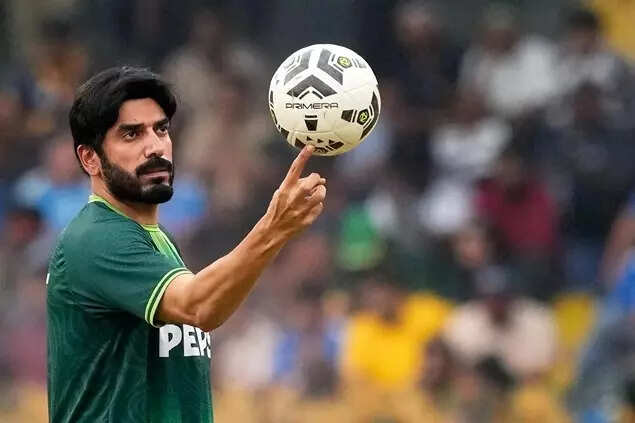
Pakistan's Usman Tariq balances a football on his finger as he warms up before the start of a T20 World Cup cricket match in Colombo, Sri Lanka, Sunday, Feb 15, 2026. (AP Photo)

Team news

New Zealand have suffered injury setbacks. Michael Bracewell has been ruled out of the remainder of the tournament after re-injuring his left calf. Captain Mitchell Santner missed the last group match against Canada due to illness, while Lockie Ferguson returned home for the birth of his first child.“Mitchell Santner looks pretty sprightly and excited to get back on the park, barring any last-minute illness.“Lockie has just returned and is coming off a long flight. We will see how he pulls up. I cannot confirm whether he will be in the playing eleven,” Chapman said.


Source link

Break the spine, but spare the bones: How Taliban is crushing women, one rule at a time


A new low for women in Afghanistan: Taliban rules spark alarm over legalised domestic violence

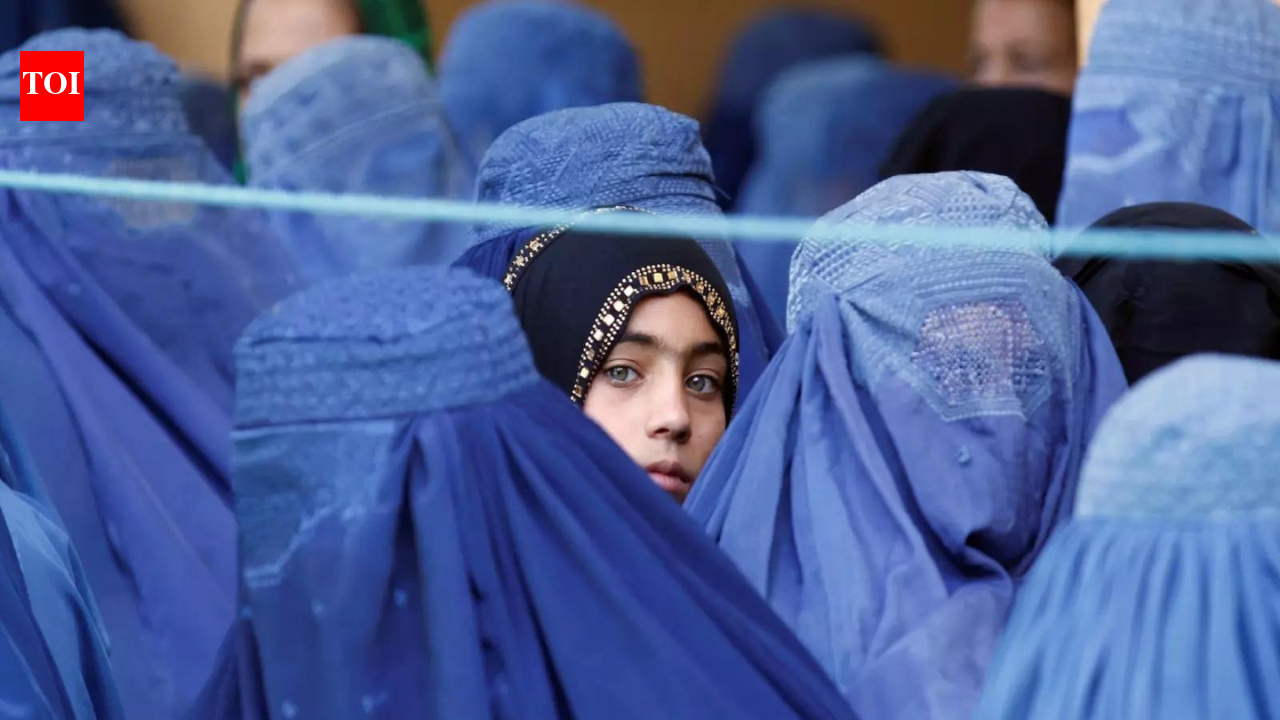
The Taliban has introduced a new penal code in Afghanistan that formalises some of its most hardline policies, prompting concern among human rights groups about the consequences for women and children. Signed by supreme leader Hibatullah Akhundzada, the 90-page criminal code allows husbands to physically discipline their wives and children as long as it does not result in “broken bones or open wounds.”But this is not the first time such a law has been passed. The Taliban have enacted a sweeping set of laws and decrees that dramatically curtail the rights of women and girls across Afghanistan, drawing sharp condemnation from United Nations experts and international human rights organisations.

A new low for women in Afghanistan: Taliban rules spark alarm over legalised domestic violence

Since returning to power, the Taliban leadership has formalised policies that affect nearly every aspect of women’s lives—education, employment, freedom of movement, dress, political participation, access to justice, and personal autonomy—effectively erasing women from public life.

Nationwide ban on secondary and university education for girls

Girls have been barred from attending secondary school beyond grade six, and women have been prohibited from enrolling in universities or sitting for entrance examinations. Entire fields of study—including engineering, agriculture, journalism, mining, and veterinary sciences—have been closed to women.Many girls’ education centres have been shut down, and in some provinces, local orders have reportedly banned girls aged 10 and above from attending even lower grades. Additional regulations require strict dress codes, including full-face coverings, as a condition for attending classes.Curriculum changes have also reduced secular subjects while expanding religious instruction, further narrowing women’s educational and professional prospects.

Broad bans on female workers across government and private sectors

Women have been barred from most government jobs and many private-sector roles, with limited and heavily restricted exceptions in some health and primary education positions. Taliban decrees have also prohibited women from working with national and international NGOs and even the United Nations—previously a major source of employment and essential services for women.Many women-run businesses, including small bakeries and shops, have been shut down. Women have also been barred from roles such as flight attendants and other public-facing professions.The dissolution of state institutions that once supported survivors of gender-based violence has left women without institutional protections in workplaces or homes.

‘Mahram’ requirement enforced

Women are now required to be accompanied by a close male relative, or mahram, for most travel beyond short distances, including trips to health facilities, workplaces, and government offices.Authorities have imposed restrictions preventing women from using public transport independently and have barred cafés and public venues from serving unaccompanied women. In some areas, hospitals have reportedly been ordered not to treat female patients unless accompanied by a male guardian, effectively denying women independent access to healthcare.Women have also been banned from entering parks, gyms, public baths, and other community spaces, severely limiting their participation in public life.

Mandatory coverings and collective punishment

Strict dress codes mandate the wearing of hijab in accordance with detailed guidelines, with some institutions requiring full-body coverings such as the chadari or burqa.Enforcement measures extend beyond women themselves. Women who fail to comply risk losing government jobs, while male relatives who are deemed to have “allowed” non-compliance may face suspension from their posts. Women have also been instructed not to visit male tailors and to limit social interactions outside the home.

Dismantling of legal Protections for women

The Taliban have dissolved shelters, legal aid centres, and state commissions addressing violence against women. Female lawyers have reportedly been denied licenses, effectively barring them from legal practice and restricting women’s access to gender-sensitive legal representation.Women seeking justice must appear fully covered before male judges and be accompanied by a male guardian—often the alleged abuser—making legal redress nearly impossible. Reports indicate that police and judges frequently dismiss domestic violence complaints as “private matters.”

Harsh punishments, limited protections against ‘moral crimes’

Under the new legal framework, husbands face up to 15 days in prison for using “obscene force” resulting in bruises or fractures, but convictions require the wife to prove the abuse in court under strict procedural constraints.Married women can reportedly face up to three months’ imprisonment for visiting relatives without their husband’s permission, even if fleeing abuse. Earlier legal safeguards, including the 2009 Elimination of Violence Against Women (EVAW) law, have been scrapped.Public flogging—up to 39 lashes or more—and prison terms ranging from one to seven years have been imposed for “moral crimes” such as adultery or “illegitimate relations,” with women disproportionately affected. Taliban leaders have also threatened the resumption of public stoning for adultery, though such executions have not been widely reported.

Erasure from governance and public voice

Women have been excluded from senior political, judicial, and security posts. Mechanisms for women’s participation in governance have been dismantled.Women’s rights activists and protesters have faced violent dispersal, arrest, enforced disappearances, and alleged torture in detention. Women journalists have been subjected to strict censorship, harassment, and on-air face-covering requirements, driving many out of the profession.

International condemnation of Taliban

UN experts and rights organisations, including groups such as Rawadari, have described the Taliban’s legal framework as an unprecedented rollback of women’s rights. They argue that the policies constitute systematic gender-based discrimination and may meet the threshold for crimes against humanity.As the restrictions expand, Afghan women and girls continue to face shrinking access to education, work, healthcare, justice, and public life—raising urgent concerns about the long-term social and humanitarian consequences for the country.


Source link