Breaking News
Sunil Gavaskar predicts one change in India’s playing XI for the Super 8 clash against South Africa in T20 World Cup 2026


India continued their dominant run in the ICC Men’s T20 World Cup 2026, finishing at the top of their group with a flawless record in the league stage. Clinical with both bat and ball, the Men in Blue ticked almost every box as they outplayed their opponents to seal a comfortable passage into the Super 8 stage.

Now, the challenge intensifies. India are set to face South Africa, West Indies and Zimbabwe in Group 1 of the Super 8s. Their first assignment is a blockbuster encounter against the Proteas on Sunday (February 22) at the Narendra Modi Stadium in Ahmedabad. With both teams carrying strong momentum into the next phase, the contest promises to be a defining moment in the tournament.

Amid the build-up to this high-profile fixture, former India captain Sunil Gavaskar has weighed in with his thoughts on a possible change in India’s playing XI.

Sunil Gavaskar suggests one change in India’s playing XI for the match against South Africa

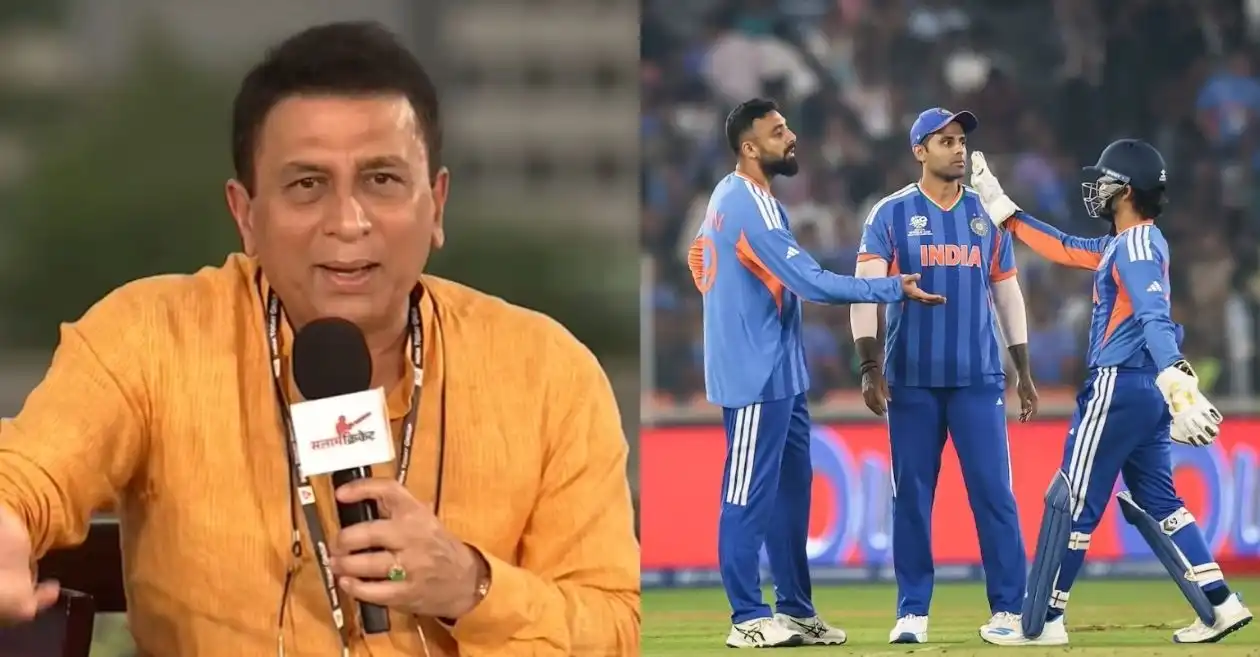
Speaking on Star Sports, Gavaskar predicted one likely tweak to the Indian combination. According to him, all-rounder Axar Patel could return to the playing XI for the Super 8 matches. Gavaskar was uncertain about whom Axar would replace, mentioning Arshdeep Singh as a possibility. He also raised doubts about whether Washington Sundar will retain his spot but indicated that he believes Washington is likely to continue in the team. He further explained that the conditions at the Narendra Modi Stadium in Ahmedabad, especially a pitch expected to offer very little turn, may not suit a specialist wrist-spinner like Kuldeep Yadav, which could influence the team management’s selection decision.

“I feel Axar Patel will definitely come back to the playing XI for the Super 8 games. Now, whether he comes in place of Arshdeep Singh, we will have to wait and see. Whether Washington keeps his place is another aspect we don’t know. My feeling is that Washington will probably keep his place. On a ground like the Narendra Modi Stadium in Ahmedabad, on a pitch with hardly any turn, the team management might not go with Kuldeep Yadav,” Gavaskar said.

Gavaskar pointed out that Kuldeep did not feature prominently against South Africa in the earlier five-match T20I series, implying that he may not be central to the current strategy against the Proteas. He emphasized Washington’s batting ability at number eight as a key advantage, highlighting the value of added depth and power in the lower order. Based on this combination of past usage and team balance, Gavaskar concluded that the only likely change in the XI would be Axar coming in for Arshdeep, while Washington is expected to retain his place.

“Kuldeep also did not play too many matches against South Africa in the five-match T20I series. My feeling is that Washington Sundar, being able to bat at number eight and hit the ball, gives him an advantage. So I feel only the return of Axar Patel in place of Arshdeep Singh will be the change,” he added.

Also READ: Sunil Gavaskar reveals how Abhishek Sharma can rediscover his lost mojo in T20 World Cup 2026

Why the India-South Africa clash could shape the road to the final?

The India versus South Africa encounter carries weight far beyond two points. Both sides were finalists in the previous edition of the T20 World Cup, where India lifted the trophy in a memorable showdown. That rivalry adds an extra layer of intensity to Sunday’s contest.

In the ongoing edition as well, both teams are widely regarded as the frontrunners to reach the final. Their squad depth, recent form and big-match temperament make them stand out in Group 1. While West Indies and Zimbabwe are capable sides and can spring surprises, their recent record against India and South Africa does not inspire the same level of confidence.

A win in this opening Super 8 fixture would not only give momentum but also a psychological edge. In a tightly contested group, net run rate and head-to-head results could play a decisive role in determining who advances to the final. For India, maintaining their unbeaten streak will be crucial. For South Africa, it’s a chance to send a statement. With pride, history and a potential finalist spot at stake, the Ahmedabad showdown could very well shape the destiny of the T20 World Cup 2026.

Also READ: ICC announces complete list of teams qualified for the T20 World Cup 2028


Source link

India-US trade deal operational soon! Other FTAs will follow, here’s what Union minister Goyal said


India-US trade deal operational soon! Other FTAs will follow, here's what Union minister Goyal said

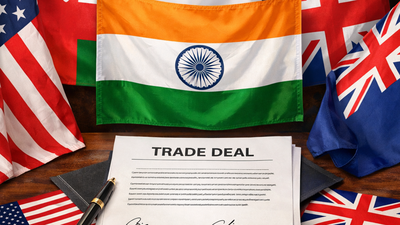
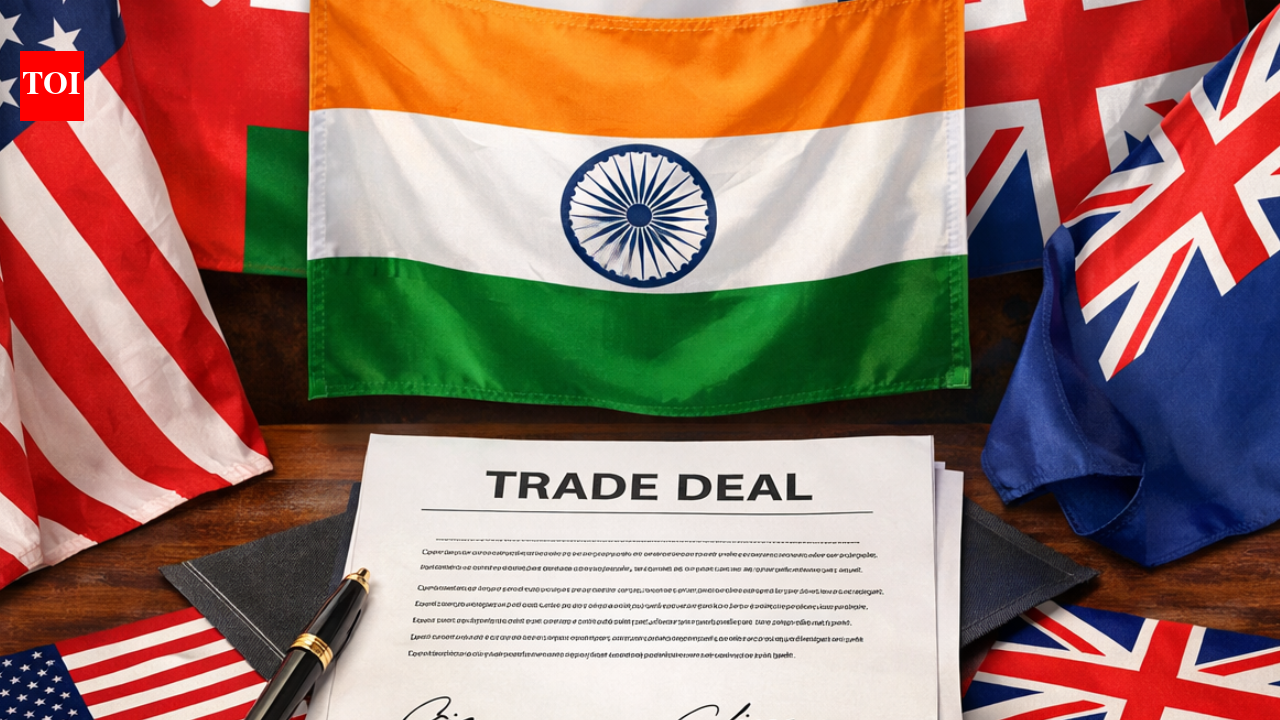
India is set to operationalise its recently signed trade deals with the United States, the United Kingdom, and other countries soon. Earlier this month, India and the US announced that they had reached an interim trade deal, scheduled for formalisation in March. Union commerce and industry minister Piyush Goyal said on Friday that the deal is expected to come into effect in April. The minister further confirmed that other free trade agreements with the United Kingdom and Oman might also materialise in April. Meanwhile, a similar pact with New Zealand is scheduled for implementation in September.To finalise the legal text of the interim trade agreement, officials from India and the US will meet for three days starting February 23. The meeting follows months of negotiations between the two countries, resulting in the announcement of an interim trade deal. During this period, the Trump administration had imposed a 50% tariff on Indian exports, including a 25% levy, citing India’s purchase of Russian crude as indirectly supporting Moscow’s “war machine” against Ukraine.Under the deal, reciprocal tariffs on India have come down from 50% to 18%, while India has committed to lowering tariffs on US products. Meanwhile, India also entered the US-Led Pax Silica on Friday. Minister Piyush Goyal had earlier assured that the trade pact protects farmers and the agricultural sector. Welcoming the trade framework, he highlighted the opportunities it offers for farmers, fishermen, and micro, small, and medium enterprises to access the $30 trillion US market. He added that the formal agreement could be signed by March, after which India’s tariff reductions on US exports would come into effect.


Source link

Shahid Afridi issues fiery challenge to Shadab Khan over ‘India World Cup’ comment | Cricket News


Shahid Afridi issues fiery challenge to Shadab Khan over 'India World Cup' comment
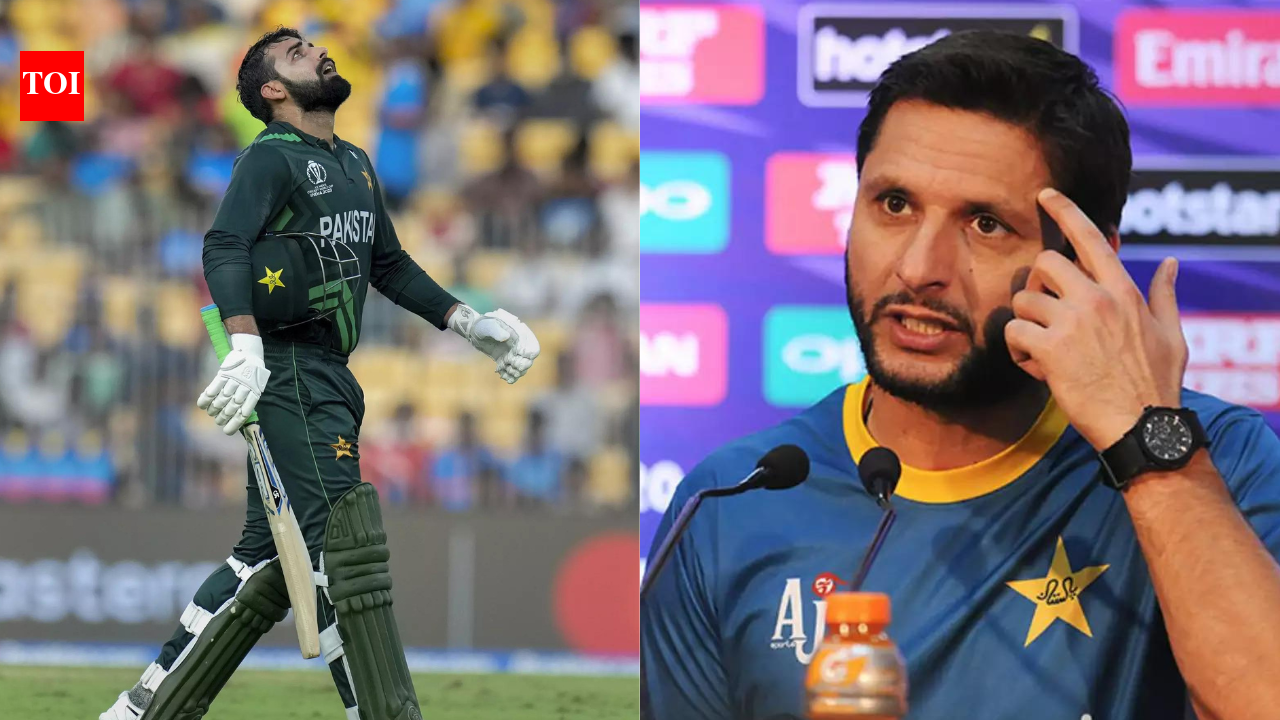
Shadab Khan and Shahid Afridi (Agency Image)

Shahid Afridi, the former Pakistan captain, has taken a swipe at Shadab Khan following the all-rounder’s post-match comments, reminding him of the challenges of handling success. Afridi said that while former Pakistan players had struggled to defeat India in World Cups, Shadab’s team managed it in 2021.After Pakistan’s 102-run win over Namibia in Colombo in their Group A match of the 2026 T20 World Cup, the 27-year-old Shadab was asked about criticism from former stars like Afridi and Mohammad Yousuf. He reminded the media that he had been part of the side that beat India in the 2021 World Cup in Dubai.

Why Pakistan don’t trust Babar Azam any more | T20 World Cup 2026

Following Pakistan’s defeat to India earlier in the tournament on February 15, Afridi and Yousuf had suggested dropping Babar Azam, Shaheen Shah Afridi, and Shadab in favour of giving youngsters a chance. But under Salman Ali Agha’s leadership, Pakistan bounced back emphatically against Namibia, securing a Super 8s berth.In the Namibia game, Shadab shone with an unbeaten 35 and picked up three wickets, producing a near-perfect all-round performance. Yet his comments at the post-match press conference have sparked criticism among former players.Afridi responded, saying: “Shadab was absolutely right when he said that we didn’t beat India in the World Cups, but his side did. They got respect after that, but they couldn’t handle it. By the respect thing, I mean that after they defeated India, they could not handle the issues between them. Shadab should also know that when he was not able to perform for the team, we guys stood up for him on national television, saying he is the backbone of the team.“I know Shadab, he is a very good guy, he has always spoken to us respectfully. When people talked about us during our playing days, we always backed up our words with our actions on the field. Not against the smaller teams, we used to perform against the bigger teams,” Afridi added.The former captain urged Shadab to let his performance answer the critics during the upcoming Super 8s matches against New Zealand, England, and Sri Lanka. “So Shadab beta, aap bhi performance kariye. Beta performances karo. We stood by you in your difficult times; you didn’t play domestic cricket, yet you still got into the national team. If you want to answer us, then do it by performing on the field. Perform and let the World Cup get over, we will get quiet after that,” Afridi said.Pakistan will kick off their Super 8s campaign on Saturday against New Zealand at the R. Premadasa Stadium in Colombo.


Source link

‘Design deficiencies’: Nasa’s harsh ‘mission failure’ verdict on Sunita Williams’ Starliner mission


‘Design deficiencies’: Nasa’s harsh 'mission failure' verdict on Sunita Williams’ Starliner mission
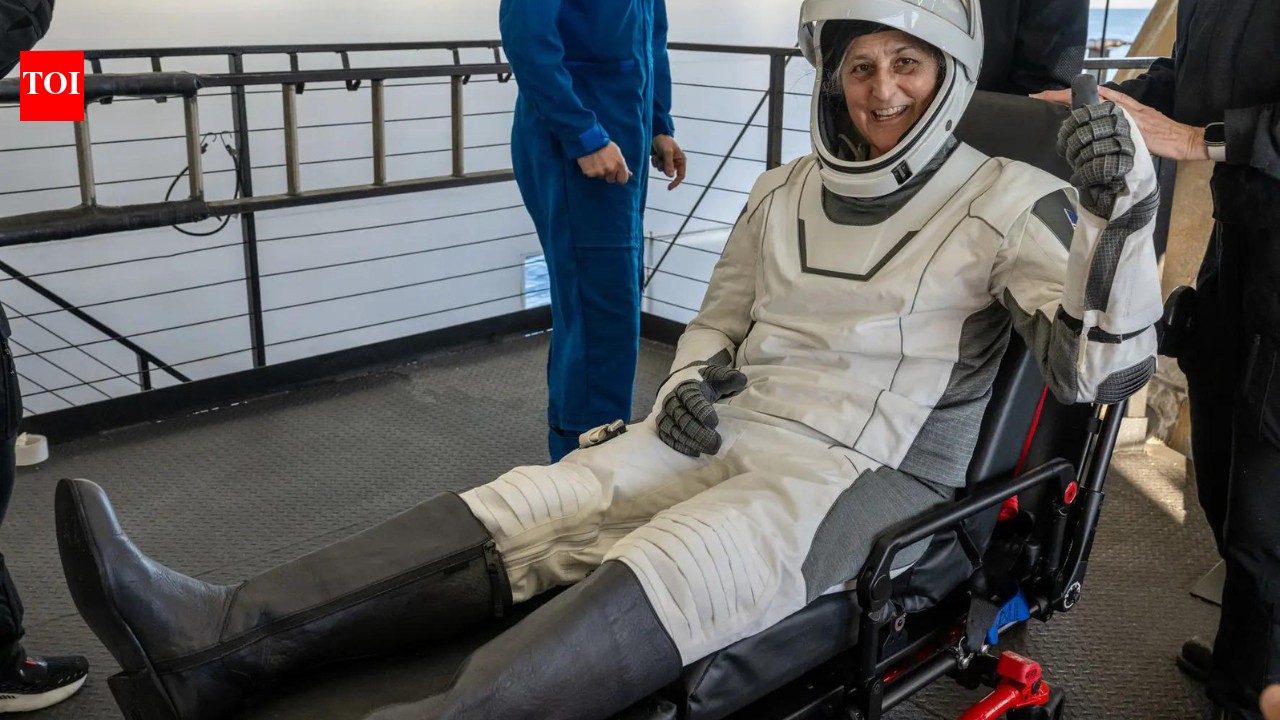
Sunita Williams back to Earth after spending months in space

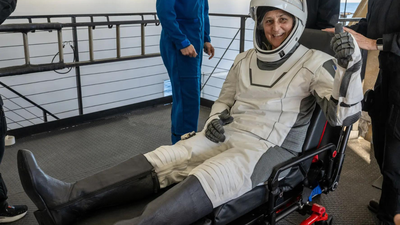
Nasa has sharply criticised Boeing’s Starliner programme following an investigation into the spacecraft’s troubled 2024 mission to the International Space Station (ISS), that led to astronauts Sunita Williams and Butch Wilmore being stuck in space for months. The agency blamed both technical flaws and management shortcomings for the incident.The US space agency designated the test flight a “Type A mishap” — its highest classification for mission failures, previously used in cases such as the Columbia shuttle disaster that killed Kalpana Chawala and six others and the Challeneger explosion that also killed seven. Nasa said the label for the Starliner mission reflects the “potential for a significant mishap”.“We are formally declaring a Type A mishap and ensuring leadership accountability so situations like this never reoccur. We look forward to working with Boeing as both organizations implement corrective actions and return Starliner to flight only when ready,” said Nasa in a statement.“The Boeing Starliner spacecraft has faced challenges throughout its uncrewed and most recent crewed missions. While Boeing built Starliner, NASA accepted it and launched two astronauts to space. The technical difficulties encountered during docking with the International Space Station were very apparent,” said Nasa Administrator Jared Isaacman. The mission drew global attention after propulsion system failures left Nasa astronauts Butch Wilmore and Sunita Williams aboard the ISS for nine months, far exceeding the planned eight-to-14-day duration. The astronauts were ultimately brought back to Earth via a SpaceX Dragon spacecraft in March 2025.Isaacman said the investigation uncovered serious concerns extending beyond hardware issues. “Starliner has design and engineering deficiencies that must be corrected, but the most troubling failure revealed by this investigation is not hardware. It’s decision-making and leadership,” Isaacman said during a briefing.“If left unchecked,” he added, this mismanagement “could create a culture incompatible with human spaceflight.”According to the report, the most significant risk to the crew occurred when Starliner’s thrusters malfunctioned as the spacecraft approached the space station. Enough thrusters were restored to enable a successful docking, but officials said the outcome could have been far worse. “At that moment, had different decisions been made, had thrusters not been recovered or had docking been unsuccessful, the outcome of this mission could have been very, very different,” Isaacman said.He also said that Nasa would not proceed with another Starliner mission until technical issues are resolved. “Nasa will not fly another crew on Starliner until technical causes are understood and corrected,” Isaacman said, adding that the spacecraft is currently “less reliable for crew survival than other crewed vehicles.”Isaacman also suggested that concerns about Boeing’s reputation influenced earlier internal reviews. “Programmatic advocacy exceeded reasonable bounds and place the mission, the crew and America’s space program at risk in ways that were not fully understood at the time,” he said.However, despite the findings, Isaacman said that Nasa would continue working with Boeing. “Nasa will continue to work with Boeing, as we do all of our partners that are undertaking test flights,” he said.In a statement, Boeing said it remains committed to the Starliner programme. “Boeing has made substantial progress on corrective actions for technical challenges we encountered and driven significant cultural changes across the team that directly align with the findings in the report.”Nasa officials also acknowledged internal accountability. “We managed the contract. We accepted the vehicle, we launched the crew to space. We made decisions from docking through post-mission actions,” Isaacman said. “A considerable portion of the responsibility and accountability rests here.”In a statement by Nasa it further said, “To undertake missions that change the world, we must be transparent about both our successes and our shortcomings. We have to own our mistakes and ensure they never happen again.”Nasa Associate Administrator Amit Kshatriya also described the episode as a failure for the agency. “They have so much grace, and they’re so competent, the two of them, and we failed them,” Kshatriya said. “The agency failed them.”


Source link

Six e-commerce firms face action as CCPA targets unauthorised sale of anti-drone & signal jammers | India News


Six e-commerce firms face action as CCPA targets unauthorised sale of anti-drone & signal jammers

NEW DELHI: Cracking down on the online sale of “anti-drone” and “GPS jammer” devices, the Central Consumer Protection Authority (CCPA) has issued notices to six e-commerce platforms and entities. These entities face the risk of punitive action for misleading listings and regulatory non-compliance, officials said.The CCPA has sought detailed information on import licences, regulatory clearances, and buyer details from Everse, Indiamart, Xboom, Javiat Aerospace, AirONE Robotics, and Maveric Drones & Technologies Pvt Ltd.The authority observed that these devices were being listed online without disclosure of mandatory licensing requirements, without valid Equipment Type Approval (ETA) or Wireless Planning and Coordination (WPC) certification details, and without clearly stating that civilian possession and use without statutory authorisation is prohibited. It stated that the sale of such products on e-commerce platforms is likely to mislead consumers into believing that these devices are freely purchasable.The CCPA has directed the entities to furnish detailed information, including the source of procurement and import, along with copies of import licences, invoices, and related documents. They have also been asked to submit copies of regulatory approvals and authorisations obtained from the WPC, Department of Telecommunications (DoT), Directorate General of Foreign Trade (DGFT), Cabinet Secretariat, and Ministry of Home Affairs (MHA).The authority has further sought the legal basis for offering the restricted equipment for commercial sale; the number of units sold over the past two years along with complete purchaser details; particulars of third-party sellers listing similar equipment; steps taken to discontinue such listings and prevent recurrence; and a complete list of similar radio frequency or wireless transmitting equipment offered on their platforms.Drone jammers and signal jamming equipment are regulated under the Indian Telegraph Act and the Wireless Telegraphy Act, and are subject to strict licensing and regulatory control by the Department of Telecommunications (DoT) and the Wireless Planning & Coordination (WPC) Wing. The import of such restricted equipment is governed by the Foreign Trade (Development and Regulation) Act, 1992, and applicable DGFT notifications. Such equipment is ordinarily permitted only for authorised government agencies and law enforcement authorities, subject to statutory approvals.


Source link

Alia Bhatt sends gift hamper for ‘Raazi’ costar Vicky Kaushal’s baby Vihaan; Katrina Kaif reacts to ‘adorable cuddlies’ – PIC |


Katrina Kaif shared a sweet gift from Alia Bhatt for her baby, Vihaan—a cute hamper featuring a blue knitted bunny and a woolen blanket from Alia’s kidswear brand, Ed-a-Mamma. Thanking Alia on Instagram, Katrina joined the list of stars who’ve received thoughtful gifts from the actress’s sustainable label.

Katrina Kaif recently gave fans a heartwarming glimpse into a special gift she received from Alia Bhatt for her baby boy, Vihaan. Taking to Instagram stories, the new mom shared the adorable hamper, melting hearts across the fandoms of all three stars. Known for showering her industry friends with thoughtful gifts from her kidswear label, Ed-a-Mamma, Alia added Katrina to that growing list.

Katrina Kaif reveals Alia Bhatt’s adorable gift

Today, Katrina took to Instagram to reveal a charming surprise from Alia. The actress posted a picture of a delightful gift hamper that Alia had sent for baby Vihaan. The hamper, wrapped beautifully, included a soft blue knitted bunny and what looked like a warm woolen blanket or wrap for the little one. Sharing her appreciation, Katrina tagged Alia’s brand and wrote, “Thank you, Ed-a-Mamma, for these adorable cuddlies.

Alia Bhatt Goes Gaga Over Yami Gautam’s Haq Role, Calls It One Of Her All-Time Favourites

153644401

Alia Bhatt continues her sweet gifting tradition

Alia Bhatt, who launched her sustainable kidswear label Ed-a-Mamma in October 2022, has previously sent thoughtful gifts to celebrities like Karan Johar, Kiara Advani, and Parineeti Chopra. Her hampers often feature adorable plushies and soft toys.

Alia Bhatt and Katrina Kaif’s ‘Jee Le Zaraa’ back on track

Meanwhile, Alia Bhatt and Katrina Kaif were once in discussions to feature in Farhan Akhtar’s film ‘Jee Le Zaraa’, which also had Priyanka Chopra attached to the cast. The women-centric road trip drama was announced in 2021 but remained stalled for years due to scheduling issues and doubts surrounding the original lineup. Recently, however, Akhtar confirmed that the project is finally back on track.


Source link

Bangladesh Cricket Board unveils central contracts for the 2026 season


The Bangladesh Cricket Board (BCB) has announced its men’s central contracts for the 2026 season, introducing a new contract structure and expanding the list of centrally contracted players. The new contracts are effective from January 1 to December 31, 2026 .

Key changes made by BCB in the 2026 contract structure

The BCB has made significant changes to its central contract system for the 2026 season:

A+ category removed: The board has decided to eliminate the top-tier ‘A+’ category from the contract list. This decision was made due to the scarcity of cricketers who regularly play across all three formats for Bangladesh . As a result, no player has been placed in the A+ category this year.

Expanded player pool: The total number of centrally contracted players has increased from 22 in 2025 to 28 in the 2026 list.

Four-tier system: Players are now distributed across four grades: A, B, C and D with corresponding monthly retainers.

Grade-wise contract list and salaries

Here’s the complete breakdown of Bangladesh players in each grade along with their monthly salaries:

 Grade Players Monthly Salary (BDT)
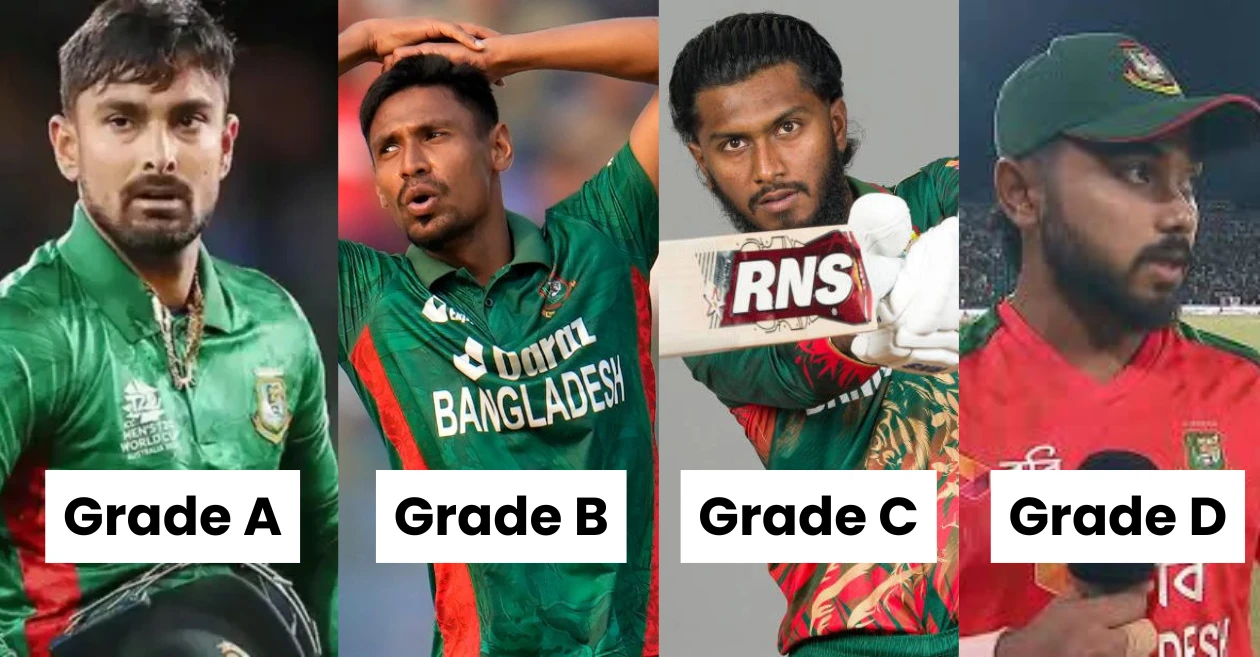
 Grade A  Najmul Hossain Shanto, Mehidy Hasan Miraz, Litton Das,   Taskin Ahmed  800,000 taka
Grade B  Mushfiqur Rahim, Mominul Haque, Taijul Islam, Mustafizur   Rahman, Towhid Hridoy, Shadman Islam, Tanzid Hasan   Tamim, Rishad Hossain, Mahedi Hasan, Hasan Mahmud, Nahid Rana  600,000 taka
Grade C  Soumya Sarkar, Jaker Ali Anik, Shoriful Islam, Tanzim Hasan   Sakib, Nasum Ahmed, Syed Khaled Ahmed  400,000 taka
Grade D  Saif Hassan, Parvez Hossain Emon, Tanvir Islam, Nayeem   Hasan, Hasan Murad, Shamim Hossain, Quazi Nurul Hasan   Sohan  200,000 taka

Also READ: Virat Kohli and Rohit Sharma face Grade B demotion as Shubman Gill enters top bracket of BCCI central contracts for 2025-26

The 2026 central contracts feature several significant changes based on player performances and career decisions:

Taskin Ahmed downgraded: The pacer, who was the sole A+ category player in 2025, has been downgraded to Grade A. This decision follows an Achilles injury that kept him out of all Test matches in 2025, though he remained active in white-ball cricket.

Mushfiqur Rahim moves to Grade B: The veteran batter has moved down to Grade B following his retirement from ODIs in March 2025.

Young players promoted: Strong performances earned promotions for several young cricketers. Tanzid Hasan, who was Bangladesh’s leading run-scorer in T20Is in 2025 with 775 runs in 27 matches, has been promoted to Grade B. Leg-spinner Rishad Hossain, who topped the wicket charts in both ODIs and T20Is last season, also earned a promotion to Grade B.

First-time contract recipients: Batters Saif Hassan and Parvez Hossain Emon, along with spinners Hasan Murad and Tanvir Islam, have received central contracts for the first time. They have all been placed in Grade D .

Notable omissions: Test opener Mahmudul Hasan Joy has failed to make the cut in the 2026 contract list . Veteran all-rounder Mahmudullah, who had retired from all formats, was not included in the new list as expected .

Players returning to contracts: Spinner Nayeem Hasan, batter Shamim Hossain, and wicketkeeper-batter Nurul Hasan have regained their positions in the central contracts after being previously omitted.

Also READ: T20 World Cup 2026 – Shahid Afridi delivers blistering reality check to Shadab Khan after Pakistan’s underwhelming group stage run


Source link

FPIs back on D-Street: Foreign portfolio investors pour in over Rs 33,000 crore, but why is IT sector missing from their shopping list?


FPIs back on D-Street: Foreign portfolio investors pour in over Rs 33,000 crore, but why is IT sector missing from their shopping list?

Foreign portfolio investors once again turned towards Dalal Street to shop for Indian equities, spending in Rs 33,487 crore across 15 sectors, in the first half of February. The bulk of the inflows went into capital goods, financial services and oil & gas stocks, marking the strongest fortnightly buying seen since the second half of April 2025. Capital goods stocks attracted the highest inflows, drawing Rs 8,032 crore between February 1 and 15, compared with Rs 2,761 crore in January. The government’s Rs 4,470 crore stake sale in BHEL partly supported the sector’s momentum. “The capital goods sector has underperformed the market, and there was nothing negative in the budget on the sector which could have prompted global investors to reallocate funds,” said Siddarth Bhamre, head of Research, Asit C Mehta Intermediates told ET. According to Rajesh Singhla, CEO & fund manager at Alpha AIF, the US-India trade deal framework announced in the first week of February also lifted sentiment in segments such as capital goods, textiles, gems and jewellery, helping draw foreign money. Financial services witnessed a turnaround, receiving Rs 6,175 crore in the first fortnight of February after facing outflows of Rs 8,592 crore in January. Singhla said strong third-quarter earnings from banks and financial companies may have supported investor interest, although he noted that valuations in the sector remain unappealing. Foreign investors also bought Rs 4,678 crore worth of oil & gas shares during the period.Why is IT still failing to attract? Despite the broader buying, overseas investors continued to exit some sectors. They sold Rs 13,812 crore across eight sectors in the first half of February, with information technology bearing the brunt. IT alone accounted for more than Rs 10,000 crore of the outflows. The sector has been under sustained pressure in 2025, with nearly Rs 75,000 crore worth of shares offloaded so far, the highest among all sectors, amid concerns that AI-led disruption could affect the outlook for software services exporters. “Fears of AI making the sector less labour-intensive could spark further selling,” said Bhamre. “Overseas investors have shifted allocation from services to pockets in the real economy in this fortnight.” Market performance reflects the trend. The Nifty IT index has declined nearly 15% so far this year, compared with a 2.6% drop in the benchmark Nifty. Singhla, however, suggested the sell-off may have been excessive. “The foreign selling in IT stocks was due to fears of the earnings trending lower as the threat of disruptions due to AI loomed large, but most of the selling was sentimental, and the sell-off was an overreaction,” he said.


Source link

Donald Trump loved his visit to India, told me the culture is unmatched: US envoy Sergio Gor | India News


Donald Trump loved his visit to India, told me the culture is unmatched: US envoy Sergio Gor

NEW DELHI: US Ambassador to India Sergio Gor on Friday indicated that a meeting between Prime Minister Narendra Modi and US President Donald Trump would take place at an appropriate time, while highlighting growing cooperation between the two countries in artificial intelligence and semiconductor supply chains. Gor underlined the importance that US President Donald Trump attaches to India, saying Prime Minister Narendra Modi has invited him to visit the country.“Stay tuned, I’m sure it’ll happen at the right moment,” Gor told ANI on the sidelines of the India AI Impact Summit when asked about the possibility of a meeting between PM Modi and Trump.On the prospect of a presidential visit, Gor said, “…In terms of the President’s visit, the Prime Minister invited him. I don’t have any announcements for you soon. The president loved his visit to India. When he nominated me to be ambassador here, one thing he said is the vibrancy, the colour, the history and the culture that you’re gonna see in India is unmatched, and so I’m sure he will be back here at some point.”The remarks came as India signed the Pax Silica Declaration alongside US officials including Ambassador Eric Garcetti and Under Secretary of State Jacob Helberg. The initiative, led by the US Department of State, focuses on collaboration in artificial intelligence and strengthening secure semiconductor supply chains among trusted partners.Gor described the partnership as a turning point in bilateral ties.“We’re thrilled that India joined Pax Silica… If you saw the companies that are represented here today, this is an incredible partnership for both of our nations, and we look forward to taking it to the next level.”In his keynote address at the summit, Gor said that by signing the initiative, both nations had chosen to win. He described the evolving bilateral relationship as a “coalition of the capable and the willing” and formally welcomed India as a co founder of the Pax Silica coalition. He said the partnership between the world’s two largest democracies is now “limitless.”He added that the initiative seeks to ensure that the “commanding heights” of technology remain in the hands of free nations.Highlighting technology cooperation, Gor said, “We’re looking for initiatives where the United States and India can work together. And Pax Silica leads at that, AI leads at that. We’re coming here with a message to India that our stacks, our abilities, our AI technology is something that we want to work with Indian companies with. We’re not offering that to everyone around the world. It’s something that we bring specially here to this place.Union Minister Ashwini Vaishnaw described the declaration as a significant step for India’s growing semiconductor and electronics ecosystem. Addressing the summit, he credited Prime Minister Narendra Modi’s leadership and thanked External Affairs Minister S Jaishankar and Commerce Minister Piyush Goyal.“We are not just holding a summit here; we are building the future. We are laying the foundation for the young generation,” Vaishnaw said, adding that India’s youth would drive and benefit from decades of sustained growth.Jacob Helberg, United States Under Secretary of State for Economic Growth, Energy, and the Environment, also welcomed India’s participation in the initiative.He said Pax Silica underscores the importance of economic security translating into national security and stands in the face of coercion and blackmail undermining the prosperity of nations.Helberg described Pax Silica as the declaration that “the future belongs to those who build and when free people join forces.”“We do not wait for the future to be given to us. We build it ourselves,” he said.He also praised Ambassador Sergio Gor for strengthening ties between New Delhi and Washington, calling it a testament “to the vital importance that the United States places on this friendship.”The development comes shortly after India participated in the Critical Minerals Ministerial convened by US Secretary of State Marco Rubio earlier this month, represented by External Affairs Minister S Jaishankar.


Source link

$5 million question: Can bankers be fired for demanding 8 hours of sleep? US court to decide


$5 million question: Can bankers be fired for demanding 8 hours of sleep? US court to decide
Whatever the verdict, the case is already forcing an on-the-record look at how a top-tier advisory firm defines “essential” in a profession. (AI image)

A Manhattan federal jury is about to take up an unusually blunt workplace question: Can an investment bank lawfully fire a junior banker who insists on a protected sleep window as a disability accommodation? The case pits former Centerview Partners analyst Kathryn Shiber against the elite M&A boutique after she was dismissed weeks into a “guardrails” arrangement that carved out nine hours of rest per night, according to the Financial Times.The legal fight turns on whether extreme, unpredictable availability is truly an “essential function” of the analyst job or simply a culturally enforced expectation. As federal judge Edgardo Ramos put it in an order moving the case toward trial: “There is a genuine dispute [about] whether the ability to be available at all hours of the day and to work long, unpredictable hours is an essential function of the analyst role,” per court records.Shiber says she was pushed out not because she couldn’t do the work, but because she needed consistent sleep to manage a diagnosed mood and anxiety disorder, the FT reported.Why it mattersWall Street’s junior-banker grind has been a simmering flashpoint since pandemic-era deal surges, when complaints about punishing schedules and chronic sleep deprivation spilled into public view and forced some banks to tinker with “protected” time off, the FT noted.What makes this case more than a culture-war curiosity is that it asks a jury to draw a line between:• High-intensity work that’s legitimately inherent to the job, and• Work patterns that persist because “that’s how it’s always been,” even if they collide with disability law.Legal scholars are watching because trials like this are rare. Disability-law professor Katherine Macfarlane told the FT it was “incredibly unusual” for an Americans with Disabilities Act case like Shiber’s to reach a jury, and she added it would be “slightly absurd [to be] in court arguing that people have to be available 24 hours a day, that’s your expectation . . . The number of people that would preclude is pretty big.Zoom inShiber joined Centerview in 2020 as a 21-year-old junior analyst. Soon after she started, the firm agreed to a trade: a guaranteed nine-hour nightly sleep period in exchange for being reachable essentially all other times, seven days a week, the FT reported.Then the arrangement collapsed fast. Less than three weeks after Centerview implemented the terms, Shiber was terminated on a video call, and Centerview’s COO chastised her for pursuing investment banking given her rest requirements, according to the FT.The underlying workplace conflict traces to a live deal assignment (“Project Dragon”), where Shiber logged off after midnight without messaging senior teammates working on a client presentation; she was reprimanded and then contacted HR to disclose her medical need for sleep, per the FT.Centerview’s position is that the accommodation wasn’t viable beyond the very short term. In filings, the bank said there was “no reasonable accommodation available” if she required eight to nine hours of consistent sleep each night, and it argued junior bankers “are known to work long and often unpredictable hours, a consequence of the job of an investment banker”, the FT reported.Between the linesAt trial, the fight won’t just be about how many hours analysts work. It’s about which hours matter, and whether the midnight-to-morning stretch is operationally essential or merely tradition.John Jacobi, a visiting professor at Columbia Law School, framed the key issue to the FT this way: a central question is “whether it is actually essential that someone be available at three in the morning” – and whether the firm followed an “interactive process” to explore workable options.That “interactive process” point matters because many disability-accommodation disputes hinge less on a single policy than on whether the employer and employee genuinely tried to problem-solve before the relationship broke down.The case is also expected to spotlight the social machinery of junior banking: constant coordination, rapid iteration, and informal norms about when you’re allowed to step away. Centerview has tried to frame Shiber’s sleep window as a communication and teamwork problem as much as a time-off request, saying: “Junior bankers obviously don’t need permission to go to sleep, but are expected to work together and communicate properly with teammates,” according to reporting summarized in Business Insider coverage.What nextThe jury will effectively be asked to decide whether round-the-clock availability is part of the job’s core function or an employer preference that can be adjusted without breaking the role. Judge Ramos’ refusal to end the case early underscores how fact-intensive that question is – and why it’s headed to jurors rather than being resolved on paperwork alone.Expect the courtroom battle to revolve around:• Job reality vs. job description: Whether Centerview can substantiate that overnight availability is indispensable, especially if written expectations weren’t clearly codified and communicated (a point raised in prior reporting on the dispute).• Feasibility of coverage: Whether teammates could adjust workflows, staffing, or handoffs without undermining client service and deal execution.• Accommodation efforts: Whether Centerview’s short-lived guardrails were a genuine attempt at accommodation or a stopgap that set Shiber up to fail.• Damages: Shiber is seeking millions, including lost earnings and “emotional distress,” the FT reported, while Centerview disputes the premise that the role can be done with a fixed sleep block.Bigger picture: Whatever the verdict, the case is already forcing an on-the-record look at how a top-tier advisory firm defines “essential” in a profession that often treats exhaustion as a rite of passage.


Source link