Breaking News
Gold price prediction today: Is gold set to exhibit a bullish bias in the near term? Top factors to watch out for


Gold price prediction today: Is gold set to exhibit a bullish bias in the near term? Top factors to watch out for

Technically, MCX Gold on the daily chart continues to maintain a broader bullish bias despite the recent pullback. (AI image)

Gold price prediction today: Gold prices have pulled back from recent highs, but there is an underlying bullish bias, says Manav Modi, Senior Analyst, Commodity Research at Motilal Oswal Financial Services Ltd. Below is his outlook for gold prices today and this week, along with top factors that will influence the movement of the yellow metal:Gold is hovering around $5,000 after weaker-than-expected US inflation reinforced expectations of Fed easing, driving the 10-year US Treasury yield lower with market participants to price nearly 50% odds of a third rate cut by December. Inflation data last week was reported 0.1% lower than estimates. Recent comments from Kevin Warsh signaling a preference for lower policy rates add to expectations of two 25bp cuts in March and June, which would further compress real yields and support gold inflows. Geopolitical risks remain elevated, with reports of Washington deploying the USS Gerald R. Ford to the Middle East amid stalled Iran nuclear talks boosting safe-haven demand. Meanwhile, markets are increasingly focused on the potential inflationary impact of renewed tariff threats from Trump, alongside lingering questions over Fed credibility. Notably, gold is trading at a discount for the first time in nearly a month even as Chinese demand strengthens, with Shanghai warehouse stocks crossing 100 tonnes, highlighting robust physical buying interest.Focus this week will be on FOMC meeting minutes, PCE price index. The US market remains shut amidst the President’s day holiday while China’s market remains shut for the week amidst lunar new year.Technically, MCX Gold on the daily chart continues to maintain a broader bullish bias despite the recent pullback, with price holding well above the key medium-term support zone near 148,000–150,000, which coincides with the 20-day moving average and prior breakout levels. Immediate resistance is seen around 158,000–160,000, where recent highs and upper supply zones are clustered; a sustained close above this band could open the path toward fresh highs. Fibonacci retracement levels suggest strong structural support near the 0.382 and 0.5 zones around 139,000–134,000 on a deeper correction, keeping the broader uptrend intact unless these levels are decisively breached. Volume patterns indicate that the sharp spike seen during the recent sell-off was not followed by sustained heavy distribution, suggesting profit booking rather than trend reversal. From a Bollinger Band perspective, price recently touched the upper band during the rally and has since cooled toward the middle band (20-SMA), indicating volatility compression and potential base formation; if price stabilizes above the mid-band and bands begin to expand again, it would favor a continuation move higher, whereas a decisive break below the middle band could trigger short-term corrective pressure toward lower supports.(Disclaimer: Recommendations and views on the stock market, other asset classes or personal finance management tips given by experts are their own. These opinions do not represent the views of The Times of India)


Source link

Contest against me, says Shrikant Shinde to Naik | Thane News


KALYAN: The ongoing war of words in Thane district between senior BJP leader and minister Ganesh Naik and Chief Minister Eknath Shinde has shown no signs of subsiding. The dispute took a fresh turn after Naik’s latest remarks prompted a sharp rebuttal from Kalyan Lok Sabha MP Shrikant Shinde, who openly challenged Naik to an electoral contest. Speaking at a public event on Saturday, Ganesh Naik launched a strong attack on Eknath Shinde and his son, Dr. Shrikant Shinde. In a pointed jibe, Naik said that “if you get entangled with me, I will make you a former MP for life.” He further alleged that Shinde’s leadership had pushed Maharashtra “ten years backward.” Naik also warned that he would not tolerate the alleged misuse of government machinery or instances of land grabbing. Pradeep Gupta

Banner Insert


Source link

Asian shares trade flat as Lunar new year closures limit activity


Asian shares trade flat as Lunar new year closures limit activity

Asian markets showed little movement on Monday as several trading floors closed for Lunar New Year celebrations. Japan’s disappointing economic growth of just 0.1 per cent in late 2025 added pressure on newly elected Prime Minister Sanae Takaichi. Meanwhile, US markets will stay shut for Presidents’ Day, and gold prices dipped slightly after reaching $5,000 per ounce.The holiday closures affected mainland China, Seoul, and Taipei, while Hong Kong and Singapore operated only half-day sessions. The slow trading day followed a tech sector decline last week, triggered by worries about massive AI infrastructure investments.Japan’s weak GDP numbers fell short of the expected 0.4% growth, creating challenges for Takaichi, who won recent elections promising economic improvement.“The weak growth implies that the large supplementary budget passed at the end of November provided no boost to public spending last quarter just yet,” said Marcel Thieliant at Capital Economics. He suggested Takaichi might need to act quickly on tax reforms and new budgets.Most Asian markets saw minor losses. Tokyo dropped 0.03%, while Hong Kong managed a 0.4% gain. The market mood improved after US inflation data showed a bigger-than-expected cooling in January.The AI Impact Summit in New Delhi, featuring tech leaders like OpenAI’s Sam Altman and Google’s Sundar Pichai, starts Monday. The event comes amid growing concerns about AI’s social and environmental impacts, despite its role in boosting tech company profits.“US inflation data was good. And the initial response in equities reflected that. But the devil was in the details,” noted Kyle Rodda, adding that core inflation hit its lowest level since March 2021 at 2.4%.In precious metals, gold’s slight decline came after Friday’s gains. Standard Chartered’s note remained optimistic: “We expect gold to remain well supported,” citing expectations of Federal Reserve rate cuts supporting gold demand.


Source link

After 3 years, BMC revives Rs 220cr Mahim-Bandra East flyover plan | Mumbai News


Mumbai: A long-pending plan to construct a flyover connecting Mahim and Bandra East to ease chronic traffic congestion on the Western Express Highway has again been revived, with the BMC issuing a fresh tender for the project. The proposed flyover, estimated to cost Rs 220.17 crore, has remained stuck on paper for nearly three years now.The BMC’s bridges department had decided to build the flyover from Fishermen Colony on Senapati Bapat Marg in Mahim to Bandra East, close to the Kalanagar flyover, to decongest one of the city’s worst traffic bottlenecks. However, tenders floated since 2022 failed to attract bidders within the stipulated deadlines. Traffic congestion on the WEH has only worsened in recent years due to a sharp rise in the number of vehicles. During peak hours, long queues often stretch from the Mithi River area in Bandra East up to Senapati Bapat Marg in Mahim, with the ripple effect felt as far as Dadar, Khar and Santacruz say motorists. “The stretch between Bandra East and Mahim is a nightmare during peak hours. If this flyover actually comes up, it could save us at least 20-30 minutes every day,” said a daily commuter who drives from Santacruz to south Mumbai.According to civic officials, the proposed flyover will start near the Kalanagar Flyover, cross the Mithi River and connect to Senapati Bapat Marg. Once completed, it is expected to provide faster access for motorists travelling between the suburbs and south Mumbai, while also offering smoother connectivity to S V Road, the Bandra-Worli Sea Link and the WEH. The project was first tendered in the year 2022, but the process was scrapped due to technical issues. A second attempt in July 2023 also failed after no bids were received before the deadline. The BMC has now initiated the tender process for the third time.Civic officials said the flyover will be around 1 to 1.5 km long and will complement existing infrastructure in the area, including the Chunabhatti-BKC flyover and the old Kalanagar flyover.


Source link

Bandra locals seek strict rules for promenades | Mumbai News


Bandra locals seek strict rules for promenades

Mumbai: Amid the controversy over the proposed LED hoardings along Bandra’s Carter Road promenade, the Bandra West Residents Association (BWRA) wrote to multiple authorities, including the Maharashtra Maritime Board (MMB), asserting that the promenade-built and maintained by local residents over the past 25 years-is a vital public open space used daily by thousands of citizens.The Carter Road promenade is one of the most frequented open spaces, serving as a vital recreational and social hub for residents across Bandra and beyond. The promenade attracts thousands of walkers, joggers, senior citizens, families, and visitors every day. Over the years, it evolved into a rare, accessible waterfront space in a densely built neighbourhood. “This is a clear and blatant violation of the principles meant to safeguard public open spaces,” the association said in its letter. It added that any sponsorship or advertising during its tenure was done within strictly defined sizes and locations, and with respect for the promenade’s character. BWRA cautioned that the issue could recur due to the absence of clear guidelines regulating hoardings and advertisements on promenades, many of which fall within Coastal Regulation Zone limits. The letter states, “Fortunately, the local Danda Maritime Board office swiftly took down the columns after our dialogue with them. However, we fear this may be attempted again as there are no clear guidelines/regulations governing hoardings/advertisements on Mumbai’s beautiful promenades, which fall in the restricted CRZ zones.” Private firm, Star Electricals, was awarded the maintenance and beautification contract by the MMB under a structured PPP model nearly a year ago. The company says it has invested close to Rs 90 lakh towards improving upkeep, safety, and infrastructure along the promenade. BMC clarified that it has no role as far as the maintenance contract is concerned, and that the same was signed only between the contractor and MMB. TOI tried to reach out to MMB for comment, but there wasn’t any response.


Source link

Cab driver held outside Mumbai airport for duping passengers, app cab platform | Mumbai News


MUMBAI: A cab driver was arrested by Sahar Police for cheating passengers as well as the app cab platform, Rapido, by taking fraudulent journey bookings. The driver has been identified as Anas Ali, 24.Police said Ali was carrying two cellphones. On one handset, he had downloaded a Rapido customer app and made fake journey bookings through it. Through the other phone, he would accept the same fraudulent booking using Rapido captain app meant for drivers.On Feb 12, around 12.30pm, Rapido’s representative and a Sahar Police constable were carrying out joint checks outside Mumbai international airport as they had received several complaints about passengers being duped. When the representative asked Ali about the passenger’s journey booking, Ali showed one of his phones. This immediately sparked suspicion in the representative’s mind and he quizzed Ali. But Ali couldn’t give satisfactory responses and was taken to the police station with his cab and his two mobilephones.


Source link

3 years after CEO Arvind Krishna said IBM will pause hiring, replace 7,800 jobs with AI; HR head says: We are tripling our hiring for…


IBM is set to triple entry-level hiring in 2026, a significant shift from its 2023 stance on AI replacing jobs. These roles are being redefined, with junior developers focusing more on customer interaction and less on routine coding. This move aims to prevent future talent shortages and acknowledges AI’s role in reshaping, not eliminating, work.

In a sharp reversal from its 2023 stance, IBM has announced it will triple entry-level hiring across the US in 2026—including for the very roles its own CEO once said artificial intelligence would replace. Nickle LaMoreaux, IBM’s chief human resources officer, made the announcement at Charter’s Leading With AI Summit in New York this week. “And yes, it’s for all these jobs that we’re being told AI can do,” she said, adding that the hiring push will be “across the board,” spanning a wide range of departments.The move stands in stark contrast to what IBM CEO Arvind Krishna told Bloomberg back in May 2023, when he said the company would pause hiring for back-office roles that AI could handle. At the time, Krishna estimated that roughly 7,800 jobs—about 30% of IBM’s 26,000 non-customer-facing workforce—could be replaced by AI and automation within five years. Roles in human resources and other non-customer-facing functions were first in the firing line.

IBM is hiring for AI-era roles, not old-school job descriptions

But here’s the catch—these aren’t the same entry-level jobs IBM was offering three years ago. LaMoreaux said she personally overhauled job descriptions for software developers and other positions to reflect how AI has reshaped the nature of work.“The entry-level jobs that you had two to three years ago, AI can do most of them,” she admitted. “So, if you’re going to convince your business leaders that you need to make this investment, then you need to be able to show the real value these individuals can bring now. And that has to be through totally different jobs.”

Junior devs at IBM now spend more time with customers, less time writing routine code

The result is a reshuffled set of responsibilities. IBM’s junior software developers now spend less time on routine coding—which AI tools handle comfortably—and more time working directly with customers. In HR, entry-level staffers step in when chatbots fall short, correcting AI output and talking to managers instead of fielding every employee query themselves.It’s a practical acknowledgment that AI hasn’t so much eliminated jobs as it has rewritten them.

Cutting early-career hiring now could cost companies more later, says IBM

LaMoreaux also made a pointed business case for the pivot. Slashing early-career recruitment might save money in the short term, but it risks creating a shortage of mid-level managers down the line. That forces companies to poach experienced talent from competitors—a more expensive route that also comes with longer onboarding times and weaker cultural fit.The concern isn’t just IBM’s. Last year, Anthropic CEO Dario Amodei warned that half of entry-level office jobs could vanish by 2030. An MIT study from 2025 estimated that nearly 12% of jobs could already be automated by AI. Against that backdrop, IBM’s decision to lean into hiring rather than pull back is a notable bet.Dropbox is making a similar move, expanding its internship and new graduate programmes by 25%. Its chief people officer Melanie Rosenwasser said younger workers are simply better at using AI than their seniors. “It’s like they’re biking in the Tour de France and the rest of us still have training wheels,” she said.IBM declined to share specific hiring numbers. But the message is clear—even in the age of AI, companies need people. Just not for the same jobs.


Source link

AUS vs SL, T20 World Cup 2026 Match Prediction: Who will win today’s game between Australia and Sri Lanka?


The 2021 champions, Australia, face off against the co-hosts, Sri Lanka, in a pivotal Group B clash at T20 World Cup 2026. While Sri Lanka have cruised through their opening fixtures, Australia find themselves in unfamiliar territory—fighting for survival after a shock defeat to Zimbabwe.

The narrative of this match is a tale of two very different momentums. Sri Lanka enter this contest as the form team of the group. Under the lights in Pallekele, their top order, led by the consistent Kusal Mendis and Pathum Nissanka, has looked imperious. Their bowling attack has also adapted perfectly to home conditions, with Maheesh Theekshana proving to be a nightmare for batters in the powerplay.

​Australia, conversely, is a team under siege. Marred by injuries to key personnel like Mitchell Marsh (groin), they have struggled to find a rhythm. A loss here wouldn’t mathematically end their journey, but it would leave them at the mercy of other results. The spotlight will be on Travis Head and Glenn Maxwell to provide the explosive starts they are known for, while the possible return of Marsh could provide the leadership spark they desperately need.

AUS vs SL, T20 World Cup 2026: Match Details

  • Date and Time: February 16; 07:00 pm IST / 1:30 am GMT
  • Venue: Pallekele International Cricket Stadium, Pallekele

AUS vs SL, Head-to-Head Record (T20Is)

Matches played: 26 | Australia won: 15 | Sri Lanka won: 10 | Tied/No result: 1

Pallekele International Cricket Stadium Pitch Report

The surface is expected to be firm and dry initially, offering good carry. Batters can capitalize on the new ball, as seen in Sri Lanka’s massive total against Oman earlier this month. As the match progresses, the pitch tends to grip. Spinners and pacers with deceptive “pace-off” deliveries (like Matheesha Pathirana) will become significantly more dangerous in the second half of each innings. Statistically, teams batting first have a slight advantage here and chasing becomes a sticky affair as the ball gets older and the surface slows down.

Also READ: T20 World Cup 2026: Fans celebrate Ishan Kishan’s heroics as India hammer Pakistan to secure Super 8 spot

Squads

Australia: Josh Inglis (wk), Travis Head (c), Cameron Green, Tim David, Glenn Maxwell, Matt Renshaw, Marcus Stoinis, Ben Dwarshuis, Nathan Ellis, Adam Zampa, Matthew Kuhnemann, Mitchell Marsh, Xavier Bartlett, Cooper Connolly

Sri Lanka: Pathum Nissanka, Kamil Mishara, Kusal Mendis (wk), Pavan Rathnayake, Dasun Shanaka (c), Kamindu Mendis, Dunith Wellalage, Dushan Hemantha, Dushmantha Chameera, Maheesh Theekshana, Matheesha Pathirana, Kusal Perera, Charith Asalanka, Pramod Madushan, Janith Liyanage

AUS vs SL, T20 World Cup 2026: Today’s Match Prediction

Case 1:

  • Australia wins the toss and bats first
  • Australia powerplay score: 40-50
  • Australia total score: 150-160

Case 2:

  • Sri Lanka wins the toss and bats first
  • Sri Lanka powerplay score: 45-55
  • Sri Lanka total score: 165-175

Match result: Team batting first to win the contest.

Also READ: ‘Sanju Samson should have played’: Fans troll Abhishek Sharma after he falls for a 4-ball duck during IND vs PAK T20 World Cup 2026 clash


Source link

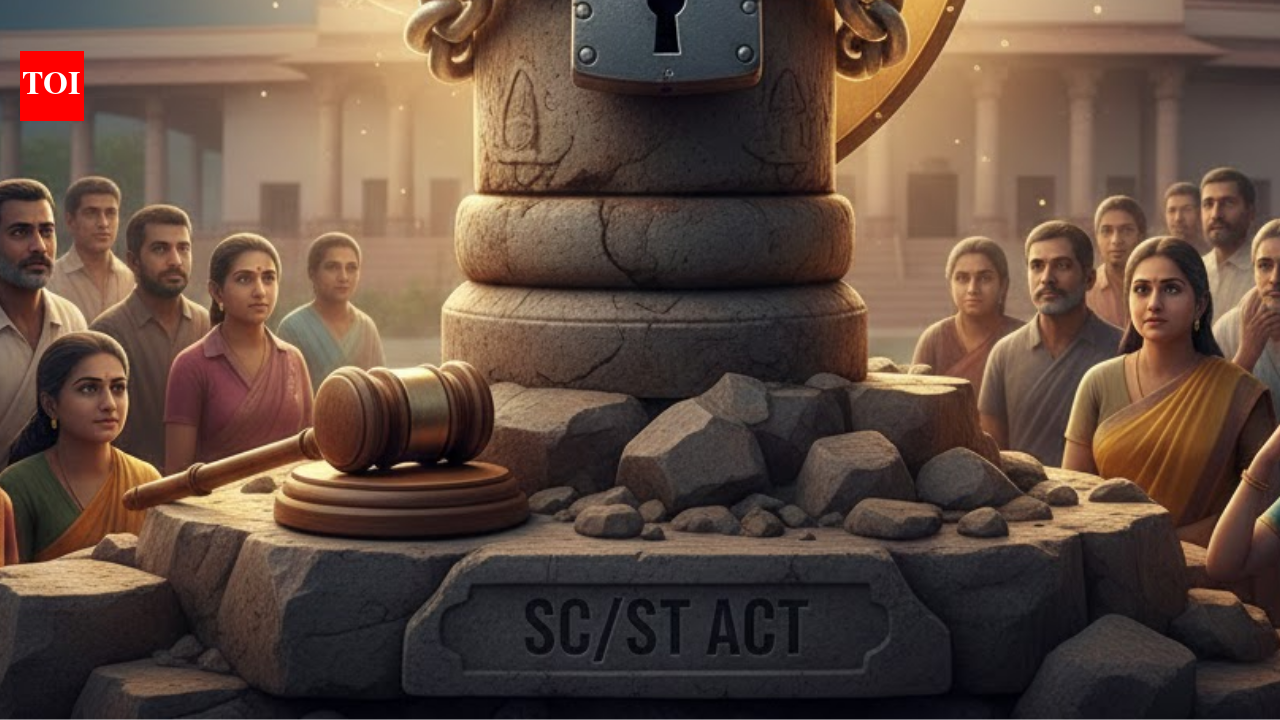
I am an SC woman. Will my caste change if I marry a general category person? Allahabad high court explains the legal position


I am an SC woman. Will my caste change if I marry a general category person? Allahabad high court explains the legal position

The Allahabad high court has ruled that a person’s caste, assigned at birth, does not change even if they convert to another religion or marry into a different community.The court made the observation while dismissing an appeal challenging an Aligarh special court’s order summoning nine accused to face trial under the Scheduled Castes and Scheduled Tribes (Prevention of Atrocities) Act.The case stems from a criminal complaint filed by a woman in an Aligarh SC/ST court, in which she alleged that the accused assaulted her and used casteist slurs during a dispute.After the special judge summoned all nine accused for offences under the SC/ST Act, they approached the Allahabad high court, arguing that the complainant could not invoke the act as she had married a man from a different caste. The appellants contended that her Scheduled Caste status had ceased to exist following her inter-caste marriage.Rejecting the argument, the judge held that marriage does not alter a person’s caste identity. The court noted that while a person may change religion, caste remains unchanged despite conversion or marriage.The judgment was delivered by Justice Anil Kumar-X in Criminal Appeal No. 6081 of 2022, arising from proceedings before the Special Judge, SC/ST Act, Aligarh.Background of the caseThe appeal was filed under Section 14-A(1) of the SC/ST Act against an order dated July 27, 2022, passed by the Special Judge, SC/ST Act, Aligarh . The appellants, Dinesh and eight others, were summoned to face trial in Complaint Case No. 02 of 2022. The charges included offences under Sections 323 (voluntarily causing hurt), 506 (criminal intimidation), 452 (house-trespass after preparation for hurt, assault or wrongful restraint), and 354 (assault or criminal force to woman with intent to outrage her modesty) of the Indian Penal Code, along with Section 3(1)(R) of the SC/ST Act .The complaint alleged that the informant was assaulted and abused by the appellants, and that casteist slurs were used during the altercation. The complainant and two others reportedly sustained injuries .The appellants’ argumentsCounsel for the appellants advanced two primary arguments before the High Court.First, they contended that the complaint was a retaliatory measure. According to them, an earlier First Information Report (FIR) had been lodged by the appellants against the informant and her family members in Case Crime No. 442 of 2021 under Sections 147, 323, 308, 504, and 506 of the IPC at Police Station Khair, District Aligarh . This FIR was filed on September 7, 2021, and the appellants claimed that members of their family had also sustained injuries, with injury reports on record . They argued that the present complaint was filed as a “counterblast” to this earlier FIR.Second, the appellants challenged the applicability of the SC/ST Act itself. They asserted that the informant was originally a resident of West Bengal and belonged to the SC/ST community there. However, she had married a person belonging to the Jat community. According to the appellants, by marrying outside her caste, she had lost her original caste status and could no longer claim protection under the SC/ST Act .They argued that a woman, upon marrying a man from another caste, adopts the caste of her husband and thereby loses the caste she held by birth. On this basis, they claimed that the summoning order for offences under the SC/ST Act was legally unsustainable .The state’s responseThe State, represented by the learned Additional Government Advocate, and counsel for the informant opposed the appeal. They submitted that the alleged incidents described in the complaint and the earlier FIR occurred on the same date and were essentially part of a single episode .The informant’s complaint alleged that she was assaulted and subjected to caste-based abuse during the altercation. The fact that three individuals, including the informant, were injured in the incident was also placed before the Court . In light of these circumstances, the State argued that the mere existence of a cross-case did not render the complaint false or malicious.Accordingly, the respondents maintained that the appeal lacked merit and deserved dismissal .The high court’s analysisAfter hearing both sides and perusing the material on record, the High Court addressed the two central issues: the effect of a cross-case and the question of caste identity after marriage.Cross-case and rival versionsThe court observed that the Trial Court had summoned the appellants after considering the statements of the informant and her witnesses, as well as the injury reports . The High Court held that the existence of a cross-case does not, by itself, justify discarding a complaint filed by the opposite party on a rival version of events .In criminal law, cross-cases arising from the same incident are not uncommon. They often reflect competing narratives of a single altercation. The Court emphasized that such circumstances must be evaluated through trial, not dismissed at the threshold merely because a counter-complaint exists.Therefore, the high court found no illegality in the trial court’s decision to summon the appellants for the alleged offences .Marriage and caste identityOn the second issue—the alleged loss of caste upon marriage—the Court delivered a clear and categorical ruling. It rejected the appellants’ contention as having “no force” .The Court reasoned that although a person may change religion, caste remains the same despite conversion to another religion . By extension, marriage does not change a person’s caste. Thus, the argument that the informant had lost her SC/ST status by marrying a man from the Jat community was legally untenable.This interpretation underscores a fundamental principle: caste, as understood in Indian law, is determined by birth and does not automatically shift due to marriage. Consequently, the informant retained her caste identity for the purposes of invoking protections under the SC/ST Act.Legal significanceThe ruling reinforces two important principles in criminal and constitutional jurisprudence.First, it affirms that courts must not prematurely reject complaints simply because they are filed in the context of cross-litigation. Where there are rival versions of an incident, it is the function of the trial process to evaluate evidence and determine credibility.Second, and more significantly, the judgment clarifies the legal position regarding caste identity after marriage. By holding that marriage does not alter caste status, the Court ensures that protections under the SC/ST Act cannot be circumvented by invoking marital status.The SC/ST Act is designed to prevent atrocities and caste-based discrimination against members of Scheduled Castes and Scheduled Tribes. Allowing caste identity to be nullified by marriage could create a loophole, undermining the protective framework of the statute.The final orderHaving found no merit in the appellants’ arguments, the High Court dismissed the appeal . The summoning order passed by the Special Judge, SC/ST Act, Aligarh, therefore remains in force, and the appellants will face trial on the charges framed against them.The judgment was delivered on February 10, 2026 .The high court’s decision provides a clear affirmation of two doctrinal points: the independence of cross-cases in criminal proceedings and the continuity of caste identity despite inter-caste marriage.For graduate students studying constitutional law, criminal procedure, or social justice legislation, the ruling offers a concise but instructive example of how courts interpret protective statutes such as the SC/ST Act. It illustrates the judiciary’s role in balancing procedural fairness with the enforcement of anti-discrimination laws.By rejecting the argument that caste can be extinguished through marriage, the Court has reinforced the statutory protections available to historically marginalized communities, ensuring that legal safeguards remain tied to birth-based identity rather than marital affiliation.

Key takeaways

Marriage does not change caste identityThe Court clearly held that a woman does not lose her caste status upon marrying a person from another caste. Caste, for legal purposes, is determined by birth and does not automatically shift due to marriage.SC/ST Act protections continue after inter-caste marriageBecause caste identity remains intact, individuals from Scheduled Castes or Scheduled Tribes retain protection under the SC/ST (Prevention of Atrocities) Act even if they marry outside their caste.Cross-cases do not nullify complaintsThe existence of a prior FIR or cross-case does not invalidate a subsequent complaint based on a rival version of the same incident. Courts must assess both cases on their own merits during trial.Summoning orders require prima facie satisfaction, not final proofThe High Court upheld the Trial Court’s summoning order, emphasizing that at the preliminary stage, courts only need to be satisfied that there is sufficient material (such as statements and injury reports) to proceed to trial.Protective legislation cannot be circumvented by technical argumentsThe judgment reinforces that the purpose of the SC/ST Act—to prevent caste-based abuse and discrimination—cannot be defeated by arguments that attempt to redefine caste identity through marital status.

Why this matters

Clarifies the legal status of caste after marriageThe ruling settles a recurring legal question: whether inter-caste marriage alters caste identity for the purposes of statutory protections. By affirming that caste is determined by birth and does not change upon marriage, the Court provides doctrinal clarity that prevents ambiguity in future litigation under the SC/ST Act.Strengthens the integrity of the SC/ST ActThe Scheduled Castes and Scheduled Tribes (Prevention of Atrocities) Act is designed as a protective statute addressing historical discrimination and caste-based violence. If caste identity could be altered or “lost” through marriage, it would create a loophole capable of weakening the Act’s enforcement. The judgment closes that interpretive gap.Prevents strategic dilution of atrocity chargesThe decision signals that accused persons cannot avoid prosecution under the SC/ST Act by arguing that a complainant’s marital status negates her caste identity. This reduces the possibility of technical defenses being used to bypass substantive allegations of caste-based abuse.Reaffirms trial as the proper forum for rival narrativesBy holding that the existence of a cross-case does not automatically invalidate a complaint, the Court underscores a core principle of criminal procedure: factual disputes must be tested at trial. This reinforces procedural fairness and discourages premature dismissal of complaints.Implications for gender and social identityThe ruling carries broader sociological implications. It implicitly rejects the notion that a woman’s identity is subsumed by her husband’s caste upon marriage. In doing so, it aligns with constitutional values of individual identity and equality, rather than patriarchal assumptions embedded in customary practices.Academic and policy relevanceFor graduate students studying constitutional law, criminal law, or social justice policy, the case offers a compact illustration of how courts interpret identity-based protections within a statutory framework. It demonstrates how judicial reasoning can shape the operational scope of anti-discrimination legislation without expanding beyond the statute’s text.



Source link

India vs Pakistan: When hate didn’t get a complimentary match pass | Cricket News


India vs Pakistan: When hate didn't get a complimentary match pass
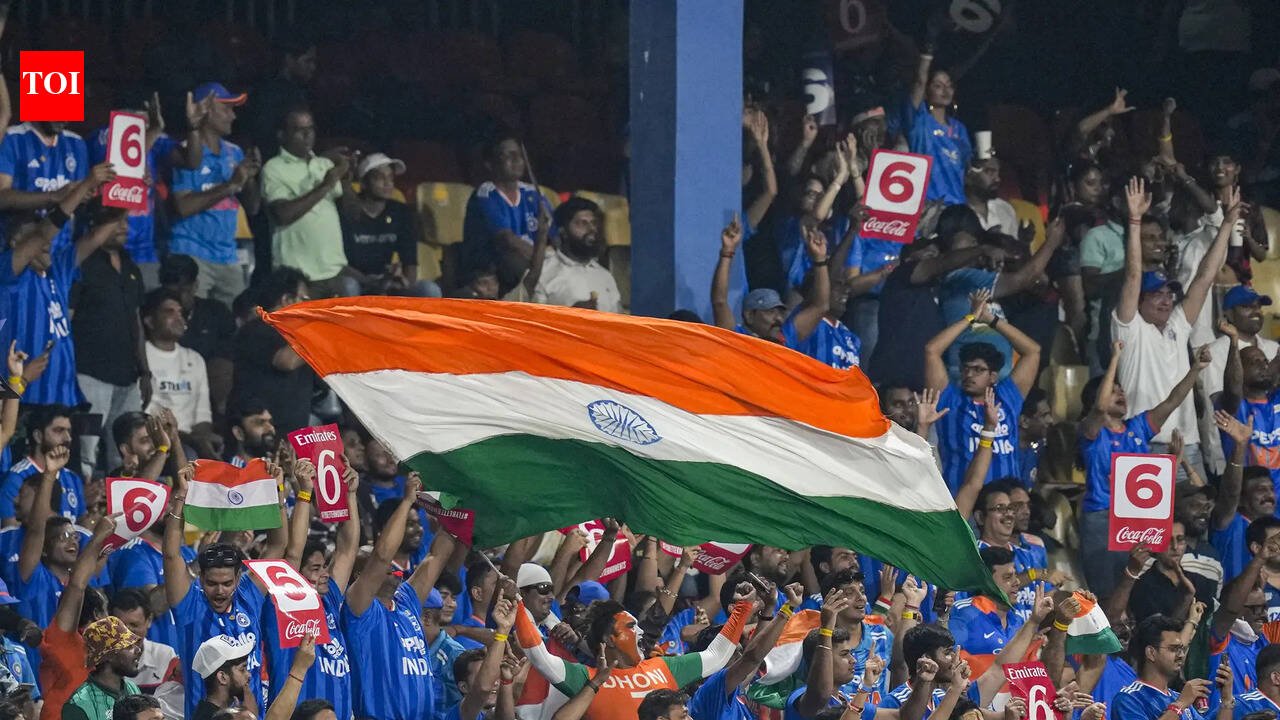
Indian fans during the match between India and Pakistan in Colombo. (PTI Photo)

No handshakes at the toss between captains, but for India-Pakistan greats, fans at Premadasa, it was just cricket.COLOMBO: The Indo-Pak relations on the field, in front of cameras, stayed where it had to stay. No handshakes.In Colombo on Sunday, there wasn’t the animosity that led up to the Asia Cup final last September. No one was taking pot-shots at each other, and television analysts from India were interviewing Pakistani players. But once it came to the toss, Salman Ali Agha and Surya Kumar Yadav handcuffed themselves from doing the most natural thing that they did all their lives – shaking hands with the opposition captain.

Axar Patel press conference: ‘We see them as a team, don’t see rivalry’ after India beat Pakistan

Agha said on Saturday that he wants cricket to be played in the spirit that it always was. Surya didn’t rule out the handshake either, but the ice couldn’t melt.But if you kept an eye on the proceedings before the game, you could see that people around the sport were ready to move on from the off-field animosities that made the cricket world toxic.Usman Tariq, the slinger mystery spinner of Pakistan, was doing warm-ups, and Harbhajan Singh, one of the staunchest critics of his action, was standing close by. Tariq didn’t care for whatever was said in the lead-up to the game. He did a ‘salaam’ to the senior practitioner of his art, and the Indian great reciprocated.It wasn’t just that. Harbhajan interviewed Sahibzada Farhan, who was India’s enemy No 1 in Dubai a few months ago, and it all looked pretty cordial. But the frame of the day was when the off-spinner had a long conversation with Misbah ul Haq.

Pakistan fans

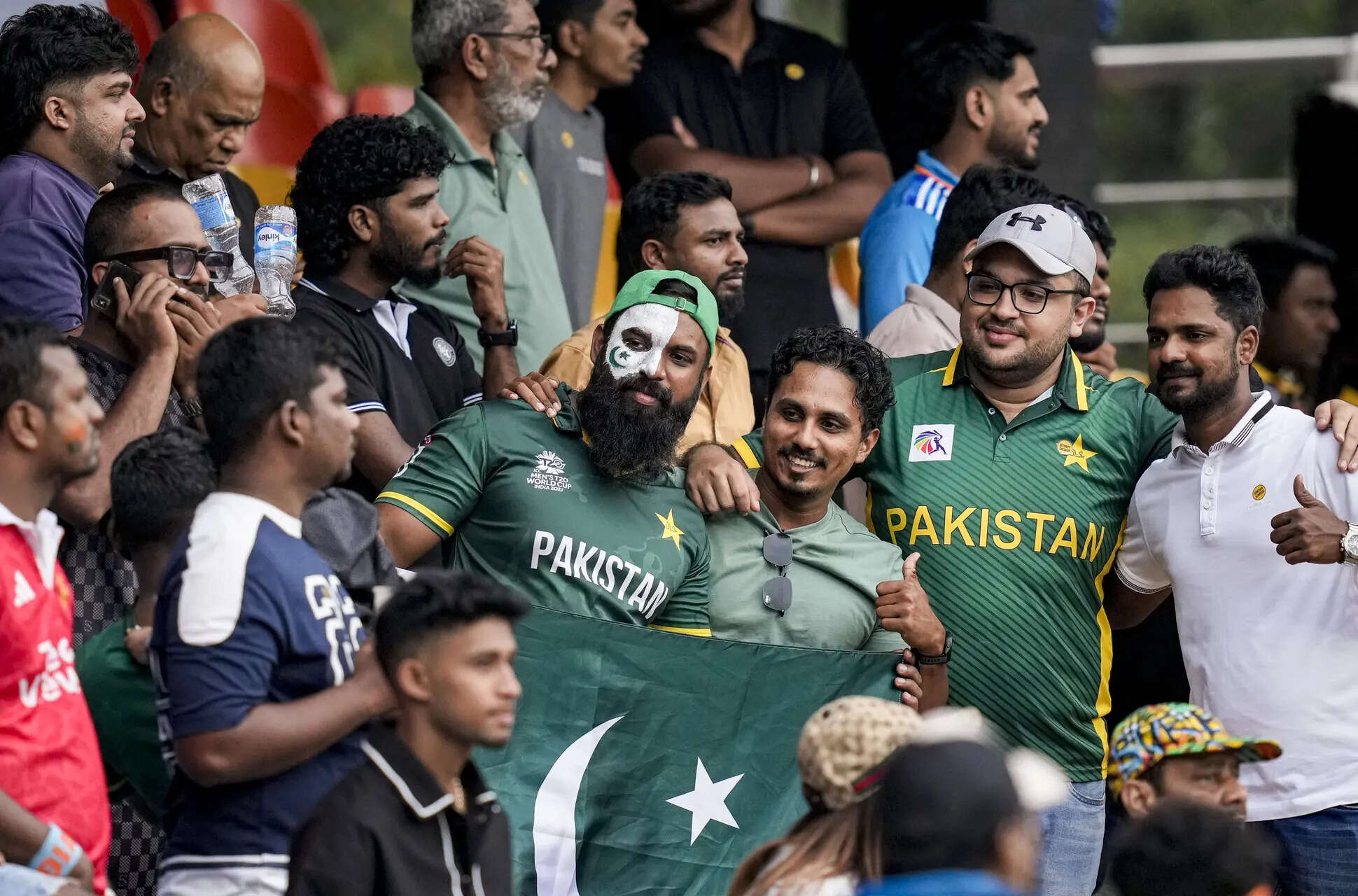
Pakistan fans during the match between India and Pakistan. (PTI Photo)

One couldn’t help going back to the 2007 T20 final, when Misbah took on Bhajji and almost single-handedly turned the game. With Misbah still there, the Indian offie chose not to bowl the last over, and Joginder Sharma won the match for India. We don’t know if that was discussed, but you could see the friendly vibes of the two greats.Not too far away from the cricket action, Shabana Azmi, one of India’s greatest actresses, was speaking at the Ceylon Literary & Arts Festival. Recently, she was seen in a meaty role in a cricket-related film, Ghoomer, and when TOI asked her how she feels about all that is happening in the sport, Azmi said: “We keep forgetting that cricketers from both sides of the border are friends with each other, and it’s important that sports and arts should transcend national boundaries,” adding that it should act as an “adhesive” between the 2 nations.It drew quite a round of applause from the small gathering. And once you left the confines of the little auditorium and walked towards the massive Premadasa, you could see Indian and Pakistani fans getting their faces painted by the same artist. Of course, the Indians outnumbered the Pakistanis, but there wasn’t an iota of animosity. During Pakistan’s reply, at the fall of their sixth wicket in the 12th over, fans in green began exiting the ground.An Indian fan playfully told them, “You are leaving?” One Pakistanis replied, “We all have to leave at some point,” and then they shook hands.Probably there’s not much on the field either beyond the desperate desire to win a game of cricket. But then, that’s not for public consumption.


Source link