Breaking News
Did Trump tell Netanyahu he’d back Israeli strikes on Iran? What we know


Did Trump tell Netanyahu he’d back Israeli strikes on Iran? What we know

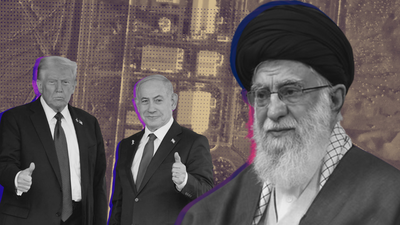
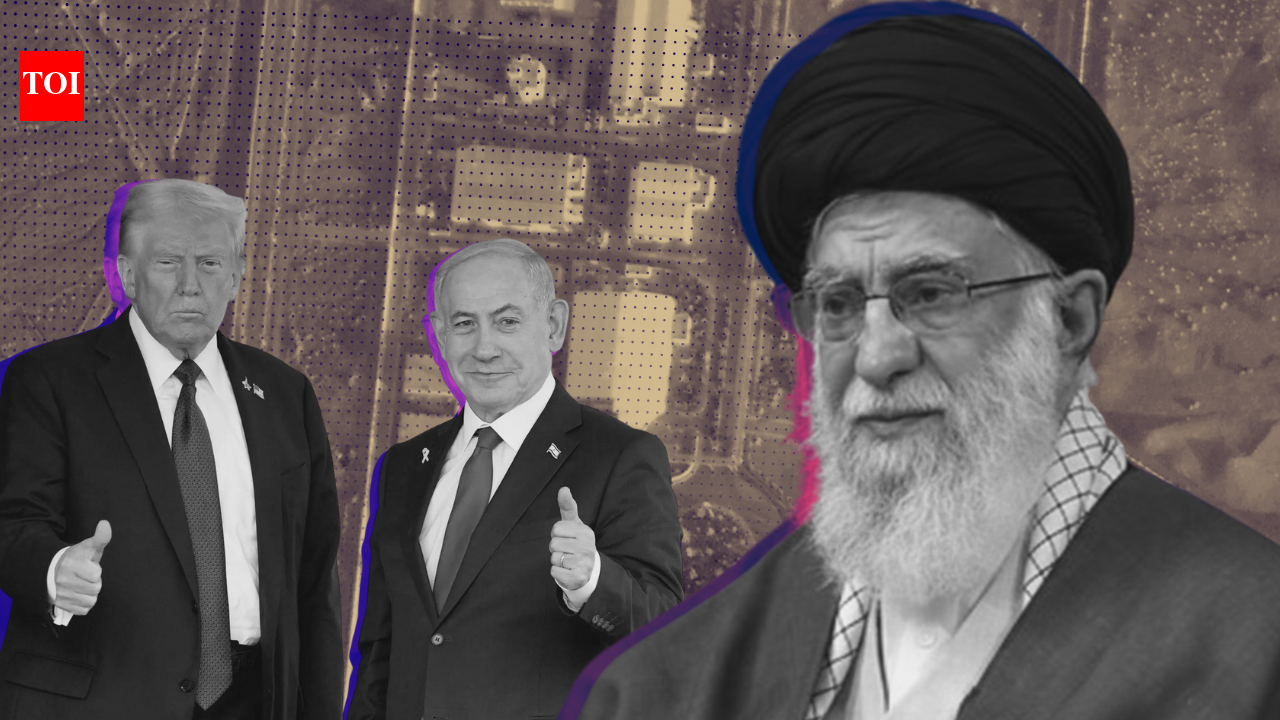
US President Donald Trump, during his meeting with Israeli Prime Minister Netanyahu in December, assured that the US would support Israeli strikes on Iran, should the US not reach a deal with Iran on the regime’s nuclear programme, US news outlet CBS News reported.Citing two sources familiar with the matter, the report said that two months after the meeting, the discussions between the US military’s senior figures and the intelligence community had begun to assess the possibilities of an Israeli strike on Iran.The two nations share their stance against Iran’s nuclear ballistic missile programme.According to the report, the United States shall not be interfering much with how Israel acts. Rather, Washington will assist Israel with mid-air refuelling and obtain overflight permissions from countries along Israel’s potential routes.This becomes important as Gulf countries, including Saudi Arabia, the United Arab Emirates and Jordan, have publicly denied providing an airspace used for any strikes on Iran. Thus, it remains unclear which country will provide airspace for strike and refuelling purposes.This comes as Iran’s foreign minister, Abbas Araghchi, departed for Switzerland on Sunday for a second round of renewed talks with the United States later this week.Washington has kept up the pressure, with a new executive order imposing tariffs on countries trading with Iran taking effect, with additional sanctions targeting shipping firms and vessels tied to Iranian oil exports.Alongside, the US is also increasing its military presence in the Gulf, as most recently, Trump ordered the world’s largest aircraft carrier, USS Gerald R Ford, along with its USS Abraham Lincoln aircraft carrier, to join the “armada” in the Middle East.Iran has made its stance clear that it shall not give up its uranium enrichment. Addressing a forum in Tehran on February 8, Araghchi said Iran had “paid a very heavy price” for what it maintains is a peaceful nuclear programme.“Why do we insist so much on enrichment and refuse to give it up even if a war is imposed on us? Because no one has the right to dictate our behaviour,” he said.Tehran and Washington resumed negotiations in Muscat on February 6, months after earlier talks collapsed following Israel’s unprecedented bombing campaign against Iran last June, which triggered a 12-day war.


Source link

What is Singapore-India-Gulf subsea cable system that UAE’s du is investing in for high data connectivity?


What is Singapore-India-Gulf subsea cable system that UAE's du is investing in for high data connectivity?
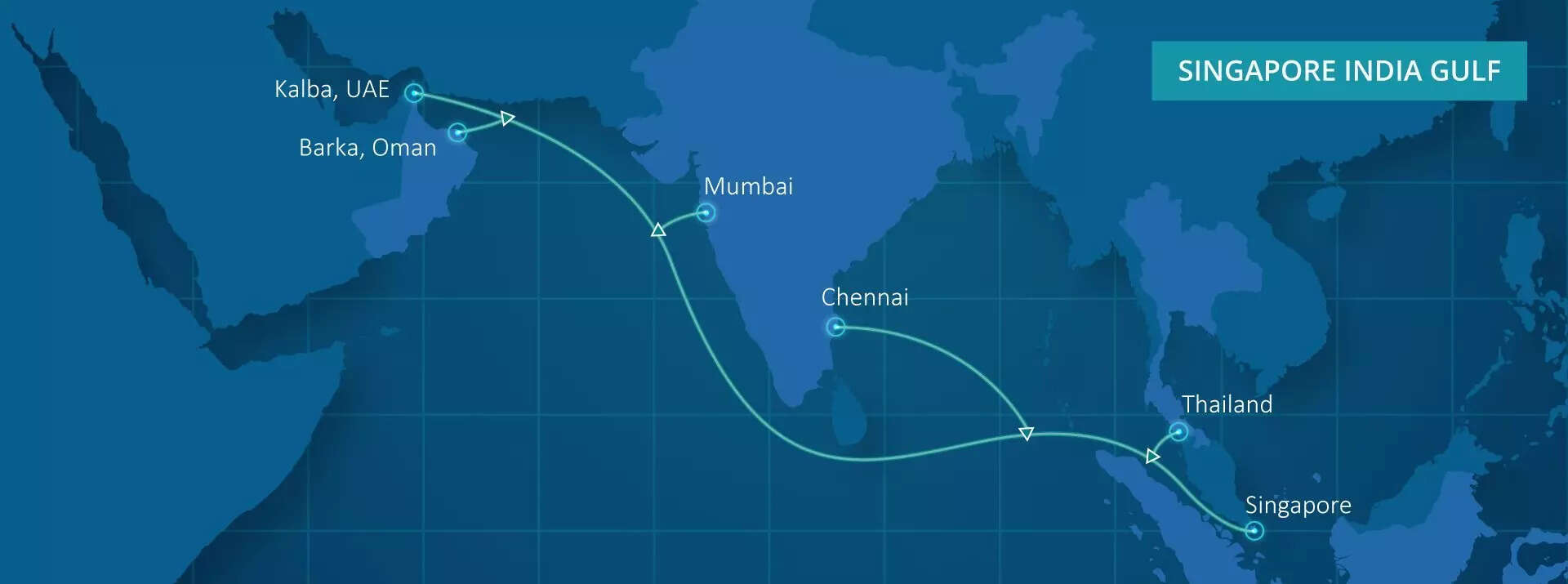
du to invest in the subsea fibre optic network that will link six key locations, with landing points in Kalba in the UAE, Muscat in Oman, Mumbai and Chennai in India, Kedah in Malaysia and Singapore.

In a major step for the UAE’s digital infrastructure ambitions, telecom provider du has announced a strategic partnership to land and invest in the Singapore-India-Gulf (SING) submarine cable system, a next-generation undersea fibre-optic network that will link the Middle East with South Asia and Southeast Asia. The deal reinforces the UAE’s role as a regional data hub and is poised to support future digital growth, artificial intelligence workloads, cloud services and global connectivity.

What is the SING subsea cable system?

The SING (Singapore-India-Gulf) cable is a planned high-capacity submarine fibre-optic network designed to create a direct east–west digital corridor connecting six strategic landing points:

  • Kalba, UAE (UAE landing point)
  • Muscat, Oman
  • Mumbai and Chennai, India
  • Kedah, Malaysia
  • Singapore

This system is designed to provide high-capacity, low-latency connectivity and strengthen network resilience by diversifying data routes beyond traditional paths such as the Red Sea corridor. It will play a key role in supporting increasing global bandwidth demands driven by cloud computing, streaming, e-commerce and real-time digital services.

UAE’s du’s role and strategic importance

Under the new partnership, du, one of the UAE’s leading telecom and digital services providers, will host the SING cable at its Kalba cable landing station and also participate financially in its rollout. This means that when completed, the system will have a physical connection to the UAE’s digital ecosystem, allowing faster, more resilient connectivity between the Gulf region and Asia.

​Dubai-based telecom operator du has joined the Singapore-India-Gulf submarine cable system, announcing a partnership with Cyprus-based Datawave Networks to land the next-generation cable in the United Arab Emirates.​

Dubai-based telecom operator du has joined the Singapore-India-Gulf submarine cable system, announcing a partnership with Cyprus-based Datawave Networks to land the next-generation cable in the United Arab Emirates.

Karim Benkirane, Chief Commercial Officer at du, said the project will “reinforce the UAE’s role as a global hub for data, cloud and artificial intelligence” by providing the connectivity scale, performance and reliability needed for hyperscalers, tech innovators and enterprise customers.

Why UAE’s du’s investment in Singapore-India-Gulf cable matters for global connectivity

The SING subsea cable is part of a broader renaissance in global submarine infrastructure. Projects like SEA-ME-WE 6, another major submarine cable ongoing between Southeast Asia, the Middle East and Europe, have highlighted the growing need for redundancy, capacity and network reliability. In recent years, disruptions to undersea cables in the Red Sea, a critical data conduit, have shown how vulnerable global internet routes can be to outages, emphasising the need for alternative pathways like SING that can mitigate service impacts if certain routes are compromised.

UAE's du Joins SING Submarine Cable System for Enhanced Asia-Middle East Connectivity

UAE’s du Joins SING Submarine Cable System for Enhanced Asia-Middle East Connectivity

By diversifying connectivity pathways, the UAE and its partners aim to ensure stable data routes that underpin everything from corporate cloud services to consumer streaming and real-time financial systems. The UAE’s investment in SING coincides with global trends in subsea cable deployment. For example, projects like the SEA-ME-WE 6 system, which connects Southeast Asia to Europe with high capacity, are enhancing global data traffic infrastructure and helping meet surging demand.

What’s next for SING and UAE connectivity

Although the exact ready-for-service date for the SING cable is not yet announced, project progress has accelerated after a major investment by Cerberus Capital Management, which resolved longstanding funding challenges and propelled the system toward execution with planned deployment by 2030. Once operational, the SING network is expected to deliver tens of terabits per second of capacity, providing scalable flexibility for future data needs from businesses, cloud operators, AI research initiatives and cross-continent platforms.

Additionally, major alternative cable initiatives such as USTDA-supported efforts for trusted India-to-Southeast Asia routes underline increasing international collaboration on building secure, high-performance subsea networks that serve billions of users worldwide.This positions the UAE and the wider Gulf region at the forefront of next-generation connectivity infrastructure for global scale digital services. As digital economies expand and data traffic grows exponentially, projects like the Singapore-India-Gulf subsea cable system represent critical investments in the future of global connectivity.By partnering with Datawave and investing in the SING cable, du and the UAE are strengthening their role as a strategic gateway between continents, enhancing digital resilience, supporting AI-ready infrastructure and unlocking new opportunities for economic and technological growth.


Source link

Oil prices hold steady near $68 ahead of US–Iran talks, OPEC+ supply plans keep markets cautious


Oil prices hold steady near $68 ahead of US–Iran talks, OPEC+ supply plans keep markets cautious

Global oil prices remained steady on Monday as markets closely watch upcoming talks between United States and Iran. While concerns over potential disruptions in oil supply due to US-Iran tensions kept prices stable, OPEC+ is considering increasing production from April. The day saw Brent crude futures slightly down at $67.72 per barrel, while US WTI crude stood at $62.86.The market’s cautious stance comes ahead of crucial negotiations between Washington and Tehran in Geneva on Tuesday. These talks aim to resolve their long-running dispute over Iran’s nuclear program. Both benchmarks had declined last week after US President Donald Trump suggested a possible deal with Iran within a month.An Iranian diplomat revealed that Iran seeks a nuclear agreement offering mutual economic benefits, including investments in energy and mining sectors, along with aircraft purchases. However, market analyst Tony Sycamore said, “With both sides expected to hold firm on their core red lines, expectations are low that a deal can be reached and this is likely to be the calm before the storm,” as quoted by Reuters.Military tensions have escalated, with the US deploying a second aircraft carrier to the region. However, Iran’s Revolutionary Guards have threatened to retaliate against US military bases if their territory is attacked.Meanwhile, OPEC+ is considering resuming oil production increases after a three-month pause to meet summer demand. “The market reacted reasonably well to those reports,” Sycamore commented, adding “If that geopolitical premium or support wasn’t there, crude oil would likely be trading sub $60 this morning.”Trading activity is expected to be quiet on Monday with several Asian markets, including China, South Korea, and Taiwan, closed for holidays.


Source link

Kedarnath shrine to reopen on April 22; dates for Badrinath, Gangotri, Yamunotri Dham also announced – check | India News


Kedarnath Dham to reopen for devotees on April 22

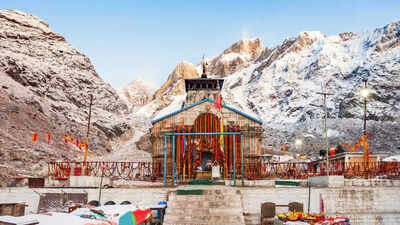
NEW DELHI: The sacred Kedarnath Temple in Uttarakhand will reopen its doors to devotees on April 22, marking the end of its nearly six-month winter closure, a temple committee official said on Sunday.The auspicious date and timing were finalised on the occasion of Mahashivratri at the shrine’s winter seat.

Muhurat decided on Mahashivratri

Harish Gaur, public relations officer of the Shri Badrinath-Kedarnath Temple Committee, said the reopening date was determined at the Omkareshwar Temple, where Lord Kedarnath is worshipped during the winter months.

Faith Versus Access Debate Erupts As Char Dham Temples Kedarnath, Badrinath Weigh Ban On Non Hindus

Following special rituals and prayers, religious scholars and priests calculated the muhurat using panchang (Hindu calendar) readings. The temple, one of the 12 Jyotirlingas, will open at 8 am on April 22.The ceremony at Omkareshwar Temple was marked by elaborate decorations, including around nine and a half quintals of flowers.Among those present were Kedarnath Temple’s chief priest Rawal Bhimashankar Ling, Kedarnath MLA Asha Nautiyal, Temple Committee chairman Hemant Dwivedi, other officials, religious leaders and hundreds of devotees, according to news agency ANI.Devotees offered prayers, chanted “Jai Baba Kedar” and participated in community feasts organised by donors.

Char Dham Yatra schedule announced

With the reopening date confirmed, the schedule for the annual Char Dham Yatra in the Garhwal Himalayas has also been finalised.The doors of Badrinath Temple will reopen on April 23. Meanwhile, Gangotri Temple and Yamunotri Temple will open earlier on April 19, coinciding with the festival of Akshaya Tritiya.The reopening of these shrines marks the beginning of the annual pilgrimage season, drawing lakhs of devotees to the Himalayan temples each year.


Source link

AFG vs UAE, T20 World Cup 2026 Match Prediction: Who will win today’s game between Afghanistan and United Arab Emirates?


The lights of the Arun Jaitley Stadium in Delhi are set to host a high-stakes encounter in Group D of the ICC Men’s T20 World Cup 2026. On one side, we have an Afghanistan team, wounded, desperate, and searching for their first points of the tournament. On the other, a resilient UAE squad looking to build on the momentum of their historic win over Canada and mount a serious challenge for the Super Eight.

Two years ago, Afghanistan were the darlings of the T20 world after their semi-final run. In 2026, the script has been far harsher. After a clinical defeat to New Zealand, they played what many are calling the “Match of the Century” against South Africa, a double super over thriller that ultimately saw them fall short. Rashid Khan’s men are currently winless and must win every remaining game to keep their slim qualification hopes alive.

UAE are riding high. After a reality-check loss to the Black Caps in their opener, they pulled off a stunning chase against Canada. Aryansh Sharma (74) and Sohaib Khan (51) proved that the UAE batting lineup has the depth to handle pressure. A win here would propel them into a genuine conversation for the next round.

AFG vs UAE, T20 World Cup 2026: Match Details

  • Date and Time: February 16 (Monday); 11:00 am IST / 5:30 am GMT
  • Venue: Arun Jaitley Stadium, Delhi

AFG vs UAE, Head-to-Head Record (T20Is)

Matches played: 15 | Afghanistan won: 12 | UAE won: 3

Arun Jaitley Stadium Pitch Report

The Arun Jaitley Stadium pitch for this encounter is expected to be a traditional Delhi slow-burner, offering significant grip and turn as the match progresses. While the surface is relatively flat and allows for shot-making during the Powerplay, it tends to stay low, making life difficult for batters once the ball loses its shine. Spinners from both sides will likely dominate the middle overs, as evidenced by recent tournament trends where spin has accounted for a record percentage of wickets. With this being a morning game, the dew factor—which often aids chasers under lights—will be non-existent, making a score around 155–165 highly competitive.

Squads

Afghanistan: Rashid Khan (c), Noor Ahmad, Abdullah Ahmadzai, Sediqullah Atal, Fazalhaq Farooqi, Rahmanullah Gurbaz, Naveen Ul Haq, Mohammad Ishaq, Shahidullah Kamal, Mohammad Nabi, Gulbadin Naib, Azmatullah Omarzai, Mujeeb Ur Rahman, Darwish Rasooli, Ibrahim Zadran

UAE: Muhammad Waseem (captain), Alishan Sharafu, Aryansh Sharma, Dhruv Parashar, Haider Ali, Harshit Kaushik, Junaid Siddique, Mayank Kumar, Muhammad Arfan, Muhammad Farooq, Muhammad Jawadullah, Muhammad Zohaib, Rohid Khan, Sohaib Khan, Simranjeet Singh.

Also READ: T20 World Cup 2026 – Fans celebrate Ishan Kishan’s heroics as India hammer Pakistan to secure Super 8 spot

AFG vs UAE, T20 World Cup 2026: Today’s Match Prediction

Case 1:

  • Afghanistan wins the toss and bats first
  • Afghanistan powerplay score: 45-55 (6 overs)
  • Afghanistan total score: 175-185

Case 2:

  • UAE wins the toss and bats first
  • UAE powerplay score: 38-48 (6 overs)
  • UAE total score: 135-145

Match result: Afghanistan to win the contest.

Also READ: Matt Renshaw pulls no punches after Australia’s shocking loss to Zimbabwe in T20 World Cup 2026


Source link

Gujarat, Maharashtra, UP lead rooftop solar figures | India News


Gujarat, Maharashtra, UP lead rooftop solar figures

NEW DELHI: Gujarat, Maharashtra and UP have emerged as frontrunners in rooftop solar installations, even as over 23 lakh rooftop solar systems (RTS) were installed across the country in the last two years under the PM Surya Ghar: Muft Bijli Yojana.Launched on Feb 13, 2024, with a financial outlay of Rs 75,021 crore, the scheme aims to install RTS in one crore households by March 2027. The Centre provides a one-time financial assistance of up to Rs 78,000 per household, while several states offer additional subsidies.According to the national portal, 23,68,383 systems with an aggregate capacity of about 8,691 MW have been installed till Feb 13 this year. Govt has released Rs 16,932.4 crore in subsidies.Under the scheme, a 3-kW solar plant can generate about 300 units of electricity per month — enough to reduce the bill to zero if consumption stays within that limit. More than 12.5 lakh consumers have received zero electricity bills in at least one month since the launch.The number of installations is estimated to be close to three million when statelevel subsidy programmes are included.Gujarat leads with nearly 5.6 lakh installations, followed by Maharashtra (4.5 lakh), UP (3.7 lakh) and Kerala (1.9 lakh). Adoption remains low in the Northeast: Arunachal Pradesh, Sikkim, Meghalaya, Mizoram, Manipur, Nagaland and Tripura together account for only 4,174 installations. Delhi, Goa, West Bengal and Chandigarh also have recorded modest numbers, with 6,209, 1,721, 1,265 and 1,050 installations, respectively.Govt acknowledged that nearly three-fourths of installations are concentrated in 1011 states. Many states are yet to notify virtual net-metering guidelines that allow consumers to feed surplus power into the grid and receive payment. “This is a model with a customer-first approach. It has become immensely popular,” said JVN Subramanyam, joint secretary, ministry of new and renewable energy.


Source link

India adds record 52.5 GW in first 10 months of FY26 | India News


India adds record 52.5 GW in first 10 months of FY26

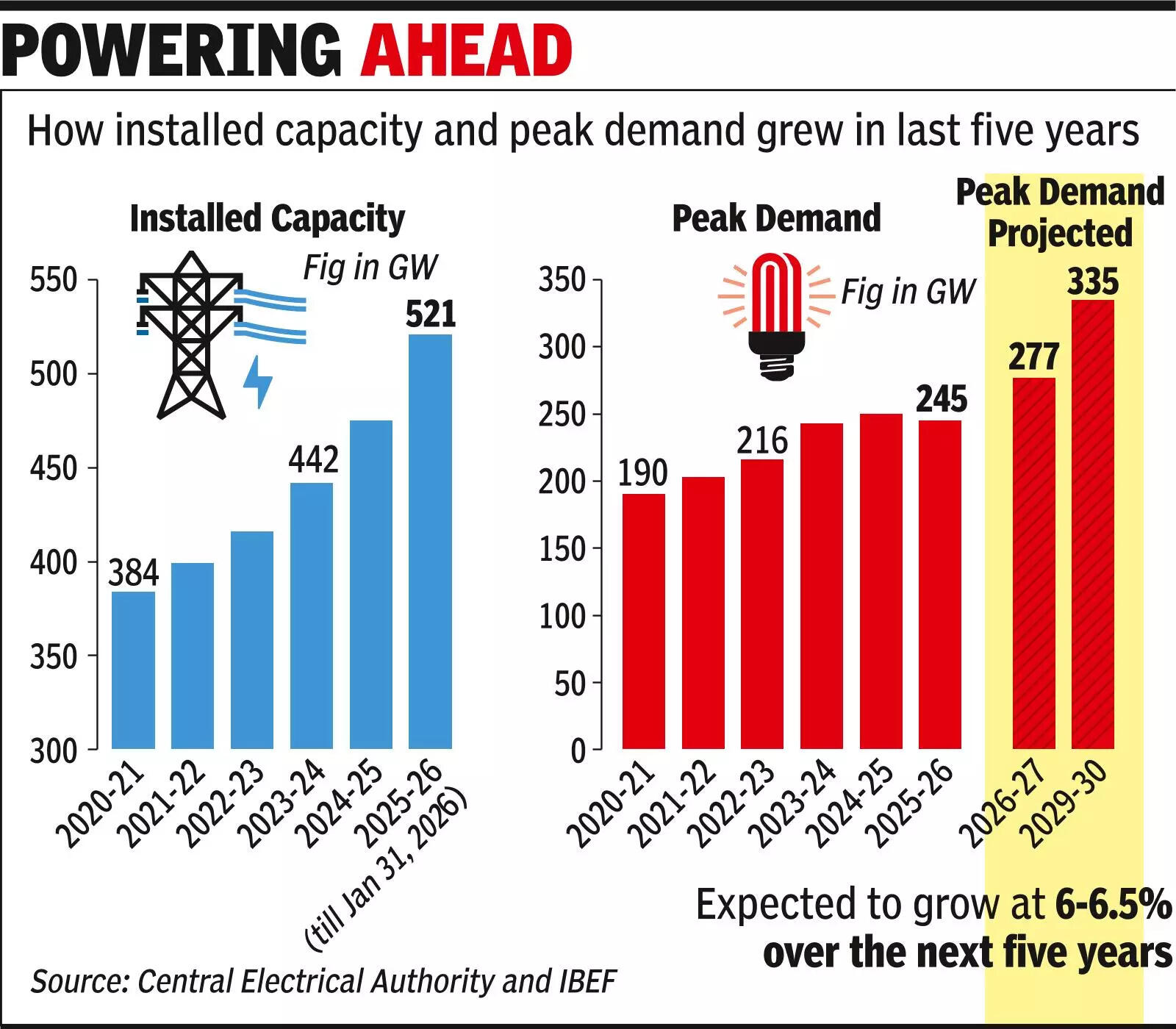
NEW DELHI: Govt on Sunday said India added a record power generation capacity of 52,537 megawatts (52.5 GW) from all energy sources in the first 10 months of the 2025-26 financial year, taking the total installed capacity to 520.6 GW as of Jan 2026.Officials said over 75% of this addition came from renewable energy, while the rest came from thermal sources. “This marks the highest ever capacity addition in a single year, surpassing the previous record of 34,054 MW (34 GW) achieved during FY 2024-25,” the ministry of power said in a statement, adding that installed capacity grew by nearly 11% in 10 months compared with the last financial year.However, according to Central Electricity Authority’s monthly reports, installed capacity in March 2025 was recorded at 475.3 GW. Officials said nearly 2 GW of coal-fired, 4.4 GW of gas-based and 100 MW of nuclear capacity had been under prolonged outage – were not working – and were written off from the total capacity.

,

According to govt’s statement, renewable energy sources added 39.7 GW to capacity, including 35 GW of solar and 4.6 GW of wind power. Large hydro projects added 3.4 GW during FY 2025-26, thermal added 8.8 GW and nuclear 700 MW.India now has fossil fuel-based capacity of 248.5 GW, while non-fossil fuel capacity stands at 272 GW.According to officials, 158 GW of renewable (solar, wind and hybrid), 39.6 GW of thermal, 13 GW of hydro-electric and 6.6 GW of nuclear projects are under construction. Contracts for 22.9 GW of coal- and lignite-based projects have already been awarded, while another 24 GW capacity is at various stages of planning. Similarly, 48.8 GW of renewable, 4.3 GW of hydro-electric and 7 GW of nuclear projects are also under planning.


Source link

25-year-old relative held for kidnapping, sexually assaulting toddler in Mumbai’s Dahisar | Mumbai News


Relative arrested for kidnapping, assaulting toddler (Representative image )

MUMBAI: A 25-year-old man was arrested within 24 hours for kidnapping and sexually assaulting a one-and-half-year-old girl at Dahisar. The accused is a relative of the victim’s father, police said. The child has been admitted to a public hospital in central Mumbai where she underwent a surgery and is currently recovering.Deputy chief minister Eknath Shinde has spoken to top police officials and the hospital dean for ensuring the child gets prompt and quality medical attention and the culprit faces stringent charges. The child lives with her parents in a slum at Dahisar. On Feb 10, when her family woke up in the morning, the child had vanished. Cops registered a case of kidnapping and checked footage from cameras in the vicinity. They learnt the child had been taken to a desolate location in Dahisar. When the accused was tracked down and arrested the same day, the child was rescued from near a nullah. She was rushed to a civic hospital as she had suffered serious injuries. She was then moved to the super speciality hospital. MHB Colony Police then wrote to the court the next day and added stringent sections of sexual assault under BNS and POCSO Act. Police said the accused works as a labourer and lived in the same neighbourhood as the victim.“It is a sad commentary on our society where a toddler is raped by a perpetrator who believed he could go scot free. But not this time. We will fight back collectively,” said Shaina NC, national spokesperson for Shiv Sena.(The victim’s identity has not been revealed to protect her privacy as per Supreme Court directives on cases related to sexual assault)


Source link

32 incidents of vehicle fires in Mumbai in 14 months, traffic affected | Mumbai News


MUMBAI: Thirty-two incidents of vehicles catching sudden fire were reported in the city between Jan 2025 and mid-Feb 2026, endangering road users and throwing vehicular traffic out of gear.Two of these incidents were reported in the first two weeks of Feb alone on busy arterials during peak hour.Fire safety experts said electrical faults are a probable reason, typically due to rodents chewing up electrical wires in cars.The latest incident was reported on Feb 11 on the southbound arm of a flyover on Western Express Highway (WEH), Goregaon East.Police had opened a counter lane on this arm to decongest traffic when, suddenly, a car went up in flames around 7.20 pm.The fire brigade was summoned, and the flames were put out by 7.40 pm.The police then organised for a crane to tow the charred vehicle under the flyover, where it was parked safely.Just four days prior, on Feb 7, another car went up in flames at 10 pm on the northbound arm of WEH at Vile Parle. The fire was put out by 10.30 pm, and after towing away the charred vehicle, traffic flow could be resumed by 10.35 pm.There were no casualties in either incident and the probable cause was a short circuit due to issues with wiring, officials said.Retired fire officer Rajendra Chaudhary points out that the rodent menace in parking areas is a key reason for damaged electrical wiring. “Once a vehicle is parked at night, rats creep in and gnaw at the electrical wiring and the fuel pipe. As a result, petrol could leak and if it comes into contact with a heated engine while the motorist is driving, the end result could be a sudden fire,” said Chaudhary.He pointed out that another causal factor for fires is tampering of electric system of cars while adding accessories But the most challenging to douse are fires in electric vehicles. “A fire in a small electric car could take thousands of litres of water to put out,” said Chaudhary.Issues with batteries is typically a key reason for fires in electric vehicles. “It could take anywhere between 30 to 40 minutes for the entire process of putting out flames in a burning vehicle, cooling down and towing it away. The stretched gets blocked during this period, resulting in massive traffic backlogs. We want to appeal to motorists to maintain their vehicles regularly as a sudden fire endangers the lives of road users,” said joint commissioner, traffic, Anil Kumbhare.


Source link

T20 World Cup: Love-all in Colombo as cricket world ready for India vs Pakistan | Cricket News


T20 World Cup: Love-all in Colombo as cricket world ready for India vs Pakistan
Ind vs Pak (Pic credit: ICC’s X Handle)

THE TIMES OF INDIA, COLOMBO: Thirty years ago — Feb 13, 1996 to be precise — an India-Pakistan combined XI played the Sri Lankan team at the Premadasa in solidarity with the war-torn island nation ahead of the World Cup. In perhaps the only-ever actual India-Pak XI to take a cricket field, the match was an attempt to showcase that Lanka held no threat and was indeed safe to play in.

T20 World Cup: Suryakumar Yadav press conference ahead of India vs Pakistan

Three decades later today, in this changed world of no-handshakes, that’s probably an irrelevant anecdote. Or is it? After an incredible amount of backroom negotiations, this T20 World Cup version of the India-Pakistan rivalry will finally take place in Colombo, signalling a sense of subcontinental ceasefire. The cricket bosses of all five Test-playing nations of the subcontinent, including absentee Bangladesh, are likely to be present at the Premadasa on Sunday.Even the captains of the two teams seem to have backed off from their shrill dislike of each other. Pakistan skipper Salman Ali Agha had a word or two of praise for India counterpart Suryakumar Yadav, who returned the compliment by saying, “They are a good team and are playing good cricket in this tournament.”With fans trooping in from different parts of India, the 35,000-strong ground will have a predominantly home ground feel for India. Pakistan, however, have the advantage of being in Colombo for a while, having played a couple of matches at SSC, and with an extra practice session under their belt. The fact is that the playing arena is bigger than most grounds in India and the pitch for the game is significantly slower than what SKY’s boys have played on of late at home.Both captains tried to water down the advantage factor for Pakistan. While Agha said it all came down to the performance on the day, Suryakumar said they have played in Sri Lanka many times to know what to expect. “Pakistan may have a slight advantage but we have the experience of so many tours. And we know how to play in these conditions and adjust as per the situation,” the India skipper said. Spinners and bowlers taking pace off could be key and Pakistan have played the spin quartet of mystery spinners Usman Tariq and Abrar Ahmed, left-arm finger Mohammed Nawaz and leggie Shadab Khan. It’s likely that Pakistan may drop either Shadab or Nawaz to try and fit in one pacer in Salman Mirza or Naseem Shah.‘SKY’ emulates Tariq actionThe talking point, though, is spinner Usman Tariq and ‘SKY’ accepted that the mystery slinger is “out of syllabus”. “But in an exam, you can’t leave a question like that, can you,” he joked, adding that India are taking preparations to counter the 31-year-old. In fact, once the India nets started, it was Surya who emulated with Tariq’s stop-start action to Abhishek Sharma, who has recuperated well from his illness and is ready to play.Surya, incidentally, bowled a couple of match-winning spells for India when they played in Sri Lanka at the same ground in a bilateral T20 series in 2024. It remains to be seen if he turns his arm over in match-situation on Sunday.Practice session cut short by rainAll these equations, though, can go for a toss if it rains on Sunday or if a truncated game is played. As India reached the second half of their practice session on Saturday, they were interrupted by an evening drizzle and the groundsmen immediately covered the entire ground. The forecast isn’t great for Sunday.


Source link