Breaking News
From Mayanti Langer to Zainab Abbas: Meet the popular presenters for IND vs PAK clash in T20 World Cup 2026


As the ICC Men’s T20 World Cup 2026 reaches its fever pitch, all eyes are on the high-octane clash between arch-rivals India and Pakistan. While the battle on the 22 yards is set to be legendary, the excitement is equally amplified by the stellar lineup of presenters and anchors bringing the action to life.

The star-studded English and Hindi presenters

For the global and national audience, Star Sports has brought back its most trusted faces to anchor the pre-match, mid-innings, and post-match shows.

Mayanti Langer Binny: A veteran in the sports broadcasting world, Mayanti Langer remains the face of Indian cricket coverage. Her ability to break down complex game situations with poise makes her a fan favorite for the English broadcast.

Mayanti Langer | Instagram

Abhinav Mukund: Joining her is former Indian opener Abhinav Mukund. His technical insights and recent transition into a successful broadcaster provide a perfect balance to the English panel.

To cater to the massive Hindi-speaking audience, Swedha Singh Bahal and Tanay Tiwary lead the charge. Their high-energy presentation style is designed to match the intensity of an India-Pakistan encounter.

Swedha Singh Bahal
Swedha Singh Bahal | Instagram

Bridging the language gap: Regional presenters

The ICC Men’s T20 World Cup 2026 is leaning heavily into regional inclusivity. Star Sports is offering specialized coverage in Tamil, Kannada, and Telugu to ensure fans can enjoy the “Mother of all Clashes” in their mother tongue.

Tamil and Kannada expertise

The Tamil broadcast features the duo of Sameena Anwar and Bhavna Balakrishnan.

Sameena Anwar
Sameena Anwar | Instagram

Bhavna, well-known for her versatile anchoring and musical talent, brings a unique flair to the cricket studio. Meanwhile, the Kannada feed is led by the experienced Reena D’Souza, a familiar face for fans in Karnataka who has consistently covered the IPL and domestic circuits.

Reena D' Souza
Reena D’ Souza | Instagram

The Telugu dynamic duo

In the Telugu-speaking regions, the coverage is anchored by Prathyusha Sadhu and Vindhya Vishaka. Vindhya has long been a staple of Telugu sports broadcasting, and her chemistry with the expert analysts ensures that the local audience stays glued to their screens.

Vindhya Vishaka and Prathyusha Sadhu
Vindhya Vishaka and Prathyusha Sadhu | Instagram

Also READ: IND vs PAK, T20 World Cup 2026 Match Prediction – Who will win today’s game between India and Pakistan?

Pakistan’s premier voices: Zainab Abbas and Roha Nadeem

The coverage isn’t just limited to Indian broadcasters. The rivalry is a global event, and the voices from Pakistan are equally prominent.

Zainab Abbas: One of the most recognized female sports presenters globally, Zainab Abbas headlines the digital coverage for Myco and Tapmad. Known for her in-depth interviews and global experience with the ICC and Sky Sports, she brings a sophisticated edge to the broadcast.

Zainab Abbas
Zainab Abbas

Roha Nadeem: Representing the state broadcaster PTV Sports, Roha Nadeem has quickly risen through the ranks to become a leading voice in Pakistan cricket. Her presence ensures that fans across the border receive top-tier analysis and local perspectives.

Roha Nadeem
Roha Nadeem

Also READ: IND vs PAK, T20 World Cup 2026 Broadcast and Live Streaming details – When and where to watch in India, Pakistan, USA, UK & other countries


Source link

In a first, IITs to allow students to study across campuses from this academic year


MUMBAI: In a first, the Indian Institutes of Technology will begin opening their classrooms to one another from this academic year.Students will be allowed to take select courses at other IIT campuses and even spend a term away from their parent institute, marking the first formal academic exchange within the IIT system. Insiders said the move quietly loosens the rigidity of the JEE-run system, where a single rank has long determined not just entry into an IIT but the boundaries of a student’s academic experience for 4 or more years thereafter.“We are mapping curricula across multiple programmes in various IITs,” said IIT Madras director Padma Shri V Kamakoti. “Once that is matched, our students from IIT Madras can spend a term in another IIT or a student from IIT Kanpur or Delhi or Indore can come to the Madras campus to study some courses and earn credits which we will transfer to the home institute.”For years, universities across the world have been collaborating through joint degrees and shared classrooms. However, India’s most prestigious technical institutions have largely watched this trend from the sidelines.Structured’ system to ease pan-IIT mobilityWe recently had meeting of academic deans from all IITs, organised by IIT Madras,” said Prof Prathap Haridoss, dean (academics), IITM. “Among several issues discussed, one important topic was credit transfer and student mobility across IITs.”To date, as Prof Haridoss explained, “One major reason large-scale transfers have not been permitted is the issue of rank integrity: students were originally allotted seats based on rank-specific constraints, and allowing arbitrary transfers could violate that framework.”However, plan to allow student movement was discussed in IIT Council and decision taken to seek approval from respective senates of individual IITs.This will convert campuses operating parallely into a network that allows the students to move between institutes. “There is growing recognition that students increasingly move across locations for internships, training, and other academic or professional engagements,” said Prof Haridoss. In such cases, it would be useful to allow students from one IIT to take courses at another IIT during the same period.The IITs are therefore working towards creating a “structured mechanism” for semester-based mobility among campuses, where students can spend a term at another IIT, earn credits there, and have those credits transferred back; “similar to how semester exchange programmes currently operate with foreign universities”. “This would initially be implemented in a limited, controlled manner,” Prof Haridoss added.Each IIT would decide how many visiting students it can host at any given point in time, based on their infrastructure and capacity constraints.


Source link

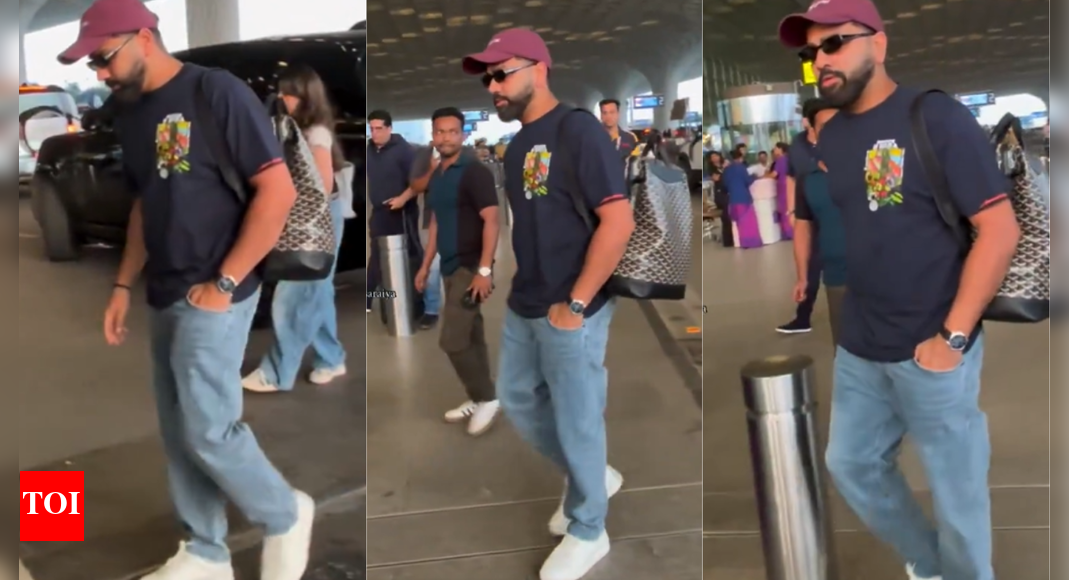
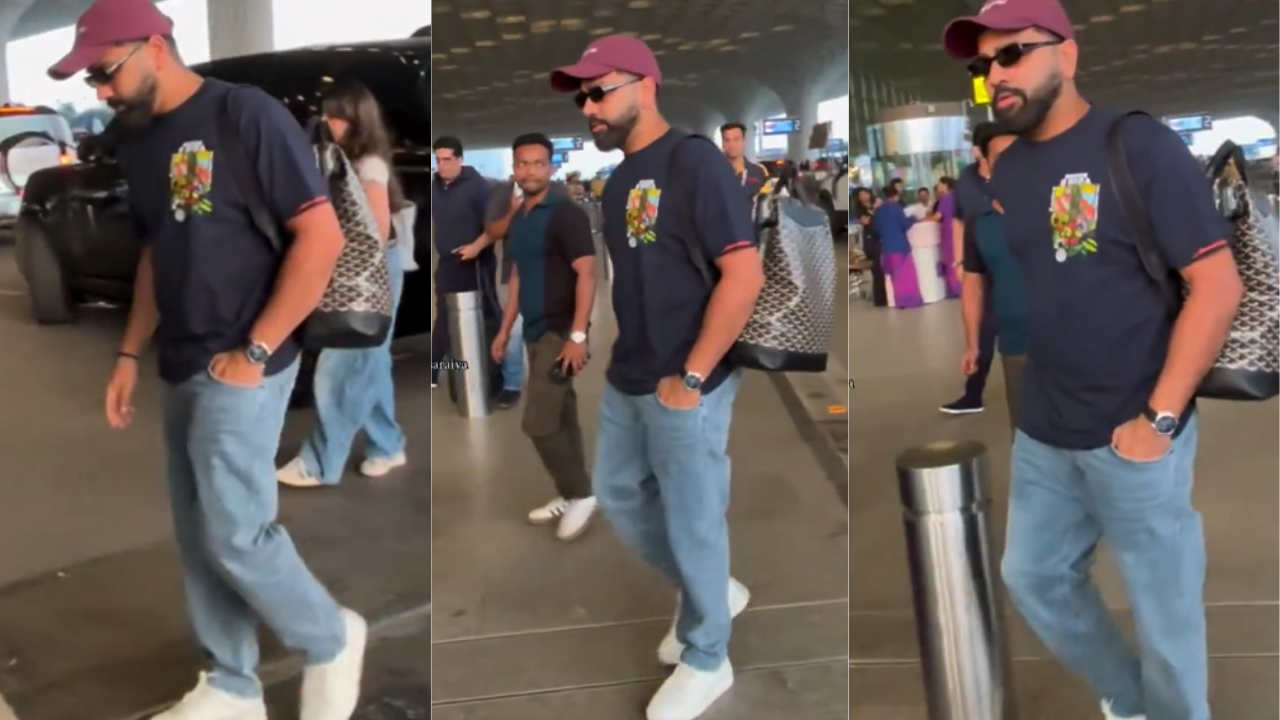
Rohit Sharma’s viral airport video sparks buzz ahead of India-Pakistan showdown | Cricket News


Some might call the game of cricket a bat-and-ball game. While the definition may have worked back in the 16th century when it was first played in South-East England, it may receive unfavourable support now. We are now living in the 21 st century, and as things have undergone changes, evolution so to speak, the gentleman’s game too has evolved into becoming something bigger. Though initially stated to be a children’s game by historians, the game has only gone on to become sophisticated and technical, and hence no longer just a game of bat-and-ball.

In order to celebrate what we have currently, we ought to honour the past as well. And to take a little walk down the line in regard to the game of cricket, we go to England in the old days. Although cricket now attracts money from all corners, it started its journey as a low-profile sport not pursued by many. Slowly and gradually, the game started getting its recognition. Since then, cricket has also been able to create a junction where different category of people could compete, but most importantly enjoy the same sport. The same movement was triggered in India, when the East India Company introduced to game to the Indian masses. The revered Bombay Quadrangular (held from 1912 to 1936) is one such example.

The longest format of the game, Test cricket, has continued to exist even after so many years. In the early 1960s, and once again the story moves to England and its counties, the need for a limited overs format was discussed. The changes were duly made, both domestically and internationally. This meant that the sport would now have a World Cup of its own. When we talk about limited overs format, we are only talking about One day internationals right now since the very popular T20 cricket comes much later in the timeline. The main reason why One Day internationals became a popular choice was because by the end of the game, you surely had just one winner. This paved way for the cricket world cup, which has been played every four years since 1975, with few exceptions in between. During this time, there was a rise in cricket governing bodies. With a new format, there were new teams. The figures were only to increase, with the entry of the shortest format of the game, T20s.

Originally introduced by the England and Wales Cricket Board (ECB), T20 games were introduced in 2003 for the inter-county competition. The first men’s international T20 match was played between Australia and New Zealand in February 2005 in Auckland. The newest format, the shortest one on the list, provided astonishing moments. One can think about India’s win in the inaugural T20 World Cup in 2007, a campaign which included remarkable moments.

The game of cricket, whenever altered to provide something new, always leads to a new option. With T20, cricket’s own club competition system was introduced. Twenty-twenty gave birth to franchise T20 leagues around the world. The Indian Premier League (IPL), one of the flagship T20 leagues, is probably the best example. This gave fans a chance to watch thrillers on the ground more often than usual. Franchise based T20 cricket tournaments also became huge money spinners, with sponsors jumping onto the T20 franchise cricket bandwagon


Source link

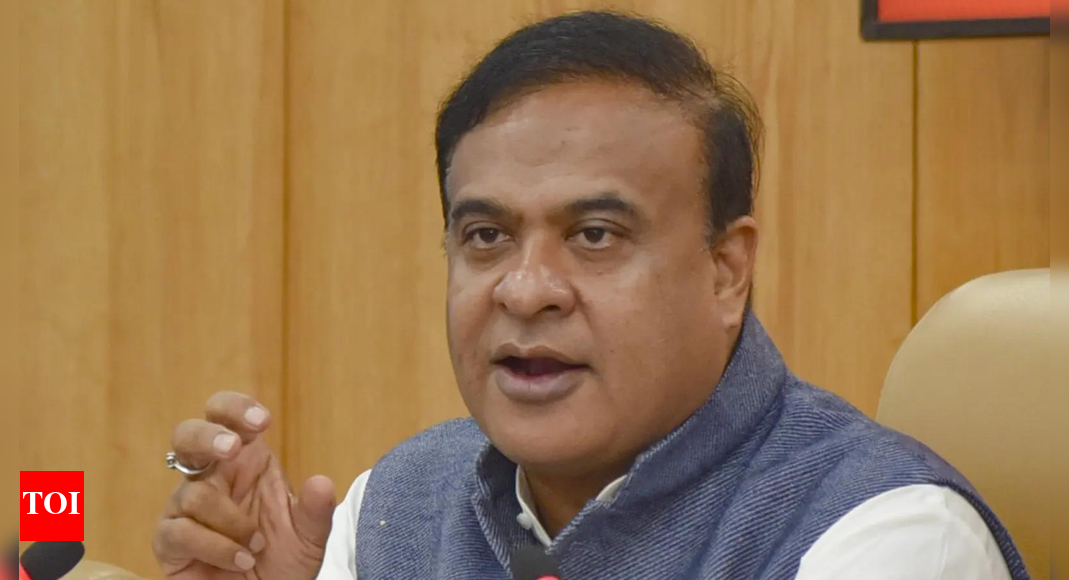
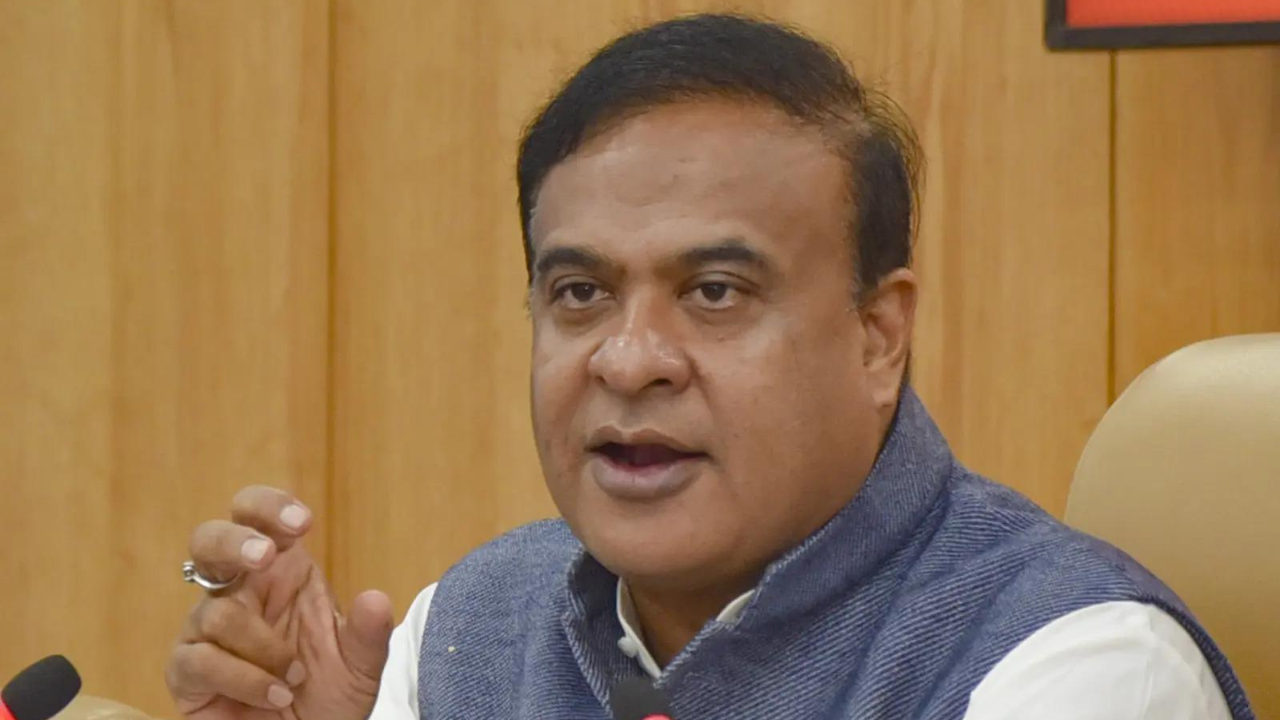
Big boost for Assam: CM Himanta Biswa Sarma says Rs 55,000 crore projects cleared in last one year | India News


NEW DELHI: Assam chief minister Himanta Biswa Sarma on Sunday said that central projects worth around Rs 55,000 crore have been sanctioned for the state over the past year, marking significant progress on infrastructure commitments made earlier.
Addressing a press conference, Sarma outlined a series of projects that have either received approval or are in advanced stages of clearance. He linked the developments to the commitments made during the second Advantage Assam investment summit.
“The Centre had assured infrastructure projects worth Rs 80,000 crore during the second Advantage Assam investment summit last year, and the state has already received approval for different projects worth Rs 55,000 crore,” he said.

Congratulations!

You have successfully cast your vote

The ‘Advantage Assam 2.0 Investment and Infrastructure Summit’ was organised by the state government in February 2025 to attract investments and push major infrastructure expansion across the state.

Among the key projects, Sarma said that the government has floated the tender for the Kamakhya Ropeway Project, which will connect Kamakhya railway station to the Kamakhya temple in Guwahati.

“When the PM visits Assam next, he will lay the foundation for it,” he said.

He added that the Centre is likely to approve a Rs 1,500 crore project within the next few days to build an elevated corridor from Guwahati airport to Jalukbari, the main entry point to the state capital. The project is aimed at easing traffic congestion and improving connectivity.

Sarma also said that a major highway expansion project is nearing final approval.
“The Rs 14,000-crore project for four-laning of the national highway from Baihata Chariali to Tezpur is at last stages of approval. We hope for it very soon,” he added.

On the stalled Kamakhya corridor project, the Chief Minister said work is expected to resume soon after expert bodies found no ecological risks.

“After some people opposed the corridor, the Gauhati High Court asked IIT Guwahati and the National Institute of Hydrology to study if the project would have any ecological impact. They said there would be no impact,” he claimed.

In the healthcare sector, Sarma said expansion works worth Rs 2,200 crore are underway at Gauhati Medical College and Hospital, while projects worth Rs 600 crore are ongoing at Assam Medical College and Hospital.

He further said that another strategic highway project is under consideration. The proposed route will connect the semiconductor plant at Jagiroad in Morigaon district to the Bhutan border via Udalguri and will include construction of a new bridge over the Brahmaputra river.

“This project is under active consideration of the Centre. These strategic assets will also be used by civilians,” Sarma said.

Separately, the Cabinet Committee on Economic Affairs, chaired by the Prime Minister, on Friday approved the construction of India’s first 34-km-long twin-tube road-cum-rail tunnel under the Brahmaputra river between Gohpur and Numaligarh at a cost of Rs 18,662 crore.


Source link

Global cues, AI disruption fears to steer markets this week: Analysts


Global cues, AI disruption fears to steer markets this week: Analysts

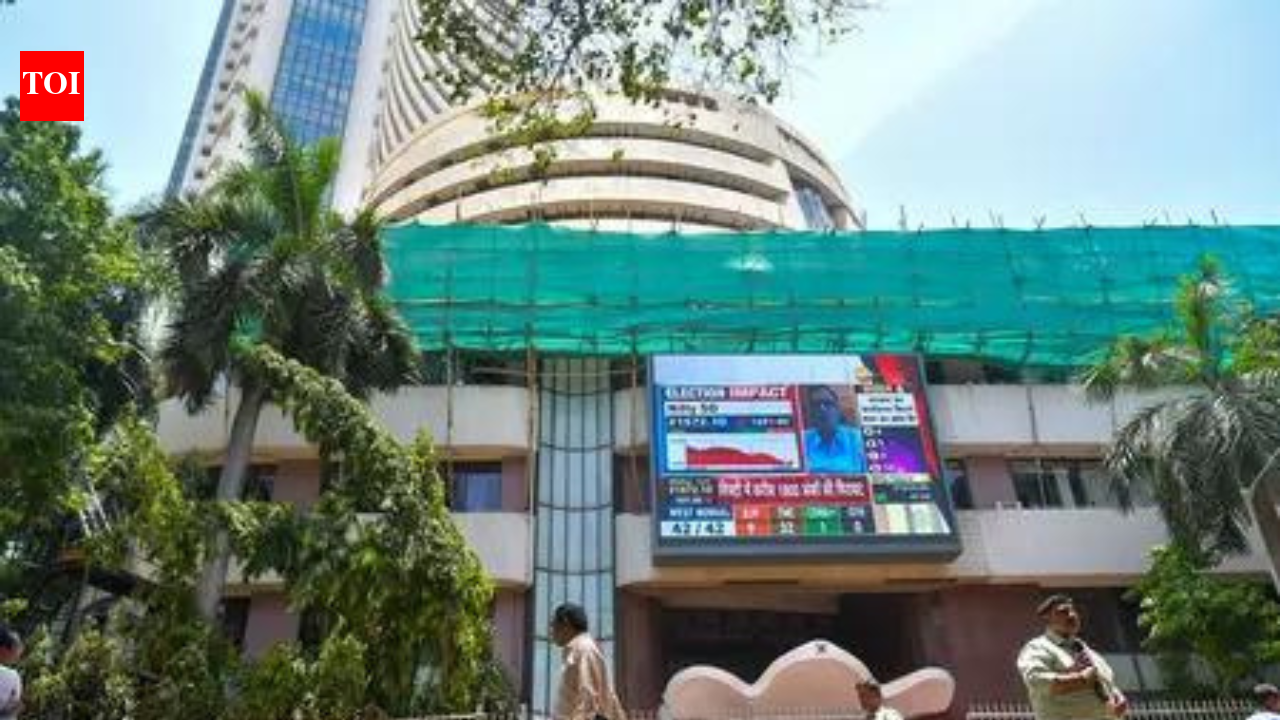
Macroeconomic data, global geopolitical developments and rising concerns over AI-related disruptions are likely to dictate stock market sentiment in the coming week, analysts said, even as investors remain cautious amid persistent volatility.Trading activity of foreign investors and movements in the domestic currency are also expected to influence market direction.

Focus on US data, fed outlook and AI risks

“In the near term, with tariff-related concerns easing and the domestic earnings season drawing to a close on a mixed trend, market focus will hinge largely on global cues, including the US labour data and shifting expectations surrounding the US Fed’s policy path”, Vinod Nair, head of research at Geojit Investments Ltd, said, as quoted by news agency PTI.“However, the overall sentiment is likely to remain cautious as investors monitor global AI-driven disruptions and geopolitical risks, while improved valuations and constructive GDP forecasts may help sustain FII inflows”, Nair added.He added that with IT and metals facing persistent structural and external headwinds, market leadership may rotate towards domestically oriented sectors such as banking, automobiles and select consumption-driven segments. However, broader indices are expected to remain range-bound until clearer macroeconomic and policy signals emerge.Analysts said investors will also watch the minutes of the Federal Open Market Committee (FOMC), scheduled for release on Thursday, for cues on the US Federal Reserve’s monetary policy outlook.

Inflation, PMI and external data in spotlight

Ajit Mishra, SVP, research at Religare Broking Ltd, said markets will track wholesale price index (WPI) inflation and balance of trade data for signals on price trends and external sector dynamics.“High-frequency indicators due include HSBC flash PMI readings for manufacturing, services, and composite, along with bank loan growth and foreign exchange reserves data.“These releases will be evaluated for confirmation of growth momentum amid volatile global cues and continued repricing in technology stocks,” he said, as per PTI.Strong US jobs data has already reduced expectations of near-term Federal Reserve rate cuts, pressuring global risk assets and contributing to domestic market weakness, Mishra added.

Benchmarks end lower amid tech selloff

On a weekly basis, the 30-share BSE Sensex slumped 953.64 points, or 1.14 per cent, while the NSE Nifty dropped 222.6 points, or 0.86 per cent.Both indices ended the week on a negative note as a global selloff in technology stocks and concerns over artificial intelligence-led disruptions weighed on sentiment.On Friday alone, the Sensex tumbled 1,048.16 points to close at 82,626.76, while the Nifty plunged 336.10 points to settle at 25,471.10 amid a broad-based selloff, particularly in metal, IT and commodity stocks.“The Nifty IT index touched a 10-month low during the session before closing 1.4 per cent lower… The sector continues to face headwinds amid rising concerns that rapid AI advancements could disrupt traditional service models and weigh on future revenue visibility,” Siddhartha Khemka of Motilal Oswal Financial Services Ltd said, as per PTI.Metal stocks also saw profit-booking amid a stronger dollar index and reports that Russia may consider re-entering the US-dollar settlement system, raising concerns over weaker realisations for metal companies, Nair said.The broader market remained under pressure, with the BSE SmallCap Select Index falling 1.90 per cent and the MidCap Select Index slipping 1.19 per cent.

Rupee, FII flows and global markets

The rupee consolidated in a narrow range and settled 5 paise lower at 90.66 against the US dollar on Friday.Foreign institutional investors bought equities worth Rs 108.42 crore on Thursday, while domestic institutional investors were also net buyers of Rs 276.85 crore, according to exchange data.Analysts noted that while the previous week saw support from favourable developments in the India-US trade deal and renewed FII inflows, sentiment turned cautious following escalating concerns over AI-led disruptions and a global technology selloff.Geopolitical tensions and continued repricing in technology stocks have increased sectoral volatility, prompting widespread selling pressure.Market experts said broader indices are likely to stay range-bound until clearer macroeconomic signals and policy clarity emerge, with global cues continuing to dominate investor sentiment in the near term.


Source link

Soap opera over soap: Why Karnataka politics is in a ‘lather’ over iconic Mysuru brand


Soap opera over soap: Why Karnataka politics is in a ‘lather’ over iconic Mysuru brand
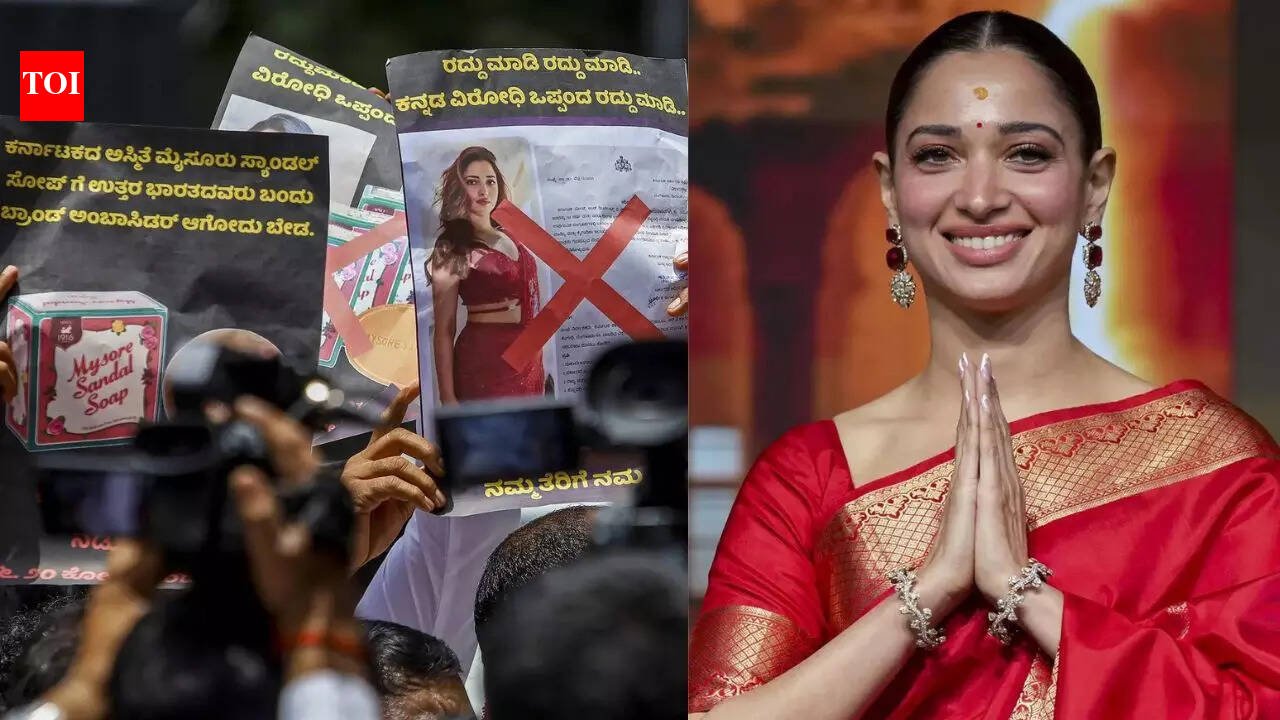
The controversy intensified after Karnataka industries minister MB Patil announced that Tamannaah Bhatia would serve a two-year tenure as brand ambassador for KSDL

When a bar of soap becomes the centre of a political slugfest, one knows the story runs deeper than lather and fragrance.The appointment of actor Tamannaah Bhatia as the new brand ambassador of Karnataka’s iconic Mysuru Sandal Soap has triggered a heated debate that cuts across politics, identity, branding strategy and regional pride. What began as a marketing announcement has spiralled into a controversy over language, representation and the cultural ownership of a 108-year-old legacy product.
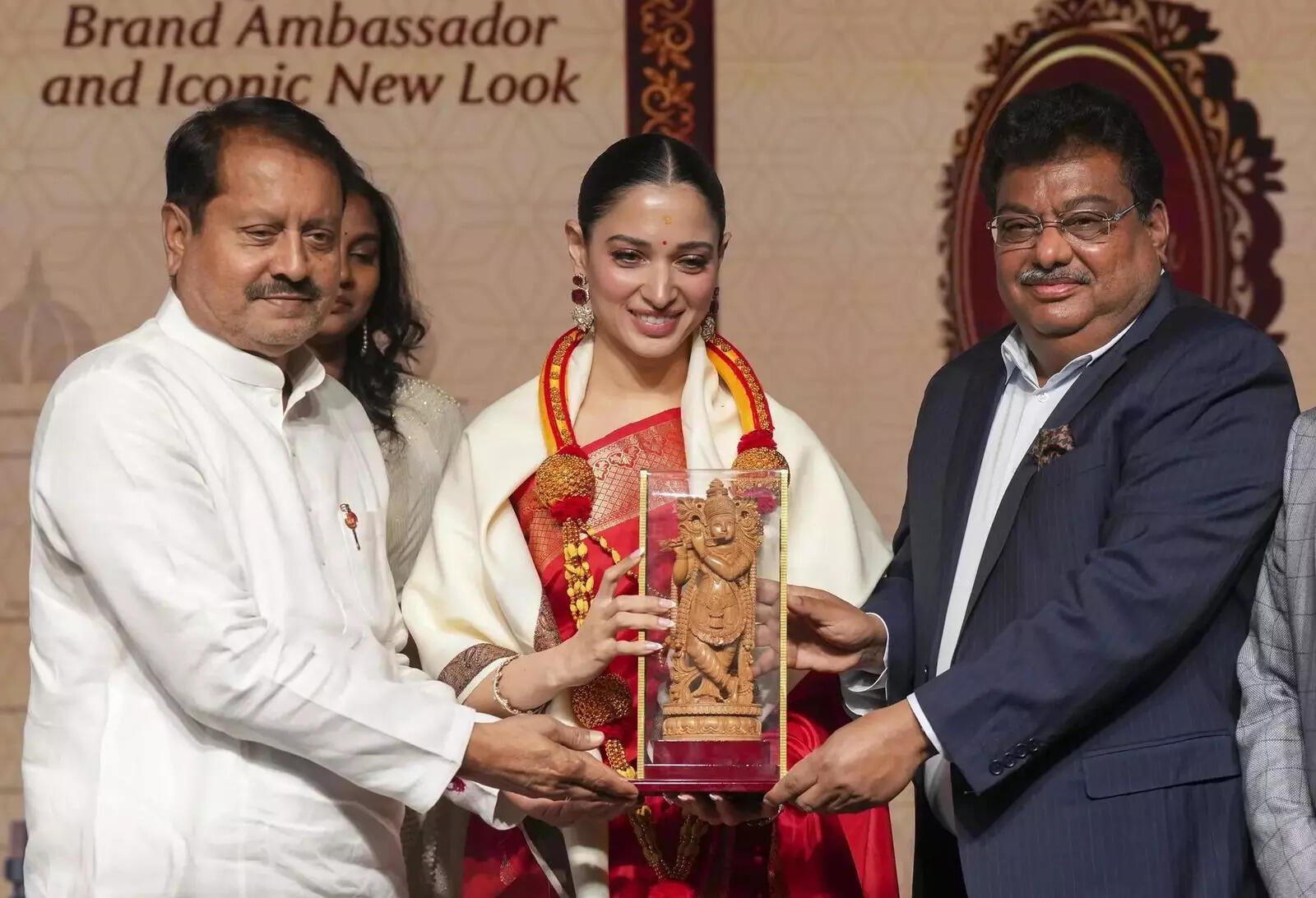
Tamannaah Bhatia in Bengaluru.

Karnataka Large & Medium Industries Minister MB Patil, right, with MLA CS Nadagouda, left, felicitated Tamannaah Bhatia during an event to unveil new products in Bengaluru (PTI photo)

At the heart of the row is Karnataka Soaps and Detergents Limited (KSDL), the government-owned company that manufactures Mysuru Sandal Soap. Founded during the reign of Nalwadi Krishnaraja Wadiyar, the brand is not merely a commercial product. For many Kannadigas, it is an aromatic symbol of heritage.

Reason behind trigger?

The controversy intensified after Karnataka industries minister MB Patil announced that Tamannaah Bhatia would serve a two-year tenure as brand ambassador for KSDL. The actor reportedly signed for a fee of approximately Rs 6.2 crore. Her contract, which was finalised last year, formally came into effect this month.The announcement coincided with the relaunch of Mysuru Sandal Soap in refreshed packaging and a broader strategy to reposition the brand for national and global markets. Several advertisements featuring the actor were unveiled at an event in Bengaluru, along with an expanded portfolio of nearly 60 products.But almost immediately, political opposition emerged.
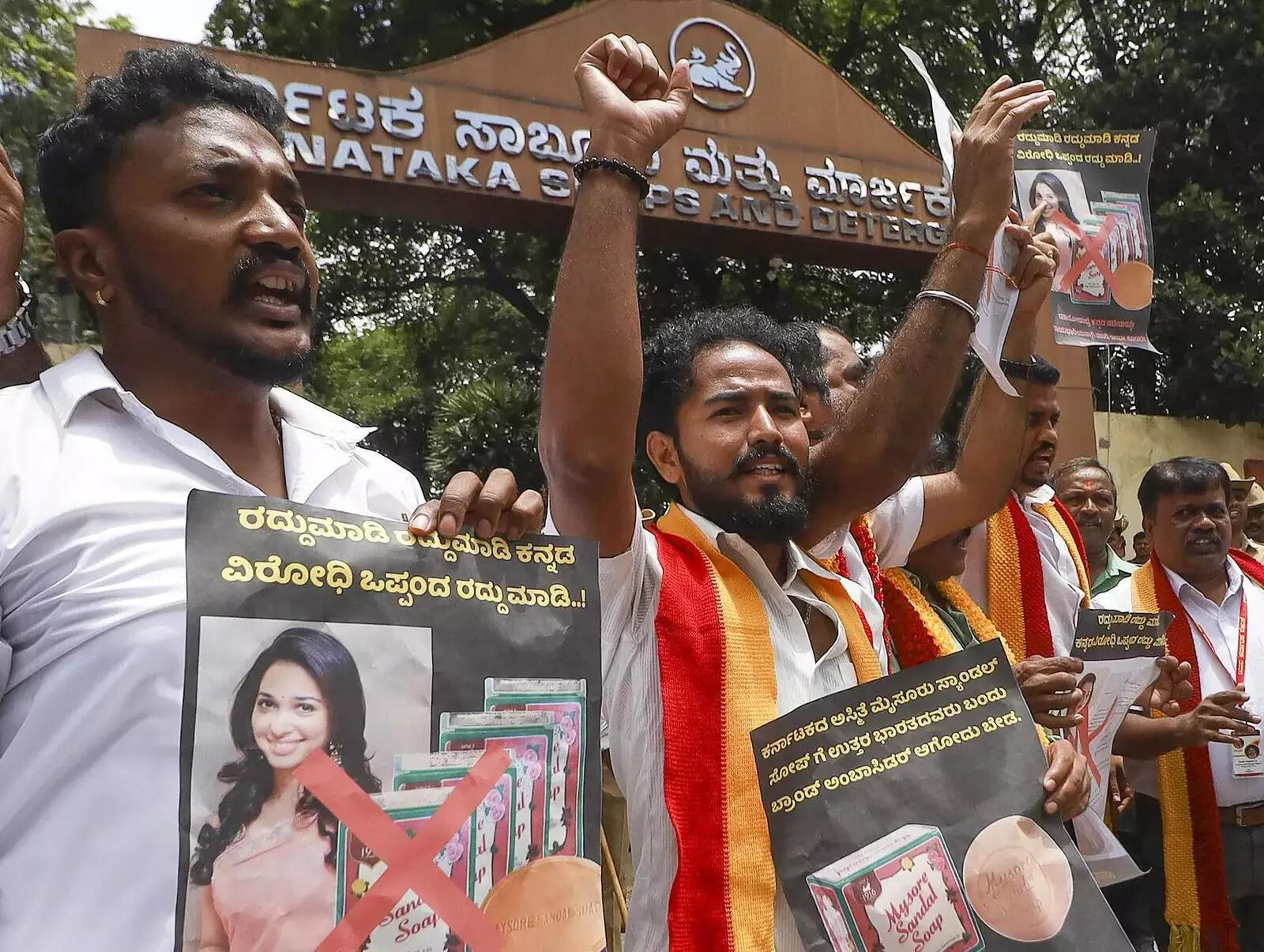
Bengaluru_ Kannada activists raise slogans during their protest against actor Ta... (1).

Kannada activists raise slogans during their protest against actor Tamannaah Bhatia at the entrance of the company premises at Yeshwanthpur in Bengaluru. (PTI photo)

Bharatiya Janata Party (BJP) MP K Sudhakar accused the Congress-led Karnataka government of displaying what he called an “anti-Kannada mindset”. He questioned why a Mumbai-born actor was chosen to represent a brand rooted in Karnataka’s cultural identity when several Kannada film stars enjoy national and international recognition.He named actors such as Ramya, Rashmika Mandanna, Srinidhi Shetty, Pooja Hegde and Rukmini Vasanth, arguing that they have carried Kannada cinema to wider audiences and would have been more appropriate faces of the brand.The debate quickly moved from business logic to emotional ownership.

A century-old legacy

To understand why a soap can trigger such strong reactions, one must go back to its origins.Mysuru Sandal Soap was born in 1916 in the princely state of Mysore. At the time, the region was rich in sandalwood, a precious and aromatic resource. During the First World War, the export of sandalwood was disrupted. Faced with surplus stock, the Mysore administration decided to explore value addition.Under the guidance of chemists and the encouragement of Maharaja Nalwadi Krishnaraja Wadiyar, the government established a soap factory that used pure sandalwood oil. The idea was simple but visionary. Instead of exporting raw material, produce a finished product of premium quality.
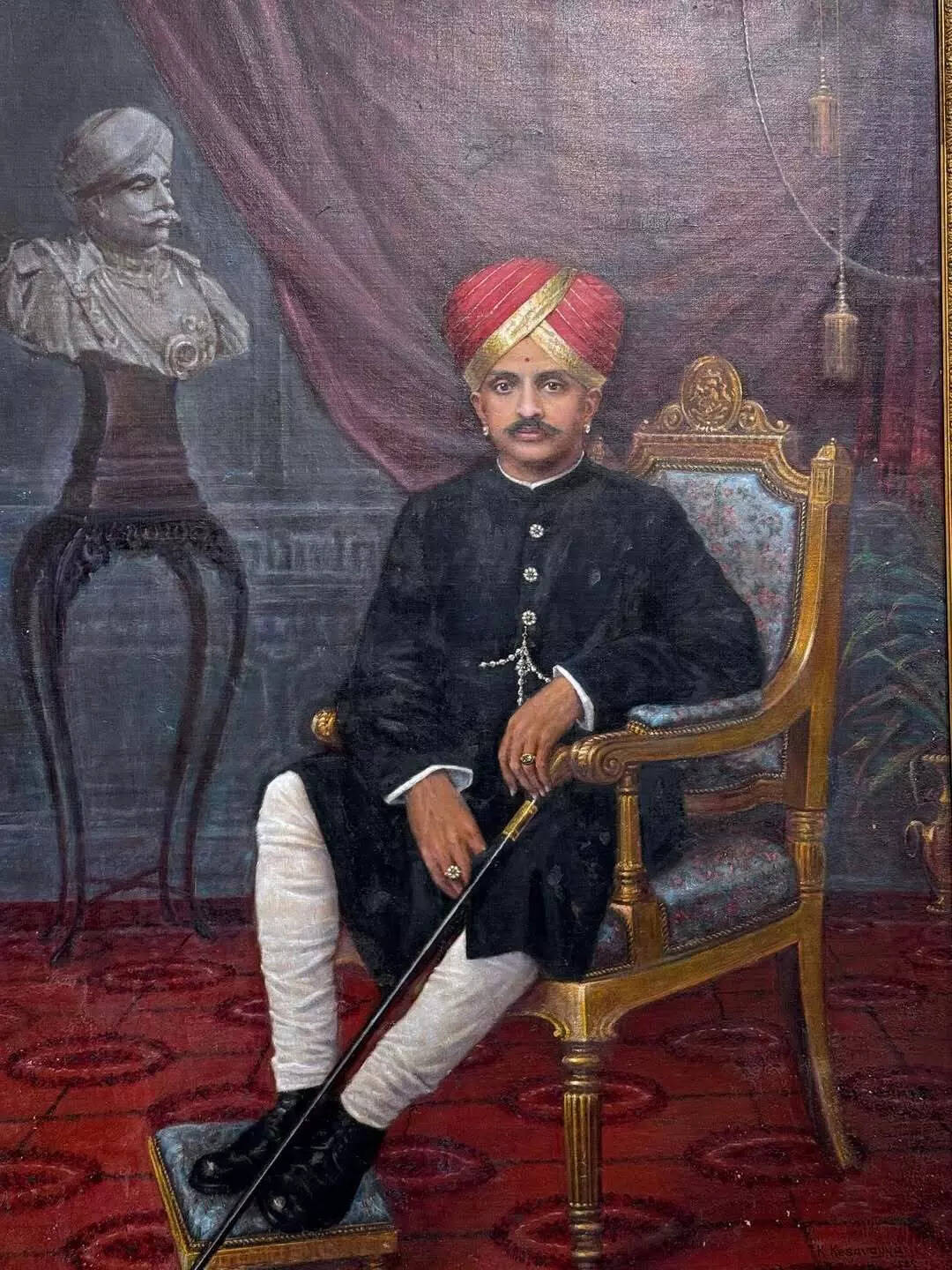
Wadiyar

Nalwadi Krishnaraja Wadiyar

The result was Mysore Sandal Soap, one of the few soaps in the world made with genuine sandalwood oil.In 1980, the operations were reorganised under Karnataka Soaps and Detergents Limited (KSDL), a state enterprise. Over the decades, KSDL expanded into detergents, cosmetics and other personal care products. Yet the flagship soap remained its crown jewel.For many households in Karnataka, the soap is associated with childhood memories, temple visits, wedding gifts and the distinctive scent of sandalwood that lingers long after use.It is not merely hygiene. It is nostalgia.

The business behind the move

Minister MB Patil has defended the appointment, saying the decision was based purely on marketing considerations. According to him, KSDL is entering a transformative phase with ambitious targets. The company aims to achieve a turnover of Rs 5,000 crore by 2030.Currently, the company’s turnover is expected to touch around Rs 2,000 crore this year, with profits reportedly exceeding Rs 500 crore. However, only a small percentage of sales occur within Karnataka. Patil has said that roughly 8 to 12 per cent of sales are in the state, with significant portions in Telangana, other southern states, north India and a small international presence.
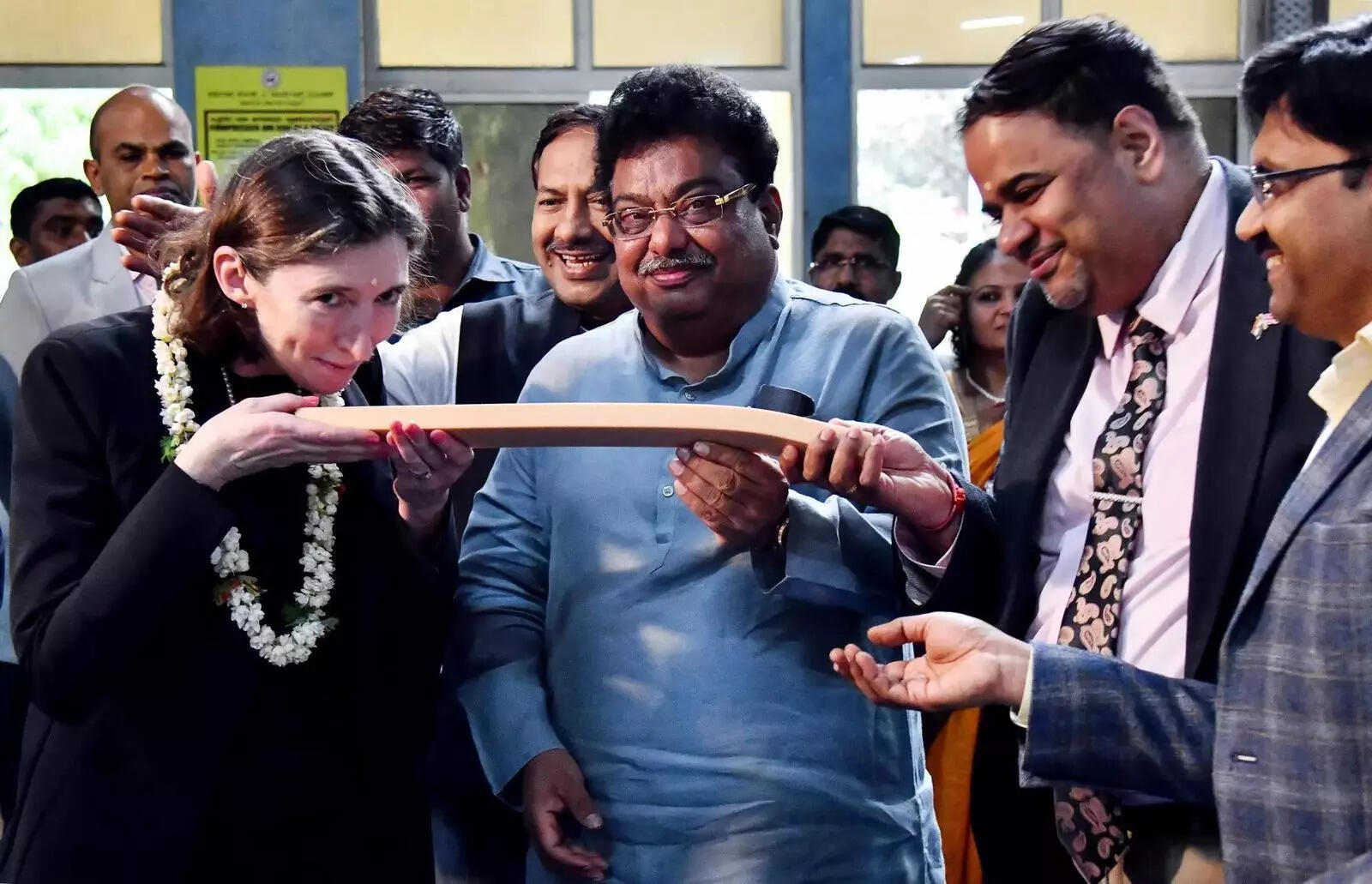
Bengaluru, Jun 25 (ANI)_ Karnataka Minister M. B. Patil along with British High ....

Karnataka minister MB Patil along with British high commissioner to India Lindy Cameron and Deputy high commissioner to Karnataka and Kerala Chandru Iyer during his visit to Karnataka Soaps and Detergents Limited (File photo: ANI)

The government’s argument is straightforward. If the brand wants to expand aggressively in North India and overseas markets, it needs a face with pan-India recognition.Tamannaah Bhatia, though born and brought up in Mumbai, has worked extensively in Tamil, Telugu and Hindi cinema. With millions of followers on social media and cross regional appeal, the government says she fits the bill.Officials have stated that several names were evaluated, including actors from Karnataka. However, some were reportedly endorsing competing brands, which made them ineligible under marketing norms.The state government maintains that branding decisions must align with commercial objectives, not political sentiment.

The cultural counterargument

Critics, however, view the decision through a different lens.For them, Mysuru Sandal Soap is intertwined with Karnataka’s linguistic and cultural pride. In a state where language identity remains politically sensitive, the selection of a non-Kannada-speaking actor to represent a heritage brand has symbolic implications.Mysuru MP Yaduveer Wadiyar, a descendant of the Mysore royal family, publicly questioned the rationale. He argued that soap is not gender-specific and that a cricketer or prominent Kannadiga could have been chosen. He also clarified that he had no interest in serving as brand ambassador himself, despite his name circulating on social media.
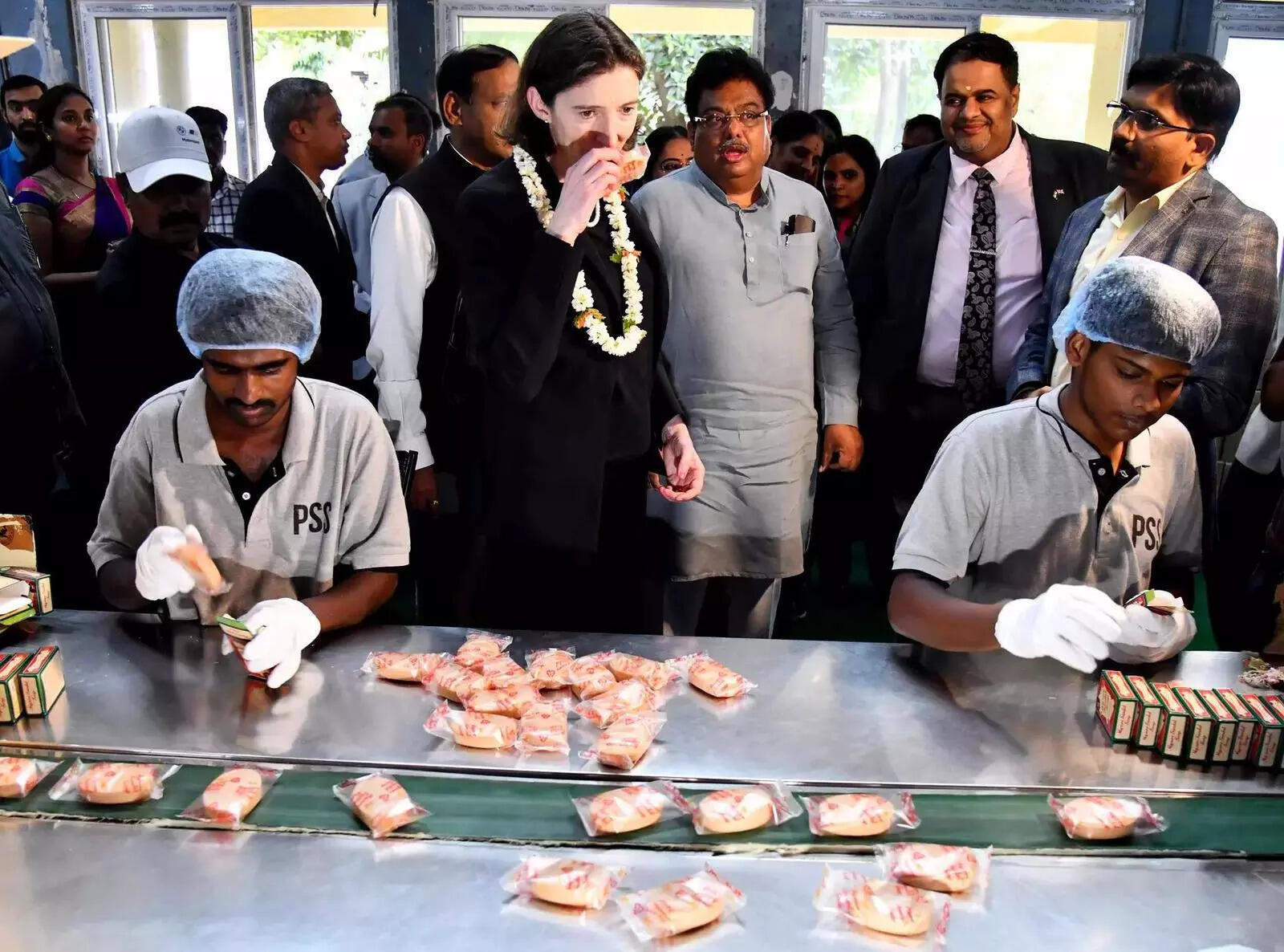
Bengaluru, Jun 25 (ANI)_ Karnataka Minister M. B. Patil along with British High ... (1).

Minister MB Patil, along with Lindy Cameron, seeing the packaging of the Mysuru sandal soap. (File photo: ANI)

Forest minister Eshwar Khandre defended the appointment but assured that Kannadigas would continue to receive priority in other contexts.Meanwhile, housing minister Zameer Ahmed indicated that although the decision had been taken, there were numerous capable Kannada actresses who could have been considered.The disagreement even within the ruling establishment reflects the sensitivity of the issue.For pro-Kannada groups, the controversy touches on a larger fear of cultural dilution. They argue that state-owned enterprises should reinforce regional identity rather than dilute it for broader appeal.

A brand in transition

Beyond the politics, KSDL is attempting a major brand refresh.At the recent relaunch event, the company unveiled 57 products, including new variants of soaps, sandalwood oil, jasmine scented bars, perfumes, toothpaste, coconut oil, petroleum jelly and organic lines. Two coffee table books documenting KSDL’s heritage were also released.The refreshed packaging aims to appeal to younger consumers who are increasingly drawn to premium natural and heritage brands.In recent years, India’s beauty and personal care market has undergone a rapid transformation. Consumers shifted towards global brands and K-beauty trends. However, there has also been a renewed interest in Ayurvedic and traditional formulations.
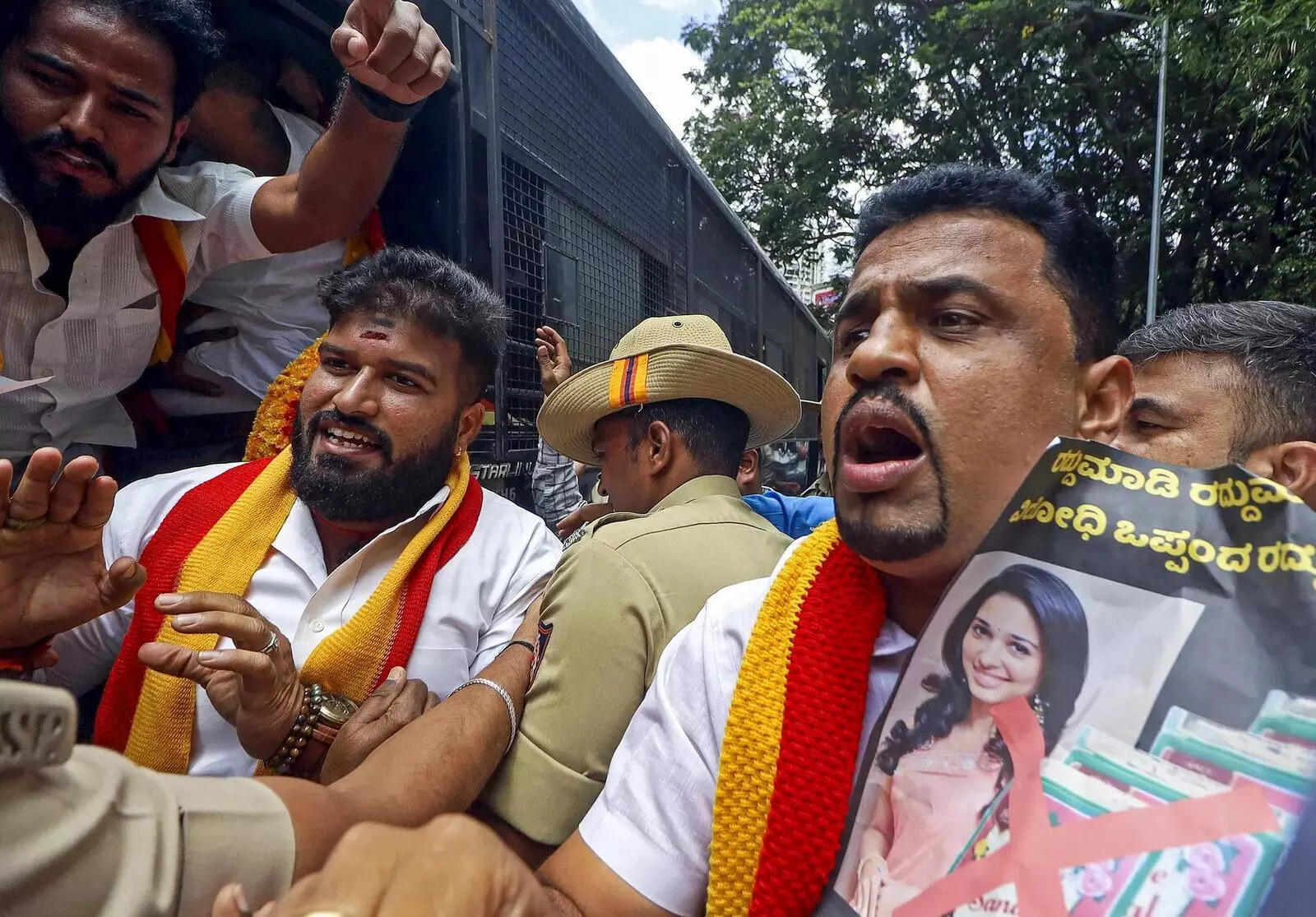
Bengaluru_ Kannada activists raise slogans during their protest against actor Ta... (2).

Kannada activists raised slogans during their protest at the entrance of the company premises at Yeshwanthpur in Bengaluru. (PTI photo)

Mysuru Sandal Soap, with its authentic sandalwood oil base, occupies a unique niche. It combines tradition with premium positioning.The launch of KSDL eStore, an e-commerce platform for its products, signals a shift toward digital retail. The company has established stock-keeping units closer to consumers to ensure timely delivery and freshness.In this context, the appointment of a high-profile celebrity ambassador is part of a broader strategy to reposition the brand as aspirational and nationally visible.

The politics of scent

The row highlights how even consumer goods can become sites of political contestation.In Karnataka, language and regional identity have historically shaped electoral politics. Debates over Hindi imposition, local employment and cultural representation frequently surface in public discourse. Against this backdrop, the choice of a brand ambassador becomes more than a marketing decision.Opposition leaders have framed the issue as evidence of disregard for Kannada pride. Supporters of the government argue that commercial pragmatism should not be conflated with cultural betrayal.The controversy also raises a larger question about public sector branding. Should government-owned companies prioritise regional representation as part of their mandate, or operate strictly on business metrics?For private corporations, such decisions are typically driven by reach, cost and market impact. But when the brand belongs to the state, expectations shift.

The actor at the centre

Tamannaah Bhatia has not publicly commented on the controversy in detail. At the Bengaluru event, she described Mysuru Sandal Soap as deeply associated with emotion and trust. She said she felt privileged to be associated with an institution of such legacy.Her filmography spans multiple industries, and she enjoys a significant social media presence. From a marketing standpoint, that digital footprint is valuable in an era where brand recall is shaped as much by Instagram reels as by television commercials.Yet, the backlash shows that brand endorsement in India cannot be divorced from identity politics.

More than just a soap

Mysuru Sandal Soap’s enduring appeal lies in its authenticity. Unlike synthetic fragrance soaps, it reportedly uses genuine sandalwood oil, a resource historically associated with Karnataka. The state has long regulated sandalwood harvesting due to its high value and ecological importance.The soap’s emblem, featuring the royal insignia of Mysore, reinforces its historical roots. For many, it represents a time when princely states invested in industrial innovation and self-sufficiency.In that sense, the brand is a bridge between pre-independence industrial vision and modern state enterprise.As of now, the appointment stands. Tamannaah Bhatia’s two-year tenure has begun, and marketing campaigns are underway. KSDL is pushing forward with its expansion plans, eyeing higher turnover, greater exports and a stronger digital footprint.Whether the controversy fades or continues to simmer will depend on political developments and public reception.If the refreshed branding leads to significant growth in north India and overseas markets, the government may point to it as vindication of its strategy. If the backlash persists, opposition parties may continue to frame it as symbolic of deeper cultural concerns.



Source link

Purr-manent resident: Larry the cat marks 15 years at Downing Street as Britain’s political top cat


Purr-manent resident: Larry the cat marks 15 years at Downing Street as Britain’s political top cat

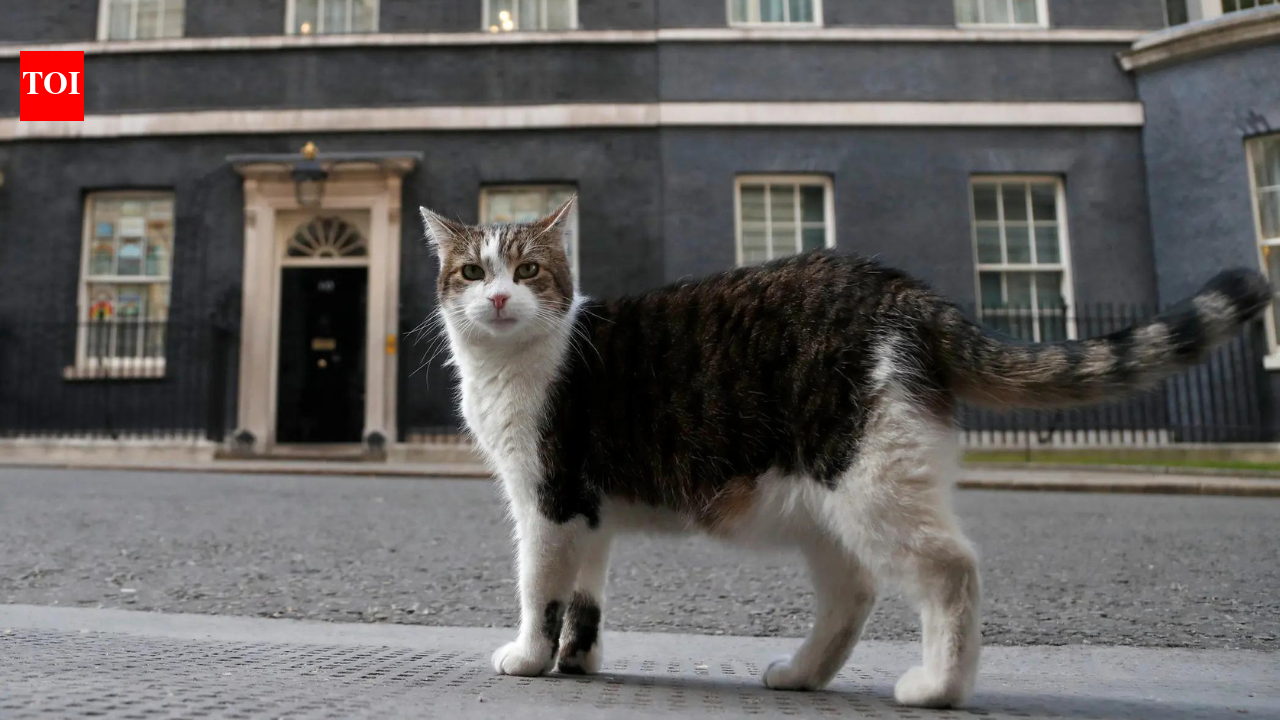
In a political landscape often defined by upheaval and leadership churn, one resident of 10 Downing Street has remained a constant. Larry, the British government’s official Chief Mouser, marked 15 years in the role on Sunday, becoming one of the most enduring figures associated with the prime minister’s residence.First adopted from Battersea Dogs and Cats Home by then-Prime Minister David Cameron, the gray-and-white tabby arrived at Downing Street on Feb. 15, 2011. Since then, Larry has served under six prime ministers, earning a reputation as both a symbol of continuity and an unofficial mascot of British politics.“In turbulent political times, stability comes with four legs, whiskers and a fondness for napping,” said Philip Howell, a Cambridge University professor who has studied the history of human-animal relations. “Larry the cat’s approval ratings will be very high,” Howell added. “And prime ministers tend not to hit those numbers. He represents stability, and that’s at a premium.”Larry’s official responsibilities, according to his government profile, include “greeting guests to the house, inspecting security defenses and testing antique furniture for napping quality.” In practice, his presence has often extended beyond ceremonial duties. The cat has become a familiar sight for photographers gathered outside Downing Street, frequently appearing at moments that coincide with high-profile political arrivals.“He’s great at photo-bombing,” said freelance photographer Justin Ng, who has covered Downing Street for years. “If there’s a foreign leader that’s about to visit then we know he’ll just come out at the exact moment that meet-and-greet is about to happen.”Over the years, Larry has encountered a succession of world leaders, sometimes forcing visiting dignitaries to navigate around him on the famous black doorstep. Observers have noted that while he can be selective in his affections — reportedly less friendly toward men — he appeared comfortable around former U.S. President Barack Obama and drew a smile from Ukrainian President Volodymyr Zelenskyy during one of his visits.During Donald Trump’s 2019 visit to London, Larry famously wandered into the official photo opportunity before settling down beneath the presidential limousine known as “The Beast.”Despite his official title, assessments of Larry’s rodent-catching abilities have varied. He has occasionally been photographed catching mice and once attempted to capture a pigeon, which escaped. Ng described the cat’s appeal differently. “He’s more of a lover than a fighter,” he said. “He’s very good at what he does: lounging around and basically showing people that he’s very nonchalant.”Life at Downing Street has also included rivalries and uneasy coexistence with other political pets. Larry shared space with Boris Johnson’s Jack Russell cross Dilyn and Rishi Sunak’s Labrador Nova. Under current Prime Minister Keir Starmer, Larry remains confined to the working areas, while the Starmer family’s cats, JoJo and Prince, stay in the private residential quarters.Perhaps his most notable rivalry was with Palmerston, the Foreign Office’s resident cat across the street. The two were repeatedly photographed fighting before Palmerston retired in 2020. Palmerston died earlier this month in Bermuda, where he had taken on the honorary role of “feline relations consultant” to the governor.Now believed to be 18 or 19 years old, Larry has slowed with age but continues to patrol Downing Street and spend long stretches resting on a window ledge above a radiator near the entrance — a familiar sight for visitors and staff alike.For many observers, Larry’s enduring popularity reflects something deeper in British political culture. Howell argues that the cat occupies a unique space as a nonpartisan presence in a highly partisan environment.“A cat-hating PM, that seems to me to be political suicide,” Howell said.Unlike American presidential pets, which are often seen as extensions of political image-making, Larry’s appeal lies partly in his independence. “The fact that cats are less tractable is part of the charm, too,” Howell said. “He’s sort of whimsically not partisan in a political sense, but he tends to take to some people and not to others and he won’t necessarily sit where you want him to sit and pose where you want him to pose.“There is a certain kind of unruliness about Larry which I think would endear him, certainly, to Brits.”


Source link

Horrific accident in Bengaluru: 5 dead as speeding car crashes into divider, topples, collides head-on with bus coming from opposite direction | Bengaluru News


BENGALURU: Around five persons died in a tragic road accident involving a car and a Karnataka State Road Transport Corporation (KSRTC) bus near Jindal on Tumakuru Road on the outskirts of Bengaluru on Saturday midnight.According to police, the accident occurred when a Tata Indica, travelling from Tumakuru towards Bengaluru, reportedly crashed into a road divider, crossed into the opposite lane, toppled, and collided head-on with a KSRTC bus that was coming from the opposite direction around 11.30 pm.

Deadly Joyride: Teen Driving SUV At 160 Kmph Triggers Chain Crash In Bengaluru, 6 Students Dead

The impact of the collision was severe, leaving the car completely mangled and causing extensive damage to its front portion. Based on the preliminary investigation, police suspect overspeeding to be the main cause of the accident.Four occupants of the car died on the spot due to the impact, while the driver, who was critically injured, was rushed to a hospital. However, he later succumbed to his injuries without responding to treatment.The deceased have been identified as Harshit and Lalith , both residents of Doddaballapur, while the identities of the remaining three victims are yet to be ascertained. The bodies have been shifted to Nelamangala Government Hospital for post-mortem examination. Both Harshit and Lalith were students studying in private colleges.Harshit had left home around 8.30 pm to meet his friends, according to his family members.The bus was carrying 42 passengers. A few passengers seated in the front rows suffered minor bruises. Following the accident, the passengers were shifted to another bus.A case has been registered at Madanayakanahalli police station, and further investigation is underway.


Source link

India-US trade deal to help secure crude at competitive prices: Piyush Goyal


India-US trade deal to help secure crude at competitive prices: Piyush Goyal

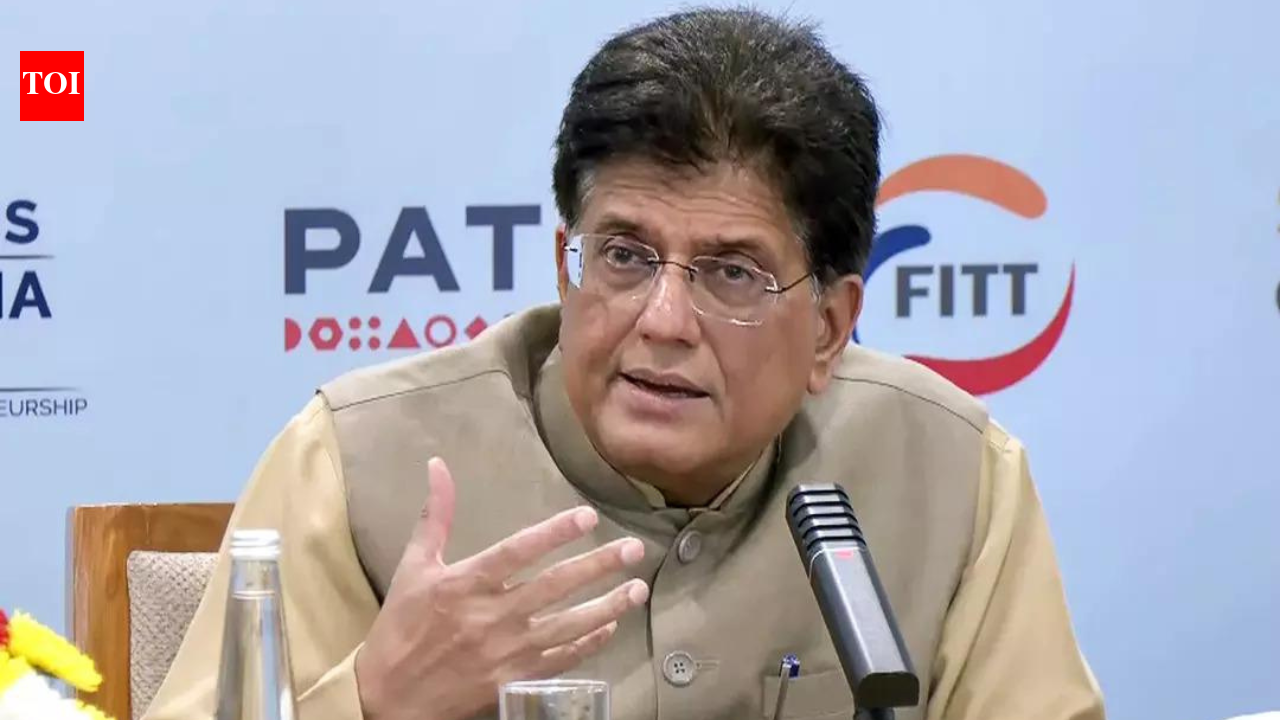
File photo: Union commerce and industry minister Piyush Goyal (Picture credit: ANI)

Union commerce and industry minister Piyush Goyal on Saturday said the interim trade agreement between India and the United States will factor in India’s rising energy requirements and help the country secure crude oil at more competitive prices.Speaking to reporters, Goyal said India and the US have agreed to work towards increasing annual bilateral trade to $500 billion by 2030, and the government is actively working to achieve this target.

Energy imports to form key part of $500 billion trade target

He said the proposed $500 billion trade basket would include India’s energy requirements such as crude oil, LNG and LPG.“India is the fastest-growing large economy in the world, and its energy demand is rising by around 7 per cent annually. Increasing imports and having more suppliers would help India secure crude oil at more competitive prices,” Goyal said, as quoted by news agency PTI.Last week, India and the US announced that they had reached a framework for an interim trade agreement under which both sides will reduce import duties on several goods to boost two-way trade.Under the framework, the US will reduce tariffs on Indian goods to 18 per cent from 50 per cent, while India will eliminate or cut import duties on all US industrial goods and a wide range of American food and agricultural products.

Diversification in strategic interest, buyers decide on sourcing

Earlier, addressing concerns about whether the trade pact influences India’s imports of Russian crude oil, Goyal had said such decisions are taken by domestic buyers and are not dictated by the trade agreement.“The buying of crude oil, LNG, or LPG from the US is in India’s strategic interest as we diversify sources. But the decisions are taken by the buyers themselves. The trade deal does not decide who will buy what and from where,” he said in an interview to news agency ANI.On whether the agreement affects India’s approach to Russian oil imports, the minister said, “I don’t deal with that,” adding that such matters fall under the purview of the ministry of external affairs.He emphasised that free trade agreements are about ensuring preferential market access. “The trade deal ensures that the pathway to trade is smooth and ensures preferential access. FTAs are all about preferential access to your competition. So today, when we’ve got an 18 per cent reciprocal tariff, we have a preference over other developing nations who are usually our competition. And that’s why the free trade deal becomes very attractive,” Goyal added.

Steel, coking coal and IT exports in focus

The minister also highlighted India’s growing industrial needs. He said the country currently manufactures around 140 million tonnes of steel annually and expects this to double in the coming years.To support this expansion, India requires large quantities of coking coal, imports of which are currently worth about Rs 1.50 lakh crore and are likely to rise to Rs 3 lakh crore, he said, as per PTI.Goyal noted that India is presently dependent on two to three countries for coking coal, and increasing the number of suppliers would ensure competitive pricing and improved supply security.He further pointed out that the US has strengths in infrastructure, connectivity and distribution-related products, and India seeks greater access to these to expand sectors such as data centres.India’s information technology exports currently stand at around $200 billion (Rs 18 lakh crore), he said, adding that access to advanced US equipment could help raise IT exports to nearly Rs 45 lakh crore.

Broader bilateral trade framework

The interim agreement reaffirms the commitment to a broader Bilateral Trade Agreement launched by US President Donald Trump and Prime Minister Narendra Modi on February 13, 2025.India has indicated plans to purchase $500 billion worth of US energy products, aircraft and aircraft parts, precious metals, technology products and coking coal over the next five years under the framework.The interim pact, while focused on reciprocal tariff reductions and market access, is also positioned as a strategic step toward diversifying supply chains, strengthening energy security, and expanding India’s export footprint across key sectors.


Source link

T20 World Cup 2026: Here’s why Lockie Ferguson will miss New Zealand’s upcoming fixture against Canada


The ICC Men’s T20 World Cup 2026 has reached a fever pitch in India and Sri Lanka, but the New Zealand camp faces a bittersweet moment as they prepare for their final Group D encounter. Lockie Ferguson, the Black Caps’ premier pace merchant known for his high-octane bouncers and searing yorkers, is set to miss the upcoming fixture against Canada. While his absence leaves a significant void in the bowling attack, the reason behind his departure is a cause for celebration within the cricketing fraternity.

Why Lockie Ferguson is set to miss New Zealand’s upcoming T20 World Cup 2026 match?

New Zealand’s star pacer Ferguson is set to fly back home on February 15 during the ICC Men’s T20 World Cup 2026 group stages. Ferguson will return home to be with his wife Emma and welcome their first child. The news was confirmed by New Zealand Cricket (NZC) on Sunday, stating that the fast bowler has been granted parental leave to witness this major life milestone.

Head coach Rob Walter addressed the media, expressing the team’s full support for Ferguson’s decision. “It’s an incredibly exciting time for Lockie and Emma, and we’re pleased that he’ll be at home for such a special occasion,” Walter remarked. Despite the high stakes of the tournament, the Black Caps have a long-standing culture of prioritizing family, and this situation is no different.

While Ferguson will miss the clash against Canada in Chennai, the team has opted not to name a formal injury replacement. The plan is for the speedster to rejoin the squad in time for the Super Eight stage, provided New Zealand secures their progression. In the interim, the team will look toward traveling reserves Ben Sears and Cole McConchie, or potentially bring Kyle Jamieson into the playing XI to maintain the pace battery’s intensity.

Also READ: Fans react as Marco Jansen, Aiden Markram lead South Africa to emphatic win over New Zealand in T20 World Cup 2026

New Zealand’s rollercoaster journey in Group D of T20 World Cup 2026

The Black Caps’ 2026 campaign has been a story of clinical precision followed by a sudden reality check. Currently sitting second in Group D with four points from three matches, New Zealand started their journey with dominant displays. They began with a comprehensive victory over Afghanistan in Chennai, where the bowlers exploited the conditions perfectly, followed by a professional win against the United Arab Emirates (UAE).

However, their momentum hit a speed bump on February 14 at the Narendra Modi Stadium in Ahmedabad. Facing a formidable South African side, the Kiwis posted a competitive 175/7, thanks to a vital 74-run stand between Mark Chapman (48) and Daryl Mitchell (32). Unfortunately, South Africa’s Aiden Markram played a captain’s knock, smashing an unbeaten 86 to chase down the target with 17 balls to spare.

This seven-wicket loss to the Proteas has made the upcoming match against Canada a must-win for the Black Caps to ensure they don’t rely on net run rate math. Ferguson’s departure comes at a time when his pace was starting to peak, having already claimed four wickets in the tournament but the Kiwis remain favourites to brush past Canada and march into the Super Eights.

Also READ: Fans erupt as Tom Banton powers England to thrilling 5-wicket win over Scotland at T20 World Cup 2026


Source link