Breaking News
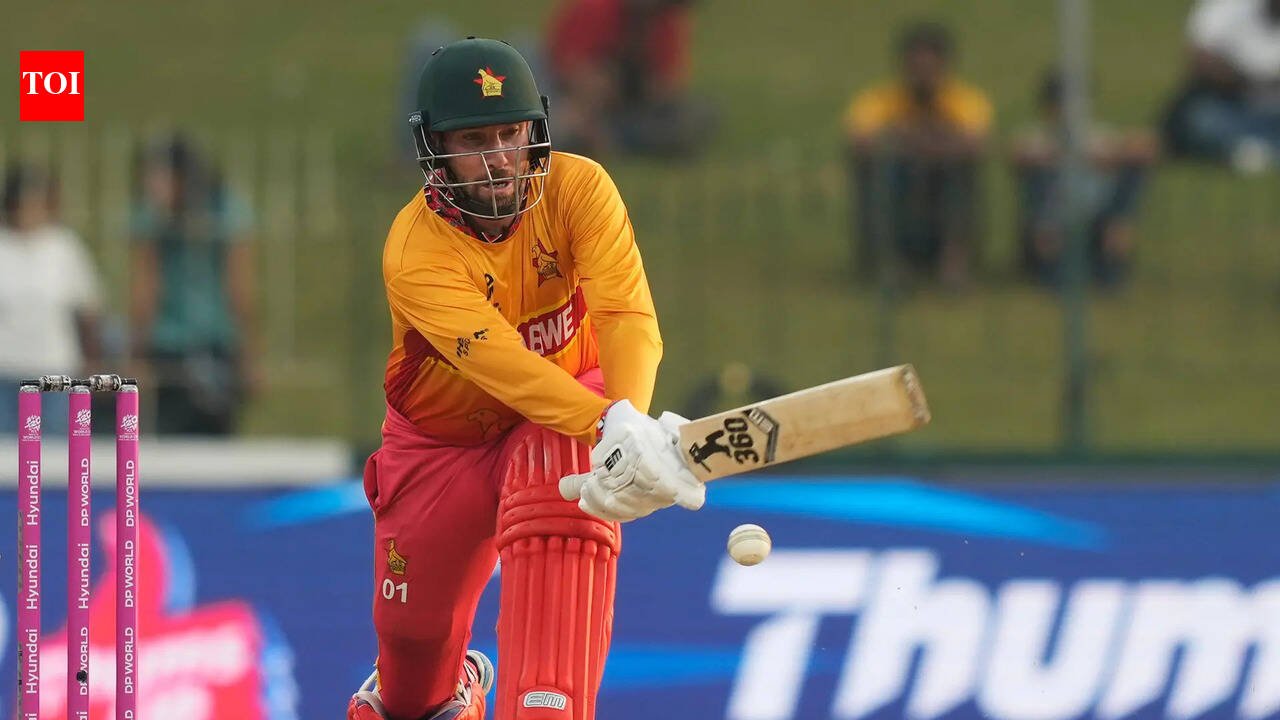
T20 World Cup 2026 [WATCH]: Zimbabwe’s Brad Evans cleans up Travis Head and drops a Ronaldo’s ‘Siuuu’ celebration against struggling Australia


In a sensational turn of events at the R. Premadasa Stadium on February 13, 2026, Zimbabwe have pushed the 2021 champions to the brink of a historic collapse in T20 World Cup 2026. The Colombo crowd witnessed a masterclass in aggressive associate cricket as the “Chevrons” dismantled the Australian top order under the floodlights. With captain Mitchell Marsh already sidelined due to a bizarre medical condition, the stand-in leadership of Travis Head was expected to provide stability. However, the Zimbabwean pace attack had other plans, leaving the Australian dugout in stunned silence.

Brad Evans rattles Travis Head and unleashes the iconic Cristiano Ronaldo’s SIUUU celebration

The defining moment of Australia’s nightmare powerplay arrived in the 5th over when Brad Evans delivered a knockout punch to the Australian captain. Operating on a nagging good-length just outside the off-stump, Evans induced a hesitant push from Travis Head, who played away from his body without significant foot movement. The ball took a thick inside edge, deflected off the batter’s pads, and rolled with agonizing slow-motion precision back onto the stumps to dislodge the bails.

As Head stood frozen in disbelief at his dismissal for 17 (15 balls), Evans sprinted toward the covers to unveil the Cristiano Ronaldo “SIUUU” celebration, a high-octane jump and mid-air pirouette that sent the Zimbabwean supporters into a frenzy. This wicket was the culmination of a relentless opening spell where Evans and Blessing Muzarabani utilized the ‘stop-start’ nature of the Colombo surface to perfection. The celebration wasn’t just a personal flair; it symbolized the rising confidence of a Zimbabwe side that had already reduced Australia to a perilous 29/4 within the first 30 balls of the chase.

Here’s the video:

Also READ: T20 World Cup 2026: Here’s why Brendan Taylor, Cooper Connolly and Richard Ngarava are not playing today’s AUS vs ZIM match

T20 World Cup 2026: Zimbabwe posts 169/2 amidst mounting Australian injury woes

Earlier in the day, Zimbabwe set a formidable target of 170, anchored by a resilient maiden World Cup fifty from young opener Brian Bennett. The 22-year-old played the innings of his life, remaining unbeaten on 64 off 56 balls with seven boundaries, skillfully navigating the threat of Adam Zampa. He was ably supported by Tadiwanashe Marumani (35) and Ryan Burl (35), before skipper Sikandar Raza provided the finishing touch with a brisk 25 off 13 balls*, including a massive six off the final delivery.

Australia’s bowling effort was hampered significantly when Marcus Stoinis was forced off the field in the 16th over after copping a nasty blow to his left thumb while fielding a powerful drive off his own bowling. The injury looks serious, adding to a casualty list that already includes regular captain Marsh (testicular bleeding). In the chase, the Australian collapse was rapid: Josh Inglis (8) fell to a pull shot, Cameron Green (0) nicked off to the keeper, and Tim David (0) mistimed a swivel-pull to short fine leg, all before Head’s bizarre dismissal. At the drinks break, Australia stands at a shaky 51/4, needing a ‘Maxwell Miracle’ to chase down the remaining 119 runs at a required rate nearly touching 10 per over.

Also WATCH: T20 World Cup 2026: Suryakumar Yadav holds back security to let fan in Virat Kohli jersey meet Hardik Pandya during IND vs NAM match


Source link

Connectivity boost for ‘Chicken neck’! Indian Railways announces underground rail route through Siliguri Corridor; check route and key details


Connectivity boost for 'Chicken neck'! Indian Railways announces underground rail route through Siliguri Corridor; check route and key details

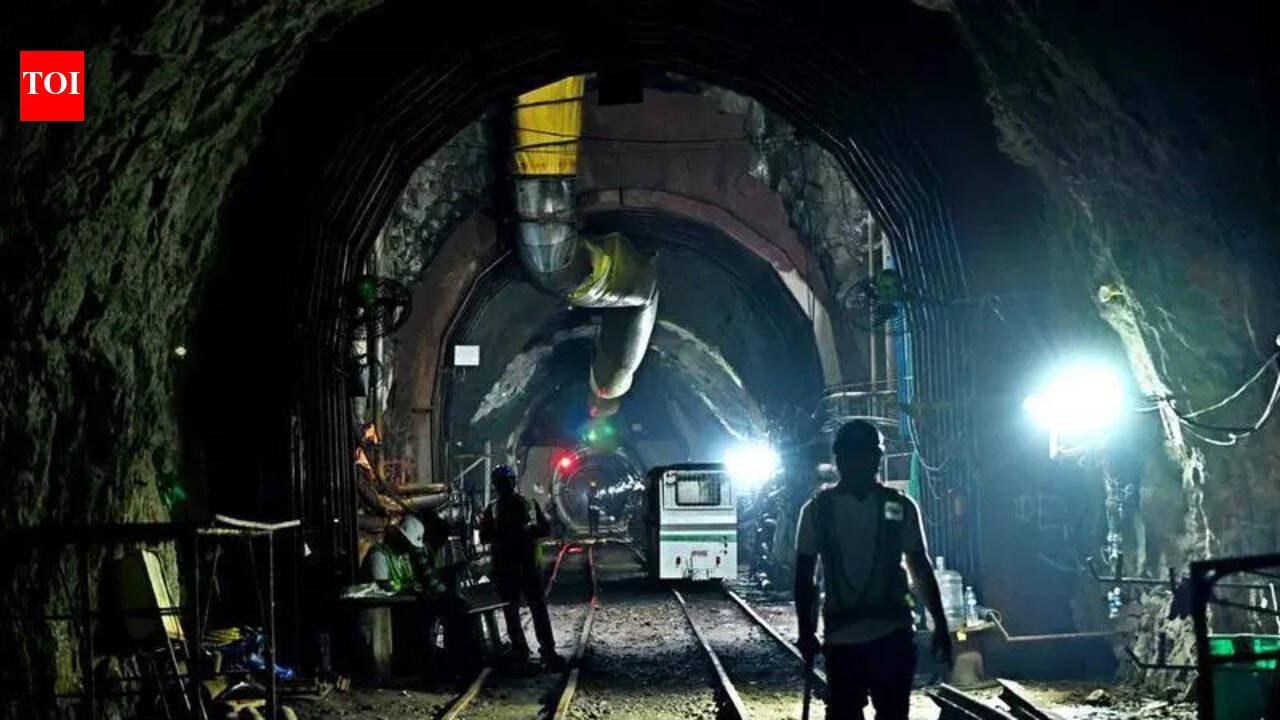
India’s “Chicken neck” is all set for a new connectivity boost!In a bid to strengthen regional connectivity to India’s North-eastern States, Indian Railways has announced plans to construct a new underground railway line through the Siliguri Corridor, commonly known as the “Chicken’s Neck”. Union minister for railways, information & broadcasting and electronics & information technology, Ashwini Vaishnaw, said that the project is designed to ensure secure, reliable and uninterrupted rail connectivity in this strategically sensitive region.

Route:

The new line will fall under the Katihar Division of Northeast Frontier Railway and will begin from Tinmile Hat going to Rangapani, and onwards to Bagdogra. En-route, the link will cover parts of Darjeeling and Uttar Dinajpur districts in West Bengal, as well as Kishanganj district in Bihar.

Length:

The proposed underground alignment will run for a total length of 35.76 km between Dumdangi and Bagdogra, with the Dumdangi–Rangapani section measuring 33.40 km. The corridor, approximately 22 km wide, connects mainland India with the North-eastern States and has been planned primarily as an underground route to provide secure and resilient connectivity.

Protection:

Due to the corridor’s proximity to international borders with Nepal, Bhutan and Bangladesh, and its vulnerability to natural disasters, congestion and security risks, the underground railway line is expected to play a critical role. The alignment will offer a protected and non-visible route, enabling the uninterrupted movement of defence personnel, military equipment and emergency relief supplies during emergencies. Its location near Bagdogra Air Force Station and the Bengdubi Army Cantonment of the Indian Army’s 33 Corps also supports integration of air–rail logistics.

Modern tech at play:

The project will be developed using modern technology and advanced engineering, which includes a 2×25 kV AC electrification system, Automatic Signalling (Standard-IV) with VOIP-based communication on OFC and quad cables, bridges built to RDSO 25-ton axle load standards, and twin tunnels constructed using the Tunnel Boring Machine (TBM) method with NATM tunnels for crossovers, ET reported.Vaishnaw described the Tinmile Hat–Rangapani–Bagdogra underground line as a reflection of railways’ commitment to strengthening strategic infrastructure in the Northeast. West Bengal has received a record budget allocation of Rs. 14,205 crore for railways this year, more than three times the average allocation during 2009–2014. He added that railway projects worth around Rs. 92,000 crore are currently underway in the State, which will facilitate major infrastructural transformation.Additionally, the Union minister revealed that the first Bullet Train for West Bengal, announced in this year’s Rail Budget, will begin its journey from Siliguri.


Source link

Access Denied


Access Denied

You don’t have permission to access “http://www.ndtv.com/education/higher-education-secretary-says-ai-will-put-an-end-to-rote-learning-in-education-10998247” on this server.

Reference #18.34a21ab8.1770972914.1063bff

https://errors.edgesuite.net/18.34a21ab8.1770972914.1063bff


Source link

Access Denied


Access Denied

You don’t have permission to access “http://www.ndtv.com/world-news/claude-this-ai-model-was-ready-to-kill-someone-when-told-it-would-be-shut-down-10997972” on this server.

Reference #18.ef277368.1770973932.4003db2

https://errors.edgesuite.net/18.ef277368.1770973932.4003db2


Source link

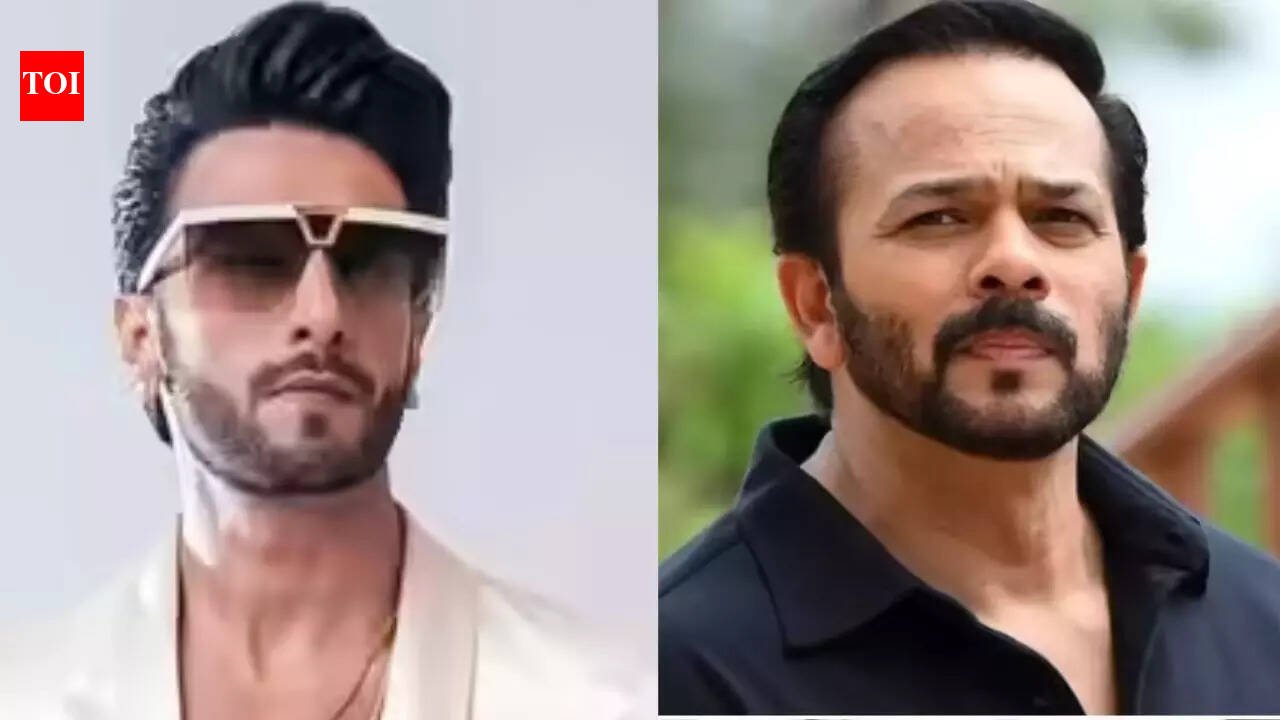
Lawrence Bishnoi gang threatens Ranveer Singh, Rohit Shetty in chilling new audio; ‘next 7 generations will remember the consequences’ | Mumbai News


MUMBAI: Doubling down on the threats against the Indian film industry, Harry Boxer, a prominent member of the notorious Lawrence Bishnoi gang, released a fresh audio clip targeting actor Ranveer Singh and filmmaker Rohit Shetty.This marked the 3rd time the gangster issued such a recording, signalling a persistent campaign of intimidation against Bollywood actors.

Rohit Shetty firing case takes a stunning turn; Crime branch traces trail to Bishnoi gang

In the audio message, Boxer identified himself as a representative of the Lawrence Bishnoi syndicate. He directed his venom specifically at Ranveer Singh, referencing a previous disagreement where the actor allegedly went back on his word.Boxer warned that Singh’s “next 7 generations” will remember the consequences of his actions. A particularly disturbing element of this latest threat was the focus on the actor’s support staff.Boxer claimed to have detailed information regarding the families, office timings, and residences of Singh’s managers and employees. He explicitly stated that the gang intended to target these individuals first to “teach a lesson” to the actor, suggesting that harming those close to the stars was a strategic move to break their resolve.The gangster also took aim at filmmaker Rohit Shetty and the wider Bollywood community, warning them to “fall in line” when contacted by the gang. He mocked the actor’s decision to seek police protection, dismissively noting that reporting the threats to the authorities would not deter the syndicate’s reach.Security agencies reportedly analysed the clip as the industry remained on high alert following a string of similar threats involving the Bishnoi gang over the past year.


Source link

Orange is the new gold: How India’s influencer economy turned visibility into value | India News


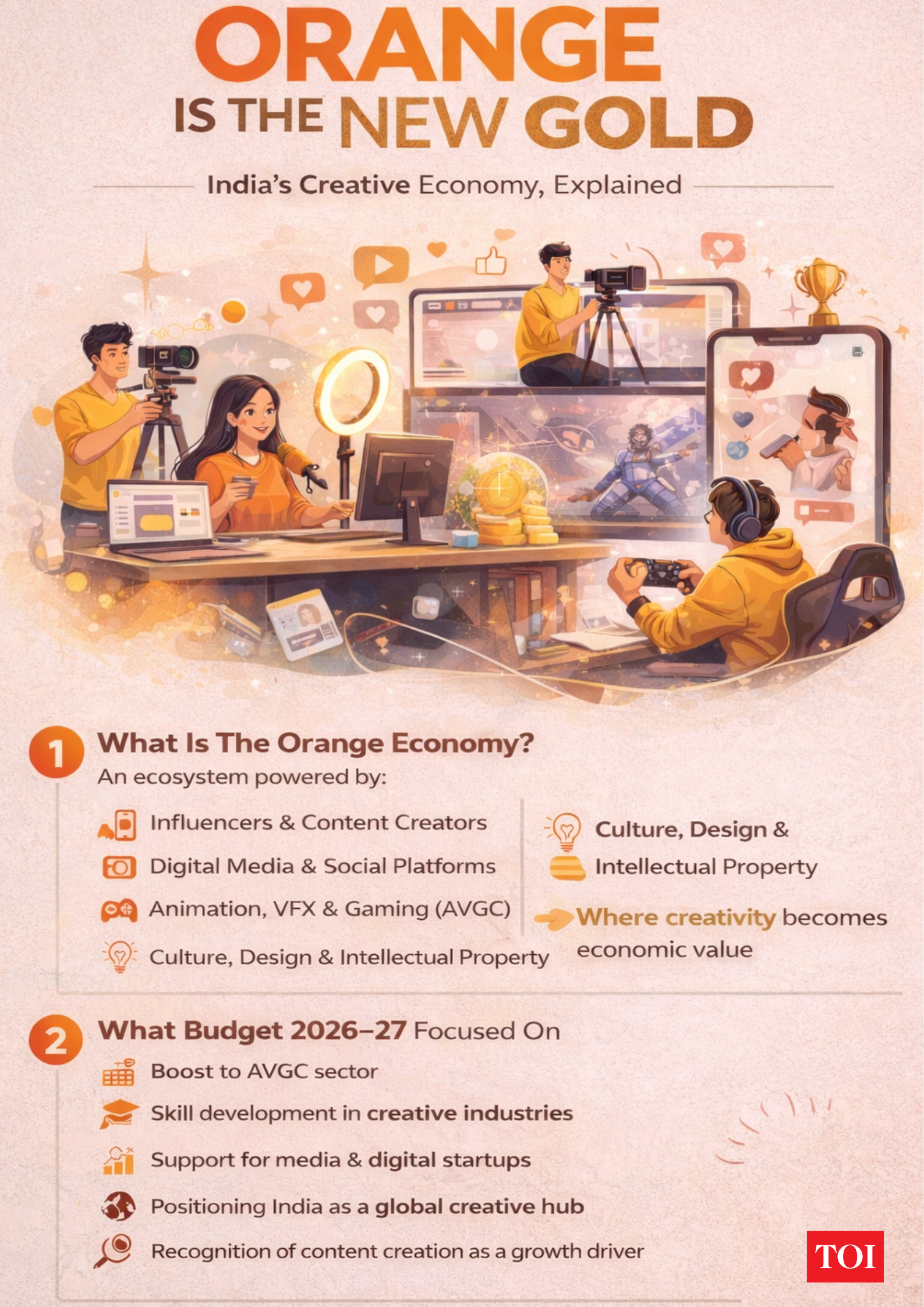
Orange is the new gold: How India’s influencer economy turned visibility into value
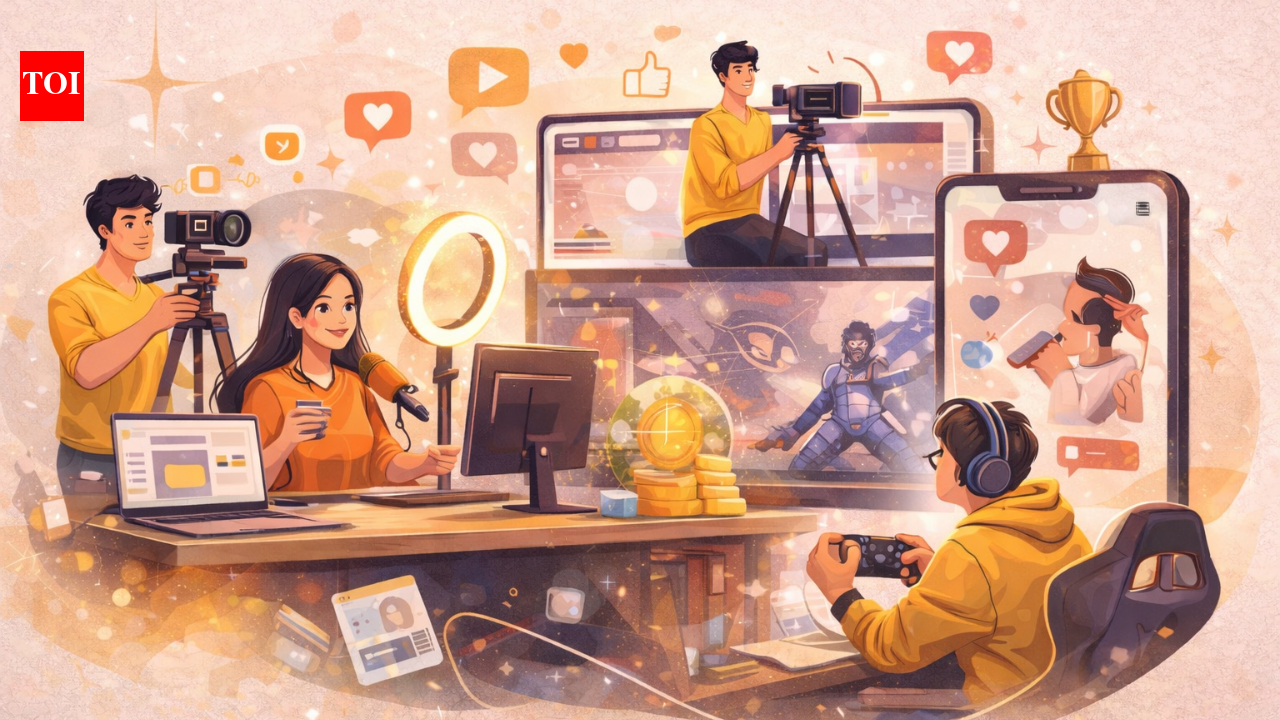
The image is used for representation pupose only (AI-generated)

On a busy afternoon in Old Delhi’s Parathe Wali Gali, Darshit Singh held up his phone and did something unusual.He didn’t hype the food.He critiqued it.The reel — an “honest review” of a legacy eatery and Daulat ki Chaat — crossed 7.3 million views. Messages flooded in. Invitations followed. Cities called.That was 2024.Today, Singh calls himself India’s first “food deinfluencer”.Elsewhere, Santosh was boarding a late-night flight after wrapping up a full corporate workday.An IIT-Delhi alumnus by degree and a traveller by instinct, he refuses to choose between spreadsheets and sunsets.“I’m a traveller with a full-time job,” he says — a line that has now become his digital identity.Every month, a new state. Every trip, a vlog. Every journey, proof that passion doesn’t need permission.What once looked like just another viral reel is now part of something bigger — a creator economy projected to be worth thousands of crores, and increasingly recognised in India’s economic blueprint.This year’s Union Budget did something subtle but significant: it placed creativity inside the growth narrative.Welcome to India’s Orange Economy moment.

The Orange Economy: When creativity became economic policy

For decades, art, storytelling and digital creation lived in the margins of economic planning — celebrated culturally, rarely counted financially.That is beginning to change.The “Orange Economy” — a term popularised by the Inter-American Development Bank refers to industries that transform ideas into cultural goods and services protected by intellectual property. It includes media, film, music, publishing, animation, gaming, advertising, design, fashion, digital content and now, increasingly, independent creators.In India’s Union Budget 2026–27, finance minister Nirmala Sitharaman announced a major push for India’s creative industries — or what is increasingly being called the “Orange Economy.”
.

.

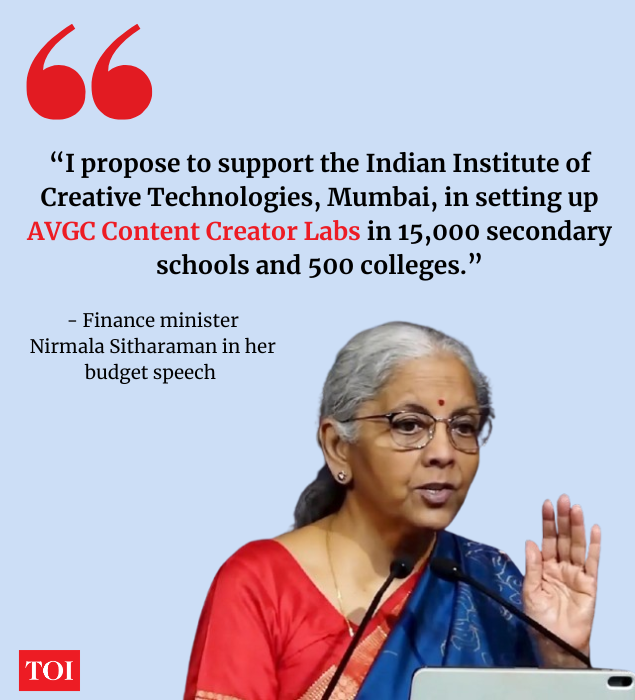
Presenting the Budget, Sitharaman emphasised that India’s creative and AVGC-XR (Animation, Visual Effects, Gaming, Comics and Extended Reality) ecosystem has the potential to generate large-scale employment and position India as a global content hub.She announced:

  • Rs 400 crore allocation for the Indian Institute of Creative Technologies (IICT) in Mumbai
  • 15,000 AVGC labs to be set up in schools
  • Integration of creative and digital skills in 500 colleges across India
  • Policy support aimed at building a workforce pipeline for the AVGC-XR sector

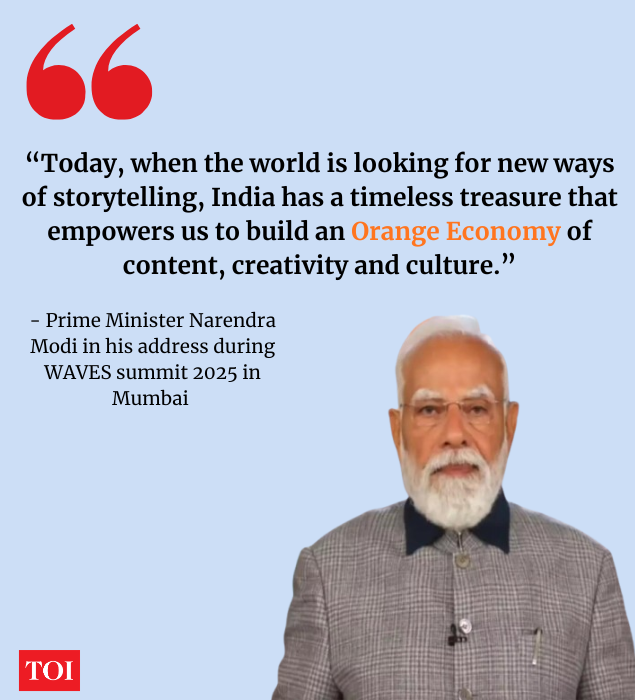
The Economic Survey projected that the AVGC sector alone could require up to 2 million skilled professionals by 2030.Sitharaman highlighted that India’s demographic dividend must be aligned with emerging sectors, particularly those driven by digital platforms and intellectual property.At the WAVES summit earlier this year, Prime Minister Narendra Modi reinforced this direction, describing India as a nation with “a billion-plus stories” and positioning the creative economy as both cultural capital and economic opportunity.
.

.

India’s creator economy is projected to grow at an 18% compound annual growth rate, rising from Rs 19 billion in 2023 to Rs 34 billion by 2026, according to Ernst & Young.

Influencer economy & marketing: From digital voices to structured media power

Influencer marketing is defined as “a collaboration between popular social-media users and brands to promote brands’ products or services.” What began as informal brand shoutouts has now evolved into a regulated, data-driven industry. The scale today is substantial. Globally, the influencer marketing economy was valued at $21.1 billion in 2023, having more than doubled since 2019 on the strength of platforms such as Instagram and YouTube. According to ET, the global influencer marketing platform market grew from $6 billion in 2020 to a projected $24.1 billion by 2025, at a CAGR of 32%.
.

.

Forbes highlighted that the broader creator economy is now a $250 billion global force, projected by Goldman Sachs to reach $480 billion by 2027. Statista reports that over 200 million creators operate globally, while social commerce is expected to touch $2.9 trillion by 2026.India’s influencer marketing sector is projected to reach Rs 3,375 crore by 2026, growing at a CAGR of 18%, according to EY’s ‘State of Influencer Marketing in India’ report. Exchange4Media estimates the core influencer market at around Rs 3,600 crore in 2024, projected to reach Rs 4,500 crore in 2025, though insiders suggest the real size may exceed Rs 10,000 crore due to direct brand-creator deals outside conventional tracking.Creator fees rose between 10–30%, while top-tier creators in India reportedly earned between Rs 10–25 crore annually through endorsements, platform monetisation, live events and equity partnerships.Types of InfluencersInfluencers are categorised by follower size:

  • Nano influencers: Fewer than 10,000 followers
  • Micro influencers: 10,000–50,000 followers
  • Medium influencers: 50,000–100,000 followers
  • Macro influencers: More than 500,000 followers
  • Mega influencers: Over one million followers

EY observes that marketers leverage both large/macro and micro/nano influencers equally. While mega and macro influencers drive awareness and brand loyalty, micro and nano influencers often deliver stronger engagement and relatability.Regional creators are becoming central to brand strategies. According to Influencer.in (Social Beat), regional creators drive 35–40% better engagement in Tier-2 and Tier-3 cities. Budget allocation for regional creators has increased from 3–10% earlier to 8–20%, with expectations of further growth.

Gen Z: The creator generation

The ecosystem is increasingly youth-driven. A 2024 YouTube India–SmithGeiger report found that 83% of Indian Gen Zers consider themselves creators, and 75% see content creation as a genuine career path. More than 55% reported gaining financial independence through digital platforms.As ET highlights, influencer marketing is seen as cost-effective and personalised. Influencers build relatability and directly shape purchase decisions. In fact, 61% of consumers trust recommendations from creators more than traditional brand advertising, according to Sprout Social cited by Forbes.Influencer partnerships typically follow two models:

  • Flat-fee brand deals per post (ranging from Rs 2,000 to Rs 30 lakh per post in India, depending on scale).
  • Affiliate commissions, where influencers earn from sales generated via links or promo codes.

Increasingly, creators are moving beyond endorsements to ownership — launching brands, seeking equity partnerships and building independent revenue streams. Exchange4Media notes a visible shift from “endorser to owner.”From hyper-local memers to pan-India gaming stars, from nano creators in Tier-3 cities to mega influencers earning crores annually, India’s influencer economy is no longer peripheral to marketing. It has become a structured, high-growth pillar of brand strategy — reshaping commerce, culture and consumer trust in the digital age.For creators like Darshit, having a mass following of 51.7K followers, the viral Old Delhi reel was only the beginning. What followed was a clearer understanding of how the influencer economy actually works. “I started making content post-COVID but it was mostly just pictures and a few videos with music. No voiceover,” he says. It was only after that breakout moment in 2024 that he began studying the platform more closely — especially the algorithm.“Instagram is fundamentally different… it thrives on recommendations,” he explains. Unlike platforms that depend heavily on follower count, Instagram pushes reels to users who may never have heard of the creator but are likely to engage. “Someone who has never made a video in their life can come to this platform and make one and get millions of views.”Uploading identical content across YouTube Shorts, Facebook and Threads, Singh says Instagram consistently delivers his highest reach. For him, discovery is not accidental — it is engineered.But growth alone was never the goal. His identity as a “food deinfluencer” is built on resisting what he sees as blind positivity in brand culture.“Our society today has a trust crisis. Be it government, institutions, or media. Everyone is facing that. So for me, my audience’s trust is paramount,” he says. Even in paid collaborations, he critiques dishes he does not like. “I wanna be the reason behind someone’s memorable meal.” His approach reflects a broader shift in marketing strategy. “Earlier brands used to only work with celebrities and movie stars but now they prefer influencers in most cases as the latter gives them higher ROI,” he observes. “Celebrities promoting a product feels like an ad. But some influencers subtly promote the brand in their organic way… audiences are more likely to purchase that product later.”A few kilometres away from Old Delhi’s food lanes, Santosh is planning his next trip — between client calls.Santosh began his creator journey not in airports or mountains but inside hostel rooms. What started as campus vlogs on YouTube, hostel stories, placement anxiety, the reality of being an IIT student slowly built a community of aspirants and peers.Then came Instagram.Reels allowed him to compress entire journeys into seconds — a new state every month, documented between office deadlines. The platform’s real-time engagement — stories, reels, DMs helped him move beyond informational content into something more personal. “You can be discovered without being famous,” he says, pointing to how a few of his travel and IIT reels travelled far beyond his existing follower base.More importantly, he has watched the industry change.“When I started, content creation felt experimental,” Santosh says. “Now brands plan structured budgets. Long-term collaborations. There’s more professionalism.” In his words, the creative economy is no longer informal hustle. It’s recognised work.

Instagram’s revenue model: The business behind the scroll

If the orange economy is the ecosystem and creators are its lifeblood, then Instagram is the marketplace — the digital high street where attention turns into advertising, and creativity converts into commerce.To understand how influencer marketing thrives, it’s important to understand how Instagram itself makes money.Founded in 2010 by Kevin Systrom and Mike Krieger as a simple photo-sharing app, Instagram was built on one idea: visuals connect people. What started as a minimalist platform for filtered photos has evolved into a billion-user ecosystem of Stories, Reels, shopping tabs and creator tools.After Meta (then Facebook) acquired Instagram in 2012 for $1 billion, the platform scaled rapidly. Today, Instagram is estimated to be worth around $400 billion, making it one of the most valuable digital assets globally.The engine driving all of this? Advertising.Instagram’s primary revenue model is advertising. What makes Instagram powerful for marketers is its algorithmic precision. Content appears based on user behavior, engagement patterns and interests.The platform’s shift toward short-form video has supercharged engagement. According to a Meta-commissioned IPSOS study:

  • 97% of Indian consumers watch short-form videos daily
  • 95% daily usage for Reels, compared to 83% for television

Meta India’s Managing Director Arun Srinivas said: “India is leading the world in video adoption, and Reels is at the center of this shift. Five years since its launch, Reels is India’s leading short-form video platform—driving massive engagement, shaping culture, and delivering real business impact.”Instagram’s model is symbiotic with the influencer economy.

  • Shoppable tags allow influencers to link products directly.
  • Affiliate links enable commission-based earnings.
  • Sponsored posts generate flat-fee income.
  • Bonuses and milestone incentives reward engagement growth.

While food reels dominate one corner of the ecosystem, knowledge-driven creators are building influence in quieter but equally powerful ways.For Bikramjeet Dutta, having a massive following of 51.9K followers, Instagram’s inflexion point came during the 2024 Lok Sabha elections. “I was attending several political rallies, press conferences etc. I started uploading that it started gaining views and followers,” he says. His content extends beyond political coverage into books, geopolitics and history. “Instagram helped me to connect with those who are experts in these fields,” he says, adding that credibility assessment feels more immediate on the platform. “In Instagram it’s quite easy to verify whether the person is credible or not.” Discovery, he believes, has fundamentally shifted the opportunity landscape. Posting book reviews led to requests from publishers. Geopolitical commentary brought invitations to panel discussions and book launches. “Yes, Instagram has made it easier for creators to be discovered,” he says.

Instagram and small businesses: Visibility, trust and the new storefront

For many small businesses in India, Instagram is no longer just a marketing add-on. It functions as a storefront, catalogue, customer service desk and storytelling space — often all at once.The shift became especially visible during the pandemic. In 2020, Instagram introduced the ‘Support Small Business’ sticker, which grouped Stories using the sticker into a shared feed so “more people can discover more small businesses.” Around the same time, it rolled out features that made it easier to discover gift cards, online food orders and fundraisers, allowing users to tap directly and purchase through partner websites. For Nidhi who runs a handmade chocolate business, Instagram became more than a display window.“Instagram didn’t just become a platform… it became the space where my creativity found its voice,” she says. She explains that unlike other platforms, Instagram allowed her “to connect, not just sell — to share stories, build trust, and grow a community that appreciates handmade details and thoughtful gifting.”Instead of simply listing prices, she moved toward behind-the-scenes reels — melting chocolate, assembling hampers, last-minute packing. The shift from static posts to process-driven video felt “more genuine for the audience.”Another small business owner Harsh in the fabric trade echoes a similar sentiment.“Instagram has played a major role in building our fabric brand identity. Through reels, product videos, and live customer interactions, we showcase our manufacturing quality, fabric textures, and latest collections in a very visual way.”Increased competition, he highlights, has pushed businesses “to become more creative by high-quality reels and by making it more realistic.”In the architecture of the orange economy, small businesses are not just beneficiaries of digital platforms. They are active participants: adapting content, tone and strategy in response to algorithmic culture and rising competition.


Source link

Budget 2026: Deepening domestic manufacturing capabilities, expanding global reach


Budget 2026: Deepening domestic manufacturing capabilities, expanding global reach
The Budget 2026 places manufacturing as a strategic and frontier sector for sustaining economic growth. (AI image)

By Neetu VinayekIndia’s effort to strengthen its manufacturing foundation has steadily progressed over the past decade through a series of significant policy measures. A major milestone was the launch of the Make in India initiative in 2014, designed to encourage investment, spur innovation, and improve ease of doing business. Labour reforms also moved forward with the rollout of the four Labour Codes on 21 November 2025, merging 29 Central labour laws to streamline compliance and create a modern, resilient workforce framework. Complementing these domestic reforms, India has simultaneously intensified its global trade engagement through a renewed focus on Free Trade Agreements (FTAs). Together, these reforms laid the foundation for the renewed manufacturing push outlined in Union Budget 2026.The Budget 2026 places manufacturing as a strategic and frontier sector for sustaining economic growth. The government framed the Budget as a continuation of structural reforms aimed at improving productivity, boosting competitiveness, and strengthening resilience against global disruptions.In light of the rapid progress under the Electronics Components Manufacturing Scheme, the Budget proposes expanding its allocation to ₹40,000 crore, reaffirming India’s ambition to enhance domestic value addition and secure its place in global electronics supply chains. To compliment this, income tax holiday is being provided for five years to non-residents providing capital goods, equipment, or tooling to contract manufacturer operating in customs-bonded zones. This will help reduce costs which were being incurred on specialised equipment. Safe harbour provisions have been extended to non-residents for component warehousing in a bonded warehouse at a profit margin of 2 percent of the invoice value with a resulting tax incidence of 0.7 percent. This will harness efficiency of just-in-time logistics for the sector.A key highlight is the India Semiconductor Mission (ISM) 2.0, to produce equipment and materials, design full-stack Indian IP, and fortify supply chains signalling the country’s ongoing commitment to building a robust domestic semiconductor ecosystem. There is tremendous potential for the aviation sector with rise in airports and regional connectivity under the UDAN schemes. To build sustainable ecosystem it is important to manufacture aircrafts and undertake MRO activities within the country. With this vision basic customs duty is exempted on parts and components imported for manufacture of aircraft. Further, basic customs duty on raw materials imported for manufacture of parts used in maintenance, repair or overhaul requirements in defence units is also exempted. The government has also proposed a seaplane VGF scheme to support operations and indigenise manufacturing of seaplanes.A Scheme for Rare Earth Permanent Magnets, launched in late 2025, is now complemented by proposed support for Rare Earth Corridors across mineral-rich states to promote mining, processing, research and manufacturing.The Budget also introduces Biopharma SHAKTI—a five-year, ₹10,000 crore programme to position India as a global hub for biopharma manufacturing by strengthening capabilities in biologics and biosimilars.To boost the chemicals sector, the government has launched a scheme supporting States in developing chemical parks to expand domestic production. The capital goods sector, often the silent driver of productivity, receives a comprehensive support package. This includes the establishment of Hi-Tech Tool Rooms by Central Public Sector Enterprises (CPSEs) as digital service hubs for precision components, a scheme for advanced construction and infrastructure equipment. ₹10,000 crore over five-years is also allocated to develop a competitive container manufacturing ecosystem. These interventions aim to reduce import dependence, shorten supply chains, and lower costs.Beyond advanced manufacturing, the Budget extends support to labour-intensive sectors such as textiles. It also introduces a dedicated thrust to develop India into a global centre for high-quality, affordable sports goods.A Scheme has been proposed to revive 200 legacy industrial clusters to improve their cost competitiveness and efficiency through infrastructure and technology upgradation.Impetus to the manufacturing sector is also provided through taxes. Basic customs duty exemptions have been extended across emerging sectors, including lithium-ion cell battery storage systems, critical mineral processing equipment, raw material for wind turbines and nuclear power plants. In essence, the Union Budget 2026 represents a holistic manufacturing-led growth strategy. It marries structural reforms with targeted fiscal incentives, embraces both advanced and traditional industries, and puts exports and global competitiveness at the centre of its vision. The new set of measures and focus on emerging sectors has the potential to deepen the country’s industrial capabilities and strengthen its position in global value chains. On ground execution and collaboration could mark a transformative chapter in India’s industrial journey.(Neetu Vinayek is Partner, Tax Infrastructure and Oil & Gas Leader, EY India . Manmay Chandawalla, Director-Tax, EY India also contributed to the article.)


Source link

Big injury blow for Zimbabwe: Brendan Taylor ruled out of T20 World Cup | Cricket News


Big injury blow for Zimbabwe: Brendan Taylor ruled out of T20 World Cup
Zimbabwe’s Brendan Taylor (AP Photo)

Zimbabwe’s campaign at the ongoing global showpiece suffered a major setback after veteran wicketkeeper-batter Brendan Taylor was ruled out of the tournament following an injury picked up earlier this week. The experienced campaigner had limped off during the group-stage clash against Oman on February 9, where Zimbabwe secured an eight-wicket win, but concerns over his fitness have now ended his participation.Go Beyond The Boundary with our YouTube channel. SUBSCRIBE NOW!Captain Sikandar Raza confirmed the development at the toss ahead of their clash against Australia, revealing that the 40-year-old would take no further part in the competition. “Brendan Taylor picked up an injury and he’s been ruled out of the competition,” Raza said at the toss.

T20 World Cup | Ishan Kishan press conference: On fifty vs Namibia, India’s batting collapses

Taylor had struggled while running between the wickets in the Oman game and was eventually forced to retire hurt after scoring 31 from 30 balls during the chase. The exact nature of the injury has not been disclosed, but team management opted against risking further damage given his importance to the side.Taylor’s absence leaves a big void in Zimbabwe’s batting order and leadership group. Since debuting in 2004, the veteran has been a cornerstone of the team across formats, featuring in 36 Tests, 207 ODIs and 59 T20Is. His recent run of retirements due to injury — including three instances in his last five T20 innings — had already raised fitness concerns, making this latest setback particularly painful for the team.Zimbabwe were also without pace spearhead Richard Ngarava for the Australia fixture, with Raza clarifying that the left-armer was rested purely as a precaution despite positive scan results. With key players sidelined, Zimbabwe now face a challenging road ahead as they attempt to maintain momentum and remain competitive against stronger opposition.


Source link

Breakthrough achieved in Cidco Treated Water Tunnel Package-II project to augment supply to Navi Mumbai | Mumbai News


Navi Mumbai: As part of Cidco’s effort to augment the Hetawane dam water supply mechanism to Navi Mumbai, a Tunnel Boring Machine (TBM) breakthrough was achieved at the Cidco Treated Water Tunnel (TWT) Package II project with Patel Engineering setting a national tunnelling record by completing 812.466 metres of excavation in a single month in January, using a 3.2m diameter TBM.The tunnelling drive was completed over four months ahead of schedule and recorded over one million safe man-hours with zero safety incidents with the TBM cutterhead emerging at the designated exit point at Sai village in Panvel, in the presence of Cidco officials. The tunnelling was executed using the 3.2m diameter TBM, Tiboti Khandya, manufactured by Terratec and named after the Oriental Dwarf Kingfisher. The mechanised approach enabled high-precision excavation with enhanced safety and minimal surface disruption, making it suited to critical urban water infrastructure projects.The Cidco TWT project is a component of the agency’s long-term water security strategy and involves the design and construction of a 6.27km long treated water tunnel and allied works connecting Sai village to Vindhane village in Raigad district. Once commissioned, the Hetawane Water Supply Augmentation Scheme will nearly double Cidco’s water supply capacity from the current 150 million litres per day (MLD) to 270MLD by December 2029 to meet Navi Mumbai’s growing residential, commercial, and industrial demand.With the tunnelling phase complete, construction activities will progress to the next stages of project execution in line with Cidco’s infrastructure development roadmap.A Cidco official said, “The successful completion of the tunnelling drive and the TBM breakthrough is a critical milestone for the TWT project. Such achievements strengthen Cidco’s efforts to build robust and future-ready water infrastructure that can support Navi Mumbai’s long-term growth while maintaining reliability and operational efficiency.”Commenting on the breakthrough, Kavita Shirvaikar, MD of Patel Engineering, said: “Today’s TBM breakthrough marks the successful closure of an exceptionally demanding tunnelling drive and validates the record productivity achieved by our teams earlier this year. Delivering this milestone required sustained precision, disciplined execution, and seamless coordination across engineering, operations, and safety functions. It reflects our ability to convert performance benchmarks into tangible on-ground outcomes.”


Source link

Delhi cops quiz Penguin staff on Naravane book pre-print ‘leak’ | India News


Delhi cops quiz Penguin staff on Naravane book pre-print 'leak'

NEW DELHI: Delhi Police’s special cell questioned some members of the publishing team at Penguin Random House India on Thursday in connection with the alleged leak of former Army chief General (retd) MM Naravane’s unpublished memoir.The interrogation, which came a day after investigators issued notice to the publishing firm, lasted two hours. There could be another round of questioning based on the findings of the first session, sources said.Police have sought the original manuscript of the book, ‘Four Stars of Destiny’, from Penguin Random House India to compare it with the versions that surfaced online. The publishers have been handed a set of 15 to 20 questions to answer, including on the steps they took after learning of the alleged leak.“A team led by a DCP-rank officer asked the publishers about their standard operating procedure while handling a book and the details of people who had access to the manuscript of this particular book written by the former Army chief. We also asked the publishers why they did not lodge a complaint immediately after the so-called leak came to their notice,” a person in the know said.Penguin Random House India has said the firm holds sole publishing rights to the book and hasn’t released it in any form. The probe is focused on the alleged sale or distribution of the pre-print copy in countries like the US, Canada, the UK and Australia. Police suspect the leak was a coordinated effort to bypass the defence ministry’s clearance. The special cell has added the charge of “hatching a criminal conspiracy” to the FIR. Police are also analysing the International Standard Book Number (ISBN).


Source link