Breaking News
Srikanth Bolla: “I lack eyesight, but not vision”: How Srikanth Bolla turned rejection into a revolution in entrepreneurship |

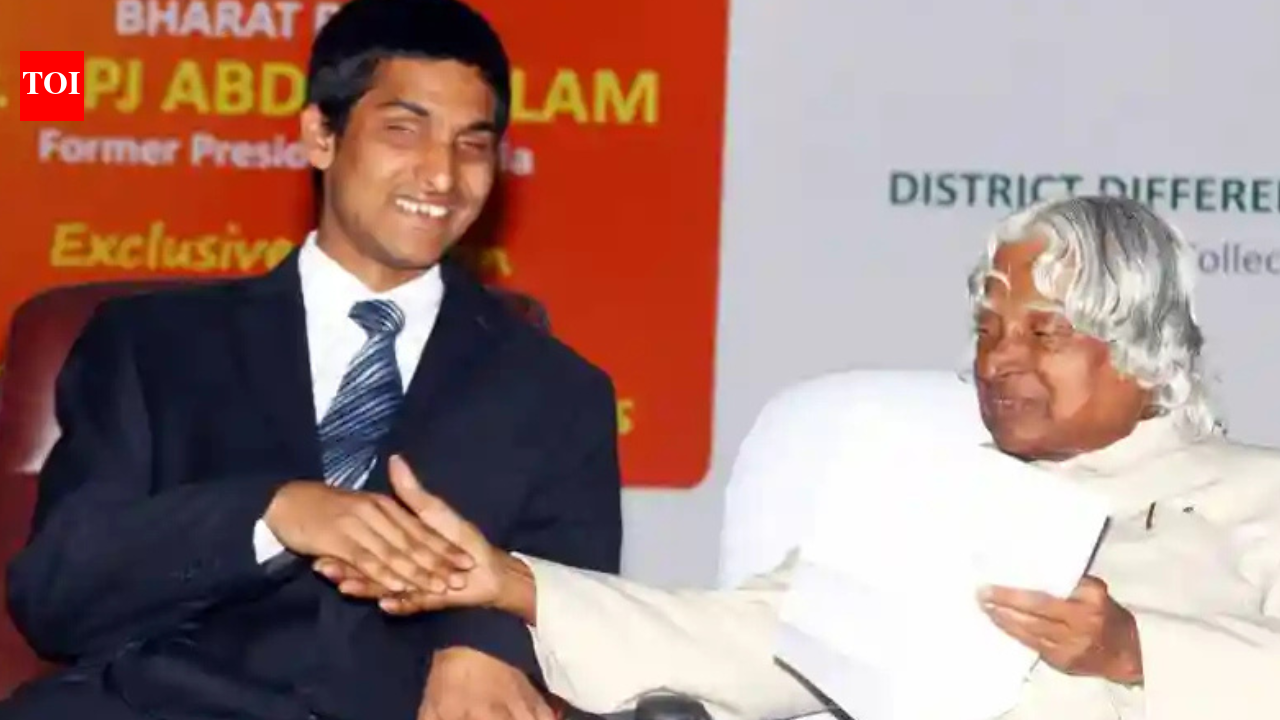
“I lack eyesight, but not vision”: How Srikanth Bolla turned rejection into a revolution in entrepreneurship

In a small village in Andhra Pradesh, Srikanth Bolla entered the world under circumstances that many around him viewed with sympathy rather than hope. Born visually impaired, his future seemed predetermined in the eyes of society. In rural India at the time, disability was often misunderstood, seen less as a condition requiring support and more as a boundary that defined a person’s entire life. Expectations arrived early, and they were painfully small. Yet within his home, a different belief quietly took root. His parents, despite limited resources, refused to accept that their son’s life should be confined by social assumptions. Education became their act of resistance. They encouraged curiosity, independence, and dignity, planting in Srikanth a conviction that ability could not be measured by sight alone. Scroll down to read more.

When the education system said no

The school itself was not an easy beginning. Classrooms were not designed for students who learned differently. Textbooks were inaccessible, teaching methods rigid, and acceptance conditional. Every academic step required negotiation, convincing institutions that he deserved a place in spaces rarely built with inclusion in mind.
2

The real turning point came after Class 10, when Srikanth expressed a desire to study science. Authorities rejected his request, arguing that a visually impaired student could not manage scientific subjects. The decision reflected a broader mindset: ambition, for someone like him, was expected to remain modest. For Srikanth, however, the refusal felt less like an end and more like a challenge.

Fighting for the right to learn science

Instead of accepting the decision, he fought it legally, an extraordinary step for a teenager facing institutional resistance. The case was not simply about choosing a subject; it questioned whether opportunity itself could be restricted by disability. When he won, becoming one of the first visually impaired students in India allowed to pursue science at the higher secondary level, the victory carried symbolic weight. It proved that barriers often exist not because something is impossible, but because systems have never been forced to adapt.Studying science required immense effort. Diagrams had to be explained verbally, lessons converted into audio formats, and concepts memorised through repetition and imagination. Yet the struggle strengthened his confidence. Achievement felt earned, not granted.

A door closes in India; another opens at MIT
3

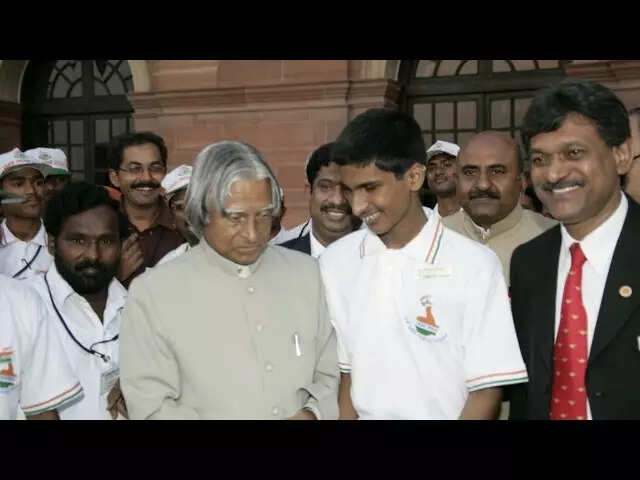
Despite academic success, another setback followed. India’s top engineering institutions declined admission, once again citing his disability. Years of hard work seemed overshadowed by familiar doubt. But rejection, as Srikanth would later realise, sometimes redirects rather than stops a journey.He was accepted into the Massachusetts Institute of Technology (MIT), becoming the first international blind student to study there. At MIT, the environment felt different. Accessibility was seen as innovation, not inconvenience. For the first time, he experienced a system that focused on possibility rather than limitation. Exposure to global ideas reshaped his ambitions. Education was no longer just personal progress; it could become a means to change how society itself functioned.

Discovering purpose beyond personal success

At MIT, entrepreneurship began to feel like a powerful language of change. Srikanth recognised that businesses could challenge social inequalities more effectively than charity alone. Instead of waiting for opportunities to be created for people with disabilities, he imagined building platforms that generated those opportunities directly.
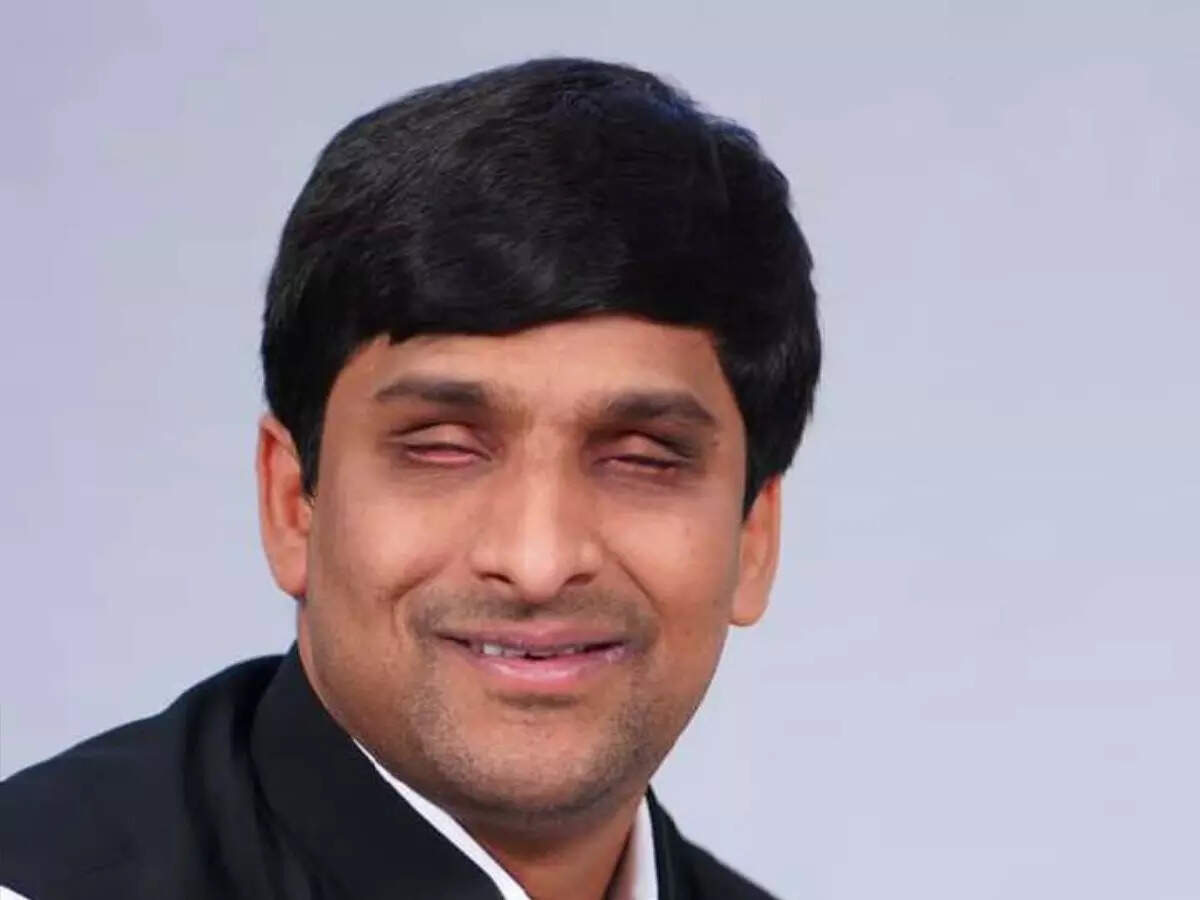
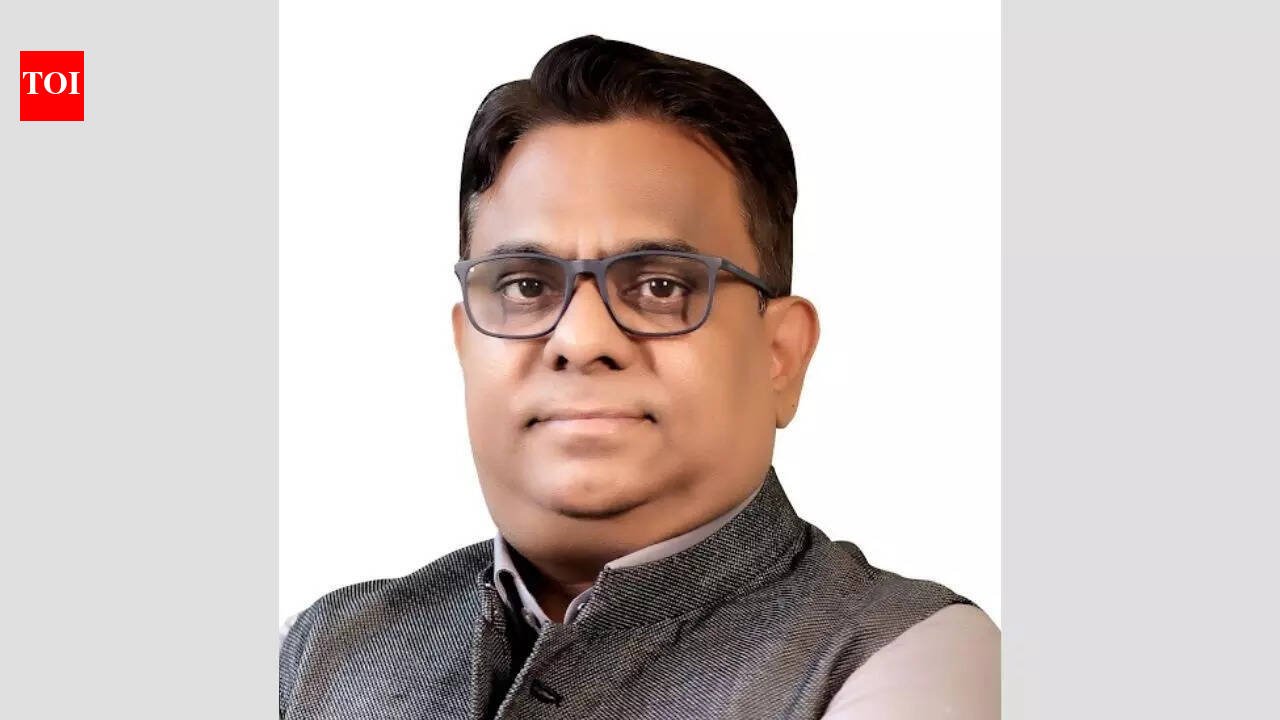
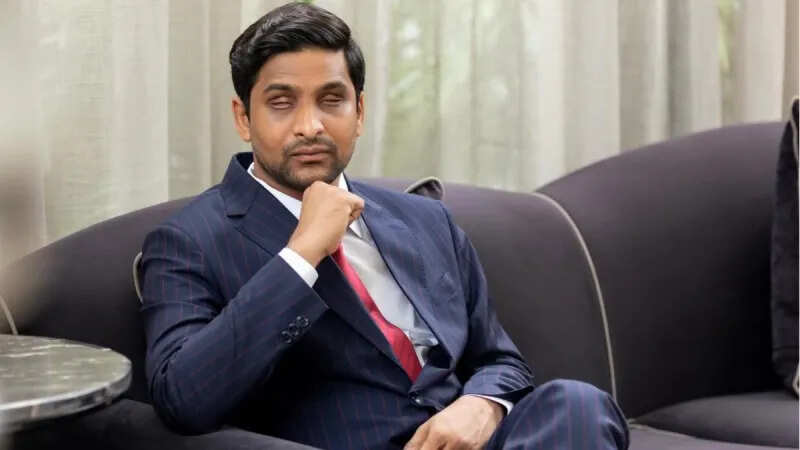
Srikanth Bolla

Srikanth Bolla is a distinguished Indian entrepreneur, serving as the Chief Executive Officer, co-founder, and Chairman of Bollant Industries Private Limited.

This idea stayed with him as he prepared to return to India. Many expected him to pursue a comfortable career abroad, but Srikanth chose a more uncertain path, one rooted in purpose rather than security.

Returning home to build something meaningful

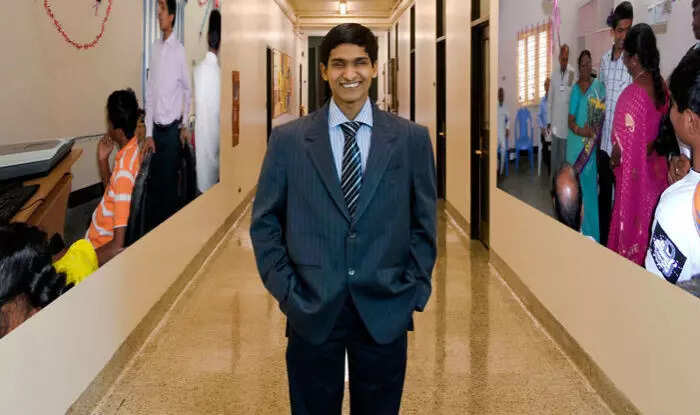
Back in India, he founded Bollant Industries, a company focused on manufacturing eco-friendly packaging products. The business model combined sustainability with social inclusion, employing people with disabilities and individuals from marginalised communities.The concept was ambitious and unconventional. Investors were hesitant, unsure whether a socially driven enterprise could remain commercially viable. Srikanth faced scepticism repeatedly, not only about the business but also about his ability to lead it. Yet persistence slowly replaced doubt. With mentorship and determination, the company began producing areca leaf packaging and recycled products, aligning environmental responsibility with economic empowerment.

Entrepreneurship with inclusion at its core
4

What made Bollant Industries unique was its philosophy. Employees were not hired out of sympathy but for their capability. Workspaces were adapted to ensure accessibility, allowing individuals long excluded from employment to contribute meaningfully.For many workers, the job represented more than income. It restored dignity, the simple but powerful recognition of being valued for skill rather than limitation. Srikanth often emphasised that inclusion should never be mistaken for charity; it is an investment in human potential.

Turning opportunity into dignity for others

As the company grew, so did its impact. Recognition arrived from national and international platforms, and investments helped expand operations. Yet Srikanth’s focus remained consistent: building systems where opportunity became normal rather than exceptional.His journey challenged deeply rooted assumptions about disability in the workplace. By demonstrating that inclusive businesses could thrive financially, he reframed inclusion as smart entrepreneurship rather than social obligation.

Redefining what success looks like

In interviews and public talks, Srikanth often repeats a line that has come to define his philosophy: “I lack eyesight, but not vision.” The statement captures more than resilience. It reflects clarity, the understanding that vision is not physical sight but the ability to imagine change and pursue it relentlessly. His success does not rest solely on personal achievement but on reshaping conversations around ability, education, and employment in India. Through his journey, many began to realise that barriers often exist in perception long before they exist in reality.

Vision beyond sight

Srikanth OTT Release

Here’s all you need to know about Srikanth’s OTT release. From platform to date, know when you can watch Srikanth Bolla biopic starring Rajkummar Rao online.

Today, Srikanth Bolla stands as both an entrepreneur and changemaker, representing a new narrative of possibility. His life demonstrates that resilience is rarely dramatic; it is built quietly through repeated decisions to continue despite rejection. What began as a struggle for education evolved into a broader mission, creating spaces that symbolise opportunity, where others would not have to fight the same battles alone but instead find pathways opening before them. His extraordinary journey has also reached popular culture, inspiring a biographical film Srikanth, starring Rajkummar Rao, which brought his story of determination and inclusion to a wider audience, introducing many to the vision behind his success.

A story larger than one individual

Ultimately, Srikanth’s journey is not just about overcoming blindness. It is about refusing to inherit a smaller future defined by others. Through determination, innovation, and empathy, he transformed rejection into purpose and entrepreneurship into social change. His story reminds us that true vision begins not with what we see, but with what we believe is possible and the courage to build it, even when the world cannot yet imagine it alongside us.
Source link

‘I am kattar imaandaar’: Arvind Kejriwal breaks down after clean chit in Delhi excise policy case | India News


'I am kattar imaandaar': Arvind Kejriwal breaks down after clean chit in Delhi excise policy case

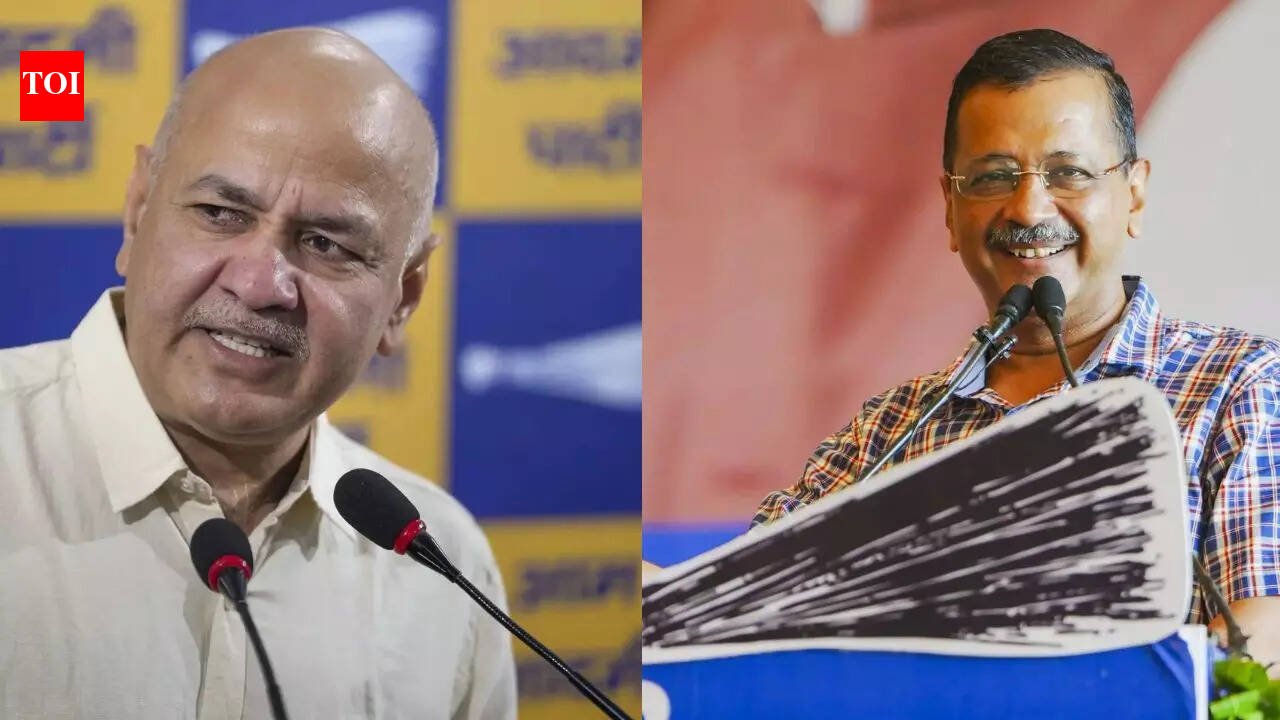
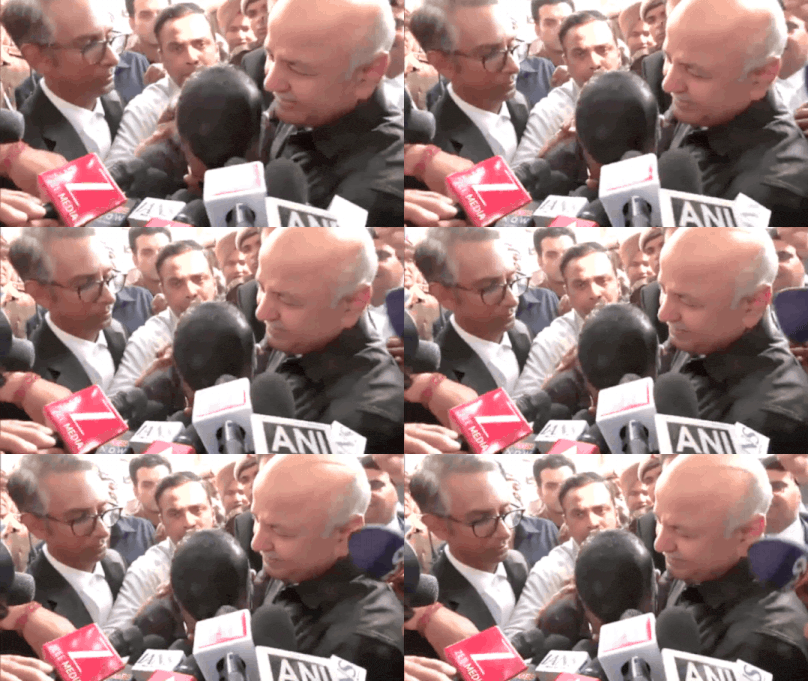
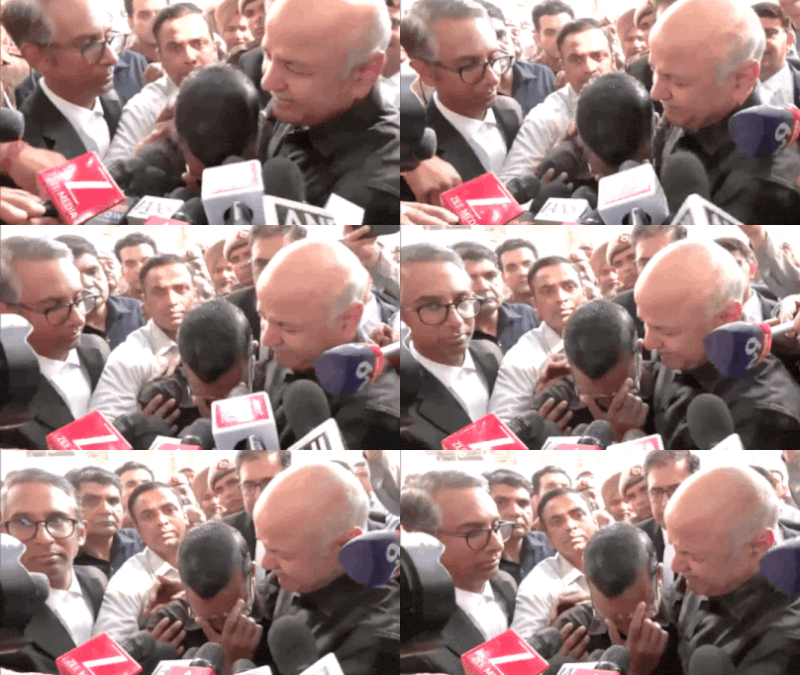
NEW DELHI: Former Delhi chief minister and AAP supremo Arvind Kejriwal was on Friday acquitted of all charges by the Rouse Avenue court. Hailing the verdict as “truth always wins,” Kejriwal became visibly emotional while speaking to reporters outside the court premises.Kejriwal’s long-time deputy Manish Sisodia was also discharged by the court.Special judge Jitendra Singh delivered the verdict in the case investigated by the Central Bureau of Investigation (CBI).Reacting to the prolonged case against him, Kejriwal said, “mud was thrown at us.”“I am not corrupt. The court has said that Kejriwal and Manish Sisodia are honest. Today, the court has discharged all the accused in this case. We have always said that truth emerges victorious. We have full faith in the Indian legal system. Amit Shah and Modi ji together hatched the biggest political conspiracy to finish AAP, and five senior leaders of the party were put in jail. The sitting chief minister was dragged out of his house and sent to jail. Kejriwal is not corrupt. I have only earned honesty in my life. Today, the court has said that Kejriwal, Manish Sisodia and AAP are honest,” Kejriwal said.Manish Sisodia also welcomed the court’s decision, saying that the truth had prevailed.“Satyamev Jayate. Today, once again, I feel proud of Baba Saheb Ambedkar Ji’s visionary thinking and the Constitution he crafted. Despite all attempts by Modi Ji’s entire party and its agencies to prove us dishonest, it has been established that Arvind Kejriwal and Manish Sisodia are steadfastly honest (kattar imaandaar),” he said.Both AAP leaders had served time in Tihar Jail during the course of the investigation. Kejriwal had also submitted his resignation to the Delhi lieutenant governor over the corruption charges linked to the Delhi excise policy case. His government, which was later succeeded by the BJP under Rekha Gupta, had faced serious allegations, and bigwigs in the AAP government were sent to jail.


Source link

Abhishek Sharma shines as India set up virtual quarterfinal vs West Indies | Cricket News


Back in Business: Abhishek Sharma shines as India set up virtual quarterfinal vs West Indies
Abhishek Sharma (Pic credit: BCCI)

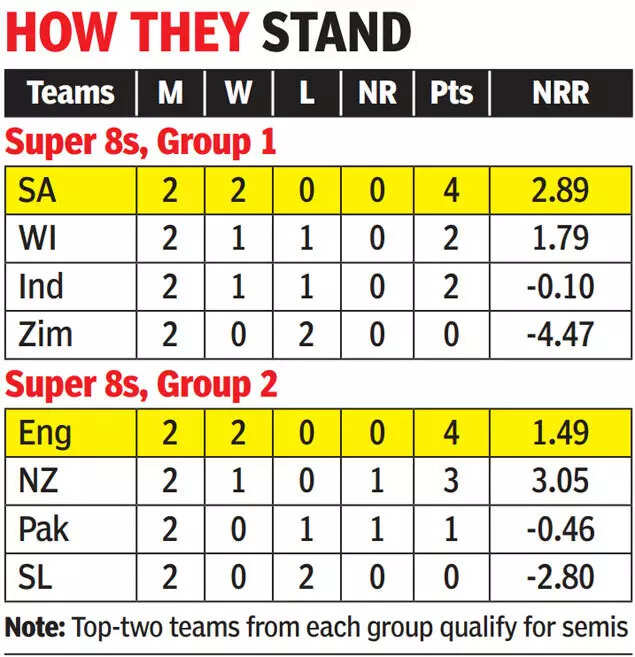
CHENNAI: It was a day everything went according to plan for India, starting with South Africa’s easy win against West Indies in Ahmedabad earlier in the day. That result smoothed out the rough edges of this Super 8 Group 1 and meant India would just have to win their remaining games to safely book a semis berth. And against a team like Zimbabwe, which is not quite ready for a stage as big as this, Suryakumar’s boys did the needful. As thousands of mobiles flickered in the MA Chidambaram Stadium stands, India got their campaign back on track, winning by 72 runs and setting up a direct ‘quarterfinal’ against the West Indies at Eden Gardens on Sunday.Go Beyond The Boundary with our YouTube channel. SUBSCRIBE NOW!With a pleasant evening breeze blowing across the Chepauk, the fans never stopped partying. They had their reasons. The much-loved Abhishek Sharma came back to some sort of form with a 30-ball 55, new CSK signing Sanju Samson punched a quickfire 24 and the entire middle order got some good hits on a batting beauty. Zimbabwe, though, did make things easier for India. From choosing to bowl after winning the toss to bowling pedestrian pacers in the Powerplay to dropping catches at crucial junctures, the African minnows were just the team India would have liked at this stage of the tournament.

India keep T20 World Cup dream alive, over to Kolkata now

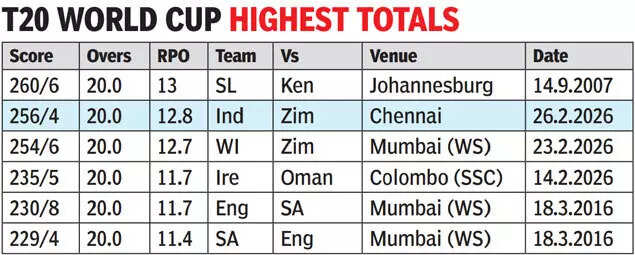
Towards the back end, they kept delivering lollipops in trying for the yorker and were thrashed for 17 sixes in the process. A total of 256/4 was comfortably India’s highest in the T20 World Cup, going past their previous best of 218. It was way beyond Zimbabwe’s reach and they didn’t seem too interested in the chase. Zimbabwe instead chose to bat out the 20 overs and get some big-stage experience against top quality bowlers. Right-handed opener Brian Bennett (97 not out off 54 balls) played an innings of great quality that may stand him in good stead against some other opposition on some other day. But for now it’s the end of the road for Zimbabwe.The quality of opposition notwithstanding, India had to get the runs and all eyes were on the recycled opening partnership of Sanju and Abhishek.The left-hander, woefully out of form till now, wasn’t tested with off-spin, his nemesis so far in the tournament, in the Powerplay and he cashed in on it.

T20 World Cup Highest Totals

The blitz, though, was started by Samson, who punched a six off the back-foot over mid-off off left-arm pacer Richard Ngarava. Sanju was tested with short balls — he hit a few too — but fell to a similar delivery. However, with the score reading 48 off 3.4 overs, he had already done his job.Thereafter, it was Abhishek’s turn to show that the hard work put in by him at the nets on Tuesday would pay dividends. The southpaw kept his head still and didn’t try to pre-meditate his shots. He also didn’t show the pacers his stumps and didn’t look to charge down the track. Instead he held his shape, stayed in his crease and looked to play the ball straight. Of course, there was nothing in the Zimbabwe attack that was really challenging but the Punjab cricketer kept his side of the bargain.The crowd erupted in joy, the “Abhishek, Abhi-shek” chants grew louder as his beautifully crisp shots kept the scoreboard galloping. Even though India raced away to 80 in the Powerplay, Abhishek’s half-century, coming off 28 balls, was his second slowest in T20Is. Instead of looking for over-boundaries and power all the time, Abhishek didn’t mind the occasional boundary (4×4, 4×6). He played the field with great dexterity as India heaved a sigh of relief.

Super 8s Standings

For reasons better known to Zimbabwe, skipper Sikandar Raza bowled only six overs of spin. He himself didn’t complete his quota despite dismissing Ishan Kishan while the other two shared three. They conceded 56 — a little over nine — while the pacers went anywhere between 10 to 20.Hardik (50* off 23 balls) and Tilak (44* off 16 balls), batting at No. 6, found themselves back in the flow. But things may get tougher going forward.


Source link

Delhi excise policy case: Ex-Delhi CM Arvind Kejriwal, former dy CM Manish Sisodia acquitted | Delhi News


Delhi excise policy case: Ex-Delhi CM Arvind Kejriwal, former dy CM Manish Sisodia acquitted

NEW DELHI: The Rouse Avenue court on Friday acquitted former chief minister Arvind Kejriwal and former deputy chief minister Manish Sisodia in 2022 Delhi excise policy case. Special judge Jitendra Singh pronounced the order in the case investigated by the Central Bureau of Investigation (CBI).The court observed that the alleged central conspiratorial role could not be substantiated. The bench also noted that the allegations “failed judicial scrutiny” and found “no criminal intent” on the part of Manish Sisodia. It further stated that the conspiracy theory “cannot survive against one constitutional authority.” The court had earlier reserved its decision on 12 February after hearing detailed arguments from the CBI and the accused, including Kejriwal and Sisodia, along with 21 others.Kejriwal broke down emotionally after being discharged in the Delhi excise policy case by the Rouse Avenue Court.Addressing supporters after the court’s order, Kejriwal said, “I am not corrupt. The court has said that Kejriwal and Manish Sisodia are honest,” asserting that the verdict had vindicated both him and senior party leader Manish Sisodia.In a post on ‘X’, Kejriwal’s wife, Sunita Kejriwal said, “In this world, no matter how powerful one becomes, one cannot rise above Shiva Shakti. Truth always prevails.” At the time the case was registered, Kejriwal was serving as chief minister and Sisodia as his deputy. The CBI filed its first chargesheet in 2022, followed by multiple supplementary chargesheets. The agency has alleged that Rs 100 crore was paid by a “south lobby” to influence the now-scrapped excise policy in its favour. In total, 23 accused were chargesheeted, including Kejriwal, Sisodia, K Kavitha, Kuldeep Singh, Narender Singh, Vijay Nair, Abhishek Boinpally, Arun Ramchandra Pillai, Mootha Goutam, Sameer Mahendru, Amandeep Singh Dhall, Arjun Pandey, Butchibabu Gornatla, Rakesh Joshi, Damodar Prasad Sharma, Prince Kumar, Chanpreet Singh Rayat, Arvind Kumar Singh, Durgesh Pathak, Amit Arora, Vinod Chauhan, Ashish Mathur, and P Sarath Chadra Reddy. During arguments, the CBI maintained that the offence of criminal conspiracy must be viewed in its entirety and that the sufficiency of evidence should be tested during trial.Represented by additional solicitor general D P Singh and advocate Manu Mishra, the agency argued that there is adequate material to frame charges against all the accused. On the other hand, senior advocate N Hariharan, appearing for Kejriwal, contended that there is no incriminating material linking his client to the alleged conspiracy. He argued that the fourth supplementary chargesheet naming Kejriwal merely repackages earlier allegations and that Kejriwal was performing his official duties as chief minister. Hariharan further submitted that Kejriwal was not named in the initial chargesheet or in three earlier supplementary chargesheets, and that his name appeared only in the fourth. The defence also questioned the basis of further investigation and the evidentiary value of statements, including that of approver Raghav Magunta.


Source link

Gurgaon-Noida Rrts Corridor: 6 metro stations, 2 RRTS hubs: Haryana govt approves 64km Gurgaon–Faridabad–Noida Namo Bharat corridor | Gurgaon News


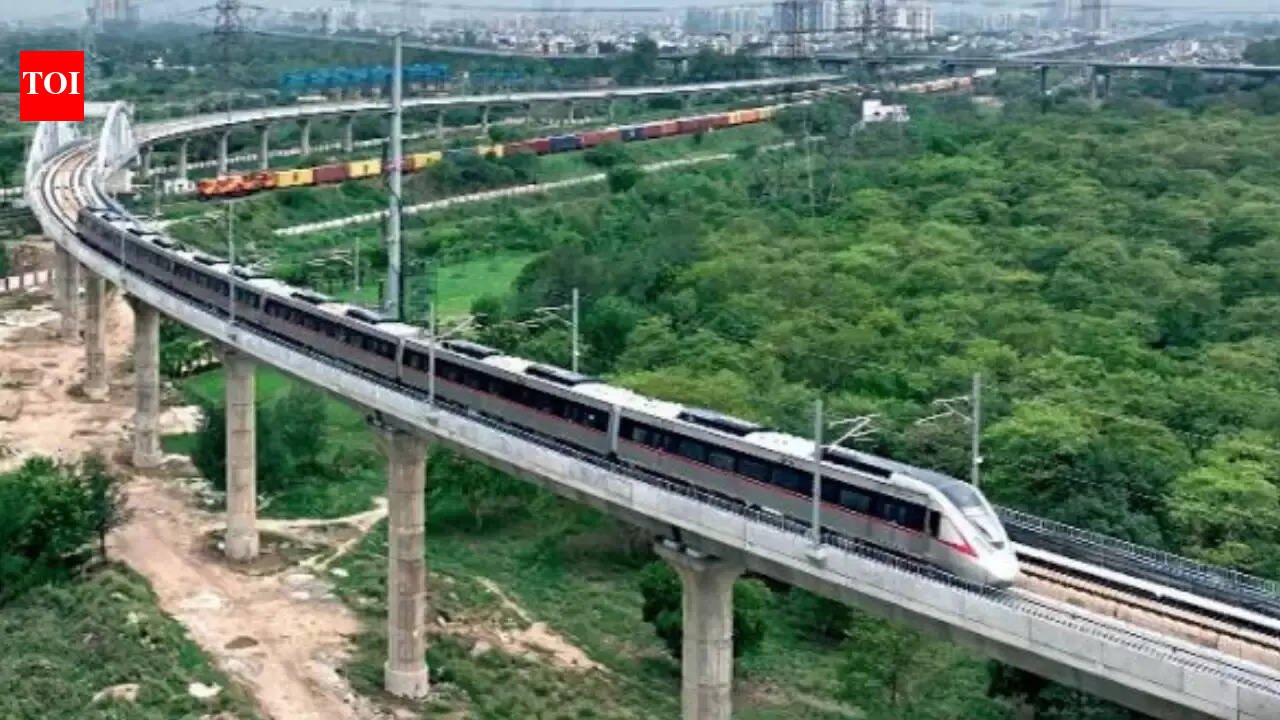
Haryana has greenlit the Gurgaon-Faridabad-Noida Namo Bharat corridor alignment, featuring six metro stations and two integrated RRTS-metro hubs

GURGAON: Haryana has cleared the alignment of Gurgaon–Faridabad–Noida Namo Bharat corridor, with NCRTC proposing six metro stations and two integrated RRTS-cum-metro hubs in the city. Speaking in the Assembly on Wednesday, chief minister Nayab Singh Saini said govt took “an important step in the direction of urban transport” by approving the alignment of RRTS corridor in the region.

PM Modi Inaugurates India’s Fastest Metro In Meerut, Namo Bharat Corridor

On Tuesday, the proposal was discussed at a meeting chaired by Saini, where NCRTC presented a plan to run both Namo Bharat and metro services on the same alignment within the city. Under the plan, IFFCO Chowk and Sector 61 will serve as integrated RRTS-cum-metro hubs. Six other stations will be built at Sector 29, Millennium City Centre, Sector 52, Wazirabad, Sector 57 and Sector 58/61 as metro-only stops to support daily intra-city travel. An NCRTC official said the model would allow high-speed RRTS trains to handle intercity movement, while metro services would cater to shorter trips within the city using the same corridor. They said the plan mirrors the Delhi–Meerut corridor, where metro services operate within Meerut on the RRTS route. In Dec last year, Haryana Mass Rapid Transport Corporation (HMRTC) asked NCRTC to assess the feasibility of planning a metro system along the RRTS alignment to improve local connectivity and avoid duplicating infrastructure. The proposed corridor is 64km long, with 52km in Haryana, covering Gurgaon and Faridabad. The route will begin at IFFCO Chowk and proceed towards Gwalpahari via Sector 29, Millennium City Centre, and sectors 52, 57, and 61 along Golf Course Road Extension. NCRTC officials said the alignment was planned because it serves existing and upcoming sectors while avoiding ecologically sensitive areas, including Tau Devi Lal Biodiversity Park. For integration, Rapid Metro line may need an extension of around 1km at Sector 61. The alignment is designed to connect with DMRC’s Yellow Line at Millennium City Centre, Rapid Metro at Sector 61, and the proposed metro corridor between Sector 56 and Pachgaon. The corridor is expected to provide long-term connectivity between IGI Airport and upcoming Noida International Airport in Jewar. The project is estimated to cost around Rs 15,000 crore. Saini said the detailed project report (DPR) will be prepared soon. “The corridor will link Delhi Metro, Rapid Metro, and the upcoming Gurgaon Metro network, and will support investment and employment in line with PM Narendra Modi’s vision of a Viksit Bharat,” he said. Union minister Rao Inderjit Singh had earlier raised concerns about congestion at IFFCO Chowk, noting that the location already will get an RRTS station under Delhi–Gurgaon–Bawal corridor and an operational Yellow Line metro station. Earlier, Gurgaon Metro Rail Limited (GMRL) proposed that Gurgaon–Faridabad–Noida Namo Bharat corridor be built underground in the city rather than elevated. It also recommended starting the underground stretch from Rajiv Chowk instead of IFFCO Chowk, arguing that Rajiv Chowk serves denser residential and commercial areas in Old Gurgaon and could generate higher all-day ridership. GMRL said this option would integrate better with the planned Delhi–Gurgaon–Manesar–Bawal RRTS corridor, create a stronger multimodal hub, and deliver a more balanced network connecting Old and New Gurgaon while enabling future expansion towards Manesar and the railway station. In Faridabad, an integrated section of around 16km from Sainik Colony to Badshapur has been approved. The stretch will cover key areas, including NIT, Bata Chowk, Sectors 12 to 15, and parts of New Faridabad. It will connect with Delhi Metro’s Violet Line. In Faridabad area, two integrated RRTS-cum-metro stations and eight only-metro stations have been proposed.The CM said the corridor will offer seamless and high-speed travel to lakhs of commuters, reduce traffic congestion, and contribute positively to environmental sustainability.He also said he corridor will open new avenues for investment, employment generation, and balanced urban growth in Haryana. Considering the rising population and increasing traffic pressure in cities like Gurugram and Faridabad, the project is being designed to meet future mobility demands. With close coordination between the central and state govts, the administration is committed to ensuring timely execution, said Saini.

Banner Insert


Source link

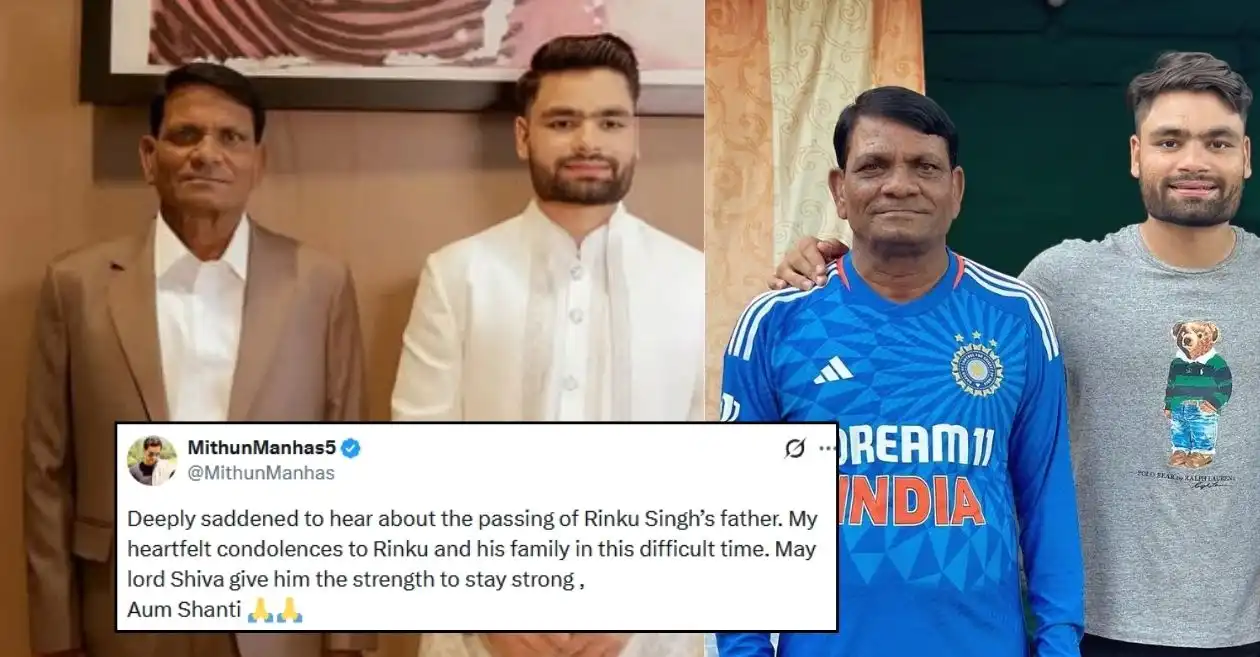
Fans mourn tragic demise of Rinku Singh’s father during T20 World Cup 2026


In a heartbreaking turn of events during the ICC Men’s T20 World Cup 2026, Indian cricketer Rinku Singh lost his father, casting a shadow over the national team’s campaign. As India battles for a place in the knockout stages, the emotional blow has deeply affected both the dressing room and fans across the country.

Indian camp shaken by tragic news Rinku Singh’s father demise

Khanchand Singh passed away on February 27 at Yatharth Hospital in Greater Noida, where he had been undergoing treatment for stage 4 liver cancer. The tragic news arrived in the middle of India’s high-pressure World Cup journey, leaving teammates and supporters stunned.

According to hospital sources, Rinku’s father had been on ventilator support in recent days as his condition worsened. Doctors were also administering continuous renal therapy in an effort to stabilise him. Despite receiving intensive care and close monitoring, his health declined rapidly, and he eventually succumbed to complications arising from advanced liver cancer.

Rimku leaves team camp to be with family

The devastating development came at a time when Rinku was with the Indian squad for the T20 World Cup. Earlier this week, when his father’s condition deteriorated ahead of India’s Super 8 clash against Zimbabwe, the left-handed batter had briefly travelled home to be by his side. After spending time with his family, he rejoined the team in Chennai as preparations intensified for the crucial fixture.

However, following confirmation of his father’s demise, the 28-year-old reportedly once again departed from the team camp and travelled to Aligarh to be with his grieving family. For Rinku, who has often spoken about his humble upbringing and the sacrifices made by his parents, the loss is deeply personal.

As news of his father’s passing spread, fans across social media platforms expressed heartfelt condolences. Many recalled Rinku’s inspiring journey from modest beginnings to representing India on the global stage. Supporters posted messages of strength and solidarity, urging him to stay strong during this difficult period.

Also READ: Team India shatter multiple batting records vs Zimbabwe in T20 World Cup 2026 clash

Here’s how fans reacted:

Also READ: India’s T20 World Cup 2026 semi-final qualification scenario after thumping win over Zimbabwe


Source link

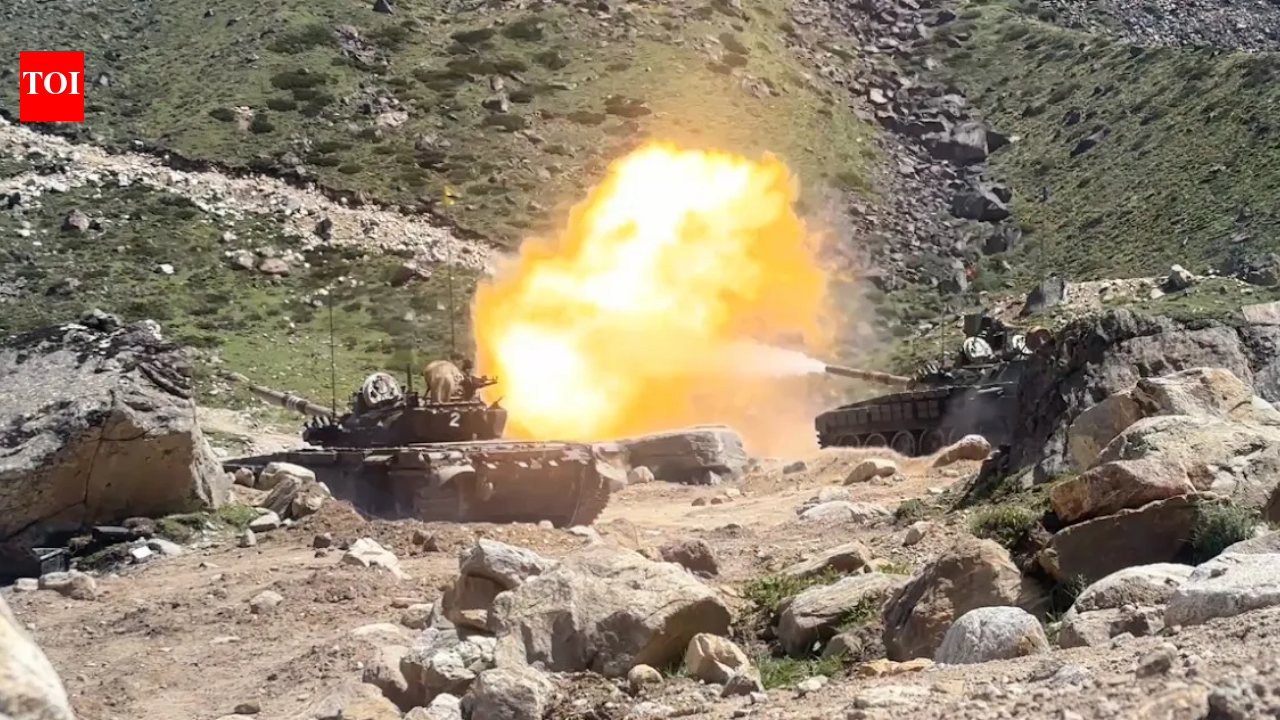
Indo-Israeli fire control systems clear field trials, fitted on 96 Army T-72 tanks


Indo-Israeli fire control systems clear field trials, fitted on 96 Army T-72 tanks

BENGALURU: The Indian Army has completed the installation of Thermal Imaging Fire Control Systems (TIFCS) — an Indo-Israeli technology developed in Bengaluru — on 96 of its T-72 tanks, with the systems clearing firing validation trials before induction.The T-72 remains one of the mainstays of the Army’s armoured fleet. Upgrades such as thermal imaging and automatic target tracking are aimed at extending operational relevance, particularly in low-visibility and night operations where older optical systems have limitations.The upgrade has been executed by Alpha-Elsec Defence & Aerospace Systems Pvt Ltd, a joint venture between Bengaluru-based Alpha Design and Israel’s Elbit Systems. A contract for the supply and installation of 96 TIFCS units was signed with the Army in 2023.While India and Israel are expected to finalise a framework allowing companies from both nations to deepen cooperation during PM Modi’s visit, the Alpha-Elbit collaboration was a result of an earlier agreement between the two nations.Confirming the development, Alpha Design representatives told TOI: “Earlier, similar systems were supplied directly by the Israeli partner. Under the current arrangement, the systems have been manufactured in India with technical support from Elbit Systems, aligning with the government’s Make-in-India programme and the push for defence indigenisation.”The TIFCS is designed to strengthen the T-72’s night-fighting capability. It automatically acquires inputs from external sensors, carries out ballistic corrections and feeds corrected target data into the fire control system. An integrated automatic target tracker (ATT) enables continuous tracking of moving targets, allowing engagement in dynamic conditions, including at night.Alpha said firing validation trials of the indigenously manufactured systems were conducted by the Army during Nov–Dec 2025, after which the installations were completed.Alpha-Elsec CEO Nataraj Krishnappa told TOI: “Alpha-Elsec, as an MSME with a workforce of around 120 highly skilled professionals, has been making steady and significant progress in the manufacture of advanced opto-electronic equipment for the Indian Armed Forces. A substantial number of our products are also exported to our JV partner, which further supplies them to customers worldwide.”Following the completion of this order, Alpha-Elsec said it has seen an increase in its order book for indigenous defence supplies, with additional orders from Indian defence forces in the pipeline.The firm focuses on the manufacture, integration and lifecycle support of electro-optic and fire control systems for defence applications. Beyond Army platforms, its electro-optic products are also used by paramilitary forces and in select civilian sectors.


Source link

Oppn must form Joint Action Committee to ensure fair SIR in Maharashtra, says SP MLA Rais Shaikh | Mumbai News


Rais Shaikh urges Joint Action Committee to monitor Maharashtra’s SIR process (File Photo)

MUMBAI: Samajwadi Party’s Bhiwandi East MLA Rais Shaikh has called for the immediate formation of a Joint Action Committee (JAC) comprising all opposition parties to monitor and ensure transparency and fairness in the proposed “Special Intensive Revision” (SIR) process in Maharashtra. An urgent meeting should be convened during the ongoing budget session of the legislature to hold a detailed discussion on the issue and finalize a concrete action plan, said Shaikh. In his letter to state Congress chief Harshvardhan Sapkal, NCP (SP) state president Shashikant Shinde, and Shiv Sena (UBT) MP Sanjay Raut, Shaikh emphasized the need for coordinated action to ensure transparency and fairness in the implementation of the SIR process.“During the Special Intensive Revision of electoral rolls, there is a possibility of serious irregularities during its execution. The names of minority communities, marginalized sections, and other ordinary citizens could be unlawfully removed from the voters’ list,” said Shaikh.Citing past instances where similar complaints had surfaced in different regions, MLA Rais Shaikh stressed that ensuring transparency, legal accuracy, and justice in the SIR process is essential.“Therefore, a JAC of all opposition parties should be constituted without delay. The committee should oversee the SIR process, collect complaints, initiate necessary legal steps, and provide continuous guidance to party workers and local leadership. An urgent meeting should be convened during the ongoing Budget Session of the Legislature to hold a detailed discussion on the issue and finalize a concrete action plan,” said Shaikh.Shaikh outlined key measures that should be considered, including establishing a monitoring mechanism to prevent the arbitrary deletion of names from electoral rolls, guiding workers in every constituency, informing citizens about their rights, providing legal assistance where required, and conducting a legal review of the entire process to ensure it is carried out in accordance with rules and in a transparent manner.The BJP recently formed a committee to monitor the SIR in the state and named Kirit Somaiya on the committee along with other netas.


Source link

Access Denied


Access Denied

You don’t have permission to access “http://www.ndtv.com/tamil-nadu-news/ops-panneerselvam-expelled-from-aiadmk-reaches-dmk-office-to-join-party-tamil-nadu-assembly-elections-11143248” on this server.

Reference #18.de2fc917.1772170691.20883d8d

https://errors.edgesuite.net/18.de2fc917.1772170691.20883d8d


Source link

Did Pakistan lose another F-16? Afghanistan makes big claim; shares video


'Pak Posts, Soldiers Captured': PAF Bombs Kabul & Kandahar After Taliban Stun Pak With Border Blitz

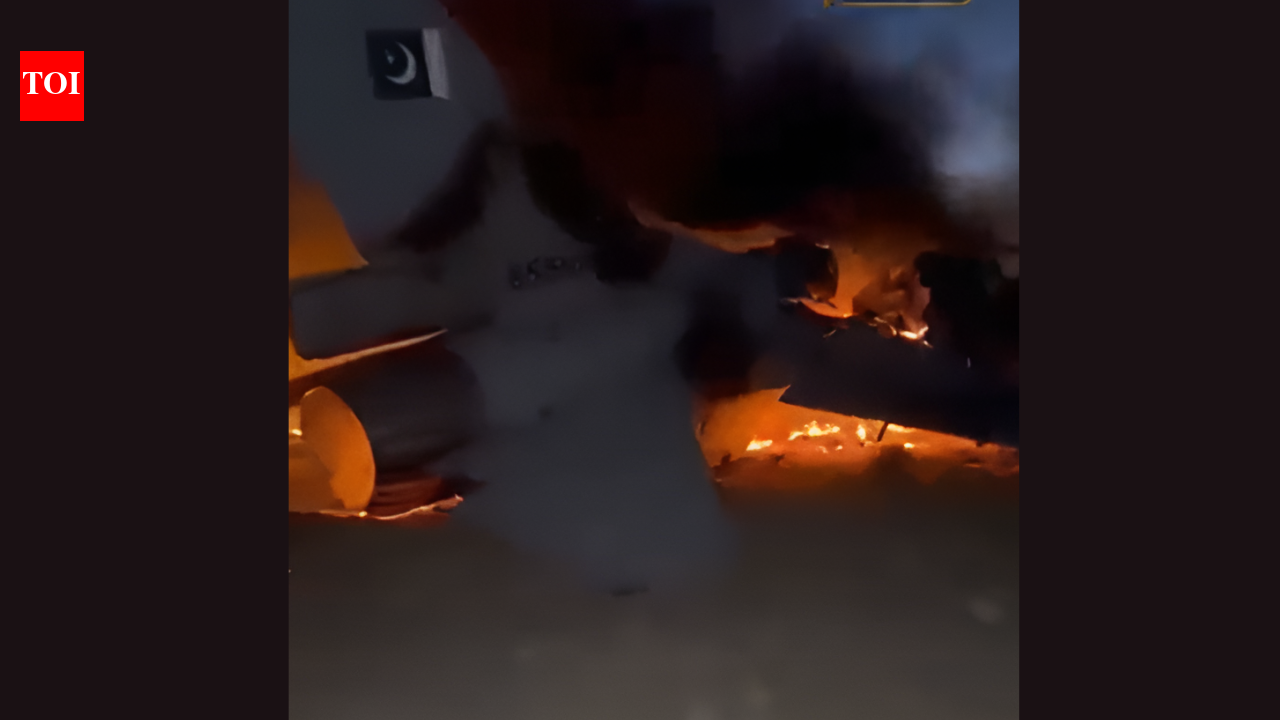
Afghanistan on Friday claimed that Pakistan had lost its much-hyped, American-made F-16 fighter jet in action, as the Islamabad-led military carried out overnight strikes targeting multiple cities in Taliban-led Afghanistan.The US-made F-16 jet, considered a key asset of the Pakistan air force, was reportedly used in the airstrikes on the Taliban-led country, which does not have an air force of its own and relies primarily on ground forces.

‘Pak Posts, Soldiers Captured’: PAF Bombs Kabul & Kandahar After Taliban Stun Pak With Border Blitz

The reports suggested that debris from the F-16 was seen scattered on the ground.On X, an account claiming to be affiliated with the “Afghanistan Defense” shared a video purportedly showing the wreckage of a destroyed and burning F-16 fighter jet, alleging that it had been shot down by Taliban defence forces.’Pakistan, in retaliation for what it described as “unprovoked firing” by Afghanistan, launched military action against the neighbouring Taliban-led country under Operation Ghazab Lil Haq. The operation included targeted strikes in key Afghan cities, including Kabul and Kandahar.The Islamabad-led military also reportedly destroyed Afghan military bases as part of its retaliatory action.This was not the first time Pakistan’s F-16 jets have been targeted in regional tensions. In May 2025, during heightened hostilities, India launched Operation Sindoor and claimed to have destroyed Pakistan’s F-16 and JF-17 fighter jets.Months earlier, Indian air force chief AP Singh had also stated that India shot down and destroyed US-origin F-16 jets and Chinese-made JF-17s during Operation Sindoor.The UAV hangar in Sukkur, the AEW&C (airborne early warning and control) aircraft hangar in Bholari, and the F-16 hangar in Jacobabad, Pakistan, were also reported to have been damaged in the strikes.“We have indications of one C-130 class aircraft and possibly an AEW&C aircraft, along with at least four to five fighter jets, most likely F-16s, being destroyed,” the IAF chief said.


Source link