Breaking News
Mercedes goes berserk in Mumbai: Minor driver’s 2am crash leaves wrecked cars in Coastal Road tunnel | Mumbai News


MUMBAI: The D B Marg police on Sunday registered a case against a 75-year-old Agripada businessman, his 18-year-old granddaughter and her minor friend after the underage boy, driving a high-end car registered in the businessman’s name, allegedly lost control and crashed into another vehicle inside the coastal road tunnel in the early hours of Sunday.A person in the other car was injured and was taken to the hospital.He was later discharged after treatment, said police. The police said that the accident took place at around 2am on Sunday and they had received information from the police control room about it. “ The high end car is in the name of the businessman. His granddaughter and her 17-year-old male friend were heading to south Mumbai when the accident happened. They wanted to go to the Gateway of India and took the coastal road,” said a police officer.

India Secures 18% US Tariff, Rahul Gandhi Targets PM, SC Slams WhatsApp-Meta And More

He added that the minor boy said that the tyre of the car burst and he lost control. There were three persons in the car ahead and one of them sustained injuries.The granddaughter of the businessman had a driving license, said police, adding that, “We have taken the blood samples of the minor boy. The report is awaited.”The officer also said that it did not seem the minor was drunk. To verify the boy’s claim about the tyre burst, police said they have called the RTO officials to examine the car.Investigators have seized the car.


Source link

Fans go crazy as Delhi Capitals outclass Gujarat Giants in the Eliminator to reach fourth WPL final in a row


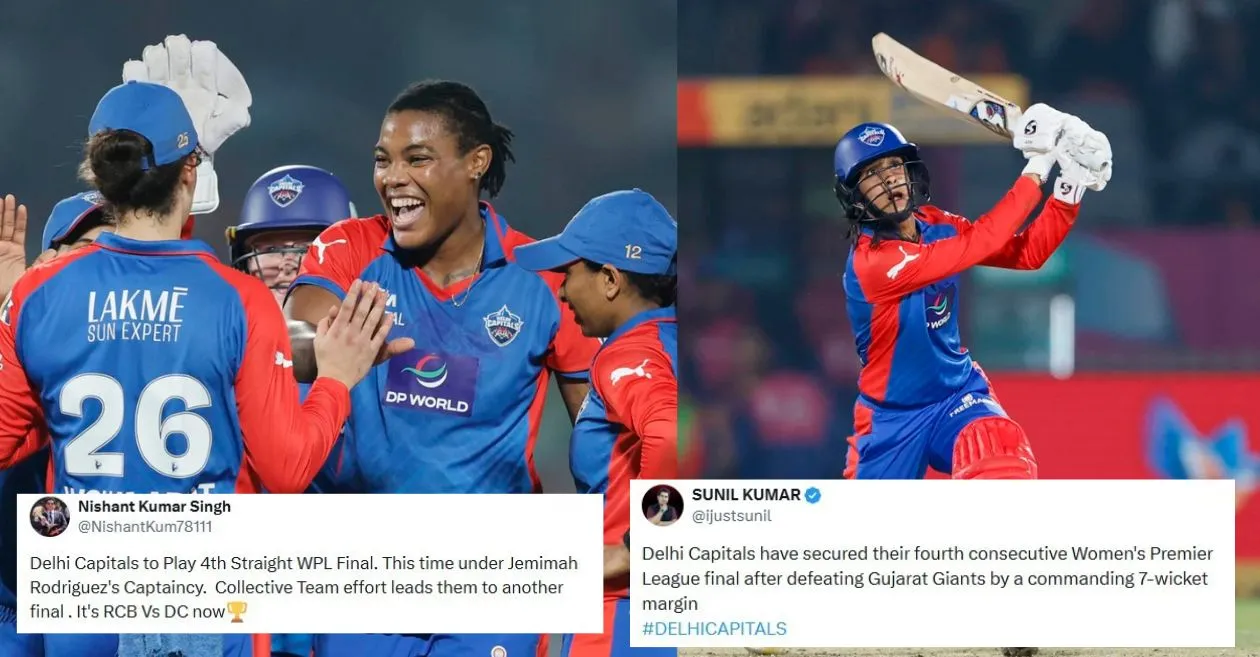
The atmosphere at the Vadodara International Cricket Stadium was nothing short of electric on Tuesday, as the Delhi Capitals (DC) Women showcased a clinical performance to dismantle Gujarat Giants (GG) Women in the WPL 2026 Eliminator. In a high-stakes encounter that felt more like a masterclass than a knockout game, DC secured a 7-wicket victory with 26 balls to spare. This win marks a historic milestone for the franchise, as they march into their fourth consecutive Women’s Premier League final, leaving fans in a state of absolute euphoria.

Chinelle Henry’s triple-strike decimates Gujarat Giants’ batting line-up

Winning the toss and electing to bowl, Delhi Capitals immediately put the pressure on the Giants. While Beth Mooney played a valiant, lone-warrior innings of 62 off 51 balls, she found very little support from the other end. The protagonist of the first innings was undoubtedly Chinelle Henry, whose fiery spell ripped the heart out of the Gujarat batting attack.

Henry struck early, removing the dangerous Sophie Devine for just 6. However, her most lethal contribution came during the death overs. Just as Georgia Wareham (35) and Mooney began to stitch together a recovery partnership of 61 runs, Henry returned to remove Wareham and Bharti Fulmali in quick succession.

The Giants’ middle order crumbled under the disciplined lines of Nandani Sharma (2/44) and the economical brilliance of Minnu Mani (1/23). Despite a late flourish that saw GG reach 168/7, the total felt sub-par on a Vadodara surface that favored the batters. The “Henry Hurricane” finished with figures of 3/35, effectively tilting the scales in Delhi’s favour before the chase even began.

Delhi Capitals’ batters blitz through the chase to seal final spot

If the first half of the game belonged to the bowlers, the second was a pure exhibition of power-hitting. Delhi Capitals’ openers, Lizelle Lee and Shafali Verma, came out with a clear intent to finish the game early. The pair exploited the Powerplay brilliantly, racing to 75/0 within the first six overs.

Lee was particularly aggressive, smashing 43 off 24 balls, including eight boundaries and a towering six. Although Wareham managed to break the opening stand by dismissing both Lee and Verma (31) in quick succession, the momentum never shifted. The mid-innings phase was expertly managed by captain Jemimah Rodrigues, who played a blistering knock of 41 off 23 balls.

The flow of the game remained entirely one-sided as DC reached the 100-run mark in just 8.5 overs. Following Rodrigues’ departure, Laura Wolvaardt (32) and the seasoned Marizanne Kapp saw the team home with ease. DC finished at 169/3 in just 15.4 overs, scoring at a staggering run rate of 10.78.

As the winning runs were hit, the Vadodara crowd erupted, celebrating a team that has defined consistency in the WPL. With this dominant performance, the Delhi Capitals head into the final as the heavy favourites, looking to finally clinch the silverware that has eluded them in previous seasons.

Also READ: Sarah Taylor reveals how WPL accelerated women’s cricket in India

Here’s how fans reacted:

Also READ: Meg Lanning explains the reasons behind early exit of UP Warriorz from WPL 2026

This article was first published at WomenCricket.com, a Cricket Times company.


Source link

Kayla Nicole makes a controversial comment allegedly shading Travis Kelce and Taylor Swift’s relationship ahead of their wedding | NFL News


Kayla Nicole makes a controversial comment allegedly shading Travis Kelce and Taylor Swift’s relationship ahead of their wedding
Kayla Nicole makes a controversial comment allegedly shading Travis Kelce and Taylor Swift’s relationship ahead of their wedding.(Image via Getty Images, Taylor Swift/Instagram)

Travis Kelce’s ex girlfriend, Kayla Nicole, has been in the news ever since the Kansas City Chiefs’ star player went public with his high profile romance with Taylor Swift.While both Taylor Swift and Travis Kelce stay private about their romance now, Kayla Nicole’s recent comment might just be another subtle dig at the couple.

Kayla Nicole drops a comment after making a dig at Taylor Swift and Travis Kelce

A few hours ago, the Kansas City Chiefs’ tight end, Travis Kelce’s ex girlfriend, Kayla Nicole, took to her social media to make a post about her dancing to Toni Braxton’s “He Wasn’t Man Enough”.

Kayla Nicole

While many feel her dance was a dig towards Travis Kelce, Kayla Nicole posted a picture alongside other dancers as she wrote, “Still processing this…Best day ever…”As Kayla Nicole danced to Toni Braxton’s “He Wasn’t Man Enough”, a clip of the singer yelling, “Kayla, is he man enough?” has sparked outrage.To make matters worse, a few months ago, Kayla Nicole made a controversial post as she danced to the same song, dressed as Toni Braxton for Halloween 2025. This sparked theories that it was a direct dig at Taylor Swift’s recently released hit track, Opalite.Though Kayla Nicole got heavily trolled for her actions, both Taylor Swift and Travis Kelce have remained silent about the situation.

What happened between Travis Kelce and Kayla Nicole?

Over the last few years, Travis Kelce’s ex girlfriend and popular social media influencer, Kayla Nicole, has often spoken about the relationship she had with the star player. This has led to Kayla Nicole being called “obsessed” about him and his relationship with Taylor Swift.The last time Travis Kelce spoke about Kayla Nicole in public was back in 2022 when their five year old on off relationship came to an end.While the reason behind their break up remains unknown, Travis Kelce confirmed it had nothing to do with money.Travis Kelce had made an appearance on an episode of The Pivot where he said, “I would never say that I was supporting her…She had a very financially stable life and what she was doing in her career.” Soon after, Travis Kelce met Taylor Swift and fell deeply in love with her.


Source link

Man held with four pistols, cartridges in Thane | Mumbai News


Thane: Police have arrested a 20-year-old man after seizing four country-made pistols and live cartridges he was carrying illegally in Maharashtra’s Thane district, an official said on Tuesday. A member of the police’s anti-narcotics cell noticed the accused, Sohil Beig Sorab Beig Mirza, behaving suspiciously and intercepted him in the Vehle-Batale of Bhiwandi town on Monday, an official from Narpoli police station said. During a search of the accused, the police found firearms in his possession.“We seized four country-made pistols and four live cartridges valued at around Rs 4 lakh from the accused,” the official said. The accused, a resident of Bhind district in Madhya Pradesh, was immediately taken into custody and an FIR was registered against him under relevant provisions of the Arms Act. The police were investigating how the accused procured the weapons and whether they were intended to be supplied or used for any criminal activity, the official added

India Secures 18% US Tariff, Rahul Gandhi Targets PM, SC Slams WhatsApp-Meta And More


Source link

Access Denied


Access Denied

You don’t have permission to access “http://www.ndtv.com/india-news/businessmen-car-owners-among-ration-card-beneficiaries-in-delhi-mla-10941453” on this server.

Reference #18.4cfdd417.1770150281.3de294c8

https://errors.edgesuite.net/18.4cfdd417.1770150281.3de294c8


Source link

Access Denied


Access Denied

You don’t have permission to access “http://www.ndtv.com/india-news/girl-14-survives-night-alone-in-forest-after-kidnapping-attempted-rape-10941356” on this server.

Reference #18.76fdd417.1770144858.944475c

https://errors.edgesuite.net/18.76fdd417.1770144858.944475c


Source link

Why Trump administration is still imposing 18% tariff on India – Explained


Why Trump administration is still imposing 18% tariff on India - Explained

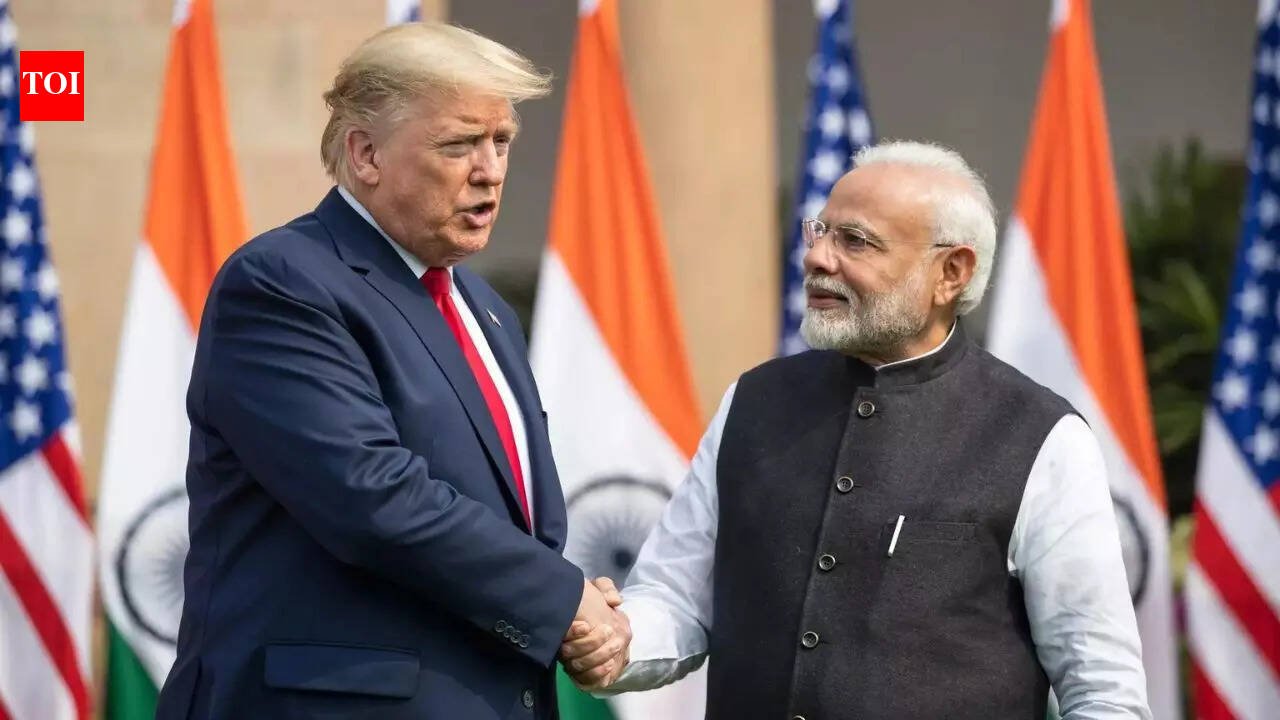
US trade representative Jamieson Greer on Tuesday outlined the Trump administration’s rationale for imposing an 18% tariff on Indian goods, citing Washington’s large trade deficit with New Delhi.Greer said the US is working to formally finalise the trade agreement with India announced earlier this week and is in the process of putting the details on paper.

‘India-US Trade Deal Removes Competitive Disadvantage’: Former Indian Envoy To Washington

Why the US is imposing tariffs

Explaining the decision to retain a baseline 18% tariff, Greer said the move reflects the size and growth of India’s trade surplus with the US.“The reason we’re maintaining some level of tariff 18% is because we have this giant trade deficit with them,” he said, adding that India has agreed to reduce its tariffs on a range of US products.According to US Census Bureau data, India’s trade surplus with the US reached USD 53.5 billion during the first 11 months of 2025, compared to USD 45.8 billion for all of 2024.Under the agreement, the US will reduce tariffs on most Indian goods to 18% from 50%. “We’ll finish papering it, but we know the specifics, we know the details,” Greer said, adding that India is maintaining some protection around agricultural goods.

Zero tariffs on several US products

Greer said India has agreed to cut tariffs on American industrial goods to zero from 13.5% and reduce duties on a wide range of agricultural and manufactured products.“For a variety of things, you know, tree nuts, wine, spirits, fruits, vegetables, etc, they’re going down to zero,” he said.However, he did not mention rice, beef, soybeans, sugar or dairy products that India also excluded from its recent trade agreement with the European Union.

.

Agriculture, energy trade and Russian oil

Greer said the US would continue to push for greater access to protected areas of India’s agriculture sector and that the two sides had reached an understanding on technical barriers to trade.“We’ve reached an understanding and an agreement with the Indians as well on a variety of technical barriers to trade, areas where they have not accepted US standards. We know American goods are safe,” he said.He added that there would be “a process for recognising US standards,” though India would have to go through its own political processes before accepting them. Once implemented, he said, this would open a market of more than one billion people to more US goods.Greer also said the US administration has been closely tracking India’s energy trade patterns, particularly its imports of Russian crude oil.“Have been monitoring Indians winding down purchase of Russian oil,” he said, adding that there are “a lot of opportunities for India to diversify supply and buy more US product.”He said India did not import Russian oil prior to 2022 and 2023 and has been working since late last year to scale down such purchases.The remarks come after US President Donald Trump said on February 2 that Washington would cut reciprocal tariffs on Indian goods to 18% following a phone call with Prime Minister Narendra Modi, effectively sealing the deal.In a post on Truth Social, Trump said India had agreed to reduce tariffs and non-tariff barriers against the US to zero and committed to significantly higher purchases of American products.“They will likewise move forward to reduce their Tariffs and Non Tariff Barriers against the United States, to ZERO,” Trump said, adding that India had committed to buying over $500 billion worth of US energy, technology, agricultural and other products.

India confirms sensitive sectors protected

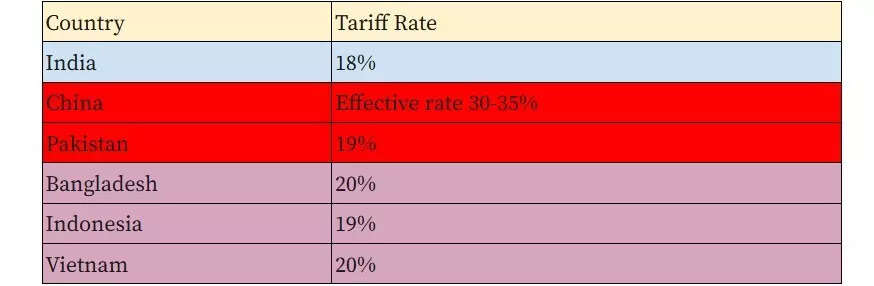
Commerce and industry minister Piyush Goyal said India has ensured that its sensitive agriculture and dairy sectors remain fully protected under the agreement.“The agreement will protect the sensitive sectors, the interests of our agriculture and our dairy sectors in full respect,” Goyal said at a press briefing.He said the deal would open opportunities for labour-intensive sectors such as textiles, apparel, home décor, leather and footwear, gems and jewellery, organic chemicals, rubber goods, machinery and aircraft, with US duties on these products coming down to 18% .Calling it a “very good” agreement, Goyal said Indian exporters are now better placed than competitors which continue to face higher tariffs in the US market.The reduction of US tariffs on Indian goods to 18% is expected to improve India’s competitiveness in the American market. Key competitor countries face higher tariffs, including Vietnam and Bangladesh at 20% , Malaysia at 19% , and Cambodia and Thailand at 19% each.

What the trade deal means and how India benefits

Under the proposed pact, India is expected to eliminate duties on some products immediately, phase out tariffs on others, and reduce import duties in select sectors. Certain items may also receive quota-based tariff concessions. Sensitive sectors such as agriculture and dairy, however, are completely excluded from the agreement, PTI reported.Greater clarity on tariff changes is expected through a US executive order and a joint India-US statement, both of which are awaited.The agreement is likely to benefit labour-intensive sectors that have been hit by steep US tariffs.These include garments, leather and non-leather footwear, gems and jewellery, plastics, chemicals, carpets and handicrafts. Exports from these sectors currently face tariffs of up to 50% , which will be reduced to 18% .Between 2021 and 2025, the United States remained India’s largest trading partner in goods. The US accounts for about 18% of India’s total exports, 6.22% of imports and 10.73% of overall bilateral trade.

Major traded products

In 2024, India’s key exports to the US included drug formulations and biologicals (USD 8.1 billion), telecom instruments (USD 6.5 billion), precious and semi-precious stones (USD 5.3 billion), petroleum products (USD 4.1 billion), gold and other precious metal jewellery (USD 3.2 billion), vehicle and auto components (USD 2.8 billion), ready-made cotton garments (USD 2.8 billion), and iron and steel products (USD 2.7 billion).Imports from the US included crude oil (USD 4.5 billion), petroleum products (USD 3.6 billion), coal and coke (USD 3.4 billion), cut and polished diamonds (USD 2.6 billion), electric machinery (USD 1.4 billion), aircraft and spacecraft parts (USD 1.3 billion), and gold (USD 1.3 billion).US services imports from India were estimated at USD 40.6 billion in calendar year 2024, led by computer and information services (USD 16.7 billion) and business management and consulting services (USD 7.5 billion).



Source link

Unsold in IPL, Australia great joins new PSL team for debut campaign in Pakistan Super League | Cricket News


Unsold in IPL, Australia great joins new PSL team for debut campaign in Pakistan Super League

NEW DELHI: Former Australia captain Steve Smith has signed with new Pakistan Super League (PSL) team Sialkot Stallionz for the 2026 season, which will make his first-ever appearance in the PSL. The franchise confirmed the signing on Tuesday, bringing Smith in through a direct signing option allowed under league rules for overseas players who did not play in the previous season.

Former captain Rashid Latif on Pakistan boycotting India T20 World Cup match

Sialkot Stallionz were recently announced as one of the PSL’s two new teams, and Smith is expected to be a central figure in their debut campaign. With his experience and leadership background, he could also be considered for the captain’s role.Smith, who went unsold during the IPL mini auction in December last year, last played competitive cricket in the Big Bash League with Sydney Sixers, where he made an immediate impact despite joining midway through the season. He scored 299 runs in just six matches at an impressive average of 59.80, including one century and two half-centuries. Smith, playing alongside Babar Azam, finished as the Sixers’ top scorer and helped them reach the final, where they lost to Perth Scorchers.Although Smith went unsold in the IPL 2025 auction, his value in franchise cricket remains high. Across 272 T20 matches, he has scored 6,242 runs at an average of 32.68 and a strike rate of 131.38, including five centuries and 30 half-centuries.Sialkot Stallionz have also strengthened their setup off the field by appointing former Australia captain Tim Paine as head coach. Paine brings coaching experience from stints with Adelaide Strikers and Australia A teams.The PSL 2026 season is scheduled to begin on March 26, with Sialkot Stallionz set to make their much-anticipated debut.


Source link

Union Budget 2026-27 shakes up NRI money: What Indians in UAE must do now


Union Budget 2026-27 shakes up NRI money: What Indians in UAE must do now
India Budget 2026-27: NRI Investment, Property, Remittance Changes for UAE Residents

As India’s Union Budget 2026–27 was unveiled on February 01, 2026, NRIs including millions living in the UAE found a mix of relief, opportunities and compliance changes that could reshape how they invest, remit money, sell property and engage with the Indian economy. Read on as we breakdown the practical implications for UAE-based NRIs in finance, property and cross-border money flows

Easier and larger equity investments

One of the most talked-about changes is that the investment limit for Persons Resident Outside India (PROIs), a category that includes NRIs, has been doubled:

  • Individual PROIs can now invest up to 10% directly in a listed Indian company (up from 5%).
  • The aggregate cap, total share that all PROIs can hold, has been raised to 24% from 10%.

Budget 2026 Overview: What Citizens And Businesses Should Know

This means that UAE-based Indians can build larger stakes in Indian equities without going through complex foreign portfolio investor (FPI) routes, offering greater flexibility for long-term wealth creation and portfolio diversification.

Simpler tax compliance in property sales

Property transactions involving NRIs have long been cumbersome due to procedural requirements like obtaining a Tax Deducted at Source (TDS) account number (TAN). Budget 2026 eliminates this hurdle:

  • TDS for sales of immovable property by NRIs will now be deducted and deposited using the resident buyer’s PAN, instead of needing a separate TAN. This streamlines compliance and reduces friction in cross-border property deals.
  • For diaspora Indians holding real estate in India, this is a significant administrative simplification that can cut delays and costs in selling or transferring property.

Cost-effective overseas travel and education remittances

The Budget introduces substantial reductions in Tax Collected at Source (TCS), a tax levied on certain overseas remittances, including travel, education and medical treatment:

  • TCS on overseas tour packages has been cut to 2% (from 5–20%).
  • Under the Liberalised Remittance Scheme (LRS), TCS for education and medical payments is also now 2%.

For UAE NRIs who frequently send money home for children’s studies, family trips or healthcare, this lowers the upfront tax cost and improves cash flow, especially for large remittances.

Expanded investment access and portfolio options

The budget also aims to broaden how NRIs can invest in India beyond traditional routes:

  • NRIs can directly invest in Indian equities under the PIS framework, a pathway previously less accessible without intermediaries.
  • This supports a trend where diaspora investors are increasingly engaging with domestic markets, not just through mutual funds or FPIs but through direct share ownership, enhancing their financial footprint in India.

Compliance relief and tax procedure simplification

Several procedural reforms benefit NRIs, particularly those balancing cross-border income reporting and asset holdings:

  • TDS on property sales by NRIs will be streamlined via PAN.
  • Certain foreign asset disclosure requirements have been relaxed with a one-time amnesty window, allowing individuals to regularise previously undisclosed overseas assets, albeit with penalties for larger values.
  • Tax filing processes, including extended deadlines and automated procedures, were introduced to reduce compliance burdens.

These changes signal the government’s intent to ease administrative pressure on NRIs and align cross-border financial activity with modern standards.

Why this matters for NRIs in the UAE

The budget’s philosophy goes beyond narrow tax tweaks: it reflects a continuity and stability approach that appeals to global Indian investors and expatriates. Financial leaders have described the Budget 2026 as pragmatic and growth-oriented, easing tax burdens while ensuring fiscal discipline, which boosts investor confidence in India’s long-term economic trajectory, a critical factor for NRIs considering large investments or business engagements.This is especially relevant in the UAE, where many Indians balance overseas income with Indian assets, equities and property portfolios. The absence of new taxes on remittances or overseas income, confirmed by analysts, signals that India is not tightening access but rather fine-tuning it for global engagement.For many diaspora Indians in the UAE, a community marked by significant remittances, property ownership and cross-border investments, Budget 2026 represents a shift toward ease, access and cost efficiency:

  • Lower TCS means more cost-effective travel and education remittances, a big deal for families and students abroad.
  • Simpler property tax compliance removes administrative barriers that often delay deals.
  • Higher investment limits give UAE-based Indians a broader role in India’s equity markets.

Compliance modernisation reduces friction for NRIs juggling dual economic identities. In short, this budget makes India more welcoming to its global diaspora, not by cutting benefits recklessly, but by reducing barriers and aligning policy with the realities of cross-border economic life.For UAE-based Indians, the Union Budget 2026 is not just another fiscal exercise, it is a diaspora-friendly, growth-oriented package that simplifies taxation, expands investment opportunity and eases the cost of global financial ties to India. Whether you are investing in Indian stocks, selling property back home, paying for children’s education or planning travel, the new rules offer relief and a clearer framework for engagement.(Disclaimer: Recommendations and views on the stock market, other asset classes or personal finance management tips given by experts are their own. These opinions do not represent the views of The Times of India)


Source link