Breaking News
This sea creature survived for over 500 years beneath the Atlantic Ocean |


This sea creature survived for over 500 years beneath the Atlantic Ocean
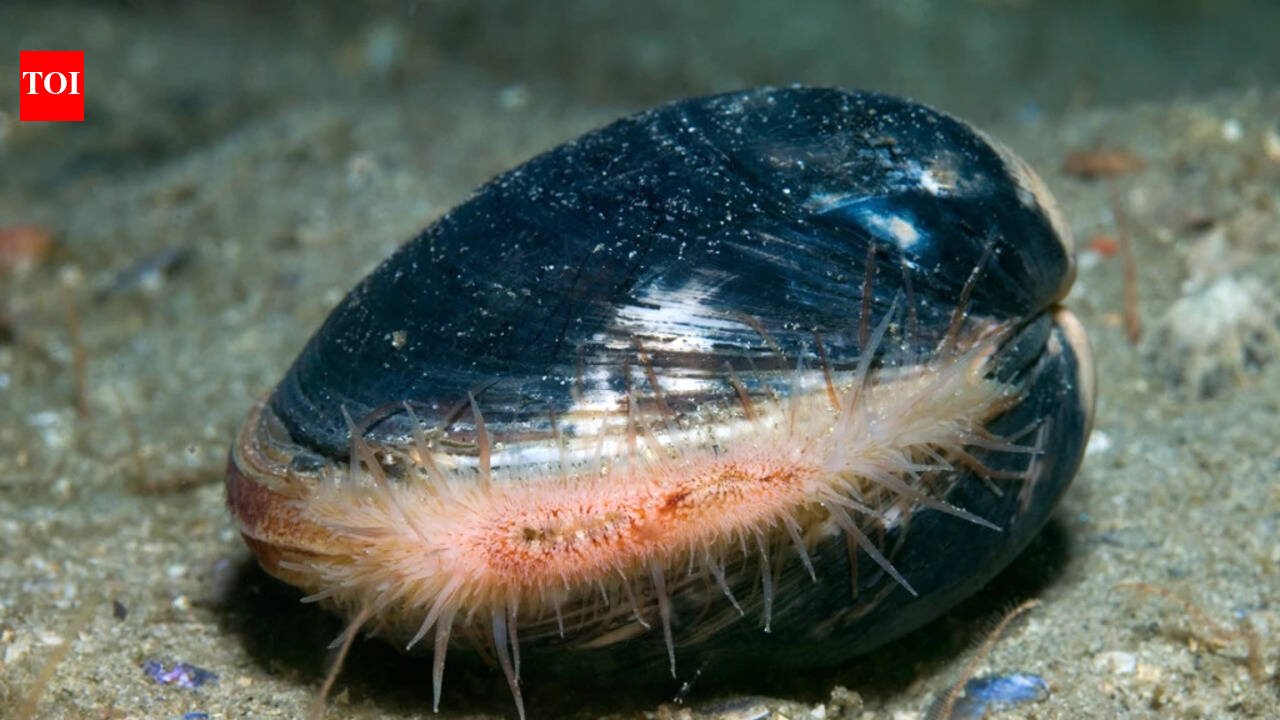
This sea creature survived for over 500 years beneath the Atlantic Ocean (Image Source – Museum Wales)

Cold Atlantic waters do not often produce headlines, yet one clam drawn from the seabed near Iceland shifted scientific records. In 2006, researchers collected a specimen later named Ming. At first, growth rings on its shell suggested an age of about 405 years. That alone would have placed it among the oldest animals ever recorded. A later reassessment in 2013, using more precise counting methods, extended the estimate to 507 years. The species, known as the ocean quahog, now holds the Guinness World Record for the oldest non-colonial animal. Unlike corals, which are colonies of many polyps living together, this clam lived as a single organism. Its lifespan has since shaped research into ageing, climate history and deep-sea survival.

Ming the clam became the oldest recorded animal at 507 years

The clam belonged to the species Arctica islandica, commonly called the ocean quahog. Scientists determine age by counting annual growth bands in the shell, similar in principle to tree rings. When Ming was first examined, researchers miscounted some of the early bands. Improved techniques later corrected the figure to 507 years.The shell itself remains part of the scientific record. It offers a physical timeline of changing ocean conditions. Each layer reflects shifts in temperature and chemistry over centuries. That slow accumulation of detail explains why the species draws attention beyond its age alone.Among animals that live as individuals, the ocean quahog stands at the top. The Greenland shark is often cited as the next longest lived vertebrate, with estimates of around 400 years.

Ocean quahogs live buried deep below the surface

An ocean quahog does not look remarkable at first glance. It is a rounded clam with two hinged shell halves known as valves. When alive, the outer surface is covered by a dark layer called the periostracum, which gives it a black or mahogany appearance.Older specimens can measure more than 13 centimetres across and over 5 centimetres thick. Most people never see them alive. They bury themselves in sediment between 400 and 500 metres underwater in the North Atlantic. Empty shells sometimes wash ashore, but the living animal remains out of sight.Life at that depth moves slowly. Water temperatures stay low. Light barely reaches the seabed. Growth is steady rather than rapid.

Filter feeding supports a lifespan measured in centuries

Ocean quahogs feed by filtering water. They draw seawater in through an inhalant siphon. Tiny hair like structures called cilia create a current that carries water across the gills. There, mucus traps algae and organic particles. Food moves towards the mouth while filtered water exits through a separate opening.The process repeats almost constantly. It is simple and energy efficient. Environmental changes such as shifts in water temperature or currents may interrupt the routine, but otherwise the clam continues quietly.That steady rhythm, repeated over centuries, is part of what allows the ocean quahog to endure. Its record lifespan remains a reminder that longevity in the natural world often depends on patience rather than speed.



Source link

Un-fare deal: Bengalureans restart own vehicles | Bengaluru News


File photo of Namma Metro

BENGALURU: The huge gains of Metro as a friendly and efficient public transport are being undone by frequent fare hikes and last-mile connectivity woes. The perception that commuting by Metro in Bengaluru is becoming increasingly expensive is gaining ground: More commuters are returning to their personal vehicles, worsening traffic congestion across the city.While there is no data-based quantification yet (such as new vehicle sales in the recent past), both motorists and traffic police say they are witnessing a perceptible slowdown in traffic flow. Officers note a visible surge in the number of two-wheelers on city roads, especially during peak hours. Once seen as faster, safer and relatively affordable, Namma Metro is no longer the obvious first choice for many commuters.According to transport department data, Bengaluru city has over 80 lakh registered two-wheelers as of 2026. Traffic police fear that a renewed reliance on private vehicles will translate into longer travel times and mounting congestion in the coming months.Unni Krishna Menon, who earlier commuted by Metro between Jalahalli and Indiranagar, has now switched back to his car. “While the Metro is convenient, the proposed fare hikes and last-mile connectivity gaps would make it less viable for me. Travelling from Jalahalli to Indiranagar costs around Rs 70 one way, and I pay Rs 30 for the first four hours of parking. On reaching Indiranagar, I still need an autorickshaw or a cab to reach my office in Domlur. Each day cost me Rs 220, but if I fill my car with Rs 500 petrol, I can go for 2.5 days, which is cheaper,” Menon explained the commute math to TOI.Echoing this sentiment, college student Jatin Polanki said he has shifted to his bike, well almost. “I used to take the Metro regularly in my first year, travelling from Pattanagere to Majestic for about Rs 30 one way. After the initial hike in fares and early classes, I started using a bike. In Rs 100, I can go to college, roam around, and come back.”Resident welfare groups warn that higher user charges for essential services could prove counterproductive. Christopher Cruz of NERWA said, “Public transport is any city’s lifeline and critical to decongesting the city. Revenue cannot be a consideration. Making the Metro expensive in a city like Bengaluru, already infamous for traffic, is counterproductive.”Some commuters argue that cost alone is not the deciding factor. Techie Naresh Sadasivan said, “Public transport will win 10 out of 10 times if it offers good connectivity and user experience. What pushes people to private transport is unpredictability and poor interconnectivity. Fix that, and people will pay a fair price.”Namma Metro Fare hike that was proposed 0–2 km: Rs 11 (previously Rs 10) 2–4 km: Rs 21 (previously Rs 20) 4–6 km: Rs 32 (previously Rs 30) 6–8 km: Rs 42 (previously Rs 40) 8–10 km: Rs 53 (previously Rs 50) 10–15 km: Rs 63 (previously Rs 60) 15–20 km: Rs 74 (previously Rs 70) 20–25 km: Rs 84 (previously Rs 80) 25–30 km / Above 30 km: Rs 95 (previously Rs 90) Reactions with mugshots:Ramdev Satyanarayana, RWA, Konankunte“The Metro fare hike is concerning for the commuter. Though I have access to both a car and a two-wheeler, I consciously chose Metro because it is safer, faster, and far more convenient. However, fare hikes leave commuters like me with little choice but to reconsider our travel options. Such increases risk discouraging daily commuters who depend on affordable public transport. Keeping the Metro accessible is crucial not just for commuters, but also for reducing traffic congestion and promoting sustainable urban mobility.Shivkumar V, general secretary, Domlur Layout Resident Welfare Association“The repeated fare increases place a direct burden on the common man, another steep revision is unfair. This will inevitably push people back to private vehicles or already overcrowded public buses, worsening road congestion.”Shany Sunny, Joint Secretary, Indiranagar Stage 1 RWA“I know of friends and family members who shifted back to bikes. The primary reason is the increase in fares — for many, travelling by bike is cost-effective. An overcrowded Metro no longer feels like a comfortable escape from the daily commute rush. While it may help avoid vehicular pollution, the experience itself is stressful due to the heavy crowd.”


Source link

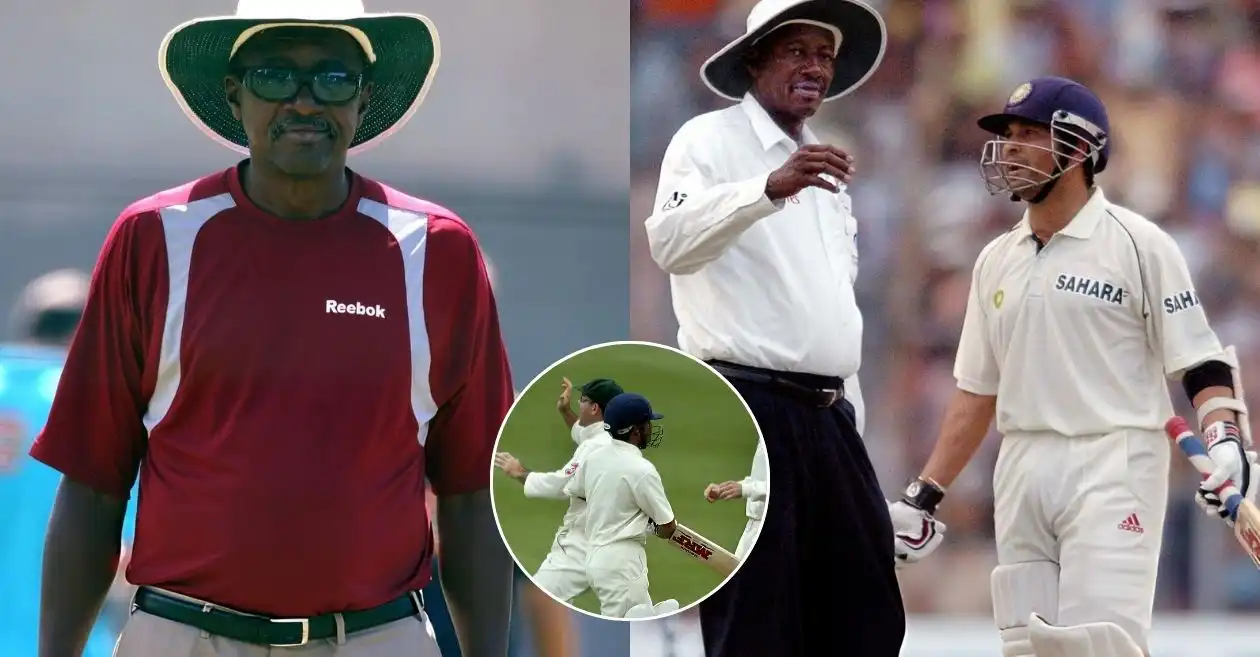
West Indies umpire Steve Bucknor breaks silence on the infamous Sachin Tendulkar dismissal


More than 20 years after one of cricket’s most controversial umpiring decisions, former West Indies official Steve Bucknor has admitted he made a mistake. In a recent interview, the 79-year-old said that giving Sachin Tendulkar out during the 2003–04 Brisbane Test was the wrong decision, a call that had sparked huge debate at the time.

The controversial call from Steve Bucknor to dismiss Sachin Tendulkar

The incident took place during the first Test of the 2003–04 Border-Gavaskar Trophy at the Gabba in Brisbane. Tendulkar was facing Australian fast bowler Jason Gillespie when he decided to leave a delivery that came back sharply and hit him high on the pads.

On a bouncy Brisbane pitch, the ball looked like it was going over the stumps. However, after a loud appeal from the Australian players, umpire Bucknor gave Tendulkar out LBW. The decision surprised everyone, as it seemed the ball was too high to hit the stumps. Tendulkar had to walk back without scoring, dismissed for a three-ball duck.

The decision stunned the commentators and fans watching around the world. Former England captain Tony Greig, who was in the commentary box, called it a dreadful decision on air. Years later, Bucknor himself has agreed that it was indeed the wrong call, admitting that he made a mistake that day.

Also WATCH: Arjun Tendulkar makes headlines after dismissing Yashasvi Jaiswal’s brother in DY Patil T20 Cup 2026

Buckor opens up on his contentious decision

While speaking to the West Indies Cricket Umpires’ Association on February 24, 2026, Bucknor openly talked about the controversial decision that continues to follow him even after so many years. The former umpire admitted that the call to give Sachin Tendulkar out LBW in Brisbane is something he has never been able to completely forget.

Bucknor said that the incident still comes up in conversations almost every day. Fans, journalists, and cricket lovers often remind him of that moment and question why he made that decision. He acknowledged that it was indeed an error and accepted responsibility for it.

“Giving Sachin Tendulkar out leg before wicket… it’s a matter of knowing that it was a mistake. Until this day, every day, people talk about it. Why did I give him out? Was he out and so on? But then in life, mistakes happen. I have accepted that it was a mistake, and life goes on,” said Bucknor.

Also WATCH: Sachin Tendulkar turns emotional for son Arjun at pre-wedding bash with Saaniya Chandhok in Jamnagar


Source link

Strike rate 331.58! Vaibhav Sooryavanshi’s 19-ball 63 sends IPL 2026 warning | Cricket News


Strike rate 331.58! Vaibhav Sooryavanshi's 19-ball 63 sends IPL 2026 warning
Vaibhav Sooryavanshi (ICC Photo)

NEW DELHI: Strike rate 331.58. Seven fours. Five sixes. That is not just a stat line — it is a statement. And it had the unmistakable stamp of Vaibhav Sooryavanshi all over it. The young India star once again lived up to his reputation of taking bowlers apart from the very first ball, hammering a breathtaking 19-ball 63 for DY Patil Blue against Indian Navy in the ongoing DY Patil T20 Cup. With IPL 2026 just over a month away, the timing of this assault could not have been more ominous.

T20 World Cup: Ryan Burl press conference before India vs Zimbabwe

Chasing 220, Vaibhav wasted no time settling in. Sixteen runs came off the first four deliveries he faced. By the end of just 12 balls, he was already on 43 — bowlers scrambling, fielders scattered, and the tempo of the game firmly hijacked.His half-century arrived in the fifth over — a six followed by a four — in just 14 deliveries. He added another towering maximum before walking back for 63 off 19 balls, striking at a staggering 331.58.For those who have followed his rise, this is hardly surprising.Vaibhav first shook the IPL in 2025 when he blasted a 35-ball hundred against Gujarat Titans, becoming the youngest centurion in the league’s history and the fastest Indian to a century in the tournament. That innings announced the arrival of a new-age aggressor — fearless, unapologetic, and relentlessly attacking.His dominance continued in the Under-19 circuit. In 25 Youth ODIs, he piled up 1,412 runs at an average of 56.48 and a remarkable strike rate of 165.72. Four centuries and seven fifties followed, including a stunning 175 off just 80 balls in the U19 World Cup final — an innings that sealed India’s triumph.Even off the field, Vaibhav has done things differently. He made headlines for skipping his Class X board exams to prioritise cricket — a decision that now seems vindicated by the numbers.In 18 T20s so far, he has amassed 701 runs at a strike rate of 204.37, crossing 150 in 12 innings — a testament to his consistency in high-tempo cricket.At the DY Patil T20 Cup, he simply carried that momentum forward.While Kuwar Pathak’s 87 and Nitin Tanwar’s unbeaten 57 powered Indian Navy to 220, the spotlight inevitably swung back to Vaibhav. Yash Dhull (12 off 8), Sarfaraz Khan (27 off 19), Shashank Singh (20 off 12), Anand Bais (35* off 24) and Arjun Tendulkar (55* off 29) all chipped in — but it was Vaibhav’s blitz that set the tone.And if this was meant to be a warm-up ahead of IPL 2026, bowlers across franchises would be watching closely.Also See: IND vs ZIM Live Score


Source link

Maharashtra government owes Mumbai civic body Rs 10,931 crore, says deputy chief minister Eknath Shinde | Mumbai News


Mumbai: The Maharashtra government owes Rs 10,931 crore to the Brihanmumbai Municipal Corporation (BMC), deputy chief minister Eknath Shinde informed the legislative assembly on Thursday.In a written reply, Shinde, who holds the urban development portfolio, said that as of December 31, 2025, various state departments collectively owed this sum to the Mumbai civic body.The municipal commissioner had written to the concerned departments on December 9, 2025, requesting them to clear the outstanding amounts, and the corporation is following up with these departments for the recovery of the dues, Shinde added.The BMC on Wednesday presented a budget of Rs 80,952 crore for the financial year 2026-27.


Source link

New challenge: ‘Make in India’ gets a pushback from US, China


New challenge: ‘Make in India’ gets a pushback from US, China
PM Modi’s push to transform India into a major global manufacturing hub faces a challenge from the US and China. (AI image)

PM Narendra Modi’s push for ‘Make in India’ is facing resistance and criticism from US and China – the two largest world economies. India is currently the world’s fifth largest economy, on its way to become the third largest in the coming years.Prime Minister Narendra Modi’s push to transform India into a major global manufacturing hub faces a challenge from the US and China – both the countries have argued that India’s subsidy policies violate international trade rules.

‘UPI Will Be Used In Israel’: PM Modi After Key Meet With Netanyahu, Pushes India-Israel FTA

US, China Challenge ‘Make in India’ push

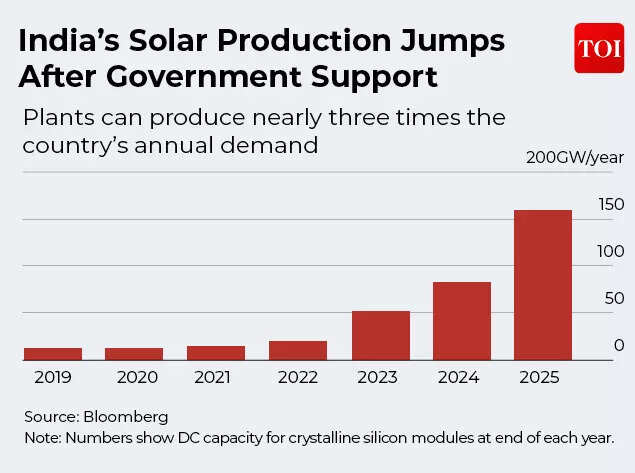
Central to the disputes is India’s production-linked incentive programme, launched by the Modi government in 2020 with the aim of strengthening domestic manufacturing. Covering 14 industries ranging from electronics and pharmaceuticals to solar equipment and medical devices, the scheme involves a total allocation of ₹1.91 trillion ($21 billion).According to a Bloomberg report, trading partners maintain that these incentives give domestic companies an edge over foreign competitors. In the solar industry, firms such as Waaree Energies Ltd., Adani Enterprises Ltd., and Reliance Industries Ltd. have gained from government backing through production-linked incentives as well as a range of non-tariff measures.

India’s Solar Production Jumps After Government Support

India’s Solar Production Jumps After Government Support

On Wednesday, the United States announced preliminary tariffs of 126% on solar equipment imported from India after concluding that the industry had received unfair government support. Analysts believe these steep duties will likely make it difficult for Indian solar manufacturers to compete in the US market.The development followed a decision by the World Trade Organization’s dispute settlement body to form a panel to review China’s complaint that India’s incentive schemes for the automotive and renewable energy sectors favor domestically produced goods over imports, placing Chinese exporters at a disadvantage. The panel was constituted after initial consultations between the two sides – the first stage of the WTO dispute mechanism – did not resolve Beijing’s objections to India’s industry-specific subsidies.Officials told Bloomberg that the government intends to firmly defend its incentive schemes and maintains that they are consistent with WTO regulations.These initiatives play a key role in India’s strategy to increase manufacturing’s contribution to gross domestic product to roughly 25%, but rising objections from major trading partners could present challenges for policymakers. At present, the manufacturing sector accounts for about 17% of the economy.“Without schemes like PLI, revival of manufacturing looks difficult,” said Biswajit Dhar, a New Delhi-based independent trade economist and former professor at Jawaharlal Nehru University. At the same time, India needs to explore alternative ways to support industries, such as investing more in technology and innovation, he added.The criticism comes at a time when India is attempting to stabilize its relationships with both the United States and China. New Delhi and Washington have only recently reached an agreement that brought an end to months of trade tensions, during which India faced some of the steepest US tariffs imposed on Asian economies. At the same time, India has been working to improve ties with Beijing.

US, China Themselves Under Scrutiny

The United States and China have themselves come under examination for their respective subsidy policies. In 2024, Beijing challenged aspects of the US Inflation Reduction Act of 2022, arguing that certain subsidies were tied to the use of domestically produced inputs or unfairly disadvantaged Chinese goods. Separately, European nations have accused China of relying on large-scale subsidies to accelerate the growth of its electric vehicle and solar manufacturing industries.


Source link

New challenge: ‘Make in India’ gets a pushback from US, China


New challenge: ‘Make in India’ gets a pushback from US, China
PM Modi’s push to transform India into a major global manufacturing hub faces a challenge from the US and China. (AI image)

PM Narendra Modi’s push for ‘Make in India’ is facing resistance and criticism from US and China – the two largest world economies. India is currently the world’s fifth largest economy, on its way to become the third largest in the coming years.Prime Minister Narendra Modi’s push to transform India into a major global manufacturing hub faces a challenge from the US and China – both the countries have argued that India’s subsidy policies violate international trade rules.

‘UPI Will Be Used In Israel’: PM Modi After Key Meet With Netanyahu, Pushes India-Israel FTA

US, China Challenge ‘Make in India’ push

Central to the disputes is India’s production-linked incentive programme, launched by the Modi government in 2020 with the aim of strengthening domestic manufacturing. Covering 14 industries ranging from electronics and pharmaceuticals to solar equipment and medical devices, the scheme involves a total allocation of ₹1.91 trillion ($21 billion).According to a Bloomberg report, trading partners maintain that these incentives give domestic companies an edge over foreign competitors. In the solar industry, firms such as Waaree Energies Ltd., Adani Enterprises Ltd., and Reliance Industries Ltd. have gained from government backing through production-linked incentives as well as a range of non-tariff measures.

India’s Solar Production Jumps After Government Support

India’s Solar Production Jumps After Government Support

On Wednesday, the United States announced preliminary tariffs of 126% on solar equipment imported from India after concluding that the industry had received unfair government support. Analysts believe these steep duties will likely make it difficult for Indian solar manufacturers to compete in the US market.The development followed a decision by the World Trade Organization’s dispute settlement body to form a panel to review China’s complaint that India’s incentive schemes for the automotive and renewable energy sectors favor domestically produced goods over imports, placing Chinese exporters at a disadvantage. The panel was constituted after initial consultations between the two sides – the first stage of the WTO dispute mechanism – did not resolve Beijing’s objections to India’s industry-specific subsidies.Officials told Bloomberg that the government intends to firmly defend its incentive schemes and maintains that they are consistent with WTO regulations.These initiatives play a key role in India’s strategy to increase manufacturing’s contribution to gross domestic product to roughly 25%, but rising objections from major trading partners could present challenges for policymakers. At present, the manufacturing sector accounts for about 17% of the economy.“Without schemes like PLI, revival of manufacturing looks difficult,” said Biswajit Dhar, a New Delhi-based independent trade economist and former professor at Jawaharlal Nehru University. At the same time, India needs to explore alternative ways to support industries, such as investing more in technology and innovation, he added.The criticism comes at a time when India is attempting to stabilize its relationships with both the United States and China. New Delhi and Washington have only recently reached an agreement that brought an end to months of trade tensions, during which India faced some of the steepest US tariffs imposed on Asian economies. At the same time, India has been working to improve ties with Beijing.

US, China Themselves Under Scrutiny

The United States and China have themselves come under examination for their respective subsidy policies. In 2024, Beijing challenged aspects of the US Inflation Reduction Act of 2022, arguing that certain subsidies were tied to the use of domestically produced inputs or unfairly disadvantaged Chinese goods. Separately, European nations have accused China of relying on large-scale subsidies to accelerate the growth of its electric vehicle and solar manufacturing industries.


Source link

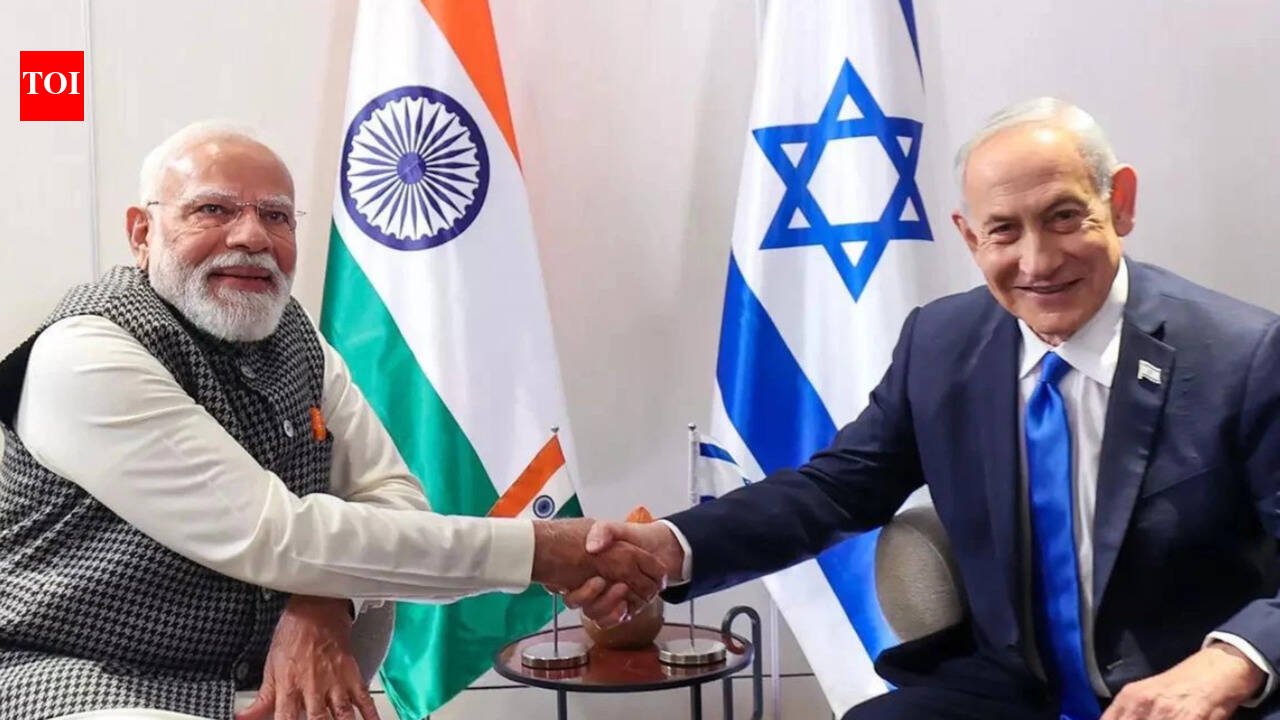
India Israel Free Trade Agreement: India, Israel to resume FTA talks in May as both sides push for deeper trade ties


'UPI Will Be Used In Israel': PM Modi After Key Meet With Netanyahu, Pushes India-Israel FTA

File photo: PM Modi with Israeli PM Benjamin Netanyahu

India and Israel will meet again in May 2026 to continue negotiations on their proposed free trade agreement (FTA), the commerce ministry said on Thursday. The next round of in-person discussions will take place in Israel.

‘UPI Will Be Used In Israel’: PM Modi After Key Meet With Netanyahu, Pushes India-Israel FTA

The announcement came after the two sides wrapped up the first round of four-day talks in New Delhi. Officials described the discussions as wide-ranging, covering several crucial trade areas.“Both sides also agreed to continue inter-sessional engagements virtually. The next round of in-person negotiations will be held in May 2026 in Israel,” the ministry said.

Wide-ranging agenda on trade and investment

The negotiations are covering trade in goods and services, rules of origin, sanitary and phyto-sanitary measures, technical barriers to trade, customs procedures, intellectual property rights and digital trade, among other key chapters, according to news agency PTI.In November last year, the two countries signed the terms of reference (ToR) to formally launch the negotiations. The ToR include provisions for market access for goods through the removal of tariff and non-tariff barriers, investment facilitation, simplified customs procedures, enhanced cooperation in innovation and technology transfer, and easing of norms to boost trade in services.Under an FTA, countries typically reduce or eliminate import duties on most traded goods and relax regulations to encourage services trade and investments.India’s chief negotiator is Ajay Bhadoo, additional secretary in the department of commerce, while Israel’s side is led by Yifat Alon Perel, senior director for trade policy and agreements.

Push from top leadership

The talks have gained political backing at the highest level. During his recent state visit to Israel, Prime Minister Narendra Modi addressed a special plenary of the Knesset in Jerusalem on Wednesday and called for the early conclusion of an ambitious FTA to unlock untapped trade potential between the two nations.Both countries have identified significant opportunities in sectors such as machinery, chemicals, textiles, agriculture, medical devices and advanced technologies.

Trade figures show decline

Despite strong diplomatic ties, recent trade data shows a notable dip. During 2024-25, India’s exports to Israel fell 52 per cent to $2.14 billion, down from $4.52 billion in 2023-24, according to PTI.Imports also declined by 26.2 per cent to $1.48 billion in the last fiscal year.Total bilateral trade stood at $3.62 billion.India is Israel’s second-largest trading partner in Asia. Although merchandise trade is still dominated by diamonds, petroleum products and chemicals, recent years have seen growing exchanges in electronic machinery, high-tech products, communication systems and medical equipment.India’s key exports include pearls and precious stones, automotive diesel, chemicals and mineral products, machinery and electrical equipment, plastics, textiles and apparel, base metals, transport equipment and agricultural products.On the import side, India buys pearls and precious stones, chemical and mineral or fertiliser products, machinery and electrical equipment, petroleum oils, defence equipment and transport machinery.

Talks resume after earlier pause

This is not the first attempt to seal a trade pact. India and Israel had earlier held eight rounds of negotiations, with the last meeting taking place in October 2021. However, the talks stalled thereafter. The current round marks a renewed effort to conclude the agreement.In September last year, the two sides also signed a Bilateral Investment Agreement (BIA). Under this pact, India reduced the local remedies exhaustion period for Israeli investors to three years from five years. Between April 2000 and June 2025, India received $337.77 million in foreign direct investment from Israel.Israel, a high-income and technology-driven economy with a population of under 10 million, is seen as a strategic partner for India in innovation and advanced manufacturing. Officials on both sides believe that a well-structured FTA could significantly strengthen trade and investment flows in the coming years.


Source link

Tech startup CEO on LinkedIn: I am being forced to leave Sweden at a time my product is being celebrated and I do not have … |


Tech startup CEO Abhijith Nag Balasubramanya, founder of Hydro Space Sweden AB, announced that he is stepping down and leaving Sweden. Balasubramanya made the announcement in a long and scathing LinkedIn post citing what he called a ‘Xenophobia and hostile’ immigration system. He said that he was forced to sell his agri-tech startup which is locally celebrated for its microgreens harvest after the Swedish Migration Agency (Migrationsverket) denied his residency, despite the company’s rapid growth and local impact.“This isn’t an exit by choice. It is an eviction by an incompetent and increasingly hostile state apparatus,” he wrote, adding that the agency’s handling of his case was marked by “gross incompetence,” “procedural cowardice,” and “systemic hostility.”Balasubramanya also accused the officers of ignoring his emails, refusing guidance, and shifting reasons for rejection, calling the experience a “masterclass in dysfunction.” His startup Hydro Space Sweden AB gained a lot of traction in Skellefteå, with its produce welcomed by local retailers like ICA Kvantum. Yet, Balasubramanya said the agency’s actions undermined not only his livelihood but Sweden’s food security ambitions.

Read Abhijith Nag Balasubramanya’s complete LinkedIn post here

Sweden: Where Innovation Goes to Die in BureaucracyToday, I am officially stepping down as Founder and CEO of Hydro Space Sweden AB. I have sold the company as I am being forced to leave the country by the end of this month.This isn’t an exit by choice. It is an eviction by an incompetent and increasingly hostile state apparatus. While our first harvest was being celebrated at ICA Kvantum and welcomed by the people of Skellefteå, Migrationsverket was busy dismantling my life. My experience with the Swedish Migration Agency wasn’t just a bureaucratic hurdle; it was a masterclass in systemic dysfunction and unprofessionalism.To potential investors and international founders: Consider this a final warning. The reality of the Swedish “startup-friendly” image is a facade. Behind it lies a Migration Agency characterized by:Gross Incompetence: I was handled by case officers with zero business acumen, incapable of understanding the financial structures or operational realities of a scaling startup.Procedural Cowardice: My officer ignored repeated emails and explicitly refused to provide guidance on required documentation—only to mock my situation when the decision was finalized.A “Moving Goalpost” Strategy: The agency cited one reason for rejection in preliminary correspondence, only to switch to an entirely different, contradictory reason in the final decree. This isn’t oversight; it’s bad faith.Systemic Hostility: The current political climate has empowered a culture within these offices that treats international talent with open contempt rather than as a value-add to the economy.I built a fully operational company within 6 months that provided local jobs and fresh produce that aids towards making the North of Sweden food secure. In return, I was met with a lack of transparency and a total absence of human decency from Migrationsverket.I do not have the energy—or the desire—to spend my capital fighting a legal battle against a system that is fundamentally broken and seemingly xenophobic.Instead, I have decided to take a break and move back to my home country to work on my mental health that was destroyed by the Swedish migration agency. The Swedish migration agency might have destroyed my life and my dream company but my entrepreneurial passion towards sustainability will never fade. I will come back strong and use my expertise at a place it is valued. To the incompetent and arrogant case officer who took pride in destroying my livelihood: You haven’t just failed me; you are failing Sweden’s future to be food secure. To my customers in Skellefteå and the partners who supported us: thank you. I am proud of what we grew, even if I wasn’t allowed to stay to see it flourish. Wishing the new owners great success!


Source link

SA vs WI: Jason Holder and Romario Shepherd rewrite record books vs South Africa in T20 World Cup Super 8 match


The cricketing world descended upon Ahmedabad on Thursday, for a high-stakes T20 World Cup Super 8 encounter between the West Indies and South Africa. In what was the 47th match of the tournament, the Group 1 showdown at the Narendra Modi Stadium delivered a masterclass in resilience. While the Proteas’ pace attack initially threatened to blow the Caribbean side away, a historic lower-order fightback ensured the West Indies posted a competitive total in this crucial night fixture.

Jason Holder and Romario Shepherd script historic stand against South Africa

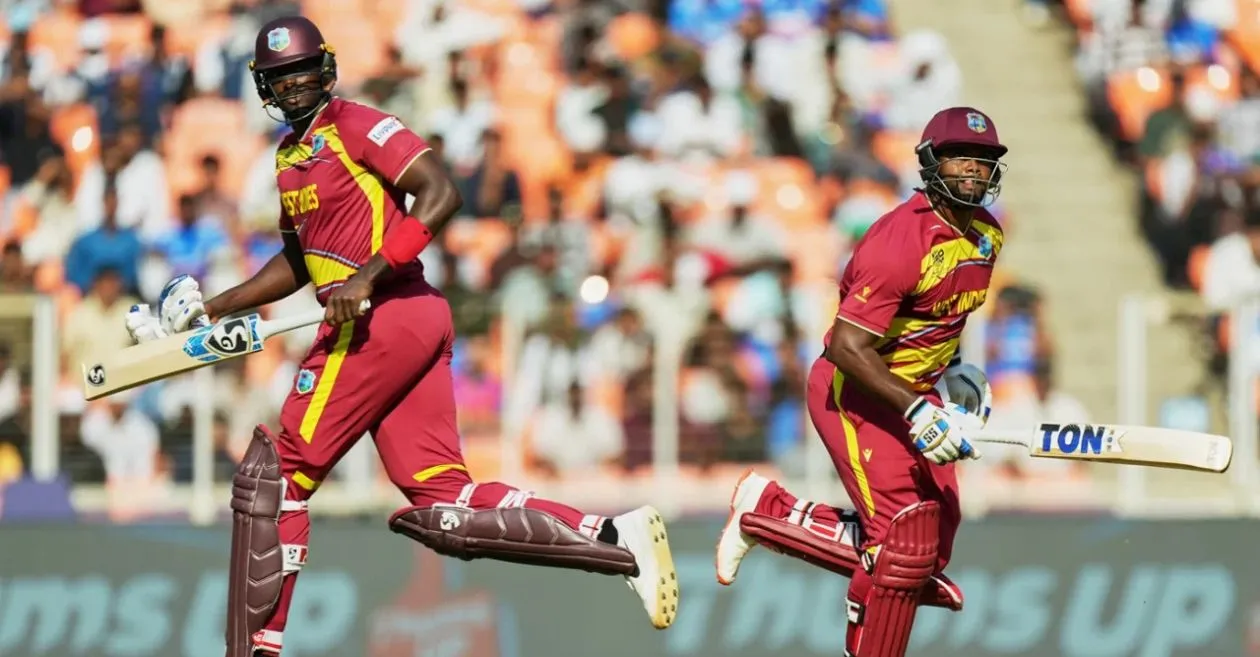
The highlight of the first innings was an extraordinary, record-breaking partnership between Jason Holder and Romario Shepherd. When Matthew Forde fell in the 11th over, the West Indies were reeling at a disastrous 83/7. With the top order back in the dugout, South Africa looked poised to wrap up the innings well under the 120-run mark.

However, Holder and Shepherd had other plans. The duo stitched together a monumental 89-run partnership for the eighth wicket, the highest ever recorded in the history of T20 Internationals. Their clinical assault eclipsed the previous record of 80 runs held by Scotland’s PL Mommsen and SM Sharif against the Netherlands in 2015.

Partners Runs Team Opposition Match Date
JO Holder & R Shepherd 89 West Indies South Africa Feb 26, 2026
PL Mommsen & SM Sharif 80 Scotland Netherlands Jul 11, 2015
R Sharma & Amjad Mahboob 75 Singapore Cambodia May 4, 2023
C Madande & WP Masakadza 75 Zimbabwe Bangladesh May 3, 2024

Shepherd was the aggressor, finishing unbeaten on 52 off 37 balls, decorated with three boundaries and four towering sixes. Holder provided the stability and veteran experience, contributing a vital 49 off 31 balls before being tragically run out on the second-to-last ball of the innings.

Also WATCH: Keshav Maharaj plucks a screamer to remove Shimron Hetmyer during T20 World Cup 2026 Super 8 encounter

Aiden Markram and Lungi Ngidi masterclass propels South Africa to dominant victory over West Indies 

South Africa moved to the brink of a T20 World Cup 2026 semifinal berth on February 26, 2026, after crushing the West Indies by nine wickets in a dominant Super 8 display at the Narendra Modi Stadium. Chasing a target of 177, the Proteas made a mockery of the pursuit by reaching the mark in just 16.1 overs, fueled by a relentless opening assault.

Captain Aiden Markram delivered a definitive ‘Player of the Match’ performance, hammering an unbeaten 82 off just 46 balls, while Quinton de Kock set the tone early with a blistering 47 off 24 deliveries. The foundation for this victory was laid by the South African bowlers, specifically Lungi Ngidi and Kagiso Rabada, who tore through the West Indian top order to leave them reeling at 52/4 by the end of the Powerplay.

Ngidi was the chief destroyer with figures of 3/30, while Rabada’s 2/22 ensured heavyweights like Shai Hope and Shimron Hetmyer were back in the dugout early. Even though a lower-order recovery allowed the West Indies to post a competitive 176/8, the psychological advantage was swiftly extinguished as Markram and Ryan Rickelton (45*) shared an unbeaten 82-run stand to seal the win with 23 balls to spare.

This clinical victory ensures South Africa remains the only unbeaten team in the tournament and provides a massive boost to India’s qualification hopes by severely denting the West Indies’ Net Run Rate. For the Caribbean side, the loss is a significant reality check, leaving them in a high-pressure situation for their final group matches. The Proteas now sit comfortably at the top of Group 1 with four points, essentially securing their spot among the world’s top four teams.
Also WATCH: Maheesh Theekshana redeems earlier lapse with a breathtaking catch to remove Finn Allen during SL vs NZ Super 8 clash


Source link