Breaking News
‘National Declaration 2026’: EC, State poll panels move to align Panchayat, assembly election laws after 27 years | India News

‘National Declaration 2026’: EC, State poll panels move to align Panchayat, assembly election laws after 27 years

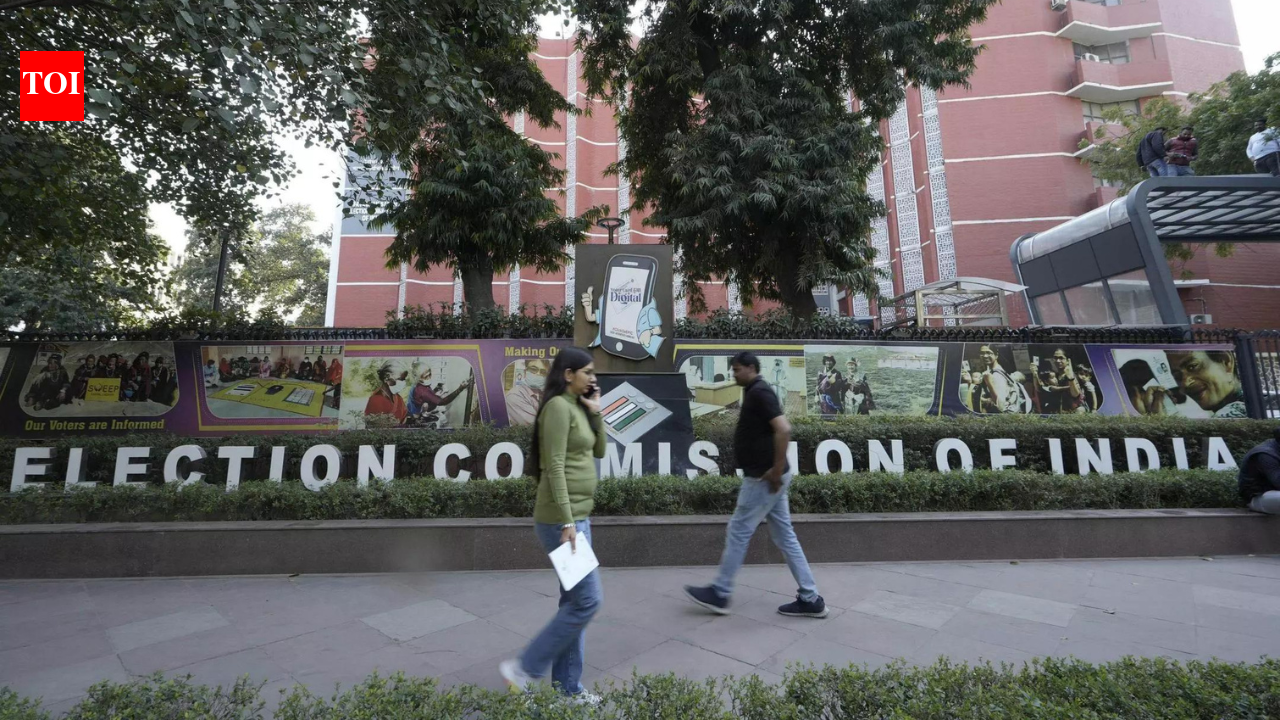
NEW DELHI: The Election Commission (EC), which conducts elections to Lok Sabha and state assemblies, and the state election commissions (SECs), tasked with holding panchayat and municipal polls, on Wednesday reached a broad agreement to work on synergising the laws relating to elections to panchayats and municipal bodies with those relevant to parliamentary and state polls. A ‘national declaration 2026’ adopted at the national roundtable conference of EC and SECs here — held after a gap of 27 years — underlined their concurrence that pure electoral roll and transparent conduct of elections are the bedrock of democracy. EC suggested that acceptable mechanisms and legally viable frameworks be worked out “in Constitutional and national interest” by all SECs, for synergising election processes, including the sharing of ECINET, EVMs, electoral rolls and training resources.All suggestions given by SECs will be studied by a team of legal and technical officers led by senior EC officials, and a state/UT-wise way forward will be submitted to EC in three months “for the best possible decision”.While Lok Sabha and assembly polls are conducted as per provisions of the Representation of the People Act and Conduct of Election Rules, panchayat and municipal elections are held as per laws and rules enacted by the relevant state/UT. Thus, the processes relating to preparation of electoral rolls, conduct of polls and method of voting for parliamentary/assembly polls may differ from those used in panchayat and urban body polls within the same state/UT, even though the pool of state/UT officers engaged is common. “Making the legal frameworks synchronous would ensure logistical ease and pure electoral rolls,” an officer told TOI. Sources said the SECs of BJP-governed states/UTs on Wednesday unanimously backed this proposal. Addressing the SEC’s conference, chief election commissioner Gyanesh Kumar called for institutional coordination between the EC and SECs, within their respective constitutional mandates. He advocated a harmonised approach to electoral roll management, adoption of technology and sharing of best practices to enhance the efficiency of electoral processes.


Source link

‘Push Class 4, 7 scholarship exams to July to avoid clash’ | Mumbai News


Mumbai: The state govt’s decision to conduct Class 4 and 7 scholarship examinations on April 26 has raised concerns among parents and educationists. They pointed out that the date clashes directly with end-of-year semester examinations, result processing and other administrative work in schools. They warned that the overlap will create a dual academic burden for students and add to the workload of teachers, leaving little structured time for focused preparation. “The decision should be reconsidered,” said Madhav Suryavanshi, chief coordinator, Shikshan Vikas Manch, a consortium of educators, urging the state govt to push the scholarship examinations to July. This year, govt has also gone back to the old pattern of holding the exams in Classes 7 and 7, instead of Classes 5 and 8. —Mahiyar Patel


Source link

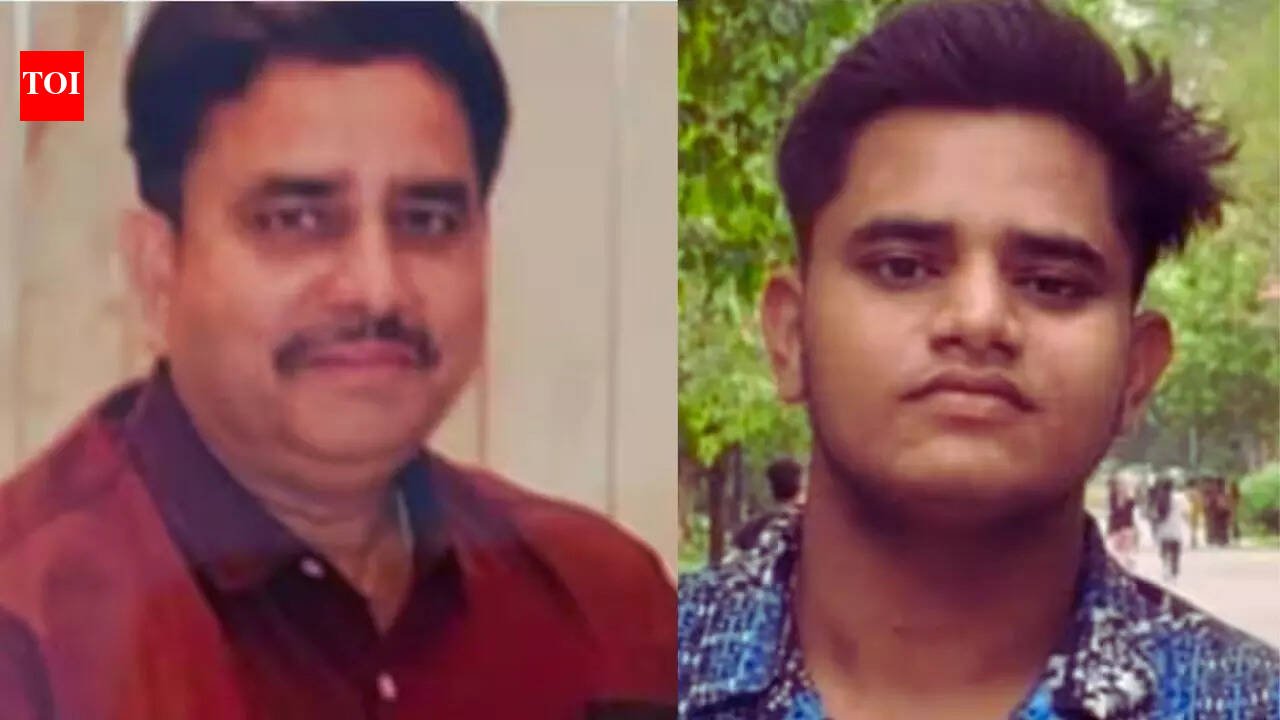
Lucknow Murder News: ‘Pressure to crack NEET’: Lucknow man shoots father dead in front of sister; chops up body and stuffs it into blue drum | Lucknow News


A 19-year-old youth shot his father, a pathology lab owner, dismembered the body, and hid parts in a drum at their residence in Aashiana, police said on Monday.

LUCKNOW: A 19-year-old youth shot his father, a pathology lab owner, dismembered the body and hid parts in a blue drum at their residence in Aashiana, police said on Monday. He later confessed to police that he killed his father after he was pressuring him to crack the National Eligibility Cum Entrance Test (NEET).

Lucknow: Academic Stress Turns Fatal, Expressway Mishaps, Safety Concerns & More

The teen himself had lodged a missing person complaint after his 49-year-old father went missing on Feb 20. However, while he was going to dispose the torso on Monday evening, a police patrol stopped him because of his suspicious activity. After prolonged questioning he confessed.Also read: Liquor shop job, NEET pressure, then bloodshed: Why teen shot bizman father; dark secrets spill outAccording to police, the incident took place around 4:30 am on Feb 20 following a heated argument, allegedly over pressure to crack the NEET. In a fit of rage, Akshat used a licensed rifle to shoot his father. He then dragged the body from the third floor to the ground floor, where he dismembered it. Thereafter, he loaded some parts into his car and drove to Sadrauna, a remote area, where he dumped them, including the head, which is yet to be found. The remaining torso was stuffed into a plastic drum, hidden in the same room. Akshat planned to dispose it later but was accidentally caught by cops patrolling in the area before he could do so. “He was in the process of getting rid of the body part when we intervened,” a police source revealed.“His inconsistent statements raised red flags. Strict interrogation led to his confession,” said DCP Central Zone, Vikrant Vir.On Monday evening, officers raided the home with Akshat in custody and recovered the drum containing the mutilated remains.Forensic experts are examining bloodstains in the car and house, while teams are searching Sadrauna for the missing parts.Police said the accused shot his father in front of his sister and threatened her to remain silent. Forensic teams are examining the scene, and efforts are underway to recover the remaining body parts and establish the full sequence of events.Police said that the boy was also in charge of a liquor store run by his father and was given Rs 17,000 as a monthly salary, but he was not happy.A senior officer privy to the probe revealed that cops recovered a ricochet bullet from the room where the shooting took place. The rifle and the bullet were sent for forensic examination.The victim was originally a resident of Jalaun district. His father is a retired cop. His wife passed away nine years ago. Police say that the boy scored well in class XII and his father wanted him to crack the NEET.The family comprised a son and a daughter, who is a class 11 student. His younger brother is also serving in UP Police and is posted at the secretariat.


Source link

Capillary Technologies to acquire Mastercard’s Session M for $20 mn


Capillary Technologies to acquire Mastercard’s Session M for $20 mn

BENGALURU: Loyalty management platform operator Capillary Technologies India late Tuesday announced the acquisition of Mastercard-owned Session M, in an all-cash $20 million deal.The Bengaluru-headquartered company, which went public in November 2025, will invest into Session M Inc and related entity Session M Czech Republic, through Capillary Pte Ltd, as per a stock exchange disclosure.Founded in 2011 and acquired by NYSE-listed Mastercard in 2019, US-headquartered Session M also operates in the loyalty software-as-a-service (SaaS) space. It reported a turnover of $50.5 million in the calendar year of 2025, compared with $54.5 million in 2024 and $57 million in 2023.The deal is valued at $20 million upfront, with the final payout subject to adjustments at closing for debt, working capital and related factors. Session M has a significant presence in North America, along with Latin America and Asia Pacific markets, as per the disclosure. It serves clients across food and beverages, consumer goods and retail, airlines, and oil and gas.Capillary said the acquisition forms part of its inorganic growth strategy to strengthen its footprint in North American and Latin American loyalty markets while adding to its APAC portfolio. It added that Session M’s complementary business model and long-tenured blue-chip clientele are expected to support post-acquisition efficiencies in the loyalty segment.Post-acquisition, the combined entity is expected to have over $115 million in annual recurring revenue and serve more than 150 customers globally, an investor presentation on the deal said.


Source link

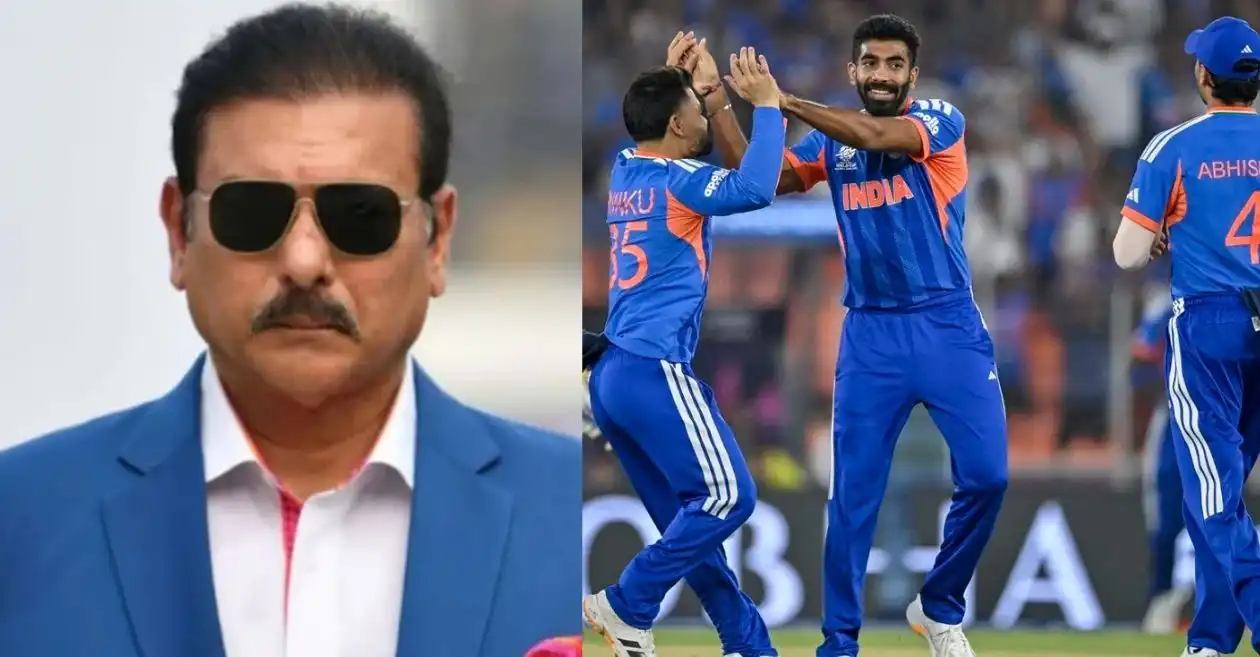
T20 World Cup 2026: Ravi Shastri proposes tactical shake-up in India’s playing XI for Super 8 game against Zimbabwe


With India’s T20 World Cup 2026 campaign hanging in the balance, former head coach Ravi Shastri has suggested a bold tactical rethink for the upcoming Super 8 encounter against Zimbabwe. After the heavy defeat to South Africa, Shastri believes India must strengthen their bowling resources — even if it means sacrificing a specialist batter like Rinku Singh.

India are in a must-win situation, and according to Shastri, flexibility and depth in bowling could make the difference between survival and elimination.

Ravi Shastri backs two-spinner strategy for Zimbabwe clash

Speaking to the ICC, Shastri emphasized the importance of having an additional bowling option in T20 cricket, particularly in high-pressure matches.

“I would say play both. Give yourself that extra option because on a given day, you’re bound to have one bowler who’s going to have an off-day,” Shastri explained.

His remarks were in reference to India’s spin department, particularly after Varun Chakaravarthy struggled to make an impact against South Africa. The mystery spinner was not at his best and ended up conceding crucial runs — something Shastri believes could have been mitigated with stronger bowling cover.

In modern T20 cricket, where margins are razor-thin, one bowler having an off day can tilt the entire contest. Shastri’s solution is simple: build insurance into the playing XI.

Also READ: 2007 reloaded? Here’s how Team India’s T20 World Cup 2026 campaign mirrors a legendary comeback

Shastri hints at Rinku Singh’s exclusion

However, adding an extra bowler comes at a cost. Shastri hinted that Rinku might have to sit out if India choose to strengthen their bowling attack.

“Which means Rinku Singh might have to miss out. But if he has to come in, he has to come in place of a specialist batter,” Shastri stated.

India’s middle order already boasts significant firepower with Hardik Pandya, Shivam Dube, and Washington Sundar likely occupying the No. 5, 6, and 7 slots. With Axar Patel also capable of batting higher up the order, Shastri believes India already possess enough depth in their batting lineup.

“If Axar Patel is playing, he might be batting at 8. You’ve got Hardik Pandya, Shivam Dube, and Washington Sundar at 5, 6, and 7. And Axar can go at 5 as well. Now, if eight batters can’t do the job in T20 cricket, then you know something is wrong,” he added.

His message was clear — India’s issue is not lack of batting power, but insufficient bowling options.

India’s defeat to South Africa exposed cracks in both bowling execution and tactical balance. With a poor Net Run Rate and zero points in the Super 8 stage, the margin for error is virtually non-existent. Zimbabwe could play fearless cricket without scoreboard pressure. That unpredictability makes tactical preparation even more crucial.

Also READ: T20 World Cup 2026: Sahibzada Farhan opens up on chasing Virat Kohli’s iconic world record


Source link

MIDC may take back 134 Thane industrial plots | Mumbai News


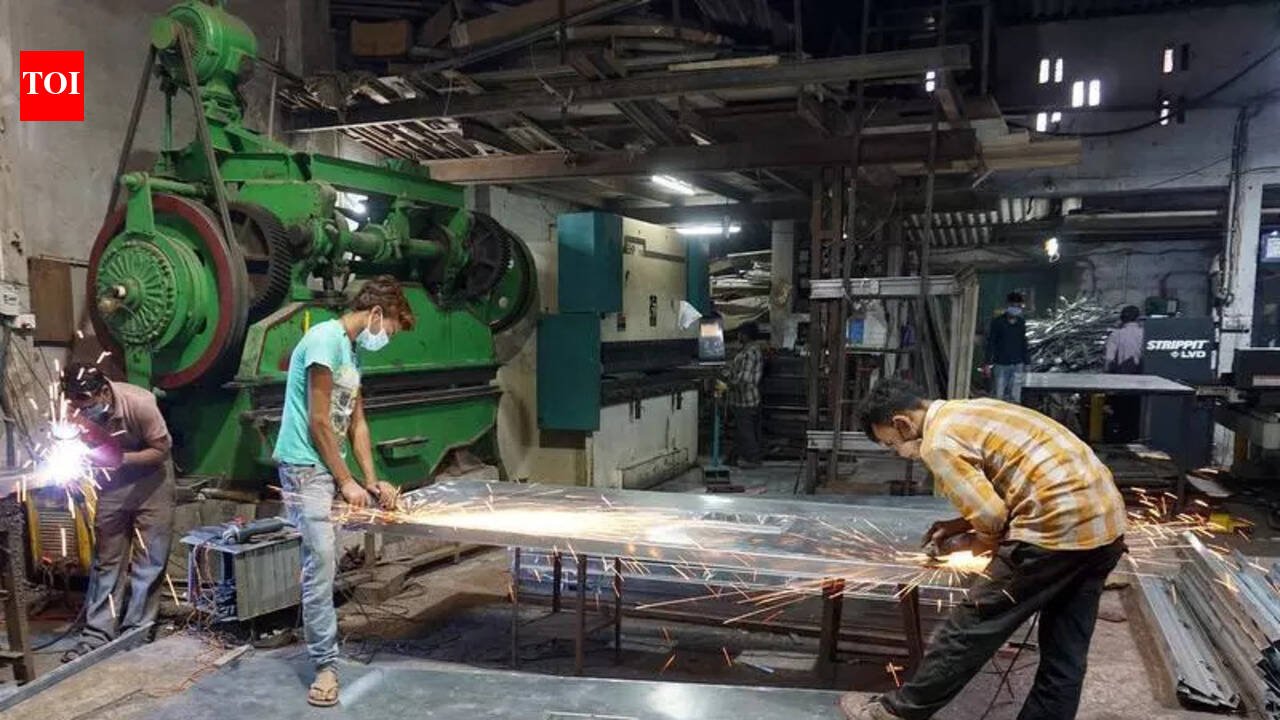
Kalyan: MIDC has begun issuing show-cause notices to allottees of 134 industrial plots found to be non-operational in Ambernath, Kalyan, Bhiwandi and Murbad talukas in Thane-II region. “In cases where responses are unsatisfactory or production is not commenced within the extended timeline, MIDC will proceed to resume possession of the plots as per regulations,” said Nitin Chavan, deputy collector and regional officer, MIDC, Thane-II. He said such plots will be re-allotted. Officials said allottees have to complete construction and begin production within deadlines. —Pradeep Gupta

From Politics to Markets: India’s Big Day of Action & Accidents


Source link

‘Safety is priority’: DGCA issues guidelines after ‘surge’ in aviation incidents; grounds Learjet fleet after Pawar plane crash | India News


'Safety is priority': DGCA issues guidelines after 'surge' in aviation incidents; grounds Learjet fleet after Pawar plane crash

NEW DELHI: The Directorate General of Civil Aviation (DGCA) on Tuesday rolled out a series of stringent measures, citing a “recent surge in aviation incidents.”The enhanced safety directives were announced after a high-level meeting between the aviation regulator and Non-Scheduled Operators (NSOPs). The review came a day after an air ambulance en route to Delhi crashed in Jharkhand, killing all seven people on board, and nearly a month after a fatal crash involving a private aircraft carrying then Maharashtra deputy chief minister Ajit Pawar on January 28.“The regulator emphasized that safety must remain the absolute priority, superseding all commercial operations, charter commitments, or VIP movements. The authority asserted that an organization’s leadership must prioritize safety above all other criteria. To support this, the authority reaffirmed that the Pilot-in-Command’s decision to divert, delay or cancel a flight for safety reasons is final and must be respected by operators without commercial consequences,” the DGCA said in a statement.It announced the following safety measures, to be implemented with immediate effect:

  • NSOP operators will display all critical safety information on their websites
  • DGCA is planning to implement a safety ranking mechanism for all non-scheduled operators
  • Increased random audits of Cockpit Voice Recorder
  • Senior leadership of private operators to be held accountable for non-compliance
  • License suspension of up to five years of pilots violating duty time limitations
  • License suspension and penalties for operators failing to meet compliance standards
  • Increased monitoring of older aircraft and those undergoing ownership change
  • Operators to establish real-time weather update systems

According to the DGCA, these guidelines constitute “phase 1” of a special safety audit of non-scheduled operators. The first phase is expected to be completed in early March, after which a second phase will be undertaken.DGCA on Ajit Pawar plane crashMeanwhile, the DGCA also announced that, following a safety audit of Delhi-based VSR Ventures Private Limited — which operated the Learjet involved in Pawar’s ill-fated flight — it is grounding the Learjet fleet with immediate effect.“The multi-disciplinary audit team observed several non-compliances of approved procedures in the organisation (VSR) in the area of airworthiness, air safety, and flight operations. In view of the non-compliances, it is decided to initiate the corrective measures by immediately grounding Learjet 40/45 aircraft with registration VT-VRA, VT-VRS, VT-VRV, and VT-TRI till continued airworthiness standards are restored,” the body noted in a separate statement.Pawar was flying from Mumbai to his hometown of Baramati, a short journey, when the plane crashed and burst into flames near Baramati airport. His personal security officer, the two pilots, and a flight attendant also lost their lives, leaving no survivors.


Source link

India, GCC sign joint statement to launch free trade agreement negotiations


India, GCC sign joint statement to launch free trade agreement negotiations
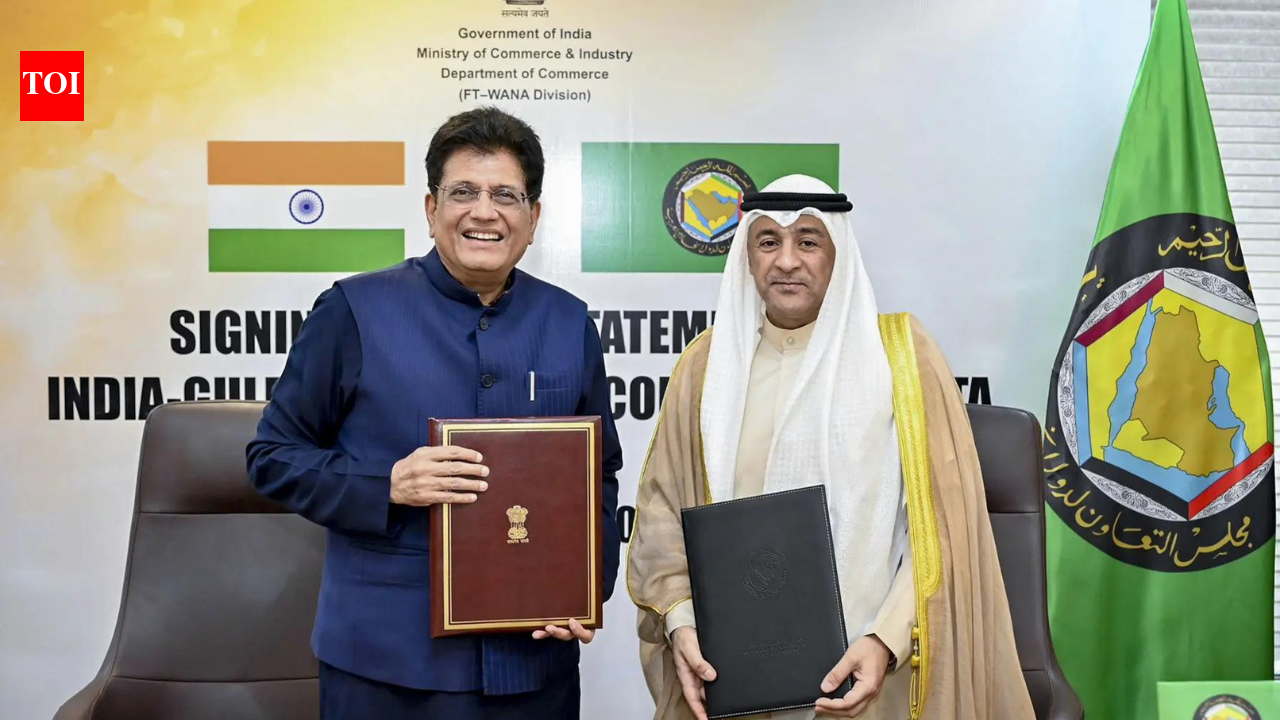
Union Minister of Commerce and Industry, Piyush Goyal and Jasem Mohamed Albudaiwi, Secretary General of the Gulf Cooperation Council (Photo credit- PTI)

India and the Gulf Cooperation Council (GCC) have formally launched negotiations for a comprehensive Free Trade Agreement (FTA) after signing a joint statement aimed at deepening trade and investment ties between the two sides, a government statement said.The joint statement was signed by Union commerce and industry minister Piyush Goyal and GCC secretary general Jasem Mohamed Albudaiwi in New Delhi, marking the formal start of negotiations for a “comprehensive and mutually beneficial agreement”.Goyal said the joint statement, along with the Terms of Reference (ToR) signed earlier, marks “a significant milestone in the relationship between India and GCC countries”. He added that ties rooted in shared history and cultural linkages would receive fresh momentum through a broad-based FTA.He underlined that “amidst global uncertainties, it is most opportune that discussions are starting on negotiating a robust trading arrangement which would harness mutual synergies and complementarities,” according to the cabinet statement.Albudaiwi said the proposed agreement would serve as “an important tool to further strengthen trade and investment ties between India and GCC countries by infusing predictability and certainty for businesses”.The GCC remains India’s largest trading partner bloc, with bilateral trade reaching $178.56 billion in FY 2024-25, including exports worth $56.87 billion and imports of $121.68 billion, accounting for 15.42% of India’s global trade. Trade between the two sides has grown at an average annual rate of 15.3% over the past five years.India’s key exports to GCC countries include engineering goods, rice, textiles, machinery, and gems and jewellery, while imports are dominated by crude oil, LNG, petrochemicals and precious metals such as gold.Collectively, GCC economies represent a market of about 61.5 million people and a combined GDP of $2.3 trillion at current prices, ranking ninth globally. The region is also a major source of foreign investment for India, with cumulative FDI exceeding $31.14 billion as of September 2025.Nearly 10 million Indian nationals live across GCC countries, forming what officials described as a “living bridge” strengthening economic and people-to-people ties, alongside the strong presence of Indian companies across the region.


Source link

Mahim Koliwada Cluster Redevelopment: ‘Mahim Koliwada cluster redevpt by govt agency’ | Mumbai News


Mumbai: The cluster redevelopment of Mahim Koliwada led to an intense discussion in the legislative council on Tuesday. The issue of cluster redevelopment of buildings 1-20 of Machchimar Colony, 1-25 of police housing, and four private buildings was raised by BJP MLC Prasad Lad through a calling attention motion, who demanded that the work be carried out on the lines of BDD chawls.Minister for mining Shambhuraj Desai announced the cluster redevelopment work will be carried out by one of the govt agencies —Mhada, MMRDA, MSRDC or PSU arm Mahatma Phule Renewable Energy and Infrastructure Technology (MahaPreit). BJP MLC Pravin Darekar, who heads govt’s self-redevelopment committee, pointed out that MahaPreit has no money, adding that self-redevelopment should instead be promoted.

From Politics to Markets: India’s Big Day of Action & Accidents

Sena (UBT)’s Anil Parab said Machchimar Colony abuts a slum on one side and a private plot on the other”Under which regulation will cluster redevelopment be carried out?” he asked. Sena (UBT)’s Sachin Ahir asked if the letter of intent issued earlier will be cancelled. Desai said a meeting will be called with deputy CM Eknath Shinde to decide on the issue of redevelopment.


Source link

School teachers will not be assigned booth-level officer duties during exam period | Mumbai News


Mumbai: School teachers will not be assigned booth level officer (BLO) duties during the exam period, said minister of state for school education Pankaj Bhoyar in the Legislative Council on Tuesday.The issue of teachers being used to count the number of stray dogs in Greater Mumbai was raised during Question Hour by NCP MLC Vikram Kale. He said teachers were already overburdened and were being pulled out of classes for non-teaching activities, from filing data on various apps and student numbers to updating electoral rolls, being assigned election duty, and now counting the number of stray dogs, which was adversely affecting students.

From Politics to Markets: India’s Big Day of Action & Accidents

Bhoyar denied that teachers were being asked to count the number of stray dogs. Rather, in schools run by the zilla parishad and municipal authorities, they were asked to check sanitation within school premises and whether the fencing was proper. “Teachers are only required to inform civic authorities so corrective action can be taken,” he said.On the issue of the installation of CCTV cameras in schools, Bhoyar said that of the 65,000 govt-run schools, 18,000 have installed CCTV cameras. Of the 21,000 pvt govt-aided schools, 17,000 installed CCTV cameras, and of 16,407 self-financed schools, only 1,698 installed CCTV cameras. He said schools that did not install CCTV cameras will be directed to do so.


Source link