Breaking News
How Sri Lanka could secure crucial home semi-final advantage | Cricket News


T20 World Cup: How Sri Lanka could secure crucial home semi-final advantage
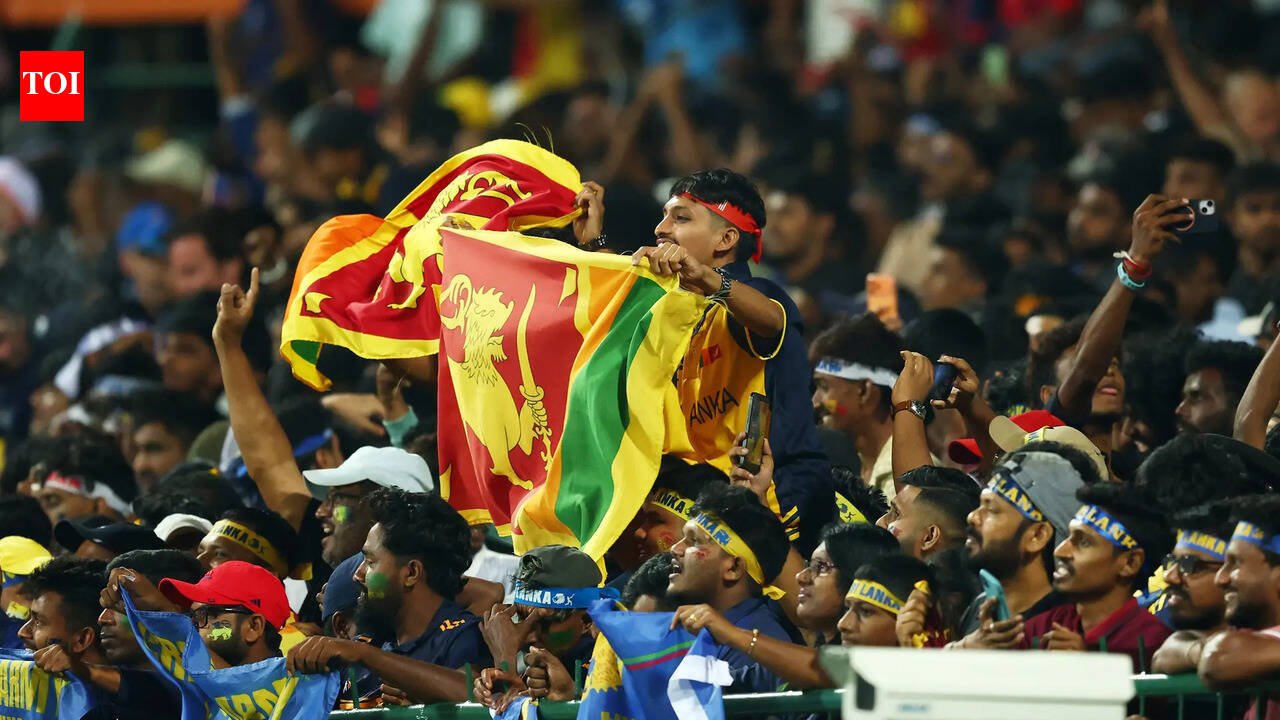
Sri Lanka fans (Getty Images)

NEW DELHI: Sri Lanka could enjoy a massive home advantage in the ongoing ICC T20 World Cup 2026, with Colombo’s R Premadasa Stadium in line to host their semi-final — but only under specific conditions confirmed by the International Cricket Council.Go Beyond The Boundary with our YouTube channel. SUBSCRIBE NOW!According to ESPNCricinfo report, as per tournament logistics shared with stakeholders after the Super Eight stage was finalised, Semi-final 1 remains a “floating” fixture that could be held either in Colombo or Kolkata. The ICC clarified that Pakistan will automatically play their semi-final in Colombo if they qualify. However, if Pakistan fail to reach the last four and Sri Lanka qualify instead, the island nation will host the semi-final in Colombo — provided their opponent is not India.

Inside Pakistan’s intense nets session in Kandy ahead of their Super Eight clash against England

This arrangement creates a potentially decisive edge for Sri Lanka, who could play a knockout match in familiar home conditions with crowd support behind them. However, if Sri Lanka end up facing India in the semi-final, the match will not be held in Colombo, as India’s semi-final has been designated for Mumbai unless it is against Pakistan, in which case it shifts to Colombo.

Poll

Who would benefit more from the current semi-final venue rules in the T20 World Cup 2026?

The report further said that if neither Pakistan nor Sri Lanka reach the semi-finals, Kolkata will host Semi-final 1, while Mumbai will stage Semi-final 2. India, if they qualify, will play in Mumbai regardless of opponent, except in the case of a clash with Pakistan.Also, since Sri Lanka and Pakistan are in the same Super Eight group, they cannot face each other in the semi-finals.


Source link

Pawan Hans helicopter, with 7 onboard, crashes into sea in Andaman; all rescued | India News


Pawan Hans helicopter, with 7 onboard, crashes into sea in Andaman; all rescued

NEW DELHI: A Pawan Hans helicopter carrying seven people, including two pilots, crashed into the sea near Mayabunder in the Andaman and Nicobar Islands on Tuesday morning.The helicopter had taken off from Sri Vijaya Puram around 8.45 am and went down in the sea near Mayabunder at about 9.30 am. “A preliminary inquiry revealed that there was some technical snag, and the pilot made a crash-landing on the sea,” a senior Civil Aviation official said, as quoted by PTI.The passengers on board included three men, one woman, one child, and the two pilots. The rescued passengers—Rajita Devi and her infant Kamal Ch. Das, Sipra Saha, and Nambi Amma—have been admitted to Dr. RP Hospital in Mayabunder, where they are under observation and treatment. The pilots are also safe, local authorities said.“Around 9:30 a.m. today, a Pawan Hans helicopter experienced a short landing incident near Mayabunder in the Andaman and Nicobar Islands. The helicopter had taken off from Port Blair with two crew members and five passengers on board. All have been rescued and are safe. No injuries have been reported,” a Pawan Hans spokesperson said.The spokesperson added, “All necessary safety protocols were followed, and authorities ensured the well-being of the crew and passengers,” as quoted by ANI.Authorities are assessing the situation, and further details regarding the cause and circumstances of the incident are awaited.


Source link

El Mencho Death: ‘US provided key intel’: How Mexican Army took out its most wanted cartel boss ‘El Mencho’


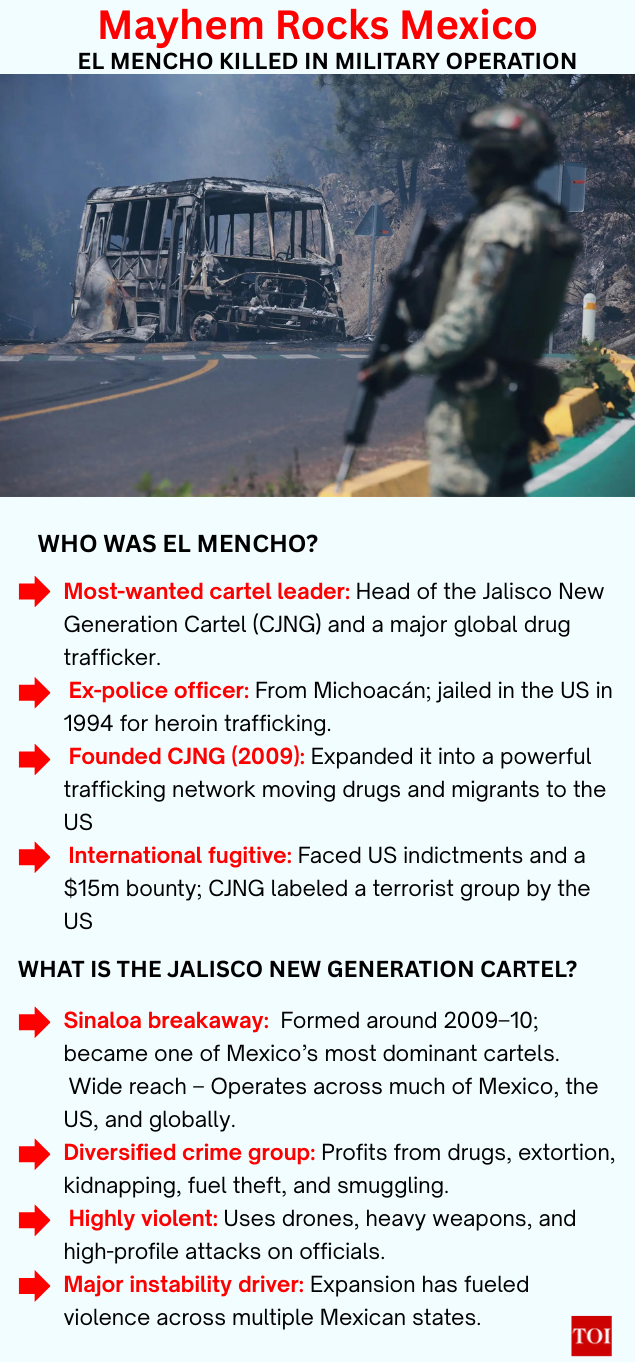
Mexico’s most wanted drug lord, Nemesio Oseguera Cervantes, known as El Mencho, was killed after a high-stakes military operation in the western state of Jalisco that triggered one of the most violent backlashes seen in the country in recent years.Also read: Who was ‘El Mencho’ and what’s next for Mexico’s fastest-growing cartel?The 59-year-old leader of the Jalisco New Generation Cartel (CJNG) was fatally wounded during a raid in the mountain town of Tapalpa and died while being flown to Mexico City for treatment, according to Mexico’s defence ministry.

Mexico Highways Burn, Americans Go Into Hiding After Cartel Kingpin El Mencho Is Killed In Raid

The raid in Tapalpa

The operation was led and carried out by Mexican special forces, supported by aircraft from the Mexican Air Force and the National Guard. Authorities said the mission was “planned and executed” domestically, though it relied on “complementary information” provided by the United States.A US defence official told Reuters that a newly formed US military-led task force had played a role in providing intelligence. In a statement, White House press secretary Karoline Leavitt said the United States had supplied intelligence to assist Mexico in the operation.

Mayhem in Mexico

“The United States provided intelligence support to the Mexican government in order to assist with an operation in Tapalpa, Jalisco, Mexico, in which Nemesio ‘El Mencho’ Oseguera Cervantes… was eliminated,” she said. She described him as a top trafficker of fentanyl into the United States and noted that President Donald Trump had designated the CJNG as a Foreign Terrorist Organization last year.During the clash, troops came under heavy fire. Several cartel members were killed, others wounded, and two suspects were arrested. Authorities seized armoured vehicles and high-powered weapons, including rocket launchers capable of downing aircraft.

How the cartel struck back

El Mencho’s killing unleashed immediate retaliation. Gunmen blocked more than 20 roads across Jalisco with burning vehicles and trucks. The violence spread to neighbouring states including Michoacán, and smoke was seen rising over major urban centres, including Guadalajara.Public transport was suspended in parts of Jalisco, schools were closed and residents were urged to remain indoors. Governor Pablo Lemus described the state as living through “critical hours”.The unrest also affected tourism. Puerto Vallarta, a major coastal resort, saw flights cancelled as US and Canadian airlines suspended services. A flight bound for Guadalajara was diverted mid-air. The US State Department issued a shelter-in-place warning for American citizens in several states, including Jalisco and Tamaulipas.President Claudia Sheinbaum urged calm, writing that in most parts of the country “activities are proceeding normally” and praising the armed forces for their actions.Christopher Landau, US Deputy Secretary of State and former ambassador to Mexico, described El Mencho as “one of the bloodiest and most ruthless drug kingpins” and called his death “a great development for Mexico, the US, Latin America, and the world”.

The fall of a fentanyl kingpin

El Mencho’s rise mirrored the expansion of the CJNG from a breakaway faction around 2009 into one of Mexico’s most powerful and violent criminal organisations. The cartel grew rapidly, battling rivals including the Sinaloa Cartel and establishing a presence across much of Mexico.US authorities had offered a $15 million reward for information leading to his capture. He had been indicted multiple times in US federal courts on charges including drug trafficking, firearms offences and directing a continuing criminal enterprise.The CJNG became notorious for brazen attacks on security forces, including shooting down a military helicopter and launching explosives from drones. It earned billions from trafficking cocaine, methamphetamine and fentanyl, most of which entered the United States through Mexico’s south-western border.


Source link

2007 reloaded? How Team India’s T20 World Cup 2026 campaign mirrors a legendary comeback


After India’s crushing 76-run defeat to South Africa in Ahmedabad, the mood around the defending champions is understandably grim. The Net Run Rate has taken a brutal hit. Critics are sharpening their knives. Social media is in meltdown mode. But before you write off Suryakumar Yadav and his men, take a deep breath. Because something strange is happening. Something that feels like a glitch in the cricketing matrix. History isn’t just repeating itself — it’s practically copy-pasting from the 2007 archives.

🏏 The 2007 blueprint: A story fans have seen before

Back in the inaugural ICC T20 World Cup in South Africa, a young Indian side led by MS Dhoni walked into the tournament with minimal expectations. No seniors. No hype. Just raw belief. Fast forward to 2026. The baton has passed to Suryakumar — a modern-day T20 genius leading a team under immense pressure as defending champions. Different eras. Different captains. But the pattern? Almost identical.

🏏 The eerie parallel: 2007 vs 2026

1️⃣ The Giant-Killer Twist

  • 2007: Zimbabwe stunned Australia in the group stage.
  • 2026: Zimbabwe shocked Australia again — this time in Colombo.

✅ Australia falling early

2️⃣ The Arch-Rival Thriller

  • 2007: India defeated Pakistan in a dramatic group-stage encounter.
  • 2026: India beat Pakistan in another high-voltage clash.

✅ India winning the big emotional game early

3️⃣ The Super 8 Slump

  • 2007: India lost their first Super 8 match (to New Zealand).
  • 2026: India lost their first Super 8 game (to South Africa).

✅ Momentum broken. Critics loud. Qualification suddenly uncertain.

💫 The Super 8 Déjà Vu

In 2007, after that first Super 8 defeat, panic set in. Fans feared elimination. The team’s Net Run Rate wasn’t comforting either. What followed?

  • The iconic Yuvraj Singh six-sixes game against England.
  • A must-win victory over South Africa.
  • A semi-final masterclass against Australia.
  • And the unforgettable final against Pakistan.

From crisis to champions in a matter of weeks. Now look at 2026. India’s NRR stands at a worrying -3.800. They are at the third spot in the Group 1 standings. The equation is simple — and brutal. Win everything from here and with big margins in order to avoid NRR  complications creeping into the equation.

Also READ: 3 reasons behind India’s crushing defeat against South Africa in T20 World Cup 2026 Super 8 clash

🧗 The mountain to climb

For India to lift the trophy on March 8 at the Narendra Modi Stadium, they need perfection:

  • Beat West Indies – A clash against fearless power-hitters who thrive in chaos.
  • Defeat Zimbabwe – Stay alert against a team that already shook Australia.
  • Semi-final – Likely a heavyweight from Group 2
  • Final – The ultimate showdown, back in Ahmedabad.
  • Four matches. Four must-win battles. No margin for error.

Notably, in 2007, losing early wasn’t the end. It was the trigger. The defeat sharpened focus. It simplified the mission. It united a dressing room. Could the same be happening now? Suryakumar’s squad has explosive batting, versatile bowling, and the scars of this defeat. Sometimes, humiliation is the most powerful motivator.

📈 The Verdict: Math vs Destiny

  • The math says qualification is difficult.
  • The NRR says India are in trouble.
  • The critics say the campaign is wobbling.

But history? It seems to be whispering something different. In 2007, the first Super 8 defeat marked the beginning of a miracle run. In 2026, the script looks eerily familiar. Is it merely a coincidence, or is Indian cricket preparing to deliver another sequel for the ages? The matrix has glitched before — and when it did, India lifted the trophy. Will history repeat itself? Only time will tell.

Also READ: Suryakumar Yadav reveals turning point in India’s Super 8 defeat to South Africa in T20 World Cup 2026



Source link

Kerala to be Keralam soon? Union Cabinet likely to approve name change proposal | India News


Kerala to be Keralam soon? Union Cabinet  likely to approve name change proposal

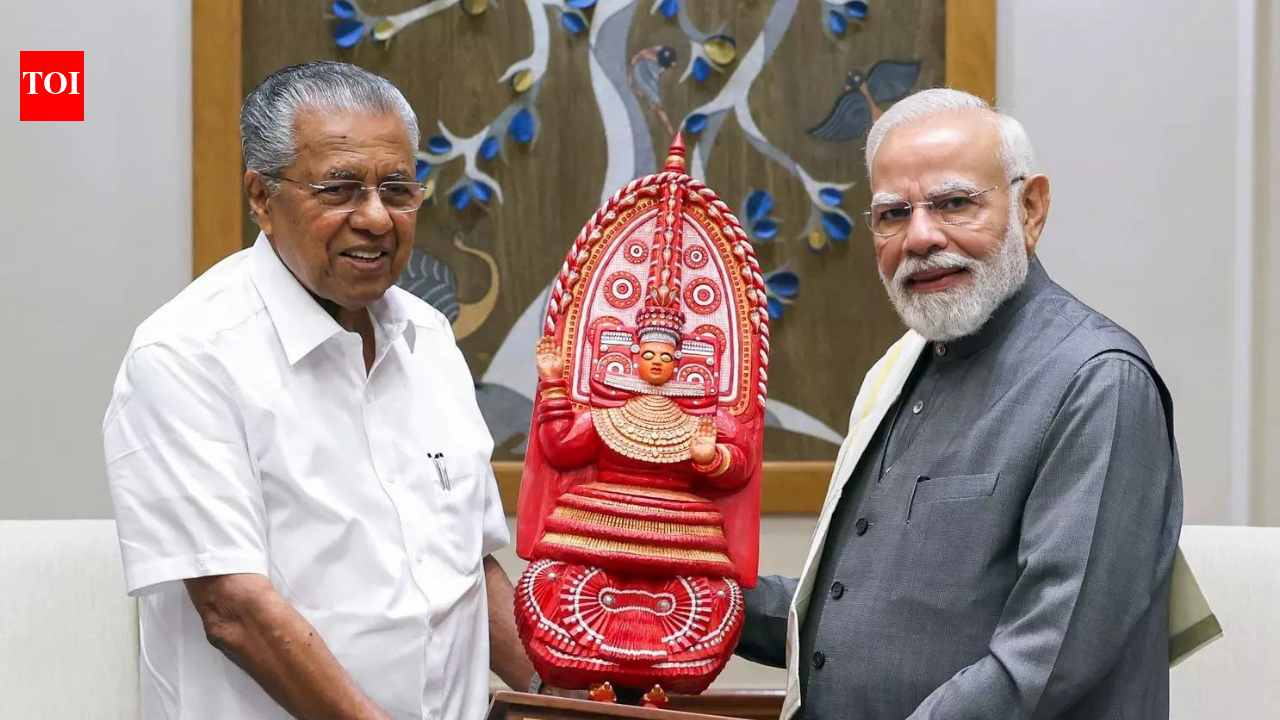
NEW DELHI: Centre is likely to approve the proposal to change the name of Kerala to Keralam in a cabinet meet scheduled on Tuesday.Union ministers have been asked to reach early as there may a photo session before cabinet meet. Interestingly, this will the first cabinet meeting at the Seva Teerth — the new PMO and Cabinet Secretariat.This comes after Kerala state assembly passed a resolution urging the center to bring in a Constitutional amendment to change the State’s name to ‘Keralam’ from ‘Kerala.’ Chief minister Pinarayi Vijayan moved the resolution calling for measures under Article 3 of the Constitution to rename the state to ‘Keralam’ in the First Schedule. He stated that the name ‘Keralam’ is used in Malayalam and emphasised that the demand for a unified Kerala for Malayalam-speaking communities has been prominent since the national freedom struggle.“The name of our state is written as Kerala in the First Schedule of the Constitution. This assembly requests the Centre to take immediate steps to amend it as ‘Keralam’ under Article 3 of the Constitution and have it renamed as ‘Keralam’ in all the languages mentioned in the Eighth Schedule of the Constitution,” Vijayan said.A resolution seeking to officially change the state’s name was unanimously passed on August 2023. The resolution asked the Centre to change the name of the state to ‘Keralam’ in the First Schedule of the Constitution. Similarly the resolution wanted the Centre to change the name as ‘Keralam’ in all languages under the Eighth Schedule.However, upon detailed verification, it was found that such an amendment required only in the First Schedule of the Constitution.


Source link

Gujarat High Court: Unmarried woman denied job on assumption of marriage in future: Gujarat High Court sets aside ‘appointment tainted by favoritism’


Unmarried woman denied job on assumption of marriage in future: Gujarat High Court sets aside ‘appointment tainted by favoritism’
The petitioner approached the High Court seeking quashing of the appointment order and her own appointment based on merit. (AI image)

In a strongly worded decision that upheld the constitutional right to equality in the public employment, the Gujarat High Court ruled that refusal to employ an unmarried woman on the assumption that she might get married and relocate is arbitrary, discriminatory and violative of Article 14 and 16 of the Constitution. The Court set aside the appointment of a less meritorious candidate to the post of Administrator-cum-Cook in the district of Dahod, which it described as a “classic example of outright favouritism”, and directed authorities to take new measures strictly on the basis of merit, subject to verification of the petitioner’s educational qualification.Justice Maulik J. Shelat delivered the judgment on February 16, 2026, while partly allowing a writ petition filed by Sangada Hansaben Malabhai, who had challenged the legality of the appointment made by the Mamlatdar, Taluka Jhalod, in favour of another candidate despite the petitioner securing significantly higher marks.Background:The conflict originated when the Mamlatdar, Jhalod, initiated a recruitment process to fill the position of Administrator-cum-Cook. The respondent No. 3 and petitioner, as well as the other candidates, applied pursuant to the advertisement.The petitioner had secured 68% marks in graduation, whereas respondent No. 3 had secured only 48.94% in her final year examination, and there was uncertainty even regarding her graduate status at the time of application. However, in the merit list prepared by the Mamlatdar, respondent No. 3 was shown as having secured higher marks and was placed above the petitioner.The petitioner argued that despite being more meritorious, she was ranked low on the merit list and was refused appointment, whereas respondent No. 3 was appointed by manipulation and favoritism. She relied on documents obtained under the Right to Information Act, which demonstrated that she had submitted her educational certificates and possessed higher qualifications than the appointed candidate.Aggrieved by what she termed an arbitrary and illegal appointment, the petitioner approached the High Court seeking quashing of the appointment order and her own appointment based on merit.Petitioner’s Submissions:Mr. Japan V. Dave, who represented the petitioner, argued that the merit list was deliberately manipulated to favour respondent No. 3. He submitted that the petitioner had provided all the necessary educational certificates, such as her certificate of graduation and these were later obtained from the Mamlatdar’s office under the Right to Information Act.He also argued that the appointment violated the recruitment criteria and constitutional principles of equality because candidates having low qualification were preferred over more meritorious candidates without jusitification.Reliance was placed on documentary evidence showing that the petitioner possessed the highest marks among the candidates and ought to have been ranked first.State’s Defence:Opposing the petition, Assistant Government Pleader Mr. Siddharth Rami argued that the petitioner had not provided her graduation certificate and other supporting documents at the time of recruitment. In the absence of proof of qualification, the authority had selected another candidate. However, the State submitted that if directed by the Court, the petitioner’s certificate could be verified from the concerned university to determine its authenticity.The State further indicated that the Mamlatdar involved in the appointment had already retired and hence could not provide a detailed explanation of the circumstances.Respondent No. 3’s Submissions:Counsel for respondent No. 3 argued that the petitioner’s degree certificate appeared suspicious and might be fake. It was submitted that attempts to verify the certificate had not been successful, and therefore, the petitioner could not claim appointment based on questionable credentials.It was further argued that respondent No. 3 had been working on the post for more than eight years and her appointment should not be disturbed, especially when doubts existed regarding the petitioner’s qualifications.Court Finds “Classic Example of Favoritism”After examining the entire record, the Court discovered that the recruitment process had gross irregularities and that the appointment of the respondent No. 3 was unsustainable.The Court observed:“This is a classic example of outright favouritism shown by the Mamlatdar… whereby he appointed respondent No. 3 despite her being at serial No. 4 in the merit list.”The Court reviewed the list of merit and especially the comments column, and discovered that the more qualified candidates were dismissed based on some flimsy and unreasonable reasons. One of the most striking reasons recorded was that an unmarried village woman might get married in future and relocate.Condemning such reasoning, the Court held:“There is nothing on record to show and substantiate… that an unmarried village girl cannot be appointed because in near future she might get married and shift to some other village. Such a reason is not only arbitrary, fanciful, frivolous, but violative of Articles 14 and 16 of the Constitution of India.”The Court held that such reasoning clearly reflected arbitrariness and favoritism and manipulation with an aim of favoring a certain candidate. The Court also noted that the Court could have prosecuted the Mamlatdar on the grounds of such unlawful actions but did not because the officer had retired by the time the Court got to know about it.The High Court found that the petitioner’s educational certificates were indeed part of the official record, as they bore the seal of the Mamlatdar’s office and had been obtained under RTI. The Court held that the State’s claim that the petitioner had not submitted her qualification documents was not convincing.At the same time, the Court acknowledged that doubts had been raised regarding the authenticity of the petitioner’s degree certificate and held that its genuineness must be verified before granting appointment.In view of its findings, the Court quashed the appointment order dated April 21, 2018, issued in favour of respondent No. 3. However, instead of directly appointing the petitioner, the Court directed the authorities to first verify her graduation certificate from the concerned university.The Court held:“If such certificate will be found genuine, then there is no cavil that the petitioner, having secured 68% marks and would stand first in the merit list, then requires to be appointed.”The Court further clarified:“In a case where such degree certificate will be found not genuine and fake, the candidate who stood at serial No. 2 in the merit list shall be offered the appointment.”The Court instructed the authorities to accomplish this exercise within one month.The Court also provided wider guidelines to the State Government prior to the conclusion so as to make the recruitment processes transparent and free of fraud. The Court asked the State to put necessary protective measures and systems to stop such malpractices in future so that the purity of employment by the State could be upheld.In view of these findings, the Court quashed the appointment of respondent No. 3 and directed the authorities to verify the petitioner’s degree certificate and proceed with appointment strictly in accordance with merit. The writ petition was partly allowed. The writ petition was therefore granted in part.Before parting with the matter, the Court also directed the State Government to ensure that such malpractices are not repeated in future and to implement a robust mechanism to maintain transparency and purity in public employment.(Vatsal Chandra is a Delhi-based Advocate practicing before the courts of Delhi NCR.)


Source link

‘Peaceful protest our right’: Rahul Gandhi backs Youth Congress after chief’s arrest, says ‘proud of Babbar Sher comrades’ | India News


'Peaceful protest our right': Rahul Gandhi backs Youth Congress after chief's arrest, says 'proud of Babbar Sher comrades'

NEW DELHI: Leader of opposition in Lok Sabha, Rahul Gandhi on Tuesday hailed “Babbar Sher comrades” of the Indian Youth Congress (IYC) detained for protesting during the AI Summit at Bharat Mandapam. He praised the youth wing for fearlessly raising their voices, saying “peaceful protest is our right.His remarks came after Delhi Police arrested IYC National President Uday Bhanu Chib in connection with the protest staged at Bharat Mandapam during the AI Summit on February 20.Sharing a post on X, Rahul Gandhi said, “Peaceful protest is our historic heritage. It is in our blood and is the democratic right of every Indian. I am proud of my Babbar Sher comrades in the Youth Congress, who have fearlessly raised their voices in the nation’s interest against the ‘COMPROMISED PM’.”He alleged that the India-US trade agreement was detrimental to national interests and “will harm our farmers and textile industry.”“The Trade Deal with America has compromised the country’s interests. This agreement will harm our farmers and textile industry and hand over our data to America,” he said.Reaffirming his party’s support for the protesters, he added, “The Congress Party and I stand firmly with our Babbar Sher comrades. Holding a mirror to power with the truth is not a crime, it is patriotism. Do not fear – truth and the Constitution are with us.”Earlier on Friday, around 10 IYC workers were detained for briefly raising slogans against Prime Minister Narendra Modi inside Exhibition Hall No. 5 at Bharat Mandapam during the AI Summit.According to police, the incident occurred around 12.30 pm. Additional Commissioner of Police Devesh Mahla said the protesters had registered online to attend the summit.The group entered the venue wearing or carrying white T-shirts printed with images of Prime Minister Narendra Modi and US President Donald Trump. The T-shirts also bore slogans such as “India-US Trade Deal,” “Epstein Files,” and “PM is compromised.” The protest reportedly led to heated exchanges with some attendees before security personnel intervened.Officials said those detained are being identified and that appropriate legal action is being initiated.Earlier in the day, Delhi Police sought seven days of police custody for Indian Youth Congress chief Uday Bhanu Chib, who was arrested in connection with the protest. Chib was produced before a judicial magistrate at Patiala House Court following his arrest after questioning.Police alleged that there was a “common intention” behind the demonstration and claimed Chib was the mastermind. According to investigators, he “hatched the conspiracy” and arranged logistics and funding for the protest.The protest case has been transferred to the Delhi Police Crime Branch, who will conduct further investigations into the matter, police sources told ANI.Responding to the arrest, Rahul Gandhi said it proves “dictatorial tendencies and cowardice.”“The arrest of Youth Congress President Uday Bhanu Chib and other IYC comrades for bringing this truth before the nation is proof of dictatorial tendencies and cowardice,” he said in his post on X.The “shirtless” protest triggered a political war of words, with BJP leaders and even rivals accusing the Congress and of orchestrating the disruption and “bring shame to the country on the global platform.”Also read: ‘Provided logistics’ for ‘shirtless’ protest: Why Delhi Police arrested youth Congress chief Uday Bhanu


Source link

Toxic Gases In Mumbai High-Rises: Elevated levels of toxic gases found even at the 26th floor in Mumbai’s Wadala residential towers | Mumbai News


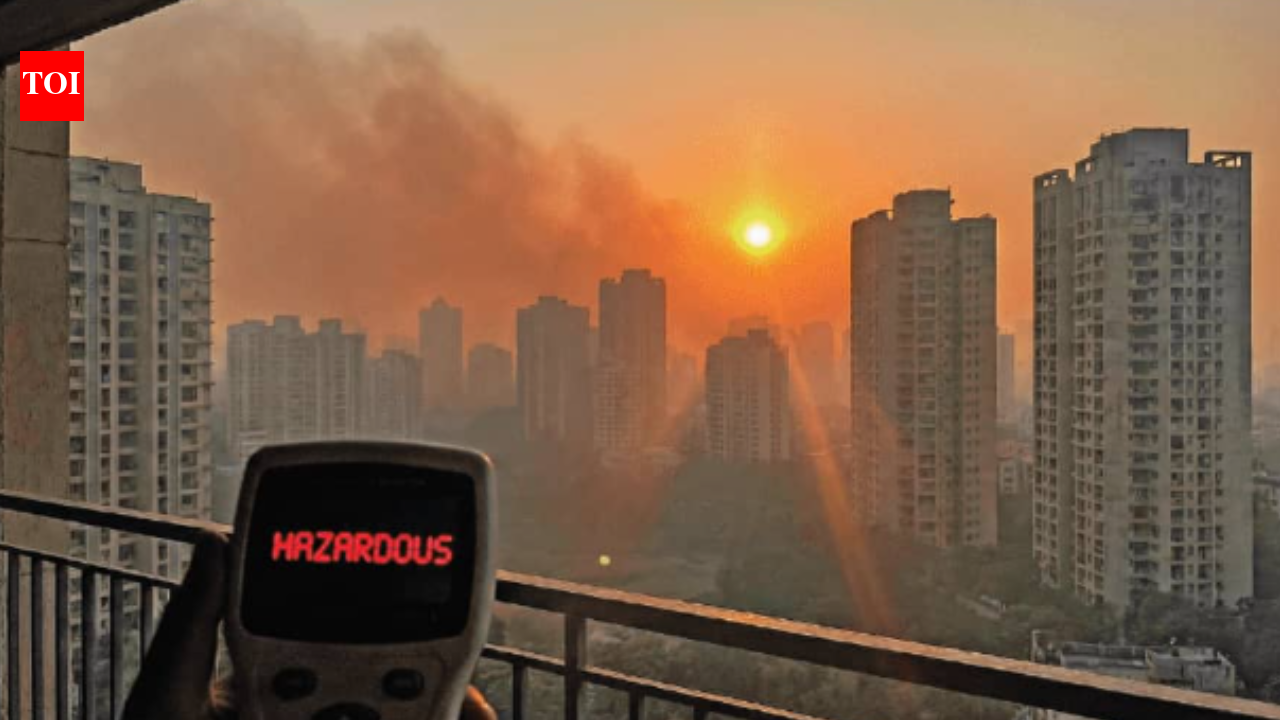
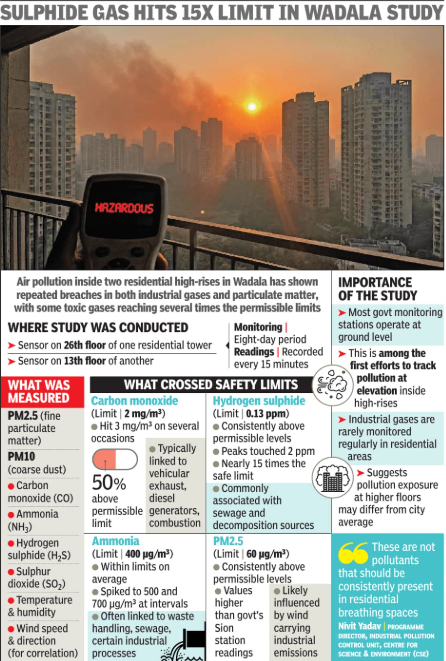
MUMBAI: Carbon monoxide levels touching 3 mg per cubic metre — 50% higher than the permissible limit — ammonia spikes reaching 700 micrograms per cubic metre against a standard of 400, and hydrogen sulphide concentrations climbing to nearly 2 ppm, nearly 15 times the allowed limit, were recorded at two residential high-rises in Wadala during a citizen-led air quality study that has raised fresh concerns over industrial gas exposure in residential neighbourhoods.The study was conducted by the Mumbai Ecological Research and Analysis Group (MERAG) and is among the first attempts to systematically monitor air quality at elevation inside residential towers rather than at ground level, where most government stations operate. Sensors were installed on the 26th floor of one residential tower and the 13th floor of another to examine what residents are breathing at height.Readings were collected over an eight-day monitoring period, with data logged every 15 minutes to capture fluctuations across the day. The sensors tracked fine particulate matter (PM2.5), coarse particles (PM10), carbon monoxide, ammonia, hydrogen sulphide, sulphur dioxide, along with temperature and humidity.

-

The data is being examined alongside wind speed and wind direction measurements to understand how emissions may be travelling into the residential complexes.Carbon monoxide is typically associated with combustion sources such as vehicular exhaust, diesel generators and fuel burning. “Most monitoring frameworks concentrate only on PM2.5 and PM10. Nobody has regularly examined industrial gases and emissions in residential areas,” a source involved in the study said, adding that identifying the precise causes will form the next phase of the research.Ammonia levels, while within limits on average, showed periodic spikes. Hydrogen sulphide, found to be consistently above the prescribed threshold, is often associated with sewage systems, decomposition and certain industrial emissions. Particulate pollution was also flagged. PM2.5 readings were consistently above the limit while PM10 levels were largely above the permissible threshold.


Source link

IND vs ZIM: ‘Fresh’ Chepauk pitch should bring welcome relief for India | Cricket News


IND vs ZIM: ‘Fresh’ Chepauk pitch should bring welcome relief for India
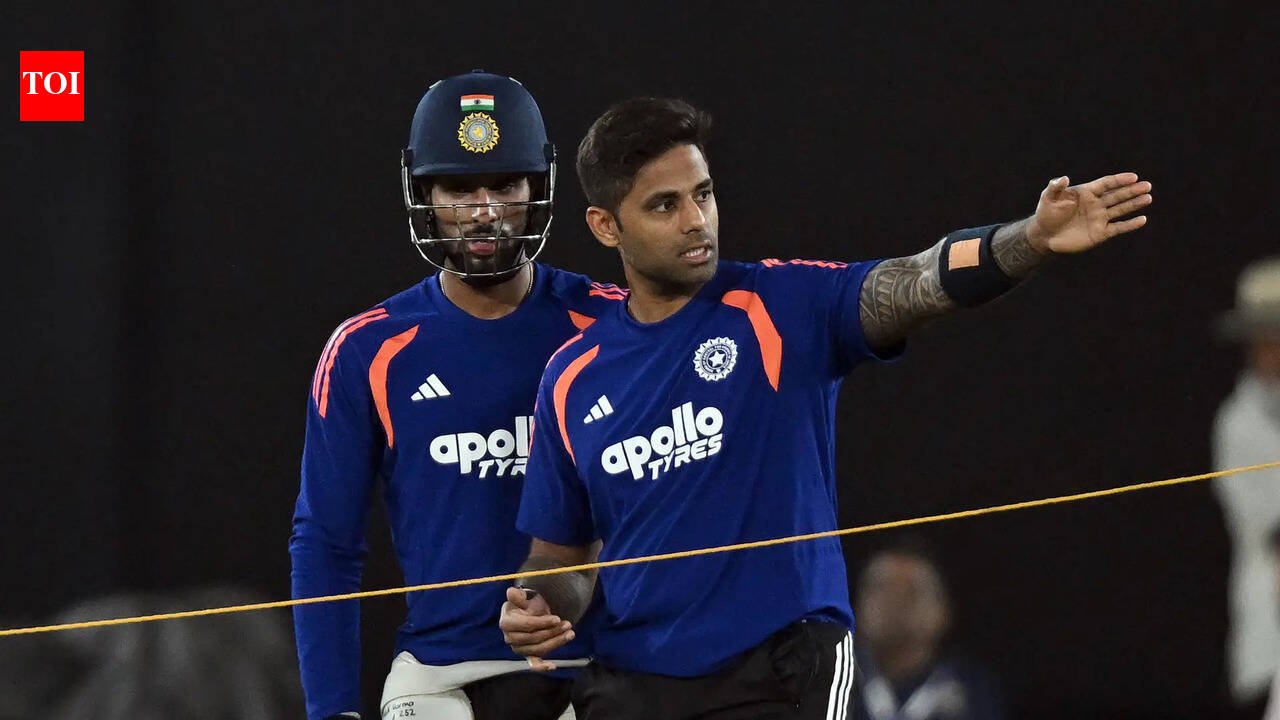
Suryakumar Yadav (R) with Tilak Varma during a practice session. (Getty Images)

CHENNAI: Normally India don’t care much about the pitch when they are playing T20 cricket at home. But now, following the hammering against South Africa and the recent struggles of the Indian batters right through the T20 World Cup, the 22 yards have become a talking point.Go Beyond The Boundary with our YouTube channel. SUBSCRIBE NOW!As the Indian team reached Chennai on Monday afternoon for the must-win game against Zimbabwe on Thursday, the management appeared to have done their homework about the pitch that is going to be on offer.

Gautam Gambhir’s animated chat with Abhishek Sharma goes viral; Team India lands in Chennai

India’s big-hitters, who love the ball coming on to the bat, have had a rough time in the tournament and Zimbabwe have a lot of ‘pace-off ’ bowlers. The Chepauk pitch, luckily, may come as a bit of a relief for Suryakumar Yadav’s men. Traditionally, it is a slow pitch which would have helped the Zimbabwe bowlers like Sikander Raza and Blessing Muzarabani, but a few things appear to have changed this time around.The ground was dug up before the World Cup and one of the tracks was completely relaid. But the Tamil Nadu Cricket Association authorities ensured that no cricket was played at the MA Chidambaram Stadium (MAC) for more than five months, which kept the pitches fresh.

Poll

Given the recent high scores at Chepauk, what should India do if they win the toss against Zimbabwe?

Hence, the ball is coming on to the bat way better on both the red and black soil pitches than it has been over the past few years. In the first match — a day-game between Afghanistan and New Zealand — Afghan coach Jonathan Trott decided to keep left-arm wrist spinner and Chennai Super Kings star Noor Ahmad out of the XI. The Afghans couldn’t defend 182 with New Zealand getting the runs in 17.5 overs, quite a stark departure from earlier day-games at the venue, where an asking rate of eight used to be par.Now let’s look at some of the other scores at the Chepauk in this World Cup. NZ chased down 175 in 15.2 overs against UAE while Canada’s Yuvraj Samra hit a fluent 65-ball 110 against the Black Caps. The ball didn’t turn or stop much and NZ chased down the target of 176 in 15.1 overs.While captain Mitchell Santner said it was a “pretty flat wicket in the end”, New Zealand pacer Lockie Ferguson said “the pitch was exceptional”. “I’ve played a bit in Chennai, it can turn… (pacers) Matt Henry and Jacob Duffy got quite a bit out of the pitch,” Ferguson said.In the two night-games that have been played so far here, the teams batting first have won quite easily, defending 196 and 200. The dew factor, which has often played a big role in games at the venue, hasn’t played havoc this time around. In such a situation, captain ‘SKY’ may well look to bat first.For Zimbabwe a 180-game (batting or fielding first) would be ideal. But the conditions at MAC suggest it should not be enough.


Source link

Bengal SIR: Supreme Court allows Calcutta HC to deploy judicial officers from Jharkhand, Odisha; asks EC to bear expenses | India News


Bengal SIR: Supreme Court allows Calcutta HC to deploy judicial officers from Jharkhand, Odisha; asks EC to bear expenses

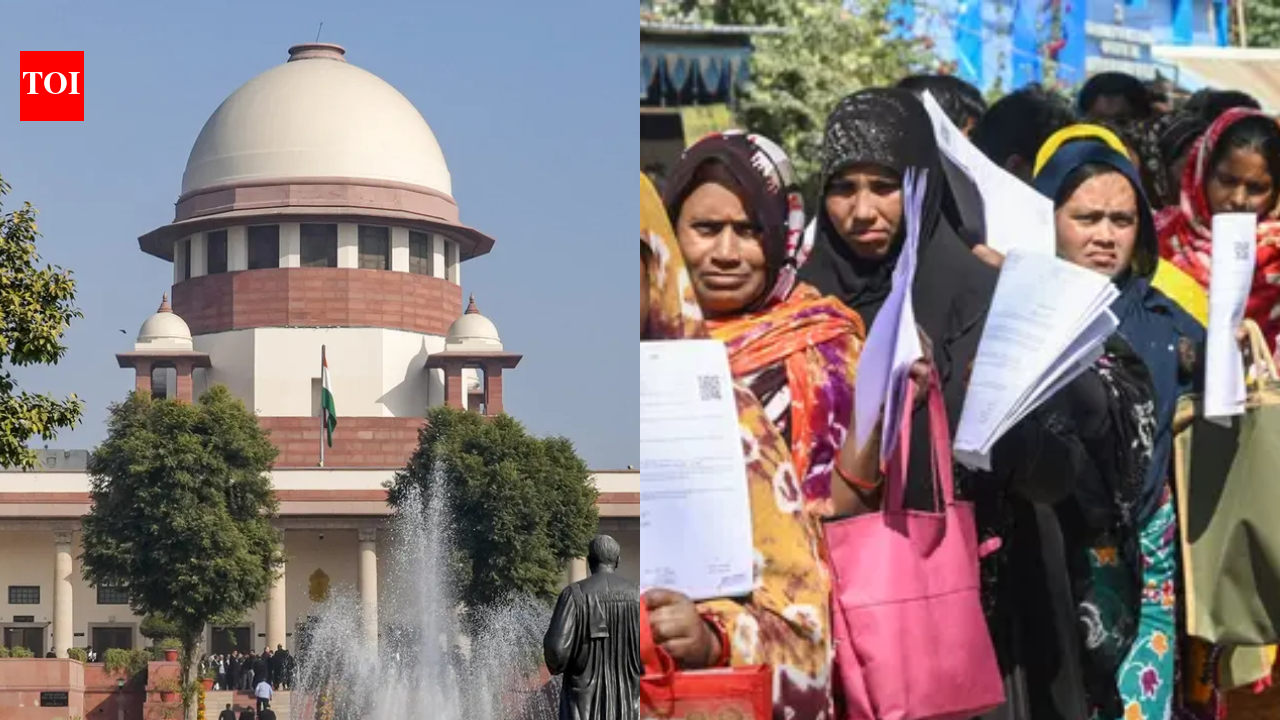
NEW DELHI: The Supreme Court of India has permitted the Calcutta High Court to deploy additional judicial officers, including from Jharkhand and Odisha, to expedite scrutiny of voter inclusion claims in West Bengal’s Special Intensive Revision (SIR) of electoral rolls.The court took note of the Calcutta HC Chief Justice’s assessment that despite assigning 294 serving and retired district and additional district judges to examine documents of voters placed under logical discrepancy and unmapped categories, it would take 80 days to scrutinise about 50 lakh cases. Accepting this, the bench allowed engagement of civil judges with three years’ experience and directed that expenses for requisitioned judicial officers be borne by the Election Commission of India (EC), according to TOI sources.The bench also allowed the EC to publish the final voter list containing verified names on February 28 and said the remaining names could be issued through supplementary lists. Using its powers under Article 142, it declared that these supplementary lists would be deemed to be part of the final voter list published on that date.In an unprecedented decision, the Supreme Court last week used its “extraordinary powers” to deploy judicial officers in West Bengal to decide claims for inclusion in voter list and speed up the completion of Special Intensive Revision of electoral rolls. TThe court emphasised that CM Mamata Banerjee should be aware of the consequences if the revision exercise is not concluded. The court explained that the unprecedented judicial intervention under Article 142 of the Constitution was necessitated by the “extraordinary situation” that has arisen in Bengal due to trust deficit and non-cooperation between EC and the Bengal govt.The bench also did not agree with the contention of the state govt that electoral registration officers (EROs), and not the judicial officers, should have the final say in deciding claims of inclusion in the voter list.


Source link