Breaking News
Those hit by ‘kissing disease’ are 3 times more likely to develop multiple sclerosis | India News


Those hit by 'kissing disease' are 3 times more likely to develop multiple sclerosis

NEW DELHI: Next time you wake up with crushing fatigue, a high fever, a raw throat and swollen glands, take note. The trigger behind it could be something as simple as a kiss.Infectious mononucleosis, or the ‘kissing disease’, is caused by the Epstein-Barr Virus (EBV) – one of the most common human infections worldwide. It spreads through saliva, not just kissing, but every day close contact.A US study using records from the Mayo Clinic-led Rochester Epidemiology Project, tracking nearly 19,000 people, has found those who develop mono are over three times more likely to develop multiple sclerosis (MS) later. The risk remains small – 0.17% among those with mono versus 0.07% without – but the disease also appeared earlier in those infected.MS is a chronic condition in which the immune system attacks the protective covering of nerves, disrupting signals between the brain and body. It can begin with fatigue, vision problems, numbness and imbalance and may worsen over time.Experts said the link is strong but not causal. Dr Sudhir Kumar, neurologist at Apollo Hospital, Hyderabad, said the apparent rise in younger MS cases likely reflects better awareness and earlier MRI-based diagnosis, not a true shift in onset. While EBV is closely linked to MS, it infects most people, whereas the disease remains uncommon. “EBV may act as a trigger in genetically susceptible individuals, but it is not sufficient on its own to cause MS,” he said, adding it is still unclear if earlier infection leads to earlier disease in practice.He cautioned against routine long-term monitoring after mono, noting the absolute risk is low and over-testing may cause unnecessary anxiety. Instead, awareness is key. Early symptoms – such as blurred or painful vision, tingling or numbness, unexplained fatigue, brief weakness, imbalance, or a shock-like sensation down the spine – are often missed as they come and go, but any neurological symptom lasting over 24 hours should be evaluated.Prof Manjari Tripathi, head of neurology at AIIMS, Delhi, said EBV is widespread in India, especially among children and adolescents. She said, “MS is a complex disease with multiple risk factors – genetic, environmental and immune. EBV may act as a trigger, but it is not the sole cause, and most people with the infection will never develop MS.”Scientists say the findings strengthen the case for preventive strategies, including a potential EBV vaccine.


Source link

Shashi Tharoor’s convoy blocked in Kerala’s Wandoor, five men assault his gunman, driver | India News


Congress MP Shashi Tharoor's Convoy Blocked In Kerala, Security Staff Assaulted During Poll Campaign

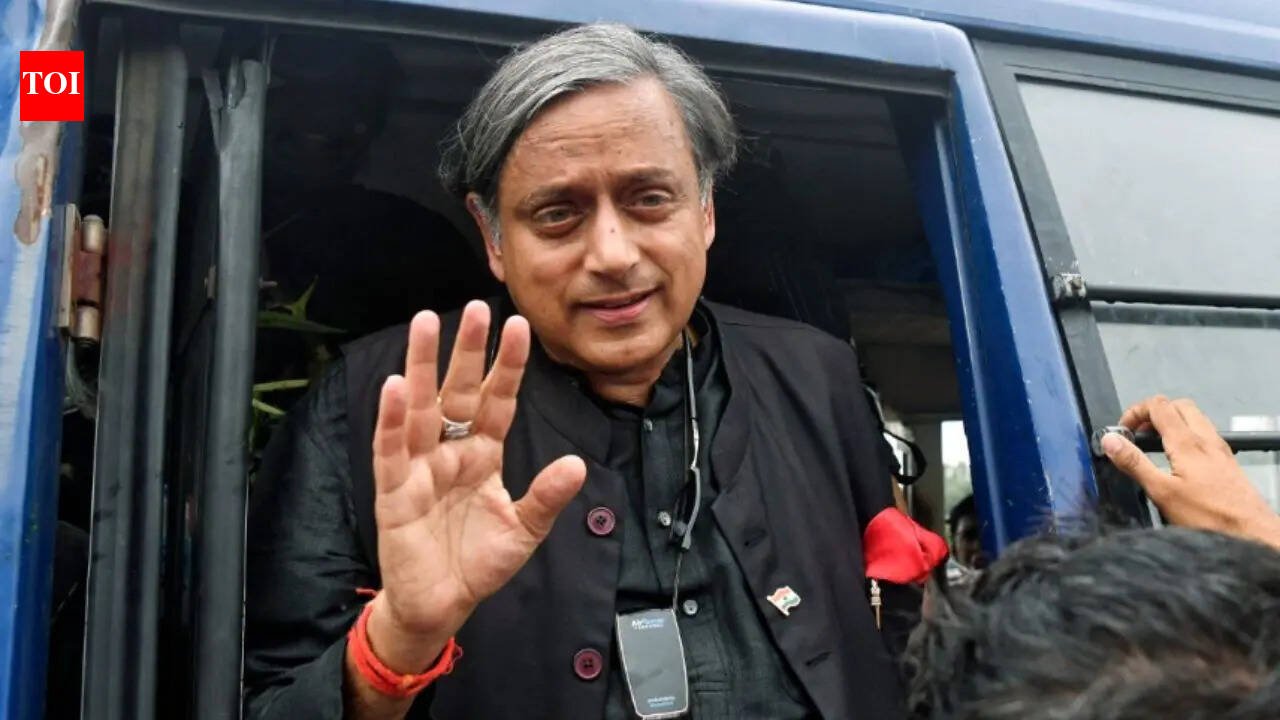
Tharoor (ANI file photo)

NEW DELHI: Congress MP Shashi Tharoor’s convoy was reportedly attacked in Kerala’s Wandoor on Friday. One of the five accused has been arrested.The five gang members attacked Tharoor’s gunman and driver at Chellithode, near Thiruvali in Wandoor, at around 7.30 pm.The incident took place at a roadblock on the Chelithode bridge when two vehicles blocked Tharoor’s vehicle. When the gunman attempted to clear the obstruction, he and the driver were allegedly attacked.

Watch

Congress MP Shashi Tharoor’s Convoy Blocked In Kerala, Security Staff Assaulted During Poll Campaign

According to the police, the road was narrow, and Tharoor’s gunman had only asked the vehicle ahead to move faster to ensure smooth passage for the MP’s convoy.Police said that while one of the accused was taken into custody, the remaining have been identified and will soon be apprehended.The Congress MP was on his way to attend an election campaign of Congress leader A P Anilkumar.Tharoor said on his social media on Saturday that he and his security guard were fine. “Truly touched by all the messages and calls expressing concern about the untoward incident last night when my security guard was attacked. He is well and I was untouched. Thank you to all friends and well-wishers. We carried on undaunted yesterday and concluded two more events as planned. And our ongoing programme remains unaffected,” the Congress MP said.

Watch

Kerala Elections 2026: Who Holds The Master Key? Decoding Mood Of Communities


Source link

India set to get 3rd nuclear-powered ballistic missile submarine INS Aridhaman; Rajnath drops hint


NEW DELHI: India is set to commission its third indigenous nuclear-powered ballistic missile submarine, INS Aridhaman, into the Indian Navy on Friday, news agency ANI reported, marking a major boost to the country’s strategic deterrence capabilities.Hinting at the induction, defence minister Rajnath Singh posted on X in Hindi: “It’s not a word, it’s power, ‘Aridhaman’!”INS Aridhaman, part of India’s Arihant-class submarines, is a 7,000-tonne vessel, making it larger and more advanced than its predecessors INS Arihant and INS Arighaat. Built under the Advanced Technology Vessel programme at Visakhapatnam, the submarine represents a key milestone in India’s indigenous defence capabilities.

India’s Defence Exports Jump to ₹38,424 Crore, Marking Record Growth in FY26

Equipped with an 83 MW Compact Light Water Reactor, the submarine is designed for enhanced stealth and endurance. It features advanced indigenous sonar systems and acoustic suppression technologies, improving its underwater detection and survivability.A major upgrade over earlier platforms is its increased missile capacity. INS Aridhaman is fitted with eight vertical launch system tubes, double that of earlier submarines, allowing it to carry up to 24 K-15 Sagarika missiles with a range of 750 km or eight K-4 missiles with a range of 3,500 km. It is also expected to support future K-5 missiles with a range of around 6,000 km.With its induction, India will operate three nuclear-powered ballistic missile submarines under the Strategic Forces Command. This strengthens the country’s sea-based leg of the nuclear triad and moves it closer to achieving continuous at-sea deterrence, ensuring at least one nuclear submarine remains deployed at all times.The submarine is expected to be based at Project Varsha near Visakhapatnam, a high-security naval facility designed to house India’s nuclear fleet.India is also progressing on additional naval capabilities, including the planned induction of the Russian Akula-class nuclear-powered attack submarine, Chakra III, and negotiations for advanced diesel-electric submarines under Project-75(I).


Source link

Access Denied


Access Denied

You don’t have permission to access “http://www.ndtv.com/india-news/fire-at-ongcs-mumbai-high-offshore-oil-field-10-injured-11308685” on this server.

Reference #18.56fdd417.1775278945.87b5a089

https://errors.edgesuite.net/18.56fdd417.1775278945.87b5a089


Source link

PNB, Union & IDFC Bank see credit outpace deposit growth


PNB, Union & IDFC Bank see credit outpace deposit growth

MUMBAI: Credit growth continued to outpace deposit mobilisation for Punjab National Bank, Union Bank of India and IDFC FIRST Bank at the end of the March quarter, reflecting sustained loan demand in a tight liquidity environment.Punjab National Bank reported global advances of Rs 12,61,420 crore as of March 31, 2026, up nearly 13% year-onyear, while global deposits rose 9.3% to Rs 17,11,476 crore. The bank’s total global business stood at Rs 29,72,896 crore, reflecting a 10.8% increase. Domestic advances grew 12.2% to Rs 11,95,811 crore and domestic deposits rose 9.2% to Rs 16,49,409 crore. The global credit-deposit ratio stood at 73.7% at the end of the quarter.Union Bank of India reported global advances of Rs 10,78,779 crore, marking a 9.8% year-on-year increase, while global deposits rose 2.7% to Rs 13,06,900 crore. Total global business stood at Rs 23,85,679 crore, up 5.8%. Growth was led by the retail, agriculture and MSME segments, where advances rose 12.6% to Rs 5,98,620 crore. Domestic CASA deposits increased 7.9% to Rs 4,59,988 crore, with the CASA ratio improving to 35.2%.IDFC FIRST Bank reported loans and advances of Rs 2,90,362 crore at the end of March, up 20% year-on-year, while customer deposits rose 17.2% to Rs 2,84,327 crore. The bank’s CASA ratio improved to 49.8% from 46.9% a year earlier. It said customer acquisition remained stable through March despite year-end tax outflows and tight system liquidity. It said asset quality stress in its microfinance portfolio has normalised, supporting further credit growth.


Source link

Shreyas Iyer in trouble: PBKS captain fined, one step away from ban | Cricket News


Shreyas Iyer in trouble: PBKS captain fined, one step away from ban
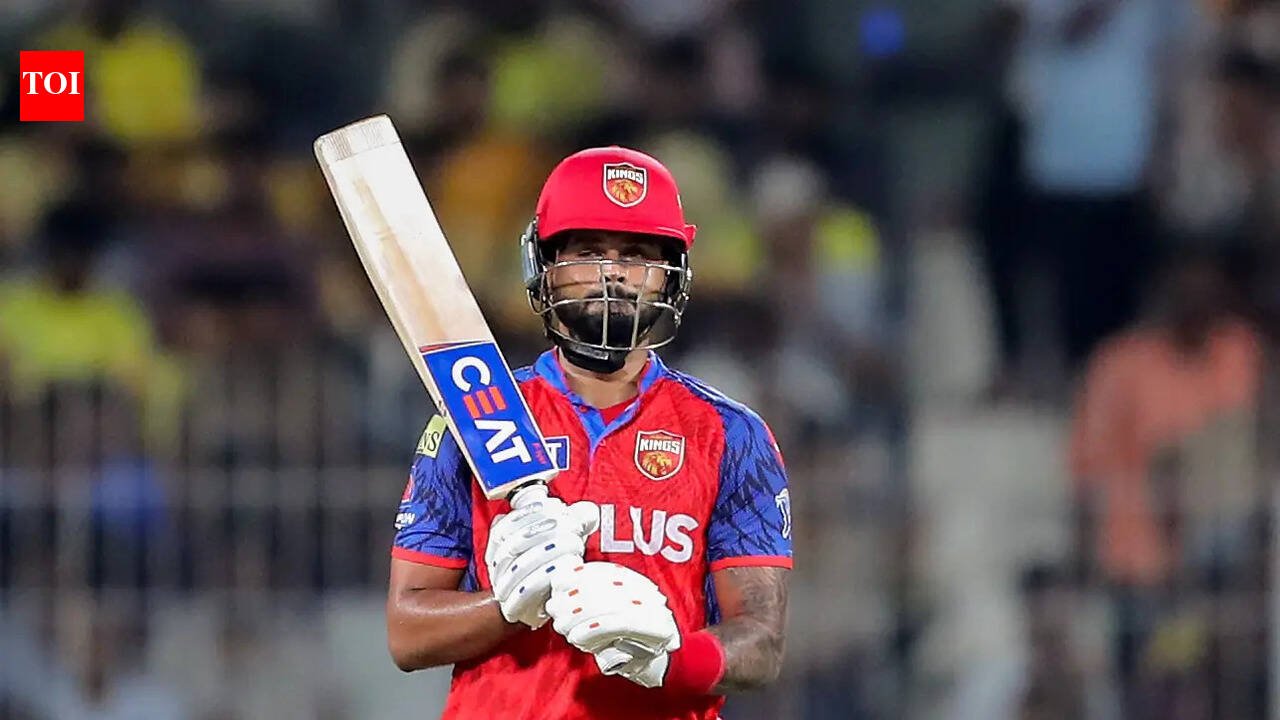
Punjab Kings’ skipper Shreyas Iyer (ANI Photo)

Punjab Kings may be riding high on the field, but skipper Shreyas Iyer has landed in trouble off it after being fined ₹24 lakh for maintaining a slow over-rate during their win over Chennai Super Kings. The penalty comes as Punjab’s second over-rate offence of the season, which means the consequences extend beyond the captain. The rest of the playing XI, including the Impact Player, have also been fined ₹6 lakh or 25 per cent of their match fees, whichever is lesser. The bigger concern for Punjab, however, lies ahead. As per IPL regulations, another breach during the remainder of the season will result in Iyer being fined ₹30 lakh and handed a one-match suspension. With PBKS still having at least 12 matches left in the league stage, the margin for error is now extremely slim. The fine comes on a night when Iyer led from the front with the bat, scoring a fluent 50 off 29 balls to anchor Punjab’s five-wicket win while chasing 209. His 59-run stand with Nehal Wadhera proved decisive as Punjab chased down the target with composure. Punjab’s chase was set up early by Priyansh Arya’s explosive 39 off 11 balls, while Prabhsimran Singh and Cooper Connolly ensured steady progress through the middle overs. But it was Iyer who took control after a cautious start, accelerating against the spinners and playing a range of authoritative shots, including a standout inside-out six off Rahul Chahar. Earlier, Chennai Super Kings had posted 209 for five, powered by Ayush Mhatre’s impressive 73 off 43 balls. He shared a 96-run partnership with skipper Ruturaj Gaikwad, who made 28, after an early setback with the dismissal of Sanju Samson. Despite the strong total, CSK were unable to contain Punjab’s batting depth, as late contributions from Sarfaraz Khan and Shivam Dube proved insufficient in the end. While the result strengthened Punjab’s position with a second consecutive win, the slow over-rate offence has added a layer of pressure on Iyer’s captaincy. With a long season still ahead, Punjab will need to be cautious, as another slip-up could see their skipper miss a crucial match at a decisive stage of the tournament.


Source link

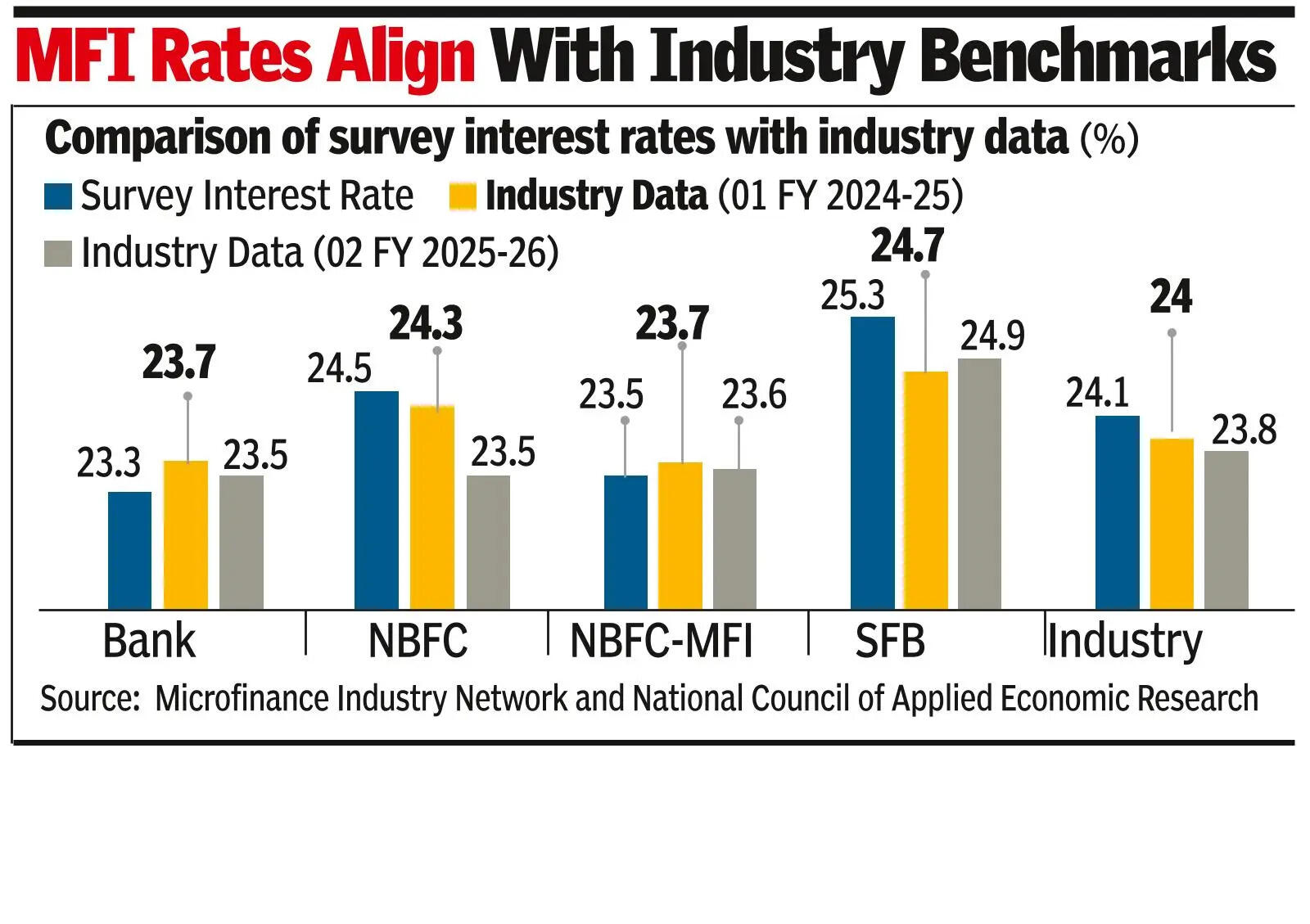
Microfinance replaces informal credit: Report


Microfinance replaces informal credit: Report

MUMBAI: A structural shift is reshaping India’s microfinance sector, with regulated lenders displacing informal sources as borrowing from moneylenders fell to 1% in 2024–25 from 46% in 2011, according to a survey by Microfinance Industry Network and National Council of Applied Economic Research.The survey, which covered 10,342 borrowers across 10 states, shows a maturing market where formal credit has become the primary source of finance for rural and semi-urban households. According to the report, microfinance now serves as the main driver of livelihoods rather than a fallback option.Digital adoption has reshaped disbursement, with nearly 100% of loans now credited directly into bank accounts of around 75 million women borrowers. According to the survey, this has reduced leakages and improved turnaround time, with average loan disbursal completed within six days. However, repayments remain largely cashbased. Only 12% of borrowers use digital modes such as UPI, while 88% continue to repay through cash collections conducted during group meetings. The report said this gap reflects a digital divide, as 61% of borrowers own smartphones but remain reluctant to transact digitally due to low financial literacy and concerns over fraud.The survey finds that microfinance lending is predominantly income-generating rather than consumption-led. Over 75% of loans are used for enterprise activities. According to the data, 48.1% of borrowers used credit to expand existing businesses, 14.4% to start new ventures, and around 13% for agriculture and allied activities. “Microfinance has become a bridge to opportunity and financial independence,” the report said, adding that 78% of borrowers contribute to household income.

Microfin India’s main credit source: Report

Informal Borrowing Collapses 45pp In 14 Yrs

Cost arbitrage remains a key driver of the shift away from informal credit. The average effective interest rate for regulated microfinance is around 33%, far lower than rates charged by informal lenders. According to the report’s qualitative findings, moneylenders charge between 97% and 178% annually and often demand gold as collateral.


Source link

Steep slide: Forex reserves decline over $10bn in a week


Steep slide: Forex reserves decline over $10bn in a week

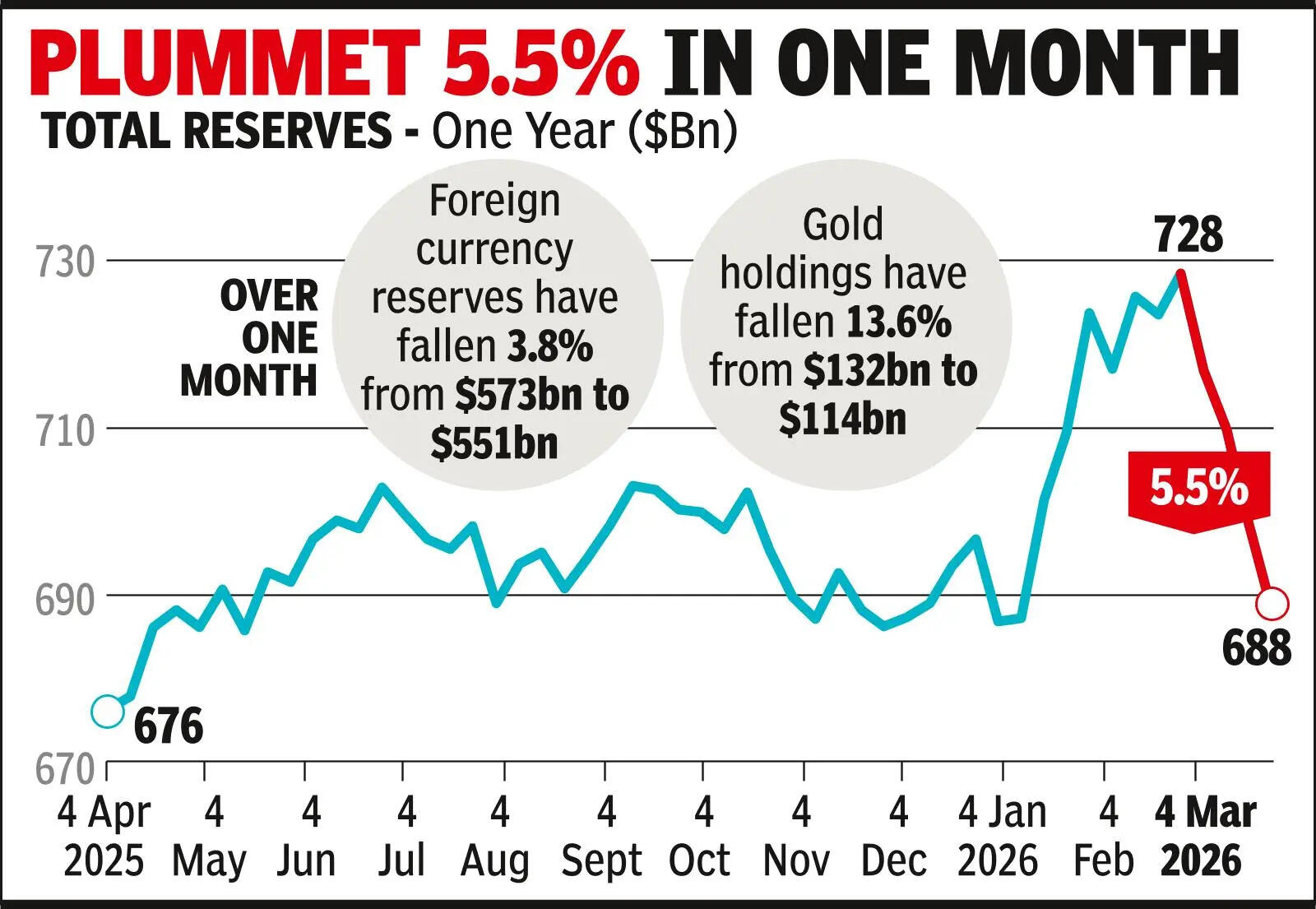
MUMBAI: India’s foreign exchange reserves fell sharply by $10.3 billion in the week ended March 27, 2026, taking the total to $688.1 billion, driven largely by a decline in foreign currency assets and gold holdings amid currency market intervention by RBI.The fall was led by foreign currency assets, which dropped by $6.6 billion. These assets, the largest component of reserves, reflect valuation changes in non-dollar currencies such as the euro, pound, and yen, and include the impact of RBI’s intervention to stabilise the rupee. Gold reserves declined by $3.7 billion during the week. The fall in gold, despite its smaller share in total reserves, points to a correction in global gold prices over the period. Other components showed limited movement. Special Drawing Rights rose marginally by $17 million, while the reserve position in the IMF declined by $17 million. These changes did not offset the losses in foreign currency assets and gold.With this week’s decline, forex reserves have dropped for four consecutive weeks by over $40 billion. RBI said India’s forex reserves fell by $11.4 billion last week (ended March 20, 2026) to $698.4 billion. The prior week (ended March 13) saw a $7.1 billion fall to $709.8 billion. This has led to talk among commentators about special measures that could be undertaken to attract foreign exchange flows.The rupee had weakened by over 4% until Wednesday before recovering 1.8% on Thursday after RBI tightened rules to curb speculative bets. The central bank asked banks to unwind long dollar positions. After some lenders shifted these positions to clients, RBI issued another directive on Tuesday asking banks not to offer hedging services in the nondeliverable forward market.

Steep slide: Forex reserves decline over $10bn in a week

Analysts are also concerned about RBI’s liabilities in the forward market. To defend the rupee, the central bank’s net short dollar forward position is estimated to have hit $77 billion in Feb 2026, and may have risen further in March. While this preserves immediate spot reserves, it creates a large future dollar liability. Maturing contracts can drain reserves and tighten liquidity. Despite the recovery on Thursday, dealers expect volatility to persist next week following the escalation of conflict.


Source link

Mehli Mistry challenges eligibility of 2 trustees


Mehli Mistry challenges eligibility of 2 trustees

MUMBAI: Months after his exit, former Sir Ratan Tata Trust (SRTT) trustee Mehli Mistry has challenged the positions of Venu Srinivasan and Vijay Singh on the board of the Bai Hirabai Jamsetji Tata Navsari Charitable Institution, arguing they are ineligible under the 1923 deed, which bars non-Zoroastrians and non-Mumbai residents, and has called for an official enquiry.The Bai Hirabai Institution is an associate trust of SRTT, a major shareholder in Tata Sons, which runs the $180 billion Tata conglomerate. It was established under the will of Sir Ratanji Tata, the second son of Tata Group founder Jamsetji Tata, who bequeathed properties in Navsari, Gujarat—the Tata family’s ancestral home—to the institution. The real estate was intended for the Parsi community’s use, serving as a recreation ground, nursing home, or hospital.In his objection application filed with the Maharashtra charity commissioner on Friday, Mistry said that given the alleged “illegalities” in the institution’s governance, an administrator should be appointed to replace the current board of trustees, which includes Noel Tata, Jimmy Tata, Jehangir Jehangir, and Darius Khambata. His trusteeship at the institution was not renewed last year following a vote by Noel, Srinivasan, and Singh against it. All six of these individuals also serve on the board of SRTT, where his term was likewise not extended. Mistry cited clauses 6 and 18 of the 1923 deed, saying: “No person who is not of Zoroastrian faith shall be appointed as a trustee, and if any trustee ceases to profess the Zoroastrian faith, he shall cease to be a trustee, as if he were ‘dead’. Similarly, any person who ceases to be a permanent resident of the Bombay Presidency shall also cease to be a trustee.”He contended that Srinivasan, chairman emeritus of TVS Motor, and Singh, a former defence secretary, have “never been, and cannot be, of Parsi Zoroastrian faith” and do not have any permanent residence in Mumbai. Both never met the two clauses and are “expressly disqualified from acting as trustees.”Mistry, a Parsi Zoroastrian with a permanent residence in Mumbai, said all trustees should submit affidavits confirming they meet the qualifications under clauses 6 and 18, ensuring strict compliance with the trust deed. He urged the commissioner to “initiate a detailed inquiry…by calling for an affidavit from each applicant.”Mistry asserted that Srinivasan and Singh’s appointments are void from inception, and any actions they took as trustees including their votes against his trusteeship extension are non est in law and without authority. His Friday objection follows the Bai Hirabai Institution’s submission of a change report to the commissioner, reflecting the revised board composition after his trusteeship extension was rejected. Mistry said his tenure was not renewed “without assigning any reason” and argued that the change report is not maintainable, as it is contrary to the trust deed.According to him, if the unqualified trustees are excluded, the total number of trustees would fall below the minimum of five required under the trust deed. He further submitted that “no meetings have been conducted” at the Bai Hirabai Institution “over the past two years, with no regard for the consequences for the beneficiaries of the trust or its legacy of public and charitable works.” He asked the commissioner to call for minutes of all meetings held during this period and to inspect all records.Mistry clarified that his objective is solely to expose the alleged illegal functioning of the institution and is not aimed at seeking his reinstatement. Mistry said his move is motivated by a commitment to uphold the principles of Sir Ratanji Tata’s will, honour the legacy of predecessors, and safeguard the institution’s charitable mandate entrusted to him by former chairman Ratan Tata for the welfare of the Parsi community. Noel and Srinivasan did not respond to an emailed query, while Singh declined to comment.


Source link

GI applications cross 2,000 mark on Centre’s push


GI applications cross 2,000 mark on Centre’s push

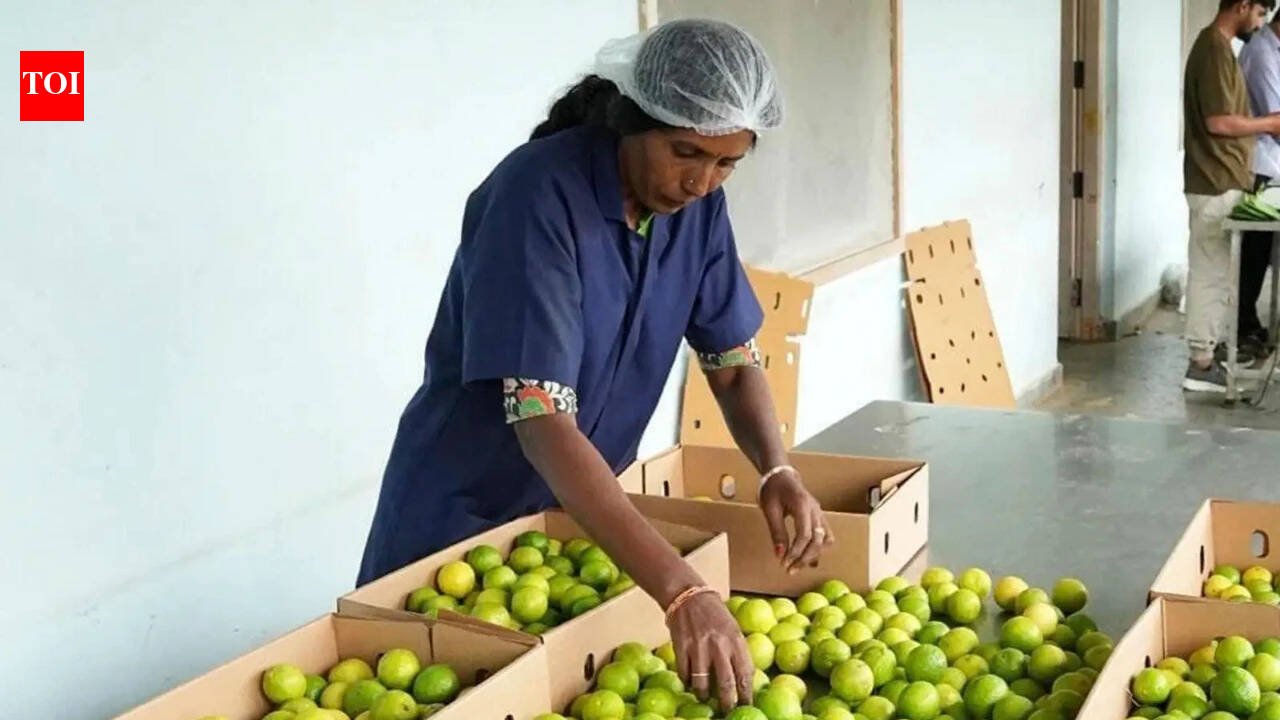
HYDERABAD: The Centre’s push to ensure 10,000 geographical indication (GI)-tagged products by 2030 seems to have moved into a higher gear, with the total number of GI applications finally crossing the 2,000 mark to reach 2,013 as on April 2, 2026.While Kashmir Kagzi Badam was the 2,000th application to be filed on April 2 this year, Sikkim’s Chyabrung was the 2,013th application to be filed on the same day. Since April 1, 2025, when Khavda pottery of Kutch became the 1,482nd application to be filed, the highest number of GI applications, at 510, have been filed in FY25-26 alone, the highest in a single fiscal since the first GI for Darjeeling tea was filed in Oct 2003.In fact, if the past two fiscal years saw over 780 GI applications being filed, just the past three days saw 21 GI applications being filed. Till date, as many as 724 GI-tagged products have been registered across the country. GI experts attributed the acceleration in application filing to the govt push that involved slashing the fees from Rs 5,000 to Rs 1,000 last year.


Source link