Breaking News
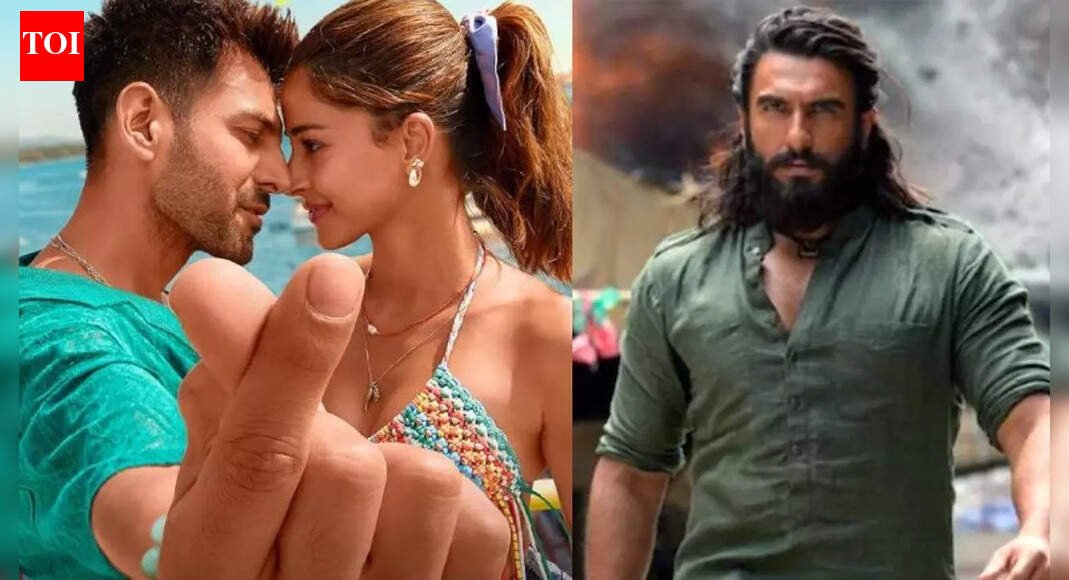
Dhurandhar Full Movie Collection: ‘Dhurandhar’ box office collection day 21 Vs ‘Tu Meri Main Tera…’ day 1 (LIVE): The Ranveer Singh starrer sees growth due to Christmas holiday, dominates over Kartik Aaryan’s romcom expected to open at Rs 5 crore |


'Dhurandhar' box office collection day 21 Vs 'Tu Meri Main Tera...' day 1 (LIVE): The Ranveer Singh starrer sees growth due to Christmas holiday, dominates over Kartik Aaryan's romcom expected to open at Rs 5 crore

Aditya Dhar‘s ‘Dhurandhar’ starring Ranveer Singh, Akshaye Khanna, Sanjay Dutt, Arjun Rampal, R Madhavan released in theatres on December 5 and post that one saw the release of James Cameron‘s ‘Avatar Fire And Ash’. However, shockingly, ‘Dhurandhar’ remained unaffected by it and continued its box office run and has crossed Rs 600 crore now at the domestic box office. Dhurandhar Movie ReviewMeanwhile, Kartik Aaryan, Ananya panday‘s ‘Tu Meri Main Tera Main Tera Tu Meri’ has released in theatres today, December 25. This romantic comedy is getting good early reviews, however, due to two big movies like ‘Dhurandhar’ and ‘Avatar Fire And Ash’ dominating at the box office, the film has managed to secure relatively low number of shows, particularly across major urban markets. The advance bookings of the film have also been dull, thus, indicating limited traction among the audiences. Given that ‘TMMTMTTM’ is positioned as an urban-focused film, robust support from multiplexes was expected to boost its opening. Instead, insufficient allocation in premium theatres has placed the film in a challenging spot ahead of its December 25 release. Even with the restricted number of shows on offer, advance sales have been lacklustre, with total pre-bookings yet to cross the ₹1 crore mark, a day prior to release. In case there is good word of mouth for the film, more screens could be allotted to it but at the moment it’s a slow start. According to Sacnilk, ‘TMMTMTTM’ is likely to open at around Rs 5 crore net, a figure that would fall short of expectation. On its day, till afternoon, ‘TMMTMTTM’ has made Rs 2.29 crore so far. Meanwhile, on its day 21, ‘Dhurandhar’ has already made Rs 10.78 till the same time. The total collection of ‘Dhurandhar’ now stands at Rs 618.28 crore. The film will surely see the growth in its business due to Christmas holiday and the upward trend may continue till December 31 as well.


Source link

Sunita Ahuja CLARIFIES Govinda is not DATING an actress; She says, ‘That girl only wants his money’- Exclusive | Hindi Movie News


2025 has not been a smooth year for Sunita Ahuja and Govinda, as the couple faced divorce rumors in the year 2024, which lasted until the couple reunited and dispelled the gossip, terming it as a cause of ‘misunderstanding’ during the Ganesh festival this year. However, the buzz of Govinda having an affair with a young Marathi actress always remained in the headlines.

Sunita Ahuja clears the girl Govinda is dating is not an actress

As the year 2025 nears its end, ETimes contacted Sunita to know how this year treated her personally and professionally. Sunita said, “I treat 2025 as a very bad year for me because I’ve been hearing about Govinda’s controversy that he is having an affair with a girl, but I know that she’s not an actress because actresses don’t do such bad things. She doesn’t love him; she only wants his money.”Sunita further relayed how the year has been for her professionally. “But on the other hand, I’m very happy that I started my YouTube in 2025, and I got success, and people are loving me a lot. There are haters also, but still I love them. If they hate me, it’s their problem.”

Sunita wants Govinda to put an end to all controversies in 2026

When asked what she would like to change in 2026, Mrs. Ahuja shared, “I wish to change my life in 2026. I want Govinda to put an end to all these controversies, and I want a happy family in 2026. I hope it happens very soon. I am hoping that Govinda realizes that the most important things in his life are three women: his mother, his wife, and his daughter. No one has a right to keep the fourth woman in their life. This is for every man in the world, including Govinda. I want Chi Chi to leave all his chamchas and focus on his work because even they are with him for money.”

Sunita Ahuja’s 2026 resolution

Talking about the new year resolution, Sunita added, “I want to work round the clock this year. Get a house for myself in Mumbai Juhu area, own a nice car for myself, and work the entire year like a bomb. I don’t want to sit at home.”

Sunita wishes her fans a happy new year

“I want to just keep on working, and I wish good luck and love to all my fans and my well-wishers,” Sunita signs off with a smile.


Source link

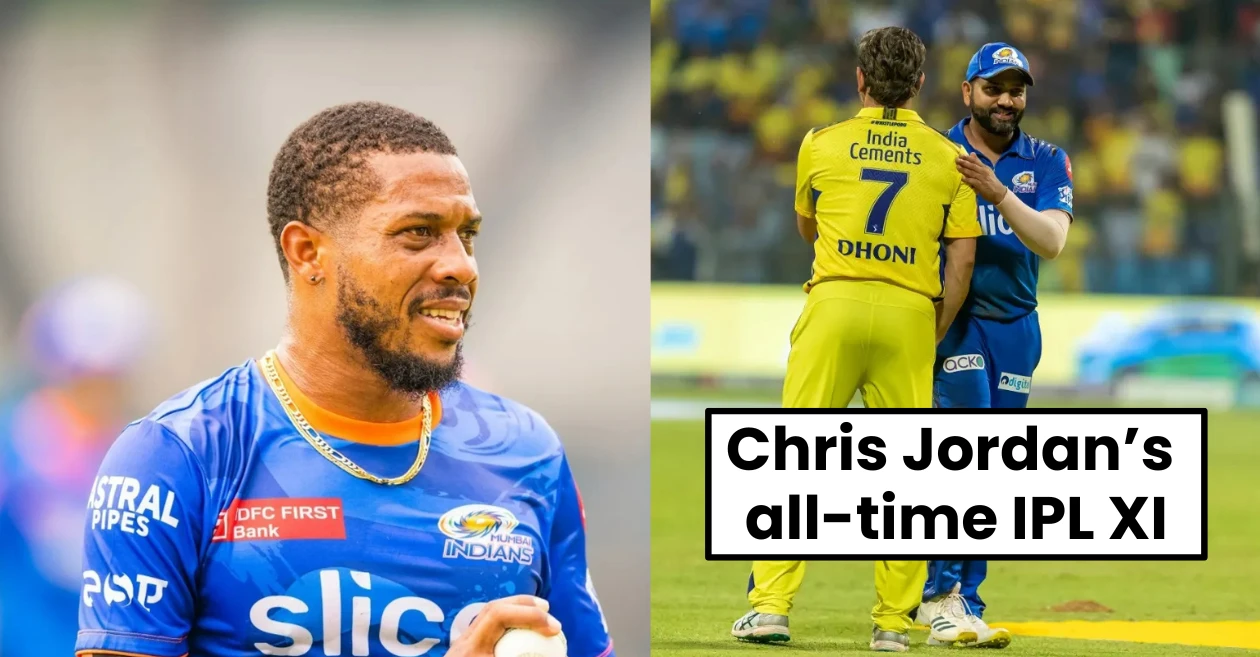
Chris Jordan picks his all-time IPL XI; no place for Rohit Sharma


England fast bowler Chris Jordan has sparked discussion among cricket fans by unveiling his all-time Indian Premier League (IPL) XI ahead of the 2026 season. Shared via the Crictracker Instagram handle, Jordan’s selection features some of the most iconic names in IPL history, with MS Dhoni named as captain.

However, the biggest talking point from Jordan’s XI is the absence of Rohit Sharma, despite Jordan having previously played under him at Mumbai Indians (MI). The omission has ignited debate over selection criteria, leadership value, and individual impact in T20 cricket.

Chris Jordan’s all-time IPL XI: Star-studded line-up

Jordan’s chosen XI reflects a blend of explosive batting, proven all-rounders, and elite bowlers who have consistently delivered in the IPL over the years. At the top of the order, he has opted for Chris Gayle and Virat Kohli, two of the most dominant run-scorers the tournament has ever seen.

The middle order is equally formidable, featuring Suryakumar Yadav at No. 3, followed by Suresh Raina at No. 4 and AB de Villiers at No. 5. Together, the trio represents a mix of consistency, innovation, and match-winning pedigree.

For the all-rounder roles, Jordan has included Hardik Pandya at No. 6, offering balance with both bat and ball, while Dhoni slots in at No. 7 as wicketkeeper-captain. The bowling attack is stacked with proven IPL veterans: Sunil Narine, Jasprit Bumrah, Lasith Malinga and Yuzvendra Chahal.

MS Dhoni to lead Chris Jordan’s all-time IPL XI

Jordan’s decision to appoint Dhoni as captain is hardly surprising given the former Chennai Super Kings (CSK) skipper’s legendary IPL legacy. Dhoni is widely regarded as one of the greatest leaders in T20 history, having guided CSK to five championship titles while maintaining remarkable consistency in playoff appearances. His calm presence, tactical awareness, and finishing ability appear to have given him the edge over other leadership contenders.

Also READ: Rahul Chahar reveals his all-time IPL XI, no place for Andre Russell and Sunil Narine

Why Rohit Sharma misses out on Jordan’s XI?

The exclusion of Rohit Sharma stands out, particularly because of his unmatched success as an IPL captain. Rohit has led Mumbai Indians to five titles and is one of the most decorated players in the league’s history. However, Jordan’s selection suggests a clear preference for individual batting impact and adaptability over captaincy records alone.

By choosing Gayle and Kohli as openers, Jordan appears to have prioritised explosive starts and run-scoring dominance at the top of the order. With Dhoni already named as captain, leadership may not have been a decisive factor in selecting the playing XI, ultimately leaving Rohit on the sidelines.

Also READ: Not CSK! Amit Mishra predicts the top 4 of IPL 2026


Source link

Former service chiefs discuss lessons from modern warfare, leadership at IIT Techfest | Mumbai News


Former service chiefs discuss lessons from modern warfare, leadership at IIT Techfest

MUMBAI: The cloud cover over Balakot (in Pakistan) during the 2019 strikes became a lesson in how modern wars are judged as much by evidence as by execution, former Air Chief Marshal Vivek Ram Chaudhari said while addressing students at IIT Bombay’s 29th edition of Techfest. Three former service chiefs from the same 61st course of the National Defence College shared the stage for a symposium. Referring to Operation Sindoor, the former IAF chief said intelligence, surveillance and reconnaissance and bomb damage assessment are now critical to military operations. “During the Balakot operation, persistent overcast skies prevented us from taking pictures,” he said, adding that the absence of imagery allowed the adversary to sanitise the area and led people to question whether the strikes even took place. Warning of rapidly changing battlefields, Chaudhari said there is currently “no defence against a hypersonic missile,” a capability already used in the Russia-Ukraine conflict.Former Army chief Gen Manoj Pande spoke on leadership and values, describing the Indian Army as “a microcosm of the nation” that reflects India’s defining principles, “most importantly its secular nature.” Addressing a hall packed with school and college students from across Mumbai, Pande urged the young audience to chase their dreams with passion, stressing that leadership flows from organisational culture, accountability, and decision-making under pressure.Former Navy chief Admiral R Hari Kumar highlighted the strategic importance of the seas, noting that while nearly 70% of the Earth is covered by water, only about 5% lies within national maritime boundaries, with the rest governed by global maritime laws. Leaders have historically known little about the oceans, he said, recalling that Emperor Akbar is believed to have seen the coastline only once in his lifetime. As India’s economy grows, Kumar said, most of its trade will move across open seas, making maritime security central to national prosperity. Calling shipbuilding the “mother of industries,” he cited India’s first indigenously built aircraft carrier Vikrant, which sustained 2,000 direct jobs and generated 6.4 ancillary jobs for each direct job.


Source link

A hidden Arctic world: Methane mounds and life found 3.6 km below the Greenland Sea |


A hidden Arctic world: Methane mounds and life found 3.6 km below the Greenland Sea

Deep down, beneath the icy edges of the Greenland Sea, a remarkable and previously undiscovered geological and biological complex has been found by scientists. The existence of this topographic anomaly deep down in the sea, where light, high pressure, and low temperature are prevalent factors, extends our understanding of what is known about the oceanography of the Arctic. The findings are especially pertinent in light of recent increased scientific interest in the Earth’s poles in relation to increased understanding of global climate processes. The observation of a level of biological and geological interaction in one of the most remote ocean regions on Earth contributes important information on what is known about the physical characteristics of the Arctic.

Why methane hydrate mounds forming deep beneath the Arctic Ocean

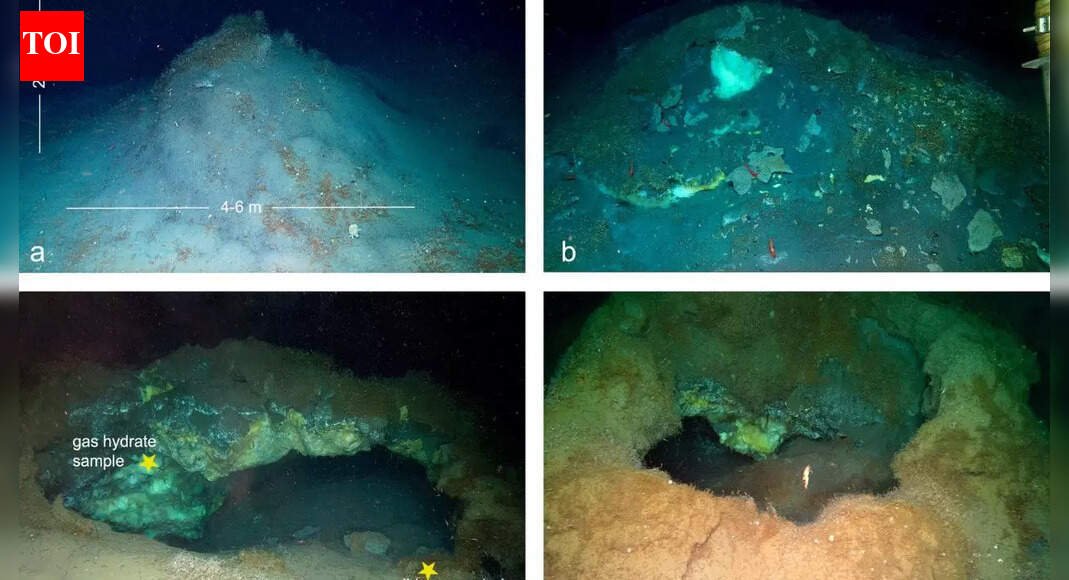
The most notable aspect of the discovery is that it consists of a number of gas hydrate mounds along the Molloy Ridge, a tectonic boundary that lies deep beneath the Greenland Sea. A gas hydrate is a molecule that consists of a large amount of trapped methane, all held together with crystalline ice. The existence of these hydrates at a depth of some 3,640 meters is one of the deepest known hydrate formation sites that have been discovered so far. According to the research paper that was published in Nature Communications, high-resolution images that included the extent of these hydrate mounds along the ridge have been discovered with the help of a remotely operated robotic vehicle. Gas hydrates have until now been thought to be largely associated with continental slopes and the shallower margins of the Arctic.

How life survives without sunlight on the Arctic sea floor

The ecologists surrounding the hydrate mountains recorded the existence of a dense population of chemosynthetic organisms. Such organisms receive energy from chemicals instead of sunlight. Based on the fact that the area is lightless, the organisms receive energy from the methane seeping from beneath the seafloor. The organisms form the base of the food chain, in turn supporting other life forms. Scientists recorded tube worms, crustaceans, as well as a dense mat of microbes aggregated in areas surrounding the seeps. The organisms exhibit specific adaptations in order to withstand high pressures as well as near-freezing temperatures. The organisms’ metabolism is specifically attuned in order to take advantage of the methane as well as sulphide compounds seeping from the sediments. The finding shows the existence of life in the deepest parts of the Arctic Ocean utilizing available energy in the area.

What role does the Molloy Ridge play in deep Arctic sea floor processes?

The Molloy Ridge is recognised as one of the deepest mid-ocean ridges in the world and is characterised by tectonic plates that are gradually drifting apart. The tectonic activities in this process result in the creation of cracks and channels in the Earth’s crust that facilitate methane gas to flow from deeper to upper layers. When methane gas reaches lower temperatures close to the ocean floor, it either gets trapped in its hydrate form or seeps out gradually. The process that is observed in this tectonic interaction is directly related to biological activities occurring on the ocean floor. The mid-ocean ridge functions both as a channel and as a supporting structure that determines hydrate and biologically active zones. The process of interaction in this study is very helpful in gaining an understanding of deep-sea ecosystems’ maintenance at a deeper level for extended periods.

What this discovery means for Arctic methane stability

Methane has a crucial role within the carbon cycle, and what happens to methane under the ocean floor is closely tracked because methane can affect the climate. The methane hydrate mounds under the Greenland Sea support a long-term trap that holds methane under stable conditions. At present, the conditions on the Molloy Ridge support a stable environment to retain methane, hindering massive amounts of methane from entering the water body. Still, recognising such systems is critical to predict their reaction to potential warming within the ocean currents or temperatures. The findings provide scientists a chance to observe and measure methane within a system that has been underrepresented within climate models to predict climatic changes. The findings confirm the essence of the deep basins within the Arctic to control carbon beneath the Earth and within the ocean.

Why the deep Arctic Ocean is becoming a focus of scientific research

The discovery of hydrate mounds and their ecosystems in the Greenland Sea is one such finding that showcases the effect that advances in technology are having on deep oceanography. The use of remotely operated vehicles with sophisticated sensors and imaging systems is enabling scientists to explore regions that were hitherto unexplored. With every new expedition, new layers of complexity are being found under the Arctic Ocean, from unexpected topographical features to new ecosystems. The Molloy Ridge finding indicates that perhaps such regions are to be found elsewhere on deep tectonic margins, waiting to be located and studied.Also Read | A step toward time travel? Physicists reverse waves in time


Source link

India engaged with US to find mutually beneficial trade pact: Kwatra


India engaged with US to find mutually beneficial trade pact: Kwatra

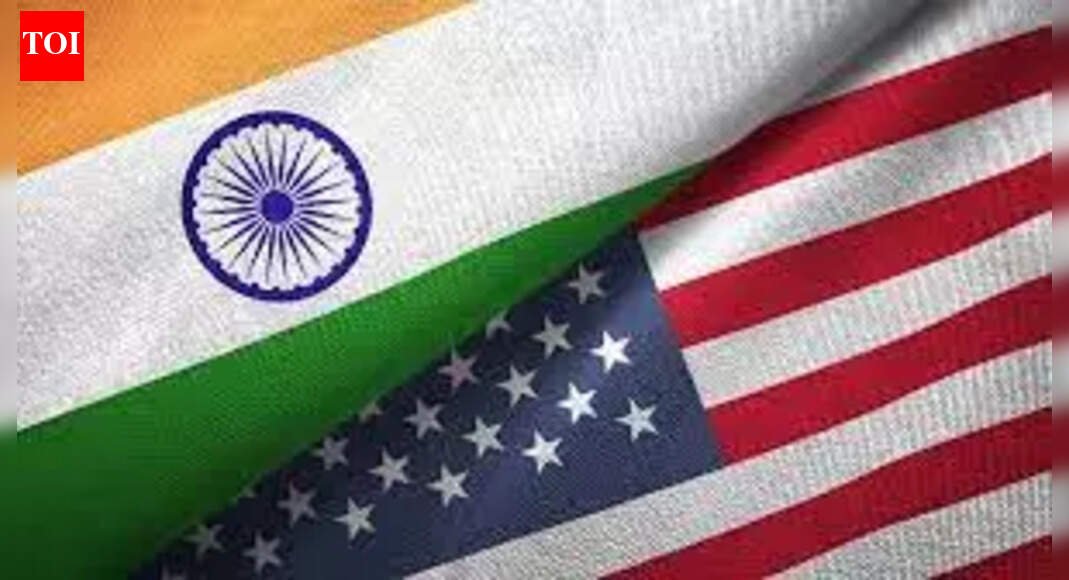
India remains very constantly engaged with the United States to find a mutually beneficial and balanced trade arrangement as early as possible, India’s Ambassador to the US Vinay Mohan Kwatra said.“On trade and tariff…we remain very constantly engaged with the United States Trade Representative (USTR) with the hope to find a mutually beneficial and a balanced trade arrangement as early as possible,” Kwatra told PTI in an exclusive interview here.“Our effort all along, right through this whole year, the tone for the relationship was set during Prime Minister’s visit in early February. We agreed to a very, very significant and substantial outcome document across range of areas. Space was one of them,” he said.

‘India Got Out Of The Gates Faster Than Most Nations’, Says US Expert As Trade Deal Talks Nears End

Kwatra termed India’s successful launch of an American communication satellite on Wednesday as a “very important and big day” for partnership between Washington and New Delhi, saying it caps a series of achievements in 2025 in bilateral space cooperation between the countries.In a historic achievement, Indian Space Research Organization’s (ISRO) heaviest rocket LVM3-M6 successfully placed the next-generation commercial communication satellite BlueBird-6 (Block-2), developed by AST SpaceMobile, USA, into its precise intended orbit. LVM3 carried the heaviest commercial satellite ever launched from Indian soil, underscoring LVM3’s growing capability as a reliable heavy-lift launch vehicle.Prime Minister Narendra Modi had visited the US in February this year for a bilateral meeting with US President Donald Trump, their first meeting within weeks of Trump’s inauguration for a second term in the White House.In the joint statement issued after the meeting, the two leaders had hailed 2025 as a “pioneering year” for US-India civil space cooperation, with plans for a NASA-ISRO effort through AXIOM to bring the first Indian astronaut to the International Space Station (ISS), and early launch of the joint ‘NISAR’ mission, the first of its kind to systematically map changes to the Earth’s surface using dual radars.The leaders had called for more collaboration in space exploration, including on long duration human spaceflight missions, spaceflight safety and sharing of expertise and professional exchanges in emerging areas, including planetary protection.The leaders also committed to further commercial space collaboration through industry engagements in conventional and emerging areas, such as connectivity, advanced spaceflight, satellite and space launch systems, space sustainability, space tourism and advanced space manufacturing.Kwatra referred to the Axiom-4 Mission, which had carried Indian Air Force Group Captain Shubhanshu Shukla to the International Space Station, marking India’s first human spaceflight mission to the ISS. He also noted the ISRO-NASA NISAR mission for advanced Earth observation, now successfully realised, launched, and operationalised.“And if you look at the areas which we have plotted in the field of space, you can easily see 10 months down the line, they have mostly, if not all of them, achieved really. We continue to work very, very proactively in other areas also including in the fields of trade, science and technology, artificial intelligence,” Kwatra said.“We have been working with a range of stakeholders in the US, both in the private sector, the government sector, in the think tank circle for a very substantial participation of theirs in the upcoming AI Action Summit in February,” he said.India will host the AI Impact Summit on February 19-20 in New Delhi, the first time an AI summit will be hosted in the Global South, after similar Global AI Summits in Bletchley Park (UK), Seoul and Paris.Kwatra added that “technology has been a very principal domain of our engagement.”


Source link

‘Blaming India is preposterous’: Shashi Tharoor on Bangladesh violence; flags concern over upcoming election | India News


'Blaming India is preposterous’: Shashi Tharoor on Bangladesh violence; flags concern over upcoming election

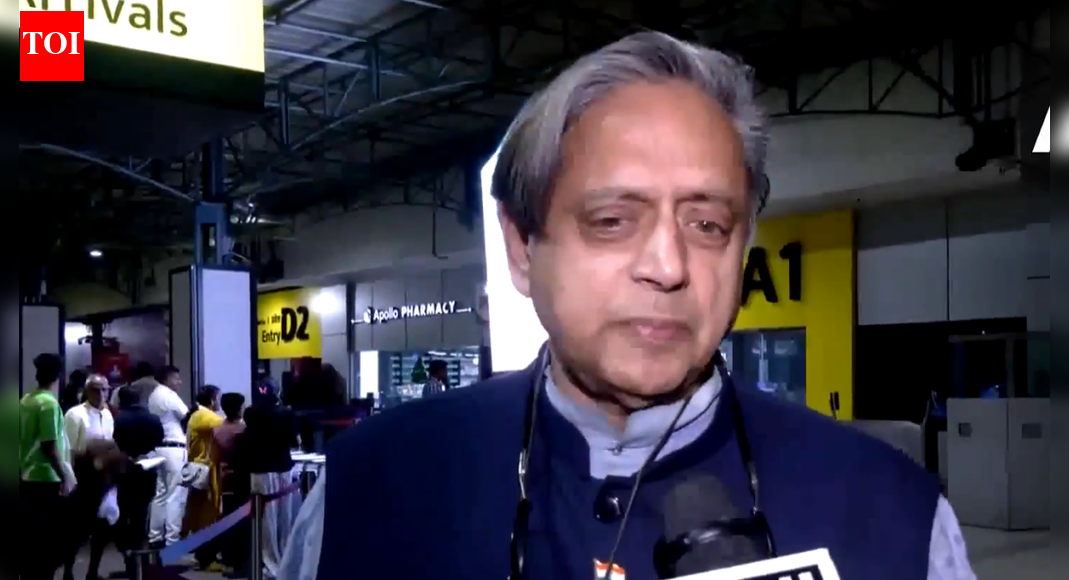
NEW DELHI: Congress MP Shashi Tharoor on Thursday expressed serious concern over the unrest in Bangladesh, saying the violence, including the lynching of a person in police custody, was an outrage and warning that the deteriorating law-and-order situation could undermine the country’s scheduled elections.“Look, it’s a very serious problem because obviously, from our point of view, we want Bangladesh to be stable and calm and we do want the minorities there to feel safe. This lynching was truly an outrage because it was completely unwarranted. There was no question of any act of blasphemy by this person. And he even was in the custody of the police. He should not have been handed over to the mob and lynched in this horrible way,” Tharoor said.Tharoor said the broader street violence and protests across Bangladesh, including demonstrations outside Indian diplomatic missions, had created an atmosphere of instability ahead of elections scheduled for February.“But the other disturbances across the streets in many parts of Bangladesh, including protests outside our consulates, which we call Assistant High Commissions there, all of this have created, unfortunately, an atmosphere which is not conducive to the kind of calm and stability we would all like to see leading up to the elections that are scheduled for February,” he said.The Congress leader also rejected allegations blaming India for the death of a student leader in Bangladesh, calling such claims baseless and harmful.“At the same time, the unnecessary rhetoric blaming India for the death of the student leader, which is preposterous. There’s no reason why India would have any interest in creating destabilization in Bangladesh. That has also created an atmosphere of hostility towards the minorities, which obviously has raised concerns across the country,” Tharoor said.Referring to protests in India triggered by developments across the border, Tharoor said such demonstrations were within democratic rights but must remain peaceful.“It’s not entirely surprising that with this kind of volatile atmosphere across the border, that in India also, some groups have organized protests in return. In our democracy, they have a right to do so. I don’t think anyone has felt that these protests are getting out of hand. There has been no violence, no lynching, and certainly any attempted violence will and should be clamped down upon by our police,” he said.Speaking separately in Thiruvananthapuram, Kerala, Tharoor said the Bangladesh government must move beyond statements of regret and take firm action to restore order.“What we want to see is for the Bangladeshis to do the same thing. That is, they must curb the violence. There’s not enough for the government of Bangladesh to just express regrets or condemnation. They have to take action because controlling the violence on the streets is their obligation as a government,” he said.He warned that holding elections in the current atmosphere would be difficult. “They need to ensure that the streets are calm again, that people can feel safe again. How can you have an election in less than two months’ time in an atmosphere of lawlessness and intimidation, where the voters may not even feel safe?” Tharoor said.Calling for decisive measures, he added, “We’re urging the government to take matters into its hands. If the police can’t do it, send the army, but stop this nonsense.”Tharoor also stressed that protests in India would not be allowed to cross democratic limits. “And in India, of course, the protests are protests, but they will not be allowed to cross any of the boundaries of a democratic protest. Certainly no violence will be encouraged or permitted,” he said.


Source link

‘Not going to criticise them’: Former captain defends England players amid Noosa ‘drinking’ storm | Cricket News


'Not going to criticise them': Former captain defends England players amid Noosa 'drinking' storm
Ben Duckett (right) during an England training session on December 25, 2025 in Melbourne. (Getty Images)

England’s Ashes tour has been engulfed by controversy off the field, but former captain Michael Vaughan has urged restraint, arguing that outrage over the team’s mid-series beach break in Noosa misses the bigger picture of cricket’s long-standing culture.Go Beyond The Boundary with our YouTube channel. SUBSCRIBE NOW!Captain Ben Stokes faced pointed questions on Wednesday after British media reports likened England’s downtime between the second and third Tests to a “stag-do”, with unverified social media footage appearing to show opener Ben Duckett drunk and disoriented. Stokes did not address the specific allegations, instead stressing that player welfare was his overriding concern as England prepare for the fourth Test in Melbourne.

India T20 World Cup squad: In search of ideal combination, Agarkar & Co. drop Shubman Gill

England cricket chief Rob Key has since pledged to investigate the claims, while the ECB said it is intent on establishing the facts.Writing in his Telegraph column, Vaughan cut through the noise with a blunt defence of the players. “I am not going to criticise England for what they got up to in Noosa,” Vaughan wrote. “I criticise what they do on the cricket field, the way they play, and the way they prepare to play cricket.”Vaughan admitted the footage was not flattering, but said singling out Duckett was unfair. “I am not going to point the finger at a group of young people who have had a few beers on a couple of days off,” he said. “I did exactly the same as them when I played for England, although I did at least know when it was time to go home, and that is probably what Ben Duckett needs to learn.”

Poll

Should media scrutiny influence team behavior during off days?

The former skipper then added that it is a systemic issue rather than an individual failing. “Duckett should not be reprimanded at all on the evidence we have seen, and neither should the other players,” Vaughan argued. “It is a wider issue: the game of cricket has created this drinking culture.”According to Vaughan, this culture is not unique to England. “England, Australia, New Zealand and South Africa all have the same culture,” he wrote. “You give a group of young people three or four days off to relax, and they’re going to do something like this.”


Source link

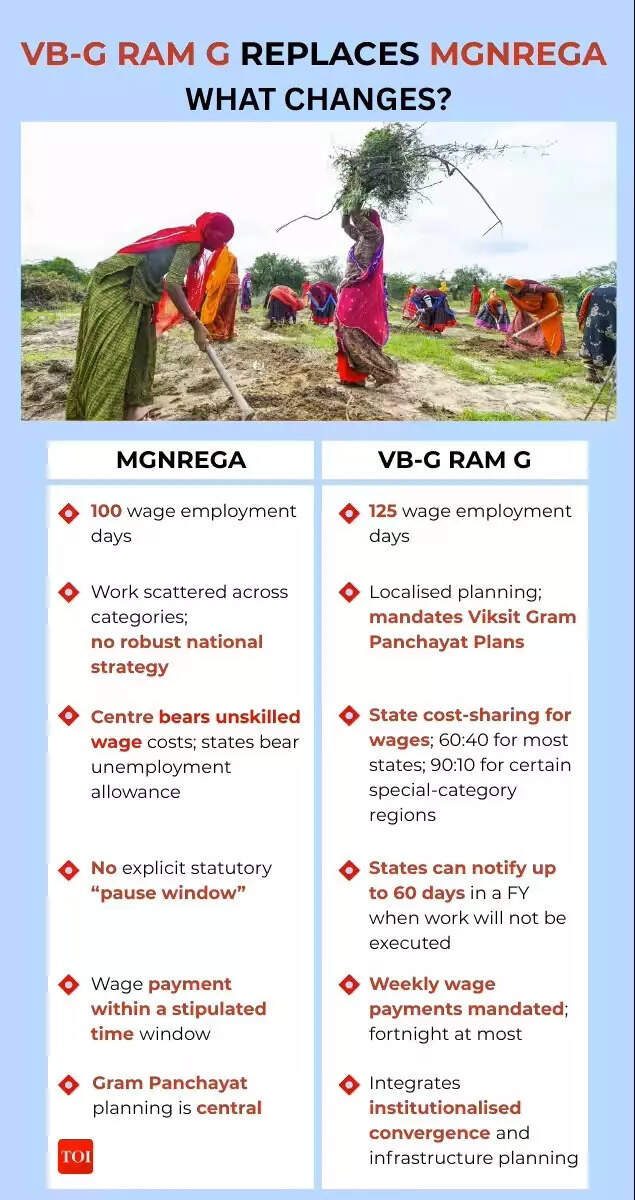
The new logic of rural welfare: Why VB-G RAM G makes sense for a $4 trillion economy


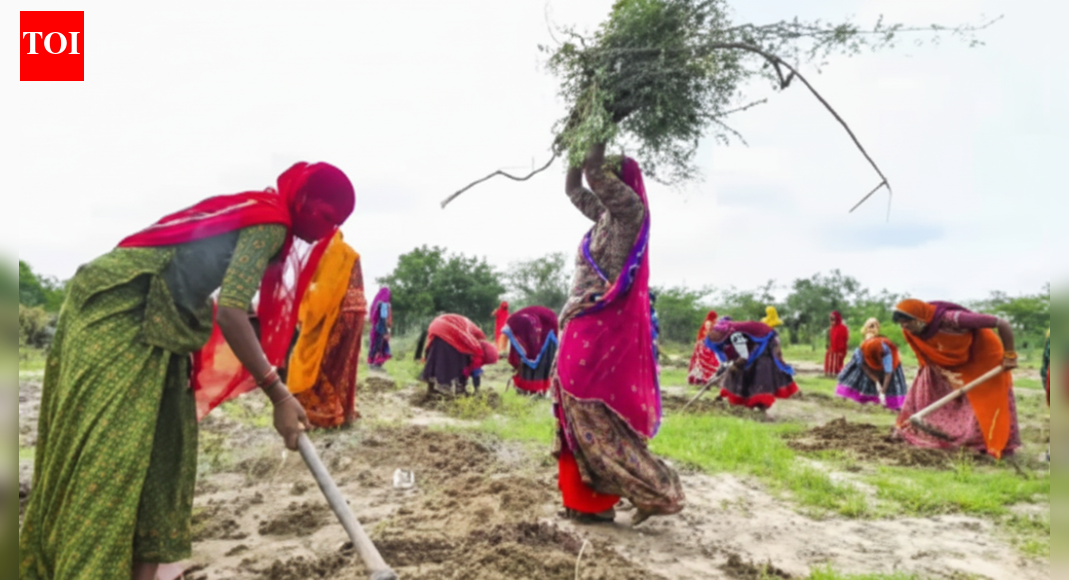
Driving the newsThe MGNREGA – a flagship UPA-era program that guaranteed 100 days of wage employment to rural households – has been replaced by the Viksit Bharat–Guarantee for Rozgar and Ajeevika Mission (Gramin) or VB-G RAM G Act.Union minister Shivraj Singh Chouhan framed it as a bold leap forward: “This is a far better scheme that will completely transform villages.”

End Of MGNREGA? What VB–G Ram G Means For Rural Workers, Farmers And Viksit Bharat Plan

Critics, led by Congress leader Sonia Gandhi, allege it’s a stealth demolition of rights-based welfare: “The very structure of MGNREGA… has been annihilated.”But beyond the political heat, the quiet engine driving this reform is economic evolution. India’s welfare state – and rural labour market – has changed dramatically since 2005. The logic behind G RAM G isn’t just political; it’s economic.

Why it matters

MGNREGA was designed as a safety valve. Its purpose was simple: if private work dried up, the state would step in and guarantee wages. It was meant to stabilise consumption in bad years and give the rural poor bargaining power in the labour market. On those terms, it succeeded.But it is no longer the India of the mid-2000s.

  • In 2005: Rural safety nets were thin, bank accounts rare, and the idea of digital transfers futuristic.
  • In 2025: Over 80 crore people get free food grain for the next five years. DBT has matured.
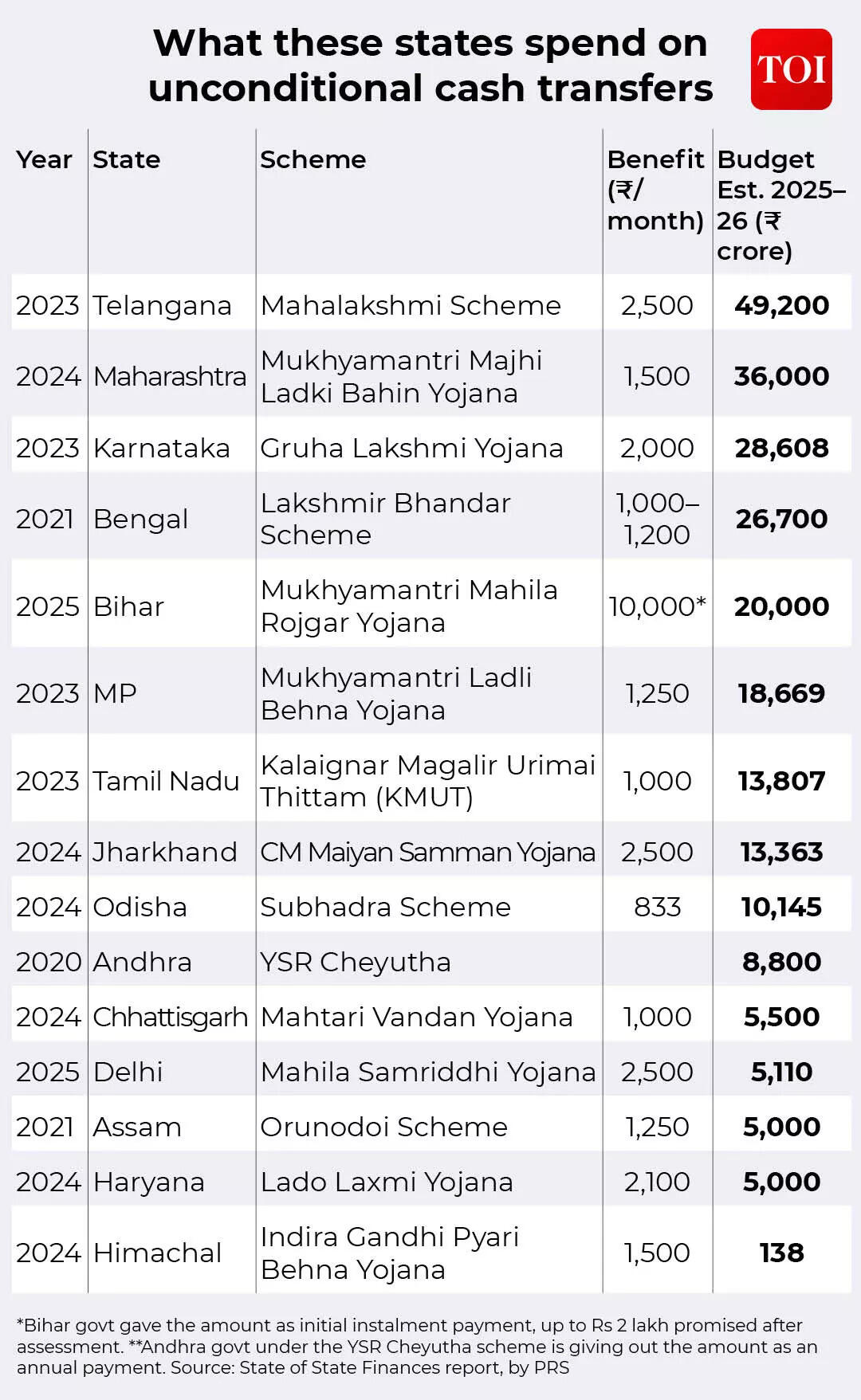
  • States are pumping Rs2.46 lakh crore annually into direct cash transfers to women.

MGNREGA, while historic in its impact, was built for an older economy. G RAM G is designed for a digitally connected, subsidy-rich, rural India where the challenge isn’t only poverty relief – it’s productivity, asset creation, and aligning with farm realities.
125978775 (3)

.

The big picture: Not a tweak, but a rethink

At a farmer rally in Rajasthan, Chouhan underlined the new mission:“We have not reduced it but increased it… Labourers will get wages and villages will see comprehensive development. Roads, drains, schools, everything can be built.”That shift – from emergency wage distribution to rural asset generation – reflects a deeper economic change.

What they’re saying

Sonia Gandhi calls G RAM G a “collective moral failure,” warning of job loss and loss of dignity: “The removal of the Mahatma’s name was only the tip of the iceberg.”The BJP’s Amit Malviya hit back: “Her arguments rest on mischaracterisations, selective memory, and outright falsehoods.”The divide is ideological – but also generational, rooted in two welfare philosophies: permanent subsidy vs productivity-driven support.Rahul Gandhi called it an ‘insult to the ideals of Mahatma Gandhi‘ and said the law bulldozes “both MGNREGA and democracy.”

Between the lines: The real economic logic of G RAM G

1. The safety net is now a floor, not a fallbackMGNREGA was built to prevent rural starvation and mass migration during crop failures and lean seasons. That logic worked in 2005.But today:

  • PMGKAY offers free food grain to 80 crore people until 2029.
  • NFSA guarantees subsidised food to two-thirds of India.
  • DBT infrastructure reaches 45 crore beneficiaries.

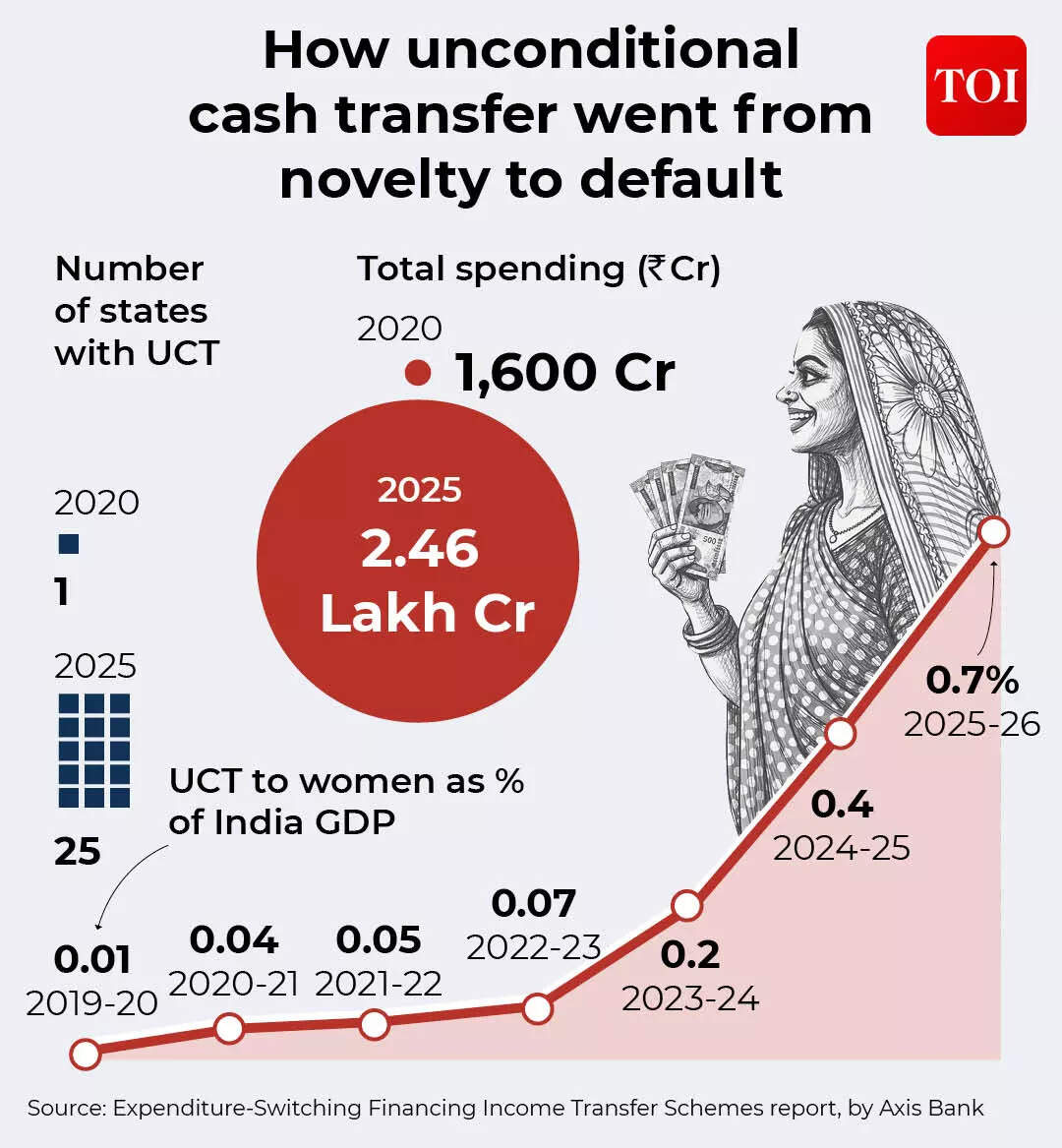
Implication: With calories protected, the role of employment guarantee schemes can shift from consumption smoothing to income generation through durable assets.In Chouhan’s words, “If needed, farm roads can also be constructed… everything can be built.”2. States are already flooding households with cash – so duplication is inefficient.From 1 state in 2020 to 15 states in 2025, unconditional cash transfers (UCTs) to women are now a Rs 2.46 lakh crore juggernaut.

  • Madhya Pradesh: Ladli Behna Scheme – Rs 1,000–Rs1,500/month.
  • Karnataka: Gruh Lakshmi – Rs 2,000/month.
  • Telangana: Mahalakshmi – Rs 2,500 + LPG subsidy + free bus rides.
women cash transfer desk gfx5

.

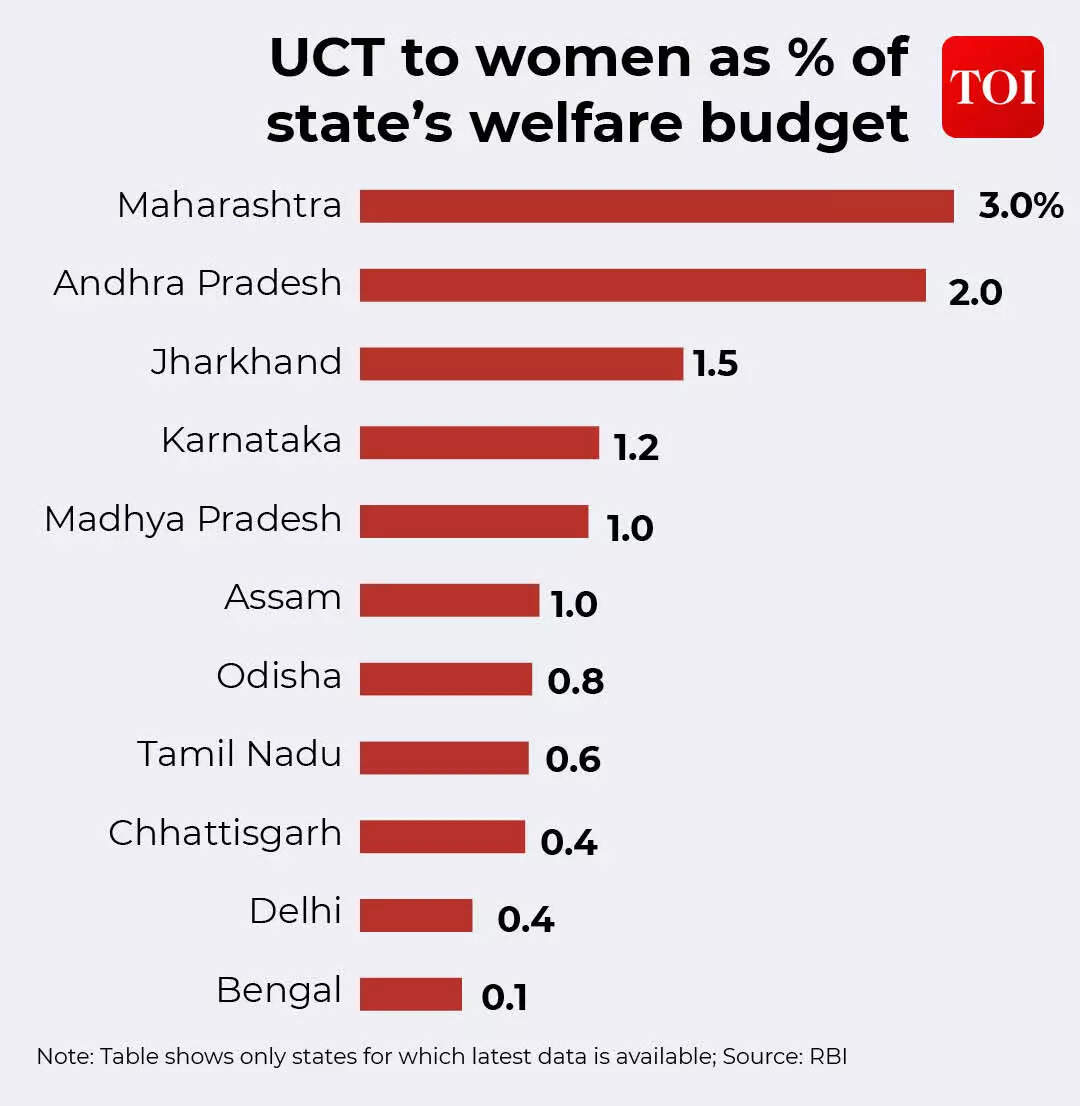
Why this matters: In villages where households already get regular cash + free food, demand for physical labour schemes changes.Women – the primary MGNREGA participants – are less likely to show up for work at Rs 220/day when cash arrives in their bank.
women cash transfer desk gfx

.

G RAM G acknowledges this by focusing on village development outcomes, not just labour targets.
women cash transfer desk gfx4

.

3. G RAM G fixes a paradox MGNREGA helped create: Labour shortages during harvestOne of the least discussed but most consequential changes is also one of the most controversial: The ability of states to suspend works for up to 60 days during peak sowing and harvesting seasons.Under MGNREGA, this was effectively taboo. Work was meant to be available year-round, on demand. But over time, farmers across states complained that the programme had become a rival employer. During peak agricultural seasons, when labour was needed most, workers often chose guaranteed public works instead. Wages rose. Harvests were delayed. Small farmers paid the price.The new law openly acknowledges this tension. By allowing a notified pause during peak seasons, it treats the employment guarantee not just as welfare, but as a labour-market instrument that must coexist with agriculture rather than crowd it out.States can pause work for 60 days to prevent a labour squeeze during critical farming periods.This reflects labour market realism, not policy retreat. In today’s India.

  • Farm productivity is vital.
  • Labour availability during key agri windows is essential.

G RAM G helps re-sync the rural workforce with agri cycles, rather than cannibalising farm labour.“They (MGNREGA) are trying to scare labourers… but we have increased the days to 125,” said Chouhan.4. India needs to move from “supporting poverty” to “building capacity”India’s economy is set to cross $4 trillion soon, but per capita income remains modest – around $2,800/year.That creates a challenge: How do we support vulnerable households without freezing them in place?“The real nature of the Modi government’s intentions can be understood from its decade-long track record of throttling MGNREGA,” Sonia Gandhi wrote in an article in a national daily.But G RAM G’s supporters argue the opposite: the scheme is not abandoning rights but upgrading them

  • From income support to income generation
  • From person-days to water tanks, roads, climate resilience
  • From centralised bureaucratic design to village-level planning

By raising guaranteed work to 125 days and channeling it into productive, measurable outputs, G RAM G aims to raise village capability – not just survival.

What next: Execution is the litmus test

Even the most elegant economic theory fails if delivery falters. G RAM G’s success hinges on four critical design principles:1. Avoid stealth caps: Centre determines normative funding per state – but must ensure that does not limit the legal guarantee.2. Use the 60-day pause wisely: It should match local agri calendars, not become a loophole to under-provide work.3. Biometrics must include – not exclude: With tech-driven tracking, grievance redress and offline options must remain strong.4. Measure outcomes, not just inputs: Focus must shift from how many people worked to what got built, how it’s used, and what productivity gains it generates.

Zoom out: The economics of co-ownership

The 60:40 Centre-State cost sharing is controversial but crucial. It ends the previous model where states authorised spending and the Centre paid the bill.Now:

  • States must co-own work quality.
  • Panchayats get more voice in planning.
  • Centre retains unemployment allowance provision – if work isn’t provided in 15 days.

Chouhan assured at the rally, “Funds won’t be swindled. Wages will be paid with interest if delayed.”It’s a governance pivot: from passive disbursement to performance-driven delivery.

The bottom line:

VB-G RAM G is not just a renamed MGNREGA. It’s a fundamentally new compact between India’s rural poor, its states, and its economy.In a welfare-rich, DBT-driven, digitally connected India:

  • Safety nets must become springboards.
  • Cash cannot replace infrastructure.
  • Relief must evolve into resilience.

G RAM G, with all its caveats and criticism, tries to answer a simple but vital question: What should rural employment guarantee look like – in a $4T India where the real challenge is not food or cash, but opportunity?



Source link

WATCH: Rohit Sharma’s cute reaction to fans ‘vada pav khaoge’ query during Vijay Hazare Trophy match


Indian cricket icon Rohit Sharma once again won hearts during a Vijay Hazare Trophy match, this time not just with his bat but with a light-hearted interaction that quickly took over social media.

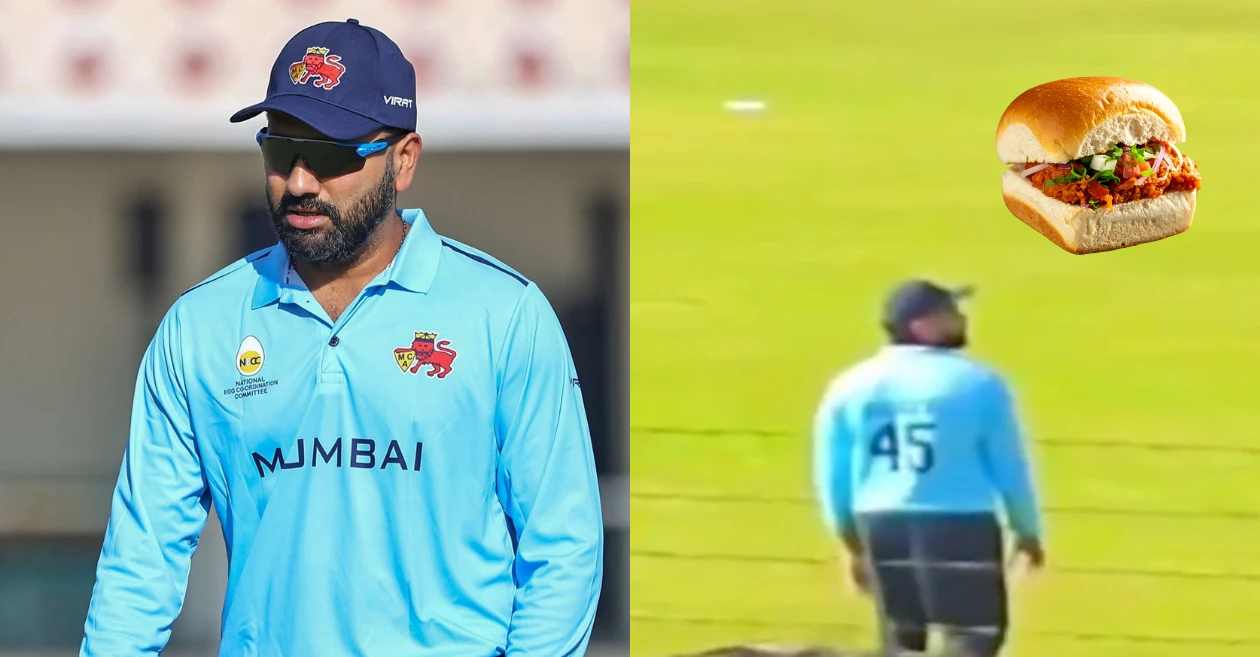
During Mumbai’s Elite Group C clash against Sikkim in Jaipur, Rohit’s cute reaction to a fan’s shout of “Rohit bhai, vada pav khaoge?” became an instant viral hit.

The moment unfolded in front of thousands at the Sawai Mansingh Stadium, highlighting Rohit’s enduring popularity and his ability to connect effortlessly with fans even in domestic cricket.

Boundary-line banter lights up the stadium

Rohit responds with a smile, not annoyance

While fielding near the boundary rope, Rohit became the focus of attention when a group of fans loudly offered him home-made vada pav, a snack long associated with him through memes and fan culture. Instead of ignoring the call or appearing irritated, Rohit turned toward the stand with a broad smile.

He raised his hand and made a playful “no” or “not now” gesture, acknowledging the fans with warmth. The response drew a massive cheer from the crowd, instantly turning the exchange into a feel-good moment.

Short clips captured from the stands spread rapidly across Instagram Reels, X (formerly Twitter), and YouTube Shorts, with fans praising Rohit’s humour and down-to-earth nature.


Rohit’s association with vada pav has long been a running joke among Indian cricket fans, symbolising both his Mumbai roots and his approachable public image. The Jaipur moment showed how that meme culture has now blended seamlessly into live stadium experiences.

Rather than distancing himself from the joke, Rohit embraced it in good spirit, reinforcing why he remains one of the most beloved figures in Indian cricket.

Also READ: Reason behind BCCI moving Virat Kohli’s Vijay Hazare Trophy matches from Chinnaswamy to CoE

Rohit’s dominant on-field performance follows viral moment

The light-hearted interaction was followed by a commanding cricketing statement. Later in the match, Rohit produced a sensational 155 off just 94 balls while chasing 237 against Sikkim, steering Mumbai to a dominant win.

The innings marked a stunning return to List A cricket, reminding everyone that even while enjoying fan banter, Rohit’s focus and hunger for runs remain intact.

Reports from the venue noted that over 10,000 fans turned up in Jaipur, many specifically to watch Rohit bat. Throughout the game, chants of “Rohit, Rohit” echoed around the stadium, creating an atmosphere more typical of an international fixture than a domestic one-day match.

Also READ: Fans go berserk as Rohit Sharma smashes an explosive century against Sikkim in Vijay Hazare Trophy 2025-26


Source link