Breaking News
Mumbai high-rise fire scare: Blaze erupts on 14th floor at Sorrento Tower, several residents trapped; 40 rescued so far | Mumbai News


Blaze erupts on 14th floor at Sorrento Tower

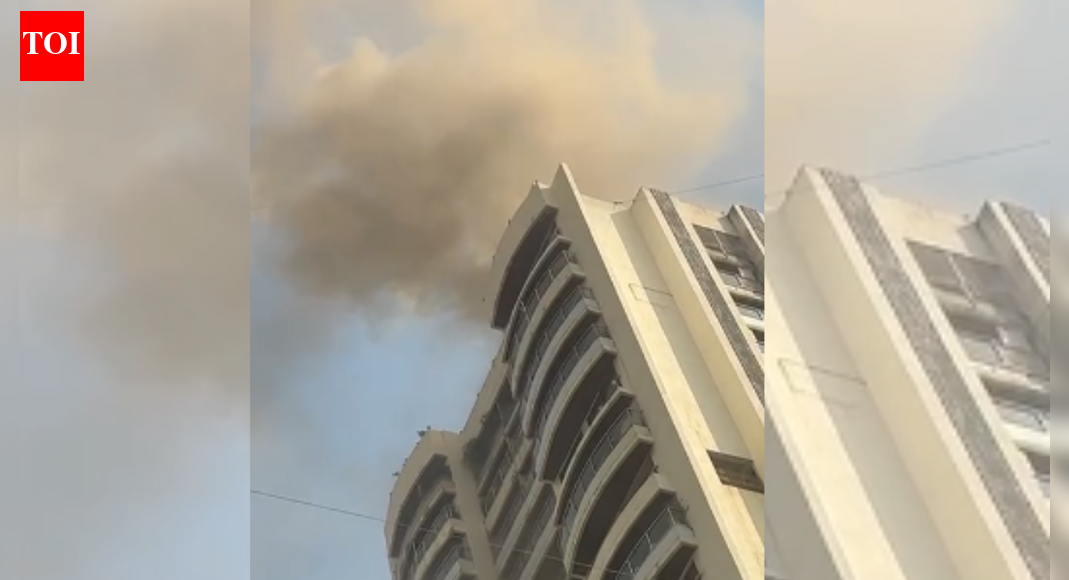
MUMBAI: A fire broke out on the 14th floor of a 23-storey residential building in Andheri West on Thursday morning, leading to heavy smoke logging and leaving several residents stranded on the upper floors.Around 30 to 40 residents who had gathered at the refuge area on the 16th floor were safely evacuated through the staircase.The incident was reported to the Mumbai Fire Brigade (MFB) control room at around 10.05 am.The fire occurred at Sorrento Tower on Veera Desai Road, near the Country Club. Firefighters rushed to the spot and declared it a Level-I fire at 10.20 am. The fire was confined to the 14th floor of the ground-plus-23-storey structure, but smoke spread through the building.Multiple agencies, including the Mumbai Fire Brigade, local police, Adani Electricity, 108 ambulance services and ward-level civic staff, were mobilised to handle the situation and ensure the safety of residents. Fire personnel were engaged in rescue and ventilation operations to clear the smoke and assist those stranded on higher floors.As of the latest update at 10.43 am, no injuries or casualties had been reported. Fire officials said operations were underway and the situation was being closely monitored. Further details on the cause of the fire were awaited.


Source link

India to miss $1 trillion exports target? Exports struggle despite the FTA push — Here’s what’s happening


India to miss $1 trillion exports target? Exports struggle despite the FTA push — Here’s what’s happening

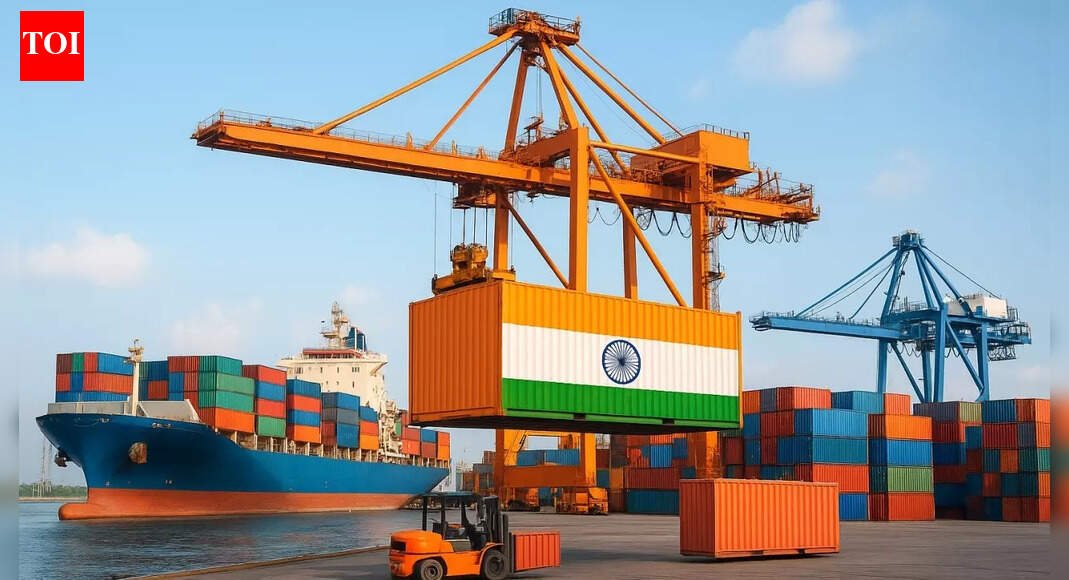
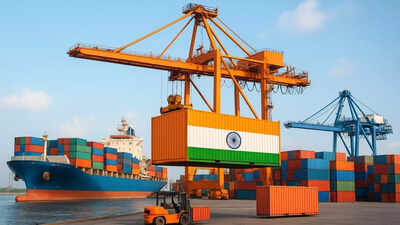
India’s ambition of exporting goods and services worth $1 trillion by the end of FY26 is likely to remain out of reach, Global Trade Research Initiative (GTRI) predicted in its latest report on Thursday, pointing to weak merchandise shipments due to weak global demand and increasing protectionist trends.Ajay Shrivastava, founder of the economic think tank, said that India is expected to record flat increase in exports this year with goods outflows showing almost no growth. Total exports in FY26 are expected to rise only to almost $850 billion, missing the $1 trillion number by $150 billion. The think tank predicted that services exports might be able to cross $400 billion, providing “the only meaningful growth cushion for India’s trade,” as the overall growth struggles with weak global demand. Meanwhile, Shrivastava highlighted that the target may be achieved if India succeeds in sealing major trade deals. “That I think we may achieve once our trade deal with the US and EU comes. That is maybe next year, not this year,” he said.While exports face sustained pressure, Shrivastava said that domestic economic conditions remain stable. “The domestic economy is working fine,” he said, adding, “The GDP numbers are telling; low inflation numbers are telling. The only pressure on the GDP will be the pressure on the export side.”

India’s trade with US and EU — a different picture

Despite the overall slowdown, recent trade figures suggest that India has begun to diversify its export destinations. Shrivastava pointed out that exports to the United States declined sharply between May and November, even as shipments to other regions rose.Exports to the US dipped almost 21% amid President Donald Trump’s 50% tariffs imposition on Indian shipments.“We have seen that between May and November, our exports to the US are down by 20.7%” he said. The report added that unless Washington rolls back the extra 25% duties on India or locks in a trade deal, “exports to India’s largest market risk further erosion.”For India’s trade with the European Union, the think tank highlighted a difference with exports dropping even before duties came into play with the bloc’s compliance and reporting requirements dragging down the country’s steep shipments by almost 24%.EU will “activate its Carbon Border Adjustment Mechanism (CBAM) on January 1, 2026, effectively imposing a carbon tax on imports.” From the next year, 2026, EU importers will lable Indian goods inclusive of the CBAM costs, “with payments settled through certificate surrender in 2027.”

India is diversying its export destinations

Shrivastava said, “During this time, our exports to the rest of the world increased by 5.5%. That means diversification already started happening in a small way.”However, he cautioned that geographical diversification must be accompanied by changes in the composition of India’s exports. “For more diversification, for more exports to these countries, we have to focus on diversifying our export basket also,” Shrivastava said. “Right now, our export basket needs inclusion of more medium to high-tech products.” The think tank said that while the country has already signed 18 FTAs and more possible in 2026, India’s priority must change, going from signing agreements to “making FTAs deliver real export gains, especially in electronics, engineering and textiles.”

What should be India’s strategy for 2026?

  • For the next year, India’s export strategy needs to focus inward, as there is limited influence over global geopolitics.
  • Export growth will depend on improving product quality, improving the value chain and bringing production costs down.
  • Electronics, engineering and textiles will emerge as the strongest opportunities, as higher value addition can sustain exports when the global trade environment is hostile.
  • Using trade agreements effectively.
  • Execution of policies and schemes should be in focus, with emphasis on operationalising the Export Promotion Mission, simplifying regulations and improving ease of doing business.

The think tank cautioned that tariffs, climate-related taxes and geopolitical uncertainty will continue to weigh on global trade conditions. Export survival and growth will depend on competitiveness at home, including better products, deeper manufacturing capabilities and lower costs.Back in FY25, India’s overall exports stood at $825 billion, including $438 billion in merchandise outflows and $387 billion in services.


Source link

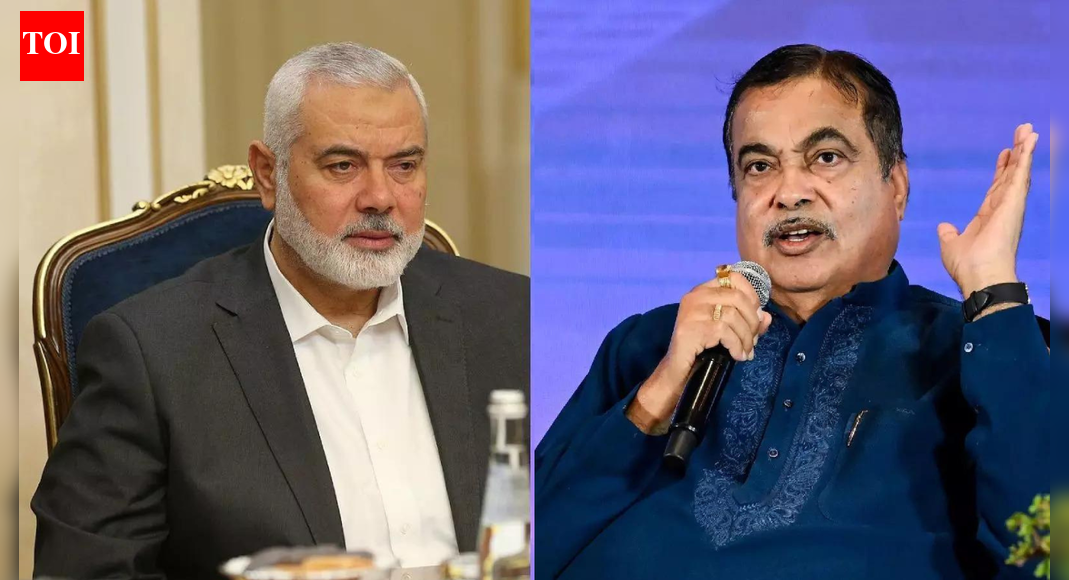
‘No one knows where missile came from’: Nitin Gadkari recalls meeting Hamas leader Ismail Haniyeh hours before assassination; how he reacted | India News


‘No one knows where missile came from’: Nitin Gadkari recalls meeting Hamas leader Ismail Haniyeh hours before assassination; how he reacted

NEW DELHI: Union minister Nitin Gadkari has recounted how he came face to face with Hamas political chief Ismail Haniyeh just hours before the latter was assassinated in Tehran, linking the incident to what he described as the growing role of technology in modern conflict and national security.Speaking at a book launch event, Gadkari said he had travelled to Iran at the request of Prime Minister Narendra Modi to represent India at the swearing-in ceremony of Iran’s newly elected president, Masoud Pezeshkian. According to the minister, foreign dignitaries were staying at a five-star hotel in Tehran ahead of the ceremony.

‘Israel-India Defense Ties Are Long-Standing And Strategic’: Expert Danny Citrinowicz

“I had gone for the Iranian Prime Minister’s ceremony. There is a 5-star hotel there where all heads of state stayed. Modi ji had sent me,” Gadkari said.He recalled noticing one individual among the dignitaries who was not a head of state. “I wondered who he was. I also shook hands and asked. He was the head of Hamas,” he said, adding that Haniyeh later walked into the ceremony alongside Iran’s president and chief justice, while other delegates followed.Gadkari further described how he was woken early in the morning amid the chaos of Haniyeh’s assassinations. “I also came to my hotel and after eating dinner, went to sleep. At 4 o’clock, the ambassador came and knocked on the door saying “Sir, we have to evacuate.” I asked why. He said there’s been a big problem. What happened? He said the Hamas leader who was here yesterday, a powerful man, was killed in his room.”Iranian authorities later confirmed that Haniyeh was killed at around 1.15am on July 31, 2024, while staying in a highly secure military complex under the supervision of the Islamic Revolutionary Guard Corps (IRGC). His bodyguard was also killed in the attack, according to official statements cited by the Associated Press.Gadkari told the audience that the exact method of the assassination remained unclear. He went on to suggest how the future high-tech is important from the perspective of national security, modern warfare, and critical infrastructure. “No one knows from where the missile was fired, where it entered – now some say it was his mobile phone number, he was specially hidden in one place in a bungalow, went to that room and killed him there. So the coming time is futuristic, technology and futuristic vision for development in defence, agriculture, industry, trade, business export – we will have to do all this.” At the same event, Gadkari remarked that strong nations are difficult to target, citing Israel as an example of how technological and military capability translate into global influence.Iran’s revolutionary guards authorities had said a short-range missile was used to strike the building where Haniyeh was staying. The Telegraph claimed that Israel’s intelligence agency Mossad may have orchestrated the killing by planting explosives inside the guesthouse, citing Iranian officials. Iranian authorities have not publicly confirmed that account.


Source link

‘I get fans’ frustration, but…’: Ashwin explains why Vijay Hazare Trophy matches weren’t televised | Cricket News


'I get fans' frustration, but…': Ashwin explains why Vijay Hazare Trophy matches weren’t televised
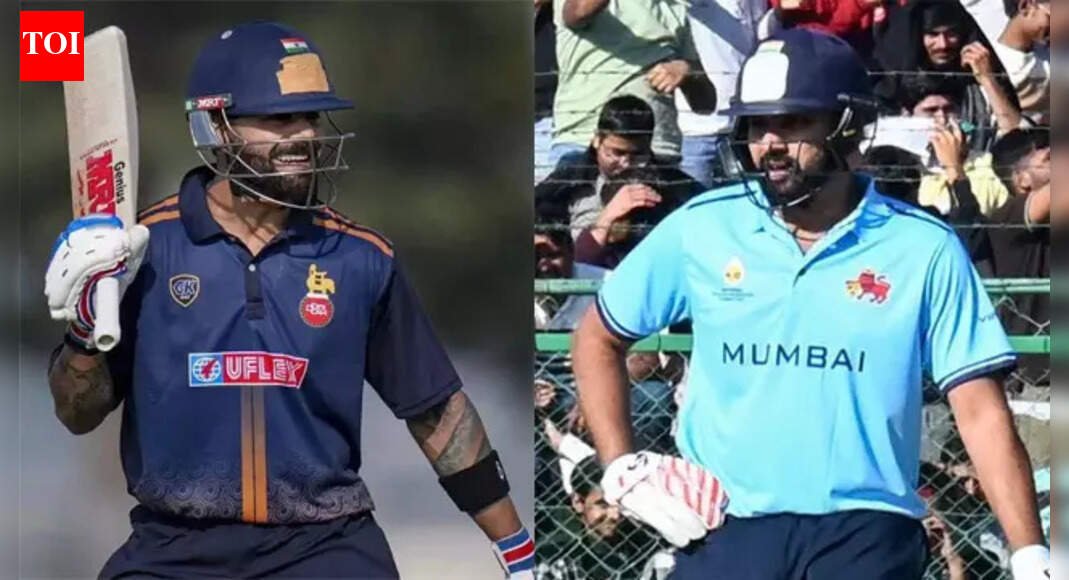
Virat Kohli and Rohit Sharma

NEW DELHI: Former India spinner Ravichandran Ashwin has weighed in on the growing frustration among fans over the limited television coverage of the Vijay Hazare Trophy 2025–26 group-stage matches, saying the disappointment is understandable but urging supporters to appreciate the logistical constraints faced by the BCCI.Go Beyond The Boundary with our YouTube channel. SUBSCRIBE NOW!The domestic one-day tournament began on Wednesday with rare star power, as India stalwarts Rohit Sharma and Virat Kohli returned to the domestic circuit after years. Rohit turned out for Mumbai and Kohli for Delhi, lighting up the competition with big hundreds. Yet, to the dismay of fans, several marquee fixtures — including those featuring the two superstars — were not televised.

Why Rohit Sharma got really emotional at a promotional event

Speaking on his YouTube channel, Ashwin acknowledged the anger among supporters desperate to watch their heroes.“Fans are asking what the hell? Only Elon Musk can telecast these matches on X,” Ashwin said with a smile. “Everyone wants to follow Rohit Sharma and Virat Kohli, no doubt. They had a great series and will be facing New Zealand next. They both have turned up, and turned up how! One scores 150 and the other 130, both with incredible strike rates. When players like these come and play, the matches become more exciting.”Rohit smashed a breathtaking 155 off just 94 balls for Mumbai against Sikkim, smashing 18 fours and nine sixes. Kohli was equally dominant, scoring 131 off 101 deliveries for Delhi against Andhra, including 14 fours and three sixes.

Poll

Do you think the limited television coverage of the Vijay Hazare Trophy is disappointing?

However, Ashwin also came to the defence of the BCCI, explaining that broadcasting decisions are made well in advance and cannot always account for late selection calls.“Everyone wants to see Rohit and Virat in action, sure. But we have to see how early they got the information that Rohit and Virat will play,” he said. “When the international calendar is given, the domestic calendar is given at the same time. Once it is set, the BCCI and broadcasters decide which venues are easy to cover and which matches can be televised.”Ashwin stressed that last-minute changes are rarely feasible. “So the conversation was Rohit and Virat will play, but when? Making that last-minute switch is difficult,” he said.While sympathising with fans, Ashwin underlined the broader reality of Indian domestic cricket. “I can understand the frustration. But there are limitations,” he said. “India has the maximum first-class teams. You cannot televise all matches. Other players also want to showcase their talent and are equally important to the ecosystem. I think we should cut some slack there.”


Source link

Income tax refund: Your refund may be delayed if revised return not filed by December 31, 2025 deadline – here’s why


Income tax refund: Your refund may be delayed if revised return not filed by December 31, 2025 deadline - here’s why
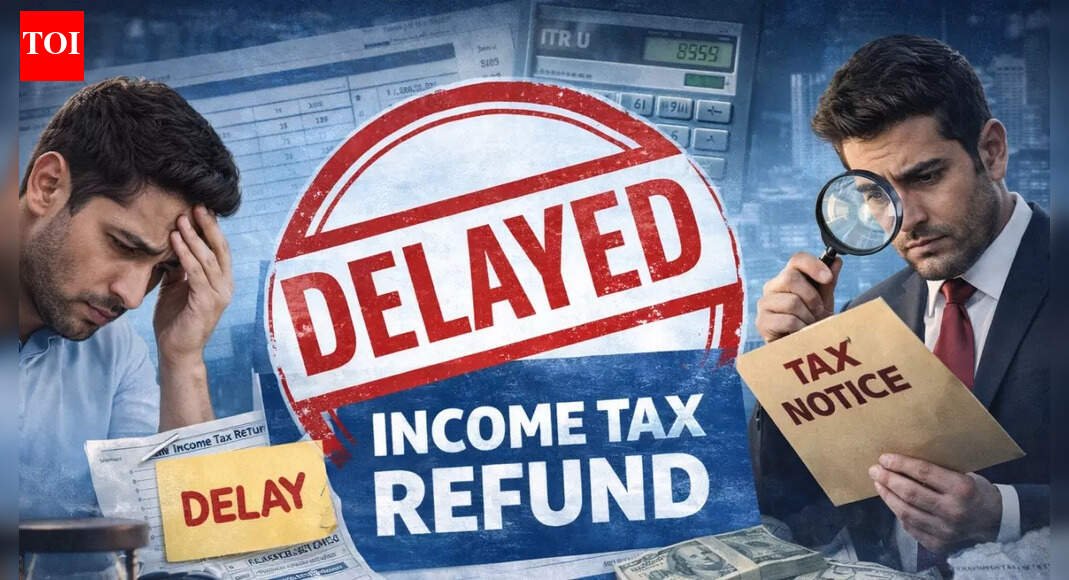
The December 31, 2025 deadline is significant as it marks the last date for filing both revised and belated income tax returns. (AI image)

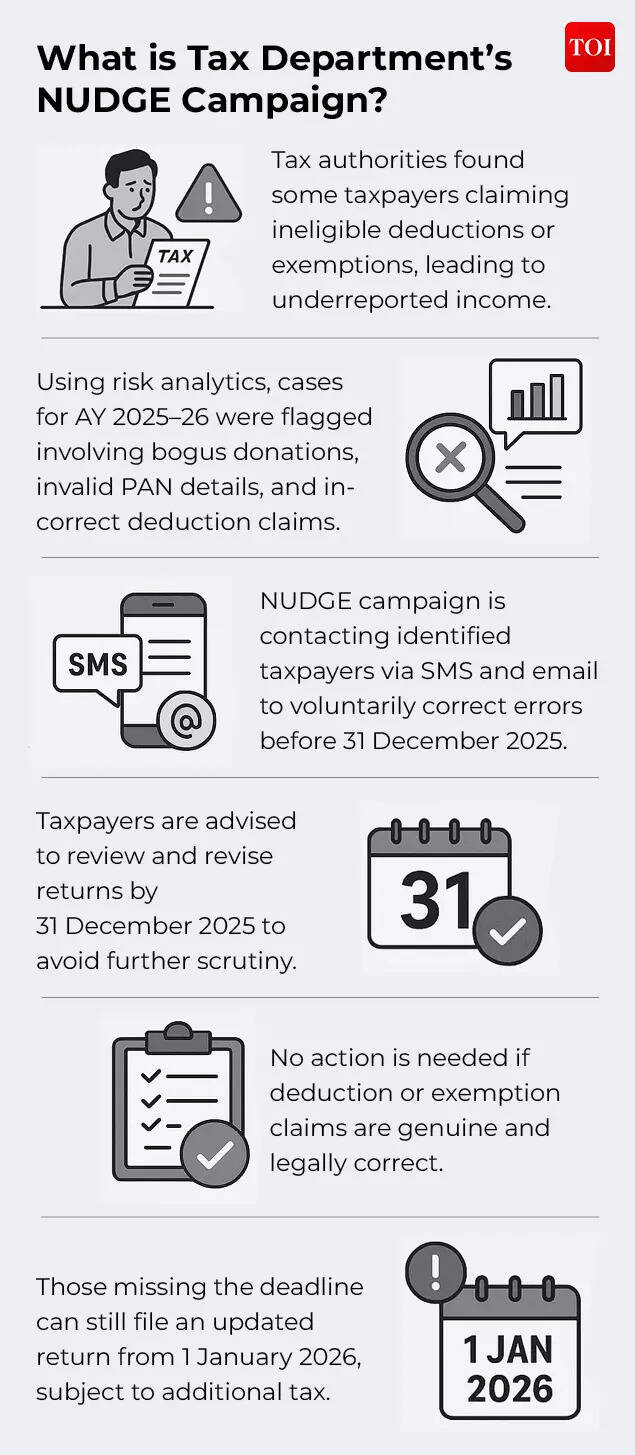
Income tax refund status: The Income Tax Department has stepped up scrutiny for tax returns and several taxpayers have not received their income tax refunds this year. The delay in tax refunds is a result of greater vigilance on tax deductions and exemptions that have been claimed by taxpayers.Ahead of the December 31, 2025 deadline for filing an updated or belated return, the Income Tax Department has also launched a NUDGE (Non-intrusive Usage of Data to Guide and Enable) campaign, urging taxpayers to file updated tax returns since their exemptions, deduction and refund claims have been found to be ineligible.

ITR December 31, 2025 Deadline Important For Tax Refunds

According to an ET report, the income tax refunds for those taxpayers may face a delay if they fail to file a revised Income Tax Return by the December 31, 2025 deadline for Assessment Year 2025-26, particularly in cases where errors or missing information have resulted in incorrect refund claims or data mismatches.The Income Tax Department has begun sending emails and SMS to taxpayers who have claimed what the tax department has called ‘ineligible’ deductions or exemptions they are not entitled to. These taxpayers have been asked to correct the errors if any, and submit a revised return by December 31, 2025.Also Read | ITR filing: Received ‘nudge’ from Income Tax Department for tax return & refund claims? Here’s what you need to do The December 31, 2025 deadline is significant as it marks the last date for filing both revised and belated income tax returns. Once a return is processed by the Centralised Processing Centre, any discrepancies or mistakes that are flagged and communicated to the taxpayer will invite detailed scrutiny. However, if the return is processed only after the deadline, the intimation highlighting the error may also be received after December 31, leaving the taxpayer without the option to revise the return, the ET report said.As a result, taxpayers whose returns contain mistakes that are identified after the deadline may have to face further verification or assessment proceedings, even if the error was unintentional.

Nudge Campaign

Nudge Campaign

Chartered Accountant Suresh Surana was quoted as saying, “Accordingly, once this date has elapsed, a taxpayer can no longer revise the return of income to correct errors or omissions, even if the return has not yet been processed by the Centralised Processing Centre.”Income tax refunds are at the risk of being delayed for taxpayers who fail to file a revised Income Tax Return by the December 31, 2025 deadline, particularly salaried employees whose tax filings contain mismatches with employer records.Abhishek Soni, CEO & co-founder, Tax2win, said many salaried individuals have received intimation notices from the Income Tax Department. These cases largely involve employees who claimed deductions such as those under Sections 80C, 80D or House Rent Allowance in their returns but did not disclose these claims to their employers at the time tax was deducted at source.Maneesh Bawa, Partner, Nangia Global, noted that these mismatches are common and can occur when tax has been deducted under the new regime, but the return is filed under the old regime with deductions claimed.Jigar Suba, founder of JC Suba & Associates told ET that such intimations may be triggered by a range of errors, including incorrect or excessive deduction claims, mismatches in income reported against data reflected in the Annual Information Statement or Tax Information Summary, and discrepancies between the Income Tax Return and Form 26AS. Other common reasons include incorrect House Rent Allowance or leave travel claims, unsupported deductions for life or medical insurance, and ineligible donations claimed for charitable trusts or political parties.He added that failure to disclose income beyond salary is another major trigger, with omissions often relating to the sale of mutual funds, equity shares, crypto assets, as well as other capital gains or interest income.Abhishek Soni said that such intimations are significant as they indicate that the Income Tax Department has identified a mismatch in the return and that its data does not fully support the deductions claimed. He warned that ignoring the notice could result in tax demands, interest liabilities or further communications from the department.Maneesh Bawa said that if the Income Tax Department has identified an error, taxpayers should file a revised return within the permitted timeline, which is currently open until December 31, 2025. He cautioned that ignoring a genuine discrepancy may lead to disallowance of claims and could invite closer scrutiny, resulting in additional tax liabilities along with interest and penalties.


Source link

How the longest venomous King Cobra in history became a casualty of the Second World War |


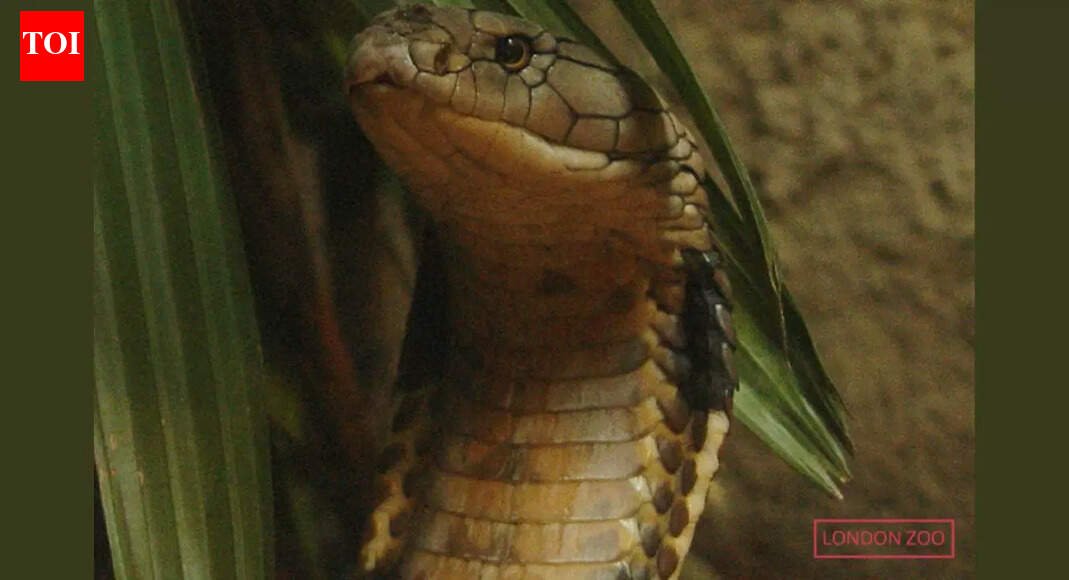
The king cobra occupies a singular position in the natural world-one defined not just by its biology but also by an unlikely linkage to human history. As the longest venomous snake ever recorded with reliability, it has long occupied a position of scientific interest for scholars researching reptile evolution, venom systems, and behavioural adaptation. One individual specimen, measured and preserved early in the twentieth century, came to represent the outer physical limits of the species. Its existence provided tangible evidence of what nature was able to create under the proper conditions. Yet this magnificent animal did not survive as a lasting scientific reference. During the Second World War, it became an unintended casualty of aerial bombing in Britain; its preserved remains were reduced to destruction. The story is poignantly subdued, a reminder of just how tenuous scientific knowledge can be when the forces shaping it lie far beyond the laboratory.

What makes the king cobra the longest venomous snake on record

The king cobra, also known as Ophiophagus hannah, differs from other venomous snakes in its morphology and physiology. Most of the venomous species depend on ambush and camouflage for hunting, but the king cobra is a brave hunter, and it feeds on snakes mostly. This highly selective diet maintains a very strong and long body, which can even be longer than that of other venomous reptiles. The longest individual that has ever been recorded was far over five meters, and this size has never been confirmingly exceeded. Several studies that reviewed the old records and checked the preserved specimens concluded that this specimen is the longest venomous snake ever documented, a distinction that is still uncontestable. Its venom is mainly neurotoxic; however, it is also produced in large amounts, thus, one bite is capable of causing the death of a large animal, and it is very helpful to researchers to understand the evolution of toxins.

What journey brought the record-holding king cobra to London

From forest to museum, the journey of the specimen epitomises scientific practices of the early twentieth century. In an age of colonial exploration, natural history institutions were actively seeking out rare and extreme examples of wildlife that would extend their collections. The record-holding king cobra was caught in Southeast Asia and transported alive to Britain. It was placed on display at London Zoo. Its size immediately made it stand out, the centre of attention among both zoologists and visitors. It was carefully measured repeatedly to make sure that the measurements were accurate, and photographs were made to visually document this evidence. Observations of its behaviour while in captivity contributed to early descriptions of the king cobra’s temperament and feeding behaviour. After death, the snake was preserved and moved into a museum collection that was supposed to serve as a permanent scientific reference. At the time, preservation equated to stability-a belief that once recorded and stored, knowledge could endure indefinitely.

Did the Second World War erase a once-in-history snake specimen forever?

That expectation of permanence collapsed during the Second World War. As London withstood months on end of bombing during the Blitz, the destruction extended far beyond industrial and military targets. Cultural and scientific institutions were hit, sometimes with disastrous repercussions. The museum where the pickled king cobra was kept sustained a direct hit, and the specimen was destroyed in the subsequent confusion. Its glass container broke, the preservation liquids leaked out, and what was left was irretrievable. Given the enormous losses of human life during the war, the disappearance of a snake did not attract much attention. To science, on the other hand, the loss came as a serious blow. The longest venomous snake on record ceased to exist as a physical object and remained only in the form of written measurements and photographs. The incident serves as a silent reminder of the ways in which war is able to destroy not just lives and buildings but also fragments of natural history that can never be recovered.

How the destruction of one snake affects scientific memory

The loss of the king cobra specimen still resonates in ways as stealthy. Specimens afford scientists the opportunity to revisit earlier conclusions, apply new techniques, and confirm records from the past when standards evolve. With the destruction of this snake, all such opportunities vanished, permanently. Its recognition by Guinness World Records now rests entirely on historical documentation, serving as a reminder of just how fragile verification can become without material evidence. The story has even influenced modern approaches to preservation, encouraging greater emphasis on duplication, digitisation, and global data sharing. Beyond museums, it reverberates with contemporary concerns about conservation. King cobras today face shrinking habitats and increased human conflict across parts of Asia, placing stress on a species already misunderstood and often feared. The fate of the longest venomous snake carries a muted sadness, not simply because of its size alone, but because it reflects how easily even knowledge, once thought secure, can be lost to forces entirely unrelated to science itself.In remembering this vanished giant, the episode urges renewed respect for both living species and preserved knowledge, highlighting why safeguarding biodiversity and scientific archives is essential in a world where conflict and environmental change continue to threaten both.Also Read | The snake whose invisible bite can be fatal; why the Common Krait is called the silent killer


Source link

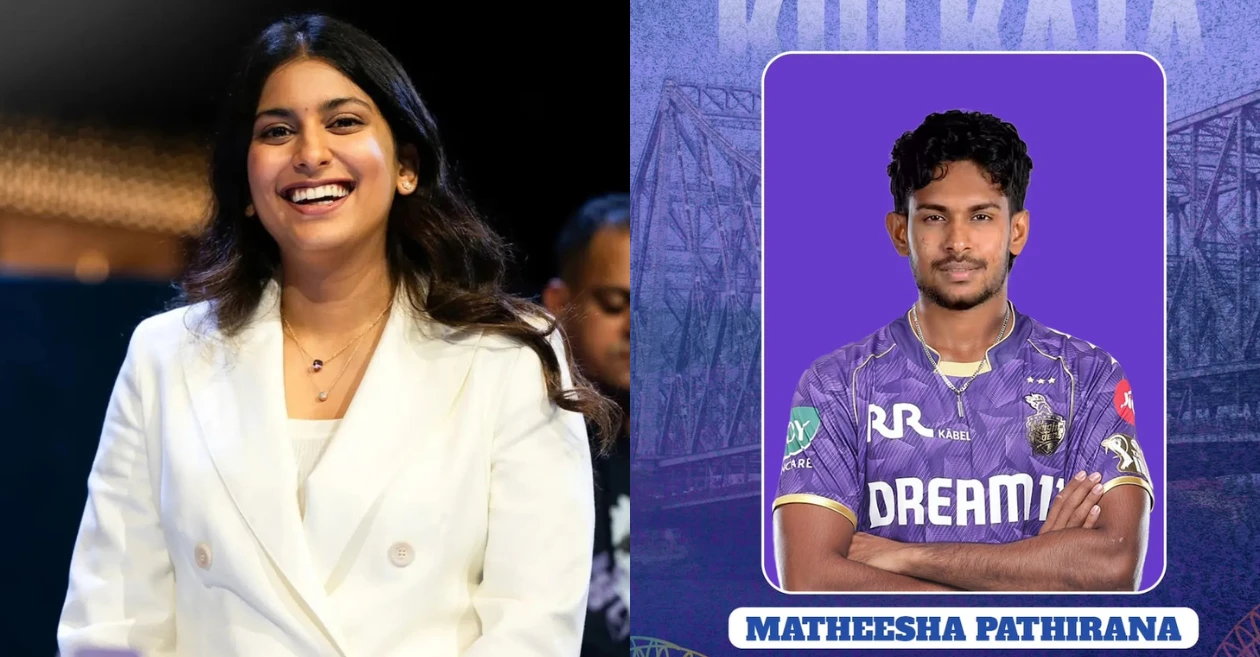
Jahnavi Mehta reveals why KKR spent INR 18 crore on Matheesha Pathirana at IPL 2026 Auction


The IPL 2026 auction saw one of its most debated moments when Kolkata Knight Riders (KKR) splurged ₹18 crore on Sri Lankan fast bowler Matheesha Pathirana, a player released by Chennai Super Kings (CSK) just months earlier. Now, KKR co-owner Jahnavi Mehta has revealed the clear thinking behind what many initially labelled a risky move.

Jahnavi Mehta explains KKR’s bold call for Matheesha Pathirana

According to Mehta, the decision was not emotional or reactive, but a calculated response to KKR’s biggest weakness during the IPL 2025 season – ineffective death bowling.

Speaking about the auction strategy in an interview with MyKhel, Mehta explained that KKR’s management conducted a detailed review of the previous season and found a recurring issue.

“I think one of the key gaps we identified last year was the lack of an experienced death bowler, and it cost us in several crucial situations,” she said.

KKR lost multiple tight games in the final overs in IPL 2025, where an inability to close out innings proved costly. Fixing that specific role became the franchise’s top priority heading into the mini-auction.

After analysing the auction pool, KKR felt the market offered very few reliable death-overs specialists with proven IPL credentials.

Mehta revealed that only Pathirana and Mustafizur Rahman fit the profile KKR were looking for.

“When there’s such limited supply, only Pathirana and Mustafizur truly fit that proven IPL profile with death bowling expertise,” she said.

With almost every franchise hunting for a reliable finisher with the ball, KKR anticipated intense bidding. Their internal valuation hovered around ₹15-16 crore, but they were prepared to stretch further to avoid missing out.

Why KKR pushed to ₹18 crore for Pathirana?

As the bidding escalated, KKR decided to go beyond their initial comfort zone.

“Everyone wants a reliable death bowler, so we knew it would be around 15-16 crores. We pushed a bit harder because he was a top priority, stretching to 18 crores, and we managed to secure him,” Mehta explained.

The franchise believes the premium price reflects scarcity rather than overvaluation, especially in a league where death-overs specialists can directly swing results.

Also READ: Here’s how long KKR’s ₹9.2 crore pacer Mustafizur Rahman will be out of IPL 2026 – Details inside

Why CSK let Pathirana go and why KKR still believe in him?

CSK released Pathirana after a modest 2025 season, partly to free up around ₹13 crore in purse space. However, KKR are backing the bowler’s earlier body of work, particularly his standout IPL 2023 campaign, where he picked up 19 wickets in 12 matches and played a key role in CSK’s title run.

Pathirana’s Lasith Malinga-style slingy action, extreme yorker accuracy and raw pace are skills KKR see as rare commodities in the current market.

KKR also believe Pathirana’s skill set is tailor-made for Eden Gardens, where flat pitches and short boundaries regularly produce high-scoring contests.

At such venues, a bowler who can nail yorkers under pressure becomes invaluable. KKR view Pathirana as a potential match-winner in tight finishes, capable of defending slim totals or stopping last-over chases.

Also READ: IPL 2026 Auction – Here’s why Cameron Green will receive only INR 18 crore even though KKR bought him for INR 25.2 crore

Source link

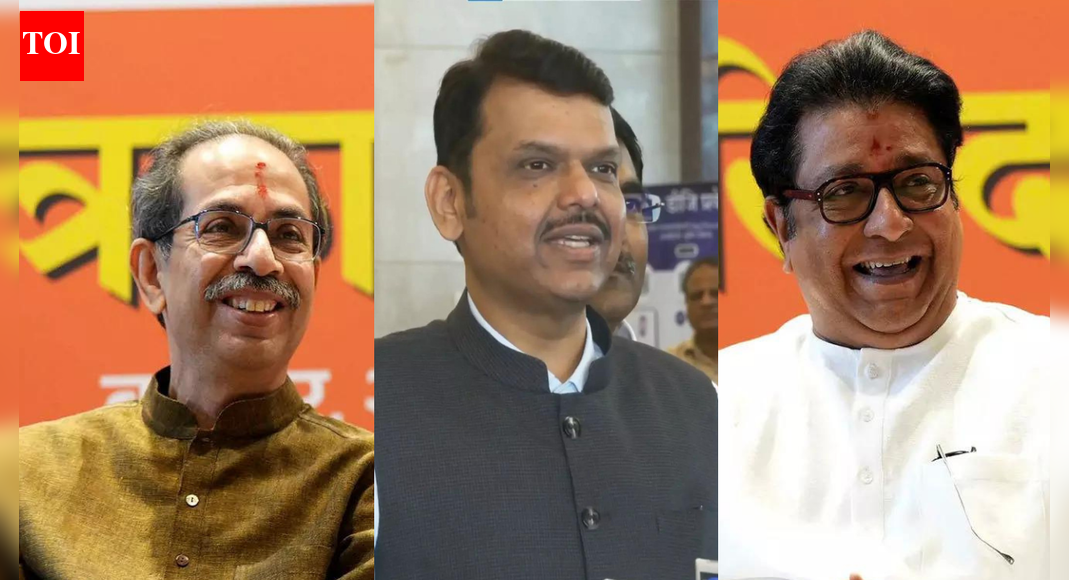
BMC polls: Devendra Fadnavis likens Thackeray cousins’ bonhomie to ‘Putin-Zelenskyy’ peace talks; rivals calls hype ‘manufactured’ | Mumbai News


Devendra Fadnavis likens Thackeray cousins’ bonhomie to ‘Putin-Zelenskyy’ peace talks

MUMBAI: The political reunion of the estranged Thackeray cousins ahead of the BMC polls has triggered sharp reactions across Maharashtra’s political spectrum, with the ruling Mahayuti likening the tie-up to a “Putin–Zelensky moment” and dismissing it as hype, while supporters call it “historic”.Chief minister Devendra Fadnavis said the alliance between Shiv Sena (UBT) and the Raj Thackeray-led Maharashtra Navnirman Sena (MNS) was being portrayed as if Russian President Vladimir Putin and Ukrainian President Volodymyr Zelenskyy had come together, arguing that the political relevance of the reunion was being overstated.

‘Batenge Toh Katenge’: Uddhav & Raj Thackeray Unite For Mumbai Civic Polls | Shiv Sena (UBT) | MNS

“They are trying to create hype as if something as historic as peace talks between Russia and Ukraine are taking place, with President Volodymyr Zelenskyy and President Vladimir Putin finally sitting across the table,” Fadnavis told reporters.Even as the Mahayuti questioned the impact of the alliance, Thackeray loyalists hailed the coming together of Uddhav and Raj Thackeray as a turning point that could revive the “son of the soil” ideology in Mumbai politics ahead of the civic polls.Shiv Sena (UBT) chief Uddhav Thackeray on Wednesday called for Marathi unity after his party announced an alliance with the MNS for the upcoming BMC elections, scheduled to be held on January 15, with results to be declared the next day.In a post on X, Raj Thackeray said the alliance was not merely about seat sharing but about “burying the forces that are today attempting to erase the existence of the Marathi people in Mumbai and its surroundings, and tomorrow in other parts of the state”.The MNS chief also asserted that Mumbai’s mayor would be a Marathi person.“The mayor of Mumbai will be a Marathi and will be ours,” Raj Thackeray said while addressing a press conference along with his cousin Uddhav.Uddhav Thackeray, meanwhile, accused the Bharatiya Janata Party of dividing Marathi voters during the assembly elections.“During the assembly elections, the Bharatiya Janata Party engaged in negative campaigning. With the slogan ‘If we divide, we will be cut,’ an attempt was made to sow discord among the Marathi people. Now, if a mistake has been made, its consequences will be serious. If division happens again, we will be finished. Therefore, the Marathi people should not break, should not divide,” he said.As the cousins joined hands, Shiv Sena (UBT) MP Sanjay Raut said the Congress must also come together to defeat the BJP.“We have urged the Congress many times that if we have to defeat the BJP, we must come together,” Raut told reporters.When asked about seat-sharing between Shiv Sena (UBT) and the MNS, Raut declined to comment.“In politics, number sharing is a business. Here, there is no business among brothers. This is a family. We will see what we have to do,” he said.Shiv Sena (UBT) MP Priyanka Chaturvedi launched a scathing attack on the BJP-led Mahayuti, calling it “Mahajhoothi” and accusing it of treating politics as a tool for power rather than public service.Speaking to news agency ANI, she alleged that the ruling alliance had failed to work for people and had “looted the treasury”.“We will work towards eliminating the troubles caused to people by this Mahajhoothi gathbandhan. BMC elections haven’t been held for the last 3.5 years. They have looted the treasury, and no work has been done for the people. We will bring these issues to the fore and gain the trust of the people,” Chaturvedi said.“This is not Mahayuti, but Mahajhoothi. They have come only for money and power. For us, politics is a means of public service. For them, politics means only to grab power. People understand this,” she added.Chaturvedi also described the reunion of the Thackeray brothers as “historic”.“It is a historic moment, and we will head towards a historic victory when these two brothers announce the alliance of their parties. This is the need of the hour,” she said.Reacting sharply, Chief Minister Fadnavis accused both Uddhav and Raj Thackeray of abandoning ideology and indulging in opportunistic politics.“Nothing will happen with their coming together. Nobody will join hands with them in Mumbai. Their track record is one of corruption and self-interest. Uddhav and Raj have no ideological positioning. They indulge in the politics of opportunism,” he said.He also dismissed Uddhav Thackeray’s remarks against Prime Minister Narendra Modi and Union Home Minister Amit Shah.“Uddhav Thackeray is a disappointed and frustrated person. I feel that his statements shouldn’t be given any attention,” Fadnavis said.Fadnavis further argued that both Shiv Sena (UBT) and the MNS had weakened themselves due to “appeasement politics”.“These are parties that have lost relevance due to their inclination towards appeasement politics and have lost their support base. Their coming together offers no benefit to the people,” he added.Shiv Sena leader Shaina NC also expressed confidence that the Mahayuti would emerge victorious and that the opposition Maha Vikas Aghadi (MVA) would be wiped out.“History will be made because the victory of Mahayuti will be such that nothing will remain of this Mahavinash Aghadi. For selfish reasons, you can do anything, form alliances, and then make big talks. I want to ask what you have done for the Marathi people? Our leader, Eknath Shinde, has given 17,000 houses to the Marathi people and provided many schemes. We will continue to work in the direction of progress,” she told news agency ANI.Maharashtra Social Justice Minister Sanjay Shirsat said the alliance was born out of “helplessness” as Congress and Sharad Pawar’s party were unwilling to join hands with Uddhav Thackeray.“If these people had real strength, why did they suffer such a crushing defeat in the recent municipal council elections? This alliance is formed today due to majboori, as Congress is not with Uddhav Thackeray, and Sharad Pawar is not with them, so they need someone or the other. Just as a drowning man clings to a straw, in the same way, they (Uddhav Thackeray) want to take the support of Raj Thackeray. However, I don’t think this will benefit them much,” Shirsat said.The State Election Commission has announced elections to 29 municipal corporations across Maharashtra, including the BMC, Pune Municipal Corporation (PMC) and Pimpri-Chinchwad Municipal Corporation (PCMC). Polling will be held on January 15, with counting scheduled for January 16.(With agency inputs)


Source link

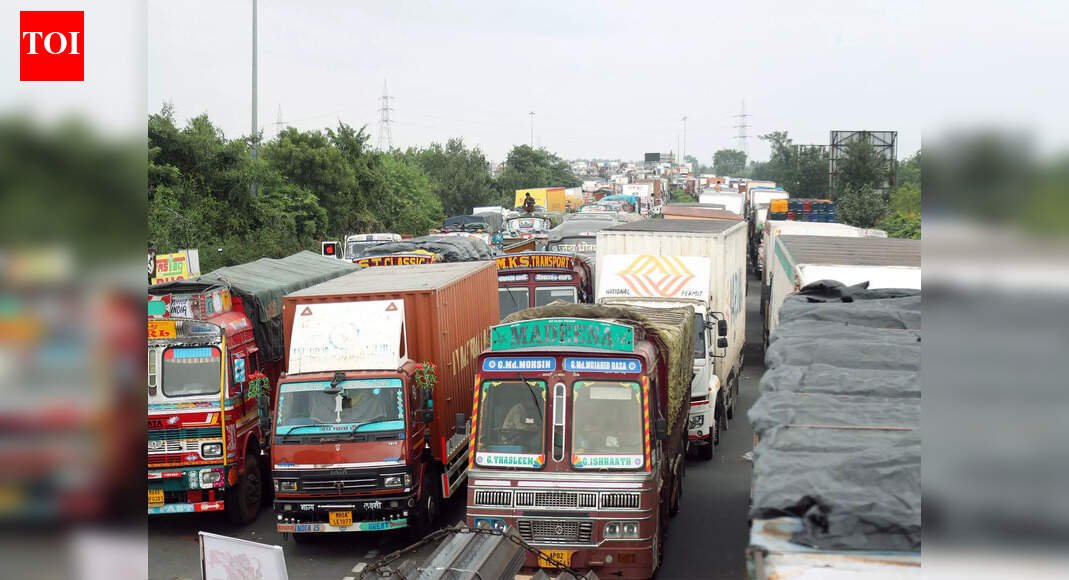
Indian commercial vehicle industry poised for upcycle as replacement demand builds: Nomura


Indian commercial vehicle industry poised for upcycle as replacement demand builds: Nomura

The Indian medium and heavy commercial vehicle (M&HCV) industry appears to be entering the next upcycle, with industry volumes estimated to grow by around 8 per cent year-on-year in FY26 and 10 per cent in FY27, following a period of modest growth, according to a report by Nomura.The report highlighted that improving industry fundamentals are likely to support demand over the medium term. It added that rising freight rates, lower GST-led affordability and a high average age of trucks–currently estimated at around 10 years, are expected to drive replacement demand, particularly during FY27-28.It stated “M&HCV industry appears to be entering the next upcycle……. we believe these are still early stages of a CV upcycle”.These factors together are improving fleet operator economics and supporting a recovery in volumes.Nomura’s analysis points to a clear improvement in fleet operator profitability, driven by better freight rates and the benefits of GST-related cost efficiencies.As a result, fleet operators are witnessing stronger cash flows, which is translating into improved replacement demand and higher confidence in new vehicle purchases.The report said it remains positive on the commercial vehicle sector, citing strong potential for a cyclical upturn and improving demand visibility.The report also noted that the current phase still represents the early stages of a CV upcycle, as industry volumes have not yet crossed the peak levels seen in FY19.According to Nomura, industry growth in FY27 could be much stronger if economic growth accelerates, supported by higher consumption and lower interest rates.Addressing concerns around the impact of the Dedicated Freight Corridor (DFC), Nomura said demand risks from the DFC remain limited. The Eastern and Western DFCs are now around 96 per cent operational, but non-bulk cargo–which accounts for nearly 30 per cent of total freight–continues to rely heavily on road transportation.Given the large and diversified freight base served by commercial vehicles, the report does not expect any significant impact on overall truck demand.However, Nomura cautioned that some normalisation could be seen in specific sub-segments. Tractor-trailers, which compete directly with bulk rail movement, have seen a sharp increase in their share of the industry mix, rising from about 9 per cent in FY21 to 22 per cent in FY25.Overall, the report highlighted that structural drivers such as replacement demand, improving fleet economics and supportive macro conditions position the Indian M&HCV industry for a sustained recovery in the coming years.


Source link

In veiled swipe, Vijay says DMK rattled by TVK”s rallies, claims party allowed lotus to bloom in TN | India News


In veiled swipe, Vijay says DMK rattled by TVK''s rallies, claims party allowed lotus to bloom in TN

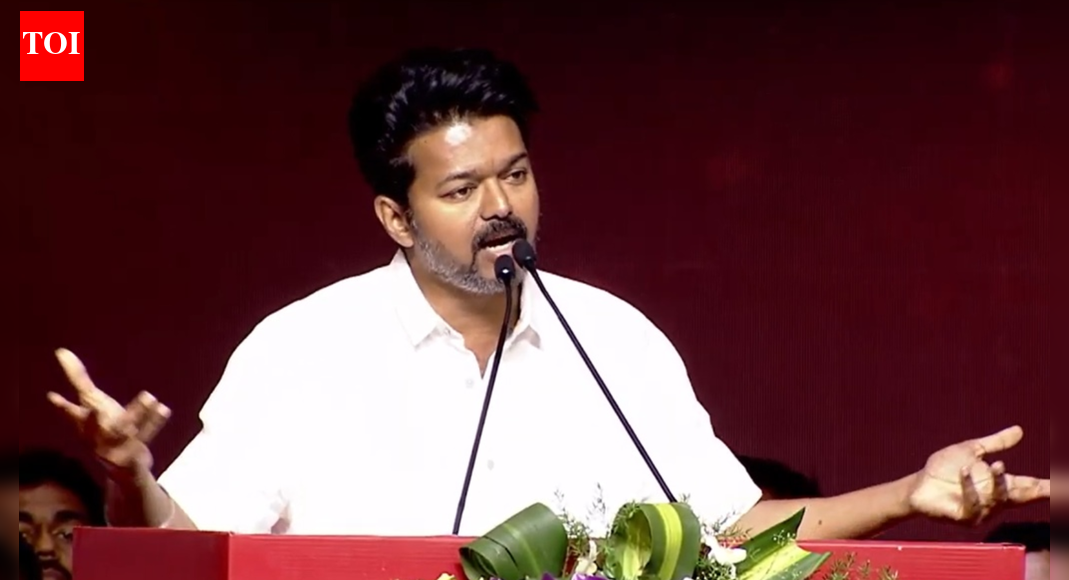
CHENNAI: TVK’s political adversaries were rattled by the party’s successful meetings, and they were beginning to unmask themselves, actor Vijay claimed in a veiled reference to the DMK.Firing a salvo at the ruling DMK, the founder of the fledgling party accused the DMK of allowing the “Lotus” (BJP’s symbol) to bloom in Tamil Nadu and alleged that the Dravidian major had confused the people on the “common minimum agenda.” “After an unsuccessful conspiracy to bring us down, we witnessed three successful public meetings in Kanchipuram, Puducherry and Erode. Those who wanted to shut us down are rattled upon seeing the people standing with us,” Vijay said in a statement here.

‘If Pakistan Comes in Dowry…’: Rajnath Singh Recalls The Humorous Side of Atal Bihari Vajpayee

He took strong exception to an article in the DMK’s organ Murasoli, and said the editorial piece attempted to defame and bring disrepute to the TVK.“They are now beginning to unmask themselves. The leader of their party, the Chief Minister (M K Stalin), talks and throws stones, forgetting that he is standing in front of the mirror,” Vijay said in a hard-hitting statement on December 24.“The DMK,” he said, “had confused the people with the so-called common minimum agenda and became a slave from 1999 to 2003 (during the Vajpayee-led regime). They ensured the Lotus to bloom in Tamil Nadu.” The TVK members should ignore the DMK’s “rhetoric and monologues” and join hands with the people and make the latter realise that the TVK is the only party qualified to strive for their cause, he said.


Source link