Breaking News
Pentagon report: China seeks to capitalise on easing LAC tensions; aims to blunt India–US ties | India News

Pentagon report: China seeks to capitalise on easing LAC tensions; aims to blunt India–US ties

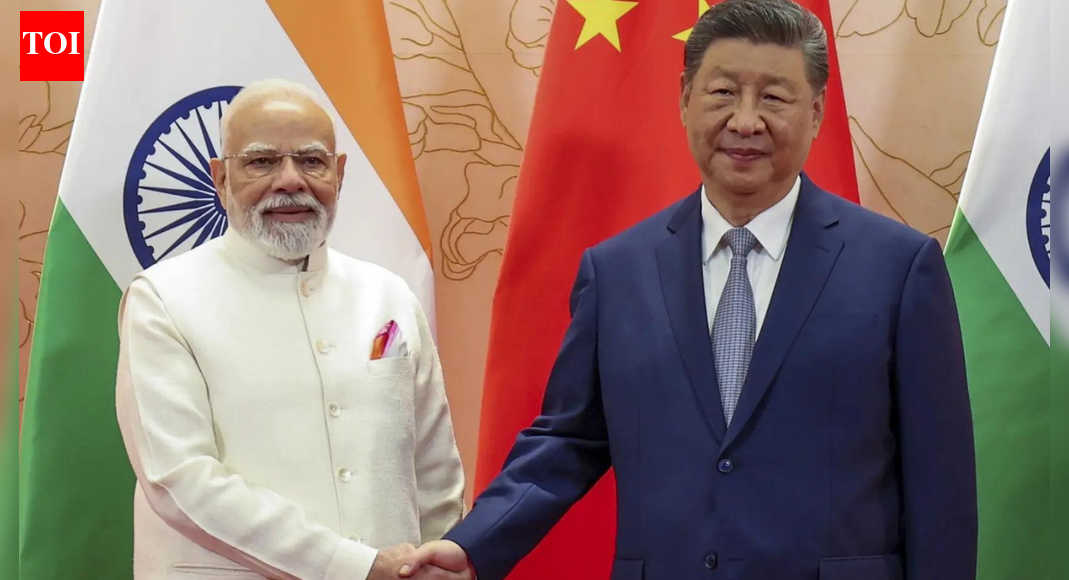
China is likely seeking to leverage the easing of tensions along the Line of Actual Control (LAC) with India to stabilise strained bilateral ties and, more strategically, to prevent a further deepening of New Delhi’s partnership with Washington, according to a new report by the US Department of War.In itsannual report to Congress, “Military and Security Developments Involving the People’s Republic of China 2025”, the Pentagon assesses that Beijing views the recent de-escalation along the India–China border as an opportunity to recalibrate relations with India at a time of sharpening geopolitical competition in the Indo-Pacific.

Calm With India, Weapons For Pakistan: Pentagon Report Warns Of China’s Strategic Balancing Act

The report highlights that in October 2024, Indian leaders announced an agreement with China to disengage from the remaining standoff points along the LAC, just two days before a meeting between Chinese President Xi Jinping and Prime Minister Narendra Modi on the sidelines of the BRICS Summit.It states: “Developments along the Line of Actual Control (LAC) with India. In October 2024, Indian leadership announced an agreement with China to disengage from remaining standoff sites along the LAC two days before a meeting between President Xi and Indian Prime Minister Modi on the sidelines of the Brics Summit.”According to the Pentagon, the Xi–Modi interaction marked the start of monthly high-level engagements between the two sides, with discussions extending beyond border management to the “next steps” in the bilateral relationship. These included proposals on resuming direct flights, easing visa restrictions and reviving exchanges of academics and journalists, signalling a cautious effort to restore normalcy after years of tension.The report, however, underlines that Beijing’s motivations are viewed with suspicion in New Delhi. “China probably seeks to capitalize on decreased tension along the LAC to stabilize bilateral relations and prevent the deepening of U.S.-India ties; however, India probably remains skeptical of China’s actions and motives. Continued mutual distrust and other irritants almost certainly limit the bilateral relationship,” it says.Over the past few months, India and China have rolled out a series of people-centric measures following the formal end of the four-year military face-off in eastern Ladakh in October last year. India resumed issuing tourist visas to Chinese nationals in July, while both countries agreed to restart the Kailash Manasarovar Yatra, resume direct flights, facilitate visas and commemorate the 75th anniversary of diplomatic relations. Direct flights resumed in October.The Pentagon situates these moves within China’s long-term national strategy of achieving “the great rejuvenation of the Chinese nation” by 2049, including building a “world-class” military capable of “fight and win”. It reiterates that Beijing treats issues tied to sovereignty — including Taiwan, the South China Sea, the Senkaku Islands and Arunachal Pradesh — as “core interests” that are not open to negotiation.The report also stated that US–China relations are “stronger than they have been in many years” under President Donald Trump, with Washington seeking stability through strength rather than confrontation. “We do not seek to strangle, dominate, or humiliate China,” it says, emphasising that US policy in the Indo-Pacific is aimed at deterring aggression and preserving a balance of power. The Department of War will therefore prioritise bolstering deterrence in the Indo-Pacific through strength, not confrontation.It added that President Trump aims for stable peace, fair trade and respectful ties with China, and that the Department of War would back these goals from a position of military strength, while working to maintain a balance of power in the Indo-Pacific that allows open and fair trade, shared prosperity and respect for all nations’ interests.(With inputs from PTI)
Source link

US markets today: Wall Street holds near record highs in holiday-thinned trade; stocks mark time as Christmas closure nears


US markets today: Wall Street holds near record highs in holiday-thinned trade; stocks mark time as Christmas closure nears

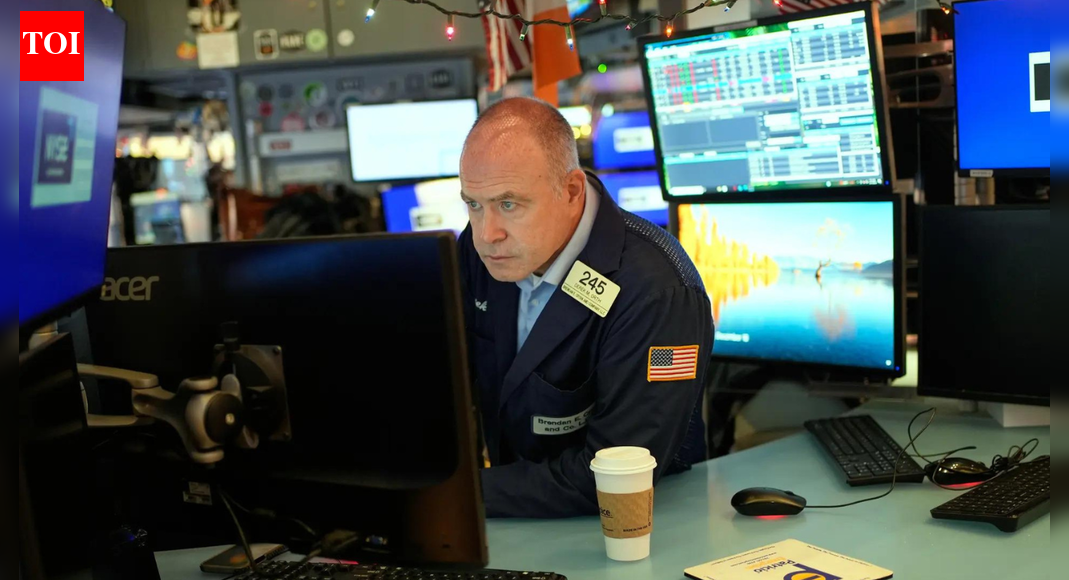
US stocks were largely steady on Wednesday, hovering close to record levels as investors navigated a holiday-shortened session ahead of the Christmas break.In early trade, the S&P 500 was flat, a day after closing at its latest all-time high. The Dow Jones Industrial Average edged up 51 points, or 0.1%, while the Nasdaq composite slipped 0.1%, AP reported. Trading volumes remained light, with US markets set to close early at 1 pm Eastern on Christmas Eve and remain shut on Thursday, before resuming normal hours on Friday.Stock futures had pointed to a muted open, with futures for the S&P 500, Nasdaq and Dow Jones Industrial Average all little changed before the bell. Market participants continued to digest a mix of corporate news and economic signals in a thinly traded environment.Shares of Dynavax Technologies surged about 38% after French drugmaker Sanofi said it would acquire the California-based vaccine maker in a $2.2 billion deal. Sanofi plans to add Dynavax’s hepatitis B vaccines to its portfolio, along with a shingles vaccine currently under development. Sanofi shares were largely unchanged in premarket trade.On the macro front, investors awaited weekly data on applications for jobless benefits from the US Labor Department, a closely watched indicator of layoffs and labour market health. Recent data have pointed to easing hiring momentum even as jobless claims remain historically low.Markets are broadly pricing in expectations that the US Federal Reserve will keep interest rates unchanged at its January meeting, amid persistent inflation pressures and weakening consumer confidence linked to high prices. Retail sales have also shown signs of softening.Overseas, European markets were mixed at midday, with Britain’s FTSE 100 down 0.2% while France’s CAC 40 edged up 0.1%. Several global markets, including those in London, Paris, Hong Kong and Australia, closed early for Christmas Eve, while Germany’s markets remained shut for the day.Asian markets ended mixed. Japan’s Nikkei 225 slipped 0.1%, South Korea’s Kospi fell 0.2%, Hong Kong’s Hang Seng gained 0.2% and China’s Shanghai Composite rose 0.5%. Australia’s S&P/ASX 200 declined nearly 0.4%, while India’s Sensex was down 0.1%.In commodities, gold and silver extended their rally after hitting record highs earlier this week, supported by geopolitical tensions. Spot gold rose to around $4,518 an ounce, taking its gains for the year to roughly 70%, while silver climbed 1.7%.In currency markets, the US dollar weakened further against the Japanese yen amid renewed talk of possible intervention by Japanese authorities, trading at around 156.04 yen. The euro eased slightly to $1.1787.Oil prices edged higher, with US benchmark crude adding 13 cents to $58.51 a barrel and Brent crude up 6 cents at $61.93, as traders monitored potential supply disruptions linked to Venezuela and Russia.


Source link

Amid outcry, Centre’s new order on Aravalli: No new mining leases; protected zone to be expanded | India News


Amid outcry, Centre's new order on Aravalli: No new mining leases; protected zone to be expanded
Drone view of Aravalli hills (ANI photo)

NEW DELHI: The Centre on Wednesday ordered states to impose a complete ban on new mining leases in the Aravallis and expand protected zones, a major move amid public outcry over the “new definition” of the mountain range.The Union environment ministry said the decision was aimed at the “conservation and protection” of one of the world’s oldest mountain systems, covering the stretch from Delhi to Gujarat. The directive seeks to safeguard the Aravallis as a continuous geological ridge extending from Gujarat to the National Capital Region and to put an end to unregulated mining across the region.

Aravalli Hills Row: Why Definition Battle Could Decide Mining Water Security And AQI In North India

As part of the announcement, the ministry instructed the Indian Council of Forestry Research and Education (ICFRE) to identify further zones across the Aravallis where mining must be prohibited, beyond those areas already notified by the Centre-based on ecological, geological and landscape-level assessments.The Centre also said it intends to expand the list of areas protected and restricted from mining across the range. For mines that are currently operational, state governments have been asked to ensure “strict compliance” with environmental safeguards and adherence to Supreme Court orders.On Monday, Union environment minister Bhupender Yadav said at a press conference that “no new mining leases will be permitted, especially in core, protected and ecologically sensitive areas, including the NCR”.Responding to the Supreme Court’s acceptance of the “new definition” of the Aravallis, he said: “The ruling recognises and endorses the Government of India’s sustained efforts to protect the Aravalli range through scientific assessment, strict safeguards and initiatives such as the Aravalli Green Wall Project.”He further underlined the government’s efforts such as the expansion of Ramsar sites, afforestation drives and global recognition of India’s forest cover, adding that the BJP-led NDA government remains “firmly committed to balancing ecology and economy, while countering misinformation with facts and science”.The Supreme Court’s acceptance, classifying any landform in Aravalli districts with an elevation of 100 metres or more from the local relief as Aravali Hills-sparked concern among several stakeholders, who fear the new definition could leave more than 90% of the range open to mining, as most landforms fall below the 100-metre threshold.


Source link

‘Was inside our territory’: Cambodia accuses Thailand of demolishing Lord Vishnu statue; border tensions escalate


'Was inside our territory': Cambodia accuses Thailand of demolishing Lord Vishnu statue; border tensions escalate
Screen grab from video posted on X by @Osint613

Cambodian government spokesman Kim Chanpanha on Wednesday accused Thailand of destroying a Hindu statue in a disputed border area. Videos circulating on social media pages appear to show a back-hoe loader demolishing a statue of the Lord Vishnu.“We condemn the destruction of ancient temples and statues that are worshipped by Buddhist and Hindu followers,” said Kim Chanpanha.“The statue was inside our territory in the An Ses area,” he added, as quoted by news agency AFP. He said the demolition of the Vishnu statue, built in 2014, occurred on Monday about 100 metres (328 feet) from the border with Thailand.AFP analysed the footage using AI-detection tools and found no signs of AI manipulation. It also independently verified the location of the statue.The long-standing border dispute between Cambodia and Thailand intensified this month, leaving more than 40 people dead and displacing nearly one million, according to official figures.Thailand on Tuesday rejected a request by Cambodia to hold bilateral talks in a neutral country to negotiate an end to the skirmish. Thai officials said the four-day meeting would begin on Wednesday in Chanthaburi province, but Phnom Penh has yet to confirm attendance.Both sides have blamed each other for instigating the latest fighting and have exchanged accusations of attacks on civilians. Cambodia has also repeatedly alleged that Thai forces have damaged temple ruins along the border during the clashes, while Bangkok has said Phnom Penh was positioning soldiers at the centuries-old stone structures.The conflict stems from a territorial dispute over the colonial-era demarcation of the two countries’ 800-kilometre (500-mile) shared border, where several ancient temple ruins are located.


Source link

US labour pulse: US unemployment claims dip to 214,000; data points to stable layoffs


US labour pulse: US unemployment claims dip to 214,000; data points to stable layoffs

US unemployment benefit claims fell again last week, underscoring a labour market that remains broadly stable even as hiring momentum shows signs of cooling, according to data released by the Labor Department.Applications for jobless aid dropped by 10,000 to 214,000 for the week ended December 20, down from a revised 224,000 a week earlier, AP reported. The figure came in well below the 232,000 claims forecast by economists surveyed by FactSet. The weekly report was released a day earlier than usual due to the Christmas holiday.Initial claims are widely seen as a near real-time indicator of layoffs, and the latest reading remains within a range considered historically healthy.The data comes against a mixed backdrop for the US labour market. The government last week reported a net gain of 64,000 jobs in November, following a loss of 105,000 jobs in October. The unemployment rate rose to 4.6% in November, its highest level since 2021.October’s decline in payrolls was driven largely by a sharp fall of 162,000 federal jobs, as workers exited following fiscal year-end and administrative cutbacks under the Trump administration. Subsequent revisions also shaved 33,000 jobs off August and September employment figures.Since March, job creation has averaged about 35,000 a month, roughly half the pace seen in the year ended March, as businesses grapple with uncertainty around President Donald Trump’s tariff policies and the lingering impact of elevated interest rates following the Federal Reserve’s aggressive tightening cycle in 2022 and 2023.Earlier this month, the Fed cut its benchmark interest rate by 25 basis points for the third consecutive meeting. Fed Chair Jerome Powell said the move reflected concerns that the labour market may be weaker than headline figures suggest, adding that recent job data could be revised down by as much as 60,000.Several large companies, including UPS, General Motors, Amazon and Verizon, have announced job cuts in recent months, though such reductions often take time to be reflected in official data.The Labor Department’s report also showed that the four-week moving average of jobless claims slipped by 750 to 216,750, smoothing out week-to-week volatility. Meanwhile, continuing claims — the number of people receiving unemployment benefits — rose by 38,000 to 1.92 million for the week ended December 13.


Source link

Indian doctors are leaving the UK! Money troubles or policy pressures? Here’s the real reason


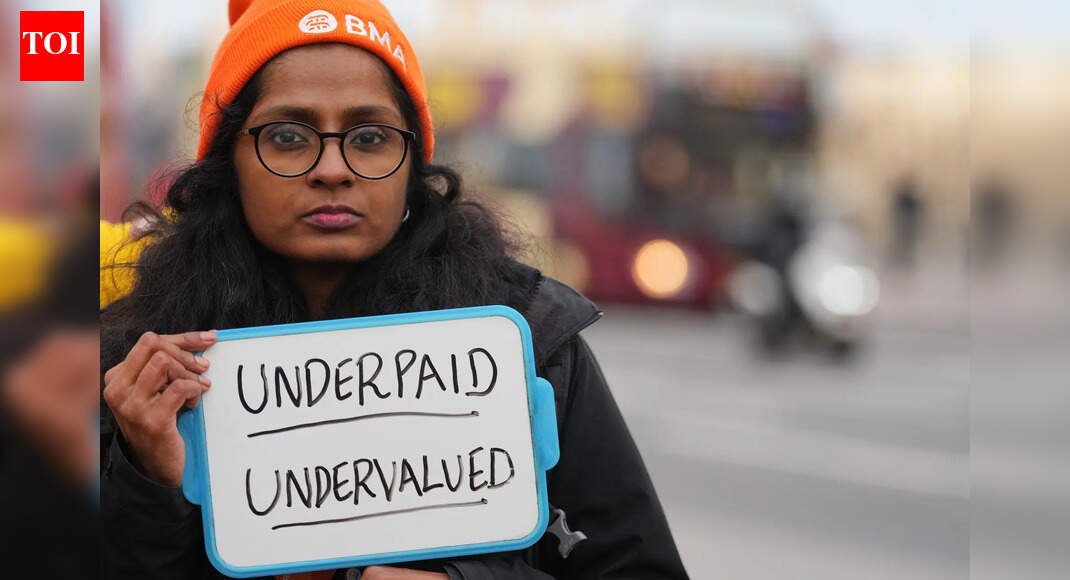
The UK has long been a preferred destination for Indian doctors and nurses, with the National Health Service offering stable careers and professional recognition. However, that appeal is now fading, as rising costs, tighter immigration rules and limited job security push many Indian healthcare professionals to leave the country.Senior doctors of Indian origin currently working within the National Health Service (NHS) told PTI that departures are rising not because dissatisfaction with medical practice but by financial strain, restrictive immigration policies and decreasing career security. This trend is also highlighted in the official data shared by the government during the winter session of Parliament which showed that the number of Health and Care Worker visas issued to Indian nationals has dropped by about 67%. At the same time, visas for Indian nurses have fallen by nearly 79%.

So, why are Indian doctors leaving the UK?

Money problems: Pay, taxation and living costs continue to weigh heavily on decisions. An NHS consultant in the highest pay band pays an additional 45% income tax, along with 2% National Insurance contributions. Doctors earning £65,191 and above also contribute around 12.5% of their pensionable pay to the NHS pension scheme. The pressure is even more acute for trainees and recently qualified doctors. Gandhi said many struggle not only to secure paid roles but also to obtain clinical attachments.“Many graduates are leaving the UK as salaries there are lower compared with those offered in some European countries. Recent data indicate that Indian-origin healthcare professionals are increasingly choosing to work abroad, attracted by better pay, higher standards of living, and comparatively lower taxes,” Rajay Narain, a senior NHS cardiologist with more than two decades of experience told PTI.Other options come into play: Dr Narain said that Indian healthcare workers are increasingly weighing global options. Countries such as Australia, Canada and parts of the Middle East, he noted, offer better pay structures and clearer long-term pathways.He recalled that the NHS, which was once widely regarded as one of the world’s leading healthcare systems. Over time, however, mounting pressures, including long waiting lists and limited career progression, have eroded that image. As a result, some British-Indians are now returning to India in search of improved professional opportunities, he said.Policy pressure: According to radiologist Sanjay Gandhi, who works within the NHS in south-west England, government policy has become a major factor pushing Indian professionals away. Successive UK governments, regardless of political leadership, have pledged to reduce net migration, he said.“However, as controlling illegal immigration has proven difficult, legal migrants, including those working in the NHS, often face the impact of these policies. Another factor is the growing competition from locally trained doctors. Although the number of medical graduates has risen, training positions have not increased proportionately, leaving many qualified doctors struggling to secure jobs,” Gandhi said, as cited by PTI.Difficult entry points: He pointed to tightening entry routes as another challenge, noting that the GMC has been instructed to limit the number of PLAB (Professional and Linguistic Assessments Board) tests. These exams are costly, and even successful candidates often face uncertain job prospects.International medical graduates must pass the PLAB tests to register with the GMC and practise in the UK.“However, securing a position in the UK has always been challenging,” he added.Gandhi warned that the Indian presence within the NHS is likely to shrink further. He said he personally knows at least half a dozen doctors who have relocated to Australia or New Zealand in the past three years.

NHS under financial strain

India’s role in shaping the NHS has deep historical roots. Established in 1948 after the Second World War, the NHS benefited significantly from Indian doctors trained under a system modelled on British standards. Indian medical degrees were recognised by the UK’s General Medical Council (GMC) until 1975, reinforcing the flow of talent from the subcontinent.According to UK government figures from 2024, Asian or Asian British staff account for 13% of the NHS workforce, comprising 16% of full-time employees and 8% of part-time staff.“Pathways for overseas healthcare professionals have largely reduced, while resident doctor posts now attract hundreds of applications within hours, making positions harder to secure even for UK graduates,” NHS pulmonologist Manish Gautam told PTI.Gautam said the financial strain on the NHS intensified after the COVID-19 pandemic, with large sums spent on agency and bank staff to plug workforce gaps. NHS trusts are now under pressure to cut costs and improve productivity, prompting a move away from temporary staffing towards building a permanent workforce, a transition he said will take time.“Although UK healthcare experience remains highly valued, opportunities are constrained by financial realities,” he added.All doctors quoted by the agency presented their personal views that did not reflect those of the NHS or their employers.


Source link

Lakshmipathy Balaji predicts the finalists of T20 World Cup 2026


As the world prepares for the T20 World Cup 2026 to kick off on February 7, former Indian pacer Lakshmipathy Balaji has shared a high-stakes roadmap for the tournament. Speaking in a recent analysis on Star Sports, Balaji leaned on subcontinental conditions to predict which teams will rise to the occasion in India and Sri Lanka.

His insights go beyond mere statistics, focusing on the tactical and mental shifts required to dominate a home-soil World Cup. With the memories of recent global finals still fresh, Balaji’s projections have set a definitive tone for the upcoming competition. He specifically identified a quartet of teams that he believes will navigate the grueling group stages to reach the business end of the tournament.

Lakshmipathy Balaji’s top four contenders for the T20 World Cup 2026

Balaji’s selection for the semi-finals is rooted in the strategic advantage held by teams familiar with the slow, turning tracks of the host nations. He predicts that both India and Sri Lanka will leverage their home-ground knowledge to secure knockout berths, alongside two of the most consistent outfits in T20 history. While he views Afghanistan as a serious fringe contender capable of an upset, his primary bracket consists of the traditional powerhouses. He emphasized that the growth of South Africa over the last few years makes them an undeniable threat in any condition.

“Of course, if you look at the Top 4, I know that South Africa has done a superb job over the period of time in the last few years. Sri Lanka is also playing well. Sri Lanka and Afghanistan. Between them, they have a chance to qualify.” Balaji said.

Also READ: Monty Panesar predicts the semifinalists of T20 World Cup 2026

Balaji picks the finalist of T20 World Cup 2026

In a bold prediction that has caught the attention of fans across the globe, Balaji has called for a repeat of the 2023 ODI World Cup summit clash. He envisions India and Australia meeting once again for the trophy, citing their status as extraordinary teams that thrive on the grandest stages. Despite their combined success in the format, including India’s titles in 2007 and 2024, and Australia’s 2021 victory, the two giants have never faced off in a T20 World Cup final. Balaji believes the 2026 edition will finally rectify this, offering India a chance to settle the score from the Ahmedabad heartbreak.

“Bala, give us your picks Top 2 or Top 4? I think it’s going to be India-Australia finals again in 2023 [referring to the 2023 ODI WC match-up]. And I think it will be a repeat of the Ahmedabad finals. It’s a kind of big match. Two teams that play occasionally. Both are extraordinary teams.” Balaji concluded.

Also READ: 7 Indian players who featured in T20 World Cup 2024 but won’t play in 2026 edition


Source link

Record! Devdutt Padikkal’s Karnataka script history, pull off unthinkable chase in Vijay Hazare Trophy opener | Cricket News


Record! Devdutt Padikkal's Karnataka script history, pull off unthinkable chase in Vijay Hazare Trophy opener
Devdutt Padikkal (PTI Photo)

NEW DELHI: Karnataka created history in the Vijay Hazare Trophy against Jharkhand on Wednesday with one of the greatest run chases ever seen in List-A cricket at the Narendra Modi Stadium in Ahmedabad. Karnataka reached a massive target of 413 runs with 15 balls still left in the chase and five wickets in hand.This chase is now the second-highest successful run chase in the history of List-A cricket. Only South Africa’s famous chase of 435 runs against Australia in 2006 stands above it.

Naseem Shah interview: Pakistan bowler opens up on bouts with injuries and tough recovery

Highest chases in List-A cricket

  • South Africa – 435 vs Australia (2006)
  • Karnataka – 413 vs Jharkhand (2025)
  • Queensland – 399 vs Tasmania (2014)
  • Karachi – 392 vs Sialkot (2004)
  • Middlesex – 388 vs Durham (2025)

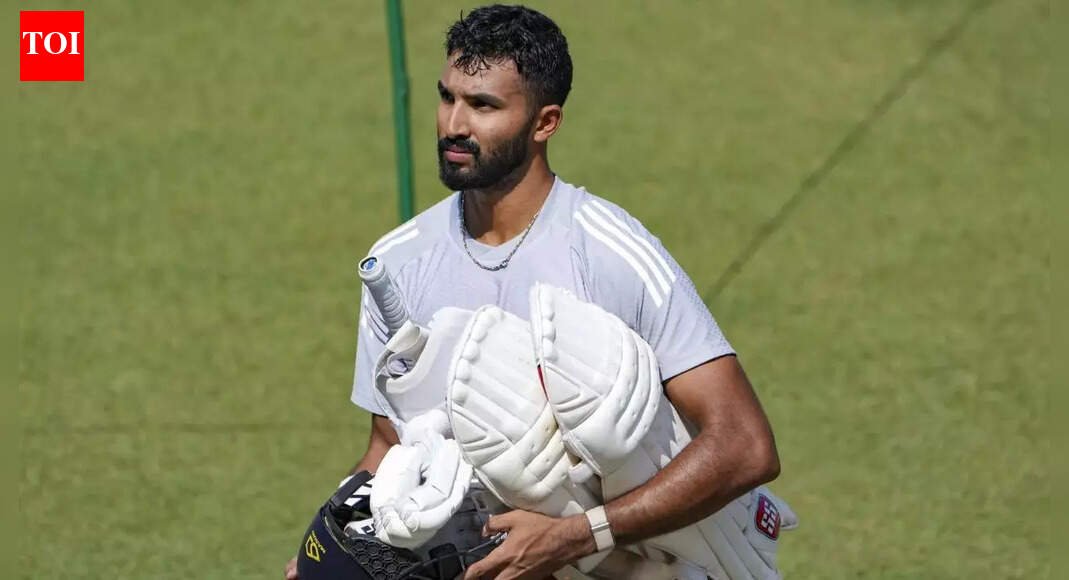
The foundation of this incredible win was laid by Devdutt Padikkal. The left-handed batter played a brilliant innings when his team needed it the most. Padikkal racked up 147 runs off 118 balls with 10 fours and seven sixes. Even though the required run rate stayed above eight runs per over for most of the chase, he kept his composure.Earlier in the match, Jharkhand looked completely in control. Their captain, Ishan Kishan, smashed a sensational century in just 33 balls. It was the second-fastest hundred ever by an Indian in List-A cricket. His knock pushed Jharkhand past the 400-run mark and made the target look almost impossible to chase in a 50-over game.However, Karnataka’s batters showed great belief and courage. Captain Mayank Agarwal gave the chase early momentum with a smooth 54 runs. In the middle overs, Abhinav Manohar played an important role by scoring a quick 56. Showcasing the right example of his power, Manohar maintained the pressure on the bowlers as he ensured the run rate never went out of reach.20-year-old Dhruv Prabhakar, who played a mature and confident knock on his List-A debut, added the final touches.He remained unbeaten on 40 and showed excellent composure. His smart running between the wickets and ability to find gaps helped Karnataka cross the line comfortably.


Source link

Veteran pilot who flew back hijacked IC 814 home back now Star Air COO


Veteran pilot who flew back hijacked IC 814 home back now Star Air COO

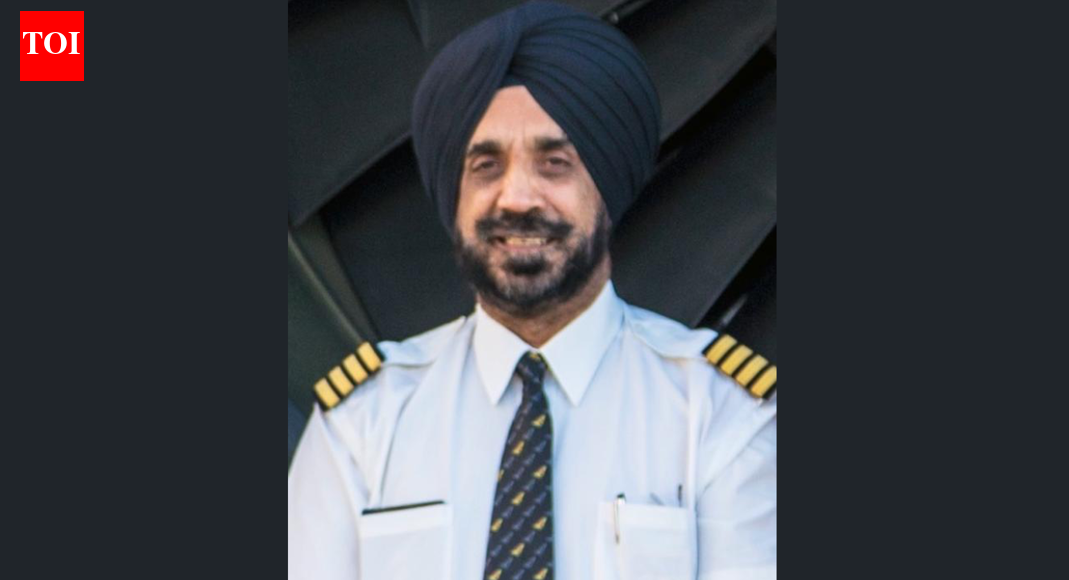
NEW DELHI: Captain SPS Suri, who flew back the hijacked IC 814 from Kandahar to Delhi on Jan 1, 2000, has been appointed the chief operating officer of India’s biggest regional airline Star Air. Former director operations of erstwhile Air India who worked with SpiceJet for nearly a decade after retiring from AI in Nov 2014, Captain Suri (now 69) had spent a night in Kandahar with Captain J R D Rao and two engineers from IA after a relief aircraft flew back the crew and passengers of IC 814 to Delhi on Dec 31, 1999.Sanjay Godawat group’s Star Air has major growth plans and could place a sizable order for Embraer aircraft next year. Currently operating a fleet of 11 Embraers, it has set a target having 50 aircraft and choppers in its fleet by 2030. Captain Suri has flown the Avro, B737 classic, NG & MAX, Airbus A300, A330, B737 NG & MAX and earned 32,700 flying hours in a career which started in 1978. Pilots can fly till they turn 65. He joins Star Air as it enters the growth phase.Captain Suri had travelled on an erstwhile Indian Airlines (IA) Airbus A320 relief flight from Delhi to Kandahar with negotiators and a team of extra crew members on Dec 26, 1999. On the morning of January 1, 2000, — when the Taliban had let the hijackers go — Captain Suri said he wanted to leave but was denied permission to take off. After landing in Kandahar, Captain Suri and 25-30 other crew members used to sleep in the A320. But on Dec 31, that aircraft took off for Delhi and sleeping inside the hijacked A300 that had terrible stench by then was not possible for the four IA crew left behind. “The Taliban said rooms in Kandahar airport were taken by the hijackers and ISI. They allowed the four of us to spend the night by a bonfire in a verandah. “We were shivering there. ‘Sardar, badaam kha le. Raat kat jayegi’, Taliban leader Mullah Omar told us while giving we four almonds,” Suri had some years back told TOI.The next (January 1) morning, an air traffic controller told this four-member crew that they will not get permission to leave for India. “The plane battery was at 7%. Taking Wahe Guru’s name, we started one engine and it miraculously came to life. While taxiing out, we started the other engine. The ATC kept telling us we didn’t have clearance to take off but we got airborne anyway,” Suri had said.Pakistan ATC warned the aircraft did not have permission to overfly. And the crew of Delhi-bound IC 814 (D) — a delayed flight in aviation parlance — kept saying they were unable to hear anything. “The best thing we heard was the IAF controller telling us ‘welcome home, you are cleared straight for Delhi,’ just before entering the Indian airspace,” Suri had recalled.


Source link

Vajpayee’s democratic restraint holds lessons for a polarised South Asia | India News


Vajpayee’s democratic restraint holds lessons for a polarised South Asia
Photo credit: X/@FaisalNasym

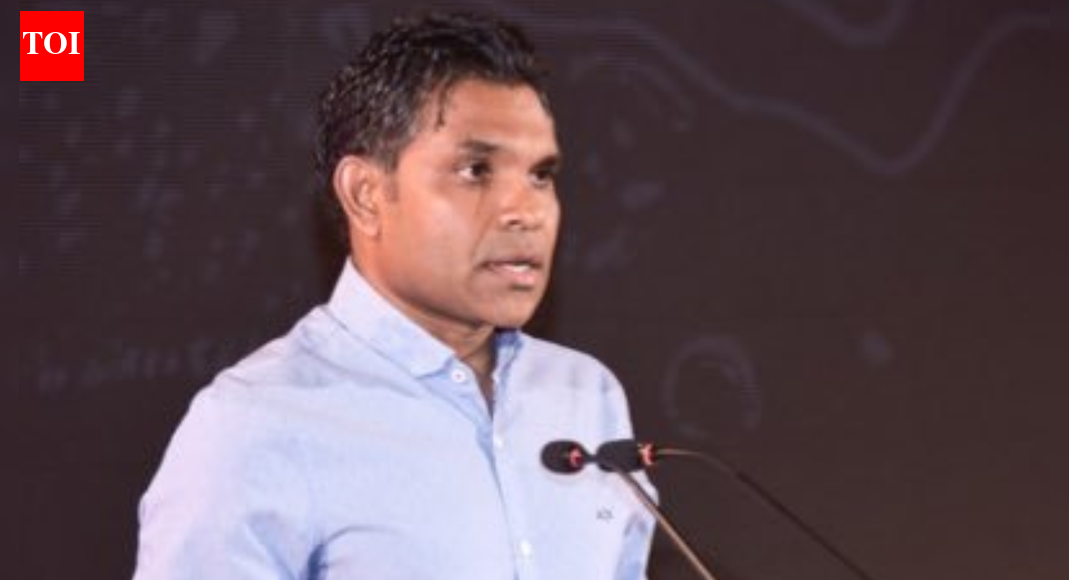
NEW DELHI: Recalling Atal Bihari Vajpayee as a statesman who believed peace had to be consciously practised through restraint and institutional respect, former Maldives vice-president Faisal Naseem on Wednesday said the late prime minister’s political legacy remains deeply relevant for South Asia amid democratic and social turbulence in the region.Delivering the 8th Atal Bihari Vajpayee Memorial Lecture on “Peace, Democracy and Islam – The Maldivian Experience”, Naseem described Vajpayee as a leader who demonstrated that “firmness and civility can coexist” and that leadership could be “decisive without being divisive” — an approach he said holds enduring relevance in an era marked by polarisation.

Osman Hadi’s Brother Accuses Yunus Regime Of Murder Plot To Defer Bangladesh Polls Scheduled in Feb

“This year marks the birth centenary of a statesman whose legacy continues to shape India’s democratic journey and the wider neighbourhood of which the Maldives is a part,” Naseem said, speaking as a representative of “a small island nation in the Indian Ocean, a Muslim society and a young democracy”.Drawing parallels between India and the Maldives, he said peace in South Asia is often treated as an outcome, but leaders like Vajpayee understood it as “a practice cultivated through restraint, dialogue and respect for institutions”. “Peace is sustained not by uniformity, but by balance. It is preserved when differences are managed with dignity and when power is exercised with moderation,” he said.Naseem said Vajpayee’s long years in opposition reflected his belief in parliamentary democracy. “He believed in Parliament not because it was perfect, but because it embodied the people’s voice,” he said, adding that the lesson resonated deeply with the Maldives’ own democratic transition in 2008 from centralised authority to constitutional governance.The address acquired wider resonance amid political and social stress across South Asia. In Bangladesh, recurring political unrest and episodes of communal violence, particularly attacks on minority communities, have raised concerns about the state’s ability to protect pluralism and democratic norms. Sri Lanka’s post-crisis stabilisation has been accompanied by public unease over austerity and accountability, while Nepal continues to grapple with fragile coalition politics and leadership churn despite constitutional stability.Highlighting democratic outcomes in the Maldives, Naseem said democracy must deliver dignity and security. “This is what democracy delivers — protection, opportunity and shared prosperity,” he said, pointing to universal healthcare, pensions, minimum wages and free higher education.On India–Maldives ties, Naseem said the partnership was “written in deeds, not words”. Recalling India’s intervention during the 1988 coup attempt, he said the swift and restrained response “left a lasting imprint on Maldivian strategic thinking”. Vajpayee’s 2002 visit, he added, symbolised India’s enduring commitment to its neighbours.Naseem also credited Vajpayee with recognising the Indian Ocean’s strategic importance. “Maritime security is not only about naval strength, but about trust among neighbours,” he said, noting that current cooperation in maritime surveillance, coast guard capacity-building and emergency response reflects security built on partnership, not coercion.Concluding, Naseem said Vajpayee understood that while history could be shaped, geography could not. “Our shared responsibility is to ensure this region remains anchored in peace, democratic values and mutual respect,” he said.


Source link