Breaking News
Bondi Beach shooting: Gunman Sajid Akram’s widow refuses to handle burial, says she wants ‘nothing to do with him’


Bondi Beach shooting: Gunman Sajid Akram’s widow refuses to handle burial, says she wants 'nothing to do with him'

Sajid Akram, one of the two men behind the deadly Bondi Beach attack on December 14, had been homeless and living in a series of short-term Airbnbs across Sydney for at least six months before the massacre, new reports show.Even after his death, his estranged wife has refused to claim his body. Now the government is responsible for burial arrangements, according to 7NewsSydney.The 50-year-old was killed during a shootout with police following the ISIS-inspired attack that claimed 15 lives, including a child, and left dozens injured. His son, 24-year-old Naveed Akram, was apprehended at the scene and remains in hospital under police guard in critical but stable condition.Authorities have confirmed that Sajid Akram had travelled to Davao City in the Philippines from November 1 to November 28, just weeks before the attack. The area is known as a hotspot for Islamic State activity, and police believe he may have undergone military-style training there. Two other men from Sydney who visited the same region at the same time are now under investigation.Before the attack, the father-son duo reportedly told family members they were going on a weekend fishing trip to Jervis Bay. Instead, they opened fire from a pedestrian footbridge near Campbell Parade, targeting participants of the Jewish Chanukah by the Sea festival, as well as locals and tourists in the area. Loud bangs were heard, and people were seen fleeing for their lives.Investigations are ongoing into how the Akram men obtained high-powered weapons. Police discovered improvised explosive devices (IEDs) in the shooters’ vehicle and conducted raids across Sydney, including Naveed Akram’s home in Bonnyrigg. Sajid was originally from Hyderabad and held an Indian passport. He moved to Australia in 1998 and had limited contact with his family back home. His body remains in the morgue in the Coroner’s office as of now.The Bondi Beach shooting was treated as an act of terror by the Australian Prime Minister, Anthony Albanese. Israeli PM Netanyahu had earlier warned his Australian counterpart of growing anti-semitism and Jewish hate in the country.


Source link

Access Denied


Access Denied

You don’t have permission to access “http://www.ndtv.com/world-news/2-more-arrested-over-hindu-mans-lynching-in-bangladesh-report-9861111” on this server.

Reference #18.cef856b8.1766330638.164d0ef8

https://errors.edgesuite.net/18.cef856b8.1766330638.164d0ef8


Source link

Mountain older than memory: How new ‘definition’ of Aravalli risks undercutting ‘Viksit Bharat’ | India News


Aravalli: Mountain older than memory

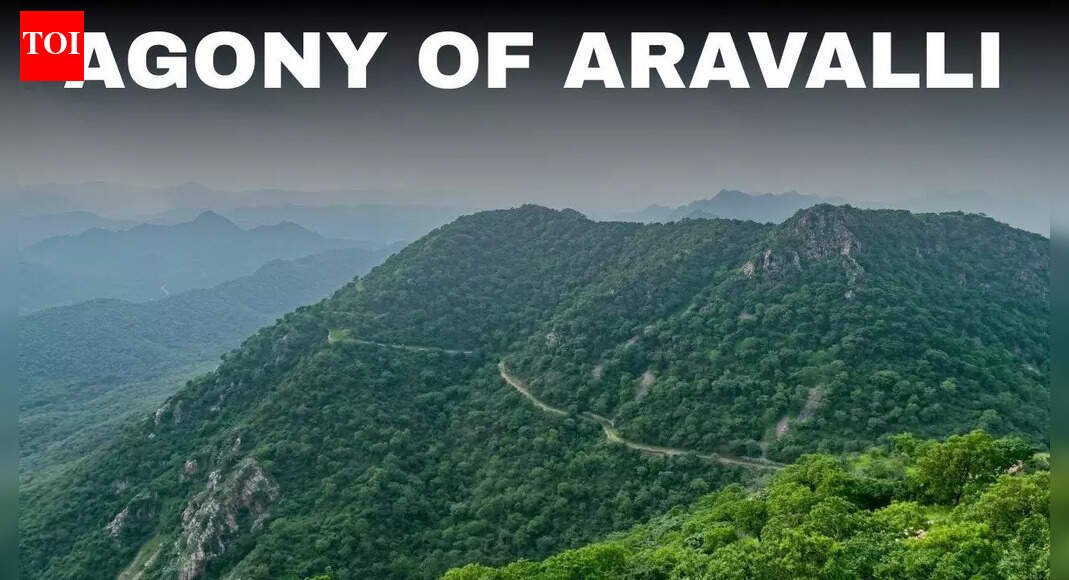
If demography can be a dividend, geography certainly decides its destiny. Few landscapes illustrate this more clearly than the Aravalli Range, an ancient chain of hills that quietly shapes water security, climate, and life across western and northwestern India.The hills that run for nearly 690 km from Gujarat through Rajasthan and Haryana to Delhi, forming the oldest fold mountain system in the subcontinent, have become the center of a long-running environmental and legal debate.At the heart of the issue is a simple but emotive question. What exactly counts as the Aravalli range? The answer matters because this classification determines which areas can be mined, built upon, or conserved.Also read | ‘Part of our identity, culture’: Tribal communities pledge to save Aravallis

Lok Sabha Passes Viksit Bharat G Ram G Bill Amid Protests, Opposition Tears Copies Over Gandhi Name

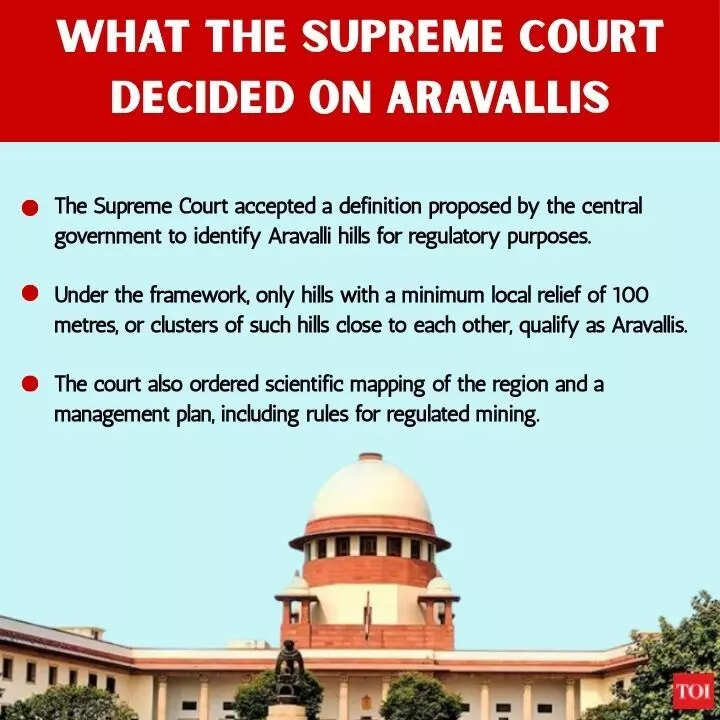
A recent ruling by the Supreme Court has accepted a “standard definition” proposed by the central government to identify what qualifies as the Aravalli Hills. While the move was intended to bring clarity to long-standing disputes, the definition’s limited ecological lens has raised fresh concerns about environmental protection and sustainable development.Why the controversy?In November, the Supreme Court agreed with a proposal by the central government on how the Aravalli hills should be officially identified. The court said that only those hills that rise at least 100 metres above the surrounding land, or groups of such hills located close to each other, will be considered part of the Aravalli range for regulatory purposes.
Aravallis

What the SC decided on Aravalli

The court also asked the Union government to carefully map the region and prepare a clear plan for managing it. This plan will include rules on where mining can take place and how it should be regulated. The aim is to remove confusion caused by different government records and maps, which have often led to disputes and court cases in the past.Why the Aravallis matterEnvironmental experts maintain the significance of the Aravalli hills is not about how tall they are, but about what they do. The hills work like a natural water storage system, with their rocky structure allowing rainwater to slowly seep underground and refill aquifers. These aquifers supply water to many towns in Rajasthan and big cities such as Delhi, Gurugram, Faridabad, and Alwar. Studies even show that large-scale mining and cutting of hills damage this process, leading to long-term loss of groundwater.The Aravallis also help slow the spread of the Thar Desert towards eastern India. Scientists warn that if the hills continue to be damaged, desertification could increase, along with dust storms and extreme heat in the Indo-Gangetic plains.Although the region is dry, the Aravalli hills support forests, scrubland and grasslands. These habitats are home to wildlife such as leopards, hyenas, nilgai and many bird species. Conservationists say these ecosystems are fragile and can be easily broken apart by mining and construction.History of legal tussleThe current controversy is primarily rooted in decades of judicial scrutiny. Since the 1980s, courts have intervened repeatedly to curb unregulated mining in the Aravalli belt, particularly in Rajasthan and Haryana. Multiple Supreme Court orders in the 1990s and early 2000s restricted mining in notified forest areas, citing environmental degradation, air pollution and public health risks. However, enforcement remained weak due to the absence of a universally accepted definition of what constituted the Aravalli range. Mining operators and developers often argued that certain hillocks or plateaus did not legally qualify as Aravallis, even if they were ecologically linked to the system. This ambiguity reportedly created administrative paralysis and prolonged litigation, prompting the Centre to seek a standardised definition.The logic behind the new definitionGovernment officials and legal experts defending the Supreme Court’s ruling argue that the elevation-based criterion introduces clarity into a highly subjective domain. They say that by setting a measurable threshold, authorities can avoid arbitrary decisions and reduce disputes over land classification.In its observation, the top court acknowledged the need to balance environmental protection with economic realities. Mining of stone and minerals in the Aravalli region supports livelihoods and supplies essential materials for construction and infrastructure. A blanket ban, the SC noted, could have severe economic consequences if not backed by clear scientific and legal parameters.Why the criticism?The ruling has drawn criticism from ecologists, hydrologists, and civil society groups who believe that the 100-meter threshold oversimplifies a complex landscape like the Aravalli.They point out that many ecologically critical features of the Aravalli system, including recharge zones, wildlife corridors and low-lying ridges, do not meet the elevation criterion but are vital to the range’s environmental function. Excluding these areas from automatic protection, critics say, could open the door to expanded mining and construction.Experts also warn that mining impacts are cumulative, as even shallow or small-scale extraction can permanently alter drainage patterns and soil stability, consequently reducing the land’s ability to absorb rainfall. In arid and semi-arid regions, such damage is often irreversible.

Aravalli definition

Experts on Aravalli

Once this order is implemented in full force, which is for mining purposes, environmentalist Vimlendu Jha said, “tomorrow it could be real estate or other things that could begin in the region, which is also the main fear of the locals of the entire region.”Disagreeing with the new definition of Aravalli, Jha said, “the mountain is not just a piece of rock assembled together. Aravalli, which is the oldest mountain range in the world, is also an ecosystem.” He said, “If mining is allowed…Aravalli, which is above the ground, is also under the ground. So it’s not just the tree cover, green cover, or the national dust shield or weather shield it provides, but at the end of the day, temperature and air quality between Thar and Delhi are maintained because of the shield of the Aravalli.Shedding light on the risk arising from the new definition that “lifts the protection,” he said, risk is that all of this will be a large-scale plundering of this area and not just by mining, but also by other areas like real estate.“Once we start calling it a forest and not a range, and it falls under a semi-urban landscape or rural landscape rather than a protected landscape, it will be open for any kind of exploitation through economic-commercial activity,” he told TOI.

Why Aravalli is at risk?

On the impact on the Delhi-NCR region, which witnesses toxic-air-driven health hazards every year, Jha said, “Firstly, desertification increases when we compromise with the buffer we have. Secondly, when the dust increases, the PM10 level we have in the Delhi-NCR is pathetic and therefore the risk or the intensity of air quality increases. Aravalli’s entire area is also the main water recharge table, so the water sufficiency of the region is also questioned because of mining.Magasaysay awardee Rajendra Singh, known as the “Waterman of India,” said earlier governments and courts took nature and environmental issues seriously, but that approach has disappeared.“If this decision, meant to benefit one individual, is implemented, only 7-8 per cent of the Aravalli will survive,” he told news agency PTI, calling for a legal battle as well as mass public mobilisation.The road aheadThe Supreme Court’s directive to conduct scientific mapping is now seen as the critical next step. Environmental lawyers say the outcome will depend on how comprehensively the mapping exercise incorporates hydrology, biodiversity and geomorphology, rather than focusing solely on elevation. Transparency will also be key.Civil society groups have demanded that maps and management plans be made public and subjected to independent scientific review. Without such safeguards, they argue, the process risks becoming a procedural formality rather than a tool for genuine conservation.At its core, the Aravalli debate reflects a broader challenge in India’s environmental governance. How to reconcile development pressures with the protection of natural systems that do not conform neatly to administrative boundaries or numerical thresholds.As climate stress intensifies and water scarcity deepens across north-west India, the fate of the Aravalli range carries implications far beyond the hills themselves. Whether the Supreme Court’s attempt at regulatory clarity strengthens or weakens environmental protection will depend on how the ruling is implemented on the ground, which ultimately remains at the mercy of bureaucracy.For now, India’s oldest mountain range stands at a crossroads, its fate being debated and defined by modern institutions that are only a moment in time compared to the ancient geology they now seek to regulate.



Source link

Maharashtra local body polls: Record victory for BJP-led Mahayuti; opposition blames EC, EVMs & money | India News


Maharashtra local body polls: Record victory for BJP-led Mahayuti; opposition blames EC, EVMs & money

NEW DELHI: The BJP-led Mahayuti alliance on Sunday recorded a sweeping win in Maharashtra’s local body polls, winning elections to 288 municipal councils and nagar panchayats by securing 207 local body president posts and leaving the opposition Maha Vikas Aghadi with a combined total of 44.As per the State Election Commission’s data, the BJP emerged as the single largest party with 117 municipal presidents, followed by the Shiv Sena with 53 and the NCP with 37. On the opposition side, the Congress won 28 posts, Shiv Sena (UBT) nine, and the NCP (SP) seven.Other registered parties accounted for four additional posts, while 28 municipal president seats were won by unrecognised registered parties. Independents secured five posts, the Commission said. Counting of votes for 286 municipal councils and nagar panchayats, conducted in two phases, showed the BJP emerging as the single largest party. Earlier, Maharashtra CM Devendra Fadnavis reacting to the results said, “48 per cent councillors have been elected on the BJP symbol, which is a record. The BJP has created another record with 3,300 councillors being elected from the party. BJP candidates have been elected as presidents in 129 municipal councils. In 75 per cent of the local bodies, Mahayuti nominees have been elected as municipal presidents.” He attributed the success to the party organisation and the government’s development agenda, noting, “It is the team effort – the organisation and government. We fought the polls on the development plank. I led a positive campaign on the development agenda. I never criticised any political leader or party. I solicited votes on the development agenda, the work done by the government so far, and our blueprint for the future.

‘Vote Chori Is The Biggest Anti-National Act’: Rahul Gandhi Slams BJP In Lok Sabha

PM Narendra Modi hailed the results of the local body polls saying people of Maharastra stand with development. He went on to congratulate the Mahayuti for the victory.In a post on X PM said, “Maharashtra stands firmly with development! Grateful to the people of Maharashtra for blessing the BJP and Mahayuti in the Municipal Council and Nagar Panchayat elections. This reflects trust in our vision of people-centric development. We remain committed to working with renewed energy to fulfil the aspirations of every citizen across the state. I laud the BJP and Mahayuti Karyakartas for their hardwork at the grassroots.Mahayuti allies – including BJP, Eknath Shinde-led Shiv Sena, and Ajit Pawar’s NCP – contested in some areas against each other. While opposition parties, mainly Congress and Shiv Sena (UBT), conceded defeat and raised allegations. There were alliances as well as “friendly fights” among Maha Vikas Aghadi (MVA) constituents as well. .State Congress president Harshwardhan Sapkal congratulated winning candidates but added, in a comment, that the state election commission “helped” the ruling alliance. Shiv Sena (UBT) leaders accused the Mahayuti of using “money and muscle power” and alleged EVM tampering, PTI reported. Shiv Sena (UBT) MP Sanjay Raut said the victory of Mahayuti was because of “tampering” of EVMs. He added the opposition couldn’t withstand a “hailstorm” of money.His party colleague Ambadas Danve alleged “money and muscle power” shaped the Mahayuti win. “The Mahayuti has bagged a larger number of seats as compared to constituents of the Maha Vikas Aghadi, thanks to the muscle and money power deployed by the ruling parties,” Danve told PTI in Chhatrapati Sambhajinagar. BJP state president Ravindra Chavan described the results as a “decisive mandate,” claiming Mahayuti had won more than 250 councils, nagar parishads, and nagar panchayats, with BJP candidates securing 134 council chief posts and over 3,000 councillor seats. “The Opposition levelled all kinds of allegations during the campaign, but people saw through them. Uddhav Thackeray himself said he had nothing to offer to the people and that is why his party was rejected. His party could not even win council chairperson posts in double digits,” Chavan claimed.He went on to say, “Now, Mumbaikars too would reject the opposition’s narrative in the upcoming BMC polls.” Union minister Nitin Gadkari called it an “overwhelming success” and “a victory for our workers.”While the Mahayuti largely dominated the elections, Congress and NCP retained control in some areas, including Chandrapur, Sangli, and Loha, with wins in Palghar for the Shiv Sena and in Nanded for Marathwada Janhit Party. Recounting was ordered in Kamptee municipal council after a narrow 116-vote BJP victory, officials said.(With inputs from agencies)


Source link

BBL|15: Chris Jordan, Nikhil Chaudhary run riot as Melbourne Renegades crumble


Hobart Hurricanes delivered a masterclass in clinical T20 cricket, securing a comprehensive seven-wicket win over Melbourne Renegades in the eighth match of the Big Bash League (BBL) 2025-26. A stellar four-wicket haul by Chris Jordan followed by a blistering batting display from Nikhil Chaudhary and Ben McDermott ensured the Hurricanes chased down their target with more than six overs to spare.

Chris Jordan’s bowling masterclass stifles Renegades

After winning the toss and opting to bowl first, the Hurricanes’ pace attack immediately put the Renegades on the back foot. Riley Meredith set the tone early, dismissing Josh Brown for an 8-ball duck. While Tim Seifert (34) and Mohammad Rizwan (32) attempted to stabilize the innings with a 62-run partnership, the momentum shifted once the Hurricanes’ spinners entered the fray.

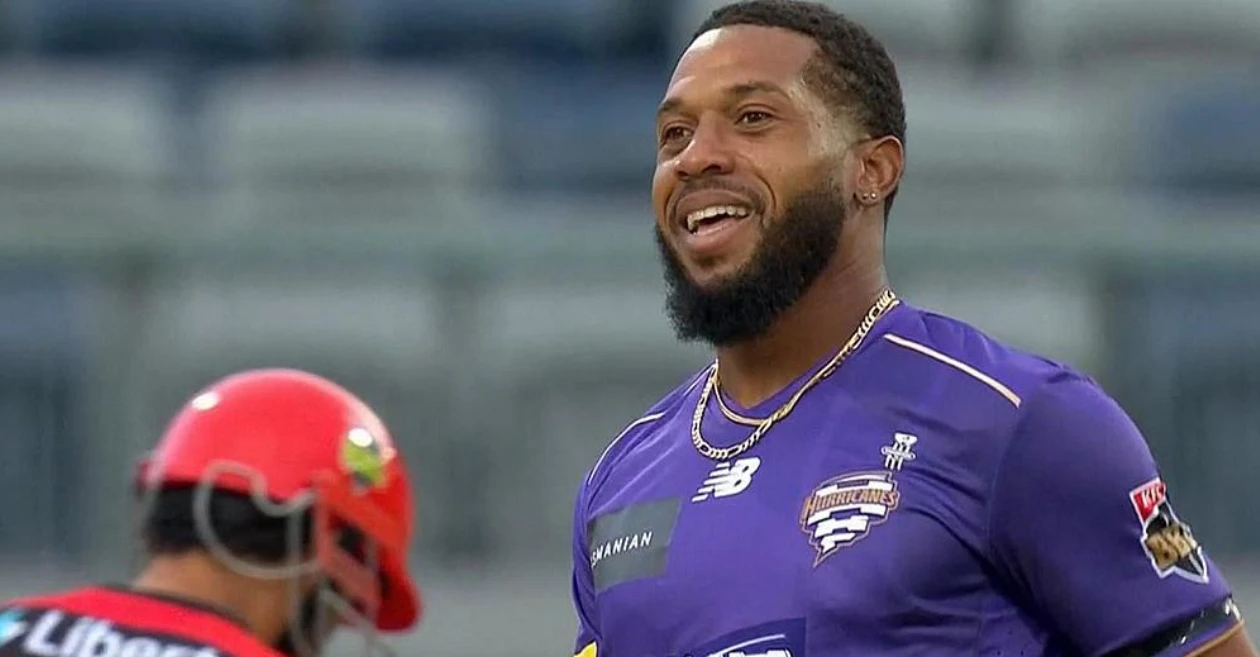
The middle order collapsed under pressure as Rishad Hossain and Rehan Ahmed picked up crucial wickets, including the dangerous Jake Fraser-McGurk. However, it was Chris Jordan who emerged as the wrecker-in-chief. Jordan dismantled the lower order, finishing with remarkable figures of 4/19. His ability to execute yorkers and slower balls left the Renegades reeling at 145-9 after their allotted 20 overs. Nathan Ellis supported well with 2/43, ensuring no late-inning fireworks from the Melbourne tail.

Nikhil Chaudhary’s explosive cameo sets the tone

The Hurricanes’ chase started with a minor hiccup as Mitchell Owen fell to Jason Behrendorff on the very first ball of the innings. Despite the early setback, the Hurricanes did not retreat. Nikhil Chaudhary walked to the crease and completely hijacked the game’s tempo.

Chaudhary played a sensational knock of 79 off just 38 deliveries, boasting a massive strike rate of 207.89. His innings was peppered with seven boundaries and four towering sixes, effectively killing the contest during the powerplay and the middle overs. By the time he was caught off the bowling of Gurinder Sandhu, the Hurricanes were already sitting comfortably at 131-3, needing less than 20 runs for victory.

Ben McDermott and Tim David seal the deal for Hobart

While Chaudhary provided the fireworks, Ben McDermott played the perfect anchor-turned-aggressor role. McDermott remained unbeaten on 49 from 33 balls, hitting four boundaries and two sixes. His composure ensured that the Renegades’ bowling attack, led by Adam Zampa and Will Sutherland, never had a chance to build sustained pressure.

Also READ: England captain Ben Stokes opens up on another Ashes series defeat in Australia

The chase was wrapped up in just 13.5 overs when Tim David joined McDermott to apply the finishing touches. The Hurricanes finished at 149-3, recording a run rate of 10.77 – a testament to their aggressive approach.

This victory provides a significant boost to the Hurricanes’ net run rate, making them a formidable force early in the season. For Renegades, the lack of a substantial total despite having wickets in hand during the middle overs will be a point of concern for captain Will Sutherland.

Also READ: BBL|15 – Josh Philippe and Babar Azam guide Sydney Sixers to 47-run win over Sydney Thunder


Source link

Worli residents protest SRA move to terminate developer and warn of agitation | Mumbai News


Mumbai: The residents of Worli’s Sagar Darshan and Chaitanya Sai Janata Colony SRA Housing Societies protested on Sunday against the Slum Rehabilitation Authority’s (SRA) decision to terminate the current developer just over a year after issuing a Letter of Intent (LoI) and attempting to appoint a new developer.The slum tenants stated that 2,500 families would be in jeopardy if the SRA proceeds with terminating the LoI given to Chintaharni Chintpurni Realtors in Oct 2024. Several residents mentioned that if the developer is abruptly terminated by the SRA, they will boycott the BMC elections. The two slum projects are located in BMC’s Ward No. 193. The SRA issued notices to the developer earlier this month, and a hearing is scheduled for Dec 24.SRA officials, however, stated that the LoI for Sagar Darshan was given in Oct 2023, and so far, the builder has not even completed work up to the plinth level. In the case of Chaitanya Sai Janata Colony, SRA officials said the project was accepted in Feb 2023, but the builder failed to clear the ongoing litigation and make any progress in the work. The SRA mentioned that reviewing stuck projects is a routine process, and there was nothing irregular in its notice since a fair hearing will be given to all parties before any final decision is made.“We expected the project to be delivered in 2-3 years, but hardly any progress has been made. The builder has only taken the LoI and not done any work. It was expected that the builder would get the litigation cleared in two years in the case of Chaitanya Sai Janata Colony, which he has not been able to do. Reviewing stuck projects is part of the routine process, and it is done by the CEDO in his quasi-judicial capacity. A fair hearing will be given to the builder and residents. Saying that SRA must not even conduct a review of a stuck project is unfair,” the official said.“The project that finally gained momentum after three decades of delay now faces fresh uncertainty due to controversial administrative decisions by the SRA. The project, stalled for nearly 30 years, was recently revived by a legally appointed, capable developer who followed all statutory procedures. After thorough scrutiny, the SRA itself granted formal construction approval in October 2024, following which work commenced at full speed. However, while construction was progressing smoothly, SRA issued a notice under Section 13(2) seeking to remove the developer—without citing any clear, transparent, or justifiable reason. This sudden move has pushed the project back into limbo and placed thousands of families at risk once again,” said Advocate Nilesh Haldankar, lawyer for the Chaitanya Sai Janata Housing Society.The project-affected residents held a symbolic protest at the Koli Samaj Bhavan in Worli to voice their grievances.“This is not an isolated incident. In an adjacent SRA project involving 2,054 families, where judicial proceedings are currently underway, similar action under Section 13(2) has reportedly been initiated. Such steps raise serious concerns about whether the SRA administration is undermining due process and disregarding the authority of the High Court (HC). The developer remains fully capable and willing to complete the project, and crucially, has the clear support of the residents. With no technical, legal, or financial shortcomings on record, a pressing question arises: Why is the SRA creating obstacles in a project meant to provide rightful homes to eligible slum dwellers?” said Rajesh Dhawan, Chief Promoter of Sagar Darshan Society.Shekhar Keer, chief promoter of the Chaitanya Sai Janata Colony Society, said, “Our demand is simple—justice and our homes.”Worli residents have now warned of a large-scale public agitation against what they describe as the SRA’s anti-people stance.


Source link

Gold and Silver outlook: Holiday-thinned trade may trigger price dip; analysts warn of volatile week


Gold and Silver outlook: Holiday-thinned trade may trigger price dip; analysts warn of volatile week

Financial analysts hinted at possible slowdown in gold and silver prices during the week while investors await crucial US economic data. Market activity is expected to be light due to the upcoming Christmas and New Year holidays, with key indicators like GDP, housing data, and consumer confidence figures affecting precious metal prices.Trading volumes are likely to decrease during the Christmas week, with many traders taking an extended weekend starting Wednesday. However, Pranav Mer from JM Financial Services warned that despite lower participation, market volatility could increase. “Moving into the Christmas week, traders expect some consolidation/correction in the markets as volumes are expected to remain low with major trader’s staying away due to long-weekend starting late on Wednesday. However, volatility/price swing may be higher due to low participation,” he said, as quoted by PTI.Gold has shown remarkable rally recently. MCX gold futures rose by Rs 574 (0.43%) last week, reaching an all-time high of Rs 1,35,590 per 10 grams on Thursday. This marked the fourth straight weekly gain and puts gold on track for its twelfth consecutive monthly increase.“The weak dollar, dovish federal reserve, lower inflation data in the US triggered the momentum in gold prices in the recent week,” said Angel One’s Prathamesh Mallya. Although gold has had a significant surge, silver has been the star, outshining the yellow metal with 8.08% gain last week. It touched a record high of Rs 2,08,603 per kilogram on Friday. The white metal has surged over 130% this year, driven by strong ETF flows and concerns about yen carry trades following the Bank of Japan’s expected rate hike.Looking ahead, experts remain positive about both metals but caution against immediate price corrections. Pranav Mer predicted that silver could test Rs 2,25,000-2,45,000 per kilogram “Silver remains positive, but risk reward remains unfavourable. In the near-term prices may test Rs 2,25,000-2,45,000 per kilogram. On the technical front… we continue to maintain positive view in gold and expect prices to rise further to Rs 1,40,000-1,45,000 by early next year, with support for reversal placed at Rs 1,29,000 per 10 grams,” he said.This bullish trend in precious metals isn’t just a regular market cycle. According to Pankaj Singh of SmartWealth.AI, similar price patterns have only occurred twice in the past fifty years, during periods of significant monetary and geopolitical stress.(Disclaimer: Recommendations and views on the asset classes given by experts are their own. These opinions do not represent the views of The Times of India)


Source link

IND vs PAK Final: PCB chief Mohsin Naqvi presents trophy to U19 Asia Cup champions – Watch | Cricket News


IND vs PAK Final: PCB chief Mohsin Naqvi presents trophy to U19 Asia Cup champions - Watch
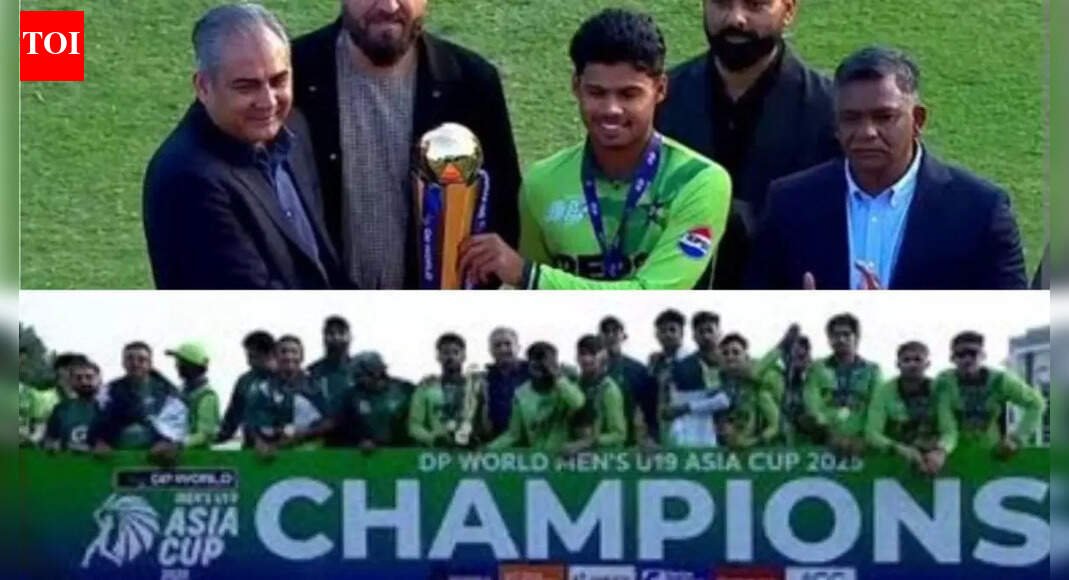
Mohsin Naqvi presents trophy to U19 Asia Cup champions (screengrabs)

Pakistan beat India to clinch the U19 Asia Cup title in Dubai on Sunday. With Pakistan winning the trophy, the tournament managed to avoid what could’ve been a possible trophy-presentation controversy. The match was played at the ICC Academy Ground in Dubai, where Pakistan defeated India by a huge margin of 191 runs to lift the U19 Asia Cup for only the second time in their history.

India World Cup squad: No Shubman Gill, Jitesh as selectors recall Rinku, Ishan Kishan

Asian Cricket Council (ACC) chairman Mohsin Naqvi was present at the stadium, which brought back memories of the drama that followed the senior Asia Cup final earlier this year. Watch Naqvi greeting players after the win here:At that time, the Indian team had refused to accept the trophy from Naqvi, who is also a minister in the Pakistani government. Because of that incident, many wondered if a similar situation would arise again during the U19 final.India had come into the match as favourites. They had a strong history in the U19 Asia Cup and had already beaten Pakistan comfortably in the group stage. Naqvi’s presence in the stands added to the tension, especially since there was no handshake between players during both the group match and the final.However, this time there was no controversy. Pakistan completely outplayed India and left no room for confusion during the trophy ceremony. Pakistan’s batting was led by Sameer Minhas, who played a stunning knock of 172 runs from 113 balls. His innings helped Pakistan post a massive total of 347 for eight in their 50 overs.India’s chase never got going. Their batters struggled against Pakistan’s fast bowlers, who used pace and bounce effectively. Ali Raza picked up four wickets, while Mohammad Sayyam and Abdul Subhan chipped in with two each. India were bowled out for just 156 runs in 26.2 overs.After the match, Indian players chose not to go on stage where Naqvi was present. Instead, they collected their runners-up medals separately from another ACC official. Naqvi then presented the winners’ medals to the Pakistan U19 players and posed for photos with them.Later, Naqvi stepped into his role as Pakistan Cricket Board chairman and joined the team’s celebrations. He stood at the centre as the young players lifted the trophy and celebrated their victory.


Source link

‘Pakistan under Asim’: Former Pakistan PM Imran Khan targets army chief after verdict; urges nationwide protest


'Pakistan under Asim': Former Pakistan PM Imran Khan targets army chief after verdict; urges nationwide protest
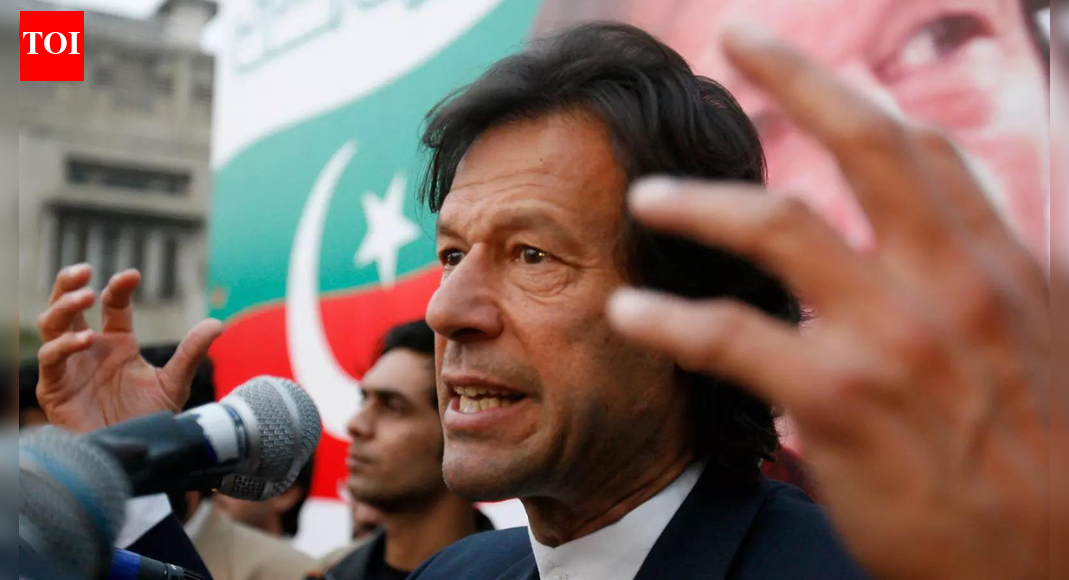
Former Pakistan Prime Minister Imran Khan (ANI file photo)

NEW DELHI: Former Pakistan Prime Minister Imran Khan, currently incarcerated for now over two years, on Saturday called on his supporters to prepare for nationwide protests and announced his intention to challenge the recent Toshakhana-II verdict, which he alleged was delivered in “haste” by the Islamabad high court. Khan and his wife, Bushra Bibi, were sentenced to 17 years in prison in the corruption case earlier this week.He also alleged that Pakistan is being governed by solely under “Asim law.”

PAK Citizens Criticize “Weak Judiciary” As Imran Khan’s Prison Term Is Increased

With no access to his social media accounts, Khan conveyed his message through his legal team. According to a post on X summarising a conversation between the PTI founder and his lawyer, Khan instructed Khyber Pakhtunkhwa chief minister Sohail Afridi to begin preparations for a mass street movement.In the detailed message shared by his team, Khan said: “To strive for justice is a sacred duty, and I am ready to lay down my life for Haqeeqi Azadi (true freedom) of my nation. At this moment, Pakistan is being governed solely under ‘Asim Law’. Here, verdicts are pre-written and merely announced aloud. Like the baseless decisions and sentences of the past three years, the Toshakhana 2 verdict is nothing new for me. This ruling, too, was delivered in haste, without any evidence and without fulfilling legal requirements. Neither we nor our lawyers were even given opportunity to present our case.”He alleged that both he and Bushra Bibi were being subjected to harsh solitary confinement. “The sustained solitary confinement imposed on me and my wife constitutes severe mental torture. We are barred from books, television, and meetings… The books sent by my family are confiscated by jail authorities, and we are kept in solitary confinement for weeks at a time. This treatment is inhumane, yet all this oppression and brutality cannot weaken my resolve.Khan also accused the authorities of persecuting women linked to PTI. “It is not our tradition to target women and children… I am deeply saddened and distressed by the mistreatment and brutality faced by my sisters and other women outside Adiala Jail. The treatment meted out to Bushra Bibi, Dr. Yasmin, Mahrang Baloch, and other women stands in clear violation of Islamic traditions and moral values.”The former prime minister again directed his criticism at army chief Asim Munir. “The army is mine and belongs to the people of Pakistan. When I criticise Asim Munir, it is criticism of an individual… Whatever is happening to me in jail is being carried out on the instructions of a colonel acting under Asim Munir’s orders.”Urging the legal fraternity to mobilise, Khan said: “For the struggle to restore the rule of law and uphold the Constitution, it is essential for the Insaf Lawyers Forum and legal fraternity to step forward decisively.”He added that he had instructed his legal team to appeal the verdict: “I have full confidence in Salman Safdar and his team and have instructed them to file an appeal against these bogus decisions in the Islamabad high court.” Concluding his message, he said: “My message for Sohail Afridi is to prepare for a street movement. The entire nation must rise for their rights!! To strive for justice is a sacred duty, and I am ready to lay down my life for Haqeeqi Azadi (true freedom) of my nation.The message was signed off as: “Illegally Incarcerated Former Prime Minister of Pakistan, Imran Khan, speaking to his lawyers after the verdict of a military-style trial in Adiala Jail.”In an official statement, Pakistan Tehreek-e-Insaf (PTI) described the verdict as “blatantly unconstitutional, illegal, malicious and the worst form of political revenge and a textbook case of victimisation.” The party-led by Imran Khan alleged that the conviction aimed to prolong Khan’s imprisonment and ease pressure on what it called a “petrified ruling clique,” claiming political vendetta was being executed through a “subservient” judiciary.Addressing a press conference alongside senior party leader Asad Qaiser, PTI secretary general Salman Akram Raja said Khan had met his lead counsel, Barrister Salman Safdar, in the courtroom and shared a message for the nation. He quoted Khan as saying, “I am standing firm and resolute and will not seek an apology from anyone, come what may.”Raja added that the case lacked substantive evidence. “They have no witnesses except the person whom the PTI founder himself brought forward,” he said.


Source link

GeM facilitates Rs 2,200 crore asset disposal for govt entities in 4 years


GeM facilitates Rs 2,200 crore asset disposal for govt entities in 4 years

NEW DELHI: Public procurement portal GeM has enabled government departments and entities to raise Rs 2,200 crore over the last about four years through the disposal of assets such as scrap, e-waste, old vehicles, machinery, and leasehold properties, an official statement said on Sunday. The government e-marketplace (GeM) operates as a digital platform through which ministries, departments, and public sector entities procure goods and services. In addition to this function, GeM facilitates disposal of government assets through its “Forward Auction” module, introducing online competitive bidding and improving transparency, efficiency, and value discovery in a process that was traditionally fragmented and paperwork-intensive. “Between December 2021 and November 2025, GeM’s Forward Auction module facilitated auctions worth more than Rs 2,200 crore, conducted over 13,000 auctions, onboarded more than 23,000 registered bidders and enabled participation from over 17,000 auctioneers,” the commerce ministry said. These figures underscore that forward auctions are no longer a pilot initiative but have evolved into a nationwide digital mechanism for government asset disposal, it said. A forward auction is a digital bidding process through which government departments sell assets such as scrap, e-waste, old vehicles, machinery and leasehold properties, including buildings and land, to the highest bidder. In this process, the government lists an item on the platform, registered bidders place competing bids and the highest offer is declared successful. Through GeM’s secure digital interface, departments are able to set reserve prices, define participation conditions and monitor bidding in real time, ensuring efficiency and transparency throughout the auction lifecycle. Citing an example, it said the State Bank of India auctioned 100 EWS (Economic Weaker Sections) flats in Lucknow and realised Rs 34.53 crore through the GeM platform. The other auctions through this module include the sale of unusable and obsolete articles by National Zoological Park here, and screened gypsum worth Rs 3.35 crore by FCI Aravali Gypsum and Minerals India.


Source link