Breaking News
‘Second killing of Gandhi’: Chidambaram hits out at Centre over VB-G RAM G bill, calls it a ‘fraud’ | India News


‘Second killing of Gandhi’: Chidambaram hits out at Centre over VB-G RAM G bill, calls it a ‘fraud’

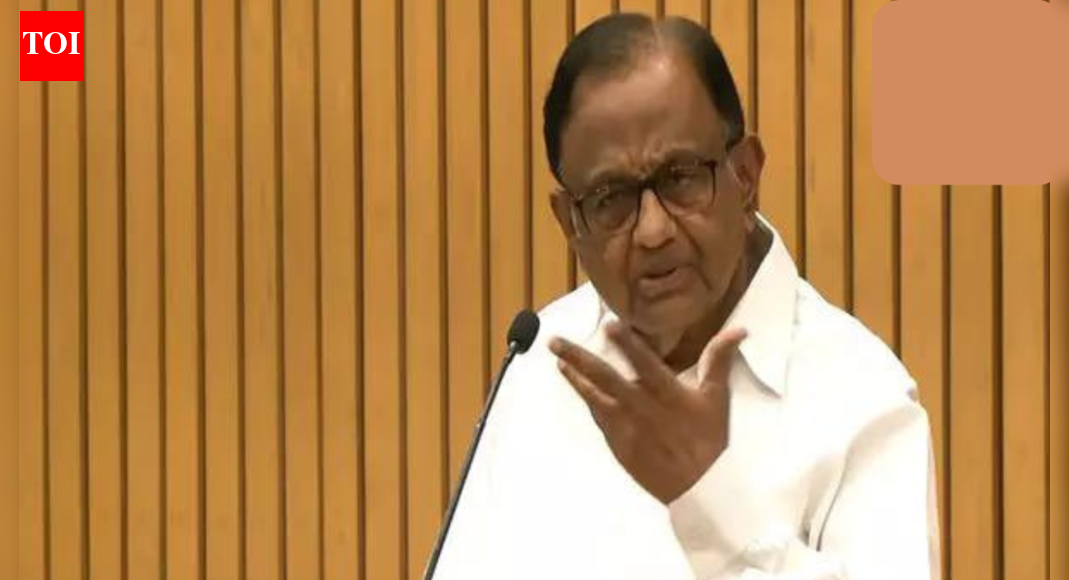
NEW DELHI: Congress MP P Chidambaram on Sunday launched a sharp attack on Centre’s move to replace the MGNREGA, calling the removal of Mahatma Gandhi’s name from the scheme the “second killing of Mahatma Gandhi.”Addressing a press conference in Chennai, Chidambaram said the Congress would continue to oppose the new law until the earlier employment guarantee framework is restored, reported PTI. “The party will expose this fraud by going from house by house, village by village, and our struggle will continue until this Act is repealed,” he said. Parliament on December 18 passed the Viksit Bharat Guarantee for Rozgar and Ajeevika Mission (Gramin) (VB-G RAM G Bill), which seeks to replace the 20-year-old MGNREGA and promises 125 days of rural wage employment annually.Reacting to the change, the former Union finance minister said, “According to me, it’s the second killing of Mahatma Gandhi. He was killed once on January 30,1948. They have killed him again — they have killed his memory again.” He added, “You can try to erase Gandhi and Nehru from official records, but they live in the deep consciousness of the Indian people, like the Buddha or Jesus. No government order can wipe them out.”The senior Congress leader argued that the new legislation reverses the nature of the employment guarantee by turning a legal entitlement into a discretionary scheme. “Under the original law, if a person demanded work, the government was legally bound to provide it. Now, people can only ask for work if the government first offers it,” he said.He also questioned the naming of the new programme, referring to the use of “Hindi words written in English letters,” and said titles such as “Viksit Bharat G Ram G” would be confusing for rural populations in southern states. “Even ministers may not understand what these names mean. The law now says that unless states use this exact name, they will not receive funds,” he said. The Congress leader further claimed that the scheme’s coverage would be curtailed, saying it would now apply only to “notified districts” chosen by the Centre, unlike MGNREGA’s national scope. He also alleged that responsibility for the funds was being shifted to states, warning that implementation would suffer if states lacked resources. “Four years ago, the allocation was Rs 1,11,000 crore. For the past three years, Rs 86,000 crore. Next year, it is only Rs 65,000 crore. Any cost above Rs 65,000 crore is the state government’s responsibility,” he fadded. Chidambaram said the rollback would hurt the “ultra-poor,” particularly women and daily wage earners. “The scheme is a safety net for 12 crore people who depend on daily wages. In Tamil Nadu, 90 to 95 per cent of workers are women; they will suffer the most,” he further said.He also dismissed the Centre’s claim of increasing workdays to 125 as “unrealistic,” noting that the national average currently stood at 50 days. Recalling that MGNREGA was passed unanimously in 2005, he said Prime Minister Narendra Modi had once described it as a “living monument” of the UPA’s failures. “Now the same government is dismantling it,” he added.


Source link

‘Mistaken for Bangladeshi national’: Dalit man beaten to death in Kerala | Raipur News


RAIPUR: A chilling case of mob violence has emerged from Kerala’s Palakkad district, where a Dalit migrant labourer from Chhattisgarh was allegedly beaten to death by a group of people after being mistaken for a Bangladeshi national, according to initial reports. The incident has sparked outrage and fear among migrant workers in the region.

Seven Held In Hindu Man’s Lynching in Bangladesh As Yunus Faces Scrutiny Over Minority Safety

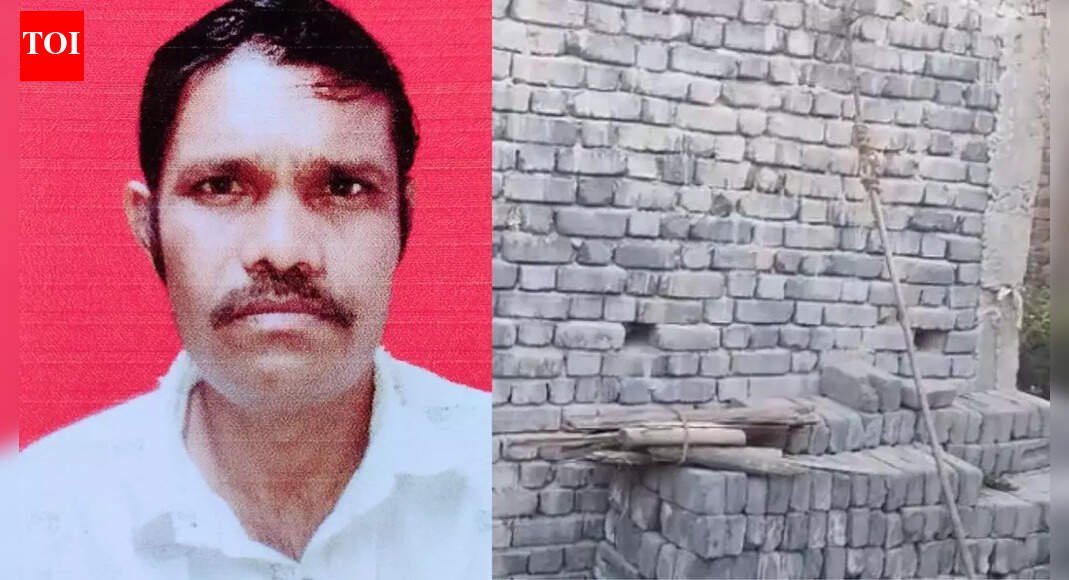
The deceased has been identified as Ramnarayan Baghel (31), a resident of Karhi village in Sakti district, Chhattisgarh. He had travelled to Palakkad on December 13 in search of work and was employed as a daily-wage labourer at a construction site.According to his relative Kishan Baghel, who lives in Karhi village, Ramnarayan had gone to Kerala at the request of Shashikant Baghel, a distant relative from the same village. “Ramnarayan was extremely poor and is survived by his wife Lalita and two young sons, aged around eight and nine,” Kishan told TOI.Other sources claimed that Ramnarayan was allegedly mistaken for a thief following a local theft incident and was brutally assaulted with sticks by a group of people, resulting in his death. Kishan said Ramnarayan’s wife left for Palakkad on Friday after receiving the news, though she had not reached the destination at the time of reporting.Following the incident, tension prevailed in the area, prompting police to step up security to prevent any escalation.Kerala police have arrested five people in connection with the lynching and said a detailed investigation is underway to establish the exact sequence of events and the motive behind the crime.The news of Ramnarayan’s death has devastated his family in Sakti, plunging the village into mourning. Police said that after completion of legal formalities, including the post-mortem examination, the body will be sent back to his native place for the last rites.A case has been registered at Walayar police station under Section 103(1) of the Bharatiya Nyaya Sanhita (BNS). Police confirmed Ramnarayan’s identity through his Aadhaar card, following which Sakti police were informed about his death.


Source link

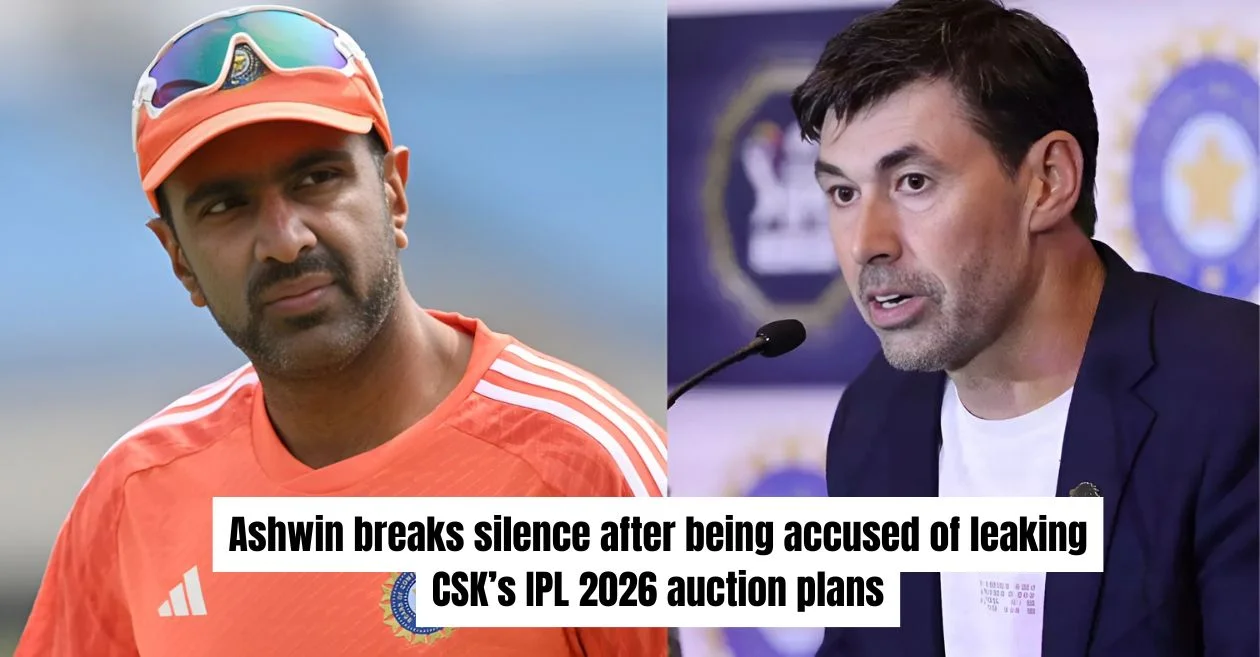
Ravichandran Ashwin faces accusations of revealing CSK’s IPL 2026 auction plans; breaks his silence


The IPL 2026 auction in Abu Dhabi has been rocked by a bizarre controversy involving former India legend Ravichandran Ashwin and his long-time franchise, Chennai Super Kings (CSK). Following his retirement from the IPL in August 2025, Ashwin has transitioned into a popular digital analyst, but his recent ‘perfect’ predictions have landed him in hot water with a section of the CSK faithful.

The off-spinner correctly forecasted that the Super Kings would break the bank for uncapped Indian domestic stars Kartik Sharma and Prashant Veer, a prediction that came true just minutes later when CSK secured both for a staggering 14.2 crore each. This uncanny accuracy led to viral accusations that Ashwin had “leaked” the franchise’s confidential scouting targets, potentially allowing rival teams to drive up the prices. Amidst a flurry of memes and angry tweets, Ashwin finally broke his silence on December 18, 2025, using his trademark wit to dismiss the claims and defend his analytical prowess in a high-stakes digital era.

Former off-spinner Ravichandran Ashwin denies leaking CSK’s IPL 2026 auction plans

The primary catalyst for the backlash was the record-breaking nature of CSK’s acquisitions. By spending a combined 28.4 crore on two uncapped players, CSK effectively set a new benchmark for domestic valuations, but many fans felt the “heads-up” from Ashwin’s social media gave teams like Sunrisers Hyderabad and Kolkata Knight Riders the leverage to inflate the bids.

Ashwin, however, found the idea that billion-dollar franchises base their strategies on his tweets inherently hilarious. Addressing a fan on X who asked how happy he was after “leaking all the picks,” Ashwin retorted with laughing emojis: “How are you guys able to believe these lies? The ‘Orange Army’ (SRH) had Muralitharan, Vettori, analysts, and scouts sitting at the table and yet showed faith in my tweets? Use some logic!” His response showcased a critical reality of modern IPL auctions, every team now employs rigorous scouting networks that identify the same “hidden gems,” making it inevitable that top-tier domestic performers like Kartik and Prashant would trigger massive bidding wars regardless of social media chatter.

Also READ: Rishabh Pant to captain Delhi as Virat Kohli makes historic Vijay Hazare Trophy return; squad announced for first two games

CSK’s evolution: From Dad’s army to a youth-driven future

Beyond the Ashwin drama, the 2026 auction signaled a historic shift in the Chennai Super Kings’ DNA, moving away from their traditional reliance on veteran experience toward a high-risk, high-reward youth policy. Head coach Stephen Fleming clarified that the scouting for Kartik, a 19-year-old Rajasthan keeper-batter, and Prashant, a versatile Uttar Pradesh all-rounder, had been ongoing for over a year.

Fleming stated, “We’ve been watching Kartik for some time; he was with us last year as a net bowler. These weren’t ‘leaks’ or impulsive buys; they were targeted replacements for the core we lost after the Ravindra Jadeja trade.” While Ashwin’s retirement has left a void in the locker room, his role as a public “explorer of the game” continues to bridge the gap between fans and the technical side of the sport. Despite missing out on targets like Cameron Green, who went to KKR for a record 25.2 crore, CSK management remains confident that their 28 crore investment in youth will provide the long-term stability needed to reclaim the trophy in the post-Dhoni era.

Also READ: Mumbai announces squad for Vijay Hazare Trophy; Rohit Sharma makes historic return


Source link

Indian football legend Bhaichung Bhutia strongly criticises chaos in Lionel Messi’s Kolkata event: ‘Sports should get priority’ | Football News


Indian football legend Bhaichung Bhutia strongly criticises chaos in Lionel Messi's Kolkata event: 'Sports should get priority'
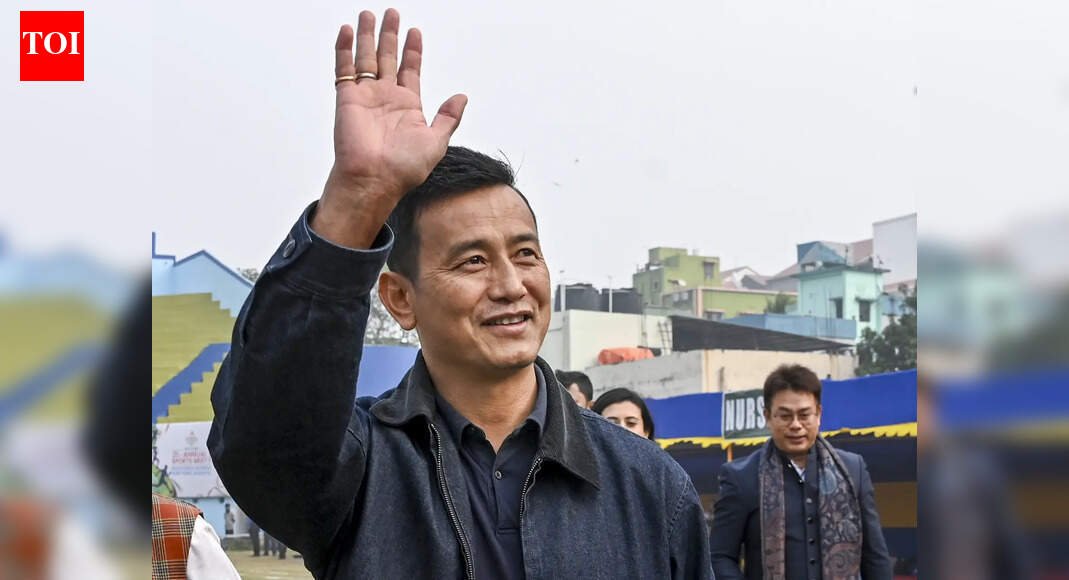
Indian footballer Bhaichung Bhutia (PTI Photo)

NEW DELHI: Former India football captain Bhaichung Bhutia has strongly criticised the chaos that took place during Lionel Messi’s public event at the Salt Lake Stadium in Kolkata. Speaking on Sunday, Bhutia called the incident unfortunate and said sports events should always be treated with importance, without unnecessary delays caused by politics or formalities.

Fans throw objects, vandalise stadium after Messi leaves early | Hyderabad next

He said fans come to stadiums to enjoy the sport and watch their favourite players, not to sit through long speeches or wait for VIPs to arrive. “I think when there is a sports event, sports should get priority,” he said. He also pointed out that this problem is seen often across India. According to Bhutia, many sporting events are delayed because organisers wait for politicians or chief guests. He said such practices only harm the experience for fans and players. “Many times across India, we see sporting events getting delayed because of political speeches, chief guest handshakes and all that. That is not necessary. Fans and players are coming to watch the sport, and the sport should begin rather than waiting for VIPs.” Talking about Lionel Messi’s recent G.O.A.T. Tour of India, Bhutia said the response from fans clearly showed what people really want. He said fans in Kolkata and other cities only wanted to see Messi and enjoy the sport, without any extra drama. “It was good to see not just in Kolkata, but across different cities, fans just wanted to see the sporting event, who just wanted to see Messi and nothing else.” Bhutia hopes that what happened in Kolkata will act as a wake-up call for organisers and authorities in the future. “I hope this is a lesson we will learn and that this trend will change,” he added. The promotional event featuring Lionel Messi turned chaotic due to poor planning and crowd control. Thousands of fans were disappointed as politicians, celebrities and officials surrounded Messi, limiting his interaction with the public. His time on the field was also cut short. Frustrated by the situation, some spectators created disturbances inside the stadium.


Source link

BJP won 2-0 in 2025 elections, can opposition bounce back in 2026? | India News


BJP won 2-0 in 2025 elections, can opposition bounce back in 2026?
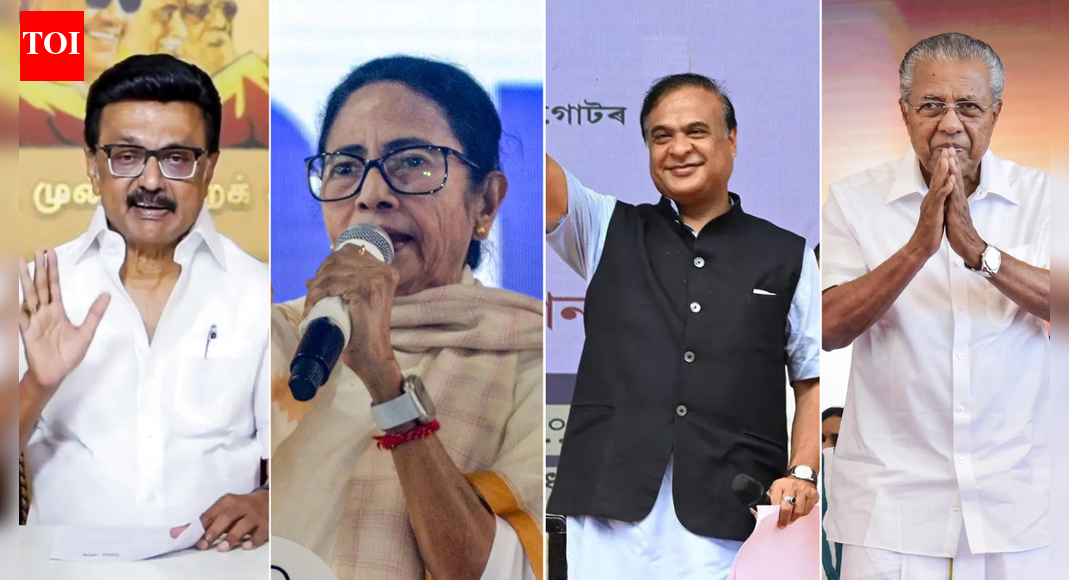
MK Stalin, Mamata Banerjee, Himanta Biswa Sarma and Pinarayi Vijayan (File photos)

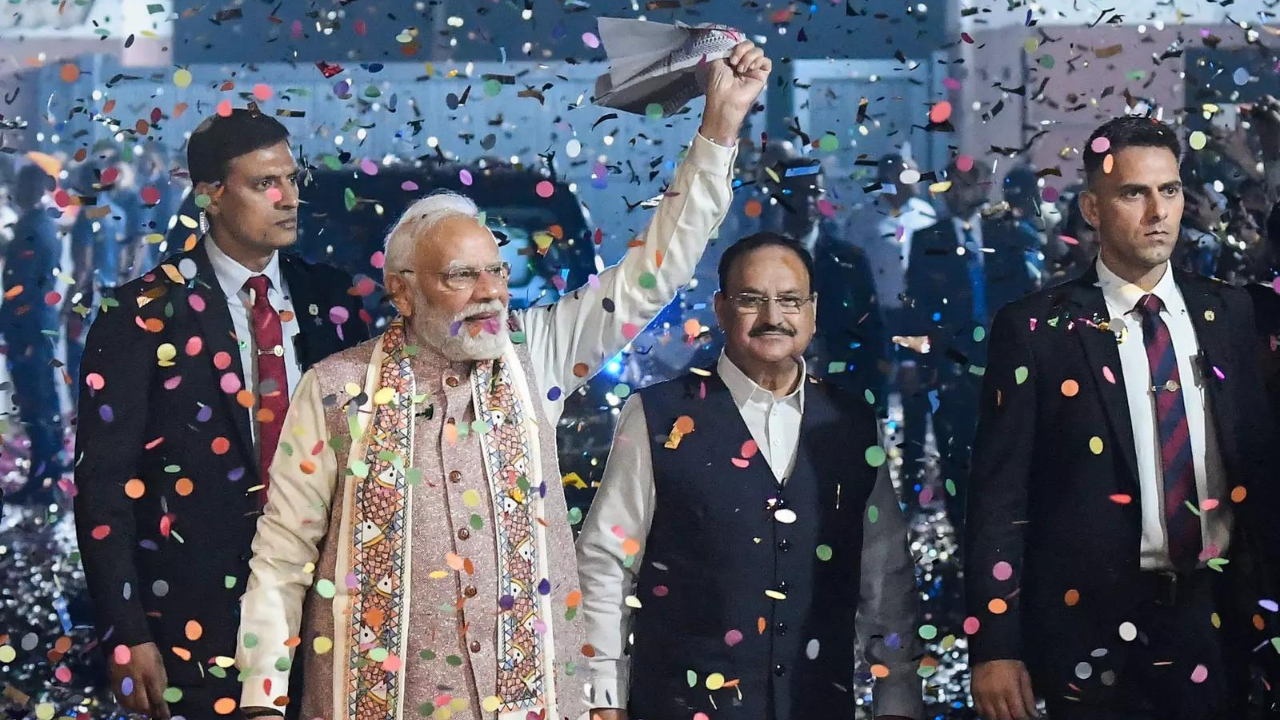
NEW DELHI: The ruling NDA led by the BJP had a lot to cheer in 2025 with decisive victories in Delhi and Bihar – the two states where assembly elections were held this year. For the opposition, 2025 was a year of disappointments. While the Arvind Kejriwal-led AAP was defeated in Delhi, the Mahagathbandhan of Congress, Lalu Prasad’s RJD and the Left was decimated in Bihar. But 2026 could be an opportunity for the opposition to bounce back as four states and one Union Territory – West Bengal, Kerala, Tamil Nadu, Assam and Puducherry — will vote to choose their new assemblies. Except Assam, which is ruled by the BJP, the opposition has a dominant presence in the other three states.

‘There Is Only One Modi’: Jaishankar Says Leaders Define Nations, Not Ministers Or Individuals

With polls due between March and May 2026, parties have already begun calibrating strategies and sharpening their pitch to voters.
-

PM Modi after Bihar victory

In West Bengal, Mamata Banerjee’s Trinamool Congress will be defending its fortress as it seeks to hold off a renewed BJP push, while the Congress and Left will make another effort to recover lost political ground.In Kerala, the CPM-led LDF is eyeing an unprecedented third consecutive term — a feat unheard of in the state’s traditional pendulum-like politics.Tamil Nadu is preparing for another round of the Dravidian duel, with the DMK and AIADMK once again anchoring the state’s political battlefield.In Assam, the BJP-led NDA under Himanta Biswa Sarma will fight to hold the state even as the Congress looks to stage a revival.Meanwhile, in Puducherry, N Rangasamy’s AINRC–BJP coalition faces the challenge of holding together a fragile alliance against a DMK seeking to widen its footprint and a weakened Congress attempting a comeback.A key undercurrent across these contests is the Special Intensive Revision (SIR) of electoral rolls, extended to several poll-bound states including West Bengal, Tamil Nadu and Puducherry. The 2026 elections will therefore unfold on updated voter lists — a factor that could change a lot of things.

West Bengal

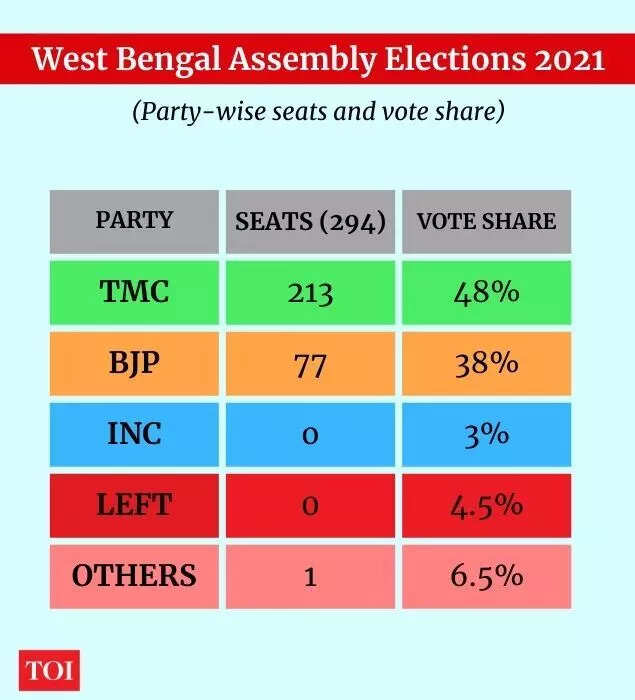
Buoyed by its sweeping win in the recent Bihar assembly elections, the BJP has made its ambitions clear: Bengal is the saffron party’s next battleground.Ahead of the 2026 polls, the BJP is pushing hard to turn momentum into seats. Meanwhile, the TMC, which won 213 of the 294 assembly seats in 2021 with roughly 48% vote share, is back in full campaign mode, defending a fortress it has held for over a decade. With the Congress party struggling to regain its footing, the stage is set for a high-stakes political showdown.

-

What’s at stake?

BJP’s rising influence

From a modest presence in 2016 with just 3 seats, the BJP surged to 77 seats and approximately 38% of the vote share in 2021. The 2026 elections will test whether this was a temporary surge or the beginning of a sustained challenge to the TMC’s dominance in Bengal.

TMC’s incumbency challenge

With 213+ seats and 48% vote share in 2021, Mamata Banerjee enters 2026 as the incumbent with the widest lead. She has already begun mobilisation and outreach, but the real challenge is holding this high ceiling in the face of anti-incumbency and a more aggressive BJP than before.

Congress fights for relevance

From being a dominant force pre-2011 to being almost wiped out in 2021, Congress is now battling for visibility. Adhir Ranjan Chowdhury’s removal and Subhankar Sarkar’s appointment hasn’t yet translated into a loud political message or campaign repositioning leaving Congress still searching for footing.

INDIA bloc?

With the future of the opposition’s INDIA bloc uncertain and Mamata Banerjee repeatedly hinting that TMC will contest Bengal alone, Congress risks being caught between two compulsions: aligning nationally versus confronting TMC locally.“Bengal is ours, we will fight here alone,” the West Bengal chief minister Mamata Banerjee has already declared.

SIR factor

Additionally, the 2026 elections will be conducted under a Special Intensive Revision of electoral rolls. Changes in voter registrations, particularly in minority-heavy or urban constituencies, could significantly impact the margins in key swing seats.

Tamil Nadu

Tamil Nadu is gearing up not only for another showdown between Dravida Munnetra Kazhagam (DMK) and All India Anna Dravida Munnetra Kazhagam (AIADMK), but also for a potentially game-changing third force.The entry of TVK under Vijay has made Tamil Nadu assembly elections in the state all the more interesting.
-

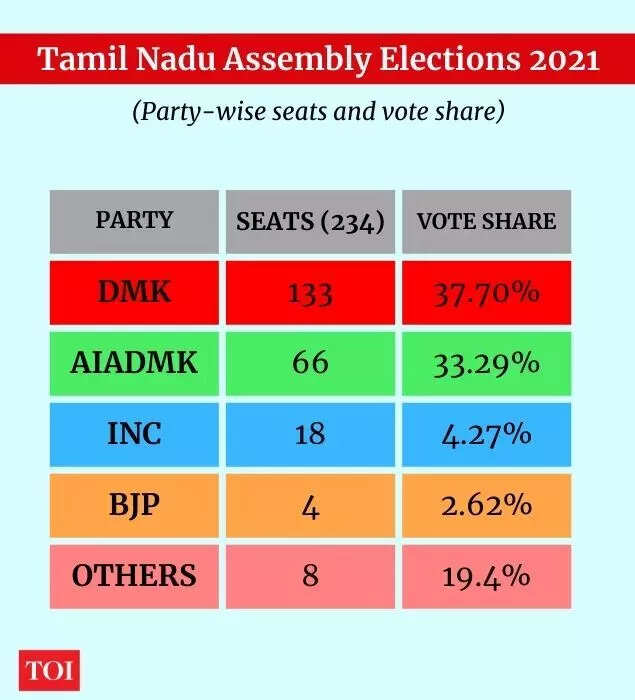
Tamil Nadu assembly elections 2021

What’s at stake?

DMK’s incumbency test

The ruling DMK enters 2026 from a position of strength, having secured 133 seats on its own in the previous assembly election. However, the party faces a tougher political landscape this time, with the AIADMK–BJP alliance regrouped and better aligned than in 2021. Tamil Nadu chief minister Stalin has already announced that the party will contest the state polls as part of the INDIA bloc, calling it an ideological partnership built on shared goals.The real test, however, lies in whether DMK can overcome anti-incumbency pressures, defend its welfare and governance record, and manage voter expectations on issues like jobs, NEET exemption and power tariffs.

AIADMK–BJP alliance

The 2026 Tamil Nadu Assembly election is a high-stakes battle for the All India Anna Dravida Munnetra Kazhagam (AIADMK), which is desperately looking for a comeback after two consecutive electoral defeats. The big question for 2026 is whether the renewed AIADMK–BJP partnership can translate into seats. In 2021, the AIADMK-led front won 75 seats, while the BJP remained a secondary force. However, together they remain the largest challenger bloc to the ruling DMK. Edappadi K. Palaniswami has already set the tone, vowing that the front will “shatter Stalin’s dream of winning 200 seats” and predicting that the alliance could cross 210.A key factor that complicates the opposition arithmetic is the entry of actor Vijay with his party, the Tamilaga Vettri Kazhagam (TVK), whose decision to contest alone threatens to split the anti-DMK vote.

TVK factor

The 2026 Tamil Nadu election is the crucial electoral debut for actor Vijay’s TVK, who has boldly declared the contest as a “TVK versus DMK” fight and positioned himself as the alternative to “Stalin uncle”. Vijay has massive youth following and has a potential surprise factor to disrupt the traditional bipolar contest. However, the tragic Karur stampede that claimed 41 lives during one of his pre-poll roadshows casts a significant negative shadow. The incident has been heavily leveraged by the opposition, forcing Vijay and the TVK to defend their competence and win public trust.

Assam

In Assam, the BJP-led NDA under the leadership of chief minister Himanta Biswa Sarma. who has become one of the party’s most prominent regional faces, will fight to hold the state, aiming to secure an unprecedented third consecutive term.

-

What’s at stake?

BJP’s regional dominance

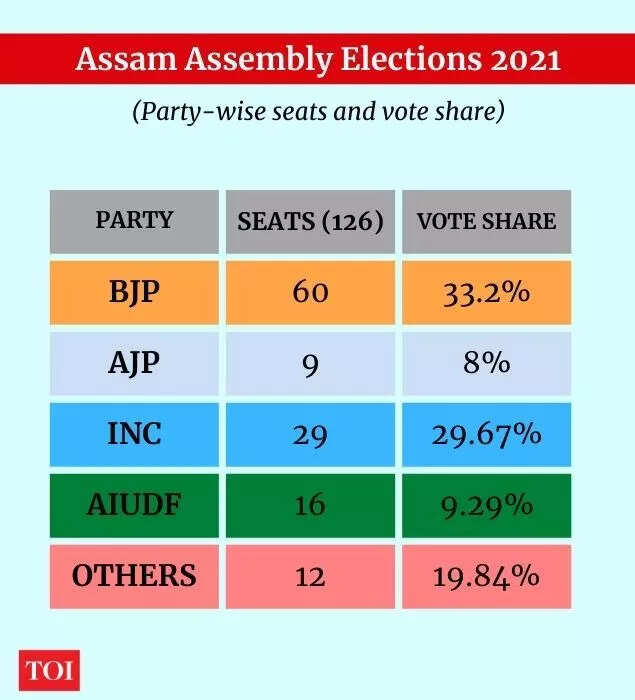
Despite the 75 seats won in 2021, anti-incumbency remains a major underlying challenge. Chief minister Sarma, however, has set an aggressive target, confidently claiming the NDA is capable of winning “104 out of 126 seats”.

Congress’s revival test

The Congress, which won 50 seats in 2021, is desperate for a comeback, led by the newly appointed state chief, Gaurav Gogoi. The party is trying to leverage the “10-year anti-incumbency” against the BJP, with Gogoi stating, “After 10 years of BJP’s corrupt and authoritarian rule, the people of Assam want change.”This election is a personal test for Gogoi, who must prove he can translate his Lok Sabha victory into a wider assembly-level revival for the party.

AIUDF’s dilemma

Badruddin Ajmal’s AIUDF won 16 seats in 2021, performing strongly in Muslim-majority pockets. A breakup with Congress or a solo contest could split the opposition vote — benefiting BJP in triangular fights.

Kerala

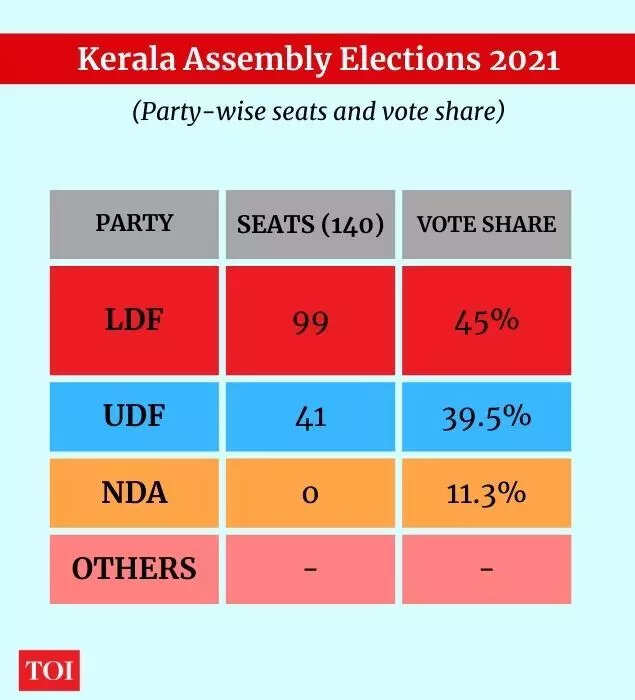
Kerala heads into 2026 with one of the rarest scenarios in its electoral history — a ruling front attempting to win a third consecutive term. The CPI(M)-led LDF broke the state’s alternating pattern in 2021, winning 99 of 140 seats while the Congress-led UDF slipped to 41, and the BJP once again failed to open its account.
-

Kerala assembly elections 2021

What’s at stake?

LDF’s third-term bid

The LDF has never won three consecutive assemblies in Kerala’s democratic history. For the CPI(M), which leads the front, this election is critical as Kerala remains the only major state where the Left is currently in power on its own strength. Chief minister Pinarayi Vijayan, who will again lead the front, is campaigning on the theme of “continuity for progress.” Senior CPI(M) leaders, like KN Balagopal, have publicly stated that “continuity was vital to maintain the momentum” of development and welfare policies. However, the LDF faces a significant anti-incumbency challenge, which the opposition is leveraging to counter the government’s claims of development.

UDF’s existential battle

UDF dropped from 47 seats in 2016 to 41 in 2021, still holding a sizable vote share but struggling to convert it. 2026 is the coalition’s best opportunity to regain ground if anti-incumbency builds. A weak result could push UDF further into inertia, shrinking the Congress footprint in another southern state.

BJP — still on the sidelines?

BJP has contested aggressively for two cycles but holds zero MLA seats in Kerala. If it breaks that barrier in 2026 — even with 1–3 wins — it changes the dynamics of the House. If it fails again, Kerala remains one of the last major states outside BJP’s elected footprint.

Puducherry

In Puducherry, N Rangasamy’s AINRC–BJP coalition faces the challenge of holding together a fragile alliance against a resurgent DMK seeking to widen its footprint and a weakened Congress attempting a comeback.

What’s at stake?

NDA’s fragile coalition

The ruling NDA is led by the All India NR Congress (AINRC) and BJP. In 2021, the AINRC won 10 seats and the BJP won 6 seats. This coalition is under immense pressure due to internal discord and anti-incumbency. The internal rift was brought to the forefront by the resignation of a lone Dalit minister AK Sai J Saravanan Kumar, on the decision of the high command.The move triggered strong reactions and exposed deeper fault lines within the coalition and the local BJP unit.

DMK’s attempt to expand

The DMK entered the 2021 Puducherry polls with limited ground presence but still emerged with 6 seats, overtaking the Congress to become the largest opposition party. For 2026, the main challenge for DMK would be to widen its footprint in the Union territory and convert influence into numbers.

Congress — survival, not dominance

Like in many other states, the Congress is fighting for survival in Puducherry too. Once the ruling party here, it has slipped to the margins since the 2021 election. For Congress, 2026 is not about winning power; it is about preventing irrelevance. A tally of 5–6 seats keeps it alive; anything below that accelerates decline. The grand old party must survive before it can compete.The Election Commission’s SIR of electoral rolls has already raised the pitch in these states, with the BJP strongly backing the exercise while the opposition accusing the poll body of helping the saffron party gain an advantage over its political opponents. 2026 is clearly all set for interesting electoral contests.

Source link

‘Not ready for responsibility’: RSS chief Mohan Bhagwat on live-in relationships and how many children to have — watch | India News


‘Not ready for responsibility’: RSS chief Mohan Bhagwat on live-in relationships and how many children to have — watch
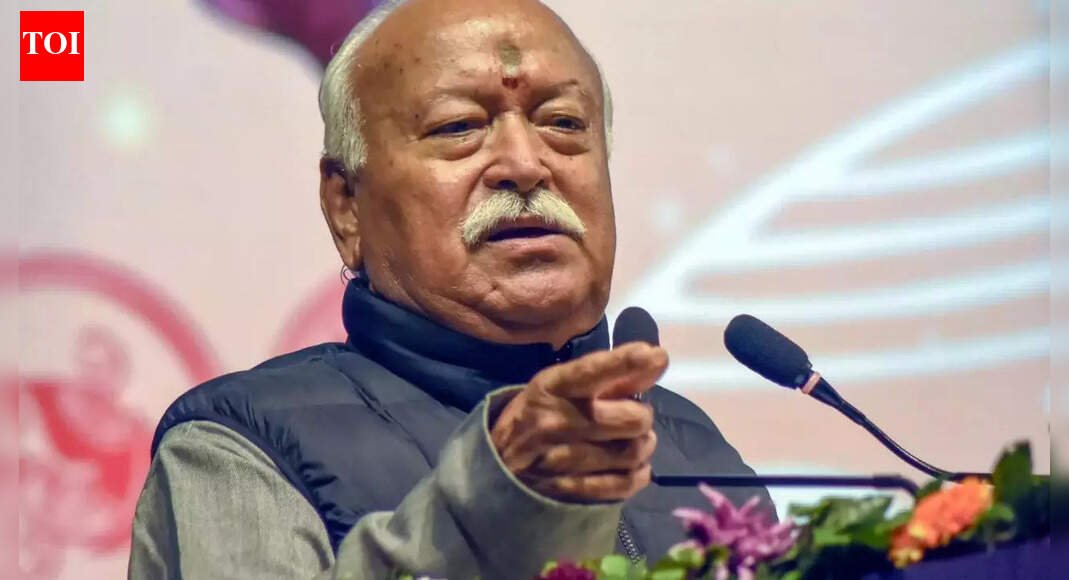
RSS chief Mohan Bhagwat in Kolkata on Sunday (ANI photo)

NEW DELHI: RSS chief Mohan Bhagwat on Sunday shared his views on live-in relationships while addressing a gathering in Kolkata. Speaking during the centenary celebrations of the Rashtriya Swayamsevak Sangh, Bhagwat said live-in relationships reflected an unwillingness to take responsibility. “You’re not ready to take responsibility. This isn’t right,” he told the audience.According to Bhagwat, those who do not wish to marry should choose a life of renunciation. “If you don’t want to get married, that’s fine. We can become sanyasis. But if you won’t even do that, and also won’t take responsibility, then how will things work?” he asked.Three children help ego managementBhagwat also spoke about how many children a couple should have. “The question of how many children a couple should have is a matter for the family, the bride and groom, and society. A formula cannot be given,” he said.However, Bhagwat said he had discussed with doctors, psychologists, and demographers, who said that marrying early between 19 and 25 years of age, and having three children, was beneficial for health.“I’ve gained some knowledge by talking to doctors, etc and they say that if marriage takes place early, between 19-25 years of age, and there are three children, then the health of the parents and children remains good,” Bhagwat said. He added that, according to psychologists, having three children also helps with ego management. “Psychologists say that having three children helps people learn ego management,” Bhagwat said.The RSS chief, however, also acknowledged that he was only sharing information he had received from others. “I am a preacher, unmarried. I don’t know anything about this matter,” Bhagwat said.


Source link

‘Might change name’: Congress taunts BJP over railways fare hike; slams increasing travel prices | India News


'Might change name': Congress taunts BJP over railways fare hike; slams increasing travel prices

NEW DELHI: Congress MP Ranjeet Ranjan on Sunday criticised the Union government over the increase in railway fares, saying the Centre might just change the name of railways if asked the reason behind the move, claiming it would further burden the middle and lower middle class even before the Union budget is presented. Ranjan said the timing of the fare hike was particularly concerning. “The budget has not yet been announced, and the government has already started pushing people towards higher costs,” she said, alleging that the increase would significantly impact long-distance travellers.Referring to the revision, the Congress MP said, “They have increased Rs 10 per 500 km, so you have pushed people to pay Rs 100-200 more for long distance travel.” She added that train travel remained the primary mode of transport for middle- and lower middle-class families, who would now have to bear higher expenses.She also drew comparisons with rising costs in other modes of transport. “On one hand you’re collecting exorbitant tolls if we travel by road, airfares are increasing from Rs 5000 to Rs 30000 directly, in the festive season fairs skyrocket,” she said.Questioning the government’s messaging on affordability, she added, “On the other hand they were saying the middle class will also travel by plane, now that you have increased even the railways fair that middle class is thinking where should they go?”Accusing the government of placing undue financial pressure on citizens, Ranjan said, “The government is ripping people apart.” She also made a sarcastic remark on policy priorities, saying, “It would not be surprising if they change the name of the railway in the future and say the name has been changed, be happy with it and the increased fare.”The comments come amid broader opposition criticism over rising travel costs and inflationary pressures affecting household budgets.


Source link

India-US trade: Exports rebound in November; supply-chain shifts and holiday restocking drive recovery, says GTRI


India-US trade: Exports rebound in November; supply-chain shifts and holiday restocking drive recovery, says GTRI

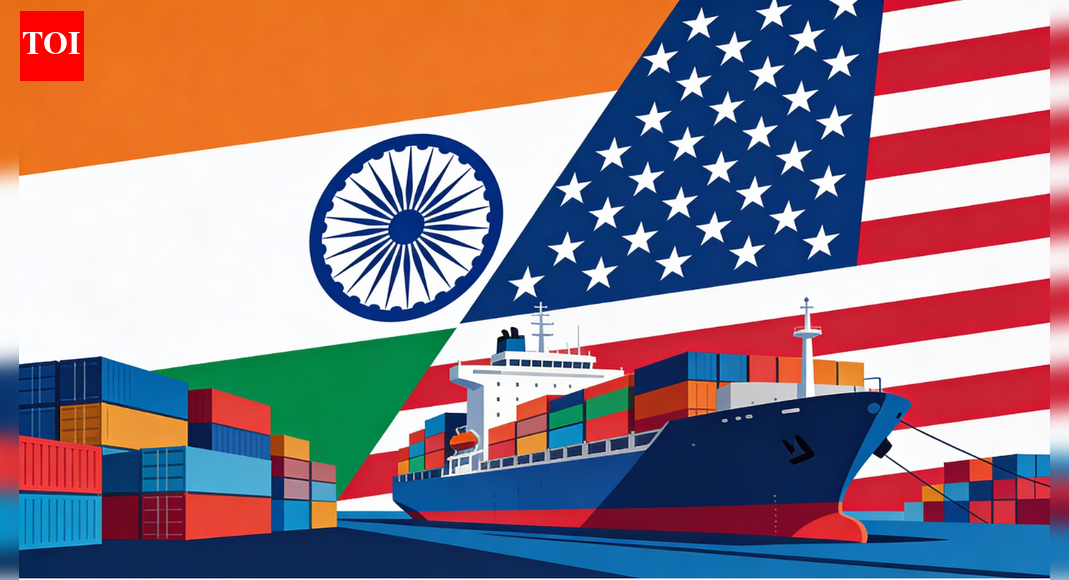
India’s exports to the US bounced back in November after two months of dip. The rebound was largely supported by supply-chain adjustments and pre-holiday season inventory restocking, according to the Global Trade Research Initiative (GTRI). This recovery came despite the US imposing 50 per cent tariffs on Indian goods since August.

November India-US trade snapshot amid higher tariffs

  • Exports to the US rose 22.61 per cent in November to $6.98 billion, reversing declines seen between May and September.
  • Smartphones (largest export item): Exports fell from $2.29 billion in May to $884.6 million in September, before rising to $1.8 billion.
  • Gems and jewellery: Slumped from $500.2 million in May to $202.8 million in September, then rebounded to $406.2 million.
  • Machinery and mechanical appliances: Declined to $516.8 million in September, before nearly returning to peak levels at $614.6 million in November.
  • Pharmaceuticals: Shipments rose to $669.2 million in November, but remained below May levels.
  • Mineral fuels and oils (tariff-exempt): Fell from $291.5 million in May to $251.5 million in September, before climbing to $274.3 million.

GTRI said supply-chain realignments and pre-holiday inventory restocking, especially in electronics and machinery, supported shipments, but stressed that the rebound reflects adaptation to a harsher tariff regime, leaving India’s export momentum to the US fragile in the months ahead.GTRI said the rebound came after a sharp fall in exports earlier in the year, triggered by uncertainty surrounding impending tariff hikes. GTRI Founder Ajay Srivastava said US buyers initially delayed orders and ran down inventories. “Once the higher tariffs became certain, exporters and US buyers began adjusting, absorbing part of the cost, renegotiating prices, and shifting toward less-affected or hard-to-substitute products,” he said.However, the think tank also warned that this recovery might not last. They claimed that it was more about adjusting to tougher tariffs rather than a permanent improvement. The think tank also added that businesses were using short-term strategies to cope with the new trade environment.


Source link

‘Confusion at state level’: Mallikarjun Kharge on Karnataka CM row; defends Cong high command | India News


'Confusion at state level': Mallikarjun Kharge on Karnataka CM row; defends Cong high command
Mallikarjun Kharge (File photo)

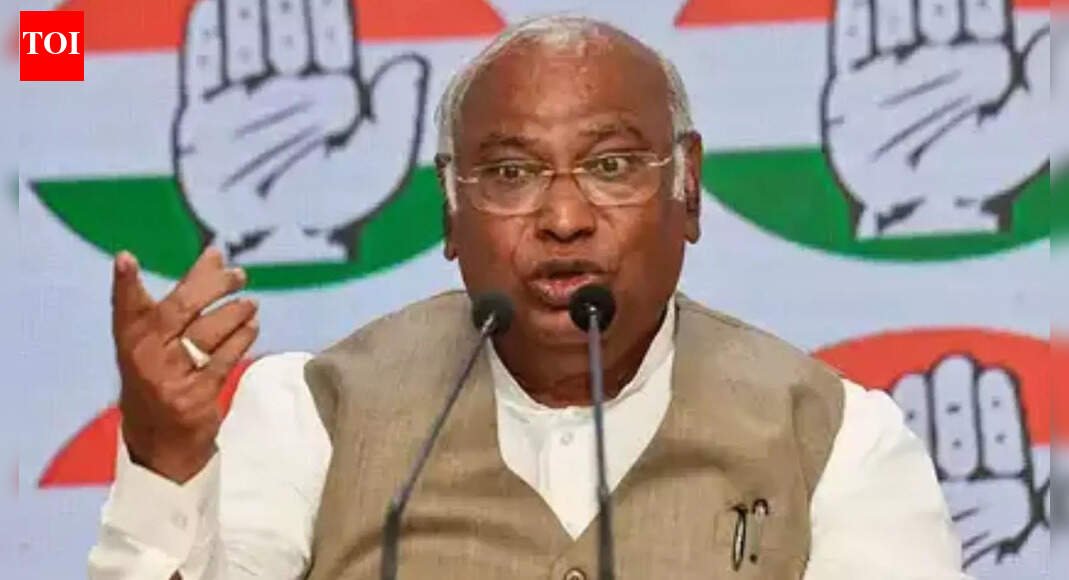
NEW DELHI: Congress president Mallikarjun Kharge on Sunday defended the party’s high command amid the ongoing leadership issue in Karnataka, saying the “confusion” is at the local level.“The high command hasn’t created any confusion. The confusion exists at the local level. Is it right to put the blame on the high command?” he said while speaking to reporters in Kalaburagi in Karnataka, his home state.Kharge called on the Congress’ local leaders to take “ownership” of the internal disputes instead of blaming the high command.The veteran politician also cautioned leaders against claiming credit for the party’s electoral successes.“Everyone has built the party. It’s not the effort of any one individual. Congress has been built by party workers. Congress workers supported us,” he stated, without naming anyone.His remarks come amid the ongoing power tussle in Karnataka between chief minister Siddaramaiah and his deputy, DK Shivakumar, who also heads the Congress’ state unit.It has been widely reported that after the Congress won the May 2023 Karnataka assembly elections—ousting its arch-rival BJP from power—the high command had promised to make Shivakumar chief minister for the second half of the five-year term, while opting for veteran Siddaramaiah initially.Under Siddaramaiah, Karnataka’s Congress government completed the first 2.5 years of its term on November 20.The chief minister on Friday expressed confidence that the party leadership would back him to complete his full five-year term.(With PTI inputs)


Source link

Alia Bhatt wedding saree: Alia Bhatt finally shares the story behind her ‘chai-dipped white’ Sabyasachi wedding saree |


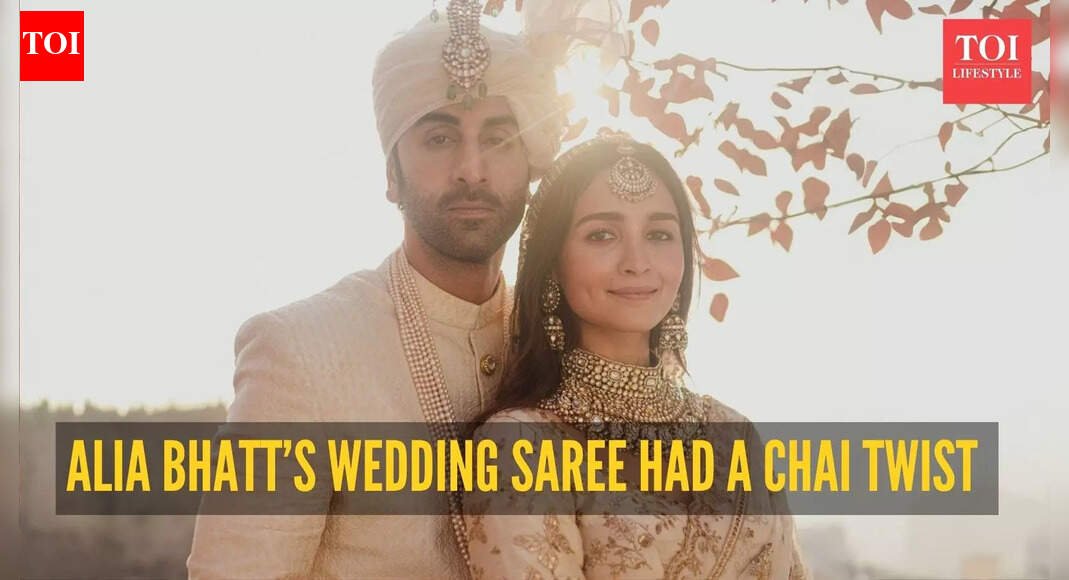
Alia Bhatt’s wedding to Ranbir Kapoor featured a personal, understated ivory organza saree by Sabyasachi, prioritizing comfort and authenticity over grandiosity. The “chai-dipped white” hue and subtle personal touches like “Mrs Hipster” stitched onto the train made the look memorable and relatable, reflecting her belief in dressing for oneself.

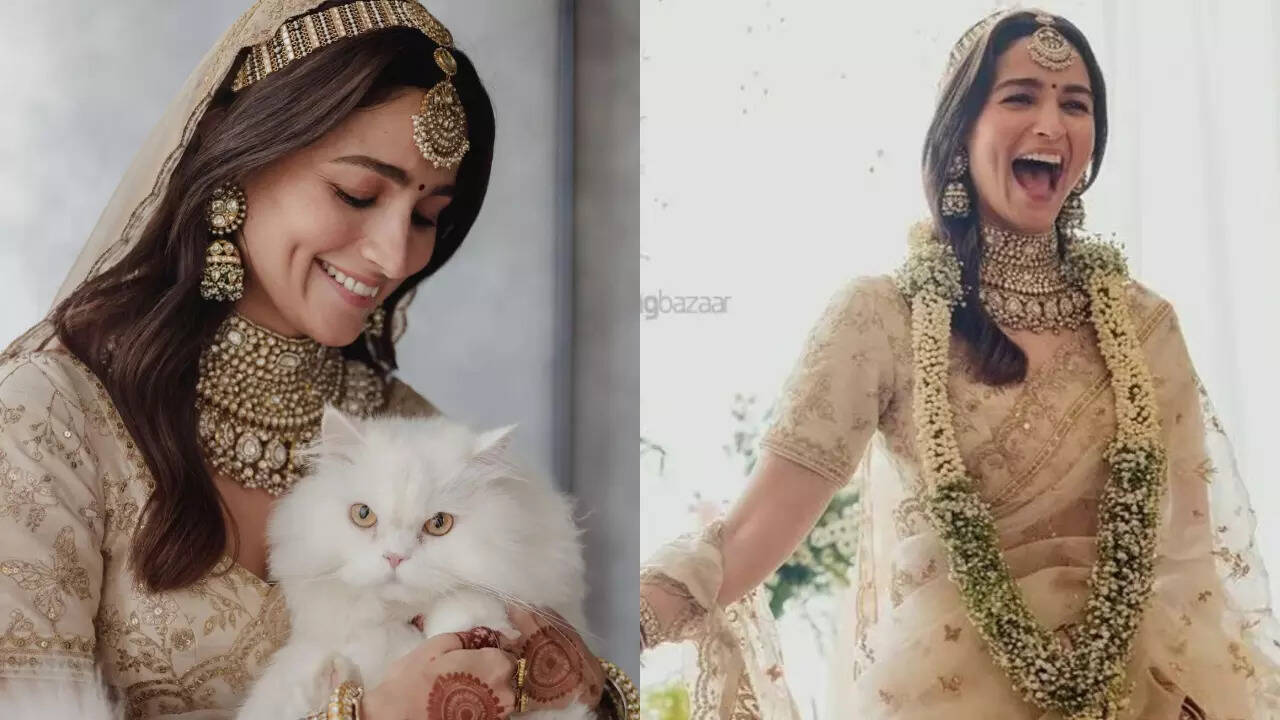
When Alia Bhatt married Ranbir Kapoor on April 14, 2022, she didn’t make noise about it. No grand venue. No dramatic bridal entry. Just a quiet wedding at their Mumbai home, Vastu. And a bridal look that felt just as personal.Instead of the usual red lehenga, Alia chose an ivory organza saree by Sabyasachi Mukherjee. Soft, light, and almost understated. At the time, it surprised people. But looking back, it made complete sense.

Alia Bhatt’s Personal November Diary Sets Social Media On Fire

That saree went on to become one of the most talked-about celebrity bridal looks in recent memory. Not because it was loud. But because it felt honest.

43 (54)

Recently, almost three years later, and as a mother, Alia has opened up about what really went into that choice in a candid conversation with Vogue.And it turns out, the decision was simple.

Why a saree felt right, not a lehenga

In a video shared by Vogue on December 18 as part of its Life In Looks series, Alia looked back at her fashion journey. From her early, slightly preppy phase to that now-iconic wedding saree.When Sabyasachi asked her what she wanted to wear during their first Zoom call, she didn’t hesitate. She told him she wanted comfort. And she wanted a saree.Alia has always said she feels most herself in a saree. And on her wedding day, she didn’t want to feel weighed down by layers or expectations. She wanted to move easily, breathe easily, and feel like herself.So that became the starting point. Comfort first. Everything else later.

How ‘chai-dipped white’ was born

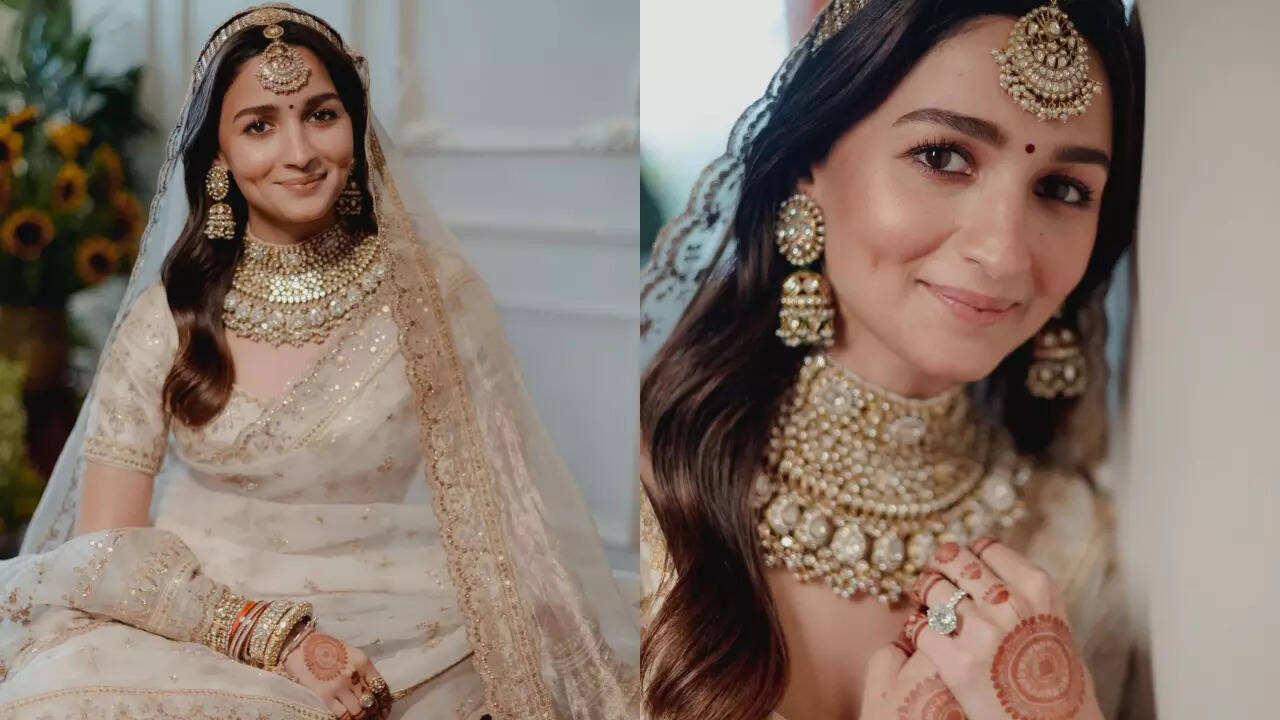
Once the silhouette was decided, the next question was colour. Alia told Sabyasachi she was thinking white and gold. Something soft. Nothing harsh.That’s when he suggested “chai-dipped white.”Not stark ivory. Not beige. Something warmer. Something lived-in. According to Alia, he also suggested organza because it’s light, simple, and naturally elegant. You don’t have to force drama with it. It creates its own.

43 (55)

And that was the whole idea. Let the fabric fall. Let the embroidery breathe. Don’t overload it.The final saree was minimal but rich. Subtle embroidery, gentle sheen, and a drape that looked effortless rather than styled within an inch of its life.

“A saree is the most comfortable thing you can wear”

Alia has said this before, and she stands by it. In an earlier interview, she explained that a saree, for her, is the most comfortable garment there is. Which is exactly why she chose one for her wedding.For Alia, bridal dressing was never about ticking boxes. It wasn’t about what a bride should wear. It was about what felt right in that moment.She’s also spoken about how women should feel free to celebrate whichever version of themselves feels strongest. Some days it’s a saree. Some days it’s a pantsuit. Some days it’s a gown. And all of it is valid.That freedom is something she genuinely believes in.

The little details that made it personal

What really set Alia’s wedding saree apart were the quiet, personal touches. Sabyasachi customised the saree with a long train that included her wedding date.There was also a detail that most people didn’t notice right away. A coat-style element with the words “Mrs Hipster” stitched onto it. An inside joke between Alia and Ranbir. Just for them.It wasn’t meant to trend. It wasn’t meant for Instagram. And that’s what made it special.Her jewellery followed the same thought process. All uncut diamonds from Sabyasachi’s collection. A statement necklace, bold earrings, and a maang tikka. Traditional, but not heavy.

Keeping the beauty look easy and real

Alia didn’t try to transform herself into a bride she didn’t recognise. Her makeup stayed soft. Fresh skin, a hint of blush, nude lips, and lightly defined eyes. Mascara, not drama.Her hair was worn loose in gentle waves. No stiff buns. No heavy accessories.Everything about the look felt relaxed. Like she could laugh, move, and actually enjoy her day.Nothing felt forced. Nothing felt performative. And maybe that’s why it still holds up.Alia Bhatt’s wedding saree wasn’t just a fashion moment. It was a reminder that sometimes, the most memorable choices are the quiet ones. When you stop dressing for expectations and start dressing for yourself, it shows.


Source link