Breaking News
Hijab row: Doctor whose naqab was pulled by Nitish Kumar fails to join duty; officials report no contact | India News


Hijab row: Doctor whose naqab was pulled by Nitish Kumar fails to join duty; officials report no contact

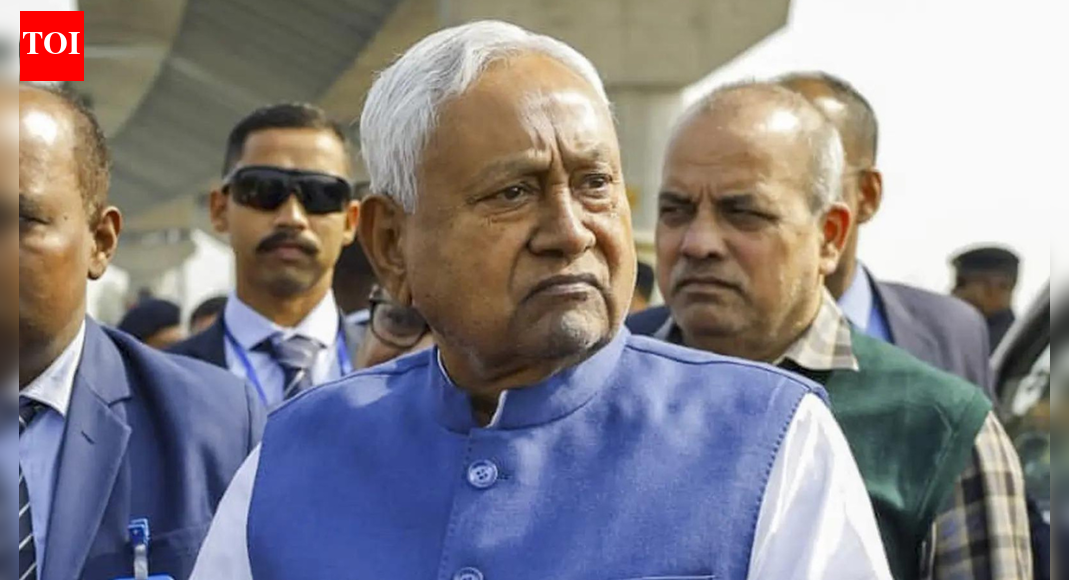
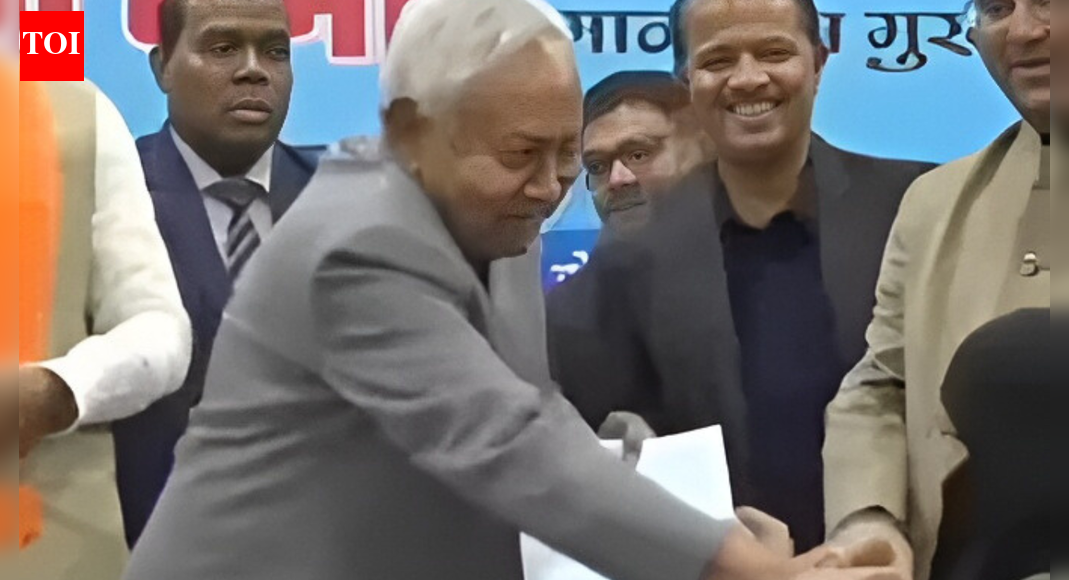
NEW DELHI: A woman doctor at the centre of the recent hijab row after Bihar chief minister Nitish Kumar lifted her naqab during an event did not join duty on Saturday, officials confirmed to news agency PTI. They also reported no contact with her or the family members.Patna civil surgeon Avinash Kumar Singh confirmed that Nusrat Parveen had not reported for duty till 7 pm on Saturday, after which the “possibility window for the day” closed.“I have been informed that the last date of joining has been extended beyond December 20. It remains to be seen whether Parveen joins on Monday or not,” he said, without specifying the new deadline.The controversy erupted earlier this week during an appointment letter distribution programme at the chief minister’s secretariat in Patna. The video circulated widely on social media, capturing the moment Nitish Kumar questioned Parveen’s naqab when she came forward to receive her appointment letter along with other Ayush doctors.Also Read: Hijab row: SCBA issues ‘strongest condemnation’ over Nitish Kumar’s act; seeks unconditional apology from Giriraj Singh, Sanjay NishadCivil surgeon Singh said he was not aware of the reason for Parveen’s delay, as he “had no contact with her or the family members.”Vijay Kumar, a surgeon at Sabalpur PHC in Patna Sadar, where Parveen was supposed to join, also confirmed she had not reported for duty.“Around five-six people have joined today, and Parveen is not among them… Her name is in the list but we have not received her appointment letter from the civil surgeon office in Patna,” he said. As per protocol, candidates must first report to the civil surgeon’s office before joining their assigned workplace.Meanwhile, governor Arif Mohammad Khan expressed disappointment over the controversy.“It pains me to hear the word ‘dispute’ in this case. Can there be any row between a father and a daughter?” he asked.“What have you people made out of it? This man (Nitish Kumar) considers female students as his daughters,” he added while speaking to reporters in Patna.Earlier, Mahfoozur Rahman, principal of Government Tibbi College & Hospital (GTCH), where Parveen is a second-year student, also suggested the joining deadline had been extended “in this special case”.“Ayush doctor Nusrat Parveen has not joined yet, and there is no update on her future course of action,” Rahman said.According to him, the family wants to avoid media attention. “Her family said that they want to escape media coverage, and that the woman doctor will rethink whether to join or not,” he said.Rahman also dismissed rumours that the family had shifted to Kolkata. “They have themselves rubbished such false news reports,” he said, quoting Parveen’s husband as saying the family is not upset with Nitish Kumar or the government.He added that “the family is disappointed with the row stirred by the media.”Rahman said Parveen last attended college on December 17 or 18 and noted that she still has the option to either join duty or pursue higher education.


Source link

24-year-old biker killed in hit-and-run mishap in Mumbai | Mumbai News


Mumbai: A 24-year-old motorcyclist was killed in a hit-and-run at Aarey Colony recently. Aarey police have registered a case against an unknown motorist.Vishal Sharma was riding his motorcycle from Unit no. 6 to Royale Palms between 4.30 pm and 5 pm on Dec 17, when he was hit by another vehicle.A witness called up Sharma’s friend using Sharma’s phone and informed that he was being taken to the Trauma Care Hospital for treatment. The witness added that a milk supply van had rammed into Sharma. Doctors at the Trauma Care Hospital pronounced Sharma dead. Police are probing further.


Source link

Electricity Bill consultation: Power minister discusses draft amendments with MPs; stakeholder feedback underway


Electricity Bill consultation: Power minister discusses draft amendments with MPs; stakeholder feedback underway

Power Minister Manohar Lal has held consultations with a panel of Members of Parliament on the proposed Electricity (Amendment) Bill, 2025, as the government seeks feedback on changes aimed at strengthening India’s power sector framework, PTI reported.MPs from various political parties in both the Lok Sabha and Rajya Sabha participated in the meeting of the Parliamentary Consultative Committee of the Ministry of Power, held in New Delhi on Thursday, the ministry said in a statement on Saturday. The consultation was convened to discuss key provisions of the draft Bill, which has been placed in the public domain for stakeholder feedback.The discussions come amid opposition from power sector employees. The All India Power Engineers Federation (AIPEF) has announced demonstrations on December 23 against the proposed amendments and has extended support to a nationwide strike called by central trade unions and the Samyukt Kisan Morcha, protesting labour law changes and demanding a legally guaranteed minimum support price for crops.Chairing the meeting, the minister said the Bill seeks to strengthen the legislative foundation of the power sector. He noted that the proposals aim to mandate cost-reflective tariffs and empower regulatory commissions to act suo motu when utilities delay tariff filings. He clarified that state governments may continue to provide subsidies to priority consumer groups such as domestic and agricultural users, and said the changes would not lead to higher costs for such consumers.According to the statement, the Bill also seeks to reduce distortions caused by cross-subsidies and surcharges to improve the competitiveness of Indian industry, including MSMEs, and support job creation. The minister emphasised the need to ensure reasonable electricity costs for industry.The draft legislation proposes to empower State Electricity Regulatory Commissions, in consultation with state governments, to exempt distribution companies from supplying large consumers. It also introduces a minimum obligation for using non-fossil fuel-based electricity and enables renewable capacity addition through market mechanisms alongside DISCOM agreements, with the aim of easing financial stress on utilities.Operational reforms proposed include incorporating Right-of-Way provisions in the Act and enabling distribution network sharing to avoid duplication, which the minister said would benefit consumers.Responding to concerns, Lal said apprehensions about privatisation, higher costs or adverse impacts on employees were unfounded and that safeguards would be in place.However, AIPEF chairman Shailendra Dubey has charged that the amendments could eliminate subsidies and cross-subsidies for farmers and poor domestic consumers, leading to higher electricity bills.


Source link

Anxiety spills across border: Unrest back home unsettles Bangladeshi visitors in Kolkata; businesses hit | Kolkata News


Anxiety spills across border: Unrest back home unsettles Bangladeshi visitors in Kolkata; businesses hit
Bangladeshi tourists in Kolkata are experiencing tension and anxiety due to fresh violence in their home country, prompting some to consider cutting short their medical trips

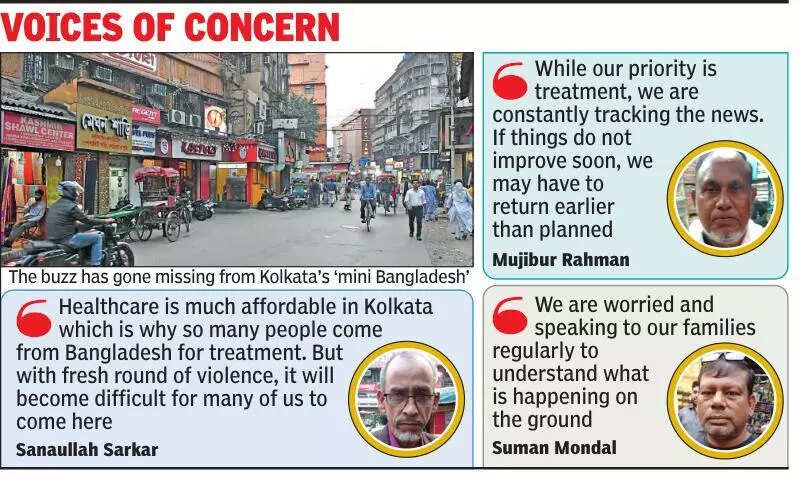
KOLKATA: Tension and anxiety gripped many Bangladeshi tourists staying in central Kolkata following a fresh outbreak of violence in Dhaka and other cities. This has prompted several visitors to closely monitor developments back home and consider cutting short their stay.Most of the tourists are in the city on medical visas and are lodged in hotels and guest houses in and around Marquis Street, Free School Street, and Collin Street — an area informally known as ‘Mini Bangladesh’ because of its concentration of hotels, guest houses, eateries, and travel agencies. On Friday, many said they were worried that the situation in their home country could deteriorate further, affecting both their families’ safety and bilateral movement between India and Bangladesh.

-

“The situation in Dhaka was tense for the past few days, and this fresh spell of violence is deeply concerning,” said Mujibur Rahman, who arrived in Kolkata early Friday for the medical treatment of a family member. Several tourists were seen consulting travel agents about rescheduling or advancing return tickets. Others gathered in small groups outside hotels and tea stalls, discussing reports from home and staying in contact with family members. “I am praying the situation stabilises in the next couple of days,” said Suman Mondal, another visitor from Bangladesh. Tourist inflow from Bangladesh showed signs of recovery since Oct after a prolonged slump of nearly 15 months. In July, political unrest and economic stress in Bangladesh sharply curtailed travel, leaving businesses in Mini Bangladesh struggling to survive. Hotels, guest houses, money exchange counters, and transport operators only recently began to see improved occupancy and footfall, largely driven by medical tourism.For families travelling with children, the uncertainty has added to their anxiety. Amin Islam, a resident of Khulna who is visiting Kolkata with his wife and two daughters, said safety concerns were paramount. The renewed violence has also raised fears among traders and hotel owners that the fragile recovery in business could be disrupted once again. Many said cancellations or early departures would directly impact business that depends heavily on Bangladeshi visitors. “We have reassured our guests that they are safe in Kolkata and that there is no reason for panic here,” said the owner of a guest house on Collin Street. “But uncertainty back home naturally affects their plans and our business.”


Source link

Epstein files drop: Spoiler alert – it’s mostly ████████


Epstein files drop: Spoiler alert - it’s mostly ████████

TOI correspondent from Washington: The US justice department released an initial trove of documents related to the late financier and convicted sex offender Jeffrey Epstein on Friday evening, marking a partial fulfillment of a congressional mandate but sparking immediate backlash over extensive redactions and incomplete disclosure. The files, comprising thousands of pages and hundreds of images, were made public just before a statutory deadline, yet officials acknowledged that not all materials would be unsealed immediately, citing the need to protect victims’ privacy and ongoing reviews. The partial release came amid widespread suspicions of a cover-up by the Trump administration on grounds that the President, a flamboyant businessman from the 1980s when he was friends with Epstein, is implicated.

Epstein ‘Drama’: S*x Toys, ‘Nude’ Clinton & More But 550 Pages ‘Redacted’ | Who Is Trump Shielding?

Among the newly released images are previously unseen photographs of Epstein with associates, including former President Bill Clinton in casual settings, such as on Epstein’s private island. One photograph shows Clinton seated in a jacuzzi and another shows him with the late entertainer Michael Jackson. The context is limited by redactions. References to Trump appear comparatively sparse in the initial batch, with documents noting his cooperation in earlier inquiries and containing no new allegations. Names of other alleged associates and accomplices are frequently obscured. In some cases, entire documents – including lengthy grand jury transcripts – are fully blacked out. Commentators, even those on the right, fumed at the selective disclosure they said will simply extend the suspense and lead to more political posturing and gaslighting. “People are raging and walking away,” said Marjorie Taylor-Greene, a one-time Trump acolyte turned MAGA dissenter who fell out with the President, describing it as a “heavily redacted Epstein files” that was potentially shielding elites. Analysts also argued that the prominence of materials referencing Clinton risked turning the release into a partisan exercise while failing to resolve broader questions about Epstein’s network. Images of fully blacked-out pages circulated widely on social media as symbols of public frustration. “All the Epstein files have been released! Here’s every page available…” one commentator snarkily noted, alongside images of fully blacked-out pages. In all, more than 550 pages were released as solid black boxes. The release created a rare moment of alignment between Democrats and a few Republicans lawmakers who have stood up to Trump. California Democrat Ro Khanna and Kentucky Republican Thomas Massie, primary architects of the Transparency Act which mandated the release, condemned the selective offering, saying the it “grossly fails to comply with both the spirit and the letter of the law.” Khanna said the law explicitly forbids redactions based on “political sensitivity” or “reputational harm,” yet the release appears to shield specific names while highlighting others.Victim advocacy groups offered a more measured response. Representatives for survivors welcomed efforts to protect identifying information but urged fuller disclosure of non-sensitive material. “Safeguarding victims is essential,” said a spokesperson for the Epstein Victims’ Compensation Program, “but so is accountability.”In a statement posted to an Epstein-specific page on the DOJ’s website, the department said it had made “all reasonable efforts” to comply with the congressional mandate while protecting the privacy of victims and ensuring legal review. Officials characterized the disclosure as the first installment of a rolling release, with additional materials expected in the coming weeks.The release stems from a bipartisan law – arising from the Khanna-Massie bill – signed by President Trump in November after initial attempts by Trump minions to stall it. The law required the DOJ to declassify and publish records from the Epstein investigation by December 19. Epstein, who died by suicide in federal custody in 2019 while awaiting trial on sex-trafficking charges, has long been at the center of sex-trafficking allegations involving a network of powerful figures from politics, business, and entertainment.


Source link

Access Denied


Access Denied

You don’t have permission to access “http://www.ndtv.com/offbeat/heartwarming-video-of-child-dancing-in-assembly-prayer-goes-viral-9855129” on this server.

Reference #18.2ef63717.1766246318.6163f57

https://errors.edgesuite.net/18.2ef63717.1766246318.6163f57


Source link

‘Domestic cricket matter, not just IPL’: Sunil Gavaskar hails Ishan Kishan’s return in T20 World Cup squad | Cricket News


'Domestic cricket matter, not just IPL': Sunil Gavaskar hails Ishan Kishan’s return in T20 World Cup squad

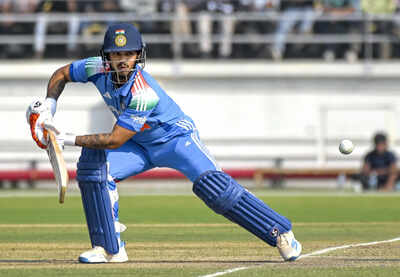
Legendary India batter Sunil Gavaskar has expressed surprise at Shubman Gill’s omission from the Indian squad for the 2026 T20 World Cup, citing the right-hander’s recent lack of form as a likely factor. At a press conference held at BCCI headquarters on Saturday, Gill’s exclusion from both the T20 World Cup squad and the upcoming T20I series against New Zealand quickly became a major talking point. Since returning from the Asia Cup, the 26-year-old struggled to find consistency, with his highest score across 15 innings being just 47.

India World Cup squad: No Shubman Gill, Jitesh as selectors recall Rinku, Ishan Kishan

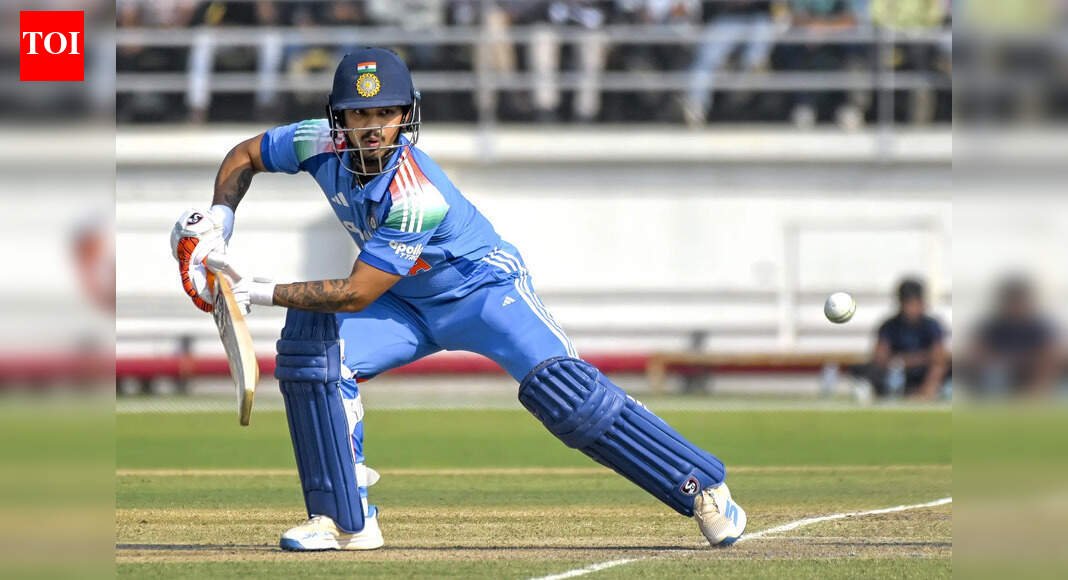
“It is surprising,” Gavaskar told JioStar. “He is a classy, quality batter who had an excellent season following the 2024 T20 World Cup. Yes, he had a few quiet matches against South Africa. But class is permanent, and form is temporary. He was also returning after a long break and was a bit out of rhythm.” The former India captain added that the challenges of T20 cricket may have contributed to Gill’s struggles. “When you are not in rhythm in T20s, where you have to attack from the first ball, it becomes tough. His natural game suits Test cricket more, playing along the ground. The shots needed in T20s don’t come as easily. But we know he is a very good player. His IPL performances show that T20 is not new to him. Perhaps just the lack of form and touch worked against him this time. In Gill’s absence, Axar Patel was named India’s vice-captain, while the team management also reshuffled the top order to accommodate a wicketkeeper-batter at the top. This paved the way for Ishan Kishan’s return to the T20I side, his first appearance since November 2023. Kishan had a stellar domestic season, captaining Jharkhand to victory in the Syed Mushtaq Ali Trophy and finishing as the tournament’s top scorer with 517 runs in 10 innings. Gavaskar praised his form and consistency. “When you see someone performing, you pick him. Ishan has already represented India and shown he can deliver. His current performance proves that domestic cricket should matter for selection, not just the IPL. He has made a fantastic comeback after being out of the team for a couple of years and led his state team to a title.” The squad also saw other notable changes. Wicketkeeper Jitesh Sharma was left out, while left-handed batter Rinku Singh was included to strengthen the middle order. Gavaskar sympathised with Sharma. “I feel for Jitesh. He did nothing wrong. He was a very capable wicketkeeper, and after MS Dhoni, perhaps the best at assisting the captain with DRS calls from behind the stumps. It is tough for him, but he is young. He just needs to go back to domestic cricket and continue performing.” With Gill sidelined and Kishan back in the fold, India’s T20 plans are being restructured ahead of the World Cup. Gavaskar’s observations highlight both the challenges of form and fitness in international cricket and the value of domestic performances in shaping national selections.


Source link

Hijab row: SCBA issues ‘strongest condemnation’ over Nitish Kumar’s act; seeks unconditional apology from Giriraj Singh, Sanjay Nishad | India News


Hijab row: SCBA issues 'strongest condemnation' over Nitish Kumar's act; seeks unconditional apology from Giriraj Singh, Sanjay Nishad

NEW DELHI: The Supreme Court Bar Association (SCBA) on Saturday issued a letter expressing its “strongest condemnation” of the recent incident in Bihar in which CM Nitish Kumar pulled down the hijab of a woman doctor during a public ceremony.The incident, which occurred on December 15 at the chief minister’s secretariat in Patna during the distribution of appointment letters to newly recruited AYUSH doctors, was captured in a video that quickly went viral. The clip showed Nitish questioning the woman’s naqab, saying “what is this?” and then attempting to remove it, leaving the doctor visibly flustered. Deputy chief minister Samrat Choudhary appeared to intervene to restrain him. In a post on X, RJD wrote: “What has happened to Nitish ji? His mental state has now reached a completely pitiable condition, or has Nitish Babu become 100% Sanghi now?” In its letter, the SCBA condemned the Bihar CM’s action as an infringement on the woman’s autonomy, religious freedom and personal dignity.It stated, “Besides infringing on her autonomy, agency and religious freedom, it is a reflection of the depraving attitude against women in general.” The association also condemned “the vile comments made by union minister Giriraj Singh and Uttar Pradesh minister Sanjay Nishad,” saying such remarks further undermined the dignity of women. Signed by SCBA secretary Pragya Baghel, the letter demanded an unconditional apology from the chief minister and others involved.The controversy escalated after union minister Giriraj Singh defended Nitish, describing the incident as “nothing wrong” and framing it as a procedural act. Singh said it was up to the woman to refuse the government job or “go to hell” and argued that the act should not be seen through a religious lens. He drew parallels to other official procedures, stating, “When you go to get a passport, do you not show your face? When you go to the airport, do you not show your face? People talk about Pakistan and Englishtan, but this is India. In India, the rule of law prevails.”Similarly, Uttar Pradesh minister Sanjay Nishad’s remarks defending Bihar CM were widely criticised. Nishad initially supported Nitish’s action but later said his comments were misunderstood due to translation issues and offered to withdraw them if they had hurt sentiments. Despite this, opposition leaders continued to demand an unconditional apology from both ministers.


Source link

Vanessa Bryant’s net worth in 2025: Exploring wealth, legacy, and responsibility after Kobe Bryant’s untimely passing | NBA News


Vanessa Bryant’s net worth in 2025: Exploring wealth, legacy, and responsibility after Kobe Bryant’s untimely passing
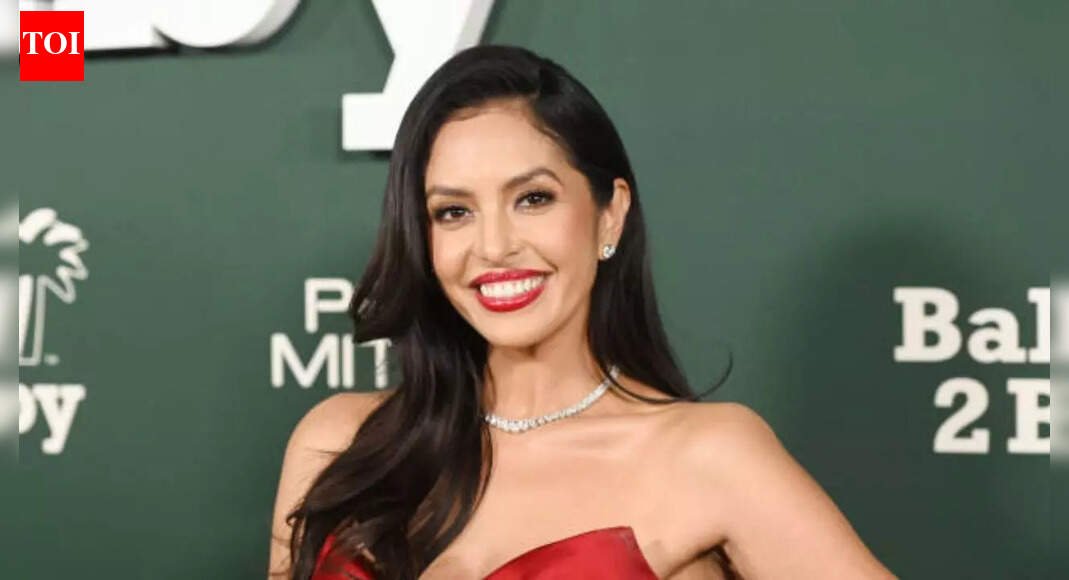
Vanessa Bryant (Image Via: Getty Images)

The late Lakers legend, Kobe Bryant’s widow, Venessa Bryant, is the executor of the vast financial legacy built during Kobe Bryant’s iconic NBA career. In January 2020, Kobe Bryant and their daughter Gianna died in a helicopter crash. After Bryant’s passing in 2020, Vanessa Bryant inherited most of his money, including what he earned from basketball, endorsements, etc. Most of this wealth comes from his NBA salary, his investments, such as BodyArmor and their company, Bryant Stibel. Vanessa now manages these finances and makes important decisions about the family’s money. One major gain came from the sale of BodyArmor to Coca-Cola, which brought in a large amount of money for the family.

What is Vanessa Bryant’s net worth as of 2025?

Inside Vanessa Bryants Life, House Tour, Net Worth

As of 2025, Vanessa Bryant’s net worth is estimated to be around $600 million as per Celebrity Net Worth. After Kobe Bryant’s sudden passing in 2020, Vanessa Bryant became the manager of his financial empire that he built, meaning she makes key decisions about how money and investments are handled. She continues to handle holdings in companies like BodyArmor, whose sale to Coca-Cola brought huge financial gains to the Bryant family. Vanessa also manages real estate and other assets inherited from Kobe. In 2023, Vanessa Bryant won a nearly $29 million lawsuit settlement against Los Angeles County over privacy violations after the crash. She chose to donate the money to the Mamba & Mambacita Sports Foundation.

How Vanessa Bryant is turning loss into leadership and lasting impact, honouring late husband Kobe Bryant and daughter Gianna Bryant?

After Kobe Bryant’s tragic death in 2020, Vanessa Bryant became the sole person responsible for managing his financial legacy. She handles and manages income earned from his NBA career, endorsements, and business ventures. A large part of the family’s wealth comes from his investments, including BodyArmor and Bryant Stibel, with the BodyArmor sale proving especially significant.Additionally, one of Vanessa Bryant’s key roles is serving as the President and CEO of Granity Studios, the multimedia company Kobe Bryant founded. Under her leadership, the company keeps producing books, shows, and creative content inspired by Kobe’s vision. She also launched Mambacita clothing in 2021, a project honoring her late daughter Gianna Bryant. All profits from the clothing business support her foundation’s programs for young athletes. Vanessa Bryant continues to lead the Mamba & Mambacita Sports Foundation, a nonprofit that supports underserved youth athletes, along with managing ongoing brand partnerships with Nike and other key collaborators.Also Read: Kobe Bryant’s wife Vanessa Bryant shares a quiet Instagram glimpse of her new princess with 15.6 million followers


Source link

AI boom or bubble? Is the AI bet driving US growth into risky territory; Ruchir Sharma explains


AI boom or bubble? Is the AI bet driving US growth into risky territory; Ruchir Sharma explains
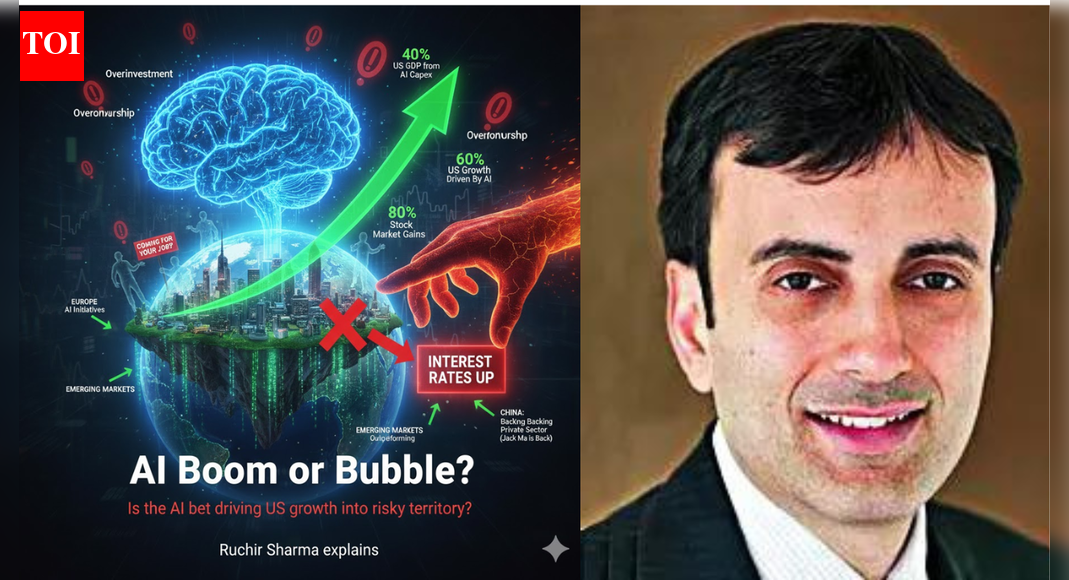
Left- AI generated reperesentative image; Right- Ruchir Sharma (File photo)

The global economy has entered a phase where artificial intelligence has become the dominant force shaping growth, markets and policy, with the US now the most exposed to both its promise and its risks, according to economist and investor Ruchir Sharma.“This big factor has out-Trumped Trump – AI,” Sharma said in a conversation with Nicolai Tangen, earlier on December first week, arguing that artificial intelligence has now become “the singular focus of the global economy and particularly the US economy”.Ruchir Sharma, chairman of Rockefeller International and founder and chief investment officer of Breakout Capital, is a veteran global investor and economic commentator.“The US economy has now become one big bet on AI,” he said. “Outside of AI, there’s a lot of weakness in the US economy. But AI has continued to drive everything.”Sharma warned that the scale of this concentration leaves little margin for error. “This big bet on AI better works out for America,” he said. “Because if it doesn’t work out, then I think that there’s a lot of trouble for this country ahead.”

AI now dominates US economic growth

Veteran analyst pointed to the growing contribution of AI-linked capital expenditure to US growth. “The measures currently show that about 40% of economic growth in America this year has come from capex spending towards AI,” he said.Beyond investment, he stressed the importance of the wealth effect. “The stock market doing well, the financial assets doing well — that is clearly powering the spending of the top 10% in this country,” Sharma said. “And the top 10% is what’s driving the entire consumer spending.”He added that market gains themselves are heavily concentrated. “About 80% of the gains in the stock market this year have been powered by AI plays,” he said.“By some measures, you can argue that about 60% of economic growth in America today is being driven by AI.”

Productivity gains remain uncertain

Despite the scale of investment, Sharma said it is still too early to see decisive productivity gains from AI. “AI adoption is still in its nascent stage,” he said. “So far, it’s too early.”Asked how much of recent productivity improvement can be attributed to AI, Sharma replied, “Very little as yet.”Drawing a comparison with the internet boom, he said, “If you look back at the internet revolution in the late 1990s, the big bump in productivity really happened later. It takes a while for these benefits to come through.”He also said there is still uncertainty about how AI will ultimately be used. “We don’t even know as yet what exactly AI is going to end up doing,” Sharma said.

‘The most hated tech revolution’

The author of What Went Wrong with Capitalism, Ruchir Sharma argued that AI differs from past technological revolutions because of widespread fear rather than optimism.“This is the most hated tech revolution,” he said. “If you look back at the other big revolutions, people were very optimistic about what it would bring.”By contrast, Sharma said surveys show deep anxiety. “Only about 35% of people are feeling good about AI,” he said. “Most people want this to be regulated because they’re fearful about the impact.”“One, all the techno-optimists are telling them, ‘We’re coming for your job.’ And second is just fear — people don’t know how to use these tools,” he added.

Bubble signals are flashing

While calling AI a “good bubble”, Sharma said the market displays multiple warning signs.“I look at the four O’s,” he said — “overinvestment, overvaluation, overownership and overleverage.” On investment, he said, “Tech investment as a share of GDP is about 5% today. That’s roughly what we saw back in 2000.”On valuations, Sharma said, “By any stretch, the US stock market — and of course the AI plays — are overvalued.” While price-to-earnings ratios may not match dotcom levels, he said, “If you look at price to free cash flow or very long-term earnings, by those measures we are getting there.”Overownership is also visible. “Americans have about 52% of their financial wealth in equities today,” Sharma said. “That is higher than what it was even in 2000.”On leverage, he said conditions are changing fast. “The biggest issuers of debt in the last few months have been companies like Meta, Amazon and even Microsoft,” Sharma said, as firms rush to stay ahead in the AI arms race.

Interest rates are the real trigger

Sharma said bubbles rarely burst because of technology disappointment alone.“Every single bubble or mania in history has been pricked by just one factor — when interest rates finally go up,” he said.He expressed concern about the Federal Reserve’s policy stance. “Inflation is already quite sticky,” Sharma said. “The Fed’s 2% target is nowhere in sight. The Fed has missed its 2% target for five years in a row.”“The fact that the Fed is cutting interest rates in this environment is completely bewildering to me,” he added.If inflation accelerates or rates rise, Sharma warned, “That’s when this entire overinvestment AI bubble will burst.”

Global markets rotate away from the US

Sharma said one of the biggest surprises this year has been the underperformance of US markets relative to Europe, emerging markets and China.“At the beginning of the year, everyone was onto the American exceptionalism trade,” he said. “Instead, Europe, emerging markets and China have outperformed America.”He said extreme positioning played a role. “America’s weight in global equity indices was hitting nearly 70%,” Sharma said.But reforms also mattered. “In Europe, expectations were very low, but at least countries like Germany began to wake up and say, ‘We need to do something here’,” he said.

China’s private sector pivot

Sharma said China’s market rebound reflects necessity rather than ideology.“The economy in China is in big trouble outside of AI,” he said. “The property market is bust.”He said Beijing realised that competing with the US on AI required a shift. “There was a very important pivot,” Sharma said. “China realised that if we have to compete with America on AI, we need to back the private sector again.”“Jack Ma is back at Alibaba,” he noted, adding that the stock has doubled this year.

Government power and tariffs

Sharma said the expanding role of the state continues to distort capitalism.“The asymmetry remains,” he said. “On the upside, you capitalise the gains. On the downside, the risks are socialised.”On tariffs, he said, “There’s no objectivity or science behind it. It’s very arbitrary.”While tariffs have helped revenues — cutting the US deficit by about 1% of GDP — Sharma said, “Tariffs have had a negative effect on economic growth. It’s just been offset by the optimism around AI.”

Quality stocks offer a contrarian opportunity

Looking ahead, Sharma highlighted quality stocks as a neglected opportunity.“The last 12 months have been one of the worst runs that quality stocks have had in recorded history,” he said.“There has never been a better time to buy quality stocks,” Sharma added, referring to companies with high returns on equity, low leverage and strong cash flows.He also expects global markets to continue outperforming the US. “These tend to be multi-year trends once they begin,” he said.While he declined to predict exact timing, Sharma offered a clear signal to watch: “At the slightest sign that interest rates are going to go up — that’s when you know this is done.”

Source link