Breaking News
Chilling murder in Tamil Nadu: Lab assistant dies after ‘snakebite’; sons plotted murder for Rs 3-cr insurance | Chennai News


CHENNAI: A death by snakebite has turned out to be murder at Podaturpet village in Tiruvallur district. The plot is diabolic. On Oct 22, E P Ganesan, 56, a lab assistant at a govt girls’ higher secondary school in Podaturpet, was found dead at his house. Based on a complaint lodged by his son Mohanraj, 26, the Podaturpet police registered a case of unnatural death, initially viewing the death as an accidental snake bite. However, the narrative began to unravel after an insurance company flagged serious doubts over the claims submitted by the family, citing suspicious conduct by the sons of the deceased.

Chennai Headlines Today — The Biggest Updates You Need to Know.

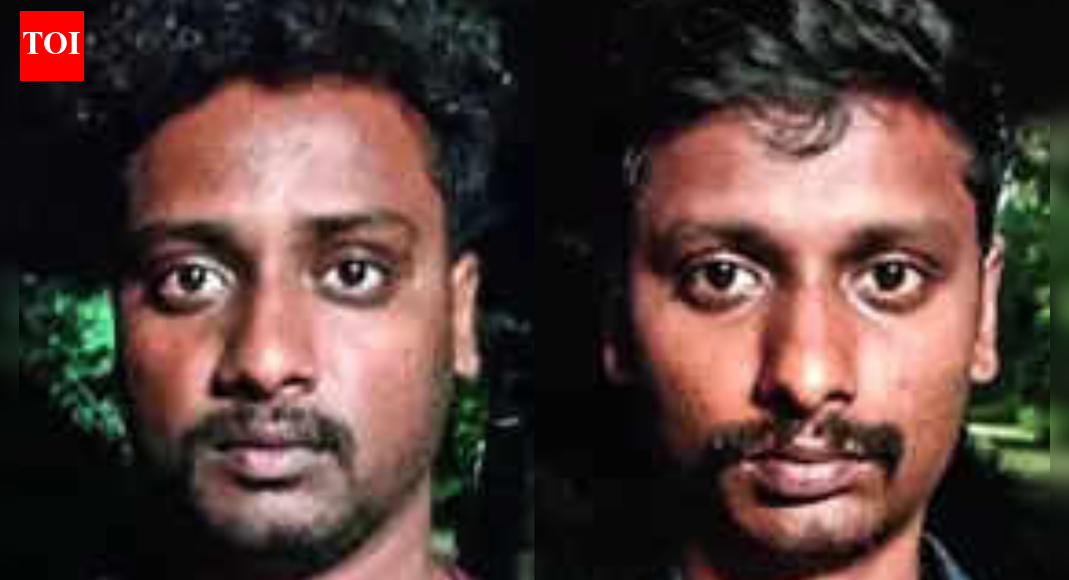
Ganesan was bitten by a cobra a week before he was found dead. Then, neighbours had rushed him to hospital and saved his life. The second time, the snake was a krait and it had bitten Ganesan on the neck. There was also a delay in shifting him to hospital. Investigators found that Ganesan’s family had availed of multiple loans and taken several high-value insurance policies valued at ₹3 crore, which were disproportionate to their known sources of income.IG, north zone, Asra Garg, and SP, Tiruvallur, Vivekananda Shukla, ordered the formation of a special investigation team on Dec 6. SP Shukla told TOI the unusual insurance coverage raised suspicion about the true cause of death.Police studied the call records and money transactions of the sons and uncovered a chilling tale. Ganesan’s sons, Mohanraj, 26, and Hariharan, 27, employed at a private firm, had plotted to murder their father to claim the insurance payout.To execute the plan, they took the help of their friend G Balaji, 28, who in turn contacted B Prashanth, 35, S Dinakaran, 43, and G Naveenkumar, 27, of Manavur village. They arranged venomous snakes and staged the incident, police said.An investigating officer said in the first attempt, a cobra had been made to bite the deceased on his leg while he was asleep. He was rushed to hospital then by neighbours and was stabilized. Undeterred, the second time the conspirators procured a krait, whose poison acts even faster, and ensured it bit Ganesan on the neck in the early hours of Oct 22. After the bite, the snake was killed inside the house.Police said they found an unexplained delay in shifting the victim to hospital, strengthening the suspicion that the crime was premeditated. Investigators grew suspicious about the two snake bite incidents within a span of a week; the accused claimed the village was infested with snakes.Detailed analysis of the call records of the two sons and scrutiny of unusual financial transactions of ₹2 lakh, linked them to four other accused. So far, six accused—the two sons and four accomplices—have been arrested, and further investigation is underway.


Source link

Suryakumar Yadav opens up on lean patch after India clinch T20I series against South Africa


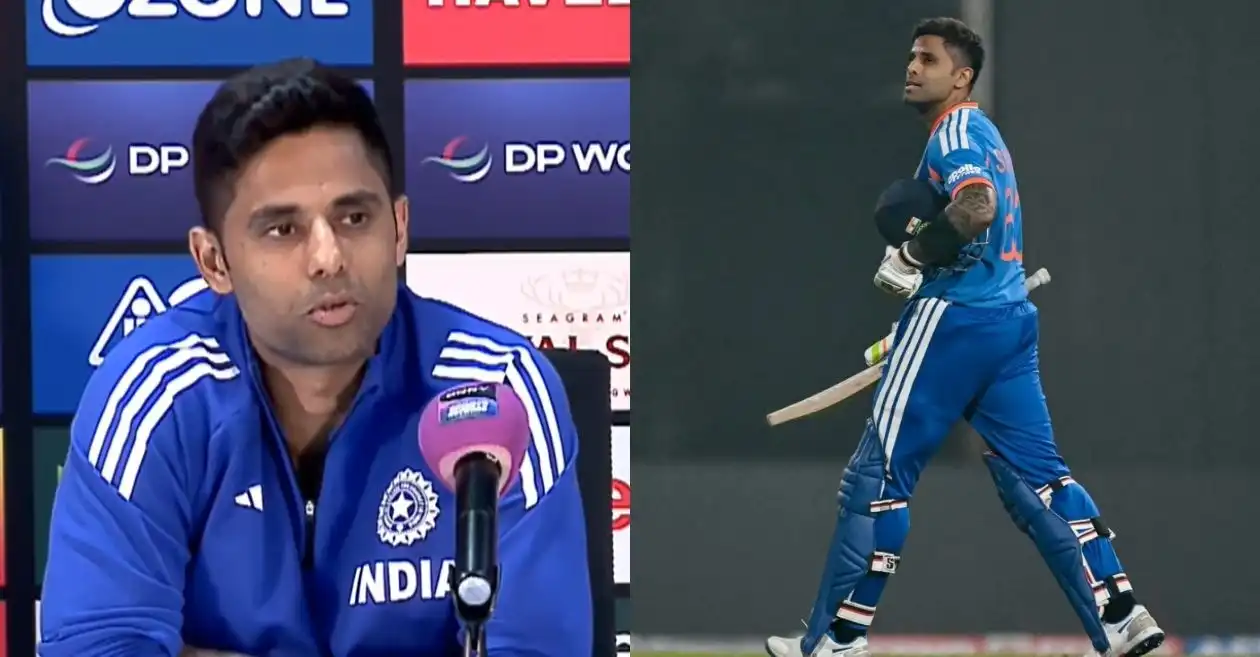
India once again underlined their authority in the shortest format by clinching the T20I series against South Africa, continuing a run of consistent success built on depth, adaptability, and fearless cricket. While the series win sparked celebrations in the Indian camp, it was the captain’s candid self-assessment that grabbed attention after the final match. Suryakumar Yadav, never one to shy away from honesty, spoke openly about his own lean run with the bat despite leading India to another series victory.

Suryakumar Yadav opens up amid poor show with the bat

During the post-match presentation, Suryakumar struck a lighter note while acknowledging that his personal performances did not match the lofty standards he has set for himself in T20 cricket. With a smile, the Indian skipper admitted that while the team ticked most boxes, one element was still missing.

“Maybe the only thing we couldn’t quite manage was finding Surya the batter, I think he went missing somewhere! (smiles) But he’ll be back stronger. As a team, I’m really happy,” he said, before quickly adding that he was confident of returning stronger. The remark, delivered with humour, reflected the mindset of a leader secure enough to prioritise team success over individual numbers.

For a batter who has redefined modern T20 batting with innovation and audacity, this phase has been a rare quiet spell. However, Suryakumar’s words reinforced the belief that form is temporary, while confidence and intent remain intact.

Also READ: Fans go wild as Varun Chakaravarthy and Hardik Pandya help India demolishes South Africa in Ahmedabad T20I to clinch a 3-1 series win

Team-first approach defines India’s T20 setup

Despite his modest returns, Suryakumar made it clear that the bigger picture mattered more. India’s series win was built on collective contributions rather than dependence on one or two superstars. The captain highlighted how different players stepped up at crucial moments, ensuring momentum never slipped away.

Whether it was the middle order stabilising the innings after early setbacks or bowlers holding their nerve in tight situations, India showcased a well-rounded unit. This shift towards a shared responsibility model has been one of the defining traits of the current Indian T20 side.

“Whenever we were in trouble, someone always put their hand up and pulled us through. As a captain, that’s very satisfying,” Suryakumar added.

While his bat may have been quieter than usual, Suryakumar’s influence as a leader remained evident throughout the series. From proactive field placements to smart rotation of bowlers, he focused on controlling key phases of the game. His calm presence and positive body language played a significant role in keeping the side aggressive yet composed.

Also READ: Top 5 fastest fifties for India in T20I cricket ft. Hardik Pandya – IND vs SA


Source link

‘My Thambi Sanju’ – R Ashwin’s heartfelt praise for Samson in India’s World Cup squad | Cricket News


'My Thambi Sanju' – R Ashwin’s heartfelt praise for Samson in India’s World Cup squad
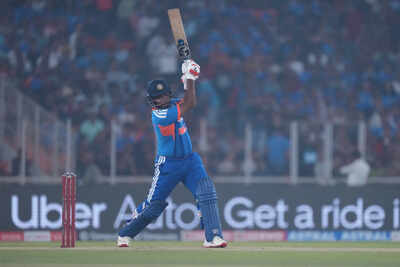
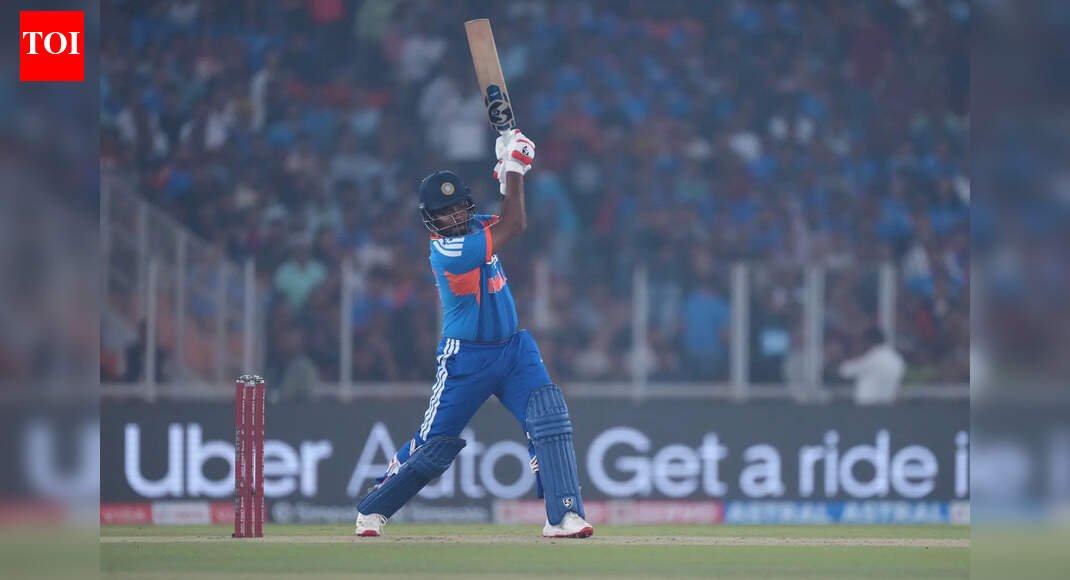
India’s Sanju Samson (AP Photo/Ajit Solanki)

Ex-India spinner Ravichandran Ashwin has shared his excitement over India’s squad for the 2026 Men’s T20 World Cup, highlighting the team’s readiness to defend their title. The former India spinner also congratulated his “brother,” Sanju Samson, and praised Ishan Kishan for making a remarkable return to international cricket. In a move that surprised many fans, India’s defending champions have left out Shubman Gill from the squad for next year’s T20 World Cup, as well as the upcoming T20I series against New Zealand. Announced by BCCI Secretary Devajit Saikia, alongside captain Suryakumar Yadav, chief selector Ajit Agarkar, and vice-captain Axar Patel, the squad features several notable changes.

Inside story of why Shubman Gill was DROPPED from India T20I World Cup squad

Alongside Gill, wicketkeeper-batter Jitesh Sharma has also been excluded, making way for Ishan Kishan’s comeback. Kishan earned his spot after leading Jharkhand to their maiden Syed Mushtaq Ali Trophy title, scoring heavily and displaying exceptional form throughout the tournament. Rinku Singh has also returned to the squad after missing India’s 3-1 T20I series win in South Africa.

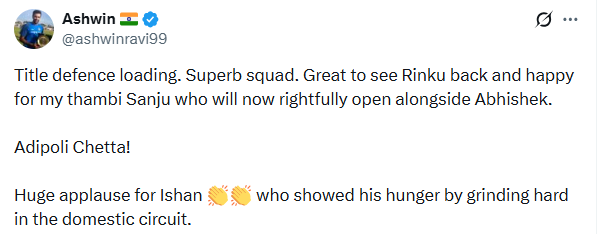
Ashwin post

Ashwin X post

“Title defence loading. Superb squad. Great to see Rinku back and happy for my thambi Sanju, who will now rightfully open alongside Abhishek. Adipoli Chetta! Huge applause for Ishan, who showed his hunger by grinding hard in the domestic circuit,” Ashwin wrote on X, highlighting the blend of experience and fresh energy in the squad. The 2026 Men’s T20 World Cup will be held from February 7 to March 8, with 40 group-stage matches scheduled to conclude by February 20. The top two teams from each of the four groups will advance to the Super Eights, beginning on February 21. This edition of the tournament is co-hosted by India and Sri Lanka. Sri Lanka previously hosted the T20 World Cup in 2012, while India last held the event in 2016. Ahead of the World Cup, India will play five T20Is against New Zealand starting January 21 in Nagpur. The series will also feature matches in Raipur, Guwahati, Visakhapatnam, and Thiruvananthapuram. In the World Cup, India is placed in Group A alongside Pakistan, the USA, Netherlands, and Namibia. The team opens its campaign against the USA at Wankhede Stadium in Mumbai on February 7. The next match is against Namibia at Arun Jaitley Stadium, New Delhi, on February 12. India’s high-profile clash with Pakistan is scheduled for February 15 at the R. Premadasa Stadium in Colombo. The group-stage phase concludes with a match against the Netherlands at Narendra Modi Stadium in Ahmedabad on February 18.


Source link

Housing market outlook: Nearly 70% developers see over 5% rise in home prices in 2026; demand remains strong


Housing market outlook: Nearly 70% developers see over 5% rise in home prices in 2026; demand remains strong

Nearly 70 per cent of real estate developers expect housing prices to rise by more than 5 per cent during the 2026 calendar year, driven by sustained demand, according to a sentiment survey conducted by industry body CREDAI and property data analytics firm CRE Matrix, PTI reported.The survey, conducted in November and December with responses from 647 developers, found that 68 per cent of participants anticipate home prices to increase by over 5 per cent next year. Of these, 46 per cent expect prices to rise in the 5–10 per cent range, while 18 per cent see appreciation between 10 per cent and 15 per cent. Around 3 per cent of respondents forecast a sharper rise of 15–25 per cent, and 1 per cent expect prices to climb by more than 25 per cent.Only 25 per cent of developers believe price growth will be below 5 per cent, while 8 per cent expect negative growth in housing prices.The survey report was released during a CREDAI conclave held in New Delhi on December 19–20.Beyond pricing, the survey indicated a broadly positive outlook for the residential segment in 2026. Nearly two-thirds of developers said they expect demand for homes to grow by more than 5 per cent in the coming year, reflecting continued end-user interest rather than speculative buying.Commenting on the findings, CREDAI president Shekhar G Patel said the survey shows that growth in the housing market is increasingly anchored in genuine demand. “The sector is witnessing a calibrated approach to new supply, with stronger emphasis on cost efficiency through technology adoption and closer alignment between product offerings and evolving homebuyer preferences,” Patel said.He added that faster project approvals and greater regulatory clarity would be critical to sustaining the momentum. “Streamlined clearances can unlock the next phase of housing supply across markets, support timely project delivery, and enable more balanced and sustainable urban growth,” Patel said.Abhishek Kiran Gupta, CEO and co-founder of CRE Matrix and IndexTap, said the findings point to steady demand expectations, disciplined supply addition and a sharper focus on long-term value creation in the residential real estate sector.CREDAI represents more than 13,000 real estate developers across the country.


Source link

On this day, a democratic milestone: When India lowered its voting age to 18 in 1988 | India News


On this day, a democratic milestone: When India lowered its voting age to 18 in 1988

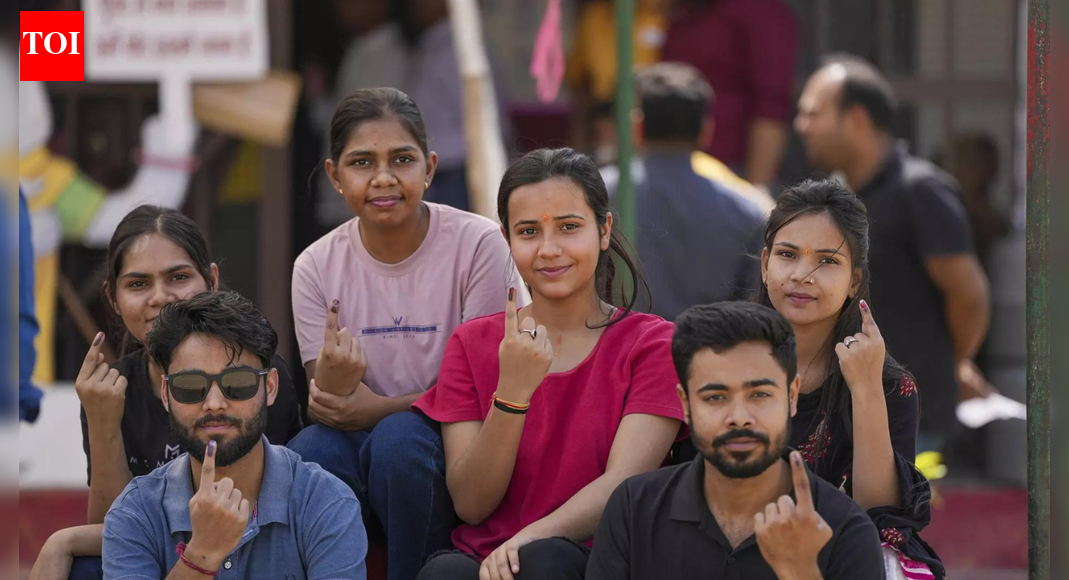
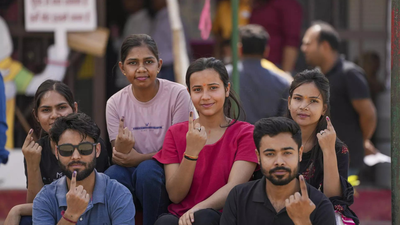
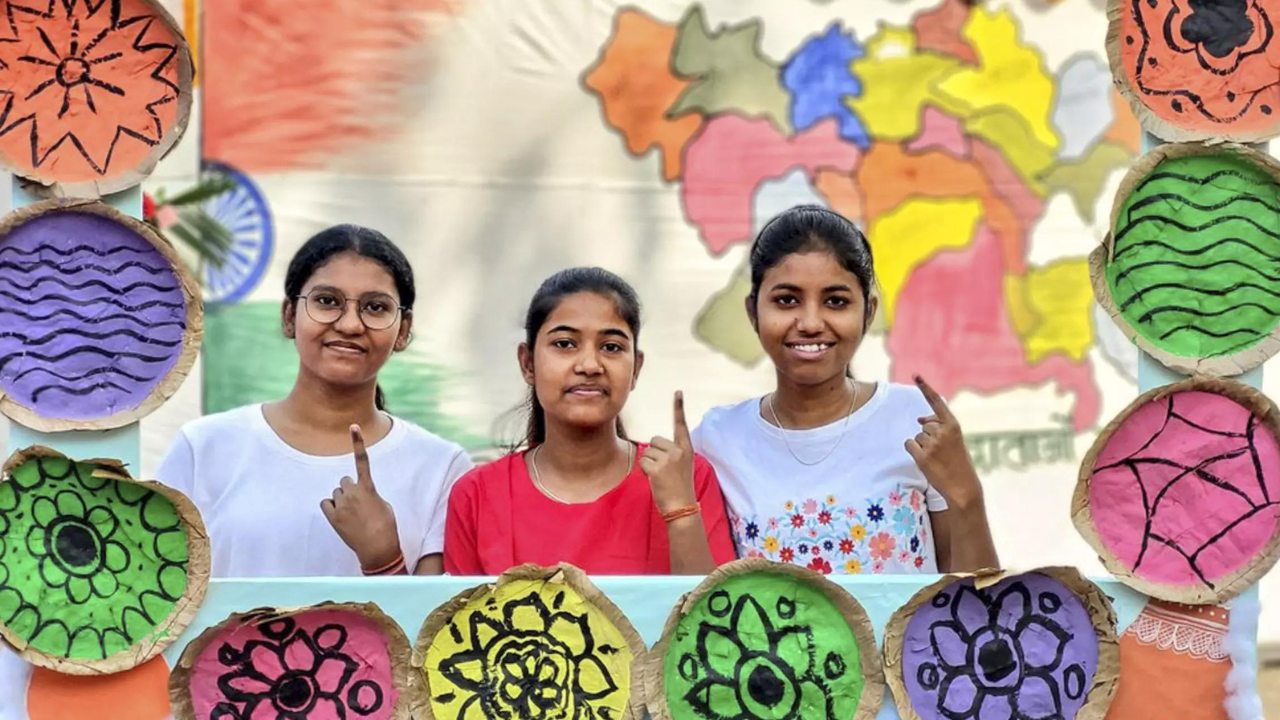
NEW DELHI: On this day in 1988, India lowered the voting age from 21 to 18, expanding voter participation and strengthening universal adult franchise in the world’s largest democracy. The 61st Constitutional Amendment, enacted under Article 326, brought millions of young citizens into the democratic process.Introduced by the government led by the then Prime Minister Rajiv Gandhi, the 61st Amendment is regarded as a landmark reform in Parliament, empowering millions with a fundamental democratic right in India.Universal suffrage ensures that every eligible citizen can participate directly in process of choosing their representatives, whether to the Lok Sabha, state assemblies, or local bodies across urban and rural India.

What is Article 326?

Elections to the Lok Sabha and Vidhan Sabha of states are to be conducted on the basis of adult suffrage. This clarifies that every Indian citizen who is at least 18 years of age on a date specified by law, and who is not disqualified under the Constitution or any law due to non-residence, unsoundness of mind, criminal conviction, or corrupt or illegal practices, is entitled to be registered as a voter in such elections.Key points –

  • Scope – Applies to both the Lok Sabha and state legislative assemblies
  • Basis – Adult suffrage, every citizen meeting the age and legal criteria has the right to vote.
  • Minimum age – 18 years (as fixed by legislation in 1989)

Disqualification groundsVoting rights can be denied due to –

  • Non-residence
  • Unsoundness of mind
  • Criminal convictions
  • Corrupt of illegal practices
  • Registration – Eligible citizens must be registered to vote in elections

Lowering the voting age was more than a legal reform; it was part of India’s broader effort to widen political participation and shape an electorate that reflects the country’s diverse and increasingly youthful population.

Reversing colonial legacy

In the years leading up to independence, voting in India under British was a limited privilege. Under colonial rule, barely 13 per cent of Indians were eligible to vote, with franchise restricted by property, education, and income qualifications. Large sections of society, workers, peasants, women, and young people, remained outside the electoral process. Democracy, as experienced by most Indians, was distant and exclusionary.
PTI file photo

PTI file photo

Independent India sought to reverse this legacy from the very outset. One of the most striking decisions taken by the framers of the Constitution was to adopt universal adult franchise. At a time when many newly independent nations hesitated to extend full voting rights to their citizens, India chose to trust its people. Every adult, regardless of gender, caste, wealth, or education, was given an equal vote.India’s approach to women’s voting rights was particularly notable. Unlike in many parts of the world where women had to fight long and sustained political battles to secure the franchise, Indian women received the right to vote from the very beginning of the republic. This placed India among the early nations to grant women full electoral rights, well ahead of several established democracies. Yet even as the universal adult franchise took shape, the minimum voting age remained 21 for decades. By the 1980s, this threshold increasingly appeared out of step with social realities. Young Indians were entering higher education, joining the workforce, and engaging actively with political and social issues, yet many had no formal voice in choosing their representatives.That changed with the 61st Constitutional Amendment Act, passed in the Rajya Sabha on December 20, 1988, and brought into effect on March 28, 1989, amending Article 326. The amendment lowered the voting age to 18, signalling faith in the political maturity of India’s youth.It acknowledged that democracy must grow with its people, especially in a country where young citizens form a significant share of the population.

What is the universal adult franchise?

From the very beginning, India’s Constitution makers took a bold and deliberate decision: democracy in independent India would rest on universal adult franchise. This meant that every adult citizen would have one vote, and that every vote would carry equal value. There would be no distinctions based on caste, creed, religion, gender, education, income, or social status. The word “universal” captured this promise in full: political equality for all.This principle became a cornerstone of Indian democracy. Elections to the Lok Sabha, to the legislative assemblies of states and union territories, and to local bodies in villages and cities were all anchored in this idea. Article 326 of the Constitution enshrined it clearly, affirming that elections would be based on adult suffrage and that voting was a personal right, no one could cast a ballot on another’s behalf.The decision marked a decisive break from the colonial past. Under British rule, voting rights were limited and deeply exclusionary. Laws such as the Government of India Acts of 1919 and 1935 restricted the franchise to those who met specific property, income, or educational qualifications. As a result, only about 3 to 10 per cent of Indians were eligible to vote. For the vast majority, political participation remained out of reach.This long history of exclusion made the demand for universal suffrage central to India’s national aspirations. The idea appeared early in constitutional thinking. The Constitution of India Bill of 1895 asserted that “every citizen shall have the right to give one vote.” Over the following decades, the demand evolved and strengthened. The Lucknow Pact of 1916 spoke cautiously of creating “as broad a franchise as possible,” while later proposals, such as the Commonwealth of India Bill of 1925, still retained restrictions based on property and education.By the late 1920s, however, the direction had become clear. The Nehru Report of 1928, drafted under Motilal Nehru’s leadership, declared that every person who had attained the age of 21 would be entitled to vote, unless disqualified by law. This commitment was reinforced by the Karachi Resolution of 1931, which resolved that any future Indian constitution must rest on adult suffrage.In the 1940s, the demand became unequivocal. Influential documents such as the Sapru Report (1945), B.R. Ambedkar’s States and Minorities (1945), and the Gandhian Constitution of Free India (1946) all provided for universal adult franchise. Even the Cabinet Mission Plan of 1946, while citing practical difficulties in applying the principle immediately, acknowledged adult suffrage as the democratic ideal.
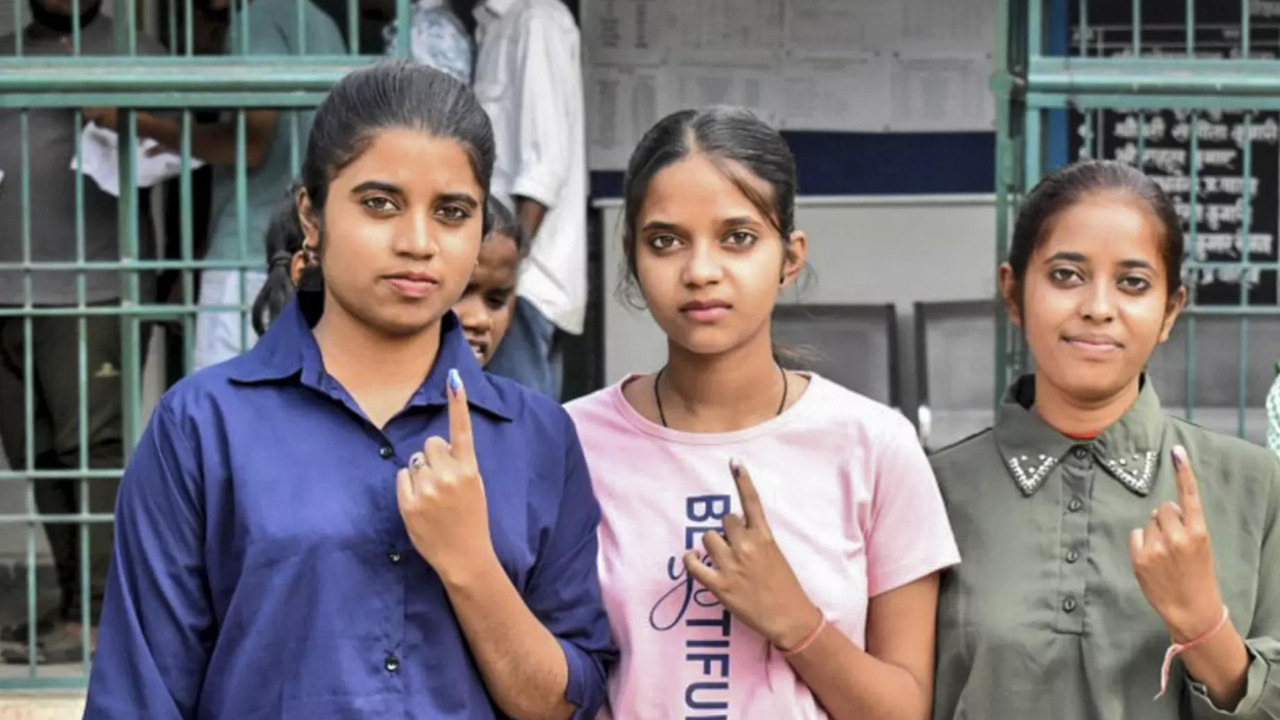
PTI file photo

PTI file photo

By the time the Constituent Assembly began its work in December 1946, the case had already been settled. Universal adult franchise was recommended as a non-negotiable feature of the future Constitution. Though one member briefly opposed the idea on theoretical grounds, the Assembly’s leadership made it clear that the decision had already been taken. The debate closed swiftly, reflecting the broad consensus in favour of political equality.Article 326 of the Constitution formally sealed that commitment. When India held its first general elections in 1951–52, nearly 173 million citizens were registered to vote, an unprecedented democratic exercise, as cited by ConstitutionofIndia.net. Many elections have followed since, but the principle remains unchanged: in India, democracy begins with the simple, powerful act of one person, one vote.

When India chose universal suffrage ahead of the world

It is often assumed that Western democracies, with their long histories of representative government, were early champions of universal adult franchise. The record, however, tells a more complex story. In many of these countries, the right to vote for all adults emerged only after prolonged struggle, and often much later than commonly believed.The First World War (1914–18) was fought, in the words of the Allied Powers, to make the “world safe for democracy.” Yet, even as democracy was invoked as a moral cause, several of these nations had not yet extended the vote to all their citizens. Ironically, it was defeated Germany that moved first, incorporating universal adult franchise into its Constitution in 1919.Great Britain, despite its long parliamentary tradition, took nearly a decade longer to remove voting inequalities. In 1918, it extended the franchise to all adult men aged 21 and above, but women were granted only a limited right to vote, and only if they were over the age of 30. Full voting equality between men and women came only in 1928, when this discrimination was finally abolished.France, the country associated with the powerful ideals of Liberty, Equality, and Fraternity, introduced universal adult franchise even later. French women gained the right to vote only in 1945, after the end of the Second World War. Switzerland presents an equally striking example. Often cited as the home of direct democracy, it denied women the right to vote at the national level until the early 1970s.Against this global backdrop, India’s decision stands out. When the Constitution was adopted in 1949 and implemented on January 26, 1950, the country embraced universal adult franchise in one decisive step. Every adult citizen, man or woman, was granted the right to vote, without distinctions based on education, wealth, or social status. For a newly independent nation emerging from colonial rule, this was an extraordinary act of democratic confidence.Voting age, too, has varied widely across countries. In some nations, adulthood at the ballot box came much later. Denmark and Japan, for instance, once set the voting age at 25, while Norway fixed it at 23. In contrast, countries such as Great Britain, the United States, Russia, and Turkey eventually settled on 18 as the threshold for voting.India’s own journey later aligned with this global shift when it lowered the voting age to 18 in 1989. Together with its early adoption of universal adult franchise, the move reinforced a defining principle of Indian democracy: political participation is not a privilege reserved for a few, but a right extended to all adult citizens.

Source link

German couple detained for ‘illegal religious conversions’ near India-Pakistan border | Jaipur News


German couple detained for 'illegal religious conversions' near India-Pakistan border

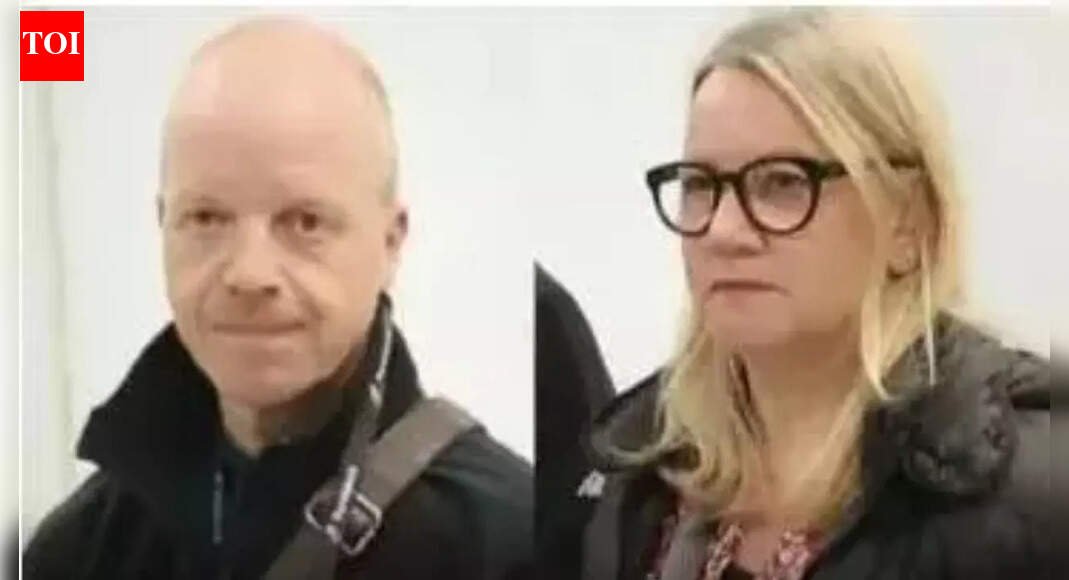
JAISALMER: Six people, including a German couple, were detained on Thursday night for alleged illegal religious conversions in Sriganganagar. The incident was reported from a rented house in the district’s Srikaranpur town, located close to the India-Pakistan border.Those detained were identified as German nationals Swan Baz Bat Jaler and his wife Sandra, Santosh Varghese from Karnataka, Mathew from Kerala, Baljinder Singh Khosa, and Rajesh Kamboj alias Poppy.As per initial police inputs, the German couple had recently visited an area close to the international border that falls under restricted zones. Foreign nationals are not permitted here without prior authorisation. This raised red flags for security agencies, who were alerted to examine how the couple gained access to the sensitive area. SP Amrita Duhan said, “A case has been registered under the religious conversion law based on a complaint.

How India Shaped The West | Oldest Hindu Civilization, Karma & Stolen Ideas | Jeffery Armstrong

Senior officials said the movement of foreign nationals in restricted border areas was a matter of concern. “We are investigating whether the accused visited other prohibited locations as well. Multiple agencies, including intelligence units, are likely to question the German nationals,” an official said.Police are scrutinising the visas of foreign nationals and verifying their travel history. “We are examining the purpose of their visit, their visa conditions and why they were holding a large gathering in a strategically sensitive area,” the official said, adding that interrogation of all six suspects was underway.


Source link

Not Meta-like $100 million pay packages: The ‘biggest’ reason why Google’s ex-employees are returning to company


Not Meta-like $100 million pay packages: The ‘biggest’ reason why Google’s ex-employees are returning to company

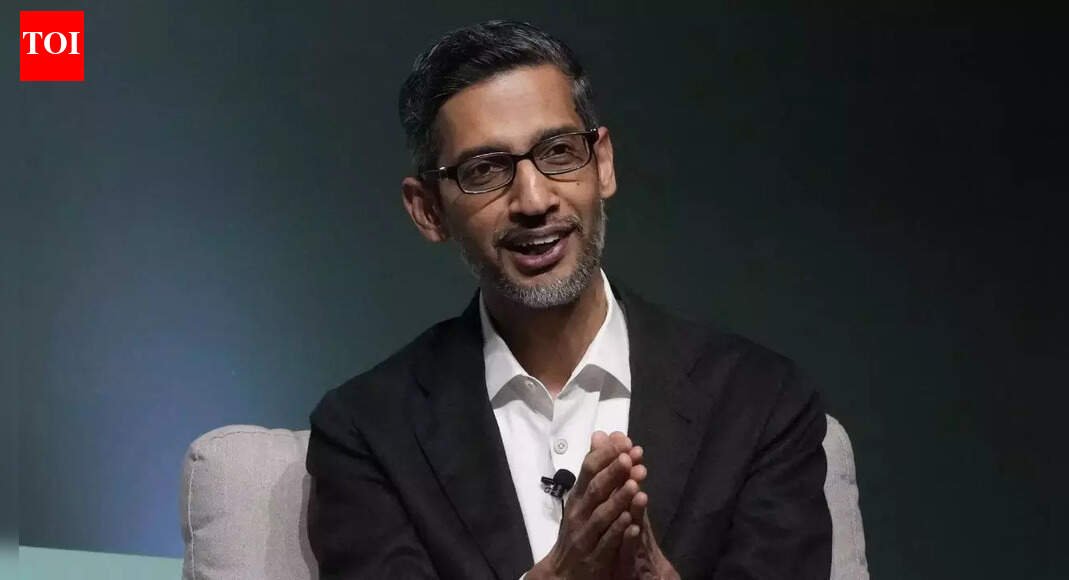
As the Silicon Valley ‘AI talent war’ escalates into a multi-billion dollar bidding power struggle, Google has successfully deployed a ‘boomerang’ strategy to bring its top minds back to the company. While rivals like Meta and OpenAI are offering astronomical signing bonuses as mush as $100 million, Google is winning back its former staffers with a different kind of currency: Robust computational infrastructure.Citing data, CNBC reported that approximately 20% of AI software engineers hired by Google in 2025 were former employees. This suggests that for the world’s elite engineers, the ability to build is becoming more valuable than a massive immediate paychecks.

Google has deep pockets and computational infrastructure

The report also said that during a recent internal meeting, Google’s head of compensation, John Casey, addressed the trend directly, noting that AI researchers are increasingly drawn back to Google’s “deep pockets” and its unparalleled “hefty computational infrastructure.”Google is uniquely positioned as an “all-in-one” provider with its own Tensor Processing Units (TPUs), a Cloud to host AI models, and even products to help it infuse its AI services, giving it an edge that cash alone cannot buy.“We’re energized by our momentum, compute and talent. Engineers want to work here to keep building groundbreaking products,” a Google spokesperson was quoted as saying.Apart from salary and infrastructure, Google has spent months in eliminating over one-third of middle-management roles to speed up product shipping. Co-founder Sergey Brin came out of retirement to personally call and recruit top-tier candidates. More recently, the success of Gemini 3 has provided the company an edge after a rocky start in 2022.Recently, Microsoft AI CEO Mustafa Suleyman, who is the co-founder of DeepMind, also acknowledged the shortage of AI talent, saying that this has led to a constant “rotation” of experts between the “Big Five” tech firms.


Source link

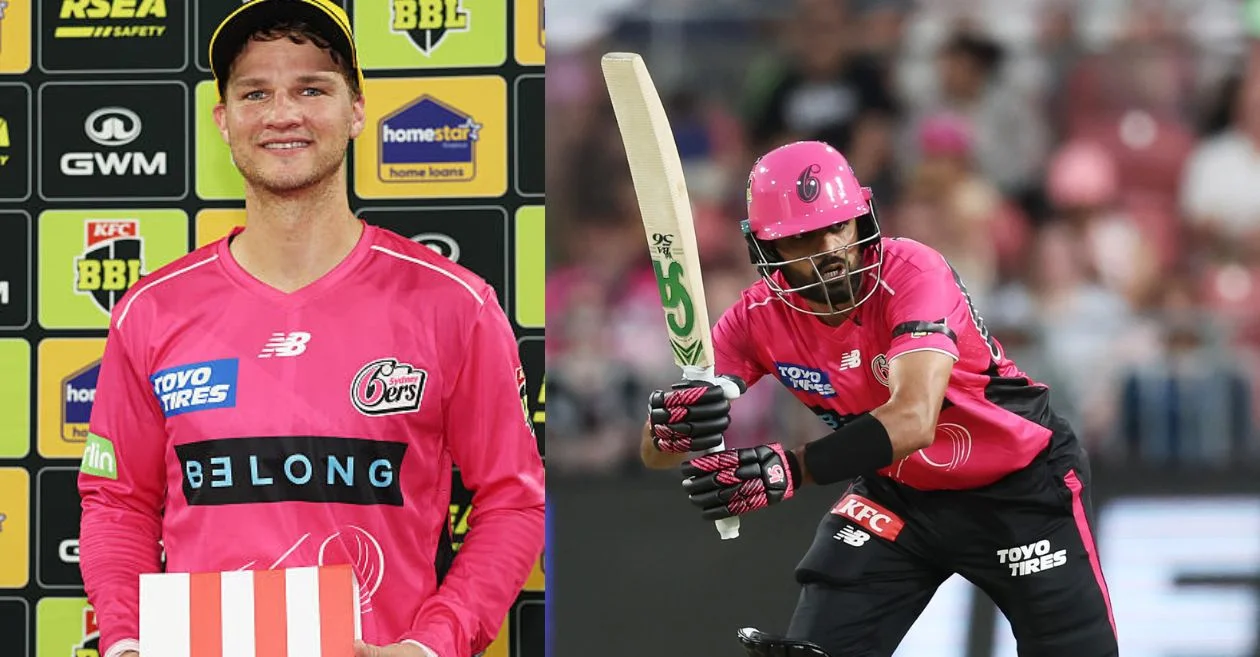
BBL|15: Josh Philippe and Babar Azam guide Sydney Sixers to 47-run win over Sydney Thunder


Josh Philippe delivered a match-winning performance with a scintillating 96 off 57 balls, leading Sydney Sixers to a commanding 47-run victory over Sydney Thunder in the 7th match of the Big Bash League 2025-26 at Sydney Showground Stadium.

Despite some early breakthroughs, Sixers posted a formidable total of 198/5 in their 20 overs, with contributions from Babar Azam (58) and Philippe. Thunder’s chase fell short as they managed just 151, with a spirited fightback from Sam Billings (51) and Shadab Khan (41), but the target was too steep. This victory handed Sixers their second consecutive win of the season, while Thunder remains winless.

Josh Philippe and Babar Azam steer Sydney Sixers to big total

The Sixers’ innings was anchored by a brilliant knock from Philippe, who struck 6 fours and 4 sixes to top-score with 96. After an early breakthrough by Reece Topley (3 wickets), the partnership between Philippe and Babar (58) flourished, adding 140 runs for the second wicket. Philippe’s acceleration towards the end of the innings, with a flurry of boundaries, set a tough target for the Thunder. Though the Sixers lost a couple of wickets towards the end, they posted a challenging total of 198/5, with Daniel Hughes (25) and Ben Dwarshuis (1) falling in the latter stages.

Also READ: Big Bash League 2025-26: Complete squads of all 8 teams in the BBL|15

Sydney Thunder’s struggle in chase as Jack Edwards and Joel Davies shine

Thunder’s chase was under constant pressure from the start, as they lost early wickets with both Sam Konstas and David Warner falling cheaply. With the required rate climbing, only Billings (51) and Shadab Khan (41) showed resilience, but their efforts were not enough. The Sixers’ bowlers, led by Jack Edwards (3 wickets) and Joel Davies (2 wickets), kept a tight leash on the scoring, regularly picking up wickets at crucial junctures. Thunder’s middle order crumbled under pressure, and despite some late resistance from Tanveer Sangha (8*), they fell short by 47 runs, finishing at 151 all out in 19.1 overs.

Also READ: BBL 2025-26: Broadcast, Live Streaming details – When and where to watch the Big Bash League in Australia, India, USA, UK & other countries


Source link

Bullion outlook: Gold, silver to retain momentum in 2026 amid strong demand, says PL Capital


Bullion outlook: Gold, silver to retain momentum in 2026 amid strong demand, says PL Capital

Gold, one of the strongest-performing assets this year, is expected to remain “moderately to strongly positive” in 2026, while silver is also likely to retain its momentum, according to a market outlook report by financial advisory firm PL Capital, PTI reported.Gold prices have risen more than 60 per cent so far in 2026, supported by strong global demand, ETF inflows, central-bank purchases and persistent macroeconomic uncertainty. Global gold demand touched a record 1,313 tonnes in the July–September quarter of 2025, the report said.“India has recorded its highest gold ETF inflows on record this year. The 2026 outlook (for gold) stays moderately to strongly positive,” PL Capital said.Silver, meanwhile, has significantly outperformed gold, gaining over 100 per cent in 2025 and crossing the USD 60 per ounce mark. The report attributed the rally to a powerful industrial demand cycle, driven by sectors such as solar photovoltaic systems, electric vehicle batteries, semiconductors and power electronics.“Supply remains in structural deficit, reinforcing the strong outlook for 2026,” it said.On the domestic front, PL Capital noted that India entered December with strong momentum, record-low inflation and improving earnings visibility. The Reserve Bank of India’s 25 basis points cut in the repo rate to 5.25 per cent, along with lower CPI projections and upgraded GDP estimates, is expected to support a favourable rate environment through 2026.Indian equities, the report said, have shown resilience amid global uncertainty, with the Sensex and Nifty rising about 8–9 per cent cumulatively in 2026 so far.“Over the next 6–24 months, the earnings cycle is expected to broaden across consumption, financials, capex-linked sectors and select industrials,” PL Capital said, adding that it retained a large-cap bias in the near term while selectively adding high-quality midcaps as earnings visibility improves.Preferred investment themes for 2026 include banks, non-banking financial companies, consumer staples and discretionary stocks, defence and ports, the report added.


Source link

The long way back: From contract snub to World Cup squad – Ishan Kishan’s story of comeback | Cricket News


The long way back: From contract snub to World Cup squad - Ishan Kishan's story of comeback
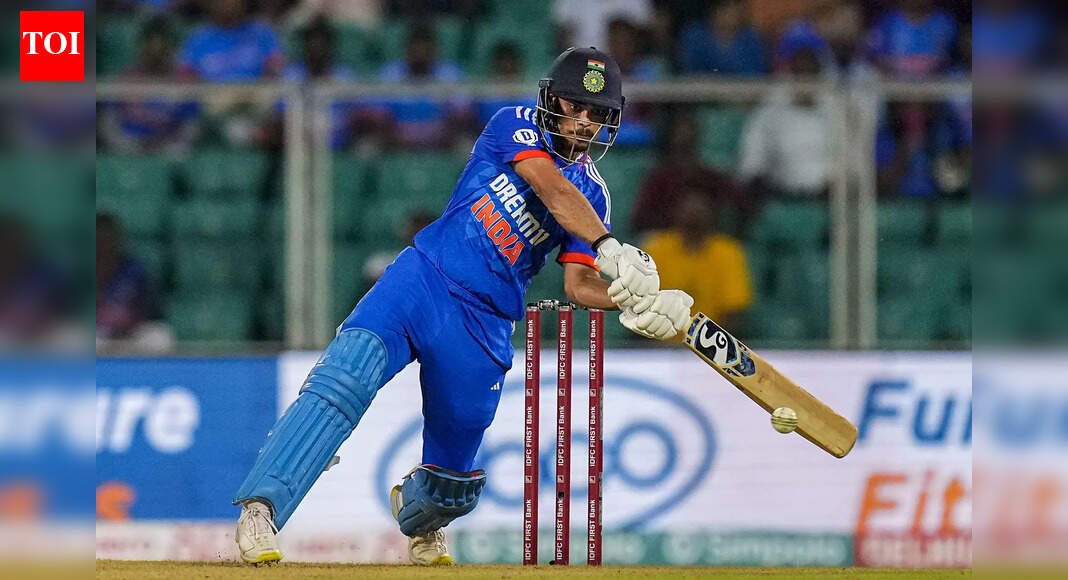
India’s Ishan Kishan (PTI Photo/R Senthil Kumar)

When India announced their squad for the 2026 T20 World Cup, Kishan’s name was back where it once felt natural. In a list that came with big talking points—Shubman Gill being dropped, Axar Patel named vice-captain, Rinku Singh returning—Kishan’s inclusion stood out for a different reason. It felt earned the hard way.At one point, when it seemed Kishan may have played his last game for India and would not return for a while, this comeback is both surprising and inspiring.

India World Cup squad: No Shubman Gill, Jitesh as selectors recall Rinku, Ishan Kishan

Two years ago, he was part of India’s regular white-ball plans. An aggressive opener who could also bat in the middle order. A left-hander who could change games in a few overs. Kishan was also drafted in India’s white-ball setup as a like-for-like replacement for Rishabh Pant and seen as India’s second-choice wicketkeeper. He even made his Test debut against the West Indies in July 2023.Then things began to slip. He stepped away from a South Africa tour in late 2023, citing personal reasons and mental fatigue. The timing was poor, and the explanation did not land well. Questions followed.Then came the bigger blow.Kishan made himself unavailable for domestic cricket during that period. The BCCI took note. When the central contracts were announced in 2024, his name was missing. The board ended its release with an unusually direct reminder that players must give precedence to domestic cricket when not on national duty. The message was clear, and it was not meant for just one player.Around the same time, BCCI secretary Jay Shah had written to centrally contracted players, warning them against prioritising the IPL over domestic and national commitments. The letter spoke of severe implications. Kishan became one of the first visible examples of that line being enforced, along with Shreyas Iyer. Shah told the Times of India, “If you look at the Duleep Trophy squad, apart from Rohit and Virat, the rest are going to play. It’s because of the harsh steps I have taken. Shreyas Iyer and Ishan Kishan are playing Duleep Trophy.”India’s head coach at the time, Rahul Dravid, later said Kishan had not made himself available for selection and would need to play domestic cricket to be considered again. Even captain Rohit Sharma spoke publicly about the need for hunger, especially in the longer formats. In Kishan’s absence, Dhruv Jurel debuted in Tests, made an immediate impact, and became India’s second-choice wicketkeeper and a backup to Rishabh Pant.During this period, Kishan did not react publicly. No interviews. No emotional statements. He went back home to Jharkhand and did the one thing selectors always ask for but do not always reward—he played domestic cricket seriously.In IPL 2025, Sunrisers Hyderabad picked Kishan. He started the season with a storm, scoring a century in his very first game against Rajasthan Royals, helping SRH post a mammoth total of 286 for 6. Everyone thought this IPL would be Kishan’s redemption arc. But what followed was not a smooth story. Despite the opening century, Kishan ended the season with 354 runs. His 94 not out against RCB at the very end stood out, but runs did not flow consistently in the rest of the games.What followed was the best phase of his career.Leading Jharkhand in the Syed Mushtaq Ali Trophy, Kishan played with clarity and purpose. He did not look like someone chasing a comeback. He looked like someone enjoying responsibility. Jharkhand went on to win their maiden SMAT title. Kishan finished as the tournament’s highest run-getter with 517 runs in 10 innings. Two hundreds. Two fifties. A strike rate brushing 200. And then the biggest one of all—a century in the final against Haryana.Two days later, India announced their World Cup squad.Timing matters in cricket. Kishan finally got it right.Speaking after the announcement, his words were simple. He spoke about happiness. About Jharkhand. About the team effort. Nothing about redemption. Nothing about proving a point. That told its own story.This selection was not driven by emotion. It was about balance and combination.With India deciding to go back to opening with a wicketkeeper-batter, the selectors wanted flexibility. Sanju Samson is the first-choice wicketkeeper. They needed a second option who could also open. That edged Jitesh Sharma out of the picture. Kishan fitted the role better.Ajit Agarkar was clear at the press conference. Shubman Gill missed out because of lack of runs and team balance. Gill remains India’s ODI and Test captain. This was not a long-term judgement. It was a short-format call.India squad for T20 World Cup: Suryakumar Yadav (captain), Abhishek Sharma, Tilak Varma, Hardik Pandya, Shivam Dube, Axar Patel (vc), Kuldeep Yadav, Jasprit Bumrah, Arshdeep Singh, Harshit Rana, Sanju Samson (wk), Washington Sundar, Varun Chakravarthy, Ishan Kishan (wk), Rinku Singh.


Source link