Breaking News
Take pay cuts to save season: ISL clubs to players | Goa News


At least nine club officials who spoke at the meeting were in agreement that they will have to terminate or renegotiate contracts “for the good health of Indian football.”

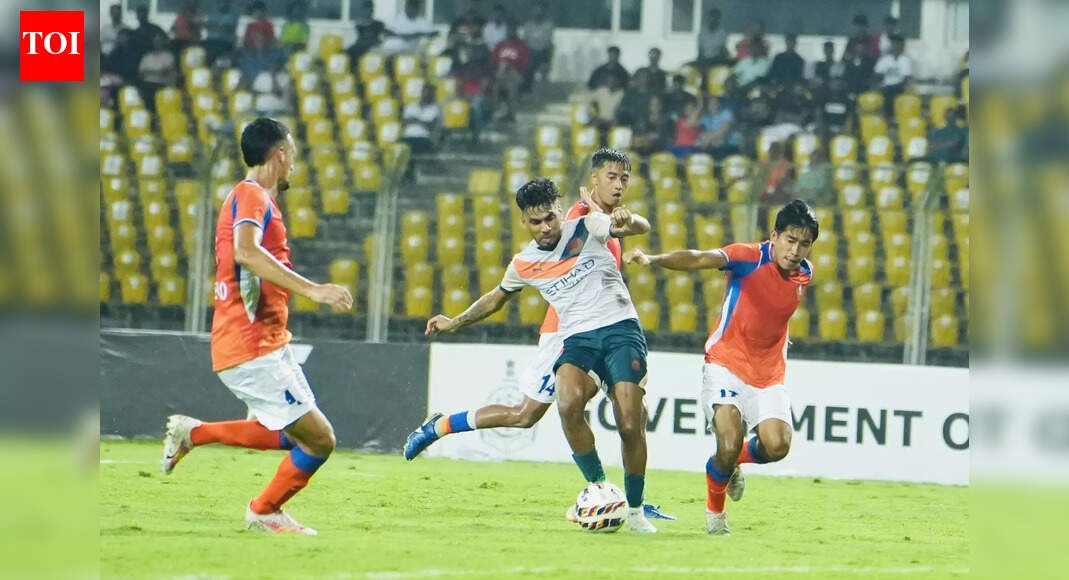
Panaji: India’s top-tier football clubs have unanimously told the sports ministry and the All India Football Federation (AIFF) that a financial reset, particularly with player salaries, is essential to sustain owner interest and ensure continued investment into the sport.At least nine club officials who spoke at the meeting were in agreement that they will have to terminate or renegotiate contracts “for the good health of Indian football.”Termination of valid player contracts without a mutual agreement could land dozens of cases with the player status committee. Foreign players will knock on the doors of FIFA, the governing body of world football. Anticipating rising cases, the clubs have requested support from the AIFF or the sports ministry – through a notification – particularly since the league would be truncated this season.The AIFF, though, remained noncommittal.“Whatever we do has to be in accordance with FIFA statutes or there must be a precedent (anywhere in the world),” AIFF president Kalyan Chaubey told the clubs at the meeting. “If there is any legal opinion on this, that in the past in any other country it has happened, and for what reason the players had to take a pay cut, we will put this before our legal team and take it forward. Whatever the global practices, whatever FIFA and AFC guides, AIFF has to follow.Clubs spend approximately 60-70% of their budgets on player salaries. The top-tier Indian Super League (ISL) has a salary cap of Rs 16.5 crore, but more than half of the clubs are known to spend much more to remain competitive and battle for top honours.“The only way the ecosystem becomes anywhere close to viable without a commercial partner in place is if we redo the player salaries,” a senior club official said during Thursday’s meeting. “All clubs have ensured that they’ve paid the players till now. They’ve received 50% of their salaries till now, despite playing minimal games.”“We need to dwell a little bit more on a hard reset, just get everyone’s opinion as to how this can be done in the coming months because without a hard reset, even an interim solution is very challenging for us as clubs,” another official from an ISL-winning club said at the meeting.“The ISL in its previous form isn’t happening, at least this season, so technically the clubs can invoke the Force Majeure clause and terminate contracts. We are ready to fight this in courts because the situation is unprecedented. The players have to understand that at a time when everyone is bleeding, they cannot remain immune to the situation,” a club official who attended the meeting but did not want to be named told TOI after the meeting.There were suggestions to allow clubs to retain some players while all other contracts be terminated. The players can then select their price for either a domestic player draft or auction, something on the lines of the 2017 event when the ISL expanded from eight to 10 teams, following with the inclusion of Bengaluru FC and Jamshedpur FC.“When clubs speak of a (sustainable) model for the long term and involves cost cutting, we welcome this. Reduce your cost, and if the cost cutting can be possible with assistance from AIFF in any manner, we are ready to help. Jointly with the sports ministry, we will ensure support for the clubs,” the AIFF president said.The Indian Super League has not kicked off till now, and unlikely to start until February, due to AIFF’s failure to find a commercial partner for the top tier league. The ISL commenced in Sept last season, but uncertainty has forced clubs to stop first team operations. The 15-year master rights agreement between AIFF and its commercial partner, Reliance-subsidiary FSDL, ended at midnight on Dec 8.


Source link

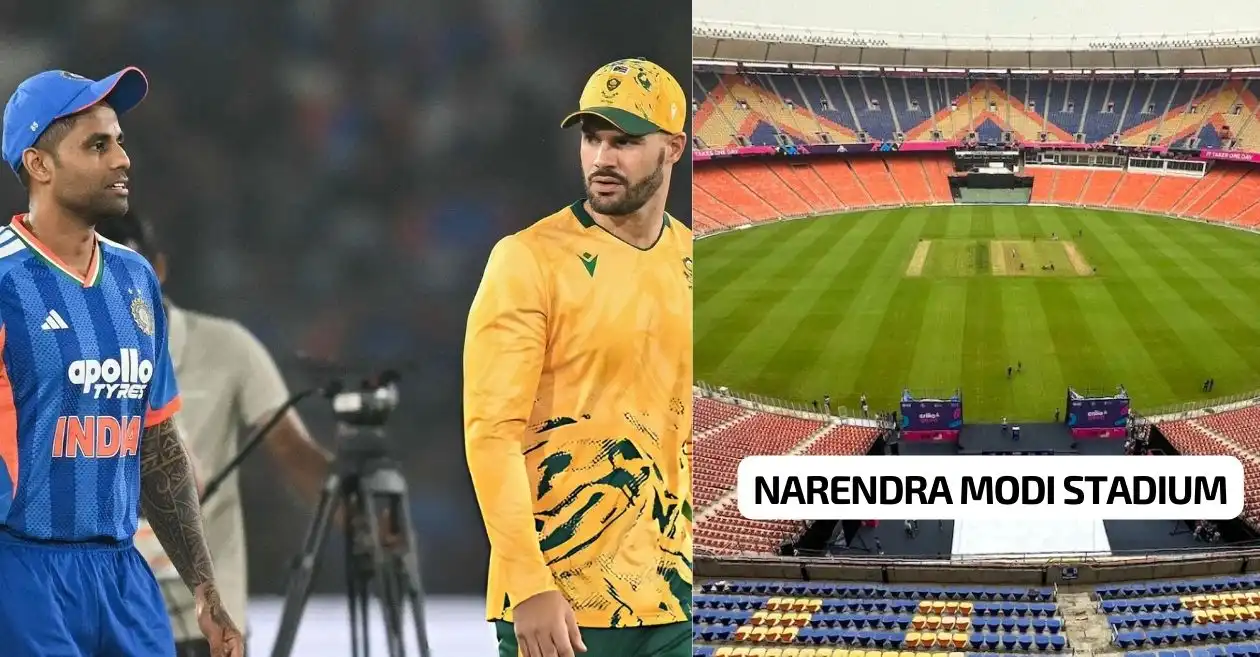
IND vs SA: Pitch Report for 5th T20I, Narendra Modi Stadium Stats and Records


After a frustrating washout in the fog of Lucknow, the action moves to the grand Narendra Modi Stadium in Ahmedabad for the final showdown. With India leading 2-1, the stakes are simple: India aim to clinch the series 3-1, while South Africa look to level it 2-2 and salvage a draw from a high-octane tour.

How the series panned so far

India dominated the series opener in Cuttack with a massive 101-run win, but the Proteas bounced back in Chandigarh to win by 51 runs. India regained the lead in a low-scoring thriller at Dharamshala. With the 4th T20I abandoned without a ball being bowled, India is now guaranteed not to lose the series, but the final in Ahmedabad will determine if they lift the trophy outright.

Key talking points

The spotlight is firmly on Suryakumar Yadav and Shubman Gill. Captain SKY has struggled for consistency this year, averaging just 14.20 in T20Is. Meanwhile, Gill is racing against time to be fit after a toe injury sidelined him in Lucknow. If Gill misses out, Sanju Samson is expected to keep his spot at the top.

Aiden Markram’s men have shown they can’t be counted out. With Quinton de Kock in vintage form and Anrich Nortje providing raw pace, the Proteas have the tools to upset the hosts. Their middle order, featuring Tristan Stubbs and David Miller, will be desperate to fire one last time.

Jasprit Bumrah returns to his home ground, where he is almost unplayable. For the Proteas, Marco Jansen has been a constant threat with the new ball. The battle between India’s spin twins and South Africa’s power hitters in the middle overs will likely decide the game.

Also READ: IPL 2026 Auction – Complete squads of all 10 teams after the bidding event

Narendra Modi Stadium Pitch Report

The Ahmedabad track is known for its true bounce and lightning-fast outfield. While it generally favors batters, the large boundary dimensions often bring spinners like Varun Chakravarthy and Kuldeep Yadav into play. Expect the captain winning the toss to bowl first. Dew is a significant factor in December, making the ball difficult to grip for bowlers in the second innings.

Narendra Modi Cricket Stadium T20I Stats and Records

  • Total matches played: 10
  • Matches won batting first: 6
  • Matches won bowling first: 4
  • Average 1st innings score: 160
  • Average 2nd innings score: 137
  • Highest total recorded: 234/4 (20 Ovs) By India vs New Zealand
  • Lowest total recorded: 66/10 (12.1 Ovs) By New Zealand vs India
  • Highest score chased: 166/3 (17.5 Ovs) By India vs England
  • Lowest score defended: 107/7 (20 Ovs) By West Indies Women vs India Women

Also READ: ‘Sold three sacks of wheat to watch the match’: Heartbroken fans demand full refund after India vs South Africa 4th T20I gets called off due to excessive fog in Lucknow


Source link

VB – G RAM G row: Opposition sleeps outside Parliament in protest – watch video | India News


VB - G RAM G row: Opposition sleeps outside Parliament in protest - watch video

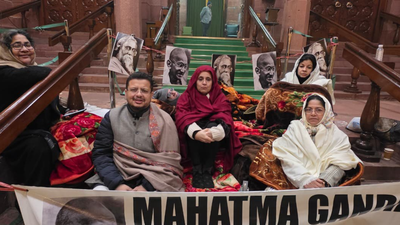
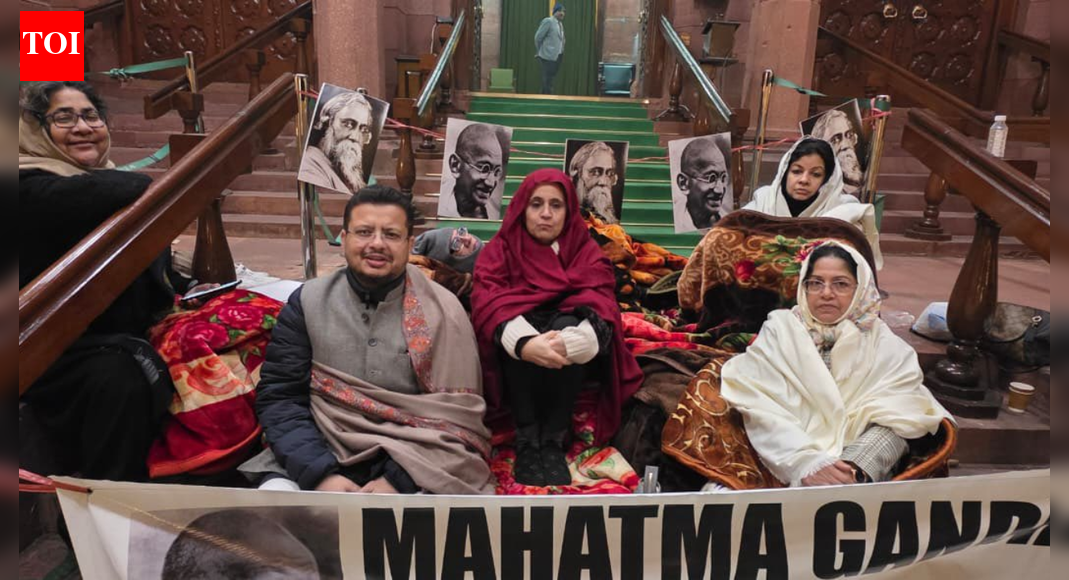
NEW DELHI: Opposition parties staged a 12-hour overnight dharna in the Parliament complex on Thursday night to protest the passage of the Viksit Bharat Guarantee for Rozgar and Ajeevika Mission (Gramin) Bill, or VB-G RAM G Bill, which replaces the Mahatma Gandhi National Rural Employment Guarantee Act.The protest came hours after Parliament cleared the Bill amid noisy scenes and walkouts. The Rajya Sabha passed the legislation post midnight by a voice vote, following its approval by the Lok Sabha earlier in the day, even as opposition members demanded its withdrawal and sought its referral to a parliamentary panel.

Lok Sabha Passes Viksit Bharat G Ram G Bill Amid Protests, Opposition Tears Copies Over Gandhi Name

Opposition MPs accused the government of rushing the Bill through without adequate debate and of scrapping a flagship rural employment scheme that, they said, supported crores of poor households. Several members walked out of the Upper House, raised slogans against the government and tore copies of the Bill, prompting repeated warnings from the Chair.Trinamool Congress Rajya Sabha deputy leader Sagarika Ghose alleged that the government had “bulldozed” the legislation. “This is an insult to India’s poor, it is an insult to Mahatma Gandhi, it is an insult to Rabindranath Tagore. With just five hours’ notice, this bill was given to us. We were not allowed a proper debate,” she said.“Our demand was such an important bill should be sent to the Select Committee and let the opposition parties examine it, let the opposition parties discuss it, let all stakeholders discuss it, but no, in a display of tyranny, in a murder of democracy,” Ghose said, announcing the overnight protest. “We are now going to sit on a 12-hour dharna, 12-hour dharna against the manner in which the Modi government has brought this black law against the people of India, against the poor of India, against the rural poor of India.Congress general secretary Randeep Singh Surjewala described the development as a “sad day for the country’s labour force” and alleged that the government had hit the livelihoods of millions. “This is perhaps the saddest day for the labourers of India. BJP government has attacked the livelihood of 12 crore people by repealing the MGNREGA. They have proved that the Modi government is anti-farmer and anti-poor,” he said.Congress leader Mukul Wasnik said the original law was framed after extensive consultations. “When MGNREGA was drafted, consultations were held for 14 months. It was passed by Parliament with consensus. The scheme would put an extreme burden on states. As a result, this scheme will collapse,” he said.DMK leader Tiruchi Siva accused the government of erasing Mahatma Gandhi’s legacy. “Likewise they have removed Mahatma Gandhi’s name himself. Without Gandhi there is no freedom, that is the total belief in this country. Even in Britain parliament we are having Gandhi statue, but here in Indian parliament his statue is hidden somewhere, and now the scheme which bore his name, his name has also been removed,” he said.Defending the legislation, Rural Development Minister Shivraj Singh Chouhan said the new law was necessary to address shortcomings in the old scheme and to boost rural development. “This Bill is very necessary as it will help provide employment opportunities, help development of rural India and take the country forward,” he said while replying to the debate in the Rajya Sabha.Chouhan accused the Congress of misusing Mahatma Gandhi’s name for political gains and of disrupting parliamentary proceedings. “I heard the opposition with patience all these hours and expected the opposition to hear my response to the discussion. Making their points, making allegations and running away is like murdering the dreams and ideals of Mahatma Gandhi,” he said.“The entire nation is watching their ‘goondagardi’ and the opposition is committing the sin of insulting democracy. House ‘dadagiri se nahin chalega’,” the minister added.He also cited funding figures to defend the government’s record, claiming that while the previous UPA government released Rs 2.13 lakh crore for MGNREGA, the NDA had released nearly Rs 8.53 lakh crore. The opposition, however, maintained that the passage of the Bill without detailed scrutiny set a dangerous precedent and said it would take its protest against the law to the streets across the country.


Source link

Day of Reflection: Australia to take ‘moment to pause and reflect’; Sunday to mark one week of Bondi Beach mass shooting


Day of Reflection: Australia to take 'moment to pause and reflect'; Sunday to mark one week of Bondi Beach mass shooting
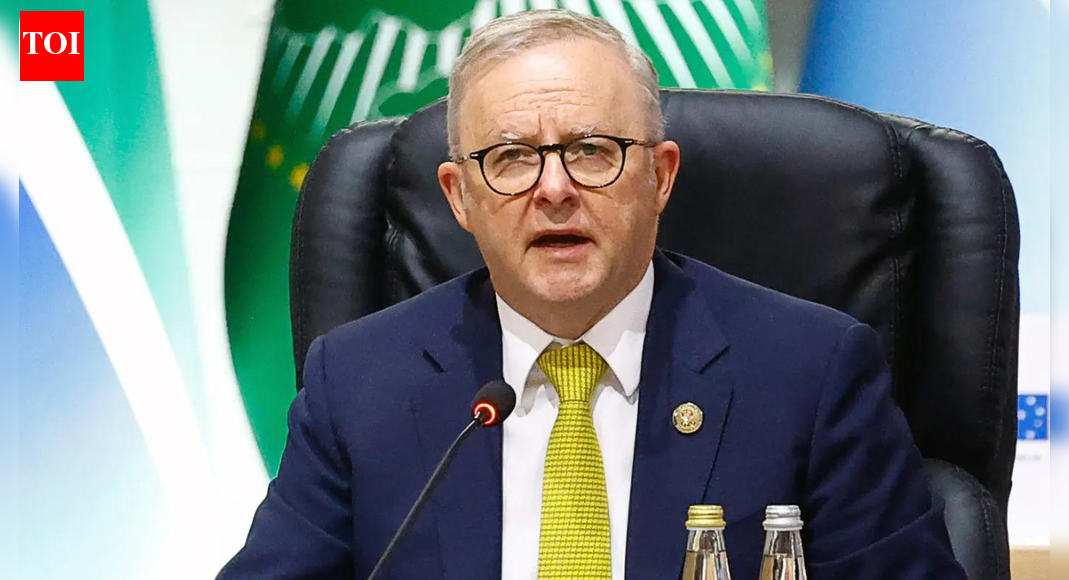
File photo: Australian Prime Minister Anthony Albanese (Picture credit: AP)

Australia will observe a national day of reflection on Sunday (December 21), one week after the deadly Bondi Beach mass shooting that killed 15 people, Prime Minister Anthony Albanese announced on Friday, as he urged the country to reject “hatred and violence”.Albanese called on Australians to light candles at 6:47 pm local time, marking the exact moment the attack unfolded. “It is a moment to pause, reflect, and affirm that hatred and violence will never define who we are as Australians,” he said.Flags on New South Wales and Australian government buildings will be flown at half-staff, reported CNN.The attack, described as Australia’s worst mass shooting in nearly three decades, took place on Sunday evening during a beachside Hanukkah celebration. Authorities have said the assault was antisemitic in nature. Sajid Akram, 50, and his son Naveed, 24, are accused of carrying out the shooting. Sajid was killed in a gunfight with police, while Naveed survived and has been charged with 15 counts of murder, an act of terrorism, and multiple other offences, according to news agency AFP.Albanese said there was “something wrong with the licensing laws” that allowed Sajid Akram to legally own six long-barrelled, high-powered rifles. He announced a sweeping national gun buy-back scheme aimed at removing newly banned and illegal firearms from private ownership, reported CNN. Calling it the biggest gun buy-back since 1996, Albanese said hundreds of thousands of weapons were expected to be collected and destroyed. States and territories will handle collection and payments, while federal police will destroy the firearms.The prime minister also pledged tougher measures to combat antisemitism, including new powers to target extremist preachers and to cancel or refuse visas for people who spread hate and division. “It is clear we need to do more to combat this evil scourge,” Albanese said.Emotional scenes played out at Bondi Beach on Friday as hundreds of locals swam into the ocean in a show of solidarity. “They slaughtered innocent victims… and being part of my community again brings back the light,” security consultant Jason Carr said, as per AFP. Others described the gathering as carrying a “beautiful energy” amid grief and anger.Meanwhile, Sydney remains on high alert. Police said they detained two carloads of men following a tip-off about a possible “violent act”, though no direct link to the Bondi attack has been established.Authorities are also investigating whether the accused were inspired by the Islamic State group, with Albanese saying intelligence agencies had identified online ISIS-linked material reinforcing that assessment.


Source link

Lamborghini Urus, Mercedes, Thar and Dubai investments: ED raids popular YouTuber Anurag Dwivedi | Delhi News


Lamborghini Urus, Mercedes, Thar and investments in Dubai: ED raids popular YouTuber Anurag Dwivedi

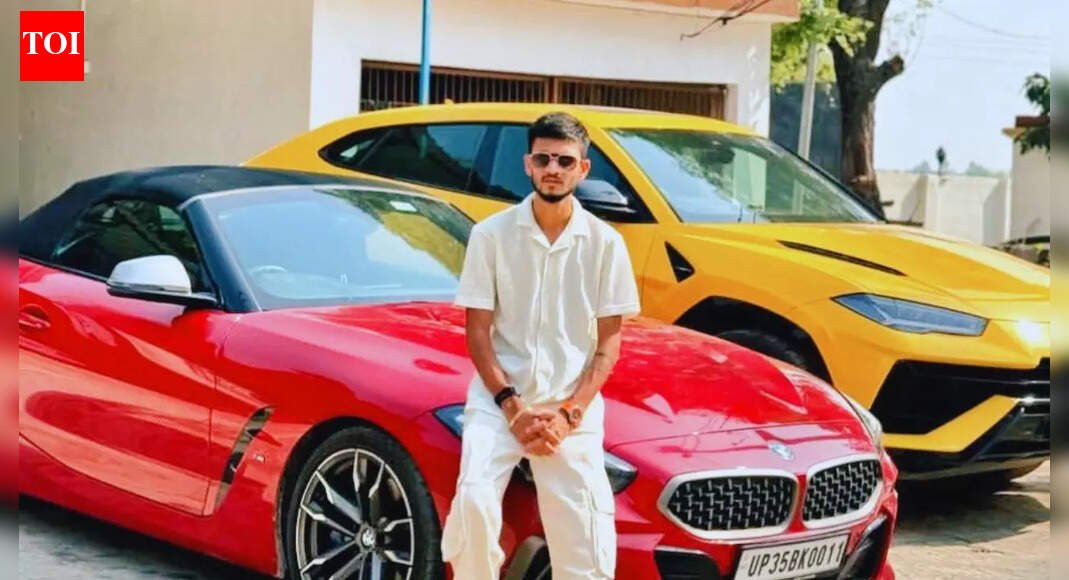
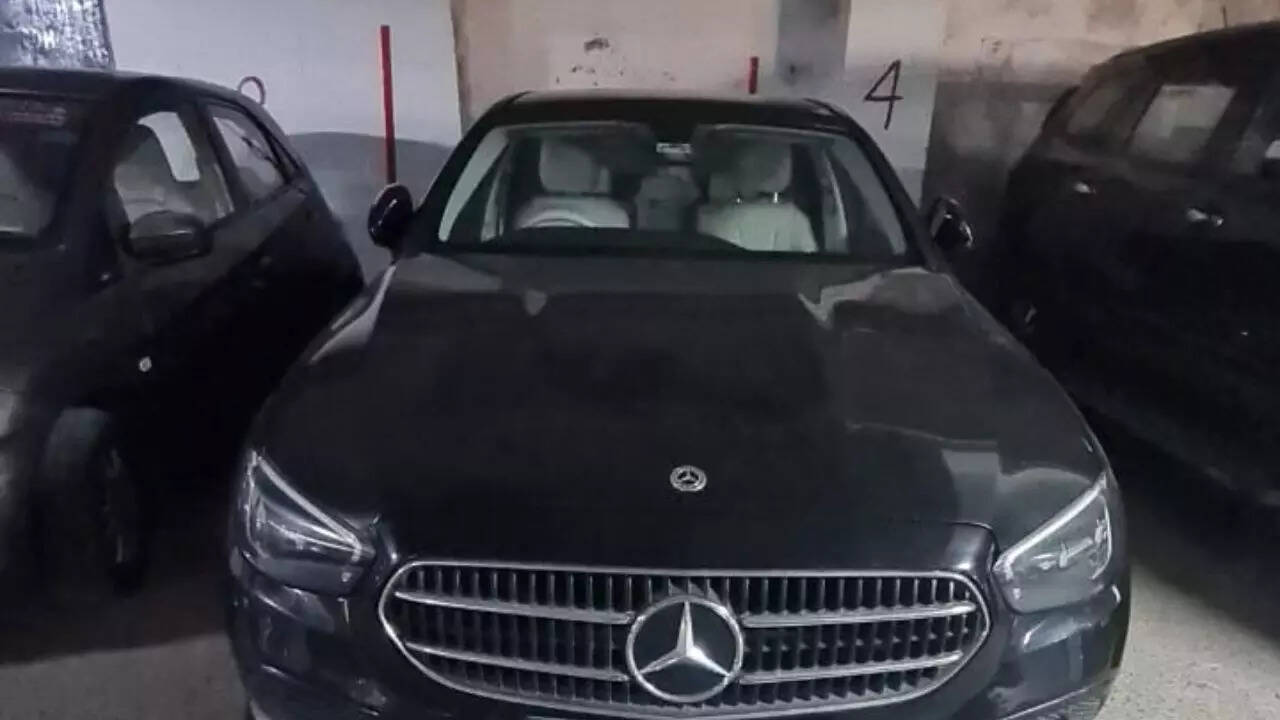
NEW DELHI: Officials from the Enforcement Directorate (ED) have seized multiple luxury vehicles belonging to a Uttar Pradesh-based YouTuber as part of a money laundering investigation linked to suspected illegal online betting networks.Officials said a Lamborghini Urus, a Mercedes, a Ford Endeavour and a Mahindra Thar were seized during searches at multiple locations on Wednesday. The raids targeted premises linked to Anurag Dwivedi, an online cricket influencer originally from Unnao district, as well as the homes of his relatives in nearby towns.The federal agency searched nine premises in Lucknow, Unnao, and Nawabganj, recovering documents believed to show investments in Dubai real estate allegedly made using funds routed through hawala networks. Officials said the YouTuber has been living in Dubai and has ignored multiple summons for questioning.The ED’s case stems from an FIR registered by West Bengal Police alleging cheating, forgery and illegal betting operations in Siliguri. Investigators claim two accused men, Sonu Kumar Thakur and Vishal Bhardwaj, ran online betting panels using Telegram channels, suspicious bank accounts and digital platforms.According to ED officials, Dwivedi is suspected of playing an “active role” in promoting these platforms. He allegedly created promotional videos and received illegal payments through hawala operators, mule bank accounts and cash couriers. Authorities say the funds were deposited into the bank accounts of his companies and family members without legitimate commercial justification.On Wednesday, ED and CRPF teams arrived at Dwivedi’s village home in Khajur under Ajgain police station. When officers found the house locked, security personnel remained on guard until Dwivedi’s mother was brought from the village to open it.

-

Searches continued late into the evening, with officials examining various rooms and seizing documents related to bank transactions, property papers and digital devices.According to news agency PTI, investigators are also checking whether the alleged illegal earnings – running into crores – came partly through fantasy cricket platforms, including Dream11, and whether these were linked to unauthorised betting networks.Dwivedi, who has been making cricket-related videos for about seven years, has amassed a substantial social media following. He drew attention last month after videos surfaced of his wedding to a Lucknow woman aboard a cruise in DubaiCircle officer Hasan Ganj Arvind Chaurasia confirmed the searches at the homes of Dwivedi, his father and uncle, saying CRPF personnel were deployed as a precaution. He declined to comment further, citing the ongoing investigation.


Source link

Access Denied


Access Denied

You don’t have permission to access “http://www.ndtv.com/world-news/bangladesh-crisis-live-updates-violent-anti-india-protests-dhaka-daily-start-prothom-alo-officers-set-on-fire-indian-assistant-high-commission-chittag-9843756” on this server.

Reference #18.44fdd417.1766110503.f61dd62

https://errors.edgesuite.net/18.44fdd417.1766110503.f61dd62


Source link

Top stocks to buy today: Stock recommendations for December 19, 2025 – check list


Top stocks to buy today: Stock recommendations for December 19, 2025 - check list
Top stocks to buy (AI image)

Stock market recommendations: According to Bajaj Broking Research, the top stock picks for December 19, 2025 are Max Healthcare, and Sagility. Here’s its view on Nifty and Bank Nifty:Index View: NIFTYBenchmark indices continue to trade in a range with corrective bias and are currently placed around 25,800 levels as domestic markets tracked the global risk-off tone, pressured by persistent FII selling, a softer rupee, and ongoing uncertainty around US–India trade talks. In the near term, market movements are expected to be driven by a combination of key global and domestic factors. These include the (a) Outcome of Japan’s monetary policy decisions, which could influence global liquidity and currency flows. (b) Upcoming US economic data releases that may shape expectations around growth, inflation, and interest rates. (c) A greater clarity on trade-related developments between the US and India, which could have implications for bilateral trade flows, sector-specific performance, and overall investor sentiment. Together, these factors are likely to play a crucial role in determining short-term market direction. Nifty has key support placed at 25,700–25,800, which aligns with the 50-day EMA, last week low and a key retracement zone of the prior uptrend. Sustaining this band will be crucial for continuing the positive momentum of the last 3 months.We expect the Nifty to consolidate in the range of 25,700–26,300. A clear breakout or breakdown will determine the next directional move.A close below the key support area of 25,700 will signal extension of the corrective decline towards the 100 days EMA placed around 25400 levels. On the higher side immediate resistance is placed at 26,000. A move above the same will open upside towards the all-time high of 26,200-26,300 in the coming weeks. NIFTY BANKBank Nifty traded in a range, digesting its recent strong gains. The index consolidated in a 1500 points range in the last 4 weeks, oscillating in a positive and negative territory.We expect the index to extend consolidation and form a base in the range of 58500-60100 in the coming weeks. A strength above current week’s high of 59,500 will open further upside towards 60,400 levels in the coming weeks.The entire up move of the last 2 months is well channeled signaling sustained demand at elevated levels. Key support is placed at 58,300-58,600 levels, being the confluence of the 50 day EMA and recent breakout area. Holding above the support area will keep the short-term bias positive.Stock Recommendations:Max HealthcareBuy in the range of ₹ 1040-1060

Target Return Time Period
₹ 1218 16% 12 Months

Max Healthcare offers an opportunity driven by a visible and ROCE-accretive expansion cycle, sustained improvements in occupancy and ARPOB mix, and strengthening cash flows. Management’s strategy prioritises brownfield expansion, disciplined asset-light growth, and operating leverage from newly acquired and greenfield units.Max Healthcare’s growth is underpinned by a defined expansion pipeline comprising phased brownfield additions, new greenfield hospitals and asset light facilities across major metros and emerging clusters. Momentum is supported by the ramp-up of Dwarka, Noida, Lucknow and Nagpur, continued ARPOB improvement from case-mix enrichment, and rising volumes in oncology, transplants and other high-acuity specialties. The scaling of Max Lab adds further diversified, capital-light growth. As these assets mature and utilisation increases, the FY28 EBITDA base expands meaningfully. Applying a 28x EV/EBITDA multiple to FY28 earnings yields a target price of ₹1218.SagilityBuy in the range of 49.50-51.50

Target Stoploss Return Time Period
₹ 56 ₹ 47 11% 3 Months

The stock is in uptrend sustaining above its short- and long-term averages and is forming higher high and higher low in long term charts. The stock is currently breaking above its last 3 weeks highs thus offer fresh entry opportunityThe stock has already taken 7 weeks to retrace just 61.8% of its preceding 5 weeks rally (42-58). A shallow retracement signals a higher base formation and an overall positive structure.We expect the stock to head towards 56 levels being the 80% retracement of the recent decline (58-47).(Disclaimer: Recommendations and views on the stock market, other asset classes or personal finance management tips given by experts are their own. These opinions do not represent the views of The Times of India)


Source link

‘Dense smog… AQI 411, no cricket possible’: Shashi Tharoor’s stinging post after Lucknow T20I is lost to ‘excessive fog’ | Cricket News


Hardik Pandya and Gautam Gambhir at Lucknow’s Ekana Cricket Stadium. (Image: Sunil Kumar/TNN)

NEW DELHI: The fourth T20I between India and South Africa never saw a ball bowled on Wednesday night, but it still triggered a fierce debate after senior Congress leader and noted cricket enthusiast Shashi Tharoor took aim at the deteriorating air quality and questioned the decision to host the match in Lucknow.Go Beyond The Boundary with our YouTube channel. SUBSCRIBE NOW!Persistent fog — officially cited as “excessive fog” — enveloped the Bharat Ratna Shri Atal Bihari Vajpayee Ekana Cricket Stadium throughout the evening, making play impossible. The toss, scheduled for 6:30 pm IST, was first delayed to 6:50 pm before a series of inspections were conducted. With visibility showing no improvement, umpires finally abandoned the match around 9:30 pm.

Prashant Veer’s parents react after their son gets a Rs 14.20 crore IPL deal

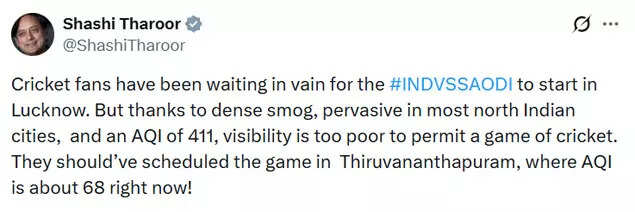
As players waited through long delays before retreating to the dressing rooms, frustration mounted both inside and outside the stadium. The issue soon spilled onto social media, where Tharoor delivered a sharp critique of the conditions and the Board of Control for Cricket in India’s (BCCI) venue selection.“Cricket fans have been waiting in vain for the #INDVSSAODI to start in Lucknow,” Tharoor posted on X. “But thanks to dense smog, pervasive in most north Indian cities, and an AQI of 411, visibility is too poor to permit a game of cricket. They should’ve scheduled the game in Thiruvananthapuram, where AQI is about 68 right now!”

Shashi Tharoor

Tharoor’s post struck a chord, amplifying concerns about player welfare and fan experience amid hazardous pollution levels. Air quality in Lucknow remained firmly in the danger zone, with PM2.5 levels reportedly more than five times the World Health Organization’s recommended limits. The severity was visible on the field, with Indian all-rounder Hardik Pandya spotted wearing a surgical mask during warm-ups — an image that quickly went viral.A BCCI statement later confirmed the match was abandoned due to unsafe playing conditions caused by fog. India, the reigning T20 world champions, continue to lead the five-match series 2–1, with the final game scheduled in Ahmedabad on December 19.


Source link

Yashasvi Jaiswal to skip Vijay Hazare Trophy despite BCCI’s directive; here’s why


Team India opener Yashasvi Jaiswal’s participation in the upcoming Vijay Hazare Trophy is in doubt after he was hospitalized with acute gastroenteritis. The left-handed batter suffered severe stomach cramps during the Syed Mushtaq Ali Trophy match between Mumbai and Rajasthan in Pune on December 16.

Jaiswal was taken to the hospital for further treatment after the match. He had batted in pain during Mumbai’s chase at the Maharashtra Cricket Association Stadium in Pune. He scored 15 runs from 16 balls and hit three boundaries before being dismissed.

At the hospital, Jaiswal underwent a CT scan and an ultrasound. Doctors diagnosed him with acute gastroenteritis and advised him to take complete rest. His recovery will be monitored closely before any decision is taken on his return to action.

Your daily dose of cricket!

next

Yashasvi Jaiswal Loses More Than 2 kg After Food Poisoning

According to a report by the Times of India, Yashasvi Jaiswal has been discharged from the hospital and has returned to Mumbai after recovering from food poisoning. He lost more than two kilos in a short span, and doctors have advised complete rest.

The problem began after he ate something at the team hotel in Pune. While his condition has improved with timely treatment, the medical staff has recommended that he stay away from cricket for at least seven to ten days to fully recover.

“It is food poisoning. He ate something in the Pune hotel, which has led to this. There was pain but condition is much better after timely medication. He has lost over 2 kgs already in the last two days and the doctors have asked him to rest at least for the next 7-10 days,” a source tracking developments tells TimesofIndia.com.

Yashasvi Jaiswal Doubtful for Opening Matches of Vijay Hazare Trophy

Yashasvi Jaiswal may not be fully fit in time for the opening matches of the Vijay Hazare Trophy, with his recovery expected to take at least a week. He is in doubt for Mumbai’s opening game against Sikkim on December 24, where he was expected to open alongside Rohit Sharma.

The report added that his participation in the early rounds will depend on how quickly he regains strength. With Jaiswal likely to be part of the ODI squad against New Zealand, his workload and recovery will be carefully managed.

“It will be touch and go for the first few matches for him to turn up for the Vijay Hazare Trophy. There are ODIs vs New Zealand after that too and he is likely to be in the squad for that series,” the source added.

Yashasvi Jaiswal Last Seen in Action for India During the South Africa ODI Series

Yashasvi Jaiswal was last seen in action for India in the ODI series against South Africa. The left-hander did not have a great start, as he struggled to score runs in the first two matches. He bounced back in the final ODI at Visakhapatnam on December 6.

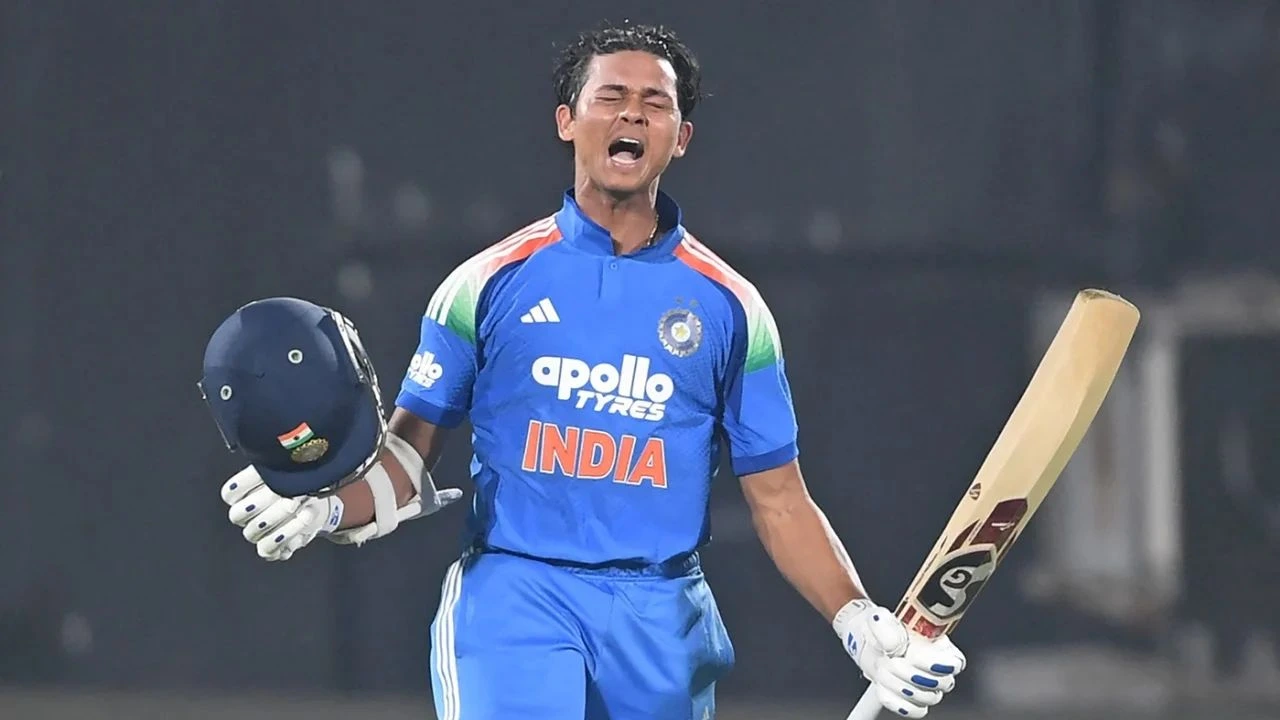
Jaiswal scored an unbeaten 116, which was his first century in the 50-over format, while chasing a target of 271 runs. He also formed a 155-run opening partnership with Rohit Sharma. India secured a comfortable nine-wicket win.

The southpaw scored 156 runs across three matches at an average of 78 and a strike rate of 89.14. The ODI series against New Zealand will start on January 11. Notably, the BCCI medical team is monitoring his fitness closely ahead of that series, and he may find it challenging to break into the playing XI.

Also read: Glenn McGrath’s chair-smashing reaction after Nathan Lyon leapfrogs him breaks internet


Source link

Can Andhra’s rare earth corridor fuel India’s clean-energy dreams? | India News


Can Andhra’s rare earth corridor fuel India’s clean-energy dreams?
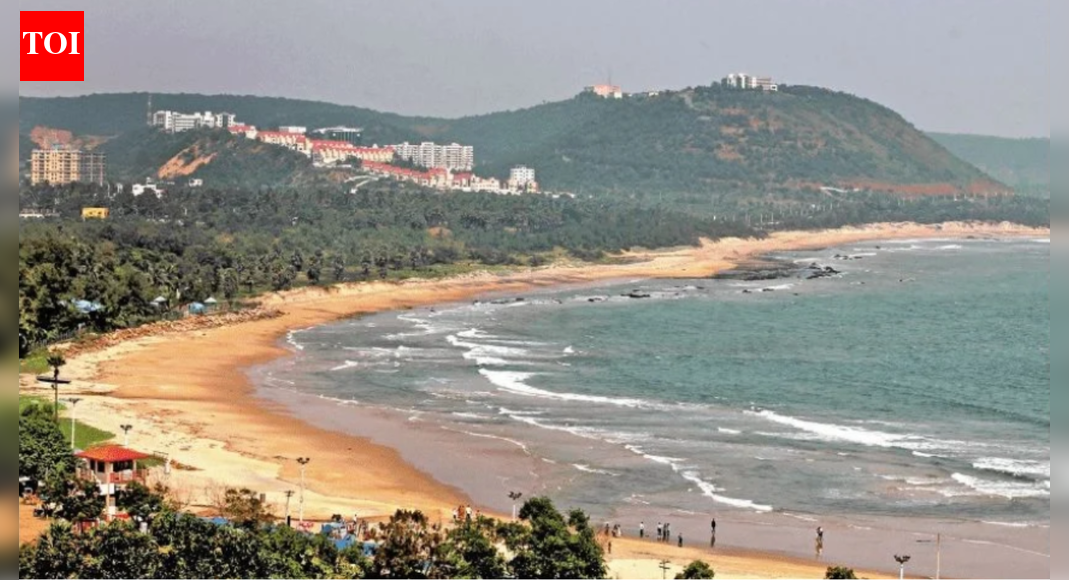
The mineral-rich belt forms an unbroken stretch along Andhra’s coastline (Picture credit: A Sarath Kumar)

Along Andhra Pradesh’s sweeping 974km coastline, the waves wash more than picturesque beaches and bustling fishing harbours. Beneath the dark, heavy sands — from Srikakulam in the north to Nellore in the south — lies one of India’s most valuable and underexploited geological assets: rare earth mineral reserves that could define the nation’s cleanenergy, defence and semiconductor future.These beach sands contain vast quantities of monazite, the primary source of rare earth elements (REEs) and thorium, along with ilmenite, rutile, zircon, garnet and sillimanite, making the state a rich natural repository of strategic minerals.What distinguishes Andhra’s reserves is not only their abundance, but also their grade. Monazite extracted along this coast carries 55-60% rare earth oxides — among the highest in global benchmarks — and 8-10% thorium, considered a potential fuel for India’s next-generation nuclear reactors.The ore houses a complete suite of light REEs such as lanthanum, cerium, praseodymium, neodymium, samarium, europium and gadolinium, elements that power permanent magnets essential for electric vehicles, wind turbines, missile guidance, satellite systems, fibreoptics, superconductors and advanced medical diagnostics.The mineral-rich belt stretches like a continuous corridor. Geological surveys identify promising deposits at Bhimunipatnam, Kalingapatnam, Kakinada, Narsapur, Machilipatnam, Chirala, Vodarevu, Ramayapatnam and Dugarajapatnam, forming an uninterrupted chain of strategic material potential. Estimates by the Atomic Minerals Directorate and Indian Rare Earths Limited (IREL) place India’s total deposits at over 300 million tonnes of heavy mineral sands (sand deposits rich in dense, valuable minerals like ilmenite, rutile and zircon), with 12-15 million tonnes of monazite, enough to support 40-50% of domestic rare earth requirements for decades. Andhra is estimated to hold 3035% of India’s monazite reserves.For long, these beaches have remained underutilised, overshadowed by concerns around atomic regulation, limited processing capacity and policy restrictions. Now, with global supply chains tightening and countries scrambling to diversify away from China — which controls nearly 85% of global REE processing capacity — the state has quietly moved into strategic focus.APMDC steps on the gasRecognising the opportunity, the Andhra Pradesh Mineral Development Corporation (APMDC) has stepped up exploration and monetisation efforts with renewed urgency. The Centre has granted 16,000 hectares of beach sand-mining leases to the corporation, marking one of the largest allocations for any state. Of this, operational clearance has been issued for 1,000 hectares, recently allotted to a private developer through open tender. Encouraged by potential revenue prospects, the state has sought approval to open another 4,000 hectares, after which the corporation plans to scale out activities across the remaining 11,000 hectares on a fast-track basis.APMDC’s shift is not confined to mining. The focus now is on value addition within India — crucial because exporting raw ore leads to importing high-value end products at a steep cost. “We are concentrating on downstream processing facilities to make the country self-reliant,” APMDC managing director and senior IAS officer Pravin Kumar told TOI, underlining the state’s aggressive roadmap. “Exporting raw minerals forces us to import finished rare earth magnets, chips and components at a high premium. The Centre’s PLI (production-linked incentive) will be a game changer.”

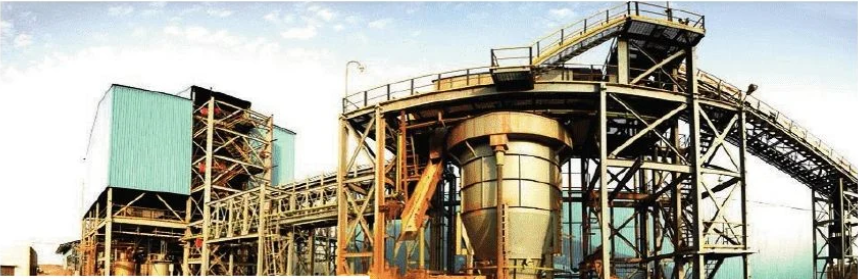
A sand filtration plant in Srikakulam

At present, monazite processing remains the exclusive domain of IREL, a Central PSU operating under atomic mineral regulations. Private players can mine associated minerals such as garnet, ilmenite and zircon but must hand over monazite to IREL after separation. To increase domestic refining capacity, IREL is establishing a 10,000-tonne-perannum monazite processing plant at Gudur, Nellore, scheduled for commissioning in 2026. Once operational, it is expected to become a central pillar of India’s REE value chain.Centre’s PLI pushIn a major policy intervention aimed at cutting import dependence and accelerating green-tech manufacturing, the ministry of mines has rolled out guidelines for pilot projects to recover critical minerals — including REEs — from mining waste, red mud, fly ash and industrial tailings. The programme, approved under the National Critical Mineral Mission (NCMM), earmarks funding of up to Rs 100 crore from the National Mineral Exploration and Development Trust (NMEDT) for recovery-oriented R&D and commercial pilots.The mission targets securing domestic supply of 24 strategic minerals such as neodymium, dysprosium, yttrium and cobalt, vital for EV batteries, solar wafers, turbines and missiles. “These guidelines mark a pivotal step towards converting waste into wealth,” said Geetika Sharma, director (projects), NMEDT. Pilot studies may receive 90% central funding, enabling partnerships across PSUs, academia, startups and private mining companies.This policy push is particularly advantageous for Andhra Pradesh. Though placer deposits have for decades supported India’s titanium and zircon industries, enormous quantities of tailings with recoverable REEs, thorium and uranium have remained unprocessed due to lack of technology and regulatory clarity.Existing infrastructureAndhra Pradesh already possesses early-stage infrastructure that could scale with the new policy. A private REE-processing plant in Anantapur is operational and handles thousands of tonnes annually. IREL runs a beach sand separation plant in Visakhapatnam, generating tailings suited for rare earth extraction using hydrometallurgical and solvent-extraction techniques. Officials estimate that reprocessing alone could unlock a Rs 5,000-crore annual opportunity through circular extraction.“Our monazite reserves can yield dysprosium for EV magnets and terbium for high-performance turbines,” a senior mines and geology department official told TOI.To ensure accountability, proposals will be screened by an inter-ministerial project sanctioning committee, while technical validation will come from experts at IITBombay, IIT-ISM Dhanbad and CSIR-IMMT Bhubaneswar. Implementation pathways will be led by Jawaharlal Nehru Aluminium Research Development and Design Centre, Nagpur for mining waste recovery projects and Anusandhan National Research Foundation (ANRF), under the Centre’s department of science and technology, for tech-driven pilots.Pilot projects in pipelineThe Andhra government is preparing applications to recover REEs from thermal plant fly ash in Nellore and Krishnapatnam, known to contain trace rare earths. Collaboration possibilities with IIT-Hyderabad, National Mineral Processing Laboratory (Jamshedpur) and geologists are being explored, especially around bio-leaching and electrochemical extraction. Scientists say tailings (ore residues) at Andhra Pradesh and comparable IREL operations in Kerala suggest that over 80% REE extraction is achievable with modern technology.DAR Subramanyam, a retired economics professor from Acharya Nagarjuna University, noted that rapid scale-ups can reduce India’s import dependence from 95% to nearly 50% within five years, provided commercial plants are deployed under the National Critical Mineral Mission (NCMM) framework. With global REE demand expected to grow tenfold by 2030, Andhra stands positioned to emerge as the country’s critical-mineral capital.The first call for proposals under the PLI window is expected shortly, signalling what experts describe as the beginning of a mineral renaissance on the state’s shoreline.From being a silent geological marvel, Andhra’s beaches are on the cusp of powering India’s transition to clean mobility, renewable energy and advanced electronics. The sands are no longer just a coastal landscape — they are India’s next strategic frontier.

Source link