Breaking News
Ashes 2025-26 [WATCH]: Glenn McGrath’s reaction breaks the internet as Nathan Lyon surpasses him on Australia’s all-time wicket-taker list | Adelaide Test, Day 2


A historic moment at the Adelaide Oval was punctuated by a touch of classic Australian humor during the third Ashes Test of the 2025-26 series. As Nathan Lyon officially moved past Glenn McGrath to become Australia’s second-most successful Test bowler of all time, the legendary paceman provided the highlight of the morning from the commentary box. After Lyon clean-bowled Ben Duckett to claim his 564th Test wicket, cameras immediately panned to McGrath, who delivered a piece of perfect physical comedy.

Ashes 2025-26: Nathan Lyon surpasses the legacy of Glenn McGrath on Day 2 of Adelaide Test

Lyon’s ascent to sixth place on the all-time Test wicket-takers list is a testament to the longevity and skill of a bowler once considered a “stop-gap” option for Australia. Entering the Adelaide Test tied with Glenn McGrath on 562 wickets, Lyon didn’t have to wait long to etch his name into the record books. He first drew level by dismissing Ollie Pope, who fell to a sharp low catch by Josh Inglis at mid-wicket, before producing a classic off-spinner’s delivery to dismantle Duckett’s off-stump for the record-breaking 564th scalp. This dismissal moved him into outright second place among Australians, leaving only the Shane Warne, who sits at 708 wickets, ahead of him.

The achievement is staggering when viewed through the lens of history; Lyon is now the highest active wicket-taker in world cricket and the fourth-highest spinner to ever play the game, trailing only Muttiah Muralitharan (800), Warne (708), and Anil Kumble (619). Among fast bowlers, only the retired English duo of James Anderson (704) and Stuart Broad (604) now stand between Lyon and the top five. His ability to consistently extract turn and bounce on all surfaces has transformed him into the heartbeat of the Australian bowling attack, and as he surpassed McGrath’s legendary tally of 563, he proved that he belongs in the same pantheon of greats who defined the “Golden Era” of the Baggy Green.

Also READ: Snicko controversy: Alex Carey responds after operator acknowledges ‘human error’ on Day 1 of Adelaide Test | Ashes 2025-26

Ashes 2025-26: McGrath’s priceless moment goes viral 

While the record belonged to Lyon, it was McGrath’s comedic brilliance that set social media ablaze and provided the defining image of the third Test’s opening sessions. As the broadcast cameras panned to the Channel 7 commentary box the moment Duckett’s bails flew, McGrath was ready with a theatrical display of “frustration.” With a mischievous glint in his eye, he stood up and gripped his chair, pretending to hoist it above his head as if to smash it onto the floor in a fit of jealousy. The live feed captured his fellow commentators, including Ricky Ponting and Ian Smith, erupting in laughter as McGrath quickly broke character with a proud, beaming smile for his successor.

This “chair-slamming” video quickly became a sensation, with fans praising McGrath for his lack of ego and his willingness to celebrate the next generation with such infectious humor. The moment served as a poignant bridge between eras; McGrath, the metronome of the 2000s, passing the torch to Lyon, the marathon man of the modern age.

Here’s the video:

Also READ: In pics: Meet Cameron Green’s girlfriend, Emily Redwood



Source link

Access Denied


Access Denied

You don’t have permission to access “http://www.ndtv.com/india-news/delhi-fog-news-delhi-fog-updates-at-least-40-flights-delayed-trains-running-late-as-fog-hits-delhi-9836128” on this server.

Reference #18.6fdd417.1766043012.84d2655

https://errors.edgesuite.net/18.6fdd417.1766043012.84d2655


Source link

Ahead of KDMC polls, MNS suffers major setback as two MNS neta resign | Thane News


KALYAN: The Maharashtra Navnirman Sena (MNS) has suffered another significant blow in Kalyan ahead of the upcoming Kalyan-Dombivli Municipal Corporation (KDMC) elections, with senior party leaders Kasturi Desai and her husband Kaustubh Desai announcing their resignation from the party and all organisational posts.Kasturi Desai is a former corporator and currently served as the city women’s president of the MNS, while Kaustubh Desai is the party’s former city president in Kalyan. Their exit is being seen as a major setback for the party at a crucial time when preparations for the civic polls are underway. In a statement, the Desais said they had taken the decision in the interest of their wards and party workers. Kaustubh Desai added that their future political course would be announced soon.Speculation about their resignation had been doing the rounds for some time. Last month amid rumours that the Desais might quit the MNS to join another political party, MNS chief Raj Thackeray had called them for a meeting in an attempt to resolve the issue. However, despite the discussions, both leaders formally resigned from the party on Wednesday. Sources indicate that they may join either the Shiv Sena or the Bharatiya Janata Party (BJP), though no official announcement has been made so far.The Desais’ resignation adds to a series of defections that have weakened the MNS’s organisational strength in Kalyan-Dombivli. Earlier, several MNS leaders and former corporators had also left the party. Last month, MNS Kalyan district president and former corporator Prakash Bhoir, along with two other former corporators and hundreds of supporters, joined the BJP, dealing a major blow to the party’s local unit.The latest development comes at a time when discussions about a possible grand alliance between the MNS and the Shiv Sena (Uddhav Balasaheb Thackeray faction) were gaining momentum in Mumbai and Kalyan-Dombivli ahead of the civic elections. Against this backdrop, the defection of key leaders has raised serious questions about the MNS’s organisational stability and electoral preparedness.With influential leaders exiting the party just months before the KDMC polls, political observers believe the MNS faces an uphill task in retaining its base in Kalyan-Dombivli. All eyes are now on how these developments will impact the party’s performance in the forthcoming municipal elections and whether further defections may follow.


Source link

Kalyan excise vigilance team seizes Rs 1 crore worth of liquor hidden in ‘maggi’ container | Thane News


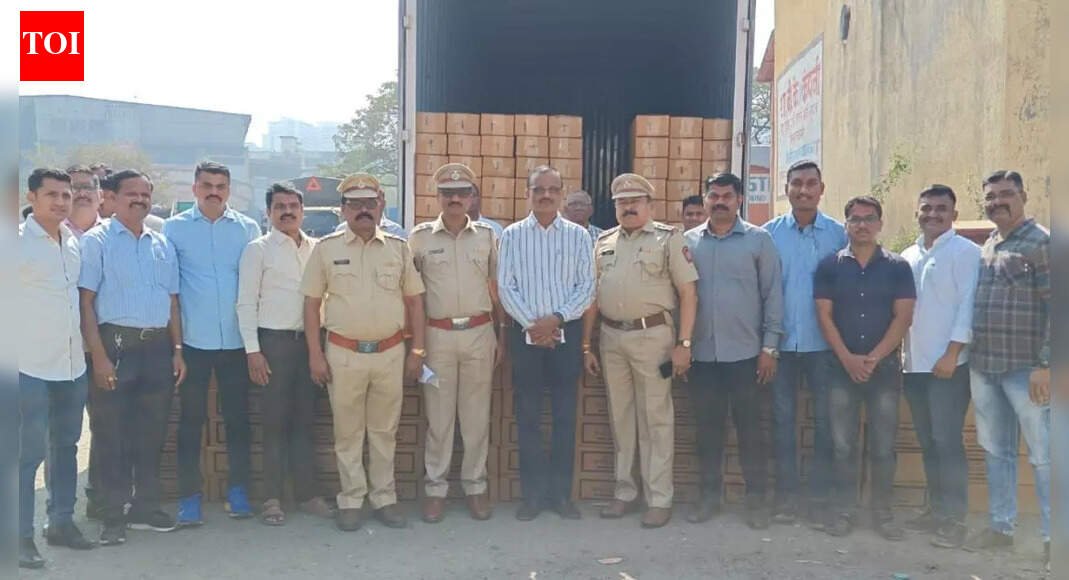
KALYAN: In a major action ahead of the New Year celebrations, the vigilance team of the Kalyan unit of the Excise Department has seized illicit liquor worth nearly ₹1 crore from a container on the Mumbai–Nashik highway. The consignment was being illegally transported from Goa and Madhya Pradesh to Maharashtra with the intention of selling it during the high-demand period around December 31.Acting on specific intelligence, the Excise Department’s Vigilance team intercepted a container on the Bhiwandi bypass. The vehicle, which had a large Maggi noodles advertisement pasted on it, was suspected of being used as a cover to avoid attention during transit. Upon inspection, officials discovered a huge quantity of foreign liquor concealed inside the container. Preliminary investigations revealed that the liquor had been manufactured in Goa and Madhya Pradesh and was being transported without payment of the mandatory excise duty, making the entire consignment illegal.The container driver has been identified as Asif Mohammad, who was taken into custody for questioning. The operation was led by Deepak Parab, Inspector with the Excise Department’s Vigilance wing, along with his team. Officials said the seizure was part of intensified checks being carried out across the region to prevent the illegal sale and transportation of liquor ahead of New Year’s Eve, when demand for alcohol typically spikes.Following the seizure, the excise officials have begun a detailed investigation to identify those involved in the racket. Authorities are probing the supply chain to determine the source of the liquor, the intended recipients in Maharashtra, and the individuals or syndicates responsible for evading excise duty. Further action is expected based on the outcome of the investigation.Excise officials said such enforcement drives will continue in the coming days to curb illegal liquor trade and ensure that government revenue is not lost due to tax evasion.


Source link

Uttarakhand CM Dhami reviews preparations for ‘Jan-Jan Ki Sarkar, Jan-Jan Ke Dwar’ programme | India News


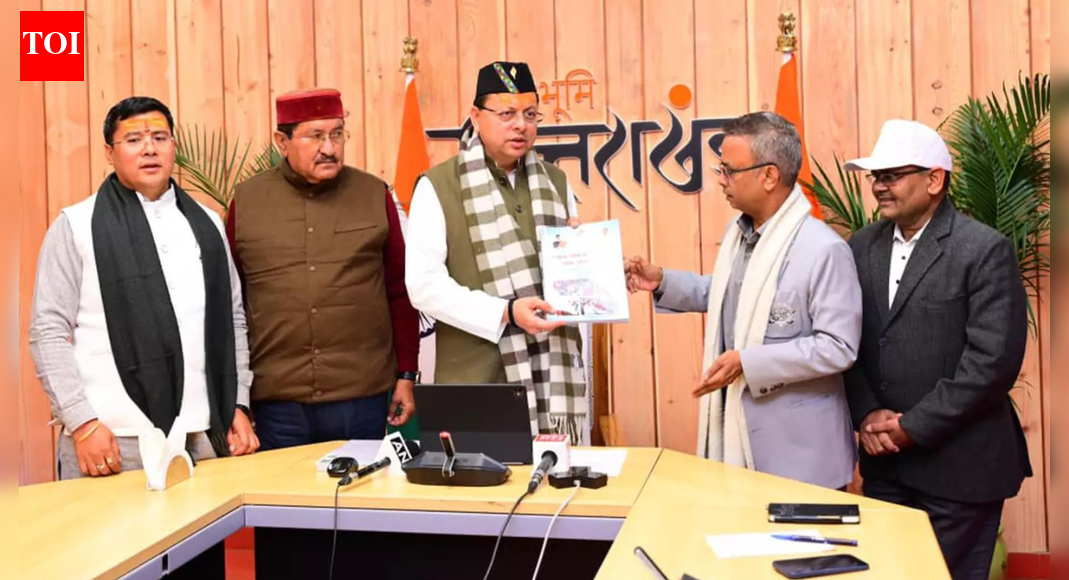
Uttarakhand CM Dhami reviews preparations for 'Jan-Jan Ki Sarkar, Jan-Jan Ke Dwar' programme

DEHRADUN: Uttarakhand chief minister Pushkar Singh Dhami on Wednesday conducted a detailed review of preparations for the “Jan-Jan Ki Sarkar, Jan-Jan Ke Dwar” programme at the chief minister’s residence. He emphasised the need to ensure that welfare scheme benefits reach every eligible citizen under the “Administration Towards the Village” campaign.The chief minister directed officials to organise multipurpose camps in all Nyaya Panchayats across the state over the next 45 days, starting from December 17. These camps will enable officials to visit rural areas, collect applications, ensure beneficiaries receive scheme benefits, and provide prompt redressal of public grievances.“Programmes should be conducted at the Nyaya Panchayat level, and in larger Nyaya Panchayats, more than one camp should be organised as required. Adequate information about Central and State Government schemes must be provided, and no eligible person should be deprived of benefits,” CM Dhami said.He also instructed officials to follow up by visiting nearby villages to help beneficiaries fill application forms and identify individuals left out of schemes. Extensive publicity should be ensured, informing all residents at least 3-4 days in advance.The chief minister further directed that the District Magistrate must be present at least one camp per week, while senior administrative officers should attend other camps. Officers from designated departments must remain available to resolve public grievances on the spot.Highlighting the role of public representatives, CM Dhami stressed 100 percent participation of MLAs and local leaders in the camps to lead efforts in addressing public issues and promoting welfare schemes.He also instructed that all programmes be properly registered, beneficiary satisfaction be prioritised, and weekly progress reports submitted to the chief minister’s Office, Chief Secretary’s Office, and General Administration Department. Information regarding programme success should be widely disseminated through the media.


Source link

IND vs SA: Has any international match been abandoned without a ball bowled due to fog before the Lucknow T20I? | Cricket News


IND vs SA: Has any international match been abandoned without a ball bowled due to fog before the Lucknow T20I?
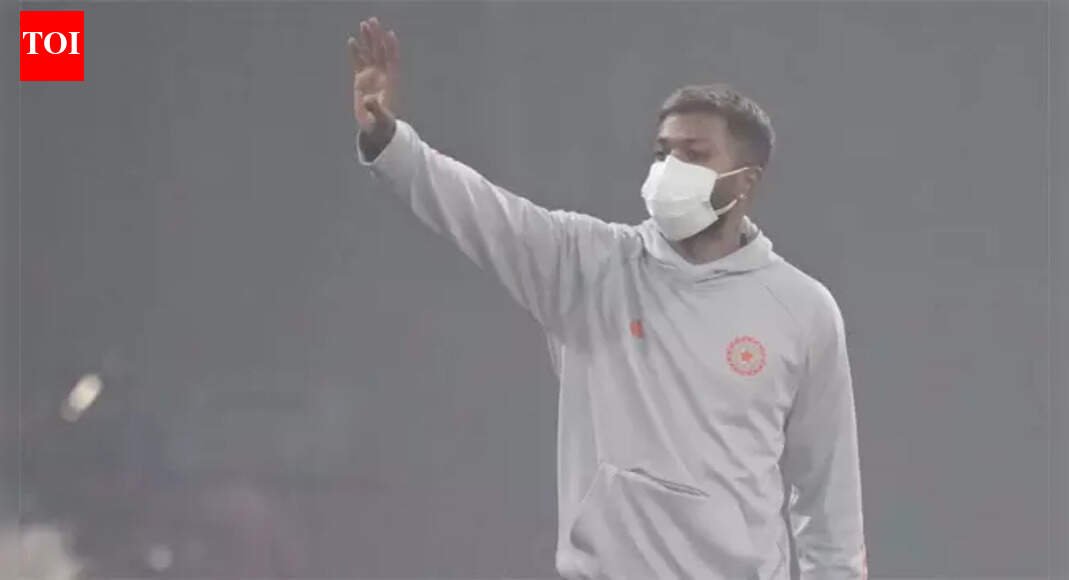
Hardik Pandya at Ekana Cricket Stadium in Lucknow. (PTI Photo)

NEW DELHI: The fourth T20I between India and South Africa in Lucknow on Wednesday was abandoned without a single ball being bowled due to “excessive fog,” a scenario that triggered widespread outrage among fans and renewed discussions on air quality and scheduling. Images of India all-rounder Hardik Pandya wearing a mask while warming up amid the dense smog went viral, highlighting the severity of the conditions. Fans at the Bharat Ratna Shri Atal Bihari Vajpayee Ekana Cricket Stadium demanded refunds from the Board of Control for Cricket in India (BCCI) as the match was finally called off at 9:25 pm after six separate inspections.Go Beyond The Boundary with our YouTube channel. SUBSCRIBE NOW!While frustrating for spectators, such fog-induced abandonments are extremely rare in international cricket. The majority of matches are delayed or abandoned due to rain or wet outfields, making fog-caused cancellations an unusual occurrence.

Abhishek Sharma’s sister is very proud of her brother, and India win

Interestingly, the Lucknow T20I was not the first international match abandoned due to fog. In December 1998, the third Test between Pakistan and Zimbabwe at Iqbal Stadium in Faisalabad faced a similar fate. Scheduled from December 17 to 21, the match saw no play across all five days. Thick fog enveloped the city, drastically reducing visibility and making batting, bowling, and fielding impossible.The umpires for that match, Saleem Badar from Pakistan and Doug Cowie from New Zealand, were left in a procedural bind. Cowie explained in an interview with The Dawn that the decision to abandon the match rested with the Pakistan Cricket Board (PCB) and Zimbabwe Cricket, while the umpires continued inspections daily to assess the ground.

Poll

How do you feel about playing cricket in foggy conditions?

In a desperate bid to start the game, organisers even transported a super sopper from Lahore’s Gaddafi Stadium to Faisalabad to prepare the field quickly in case the fog lifted, but it never did. The match was ultimately abandoned without a ball being bowled, and Zimbabwe went on to win the three-match series 1-0 — their first-ever series victory.Both the Faisalabad Test and the Lucknow T20I underscore just how rare fog-induced abandonments are in cricket. While mist, fog, or low visibility may cause delays or interruptions, matches called off entirely due to fog remain anomalies in international cricket history.


Source link

‘Action only on vehicles below BS-IV’: Supreme Court modifies order on exemption for older vehicles in Delhi | Delhi News


NEW DELHI: The Supreme Court on Wednesday modified its August 12 order that previously barred coercive action against diesel vehicles older than 10 years and petrol vehicles older than 15 years in the National Capital Region (NCR).The court clarified that action can be taken against vehicles having standards below BS-IV.

Delhi Pollution: China Shares Playbook On How To Fix Air Quality Amid Politics Over Accountability

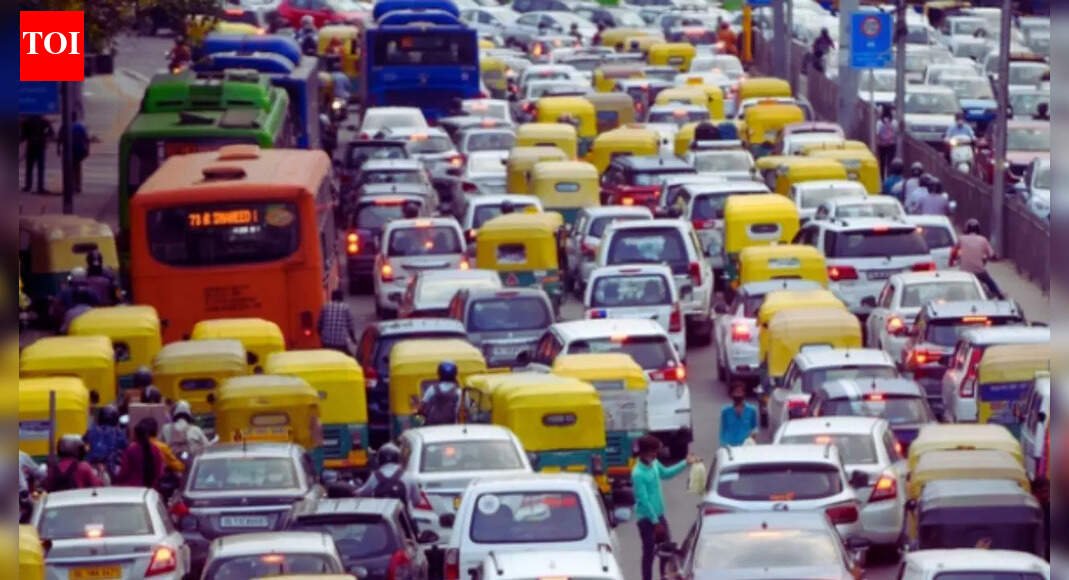
A bench comprising Chief Justice of India Surya Kant, Justice Joymalya Bagchi, and Justice Vipul Pancholi passed the order at the request of the Delhi government, which had sought stricter measures against older vehicles in light of the ongoing air quality crisis.The court continued to hear matters related to Delhi’s worsening air pollution, with air quality remaining in the “severe” category in several parts of the NCR. During proceedings, the bench stressed the need for practical measures, saying, “Let us think of pragmatic and practical solution of the menace.”The court was also informed about traffic congestion caused by toll plazas under the Municipal Corporation of Delhi (MCD) in Gurgaon. These long queues of vehicles were noted to contribute significantly to air pollution. The court directed the DMC to cooperate and consider suspending nine toll plazas temporarily, stating that a decision should be made within a week and placed on record.CJI Surya Kant said, “we do not want income you generate, but you definately generate a lot of litigation from these tolls we want to come out on a concrete plan for absolute no toll plaza till next year 31st January.”Addressing the real-world impact of restrictions on construction workers, the bench asked the Delhi government to verify workers rendered idle and ensure direct transfer of funds to their bank accounts. The Chief Justice cautioned that the money should not “disappear, travel to another account,” and urged consideration of alternative work for affected labourers. The government responded that around 7,000 construction workers have been verified out of nearly 2.5 lakh affected, with payments to be made directly to their accounts.The observations came as the Supreme Court reviewed the persistent impact of air pollution despite repeated directives over the years. Amicus curiae and senior advocate Aparajita Singh told the court that air quality continues to hover in the “severe” category despite multiple orders and that enforcement of pollution-control protocols has been slow.The bench also noted lifestyle choices among the affluent as a major factor behind poor implementation. CJI Surya Kant observed that the well-off continue to use large diesel vehicles, generators, and other polluting equipment in violation of restrictions, while “it is the poor and working classes who are the most exposed to hazardous air and suffer the worst health consequences.”The Commission for Air Quality Management (CAQM) informed the court last week that transport contributes about 41% of Delhi-NCR’s ambient air pollution, followed by dust and construction (21%), industry (19%), power plants (5%), residential activities (3%) and other sources (11%). Stubble burning was cited as a periodic factor affecting the region for a short window each year, with other sources remaining constant.The amicus also highlighted violations of Supreme Court orders barring schools and organisations from holding sporting events during periods of severe pollution, saying organisers continue to sidestep the restrictions, exposing children to hazardous air.


Source link

Mid-air scare: Air India Express flight from Jeddah makes emergency landing in Cochin; tyres burst | India News


Mid-air scare: Air India Express flight from Jeddah makes emergency landing in Cochin; tyres burst

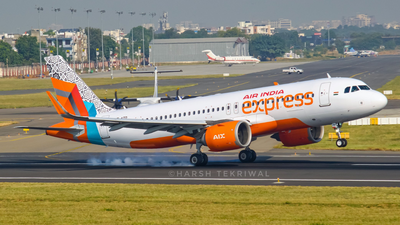
NEW DELHI: An Air India Express flight from Jeddah to Kozhikode carrying 160 passengers made an emergency landing at Cochin International Airport on Thursday after a technical issue involving its landing gear and tyre failure, officials said.The Cochin International Airport Limited said the Air India Express flight IX 398 was diverted to Kochi as a precaution after a problem was detected in the right main landing gear. The aircraft landed safely at 9.07 am under full emergency conditions.“All emergency services were activated in advance, and there were no injuries reported among passengers or crew. Post-landing inspection confirmed that both right-side tyres had burst,” a CIAL spokesperson said.The airport operator said the runway was subsequently cleared and released for normal operations.(with inputs from PTI)


Source link

Leadership lessons from Lord Krishna that are still relevant in today’s corporate world |


Leadership lessons from Lord Krishna that are still relevant in today’s corporate world

Leadership is often discussed as a skill set, but it is usually experienced as a mental state. Pressure builds quietly. Decisions carry consequences. Doubt creeps in when clarity is expected. The Bhagavad Gita begins in a moment like this. Arjuna stands ready, yet unable to act. Krishna does not accuse him of weakness. He speaks to the confusion itself. That response is what keeps Krishna’s leadership relevant even now, in offices far removed from battlefields but filled with similar tension.

Why Lord Krishna’s words still feel relevant in modern work life

When responsibility matters more than applause

Krishna’s best-known words appear early in the Gita, when he reminds Arjuna where attention truly belongs.Karmanye vadhikaraste, ma phaleshu kadachana(Gita 2.47)

Why Intention Matters: Bhagavad Gita Lessons From Chapter 4, Verse 25

The verse is often shortened or misused, but its meaning is practical. Action is required. Obsession with reward is not. In corporate spaces, leaders frequently begin chasing validation instead of doing the work well. Decisions start revolving around visibility, ratings, or fear of criticism. Teams sense this quickly. When leadership focuses on responsibility rather than applause, work becomes steadier. People know where they stand.

Why copying leadership styles usually backfires

Another verse quietly addresses imitation, something common in professional environments.Shreyān sva-dharmo vigunah para-dharmāt sv-anuṣṭhitāt(Gita 3.35)Krishna warns that walking another person’s path creates fear. In offices, leadership styles are borrowed all the time. Assertiveness is forced because it looks decisive. Calmness is performed because it seems mature. The result is confusion. Authority weakens when it feels artificial. Leadership becomes more believable when it fits the person holding the role, even if it is imperfect.

Calm leadership is not silence, it is steadiness

The Gita speaks often about emotional balance, not as detachment but as control.Duhkheshu anudvigna-manah sukheshu vigata-sprhah(Gita 2.56)Workplaces amplify emotion. Stress at the top spreads downward. Panic becomes urgency. Leaders who remain emotionally steady do not make problems disappear, but they prevent unnecessary chaos. Krishna’s idea of steadiness is quiet. It allows others to think instead of react. In practice, that calm often matters more than bold speeches.

Guidance only works when control is released

Towards the end of the Gita, Krishna offers advice and then steps back.Vimrishyaitad asheshena yathechchhasi tatha kuru(Gita 18.63)After everything is explained, the choice is left untouched. This moment reflects a kind of leadership rarely practised at work. Constant oversight is mistaken for responsibility. Over time, it weakens initiative. Krishna’s approach is slower. Clarity comes first. Trust follows. Capability develops later.

Avoidance damages culture more than mistakes

Krishna is direct about action.Niyatam kuru karma tvam karma jyayo hy akarmanah(Gita 3.8)In offices, avoidance often hides behind delay or politeness. Issues are postponed. Conversations are softened until they lose meaning. Ethical leadership usually feels uncomfortable in the moment. Avoiding action feels easier, but it erodes trust quietly. Krishna’s reminder is simple. Responsibility does not disappear because it is ignored.

Change works only when balance stays intact

Krishna repeatedly returns to balance while acting.Yogasthah kuru karmani siddhy-asiddhyoh samo bhutva(Gita 2.48)Modern organisations change constantly. Strategies shift. Roles evolve. Leaders who change direction without inner steadiness unsettle teams. Krishna’s idea is not rigidity. It is balance. Adapt actions when needed, but remain anchored. People tolerate change better when something stable remains underneath.Leadership lessons from Lord Krishna endure because they were never about authority or performance. They speak to inner discipline, emotional steadiness and responsibility under pressure. Those qualities continue to define leadership people trust, even now.


Source link

Delhi Pollution: ‘This is how we did it’ China embassy has advice for Delhi pollution; ultra-strict vehicle norms, public transport push key | Delhi News


‘This is how we did it’: China embassy has advice for Delhi pollution; ultra-strict vehicle norms, public transport push key

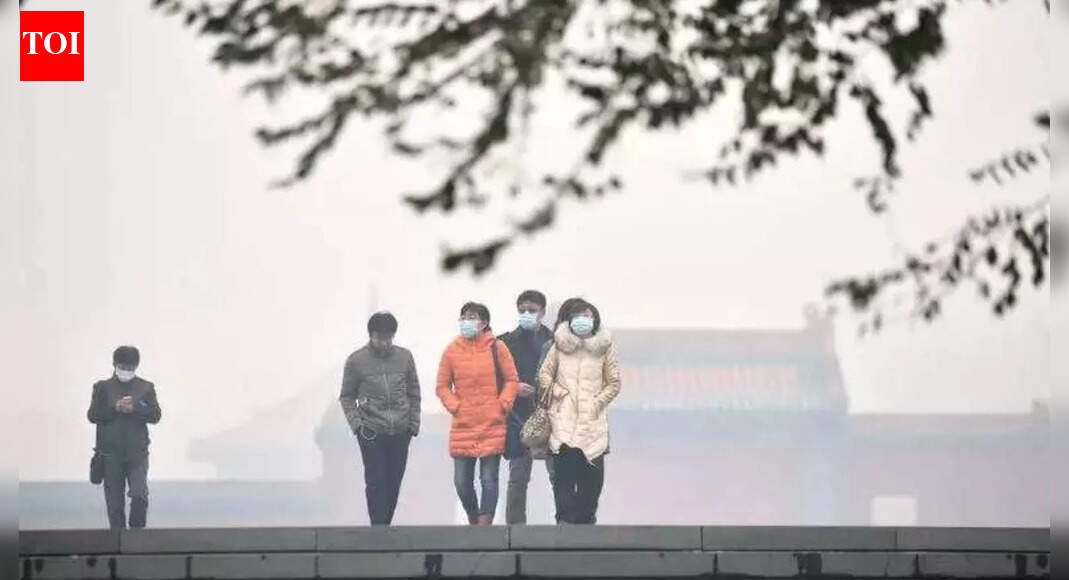
By: Mallica JoshiNEW DELHI: How did Beijing go from being the ‘smog capital of the world’ to footnotes in research papers on tackling air pollution? China has lessons for India.In a series of posts on X, spokesperson of the Chinese embassy in India, Yu Jing laid out the path that Beijing followed to drastically improve air quality.

Delhi Pollution: China Shares Playbook On How To Fix Air Quality Amid Politics Over Accountability

“Both China and India know the struggle with air pollution amid rapid urbanization. While the challenge remains complex, China’s sustained efforts over the past decade have delivered noticeable improvements…” Jing posted.Also read: Poisoned skies: How China tackled pollution — if Beijing can, why can’t Delhi?Beijing’s annual PM 2.5 average in 2013 was 101.7 ug/m3. In 2024, it stood at 30.9 ug/m3.In her posts that followed, Jing spoke about the steps taken in transport and industry sectors that led to better air. “How did Beijing tackle air pollution? Step 1: Vehicle emissions control. Adopt ultra-strict regulations like China 6NI (on par with Euro 6). Phase-out retired old, high-emission vehicles. Curb car growth via license-plate lotteries and odd-even / weekday driving rules. Build one of the world’s largest metro and bus networks. Accelerate the shift to electric mobility. Work with the Beijing–Tianjin–Hebei region on coordinated emissions cuts. Cleaner air doesn’t happen overnight—but it is achievable,” she said.Addressing air pollution from industry, Jing said, “Step 2: Industrial Restructuring. Shut down or remove 3000+ heavy industries. Relocating Shougang, one of China’s largest steelmakers, alone cut inhalable particles by 20%. Transform vacated factories into parks, commercial zones, cultural and tech hubs. Example, the former Shougang site became the 2022 Winter Olympics venue. Relieve non-capital functions by relocating wholesale markets, logistics hubs and some educational and medical institutions. Coordinate regional integration by shifting general manufacturing to Hebei, while retaining high-value R&D and services in Beijing.”These interventions are not unheard of in India. Cleaner fuel for vehicles as well as industry, a curb on growth of private vehicles and robust public transport have been part of discussions for at least a decade.According to experts, the difference is in the scale and seriousness of the action.“In China, action was not taken just in Beijing but in 26 cities and towns to tackle the problem, which is regional. The first lesson is that the actions they took were urgent, stringent, and at a large scale. They took deep to enable massive energy transition, like getting rid of coal not only in industry but also in household use. Beijing also capped the number of cars that can be sold in a year even as it created infrastructure for public transport. We will find similarities in our plans for Delhi-NCR but the scale is missing,” said Anumita Roy Chaudhuri, Executive Director, Research and Advocacy, Centre For Science and Environment.She also said action in Delhi is taken only during air emergencies.“We can’t have just emergency measures. The implementation of these actions has to be round-the clock,” she said.Sunil Dahiya, Founder and Lead Analyst at the think tank EnviroCatalyst, said, “We already have BS6, which is equivalent to Euro 6, and the latest decision on not allowing BS VI or below vehicles in Delhi seems to be in the right direction. All the steps suggested for vehicular pollution were tried in India, but they didn’t work only because there wasn’t a political will.”On industrial pollution, Dahiya said shifting or removing all industries to a different region might be difficult as we are dealing with the livelihood of people residing in several states. “We can instead come up with better facilities. For instance, small and medium enterprises or manufacturing units mostly use undesignated fuel and lack air pollution control devices. We can introduce better mechanisms with common pollution control devices, emission control devices, and restructuring industrial clusters,” he said, adding that since 2019, no strict measures have been taken against power plants.


Source link