Breaking News
Ashes 2025–26 [WATCH]: Pat Cummins bowls a jaffa to dismiss Joe Root for the record 12th time on Day 2 of Adelaide Test


Day 2 of the third Test of the Ashes 2025–26 at the Adelaide Oval turned into a nightmare morning for England as Australia tightened their grip on the contest. After posting a competitive first-innings total, the hosts unleashed a relentless bowling spell that dismantled England’s top order. The highlight of the session was a peach of a delivery from Pat Cummins that once again accounted for Joe Root, marking a historic milestone in their long-running duel.

Australia lay the platform with a solid first-innings total

Australia resumed Day 2 with confidence after being bowled out for 371 in their first innings. While the total was not overwhelming on a surface expected to aid batting early on, it proved more than enough once the Australian bowlers found rhythm and movement under clear Adelaide skies. The hosts were sharp in the field and clinical with the ball, setting the tone right from the opening exchanges of England’s reply.

Early blows leave England reeling

England’s innings began on an uncertain note, with the Australian pacers exploiting bounce and seam. Openers Zak Crawley and Ben Duckett struggled to settle, managing only brief stays at the crease. Crawley was dismissed cheaply, while Duckett looked promising before falling for 29. Nathan Lyon then entered the attack and struck twice in quick succession, removing Ollie Pope for a paltry three and further denting England’s confidence.

With wickets tumbling, England’s hopes rested heavily on Joe Root, the man often relied upon to steady the ship in challenging conditions.

Also READ: Snicko controversy: Alex Carey responds after operator acknowledges ‘human error’ on Day 1 of Adelaide Test | Ashes 2025-26

Pat Cummins removes Joe Root for the record 12th time in Test cricket

On the fourth ball of the 17th over, Cummins delivered a moment of brilliance that sent the Adelaide crowd into raptures. Bowling from a testing length outside off, Cummins induced Root into an uncertain prod. The ball nipped just enough, taking a thick outside edge that carried cleanly to Alex Carey, who dived forward to complete a sharp catch.

Root departed for 19 off 31 deliveries, walking off with a glance at the big screen as the significance of the dismissal sank in. It was the 12th time Cummins had dismissed Root in Test cricket, the most by any bowler. In achieving the feat, the Australian skipper moved ahead of Jasprit Bumrah, Mitchell Starc, and Josh Hazlewood in the list of bowlers who have troubled Root the most at the highest level.

Here’s the video:

Also READ: Ashes 2025/26 – Fans erupt as Alex Carey lights up Adelaide Oval with magnificent ton on Day 1 of third Test


Source link

Microsoft 365 services restored in Japan and China after major regional outage; here’s what disrupted services


Microsoft 365 services restored in Japan and China after major regional outage; here's what disrupted services

Microsoft 365 services in Japan and China have been fully restored after thousands of users experienced widespread access and sign-in failures early Thursday. The regional outage affected essential tools including Outlook, Teams, OneDrive and Microsoft’s AI assistant Copilot, disrupting business operations and remote work across both markets. Sharing a post on microblogging platform X (formerly Twitter), the official page of Microsoft 365 Status said “After an extended period of monitoring, we confirmed that our mitigating actions resolved impact for users. For more information, please see MO1198797 in the admin center”.

What caused Microsoft 365 services outage in Japan and China

According to updates posted in Microsoft’s admin center, the issue stemmed from a routing fault inside the company’s service infrastructure responsible for handling traffic in Japan. The outage led to intermittent login failures, slow loading times and degraded app performance for several hours. Microsoft engineers deployed mitigation steps throughout the morning, rebalancing traffic across backup systems to stabilize services.

Microsoft’s Biggest Asia Investment Yet: What The $17.5 Billion India Push Really Means Explained

Microsoft 365 services outage in Japan and China: Details of the disruption

The outage began around 12:00 am UTC (5:30 amIST), according to Microsoft’s status page. Users across Japan and China reported being unable to sign in to Microsoft 365 apps, with some experiencing repeated timeouts when accessing cloud-based files or using Copilot features. Microsoft confirmed that the disruption was limited to the Asia-Pacific region and said there was no indication of a cyberattack. Early assessments pointed to a routing misconfiguration that isolated parts of otherwise healthy infrastructure.Throughout the morning, Microsoft shared successive updates as mitigation progressed. At around 12:10 PM JST, engineers reported that traffic had been rebalanced across redundant systems and that services were returning to normal.In its latest post on X via Microsoft 365 Status, the company said: “After an extended period of monitoring, we confirmed that our mitigating actions resolved impact for users. For more information, please see MO1198797 in the admin center.”Outage impact and recoveryNo data loss or security issues were reported. However, the downtime affected organizations dependent on Microsoft’s cloud tools for daily operations. Copilot-powered workflows, email access, file sync and internal communication channels experienced the most disruption.


Source link

Asian stocks today: Markets trade in red amid AI concerns; Nikkei sheds over 400 points


Asian stocks today: Markets trade in red amid AI concerns; Nikkei sheds over 400 points

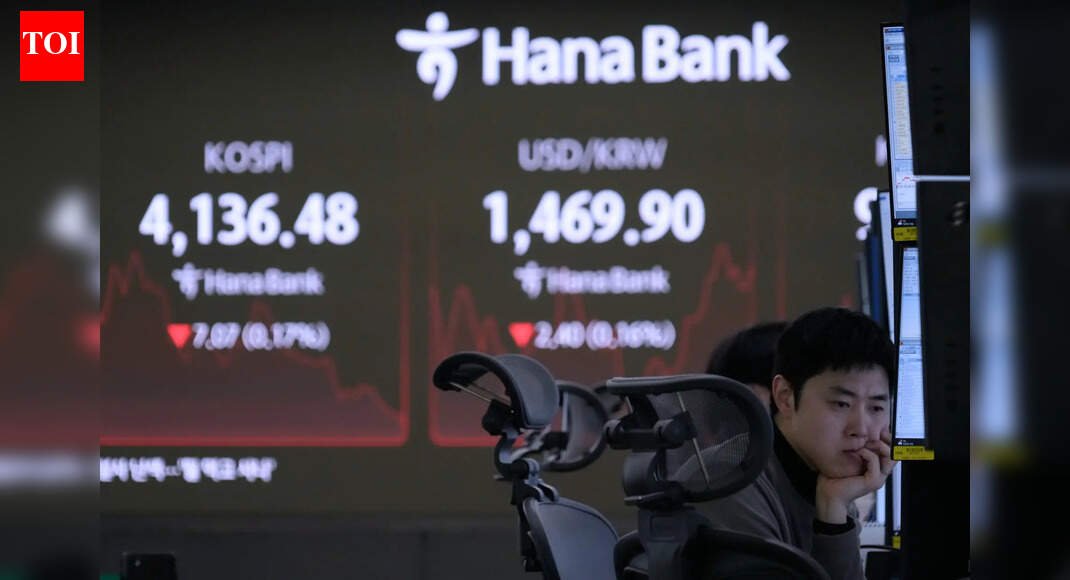
Asian stocks fell sharply on Thursday, tracking losses on Wall Street, as concerns mounted over the technology sector and the heavy spending on artificial intelligence cautioned investors.Hong Kong’s HSI was trading below 111 points or 0.44% at 25,357 at 10:38 AM IST. Nikkei also trimmed over 422 points to reach 49,089. Kospi also lost 1.39% to reach 3,999. Expectations of a year-end rally have weakened after the US Federal Reserve last week suggested it may pause interest rate cuts as early as next month. Although the central bank’s three consecutive reductions had supported equities in recent months, investors are increasingly wary that the policy tailwind could be coming to an end. With uncertainty building, markets are now looking ahead to key US inflation data due later on Thursday for clues on the Fed’s next move. A US jobs report released earlier this week did little to clarify the outlook for monetary policy. The spotlight has returned to technology stocks, where fears are growing that valuations may have overshot fundamentals. Tech and chipmakers have been the driving force behind this year’s rally to record highs, but scepticism is rising over how long earnings can justify the heavy capital being poured into AI and when meaningful returns will emerge. Those concerns intensified on Wednesday following reports that private capital firm Blue Owl had withdrawn from Oracle’s planned $10 billion data centre, raising doubts over the project’s future. The development came soon after Oracle and semiconductor major Broadcom reported weaker-than-expected earnings last week. Markets reacted sharply. Oracle shares slid more than five per cent on Wednesday, while Broadcom also moved lower. Losses spread across the sector, dragging down major names such as Nvidia, Alphabet and Advanced Micro Devices. The technology-heavy Nasdaq fell 1.8%, and the S&P 500 declined by more than one per cent.Elsewhere, oil prices climbed more than one per cent for a second consecutive day after the US said its forces had struck a vessel in the Pacific Ocean that Washington claims was involved in drug trafficking, killing four people described as “narco-terrorists”. The development added to tensions surrounding Venezuela after US President Donald Trump ordered a blockade of oil tankers labelled as “sanctioned” while heading to and from the country. Venezuelan President Nicolas Maduro has accused Washington of pursuing regime change rather than focusing on its stated aim of curbing drug trafficking.


Source link

Access Denied


Access Denied

You don’t have permission to access “http://www.ndtv.com/world-news/sleepy-joe-divisive-obama-inside-donald-trumps-presidential-walk-of-fame-9836529” on this server.

Reference #18.9cf856b8.1766037485.8c64375

https://errors.edgesuite.net/18.9cf856b8.1766037485.8c64375


Source link

‘Ghar wapsi hai meri’: Ravi Bishnoi looking to form deadly combo with Ravindra Jadeja at Rajasthan Royals | EXCLUSIVE | Cricket News


'Ghar wapsi hai meri': Ravi Bishnoi looking to form deadly combo with Ravindra Jadeja at Rajasthan Royals | EXCLUSIVE

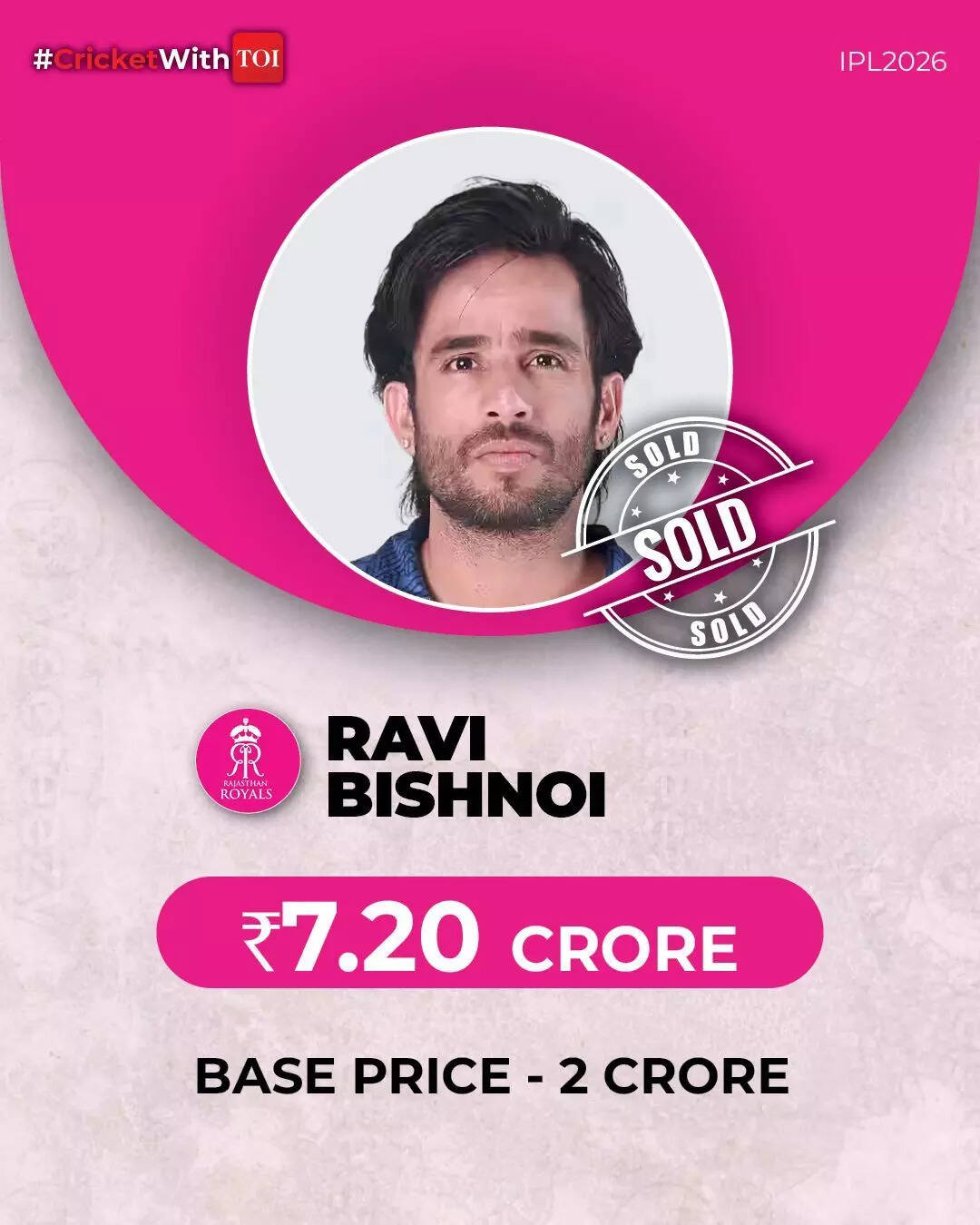
NEW DELHI: “Apne ghar walon ke saamne khelne ka maza kuch aur hi hoga [Playing in front of my family members will be a completely different feeling]” — India spinner Ravi Bishnoi is relishing the prospect of playing in front of his home crowd next IPL season. Bishnoi, who was part of the Lucknow Super Giants squad last season and was released ahead of the IPL 2026 Auction, was bought for Rs 7.2 crore at the IPL mini-auction in Abu Dhabi on Tuesday.Go Beyond The Boundary with our YouTube channel. SUBSCRIBE NOW!Bishnoi appeared to be firmly on Rajasthan Royals’ radar from the outset. As soon as auctioneer Mallika Sagar announced his name with a base price of Rs 2 crore, the Royals opened the bidding straightaway.

IPL Mini Auction: Manoj Badale, Mahela Jayawardena & Mo Bobat Speak After bidding war

Chennai Super Kings soon entered the fray, intensifying the contest. After CSK took the bid up to Rs 4.2 crore, Rajasthan Royals stayed aggressive in their pursuit of the leg-spinner. The bidding eventually concluded at Rs 7.2 crore, with Rajasthan Royals emerging successful in securing Bishnoi’s services.Bishnoi is all smiles and says it feels like a ‘ghar wapsi’ for him.“Excited to be back home. Ghar wapsi hai meri. I started as a net bowler from here and life has come a long way. I always dreamt of playing for my home franchise, and now that dream has come true. I am very excited for the new journey with Rajasthan Royals. My family is very happy. I am waiting for home support. I want to give them good memories this season with wickets and wins for my team,” Bishnoi told TimesofIndia.com in an exclusive interview.The 25-year-old has played for two IPL teams — Lucknow Super Giants and Punjab Kings, and has featured in 77 games, bagging 72 wickets.

Ravi Bishnoi

“Life has come a long way. I have played for two teams so far — Punjab Kings and Lucknow Super Giants. KL Rahul bhai at Punjab Kings supported me a lot and gave me a lot of freedom. I was grateful to play under Rishabh Pant bhai at Lucknow Super Giants. The best part of playing under both — Pant and KL Rahul — was that they always gave me liberty and freedom on the field. I have learnt a lot from KL Rahul. He has an abundance of knowledge,” he said.“KL Rahul bhai and Rishabh Pant bhai always said, ‘Jo karna hai kar, apni field laga. I trust you.’ The best thing was that they both were keepers, and a lot of guidance and tips came from behind the wickets whenever I was bowling. Pant bhai also emphasised fielding,” the spinner added.Bishnoi was retained by Lucknow Super Giants ahead of the IPL 2025 mega auction for Rs 11 crore, but after managing just nine wickets in 11 matches at an economy rate of 10.83, he was released by LSG following a four-year stint with the franchise.

Poll

How excited are you to see Ravi Bishnoi play for the Rajasthan Royals next season?

“The price tag is nothing in front of playing in front of your home crowd. I am thankful to Rajasthan Royals and really excited to play this season for them,” Bishnoi said.Now, Bishnoi will be sharing the ball with another Ravi — experienced spinner Ravindra Jadeja.“I am really excited for that deadly combo. I am eager to share the ball with him from the other end. He has got a lot of experience. He has played for this team in the past. His experience will matter a lot in IPL 2026,” he said.“Googly is my main weapon. But with age, I have worked on my variations. Finger movement has helped me a lot. There is a lot of competition, so you need to keep improving. I spend a lot of time in the nets and keep bowling the same delivery until I get the desired results. If you want to play for long, whether for a franchise or India, you need to practise again and again. You need to grind really hard to stay in contention. You need to keep improving day by day and bring something new in terms of bowling and deliveries. You need to develop your game sense. The harder you grind, the better you become,” Bishnoi said.“All I want is to hear cheers from my home fans. I am really eager to go out in the middle and play in front of my home crowd,” the spinner signed off.


Source link

‘Water bomb’: China building world’s most powerful mega dam in the Himalayas — how it impacts India | India News


'Water bomb': China building world's most powerful mega dam in the Himalayas — how it impacts India

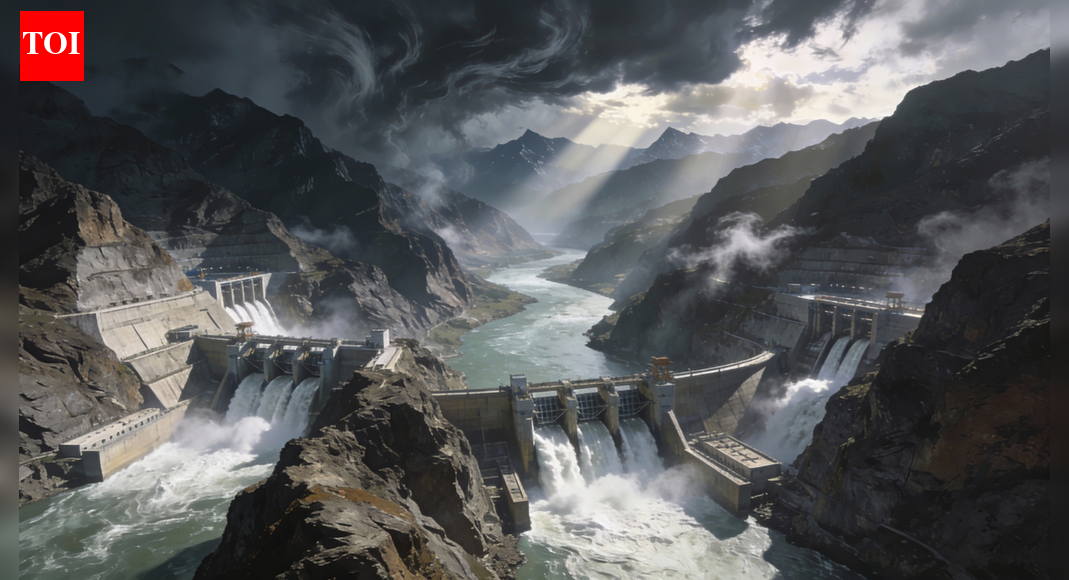
China is pressing ahead with a massive hydropower project on the Yarlung Tsangpo river in Tibet, a move that experts and Indian officials warn could seriously endanger water security, ecology and livelihoods downstream in India.As the river enters India as the Brahmaputra, any large-scale intervention upstream is seen as a direct risk to millions who depend on its natural flow. The proposed $168bn hydropower system will harness a steep 2,000 metre drop in altitude through an intricate network of dams, reservoirs, tunnels and underground power stations.

India Speeds Up Visas For Chinese Businesses Amid Thaw In Ties; Beijing Calls It ‘Positive Move’

For India, the concern is not just environmental but existential. Arunachal Pradesh chief minister Pema Khandu has warned that the project could be used as a “water bomb”, with China potentially controlling the timing and volume of water released into the Brahmaputra. Sudden discharges could trigger floods, while withholding water could dry out large stretches of the river during critical periods.Although much of the Brahmaputra’s water comes from monsoon rains and tributaries within India, experts say upstream manipulation can still disturb the river’s natural rhythm. Even limited changes could affect fertile floodplains, fisheries and groundwater recharge across Assam and Arunachal Pradesh, regions already vulnerable to climate stress.China has dismissed these concerns, as the Chinese foreign ministry has insisted that downstream countries will not be adversely affected. However, scepticism remains strong in India, partly shaped by China’s track record on other transboundary rivers.The technical scale of the project has also heightened fears. Brian Eyler, director of the Energy, Water and Sustainability Program at the Stimson Center in Washington, has described it as the most sophisticated hydropower system ever attempted, but also one of the riskiest.Any failure or miscalculation in such a seismically sensitive and ecologically fragile region could have cascading consequences downstream.Beijing’s management of the Mekong River has drawn repeated criticism from downstream nations, which accuse Chinese dam operators of worsening droughts by regulating water flow to suit power generation needs. While China denies these allegations, they have reinforced Indian fears about a similar approach on the Brahmaputra.The upstream developments have prompted India’s largest state-run hydropower company to push ahead with its own 11,200-megawatt project on the Brahmaputra, a move driven partly by fears of losing strategic and water security ground.Experts warn that competing mega projects on the same river system could worsen risks for both countries. Without cooperation and transparency, analysts caution, a dam-building race between India and China could undermine regional stability and place the future of the Brahmaputra and the millions who rely on it in jeopardy.


Source link

‘Nobody knows whats happening’: H-1B visa holder stranded in India expresses frustration; December appointment pushed to March | India News


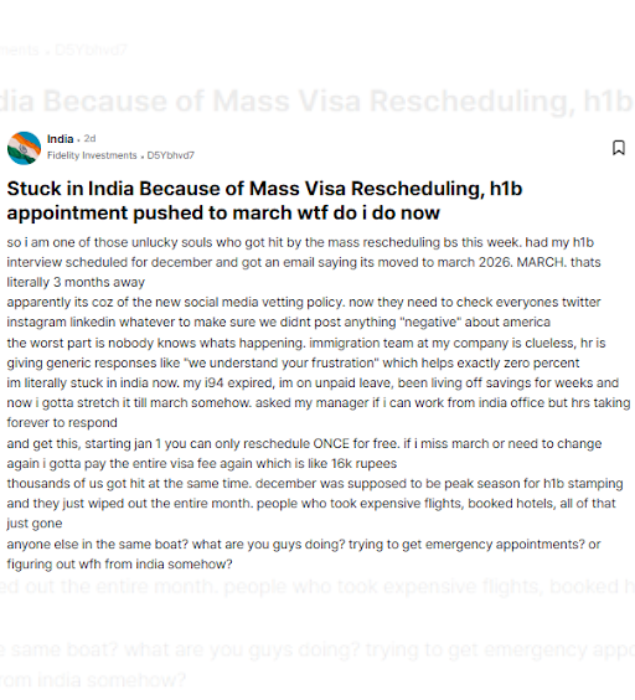
NEW DELHI: An H-1B visa holder expressed their frustration over a sudden visa rescheduling that moved their December interview to March 2026 and left them unable to return to the US.The user shared their experience in a post on the workplace forum Blind. He said the rescheduling appears linked to a new social media vetting policy. Officials are now reviewing applicants’ posts on platforms such as Twitter, Instagram, and LinkedIn to check for content seen as negative toward the US.

H-1B Showdown: Amazon, Google Microsoft Pour Billions Into India as 20 States Sue Trump

“So I am one of those unlucky souls who got hit by the mass rescheduling this week. I had my h1b interview scheduled for December and got an email saying its moved to March 2026. MARCH. That’s literally 3 months away,” the uservwrote.They said the lack of information from employers has made the situation worse. “The worst part is nobody knows what’s happening. The immigration team at my company is clueless, HR is giving generic responses like ‘we understand your frustration’ which helps exactly zero percent,” they added.

.

The visa holder said they are currently stuck in India after their I-94 expired and are on unpaid leave. They’ve been relying on personal savings while waiting for updates and said a request to work from his company’s India office had not been answered.The user also noted that starting January 1, visa applicants will be allowed only one free rescheduling. If they miss the March appointment or needs to change it again, a visa fee of about Rs 16,000 will have to be paid. “Thousands of us got hit at the same time. december was supposed to be peak season for h1b stamping and they just wiped out the entire month. people who took expensive flights, booked hotels, all of that just gone,” they wrote.They ended the post by asking if others were facing the same situation and whether they were trying to get emergency appointments or arranging to work from India.The disruptions follow a new US State Department rule announced on December 3 that requires social-media screening for all H-1B workers and their H-4 dependents starting December 15. The rule is slowing down interviews, especially at busy consulates in Hyderabad and Chennai, and has led to mass cancellations of appointments originally scheduled for mid-to-late December 2025. Many of these appointments have been pushed into next year, with some as far out as June 2026.The US Embassy in India has warned that arriving on an old appointment date could lead to denial of entry. Immigration lawyers are now advising H-1B holders in the US to avoid non-essential travel.Under the new directive, all H-1B and H-4 applicants must make their social media profiles public so consular officers can review their online activity. Experts say this represents one of the largest expansions of digital-footprint scrutiny in the visa process to date.


Source link

Rupee heals after historic lows! Currency opens 6 paise up against US dollar — What lies ahead?


Rupee heals after historic lows! Currency opens 6 paise up against US dollar — What lies ahead?

Rupee on Thursday opened 6 paise up to 90.32 against the US dollar in early trade, continuing its tentative recovery after hitting historic lows earlier this week. The uptick comes a day after the currency staged a sharp rebound on Wednesday, when it snapped a five-day losing streak to recover from the losses, rising 55 paise from its record low. Back on Tuesday, the rupee had breached the psychologically significant 91-per-dollar level for the first time, touching an all-time low of 91.14 before closing at 90.93. According to experts, the turnaround was driven by intervention from the Reserve Bank of India (RBI), which stepped in to sell dollars following a steep and sustained slide in the currency. Rupee then climbed to an intraday high of 89.75 on the interbank order matching system, from levels close to 91.00 before the central bank’s action. The RBI’s move reflected a strategy seen in October and November, when it intervened multiple times to counter persistent one-way depreciation in the rupee. During those periods, the central bank sold dollars heavily in both the spot and non-deliverable forward (NDF) markets, resulting in sharp intraday reversals. Unlike earlier interventions, which were carried out before market hours, Wednesday’s dollar sales began shortly after onshore trading commenced, a banker said. “The Indian rupee appreciated after a five-day losing streak, bolstered by suspected aggressive intervention from the central bank,” said Dilip Parmar, Research Analyst, HDFC Securities. Market experts said the rupee’s decline this year has been driven more by global pressures than domestic economic conditions. The currency has fallen almost 6% against the dollar in 2025, placing it among the worst-performing currencies globally. Analysts cited a widening trade deficit, 50% tariffs by the US and persistent investment outflows as key factors behind the weakness. “No currency has been hit harder by US tariffs than India’s rupee,” analysts said, adding that uncertainty over a US–India trade deal has kept investors cautious, Reuters reported.

Where is Rupee headed?

State Bank of India (SBI), in its latest report, has projected a strong recovery for rupee in the latter part of the next financial year, between October 2026 and March 2027. SBI said that its assessment is based on historical currency behaviour and internal analysis, which indicate that the ongoing weakening trend is not permanent. The report noted that the rupee has moved through different depreciation and appreciation cycles in the past and is likely to exit the current phase in the second half of the next fiscal year. “We believe that the Rupee is likely to bounce back strongly in the second half of next fiscal” The report traced earlier rupee movements to strong foreign portfolio investment flows, particularly before calendar year 2014. During that period, large and sustained inflows played a central role in determining the currency’s trajectory. However, SBI addded that the global environment has since changed. The report pointed out that such high levels of portfolio inflows are no longer available, with geopolitical uncertainty, including delays in trade agreements, now exerting greater influence on the rupee’s performance. According to the bank, the period of easy and abundant capital inflows has come to an end as global risks have intensified. Data cited in the report showed that net portfolio inflows averaged $162.8 billion between CY07 and CY14. In comparison, inflows fell to $87.7 billion between CY15 and CY25 (till date). The report further classified rupee’s long-term behaviour into three separate phases based on its interaction with the US dollar. The first phase: The period, spanning January 2008 to May 2014, was marked by a sharp weakening of rupee compared with the dollar. During this period, the dollar rose by an average of 1.7 %, while the rupee fell by an average of 16.3%, a trend the report attributed to weak domestic fundamentals. The second phase: om May 2014 to March 2021, movements in the rupee and the dollar were more closely aligned. Over this period, the rupee depreciated by an average of 7.9%, broadly in line with a 5.1% appreciation in the dollar, indicating a more balanced relationship between the two currencies. The third phase: September 2024 and continues at present, has seen both rupee and dollar weaken simultaneously. According to SBI, this marks a new regime driven by elevated geopolitical uncertainty in the current global environment. Based on this framework, the currency is still in a phase of depreciation but is expected to move out of it over time. As global uncertainties subside, the currency is projected to rebound strongly in the second half of the next financial year.


Source link

IPL 2026 Auction: Salary of Chennai Super Kings (CSK) players; check out how much Sanju Samson and Prashant Veer earn


IPL 2026 auction in Abu Dhabi on December 16 delivered blockbuster bids, with teams spending ₹ 215.45 crore on 77 players, including 29 overseas stars. Chennai Super Kings emerged aggressive, exhausting nearly their entire ₹ 125 crore purse to secure 25 players, leaving just ₹ 2.40 crore. Uncapped sensations Prashant Veer and Kartik Sharma shattered records as the joint-highest paid at ₹ 14.20 crore each, while traded-in captain Sanju Samson commanded ₹ 18 crore.​

Season of high hopes for Chennai Super Kings after banking on young guns

Chennai Super Kings enter IPL 2026 with renewed vigour after a dismal 2025 bottom-table finish, pivoting to youth-infused firepower under new influences like Samson. Retained skipper Ruturaj Gaikwad pairs with Samson at ₹ 18 crore each, forming a dynamic opening duo blending experience and aggression—Samson’s explosive 2025 domestic form (over 500 runs at 180+ strike rate) justifies the trade from Rajasthan Royals. CSK targeted raw talent, splashing ₹ 28.40 crore on Veer and Kartik, whose base prices were a mere ₹ 30 lakh, signalling franchise faith in unproven gems amid MS Dhoni’s ₹ 4 crore retention as mentor-wicketkeeper.​

Veer, the Uttar Pradesh all-rounder, impressed in recent Ranji games with 20 wickets and 300 runs, earning CSK’s mega-bid for his seam-bowling variety and lower-order hitting. Kartik mirrors this as a wicketkeeper-batter with sharp glovework and middle-overs acceleration from Madhya Pradesh domestic circuits. Shivam Dube anchors the finishers, Noor Ahmad bolsters spin attack, blending with veterans like Khaleel Ahmed for death-over control.​

Overseas picks like Dewald Brevis, Nathan Ellis, and Akeal Hosein add global depth, with eight foreign slots filled strategically. Anshul Kamboj and Gurjapneet Singh provide domestic pace options, while budget buys like Rahul Chahar and Mukesh Choudhary ensure spin-pace balance. This squad depth positions CSK for a playoff push, leveraging young energy on batting-friendly pitches.​

Also READ: IPL 2026 Auction: Full list of unsold players along with their base price

Salaries of CSK players in IPL 2026

CSK’s auction strategy prioritized top-end spending on elite batters and uncapped all-rounders, with Samson topping at ₹ 18 crore alongside Gaikwad. Veer’s ₹ 14.20 crore deal highlights CSK’s youth gamble, outbidding rivals for his all-phase utility. Below is the full breakdown:

S.No. Player Sold Price (₹)
1 Sanju Samson 18 crores
2 Ruturaj Gaikwad 18 crores
3 Kartik Sharma 14 crores 20 lakh
4 Prashant Veer 14 crores 20 lakh
5 Shivam Dube 12 crores
6 Noor Ahmad 10 crores
7 Rahul Chahar 5 crores 20 lakh
8 Khaleel Ahmed 4 crores 80 lakh
9 MS Dhoni 4 crores
10 Anshul Kamboj 3 crores 40 lakh
11 Gurjapneet Singh 2 crores 20 lakh
12 Dewald Brevis 2 crores 20 lakh
13 Nathan Ellis 2 crores
14 Akeal Hosein 2 crores
15 Matt Henry 2 crores
16 Matthew Short 1 crores 50 lakh
17 Jamie Overton 1 crores 50 lakh
18 Sarfaraz Khan 75 lakh
19 Zak Foulkes 75 lakh
20 Aman Khan 40 lakh
21 Shreyas Gopal 30 lakh
22 Ayush Mhatre 30 lakh
23 Ramakrishna Ghosh 30 lakh
24 Urvil Patel 30 lakh
25 Mukesh Choudhary 30 lakh

Also READ: IPL 2026 Auction: Complete list of sold players with their price


Source link

Stock market today: Nifty50 opens below 25,800; BSE Sensex down around 150 points


Stock market today: Nifty50 opens below 25,800; BSE Sensex down around 150 points

According to market experts, the overall sentiment continues to be weak. (AI image)

Stock market today: Indian equity benchmark indices, Nifty50 and BSE Sensex, opened in red in trade on Thursday. While Nifty50 was below 25,800, BSE Sensex was down around 150 points. At 9:16 AM, Nifty50 was trading at 25,784.80, down 34 points or 0.13%. BSE Sensex was at 84,412.18, down 147 points or 0.17%.According to market experts, the overall sentiment continues to be weak, with Nifty likely finding support near 25700-25650 in the near term before staging a recovery. Any upward movement could face strong resistance at 25950-26000 levels.Dr. VK Vijayakumar, Chief Investment Strategist, Geojit Investments Limited says, “The trend of weakening AI trade is gathering pace in the U.S. market. This trend is likely to continue in early 2026, and this will favour non-AI markets like India. An interesting takeaway from yesterday’s trade is that despite FII buying and net institutional buying the market drifted down. The reason might be the FIIs increasing their short positions in the market. This means, in the near-term, FIIs will resort to a sell on rally strategy.” US stock markets finished lower on Wednesday, with S&P 500 and Nasdaq reaching three-week lows as concerns over AI-related stocks impacted the technology sector.Asian equities started lower, following US market decline as global sentiment turned risk-averse with technology concerns affecting stocks while supporting short-term Treasuries and precious metals.Foreign portfolio investors disposed of shares valued at Rs 1,172 crore on Wednesday. Domestic institutional investors acquired shares worth Rs 769 crore.(Disclaimer: Recommendations and views on the stock market, other asset classes or personal finance management tips given by experts are their own. These opinions do not represent the views of The Times of India)


Source link