A strong 7.6-magnitude earthquake struck off northern Japan late Monday, triggering tsunami alerts and small waves along the Pacific coast, with authorities urging residents to move to higher ground as safety checks and damage assessments began.The Japanese meteorological agency (JMA) said the quake hit around 11:15pm local time, with its epicenter located about 80 km off the coast of Aomori and at a depth of roughly 50 km below sea level. The agency recorded tsunami waves between 40 and 50 cm – including a 50 cm wave at Kuji port in Iwate prefecture and similar levels across coastal communities.
Japan Mayhem: Casualties In Powerful 7.5 Japan Quake; Apocalyptic ‘MEGAQUAKE’ Looms, Alert Issued
Authorities had earlier warned the tremor could generate surges of up to 3 metres, advising residents in Hokkaido, Aomori and surrounding regions to stay alert. Chief cabinet secretary Minoru Kihara urged people to “immediately head to higher ground or take shelter” until the warning is lifted.Local media reported several injuries, including at a hotel in Hachinohe and a man in Tohoku who was hurt when his car fell into a hole. Prime Minister Sanae Takaichi said an emergency task force had been activated: “We are putting people’s lives first and doing everything we can.”Kihara added that nuclear power plants in the region were conducting safety checks, with no abnormalities detected so far.Authorities continue to monitor the situation, with further details on structural damage or additional casualties awaited.(With inpurts from agency)
India’s five-match T20I series against South Africa, scheduled from December 9 to 19, will not only showcase top on-field talent but also a star-studded broadcast team across multiple languages.
From cricket veterans like Shaun Pollack to fan-favourites Mayanti Langer and Jatin Sapru, viewers will have a packed commentary and presentation line-up throughout the series.
The English panel features Ravi Shastri, Shaun Pollock, Pommie Mbangwa, Sunil Gavaskar, Harsha Bhogle and Robin Uthappa, bringing a blend of global experience, sharp analysis and storytelling. Their focus will be on tactics, match-ups and big-picture trends through the India-South Africa rivalry.
Harsha Bhogle (PC: X.com)
In Hindi, Aakash Chopra, Irfan Pathan, Abhishek Nayar, Parthiv Patel, Varun Aaron and Jatin Sapru will cater to the massive north-Indian audience. Expect detailed breakdowns of bowling plans, batting approach and plenty of light-hearted banter tailored for Hindi-speaking fans.
Regional language experts: Tamil, Telugu and Kannada
Tamil coverage will be helmed by Abhinav Mukund, Anirudha Srikkanth, K Srikkanth, KV Sathyanarayanan, S Badrinath, Sriram S and Sadagopan Ramesh, providing deep local insight and tactical nuance for southern viewers.
The Telugu team includes Hanuma Vihari, R Sridhar, MSK Prasad, Ashish Reddy, T Suman, NC Kaushik and Kalyan Krishna, bringing international and domestic experience to analysis of batting technique, spin play and strategy.
In Kannada, Venkatesh Prasad, Sunil Joshi, J Suchith, Bharath Chipli, Srinivasa Murthy, Vijay Bharadwaj and Akhil Balachandra headline the panel, ensuring Karnataka fans get region-specific perspectives and anecdotes.
Bhojpuri viewers will be served by Saurabh Kumar, Gulam Husain, K, Ashutosh Aman, Sumit Mishra, Satyaprakash, Shivam Singh and Mani Meraj, aiming to bring high-energy, desi-style commentary to the hinterland audience.
The Haryanvi team features Manvinder Bisla, Anil Chaudhary, Vishwaas, Sumit Narwal and Sonu Sharma, adding local flavour and relatable humour for fans from the northern belt.
For Bengali coverage, Shreevats Goswami, Sanjeeb Mukherjea, Gautam Bhattacharya, Shiladitya Chatterjee and RR Kaushik Varun will analyse games with a strong focus on technique and tactical depth. Marathi viewers will have Kedar Jadhav, Aditya Tare and Chaitanya Sant bringing insights from domestic and IPL experience.
Fronting the broadcast will be a strong presenting group of Mayanti Langer, Tanay Tiwari, Anant Tyagi and Swedha Singh Bahal.
Mayanti Langer (PC: X.com)
They will host pre-match, mid-innings and post-match shows, conduct interviews, and drive discussions with analysts and former players, ensuring fans get comprehensive build-up and reaction around every T20I of the IND vs SA series.
India’s primary market is settling into a fresh groove, with annual IPO issuances of around $20 billion emerging as a structural trend rather than a one-off spike, according to JP Morgan, reported PTI.The investment bank said India has already seen $21 billion worth of IPOs in 2025, matching last year’s level, and is likely to close the year with over $23 billion in issuances as large offerings, including ICICI Prudential AMC’s planned Rs 10,000-crore issue, move ahead.“Yearly issuance of $20 billion is the new normal for India. It is the new watermark and will become an annualised run rate from here on,” JP Morgan’s head of equity capital markets Abhinav Bharti told reporters in Mumbai, PTI quoted.Bharti said nearly 20 per cent of IPO demand is currently coming from consumer technology and new-age businesses, a share that could rise above 30 per cent over the next five years. At least 20 startups with private market valuations running into hundreds of millions of dollars are preparing to tap the markets, he added.Among these, four to five companies are gearing up for IPOs of over $1 billion each, with the combined fundraise potentially reaching $8 billion. Two of these large issuances will be from technology-driven firms, according to Bharti.On valuations, he said the Indian market has largely resolved challenges faced in the past by new-age businesses, noting that some recent issues advised by the bank are trading at a premium. He also pointed to private equity investments made in earlier years as a key driver sustaining a strong pipeline of IPO exits.Bharti acknowledged that a significant share of recent IPO activity has been offer-for-sale by existing investors, reflecting sluggish private capital expenditure and muted fundraising through qualified institutional placements. He said overall equity capital market activity, including follow-on offerings and institutional placements, has been softer in 2025.Total equity issuances this year are expected to be around $65 billion, down from $72 billion in 2024, largely due to a decline in QIPs. QIP fundraising has dropped to $10 billion so far this year, compared with over $22 billion last year, with $3 billion coming from State Bank of India alone, he said.JP Morgan expects foreign portfolio flows to return to Indian markets next year, citing relatively improved valuations. The bank also sees India as a defensive investment destination for global investors amid the artificial intelligence-driven boom in developed markets.India’s overall market capitalisation is projected to double to about $10 trillion over the next five years, becoming the world’s third-largest after the US and China, JP Morgan’s co-head of investment banking Nitin Maheshwari said.On mergers and acquisitions, Maheshwari said outbound activity is gaining traction, supported by strong corporate balance sheets, low leverage and rising confidence among Indian companies, with Japan and the Middle East continuing to show the strongest inbound interest, particularly in financial services.
NEW DELHI: A portion of the Romeo Lane restaurant located at the Vagator area in Arpora was demolished on Tuesday. The property is owned by Luthra borthers (“We will demolish the encroachment on the beach side. The total area to be demolished is 198 square meters…”, Dhiraj Wagale, deputy director, Goa Tourism told news agency ANI.Earlier in the day, the first image of Gaurav Luthra emerged after he was spotted at Thailand’s Phuket airport. Interpol has issued blue corner notice against nightclub owners Saurabh and Gaurav Luthra, Goa Chief Minister’s Office said in a statement.The Interpol Blue Notice is issued to collect additional information about a person’s identity, location or activities in relation to a criminal investigation. The Red Notice which calls for detention of the fugitive can only be issued after a charge sheet is filed and a Non Bailable Warrant is issued against the wanted person.Chief minister Pramod Sawant had instructed the district administration to complete all formalities and carry out the demolition on Tuesday.Officials said the shack, known as ‘Romeo Lane’, was illegally built on government land.
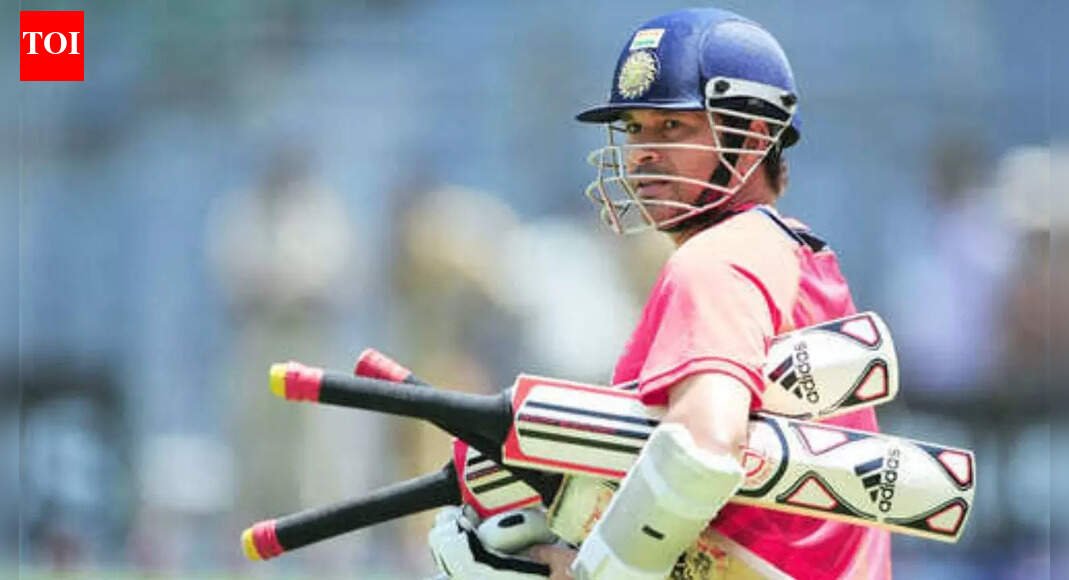
NEW DELHI: Cricket legend Sachin Tendulkar on Tuesday shared a touching memory from 1989-90 when former India player Gursharan Singh, despite having a broken hand, came out to bat at number 10 to help Tendulkar score 103 runs in an Irani Cup match between Rest of India and Delhi at Wankhede Stadium.Delhi won the match by 309 runs, with Rest of India being bowled out for 245 while chasing a target of 554. Besides Tendulkar’s century, WV Raman’s 41 was the only other notable performance.When Rest of India was struggling at 209 for nine wickets, Gursharan Singh walked out to bat with his broken hand. He helped add 36 runs for the final wicket partnership with Tendulkar.
Phil Oliver on the Desert Vipers & ILT20’s Rise, New Talent & the UAE’s Cricket Vision
“As they say, promises are meant to be kept. I feel I’ll go a step further and say that promises are meant to be kept, but also meant to be delivered… and that is what is our DNA,” Tendulkar recalled at an event.“I can recall an incident… long way back in 1989 when I was playing Irani Trophy. This was a trial match before one got selected for India. I was batting in the 90s, and my partner, Gursharan Singh, had an injury — a broken hand — and he wasn’t supposed to bat. But he was asked by the chairman of the selection committee, Raj Singh Dungarpur, to go out and bat and support his teammate. Gursharan came and helped me reach my hundred and I got selected to play for India after that. Afterward, Gursharan also became part of the Indian cricket team.”Gursharan Singh, who later played one Test match and one ODI for India, received heartfelt gratitude from Tendulkar for his gesture.“I thanked him profusely on the ground and in the dressing room because it was a big thing for him to come out with a broken hand,” Tendulkar said.“Just stepping out with a broken hand was significant. Whether I scored a hundred or not was secondary. His intent and attitude mattered most to me (and) that truly touched my heart,” he added.
India vs South Africa Live Score, 1st T20I: Barabati Stadium in Cuttack is set to witness a historic moment as it prepares to host its first ever red-soil pitch for an international match. Known traditionally for black-soil surfaces, the venue has taken a bold step ahead of the opening T20I between India and South Africa. A touch of red soil with a hint of grass and natural bounce promises conditions that should favour batters in a fast-paced Twenty20 contest. However, since the pitch is new, a degree of unpredictability remains and the toss decision will carry a level of risk.
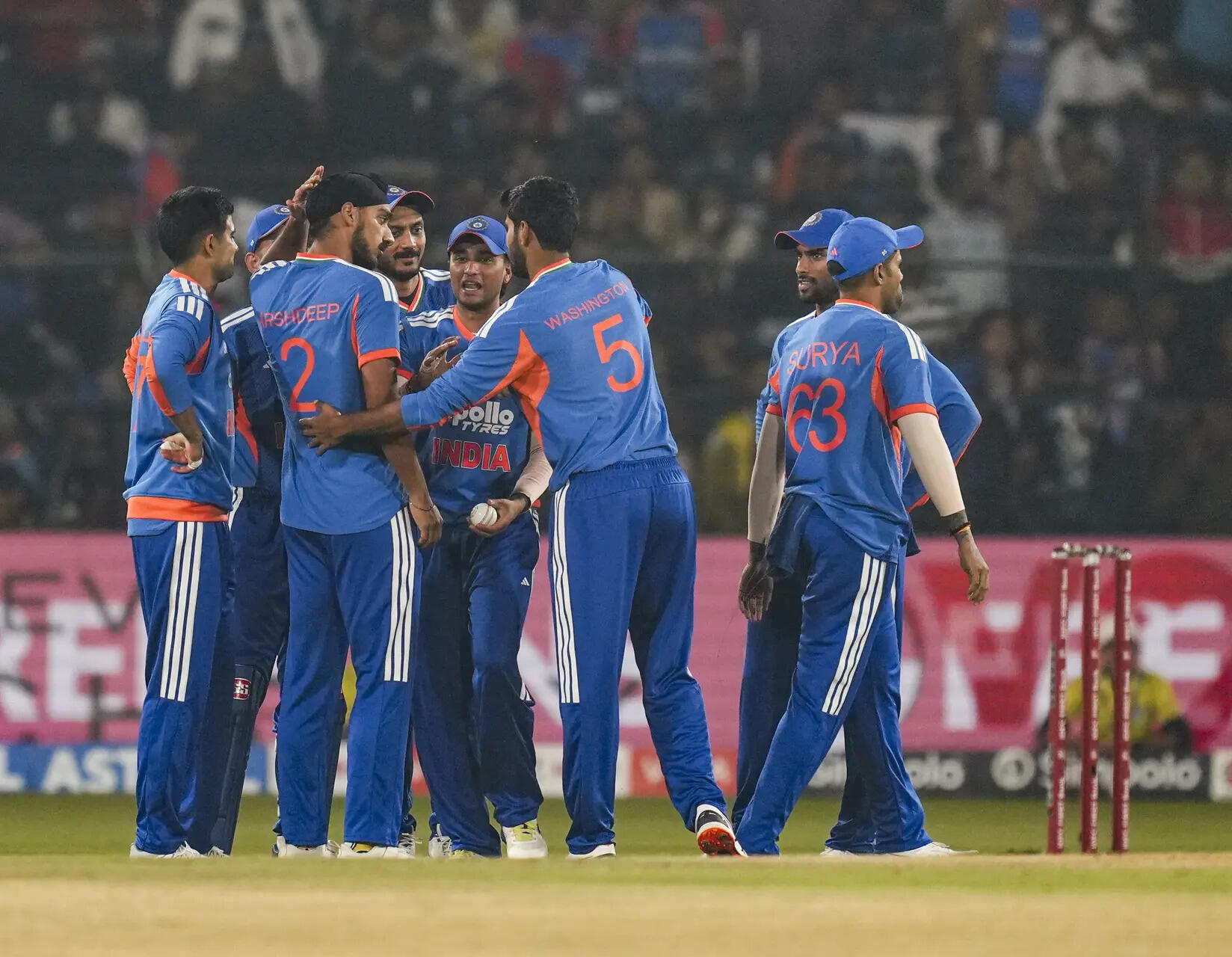
Suryakumar Yadav expressed surprise at the introduction of red soil in Cuttack but backed it to play well. The India captain believes the surface could be quick, which suits his side’s approach. For India, this match is another stop in their long-term preparation for the 2026 T20 World Cup. Surya insisted that planning has been ongoing since the 2024 title win and that the current emphasis is on maintaining a consistent combination rather than overthinking strategies.
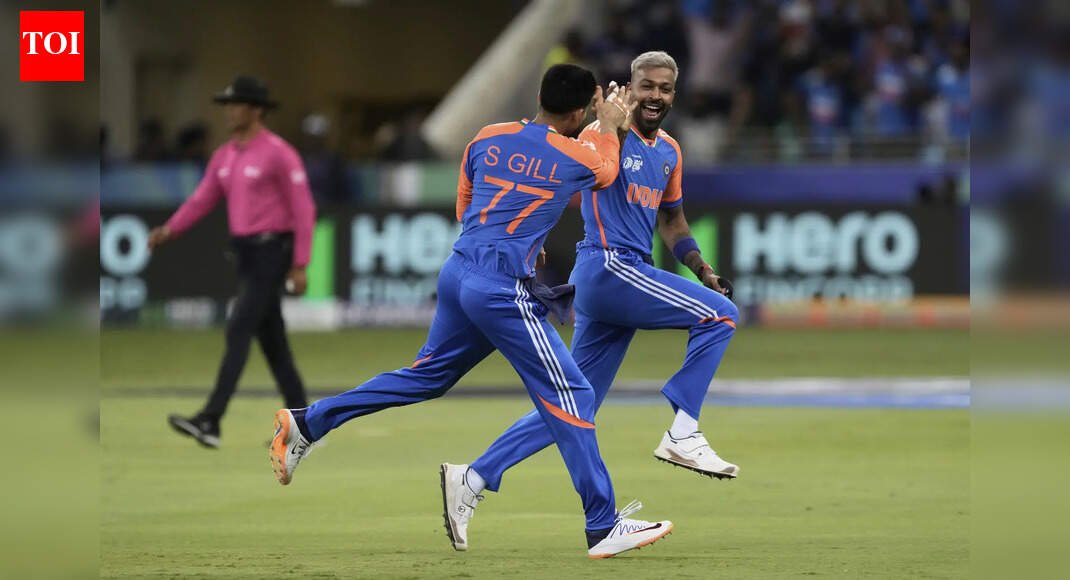
There are important points of focus for the Indian team. Shubman Gill returns from a neck injury and is set to open with the explosive Abhishek Sharma. Their partnership will be key at the top. The fitness of Hardik Pandya is also crucial, especially with India needing his all-round value. Although he missed Monday’s training after minor discomfort, he is expected to be available. With Shivam Dube likely to feature as the third seamer, Arshdeep Singh may miss out.
South Africa welcome Aiden Markram back as captain and strengthen their batting with the return of David Miller. Anrich Nortje is set for his first international appearance since the 2024 T20 World Cup final. His pace threat against Gill and Suryakumar could shape the contest. The visitors, aware that India have lost both previous T20Is against them at this venue, will feel confident.
The match promises a high-scoring affair, similar to conditions expected at the 2026 T20 World Cup. For both teams, it offers an opportunity to test combinations and build momentum ahead of a packed international calendar.
By Jake Chasan and Will ConteThere is an irony about India’s position in global pharmaceuticals: the country supplies forty percent of the United States’ generic medications, earning its reputation as the “pharmacy of the world.” Yet beneath this veneer of dominance lies an uncomfortable truth: seventy percent of the active pharmaceutical ingredients (APIs) and key starting materials (KSMs) that flow into Indian manufacturing facilities originate in China. India has been, in essence, a sophisticated assembler rather than a true manufacturer, a middleman handling the final steps of a value chain controlled from Beijing.That calculus is now shifting, driven by a combination of pandemic-induced awakening, geopolitical realism, and unusually assertive industrial policy. The Production Linked Incentive (PLI) schemes launched by the Department of Pharmaceuticals represent the most ambitious attempt in a generation to restructure India’s pharmaceutical supply chain from the ground up.
Israeli Firm IWI Backs ‘Make-In-India’, In Talks To Bring ARBEL Rifle System To India
The numbers are striking. Under the PLI scheme for bulk drugs alone, manufacturers have invested Rs 4,763 crore in greenfield projects over three and a half years, exceeding the six-year commitment of Rs 4,329 crore. Production capacity now exists for twenty-six key starting materials and drug intermediates that were previously almost entirely imported. The broader pharmaceutical PLI scheme has drawn cumulative investment of Rs 40,890 crore, vastly surpassing the Rs 17,275 crore originally targeted. Some 726 APIs and intermediates are now being manufactured domestically, including 191 produced in India for the first time. The import substitution is quantifiable: Rs 1,807 crore in avoided imports under the bulk drugs scheme through September 2025, with cumulative domestic sales reaching Rs 26,123 crore across both programs.What makes this moment genuinely different from previous self-reliance campaigns is the infrastructure accompanying the incentives. Three bulk drug parks are under development in Andhra Pradesh, Gujarat, and Himachal Pradesh, each supported by up to Rs 1,000 crore in central funding for common infrastructure, effluent treatment plants, solvent recovery systems, warehouses, and utilities. State governments are layering additional subsidies: capital assistance, GST reimbursements, concessional land. The aim is to compress the cost structure that has historically made domestic API production uncompetitive against Chinese facilities operating with fully amortized capital and generous state support.The strategic logic is sound. COVID-19 exposed pharmaceutical supply chains as fragile in ways that proved impossible to ignore. When China’s Hubei province locked down in early 2020, Indian drug manufacturers faced immediate shortages of critical intermediates. The lesson was brutally simple: dependence on a single source for essential inputs is not merely an economic risk but a public health vulnerability. American and European policymakers have drawn identical conclusions, with the U.S. BIOSECURE Act targeting Chinese contract manufacturers and the EU Critical Medicines Alliance funding supply chain resilience initiatives across member states.India’s opportunity lies precisely in this global reordering. Western pharmaceutical companies and governments are actively seeking alternatives to Chinese suppliers, not out of geopolitical spite, but from rational diversification. India possesses the technical workforce, the regulatory familiarity with developed markets, and now the industrial policy framework to capture this demand. The excipients market tells a parallel story: Asia-Pacific is projected to be the fastest-growing region through 2034, with Indian manufacturers increasingly positioned to serve both domestic formulation and export demand.Challenges remain substantial. Land acquisition, environmental clearances, and subsidy disbursement delays have slowed progress at several facilities. Not all targeted intermediates have achieved import substitution, particularly in fermentation-based products where Chinese scale advantages remain formidable. The global cost gap will not close through incentives alone; it requires sustained investment in process technology, workforce development, and the kind of operational discipline that distinguishes pharmaceutical manufacturing from commodity chemical production.But the trajectory is unmistakable. India’s pharmaceutical sector, valued at approximately $67 billion in 2025, is projected to reach $174 billion by 2033. More importantly, an increasing share of that value will be captured domestically rather than remitted to Chinese suppliers of basic inputs. The country that has long dispensed the world’s medicines is finally building the capacity to manufacture them, from the first molecular building blocks to the finished tablets and vials.This is not merely an economic story. It is a strategic repositioning with implications for global health security. In a world where supply chains have become instruments of statecraft, India’s pharmaceutical self-reliance is not nationalism dressed in industrial policy. It is prudence.
Gold’s sharp rally over the past few years is forcing investors to rethink asset allocation, especially at a time when equity markets are still struggling to revisit earlier peaks.In the last one month alone, gold prices have jumped nearly 7.5%, rising from Rs 1,19,289 per 10 grams on November 5, 2025, to Rs 1,28,221 on December 5, 2025, according to MCX data. Over longer periods, the performance has been even stronger, with gold delivering absolute returns of about 70% over one year, 105% over two years and nearly 139% over three years. A Rs 1 lakh investment made three years ago would now be worth roughly Rs 2.39 lakh, āccording to an ET report.A decade-long view underlines the scale of the rally. Gold prices on MCX have risen from about Rs 25,235 per 10 grams in December 2015 to around Rs 1,27,723 in December 2025, translating into an absolute return of over 400% and a compounded annual growth rate of about 17.6%.Buy on dips, not at peaksDespite record-high prices, bullion experts say gold’s long-term fundamentals remain intact, though timing and discipline matter.Aksha Kamboj, vice president of the India Bullion & Jewellers Association and executive chairperson at Aspect Global Ventures, says investors should avoid chasing rallies. “Risks of inflation, geopolitical tensions and ongoing central bank accumulation all favour gold. A better approach is to gradually accumulate on dips instead of chasing peaks and to hold gold as part of a diversified portfolio rather than expecting short-term windfall gains,” she said, ET quoted her as saying.Navneet Damani, head of research (commodities) at Motilal Oswal Financial Services Ltd, also advises a phased approach. He recommends gradual accumulation while increasing allocations if prices correct, following a buy-on-dips strategy.Samit Guha, managing director and CEO of MMTC-PAMP, says gold’s historical performance supports its role in long-term wealth creation. “Gold is a safe-haven asset, and long-term data shows an upward trend in prices, making it a strong portfolio hedge,” he said.What could push prices furtherExperts cite multiple factors that could continue to influence gold prices, including US Federal Reserve interest rate policy, movements in real yields, the strength of the US dollar, central bank buying and geopolitical uncertainty.Guha said that while rising real yields can create short-term pressure, steady central bank demand and global uncertainty continue to underpin gold’s appeal as a store of value.How much gold should be in a portfolioOn allocation, analysts suggest moderation. Damani says conservative investors should allocate about 8–12% of their portfolio to gold, given current geopolitical and macroeconomic risks. More aggressive investors, who rely heavily on equities, may limit gold exposure to 5–8%, mainly to reduce downside risk during periods of volatility.Choosing the right form of goldWhen it comes to selecting an investment route, experts stress the importance of matching the product to the objective.Guha notes that physical gold in the form of 24K coins and bars with 999.9 purity suits traditional or ceremonial needs, while jewellery entails making charges of 10–12%. For investors focused on efficiency and liquidity, gold ETFs and Sovereign Gold Bonds are more suitable due to lower costs, ease of management and tax benefits. He advises investors to seek professional guidance before choosing the preferred option.SIP or lump sum?On investment style, most experts favour a systematic approach. Damani says SIP-style investing removes the pressure of timing the market. Lump sum investments, he adds, are suitable only for those with a long-term horizon and strong conviction about valuations.Guha also prefers periodic buying combined with opportunistic purchases on dips, saying this helps average costs and reduce timing risk. Lump sum investments, he said, work best for investors confident about price levels or those deploying surplus funds.Liquidity and time horizon matterLiquidity needs and investment horizon should also guide choices. Investors seeking flexibility and quick exits may prefer gold ETFs or gold mutual funds, which allow easy entry and exit without long lock-ins, Guha said.Overall, experts broadly agree that gold remains relevant as a long-term portfolio diversifier, but investors should focus on disciplined accumulation, avoid chasing highs, and align gold exposure with risk appetite and liquidity needs.(Disclaimer: Recommendations and views on the stock market, other asset classes or personal finance management tips given by experts are their own. These opinions do not represent the views of The Times of India)
Helen Keller remains one of the most inspiring figures of the 20th century – a symbol of courage, determination, and the extraordinary human capacity to overcome adversity. Born in 1880 in Alabama, she lost both her sight and hearing at just nineteen months old after a severe illness. For several early years, she lived in isolation, unable to communicate with the world around her. That changed when Anne Sullivan, her relentless and compassionate teacher, entered her life and taught her language, connection, and expression. Through perseverance and guidance, Helen learned to read, write, speak, and eventually pursue higher education, becoming the first deafblind person in the world to earn a college degree.Throughout her life, Keller used her voice – written and spoken; to advocate for social justice, disability rights, women’s rights, and equal access to education. She became an author, lecturer, and global humanitarian who inspired millions with her resilience and clarity of thought. Her work extended far beyond her personal story; she fought for causes larger than herself and became a reminder that limitations do not define a person’s destiny. Her legacy continues to influence generations around the world.Today’s quote of the day, “When one door of happiness closes, another opens, but often we look so long at the closed door that we do not see the one that has been opened for us,” is widely attributed to Helen Keller.
Meaning of this quote
The meaning of this quote is deeply rooted in human behaviour. When disappointments strike or life changes unexpectedly, people often cling to what once was – a missed opportunity, or a dream that didn’t unfold as expected. This “closed door” becomes the focus of our attention, leading us to overlook the new paths quietly forming around us. Keller reminds us that happiness is not static; it shifts, transforms, and often appears in forms we don’t anticipate. To see these new openings, we must be willing to lift our eyes from what has ended.This message is also a lesson in resilience. Instead of viewing a setback as a permanent loss, Keller encourages us to interpret it as a transition. Every closed door may feel painful at first, but it often nudges us toward growth – toward something wiser, more fulfilling, or more aligned with who we are becoming. The key lies in our perspective: focusing on possibilities rather than dwelling on what we can no longer change. Her words remind us that hope requires awareness, courage, and the willingness to trust that life has more in store for us.The quote by Helen Keller is a universal guide to how to go about life with uncertainties. It shows us that endings are not failures but it is a call to new beginnings. When we are taught to redirect our focus on that which has been shut to that which is being opened, we will be able to find the means of adapting to changes and allowing new ways of happiness to enter into our lives. Her vision makes us go ahead with faith, thankfulness, and receptiveness – believing that each door that shuts down opens the way to another to open, bringing fresh opportunities, growth, and deeper joy into our journey. And when we learn to welcome these new openings with an open heart, we discover that life is always guiding us toward something better, something brighter – if only we have the courage to look up and move forward.Also Read: Quote of the day by Eleanor Roosevelt: “Do not stop thinking of life as an adventure. You have no security unless…”
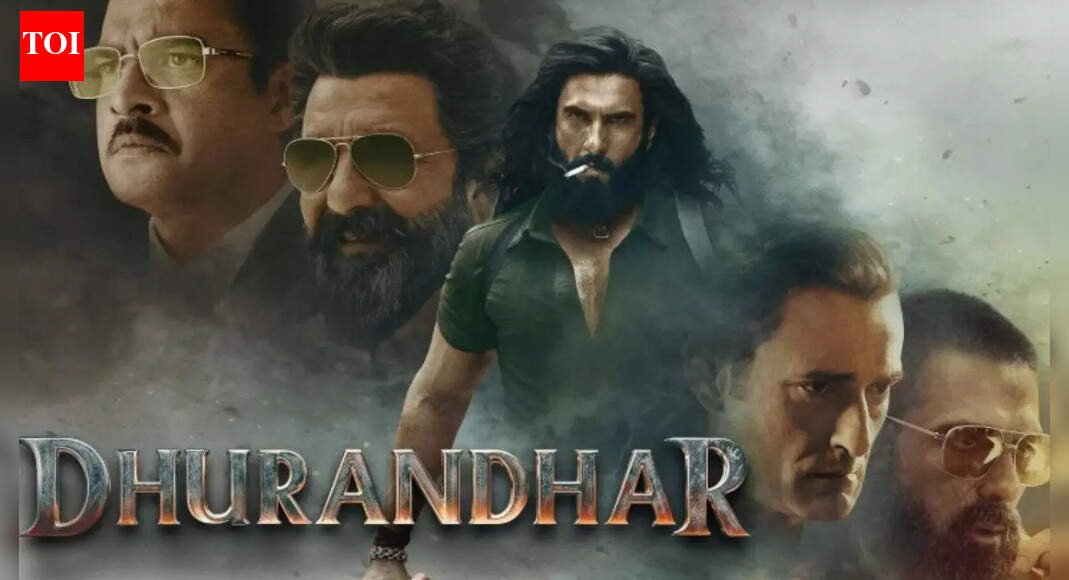
‘Dhurandhar’ which released in cinemas on December 5 has turned out to be the biggest opening film for Ranveer Singh, and beaten his previous releases like ‘Padmaavat’ and ‘Simmba’. The film directed by Aditya Dhar, also stars Akshaye Khanna, Sanjay Dutt, R Madhavan, Arjun Rampal and marks Sara Arjun’s debut. ‘Dhurandhar’ managed to create a lot of buzz since the film released and thus, there was a huge growth in the Sunday numbers as compared to Friday. On Monday also, the film managed to hold well and remained in the Rs 20 crore range which is quite good. Though, the Monday drop is natural and happens for all movies. Dhurandhar Movie ReviewIt had an opening of Rs 28 crore on day 1. On Saturday, it saw a growth of around 14 per cent and made Rs 32 crore. Meanwhile on Sunday, the jump was phenomenal as the film made around Rs 43 crore which was 34 percent more than the Saturday numbers. On Monday, the collection is Rs 23 crore . This was a drop of more than 50 percent when compared to the Sunday numbers but if the film manages to stay in the same range all through the week, it would be great. On tuesday, it has started on a decent note and made Rs 3.44 crore till afternoon. The total collection of the film in India so far, according to Sacnilk is Rs 129.69 crore. The film is expected to continue in the double digit range atleast all through the week, and going by the buzz it created on social media with now the songs also catching up and going viral, it should be able to live up to the expectations.