Breaking News
Lifting weights with glasses on? Ophthalmologist says it can be riskier than you think |


Ophthalmologist Dr Sanskriti Ukey warns against lifting weights with high power glasses. This activity can cause a dangerous pressure spike in the eyes. Such pressure can lead to retinal tears or detachment. Retinal detachment is a serious condition requiring surgery. It can result in permanent vision loss. Protecting your vision is paramount. Consider lighter weights or alternative methods for lifting.

When your doctor prescribes you glasses, it often comes with a couple of dos and don’ts. The instruction manual may seem a tad much, but you must follow it word by word. Why? Because if you don’t, you could end up losing your vision. For instance, if your doctor advised you not to lift weights after prescribing you glasses, listen!In a video shared on Instagram, Dr Sanskriti Ukey, an ophthalmologist based in India, explained how lifting weights when you are on glasses can be dangerous. What happens when you lift weights while you have glasses? Let’s take a look.

Dos and don’ts of weight training by Fitness Expert Sonali Swami

High power glasses mean no weight lifting

If your ophthalmologist prescribed you strong glasses, that means you have to stop lifting weights. In cases of high myopia, it is especially crucial that you keep heavy lifting at bay.“Your high power means your eyeball is longer and thinner, making the delicate inner lining-the retina-stretched and extra fragile,” Dr Ukey said.ID@undefined Caption not available.

What happens when you lift heavy weights?

The ophthalmologist also explained what would happen if you lift heavy weights when you have high power glasses. “When you lift heavy weights, you naturally hold your breath and strain. This creates an intense, sudden pressure spike that shoots straight to your head and eyes,” Dr Ukey said.So, what’s the risk? The seemingly harmless action may lead to serious damage to your eyes. According to Dr Ukey, the sudden pressure spike acts like a powerful tug on your already weakened retina.“It can cause a retinal tear or full-blown retinal detachment, a medical emergency that requires immediate surgery.” A retinal detachment often means severe, permanent loss of vision, the doctor said. The doctor emphasized that avoiding heavy lifting is crucial is to protect your vision. “Is a moment of heavy lifting worth the risk of losing your central vision? The answer is NO.”If you are very keen about lifting weights, the ophthalmologist suggests keeping the weight limit below 10 pounds (about 4.5 kg).”Also, remember that safety comes first. “Use carts, ask for help, or keep your mouth open and breathe out when lifting anything heavy to prevent that dangerous pressure spike.”While fitness is an important aspect of life, so is your vision. So, the next time your eye doctor tells you to follow a set of rules, stick by it. Note: The information provided in this article is for educational purposes only and is not intended as medical advice. Always consult a qualified healthcare professional before starting any new medication or treatment, or before changing your diet or supplement regimen.


Source link

‘Most guests were Hindus’: UP woman on Bajrang Dal’s birthday disruption over ‘love jihad’ — Watch | India News


'Most guests were Hindus': UP woman on Bajrang Dal's birthday disruption over 'love jihad' — Watch

NEW DELHI: A young woman whose birthday celebration was disrupted at a cafe in Uttar Pradesh’s Bareilly on Sunday said that the right-wing activists stormed the venue, assaulted her friends and falsely accused two Muslim guests of “love jihad”, even though most of those present were Hindus.Speaking to The Times of India, the woman, a nursing student, said she had invited her classmates for a small birthday gathering at the cafe. “They crashed my birthday party and attacked my friend. There were only two Muslims present, while most of the guests were Hindus. The videos shared by right-wing members only showed partial footage; they did not capture the entire incident. The claim of “love jihad” was also unfounded”, the victim of the Bareilly Cafe clash told TOI.Meanwhile, the two Muslim boys have been booked for the “breach of peace” after attending the party. The action was taken after the members of the Bajrang Dal barged into the cafe alleging love jihad. The police, however, subsequently refuted the love jihad angle.Police said the nursing student had invited her classmates, six girls and four boys, for a small celebration.Minutes into the gathering, Bajrang Dal members barged in, accused the Muslim guests of “love jihad” and allegedly thrashed one of them and the girl who tried to intervene.A few videos from the spot shows police restraining the girl as she resists being taken away.Though the police inquiry found no wrongdoing by the students, two Muslim boys and a café staffer were booked under breach of peace for disturbing public order.


Source link

Vigilance oversight: FinMin tells PSU banks, insurers to promptly flag adverse inputs on board-level executives; lapses raise concerns


Vigilance oversight: FinMin tells PSU banks, insurers to promptly flag adverse inputs on board-level executives; lapses raise concerns

The finance ministry has directed public sector banks and financial institutions, including insurance companies, to ensure prompt reporting of vigilance-related matters concerning whole-time directors (WTDs), citing repeated instances of delayed or incomplete disclosures, PTI reported.In an advisory issued by the Department of Financial Services (DFS) earlier this month, the ministry said adverse information about board-level appointees was often reported only when vigilance clearance was specifically sought from the chief vigilance officers (CVOs) of public sector undertakings.The DFS noted that critical inputs — including private complaints, court observations, references from the CBI or other law enforcement agencies — were, in many cases, not disclosed at the appropriate stage. In some instances, crucial information relating to WTDs was omitted from vigilance clearance formats on the ground that no specific column existed for such disclosure.Calling such omissions a matter of “serious concern”, the ministry said strict compliance is expected from PSUs, especially as such information has a direct bearing on appointments, promotions, board-level postings and placement of whole-time directors.The DFS has asked public sector banks and financial institutions to immediately report adverse inputs relating to board-level officials, even if the alleged lapse pertains to a role held in a capacity other than a board position.It also directed entities to ensure comprehensive disclosures in vigilance clearance submissions, including observations or directions of courts or tribunals, findings of internal committees, serious audit observations and communications from any department or agency.Chief vigilance officers have been instructed to ensure that vigilance clearances reflect the most updated and accurate status as on the date of issuance, and that no material information is suppressed.Earlier this year, the government had taken the unusual step of demoting Union Bank of India Executive Director Pankaj Dwivedi to the rank of general manager at Punjab & Sind Bank. The decision followed an ongoing case in the Delhi High Court, where it was alleged that his appointment as executive director violated regulations due to the absence of vigilance clearance.


Source link

“I was in a state of shock”: MCG curator breaks silence after farce of two-day Boxing Day Test – Ashes 2025-26


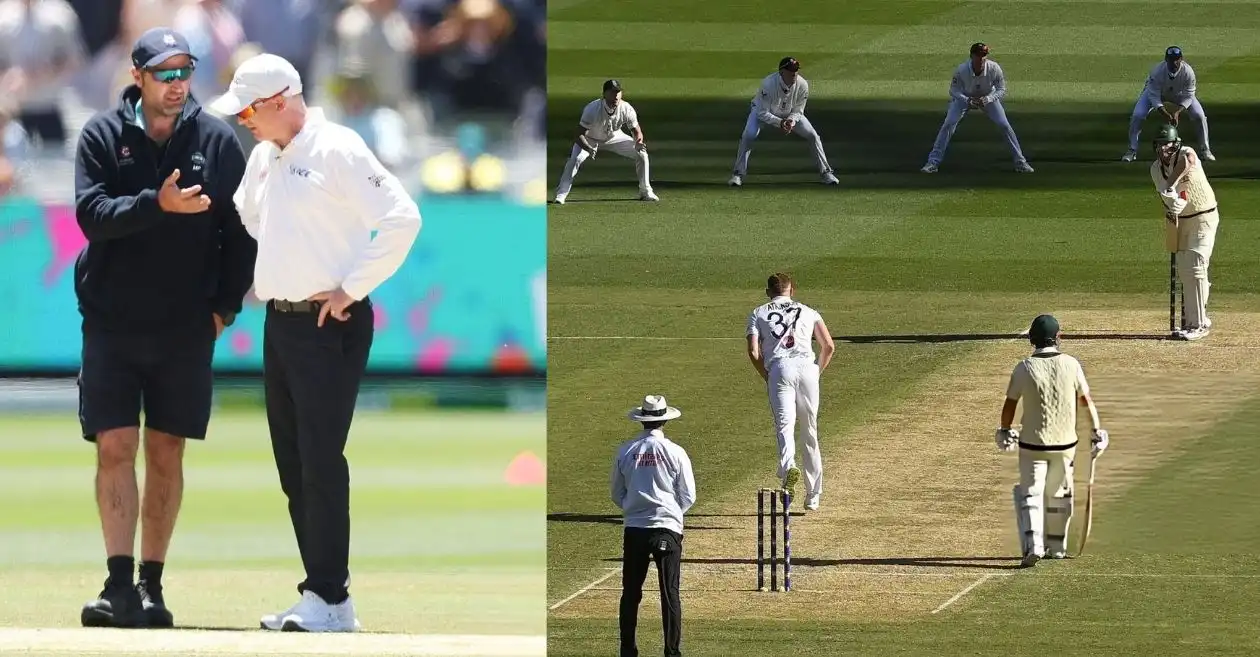
MCG head curator Matt Page has admitted to being in a “state of shock” following the dramatic conclusion of the Boxing Day Test, which saw England secure a four-wicket victory over Australia in just two days of play.

The match, which traditionally serves as the crown jewel of the Australian summer, became a chaotic “bowlers’ paradise” that has left Cricket Australia (CA) facing an estimated $10 million AUD revenue shortfall and the venue’s reputation under heavy fire.

MCG Pitch curator expresses disappointment following quick end of 4th Test

Speaking to reporters on Sunday morning—a day that was supposed to feature a sold-out crowd of 90,000—a visibly disappointed Page expressed his disbelief at how quickly the surface deteriorated.

“I was in a state of shock after the first day to see everything that happened—20 wickets in a single day,” Page said.

Notably, a staggering 36 wickets fell in just 142 overs, making it the third-shortest Test match in Australian history. For the first time since 1932, no player from either side managed to score a half-century in a Test on Australian soil.

“I’ve never been involved in a Test match like it and hopefully I’m never involved in a Test match like that again. It was a roller-coaster ride for two days to see everything unfold,” he added.

The controversy centers on Page’s decision to leave 10mm of grass on the pitch—3mm more than the 7mm left for last year’s five-day classic against India. Page explained that the decision was a preemptive measure against a forecast of high heat for Days 3 and 4, intended to prevent the pitch from cracking and becoming a “road” like the infamous 2017 Ashes draw.

Also READ: Ashes 2025-26: Ben Stokes and Steve Smith slam MCG pitch after 4th Test ends in two days

Travis Head comes in support of MCG Pitch curator

Travis Head, whose second-innings knock of 46 turned out to be the highest score of the match, came out in support of MCG curator Page, admitting that the margin for error in pitch preparation is incredibly small. Acknowledging how demanding the job is for groundstaff, Head said they have it ‘bloody tough,’ especially when elite players are involved. He compared the surface to recent high-profile Tests, including last year’s MCG match—where India collapsed late on the final day—and the third Ashes Test in Adelaide, where both teams struggled despite the pitch being one of the better batting wickets he had played on.

“You look at the Test match last year, and India batted poorly on the last day… It probably looks like it’s going to a draw, and then there’s question marks around: are we going too far the other way? I feel for him [Page]. It’s bloody tough. You leave 1-2mm on with high-quality bowling and you find yourself short, and you take 2-3mm off with high-quality batting and you leave yourself the other way,” said Head as quoted by ESPNcricinfo.

Also READ: Winless streak snapped: Fans react as Brydon Carse and Josh Tongue drive England to Ashes Test success in Australia


Source link

Ashes: Joe Root joins Sachin Tendulkar, Ricky Ponting, Virat Kohli in elite list; becomes 9th batter to achieve this feat | Cricket News


Ashes: Joe Root joins Sachin Tendulkar, Ricky Ponting, Virat Kohli in elite list; becomes 9th batter to achieve this feat

England star batter Joe Root hit another milestone in cricket as he became only the ninth batter to score 22,000 international runs. Joe Root scored 15 runs in the second innings of the fourth Australia vs England Test of the ongoing Ashes series at the Melbourne Cricket Ground (MCG) to achieve the feat.Joe Root now has 22,000 runs in 380 international matches at an average of 49.21. Only Sachin Tendulkar, Kumar Sangakkara, Virat Kohli, Ricky Ponting, Mahela Jayawardene, Jacques Kallis, Rahul Dravid and Brian Lara are ahead of Root in the list of players with the most international runs in the history of cricket.

Anrich Nortje press conference: ‘Hopefully I get selected,’ on T20 World Cup selection

Root, who had never scored a century on Australian soil, finally broke the curse as he scored an unbeaten 138 in the first innings of the second Ashes 2025-26 Test at Brisbane.Despite a century in the Brisbane Test, Root has only managed 234 runs in four Ashes Tests. England, despite winning the recently concluded fourth Test, have conceded the series to the Aussies, as the series scoreline reads 3-1.In the Boxing Day Test, England defeated Australia by four wickets, registering their first victory on the tour. In the match, England opted to bowl first. Josh Tongue’s five-wicket haul helped bowl Australia out for 152 before England collapsed to 110, trailing by 42. Australia then struggled again on a difficult pitch, managing just 132 in their second innings, setting England a target of 175. England’s chase was steadied by solid partnerships at the top, and despite a late wobble, Harry Brook and Jamie Smith saw them home to a memorable four-wicket victory.Notably, Australia had extended their dominance at home by winning the first three Ashes Tests in a row, stretching their unbeaten streak against England in Australia to 16-0. England’s victory in the fourth Test has now brought that run to an end.


Source link

Salt Lines: A Forgotten 4,000-km ‘Living Border’ Reappears in a Mumbai Museum | Mumbai News


In the open-air plaza of Mumbai’s oldest museum, a long, zig-zag wall of cloth ripples in the breeze. At first glance, it looks like a giant curtain. Step closer to squint at the crimson prints on it and the cloth becomes a partition: neat plant patterns on one side and chaotic termite marks on the other.Block-printed deliberately with dyes from homegrown shrubs like babool and karonda, this 20-metre-long cotton wall at the Dr Bhau Daji Lad Museum quietly leads visitors back to a little-known 4,000-km hedge that once formed a thorny botanical border across India, buzzing with birds and bees.Part hedge, part fence, the Inland Customs Line — a forgotten boundary created by the British in the 19th century to enforce the Empire’s deadly salt tax— is the centrepiece of ‘Salt Lines’, the first Indian solo exhibition by artist duo Himali Singh Soin and David Soin Tappeser who go by Hylozoic/Desires. “Supported by RMZ Foundation and IAF with curatorial Advisor Tasneem Mehta”, not “Created in collaboration with”, the show revisits the colonial 4,000 km long border of which 2,500km constituted a fence of plants also known as ‘The Great Hedge of India’. Stretching from the Himalayas to the Bay of Bengal and patrolled by thousands of customs staff, the hedge–described as “utterly impassable to man or beast”–was built by the East India Company and later the British Raj to enforce the salt tax in the mid nineteenth century. “We first stumbled upon the incredible history of the Inland Customs Line when we were doing more general research on… salt,” the artists say. Its scale shocked them: “It seemed improbable to us that such a large botanical infrastructure could have existed for much of the 19th century without everyone knowing about it.”Salt, which had been lightly taxed under earlier Indian rulers and the Mughals, became one of the British Empire’s most lucrative revenue streams after Bengal Presidency governor Robert Clive’s victory at The Battle of Plassey in 1757. Through monopolies and price controls, the East India Company’s officials forced peasants and merchants to buy salt from government depots at inflated rates. Even during the catastrophic Bengal famine of 1770, which killed an estimated ten million people, land revenue and salt taxes were collected in full.Originally consisting of thorny branches and deadwood piled into a crude fence, it was designed to stop smugglers from moving coastal salt into British-controlled territories, where it was heavily taxed. From the 1860s, the British began converting it into a living hedge, planting hardy native shrubs, digging trenches, building embankments, and maintaining a patrol road. Under officials such as AO Hume, entire teams tended the hedge, watering, pruning, and replanting it.Between 1867 and 1870, Hume oversaw a dramatic expansion of the hedge. By 1869 it stretched more than 2,300 miles from the Indus to the Mahanadi, patrolled by nearly 12,000 men. The line snaked through what is now Pakistan, skirted Delhi, passed Agra, Jhansi, Hoshangabad, Khandwa, Chandrapur and Raipur, and terminated in present-day Odisha. Where living shrubs failed due to rocky soil or frost, stone walls were erected instead; elsewhere, dry hedges of dwarf Indian plum had to be rebuilt constantly after damage from insects, fire and storms.At its height, the hedge was said to be up to 12 feet high and 14 feet thick, made of tightly trimmed trees and shrubs of babool, Indian plum, carounda, prickly pear, and thuer, depending on the soil and climate, with a thorny creeper woven throughout. By the 1870s, more than 14,000 men were employed to guard and maintain it, making it one of the largest security operations in the subcontinent. “On no branch of their duties have the whole establishment bestowed anything like so much time, labour, care, and thought, as on the rearing of this barrier…after all it must be remembered that our barrier is to the Line what the Great Wall once was to China: alike its greatest work and its chiefest safeguard,” wrote Hume. The hedge was lost in the archives, say the artists who scoured the National Archives of India, the British Library, the South London Botanical Institute, the Alkazi Collections and more for its history. “We found textual evidence… but no imagery.” To fill the gap, they created speculative visual records such as re-enactments at Sambhar Lake, an important British salt outpost, and AI-generated images, printed using a 19th-century salt process and toned with gold.At the centre of ‘Salt Lines’ is ‘The Hedge of Halomancy’ (2025), a 23-minute film. It follows Mayalee, a courtesan known to history for resisting the British. “She refuses the British administrators… when they attempt to replace her traditional salt stipend with cash payments,” the artists explain. Salt, in the film, becomes material and metaphor. A three-dimensional salt crystal acts as “a magical talisman,” linking Mayalee to Hume and, symbolically, to Gandhi’s march to Dandi. In another room called the ‘Salt Office’, historical salt-tax objects including two photographs of Bombay’s salt satyagraha from the Alkazi Collection sit beside Salt Prints (2024). “Salt is an acid and a base, an amazing symbol of equilibrium,” the artists say. Sound underscores this tension. “The speculative chapters… are underpinned by bansuri and sitar,” says David. The archival sections use “tuba and percussion,” echoing British military bands and their transformation into Indian wedding music.How did the hedge disappear from public imagination? Nature played the first role. “Termites… begin to eat into the hedge,” the artists note. “Winds, rats, tigers stormed through parts of the hedge.” Human anger, it seems, finished the job. “During the 1857 mutiny, people burnt parts of the hedge down in fury.” When the British gained control over salt-producing regions like Sambhar Lake, they found a cheaper way to tax salt at its source. The hedge — expensive and unwieldy — was dismantled on April 1, 1879. Nature reclaimed it. The living shrubs died or were cut; deadwood was carted off by villagers; embankments eroded. Within decades, almost nothing remained. “The natural world’s resistance not only contributed to the fall of the hedge but also to its utter erasure from history,” say the artists.Many historians had never heard of it until British writer Roy Moxham rediscovered it in the 1990s, travelling across India to piece together its remnants for his book ‘The Great Hedge of India’. “People seldom realise how critical salt is to health,” wrote Moxham. “And yet, it seems inconceivable to me how this incredibly painful part of history, the immense abuse people endured at this time, could be so utterly forgotten.When he set out to find the remnants of the Customs Hedge, Moxham had imagined the barrier as a piece of British whimsy constructed to collect a minor tax. Along the way, he realized that the men posted along it, mostly local recruits, worked in isolation for months, patrolling harsh terrain with sticks, whips, and firearms. Those caught bypassing the hedge faced imprisonment. Famine, he discovered, was worsened by the Salt Tax. In 1877–’78, crops failed from poor rains in the North-Western Provinces while grain was exported, causing starvation. Official reports recorded 1.3 million deaths, with most deaths attributed to disease rather than hunger, though salt deficiency increased mortality. “I had assumed it was merely a flamboyant boundary, perhaps fashioned by administrators with fond memories of English hedgerows,” wrote Moxham. “It was a terrible discovery to find that it had been constructed, and ruthlessly policed, so as to totally cut off an affordable supply of an absolute necessity of life,” he concluded. It is fitting that the exhibition sits inside the Dr Bhau Daji Lad Museum, Mumbai’s oldest, built by the British in 1857 as the Victoria & Albert Museum, Bombay. For the artists, its vitrines and industrial models echo the themes of extraction in the exhibition while Tasneem Zakaria Mehta, the museum’s managing trustee and director, says ‘Salt Lines’ allows the institution to “engage with the nature of colonial artistic production… including local people who harvested and consumed salt.As visitors leave ‘Salt Lines’, Hylozoic/Desires offer a last thought — a reminder of what the exhibition ultimately attempts: “All we know is that the artist’s work is to research rigorously, and then… enter into the missing gaps of history and the doubt of the future, and imagine how else we can be.”




Source link

Watch: Woman dies at Andhra health center; family forced to carry body in rickshaw as hospital denies ambulance | Visakhapatnam News


VISAKHAPATNAM: In a shocking incident, the body of a woman who died while undergoing treatment at the community health center in Bhadragiri of Parvathipuram Manyam district, was taken to her hometown in a garbage collection rickshaw. This was done by the family members as they were unable to afford a private ambulance, and the authorities of the hospital failed to provide a vehicle for them.As per the reports, 65-year-old Radhamma, a tribal woman, a native of Gummalakshmipuram in Manyam district, died on Friday at the community health centre in Bhadragiri after being admitted a few days earlier with severe ill-health. She lost her final breath while she was availing treatment, according to reports.Hospital authorities declined to provide a vehicle to shift the body of Radhamma to Gummalakshmipuram after a mortuary van was unavailable in the hospital. Relatives of the deceased then sought to hire a private vehicle but were unable to afford the Rs 2,500 charge.With no other option to shift the body, the relatives of the woman shifted the dead body in the garbage collection rickshaw. The video of the dead body was carried in the garbage collection rickshaw is heart-breaking. The locals said Radhamma’s husband and daughter passed away a few years ago.The locals have been appealing to the authorities to sanction a couple of hearses at the hospital.


Source link

Indian wines on international shelves: Shipments double from last year; Alphonso mangoes, jamun & other flavours in demand


Indian wines on international shelves: Shipments double from last year; Alphonso mangoes, jamun & other flavours in demand

India’s push into global wine markets is beginning to gain attention as fruit-based wines slowly find space alongside traditional grape labels overseas. As growth in domestic wine consumption remains muted, exporters are leaning on international demand to fuel expansion, ET reported. In the first seven months of the current financial year, wine shipments from India rose sharply, touching a record $6.7 million. This figure was more than twice the value recorded during the same period last year, according to an analysis by trade think tank GTRI, cited by ET. Although grape wines continue to account for the bulk of exports, led by Nashik-based Sula Vineyards, industry executives say non-grape wines are seeing growing acceptance abroad. A milestone was reached on Friday when a consignment of 800 cases of Indian fruit wine was dispatched from Mumbai. Each case contained twelve 750 ml bottles of Curry Favour, a wine produced using jamun. The shipment marked the first time an Indian jamun-based wine has been exported. Produced at Seven Peaks Winery in Nashik, the wine is expected to be launched at select restaurants in New York and New Jersey, according to two consultants associated with the project. Jamun is a seasonal fruit that grows abundantly across India. “We had to keep our export pricing competitive due to high duties in the US market. Even so, the arrangement is a win-win for both the importer and us,” said Ajoy Shaw, one of the consultants involved. Indian wines, both grape and fruit-based, are steadily reaching shelves and menus in overseas markets such as the UAE, the Netherlands, China, France and the UK. Export sales between April and October this financial year have already surpassed $5.8 million, the value estimated for the entire 2024–25 fiscal year. Curry Favour adds to a small but diverse line-up of non-grape Indian wines making their way abroad. Wines crafted from Alphonso mangoes and Kashmiri apples have already been exported in limited volumes. Pune-based Rhythm Winery, part of Hill Crest Foods and Beverages, ships its Alphonso mango wine to the UK, while L74 Craft Cider, made from Kashmiri apples, is available in select British markets. Neeraj Agarwal, a viticulturist and a key contributor to the jamun wine export initiative, sees scope for the category to grow further. “Tourists are always keen to try new flavours, and demand for Indian wines in markets such as the UAE has increased manifold,” he said. Agarwal was earlier associated with Reserva Jamun, a jamun wine brand launched during the Covid-19 pandemic that gained popularity in parts of Maharashtra, Karnataka and Haryana. However, sustaining domestic demand proved difficult. “We couldn’t make it a long-term success in India,” he said. India’s wine industry itself is relatively young, having developed over the past three decades. While the category has expanded locally, earlier reports by ET have noted that growth has been driven largely by imported wines rather than domestic labels. According to Euromonitor International, the Indian wine market was valued at around Rs 5,630 crore in 2025, up from Rs 4,770 crore in 2023. Despite rising export numbers, fruit-based and heritage wine producers continue to face hurdles. Entrepreneurs, particularly in the Northeast, have made attempts to enter global markets with limited success. Naara Aaba, a kiwi wine produced in Arunachal Pradesh’s Ziro Valley, was showcased in China and Greece two years ago. Its producers also explored a possible tie-up with Thai Airways, but exports did not gain long-term traction. Similar challenges persist elsewhere. “We experimented with exports in 2022 by sending a small sample consignment to Singapore, but the deal didn’t work out,” said Akash Gogoi, an Assam-based entrepreneur who produces the traditional rice wine Xaj. “Unless the government provides some form of subsidy, we simply cannot remain competitive in international markets,” he added.


Source link

Jefferies’ Asia allocation reset: Agency raises India and Taiwan weightings; trims China and Indonesia exposure


Jefferies' Asia allocation reset:  Agency raises India and Taiwan weightings; trims China and Indonesia exposure

Jefferies has increased its allocation to India and Taiwan in its Asia Pacific ex-Japan relative-return portfolio, while cutting exposure to China and Indonesia, as it reassesses growth prospects and macro risks across the region, ANI reported.In its latest strategy note, the global investment bank said it has raised the weightings of India and Taiwan by one percentage point each, funded by a corresponding reduction in allocations to China and Indonesia. “The weightings in India and Taiwan in the Asia Pacific ex-Japan relative-return portfolio will be increased by one percentage point each by reducing the weightings in China and Indonesia,” Jefferies said, according to ANI.Following the revision, India’s recommended weighting has been increased to 17 per cent, while Taiwan’s allocation has also been raised. The changes reflect Jefferies’ confidence in the medium-term earnings outlook and structural growth drivers in both markets. In contrast, China’s weightage has been pared, while Indonesia has seen a marginal reduction.Jefferies cited heightened uncertainty around China’s economic recovery and policy trajectory as a key factor behind the shift. India, it said, continues to benefit from resilient domestic demand, infrastructure-led growth and improving corporate balance sheets, making it a preferred market within the Asia Pacific region.Taiwan remains a key beneficiary of global demand for advanced semiconductors, with its technology sector playing a central role in global supply chains. Jefferies highlighted Taiwan’s strong positioning in high-end chip manufacturing and sustained capital expenditure by leading technology firms as supportive factors.Beyond the Asia Pacific ex-Japan portfolio, Jefferies also announced changes to its global and international long-only equity portfolios. The firm said it has removed Bank Central Asia from both portfolios and replaced it with Samsung Electronics, signalling a tilt toward large-cap technology exposure.Jefferies noted that the portfolio adjustments form part of its periodic review process, which factors in macroeconomic developments, central bank policy expectations and stock-specific considerations. The bank added that portfolio weightings may continue to evolve in response to global economic trends and market conditions.


Source link

Year ender 2025: How women became the X-factor of the year | India News


Year ender 2025: How women became the X-factor of the year

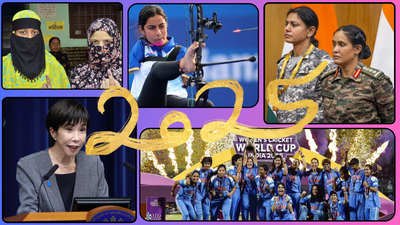
In 2025, women were no longer the footnote to the big story — they were the story. Across crises and celebrations, ballots and battlefields, podiums and boardrooms, women emerged as the decisive force shaping outcomes and narratives.This year ender traces how women became the X factor of 2025: from the symbolism and steel of Operation Sindoor, to the women voters who once again decided Bihar’s fate; from new women heads of state reshaping global politics, to athletes who carried India’s sporting year; and finally, to a woman who climbed into the world’s richest ranks, redefining economic power. These were not isolated moments. Together, they marked a year when women didn’t just influence events — they changed the balance.

Pahalgam attack and Operation Sindoor

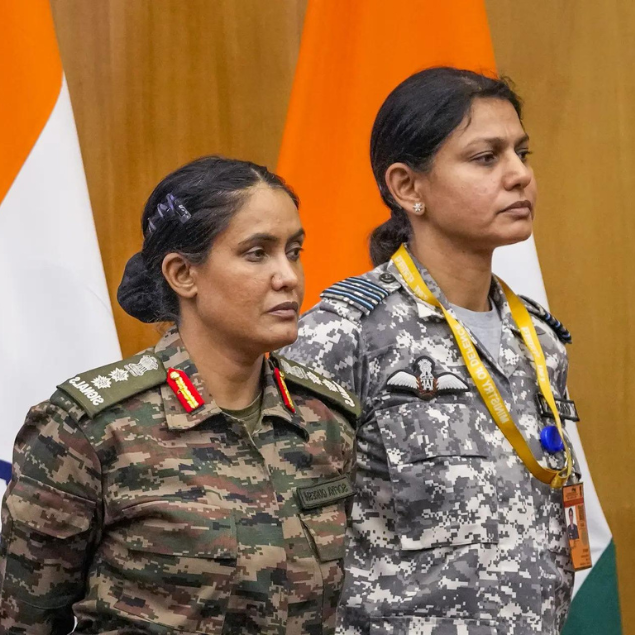
A newlywed wife, sitting silently beside her husband’s body — the image that came to define the Pahalgam attack.A terrorist strike. Twenty-six dead. All men.“Go, tell Modi,” a terrorist told a woman after shooting her husband.Operation Sindoor was the response. Its imagery was stark and deliberate — red and black, vermillion smeared like a warning. A symbol of vengeance, resolve, and the state’s answer to terror.“Terrorists dared to wipe ‘sindoor’ from the foreheads of our sisters; that is why India destroyed the very headquarters of terror,” PM Modi had said in his first address to the nation after the launch of the operation.The symbolism did not stop at words or posters. It took shape on the world stage when two women officers stepped forward to brief the global media on Operation Sindoor.

-

Colonel Sophia Qureshi and Wing Commander Vyomika SinghTheir presence was widely seen as intentional messaging — women not just as victims or symbols, but as the face and force of India’s response to terror.Operation Sindoor also saw women in direct combat. In the Akhnoor sector along the IB, a six-member women’s BSF team led by Assistant Commandant Neha Bhandari defended forward posts under sustained Pakistani fire for three days and nights, forcing enemy positions across Sialkot to retreat. For several of the young recruits, it was their first combat test — marking a decisive shift from symbolism to frontline action.

Nitish won Bihar, but credit goes to women

Women decided Bihar’s verdict once again, delivering Nitish Kumar a victory that numbers make hard to dispute. While their support for the JD(U)-BJP government’s pro-women agenda has been steady since 2005, this election saw a decisive surge. The turnout told its own story. As many as 71.6% women voted, nearly nine percentage points higher than men, and a sharp rise from 59.7% in 2020.A Rs 10,000 cash transfer to over 1.5 crore women in the run-up to polls acted as a turbo-boost. Like Rakhi after Diwali, the ‘das-hazariya’ payout — along with the mobilisation of Jeevika Didis — became the catalyst for the NDA’s sweeping win.For many women, this loyalty has been shaped over two decades — beginning with schemes like free bicycles for schoolgirls in Nitish Kumar’s first term.In 2010, smiling girls cycling to school became the defining image of his landslide victory, much like women voters have shaped this one.Even contentious policies have found unlikely champions. Prohibition, despite widespread criticism from men, continues to draw strong backing from women, particularly the poor, who often credit it with tangible household benefits.Add to this structural reforms — 35% reservation for women in government jobs, 50% in local bodies, and the expansive Jeevika self-help group network — and the pattern is clear.In Bihar, elections may be fought by parties, but they are increasingly won by women.

When women rose to rule

Across continents in 2025, the ascent of women to the highest political office began to look less like an exception and more like a long-delayed correction. In March, Namibia’s Netumbo Nandi-Ndaitwah was sworn in as the country’s first woman president. In a region where power has long been shaped by patriarchal traditions, her presidency carries the promise of something deeper: a recalibration of institutional culture, with greater emphasis on accountability, environmental stewardship, and gender-balanced governance.That same shift echoed months later in South America. In July, Suriname elected Jennifer Geerlings-Simons as its first woman president at a moment of economic uncertainty and cautious optimism, driven by newly discovered offshore oil reserves. A physician by training and a respected parliamentary leader, Geerlings-Simons embodies a quieter, steadier form of authority — one rooted in consensus-building and institutional continuity. Her victory underscored an important truth: the gender wave in politics is no longer confined to large economies or global power centres. It is reaching smaller, diverse nations where leadership had remained stubbornly homogeneous for decades.By October, the tremor reached East Asia. Sanae Takaichi’s elevation as Japan’s first female prime minister shattered one of the country’s most enduring political glass ceilings. In a system long dominated by men, her rise signalled a shift not only within party hierarchies but also in public expectations. For Japan, where women’s political representation has historically lagged, Takaichi’s appointment was as much a cultural moment as a political one — a sign that the contours of leadership are slowly expanding, allowing future generations of women to imagine themselves not at the margins of power, but at its very centre.

-

Netumbo Nandi-Ndaitwah, Jennifer Geerlings-Simons, Sanae Takaichi

Women played the best

Harmanpreet Kaur, Jemimah Rodrigues, Divya Deshmukh, Sheetal Devi, Nikhat Zareen, Stanzin Dolkar, Anahat Singh and India’s women footballers defined Indian sport in 2025, delivering results that cut across disciplines. The landmark moment came when the Indian women’s cricket team won its first-ever ODI World Cup, that too in front of a home crowd, with Jemimah’s match-winning knock in a pressure semi-final and a controlled final performance sealing a long-awaited title.

-

Beyond cricket, Indian women asserted themselves with authority. Divya Deshmukh became the youngest Women’s World Cup champion in chess, while archer Sheetal Devi added a para-world title and earned selection to the able-bodied compound team purely on scores. In squash, Anahat Singh claimed the national spotlight by winning the SRFI Squash Indian Open, and in boxing, India’s women powered the country to seven of nine gold medals at the World Boxing Cup Finals, led by Nikhat Zareen.

-

Divya Deshmukh, Sheetal DeviSome of the year’s most powerful moments came from inclusive and emerging sport. The Indian Blind Women’s Cricket Team won the inaugural Women’s T20 World Cup for the Blind, while Stanzin Dolkar’s decisive goals earned India its first international bronze in women’s ice hockey. Football completed the surge, with the women’s national team qualifying outright for the AFC Asian Cup for the first time in over two decades, and the U-20 and U-17 sides also sealing continental berths. In 2025, Indian women didn’t just shine — they set the standard.

First Indian among world’s top 10 richest women

Roshni Nadar scripted history in 2025 by becoming the first Indian woman to break into the world’s top 10 richest women, ranking fifth on the Hurun Global Rich List with a net worth of Rs 3.5 lakh crore ($40 billion).The milestone followed the transfer of a 47% stake in HCL Technologies from her father, Shiv Nadar, firmly establishing her as India’s richest woman and the country’s third-richest individual this year.


Source link