Breaking News
‘History being made’: PM Modi says after inaugurating Kartavya Bhawans | India News


PM Modi Unveils Seva Teerth, A New PMO Hub Marking Governance Shift In National Capital Delhi

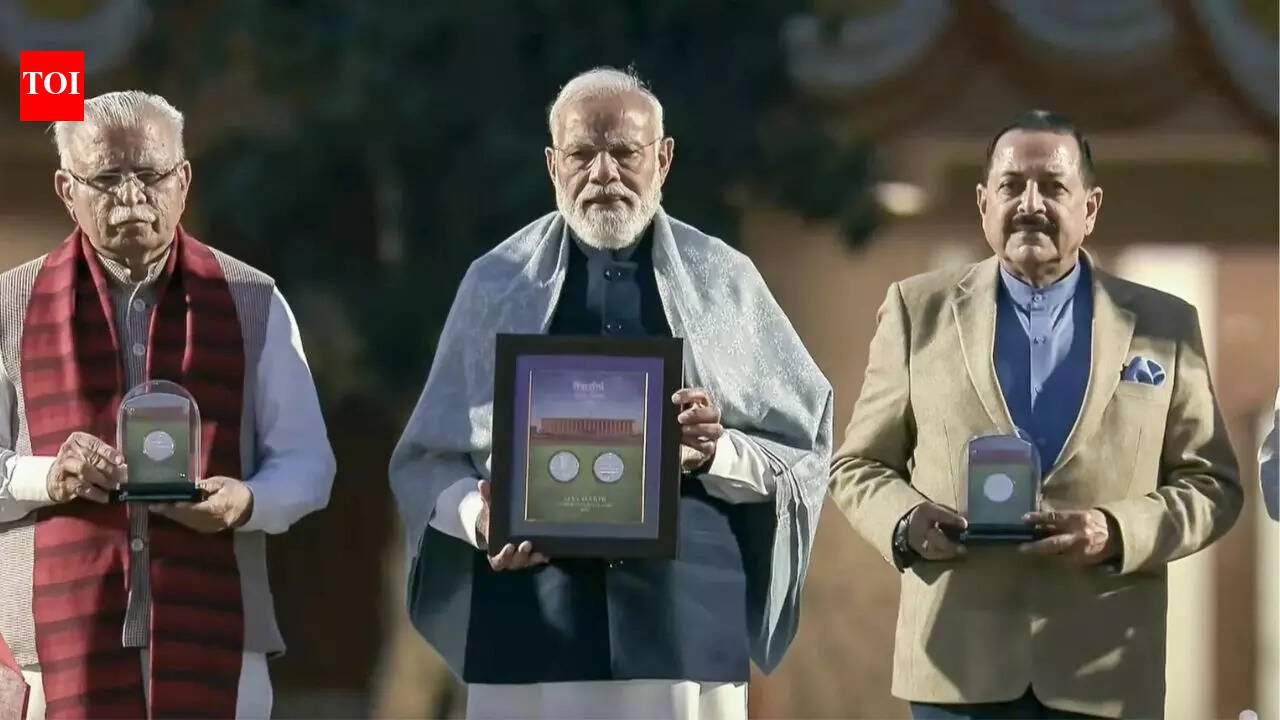
PM Modi with Union ministers Manohar Lal and Jitendra Singh during the inaugural programme of the ‘Seva Teerth’ and two Kartavya Bhawans. (PTI photo)

NEW DELHI: Prime Minister Narendra Modi inaugurated two new Kartavya Bhawans and released a commemorative postage stamp and coin on Friday, hours after shifting to his new office, “Seva Teertha.The Prime Minister said the newly inaugurated buildings reflect India’s commitment to citizen-centric governance and national progress.

PM Modi Unveils Seva Teerth, A New PMO Hub Marking Governance Shift In National Capital Delhi

“Today we all are witnessing a new history being made… This day of 13th February is witnessing a new beginning in India’s development journey… Today, we are all entering Seva Teerth and Kartavya Bhavan with the resolve to achieve ‘Viksit Bharat’. We have the divine blessings of achieving our goals,” he said.PM Modi noted that after independence, many crucial decisions shaping the nation’s future were taken, and key policies were framed within buildings such as the South Block and North Block.He added that it is important to remember these structures were originally built as symbols of the British Empire. “The intention behind their construction was to reinforce British dominance and keep India in a state of subjugation for generations,” he said.The Prime Minister said Seva Teerth and Kartavya Bhavan have been constructed to fulfil the aspirations of the people of India.Seva Teerth houses the Prime Minister’s Office, the National Security Council Secretariat and the Cabinet Secretariat, all of which were earlier functioning from separate locations.Kartavya Bhavan-1 and 2 accommodate several key ministries, including the ministry of finance, ministry of defence, ministry of health and family welfare, ministry of corporate affairs, ministry of education, ministry of culture, ministry of law and justice, ministry of information and broadcasting, ministry of agriculture and farmers welfare, ministry of chemicals and fertilizers, and the ministry of Tribal affairs.

Here are the top quotes from PM Modi:

  • Future generations should remember this era as a time when India re-wrote its fate.
  • I want Seva Teerth to be a role model for citizen-centric governance.
  • Decisions taken in these new buildings will decide the course of our journey to emerge as a developed nation by 2047.
  • Dreams of citizens our biggest assets; their aspirations should guide us.
  • I want Seva Teerth to be a role model for citizen-centric governance.
  • You all will play key role as India has boarded ‘Reform Express’, is re-writing international ties with new trade deals.
  • Unfortunate that road along PM’s residence was called Race Course Road and that leading to President’s House was Rajpath.
  • I can say with pride that Seva Teerth, Kartavya Bhawans built to fulfil aspirations of Indians, not of any monarch.
  • These 100-year-old buildings were becoming dilapidated, lacked space, facilities; they were inadequate to meet needs of a new nation.
  • India’s capital moved from Kolkata to buildings on Raisina Hill that were built according to the wishes of British royalty.
  • South Block and North Block were built with an aim to keep India under colonial shackles for centuries.
  • We are entering Seva Teerth and Kartavya Bhawan 1 and 2 with a resolve to achieve the goal of Viksit Bharat.


Source link

Australia down, but not out? Travis Head points to 2023 ODI World Cup comeback blueprint | Cricket News


Australia down, but not out? Travis Head points to 2023 ODI World Cup comeback blueprint
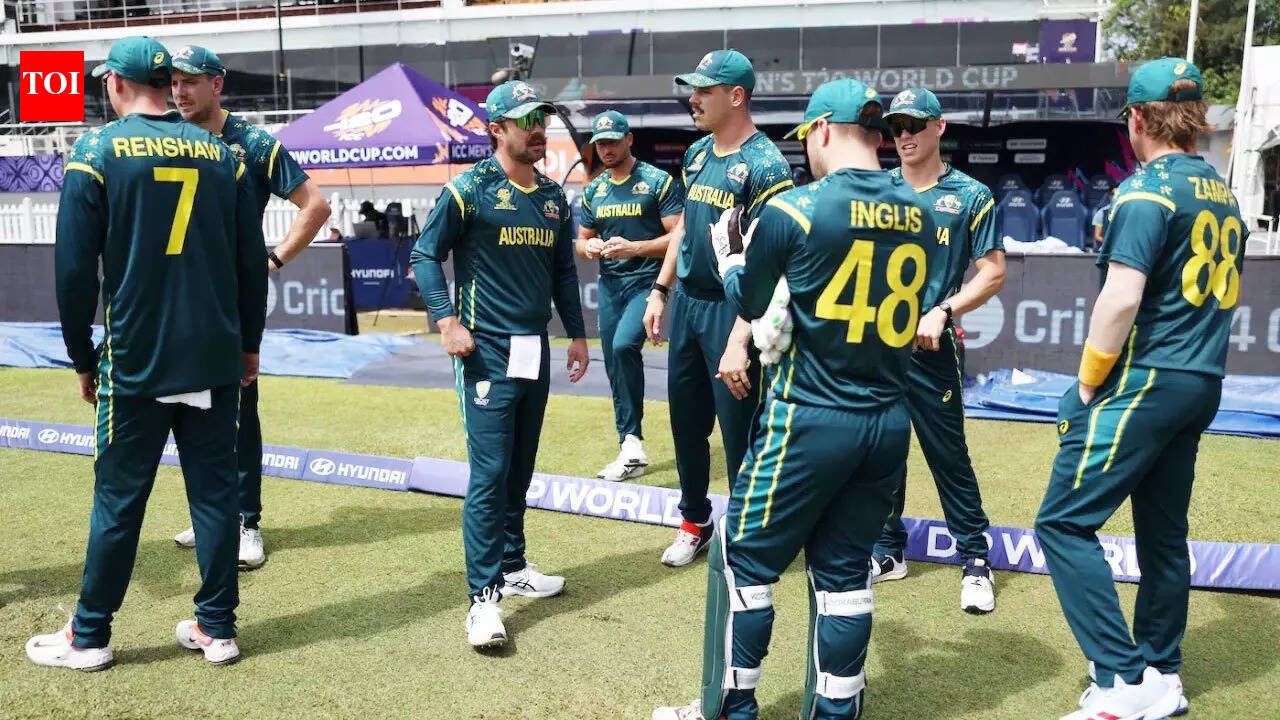
Despite the setback, stand-in Australia captain Travis Head urged calm, pointing to their turnaround in the 2023 ODI World Cup after a shaky start.( ICC Photo)

NEW DELHI: Zimbabwe pulled off a major upset in Group B of the ICC Men’s T20 World Cup, defeating Australia by 23 runs at the R. Premadasa Stadium on Friday. After posting 169 for 2, Zimbabwe successfully defended the total, bowling Australia out for 146 in 19.3 overs.Despite the setback, stand-in Australia captain Travis Head urged calm, pointing to their turnaround in the 2023 ODI World Cup after a shaky start.

T20 World Cup | Ishan Kishan press conference: On fifty vs Namibia, India’s batting collapses

“We’ve been there before. I said at the toss, we saw it in 2023 with a few defeats and injuries. We have a few guys here who were there in India in 2023 and we’ll look to navigate this situation and use that blueprint.”Head explained that the decision to field first was influenced by the nature of the pitch, which he believed would play consistently across both innings. He felt the target was within reach.“We thought it’s a good wicket. A bit tacky at the start and we thought it would be even through the two innings. Even though we only took two wickets, I thought they were a bit under par.“But we lost early wickets and came under pressure. They played well. I still felt like we’d have taken the score and were happy to chase that.“The feedback throughout was that it was a good wicket. We put ourselves under pressure by losing wickets. We found a partnership in the middle but we left ourselves with too many.”Australia’s campaign has also been impacted by injuries. Mitchell Marsh remains unavailable with a groin problem, while Tim David recently returned from a hamstring strain.Their pace resources are stretched as well, with Pat Cummins and Josh Hazlewood missing — marking the first time since 2011 that Australia are competing at a World Cup without Cummins, Hazlewood and Mitchell Starc together.


Source link

Gauri Khan revives her 1933 Dalhousie ancestral property into a luxury retreat available at Rs 1.2 lakh per night | Hindi Movie News


While she’s a superstar’s wife, Gauri Khan has made her own identity and she’s one of the most popular interior designers in the country, having developed many celebrity homes, of course, starting with her own house ‘Mannat’. Gauri has now added another feather to her cap as she has restored her ancestral Dalhousie property into a luxury stay which is now open to people. This is nearly a century-old family estate which she has now turned into a luxury retreat. Named The Chestnut Grove, the six-bedroom heritage villa is more than a picturesque mountain property. It belongs to Gauri’s maternal uncle, Tejinder Tiwari, and has been part of the family since 1933. As her cousin Rustam Tiwari has shared, the home was originally acquired by their great-grandfather, Suraj Bhan Tiwari. Sprawled across approximately 8,000 square feet, the estate has played host to generations of summer holidays, animated family gatherings and tranquil mornings wrapped in mountain mist.

Gauri Khan steps out for lunch date with her friends in Bandra

For Gauri, this was never just a design assignment. The house formed the backdrop of her childhood, where long summers were spent with cousins amid pine-scented air, echoing verandahs and evenings warmed by a crackling fireplace. When discussions of restoration began, she collaborated closely with Rustam, determined that any transformation would honour the spirit of the original home.The brief was thoughtful yet clear, to retain the heritage soul while seamlessly incorporating contemporary comforts. The finished space achieves that balance — nostalgic without feeling dated, elegant without losing warmth.Surrounded by towering trees and dense greenery, the villa opens into a sunlit living area framed by expansive glass windows. Natural light pours in, illuminating wooden textures and earthy tones. A grand fireplace anchors the room, offering a cosy refuge during Dalhousie’s colder months. Plush seating and subtle design accents create an inviting, lived-in charm.Each bedroom carries its own personality while staying true to the hill-station aesthetic. Wooden ceilings, understated stone elements and soft, muted furnishings lend a sense of quiet sophistication. Guests can opt for garden-facing rooms, a spacious king suite or an attic suite that feels tucked away in the treetops. The dining space, highlighted by a skylight, remains bright and airy year-round, merging rustic architecture with thoughtful modern detailing.The Chestnut Grove is open to private luxury stays, primarily catering to families and close-knit groups seeking exclusivity in the hills. Individual rooms are priced between ₹15,000 and ₹25,000 per night depending on the season, while the entire estate can be reserved for approximately ₹1.2 lakh per night.


Source link

CIA sabotaging Chinese military? US releases video appealing to potential PLA spies; Beijing sees red


CIA sabotaging Chinese military? US releases video appealing to potential PLA spies; Beijing sees red

The US intel body, Central Intelligence Agency (CIA), has released a new Chinese-language video aimed at recruiting potential informants within China’s military establishment, drawing a sharp response from Beijing, which vowed to take “all necessary measures” against foreign espionage activities.The video, published on the CIA’s YouTube channel on Thursday, depicts a fictional mid-level officer in the people’s liberation army (PLA) reflecting on alleged corruption among senior leaders and deciding to contact the US agency.The release comes amid a broader anti-corruption drive within China’s armed forces led by President Xi Jinping.In the video, the officer narrates in Mandarin: “Each day that goes by, it becomes clearer the only thing our party leaders are interested in defending is their own pockets.” He adds, “I could not let their madness be a part of my daughter’s future.” The clip ends with the CIA logo and the character suggesting that sharing information is his way of serving his country.According to NYT, the video highlights allegations of corruption within the PLA that have led to the ouster of several generals and senior leaders on China’s central military commission, the communist party body overseeing the armed forces. Last month, Xi removed China’s top military officer and another senior general, with Chinese authorities citing unspecified “grave violations of discipline and the law.” US officials quoted by the NYT said there has been debate over Xi’s motives – whether he is acting out of political caution, addressing potential challenges, or attempting to tackle entrenched corruption. American officials believe corruption has hampered China’s military modernisation and may have created openings to recruit disaffected insiders.CIA Director John Ratcliffe said earlier efforts were yielding results. “Last year, CIA’s Mandarin video campaign reached many Chinese citizens, and we know there are many more searching for a way to improve their lives and change their country for the better,” he said in a statement, adding that the agency would continue offering “Chinese government officials and citizens an opportunity to work toward a brighter future together.The agency has also published instructions on how Chinese nationals can contact it securely, including through the Tor network and virtual private networks, despite China’s restrictions on Western platforms.China’s foreign ministry condemned the move on Friday. “China will take all necessary measures to resolutely combat infiltration and sabotage activities of foreign anti-China forces and resolutely safeguard national sovereignty, security and development interests,” foreign ministry spokesman Lin Jian said at a press conference, according to AP. He did not elaborate on what measures Beijing might take.The latest exchange has brought focus back to the escalating intelligence competition between Washington and Beijing. The CIA has been rebuilding its China network after setbacks between 2010 and 2012, when more than a dozen US sources were reportedly killed or imprisoned after its covert communication system was compromised, the NYT reported.Beijing had earlier described similar US outreach efforts as “naked political provocation”, accusing Washington of attempting to “maliciously smear and attack China” while luring Chinese personnel to defect.


Source link

T20 World Cup 2026 [WATCH]: Zimbabwe’s Brad Evans cleans up Travis Head and drops a Ronaldo’s ‘Siuuu’ celebration against struggling Australia


In a sensational turn of events at the R. Premadasa Stadium on February 13, 2026, Zimbabwe have pushed the 2021 champions to the brink of a historic collapse in T20 World Cup 2026. The Colombo crowd witnessed a masterclass in aggressive associate cricket as the “Chevrons” dismantled the Australian top order under the floodlights. With captain Mitchell Marsh already sidelined due to a bizarre medical condition, the stand-in leadership of Travis Head was expected to provide stability. However, the Zimbabwean pace attack had other plans, leaving the Australian dugout in stunned silence.

Brad Evans rattles Travis Head and unleashes the iconic Cristiano Ronaldo’s SIUUU celebration

The defining moment of Australia’s nightmare powerplay arrived in the 5th over when Brad Evans delivered a knockout punch to the Australian captain. Operating on a nagging good-length just outside the off-stump, Evans induced a hesitant push from Travis Head, who played away from his body without significant foot movement. The ball took a thick inside edge, deflected off the batter’s pads, and rolled with agonizing slow-motion precision back onto the stumps to dislodge the bails.

As Head stood frozen in disbelief at his dismissal for 17 (15 balls), Evans sprinted toward the covers to unveil the Cristiano Ronaldo “SIUUU” celebration, a high-octane jump and mid-air pirouette that sent the Zimbabwean supporters into a frenzy. This wicket was the culmination of a relentless opening spell where Evans and Blessing Muzarabani utilized the ‘stop-start’ nature of the Colombo surface to perfection. The celebration wasn’t just a personal flair; it symbolized the rising confidence of a Zimbabwe side that had already reduced Australia to a perilous 29/4 within the first 30 balls of the chase.

Here’s the video:

Also READ: T20 World Cup 2026: Here’s why Brendan Taylor, Cooper Connolly and Richard Ngarava are not playing today’s AUS vs ZIM match

T20 World Cup 2026: Zimbabwe posts 169/2 amidst mounting Australian injury woes

Earlier in the day, Zimbabwe set a formidable target of 170, anchored by a resilient maiden World Cup fifty from young opener Brian Bennett. The 22-year-old played the innings of his life, remaining unbeaten on 64 off 56 balls with seven boundaries, skillfully navigating the threat of Adam Zampa. He was ably supported by Tadiwanashe Marumani (35) and Ryan Burl (35), before skipper Sikandar Raza provided the finishing touch with a brisk 25 off 13 balls*, including a massive six off the final delivery.

Australia’s bowling effort was hampered significantly when Marcus Stoinis was forced off the field in the 16th over after copping a nasty blow to his left thumb while fielding a powerful drive off his own bowling. The injury looks serious, adding to a casualty list that already includes regular captain Marsh (testicular bleeding). In the chase, the Australian collapse was rapid: Josh Inglis (8) fell to a pull shot, Cameron Green (0) nicked off to the keeper, and Tim David (0) mistimed a swivel-pull to short fine leg, all before Head’s bizarre dismissal. At the drinks break, Australia stands at a shaky 51/4, needing a ‘Maxwell Miracle’ to chase down the remaining 119 runs at a required rate nearly touching 10 per over.

Also WATCH: T20 World Cup 2026: Suryakumar Yadav holds back security to let fan in Virat Kohli jersey meet Hardik Pandya during IND vs NAM match


Source link

Connectivity boost for ‘Chicken neck’! Indian Railways announces underground rail route through Siliguri Corridor; check route and key details


Connectivity boost for 'Chicken neck'! Indian Railways announces underground rail route through Siliguri Corridor; check route and key details

India’s “Chicken neck” is all set for a new connectivity boost!In a bid to strengthen regional connectivity to India’s North-eastern States, Indian Railways has announced plans to construct a new underground railway line through the Siliguri Corridor, commonly known as the “Chicken’s Neck”. Union minister for railways, information & broadcasting and electronics & information technology, Ashwini Vaishnaw, said that the project is designed to ensure secure, reliable and uninterrupted rail connectivity in this strategically sensitive region.

Route:

The new line will fall under the Katihar Division of Northeast Frontier Railway and will begin from Tinmile Hat going to Rangapani, and onwards to Bagdogra. En-route, the link will cover parts of Darjeeling and Uttar Dinajpur districts in West Bengal, as well as Kishanganj district in Bihar.

Length:

The proposed underground alignment will run for a total length of 35.76 km between Dumdangi and Bagdogra, with the Dumdangi–Rangapani section measuring 33.40 km. The corridor, approximately 22 km wide, connects mainland India with the North-eastern States and has been planned primarily as an underground route to provide secure and resilient connectivity.

Protection:

Due to the corridor’s proximity to international borders with Nepal, Bhutan and Bangladesh, and its vulnerability to natural disasters, congestion and security risks, the underground railway line is expected to play a critical role. The alignment will offer a protected and non-visible route, enabling the uninterrupted movement of defence personnel, military equipment and emergency relief supplies during emergencies. Its location near Bagdogra Air Force Station and the Bengdubi Army Cantonment of the Indian Army’s 33 Corps also supports integration of air–rail logistics.

Modern tech at play:

The project will be developed using modern technology and advanced engineering, which includes a 2×25 kV AC electrification system, Automatic Signalling (Standard-IV) with VOIP-based communication on OFC and quad cables, bridges built to RDSO 25-ton axle load standards, and twin tunnels constructed using the Tunnel Boring Machine (TBM) method with NATM tunnels for crossovers, ET reported.Vaishnaw described the Tinmile Hat–Rangapani–Bagdogra underground line as a reflection of railways’ commitment to strengthening strategic infrastructure in the Northeast. West Bengal has received a record budget allocation of Rs. 14,205 crore for railways this year, more than three times the average allocation during 2009–2014. He added that railway projects worth around Rs. 92,000 crore are currently underway in the State, which will facilitate major infrastructural transformation.Additionally, the Union minister revealed that the first Bullet Train for West Bengal, announced in this year’s Rail Budget, will begin its journey from Siliguri.


Source link

Access Denied


Access Denied

You don’t have permission to access “http://www.ndtv.com/education/higher-education-secretary-says-ai-will-put-an-end-to-rote-learning-in-education-10998247” on this server.

Reference #18.34a21ab8.1770972914.1063bff

https://errors.edgesuite.net/18.34a21ab8.1770972914.1063bff


Source link

Access Denied


Access Denied

You don’t have permission to access “http://www.ndtv.com/world-news/claude-this-ai-model-was-ready-to-kill-someone-when-told-it-would-be-shut-down-10997972” on this server.

Reference #18.ef277368.1770973932.4003db2

https://errors.edgesuite.net/18.ef277368.1770973932.4003db2


Source link

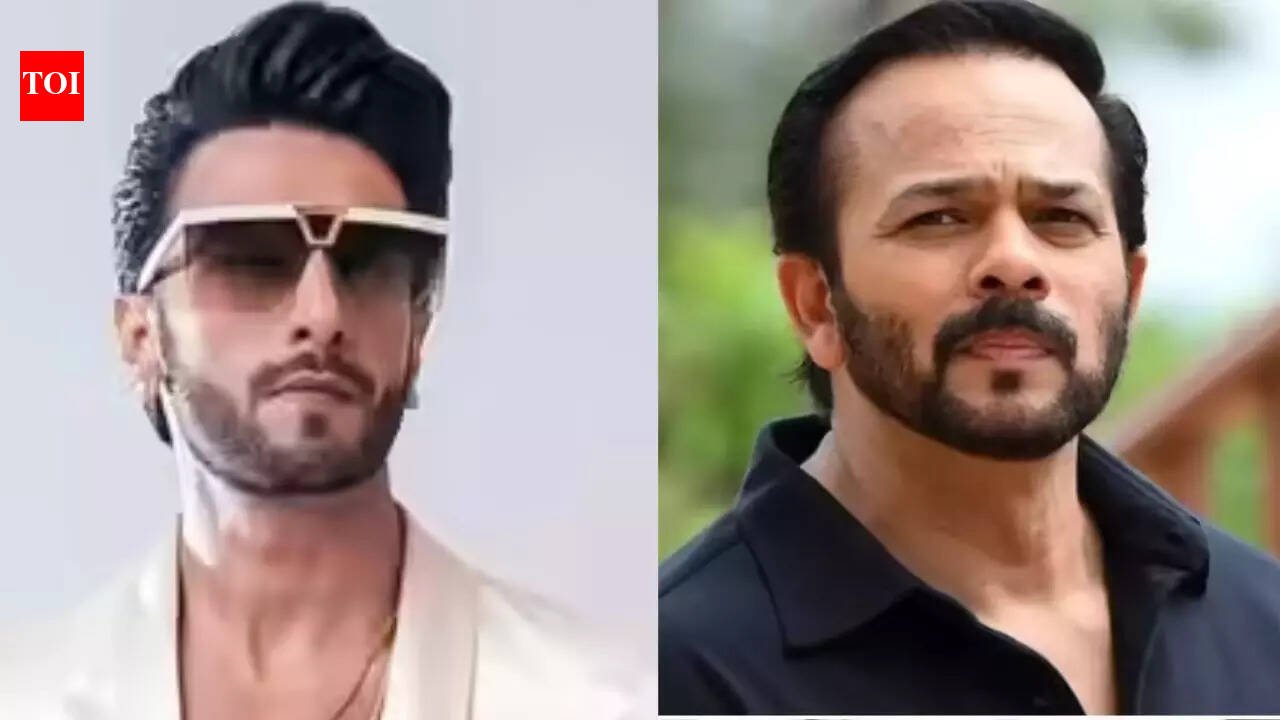
Lawrence Bishnoi gang threatens Ranveer Singh, Rohit Shetty in chilling new audio; ‘next 7 generations will remember the consequences’ | Mumbai News


MUMBAI: Doubling down on the threats against the Indian film industry, Harry Boxer, a prominent member of the notorious Lawrence Bishnoi gang, released a fresh audio clip targeting actor Ranveer Singh and filmmaker Rohit Shetty.This marked the 3rd time the gangster issued such a recording, signalling a persistent campaign of intimidation against Bollywood actors.

Rohit Shetty firing case takes a stunning turn; Crime branch traces trail to Bishnoi gang

In the audio message, Boxer identified himself as a representative of the Lawrence Bishnoi syndicate. He directed his venom specifically at Ranveer Singh, referencing a previous disagreement where the actor allegedly went back on his word.Boxer warned that Singh’s “next 7 generations” will remember the consequences of his actions. A particularly disturbing element of this latest threat was the focus on the actor’s support staff.Boxer claimed to have detailed information regarding the families, office timings, and residences of Singh’s managers and employees. He explicitly stated that the gang intended to target these individuals first to “teach a lesson” to the actor, suggesting that harming those close to the stars was a strategic move to break their resolve.The gangster also took aim at filmmaker Rohit Shetty and the wider Bollywood community, warning them to “fall in line” when contacted by the gang. He mocked the actor’s decision to seek police protection, dismissively noting that reporting the threats to the authorities would not deter the syndicate’s reach.Security agencies reportedly analysed the clip as the industry remained on high alert following a string of similar threats involving the Bishnoi gang over the past year.


Source link

Orange is the new gold: How India’s influencer economy turned visibility into value | India News


Orange is the new gold: How India’s influencer economy turned visibility into value
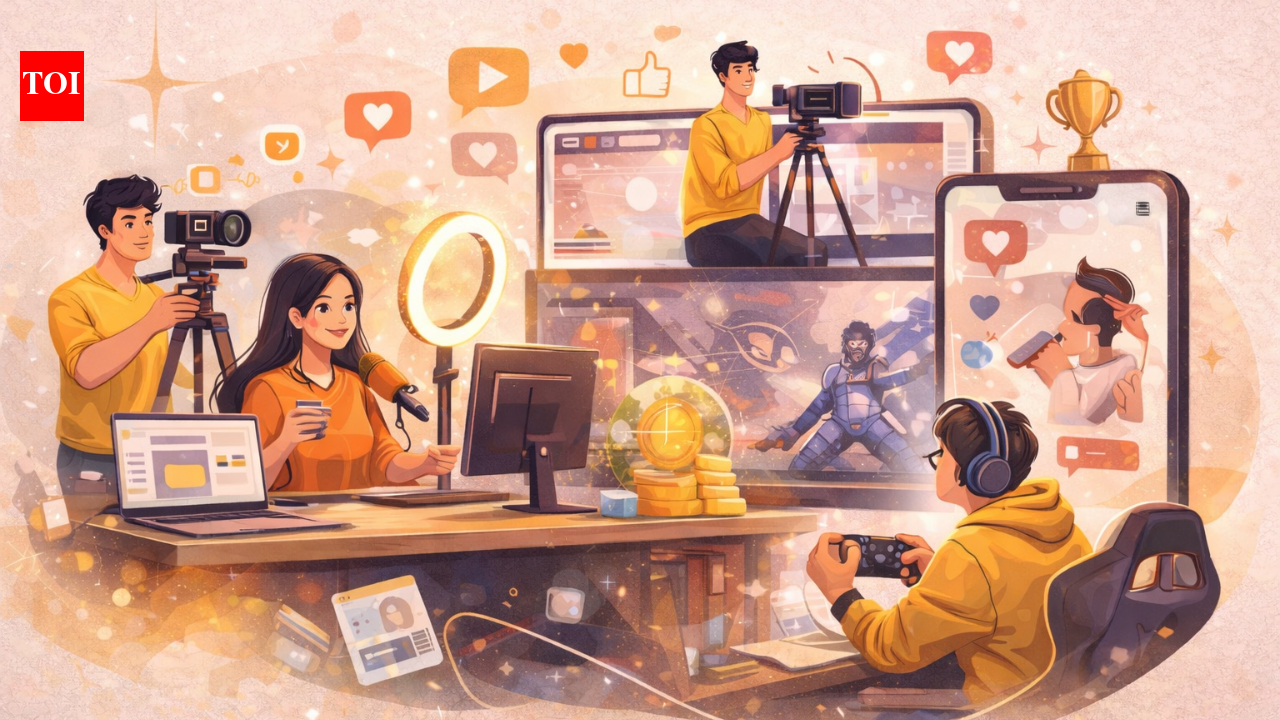
The image is used for representation pupose only (AI-generated)

On a busy afternoon in Old Delhi’s Parathe Wali Gali, Darshit Singh held up his phone and did something unusual.He didn’t hype the food.He critiqued it.The reel — an “honest review” of a legacy eatery and Daulat ki Chaat — crossed 7.3 million views. Messages flooded in. Invitations followed. Cities called.That was 2024.Today, Singh calls himself India’s first “food deinfluencer”.Elsewhere, Santosh was boarding a late-night flight after wrapping up a full corporate workday.An IIT-Delhi alumnus by degree and a traveller by instinct, he refuses to choose between spreadsheets and sunsets.“I’m a traveller with a full-time job,” he says — a line that has now become his digital identity.Every month, a new state. Every trip, a vlog. Every journey, proof that passion doesn’t need permission.What once looked like just another viral reel is now part of something bigger — a creator economy projected to be worth thousands of crores, and increasingly recognised in India’s economic blueprint.This year’s Union Budget did something subtle but significant: it placed creativity inside the growth narrative.Welcome to India’s Orange Economy moment.

The Orange Economy: When creativity became economic policy

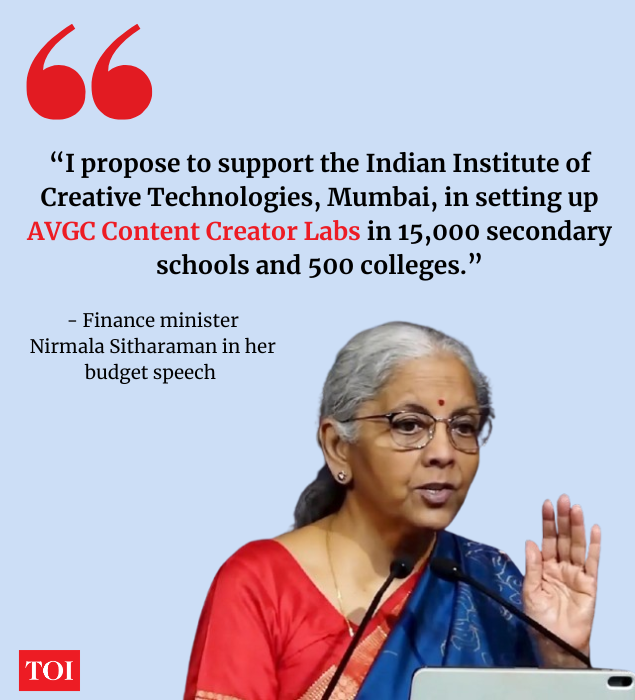
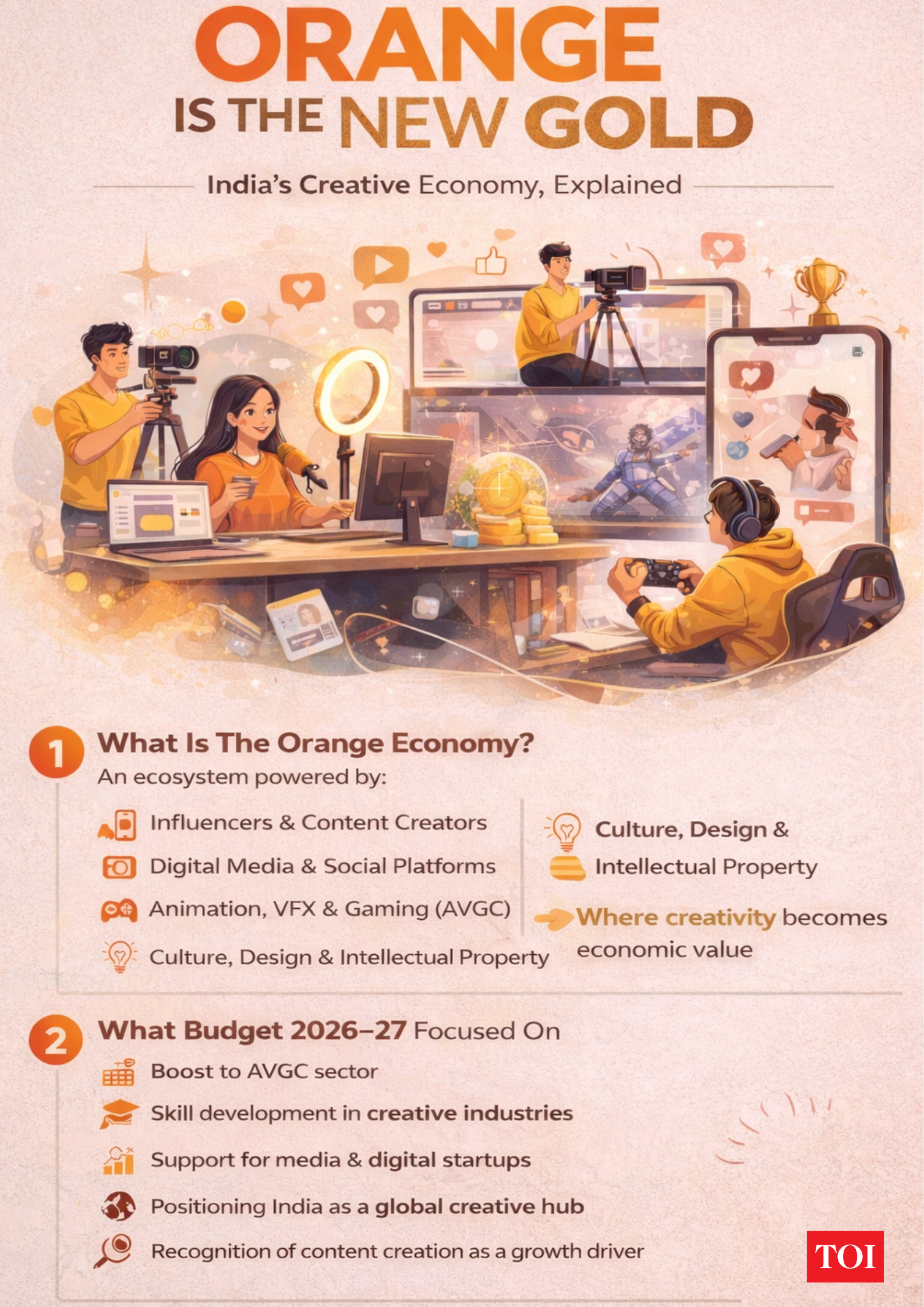
For decades, art, storytelling and digital creation lived in the margins of economic planning — celebrated culturally, rarely counted financially.That is beginning to change.The “Orange Economy” — a term popularised by the Inter-American Development Bank refers to industries that transform ideas into cultural goods and services protected by intellectual property. It includes media, film, music, publishing, animation, gaming, advertising, design, fashion, digital content and now, increasingly, independent creators.In India’s Union Budget 2026–27, finance minister Nirmala Sitharaman announced a major push for India’s creative industries — or what is increasingly being called the “Orange Economy.”
.

.

Presenting the Budget, Sitharaman emphasised that India’s creative and AVGC-XR (Animation, Visual Effects, Gaming, Comics and Extended Reality) ecosystem has the potential to generate large-scale employment and position India as a global content hub.She announced:

  • Rs 400 crore allocation for the Indian Institute of Creative Technologies (IICT) in Mumbai
  • 15,000 AVGC labs to be set up in schools
  • Integration of creative and digital skills in 500 colleges across India
  • Policy support aimed at building a workforce pipeline for the AVGC-XR sector

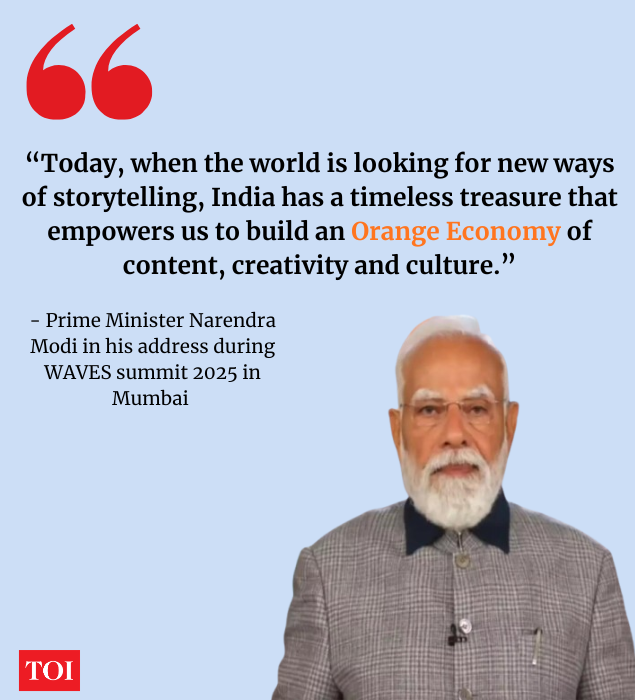
The Economic Survey projected that the AVGC sector alone could require up to 2 million skilled professionals by 2030.Sitharaman highlighted that India’s demographic dividend must be aligned with emerging sectors, particularly those driven by digital platforms and intellectual property.At the WAVES summit earlier this year, Prime Minister Narendra Modi reinforced this direction, describing India as a nation with “a billion-plus stories” and positioning the creative economy as both cultural capital and economic opportunity.
.

.

India’s creator economy is projected to grow at an 18% compound annual growth rate, rising from Rs 19 billion in 2023 to Rs 34 billion by 2026, according to Ernst & Young.

Influencer economy & marketing: From digital voices to structured media power

Influencer marketing is defined as “a collaboration between popular social-media users and brands to promote brands’ products or services.” What began as informal brand shoutouts has now evolved into a regulated, data-driven industry. The scale today is substantial. Globally, the influencer marketing economy was valued at $21.1 billion in 2023, having more than doubled since 2019 on the strength of platforms such as Instagram and YouTube. According to ET, the global influencer marketing platform market grew from $6 billion in 2020 to a projected $24.1 billion by 2025, at a CAGR of 32%.
.

.

Forbes highlighted that the broader creator economy is now a $250 billion global force, projected by Goldman Sachs to reach $480 billion by 2027. Statista reports that over 200 million creators operate globally, while social commerce is expected to touch $2.9 trillion by 2026.India’s influencer marketing sector is projected to reach Rs 3,375 crore by 2026, growing at a CAGR of 18%, according to EY’s ‘State of Influencer Marketing in India’ report. Exchange4Media estimates the core influencer market at around Rs 3,600 crore in 2024, projected to reach Rs 4,500 crore in 2025, though insiders suggest the real size may exceed Rs 10,000 crore due to direct brand-creator deals outside conventional tracking.Creator fees rose between 10–30%, while top-tier creators in India reportedly earned between Rs 10–25 crore annually through endorsements, platform monetisation, live events and equity partnerships.Types of InfluencersInfluencers are categorised by follower size:

  • Nano influencers: Fewer than 10,000 followers
  • Micro influencers: 10,000–50,000 followers
  • Medium influencers: 50,000–100,000 followers
  • Macro influencers: More than 500,000 followers
  • Mega influencers: Over one million followers

EY observes that marketers leverage both large/macro and micro/nano influencers equally. While mega and macro influencers drive awareness and brand loyalty, micro and nano influencers often deliver stronger engagement and relatability.Regional creators are becoming central to brand strategies. According to Influencer.in (Social Beat), regional creators drive 35–40% better engagement in Tier-2 and Tier-3 cities. Budget allocation for regional creators has increased from 3–10% earlier to 8–20%, with expectations of further growth.

Gen Z: The creator generation

The ecosystem is increasingly youth-driven. A 2024 YouTube India–SmithGeiger report found that 83% of Indian Gen Zers consider themselves creators, and 75% see content creation as a genuine career path. More than 55% reported gaining financial independence through digital platforms.As ET highlights, influencer marketing is seen as cost-effective and personalised. Influencers build relatability and directly shape purchase decisions. In fact, 61% of consumers trust recommendations from creators more than traditional brand advertising, according to Sprout Social cited by Forbes.Influencer partnerships typically follow two models:

  • Flat-fee brand deals per post (ranging from Rs 2,000 to Rs 30 lakh per post in India, depending on scale).
  • Affiliate commissions, where influencers earn from sales generated via links or promo codes.

Increasingly, creators are moving beyond endorsements to ownership — launching brands, seeking equity partnerships and building independent revenue streams. Exchange4Media notes a visible shift from “endorser to owner.”From hyper-local memers to pan-India gaming stars, from nano creators in Tier-3 cities to mega influencers earning crores annually, India’s influencer economy is no longer peripheral to marketing. It has become a structured, high-growth pillar of brand strategy — reshaping commerce, culture and consumer trust in the digital age.For creators like Darshit, having a mass following of 51.7K followers, the viral Old Delhi reel was only the beginning. What followed was a clearer understanding of how the influencer economy actually works. “I started making content post-COVID but it was mostly just pictures and a few videos with music. No voiceover,” he says. It was only after that breakout moment in 2024 that he began studying the platform more closely — especially the algorithm.“Instagram is fundamentally different… it thrives on recommendations,” he explains. Unlike platforms that depend heavily on follower count, Instagram pushes reels to users who may never have heard of the creator but are likely to engage. “Someone who has never made a video in their life can come to this platform and make one and get millions of views.”Uploading identical content across YouTube Shorts, Facebook and Threads, Singh says Instagram consistently delivers his highest reach. For him, discovery is not accidental — it is engineered.But growth alone was never the goal. His identity as a “food deinfluencer” is built on resisting what he sees as blind positivity in brand culture.“Our society today has a trust crisis. Be it government, institutions, or media. Everyone is facing that. So for me, my audience’s trust is paramount,” he says. Even in paid collaborations, he critiques dishes he does not like. “I wanna be the reason behind someone’s memorable meal.” His approach reflects a broader shift in marketing strategy. “Earlier brands used to only work with celebrities and movie stars but now they prefer influencers in most cases as the latter gives them higher ROI,” he observes. “Celebrities promoting a product feels like an ad. But some influencers subtly promote the brand in their organic way… audiences are more likely to purchase that product later.”A few kilometres away from Old Delhi’s food lanes, Santosh is planning his next trip — between client calls.Santosh began his creator journey not in airports or mountains but inside hostel rooms. What started as campus vlogs on YouTube, hostel stories, placement anxiety, the reality of being an IIT student slowly built a community of aspirants and peers.Then came Instagram.Reels allowed him to compress entire journeys into seconds — a new state every month, documented between office deadlines. The platform’s real-time engagement — stories, reels, DMs helped him move beyond informational content into something more personal. “You can be discovered without being famous,” he says, pointing to how a few of his travel and IIT reels travelled far beyond his existing follower base.More importantly, he has watched the industry change.“When I started, content creation felt experimental,” Santosh says. “Now brands plan structured budgets. Long-term collaborations. There’s more professionalism.” In his words, the creative economy is no longer informal hustle. It’s recognised work.

Instagram’s revenue model: The business behind the scroll

If the orange economy is the ecosystem and creators are its lifeblood, then Instagram is the marketplace — the digital high street where attention turns into advertising, and creativity converts into commerce.To understand how influencer marketing thrives, it’s important to understand how Instagram itself makes money.Founded in 2010 by Kevin Systrom and Mike Krieger as a simple photo-sharing app, Instagram was built on one idea: visuals connect people. What started as a minimalist platform for filtered photos has evolved into a billion-user ecosystem of Stories, Reels, shopping tabs and creator tools.After Meta (then Facebook) acquired Instagram in 2012 for $1 billion, the platform scaled rapidly. Today, Instagram is estimated to be worth around $400 billion, making it one of the most valuable digital assets globally.The engine driving all of this? Advertising.Instagram’s primary revenue model is advertising. What makes Instagram powerful for marketers is its algorithmic precision. Content appears based on user behavior, engagement patterns and interests.The platform’s shift toward short-form video has supercharged engagement. According to a Meta-commissioned IPSOS study:

  • 97% of Indian consumers watch short-form videos daily
  • 95% daily usage for Reels, compared to 83% for television

Meta India’s Managing Director Arun Srinivas said: “India is leading the world in video adoption, and Reels is at the center of this shift. Five years since its launch, Reels is India’s leading short-form video platform—driving massive engagement, shaping culture, and delivering real business impact.”Instagram’s model is symbiotic with the influencer economy.

  • Shoppable tags allow influencers to link products directly.
  • Affiliate links enable commission-based earnings.
  • Sponsored posts generate flat-fee income.
  • Bonuses and milestone incentives reward engagement growth.

While food reels dominate one corner of the ecosystem, knowledge-driven creators are building influence in quieter but equally powerful ways.For Bikramjeet Dutta, having a massive following of 51.9K followers, Instagram’s inflexion point came during the 2024 Lok Sabha elections. “I was attending several political rallies, press conferences etc. I started uploading that it started gaining views and followers,” he says. His content extends beyond political coverage into books, geopolitics and history. “Instagram helped me to connect with those who are experts in these fields,” he says, adding that credibility assessment feels more immediate on the platform. “In Instagram it’s quite easy to verify whether the person is credible or not.” Discovery, he believes, has fundamentally shifted the opportunity landscape. Posting book reviews led to requests from publishers. Geopolitical commentary brought invitations to panel discussions and book launches. “Yes, Instagram has made it easier for creators to be discovered,” he says.

Instagram and small businesses: Visibility, trust and the new storefront

For many small businesses in India, Instagram is no longer just a marketing add-on. It functions as a storefront, catalogue, customer service desk and storytelling space — often all at once.The shift became especially visible during the pandemic. In 2020, Instagram introduced the ‘Support Small Business’ sticker, which grouped Stories using the sticker into a shared feed so “more people can discover more small businesses.” Around the same time, it rolled out features that made it easier to discover gift cards, online food orders and fundraisers, allowing users to tap directly and purchase through partner websites. For Nidhi who runs a handmade chocolate business, Instagram became more than a display window.“Instagram didn’t just become a platform… it became the space where my creativity found its voice,” she says. She explains that unlike other platforms, Instagram allowed her “to connect, not just sell — to share stories, build trust, and grow a community that appreciates handmade details and thoughtful gifting.”Instead of simply listing prices, she moved toward behind-the-scenes reels — melting chocolate, assembling hampers, last-minute packing. The shift from static posts to process-driven video felt “more genuine for the audience.”Another small business owner Harsh in the fabric trade echoes a similar sentiment.“Instagram has played a major role in building our fabric brand identity. Through reels, product videos, and live customer interactions, we showcase our manufacturing quality, fabric textures, and latest collections in a very visual way.”Increased competition, he highlights, has pushed businesses “to become more creative by high-quality reels and by making it more realistic.”In the architecture of the orange economy, small businesses are not just beneficiaries of digital platforms. They are active participants: adapting content, tone and strategy in response to algorithmic culture and rising competition.

Source link