Breaking News
India, Pakistan players ‘talking behind closed doors’: England legend amid handshake row | Cricket News


India, Pakistan players 'talking behind closed doors': England legend amid handshake row
India vs Pakistan (AP Photo/Eranga Jayawardena)

NEW DELHI: The rivalry between India and Pakistan has become more intense in recent times. India has been dominating Pakistan on the field, but the focus has now shifted to something else. Indian players have refused to shake hands with Pakistan players after matches, and this has created a big debate.The issue started during last year’s Asia Cup. India captain Suryakumar Yadav did not shake hands with Pakistan players. The decision was linked to showing respect for the victims of the Pahalgam terror attack and support for the Indian Army after Operation Sindoor. Some former overseas players criticised India, but many former Indian players supported the move and said cricket should remain the main focus.

T20 World Cup: Afghanistan coach Jonathan Trott’s emotional press conference

The topic came up again after India and Pakistan played in the T20 World Cup, where the captains again skipped the handshake. Former England players Michael Vaughan, Alastair Cook, Phil Tufnell, and David Lloyd discussed this on a cricket podcast.Phil Tufnell said Pakistan are not at the same level as India right now. He said, “Dare I say it, Pakistan against India, that’s a mismatch, isn’t it,” and added that India look far stronger.Michael Vaughan also shared his opinion and said Pakistan seem nervous when they play India. He said, “I mean it look to me that way. It seems to me every time Pakistan play India they look intimidated by India on a cricket field.” He also felt the handshake issue was sad and said, “That whole situation in sour isn’t it? You know, it is just sad. Not shaking hands on a cricket field.”Alastair Cook had a different view. He questioned whether the tension is real or just for the public. He asked, “But aren’t they talking behind closed doors? I read somewhere that everyone’s just chatting away.” He also said, “It like, it is only for show, isn’t it? On the actual field, they are not shaking hands, but then behind closed doors, they are all talking and are all fine.”

Source link

SC verdict on Trump tariffs: Dissent highlights India in Russia oil context


SC verdict on Trump tariffs: Dissent highlights India in Russia oil context

India found itself directly referenced in a landmark US Supreme Court judgment limiting presidential tariff authority, after justices examined how tariffs imposed under emergency powers were used as tools of foreign policy– including pressure linked to Russian oil imports.The ruling in Learning Resources, Inc. v. Trump held that the International Emergency Economic Powers Act (IEEPA) does not authorise a US president to impose tariffs, significantly narrowing executive power over trade policy even when tied to diplomatic negotiations.

MEA’s Clears India’s Position On Russia Oil After US Envoy Conveys Trump’s Wish On Venezuelan Oil

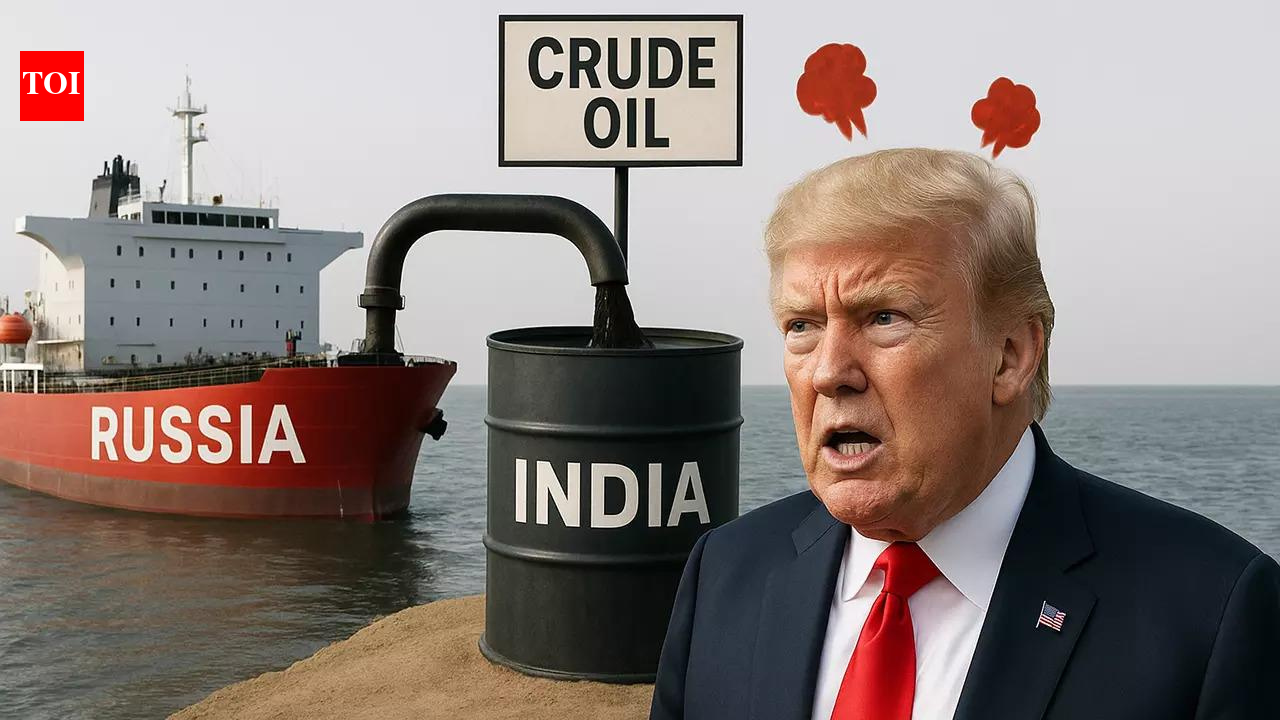
While the majority struck down the tariffs, the Court’s dissent highlighted India as an example of how such measures had been deployed in foreign affairs.India cited in tariff diplomacy linked to Russia-Ukraine conflictIn his dissenting opinion, Justice Brett Kavanaugh described how the US administration used tariffs during sensitive geopolitical negotiations.“As with tariffs on foreign imports historically, the IEEPA tariffs on foreign imports at issue in this case implicate foreign affairs,” the dissent noted.According to the judgment, the US government argued that tariffs had been leveraged in negotiations with major trading partners.“The Government says that the tariffs have helped make certain foreign markets more accessible to American businesses and have contributed to trade deals with foreign nations worth trillions of dollars.”India was specifically mentioned in connection with US efforts tied to the Russia-Ukraine conflict.“To that end, on August 6, 2025, the President imposed tariffs on India for ‘directly or indirectly importing Russian Federation oil.’”The dissent further recorded that the tariffs were later eased, noting “And on February 6, 2026, the President reduced the tariffs on India because, according to the Government, India had ‘committed to stop directly or indirectly importing Russian Federation oil.’”

Foreign policy versus constitutional limits

The dissent argued that tariffs have historically functioned as instruments of diplomacy and national security, warning that courts should not restrict presidential authority in foreign affairs using doctrines typically applied to domestic regulation.“Presidential actions pursuant to broad congressional authorizations related to foreign affairs often have long historical pedigrees,” the dissent stated, arguing that statutes should be interpreted “as written, not with a thumb on the scale against the President.”Justice Kavanaugh contended that applying the “major questions doctrine” — which requires clear congressional approval for sweeping executive action — represented a novel judicial intervention in foreign policy decision-making.

Majority rejects foreign affairs justification

The Supreme Court’s majority, however, rejected the argument that foreign policy considerations expand tariff authority.Chief Justice John Roberts wrote that tariffs are fundamentally a form of taxation and therefore fall within Congress’s exclusive constitutional powers under Article I.The Court concluded that even emergency statutes dealing with international threats cannot transfer core taxing authority to the president without explicit language from Congress.The justices emphasised that no president had previously used IEEPA to impose tariffs in its nearly five-decade history, reinforcing their conclusion that Congress never intended to delegate such sweeping authority.


Source link

‘Stay in own lane’: French President Macron tells Italian PM Meloni to ‘stop commenting on other countries’


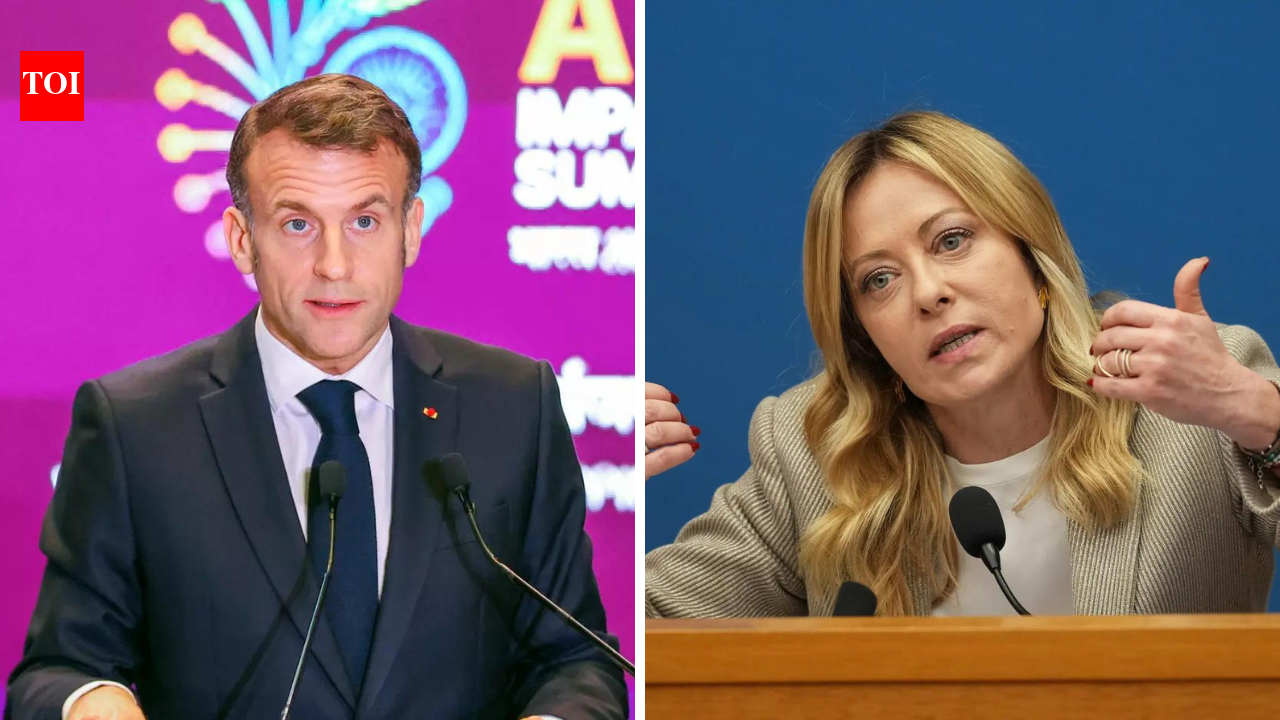
French President Emmanuel Macron on Thursday launched a broadside against Italian Prime Minister Giorgia Meloni, asking her to stop “commenting on what is happening in other people’s countries.”This comes after Meloni condemned the killing of a far-right activist, Quentin Deranque, claiming that the incident was “a wound for all of Europe.”

From Google To Chanel: French President Emmanuel Macron Highlights India Global Influence In Mumbai

Deranque, 23, died from head injuries after being attacked by at least six people last week on the sidelines of a far-right protest at a university in the city of Lyon.Most of the 11 suspects detained are from far-left movements, news agency AFP reported, citing sources.“If everyone just minded their own business, things would be just fine. Let everyone stay in their own lane,” Macron shot back in New Delhi.Macron also said there was no place in France “for movements that adopt and legitimise violence.”“Nothing can justify violent action — neither on one side nor the other, and not even in a head-to-head confrontation that is deadly for the republic,” he said.Macron said he was “struck by the fact that people who are nationalists, who don’t want to be bothered at home, are always the first to comment on what is happening in other countries.”Meanwhile, a member of the French president’s team told news agency AFP that Macron is “concerned about the situation, which he is closely monitoring.”“We must avoid any spiral of violence,” they said.Meanwhile, officials close to the Italian PM said Macron’s comments were met “with astonishment” and insisted that Meloni’s statement was meant to “show solidarity with the French people affected by this terrible event and that in no way interfere in France’s internal affairs.”“Frankly, I’ve been very surprised by this declaration from Macron. I was not expecting it. My reflection is not about France but about the risks of polarization,” Meloni told Sky later in the day.“I am sorry Macron perceived it as interference. Interference is something else, for instance, when a leader is elected by his citizens, and a foreign country says we will monitor on the rule of law. That’s interference,” she added, in a reference to when the French government said it would monitor rule of law in Italy days after Meloni’s election win.Among them are two parliamentary assistants to Raphael Arnault, a member of parliament from the hard-left France Unbowed (LFI) party, as well as a former intern.


Source link

BRO clears snow, NH-701A thrown open before time | India News


BRO clears snow, NH-701A thrown open before time

JAMMU: Border Roads Organisation completed snow clearance on National Highway 701A (Old Mughal Road), and two of its stretches were opened on Friday, ahead of schedule. These roads usually open around March-end.BRO teams cleared the stretch from Bufliaz (Poonch) to Peer Ki Gali (Poonch) under Project Sampark, and the stretch from Shopian to Peer Ki Gali under Project Beacon. “During the road opening, MoRTH director-general VK Rajawat, along with CE Project Sampark and Beacon, were present at Peer Ki Gali,” defence PRO Lt Col Suneel Bartwal said Friday.“Snow accumulation still exists on the adjoining hill slopes at certain vulnerable locations. Due to prevailing weather conditions, the possibility of avalanches cannot be ruled out,” Lt Col Bartwal said. He urged commuters to follow traffic advisories issued by the district administrations of Poonch and Shopian.An official spokesperson advised commuters to exercise extreme caution while travelling on the stretch. “Movement may be regulated depending upon weather conditions and safety assessments by authorities,” the spokesperson said.“DG MoRTH lauded all ranks involved in snow clearance operations under extremely harsh weather conditions. He said route recce and planning for the widening of NH-701A was in progress,” Col Bartwal said. “During the visit, DF MoRTH also reviewed work progress on NH-144A in all packages, and gave directions to expedite the same,” he added.


Source link

Operation Jwala: Arms, ammo recovered near LoC in J&K’s Rajouri | India News


Operation Jwala: Arms, ammo recovered near LoC in J&K’s Rajouri

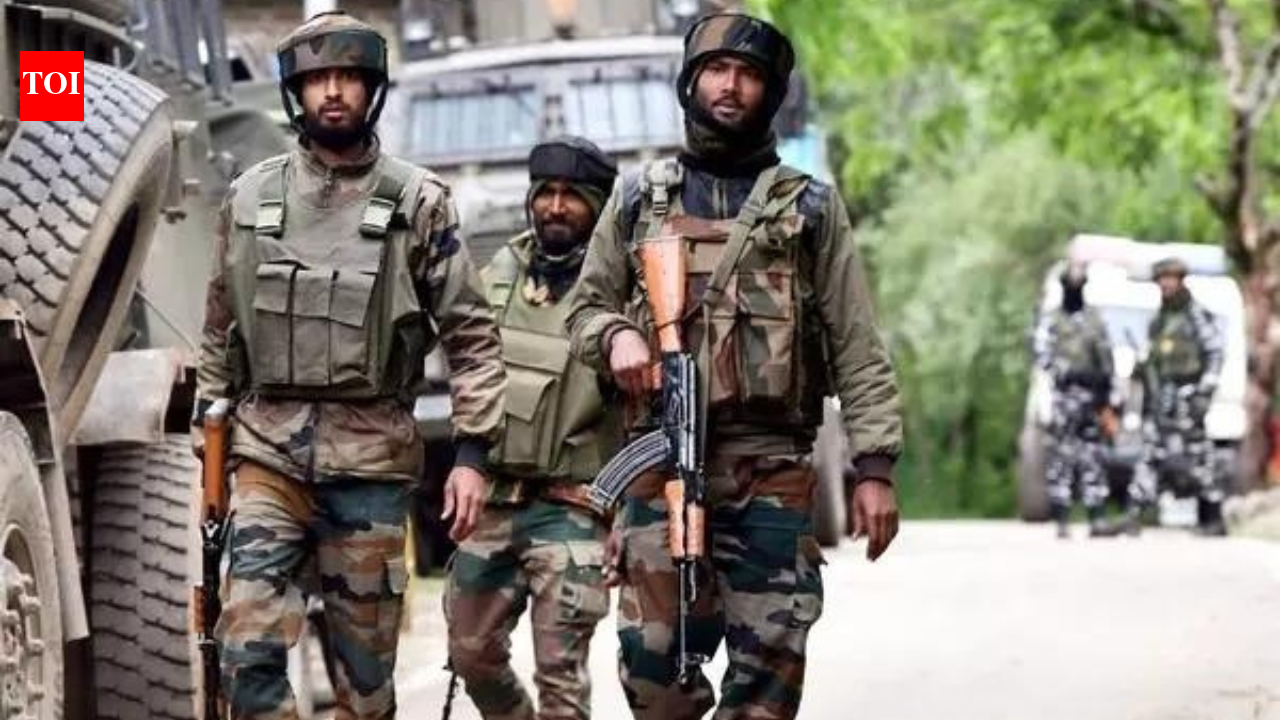
JAMMU: A joint team of the Army and Rajouri Police recovered a cache of arms and ammunition during a search operation in Nathua Tibba area in Sunderbani sector along the LoC in J&K’s Rajouri district on Friday.The searches under Operation Jwala came a day after security forces foiled an infiltration bid in the area. The recovery included an AK-47 rifle, two magazines, along with ammunition, three rucksacks, blankets, rations, and clothing, the Army’s White Knight Corps posted on X.The post stated that heavily bloodstained tracks were spotted, indicating serious injuries to the terrorist(s). “Operations remain ongoing with heightened vigilance and firm domination of the area,” it added.GOC White Knight Corps Lt Gen P K Mishra Friday visited forward areas in Balnoi sector in the frontier district of Poonch to review the prevailing security situation and assess the operational preparedness of Army units deployed along the border.Later in the day, Lt Gen Mishra, accompanied by GOC Counter Insurgency Force, visited the forward areas of Sunderbani sector to review the security situation following the thwarting of the infiltration attempt.


Source link

Peak XV raises $1.3 billion for funds, first since Sequoia split


Peak XV raises $1.3 billion for funds, first since Sequoia split

MUMBAI: Nearly three years after splitting from its Silicon Valley parent Sequoia Capital, Peak XV Partners (formerly Sequoia Capital India and Southeast Asia) has raised $1.3 billion for a clutch of funds to bet on startup founders building in India and the broader APAC region. The capital will be deployed across three funds–India seed, India venture which will largely cover early stage startups and APAC. The cheque amount for seed or very early-stage funding will be in the range of up to $5 million while India venture fund will make investments in the range of $5-$15 million, in cases going up to $20 million. The fresh capital sits alongside large portions of uninvested funds from its $1 billion growth fund raised in 2022, giving the company room to invest in startups across scale and sizes.“We have an existing growth fund that is about half uninvested. We are continuing to invest from that fund wherein we can fund up to $75-$100 million at the top end,” Shailendra Singh, MD at Peak XV Partners told TOI in an interview on Friday, even as he added that for growth investing, India still is one of the world’s most expensive markets. “What is happening in tech globally is that the dollars are concentrating into fewer and fewer companies and those very few companies are becoming enormous in scale. The phenomenon is also playing out in startups that are becoming big. In growth equity, we have to find the very few companies that will become very big and I think that’s one way in which tech investing is changing quite a bit,” Singh said.The fundraise comes days after three MDs quit the firm due to disagreements over economics and payouts, adding to the list of several senior level exits at the company since the split with Sequoia Capital. The funds have been backed by a mix of investors comprising universities, endowments, foundations and a few sovereign funds, Singh said and the target will be to exhaust the capital in two to three years. “The strong backing from our Limited Partners (LPs) for our inaugural Peak XV funds reflects their conviction in our markets, strategy and team,” the company said in a statement. Launched in 2006 as Sequoia India, the VC firm has been an early investor in a bunch of local blue-chip unicorns which today have grown to public listed companies such as Meesho, Zomato (now Eternal) and Groww.Besides continuing to back startups in core areas fintech and consumer, capital from the new funds will also be earmarked for AI-native startups and firms that are adopting an AI-first approach, Singh said. “AI is beginning to impact all other categories. What will be the AI applications in fintech, for instance, is one area we are very excited about. It’s only a matter of time we will see AI applications everywhere, Singh said, adding that India specific sovereign AI investments is another area the firm is actively considering.In all, Peak XV has backed over 450 companies in the broader APAC region including India of which 36 are listed on stock exchanges across geographies. The firm said that in 2024 and 2025, it generated over $1 billion in realised proceeds (return) each year, exceeding the total capital invested.


Source link

Rahul Chahar announces divorce after completing legal process


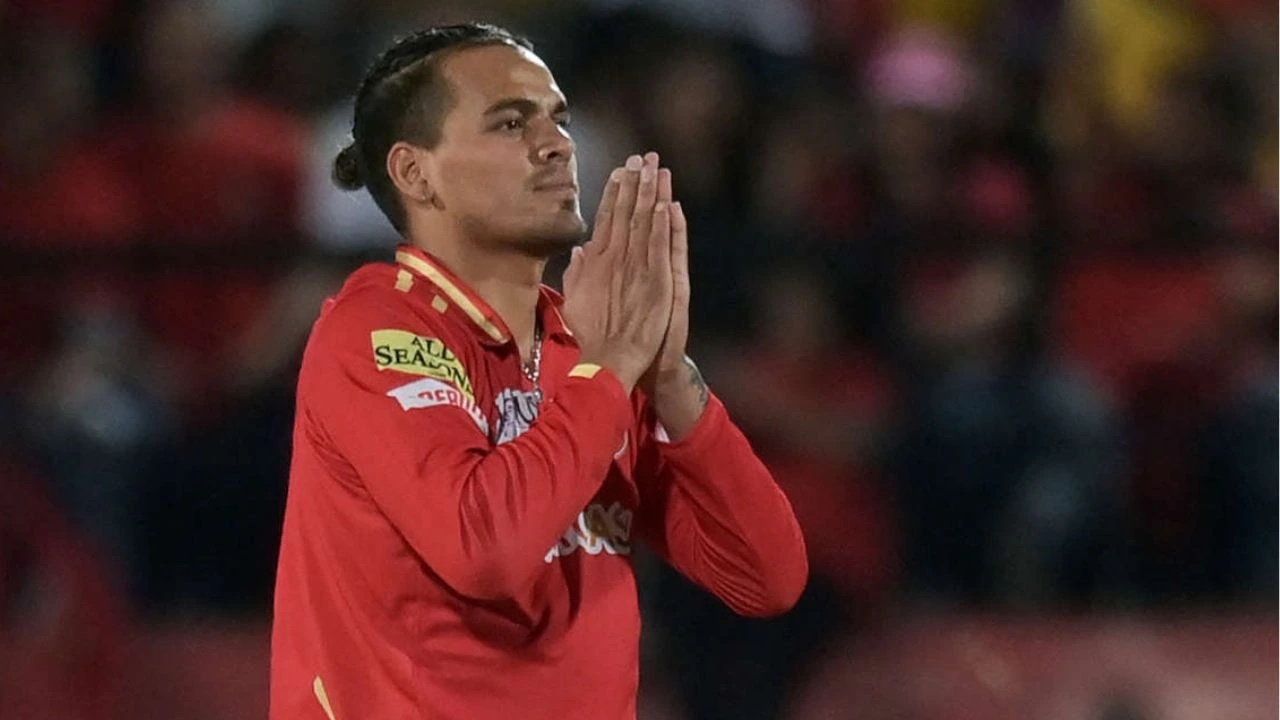
Indian cricketer Rahul Chahar confirmed his divorce from his wife Ishani Johar. After a long legal procedure, the spinner marked the end of a chapter of his personal life.

Chahar informed the news through a social media post. It was a long note describing the phase he went through. The cricketer described the last few months and the entire married life as a learning phase. Without expressing anger or regret, he believes it is a ‘reset,’ not an end.

Rahul Chahar married on March 9, 2022

The cricketer tied the knot with Ishani in Goa on March 9, 2022. On February 20, 2026, Rahul Chahar, through an Instagram post, announced that his married life with Ishani came to a conclusion after completing all legal procedures. The last fifteen months were not easy for him, as he had to navigate courtrooms, which might have helped him to learn patience, resilience, and personal strength.

Your daily dose of cricket!

next

“To Whom It May Concern. I entered marriage at a young age, before I fully understood myself, my worth, or the life I truly wanted to build. What followed were years of lessons I never expected and the last fifteen months spent navigating courtrooms, learning patience, resilience, and the strength that comes from truth,” Rahul said in the heartfelt Instagram post.

It is moment of learnings for the cricket

In the post, Rahul claimed that the end of the chapter does not make him angry, making him regret. He marked the situation as a phase with clarity, which can help him to transform through learnings and awakening.

“Today, that chapter of my life formally comes to a close. After due legal process. The matter has been settled with my resolution that cost a lot, bringing finality to this phase of my life. I close this chapter not with anger or regret but with clarity. Some relationships are not meant to last forever—they are meant to awaken us, teach us, and transform us,” he further wrote.

“A reset”

Before concluding the note, Rahul vowed that from here on, whatever he creates will be on self-respect and peace. and better choices. Without containing any bitterness, he wants to carry only lessons, dignity, and the courage to begin again.

“I move forward wiser, more self-aware, and certain of the life I deserve to build. This is not an ending. It is a release, a reset, a promise that everything I create from here will stand on self-respect, peace, and better choices. I carry forward no bitterness—only lessons, dignity, and the courage to begin again. Sincerely, Rahul Chahar,” the spinner concluded.

Read More: India suffer big injury scare as Hardik Pandya’s shot injures Mohammed Siraj


Source link

Received an ITR refund email or SMS alert? Income Tax Department has an important warning for taxpayers


Received an ITR refund email or SMS alert? Income Tax Department has an important warning for taxpayers

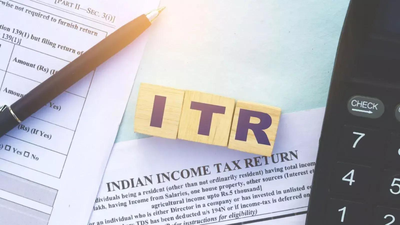
The Income Tax Department has cautioned taxpayers against a surge in refund-related fraud attempts, warning that scammers are exploiting delays and heightened expectations around tax refunds through fake emails, phone calls and SMS messages.In a message posted on X, the department urged taxpayers not to share one-time passwords (OTPs), bank details or personal information in response to unsolicited communications claiming to be from tax authorities.According to the department, fraudulent messages often contain minor spelling errors and fake links designed to appear authentic. Clicking such links may lead to identity theft, banking fraud and misuse of sensitive taxpayer information.The department advised taxpayers to verify all tax-related communication only through its official portal — incometax.gov.in — and avoid clicking on links received via email, SMS or social media claiming refund updates.The Income Tax Department’s message on X stated: “Fake messages may claim a refund or urgent action and push you to click a link. Don’t fall for it — never share OTPs or bank details. The department has asked taxpayers to verify communications on the official portal (incometax.gov.in). Report suspicious messages to webmanager@incometax.gov.in and mark a copy to incident@cert-in.org.in.”

How the tax refund scam works

Explaining the modus operandi, the department said fraudsters typically target taxpayers awaiting refunds by sending messages claiming that their income tax return is delayed, incomplete or stuck.Such messages use alarming phrases like “urgent action required”, “refund pending” or warnings of penalties if details are not verified. The message usually includes a link that redirects users to a fake website designed to resemble the official Income Tax portal.Victims are then prompted to enter personal details, bank account information, PAN numbers and OTPs, which are subsequently misused by fraudsters.

Income Tax Department advisory

The department issued the following precautions for taxpayers:

  • Never share OTPs, passwords or bank details
  • Verify all communications only through incometax.gov.in
  • Avoid clicking on suspicious refund links

Examples of fake messages include alerts such as:“Dear taxpayer, your refund is pending. Click now to avoid penalty incometax-refund-claim.xyz”.

How to report suspicious messages

Taxpayers receiving fraudulent messages can report them at:

  • webmanager@incometax.gov.in
  • Copy to: incident@cert-in.org.in
  • For assistance, taxpayers may contact the helpline numbers: 1800 103 0025 or 080-46122000.

What to do if your e-filing account is compromised

The department said individuals who suspect unauthorised access to their e-filing accounts should immediately report the matter to police or cybercrime authorities. Complaints can be filed online through cybercrime.gov.in/While filing a cybercrime complaint, taxpayers should include details such as PAN or Aadhaar information, a brief description of the incident, date and time of suspected misuse, when the breach was detected and any relevant supporting information.


Source link

US Supreme Court ruling: Top court’s decision impacts some, but not all of Trump’s tariffs


US Supreme Court ruling: Top court's decision impacts some, but not all of Trump's tariffs

The US Supreme Court on Friday struck down a series of sweeping tariffs imposed by President Donald Trump, ruling that he exceeded his authority under emergency economic powers. However, the decision does not affect several sector-specific duties that remain in place.In a 6-3 ruling, the conservative-majority court held that the International Emergency Economic Powers Act (IEEPA) “does not authorize the President to impose tariffs.” In its judgment, the court said, “The United States, after all, is not at war with every nation in the world. The Government instead relies exclusively on IEEPA. It reads the words ‘regulate’ and ‘importation’ to effect a sweeping delegation of Congress’s power to set tariff policy—authorizing the President to impose tariffs of unlimited amount and duration, on any product from any country.” The bench added that “had Congress intended to convey the distinct and extraordinary power to impose tariffs” through IEEPA, “it would have done so expressly, as it consistently has in other tariff statutes.” Chief Justice John Roberts, delivering the opinion, noted that “IEEPA contains no reference to tariffs or duties.”

Tariffs affected by Friday’s ruling

The ruling centres on Trump’s use of the 1977 IEEPA law, which allows the president to “regulate” trade in response to a declared national emergency.Trump first invoked the law in February 2025 to impose tariffs on goods from China, Mexico and Canada, citing drug trafficking as an emergency. In April, he used the same law to introduce “reciprocal” tariffs ranging from 10% to 50% on imports from nearly all US trading partners, arguing that the US trade deficit posed an “extraordinary and unusual threat.” A lower trade court had ruled in May that Trump overstepped his authority with the across-the-board levies and blocked most of them, though the decision had been paused pending appeal. The Supreme Court’s ruling upholds that earlier decision, effectively invalidating the country-wide tariffs imposed under IEEPA.

Tariffs that remain unaffected

The judgment does not impact industry-specific tariffs imposed under Section 232 of the Trade Expansion Act of 1962, which were justified on national security grounds.These include duties on steel, aluminium, lumber and automotive imports. Several government investigations that could lead to additional sectoral tariffs are still underway.Economists say the ruling could significantly reduce the overall US tariff burden. EY-Parthenon chief economist Gregory Daco had told AFP ahead of the decision that striking down the emergency tariffs would likely lower the average US tariff rate from 16.8% to around 9.5%. However, he cautioned that the relief may be temporary if the administration seeks alternative legal avenues to reimpose broad duties.Financial markets reacted positively to the verdict. The Dow Jones Industrial Average rose 207.03 points, or 0.42%, to 49,602.19, while the S&P 500 gained 33.44 points, or 0.52%, to 6,895.33 shortly after the announcement.


Source link

Lower tariffs, revenue setback & more: What SC ruling means for Trump’s economic agenda


Lower tariffs, revenue setback & more: What SC ruling means for Trump’s economic agenda
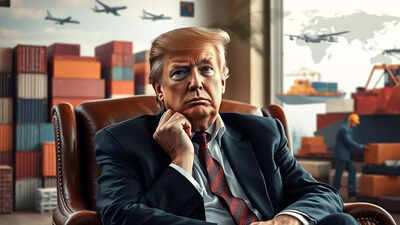
Economists anticipate the decision will also dent federal revenues. (AI image)

The Supreme Court has dealt a blow to US President Donald Trump’s favourite economic agenda – tariffs, to the extent that the US President has called the ruling a ‘disgrace’. Trump’s reciprocal tariffs have been called illegal by the apex court, The Supreme Court of the United States on Friday said that President Donald Trump exceeded his legal authority by invoking emergency economic powers to levy tariffs — a rare reprimand that delivers a significant setback to his economic program.What does the ruling mean? We take a look:

Lower tariff burden: At least for the moment!

With certain levies imposed under the International Emergency Economic Powers Act (IEEPA) deemed unlawful, the overall US tariff rate is expected to decline, at least in the near term, reports AFP.According to The Budget Lab at Yale University, doing away with the IEEPA-based tariffs would bring the average effective tariff rate down to 9.1 percent — still the highest level seen since 1946, excluding 2025. Had those emergency-based tariffs remained in place, the rate would have stood at 16.9 percent.Analysts suggest that even if the Trump administration moves to reimpose similar trade barriers under alternative statutes, the resulting tariff levels would probably be lower than those previously enforced.Also Read | Why were Trump tariffs ruled illegal by Supreme Court? Top points from what SC said in its rulingHeather Long, chief economist at Navy Federal Credit Union, said the ruling compels a recalibration of trade policy that could ultimately result in reduced tariff levels and a more structured approach to introducing future duties.Oliver Allen of Pantheon Macroeconomics noted that the tariffs appear to have weighed on Trump’s approval ratings, while voter dissatisfaction over elevated prices continues to be a politically sensitive issue ahead of the November midterm elections.

Hit to Trump government revenues

Economists anticipate the decision will also dent federal revenues. Estimates suggest that tariffs enacted under IEEPA generated between $130 billion and $140 billion by the close of 2025.ING analysts Carsten Brzeski and Julian Geib observed that the issue of potential reimbursements remains unresolved and will be addressed by lower courts in the months ahead.They emphasized that refunds would not be automatic; companies seeking repayment would need to pursue legal action. That process is already underway, with more than 1,000 corporate entities reportedly engaged in litigation.Should the government ultimately be required to return collected duties, it could face an additional fiscal strain.Also Read | Trump tariffs struck down by US Supreme Court: What it means for India – 55% exports to America free from 18% duty

Reduced room to maneuver

A key worry is that Trump may forfeit some of the “flexibility” to deploy tariffs on national security grounds or as bargaining tools in trade talks — a concern previously flagged by US Treasury Secretary Scott Bessent.Even so, he has argued that the administration retains the ability to rely on tariffs as a source of government revenue.Erica York, vice president of federal tax policy at the Tax Foundation, said invalidating tariffs imposed under emergency authority would limit the president’s capacity to introduce sweeping duties at will.However, Wendy Cutler, senior vice president at the Asia Society Policy Institute, suggested that US trading partners are unlikely to abandon recently concluded tariff arrangements. In her view, they understand that withdrawing could ultimately leave them in a weaker position in dealings with the White House.Also Read | ‘US not at war with every nation’: Supreme Court’s sharp put down in ruling against Trump’s illegal tariffs

Alternative routes

Despite the setback, President Donald Trump has other legal mechanisms available to reinstate trade barriers, and analysts anticipate he may pursue them.Section 122 of the Trade Act of 1974 permits the president to respond to balance-of-payments concerns by introducing temporary import duties of up to 15 percent.In addition, Section 338 of the Tariff Act of 1930 authorizes the imposition of tariffs as high as 50 percent on nations deemed to be engaging in discriminatory trade conduct.Another established tool is Section 232 of the Trade Expansion Act of 1962, which has already been used repeatedly to levy sector-specific tariffs that were not affected by Friday’s decision.Likewise, Section 301 of the Trade Act of 1974 — employed during Trump’s first term to target imports from China — remains an option, though it requires a formal investigation process similar to Section 232.Earlier this year, Trump told The New York Times that he could also consider restructuring the tariffs as licensing fees.


Source link