Breaking News
‘Babar Azam has found himself a little bit behind’: Faf du Plessis explains Pakistan star’s T20 World Cup struggles | Cricket News


'Babar Azam has found himself a little bit behind': Faf du Plessis explains Pakistan star’s T20 World Cup struggles
Pakistan’s Babar Azam (AP Photo/Eranga Jayawardena)

Pakistan star batter Babar Azam has had a tough T20 World Cup so far, managing just 66 runs in four matches with a modest strike rate. Because of this, he has been moved down the batting order from his usual opening slot to the middle order, a move that has sparked debate.Former South Africa captain Faf du Plessis has backed Pakistan head coach Mike Hesson’s decision, saying it makes sense given how fast modern T20 cricket has become. He pointed out that strike rates in the powerplay have increased massively, and batters now need to score at a much quicker pace.

Why Pakistan don’t trust Babar Azam any more | T20 World Cup 2026

“Look, I think first of all, all great players evolve their careers at different points in their careers. So someone like Babar, we have known him as one of the world’s best players for a very, very long time. I think the game of T20 cricket has moved so fast forward and towards strike rates that he’s found himself a little bit behind in terms of strike rates,” Du Plessis said.He added, “Looking at him in the last couple of years and certainly in the power play, the game has moved too fast, too forward, to be at a 120 strike rate. Now you need to be 160-190-200 plus for you to maximise that first six overs.”Despite this, Du Plessis believes Babar is still very valuable, especially on slower pitches where strike rotation is important. “So I think if you’re someone like Mike Hesson, what he’s trying to do is he’s trying to find the best way to introduce him into the game and on spinning pitches in the middle, that’s where someone like him is worth his gold,” he said.He also noted, “When you come to flat wickets, those kinds of roles these days are not as important anymore… So I can imagine he almost looked at how I can maximise the best out of Babar Azam.”


Source link

What’s in a name? The debate over renaming cities and landmarks | India News


What’s in a name? The debate over renaming cities and landmarks
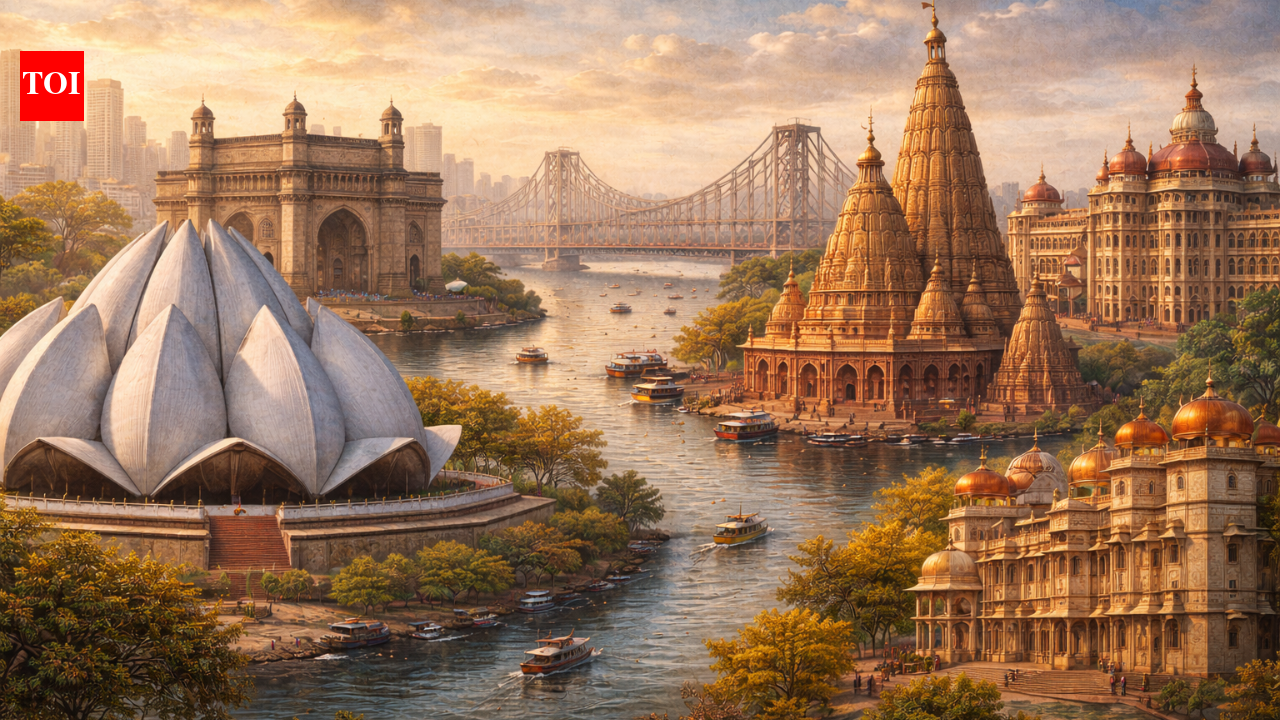
This image is used for representative purpose only (AI-generated)

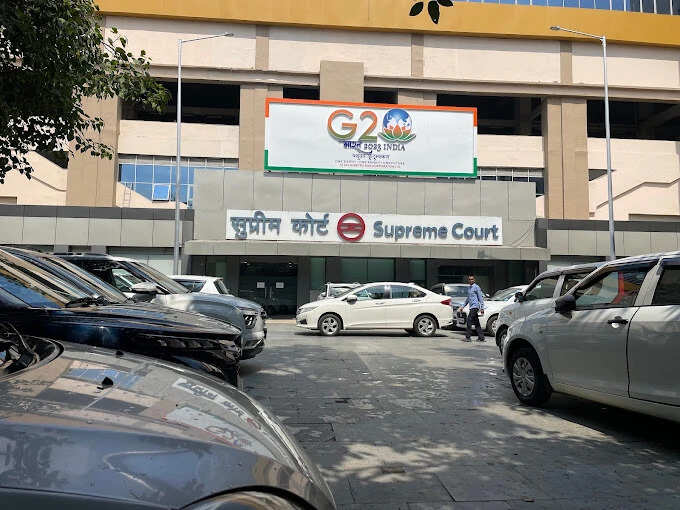
You are travelling on Delhi Metro’s Blue Line. The train slows down. A familiar announcement echoes through the coach: “Agla station hai… Supreme Court.”On the display board, it still reads in Hindi: “सुप्रीम कोर्ट.”For most commuters, it is just another stop. For a few, it sparks a question. If the country’s highest court is officially referred to in Hindi as Sarvochh Nyayalaya,” why does the station continue to use the English name? Think about it. How often do you still call Varanasi by its older, more familiar name—Banaras? Or refer to Prayagraj as Allahabad in everyday conversation? The instinct is almost automatic. Names, after all, are more than administrative labels; they are memories, habits and histories rolled into a single word.Each renaming brings with it fresh signage, updated records and official notifications. But while governments can issue gazette notifications overnight, public memory rarely updates at the same pace. This results in creating a visible overlap of the past and the present, where old names continue in conversation and memory, even as new ones appear on official boards, documents and public announcements.

From Seva Teerth to metro maps: How a name is reshaping public space and law

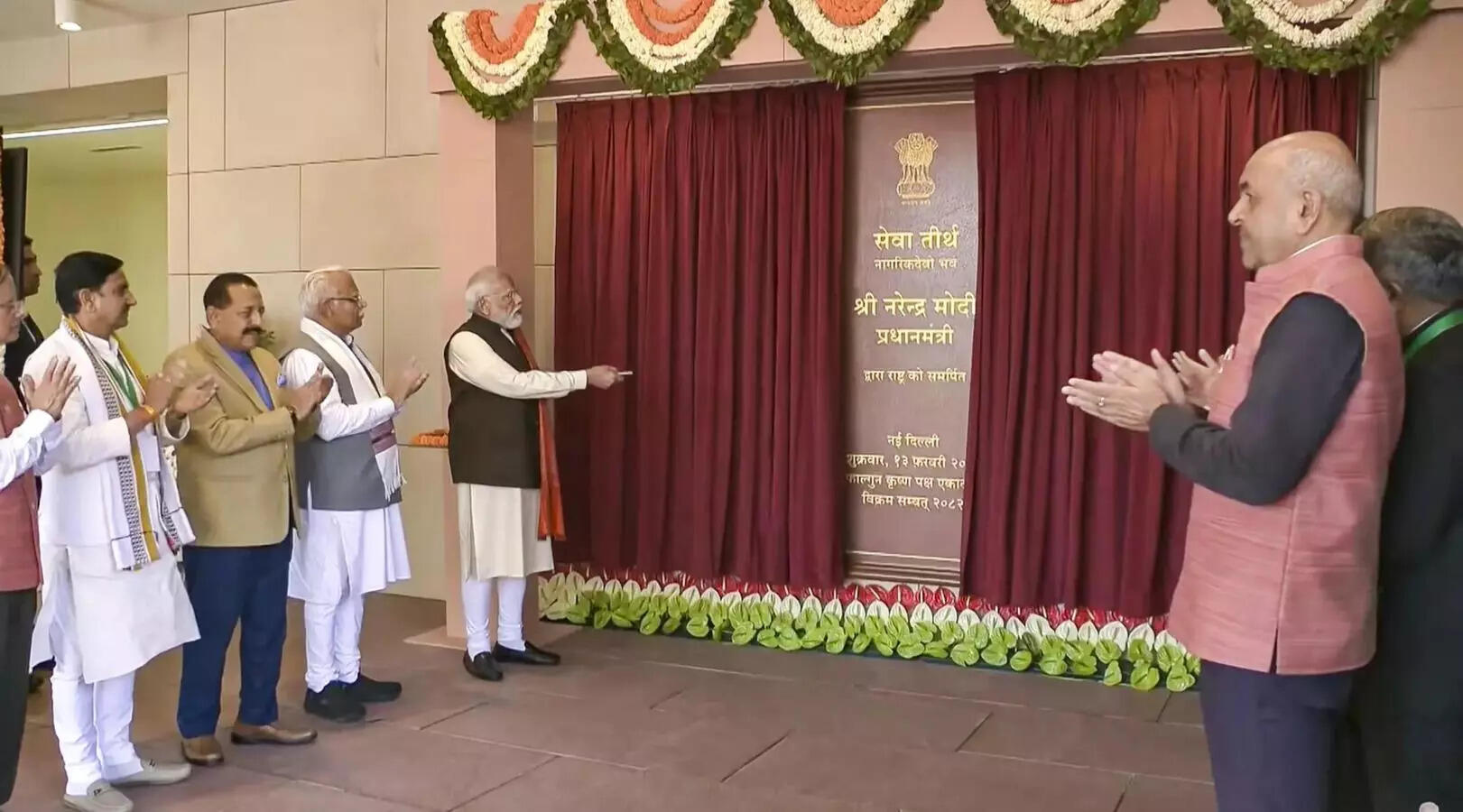
In the heart of the capital, a name change has sparked public discussion, policy attention and administrative implications.Following the renaming of an iconic complex as Seva Teerth, discussions have also extended to process, precedent and legality that have reached the Supreme Court.On February 13, Prime Minister Narendra Modi unveiled the name Seva Teerth for the new building complex housing the Prime Minister’s Office, the National Security Council Secretariat and the Cabinet Secretariat. He formally inaugurated Seva Teerth and Kartavya Bhavan-1 & 2 and addressed a public programme the same evening.

PM Modi inaugurates new PMO building (PTI image)

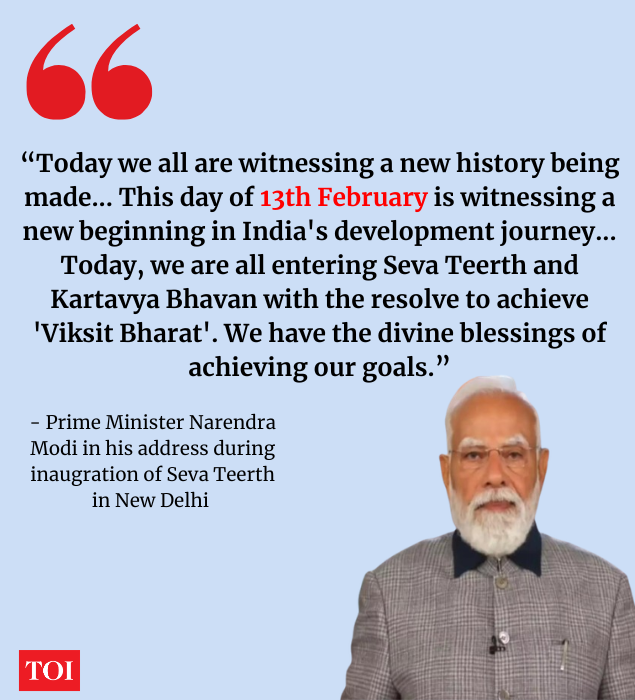
The government described the inauguration as “a transformative milestone in India’s administrative governance architecture,” stating that the new complexes consolidate ministries that were earlier functioning from fragmented and ageing infrastructure across the Central Vista area.Kartavya Bhavan-1 and 2 accommodate key ministries including Finance, Defence, Health & Family Welfare, Corporate Affairs, Education, Culture, Law & Justice, Information & Broadcasting, Agriculture & Farmers Welfare, Chemicals & Fertilizers and Tribal Affairs.Addressing the gathering, PM Modi said: “Today we all are witnessing a new history being made… This day of 13th February is witnessing a new beginning in India’s development journey… Today, we are all entering Seva Teerth and Kartavya Bhavan with the resolve to achieve ‘Viksit Bharat’. We have the divine blessings of achieving our goals.”

PM Modi's address during Seva Teerth inauguration

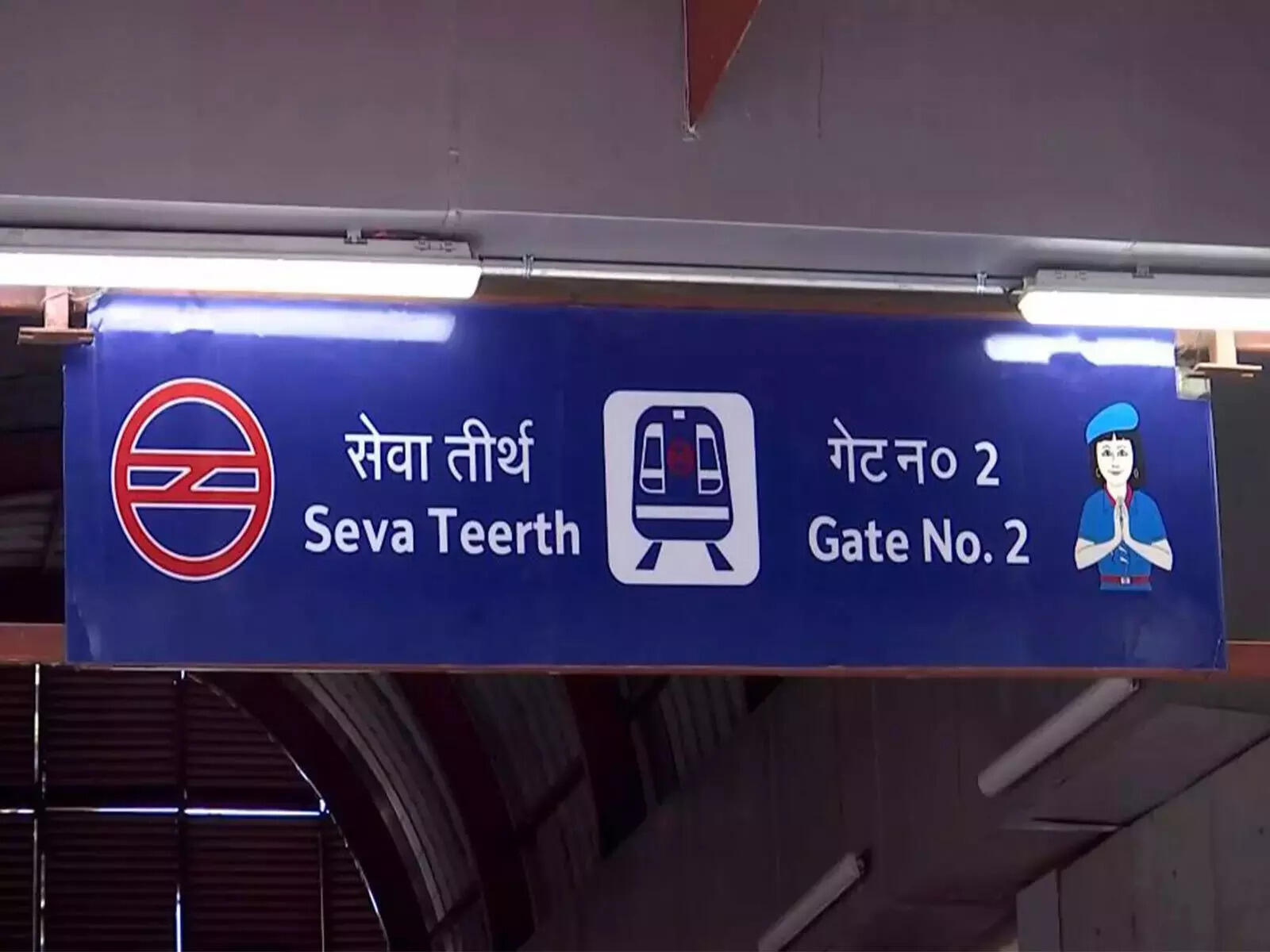
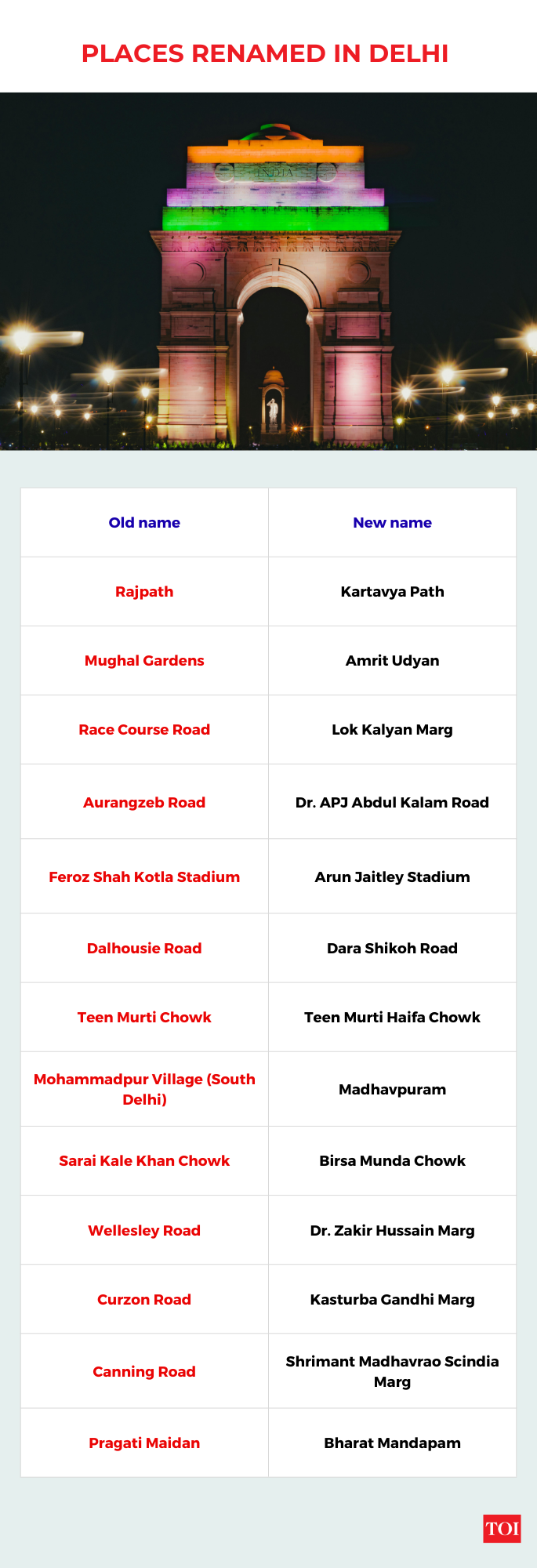
A day after the unveiling of the PMO complex, the Udyog Bhawan Metro Station on the Yellow Line was renamed Seva Teerth. The station lies beside Lok Kalyan Marg (earlier called Race Course) and serves lakhs of commuters across the capital.The renaming aligns with the government’s broader move since 2014 to shift away from colonial-era nomenclature. Over the years, Race Course Road became Lok Kalyan Marg, Rajpath became Kartavya Path and other similar changes were introduced.

Delhi's Udyog Bhawan Metro Station renamed to Seva Teerth (ANI image)

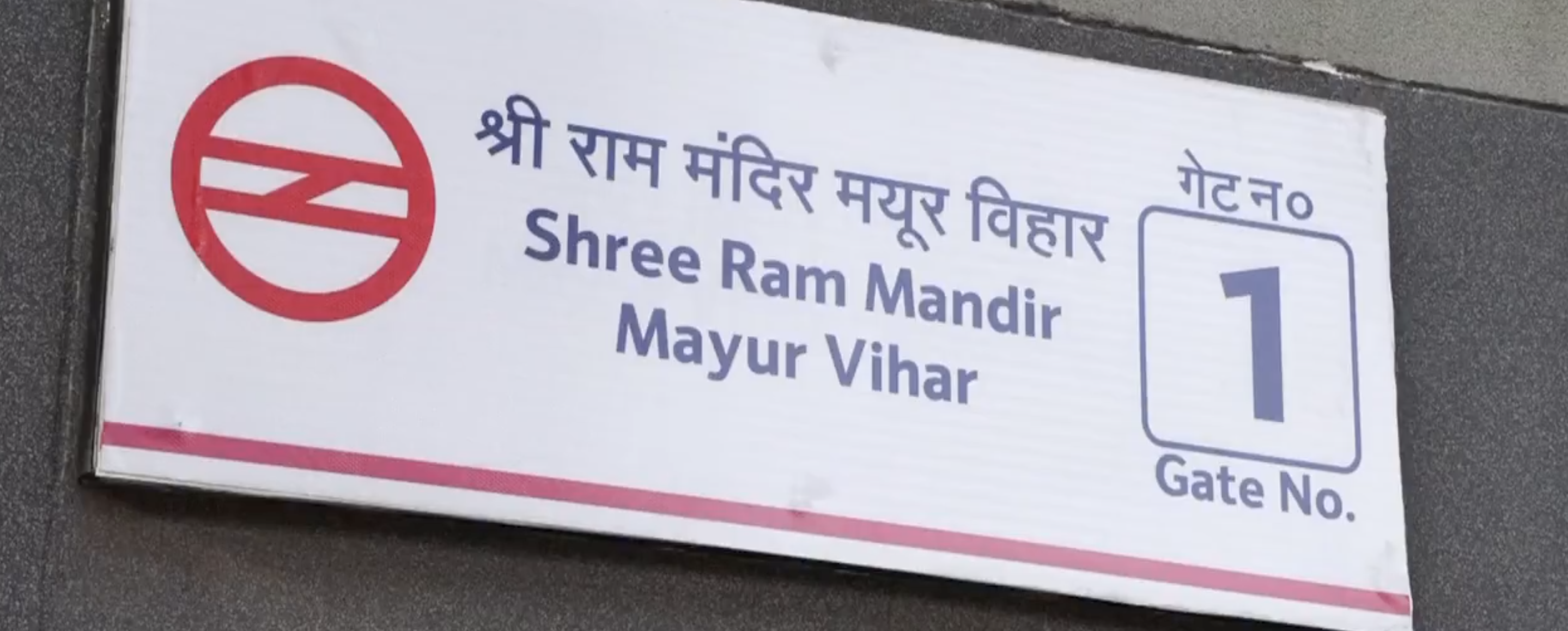
Another recent example is the Mayur Vihar Pocket 1 Metro Station, now renamed Shree Ram Mandir Mayur Vihar. The station, located on the Pink Line, connects major transit points including Anand Vihar Railway Station, Rajouri Garden and Lajpat Nagar.Explaining the decision, a local resident and Sanatan Dharm Sabha patron Govind Singh Pawar said: “People used to get confused between Mayur Vihar Phase 1 and Mayur Vihar Pocket 1. The BJP government, which promotes Sanatan Dharma, has corrected this. The people are very happy with this decision.”
.

.

“I don’t really see any harm in changing metro station names. But yeah, it can be confusing for people who don’t travel every day. Someone who visited Mayur Vihar Pocket 1 earlier might struggle to find it again on the map after the name change. It’s a small issue though, people will get used to it over time. Mayur Vihar connects to Noida and Ghaziabad, so many students and working professionals live here, and I don’t think this will affect their daily lives much,” a local resident said.

Places renamed in Delhi

A plea before the Delhi high court seeks to designate the Hindi name of the Supreme Court Metro Station as ‘Sarvochh Nyayalaya’ instead of simply writing ‘Supreme Court’ in Devanagari script.Advocate Umesh Sharma, who filed the petition, told the court: “The Metro station had been named ‘Supreme Court’. We demanded that its name be ‘Sarvochh Nyayalaya’… On the Supreme Court’s board and website it is written as ‘Sarvochh Nyayalaya’.”He argued that under the Official Languages Act, 1963, Hindi in Devanagari script must be used appropriately and that merely transliterating the English term does not fulfil the mandate.Appearing before the Delhi high court, the Delhi Metro Rail Corporation (DMRC) opposed the plea, citing financial and operational concerns. Counsel for DMRC submitted: “It comes as a financial burden. One such change is 40-45 lakh per station… It will involve a change in the roadmap. It’s a PSU and the public’s money.”The corporation also warned of a potential ripple effect, stating that similar litigations could follow if the change were allowed.However, the court observed: “Multiple litigation is not (the defence). We have to honour the act.”It directed the Centre and the DMRC to file affidavits, keeping in view the Official Languages Act, 1963 and the Official Languages (Use for Official Purposes of the Union) Rules, 1976.

The law behind a name: What the Constitution says on renaming?

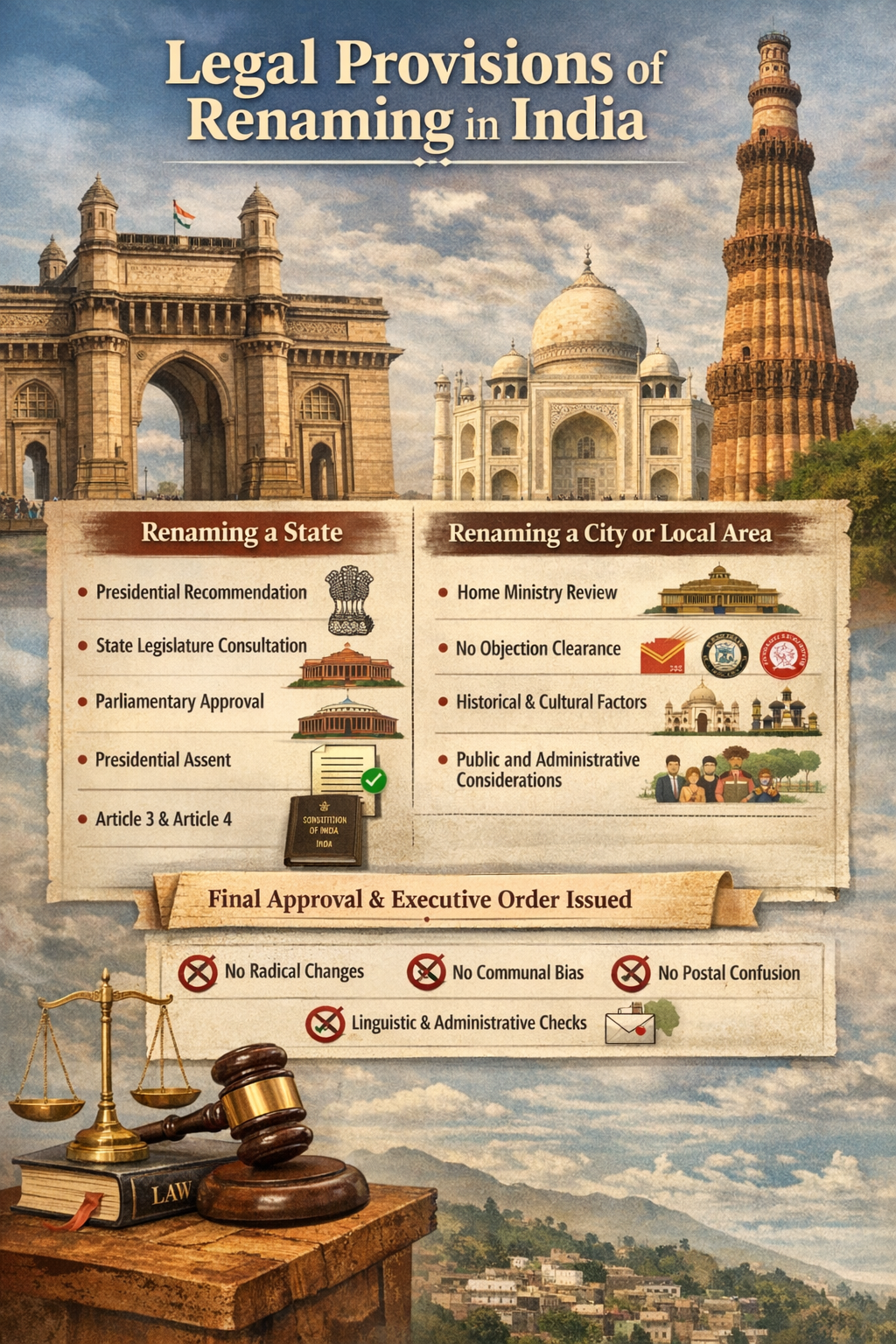
The legal framework governing the renaming of places in India differs depending on whether the change involves a state or a city/local area. The Constitution lays down a clear procedure for states, while cities are guided by legislative powers and central guidelines.The Constitution of India provides for the renaming of a state under Article 3. It empowers Parliament to form new states and alter the areas, boundaries or names of existing states by law.Under this provision:

  • A bill for renaming a state can be introduced in Parliament only on the recommendation of the President.
  • Before the bill is introduced, the President refers it to the concerned State Legislature to express its views within a specified period.
  • The views of the State Legislature are not binding on Parliament, but they must be taken into consideration.
  • The bill must be passed by a simple majority in both Houses of Parliament.
  • After passage, the bill is sent to the President for approval, and upon assent, it becomes law.

Article 4 complements Article 3 by enabling Parliament to make consequential amendments necessary to give effect to such changes.
.

.

The procedure for renaming a state can be initiated either by Parliament or by a State Legislature passing a resolution and sending it to the Central Government for approval. The Central Government then introduces the bill in Parliament after obtaining the President’s recommendation.At the central level, the proposal is examined by the ministry of home affairs in consultation with concerned agencies. Approval is granted only after obtaining no objections from:

  • The Department of Posts
  • The Survey of India
  • The Ministry of Railways

These agencies confirm that there is no other village, town or city with a similar name in official records that could create administrative confusion.The Central Government considers factors such as:

  • Historical significance
  • Public sentiment
  • Linguistic affinity
  • Administrative convenience
  • National integration

Guidelines issued in 1953 further state that:

  • The change should not involve a radical alteration but may allow phonetic correction or transliteration.
  • It should not be based on communal or sectarian considerations.
  • It should not create confusion for postal, railway or other services.
  • It should not adversely affect the interests of any other state or union territory.

After scrutiny and approvals, an executive order is issued formalising the renaming.

The administrative cost: What renaming entails

Renaming a city or state is not limited to replacing a signboard — it triggers a multi-layered administrative overhaul involving state and central agencies, public institutions and private entities.The material shows that the cost of renaming a city or state can range from Rs 200 crore to Rs 500 crore, depending on its size and global recognition. In the case of a major city, estimates suggest that the figure can go up to Rs 1,000 crore.

  • The renaming of Allahabad to Prayagraj reportedly cost over Rs 300 crore, according to government estimates.
  • The Indian Railways spent Rs 2.5 crore to change Bombay to Mumbai on signboards, tickets and timetables in 1995.
  • Using a revenue-based estimation model, the projected cost of renaming India to Bharat was calculated at approximately Rs 14,304 crore, according to government of finance.

The expenditure typically covers:

  • Updating road signage, highway markers and railway station boards
  • Revising official maps and land records
  • Changing government stationery and departmental documentation
  • Modifying databases across ministries and civic authorities
  • Updating railway tickets, timetables and postal records
  • Adjusting airport signage and aviation documentation
  • Changes to Aadhaar, passports, voter IDs and other official records

Beyond government departments, private institutions like banks, schools, businesses and corporate houses must also update their records, branding and promotional material. This involves both direct expenditure and indirect administrative costs.

.

.

The process requires coordination between the State Government, the Ministry of Home Affairs, the Survey of India, the Railways and the Department of Posts. Government guidelines have historically outlined considerations for renaming proposals. For instance, a 1953 Ministry of Home Affairs communication noted that it “should be discouraged as far as possible unless there are compelling reasons,” observing that such changes create confusion and administrative burden.

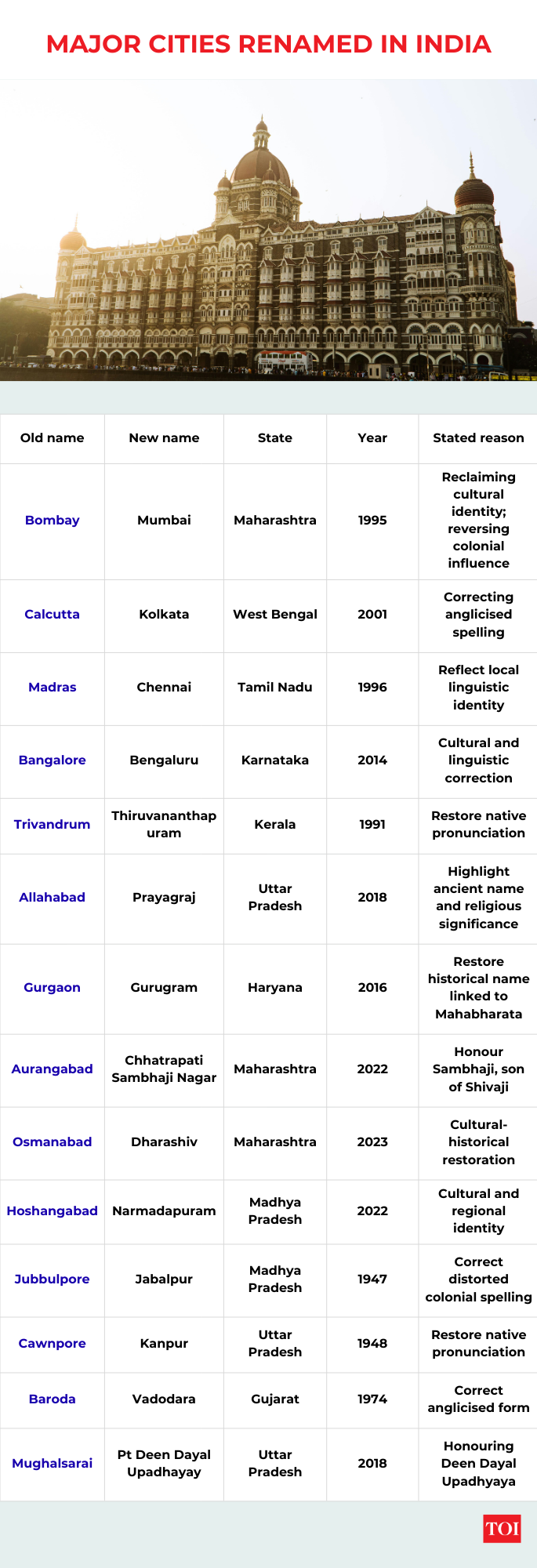
List of cities renamed

The material also highlights that renaming affects not only local systems but district, state, national and even international documentation. In a country as large and diverse as India, this coordination significantly increases logistical complexity.

Identity, impact and the Supreme Court: Advantages, challenges and the 2023 ruling

Renaming a place is driven by multiple factors. The rationale behind renaming includes:

  • Rapid urbanisation, with India projected to add 416 million people to cities by 2050, requiring new infrastructure and names.
  • Reclaiming identity by correcting anglicised or distorted spellings imposed during colonial rule.
  • Honouring national leaders, martyrs and culturally significant figures.
  • Asserting linguistic and cultural identity of regions.
  • Political repositioning and symbolic shifts in public memory.

Supporters argue that renaming can:

  • Instil pride, dignity and a sense of belonging among residents
  • Preserve and revive cultural heritage and civilisational consciousness
  • Correct historical distortions in spelling and pronunciation
  • Shape the values inscribed in public space
  • Build a distinctive brand identity that may attract tourism and investment

On the loop side there can be several challenges associated as well:

  • Confusion in a global economy once a city has achieved international recognition
  • Administrative inconvenience and extensive paperwork updates
  • Economic strain due to large public expenditure.
  • Emotional and cultural resistance from residents accustomed to older names
  • Risk of social division and political polarisation
  • Possible erosion of historical continuity and public memory

In 2023, the Supreme Court dismissed a Public Interest Litigation seeking the formation of a renaming commission focused on “ancient India” and restoration of names allegedly altered by “barbaric invaders”.

Supreme Court metro station (Image/X)

The bench made it clear that the “country cannot remain a prisoner of the past.” It observed that selectively invoking history could create divisions”.

What’s in a name? Perhaps everything.

You are still in that metro coach. The announcement has passed, the doors have opened and closed, and the train has moved on.Centuries ago, William Shakespeare wrote in Romeo and Juliet:

“What’s in a name? That which we call a rose,By any other name would smell as sweet.”

William Shakespeare

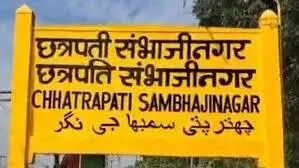
The line suggests that essence matters more than labels. Yet in modern India, names are rarely just labels. They carry history, memory, politics and identity. From Calcutta becoming Kolkata to Aurangabad being renamed Chhatrapati Sambhaji Nagar, each decision is framed as restoration, assertion or correction.

Aurangabad renamed to Chhatrapati Sambhajinagar (Image/X)

But even as official notifications are issued and signboards replaced, conversations at tea stalls, in homes and on public transport often tell a different story. Banaras survives in speech. Allahabad slips into daily vocabulary. Old and new coexist.In India, names often carry layers of history, memory and identity. They are reflections of power, pride, protest, policy and perception. They can unify, divide, restore or rebrand. They can cost hundreds of crores or just a few strokes of ink in a gazette. But they always mean something.So the next time the metro announcement echoes through the coach, whether it says Supreme Court or Sarvochh Nyayalaya, the question may not simply be what the station is called.It may be what we choose to remember when we hear it.

From India To Bharat: PM Modi’s Nameplate Grabs Eyes, Draws Global Attention At AI Impact Summit


Source link

FMCG firms bet on volume-led growth as easing inflation seen improving margins in FY27


FMCG firms bet on volume-led growth as easing inflation seen improving margins in FY27

India’s leading fast-moving consumer goods companies expect growth to shift towards volumes in FY27, as easing inflation and softer commodity prices begin to reduce cost pressures and support margin recovery.Industry executives said the operating environment has turned more favourable after several volatile quarters, with mid- to high single-digit volume growth already reported by major FMCG players in the December quarter, according to PTI.Key raw materials such as edible oils, wheat, copra and surfactants have softened, while macroeconomic factors including GST rationalisation, higher minimum support prices (MSPs) and a healthy crop season are expected to aid consumption recovery.Most companies implemented calibrated price hikes earlier in the fiscal year and now anticipate demand expansion to be driven largely by volumes rather than pricing gains. Some players also indicated they may pass on part of the input cost benefits through consumer offers, higher grammage or selective discounts while remaining cautious about residual impacts of earlier price increases.Companies including Dabur, Marico, Britannia, Hindustan Unilever Ltd (HUL) and Godrej Consumer Products Ltd (GCPL) expect EBITDA margins to improve as inflation cools and consumer sentiment strengthens.“As far as inflation is concerned, we saw huge inflation in Quarter 3. Inflation is ebbing a bit, as we see. Coconut oil prices are softening, SLES prices are softening, and vegetable oil prices are also softening. So, the next year growth is going to be more volume-driven growth and not so much price-driven or value-driven growth,” said Dabur India CEO Mohit Malhotra in the latest earnings call, PTI quoted.Malhotra added that price increases will still have some effect as hikes implemented earlier in September continue to roll over into upcoming quarters.FMCG companies also reported sequential improvement in urban demand, while rural markets continued to outperform with faster growth momentum.Marico MD & CEO Saugata Gupta said the company sees a “gradual recovery in consumption, supported by moderating inflation, improved affordability following the recent GST rate rationalisation, higher MSPs, and a healthy crop sowing season.“We believe these factors provide a constructive backdrop for demand improvement across both urban and rural markets in the coming quarters,” Gupta said.The company aims to sustain volume growth even as pricing growth moderates, and expects operating profit growth to improve as input cost pressures ease.“With input cost easing and margin pressure subsiding, we expect progressive improvement in operating profit growth rates over the coming quarters,” Gupta told investors, adding that copra prices have corrected by 25–30 per cent after an abnormal rise.Britannia Industries also highlighted favourable commodity trends supporting profitability.“Commodity prices have been stable for us. If you take a look at wheat flour, which is very important, it actually came down marginally in Q3 ’26. And as we know that February and March are critical seasons for wheat, and based on this we will see how it behaves going ahead in the future, but at the moment, it looks to be stable,” said Britannia Industries MD & CEO Rakshit Hargave.HUL said the operating environment and underlying demand are showing a “steady improvement”.“Consumer confidence, as evidenced by the RBI consumer survey, is also seeing a consistent improvement signifying a recovery in consumer sentiment and willingness to spend,” said CEO & MD Priya Nair during the earnings call.HUL expects FY27 to outperform the current fiscal year.“Looking ahead, we expect the operating environment to remain conducive for a sustained recovery in consumption… we expect growth in financial year’27 to be better than financial year’26,” said CFO Niranjan Gupta.Godrej Consumer Products Ltd remains confident of maintaining high single-digit consolidated revenue growth.“Our India business is expected to deliver continued growth performance while holding normative EBITDA margins in the coming quarter,” said GCPL MD & CEO Sudhir Sitapati.The company also expects its GAUM (Godrej Africa, USA and Middle East) business to deliver double-digit revenue and profit growth, despite temporary macroeconomic and pricing pressures in Indonesia and Latin America.“At a consolidated level, while temporarily macroeconomic and pricing pressure in Indonesia and Latam may have moderated the full year EBITDA growth, we remain confident of a robust exit trajectory and sustain profitability momentum into FY’27,” Sitapati said, adding, “we expect this trajectory to sustain through Q4 FY’26”.


Source link

Nearly 300 drones, 50 missiles: Russia unleashes massive overnight assault on Ukraine, energy sites hit


Nearly 300 drones, 50 missiles: Russia unleashes massive overnight assault on Ukraine, energy sites hit

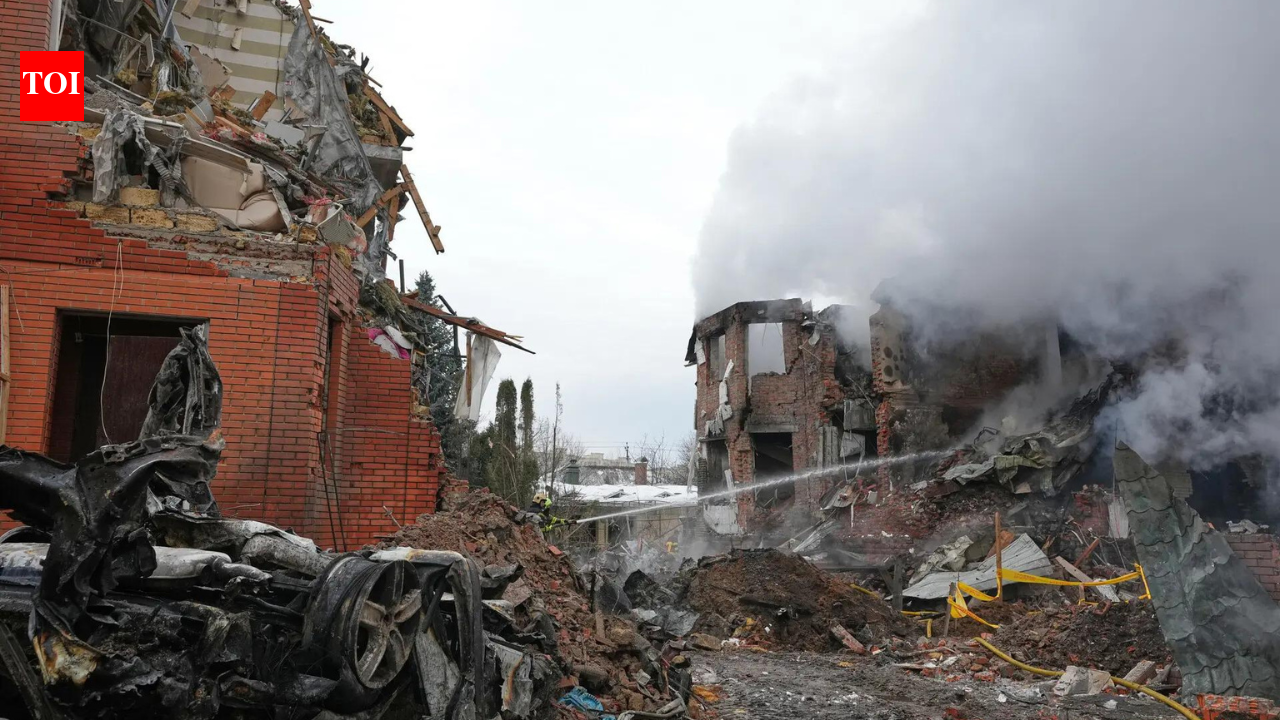
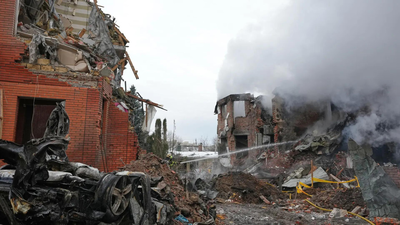
Russia launched a large-scale missile and drone attack on Ukraine overnight, killing one person in the Kyiv region and damaging energy infrastructure in the south, AP reported, citing Ukrainian officials.Ukraine’s emergency service said Sunday that one person died in the Kyiv region and eight others, including a child, were rescued from the rubble of destroyed buildings.

Putin Orders Russians Out From Cuba Before ‘FINAL SHOWDOWN’ With Trump? Storm Brewing In Caribbean

The strikes caused damage and fires in five districts in Kyiv’s suburbs. In the village of Putrivka in the Fastiv district, emergency teams worked to rescue people trapped under debris.In southern Ukraine, Russia struck energy infrastructure in the Odesa region, triggering significant fires that were later extinguished, the Emergency Service said.According to Ukraine’s air force, the overnight assault involved 297 drones and 50 missiles of various types. It said 274 drones and 33 missiles were shot down or otherwise neutralised. Of the remaining projectiles, 14 missiles and 23 drones hit 14 locations, while three missiles were unaccounted for.The latest barrage comes as Ukraine continues to face sustained aerial attacks, nearly four years after Russia launched its full-scale invasion. In recent months, Moscow has intensified strikes on Ukraine’s energy grid, leading to power and heating disruptions during winter.Separately, an explosion in the western city of Lviv killed one person and injured 25, Ukrainian President Volodymyr Zelenskyy said in a Telegram post Sunday. One person has been arrested in connection with the incident, which officials said was unrelated to Russia’s aerial attacks.On the Russian side, the defence ministry in Russia said its air defences destroyed 86 Ukrainian drones overnight. In the Russian-occupied Ukrainian city of Luhansk, two Ukrainian drones struck an oil depot, injuring a security guard and setting a fuel tank on fire, Moscow-installed leader Leonid Pasechnik said.


Source link

For some Gujarat groups, parental consent for marriage written in ‘constitution’ | India News


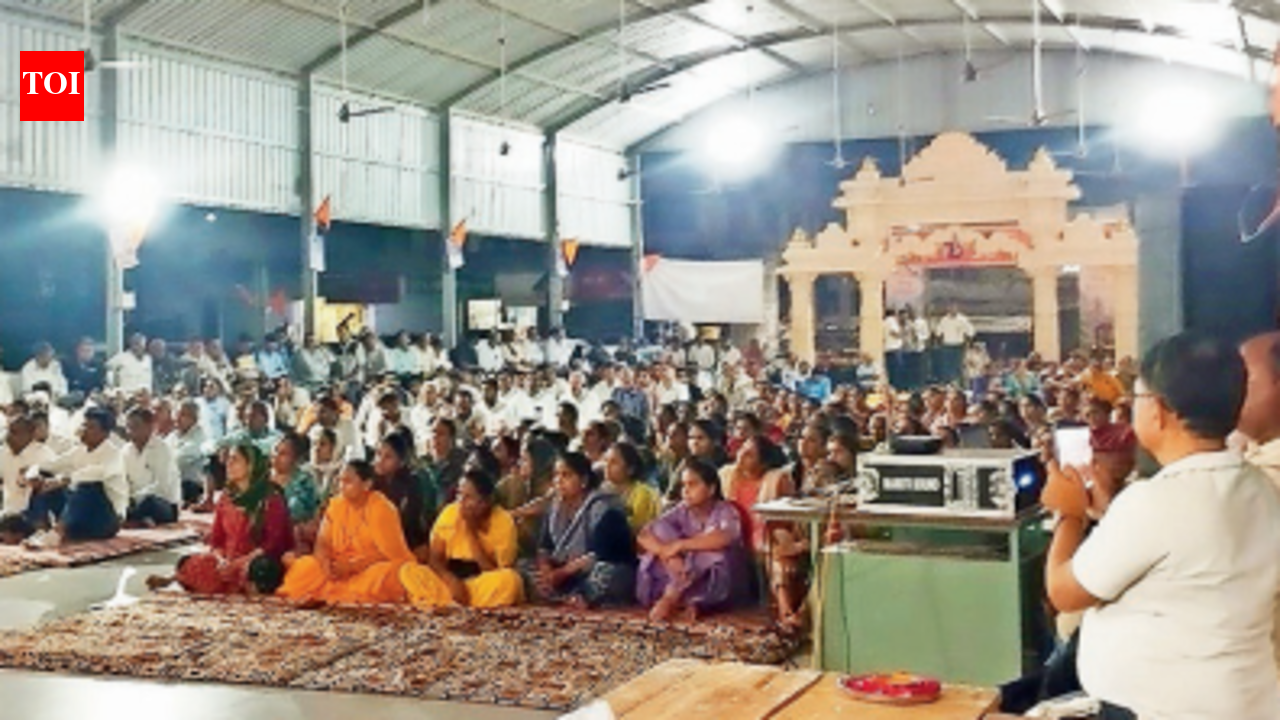
A Patidar community meeting last month in Mehsana. Leader of a Patidar group said they want strict laws against ‘sham marriages’

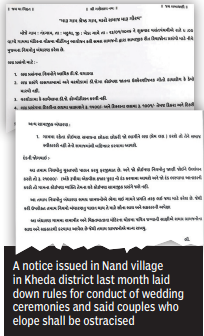
Gujarat govt’s proposal that couples must inform their parents before tying the knot is yet to become law, but ‘or – ders’ to that effect are al – ready in force in parts of Gujarat, where some villages and communities have come out with detailed ‘codes’ intended to govern how their members marry.The amendments proposed in the state assembly on Friday reflect de – mands and actions being pushed on the ground, with scattered village reso – lutions hardening into communitylevel ‘constitutions’ — resolutions and declarations that threaten couples who marry for love with boycott, ostracism, and exclusion from public life.From gram sabhas in Kheda district to caste organisations of Patidars and Thakors, the consen – sus driving such declarations is that marriage without parental consent threatens tradition, destabilises so – cial order and endangers women.‘Violate ban, face boycott’The gram sabha in Nand village in Mahudha taluka recently passed a res – olution imposing total social boycott on couples who marry despite opposi – tion from their families. Such couples are barred from community facilities, religious gatherings and social func – tions. The resolution also caps wed – ding and funeral expenses, prohibits DJs and “objectionable songs”, and imposes fines for violations.

Notice

Notice

Bharat Solanki, the village sar – panch, said rising cases of marriage disputes had led to the decision. “We are a village of 5,000, mostly Thakors and Darbars. There have been sagotra (intra-clan) marriages, which are not permissible. When a couple elopes, it puts parents in an embarrassing po – sition. As these incidents have been rising, we decided to declare a ban on such marriages. Violate the ban, and you face boycott.The rules, Solanki insisted, spare no one. All communities in the vil – lage — including OBC and SC fami – lies, which form a minority — are required to comply. “The rules are for everyone. We are not targeting one single group. Violators pay Rs 21,000 fine and are excluded from village gatherings,” he said.Similar ‘rules’ are surfacing else – where, signalling a broader social churn. Village elders argue that couples who elope — their union is known locally as ‘bhagedu lagan’ — disrupt social harmony and bring dishonour to their families.Geni Thakor, Congress MP from Banaskantha who spearheaded the Thakor community’s campaign against such unions, said “the deci – sion was taken because (they) kept seeing fraudulent marriages”.“A girl marrying outside her com – munity weakens its social fabric. There have been instances where women are deceived by men, subject – ed to abuse and, in some cases, driven to suicide. Our aim is to protect our daughters,” said Thakor, who also cit – ed demographic factors, saying “the Patidar sex ratio is collapsing”. Following the proposed amend -ments, Thakor said she “was the first to raise the issue of ‘bhagedu lagan’ when the ‘love jihad’ bill (Gujarat Free – dom of Religion (Amendment) Bill, 2021) was tabled in the assembly”. She insisted that “99% of love marriages fail and bring misery to the girl”. Asked about the basis for her claim, she said, “I have found this in villages; it might not be the case in big cities.”‘Parents should have say’ Among Patidars, opposition to such self-choice marriages has simmered for years. Lalji Patel, who heads the Sardar Patel Group (SPG), said the movement crystallised around paren tal anguish. “During Covid, parents came to us, begging us to rescue daughters trapped in sham marriages,” Patel said. “That is why we initiated these measures.” He said the SPG has been demand – ing that the legal age of marriage for women be raised from 18 to 21 even as he acknowledged that the Constitution allows adults to marry by choice. “But society matters. Parents are every – thing. They should have a say.” One pamphlet distributed by the Patidar Sena in Mehsana went beyond parental consent to call for sweeping changes, including par – ents’ signatures on marriage regis – tration for those aged 30 or younger. It also wanted court marriages to be restricted to the bride’s local juris – diction, 40 to be the minimum age of witnesses, and couples who marry by choice after 30 to deposit Rs 10 lakh in their parents’ accounts and forfeit any claim to family property.“These demands are born from the pain parents have gone through,” said Satish Patel, leader of the Mehsana Patidar Sena. Asked about the proposed rules, he said they were “not fully satisfied” as they also wanted “only blood relatives of girls to be signatories in the marriage registration as that ensures both parents and relatives bear full accountability for every such union”. Community leaders backing these demands insist they are not against people choosing whom they want to marry, but against secrecy and deception. “If a couple wants to marry and the parents agree, we have no objection,” Lalji Patel said. “But parents must be involved. They’re the ones who will always shield their daughters.” He, too, said the latest proposal falls short of their demands. “The govt speaks of merely ‘informing’ parents, as though a notification is sufficient. We have demanded that parents’ consent be made mandatory.”‘Love marriage no crime’ Legal experts warn that such meas – ures strike at the core of constitu – tional freedoms but those who fall foul of such diktats say that they have to face serious difficulties in their day-to-day lives.A Dalit man from northern Gujarat who married a woman from the Darbar community in 2015 — Darbars are placed higher in the social hierarchy—said they have had to change their residence at least 50 times and stay off social media to avoid being traced. Both hold postgraduate de – grees but cannot find stable work.“We’ve not been able to work at one place. We are dependent on daily wages even though we both hold PG degrees,” the man said. “We took up jobs with NGOs, but my wife’s family members or relatives traced me there during fieldwork.”Kaushik Parmar, a lawyer from Mehsana who works with intercaste couples, slammed the proposed changes in the marriage registration rules, saying that “love marriage is not the enemy of society; it is the right of a free citizen”. “Every attempt to curb it weakens the Constitution and strengthens caste hierarchies. If we truly want a progressive, equal, and just society, we must see love marriage not as a crime but as an instrument of social change. These rules amount to the murder of democracy,” he said.


Source link

WI-W vs SL-W, 2nd ODI, Match Prediction: Who will win today’s game between West Indies Women and Sri Lanka Women?


A high-stakes battle awaits at the National Cricket Stadium in Grenada as the West Indies Women look to level the series against a confident Sri Lankan side. After a nail-biting 10-run victory in the series opener, the visitors are just one win away from a historic series clinching on Caribbean soil.

In the first ODI, Sri Lanka proved they are no longer just a one-woman show. Despite a modest contribution from captain Chamari Athapaththu, the middle order stepped up with gritty half-centuries from Hasini Perera and Harshitha Samarawickrama.

For the West Indies, it was a story of so close, yet so far. A brilliant 89-run partnership between the legendary Stafanie Taylor and youngster Jannillea Glasgow put them in the driver’s seat, but a late-order collapse, triggered by the guile of veteran spinner Inoka Ranaweera, left them 10 runs short.

West Indies Women vs Sri Lanka Women, 2nd ODI: Match Details

  • Date and Time: February 22; 07:00 pm IST/ 01:30 pm GMT/ 09:30 am Local
  • Venue: National Cricket Stadium, St Georges, Grenada

National Cricket Stadium Pitch Report

The surface at the National Cricket Stadium in Grenada is expected to be a balanced yet demanding track that evolves as the game progresses. In the morning, the humidity often provides early moisture, offering seamers some zip and movement with the new ball. However, as the sun bakes the surface, the pitch tends to slow down significantly. Historically, this venue has been a spinner’s paradise in the middle overs, highlighted by spinners taking 12 wickets in the previous match. While the outfield is fast, rewarding aggressive stroke-makers, batters will need to show patience as the ball begins to grip and turn.

Also READ: Inoka Ranaweera guides Sri Lanka to a thrilling win over West Indies in 1st Women’s ODI

Squads

West Indies: Hayley Matthews (c), Chinelle Henry (vc), Aaliyah Alleyne, Shemaine Campbelle, Jahzara Claxton, Deandra Dottin, Afy Fletcher, Jannillea Glasgow, Realeanna Grimmond, Shawnisha Hector, Qiana Joseph, Ashmini Munisar, Karishma Ramharack, Shunelle Sawh, Stafanie Taylor

Sri Lanka: Chamari Athapaththu (c), Hasini Perera, Vishmi Gunaratne, Harshitha Samarawickrama, Imesha Dulani, Kavisha Dilhari, Nilakshi De Silva, Kaushini Nuthyangana, Dewmi Vihanga, Rashmika Sewwandi, Inoka Ranaweera, Sugandika Kumari, Nimasha Madushani, Malki Madara, Kawya Kavindi

West Indies Women vs Sri Lanka Women, Today’s Match Prediction

Case 1:

  • West Indies Women wins the toss and bowls first
  • Sri Lanka Women’s powerplay score: 50-60
  • Sri Lanka Women’s total score: 230-240

Case 2:

  • Sri Lanka Women wins the toss and bowls first
  • West Indies Women’s powerplay score: 40-50
  • West Indies Women’s total score: 220-230

Match result: Team bowling first to win the contest

Also READ: Fans erupt as Smriti Mandhana powers India to series-clinching win over Australia in 3rd Women’s T20I

This article was first published at WomenCricket.com, a Cricket Times company.


Source link

‘Aura no longer there’: ‘Devastated’ Australia under fire after disastrous T20 World Cup | Cricket News


'Aura no longer there': 'Devastated' Australia under fire after disastrous T20 World Cup
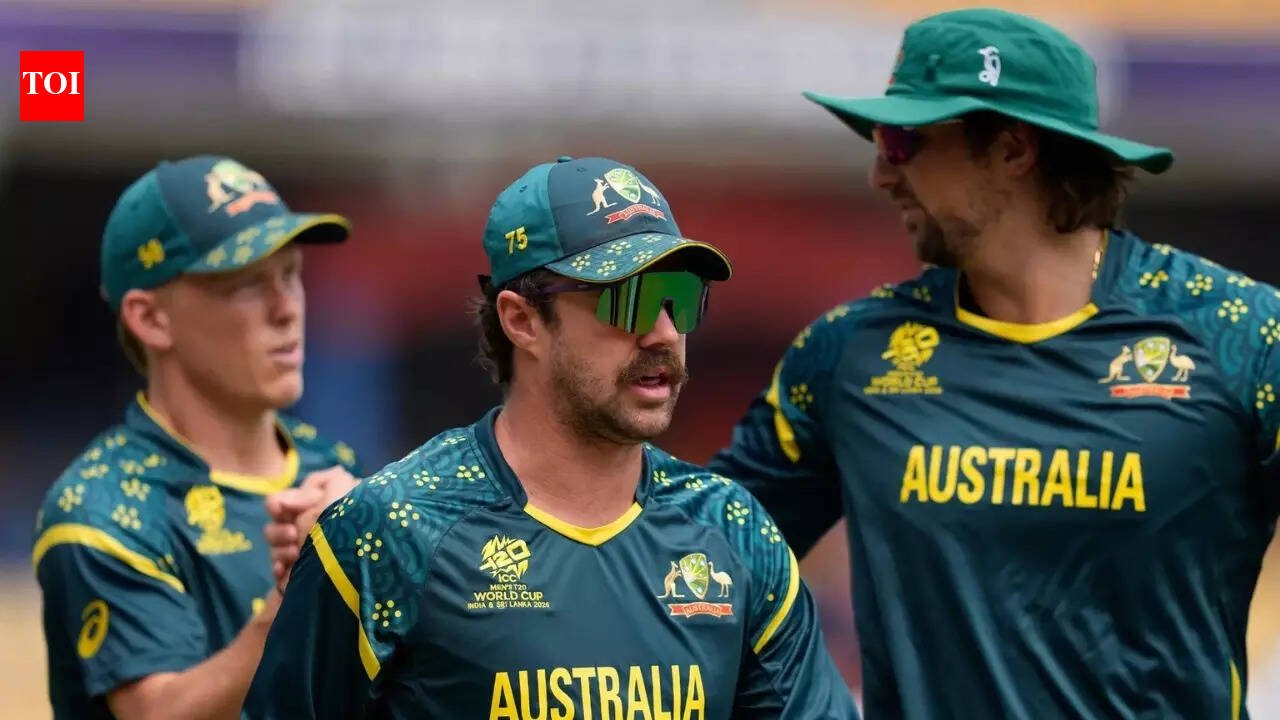
Australia’s Travis Head, center, along with his teammates during the T20 World Cup cricket match between Australia and Zimbabwe in Colombo, Sri Lanka, Friday, Feb. 13, 2026. (AP Photo)

Australia coach Andrew McDonald has defended the squad he selected for the Twenty20 World Cup, saying the players were capable of progressing, but Australia now face the prospect of a rebuild ahead of co-hosting the next edition with New Zealand in 2028.The 2021 champions entered the tournament in India and Sri Lanka as contenders but were eliminated in the group stage for the first time since 2009. The early exit has drawn criticism from former players and sections of the media.Fast-bowling great Glenn McGrath pointed to the absence of Pat Cummins, Josh Hazlewood and Mitchell Starc as a key weakness.

T20 World Cup: Afghanistan coach Jonathan Trott’s emotional press conference

“We said at the start of this World Cup that we were concerned about Australia,” pace great Glenn McGrath told reporters, pointing to the absence of fast bowlers Pat Cummins, Josh Hazlewood and Mitchell Starc as exposing a soft underbelly.“All of a sudden, the aura of that Australian team is no longer there when other teams play it … unfortunately, not surprising.”Concerns had already surfaced in the lead-up when Australia lost all three matches against Pakistan by 22, 90 and 111 runs — the last two being their biggest defeats by runs in T20 internationals. At the time, captain Mitchell Marsh said: “Absolutely no stress from our end.” The mood later shifted to “It’s a devastated group” after defeats to Zimbabwe and Sri Lanka.Selectors George Bailey, McDonald and Tony Dodemaide were criticised for backing out-of-form all-rounders Cameron Green and Cooper Connolly, for not picking Steve Smith, and for dropping Matt Renshaw for the Sri Lanka match while still in contention.Former selector Mark Waugh also questioned the choices.“Look at the selections, look at (Glenn) Maxwell, Connolly, Green and (Josh) Inglis, these guys are all out of form,” lamented Mark Waugh, himself a former selector.“The selectors have their plans in place, but you’ve got to be smart enough to see which players are in form and which players are out of form.“And you’ve got to play the percentages a lot better than what our selectors have played.”McDonald rejected outside criticism, saying: “There was always going to be differing opinions from the outside,” adding that outsiders “don’t understand what the moving parts are and the conversations are on the inside”.A review of the campaign will begin after the team returns home. Only three members of the current squad — Green, Connolly and fast bowler Xavier Bartlett — will be under 30 by the next World Cup. The futures of senior players such as Glenn Maxwell, Marcus Stoinis, Hazlewood and Cummins remain unclear, while Starc has already retired from T20 internationals.


Source link

Ethanol boom faces reality check as surplus capacity clouds green fuel roadmap


Ethanol boom faces reality check as surplus capacity clouds green fuel roadmap

What was once seen as the engine of India’s clean fuel transition is now grappling with oversupply, with ethanol production capacity significantly exceeding current blending needs.Industry estimates show nearly 20 billion litres of installed ethanol capacity, with another 4 billion litres expected shortly, against an annual requirement of about 11 billion litres to meet the current 20% ethanol blending with petrol (E20) target for the ethanol year that began last November, according to an ET report. The mismatch has resulted in more than 50% excess capacity across the sector.The development has raised concerns among policymakers and producers about investment viability and future direction for a programme originally designed to boost farmer incomes, cut crude imports and reduce emissions.Distilleries are currently operating at only 25–30% utilisation, and fresh approvals for new plants have been paused amid uncertainty over demand expansion, industry officials said.

Supply surge hits mills, farmers and investors

The strain from excess capacity is spreading across the value chain, affecting sugar mills, grain processors and farmers who had increasingly depended on ethanol as a stable revenue stream.According to the All India Distillers’ Association (AIDA), ethanol has grown into a Rs 50,000 crore industry following aggressive capacity creation aligned with government blending ambitions. However, slower-than-expected procurement by oil marketing companies has left producers managing underutilised facilities and rising inventories.“Many distilleries were put up, thinking that ethanol consumption would gradually increase,” said Deepak Ballani, director general of the Indian Sugar & Bio Energy Manufacturers Association, quoted ET. “The government needs to step up blending. No fresh permissions are being given to set up distilleries till the government gives clarity.”Plans to move beyond the E20 blending threshold have remained uncertain after public criticism last year over possible vehicle compatibility issues with higher ethanol blends. Though the government rejected the criticism, no new timeline has been announced for raising blending targets.Consumers have also demanded price discounts for ethanol-blended fuel due to its lower energy content — roughly one-third less than petrol — which reduces fuel efficiency by over 3% at a 20% blend. The oil ministry rejected the proposal in August, stating ethanol remains costlier than petrol.During 2024–25, nearly 100 new distilleries commenced operations and several more are being commissioned, but demand growth remains tied to existing policy limits, AIDA said.

Next phase hinges on diesel blending and flex-fuel adoption

With petrol blending appearing to plateau, industry attention is shifting towards ethanol use in diesel — a technically complex and higher-risk avenue.“Unlike petrol, ethanol doesn’t mix with diesel,” said an oil marketing company official requesting anonymity. “Two separate layers are formed. So, one needs a coupler chemical to keep them mixed.”The official said Indian Oil Corporation (IOCL) and Bharat Petroleum Corporation (BPCL) are evaluating ethanol-blended diesel formulations, though issues related to stability, engine compatibility, cold-start performance and long-term durability remain under study.Diesel accounts for a far larger share of India’s fuel consumption, powering freight transport, agriculture and buses, making any transition highly sensitive.Automobile manufacturers, meanwhile, say policy uncertainty beyond E20 is delaying investments in flex-fuel vehicles (FFVs), which can run on higher ethanol blends.“It’s not a constraining factor for OEMs to make flex-fuel vehicles,” a senior car company official told ET, requesting anonymity. “We need clarity and there should be a clear direction.”AIDA has recommended promoting FFVs and lowering GST rates to encourage adoption and expand domestic ethanol consumption. Automakers, however, remain cautious, questioning whether adequate supply and distribution infrastructure would exist for higher blends such as E85 or E100.No major carmaker has yet launched a mass-market flex-fuel vehicle, though prototypes have been showcased. Industry officials indicated that Maruti Suzuki could roll out flex-fuel versions of Wagon R and Fronx models, while Tata Motors, Toyota Kirloskar Motor and Mahindra & Mahindra have displayed flex-fuel prototypes. Queries sent to the companies remained unanswered.Manufacturers argue that fiscal incentives similar to those offered to electric vehicles could accelerate commercial adoption. Flex-fuel compatibility also helps meet tightening Corporate Average Fuel Efficiency (CAFE) norms.Ethanol contains less energy per litre than petrol or diesel, which may marginally reduce fuel efficiency — a factor policymakers are weighing alongside investment risks and consumer acceptance.


Source link

‘Karni Sena workers be ready’: Right-wing leader’s stark warning to filmmakers over films ‘targeting’ Sanatan Dharma | India News


'Karni Sena workers be ready': Right-wing leader's stark warning to filmmakers over films 'targeting' Sanatan Dharma

Kshatriya Karni Sena chief issued a strong warning to filmmakers over movies he alleged targeted “Sanatan Dharma” and hurt religious and community sentiments. Raj Shekhawat, national president of the Sena, said that his group might confront them at their homes in Mumbai and “teach them a lesson.The right-wing outfit leader voiced objections to the upcoming films Yadav Ji Ki Love Story and Ghooskhor Pandat, accusing filmmakers of disrespecting faith and social groups, news agency PTI reported.“The time has come to enter the homes of producers and directors who make films on our deities and culture and teach them a lesson,” said Shekhawat, speaking to reporters on Saturday night after offering prayers at the Chamunda temple in Hallu Sarai. “I am directing Karni Sena workers to be ready. We will soon go to Mumbai and take action against such filmmakers in their own homes,” he added.He alleged that filmmakers had earlier targeted Kshatriya and Brahmin communities and were now “insulting” the Yadav community. According to him, such films are being made under the guise of freedom of expression while they “mislead the youth” and “hurt religious sentiments”.Referring to Yadav Ji Ki Love Story, slated for release on February 27, Shekhawat said members of the community were already protesting. Objections have been raised by some over the portrayal of a romantic relationship between a Yadav woman and a Muslim man, which critics claim could disturb social harmony. Some BJP leaders have also called for a ban. The filmmakers have not responded to the allegations, news agency PTI reported.Shekhawat also announced a “mega-movement” in Delhi on March 8 opposing new UGC equity regulations and said a Swarna Samaj Committee had been formed to demand their withdrawal. He stated that the organisation was in touch with MPs for support.An FIR was registered in Sambhal on February 18 against the producer, director and lead actors of Yadav Ji Ki Love Story. In a separate dispute, the Netflix film Ghooskhor Pandat faced a legal challenge over its title, which the platform later agreed to change after court proceedings.


Source link

Patent filings surge at private universities, but approvals lag far behind IITs and IISc | Mumbai News


India’s patent data reveals a concerning trend (Representative image)

MUMBAI: India’s research story in higher education is often told through the rise in patent applications. But a closer reading of data—from the India Patent Office for 2020–2025, with a sharper lens on 2020-2023 outcomes (as it takes an average two years to grant a patent under the expedited route)—suggests a more uncomfortable reality: the system increasingly rewards activity, not outcomes.At first glance, the contrast seems stark. The Indian Institutes of Technology, taken collectively, filed for 6,558 patents in 2020-2025 and were granted 2,806, an approval rate of 43%. Narrow the window to 2020-23, and the picture looks even rosier: 3,331 patent publications and 2,118 patents granted, pushing the success rate to 64%. The premier Indian Institute of Science mirrors this trajectory, successfully converting 257 of its 379 applications in 2020-23, an approval rate of nearly 68%. So do the National Institutes of Technology, which collectively published 2,333 patent applications in 2020-2025 and secured 949 grants, a success rate of 41%. In 2020-23, 933 of NITs’ patent publications yielded 626 grants, a success rate of 67.1%, comparable to India’s top public research universities.Now compare this with high-volume private universities. Lovely Professional University leads in numbers with 7,096 patent applications over five years. Yet only 164 granted, a success rate of 2.3%. In 2020-23, the picture was barely any better: 5,774 publications, 164 grants, and a success rate of a mere 2.8%. Chandigarh University shows a sharper skew—5,318 filings since 2020, only 45 grants overall. In 2020-23, it published 2,350 patents and received 44, a success rate of 1.87%.An education expert from Ambattur, Tamil Nadu, who analysed the data, wondered, “Are patents being filed as innovation assets or as metrics for rankings and visibility?” For serious innovation, according to experts like him, patenting can never be just an academic exercise as it requires sustained financial investment in labs, hiring of researchers and legal support to achieve successful conversion and technology transfer.Currently, several privately-run institutions appear to be filing for patents on an industrial scale but have almost nothing to show on conversion. Galgotias University, which exhibited a Chinese dogbot at the India AI Impact summit, published 2,233 patents over five years but secured two grants; in 2020-22, it had filed 1,752 applications and received none. Shobhit Institute of Engineering and Technology has a similar story: 961 filings, zero approvals—both cumulatively and in 2020-23. Jain University and the Chandigarh Group of Colleges also sit at 0.6% or lower overall, with zero success rate in 2020-23 despite four-figure publication counts.V Ramgopal Rao, group VC of BITS Pilani and former director of IIT-Delhi, while maintaining that some patents take 8-9 years before they are granted, said, “Filing patents, prosecuting them and keeping them alive costs real money. Turning applications into granted patents and then into technologies that industry is willing to license demands well-funded labs, experienced researchers, legal muscle and years of sustained investment. When the financial commitment does not match the claims being made, the gap has a way of revealing itself.”Yet, there are outliers among private institutions too who seem to be pushing research. Vellore Institute of Technology published 2,879 patents over five years and received 63 grants, a grant rate of 2.2%; while in 2020-23, its conversion stood higher at 22% (61 grants from 279 publications). Sathyabama Institute of Science & Technology also filed 878 patents cumulatively, securing 18 (2.1%), while its 2020-23 success rate rose to 13.5%. Graphic Era University’s overall success rate is 4%, while in 2020-23 it was at 10%.The process of filing for patents itself has been relaxed over the past few years. Under the Patents (Amendment) Rules, 2021, educational institutions became eligible for an 80% reduction in patent filing and prosecution fees, causing a surge in applications by universities. Examination timelines—from the date a patent is published to the time it’s granted—also fell from an average 72 months in 2015 to 12-30 months.Achal Agrawal, founder of India Research Watch said it is time the system addresses the skew created by academic ranking and rating agencies like NIRF and NAAC which count the number of patent applications filed. “They should give substantial weightage to the percentage of patents granted instead. Otherwise it incites institutes to file frivolous patents to bolster up the numbers leading to loss of taxpayers’ money, in the form of subsidy, as well as waste of patent examiners’ time.


Source link