Breaking News
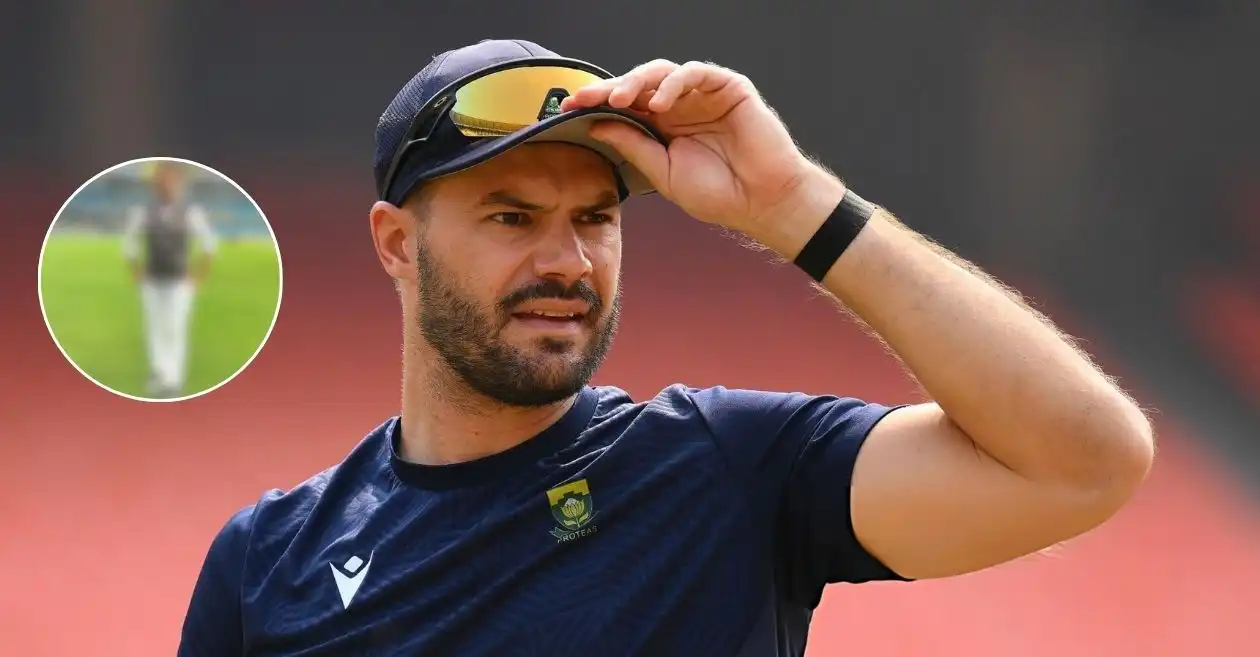
T20 World Cup 2026: Former opener explains key strategy to dismiss Aiden Markram in IND vs SA Super 8 clash


India are all set to take on South Africa in a blockbuster Super 8 fixture of the ICC Men’s T20 World Cup 2026 at the Narendra Modi Stadium in Ahmedabad on Sunday, February 22. With the tournament entering a decisive phase, this clash between two title contenders promises fireworks.

While much of the spotlight has been on India’s in-form opener Abhishek Sharma, former India cricketer believes the bigger focus should be on South Africa’s captain Aiden Markram. According to the ex-opening batter, neutralising Markram early could significantly tilt the balance in India’s favour.

Markram has been a key pillar in South Africa’s batting unit, providing stability at the top while also accelerating when required. His ability to anchor the innings and shift gears makes him a dangerous proposition, especially in pressure games like this one.

Former opener reveals game plan to dismiss Aiden Markram

Former opening batter and now a popular broadcaster Aakash Chopra has suggested a clear tactical move for India captain Suryakumar Yadav — introduce left-arm spinner Axar Patel early in the innings to target Markram.

Explaining his reasoning on his YouTube channel, Chopra pointed out that Markram’s numbers against Axar are far from impressive. The South African skipper has reportedly scored at nearly a run-a-ball against the left-arm spinner and has been dismissed three times in a relatively small sample of deliveries. Chopra emphasized that Markram’s discomfort against left-arm spin is well-documented.

He further broke down the technical aspect of the contest. Markram enjoys playing on the off side and often attempts inside-out shots against spin. However, Axar’s angle from wide of the crease brings the ball back in after pitching, creating deception. While Markram might feel he is playing with the spin toward the off side, the ball actually continues to angle in with the arm, leading to mistimed strokes.

“Even before Varun Chakravarthy, I feel Axar Patel, because he (Markram) goes at a run-a-ball against him. His strike rate is slightly better against everyone else. Axar has dismissed him three times and has bowled only 34 or 35 balls, in which he has scored only 38 runs. It is well-documented that left-arm spin versus Aiden Markram is an issue. He has an issue against leg-spin as well, but it’s also there against left-arm spin,” said Chopra.

Also READ: T20 World Cup 2026: Shaun Pollock names two key bowlers for India in the Super 8 game against South Africa

Chopra also noted that Markram has shown vulnerability against leg-spin, which could bring Varun Chakravarthy into play during the powerplay overs. The idea, according to him, is to attack with spin rather than wait for the middle overs. By doing so, India can disrupt South Africa’s rhythm right at the start.

“So Axar Patel should be introduced early. He likes playing on the off side and likes playing inside-out shots. Axar bowls from wide of the crease and brings the ball in, and Markram feels he is playing with the spin on the off side, but it’s not with the spin. The bowl comes in with the arm and keeps going in after pitching. Markram has been guilty. He tries to play on the off side or goes slightly back to full deliveries,” added Chopra.

Tactical battle could define Super 8 momentum

The India-South Africa encounter is not just about big names but also about small tactical edges. In high-pressure tournaments, match-ups often decide outcomes. If India manage to exploit Markram’s weakness early, they could put the Proteas under immediate pressure. With quality bowlers like Axar and Varun at their disposal, India have the tools to execute this strategy effectively. However, execution under match conditions will be crucial. Markram, on the other hand, is experienced enough to counter plans and adapt quickly.

Also READ: T20 World Cup 2026: Harbhajan Singh predicts Team India’s playing XI for Super 8 clash against South Africa


Source link

‘Imperils Republic’s image’: Delhi court blasts Congress’ ‘shirtless’ protest at AI Summit | India News


'Imperils Republic's image': Delhi court blasts Congress' 'shirtless' protest at AI Summit

NEW DELHI: A Delhi court on Saturday described the ‘shirtless’ protest by Indian Youth Congress (IYC) workers at the AI Impact Summit-2026 as a “blatant assault on public order” that endangered India’s diplomatic image.Judicial magistrate Ravi allowed five days of police custody for the four accused, Krishna Hari, national secretary of Youth Congress from Bihar, Kundan Yadav, state secretary of Bihar, Ajay Kumar, state president of Uttar Pradesh, and Narasimha Yadav from Telangana, for questioning, citing the risk of absconding and potential links to external conspiracies, reported PTI.“Such conduct palpably transcends the ambit of legitimate dissent, metamorphosing into a blatant assault on public order. It imperils not merely the event’s sanctity but also the Republic’s diplomatic image before foreign stakeholders, rendering it wholly unprotected by constitutional safeguards,” the magistrate said.The magistrate noted that the protestors allegedly “donned provocative T-shirts bearing offensive slogans such as ‘India US Trade Deal Compromised’, vociferously raised incendiary chants, obstructed public servants in the execution of their duties, and perpetrated physical assaults causing grievous injuries to police personnel, as substantiated by the medico-legal cases (MLCs) on record.”“…the accused persons are alleged to have orchestrated a premeditated intrusion into the high-security precincts of Bharat Mandapam during the AI Summit 2026, a premier international conclave hosting global delegates and dignitaries,” the court order accessed by PTI said.The court further cited early investigation findings that suggested multiple associates of the accused could be absconding, potentially tampering with digital footprints, financial trails, and co-accused disclosures. It also referenced a 1980 Supreme Court verdict, noting that “bail discretion must safeguard investigation integrity, particularly pre-chargesheet.”The magistrate allowed police custody under provisions including BNS Sections 121 (voluntarily causing hurt to deter a public servant from his duty) and 61(2) (criminal conspiracy), offences carrying punishment exceeding three years.The protest occurred during the AI Impact Summit-2026 at Bharat Mandapam in New Delhi, attracting global tech leaders, policymakers, and entrepreneurs. The accused displayed T-shirts featuring images of Prime Minister Narendra Modi and US President Donald Trump, alongside slogans against the government and the India-US trade deal, and engaged in a scuffle with security personnel.Police had arrested the four protestors on Friday for staging the ‘shirtless protest’ inside the exhibition hall.


Source link

When Steve Jobs told Apple employees during a townhall: Nike sells shoes, and yet …


When Steve Jobs told Apple employees during a townhall: Nike sells shoes, and yet ...

Apple founder Steve Jobs reportedly learnt his most important marketing lesson came from Nike. In 1997, when Steve Jobs made his dramatic return to Apple (after having been fired in 1985), one of his top priorities is said to be reinvigorating not just the company’s products, but also Apple’s brand’s image. Talking to employees during a town hall, Jobs said that the Apple brand has clearly suffered from neglect. Jobs said, “We need to bring it back.” For inspiration, he turned to Nike.This 1997 staff meeting was where Steve Jobs revealed how he was about to save Apple from bankruptcy: “To me, marketing is about values. This is a very complicated world. It’s a very noisy world. And we’re not going to get a chance to get people to remember much about us. No company is. So we have to be really clear on what we want them to know about us.”Steve continues: “The way to do that is not to talk about speeds and feeds. It’s not to talk about MIPS and megahertz. It’s not to talk about why we’re better than Windows.”He gave the example of Nike. “The best example of all, and one of the greatest jobs of marketing the universe has ever seen is Nike,” Jobs explained. “Remember, Nike sells a commodity. They sell shoes. And yet when you think of Nike, you feel something different than a shoe company. In their ads, they don’t ever talk about their products. They don’t ever tell you about their air soles and why they’re better than Reebok’s air soles. What does Nike do? They honor great athletes and they honor great athletics. That’s who they are, that’s what they are about.”Steve Jobs then went on to explain what Apple is really about, “What we’re about isn’t making boxes for people to get their jobs done although we do that well. We do that better than almost anybody. But Apple is about something more than that. Apple, at its core value, is that we believe that people with passion can change the world for the better.”Jobs concluded, “Those people who are crazy enough to think they can change the world are the ones that actually do.”Talking about the ad to Walter Isaacson for his biography, Jobs “This wasn’t about processor speed or memory, it was about creativity.”

Steve Job’s advice to Nike CEO

While Steve Jobs’ was a huge admirer of Nike’s ad campaign, the admiration was kinda mutual. When Nike named Mark Parker its CEO in 2006, one of the first things Parker reportedly did was call Apple CEO Steve Jobs for advice. Talking about the advice Jobs gave him, Parker told in an interview ten years later, Steve Jobs said one thing that stuck with me: “Nike makes some of the best products in the world. Products that you lust after. But you also make a lot of crap. Just get rid of the crappy stuff and focus on the good stuff.” “He was absolutely right,” said Parker. “We had to edit.”


Source link

‘Don’t think PCB chief has given full freedom’: Mohsin Naqvi under fire amid Pakistan cricket tensions | Cricket News


'Don’t think PCB chief has given full freedom': Mohsin Naqvi under fire amid Pakistan cricket tensions

NEW DELHI: Former India batter Manoj Tiwary has questioned the leadership of Pakistan Cricket Board chief Mohsin Naqvi, saying a lack of clarity and freedom may be creating tension between Pakistan’s captain and coach. His comments came after a viral video showed Pakistan captain Salman Agha throwing a bottle in frustration while sitting near head coach Mike Hesson.

Jay Shah: Kapil Dev deserves more credit for 1983 World Cup triumph

Tiwary believes strong leadership is needed for any team to move forward and suggested the current setup may not be giving the coaching staff enough independence. “If any country wants to move ahead, then the leader should be firm in his or her decision-making. There should be clarity, and freedom should be given. I don’t think the PCB chief has given full freedom. Mike Hesson is the current head coach, and he is trying to take the team along,” he told Cricbuzz.He also felt the bottle-throwing incident reflected deeper issues in the dressing room. “In the last game, we saw things got a bit frustrated between Hesson and the captain, Salman Ali Agha. Babar Azam was not sent out. Agha threw the bottle. It just proves that trust isn’t there,” Tiwary added.However, Hesson has dismissed claims of any rift and explained the incident differently. He said Agha was simply upset after getting out, not angry with the coach. “I’ve actually got sent that video, and you guys have really got that wrong. I’ll talk you through what happened. I was going over to talk to Salman about getting (Mohammad) Nawaz to put the pads on as a left-hander, and Agha was upset that he just got out, so he threw the bottle into the ground,” Hesson explained.He further clarified that the discussion was about batting plans, not an argument. “(It had) nothing to do with the conversation we were having… So it was a really simple conversation… So, amazing what people can interpret sometimes,” he said.


Source link

Evening news wrap: Two JeM terrorists killed in Army operation in J&K’s Kishtwar; PM Modi flags off Meerut Metro & more | India News


Evening news wrap: Two JeM terrorists killed in Army operation in J&K's Kishtwar; PM Modi flags off Meerut Metro & more
  • Two terrorists affiliated with Pakistan-based Jaish-e-Mohammad were killed in an operation by the Army, police, and CRPF in a forested area of Kishtwar district, Jammu and Kashmir.
  • Prime Minister Narendra Modi inaugurated the Meerut Metro and Namo Bharat RRTS in Meerut, Uttar Pradesh, flagging off the remaining portions of India’s first high-speed RRTS.
  • Eight suspects allegedly linked to Pakistan’s ISI and Bangladesh-based extremist groups were arrested over a possible terror plot targeting Delhi’s Red Fort and temples.
  • Prime Minister Modi strongly denounced the Congress party for the “shirtless” protest staged by Indian Youth Congress workers at the AI Summit in New Delhi.
  • Former CIA officer John Kiriakou claimed on a podcast that the United States has reportedly decided on an imminent military strike against Iran, citing intelligence sources.

Here are the top 5 news of the day:

Two terrorists killed in operation in J&K’s Kishtwar, war-like stores & 2 AK-47 rifles recovered

Two terrorists affiliated with the Pakistan-based terror group Jaish-e-Mohammad were killed in an ongoing encounter between security forces and militants in a remote forest area of Kishtwar district in Jammu and Kashmir after troops launched a search operation in the snow-bound Chatroo forests based on intelligence inputs from J&K police, IB, and other sources; officials said the militants, hiding in a mud house at the base of a hill, opened fire on advancing teams, leading to a fierce exchange in which troops of the Army, coordinating with police and CRPF, neutralised them and recovered war-like stores including two AK-47 rifles. Read full story

PM Modi flags off India’s fastest metro and Namo Bharat train in Meerut

Prime Minister Narendra Modi inaugurated the Meerut Metro and the Namo Bharat Regional Rapid Transit System in Meerut, flagging off the remaining portions of India’s first Namo Bharat RRTS and the country’s fastest metro. The 82 km Delhi–Meerut corridor, with sections in Delhi and Uttar Pradesh, connects major urban centers including Sahibabad, Ghaziabad, Modinagar, and Meerut, reducing travel time to under one hour. During the visit, the Prime Minister also unveiled development projects valued at nearly Rs 12,930 crore. Read full story

Red Fort, temples on radar? Eight suspects with Bangladesh, Pak ISI links held for plotting terror attack in India

Eight suspects allegedly linked to Pakistan’s ISI and Bangladesh-based extremist groups were arrested in Tamil Nadu and West Bengal after intelligence alerts warned of a possible terror plot targeting Delhi’s Red Fort and prominent temples, with Delhi Police saying six suspects were detained across multiple Tamil Nadu locations and two in West Bengal during follow-up action, and that dozens of phones and SIM cards were seized for analysis. Investigators believe the group communicated via social media, posted content supporting Pakistan-based outfits, and that four had earlier travelled to Delhi to paste “Free Kashmir” posters at a metro station during an international summit before returning to Tamil Nadu and West Bengal. Read full story

‘Nation knows your true form’: PM Modi shreds Cong’s ‘dirty, naked politics’ at AI Summit

Prime Minister Narendra Modi sharply criticised the Congress for its “shirtless” protest at the AI summit in New Delhi, accusing it of turning a global event into an arena for “dirty and naked” politics while speaking after flagging off the Namo Bharat train. The shirtless demonstration by workers of the Indian Youth Congress at Bharat Mandapam drew backlash from rivals and some allies including Akhilesh Yadav, who called it inappropriate. Meanwhile the four Indian Youth Congress members were sent to five days’ police custody by Patiala House Court after Delhi Police said they raised anti-national slogans, obstructed officials, and staged the protest before foreign delegates, with charges filed including assault on a public servant, hate speech, and criminal conspiracy. Read full story

Ex-CIA agent claims US has decided on imminent strike against Iran

Former CIA officer John Kiriakou claimed that the United States has made a final decision to launch a military strike against Iran early next week, citing information from a fellow former intelligence official who recently visited the White House. Speaking on the Julian Dorey Podcast, Kiriakou said, “I have a friend, former CIA officer, who was at the White House this morning talking to his friends, and he says that a decision has been made to attack Iran on Monday or Tuesday.Read full story


Source link

US airlines warn of disruption as DHS suspends PreCheck, Global Entry during shutdown


US airlines warn of disruption as DHS suspends PreCheck, Global Entry during shutdown

Major US airlines have expressed concern over travel disruptions after the Department of Homeland Security (DHS) decided to temporarily suspend its PreCheck and Global Entry programmes amid an ongoing government shutdown.The suspension will take effect from 6 a.m. ET (1100 GMT) on Sunday, days after a partial shutdown began following the failure of Republicans and Democrats to reach an agreement on immigration enforcement reforms, news agency Reuters reported.Airlines said travellers received very little advance warning about the move, leaving many with limited time to adjust their travel plans. “Airlines for America is deeply concerned that … the traveling public will be, once again, used as a political football amid another government shutdown,” Chief Executive Chris Sununu said, urging Congress to “get a deal done.”Sununu added that a similar shutdown last fall caused losses of $6.1 billion across the travel industry and related sectors.Homeland Security Secretary Kristi Noem said airport and border agencies would prioritise general passenger movement while suspending “courtesy and special privilege escorts.”“We are making tough but necessary workforce and resource decisions to mitigate the damage,” she said in a DHS statement.The suspension forms part of emergency steps taken by DHS to redirect staffing resources after Congress failed to approve additional funding, according to a Washington Post report.The Transportation Security Administration (TSA) said the PreCheck programme had more than 20 million active members in 2024, while total vetted travellers across DHS programmes, including Global Entry, exceeded 40 million.PreCheck allows approved passengers to use dedicated fast-track security lanes at US airports, while Global Entry expedites customs and immigration clearance for pre-approved, low-risk international travellers entering the United States.The move follows orders from the Trump administration last week directing the Federal Emergency Management Agency to suspend deployment of aid workers to disaster-affected areas during the shutdown.


Source link

Access Denied


Access Denied

You don’t have permission to access “http://www.ndtv.com/india-news/odisha-bride-kidnapped-at-gunpoint-by-ex-lover-while-returning-from-own-wedding-11120855” on this server.

Reference #18.adf5d217.1771766560.44e5e396

https://errors.edgesuite.net/18.adf5d217.1771766560.44e5e396


Source link

T20 World Cup 2026 [WATCH]: Dasun Shanaka’s bullet throw removes Tom Banton in SL vs ENG Super 8 showdown


The atmosphere at the Pallekele International Cricket Stadium was nothing short of electric as Sri Lanka and England faced off in a high-stakes 42nd Match of the ICC Men’s T20 World Cup 2026. With a spot in the semi-finals potentially on the line, the Super Eights, Group 2 encounter on February 22 delivered a moment of pure fielding brilliance that has already gone viral. While England’s power-hitters were expected to dominate, it was the veteran Sri Lankan, Dasun Shanaka, who stole the spotlight with a piece of athleticism that defied his years.

Dasun Shanaka’s spectacular direct hit sent Tom Banton packing during SL vs ENG Super 8 clash

The defining moment of the first innings arrived in the 8th over, just as England was looking to rebuild after a shaky Powerplay. Facing Dushmantha Chameera, Tom Banton looked to rotate the strike against an inswinging yorker. Banton tapped the ball toward mid-off and immediately called for a risky single, a decision that proved fatal.

The ball travelled quickly toward Dasun Shanaka, who moved like a predator. Gathering the ball cleanly as the bounce popped perfectly into his palms, Shanaka didn’t hesitate. In one fluid motion, he uncorked a bullet throw that smashed directly into the stumps. Despite a desperate, full-length dive from Banton, the Englishman was caught well short of his crease.

The dismissal left England reeling at 49/3, with Banton departing for a lackluster 6 off 7 balls. The Pallekele crowd erupted as the replay showed the precision of the hit; it was a masterclass in modern fielding that emphasized Sri Lanka’s disciplined approach under pressure.

Here’s the video:

Also READ: T20 World Cup 2026: Dinesh Karthik picks his semifinalists; includes India and three other powerhouses

Disciplined Sri Lanka restrict England to a low score in Kandy

Despite the early wobbles and the brilliance of Shanaka, England managed to scratch their way to a competitive, albeit underwhelming, total of 146/9 in their 20 overs. The innings was a story of a lone warrior in Phil Salt, who played a gritty knock of 62 off 40 balls, including six boundaries and a solitary six. Salt was the only English batter to look comfortable against a versatile Sri Lankan bowling attack that used the humid Kandy conditions to perfection.

The spin duo of Dunith Wellalage and Maheesh Theekshana strangled the middle order. Wellalage was particularly lethal, finishing with figures of 3/26, claiming the massive wickets of Jos Buttler (7) and the dangerous Harry Brook (14). The DRS played its part in Brook’s dismissal, as an umpire’s callon an LBW shout upheld the on-field decision, further dampening England’s momentum.

As the innings break commenced, win probabilities shifted heavily in favour of Sri Lanka, leaving England’s bowlers with a massive task to defend a sub-150 total on a pitch that appeared to be slowing down.

Also READ: Ex-BCB official unveils how Bangladesh cricket chief fell into Mohsin Naqvi’s trap over T20 World Cup withdrawal


Source link

Iran ‘one week’ from bomb-grade uranium? Protests flare again in Tehran – top developments


Arab Nation Warns Trump Of ‘NEVER-SEEN WEAPONS’; 'US WARSHIPS WILL SINK IF IRAN....' | Watch

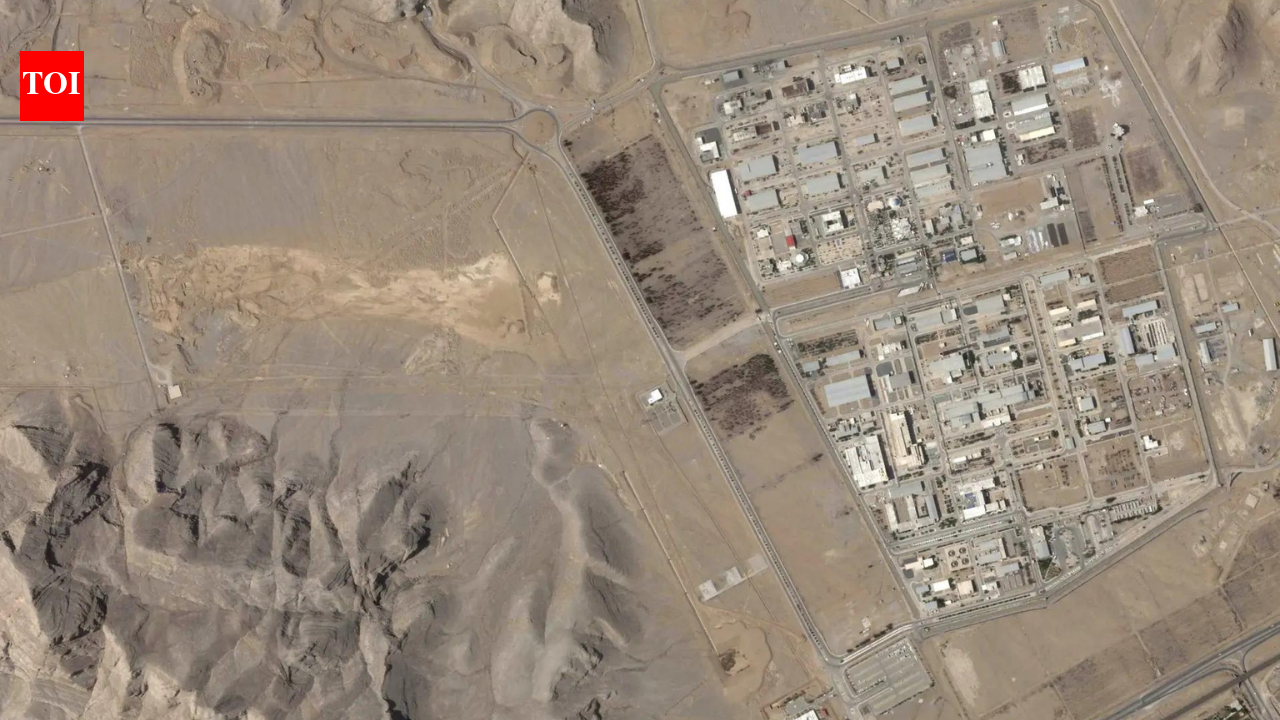
Isfahan nuclear facility, Iran (PTI file photo)

Iran a week away from producing bomb-grade uranium? Rising tensions in Tehran once again worry Uncle Sam, as President Donald Trump’s special envoy to the region, Steve Witkoff, expressed concerns amid escalating strains between the Trump administration and Ayatollah Khamenei’s establishment. He also pointed out the domestic pressure in Tehran, referring to the resurfacing of protests in the Middle Eastern country.The Donald Trump administration remains concerned about Khamenei-led Iran after it bombed multiple nuclear sites in the Islamic Republic under its hard-handed action, Operation Midnight Hammer, in the summer of 2025.

Arab Nation Warns Trump Of ‘NEVER-SEEN WEAPONS’; ‘US WARSHIPS WILL SINK IF IRAN….’ | Watch

In an interview with Fox News, US special envoy to the Middle East Steve Witkoff said Iran could theoretically be just a week away from enriching uranium to weapons-grade levels. However, he did not mention that Iran currently has no access to the necessary material, lacks the equipment required for enrichment, and has no active weapons programme to put such material to operational use.Meanwhile, Arab media reports claim Iran’s Revolutionary Guard officers are directly overseeing Hezbollah’s military preparations and strategic war planning amid rising regional tensions.

‘Probably a week away’

“They’re probably a week away from having industrial-grade bomb-making material. And that’s really dangerous. So they can’t have that,” Witkoff said, highlighting the seriousness of Iran’s potential to rebuild and gather all the other elements of its nuclear programme that were bombed in June 2025.In June 2025, Israel and the United States carried out coordinated strikes that they said destroyed Iran’s fleet of roughly 20,000 nuclear centrifuges, dismantled its multifaceted weaponisation programme, and severely damaged its three main nuclear sites along with dozens of smaller facilities. The attacks also reportedly killed several leading nuclear scientists and collapsed parts of key installations, making it difficult for the Islamic Republic to access its existing stockpile of enriched uranium.

June 2025 strikes & shrinking nuclear window

Before the June 2025 strikes, Iran was believed to be about a week away from weaponising its uranium, should it have chosen to do so. It was then estimated that Tehran would need another three to six months to integrate the material into a missile system and assemble the necessary components for a nuclear weapon.That window was considered extremely narrow, having shrunk rapidly from an earlier estimate of two years — prompting concerns within Israeli intelligence that it might not detect the precise moment Iran crossed the nuclear threshold if action was delayed.

US and Israel assessment on Iran’s nuclear timeline

Currently, the US and its close ally Israel believe Tehran is at least two years away from becoming a potential nuclear power, a factor that continues to trouble the Benjamin Netanyahu-led government in Tel Aviv, as well as Washington under President Trump’s stated resolve to curb the nuclear ambitions of the Khamenei rule.

Focus on uranium enrichment and US red lines

However, Witkoff appeared to be stressing that Iran has previously come very close to producing weapons-grade uranium. He suggested this is why the Trump administration does not want Iran to be allowed to enrich uranium in the future, as Washington lays out its broader case amid rising tensions with Tehran.In the interview, Witkoff said Trump was not exactly upset about Iran’s refusal to reach a deal, but rather more “curious.”“I don’t want to use the word frustrated,” he stated, offering a rare glimpse into Trump’s decision-making process on the issue.“It’s curious. He’s curious as to why they haven’t capitulated … under this sort of pressure, with the amount of sea power, naval power that we have over there.”Witkoff repeated Trump’s earlier demand of “zero enrichment” by Iran under any future agreement. “There have been some very hard red lines drawn,” he said. However, reports suggest that Trump is considering an Iranian proposal that would allow limited or “token” uranium enrichment.According to the report, the Trump administration may accept a limited compromise, as long as it can be verified that any uranium enrichment is strictly for civilian use and cannot be used as a step toward developing nuclear weapons.

Domestic pressure in Iran and Pahlavi factor

Witkoff also pointed to growing domestic pressure inside Iran as an important factor in US decision-making. Protests returned to the streets on Saturday, with students from several universities across the country demonstrating against the Islamic regime.Speaking about the exiled crown prince Reza Pahlavi and his possible role in Iran’s future, Witkoff said Pahlavi “cares about his country,” but added that the country’s future would ultimately depend on “President Trump’s policies, not Pahlavi’s policies,” noting that Trump “is interested in hearing everyone’s views.”

Iran supervising Hezbollah’s war plans

In a parallel development, reports from Arab media outlets on Saturday claimed that Hezbollah is now being overseen by officers from Iran’s Islamic Revolutionary Guard Corps (IRGC), rather than solely by its traditional Lebanese leadership.According to sources cited by Al Arabiya and Al Hadath, Hezbollah has sharply stepped up its military and security preparations in anticipation of a possible Israeli or American strike. These preparations are reportedly being carried out under the close supervision of IRGC personnel who have recently arrived in Lebanon.The reported leadership shift comes amid rising concerns that both Hezbollah and Iran are preparing for a potential military confrontation with Israel and the United States.Sources further told the two outlets that IRGC officers are not only supervising the rebuilding of Hezbollah’s military infrastructure but are also directly managing and executing strategic war plans.


Source link

‘Russia suffering 1,000 casualties a day, 80% from drones’: Rishi Sunak writes after meeting Volodymyr Zelenskyy | World News


'Russia suffering 1,000 casualties a day, 80% from drones': Rishi Sunak writes after meeting Volodymyr Zelenskyy
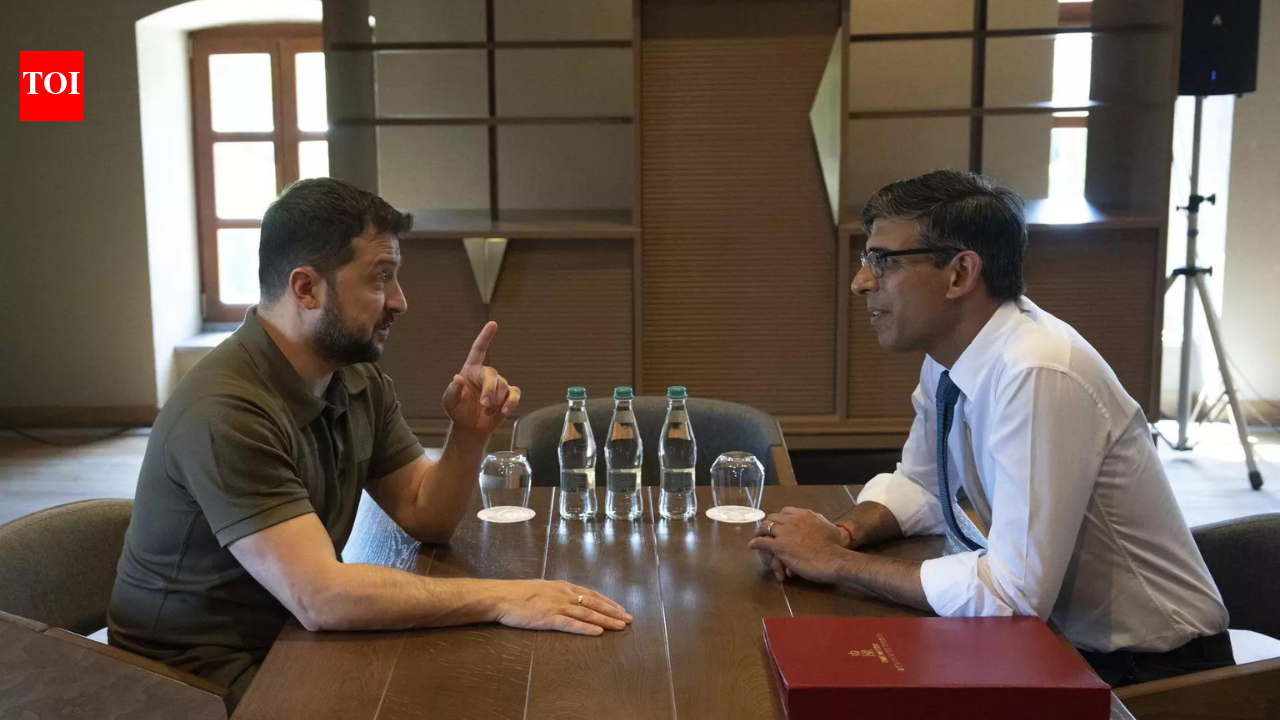
Ukraine’s president Volodymyr Zelenskyy speaks with British prime minister Rishi Sunak (PTI file photo)

More than three years after Russia launched its full-scale invasion of Ukraine, the war has evolved into a grinding contest of attrition shaped as much by technology as by manpower. Former UK prime minister Rishi Sunak has claimed that Ukrainian president Volodymyr Zelenskyy told him Russia is losing around 1,000 soldiers a day, with drones now responsible for the vast majority of battlefield casualties. The assertion highlights how cheap, mass-produced unmanned systems are increasingly reshaping modern warfare, turning the conflict into a high-tech stalemate where it is often easier to detect and destroy enemy forces than to advance or hold ground.

What Sunak revealed

Writing in The Times after the Munich Security Conference, former UK prime minister Sunak said Zelenskyy carries real-time battlefield data on an iPad during diplomatic trips to counter the perception that Ukraine is being overwhelmed. According to former UK prime minister Sunak, the figures show that while the fighting remains intense, Russia’s advances since the 2022 invasion have been slow and extremely costly.Former UK prime minister Sunak said Zelenskyy emphasised that drone warfare has fundamentally transformed the conflict. Ukraine’s extensive use of unmanned aerial and maritime systems has allowed it to inflict heavy losses on Russian forces while offsetting Moscow’s advantages in manpower and conventional weapons.He also pointed to NATO exercises that revealed how unprepared Western militaries remain for this shift in warfare. Former UK prime minister Sunak warned that future conflicts are likely to depend less on expensive legacy platforms and more on scalable, rapidly adaptable technologies such as drones.Why drones are changing the warDrones have become the defining weapon of the conflict, fundamentally reshaping how battles are fought. Defence analysts note that relatively cheap unmanned systems can now destroy extremely expensive targets such as tanks, ships and strategic bombers at a fraction of the cost. A recent Sunday Times defence analysis highlighted how Ukrainian drone strikes have destroyed high-value Russian military assets deep inside its territory, exposing vulnerabilities once thought impossible to exploit.Experts say drones are creating what military planners call a “denial battlefield,” where it has become easier to detect and destroy enemy forces than to advance or hold ground. This shift has slowed the war to a grinding stalemate, with constant surveillance and precision strikes making large manoeuvres increasingly difficult.

Latest battlefield situation

As of early 2026, the war has settled into a prolonged conflict of attrition marked by heavy losses, long-range strikes and intensifying drone warfare on both sides. Ukraine has increasingly demonstrated its ability to strike deep inside Russian territory, including attacks on key military-industrial facilities far from the front lines, while Russia continues large-scale missile and drone barrages targeting Ukrainian cities and infrastructure.Attrition remains extremely high, with analysts estimating that combined military casualties on both sides could soon approach two million, with Russia believed to have suffered the larger share. The conflict is now widely seen as a war of endurance, defined by slow territorial changes, persistent long-range attacks and a growing reliance on drones rather than rapid battlefield manoeuvres, even as peace negotiations remain stalled with little prospect of a near-term ceasefire.

The big picture

The Ukraine war is increasingly viewed as a preview of future conflict. It has demonstrated how relatively inexpensive technologies can challenge traditional military superiority, forcing armies to rethink doctrine, procurement and strategy. For Western defence planners, the lesson is clear: the wars of the future may be decided less by large conventional platforms and more by speed, innovation and the ability to scale new technologies quickly.


Source link