Breaking News
T20 World Cup 2026: How South Africa outsmarted a clueless India in Ahmedabad | Cricket News


T20 World Cup 2026: How South Africa outsmarted a clueless India in Ahmedabad
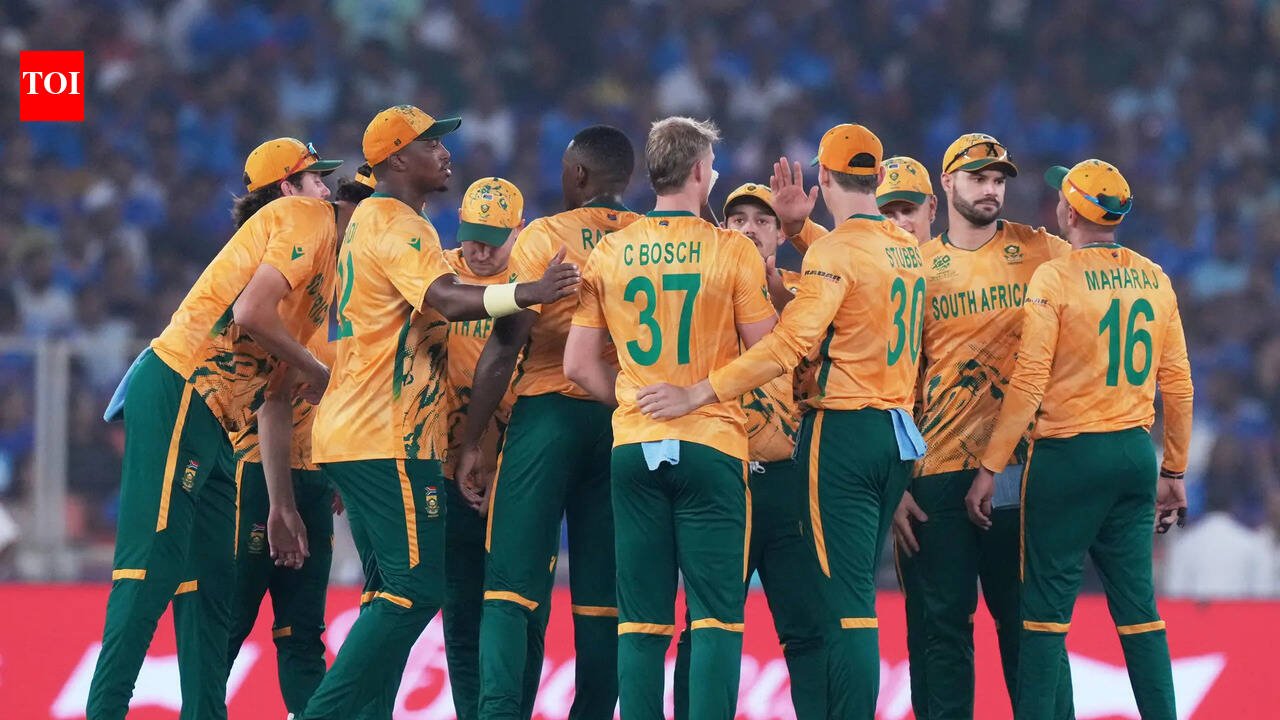
South Africa players celebrate the wicket of India’s Washington Sundar during the T20 World Cup cricket match in Ahmedabad. (AP)

TimesofIndia.com in Ahmedabad: “We’ve watched other games and it was nice to just have both left-handers, with the ball spinning away. It gives some sort of option where if it’s not turning it can go straight through the gate or if it does hold a little bit like it did, it gives you that hope that we can get a wicket in the first over.Light giggles broke out in the press conference room when David Miller was asked about the plan to start with Aiden Markram. The South African batter’s response was what most reporters had heard before, in the same hall when the Netherlands’ Bas de Leede responded to a similar query. South Africa took a cue from the Netherlands, who must have been encouraged by how the game against Pakistan unfolded. The arch-rivals would have surely been encouraged by how Namibia’s Gerhard Erasmus bowled in the Delhi fixture.

Why India are in deep trouble | T20 World Cup 2026 | India vs South Africa

Different venues, different teams but all kept the approach simple. Bring in an off-spinner early and wait for the Indian batters to make a mistake. And they did. The part-time off-spin bowling from Salman Agha and Markram secured early wickets in their respective matches and Erasmus applied the middle-overs choke, especially with many left-handers to bowl at. Netherlands Aryan Dutt followed the basics and removed both Ishan Kishan and Abhishek Sharma in the powerplay. Obsessed with match-ups, India have been way off the mark in the tactical battles.From poor shot selection and a lack of game awareness to having no Plan B, the T20I World Cup has been a very bumpy ride lacking any careful maneuvering. Panic was palpable in the dugout when Miller and Dewald Brevis put South Africa back on track, from being 20/3, and their calculated takedown of Varun Chakravarthy came as a rude shock to the think-tank. There was no one to apply that choke from the other end because the only bowler, Axar Patel, who was capable of doing that with his sharp game awareness and ability to deliver under pressure, was warming the bench.
ICC Men's T20 WC 2026: IND vs SA

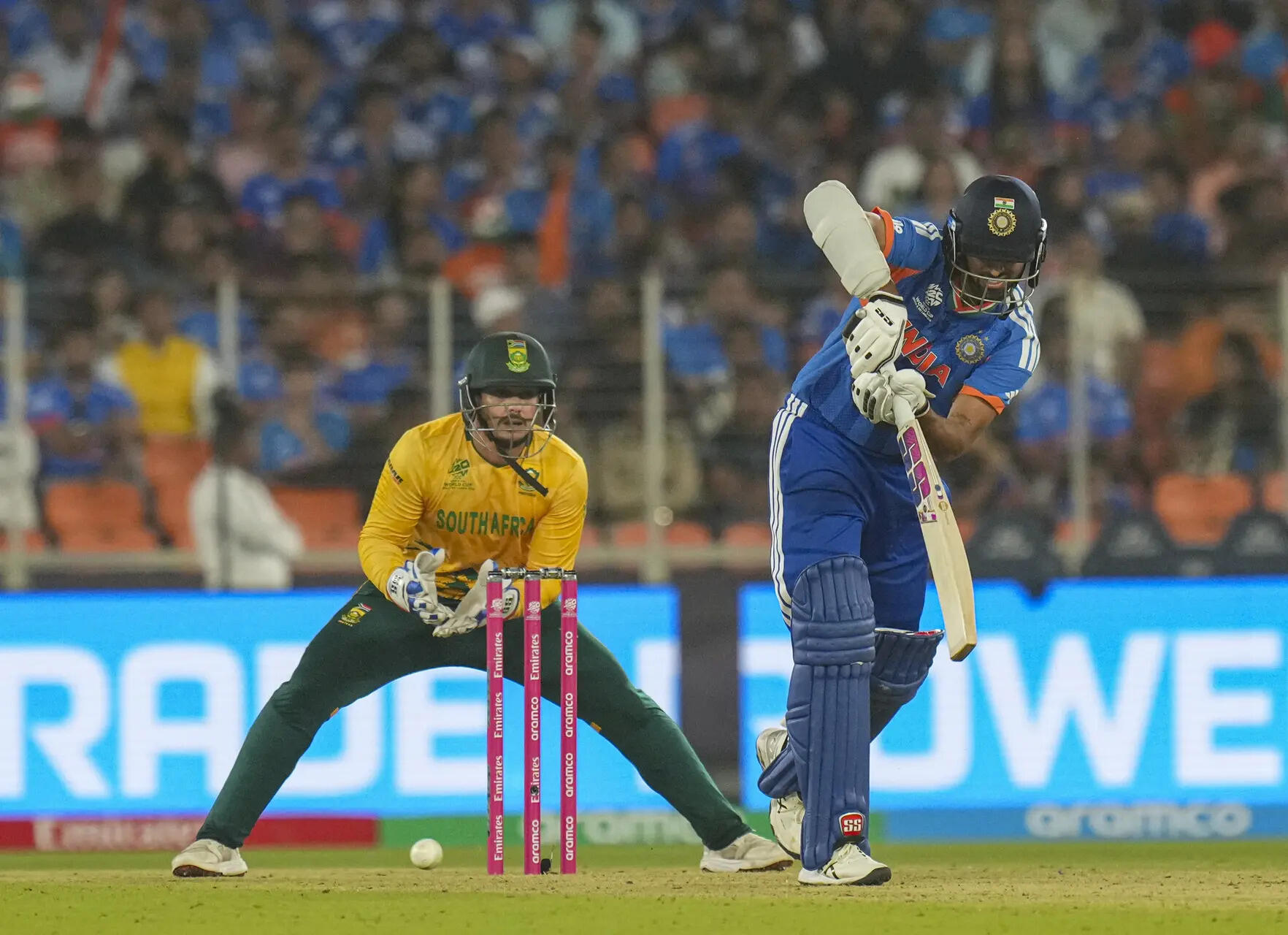
Washington Sundar plays a shot during an ICC Men’s T20 World Cup 2026 cricket match between India and South Africa. (PTI)

Washington Sundar, still an unproven commodity in the shortest format, was preferred because of the left-handers in the opposition camp. However, the moment two of them – Quinton de Kock and Ryan Rickelton – were dismissed early, the lack of a Plan B exposed India and Miller-Brevis were in the mood to capitalise. The defence mechanism regarding Washington over Axar was fully displayed in post-match pressers, but it lacked the conviction and logic which everyone was looking for.“We spent so much time deliberating about the XI, the last couple of days. And I guess the only way that it sort of didn’t play into our hands is if we did have the ideal start like we did today with getting Quinton and Rickelton out so early. We were kind of looking at matchups more in the middle. And then obviously, someone has to give way. So – do we leave a batter out and get another bowler in, in hindsight, that looks like the right decision? “But obviously, playing it forward and making decisions at the time, we felt we needed Rinku, as an eighth batsman, so to speak. And the decision was based around there. But certainly, it’s not to take anything away from Axar and his leadership and how important he is to the team. But look we face almost every week to try to squeeze 11 places into 15, We’re finding tricky. And we need to make sure we get that spot on for the next two Super 8 games,” said assistant coach Ryan ten Doeschate.

Ahmedabad, Feb 22 (ANI): South Africa's David Miller celebrates his half-century...

David Miller and Dewald Brevis stitched a 97-run partnership during the ICC Men’s T20 World Cup 2026 Super 8 Group 1 match against India. (ANI)

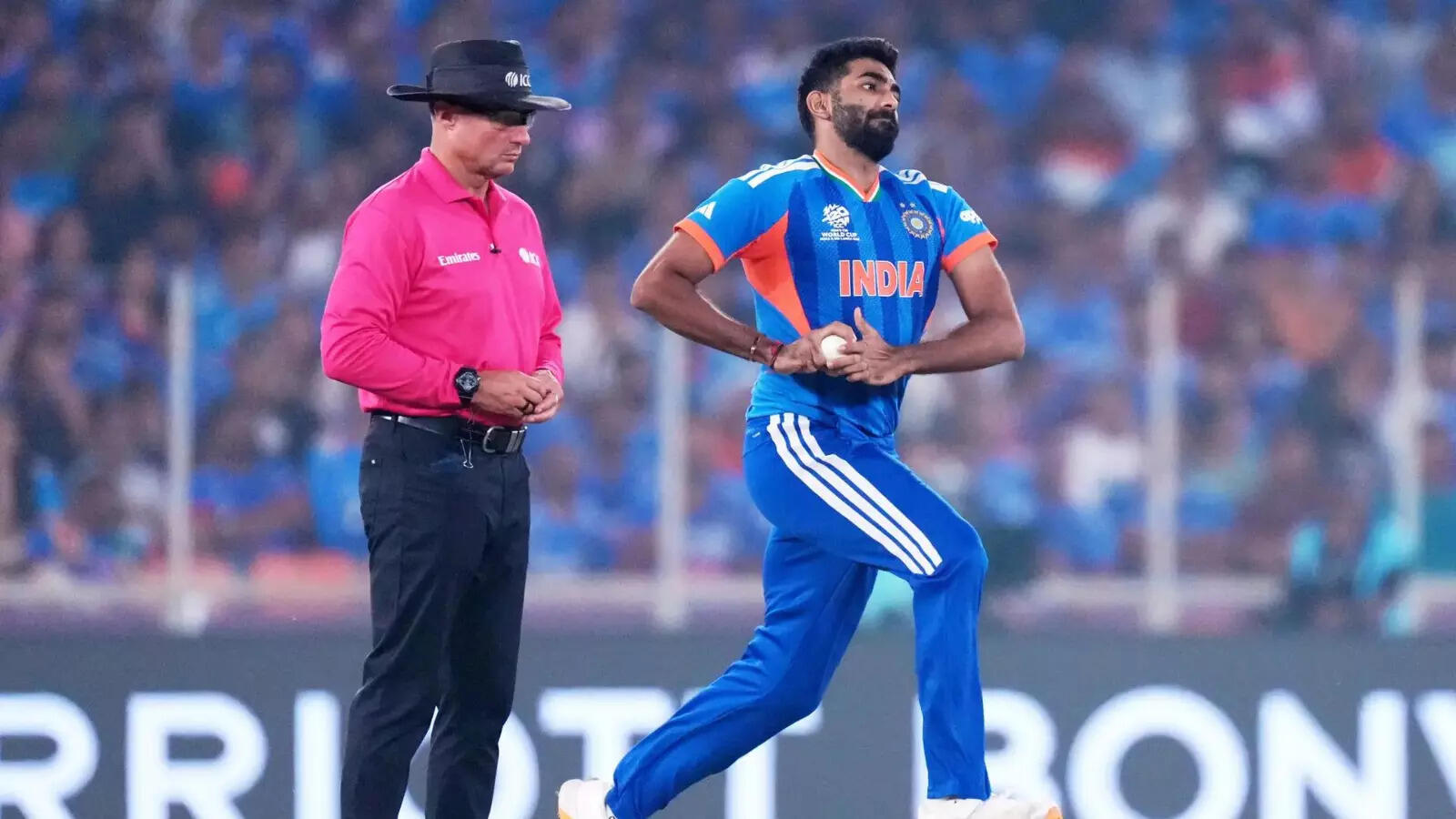
India complicated the Playing XI selection more than necessary, and captain Suryakumar Yadav wasn’t proactive enough to regain control while Miller and Brevis were scoring freely. Every bowler can have an off day, and Varun did. However, giving the extra over to Arshdeep Singh during the powerplay — a desperate move to take another wicket — probably backfired, as both he and Jasprit Bumrah were forced to bowl their remaining overs in the death.Had there been more cushion for the slog overs, one Bumrah over could have well made the difference in the middle-overs because the local boy was in a different mood at the Narendra Modi Stadium. His spell of 3/15 was the sole reason South Africa didn’t cross the 200-run mark. However, 187 proved to be far more than India would have liked in that chase and South Africa’s takedown of India’s X-factor, Varun, deserves significant appreciation.“He’s a world-class bowler and he has had huge success, in all different formats that he’s played, all different leagues and, yeah, especially international. So I think for us it was more just, I mean, it’s not like in the past where we’ve been quite tentative but I think it’s just about really making sure that we were on it in terms of if he bowls a bad ball we got to put it away – so a little bit more intent. “And it wasn’t spinning too much tonight, so you can kind of trust the line. And once we felt that, then we felt, OK, we’ve got to take him down, because he is a threat to every team that he does play against. So it was definitely something that we did speak about,” said Miller on their plans for Varun.
Jasprit Bumrah

Jasprit Bumrah was one bright spark for India on an otherwise poor day against South Africa in the T20 World Cup Super Eight. (AP)

South Africa showed how and why India are very much “beatable.” Their emphatic win, which severely impacted the hosts’ net run rate has increased calls for a lot of soul searching before the next game against Zimbabwe in Chennai on Thursday. Ahead of the South Africa fixture, Surya was categorically asked about Sanju Samson‘s potential place in the Playing XI to add a right-hander to the mix but he chose to laugh the suggestion off. A day later, the conversations around the same thought are getting louder with coach Ryan confirming that the wicketkeeper-batter will remain a talking point leading up to the crucial games.Should you drop the woefully out-of-form Abhishek Sharma? Or a struggling-to-get-going Tilak Varma? The options are on the table and it looks extremely difficult for the two left-handers to retain their place in the XI for the Zimbabwe clash.“They’re all fantastic players. So you stick with the guys who we feel have performed really well over the last 18 months and who are maybe shy of a few runs now? Or do we twist and bring Sanju, who’s also a fantastic player and obviously helps tactically with having a right hander at the top of the order and I’m sure that’ll be a talking point over the next few days going into these two very important games,” explained ten Doeschate.India have some time to make that crucial call but if they stick to the left-is-right approach, it will be a no-brainer to see Sikandar Raza at the top of the bowling mark when India’s openers walk out to bat in Chennai. He, too, would have seen the previous games involving the defending champions and could well have a response similar to Miller at the end of the match. It’s all very predictable and the ball is now in India’s court to surprise their opponents with tactical smarts.


Source link

Arihant, Arighaat, Aridhaman: Inside India’s growing nuclear submarine triad against China, Pakistan


Arihant, Arighaat, Aridhaman: Inside India’s growing nuclear submarine triad against China, Pakistan

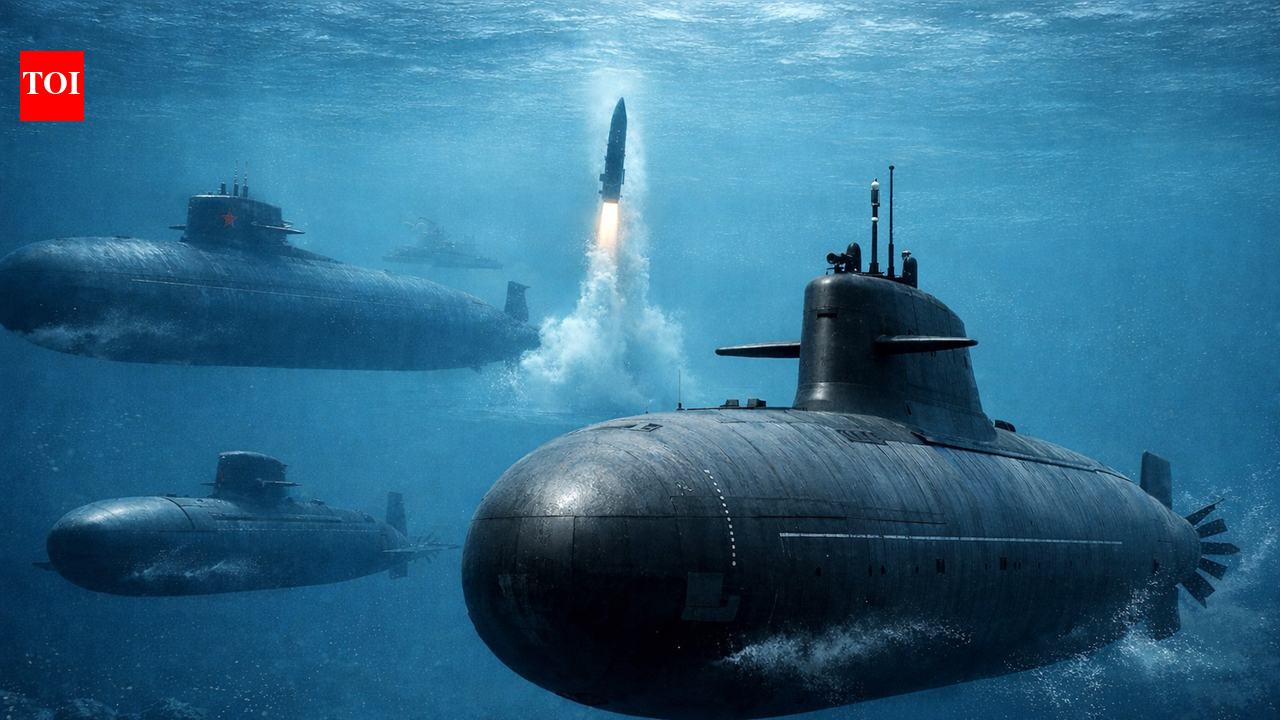
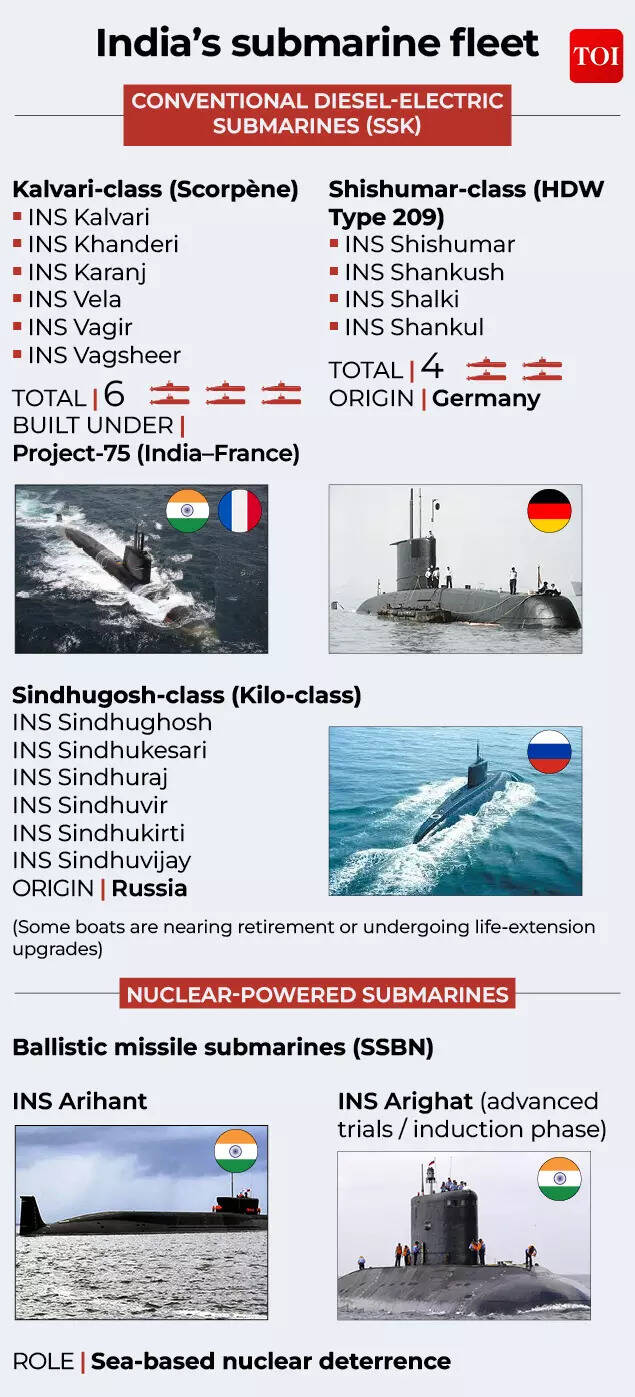
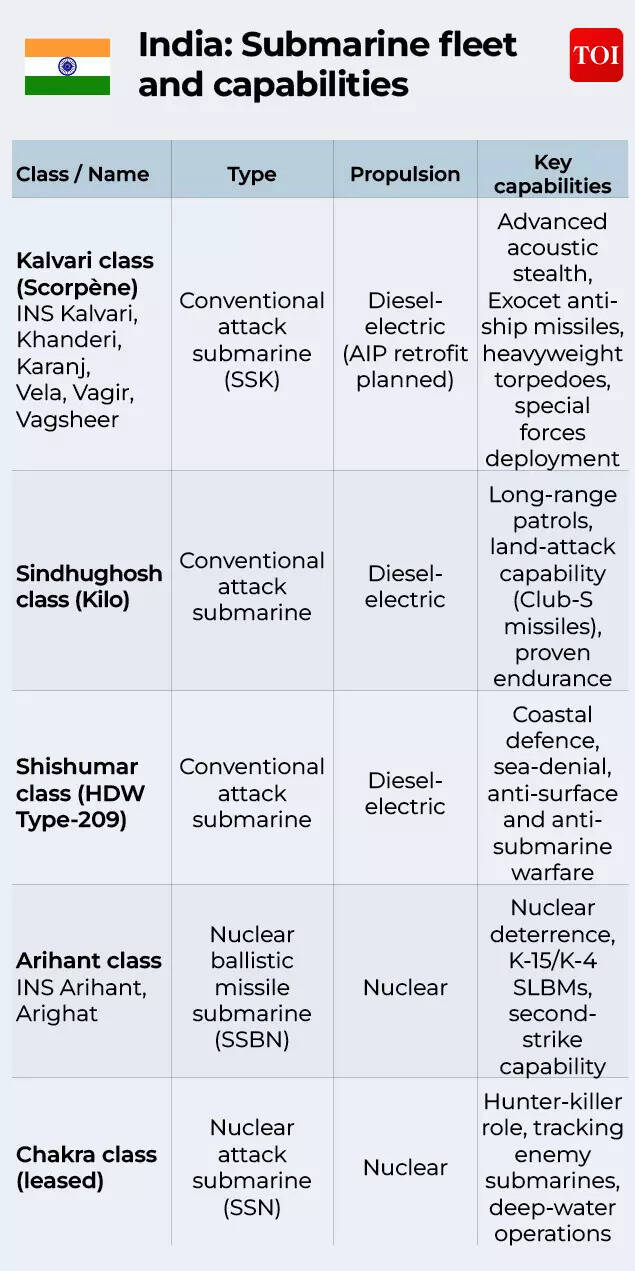
NEW DELHI: India’s underwater deterrence is set to enter a decisive new phase with the induction of INS Aridhaman, the third Arihant-class nuclear-powered ballistic missile submarine, by May 2026. Once INS Aridhaman joins INS Arihant and INS Arighat, India will operate three indigenously built SSBNs under the Strategic Forces Command.At a time when China is expanding its nuclear and conventional submarine footprint across the Indo-Pacific and Pakistan is inducting advanced Chinese-origin boats with air-independent propulsion, New Delhi’s strategic planners are steadily reinforcing the most secure and resilient leg of the nuclear triad — the sea. Larger, quieter and armed with longer-range K-4 submarine-launched ballistic missiles, Aridhaman strengthens India’s second-strike capability and moves it closer to continuous at-sea deterrence.

Inside the Indian Navy’s Future: Carriers, Submarines, Drones & Power Projection | Open Collar EP#3

With Aridhaman joining INS Arihant and INS Arighaat, India now operates three indigenously built SSBNs under the Strategic Forces Command. This marks not just an incremental addition to naval inventory but a structural shift in India’s strategic posture. As Beijing fields one of the world’s largest submarine fleets and Islamabad bolsters its underwater arsenal, India’s expanding SSBN force ensures credible minimum deterrence along with a devastating second-strike capability —stealthy, nuke-proof, and unstoppable — from the deepest depths of the Indian Ocean.

INS Arihant: The pioneer of India’s sea-based deterrence

Commissioned in August 2016, INS Arihant was the culmination of decades of classified work under the Advanced Technology Vessel programme. Built at the Shipbuilding Centre in Visakhapatnam, Arihant displaced around 6,000 tonnes and was powered by an 83 MW Compact Light Water Reactor developed with significant indigenous input.Measuring roughly 111.6 metres in length, Arihant introduced India to the elite group of nations operating nuclear-powered ballistic missile submarines. Its propulsion allows virtually unlimited range, with endurance limited primarily by crew supplies. Capable of speeds of around 24 knots submerged, it is designed for extended stealth patrols in the Indian Ocean Region.In terms of armament, Arihant carries four vertical launch system tubes. These can be configured to deploy up to 12 K-15 Sagarika submarine-launched ballistic missiles with a range of approximately 750 km, or four K-4 missiles with a reach of around 3,500 km. It also features six 533 mm torpedo tubes for defensive and conventional strike roles.The most important milestone came in 2018, when Arihant completed its first deterrence patrol. That patrol marked the operationalisation of India’s sea-based nuclear deterrent, completing the triad alongside land-based missiles and air-delivered systems. For Indian planners, Arihant represented assured retaliation — the guarantee that even in the worst-case scenario, India would retain a secure response capability beneath the sea.

INS Arighaat: Strengthening and sustaining deterrence

Commissioned on 29 August 2024, INS Arighaat built upon the foundation laid by Arihant. While similar in baseline displacement at around 6,000 tonnes, Arighaat is considered a refined and improved iteration of the class.Constructed at the same Visakhapatnam facility, Arighaat underwent extended harbour and sea trials before induction. Its nuclear propulsion system remains based on the pressurised light water reactor design, enabling prolonged submerged operations with minimal acoustic signature.Arighaat retains four vertical launch tubes but is widely regarded as optimised for longer-range K-4 missile deployment. The K-4 significantly expands India’s maritime strike envelope, allowing strategic targets to be held at risk from deeper within the Indian Ocean, reinforcing India’s protected retaliatory capability.Like Arihant, Arighaat carries six torpedo tubes and incorporates indigenous sonar suites such as USHUS and Panchendriya for underwater detection and combat management. Improvements in onboard systems, quieting measures and operational protocols are believed to make it more capable during deterrence patrols.The induction of Arighaat was strategically important. A single SSBN cannot guarantee continuous deployment due to maintenance cycles and crew rest requirements. With two boats available, India moved closer to rotational deterrence patrols, ensuring greater availability of a secure and enduring second-strike platform.

INS Aridhaman: The 7,000-tonne evolution

INS Aridhaman represents the most advanced evolution of the Arihant-class to date. Weighing approximately 7,000 tonnes, it is significantly larger than its predecessors, allowing expanded missile capacity and system enhancements.One of its most consequential upgrades is the increase in vertical launch system tubes from four to eight. This expanded configuration enables Aridhaman to carry up to 24 K-15 missiles or eight K-4 intermediate-range ballistic missiles. Reports also suggest potential accommodation for future K-5 missiles with ranges extending to around 6,000 km.Aridhaman is powered by an upgraded 83 MW Compact Light Water Reactor designed for reduced acoustic signature. A seven-blade propeller, advanced sound-dampening measures and extensive use of anechoic tiles enhance stealth characteristics. Submerged speeds are estimated at around 24 knots, with surface speeds between 12 and 15 knots.The increase in displacement provides greater internal volume for improved command-and-control systems, crew habitability during long patrols and advanced combat systems integration. Sonar systems, including USHUS and Panchendriya, enhance underwater situational awareness, while improved quieting measures strengthen its stealth advantage against adversary anti-submarine warfare platforms.Strategically, Aridhaman is pivotal because it accelerates India’s transition toward Continuous At-Sea Deterrence. With three SSBNs, the navy can maintain at least one submarine on patrol at any given time, while others undergo maintenance or training cycles. This layered deployment model is central to India’s assured retaliatory posture.

The broader Indian Navy nuclear framework

India’s SSBN fleet operates under the Strategic Forces Command, which oversees nuclear assets. The sea-based leg is considered the most important component of the nuclear triad, as submarines operating silently beneath the ocean are far more difficult to detect and neutralise compared to fixed land-based systems.The submarines are expected to operate from Project Varsha, a high-security naval base near Visakhapatnam featuring underground pens designed to protect nuclear assets. The location provides strategic access to the Bay of Bengal and the wider Indian Ocean.India’s nuclear submarine ambitions extend beyond ballistic missile platforms. The navy is also set to induct Chakra III, a Russian Akula-class nuclear-powered attack submarine expected by 2027–28. Unlike SSBNs, attack submarines focus on anti-ship, anti-submarine and escort missions, complementing strategic deterrence assets.

Conventional submarine modernisation: Project-75I

Parallel to the SSBN expansion, India is pushing forward with Project-75I, a programme to build six next-generation diesel-electric submarines equipped with air-independent propulsion. These boats are intended to replace ageing conventional platforms and enhance sea denial capability.The project, valued at approximately $8 billion, is designed to boost indigenous manufacturing under the Strategic Partnership Model. The selected German Type-214 Next Generation submarine features fuel-cell-based air-independent propulsion, allowing extended submerged endurance without snorkelling.

Indian navy

.

Air-independent propulsion provides critical tactical advantages in contested waters, reducing detection risk and enabling covert surveillance and strike roles. Under the current plan, the submarines will be constructed at Mazagon Dock Shipbuilders Limited with technology transfer arrangements.Project-75I complements the SSBN fleet by strengthening conventional underwater capabilities, ensuring that India’s submarine arm can perform both strategic and tactical missions across the Indo-Pacific.

Indian navy

.

Towards continuous at-sea deterrence

Continuous At-Sea Deterrence requires more than one submarine. Maintenance, refuelling, crew training and refits create availability gaps. Three operational SSBNs allow staggered deployments, ensuring that at least one remains on patrol.Aridhaman’s expanded missile payload also increases strike flexibility. The ability to deploy longer-range K-4 missiles from safer patrol areas enhances operational depth and strategic reach. As missile ranges increase in future variants, patrol patterns may evolve further into secure ocean bastions.India’s pursuit of second-strike capability reflects a doctrine rooted in credible minimum deterrence. The objective is not numerical parity but guaranteed retaliation capability.

Comparison with China and Pakistan’s submarine fleets

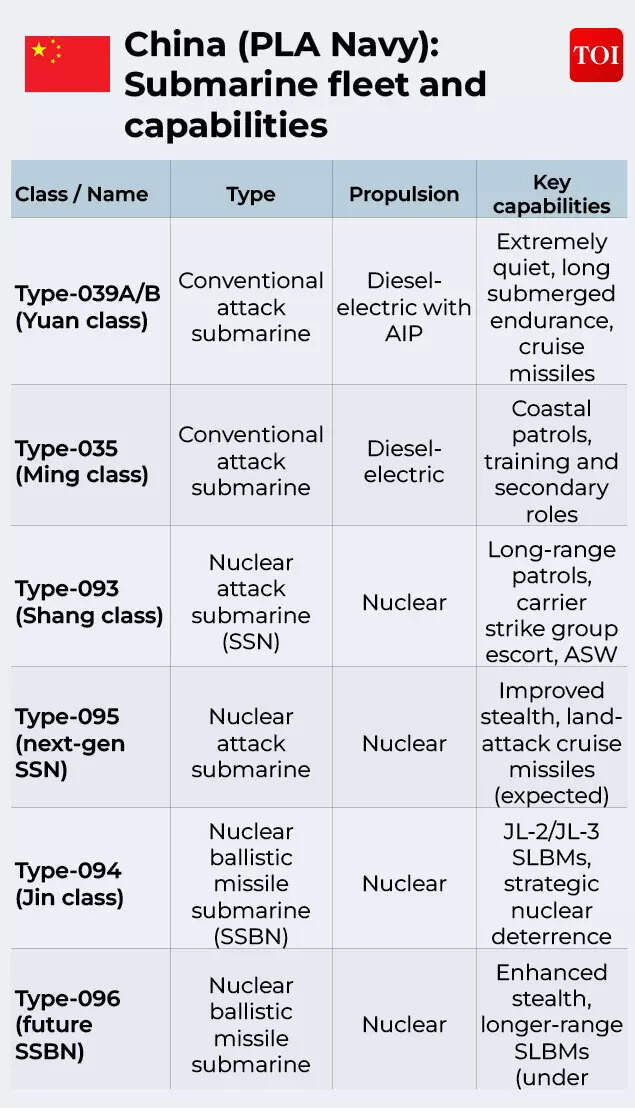
India’s expanding SSBN fleet must be viewed against the backdrop of rapid underwater modernisation by both China and Pakistan. While New Delhi has prioritised a credible sea-based nuclear deterrent anchored in three Arihant-class boats, Beijing and Islamabad are pursuing parallel — though structurally different — submarine strategies.China operates one of the world’s largest submarine forces under the People’s Liberation Army Navy. Open-source defence assessments estimate that China fields more than 50 diesel-electric submarines and around 10 nuclear-powered submarines, including both attack submarines (SSNs) and ballistic missile submarines (SSBNs). Its Jin-class SSBNs are armed with JL-series submarine-launched ballistic missiles, giving Beijing an established sea-based nuclear capability. Chinese nuclear submarines have increasingly deployed into the Indian Ocean, occasionally docking at regional ports, a development closely monitored by Indian naval planners.

China submarine fleet

..

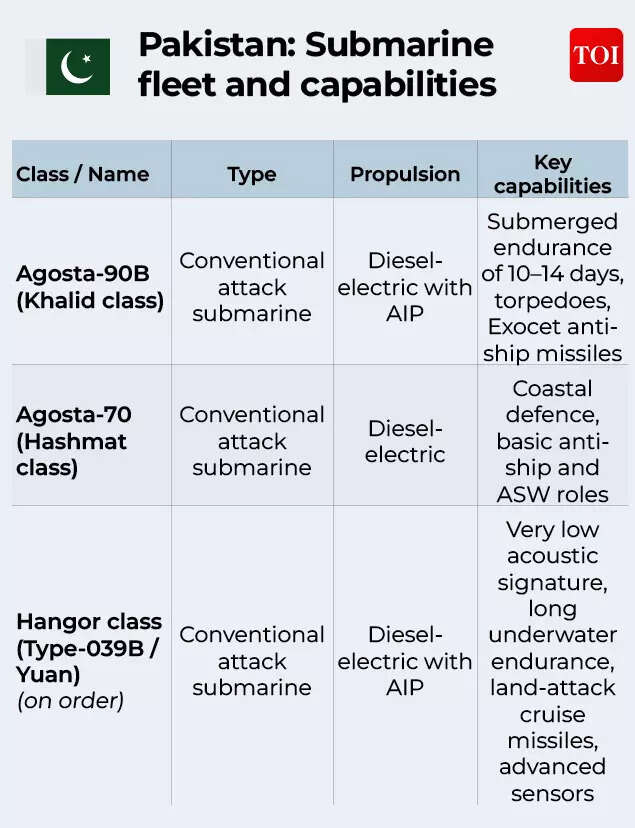
Pakistan, though operating a much smaller fleet, is upgrading steadily with Chinese assistance. The Pakistan Navy currently relies on ageing Agosta-class submarines but is in the process of inducting eight Yuan-class diesel-electric submarines from China, many equipped with air-independent propulsion. While Pakistan does not yet operate nuclear-powered submarines, its conventional fleet — particularly with AIP — enhances underwater endurance and sea-denial capability in the Arabian Sea.

Pakistan Submarine fleet and capabilities

.

The strategic distinction lies in composition and doctrine. China maintains a full-spectrum submarine fleet spanning nuclear attack submarines, ballistic missile submarines and advanced conventional boats. Pakistan focuses on sea denial and coastal defence, aiming to counterbalance India’s conventional naval superiority. India’s approach sits between the two: a modest but growing SSBN fleet for strategic deterrence, complemented by conventional submarines under Project-75 and Project-75I, and future nuclear-powered attack submarines.Numerically, India trails China in total submarine count. However, its objective is not parity but credible deterrence within its maritime theatre. Against Pakistan, India retains an edge in nuclear-powered capability, as Islamabad lacks SSBNs or SSNs. The induction of INS Aridhaman and the planned arrival of Chakra III strengthen that qualitative advantage.In effect, India’s submarine modernisation is less about fleet size and more about stealth, endurance and strategic depth. As China expands its blue-water reach and Pakistan upgrades its conventional arm, India’s triad-backed SSBN force is intended to ensure that deterrence remains intact beneath the surface of the Indian Ocean.


Source link

‘Mis-selling is offence under BNS’: FM Sitharaman warns banks, asks lenders to focus on core business


'Mis-selling is offence under BNS': FM Sitharaman warns banks, asks lenders to focus on core business

Finance minister Nirmala Sitharaman on Monday issued a warning to banks against mis-selling financial products, stressing that such practices now constitute an offence under the Bharatiya Nyaya Sanhita (BNS) and must stop as regulators tighten oversight.Addressing reporters after her customary post-Budget interaction with the RBI Central Board, Sitharaman said banks should return their focus to traditional banking functions instead of aggressively selling insurance and other non-core products.The minister welcomed the Reserve Bank of India’s move to introduce stricter norms on mis-selling, saying the regulator’s draft guidelines send a clear signal that such conduct will not be tolerated. PTI reported.“I am glad that the RBI is coming up with guidance on why mis-selling is not going to be entertained. And I think the message should go to banks that you cannot afford to mis-sell. Mis-selling is an offence… under … Bharatiya Nyaya Sanhita,” Sitharaman said.The RBI on February 11 issued draft directions mandating banks to refund the entire amount paid by customers for products sold through mis-selling and compensate them for any losses under an approved policy framework. Public feedback has been invited until March 4, with the norms set to take effect from July 1.Highlighting regulatory gaps that previously enabled such practices, Sitharaman said mis-selling often fell between the jurisdiction of the RBI and insurance regulator IRDAI, leaving customers unprotected.“Banks should concentrate on their core business… My pet peeve has always been …. you’re spending more time on selling insurance when it is not required, and conveniently, it fell between two stools (of RBI and IRDAI),” she said.She pointed to instances where customers were pushed to buy insurance products despite already having adequate coverage, particularly while availing loans.“…The individual deposit holder, the citizen of this country who kept saying, why am I being asked to take an insurance when I’m giving my property, my piece of land and taking a home loan, he wants a loan for which the property is already there. So what is he being asked to de-risk? Why should he come up with another insurance there,” the minister said.Sitharaman reiterated that banks should prioritise understanding customers’ financial needs and strengthen their deposit franchises, especially low-cost CASA (Current Account Savings Account) deposits, rather than focusing on cross-selling non-bank products.Meanwhile, RBI governor Sanjay Malhotra said deposit growth in the banking system currently stands at around 12.5 per cent, while advances are expanding at about 14.5 per cent.Malhotra added that future policy rate decisions would depend on evolving growth and inflation dynamics. Since February 2025, the RBI has reduced the benchmark repo rate by 125 basis points to 5.25 per cent to support growth amid benign inflation, though the monetary policy committee maintained status quo with a neutral stance earlier this month due to global uncertainty.The next bi-monthly monetary policy announcement — the first for FY27 — is scheduled for April 6.Assuring markets on liquidity conditions, Malhotra said the central bank would continue taking measures to provide durable liquidity across all market segments.


Source link

NEET-PG cut-off row: Exam doesn’t certify competence, says Centre; SC says will examine impact on quality | India News


NEET-PG cut-off row: Exam doesn't certify competence, says Centre; SC says will examine impact on quality

NEW DELHI: The Supreme Court on Monday said it would examine whether the sharp reduction in the qualifying percentile for NEET-PG 2025-26 would affect standards in postgraduate medical education.Justice Narasimha observed that while the Union was justified in stating that NEET-PG was not an entry-level MBBS exam and that candidates are already qualified doctors, the court would still have to consider the impact of drastically lowering the cut-off.“Adversely affecting the quality of education is what we are more concerned, more than anything. More than anything, it is about the quality. You will have to satisfy us that the reduction of the cutoff so drastically, virtually bringing it to zero and non-existence… Though you are justified in saying that this is not like entry into MBBS, this is like a post-graduation. It stands on a different footing because those who apply are already doctors. But still in the context of competition, we will have to reflect,” he said.Defending its decision, the Centre told the court that NEET-PG did not certify minimum competence. “NEET-PG is not to certify minimum competence, which stands established by the MBBS qualification itself of the candidates but to generate an inter se merit list for allocation of limited postgraduate seats,” the Union said in its affidavit. It added that NEET-PG scores reflected relative performance and exam design and “cannot be construed as determinative of clinical incompetence”.The government further said concerns about patient safety were misplaced, as all candidates admitted to postgraduate courses are already licensed MBBS doctors and are legally allowed to practise. During postgraduate studies, they work under constant supervision of senior faculty.It also said the decision to reduce the percentile was taken by the Ministry of Health and Family Welfare and the National Medical Commission due to a large number of vacant seats. Around 70,000 postgraduate seats were available for 2025-26, with over 2.24 lakh candidates appearing. After Round 2, 9,621 all-India quota seats remained vacant.A plea has challenged a January 13, 2026 notice issued by the National Board of Examinations in Medical Sciences reducing the qualifying percentile for the third round of NEET-PG 2025-26 counselling.Under the revised criteria, the minimum qualifying percentile for unreserved candidates was reduced from the 50th percentile to the 7th percentile. For unreserved persons with disabilities candidates, it was reduced to the 5th percentile. For Scheduled Castes, Scheduled Tribes and Other Backward Classes candidates, the percentile was reduced to zero.


Source link

Om Birla sets up ‘Parliamentary Friendship Groups’ with over 60 nations; Tharoor, Owaisi, Nishikant Dubey among leaders | India News


Om Birla sets up 'Parliamentary Friendship Groups' with over 60 nations; Tharoor, Owaisi, Nishikant Dubey among leaders

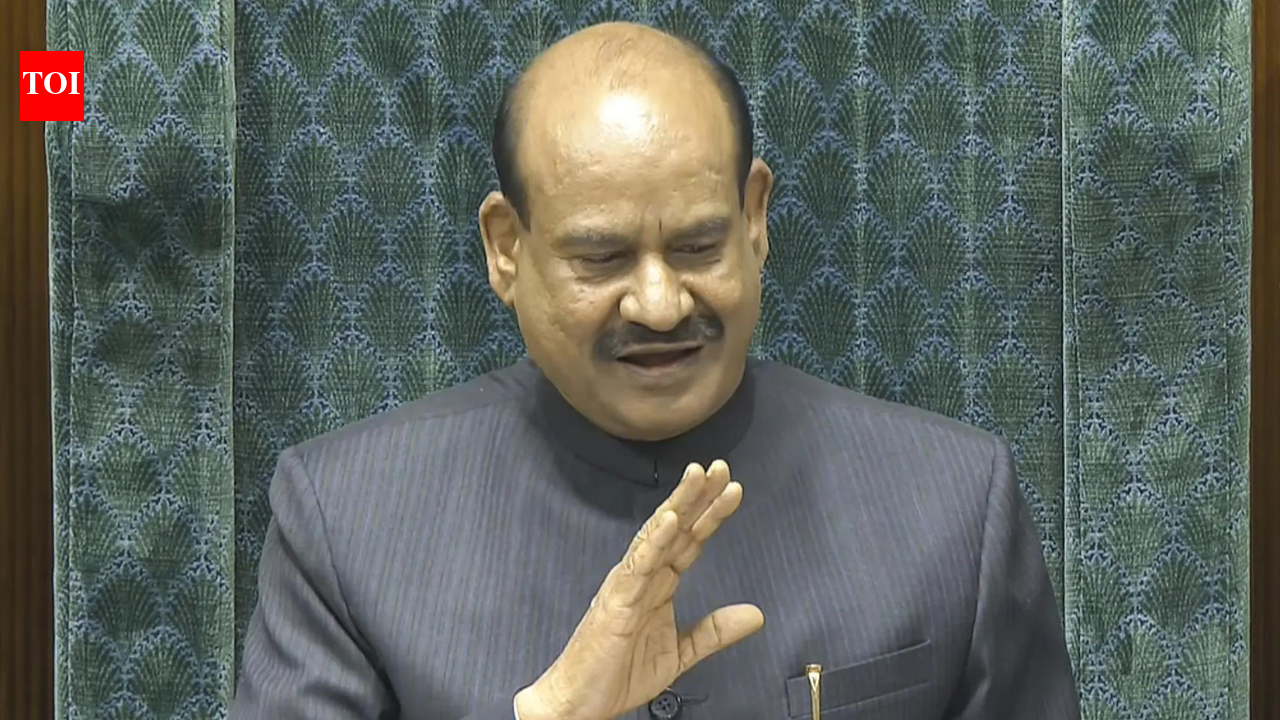
NEW DELHI: Lok Sabha Speaker OM Birla has constituted Parliamentary Friendship Groups with over 60 countries, in a move to boost “India’s inter- parliamentary engagement with the world”, according to the Lok Sabha secretariat’s announcement on Monday.“In a significant step to widen India’s inter- parliamentary engagement with the world, Lok Sabha Speaker Om Birla has constituted Parliamentary Friendship Groups with more than 60 countries,” said the secretariat, as quoted by ANI.Talking about its signifiance, it added, “The move reflects a conscious effort by the Indian Parliament to deepen dialogue and exchanges with legislatures across continents and to complement traditional diplomacy with sustained parliamentary interaction.”

Who’ll lead the groups?

Various politicians across party lines will be involed in leading the groups. The group leaders include:

  • Ravi Shankar Prasad
  • Shashi Tharoor
  • Akhilesh Yadav
  • M. Thambidurai
  • P. Chidambaram
  • Ram Gopal Yadav
  • T.R. Baalu
  • Kakoli Ghosh Dastidar
  • Gaurav Gogoi
  • Kanimozhi Karunanidhi
  • Manish Tiwari
  • Derek O’Brien
  • Abhishek Banerjee
  • Asaduddin Owaisi
  • K. C. Venugopal
  • Rajiv Pratap Rudy
  • Supriya Sule
  • Sanjay Singh
  • Baijayant Panda
  • Nishikant Dubey
  • Anurag Singh Thakur
  • Bhartruhari Mahtab
  • D. Purandeswari
  • Sanjay Kumar Jha
  • Hema Malini
  • Biplab Kumar Deb
  • Sudhanshu Trivedi
  • Jagdambika Pal
  • Sasmit Patra
  • Aparajita Sarangi
  • Shrikant Eknath Shinde
  • P. V. Midhun Reddy
  • Praful Patel

Which countries are covered?

According to the secretariat, some of the countries the Parliamentary Friendship Groups have been constituted with are:

  • Sri Lanka
  • Germany
  • New Zealand
  • Switzerland
  • South Africa
  • Bhutan
  • Saudi Arabia
  • Israel
  • Maldives
  • United States
  • Russia
  • European Parliament
  • South Korea
  • Nepal
  • United Kingdom
  • France
  • Japan
  • Italy
  • Oman
  • Australia
  • Greece
  • Singapore
  • Brazil
  • Vietnam
  • Mexico
  • Iran
  • United Arab Emirates


Source link

Meet Mariangela Hungria: The Brazilian scientist who replaced fertilisers with microbes, saving billions and restoring soil |


For decades, modern agriculture assumed that high yields required heavy doses of synthetic nitrogen fertilisers. Mariangela Hungria proved otherwise. Working quietly at Embrapa, she spent more than 40 years studying beneficial soil bacteria that allow crops to draw nitrogen directly from the air. Her research helped transform Brazilian agriculture, cut dependence on chemical fertilisers, and turn Brazil into the world’s largest soybean exporter. In 2025, her work earned global recognition with the World Food Prize.Nitrogen is essential for plant growth. It is a key building block of proteins, enzymes, and chlorophyll. While nitrogen makes up most of the air, plants cannot absorb it directly. For much of the 20th century, agriculture solved this problem with synthetic fertilisers produced using fossil fuels. These fertilisers increased yields but also brought high costs, pollution, and major climate impacts.

The science behind Mariangela Hungria’s breakthrough

Hungria focused on biological nitrogen fixation, a natural process in which certain bacteria convert atmospheric nitrogen into a form plants can use. In soybeans, these bacteria live in nodules on plant roots and form a mutually beneficial partnership. The plant provides sugars. The bacteria supply nitrogen.Her contribution was not discovering the process, which was already known, but identifying and improving the most efficient bacterial strains for tropical soils and proving that they could work reliably at commercial scale.

From laboratory to farm fields

At Embrapa’s soybean research centre, Hungria led efforts to develop practical microbial inoculants that farmers could apply to seeds before planting. These inoculants replaced or sharply reduced the need for nitrogen fertiliser. Crucially, her team also worked on quality control and farmer outreach, ensuring the technology performed consistently outside the laboratory.As adoption spread, millions of hectares of Brazilian farmland shifted to microbe-based nitrogen supply.

Transforming Brazilian agriculture

The impact was national. Brazil reduced its dependence on imported nitrogen fertilisers while maintaining high yields. Farmers cut costs and improved soil health. Emissions linked to fertiliser production and runoff fell. Over time, biological nitrogen fixation became standard practice in Brazilian soybean farming, underpinning the country’s rise as a global agricultural powerhouse.

Global recognition and wider implications

Hungria’s World Food Prize citation highlighted not only the scientific achievement but its scale. Few agricultural innovations reach tens of millions of hectares. Fewer still do so while lowering costs and emissions at the same time.Her work is now studied by researchers and policymakers in Africa, Asia, and Europe as fertiliser prices rise and climate pressures intensify.

A different model for the future of food

Hungria’s career offers a powerful lesson. Instead of forcing productivity through chemistry alone, agriculture can work with biology. Her approach shows that solutions rooted in local ecosystems can outperform imported industrial models.“This is not just about soybeans,” agricultural scientists often note. “It is about redesigning farming around living soil.”In an era searching for sustainable ways to feed a growing population, Mariangela Hungria’s work suggests that some of the most effective answers are already beneath our feet.


Source link

Did Yunus try to ‘destabilise’ Dhaka? Bangladesh president alleges ‘conspiracy’ to remove him


Did Yunus try to 'destabilise' Dhaka? Bangladesh president alleges ‘conspiracy' to remove him

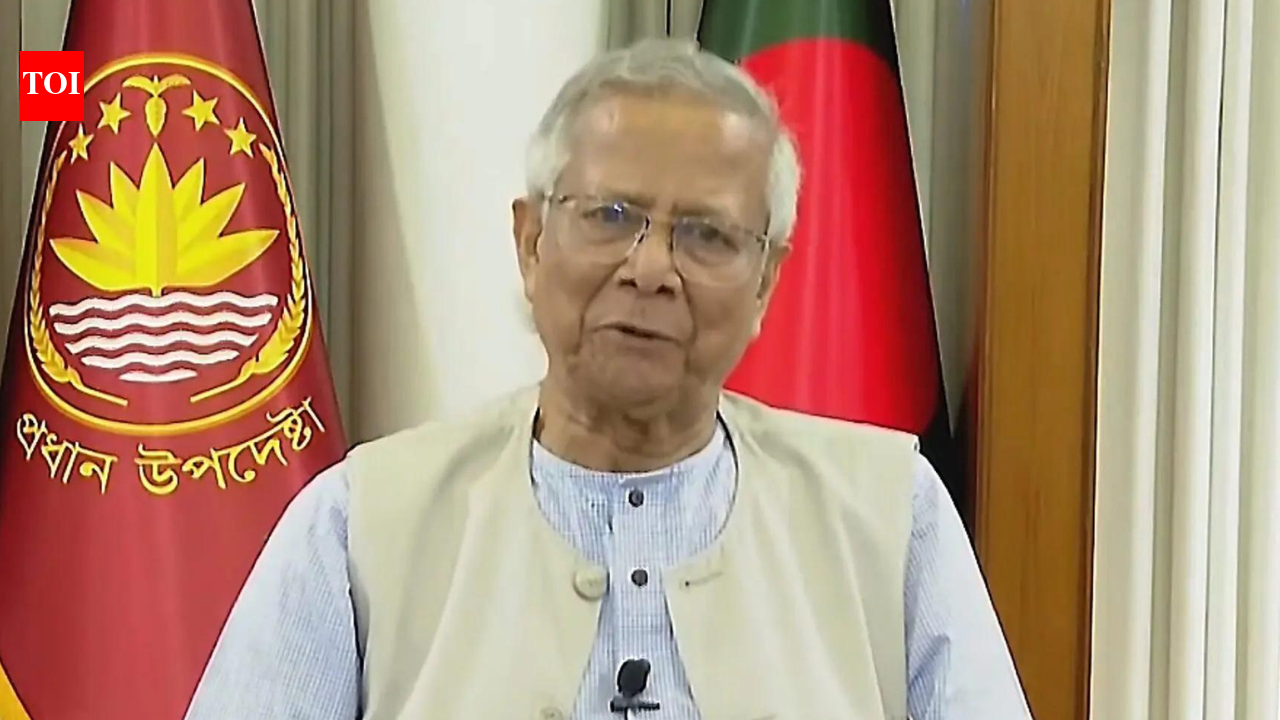
Bangladesh president Mohammed Shahabuddin has accused former chief adviser Muhammad Yunus of constitutional lapses and alleged attempts to destabilise the country and the presidency during the interim government period, according to The Daily Star.In the interview with Bangla daily Kaler Kantho, Shahabuddin said Yunus failed to maintain constitutionally mandated communication, including not briefing him after foreign visits.“The chief adviser did not follow any provision of the constitution. Whenever he went abroad, he was supposed to meet the president after returning and inform me in writing about the outcomes. He travelled abroad 14 to 15 times, but not once did he inform me. He never came to see me,” the president said.Shahabuddin said he was kept “completely in the dark” during the period and claimed that two of his planned visits, to Kosovo and Qatar, were blocked. Referring to the political climate, he added, “In that situation, I did not receive any phone call from Dr Yunus. He was neither in favour of me nor against me. Of course, I also did not make any request to him seeking help.”

Attempted removal

Alleging attempts to remove him after the 2024 mass uprising, the president said, “At one point, even a conspiracy was made to bring a former chief justice and seat him in my place through unconstitutional means,” adding that the judge declined, citing constitutional constraints.He described the October 22, 2024 protests outside Bangabhaban as a “terrifying night”, claiming mobs attempted to loot the presidential residence before the situation was brought under control with military deployment.Shahabuddin said the armed forces and leaders of the Bangladesh Nationalist Party (BNP) supported constitutional continuity. According to him, the three service chiefs told him: “You are the supreme commander of the armed forces. Your defeat means the defeat of the entire armed forces. We will prevent that at any cost.”

Pushed into isolation

The president further alleged that his office was deliberately isolated, including the withdrawal of the entire Bangabhaban press wing following a courtesy meeting with newly elected leaders of the Dhaka Reporters Unity.“Very shamelessly, three people, the press secretary, deputy press secretary and assistant press secretary, were withdrawn together,” he said, adding that two long-serving photographers were also removed. “We cannot even issue a simple press release congratulating the national cricket team when they win an international match,” he said, describing his office as “completely handicapped.”He also claimed that during the interim period, his photographs and messages were excluded from state supplements on national days, and that his portraits were removed from Bangladesh missions abroad.“That night, my photos were removed from almost all Bangladesh high commissions and consulates around the world. That incident was essentially an indication or the first step to remove me,” he said, adding that he later lodged a written protest with the foreign ministry.Despite what he termed “humiliating situations,” Shahabuddin said he remained firm to ensure constitutional continuity.


Source link

WATCH: Pakistan TV channel dubs Mohammad Amir an ‘astrologer,’ credits him for India’s defeat to South Africa


In the aftermath of India’s humiliating 76-run defeat against South Africa in the T20 World Cup 2026 Super 8 clash, a Pakistan television channel has dubbed former fast bowler Mohammad Amir an “astrologer” for his eerily accurate predictions about the Indian team’s downfall. The light-hearted yet pointed celebration on the popular show ‘Haarna Mana Hai’ has since gone viral, adding a touch of cross-border banter to an otherwise sobering evening for Indian cricket .

“What have you turned me into?”: Mohammad Amir’s reaction goes viral

The moment came during a segment of Geo News’ ‘Haarna Mana Hai’ programme, where Amir serves as a panelist alongside former Pakistan cricketers Rashid Latif and Ahmed Shehzad. As discussions turned to India’s shocking defeat at the Narendra Modi Stadium, the host introduced Amir with a hilarious twist .

“The things our Pakistani team is not able to do, our panellists are doing while sitting in a studio in Lahore. Mohammad Amir first called Abhishek Sharma a slogger, and since then, Abhishek has struggled for form in the tournament. He then said India won’t reach the semi-finals, and it seems India is listening to what Amir has said. Let’s welcome astrologer, cricketer, and left-arm pacer Mohammad Amir,” the host declared.

The unexpected introduction left Amir in splits. Laughing uncontrollably, the former pacer replied, “Kya bana diya hai mujhe? Allah maaf kare (What have you turned me into? May God forgive you).”  The exchange quickly spread across social media platforms, with fans enjoying the playful banter.

Also WATCH: Washington Sundar and David Miller engage in explosive mid-pitch confrontation during IND vs SA T20 World Cup Super 8 clash

Amir’s predictions that came true

Amir’s prophetic status stems from two specific comments he made in the lead-up to the Super 8 stage. During previous episodes of ‘Haarna Mana Hai’, the former pacer had been unequivocal in his assessment of India’s batting vulnerabilities.

First, he labelled Indian opener Abhishek Sharma a “slogger,” questioning his technical soundness against quality bowling. “By whatever little I have seen, if you ask me honestly, I feel he is just a slogger. He has to go hard at every ball. The day he gets going, it’s fine; otherwise, uske failure ke chances zyaada hain (The chances of his failure are high). He scores once in 8 innings. Otherwise, his scores are 10, 15, 0, and 20. I don’t think he is technically sound,” Amir had stated.

The assessment proved devastatingly accurate. After registering three consecutive ducks against the USA, Pakistan, and the Netherlands, Abhishek managed just 15 off 12 balls against South Africa before falling to Marco Jansen’s knuckle ball – caught brilliantly by Corbin Bosch after a collision with Keshav Maharaj.

Second, Amir predicted that India would not reach the semifinals, backing South Africa and the West Indies to progress from Group 1 instead. “Except for the Pakistan match, the Indian batting line-up collapsed in every game. The way South Africa and the West Indies are playing, they can beat any team,” he had said.

Also READ: After defeat against South Africa, India coach explains why Washington Sundar got the nod over Axar Patel


Source link

Shadab Khan’s ‘Pakistan will play the final’ claim goes viral – WATCH | Cricket News


Shadab Khan's 'Pakistan will play the final' claim goes viral - WATCH

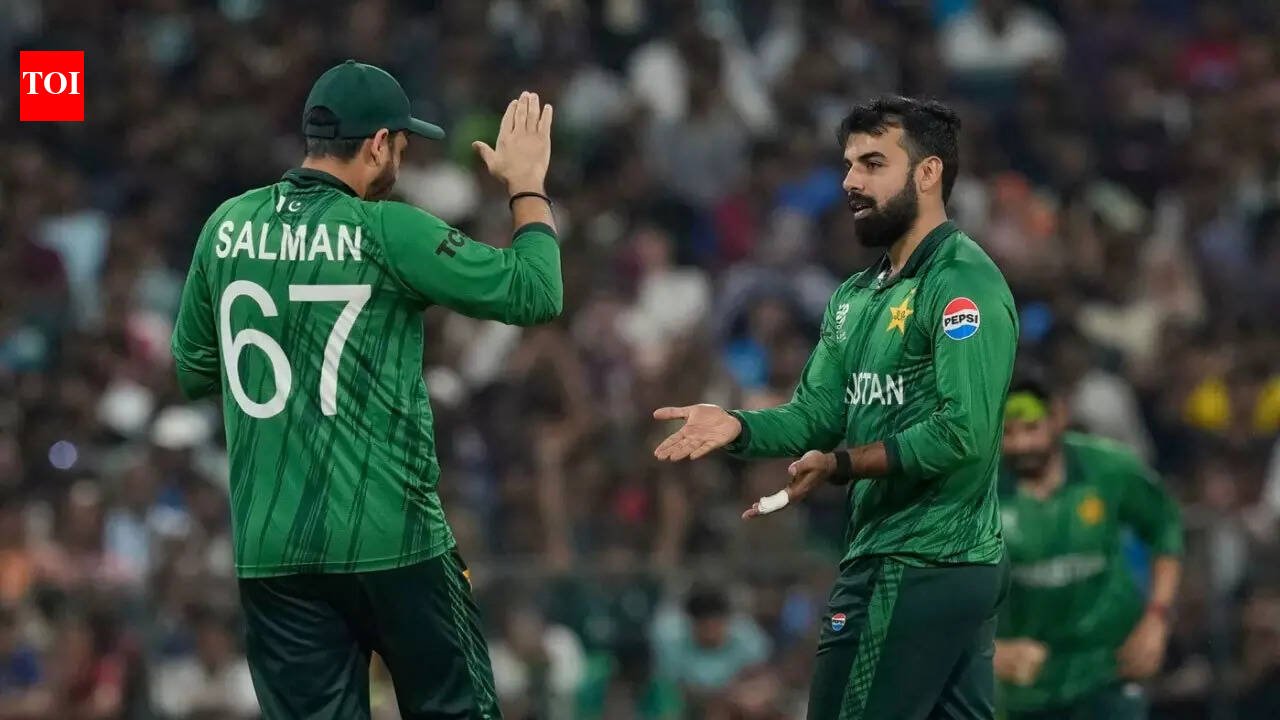
NEW DELHI: “Pakistan will play the final,” Pakistan allrounder Shadab Khan confidently told a fan, hinting at the Men in Green’s ambitions in the T20 World Cup 2026. The clip, now going viral on social media, sets the tone ahead of Pakistan’s Super Eights clash against England at the Pallekele International Cricket Stadium on Tuesday.“So, you are here till the semi-finals?” a fan asked, probably indicating the side’s matches in Sri Lanka.

India fans in Ahmedabad react to loss vs South Africa | T20 World Cup

In reply, Shadab says, “Till the final. Final, inshahallah.” The pitch in Pallekele is expected to assist slow bowlers, and both teams are likely to lean heavily on their spin attacks. England, two-time champions, may not have hit top gear yet, but they began their Super Eights campaign with a commanding 51-run win over Sri Lanka. That victory not only boosted their net run rate but also propelled them to the top of the standings. Defending a modest total, England’s spinners, supported by pacer Jofra Archer, triggered a dramatic collapse in the Sri Lankan batting lineup.Pakistan, on the other hand, were left frustrated after their opener against New Zealand was washed out, leaving them with a single point and little margin for error. They will rely on a varied spin arsenal, including the mystery spin of Usman Tariq and the experience of Saim Ayub, Abrar Ahmed, Shadab Khan, and Mohammad Nawaz, to stifle England’s batting.Batting consistency, however, remains a concern for Pakistan. While opener Sahibzada Farhan has impressed as the tournament’s leading run-scorer with 220 runs from four innings, others like Saim Ayub and captain Salman Agha are yet to fire decisively. A strong batting performance will be crucial if Pakistan are to overcome England’s balanced side.With stakes high, the clash promises a fascinating battle between England’s disciplined spin and Pakistan’s variety. Fans will be watching closely to see if Shadab Khan’s bold prediction of reaching the final can come true.


Source link

How Dwarka Expressway became a real estate goldmine and why so many people from Delhi/NCR are investing here |


How Dwarka Expressway became a real estate goldmine and why so many people from Delhi/NCR are investing here

Dwarka Expressway is being looked upon as one of the fastest growing real estate hubs in the Delhi-NCR region. It is transforming from a planned road project into a magnet for homebuyers, developers, and investors. There are several reasons that are being cited for this phenomenal growth in a short time span. The expressway connects Delhi directly with Gurugram, NH-8, and Indira Gandhi International Airport. This greatly reduces commute time which was typical of older routes. The planning of the expressway corridor has been done in a very modern way. With wide roads, green spaces, and improved civic infrastructure, it is encouraging well-planned residential and commercial townships. As per several reports, the property prices along the expressway have soared—surging up to ~58% year-on-year. Communities along the expressway often feature amenities like landscaped gardens, clubhouses, fitness zones, retail hubs, schools, healthcare facilities, and more, which match modern buyers’ expectations.As per a report publishes in PropTiger, housing prices in Delhi NCR on an average appreciated 6% last year after surging 49% amid softening of demand for residential properties. The prices grew by 6% to Rs 8,570 from Rs 8,105 per sq. ft. Such growth is seen as a maturing market, with the situation shifting towards high quality luxury developments. The region’s expansion is moving outward, driven by major transit links and corridors. While the established city centers remain stable, the real growth is shifting towards peripheral corridors, which have more space and opportunities for the stakeholders. In Delhi itself, a ‘vertical leap’ is underway, with micro markets evolving into high rise luxury hubs. However, the most significant value creation continues to be driven by Gurugrams’ emerging corridors.

Image: Canva

Dwarka Expressway is being looked upon as a lucrative destination for real estate investment. The completion and operationalization of the corridor’s Delhi stretch in 2025 marks it as one of the most vital mega-projects in the NCR, acting as a gateway that connects Delhi, the Indira Gandhi International Airport, and the commercial hubs of Gurugram. Dwarka Expressway has become a magnet for high-end residential projects. Developers such as BPTP, M3M, Signature Global, Whiteland Corporation, Roots Developers, and Hero Realty are defining the corridor with eco – conscious, luxury projects and amenity-rich townships that cater to urban dwellers and NRI investors. Beyond its 28 km stretch, the corridor’s USP is its future-ready infrastructure, including proposed metro links and proximity to the upcoming Global City projects.Manik Malik, CEO, BPTP says, “Dwarka Expressway is a fast emerging prime destination for luxury real estate, backed by accelerated infrastructure delivery, seamless connectivity, and the entry of globally benchmarked developments. The corridor now benefits from operational expressway stretches, strong road linkages to IGI Airport and NH-48, improving last-mile connectivity, and planned metro expansion, along with rapidly evolving social and commercial infrastructure. This integrated infra push is reshaping buyer sentiment and drawing demand from premium homebuyers who value accessibility, design excellence, and lifestyle-led communities.”

Dwarka Expressway: A Trifecta of Opportunity Reshaping Delhi-NCR's Future

Representational image

According to Sudeep Bhatt, Director – Strategy, Whiteland Corporation, “Dwarka Expressway has emerged as one of NCR’s most compelling premium residential corridors, driven by a rare combination of strategic connectivity and credible infrastructure delivery.”The Dwarka Expressway is no longer just a road project; it’s becoming the heart of a whole new way of life in Delhi NCR. We can see it taking shape right in front of us: flyovers going up, green belts opening up, and traffic moving smoothly. It’s not just about getting from A to B faster; it’s about combining seamless connectivity with high-end lifestyles and smart investment opportunities that could pay off big in the years to come. If you’re looking for a house, the most important thing to remember is that if you find the right spot along this corridor, you’re set. Think about world-class connectivity that cuts your commute to Gurgaon or the airport, property values that go through the roof as high-end projects like luxury towers and gated enclaves spring up everywhere, and the rare chance to lock in appreciation before the rush hits. It’s not just talk; this is how people will live in cities in the future.


Source link