Breaking News
After ‘she helped rediscover excitement’ remark, Hardik Pandya shares intimate birthday post for Mahieka Sharma | Cricket News


Hardik Pandya shares intimate birthday post for Mahieka Sharma

NEW DELHI: Indian cricketer Hardik Pandya shared a sweet birthday post for his girlfriend Mahieka Sharma on Instagram. He posted a warm photo with her and wrote, “Happy birthday my princess.” Hardik confirmed his relationship with Mahieka in late 2025. This came more than a year after his divorce from Natasa Stankovic in July 2024.

How Suryakumar Yadav and Tilak Varma are hurting India | T20 World Cup

Since then, Hardik and Mahieka have been seen together many times. She has also been seen spending time with Hardik’s son, Agastya, which showed the growing closeness between them.In an interview with JioStar amid this ongoing T20 World Cup, Hardik spoke about how Mahieka helped him in his cricket journey. He admitted that he had not used his full potential as a batter. He said, “After the last IPL, I realised that I really wanted to play to my full potential. I think until now, I haven’t utilised more than 40 per cent of my batting potential.” He explained that he needed time to understand how to bring out his best form.Hardik said Mahieka played a key role in motivating him.

Hardik Pandya's post for Mahieka Sharma

Hardik Pandya’s post for Mahieka Sharma

He added, “That’s when Mahieka came into my life. We started talking about the sport and how to bring that child back.” He also said, “Mahieka helped me rediscover that excitement for the game that I always had.” He shared that he trained for long hours and spent six to seven hours on the ground on some days.On Valentine’s Day 2026, Hardik got a tattoo on the back of his neck to show his feelings for Mahieka. The tattoo includes the letter ‘M’ and two leopards. The leopards symbolise their strong bond and how they push each other to be better. Tattoo artist Sunny Bhanushali explained the meaning and said, “Hardik came with the idea of an initial, but conversations revealed something much deeper. They described themselves as partners who amplify each other’s strengths. The leopard became the perfect metaphor — powerful alone, unstoppable together.”



Source link

‘Air India fleet reliability has improved’: CEO Campbell Wilson highlights upgrades


'Air India fleet reliability has improved': CEO Campbell Wilson highlights upgrades

Air India’s operational turnaround is showing early results, with fleet reliability improving and spare parts availability rising as the airline advances its transformation plan, CEO Campbell Wilson said on Thursday.Speaking during a town hall with employees, Wilson said operational resilience remains a key focus area for the Tata Group-owned carrier and that enhanced fleet reliability is now visible across operations, PTI reported.The airline has faced persistent challenges with its legacy wide-body Boeing 777 and 787 aircraft, which had led to flight delays and cancellations. Wilson said both legacy Boeing fleets are showing improvements as reliability upgrades continue and inventories of spares and components have increased.The carrier has been undertaking replacement and upgrade of aircraft components to make operations more dependable, he added.Wilson also said more than 50 per cent of Air India’s wide-body fleet is expected to be modernised by the end of 2026, with the full wide-body modernisation programme targeted for completion by December 2028.The airline group — comprising Air India and Air India Express — is also planning significant expansion, aiming to grow its fleet from around 300 aircraft currently to more than 500 by 2030.Air India, privatised in January 2022 after returning to the Tata Group, is currently executing an ambitious transformation strategy aimed at improving operational performance and long-term growth.


Source link

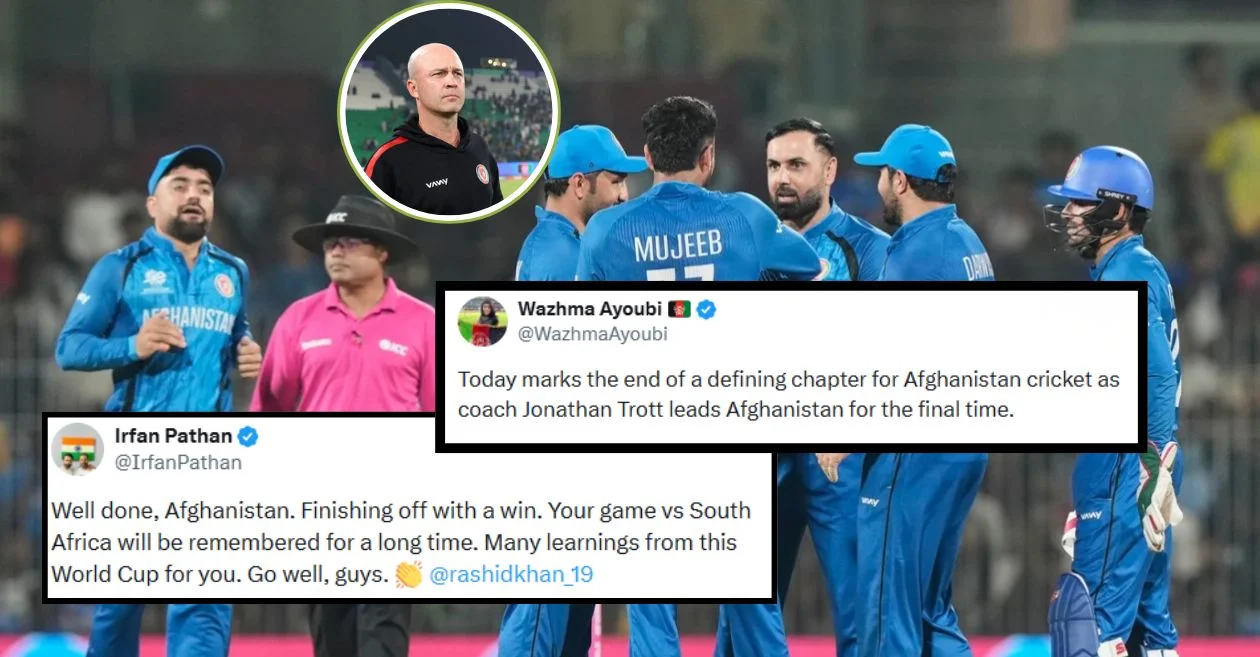
Fans react as Afghanistan end T20 World Cup 2026 with 82-run win over Canada in head coach Jonathan Trott’s farewell game


Afghanistan provided a sentimental and clinical farewell to their departing head coach, Jonathan Trott, by securing a dominant 82-run victory over Canada at the M.A. Chidambaram Stadium on February 19 in T20 World Cup 2026.  The victory was built on a record-breaking batting performance that saw Afghanistan post their highest total of the 2026 edition, followed by a masterful spin display under the Chennai lights.

Although both teams had already been eliminated from Super 8 contention, the match served as a poignant tribute to Trott’s transformative four-year tenure. This result ensures Afghanistan finishes third in the ‘Group of Death,’ leaving the competition with their heads held high and a clear blueprint for the ODI World Cup 2027.

Ibrahim Zadran’s record-breaking 95* propels Afghanistan to 200

The first innings in Chennai belonged entirely to Ibrahim Zadran, who produced a masterclass in controlled aggression to finish with an unbeaten 95 off just 64 balls. Zadran’s innings was a historic one, marking the highest individual score by an Afghan batter in T20 World Cup history, surpassing the previous record held by teammate Rahmanullah Gurbaz.

After the early double-strike by Canada’s Jaskaran Singh, who dismissed Gurbaz (30) and Gulbadin Naib in the powerplay, Zadran anchored the innings with veteran composure before exploding in the final five overs. He found an ideal partner in the young Sediqullah Atal, who smashed a quick-fire 44, allowing Zadran to systematically dismantle the Canadian death-bowling plan with 7 boundaries and 5 massive sixes.

The pair added nearly 100 runs for the third wicket, taking Afghanistan from a precarious middle-over lull to a daunting 200/4 by the close of the 20th over. Zadran’s ability to manipulate the field and target the short square boundaries left the Canadian bowlers, particularly Dilon Heyliger, looking for answers as the Afghan total soared past the 190-mark.

Also READ: ‘Our 12th man is with us’: Shadab Khan makes big revelation after Pakistan’s T20 World Cup 2026 Super 8 qualification

Mohammad Nabi’s four-wicket haul dismantles Canada in emotional farewell

Defending a mammoth 201, the ‘President’ Mohammad Nabi rolled back the years to deliver a spin-bowling clinic, claiming 4/7 to ensure Canada never stood a chance in the chase. Nabi’s variations and immaculate control on the turning Chennai surface triggered a middle-order collapse from which the North American side never recovered, as they were eventually restricted to 118/9.

While Harsh Thaker (30) and Shreyas Movva (28) showed brief resistance, the relentless pressure applied by Nabi and captain Rashid Khan, who remained uncharacteristically economical in the middle overs, forced a flurry of mistimed heaves and desperate shots. The Afghan fielding was equally inspired, with Rashid leading from the front to effect two sharp catches that punctuated the dominance of the bowling unit.

As the required run rate climbed toward the impossible mark of 15 runs per over, the lower order completely crumbled under the lights, with Ziaur Rahman and Azmatullah Omarzai picking up late wickets to seal the 82-run win. The final wicket sparked emotional scenes on the field as the players embraced coach Jonathan Trott, marking the end of a golden period in Afghan cricket that saw them rise from Associate peers to global giant-killers.

Here’s how fans reacted:

Also READ: Ricky Ponting predicts Glenn Maxwell’s retirement after Australia’s early exit at T20 World Cup 2026


Source link

102 architects and planners oppose Mumbai’s Mahalaxmi Racecourse redevelopment | Mumbai News


Mumbai: A group of 102 architects, designers and planners under the banner of the Mumbai Architects Collective issued a public appeal to CM Fadnavis and BMC commissioner Bhushan Gagrani against the proposed redevelopment of Mahalaxmi Racecourse, warning that any underground construction could permanently damage one of the city’s last large public open spaces.The collective said Thursday the project, being projected as a park upgrade, is in reality a major infrastructure intervention, reports Richa Pinto.

AI Impact Summit, Supreme Court on CAA, India-France Ties & More

Architect Alan Abraham said, “Underground parking structures and sporting facilities are capital-intensive projects. They are expensive to build and operate — to ventilate, light, secure and maintain over decades — and inevitably introduce access controls. Once built, these structures change the fundamental character of a public ground, often permanently.”The Mumbai Architects Collective warned infrastructure intervention at the open space will have long-term environmental and urban planning consequences.On Dec 15 last, hours before the model code of conduct for the BMC elections kicked in, deputy chief minister Eknath Shinde in the presence of Gagrani and architect Hafeez Contractor had announced that plans for an almost 300-acre Central Park—integrating open spaces from the Mahalaxmi Racecourse and Coastal Road—will be fast-tracked.He said the complex will host international-level sports facilities along with traditional Indian sports, adding the plan also includes a 5,000 parking facility.“The racecourse is already public land and has long been used by citizens for walking, exercise and recreation. Improving access does not require excavation or the construction of underground parking, tunnels or built facilities,” said Abraham, adding the environmental role of the racecourse as a contiguous natural surface in a low-lying, flood-prone coastal city. The letter also states that such grounds are critical for rainwater absorption, groundwater recharge and flood mitigation and any underground construction would permanently compromise these functions for infrastructure that is neither necessary nor environmentally prudent.Architect Samir D’Monte said. “The govt’s proposal for a massive car park and extensive underground sports facilities seem to fundamentally misunderstand how underground concrete structures work—the area above will no longer be a natural park, it will be a concrete slab without trees and any kind of natural ecosystem, possibly ending up being covered with plastic grass.”The letter also raised concerns about proposed underground pedestrian tunnels, pointing that under Transit Oriented Development (TOD) regulations, such corridors can unlock additional FSI for nearby properties. This, they argued, reframes the proposal as part of a larger development and real estate framework rather than a simple park improvement.Architect Nitin Killawala said the racecourse is already a functioning and established open space. “By proposing additions such as sports complexes and parking facilities, we will only add to dust, construction activity and pollution,” he said. “The scale of public spending that we see may be enormous, and that money could instead be used far more effectively to revive and upgrade municipal gardens across the city.


Source link

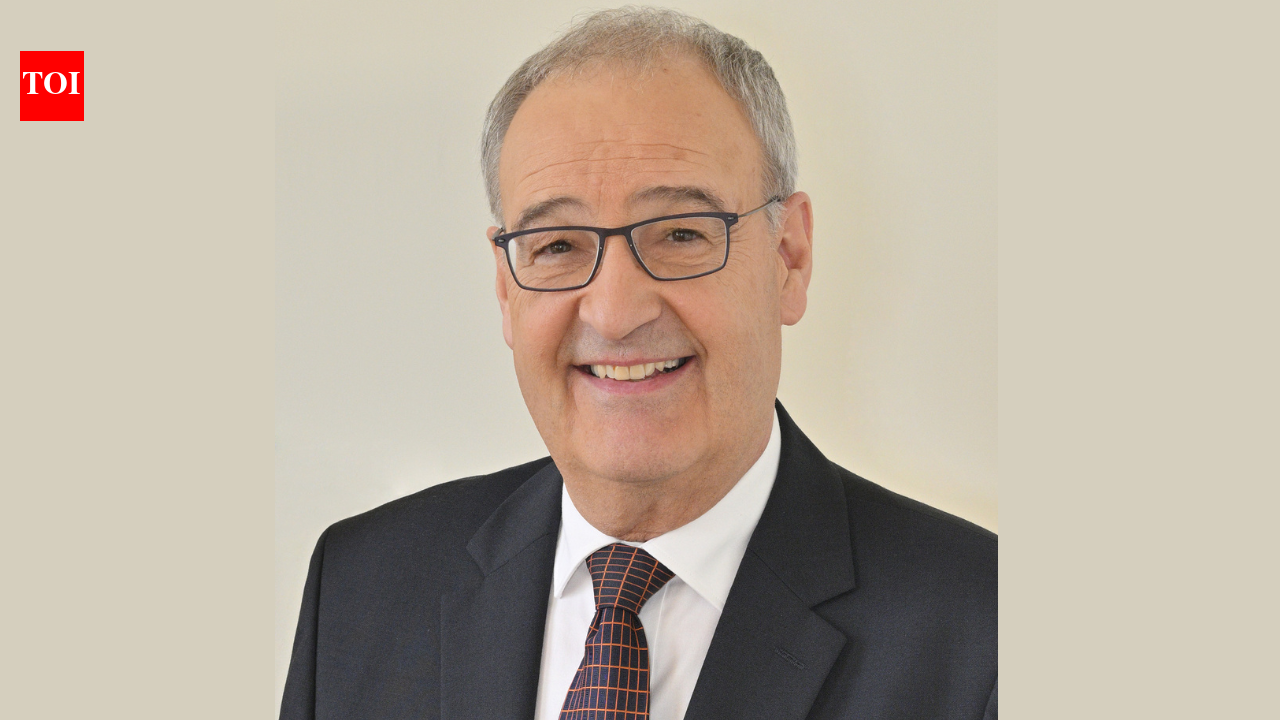
AI can’t be regulated by single instrument: Swiss president Guy Parmelin


AI can't be regulated by single instrument: Swiss president Guy Parmelin

Swiss President Guy Parmelinbacks a governance framework for AI that does not rely on a single instrument and calls for societal norms that guide users. Excerpts from an interview with TOI:How should countries deal with AI regulation? Is there a need to have a new agency? Will a regulatory set up stifle innovation and development of AI but how do you deal with challenges such as deep fake?Over the past 200 years, mankind has established thousands of legal, technical and societal norms to “regulate” the development and use of engines in a vast number of different machines and vehicles, with different levels of harmonization, based on the specific context of use. Like engines, we think that also AI cannot be “regulated” by a single instrument, but we will need to develop a governance framework consisting of many instruments to cover different aspects of the development and use of AI. Switzerland is therefore actively contributing to the development of technical standards for AI, of binding and nonbinding legal instruments, like the recommendations of UNESCO or the Global Partnership on AI (GPAI) and the Council of Europe framework convention on AI, which has been elaborated among 55 countries from all around the world and is the first binding international treaty on AI. But we also need societal and cultural norms that guide us when using AI in our specific contexts.Switzerland is chairing the OSCE for the third time this year. In that capacity, what are you proposing to do to end the Russia-Ukraine conflict? Also, what do you make of India’s efforts to reach out to both sides for a ceasefire and return to dialogue and diplomacy?Under the first priority of its OSCE Chairpersonship (“Helsinki Principles – for lasting peace”), Switzerland is committed to a just peace in Ukraine, based on international law and the Helsinki Principles. In his capacity as OSCE Chairman-in-Office, Federal Councillor Ignazio Cassis visited Kyiv (Feb 2) and Moscow (Feb 5-6) together with the OSCE secretary general to offer dialogue and to make sure all relevant actors know what the OSCE could contribute in the context of a negotiated settlement. Ultimately, it is up to the States to decide whether to make use of it.Last one year has been turbulent for trade? How much cushion have trade deals such as those with India provided?Free trade agreements such as the Trade and Economic Partnership Agreement (TEPA) are an important tool, especially in challenging times for trade policy. They enable the Swiss export industry to tap into new markets and diversify. This strengthens Switzerland’s standing as a business location and boosts its ability to generate added value, create new jobs and preserve existing ones.Given unilateral tariff actions over the last 10 months, what is the way forward ad WTO’s powers are completely undermined and there is a rush of bilateral trade agreements around the globe?The WTO has long been under severe stress, but despite institutional paralysis, around 74% of global trade still takes place on MFN terms, underscoring the system’s continued relevance. It remains the only global institution that monitors members’ trade measures and offers a permanent forum for dialogue among 166 economies. In a context of rising tensions and challenges to established rules, Switzerland will continue to champion multilateralism and support WTO reform to preserve rules-based trade. WTO members broadly share this view: they have repeatedly signalled strong willingness to engage in meaningful reform, especially in view of the 14th WTO Ministerial Conference.The global order is changing, whether it is trade, arms reduction or countries threatening or attacking others. Where are things headed, is this a transition phase?The international order is undergoing a deep and far-reaching transformation. Democracy is under pressure worldwide. Tariffs are being raised, trade agreements dismantled, international rules ignored. It is not the rule of law that prevails, but the rule of might. Joint solutions are pushed aside by unilateral action. Great powers assert their interests, some wage wars to restore old empires. So, today, we are at a turning point. A turning point between progress and regression, between global cooperation and geopolitical rivalry. Between democratic renewal and authoritarian relapse. We have to actively shape this transformation. In this context, Switzerland is keen to diversify and deepen its relations with democratic partners like India that are proponents of international law and the rules-based international order and have considerable global influence and reach.Some believe that migration concerns are hyped up and there is a need get people to help at a time when European population is declining. But migrants come with their own challenges, especially problems with adjustment and backlash. How do you balance the two at a time when you are seeing a backlash against certain migrant groups?Switzerland recognizes that human mobility is a global phenomenon. People have always moved in response to economic, social, political, security and environmental challenges, in search of opportunities and/or safety. Fair, regular and safe migration can be a driver of sustainable development and of economic resilience, growth and prosperity for both countries of origin and destination. However, unsafe and irregular migration come with risks and challenges, even more so for young people and women. Switzerland – as a small but highly globalized country – has a strong interest in an international system of migration governance that addresses the risks associated with unsafe migration and forced displacement while leveraging the benefit of migration for the economy and the people. To address challenges but also build on opportunities, Switzerland’s foreign policy on migration is characterized by a partnership approach with countries of origin, transit and destination.

From Trust To Technology: How India’s Digital Media Is Redefining Power In The Age Of AI Disruption


Source link

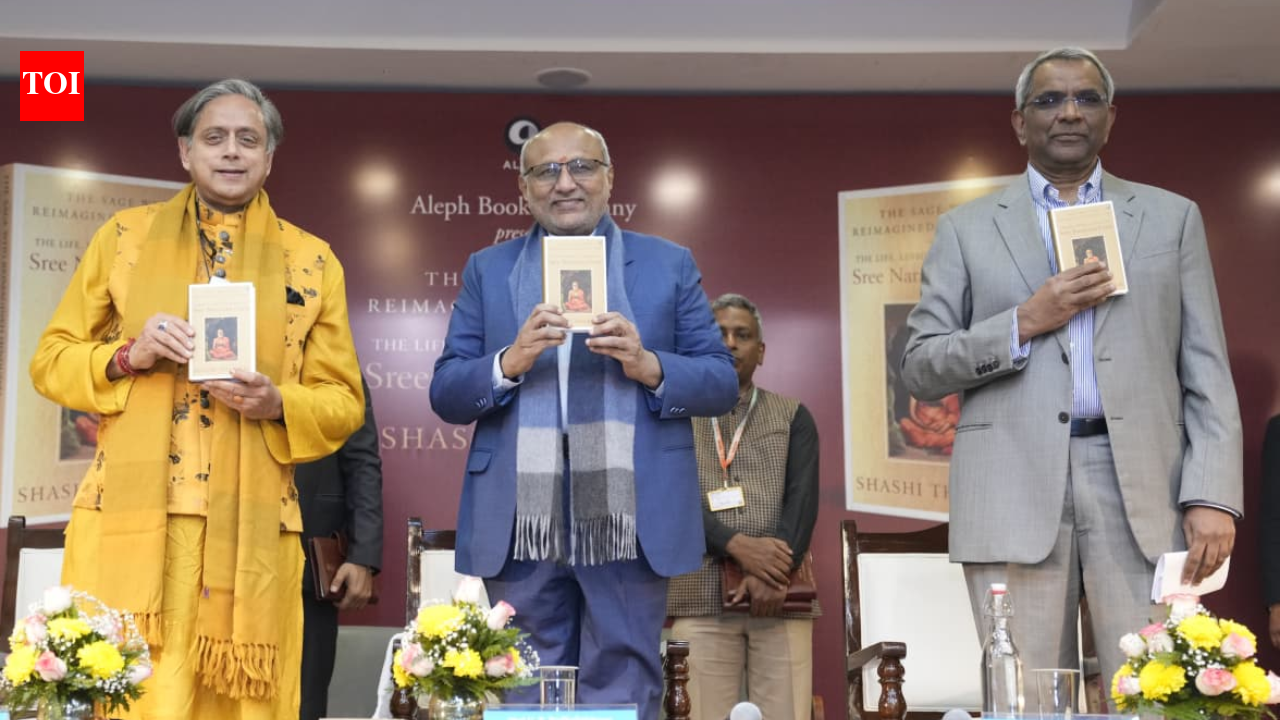
VP CP Radhakrishnan releases Shashi Tharoor’s book on Sree Narayana Guru | India News


VP CP Radhakrishnan releases Shashi Tharoor’s book on Sree Narayana Guru
Vice President CP Radhakrishnan with Congress MP Shashi Tharoor (Image/X)

NEW DELHI: Vice President CP Radhakrishnan on Thursday lamented that contributions of Indian philosophers and social reformers like Sree Narayana Guru have not been adequately recorded in international languages, which has created a gap in global academic discourse.Releasing a book on Narayana Guru by Congress MP Shashi Tharoor, Radhakrishnan said “The sage who reimagined Hinduism” will take India’s heritage to a global audience.

“We Can’t Be Seen As Weak”: Tharoor’s Bold Claim On Rafale Deal

The VP said that the book is special because it was first released in Sivagiri Mutt, the hermitage founded by the Guru. He said a visit to the Mutt provides the inspiration to treat everyone with equality and dignity.Radhakrishnan said that the Guru emerged as a spiritual guide at a time when caste divisions and social discrimination were deeply entrenched in society. He noted the Guru’s immortal message “One Caste, One Religion, One God for humankind” was not only a spiritual proclamation but also a revolutionary call for equality, dignity and universal brotherhood.Tharoor said it is unfortunate that while Guru’s message has a universal resonance, he is hardly known outside Kerala. Talking about Kerala of the 19th century, he said that caste prejudices were so deep in the state that Swami Vivekananda had called it a “lunatic asylum”. He said Guru took up social reform in such a bad situation and shook up society to the point that Kerala is now the most progressive state in the country.


Source link

Google releases Gemini 3.1 Pro: Here’s what’s new and who gets it first


Google releases Gemini 3.1 Pro: Here's what's new and who gets it first
Google has unveiled Gemini 3.1 Pro, a powerful AI upgrade emphasizing enhanced reasoning for complex tasks. This new model excels at synthesizing data, generating animated SVGs from text, and tackling intricate technical problems. It significantly outperforms previous versions on key benchmarks, promising a leap in AI capabilities for both consumers and developers.

Google has launched Gemini 3.1 Pro, a significant update to its flagship AI model focused on sharper reasoning and better handling of complex, multi-step tasks. The model is rolling out today across the Gemini app, NotebookLM, and developer platforms including Google AI Studio, Vertex AI, and Antigravity.

Google Gemini 3.1 Pro features: What the upgrade actually brings

This is Google’s first-ever .1 increment—previous cycles used .5 as the mid-year refresh. The naming signals a focused intelligence upgrade rather than a broad feature expansion. At its core, 3.1 Pro brings the advanced reasoning engine introduced in Gemini 3 Deep Think last week to a much wider audience.Google describes the model as built for situations where “a simple answer isn’t enough.” In practice, that means handling things like synthesising large datasets into a single view, generating animated SVGs directly from a text prompt, or working through layered technical and scientific problems. The animated SVG capability is a neat example—outputs are built in pure code rather than pixels, meaning they stay crisp at any scale with tiny file sizes compared to traditional video.

Google Gemini 3.1 Pro vs OpenAI GPT and Anthropic Claude: What the numbers say

The headline figure is a 77.1% score on ARC-AGI-2, a benchmark that tests abstract reasoning on entirely new logic patterns. That’s more than double Gemini 3 Pro’s score—a meaningful jump. Elsewhere, 3.1 Pro scores 94.3% on GPQA Diamond (scientific knowledge), 80.6% on SWE-Bench Verified (agentic coding), and 85.9% on BrowseComp (agentic search). On LiveCodeBench Pro’s competitive coding Elo, it sits at 2887—notably ahead of rivals.

Google Gemini 3.1 Pro: How to access it right now

Gemini 3.1 Pro is launching in preview while Google validates performance, particularly around agentic workflows. Consumers can access it through the Gemini app and NotebookLM, with higher usage limits for Google AI Pro and Ultra subscribers. Developers get access via the Gemini API in Google AI Studio, Gemini CLI, Antigravity, Vertex AI, Gemini Enterprise, and Android Studio. General availability is expected soon.


Source link

‘We keep our sights forward’: Giant-killer Zimbabwe send warning after taking down Sri Lanka and Australia | Cricket News


'We keep our sights forward': Giant-killer Zimbabwe send warning after taking down Sri Lanka and Australia
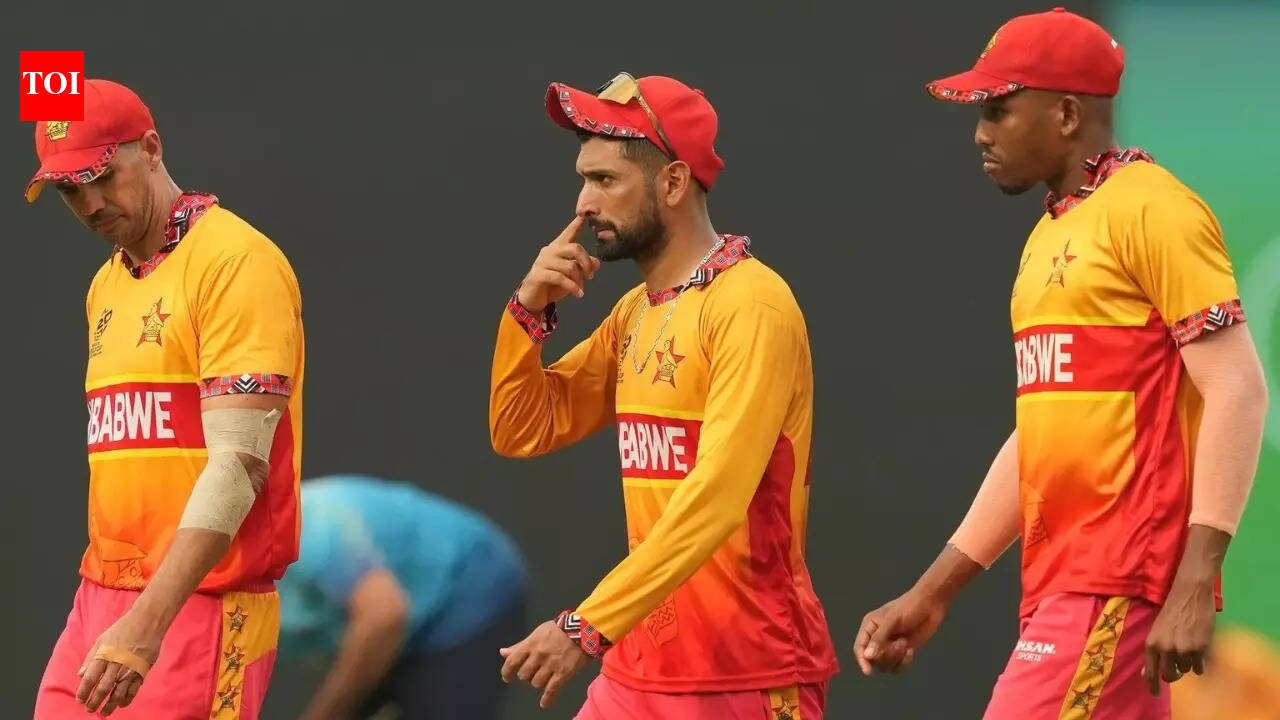
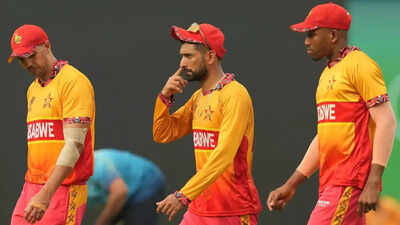
Zimbabwe’s captain Sikandar Raza, center, with teammates leaves the ground after Sri Lanka’s inning during the T20 World Cup cricket match between Sri Lanka and Zimbabwe in Colombo, Sri Lanka, Thursday, Feb. 19, 2026. (AP Photo)

Captain Sikandar Raza said the strong group-stage run by the Zimbabwe at the ICC Men’s T20 World Cup 2026 has earned them respect, and he hopes the team can continue its run in the Super Eights against stronger opponents.Zimbabwe signalled their ability to challenge top teams by defeating Australia and Sri Lanka in Group B matches.“We keep our sights forward. If I keep our eyes on the present…I don’t think anyone gave us a chance. To win everyone’s hearts and respect, it is a good position to be in,” Raza said in the post-match presentation after his team’s win over SL.Zimbabwe now move into the Super Eights, where they will face reigning champions India, two-time champions West Indies cricket team, and 2024 finalists South Africa.But Raza said his side is not intimidated.Also read: Sikandar roars in Colombo: Zimbabwe stun Sri Lanka, fire warning shot at India
“We take one game at a time. We arrive on the 21st, and then train on the 22nd, and then it is show-time. Whatever happens, happens. If we can win two out of three games, who knows what can happen. Everyone loves an underdog story,” Raza added.Reflecting on the win over Sri Lanka, Raza said the hosts fell short of a defendable total.“When we lost the toss, all I said to the boys was if we are truly playing good cricket, why does the toss matter? I bowled, and said finger-spinners are not finding a lot of turn, so we can put them under pressure.“I came into the changing room and said they were 10 runs short (at the break). We have trained for every situation. We have the right personnel to send in at the right time. We have got all those roles clear and that is why you see the confidence in the changing room,” he said.For now, Raza said he wants to enjoy the team’s progress into the Super Eights.“We are unbeaten so far, but it is only the next game that comes into my head. Nice position to be in as a captain but I will try and enjoy at least tonight,” he said.


Source link

Anthropic founder Dario Amodei calls India ‘central’ to AI’s next phase


Anthropic founder Dario Amodei calls India ‘central’ to AI’s next phase

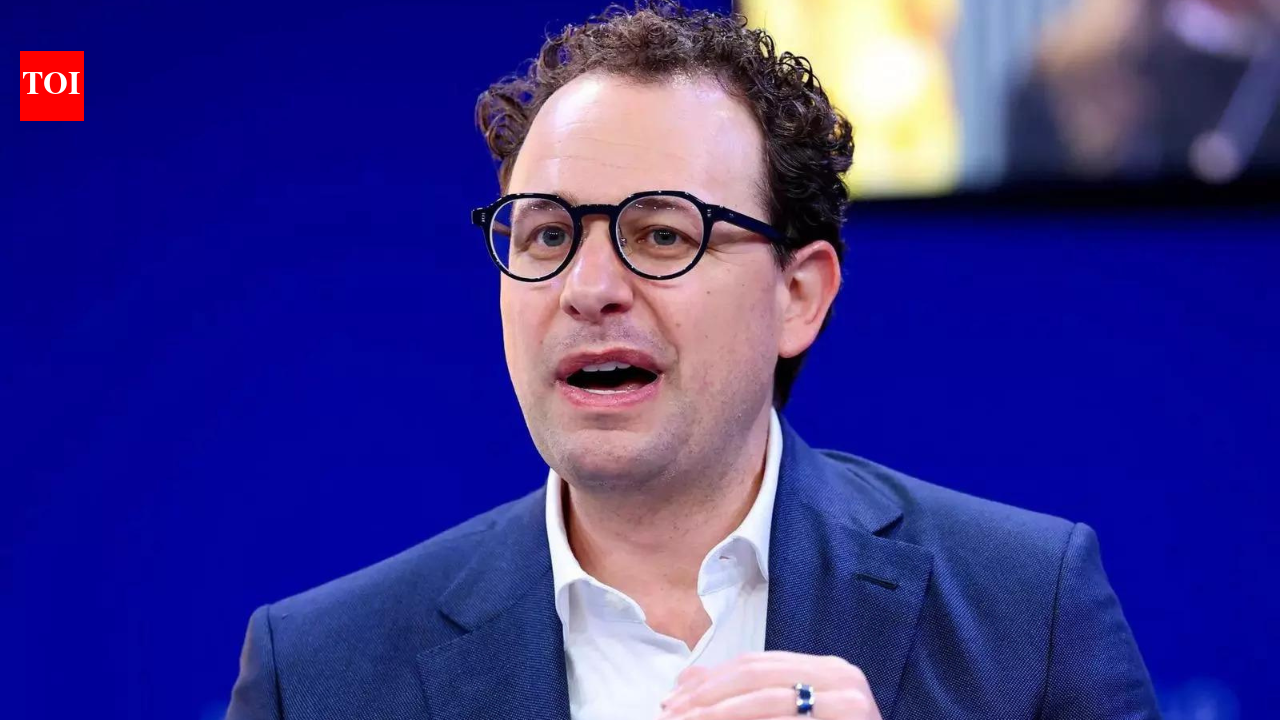
NEW DELHI: India will play a “central role” in shaping both the opportunities and safeguards around advanced artificial intelligence, Anthropic CEO Dario Amodei said on Thursday, as the company announced its India expansion.Anthropic has opened an office in Bengaluru and appointed Irina Ghose as managing director for India. The company also said it has entered partnerships with major Indian enterprises, including Infosys.Speaking at the AI Summit, Amodei said AI models are only “a small number of years” away from surpassing most humans at most tasks. He described the trajectory of AI over the past decade as exponential, akin to a “Moore’s Law for intelligence.”Such capability, he said, could help cure long-standing diseases, improve health outcomes and lift billions out of poverty, particularly across the Global South. At the same time, he flagged risks related to autonomous behaviour, misuse by individuals or governments, and economic displacement.Amodei said Anthropic is working with Indian nonprofits to apply its models to digital infrastructure, education, agriculture and health. The company is also collaborating with Karya and the Collective Intelligence Project to evaluate model performance across Indian languages and locally relevant tasks.He added that Anthropic would share insights from its Economic Futures programme with policymakers to help assess AI’s economic impact and support evidence-based policy responses.


Source link

CT scan on blink, senior citizen taken to 3 hospitals in Mumbai; now on ventilator | Mumbai News


Mumbai: A 15km run-around between three hospitals was what happened before 62-year-old Naseem Banu who finally collapsed and was put on a ventilator. Her family ran from Jogeshwari’s HBT Trauma Hospital to Cooper in Juhu and finally to Kokilaben Hospital in Andheri, all because the ‘trauma’ centre lacked a working CT scan machine and a neurosurgeon.Naseem was rushed to the trauma hospital in an emergency after suffering a fall with blunt trauma to her head and abdomen, including a head wound measuring 3 x 3 x 2 cm. According to the hospital’s medical superintendent Dr Hanumant Waikule, she was examined by the doctors there, who suspected she had intracranial (within the skull) bleeding. This was a case of a haemorrhage, and the hospital did not have a CT scan to locate it, nor did it have a neurosurgeon to stop it. “We advised them of admission at our hospital, but the condition was so severe that she would have to shift soon because we only have neurosurgeons on Tuesdays and Thursdays,” said Dr Waikule. The CT scan machine at the hospital was shut for the past week after a short-circuit.

AI Impact Summit, Supreme Court on CAA, India-France Ties & More

Hospital staff informed the family that Naseem could be moved to Cooper Hospital for specialised attention. However, as Naseem was not an admitted patient, the family had to arrange a private ambulance costing a couple of thousand to move her there. In the meantime, her condition deteriorated. Naseem collapsed as soon as she reached Cooper Hospital and was placed on a ventilator there. But by then the family lost all trust in the city’s health system. At a massive financial cost, Naseem’s son confirmed she was transferred to Kokilaben Hospital, where she is in the ICU.


Source link