Breaking News
Varun Aaron explains what’s holding India back in T20 World Cup 2026 campaign


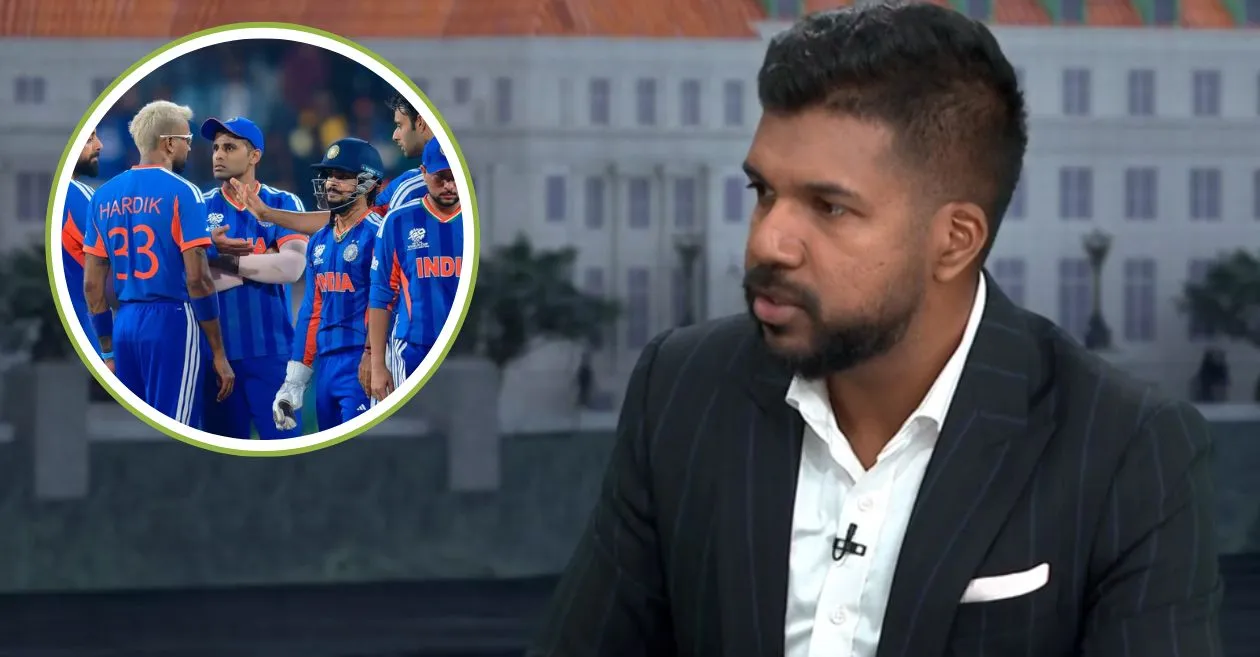
As the ICC T20 World Cup 2026 progresses into its high-stakes phase, the Indian cricket team find themselves in a paradoxical position. On one hand, Suryakumar Yadav’s men have been dominant, securing a perfect four-out-of-four record in the group stages to storm into the Super 8s. On the other hand, a glaring technical deficiency has sparked a nationwide debate. Following India’s recent 17-run victory over the Netherlands at the Narendra Modi Stadium, former Indian pacer Varun Aaron has sounded a loud alarm, suggesting that the team’s current trajectory in the field could be their ultimate undoing.

Varun Aaron highlights core issue affecting India’s performances at T20 World Cup 2026

Despite the celebratory atmosphere in Ahmedabad on Wednesday, Aaron highlighted a systemic issue that statistics can no longer hide. While India successfully defended 193 against the Dutch, the final over of the match served as a microcosm of their fielding woes. A near-collision between captain Suryakumar and Rinku Singh, followed by another spilled chance by Tilak Varma, left spectators and Aaron deeply concerned.

Speaking on ESPNcricinfo, Aaron didn’t mince words, labelling India as “by far the worst catching team” over the last 12 to 18 months. The numbers back his frustration: India has already dropped nine catches in this tournament alone, the second-highest tally behind Ireland. With a catching efficiency currently languishing below 70%, Aaron believes the “butterfingers” trend is a ticking time bomb.

Massive problem, every match they drop at least 2-3 catches. I just hope that they don’t drop important catches come the Super 8 and the semifinals,” Aaron remarked.

This critique suggests that while individual brilliance with the bat (like Shivam Dube’s explosive 66) or ball (Varun Chakaravarthy’s 3/14) can mask flaws against Associate nations, the margin for error will vanish against elite opposition where “catches win matches” is more than just a cliché.

Also READ: Sunil Gavaskar reveals how Abhishek Sharma can rediscover his lost mojo in T20 World Cup 2026

India’s upcoming path in T20 World Cup 2026 is a gruelling Super 8 gauntlet

The luxury of the group stage is now over, and India’s path to the trophy becomes significantly steeper. The Men in Blue are slated to enter a powerhouse Group 1 in the Super 8s, where they will face South Africa, the West Indies, and a resilient Zimbabwe.

India’s Super 8 journey begins with a blockbuster rematch of the 2024 final against South Africa on February 22 in Ahmedabad. This fixture is expected to be the ultimate litmus test for India’s fielding unit, as the Proteas possess the power-hitting depth to punish any reprieve. Following the Ahmedabad clash, the team travels to Chennai’s MA Chidambaram Stadium to face Zimbabwe on February 26, before concluding the round at the iconic Eden Gardens in Kolkata against the West Indies on March 1.

With the knockouts scheduled for Mumbai and the grand finale returning to Ahmedabad, the familiarity of home conditions is a clear advantage. However, as Aaron pointed out, venue familiarity won’t matter if the basics of the game, specifically catching are not rectified. For India to lift the silverware, the coaching staff must ensure that the “poorest catching unit” tag is shed before they face the world’s most clinical finishers.
Also READ: Fans react as India complete flawless T20 World Cup 2026 group stage run after Shivam Dube stars vs Netherlands


Source link

Fortified tunnels, repaired missile sites: Is Iran preparing for US strike? What satellite images show


Fortified tunnels, repaired missile sites: Is Iran preparing for US strike? What satellite images show

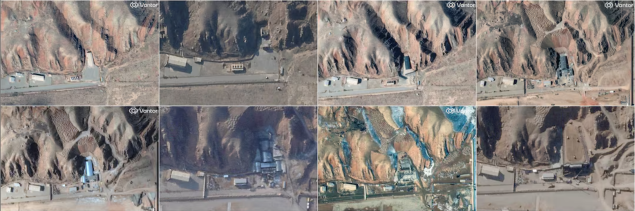
Satellite imagery from Iran shows that the Khamenei-regime is accelerating efforts to fortify key nuclear and missile sites, as the United States ramps up its military presence in the region and warns that time for diplomacy is running out.The images, captured between late 2024 and February 2026, show new concrete shielding, buried tunnel entrances and reconstruction at missile bases previously struck during last year’s Israel-Iran conflict, as reported by Reuters.

Photo credit: Reuters

The developments come amid renewed nuclear talks and increasingly blunt rhetoric from Washington. The United States has also deployed its largest military presence in the Middle East since the 2003 invasion of Iraq, heightening concerns over possible strikes against Iran as President Donald Trump considers his next move. According to sources cited by CNN, US forces could be prepared to act as soon as this weekend, though no final decision has been made. Trump is said to be consulting advisers and foreign leaders, balancing the risks of military action against the prospects for diplomacy.President Donald Trump convened senior advisers this week to discuss next steps following negotiations in Geneva. According to Axios, officials described the administration as closer to a potential military campaign than many Americans realise. White House press secretary Karoline Leavitt said “there are many arguments one can make in favor of a strike against Iran”, though she added that the president prefers diplomacy and that “Iran would be wise to make a deal”.Against that backdrop, satellite images offer a rare window into Tehran’s parallel strategy on the ground.

Concrete shield at Parchin raises fresh questions

At the sensitive Parchin military complex, around 30km south-east of Tehran, imagery shows the rapid evolution of a damaged structure into what experts describe as a hardened bunker.Israel reportedly struck Parchin in October 2024. Images taken shortly afterwards show extensive damage to a rectangular building. By November that year, reconstruction was under way. Satellite photographs from October 2025 reveal the skeleton of a large new structure, flanked by two smaller buildings. By mid-November, a metallic roof appeared to cover the main facility.However, images from December show the structure partially concealed. By 16 February 2026, it was no longer visible, hidden beneath what analysts say is a concrete overbuild covered in soil.The Washington-based Institute for Science and International Security (ISIS) described the development as a “concrete sarcophagus” around a facility it identified as Taleghan 2. In earlier analysis, ISIS said imagery indicated the presence of a long cylindrical chamber inside the building, possibly a high-explosives containment vessel approximately 36 metres long.“High-explosive containment vessels are critical to the development of nuclear weapons,” ISIS said, while noting they may also have conventional uses.William Goodhind, a forensic imagery analyst at Contested Ground, told Reuters the roof had likely been covered with dirt “to obscure the concrete colour”. ISIS founder David Albright wrote that burying the facility would provide “significant protection from aerial strikes”.Iran has consistently denied seeking nuclear weapons.

Tunnel entrances buried at Isfahan and reinforced near Natanz

Further west, at the Isfahan nuclear complex, satellite images show all three tunnel entrances to an underground complex have now been backfilled with soil.The site was among three enrichment facilities bombed by the United States during last year’s 12-day war between Israel and Iran. Diplomats say parts of Isfahan have stored enriched uranium.ISIS reported in late January that two entrances had been buried; by 9 February, a third had also been sealed. A 10 February image confirmed the tunnels were “completely buried”.According to ISIS, backfilling would help dampen the impact of airstrikes and complicate any ground raid aimed at seizing or destroying nuclear material.Near the Natanz nuclear facility, imagery also points to activity at a tunnel complex under a mountain roughly 2km away, known as Pickaxe Mountain. Analysts observed numerous vehicles, including cement mixers and dump trucks, suggesting ongoing efforts to “harden and defensively strengthen” the entrances.ISIS said Iran’s precise plans for the facility remain unclear.


Source link

Mumbai chokes as smog shroud tightens; AQI shoots up to 127 | Mumbai News


Mumbai experienced a sudden and severe smog event.

MUMBAI: A thick, stubborn layer of smog blanketed large swathes of the city on Thursday and Friday, triggering a sharp deterioration in air quality levels within a single day. The Air Quality Index (AQI) rose to 127 from 94 recorded on Wednesday, officially placing the city in the “moderate” category but raising serious alarms due to the sudden spike. The haze, which usually dissipates by late morning, persisted well into the afternoon, severely reducing visibility and sparking health concerns among residents.The sudden drop in visibility turned the morning rush hour into a challenge for commuters, particularly on major arterial roads. Yash Tiwary, who travels daily by app bike from Borivli to Mira Road for work, described the atmosphere as “unusually grim”. He noted that the visibility on the road was so poor he initially mistook the heavy smog for an impending rainstorm, adding that the haze made navigating through the morning traffic far more hazardous than usual.While the city-wide average remained in the moderate range, localized monitors near the airport and redevelopment sites in Andheri (East) recorded “severe” spikes. An AQI monitor installed within the airport premises recorded a staggering reading of 300 at 8.30 am on Thursday. Nearby, another monitor located within a residential society undergoing redevelopment displayed an AQI of 260 on Friday morning, highlighting the hyper-local impact of construction activities.Experts point to a worrying trend where the city’s changing skyline is physically blocking the natural wind. Nivit Yadav, programme director at the Centre for Environment and Science, noted that dense smog is a relatively new phenomenon for coastal Mumbai and requires study. He explained that while sea breeze usually clears pollutants, the extensive construction of tall skyscrapers along the coast has disturbed natural wind flows, creating a barrier that prevents pollutants from escaping.This “skyscraper wall” effect was further aggravated by weather conditions. Wind speeds recorded on Thursday were just 11.1 kmph — nearly half of Wednesday’s 22.2 kmph — limiting the dispersion of pollutants. Additionally, the minimum temperature recorded at Santacruz was 22°C, which was 4.9 degrees warmer than normal, creating a stagnant atmospheric “lid” that trapped dust and smoke closer to the ground.Locals in Sahar village and Chakala reported that dust from nearby infrastructure work has become unbearable. Sabina D’Souza said the air has become so difficult to breathe that many are suffering from chronic coughs, forcing citizens to wear masks just to walk on the road.


Source link

Panel on language policy suggests AI inclusion from Class I | Mumbai News


Language panel submits report to CM; AI in schools next (Representative image)

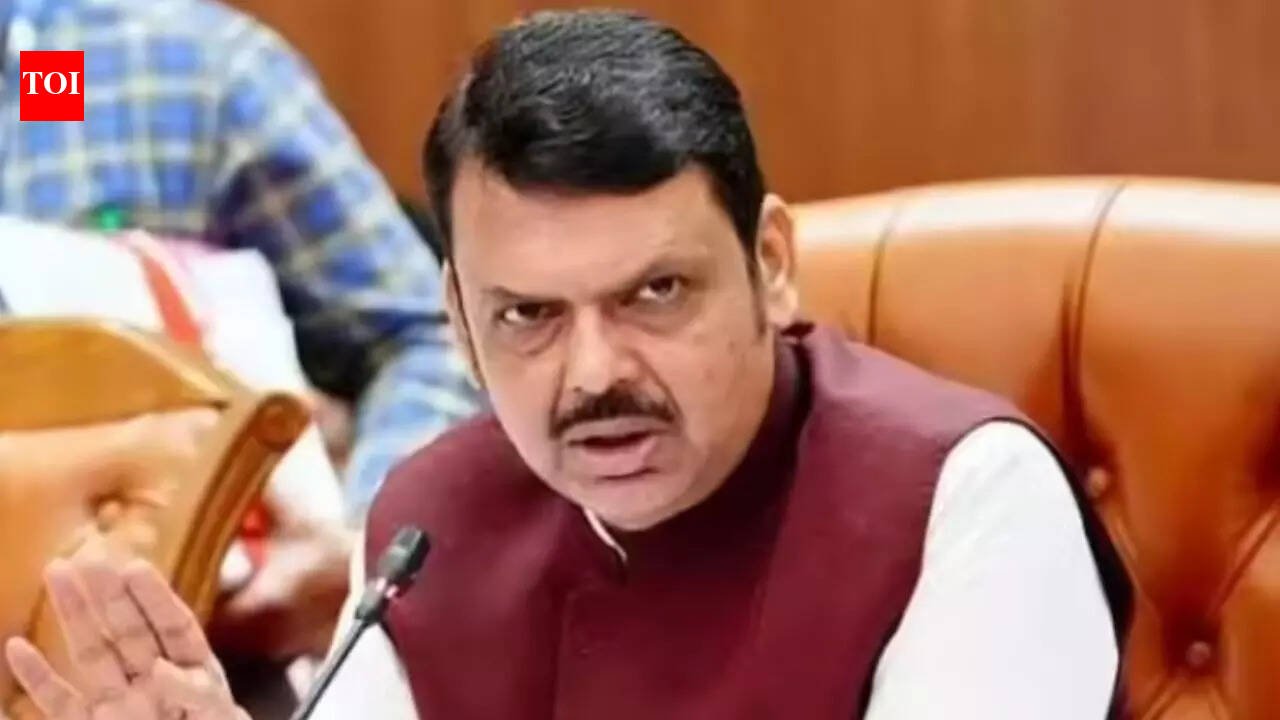
MUMBAI: The Narendra Jadhav-led language committee submitted its final report to CM Devendra Fadnavis.Committee chairman Narendra Jadhav said the report went beyond recommendations on the language formula. “Along with the main report on the language policy, I submitted a supplementary report on the introduction of artificial intelligence and information and communication technology (AI and ICT) from Classes 1 to 12,” Jadhav said. He said he also made a presentation on implementation before the CM, school education minister Dada Bhuse, and minister of state for school education Pankaj Bhoyar. “I am confident that the language-related recommendations can be implemented from the coming academic year, starting June. However, the AI and ICT curriculum may take more time, as the govt will need to consult NCERT and other central educational bodies,” he said, adding that the reports are likely to be considered by the cabinet within one week.The committee was set up amid intense opposition to the state govt’s attempt to implement the three-language policy under the National Education Policy (NEP) 2020, based on recommendations of the Mashalkar committee, which was tasked with examining NEP implementation in Maharashtra. The controversy began on April 16, 2025, when the state issued a GR mandating Hindi as the third language from Class 1. The move triggered widespread criticism from educationists, civil society groups, and political parties, who accused the govt of attempting to impose Hindi. The govt, in response, issued a second GR on June 17, stating that if over 20 students in a class opted for a different third language, the state would appoint a teacher for that language. Opponents called it a “backdoor” attempt at Hindi imposition. On June 29, the govt scrapped both GRs.


Source link

Mumbai can be gateway for climate finance to South: Maharashtra CM Devendra Fadnavis | Mumbai News


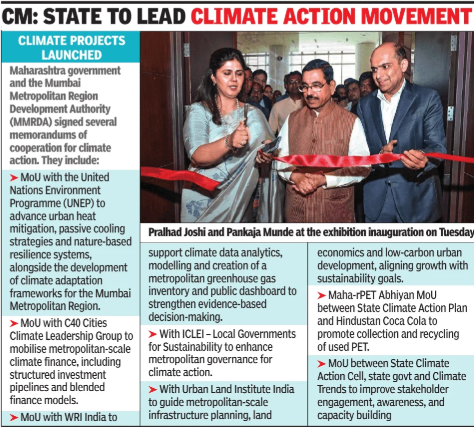
MUMBAI: Maharashtra chief minister Devendra Fadnavis positioned the state as a national leader in climate action, and Mumbai as a “gateway” for climate finance to the countries of the global south at the inauguration of the threeday Mumbai Climate Week at the Jio World Convention Centre.“The scale of climate transition required cannot be financed by public budgets alone. The developing world requires trillions of dollars for this transition,” Fadnavis said. The climate transition refers to efforts to shift from polluting fossil fuels to renewable energy, and to improve adaptation to rising temperatures and erratic rainwall wrought by global warming.

climate action

At the event, officials unveiled a climate finance access and mobilisation strategy developed jointly by WRI India and the Maharashtra Institution for Transformation (MITRA).“States that move early will attract capital, talent and innovation. Maharashtra intends to lead this movement,” Fadnavis said, adding “If climate capital must flow at scale, Mumbai is ready to become a medium for that flow.”The Maharashtra government and the Mumbai Metropolitan Region Development Authority (MMRDA) also signed a clutch of MoUs with global and national partners to strengthen climate action. They include urban heat mitigation and nature-based resilience with the United Nations Environment Programme (UNEP); climate implementation accelerators and metropolitan climate finance mobilisation with C40 Cities Climate Leadership Group; and infrastructure planning and low-carbon urban development with the Urban Land Institute India.Calling climate change “today’s greatest governance challenge”, Fadnavis said the transition would require capital, risk-sharing frameworks and blended finance, alongside confidence in execution and support for early-stage technologies. “When Mumbai receives excessive rainfall, it is not simply a statistic; it is trains halted, homes flooded, livelihoods interrupted,” he said.Outlining Maharashtra’s energy roadmap, Fadnavis said the state currently has roughly 48 gigawatts of installed capacity, of which 21% is renewable. “By 2030, we plan to reach 84 gigawatts, of which more than 50% is to be from renewable sources,” he said. “By scaling green hydrogen, electric mobility, biofuels and sustainable infrastructure, states which move early will attract talent, capital and innovation. Maharashtra intends to move early. We are integrating sustainability and resilience in the design stage itself for infrastructure.”Highlighting vulnerabilities, he said, “Our farmers are facing changing rainfall patterns, water stress. Our coastline requires long-term protection. Fisheries and rural communities depend on predictable ecosystems.”Union minister for new and renewable energy Pralhad Joshi said three million connections have been completed in two years under the PM’s Surya Ghar household solar power generation scheme. He added that there has been a 235% increase in solar energy capacity in the last 10 years — from 2.8 gigawatts in 2014 to 141 gigawatts now — with total renewable energy capacity reaching 270 gigawatts.State environment and climate change minister Pankaja Munde said, “Practical, scalable, financeable solutions are crucial for effective climate change action.” She added that climate concerns should be embedded in city planning.Shishir Joshi, CEO of Project Mumbai, which is organising the event, said, “Mumbai will become a climate laboratory for the Global South, creating real public-private partnerships which will lead to scalable solutions.”A commemorative stamp marking Mumbai Climate Week was formally released by Fadnavis at the inauguration. Organisers said the event will focus on climate finance, urban resilience, renewable energy, sustainable mobility and citizen-led initiatives, with an emphasis on implementation and cross-sector partnerships.


Source link

Brother vs brother: The ‘new’ Albie Morkel India must take note of before T20 World Cup Super Eight | Cricket News


Brother vs brother: The ‘new’ Albie Morkel India must take note of before T20 World Cup Super Eight

Albie Morkel (L) with South Africa’s Kagiso Rabada during a training session at the Narendra Modi Stadium in Ahmedabad. (PTI)

NEW DELHI: Ahead of their final Group D encounter against the United Arab Emirates, South Africa’s specialist consultant Albie Morkel brought a touch of humour to the press conference. Asked if he exchanges coaching ideas with his younger brother and Team India bowling coach Morne Morkel, the 44-year-old initially put on a serious face before breaking into a grin and saying, “No, we don’t talk to each other (laughs). I think my mother is more worried than us. She doesn’t know who to support, India or South Africa.”With South Africa facing India in their first Super Eight contest at the Narendra Modi Stadium in Ahmedabad on Sunday, the “rivalry” between the Protea brothers will be something worth keeping an eye on.

T20 World Cup | Albie Morkel press conference on South Africa’s bowling might, Rabada’s form

Since Morne took over as India’s bowling coach as part of head coach Gautam Gambhir’s support staff, some of the team’s individual pace-bowling performances have noticeably improved. His behind-the-scenes work with players like Shivam Dube has refined the player’s role in the side.Albie, three years older than Morne, appears to be settling into his position as a specialist consultant with South Africa, which, according to the former fast-bowling all-rounder, is primarily bowling-oriented.“Yes, it has been an interesting term, specialist consultant. I had to figure it out myself a little bit. But of course, it’s anything that helps the team do well in the World Cup. I do a bit of both batting and fielding, mostly focused around the bowling for now. I do some work with our all-rounders, swingers, and stuff like that,” Albie, who was brought into the role just before the T20 World Cup, explained.His work with the pacers has paid dividends for the 2024 T20 World Cup runners-up, with fast bowlers accounting for most wickets, including two all-rounders.

South Africa United Arab Emirates T20 WCup Cricket

South Africa’s Kagiso Rabada bowls a delivery during the T20 World Cup cricket match between South Africa and United Arab Emirates in New Delhi, India, Wednesday, Feb. 18, 2026. (AP Photo/Manish Swarup)

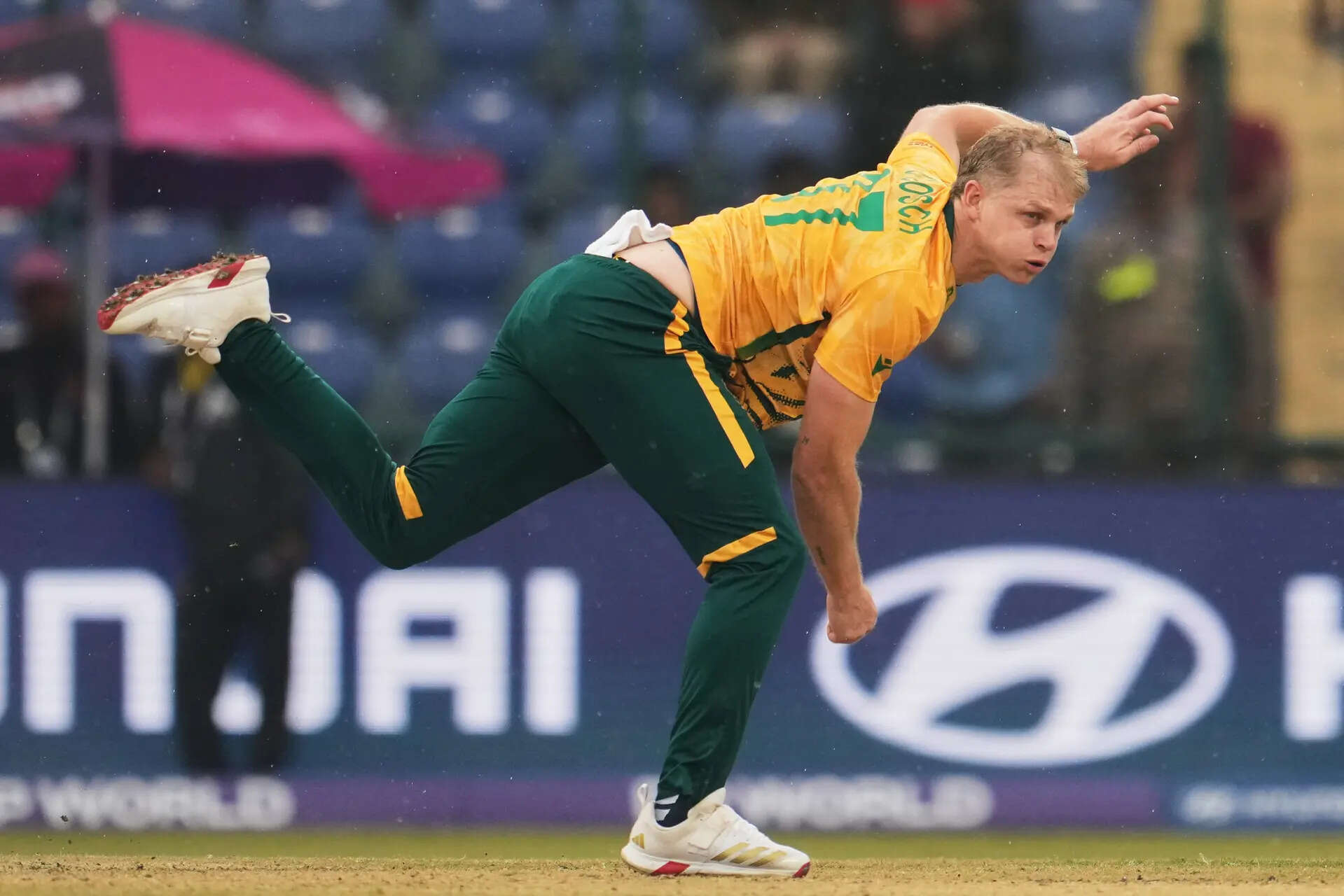
Even as Kagiso Rabada (two wickets in four matches) has struggled for rhythm, Lungi Ngidi (8 wickets), Marco Jansen (7 wickets), and Corbin Bosch (5 wickets) have kept the pace attack formidable.“It’s a privilege to be with a team with such incredible fast bowlers. The standards between the entire bowling lineup is really, really high. And it’s something we feed off well off each other,” Bosch, the Player of the Match for his figures of 3/12 agaist the UAE, told reporters during the post-match press conference.“I think this is the first time we’ve all played as a collective, so it’s still getting to know how we operate as a unit. But we’ve done fantastically so far, and there’s no extra pressure.”

South Africa United Arab Emirates T20 WCup Cricket

South Africa’s Corbin Bosch bowls a delivery during the T20 World Cup cricket match between South Africa and United Arab Emirates in New Delhi, India, Wednesday, Feb. 18, 2026. (AP Photo/Manish Swarup)

Listening to Bosch, there is a clear indication that Albie has already made an impact in this short time, and from Albie’s own words, it is evident he knows what he is doing off the field.“Look, I think we first have to start where our guys play their T20 cricket most in South Africa. And the wickets there, how do I put it nicely? It’s not the best suited for T20 cricket. So guys get away with a lot in South Africa,” he said.“When you get over here (in India), especially at this time of the year, where the wickets are still good before the summer, your variations, your slow balls and all those type of things, they don’t play such a big role.“So it’s really focusing on nailing your yorkers. And I feel that’s a skill that’s sort of disappeared, not only with us, but with most teams in the world. If I ask who’s the best death bowler in the world, you can probably name one, Jasprit Bumrah. He has got a very good yorker.”

It’s a privilege to be with a team with such incredible fast bowlers. The standards between the entire bowling lineup is really, really high

Corbin Bosch

“So it’s really just focusing on those skills that I wouldn’t say bowlers forgot, but with all the variations that come into play, I think bowlers can get clouded by that.”It is also worth noting that the current group of pacers is so well-trusted by the management that even Ottniel Baartman, the highest wicket-taker in the fourth season of the SA20, isn’t in the 15-man squad.Still unbeaten in the tournament, South Africa made four changes during their six-wicket win over UAE on Wednesday, resting David Miller, Jansen, Ngidi and Keshav Maharaj before what they believe is the start of the “real World Cup”.The Stephen Fleming influenceFormer Chennai Super Kings (CSK) all-rounder Albie Morkel did not shy away from acknowledging the influence of former New Zealand captain Stephen Fleming on his coaching philosophy.“When I started my coaching career, you still coach as a player, where you, if you want to make a difference, you can’t be on the field. I think you have to accept that fact and work out ways, because players are under pressure anyway. If you, as a coach, want to make a difference in their game all the time, that doesn’t help anyway,” he said.“So it’s sort of finding that middle ground where you try to help, but you also not, as a coach, put pressure on players. They know what they’re doing. If it’s real technical things, then you can work at it, but not during tournaments.“I think my philosophy is once you get to a World Cup like this and you start to tinker with technical stuff, that’s when you confuse players, or players can be confused. So it’s more, now, how can I actually take pressure off guys, make them believe in themselves, stuff like that.“Steven has been a big influence on that. I think he’s one of the only coaches, or maybe the only coach in the world, who’s been with another franchise for seventeen years. That’s unheard of, so he must be doing something right. And I’ve certainly learned a lot from him.”


Source link

Gold, silver price prediction today: Will gold hit Rs 1.63 lakh/10 grams & silver cross Rs 2.60 lakh/kg soon? Here’s the outlook


Gold, silver price prediction today: Will gold hit Rs 1.63 lakh/10 grams & silver cross Rs 2.60 lakh/kg soon? Here's the outlook

Gold and silver price prediction: Gold may extend its rally to the Rs 1,63,000 per 10 grams mark and silver has managed to sustain support, says Abhilash Koikkara, Head – Forex & Commodities, Nuvama Professional Clients Group.

MCX Gold Price Outlook

On the weekly chart, MCX Gold has been moving in a consolidation phase after retreating from its recent high. The price action appears to be building a base near an upward-sloping trend line on the weekly time frame, and a decisive close below this support could trigger further correction in the precious metal. Nevertheless, the broader trend remains bullish as long as prices hold above the recent swing lows.For the coming week, the 147,000 level is expected to act as a crucial support zone, as it coincides with the rising trend line and strengthens its technical importance. Any pullback toward this area may invite fresh buying interest, helping to cushion immediate downside risks. As long as prices remain above this threshold, the broader bullish structure stays intact, reinforcing the prevailing upward momentum.Gold seems poised to extend its rally toward the 163,000 mark in the upcoming sessions. This anticipated move is likely to represent a rebound from support, paving the way for sustained bullish momentum in the near term. Moreover, the steady price action within the weekly consolidation range supports the positive outlook and points to the possibility of a continued recovery.In conclusion, gold maintains a sideways-to-positive bias, with the technical structure supporting the potential for further gains. As long as prices hold decisively above the key 147,000 support level, the broader bullish setup remains intact. Backed by supportive momentum indicators and a positive sentiment backdrop, the precious metal appears well-positioned to trade within its established range, with an upward inclination in the sessions ahead.

MCX Gold Trading Strategy

  • CMP: 152,800
  • Target: 163,000
  • Stop Loss: 147,000

MCX Silver Price Outlook

On the weekly chart, Silver has sustained its support for the third straight week. After rebounding from recent lows, prices are now hovering near a crucial support zone, suggesting a possible continuation of the sideways-to-positive bias in the coming week. With the broader trend still positive, short-term pullbacks may offer buying opportunities, as long as the previous week’s low remains intact. Traders are encouraged to trade in line with the prevailing trend while maintaining stop-loss levels near the recent weekly lows to manage risk prudently.The week commenced on a weaker note, with prices drifting toward the weekly low support, reinforcing the prevailing sideways momentum. However, a rebound from these support levels is anticipated to revive the broader bullish trend. The positive outlook remains valid as long as prices continue to trade above the established weekly support zones. Immediate support is seen near the 225,000 mark, and a decisive close below this threshold may soften the bullish bias. Until such a breakdown materializes, corrective declines are expected to attract fresh buying interest, thereby maintaining the overall upward trajectory.On the upside, silver appears well-positioned to test the 30-day EMA near the 260,000 resistance level in the near to medium term. A sustained move toward this barrier would reaffirm the continuation of the prevailing bullish cycle, backed by firm momentum and supportive technical indicators. Overall, provided prices remain firmly above the 225,000 support zone, the upward trend is expected to stay intact, paving the way for additional gains amid improving positive sentiment.

MCX Silver Trading Strategy

  • CMP: 237,000
  • Target: 260,000
  • Stop Loss: 225,000

(Disclaimer: Recommendations and views on the stock market, other asset classes or personal finance management tips given by experts are their own. These opinions do not represent the views of The Times of India)


Source link

‘India used to fear us’: Pakistan’s Mohammad Amir, Basit Ali blast Shadab Khan for digs at seniors | Cricket News


'India used to fear us': Pakistan's Mohammad Amir, Basit Ali blast Shadab Khan for digs at seniors
India vs Pakistan (PTI Photo)

NEW DELHI: Mohammad Amir recently compared Pakistan’s current cricket team with the side from the 1990s. He said the respect Pakistan once commanded has faded.“The Pakistan team in the 90s and the current team has a difference. India used to fear us back then, now they don’t take us seriously anymore. Now, they are not celebrating after taking our wickets and even after winning the match,” Amir said on a Pakistani TV channel.

Why Pakistan don’t trust Babar Azam any more | T20 World Cup 2026

His comments came after Pakistan lost to India by 61 runs in the T20 World Cup. After that match, Shahid Afridi called for major changes in the team. He said senior players should be dropped because of poor performances.“If I had to take a decision here, then I would drop Shaheen, Babar and Shadab as well,” Afridi said.Shadab Khan was unhappy with these remarks. He responded after a strong performance against Namibia, where he scored 36 runs and took three wickets. Pakistan won that match by 102 runs and reached the Super 8.Shadab reminded former players that they also never beat India in World Cups.“Our ex-cricketers have their own opinions. They have done well for Pakistan, and at the end of the day, they have also never defeated India in the World Cup,” Shadab said in Colombo. “We were the ones who defeated India in the 2021 World Cup. In World Cups, we have beaten India only once. Yes, they are legends, but they have never done anything remarkable against India in the World Cup.”He also said the team should focus on winning the tournament.“We are talking too much about one match. Yes, the obvious goal was to win that match against India as well. At the end of the day, our main aim is to win the World Cup. We are trusting our process, and we will get the results,” he added.Former cricketer Basit Ali also criticised Shadab’s comments.“In my opinion, Shadab Khan should not have said such things about his father-in-law. Saqlain Mushtaq had 10 bowlers like Shadab in his pocket,” Basit said. He also questioned Shadab’s role in the team and his performances.Basit then shared a past incident from a tour with Pakistan A.“I am going to reveal something that no one knows. I took the Pakistan A team to England. He used to be on the phone all the time. I had to snatch both his phones.”


Source link

AI boost! Tata Group announces partnership with OpenAI; TCS stock rises around 2%


AI boost! Tata Group announces partnership with OpenAI; TCS stock rises around 2%

After days of heavy selling in IT shares, Tata Consultancy Services offered investors a glimmer of relief on Thursday, with its shares trading in the green, rising almost 2%. The rise comes after Tata Group IT arm announced a strategic alliance with OpenAI to build artificial intelligence infrastructure in India and roll out joint market offerings. The development was announced on the sidelines of the India AI Impact Summit in New Delhi. It comes a day after Infosys revealed entering a partnership with US-based Anthropic to provide enterprise AI solutions. In earlier trade, TCS stock was up 1.97% to Rs 2,748 on the National Stock Exchange and Rs 2,747.85 on the BSE. At 1:05 pm, the share was up 0.23% or 6.30 points to 2,701.20 on NSE. On the Bombay Stock Exchange TCS inched 0.24% or 6.5 points to 2,701.The rise came even as the broader market remained weak. The 30-share BSE Sensex was down over 700 points. At 1:05 pm, Sensex was down at 82,997.71, shedding 736 points or 0.88%. The Tata Group said that the collaboration will allow thousands of its employees to use OpenAI’s enterprise ChatGPT tools to enhance productivity and innovation. TCS will also deploy OpenAI’s Codex to improve software engineering outcomes. Under a multi-year pact, TCS’ HyperVault unit will create AI-ready infrastructure powered by green energy to support next-generation workloads. The company said the proposed facility will include purpose-built liquid-cooled data centres with high rack densities and connectivity across key cloud regions, a move intended to strengthen India’s position as a global AI hub. “In the initial phase, TCS will develop AI infrastructure with 100MW capacity, with an option to scale to 1 GW. This infrastructure will power next-generation AI workloads and position India as a global AI hub,” the Indian firm said in a statement. Both companies also plan to jointly build industry-focused agentic AI solutions by combining OpenAI’s platforms with TCS’ contextual and domain expertise. As part of joint go-to-market efforts, the IT major said it will deploy, integrate and scale OpenAI’s AI offerings for enterprises in India and overseas, supporting organisation-wide AI transformation. Tata Sons chairman N Chandrasekaran described the agreement as a deep collaboration and a significant step towards India’s ambition of becoming a global AI leader. “This is a unique opportunity for OpenAI and TCS to transform industries. Together we will skill India’s youth and empower them to succeed in the AI era,” he said. Commenting on the partnership, OpenAI chief executive Sam Altman said, “Through OpenAI for India and our partnership with the Tata Group, we’re working together to build the infrastructure, skills, and local partnerships needed to build AI with India, for India, and in India, so that more people across the country can access and benefit from it”.


Source link

Betrayal, immortality and renunciation: Legend of Raja Bhadrahari enchants audience at ‘Afsana’ storytelling festival at Somaiya College | Mumbai News


Somaiya University’s ‘Afsana’ festival brought the ancient tale of Raja Bhadrahari to life (File Photo)

MUMBAI: The auditorium lights dimmed, a hush fell over rows of expectant students, and the rhythmic beat of traditional music signalled the beginning of a journey centuries into the past. On stage, draped in royal robes and lit by a warm amber glow, Raja Bhadrahari of Ujjain stood at the centre of a moral storm — a king offered immortality, only to confront betrayal and renunciation.An ancient tale of love, deceit and sacrifice unfolded at Somaiya University’s storytelling festival ‘Afsana’, where a packed house watched the folk legend from Madhya Pradesh come alive through performance.The story recounts the life of Raja Bhadrahari, a ruler revered for his virtue. A wandering ascetic, pleased with the king’s conduct, gifted him a fruit that promised eternal life. Yet the boon became a burden. Immortality would mean watching all that he loved wither away.Choosing devotion over dominion, Bhadrahari offered the fruit to his wife, Queen Pingala. But the queen, enamoured of the kotwal (chief of police), passed it on to him. The kotwal, unsure what to do with such a gift, handed it to a courtesan or ‘nagar vadhu’. In a striking twist, it was the courtesan who displayed the greatest sense of duty. Believing the kingdom would benefit most from a righteous ruler’s long life, she returned the fruit to the king.Confronted with betrayal, Bhadrahari is said to have renounced his throne and worldly life, passing the kingdom to his younger brother, Chandragupta II, better known in legend as Vikramaditya.The production was staged by a troupe led by Sanjay Mahajan, who has performed the tale across the country, including at Rashtrapati Bhavan. “It was Bhadrahari’s deep love for his wife that made him give away the fruit instead of keeping immortality for himself. But the core message is that true love is not meant for worldly attachments, but for the divine,” Mahajan said.He added that audiences often overlook the moral complexity of the story. “Virtue is found in unexpected places. The courtesan, who is marginalised by society, shows the greatest sense of selflessness by thinking of the larger good,” he said.Festival organiser Amrita Somaiya said ‘Afsana’ seeks to revive oral storytelling traditions for younger generations. “These stories are part of our cultural inheritance. Just like recipes passed down by our grandmothers, they survive through retelling. We want students to experience narratives from different cultures that they may otherwise never encounter,” she said.Through drama and dialogue, the centuries-old legend found resonance with a modern audience — reminding them that power, love and virtue often take unexpected forms.


Source link