Breaking News
DMDK joins DMK-led alliance for Tamil Nadu polls; Premallatha Vijayakant meets Stalin | Chennai News


DMDK joins DMK-led alliance for Tamil Nadu polls; Premallatha Vijayakant meets Stalin

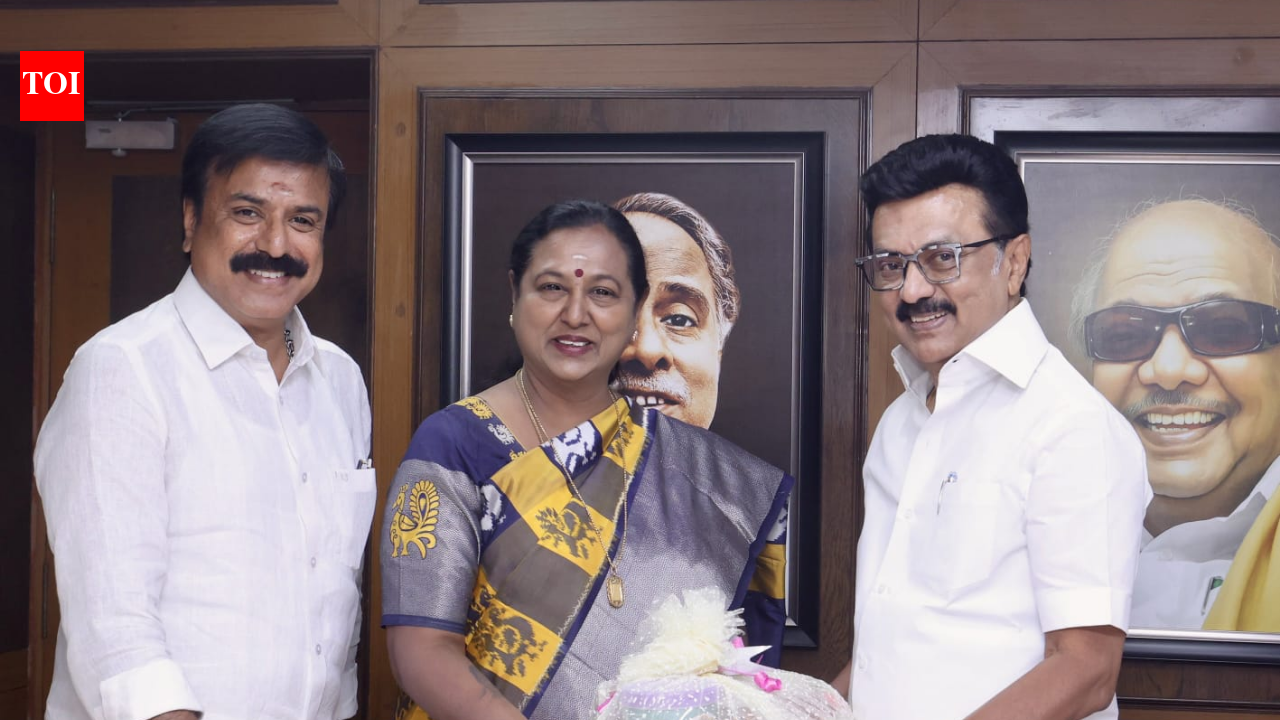
CHENNAI: DMDK general secretary Premallatha Vijayakant called on chief minister M K Stalin at the DMK headquarters in Chennai and confirmed DMDK’s entry into the DMK alliance. This is the first time that the DMDK had joined the DMK alliance since the party was founded in 2005.Speaking to reporters after meeting Stalin, Premallatha said the number of seats will be decided based on talks with the team to be formed by the DMK for holding talks with the alliance parties.

‘To Remove Corrupt DMK’: TTV Dhinakaran Meets Goyal As AMMK Rejoins NDA Ahead Of Tamil Nadu Polls

Welcoming DMDK into the alliance, Stalin said on X that the DMDK’s entry into the alliance will ensure continuation of the DMK rule in Tamil Nadu.“Let your arrival into the DMK alliance contribute for the development of the state. We will continue to travel together for all round growth of the state,” Stalin said.DMDK is likely to get a Rajya Sabha seat and Premallatha said that the announcement will be made “officially made by Stalin”. Saying that joining the DMK alliance was the wish of majority of her party functionaries, Premallatha recalled the series of events happened before the 2016 assembly election and said the alliance with the DMK should have happened in 2016 but it is happening after 10 years, after the death of DMDK founder Vijayakant.In the previous assembly election in 2021, DMDK aligned with the AMMK and drew a blank. Even in the 2024 Lok Sabha election, the DMDK drew a blank when it was part of the AIADMK alliance.


Source link

‘Give AI an open sky, but …’: PM Modi hails AI, flags caution — top quotes | India News


‘Give AI an open sky, but ...’: PM Modi hails AI, flags caution — top quotes

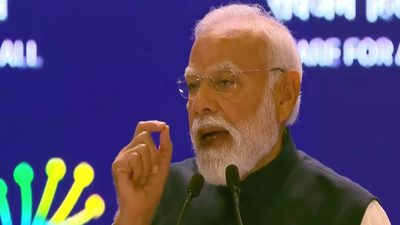
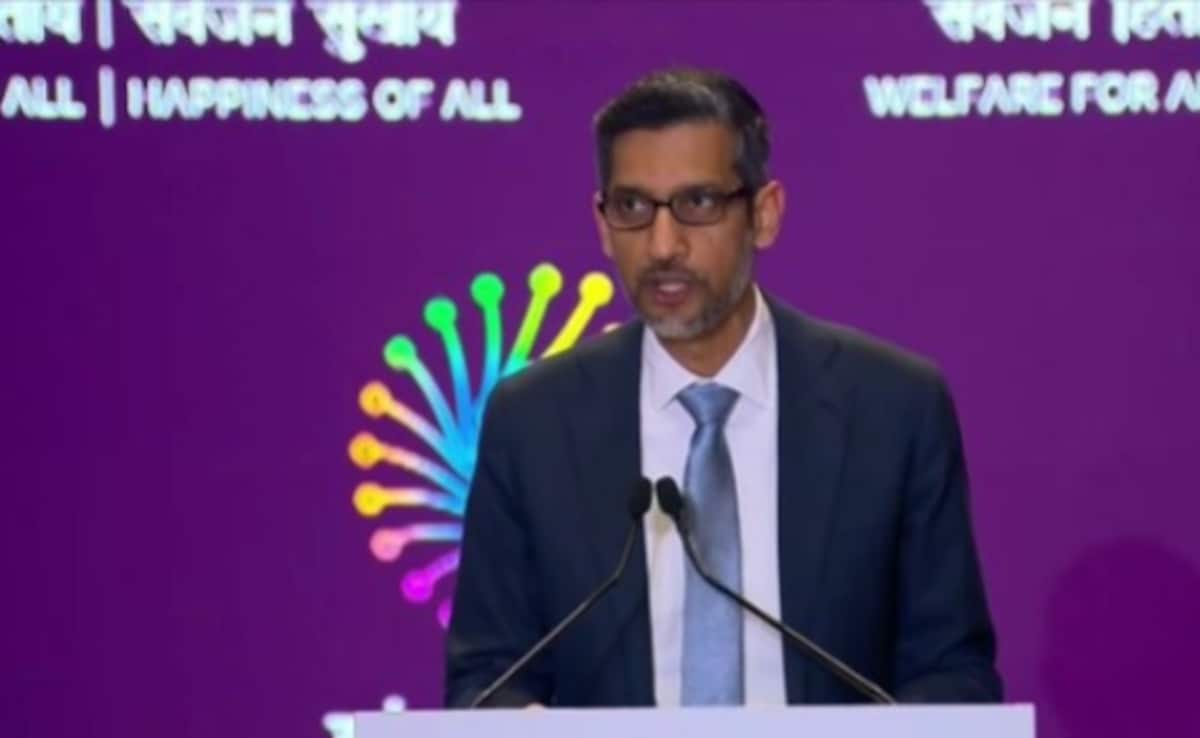
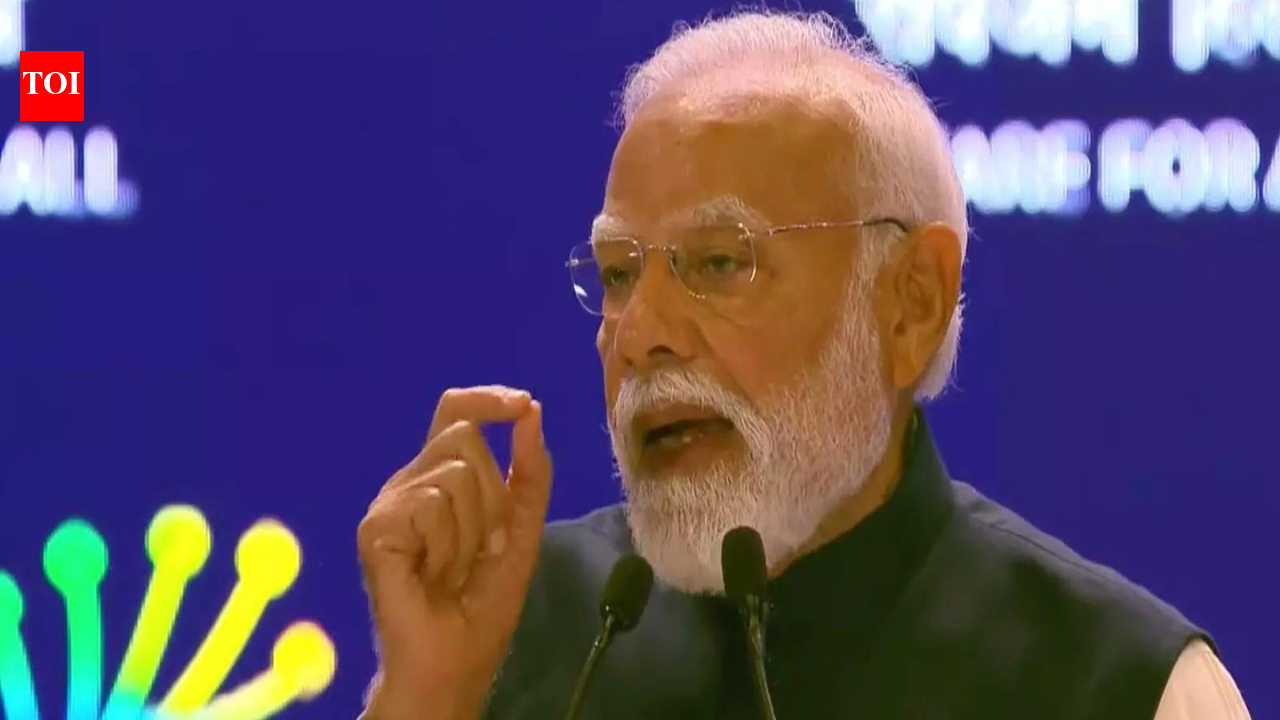
NEW DELHI: Prime Minister Narendra Modi on Thursday hailed India’s growth in the field of artificial intelligence as he joined world leaders, heads of state, and global tech leaders at the AI Impact Summit.While giving his keynote address, PM Modi said that AI needs to be democratised to ensure hat humans don’t become a data point or raw material.

‘A Very Positive Case Study’: Meta AI chief Alexandr Wang Praises India’s AI Startup Ecosystem

Here are the top quotes from PM Modi’s address

  • We have seen the destruction of nuclear power and its positive contribution too. Similarly, AI is also a transformative power. If it gets directionless, then it results in disruption and if gets in the right direction, then it results in solution. How to make AI human centric from machine centric, how to make sensitive and accountable – this is the main purpose of this Global AI Impact Summit.”
  • India sees a strong future in AI. We have the talent, energy capacity, and policy clarity. I am pleased to inform you all that at this summit, three Indian companies have launched their AI models and apps. These models showcase the talent of our youth. I invite you all to design and develop in India, deliver to the world, humanity.
  • We are entering an era where humans and intelligent systems co-create, co-work and co-evolve.
  • Decades ago, when the internet started, no one could have imagined how many jobs it would create. The same is true for AI. Today, it is difficult to imagine what kind of jobs will be created in this field in the future. The future of work in AI is not predefined. It will depend on our decisions, our course and course of action. I believe the future of work is a new opportunity for us. This is the era of humans and intelligent systems working together.
  • Today at the New Delhi AI Impact Summit, I present the MANAV Vision for AI. MANAV means human, and MANAV Vision says M- moral and ethical systems: AI should be based on ethical guidance. A- accountable governance means transparent rules, robust oversight; N- national sovereignty means whose data, his right. A- accessible and inclusive means AI should be a multiplier, not a monopoly. V- valid and legitimate means AI should be lawful and verifiable. This MANAV vision of India will become an important link for the welfare of humanity in the AI-based world of the 21st century.
  • We have to be more cautious regarding children’s safety. The AI space should also be child safe and family guided.
  • Let us pledge to develop AI as a global common good. A crucial need today is to establish global standards. Deepfakes and fabricated content are destabilising the open society. In the digital world, content should also have authenticity labels so people know what’s real and what’s created with AI. As AI creates more text, images, and video, the industry increasingly needs watermarking and clear-source standards. Therefore, it’s crucial that this trust is built into the technology from the start.
  • For AI, humans are just data points. To ensure that humans are not reduced to mere raw material, AI must be democratised. It must be made a medium for inclusion and empowerment, especially in the Global South. We must give AI an open sky and also keep the command in our hands, like GPS. GPS shows us the way, but the final call on which direction we should go is ours. The direction in which we take AI today will determine our future.
  • The pace with which the world’s youth are embracing AI and taking ownership of it is commendable. There is tremendous enthusiasm among young people for the AI Summit.
  • AI is a transformative power. If directionless, it becomes a disruption; if the right direction is found, it becomes a solution. How to make AI from machine-centric to human-centric, how to make it sensitive and responsive, this is the basic objective of this Global AI Impact Summit. The theme of this summit clearly reflects the perspective from which India views AI. Welfare of all, the happiness of all. This is our benchmark.
  • We must make skilling, reskilling, and lifelong learning a mass movement. The future of work will be inclusive, trusted, and human-centric. If we move forward together, artificial intelligence will elevate the potential of humanity.
  • We have to have a big vision and shoulder an equally big responsibility. Along with the present generation, we also have to worry about what form of AI we will hand over to the coming generations. Therefore, the real question today is not what Artificial Intelligence can do in the future. The question is, what do we do with Artificial Intelligence in the present? Such questions have come before humanity before. The most powerful example is nuclear power. We have seen its destruction and its positive contribution has also been seen.
  • I welcome you all to the most historic AI Summit of the world. India is the centre of the world’s largest tech pool. It is a matter of pride for the Global South that the AI summit is being organised in India.
  • When signals were first transmitted wirelessly, no one imagined that the entire world would one day be connected in real time. Artificial Intelligence is such a transformation of human history. What we are seeing today, what we are predicting, is just the beginning of its impact.
  • AI is making machines intelligent, but more than that, it is increasing human capabilities manyfold. There is only one difference: this time the speed is unprecedented and the scale is also unexpected. Earlier, the impact of technology used to take decades to be visible. Today, the journey from machine learning to learning machines is faster, deeper and wider than ever.


Source link

T20 World Cup: India’s worrying batting patterns and struggles vs off-spin | Cricket News


How Suryakumar Yadav and Tilak Varma are hurting India | T20 World Cup

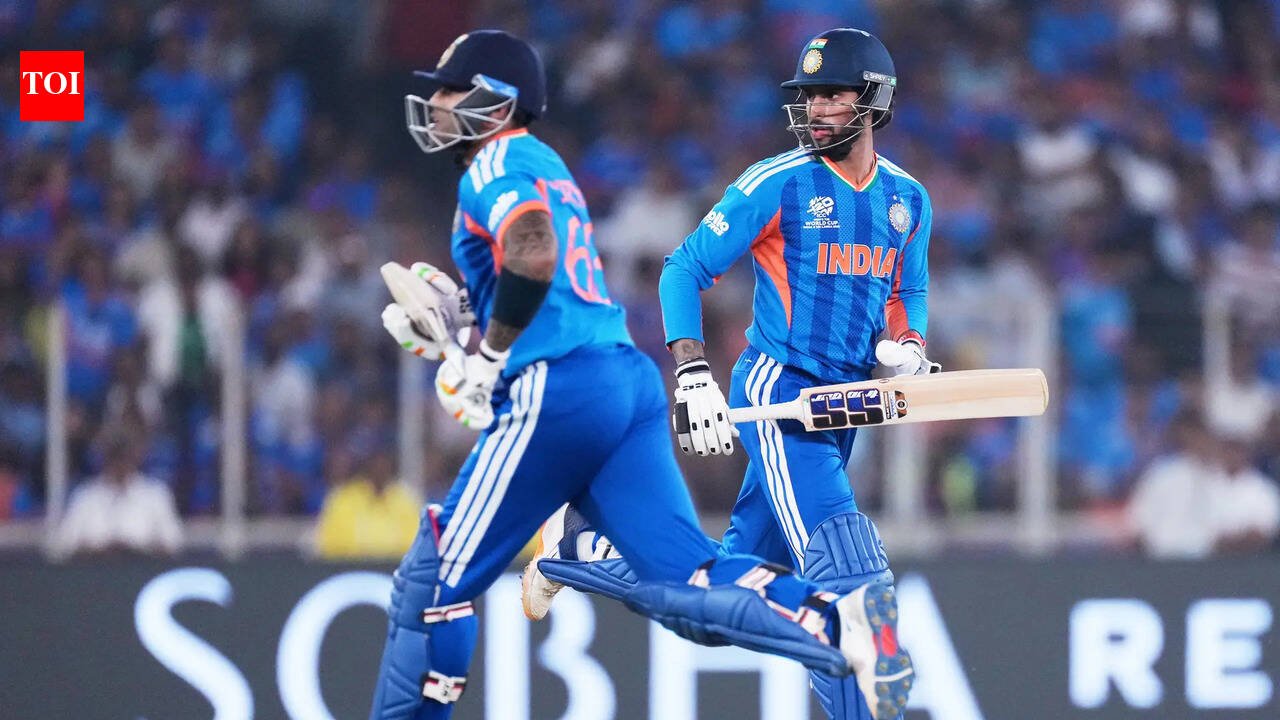
India’s Tilak Varma, right, and captain Suryakumar Yadav (AP Photo/Ajit Solanki)

TimesofIndia.com in Ahmedabad: Suryakumar Yadav & Co. have won all their group stage games of the T20 World Cup but the 4-0 record doesn’t plaster over the cracks which have been exposed along the way. A worrying pattern and vulnerability against off-spin will make the Super Eight planning quite straightforward for their opponents, starting with South Africa on February 22.By now, teams know what to do, and even India will know what to expect. The million dollar question, however, remains: What will they do to fix this?

How Suryakumar Yadav and Tilak Varma are hurting India | T20 World Cup

India had a disastrous powerplay in the opener against the USA, and the side’s over-cautious approach was understandable after they were reduced to 46/4. The powerplay situation improved in the next game versus Namibia, but the partnership between Surya and Tilak Varma sucked momentum out of the Indian innings. From 86/1, they added 58 runs and lost three wickets in the next eight overs. The Surya-Tilak stand lasted only 18 deliveries, accumulating just 16 runs in that portion.The big game against Pakistan was no different. Despite Ishan Kishan’s blazing 40-ball 77, India scored 73 runs and lost one wicket between overs 7 and 14. The Surya-Tiak pair was in the middle for most of the period but scored only 38 runs off 34 balls and kept their individual scoring rate just around the run-a-ball mark. A similar script played out against the Netherlands, as India managed 62 runs and lost three wickets. Surya and Tilak were again the two batters who spent the most time at the crease, but their partnership only accumulated 30 runs off 28 balls.The defending champions have found different players to step up and arrest the slide but the pattern remains a very slippery slope to walk. Under coach Gautam Gambhir and captain Surya, India started off as a T20I unit where only the opening positions were fixed. Player entry points were more situation and matchup-driven, but the method changed closer to the World Cup as Tilak was assigned No.3 with Surya making the No.4 his own position.

Colombo [Sri Lanka], Feb 15 (ANI): India's Tilak Varma and skipper Suryakumar Ya...

India’s Tilak Varma and skipper Suryakumar Yadav during the ICC Men’s T20 World Cup 2026 (ANI Photo)

The Mumbai Indians teammates haven’t had the best of times together in the tournament because opponents have successfully countered India’s fixed top-four batters. For the Netherlands, the game against Pakistan provided a sufficient sample size to establish their plans.“I think we obviously looked at the Pakistan game and saw that they’d struggled with spin. So we had a focus of – in the power play bowling spin, trying to limit their scoring options. I think spinners bowled really well to stop them from getting off to good starts, so credit to them,” said Bas de Leede at the post-match presser.Led by Aryan Dutt, the Netherlands bowlers gave nothing away, leaving India struggling at 69/3 after nine overs on what was a slowish wicket where the odd ball held up during the first innings.“It was definitely a tough pitch to start with a little bit of slow, a little bit of hold whether it was from spinners or pacers taking pace off the ball. So it was a hard pitch to start on and I think it showed that even Dubé started off quite slow and finished with 60 off 30 once he got in. So I think he played that really well, but I think we also bowled really well to contain them and make it hard to start,” de Leede said further.India’s star performer Shivam Dube explained that World Cups are not easy and defended the under fire pair by attributing their approach to the game situation. Dube highlighted that their batting approach stems more from how they started.“Sir, this is the World Cup. The game is a little difficult, not easy. If we don’t get the start we want, then the game of Tilak and Surya is different. They bat according to the situation. If the situation demands, they have to bat accordingly. If Tilak has to bat in a particular situation, he does and I don’t have to say anything about Surya because he is a player who can take the team to the best position,” said Dube.

Net Sessions - ICC Men's T20 World Cup India & Sri Lanka 2026

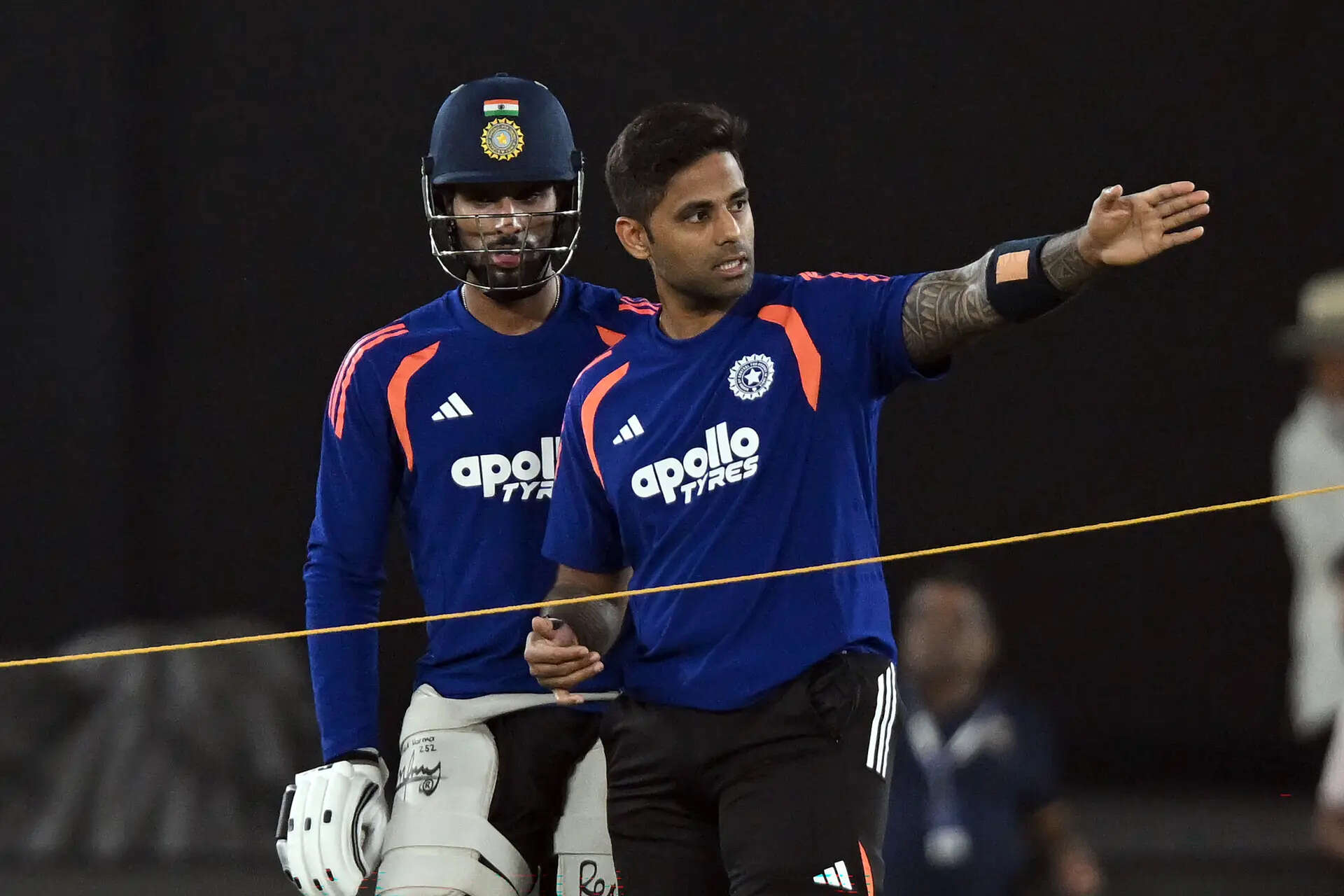
Suryakumar Yadav (R) interacts with Tilak Varma of India (Photo by Prakash Singh/Getty Images)

The situation has been the same for India in the World Cup where Tilak’s entry points have come earlier than what he would probably be used to and a more aware opposition has only added to their woes. The spinners and seamers, with their smart variations, have maintained the chokehold, and more of the same is expected from South Africa, West Indies and Zimbabwe – India’s three opponents in the Super Eight.India’s scoring rate against off-spin, in particular has been very ordinary and even the left-right advantage of Surya and Tilak has offered no benefit so far. If revisiting the whole batting order debate isn’t ideal at this stage, management needs to inject some urgency into its experienced players. Scoring at around a run a ball against off-spin during that crucial period — which often links the top order to the lower order — is a number which would excite India’s opponents. Regarding the Indian camp, assistant coach Ryan ten Doeschate felt this has been a World Cup trend and could well be the differentiator in the second phase.“I think it has been a trend in the World Cup. When you think about IPL and lot of bilaterals, the pace of the innings just seems to carry through from the powerplay. Almost all of the games – both in Sri Lanka and India – you seem to get off the blocks quickly and batting becomes slightly more difficult in the middle phase. Teams are getting clever now. Today the Dutch guys took the pace off the ball and also teams are bowling a lot of finger-spin to us because of the many left-handers in our lineup. I think that’s a challenge, and could be differentiator in second phase of this competition,” said ten Doeschate during a ICC mixed media zone interaction.The Indian team gets only one day of rest before hitting the nets in Ahmedabad for their clash against South Africa, another unbeaten team in the tournament. The opponents will come hard, better equipped with their plans, and the onus will be on this batting unit to table a complete game in the tournament. They have been unable to do so in their first four fixtures but an ideal outing on February 22 will help everyone sharpen their tools to be battle ready for the Proteas.


Source link

Access Denied


Access Denied

You don’t have permission to access “http://www.ndtv.com/india-news/sundar-pichai-india-ai-impact-summit-2026-google-ceo-on-driverless-cabs-on-indian-roads-still-working-on-that-11057043” on this server.

Reference #18.ee4fc817.1771482812.18550957

https://errors.edgesuite.net/18.ee4fc817.1771482812.18550957


Source link

The guilt of leaving your baby hits hardest: Lavanya Tripathi | Telugu Movie News


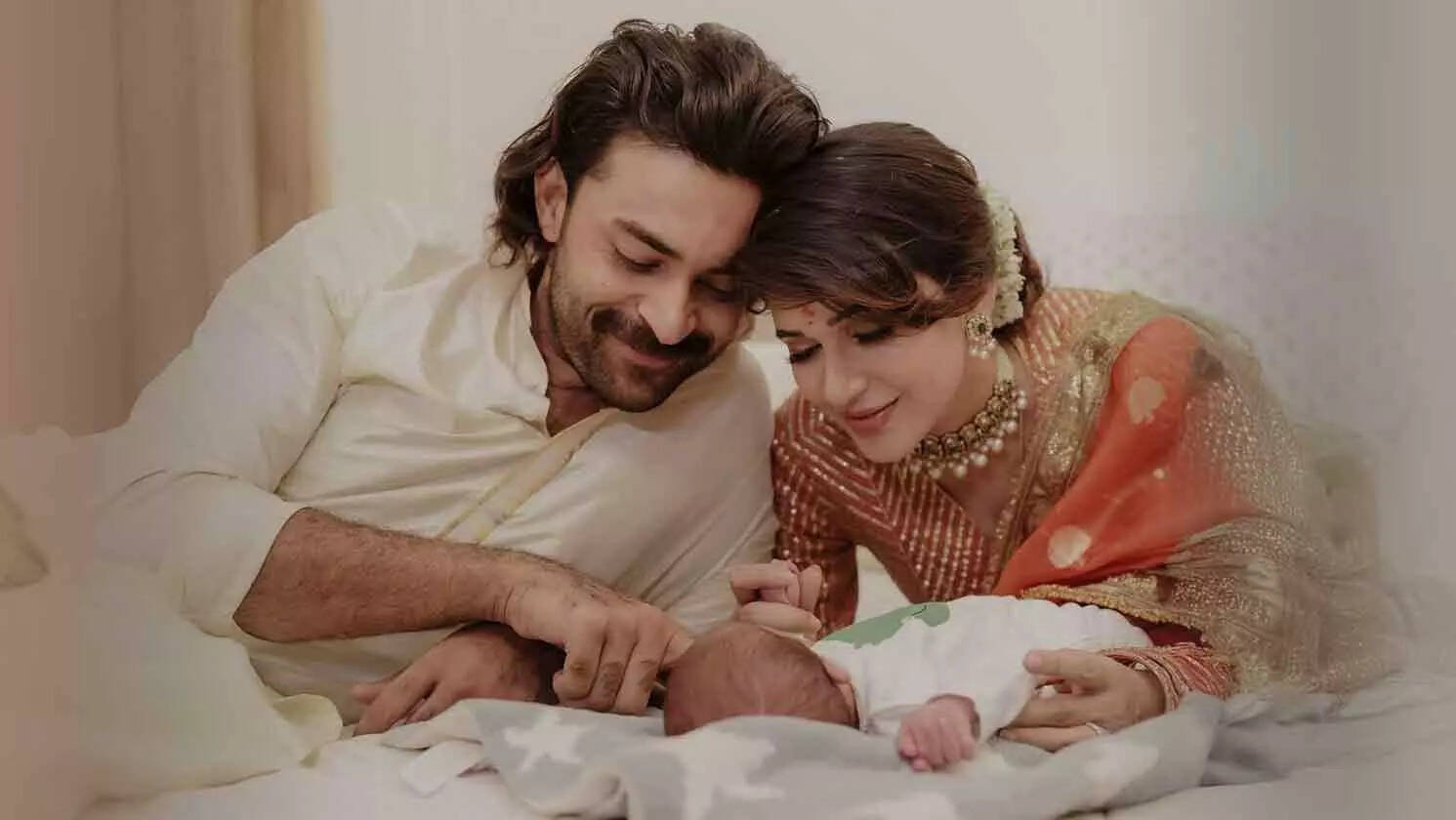
For Lavanya Tripathi, the hardest part of returning to work wasn’t the long hours or the lights. It’s the small steps, “like dressing up for an interview,” that bring unexpected helplessness. “When you’re in makeup and certain clothes, you can’t touch your baby. He was looking at me and I felt so much guilt,” she confesses, adding, “I have so much respect for mothers who work and take care of their child. This guilt is more than anything else.” Five months into motherhood, the actor is slowly navigating the emotional shift of returning to professional commitments. “I was in this zone of just taking care of my child and suddenly I had to break that and come back to reality,” she says.Life after welcoming her baby boy has shifted entirely in ways no call sheet could prepare her for. “Before, I had all the time for myself. Right now, all my time, my thoughts… literally everything revolves around my son,” she shares. While Lavanya says motherhood hasn’t come with dramatic surprises — thanks largely to years spent babysitting her sister’s children — one thing has stayed with her: how instinct overrides exhaustion. Recalling watching her sister wake up every 20 minutes to feed her baby and wondering how she managed, Lavanya says, “I hated waking up in between my sleep. But now I understand — you don’t feel tired even when you are. That maternal instinct just takes over.” She adds, “I took my own sweet time to take on this challenge, though it doesn’t feel like a challenge because I’m enjoying it. I always wanted to be a mom, and now I just want to enjoy every bit of it.”

Lavanya Tripathi breaks silence on dating rumours with Varun Tej Konidela

‘I shot while I was pregnant and no one knew’Admittedly, Lavanya completed her comeback film Sathi Leelavathi while in her first trimester — a secret she kept from the crew. “At the muhurtam itself, I was pregnant and no one knew,” she reveals. Initially underestimating the physical demands, she soon found herself battling nausea and migraines while travelling daily to the sets. “I was vomiting, I had migraines and it felt like someone shook me in a box. Every day after the shoot, I’d go to the hospital to check if everything was fine,” she recalls. Despite the fear, she completed the film, including a dance sequence. “That’s why I’m not doing everything with full force.” She describes Sathi Leelavathi as a modern drama that flips the traditional image of the suffering wife. “This woman knows what she wants. When her husband says he’s leaving, she’s like, ‘Who are you to leave me?’” she says, calling it an entertainer rather than a moral lesson.

pg1&3_Lavanya_Tripathi_thumb

‘Varun and I are best friends; we listen, we don’t bottle things up’Back at home, the workload is shared. Lavanya lights up when speaking about husband Varun Tej’s involvement.“He wants to be a part of everything,” she laughs, adding, “He’s more into it than me sometimes. I tell him, please let me do a few things!”From diaper duty to nighttime routines, she says he is fully present. “He’s equally there. Anything I need, he’s there.” This easy partnership stems from their foundation of strong communication. “Varun and I are best friends. We listen, we don’t bottle things up,” she explains, adding, “Whenever we don’t like something, we say it. The other person doesn’t get defensive. We just listen, acknowledge, and grow.”As she settles into this new rhythm, Lavanya is careful about the advice she gives other women, answering with honesty and awareness. “My advice would be different because I am privileged,” she says. – Sanjana Pulugurtha


Source link

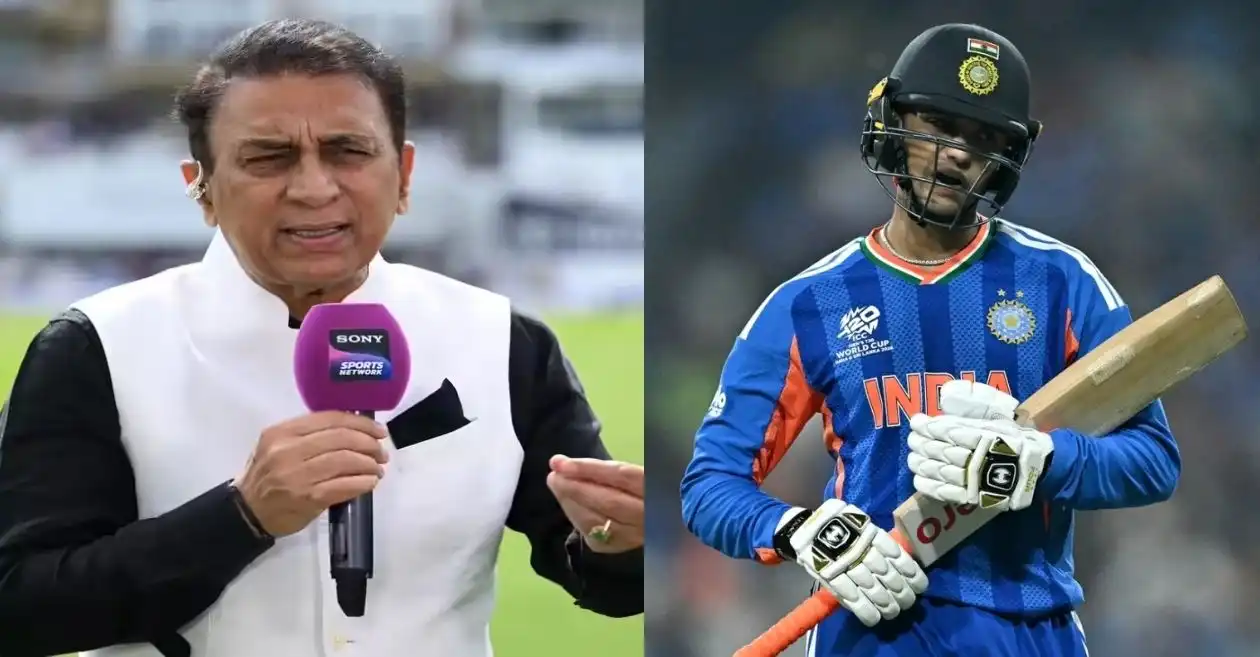
Sunil Gavaskar reveals how Abhishek Sharma can rediscover his lost mojo in T20 World Cup 2026


India’s T20 World Cup 2026 campaign has thrown up an unexpected storyline — the prolonged lean patch of their explosive opener, Abhishek Sharma. Touted as India’s destroyer-in-chief heading into the marquee tournament, Abhishek has endured a nightmare start, registering three consecutive ducks in his first three matches.

For a batter ranked world No. 1 in T20Is not too long ago, the sudden dip has been startling. India may have navigated their group-stage assignments, but Abhishek’s absence on the scoreboard has become a growing concern within the camp and among fans.

The numbers paint a worrying picture. In just eight T20I innings in 2026, Abhishek has already recorded five ducks — equalling the Indian record for most T20I ducks in a calendar year, previously held by Sanju Samson. Even more concerning, he has become the first batter in T20 World Cup history to begin a campaign with three successive zeros.

Sunil Gavaskar explains how Abhishek Sharma can get back his form in T20 World Cup 2026

Amid the scrutiny, former India captain Sunil Gavaskar has stepped in with calm, measured advice rather than harsh criticism. Speaking during a broadcast analysis, the legendary batter suggested that the burden of expectations may be weighing heavily on the young opener.

According to Gavaskar, Abhishek’s role as the team’s premier six-hitter and headline act may have subtly altered his approach. Instead, three early failures appear to have tightened his mindset. Gavaskar believes that once self-doubt creeps in, even naturally gifted stroke-makers can lose rhythm.

“Maybe the expectations might be weighing just a little too heavily on him. He is a lovely guy. If he had got a flying start in the first game, things might have been different. But now, you can sense that the expectations of being the big guy, the six-hitter, the No. 1 batter in the team, might be weighing heavily on him,” said Gavaskar on Star Sports.

One of Gavaskar’s key suggestions was simple yet profound — give yourself time. In a format driven by urgency, that advice may sound counterintuitive. But the former captain stressed that Abhishek does not need to announce his arrival with a boundary or a towering six. Gavaskar advised him to avoid playing across the line early in the innings and instead focus on playing straight, assessing conditions, and building a base. Even a handful of dot balls at the start, he argued, should not trigger panic.

The veteran pointed out that a batter of Abhishek’s range can compensate quickly once settled. The key lies in surviving the initial phase and allowing instincts to take over naturally rather than forcing glory shots from ball one.

“I think with the range of shots he has, he has to give himself a little more time in the middle. Not be looking to open his innings with a boundary or a six. If he gets it, then fine – but looking to play across the line for the big shot, no. Even if there are four dot balls, it does not matter because in the next four to eight balls he can make up for that,” Gavaskar added.

Also READ: Fans react as India complete flawless T20 World Cup 2026 group stage run after Shivam Dube stars vs Netherlands

Gavaskar on the key problem with Abhishek

Another concern flagged by Gavaskar was predictability. Opposition bowlers appear to have mapped Abhishek’s aggressive intent, setting traps accordingly. Without early strike rotation or quick singles, pressure has mounted, often leading to rash stroke-play. Gavaskar emphasized the importance of getting off the mark — a small but psychologically significant milestone. Rotating strike, feeling the pitch, and finding rhythm through singles can unlock a batter’s timing and confidence.

“He has to play smart cricket. He has to get the circulation in his legs. He has to get off the mark. If you are playing for India, you have to get off the mark and everything will fall in place. The way he is getting out is very predictable. When you take a couple of singles, you get a sense of the pitch. He will get a big score once he gets set,” Gavaskar added further.

Also READ: IND vs NED: Fans express shock as Abhishek Sharma records third consecutive duck in T20 World Cup 2026

Source link

Clearing the boundary, crossing into history: J&K end 67-year wait, enter maiden Ranji Trophy final | Cricket News


Clearing the boundary, crossing into history: J&K end 67-year wait, enter maiden Ranji Trophy final
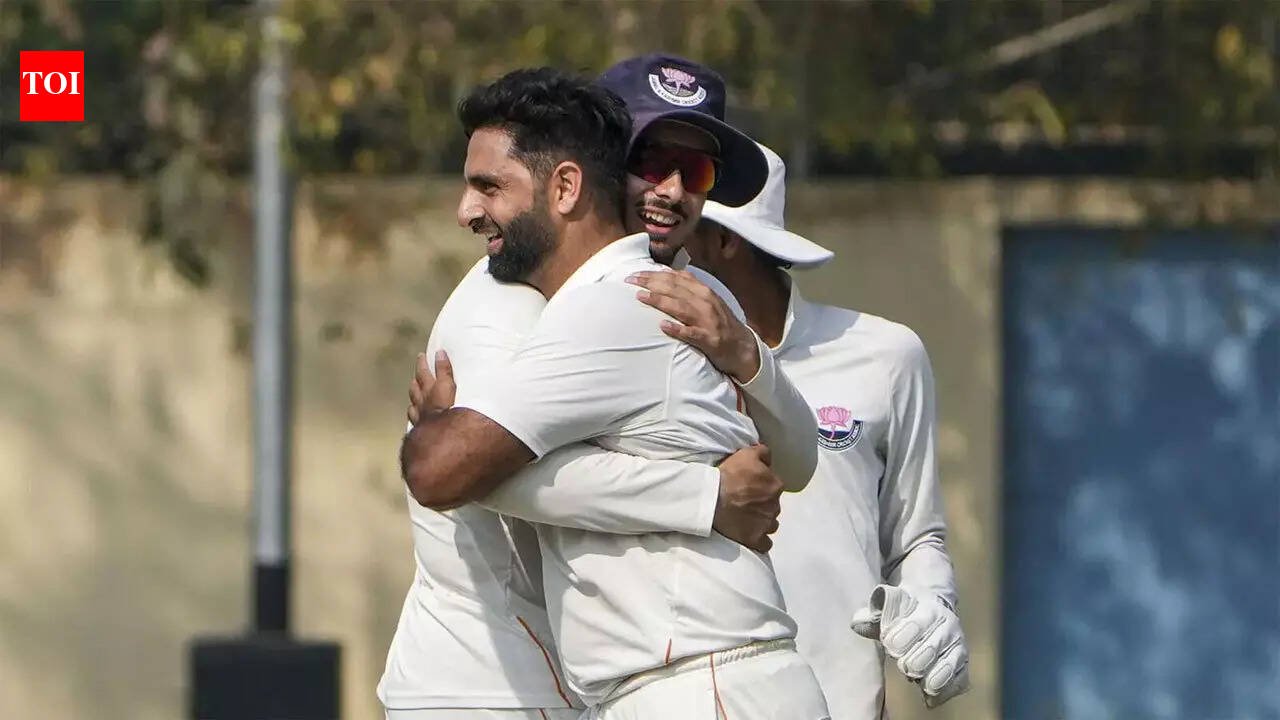
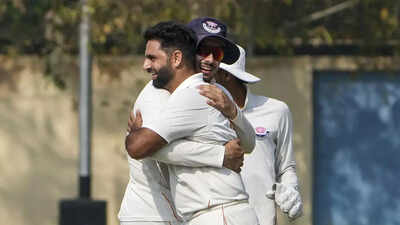
Jammu and Kashmir’s Auqib Nabi celebrates with teammates after taking a wicket vs Bengal. (PTI Photo)

KALYANI: One clean swing, one red ball sailing into the stands, and a 67-year wait came to an end. The moment Vanshaj Sharma launched Bengal pacer Mukesh Kumar for six, J&K players, support staff and officials poured onto the field at the Bengal Cricket Academy ground here on Wednesday. Their celebratory roar could probably be heard all the way to the Himalayan state.Go Beyond The Boundary with our YouTube channel. SUBSCRIBE NOW!With that hit, J&K sealed its first-ever spot in the final of the Ranji Trophy, India’s premier domestic red-ball cricket event. Once famous for the Kashmir willow, J&K is etching a chapter of its own in the annals of Indian cricket.

How Suryakumar Yadav and Tilak Varma are hurting India | T20 World Cup

The result, a 6-wicket win, was emphatic, even though there were moments when the match appeared to be slipping away. Set 126 for victory, the team completed the chase in 34.4 overs, getting it done before lunch on Day 4.“I have played the Ranji final a number of times. But this time, it’s different. I had not slept for the last three nights. Today I will sleep well,” an elated coach Ajay Sharma, once a stalwart of the domestic scene for Delhi, said.As history beckoned, J&K began Day 4 within touching distance, only 83 runs away, yet Bengal came hard at them. Akash Deep, already among the wickets, struck twice to remove Shubham Khajuria and Yawer Hassan, then returned to send back skipper Paras Dogra.Mohammed Shami, relentless as ever, bowled Shubham Pundir to briefly widen the doorway for a comeback. But Abdul Samad and Sharma shut it with authority with an unbeaten 55-run fifth-wicket partnership that carried J&K to the line without another stumble. Samad’s unbeaten 30 off 27 balls, studded with three sixes, provided the finishing fire. Sharma’s 43 not out off 83 balls supplied the composure.The semifinal had turned on J&K’s refusal to panic after conceding a first-innings lead. Bengal piled up 328, powered by Sudip Kumar Gharami’s superb 146, and then had J&K out for 302 in reply, with Shami ripping through the innings with 8/90. Yet J&K stayed within reach through Samad’s counter-attacking 82, Dogra’s 58 and valuable lower-order runs that kept the deficit to 26.Few might have expected J&K to flip that deficit into a ticket to the final. But Sharma insisted the belief never wavered. “I told the boys that the match is not over. We have two more days. Cricket always gives you a second chance. Red-ball cricket is a dangerous game,” the 61-year-old Sharma said.Day 3 delivered the match’s decisive lurch. Bengal, under pressure, collapsed for 99 in just 25.1 overs. Sunil Kumar grabbed 4/27 and Auqib Nabi — the breakout fast bowler this season — took 4/36 to complete a match haul of 9/123, also chipping in with 42 with the bat earlier. Dogra underlined how quickly the equation changed. “That was not a significant lead (26 runs) and we still had seven sessions of play. But of course we never expected them (Bengal) to fold so cheaply,” he said. The final will carry personal meaning for Dogra, a veteran who crossed 10,000 Ranji runs during this match and now finds himself within a game of the trophy that has eluded him. “It will be big for me. My first Ranji final too. I never thought that I would get such a good group of players,” Dogra said, adding: “There was belief in everyone from the beginning of the season that we can win the Ranji Trophy.”Both Dogra and Sharma could not stop talking about pacer Nabi. “He is a match-winner for us,” Dogra said. “He has good work ethics and has been disciplined.” Coach Sharma believes bigger things are not far away for the 29-year-old from Baramulla. “Age is on his side and he has developed the skill set. He will play the IPL (for Delhi Capitals) and if he performs there, the sky’s the limit for him,” Sharma said.The final is next, and J&K have earned the right to dream all the way.Brief scores: J&K 302 (Samad 82, Shami 8-90) & 126/4 (Vanshaj 43, Samad 30*, Akash Deep 3-46) beat Bengal 328 (Gharami 146, Nabi 5-87) & 99 (Shahbaz 24, Sunil 4-27, Nabi 4-36) by 6 wicketsMEN BEHIND THE MILESTONE: THE TEAM’S KEY PERFORMERSAuqib Nabi: The medium-pacer took 12 wickets (7/40 & 5/70) against MP in the quarterfinal, and 9 (5/87 & 4/36) in the semifinal. Nabi has a 8.4cr IPL deal with Delhi Capitals. Will an India Test call-up follow? Matches This Season: 9, Wkts: 55, Avg: 12.7, Economy Rate: 2.7, Strike Rate: 28.5Sunil Kumar: The left-arm medium-pacer has been the perfect foil to Nabi. His 3/41 & 4/27 in the semis proved crucial. Matches: 8, Wkts: 29, Avg: 15.1, ER: 2.6, SR: 34.9Abdul Samad: The middle-order batter’s composure under pressure has seen him pull off several rescue acts. In the semis, he first slammed 82, then scored an unbeaten 30 off 27 balls to finish a tricky chase. Matches: 9, Runs: 655, Avg: 59.5Paras Dogra: The skipper has led with both bat and tactical acumen. Fittingly, the 41-yr-old has become only the 2nd batter to cross 10,000 runs in the Ranji Trophy. Matches: 9, Runs: 551, Avg: 42.4


Source link

‘No reason to believe’: Russia says India has not changed stance on buying oil, rejects US claims


'Russia Stands By India's Decisions': Putin Rejects Trump Oil Narrative; Defends Right To Decide

AI image used for representative purposes

Russia’s foreign ministry firmly claimed on Wednesday that it has “no reason to believe” that India changed its stance on purchasing Russian oil, despite US claims suggesting otherwise. The ministry emphasised that the oil trade benefits both nations and helps maintain global energy market stability, while dismissing recent statements by US President Donald Trump and Secretary of State Marco Rubio about India agreeing to stop Russian oil imports.“We have no reason to believe that India has changed its position on buying Russian hydrocarbons. India’s purchase of Russian hydrocarbons benefits both countries and helps maintain stability in the international energy market,” said Russian Foreign Ministry spokesperson Maria Zakharova during her weekly briefing.

‘Russia Stands By India’s Decisions’: Putin Rejects Trump Oil Narrative; Defends Right To Decide

Zakharova further criticised US leadership, saying, “There is nothing new in the claims of US President Donald Trump, as well as US Secretary of State Marco Rubio, who have grabbed the right to dictate to independent nations.”The issue gained attention after the US recently reduced tariffs on Indian goods from 50 per cent to 18 per cent. This included removing a 25 per cent tariff that Trump had imposed on India last August due to its Russian oil purchases. Following a phone call between Prime Minister Modi and President Trump, US officials claimed India had committed to stopping Russian oil imports.India has maintained silence on these US claims, neither confirming nor denying them. MEA had previously stated that “national interests” would guide its energy procurement decisions.Meanwhile, Russia has accused the US of using various pressure tactics, including tariffs, sanctions, and direct prohibitions, to prevent India and other countries from buying Russian oil.In her briefing, Zakharova also took aim at Ukraine’s European allies, suggesting they are not interested in pursuing peaceful solutions to ongoing conflicts.

Russian imports at a low?

India’s crude sourcing pattern is reportedly shifting, with Russian oil imports falling to their lowest levels in over two years. Data cited by Reuters claims Russian shipments accounted for just 21.2 per cent of India’s total imports in January, the smallest share since late 2022, at around 1.1 million barrels per day, down sharply from December and about one-third lower year-on-year.Russia had become India’s top supplier after 2022, with its share once nearing 40 per cent, driven by discounted crude. However, tightening Western sanctions and growing US trade engagement appear to have weighed on purchases. China has now overtaken India as Russia’s largest seaborne crude buyer.To compensate, Indian refiners increased purchases from other regions. Middle Eastern crude rose to roughly 55 per cent of imports in January, while Latin American supplies hit a 12-month high. Saudi Arabia has regained its position as India’s leading supplier, with February volumes tracking at record levels.Read more: Share of Russian crude in India’s oil imports falls to lowest since November 2022; Middle East supplies riseAnalysts expect Russian flows to decline further in the coming months, though not cease entirely, as India continues to emphasise its policy of “strategic autonomy” in energy procurement.


Source link

OpenAI ties up with top Indian universities to push campus-wide AI adoption | India News


OpenAI ties up with Indian universities. (AP photo)

OpenAI on Tuesday announced deep institutional partnerships with six leading Indian universities and three major edtech platforms, marking a decisive shift from individual AI use to campus-wide deployment aimed at building AI-ready talent for India’s future workforce.The first cohort of partner institutions includes IIT Delhi, IIM Ahmedabad, AIIMS New Delhi, Manipal Academy of Higher Education (MAHE), University of Petroleum and Energy Studies (UPES) and Pearl Academy. Together, the initiative is expected to support over one lakh students, faculty and staff over the next year through structured access to enterprise-grade ChatGPT Edu, faculty enablement programmes and responsible-use frameworks .Unlike earlier models focused on tool access, OpenAI said the effort is anchored in institutional transformation — embedding AI across teaching, research, evaluation and campus operations, while aligning with academic integrity and ethical safeguards.“By 2030, nearly 40% of core skills workers rely on today will change, driven largely by AI. Educational institutions are critical to bridging the gap between what AI tools can do and how people actually use them,” said Raghav Gupta, head of education at OpenAI India.At IIT Delhi, the collaboration centres on engineering-led innovation, with AI integrated across undergraduate, postgraduate, doctoral and executive programmes. OpenAI-supported hackathons and industry days will link student innovation to India’s manufacturing, deep-tech and R&D ecosystem. IIM Ahmedabad will deploy ChatGPT Edu across degree and executive programmes, embedding AI fluency into management education spanning strategy, finance, operations, public policy and entrepreneurship.AIIMS New Delhi will explore applied AI use in medical education and clinical training, including a proposed AI in Medical Education Hub focused on simulations, clinical documentation and evidence synthesis, with an emphasis on safety benchmarks and ethical deployment. MAHE’s partnership spans engineering, health sciences, business and hospitality, with structured AI capability tracks across disciplines.UPES and Pearl Academy will focus on multidisciplinary and creative applications respectively — from engineering, law and health sciences at UPES to design, fashion technology and digital media at Pearl Academy — treating AI as core academic infrastructure rather than pilot experimentation.In addition, IIM Ahmedabad and MAHE will roll out OpenAI certifications to formalise structured AI capability pathways in management and multidisciplinary education. To extend AI skills beyond campuses, OpenAI is also partnering edtech platforms PhysicsWallah, upGrad and HCL GUVI to offer structured courses on AI fundamentals and practical ChatGPT use for students and early-career professionals.The move signals a broader shift in India’s higher education landscape — from AI awareness to institutional adoption — as universities begin positioning graduates not just as AI users, but as leaders in an AI-driven economy.


Source link