Breaking News
Cigarette stocks light up! ITC, Godfrey Phillips surge up to 12% on prospects of price hike


Cigarette stocks light up! ITC, Godfrey Phillips surge up to 12% on prospects of price hike

Cigarette stocks lit up Dalal Street on Wednesday after reports that manufacturers had raised prices to counter higher tax outgo. Shares of ITC Ltd, Godfrey Phillips India Ltd and VST Industries Ltd climbed by as much as 15%, following media reports that companies have implemented price hikes to pass on the impact of the recent excise duty increase to consumers. As of 1:15 pm, Godfrey Phillips India Ltd was trading at 2,386, up 318 points or 15.4%. At the same time, ITC gained 2% to 331 while VST Industries Ltd strengthened to 244, adding 2%. The move by cigarette makers is seen as a step to protect margins, with the expected decline in EBIT now projected at around 2%, sharply lower than earlier estimates of 8–15%. The changes follow the government’s notification on February 1 ending the GST compensation cess and introducing a new tobacco taxation framework.ITC Ltd is likely to increase cigarette prices by 20–40% across brands. Fresh shipments reflecting the revised pricing are expected to reach the market soon, while retailers are also said to be selling existing inventory at higher rates. Market reaction was swift. ITC Ltd climbed 2% to Rs 331 during the session, extending its gains to a third straight day and taking its cumulative rise over three sessions to about 5.5%. Godfrey Phillips India Ltd jumped 12% to Rs 2,315 per share on the BSE, marking a more than 15% gain over two days. VST Industries Ltd also traded higher, advancing 3.3% in morning deals.The new taxation structure has reset excise duties on cigarettes to between Rs 2,050 and Rs 8,500 per 1,000 sticks, alongside a 40% GST. The revised regime has materially increased the overall tax burden, leading to concerns around demand trends, margins and the possibility of greater illicit trade.The Budget also introduced a technical change to the National Calamity Contingent Duty (NCCD). The statutory NCCD rate on tobacco products has been raised from 25% to 60%, effective May 1, 2026. At the same time, it was clarified that the effective duty rate will continue at 25% through a notification, meaning there is no immediate increase in tax outgo for cigarette companies. In effect, while the duty remains unchanged for now, the government has enabled a future increase without requiring another amendment to the law.In the December quarter, ITC, the country’s largest cigarette manufacturer, reported revenue growth of 6.2% year-on-year. The performance was supported by double-digit expansion in its FMCG-Others business and steady momentum in cigarettes. Cigarette revenues rose 8%, driven by 7% growth in volumes.However, margins in the cigarette segment fell to 59.9%, a multi-quarter low, contracting by 163 basis points year-on-year due to the consumption of high-cost leaf inventory. Management indicated that leaf procurement prices have moderated in the current crop cycle, which could help support margins in the coming quarters.


Source link

India AI Impact Summit: PM Modi meets Google CEO Sundar Pichai | India News


India AI Impact Summit: PM Modi meets Google CEO Sundar Pichai

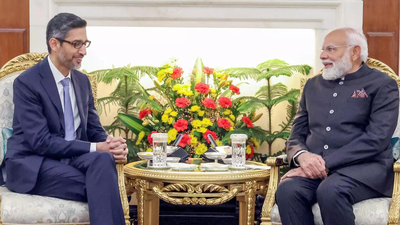
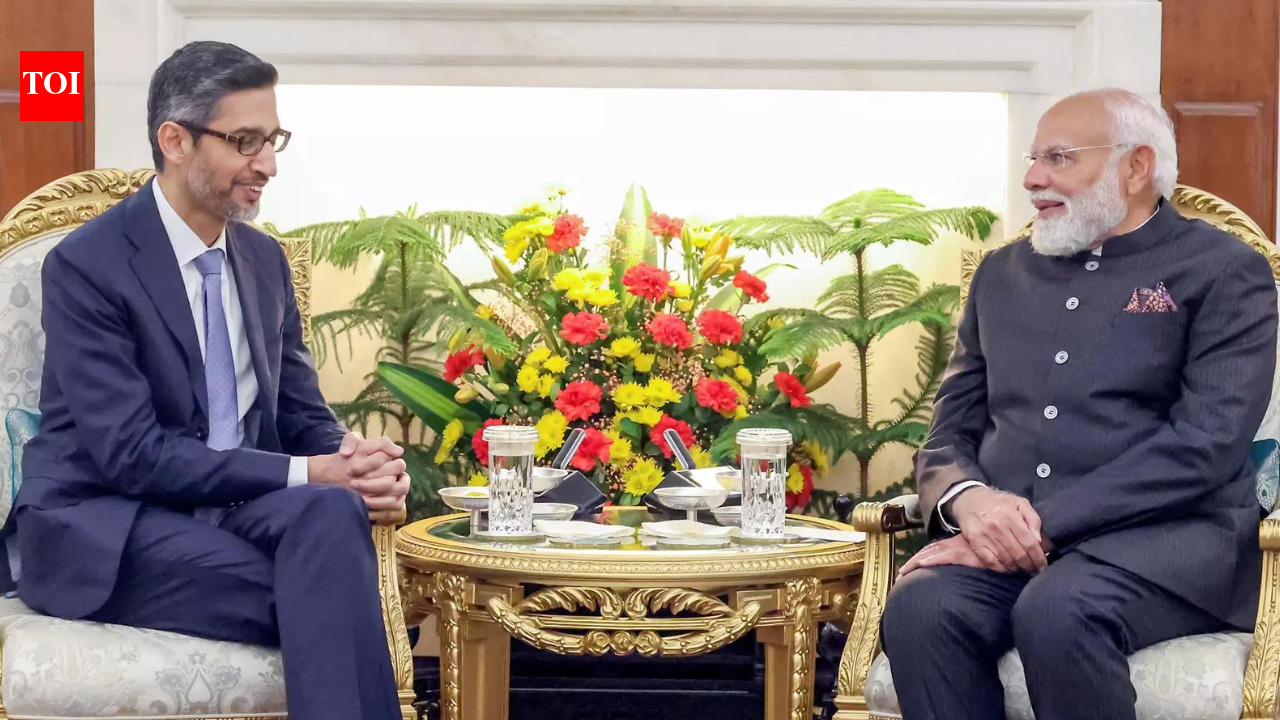
NEW DELHI: Prime Minister Narendra Modi met Google CEO Sundar Pichai at Hyderabad House in New Delhi ahead of Pichai’s keynote address at the India AI Impact Summit 2026, scheduled for February 20.The Prime Minister’s Office later shared highlights from the meeting on its official YouTube channel, offering glimpses of their discussion.Pichai, who arrived in India earlier this week, expressed his gratitude for the warm reception.In a post on X, he wrote that it was “Nice to be back in India for the AI Impact Summit – a very warm welcome as always and the papers looked great too.”The India AI Impact Summit 2026, being held at Bharat Mandapam in New Delhi from February 16 to 20, has drawn policymakers, industry leaders, academicians, innovators, and civil society representatives from around the world. The event serves as a platform to deliberate on advancing global cooperation in artificial intelligence.

From Trust To Technology: How India’s Digital Media Is Redefining Power In The Age Of AI Disruption

Significantly, this is the first major global AI summit hosted in the Global South. The conference aligns with India’s vision of “Sarvajana Hitaya, Sarvajana Sukhaya” — welfare and happiness for all — and the broader global principle of “AI for Humanity.”More than 110 countries and 30 international organisations are participating in the summit, including around 20 Heads of State or Government and approximately 45 ministers. This extensive participation underscores the growing momentum for international collaboration on the responsible development and deployment of AI.


Source link

‘PR hungry govt’: Congress slams Centre over ‘utter chaos’, food-water shortage at AI Impact Summit; Vaishnaw replies | India News


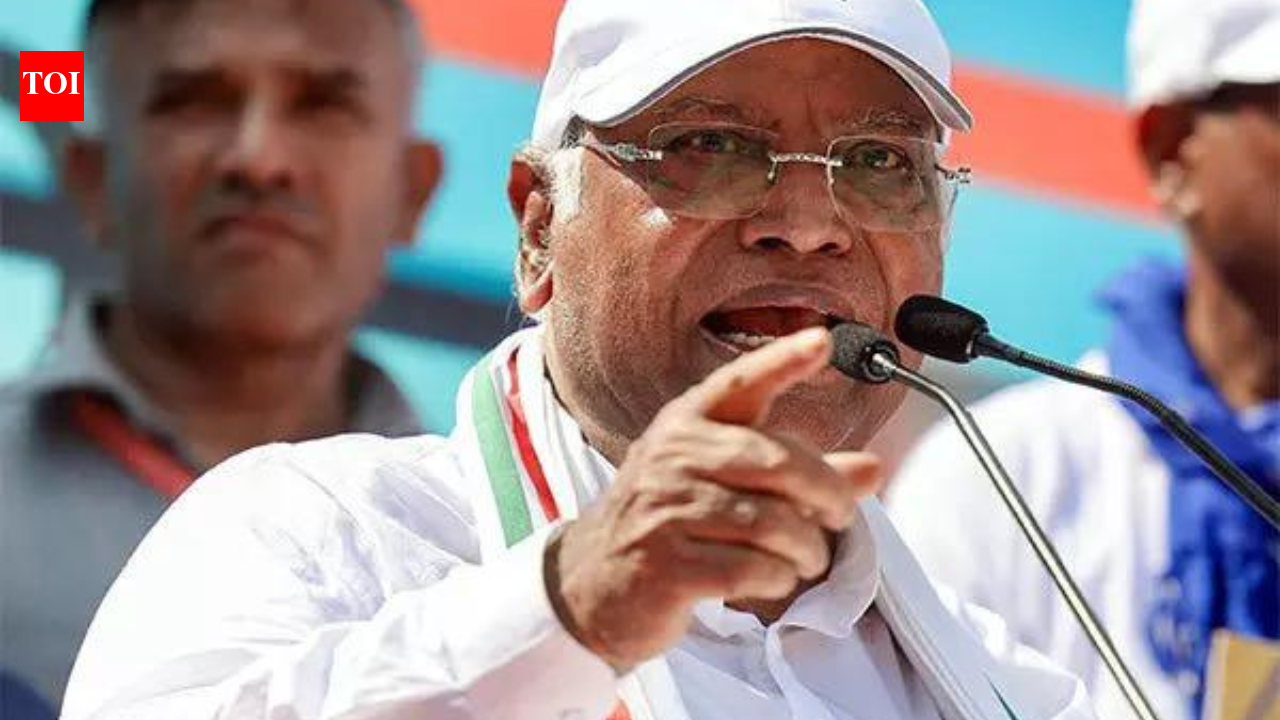
Mallikarjun Kharge (PTI image)

NEW DELHI: The Congress on Tuesday criticised the Centre over mismanagement at the ongoing AI Impact Summit in the national capital. Party president Mallikarjun Kharge called it an example of “PR hungry” government that had turned a global opportunity into “utter chaos”.In a post on X, Kharge said that what could have been a major moment for India’s digital and artificial intelligence leadership had instead resulted in distress for participants.“What could have been a showpiece AI Summit for the entire world demonstrating the digital & AI capabilities of India, has reportedly turned into utter chaos and rank mismanagement by this ‘PR hungry’ government!” he wrote.The Congress chief alleged that founders, exhibitors and visitors faced multiple problems during the event, particularly on the first day.“Founders, exhibitors and visitors – all face extreme distress due to the PM gatecrashing for a photo opportunity on the very first day,” Kharge said.Listing the complaints, he added, “Exhibitors are left without food and water, their products are stolen, Digi Yatra miserably fails, laptops, personal electronic devices and even bags are prohibited, only cash instead of digital/UPI payment is accepted, and founders are made to pay huge sums without basic facilities, among many other reasons of distress.”Calling it an embarrassment for the country, Kharge said, “It is extremely unfortunate that, our country has to suffer this global embarassment due to the incompetancy of our own government.”He also suggested that the Centre take lessons from a state-level technology event. “Perhaps the Modi Govt should learn from the Bengaluru Tech Summit (BTS) which is an annual feature in smoothly organising such large scale Digital & Tech congregations,” he wrote.Union minister Ashwini Vaishnaw acknowledged the issue and assured that all problems will be addressed. “If any issue or inconvenience has come to exhibitors at AI Summit, we apologise for that. All issues will be addressed,” Vaishnaw said. The AI Impact Summit, which began on Monday at Bharat Mandapam in New Delhi, is being described as the world’s largest artificial intelligence gathering. The five-day event, running from February 16 to 20, has drawn thousands of participants, including tech leaders, policymakers, startup founders and industry experts.Prime Minister Narendra Modi inaugurated the summit, which will also see the participation of more than 20 heads of state and government, including France’s Emmanuel Macron and Brazil’s Luiz Inácio Lula da Silva. Technology leaders such as OpenAI’s Sam Altman and Google’s Sundar Pichai are also scheduled to attend.The summit aims to shape a “shared roadmap for global AI governance and collaboration” and focuses on themes of “People, Planet, and Progress”. India is positioning itself as a hub for digital infrastructure and artificial intelligence, and is expected to push for wider access to AI technologies and the creation of global AI commons.PTI reporters at the venue observed long queues outside session halls due to packed schedules and high demand. Organisers said that registrations exceeded expectations, reflecting growing global interest in AI infrastructure, enterprise adoption and governance.While there were reports of logistical challenges due to heavy footfall and parallel sessions running simultaneously, the event has seen strong participation, with panel discussions and exhibitions drawing large crowds.The government has highlighted the summit as an opportunity to showcase India’s digital public infrastructure, engineering talent and its ambitions to lead global conversations on responsible and inclusive AI development.


Source link

“Win over Australia will count for nothing if…”: Sikandar Raza’s powerful warning after Zimbabwe’s Super 8 qualification at T20 World Cup 2026


Zimbabwe captain Sikandar Raza has warned his teammates by mentioning that the win over Australia will count for nothing if bigger goals aren’t achieved after Zimbabwe’s historic Super 8 qualification at the ICC Men’s T20 World Cup 2026.

In a tournament already filled with dramatic twists, Zimbabwe’s qualification for the Super 8 stage of the T20 World Cup 2026 stands out as one of the most compelling stories. Yet, Raza has made it abundantly clear: the famous win over Australia will count for nothing if Zimbabwe fail to capitalize on this momentum and achieve their larger ambitions.

Speaking from Pallekele after Zimbabwe’s rain-affected group match against Ireland confirmed their progression – eliminating both Australia and Ireland – Raza struck a tone that was both celebratory and cautionary. For him, reaching the Super 8s is historic, yes, but far from the final destination.

T20 World Cup 2026: Zimbabwe’s historic Super 8 qualification  

Zimbabwe’s journey to the Super 8s for the first time in T20 World Cup history is undeniably significant. The Chevrons sealed their place after their clash with Ireland was washed out at the Pallekele International Stadium, ensuring qualification with a game to spare.

But Raza quickly downplayed any notion of complacency.

“The fact that we’ve qualified for the Super 8s hasn’t changed the ultimate goal that we set out for. It’s just a tick in the box, but we have a lot of other goals to achieve,” Raza told reporters.

His message was simple: progress is satisfying, but purpose is paramount.

While fans and pundits celebrated Zimbabwe’s upset victory over Australia earlier in the group stage, Raza emphasized that such wins only matter if they lead to something greater. “Yes, the Super Eights is a tick in the box, but it’s certainly not the whole box,” he reiterated.

For a team that has long battled inconsistency and global skepticism, this qualification represents redemption. Yet Raza’s focus remains firmly forward-facing. He doesn’t want Zimbabwe to be remembered merely as a giant-killer, rather he wants them to be recognized as genuine contenders.

The bigger goal: Restoring pride and respect for Zimbabwe

Beyond trophies and points tables, Zimbabwe’s campaign carries deeper emotional weight. According to Raza, one of the team’s core objectives is to restore pride and earn respect for their country on the global cricketing stage.

“One of the goals we set out to achieve was certainly that we’re going to bring more recognition and respect to our country,” Raza explained.

Also READ: Explained – Which teams will India face in Super 8 of T20 World Cup 2026?

From underdogs to contenders: Zimbabwe embracing the challenge ahead

“Everybody loves an underdog story, don’t they?” Raza quipped, acknowledging the romantic appeal of Zimbabwe’s run.

Indeed, their narrative has captured global attention. However, Raza is wary of being boxed into the underdog label. While he understands its charm, he insists his team belongs at this level.

Qualifying for the Super 8s with a game to spare is no fluke. It reflects Zimbabwe’s strategic planning, disciplined execution and collective belief. But the real test begins now. Their Super 8 campaign includes formidable opponents: defending champions India in Chennai on February 26, followed by clashes against South Africa and the West Indies. These cricketing giants present a stern challenge, but Raza remains optimistic.

“If we can find a day or two to train, we’ll sum up the conditions really well and make our plans. One thing you can’t fight is the weather and conditions, so we try to learn them quickly.”

Raza and the coaching staff are meticulously analyzing opponents, studying recent performances, and leveraging data insights to formulate tactical blueprints. It’s a professional, methodical approach that underscores Zimbabwe’s evolution from hopeful participants to serious competitors.

Also READ: Fans react as Nepal sign off T20 World Cup 2026 on a high after Dipendra Singh Airee’s historic knock destroys Scotland


Source link

Dombivli parking blaze that destroyed 29 vehicles, injured 5 was ‘started on purpose’; 1 held | Thane News


KALYAN: In a major breakthrough in the fire incident reported at in a basement of a housing society in Dombivli, police investigations have revealed that the blaze was allegedly deliberate and not accidental. The fire, which had erupted in the parking area of Ravikiran Society in Sagaon, left five persons seriously injured and gutted 29 two-wheelers.Officials from the Manpada police said CCTV footage from the society’s parking area played a key role in the investigation. “The footage showed a young man throwing an object into a garbage bin. Within seconds, a fire broke out, which then spread rapidly in the parking area,” an officer said.Based on the evidence, police arrested a resident of the building, identified as Lavesh Parte. He was produced before the Kalyan court, which remanded him to two days’ police custody. Suhas Hemade, Assistant Commissioner of Police, Dombivli division said, “Our team are now probing what object the accused allegedly brought from his residence and disposed of in the bin, which triggered the blaze. The motive behind the act is also under investigation”.The incident occurred around 4.15am in the parking premises of Raj Apartment within the society. Thick smoke quickly spread through the building, triggering panic among residents. Among the injured, a woman continues to be in critical condition.

Banner Insert


Source link

Need to maintain balance between innovation, regulation: Ashwini Vaishnaw


Need to maintain balance between innovation, regulation: Ashwini Vaishnaw

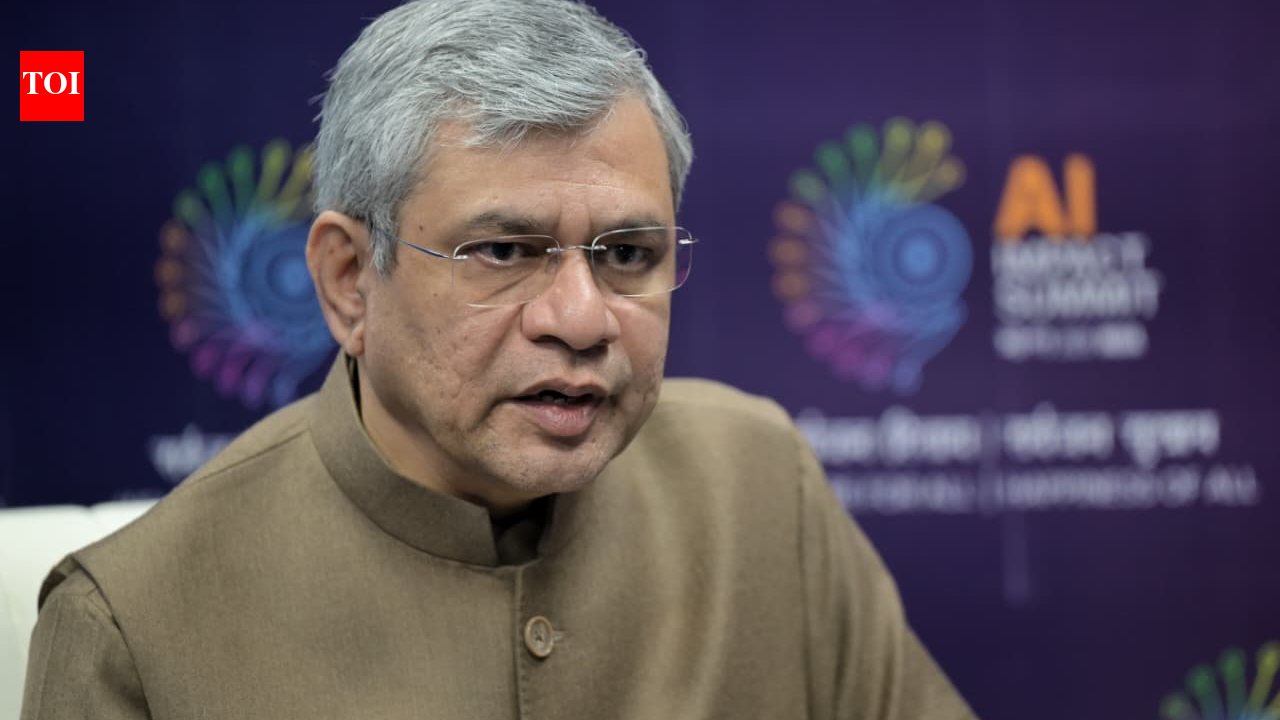
IT minister Ashwini Vaishnaw is working with other countries to evolve a consensus on a framework to deal with AI and these are early days for the sector. In an interview with TOI on the sidelines of the AI Impact Summit, the minister said that govt has used a combination of legal and technical solutions in dealing with IT and there is a need to strike a balance between regulation and development. He also touched upon the issue of restricting social media access to children and said that a solution will be based on discussion with stakeholders. Excerpts:How do you strike a balance between regulation and development and how is govt approaching the subject?The overwhelming sense is cautious optimism. People believe that this is a technology that can bring a major change in every sector of life and people are also aware of the harms which can come. India is working towards building a consensus — not just domestically, but globally — including with the Global South, to create a model of harmony. Overall, there is a shared view that a balance must be maintained between innovation and regulation. The thinking is about how AI technology can be used in a way that benefits every sector of the economy and every section of society.Is it time for some sort of basic regulations and what areas would that be?India’s approach has been techno-legal approach, a combination of using technical solutions, and legal structures. That approach is now appreciated by the global community. Some geographies have in the past used only regulation or a legal approach. That has not really delivered the kind of results which are needed. The second thing which we observed here is that there are a lot of innovations left. This is probably the first innings of the first match of a test series. So lots and lots of innovation is still up there. The IT industry is also very cognizant of the challenges and they are pivoting very rapidly away from the old model to create a new model of providing services, from software as a service to AI-based services. There are thousands and thousands of legacy systems in the world. Those legacy systems will have to be modernized, and our IT services companies are best placed to modernize them, using the new AI-based solutions. That opportunity is now clearly visible. Industry is getting prepared for it and govt, academia, and industry are harmonized, we are synchronized to bring those solutions to the country.PM Narendra Modi spoke about the need for IT services companies to graduate from merely providing services to developing products and platforms. How do you become enablers of this transition which have large cash piles with them? Are they investing enough to create products and platforms?Yes, our IT industry initially is calibrating these changes. They were trying to measure what this change would bring to their sector based on what they have studied and what they’ve done over the last few years. Lots and lots of very focused, small models is what the IT industry is putting their emphasis on, which can be placed in an enterprise where trust is the most important factor. For example, if you have to put an AI model in the banking sector, then we can’t have something which goes to a large language model or a frontier model because that would mean that the knowledge within that banking enterprise will go to the entire world and there is no there is no competitive advantage left. So, the IT industry has devised a bouquet of small models, and our sovereign models are complementing that. Today, models are commoditized already. So, a large number of models are available today, which can be used for providing that productivity gain.What is your sense from your talks with 30 countries and evolving a consensus? What about the big tech companies and AI companies, what is their feedback?They also understand the challenges and the opportunities, and they are very cognizant of the risks which are there. Big tech is pretty much working in sync with society and policymakers.There is discussion around regulating social media access for children. How is govt dealing with it?Social media is extremely powerful. There is the issue of freedom of expression and freedom of speech, but under India’s Constitution, there are defined responsibilities, of Parliament and of society, and serious deliberations are underway on these questions. There is a discussion going on what is the impact of social media on children and how it should be dealt with. Several countries have imposed restrictions and prohibitions and in India too, industry and public other stakeholders are discussing the issue. The right solution will emerge only through thoughtful deliberation.


Source link

Access Denied


Access Denied

You don’t have permission to access “http://www.ndtv.com/india-news/who-is-stuart-russell-ai-pioneer-attending-ndtv-ai-summit-11051821” on this server.

Reference #18.c7f5d217.1771399469.443e09a5

https://errors.edgesuite.net/18.c7f5d217.1771399469.443e09a5


Source link

Oman’s bold new expat permit pricing explained: Tiered fee system, hikes and discounts to push Omanisation goals


Oman’s bold new expat permit pricing explained: Tiered fee system, hikes and discounts to push Omanisation goals
Oman’s New Tiered Expat Work Permit Fees: Incentives for Omanisation Compliance

The Sultanate of Oman is shaking up how companies hire foreign workers by introducing a tiered fee structure for expatriate work permits that directly ties costs to compliance with national employment targets known as Omanisation. The move, announced this week by the Ministry of Labour, rewards firms that meet or exceed local hire quotas with steep fee discounts, while punishing those lagging behind by doubling their permit fees. This approach, part of wider labour reforms aimed at creating more job opportunities for Omani citizens, reflects a growing regional trend toward tightening rules on foreign labour and elevating the role of national workforces.Under the new system, compliant companies in the “Green Category”, those that hit Omanisation benchmarks, will enjoy a 30 percent discount on expatriate work permit and practice licence fees. In contrast, non-compliant employers who fail to bring enough locals into their ranks will pay double the usual fee for the same permits, making it significantly more costly to hire foreign talent. Omanisation quotas vary by sector and company size, but the underlying message is clear: make room for Omani workers, or pay a steep price.

How Oman’s tiered fee system works: Carrots and sticks

The tiered model is designed as both an incentive and a penalty mechanism. Firms that exceed their national hire quotas are placed in the Green Category, unlocking the 30 percent discount on key work permits. Since expatriate work permit fees are a routine cost for many businesses, a reduction of this size represents a significant annual saving, effectively a financial reward for prioritising Omani employment.

Oman's Expat Fee Hike: A Punitive Blow to Businesses or a Necessary Push for Local Jobs?

Oman’s Expat Fee Hike: A Punitive Blow to Businesses or a Necessary Push for Local Jobs?

By contrast, companies that neglect Omanisation expectations will find themselves in the Non-Compliant Category, where the base cost of all expatriate work permits and related professional licences, is doubled. This punitive measure is aimed at shifting recruitment calculus: if it is cheaper to invest in hiring local talent than continually renew permits for foreign workers, firms will re-evaluate their workforce strategies.Complementing the fee overhaul, the Ministry has also extended the validity of work-practice licences for expats from 15 to 24 months, aligning them with standard residency permits, a change welcomed by employers as it reduces administrative churn. Furthermore, employers can now upgrade an existing worker’s professional category simply by paying the difference in fees, rather than going through the full process of applying for a new permit. These administrative simplifications aim to balance the tougher fee regime with smoother operational processes.

Omanisation and labour policy trends

Oman’s new tiered fee regime comes amid a broader and long-running initiative to strengthen national labour participation, a policy widely known across the Gulf as Omanisation. Similar efforts elsewhere in the region tie benefits or penalties to local hiring benchmarks, with countries like the UAE and Saudi Arabia implementing strict compliance requirements for companies and linking national employment performance to government contracts or licences.
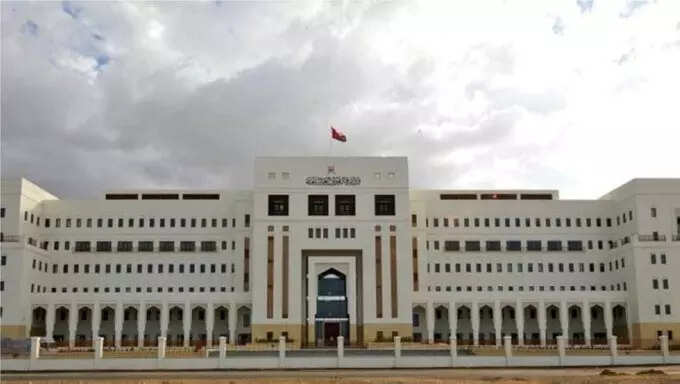
Oman's New Expat Fee System: Will it Boost Local Hiring or Cripple Businesses?

Oman’s New Expat Fee System: Will it Boost Local Hiring or Cripple Businesses?

In Oman’s context, national debate around these reforms has extended into discussions online and in business circles. Some expatriate employers have voiced concern that compliance expectations, such as minimum local hire quotas, can complicate workforce planning and increase costs, while others point out that compliance brings benefits such as discounted fees that eventually outweigh the penalties. Posts on regional forums suggest that employers who fail to meet Omanisation levels may face restrictions on visa renewals or additional bureaucratic hurdles, underscoring the importance of aligning hiring practices with policy goals.Importantly, this policy does not ban foreign hires, it simply makes it more expensive for companies to ignore local hiring targets. In recent years, authorities have also enacted rules reserving certain professions exclusively for Omani citizens, further tightening the labour market and accelerating opportunities for nationals across sectors.

Why Oman’s tiered fee system matters for businesses and the economy

The tiered fee approach marks a shift toward “stick and carrot” workforce governance: companies that help build the national workforce are financially rewarded, while those that rely heavily on expatriate labour are nudged, through higher costs, to rethink their composition. For businesses, this means –

  • Lower Costs for Omanisation Leaders: Discounted permit fees can significantly reduce operating expenses, a boon for companies that invest in training, recruiting and retaining Omani employees.
  • Higher Costs for Non-Compliant Firms: Doubling fees for non-compliance means hiring foreign labour becomes a strategic and financial decision, not a default.
  • Better Workforce Planning: The extended validity of licences and flexible upgrade options reduce administrative burden and allow firms to adjust to the evolving policy landscape more smoothly.

Economists and labour policy analysts see these changes as part of Oman’s broader strategy to reduce dependency on expatriate labour, especially in mid-level and supervisory roles where nationals can increasingly play a more prominent part. With long-term development goals tied to local employment growth, such structural reforms are expected to ripple through recruitment practices across the private sector.

Concerns and criticisms of Oman’s tiered fee system

Despite wide policy support from authorities, critics warn that the tiered fee system might strain smaller businesses that already contend with tight margins and high operational costs. Firms that struggle to find qualified local talent, especially in specialised or technical roles, argue that doubling expatriate permit fees could limit their ability to function competitively. This has led to calls for targeted training programmes, stronger labour market matchmaking systems and transitional exemptions that help companies adapt.

Oman's New Expat Work Permit Fees: Tiered System Rewards Omanisation Compliance

Oman’s New Expat Work Permit Fees: Tiered System Rewards Omanisation Compliance

Some online commentators also note that while fee incentives and penalties are important, they must be paired with robust workforce development initiatives including education, vocational training and career pathways to ensure that local job seekers are adequately equipped to fill roles previously dominated by expatriates. Without that holistic support, critics argue, businesses may face compliance pressures without the necessary human capital to meet them.

Looking ahead: 2026 and beyond

The tiered fee system is slated to take effect as Oman enters a broader five-year development plan focused on economic diversification, job growth and private sector empowerment, initiatives also reflected in national budgets and social investment strategies. With permit fees now a lever in this broader policy toolkit, observers expect:

  • Increased hiring of Omani nationals across sectors
  • Better alignment between private sector growth and national labour priorities
  • A more predictable regulatory landscape for foreign labour
  • Potential expansion of fee incentives or targeted exemptions over time

By linking financial consequences so directly to a company’s local hire performance, Oman is sending a clear message: local employment matters and the cost of inaction will rise for businesses that choose to ignore it. Oman has introduced a tiered expat work permit fee structure that rewards firms meeting Omanisation goals with 30 percent discounts and penalises laggards by doubling fees. The policy also extends licence validity and simplifies permit category upgrades to ease administrative burden.This change is part of a broader push to increase employment opportunities for Omani citizens and reduce reliance on foreign labour. Critics say complementary measures, such as skills training and workforce development, are necessary to help companies adapt.



Source link

Impact of GST rate cuts fading? FMCG prices rise up to 5%; what’s fueling the latest hike


Impact of GST rate cuts fading? FMCG prices rise up to 5%; what's fueling the latest hike

September’s GST cuts had helped keep prices steady for a while, but now, almost six months in, the phase is ending. India’s consumer goods makers now increasing prices by up to 5%, as rising commodity costs and weak rupee put pressure on margins. The impact is now visible in stores this quarter, with distributors saying that selected packs of everyday essentials, including detergents, hair oils, chocolates, noodles and breakfast cereals, are reaching shelves with higher price tags, according to ET. The latest round of increases come after a period of during which companies had swiftly passed on tax benefits after GST rates were lowered across multiple consumer categories. Firms had acted cautiously at the time to avoid scrutiny under antiprofiteering regulations. With that phase now behind them, companies are beginning to exercise pricing power once again. Mohit Malhotra, chief executive of Dabur India, told ET that the company, which makes Real juice and Vatika hair oil, is implementing a 2% price increase in the ongoing fourth quarter. The higher pricing, he added, will continue into the next year. “We had to postpone the price hikes due to the antiprofiteering issue,” he said. The pressure on margins has intensified amid rising commodity prices and sustained currency weakness. Crude oil prices have firmed up in recent weeks, lifting costs of related commodities such as sulphur and n-paraffins. Coconut oil prices have doubled over the past year. Meanwhile, the rupee has been sliding for several months, touching an all-time intraday low of Rs 92.02 against the dollar on January 30, affected by trade deficits and global imbalances. The depreciation has pushed up the cost of imported inputs. “A lot of ingredients in breakfast staples, such as oats and almonds, are imported… The depreciation of the rupee has significantly increased costs of imports,” said Aditya Bagri, group director at breakfast cereals, muesli and oats maker Bagrry’s. “We are exploring a marginal increase in prices this quarter on select packs,” the official further added. Home and personal care manufacturers are also grappling with higher raw material expenses, given their dependence on crude oil derivatives that influence the cost of commodities such as liquid paraffin and surfactants. “Home care price increases will be (seen) soon. Some (packs with increased price tags) are already going into the market, and some will follow,” Niranjan Gupta, chief financial officer at Hindustan Unilever, said during an investor call last week. The company is raising prices across its home care portfolio, including Surf Excel, Rin, Vim and Domex. At Tata Consumer Products, tea prices have also shown movement. “There was a small uptick on tea prices at the end of the (December) quarter,” managing director Sunil D’ Souza said after the third-quarter earnings. “But remember, January to early April…will determine opening prices then. We will be flexible on moving (prices) up or down depending on how the commodity fares when the season opens. We have already passed on most of the increases in this quarter. However, even with higher revenues, profitability remains under pressure. A report by financial services firm Systematix Group on Tuesday noted that while FMCG companies recorded 9% year-on-year revenue growth in the third quarter of FY26, margin expansion has been constrained. Average sales volumes rose 6% year-on-year, supported by GST-linked reductions in categories such as biscuits, noodles and snack foods, the report said.


Source link

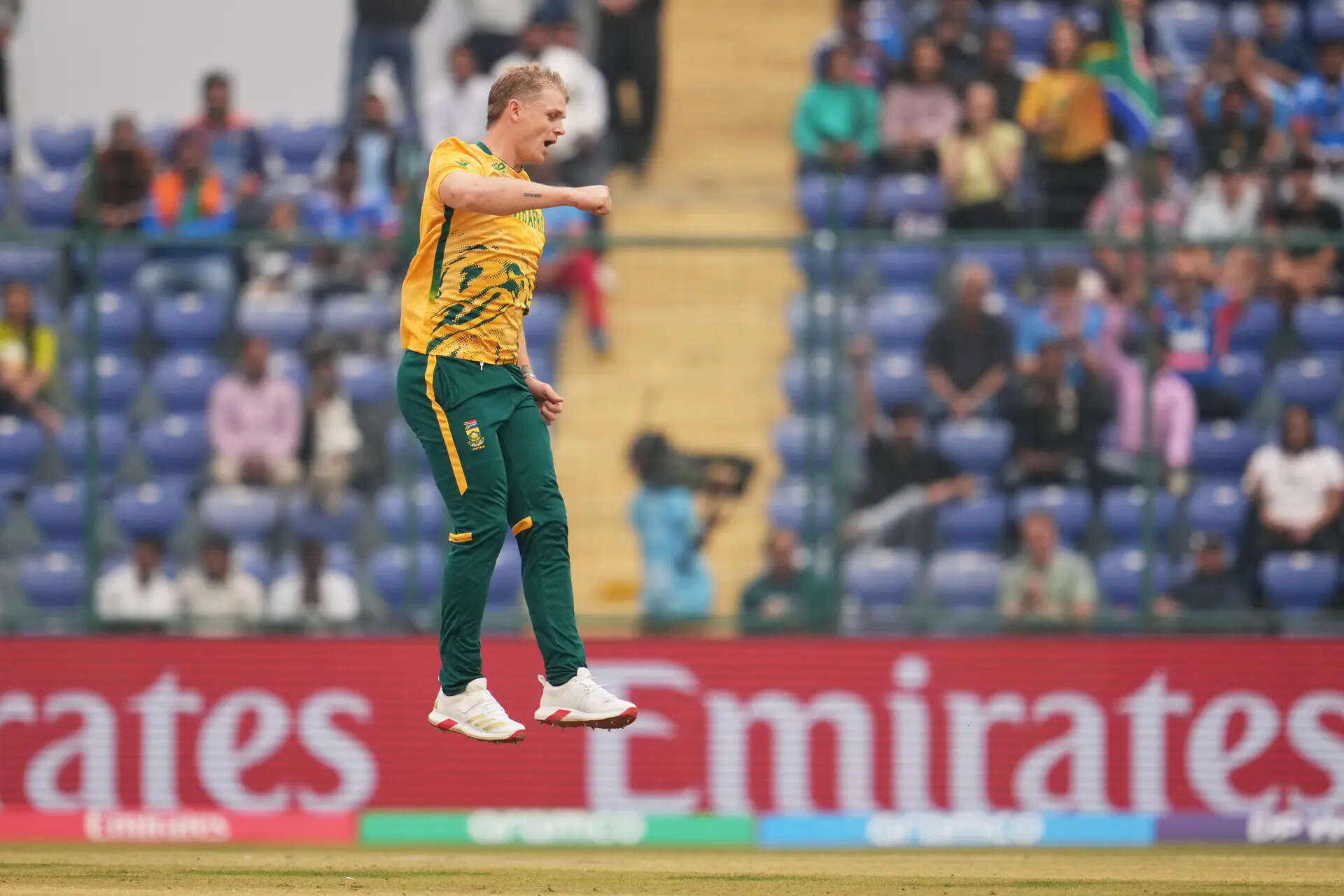
United Arab Emirates 111/4 in 17.2 Overs | South Africa vs United Arab Emirates Live Score, T20 World Cup 2026: Regular wickets hurt UAE after a good start


South Africa vs United Arab Emirates Live Score, T20 World Cup 2026: South Africa head into their final Group D fixture against the United Arab Emirates with their Super Eights qualification already secured, but the match presents an important chance for Dewald Brevis to rediscover his touch. The Proteas have enjoyed a perfect group stage so far, highlighted by a dramatic double Super Over win over Afghanistan and a dominant victory against New Zealand, putting them in a strong position ahead of the knockout phase.

T20 World Cup: Schedule | Points Table

Despite the team’s success, Brevis has struggled to convert his starts, registering only 6, 23 and 21. Nicknamed after AB de Villiers for his exciting strokeplay, the youngster will be eager to deliver a defining performance on a batting-friendly surface at the Feroz Shah Kotla Ground. With senior players such as Quinton de Kock, Aiden Markram and Ryan Rickelton already among the runs, South Africa’s batting remains formidable.

The match could also see strategic rotation, with frontline pacers like Kagiso Rabada and Lungi Ngidi likely to be rested, allowing others to gain match practice. For UAE, it will be a valuable learning experience against elite opposition. Their batting hopes rest heavily on in-form Sohaib Khan, skipper Muhammad Waseem and Alishan Sharafu, who will aim to challenge a powerful South African side and end their campaign on a positive note.

PLAYING XIs

South Africa XI: Aiden Markram (c), Quinton de Kock (w), Ryan Rickelton, Dewald Brevis, Tristan Stubbs, Jason Smith, George Linde, Corbin Bosch, Kagiso Rabada, Anrich Nortje, Kwena Maphaka

United Arab Emirates XI: Aryansh Sharma (w), Muhammad Waseem (c), Alishan Sharafu, Sohaib Khan, Harshit Kaushik, Muhammad Arfan, Dhruv Parashar, Muhammad Farooq, Haider Ali, Junaid Siddique, Muhammad Jawadullah


Source link