Breaking News
ECI announces Rajya Sabha biennial elections for 37 seats across 10 states | India News


ECI announces Rajya Sabha biennial elections for 37 seats across 10 states

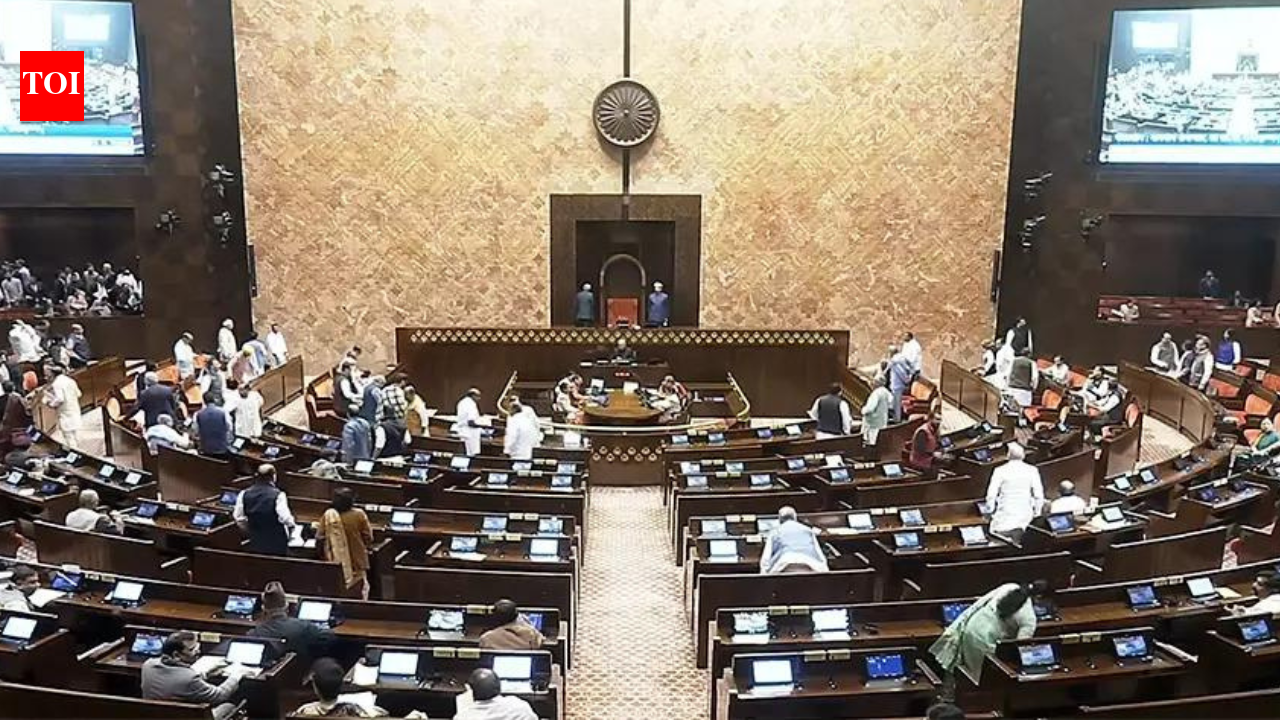
NEW DELHI: The Election Commission of India (ECI) on Wednesday announced that biennial elections to fill 37 Rajya Sabha seats falling vacant across 10 states in April will be held on March 16, with counting scheduled for later the same day.Polling will take place between 9am and 4pm, and vote counting will begin at 5pm, the Commission said. The vacancies arise as the terms of 37 members of the Upper House end in April 2026.According to the schedule released by the poll panel, the notification for the elections will be issued on February 26. March 5 has been set as the last date for filing nominations, followed by scrutiny on March 6. Candidates may withdraw their nominations until March 9.

10 states to send new representatives

The biennial polls cover Maharashtra, Odisha, Telangana, Tamil Nadu, Chhattisgarh, West Bengal, Assam, Haryana, Himachal Pradesh, and Bihar, where one or more members are completing their tenure.Prominent MPs retiring this cycle include Upendra Kushwaha, Priyanka Chaturvedi, Tiruchi Siva, Saket Gokhale, Ramdas Athawale, Abhishek Manu Singhvi, Sharad Pawar, Bhagwat Karad, Mamata Mohanta, Rameswar Teli, Indu Bala Goswami, K.T.S. Tulsi, N.R. Elango, Amarendra Dhari Singh, and Kiran Choudhry.

Guidelines and conduct

To ensure transparency, the Commission will deploy observers in each state to oversee the election process. It also directed that only integrated violet sketch pens supplied by the respective Returning Officers be used for marking preferences on ballot papers, stressing that no other writing instrument is permitted.Reiterating its commitment to a fair and impartial process, the ECI said the biennial elections would be completed within the prescribed constitutional timeline to uphold the integrity of the Rajya Sabha electoral process.


Source link

Zoho founder Sridhar Vembu: This is going to be the norm in India where a lot of … |


Zoho founder Sridhar Vembu has said that India is taking a different, more practical approach to building AI compared to some global players. Speaking to news agency ANI at the ongoing India AI Impact Summit in New Delhi, Vembu said that India is currently investing in smaller AI models that are efficient and cost-effective. He further stated that while these models may not be popular, they are effective for the country’s specific needs. “I think we are investing in lot of the smaller models. Those should be unglamorous right now, but they get the job done,” he told the news agency. Referencing the startup Sarvam as an example of a company launching models with a smaller footprint, he said, “This is going to be the norm in India where a lot of smaller resource efficient, energy efficient models and then we’ll scale up over time as the costs decline.”

Sridhar Vembu: India has most enthusiastic population in the world

As per the ANI report, Vembu also highlighted that India has a significant advantage due to its young population. “With our vast youth population, we have the most AI enthusiastic population in the world. We are adopting AI faster than any other nation,” he noted. He further said that the Indian youth is already leading in technology adoption and creating new opportunities.

‘Crucial Role For India In AI Governance’: Duncan Cass-Beggs At AI Summit

Sridhar Vembu said Zoho is rapidly using AI to improve software development, adding that the company is seeing significant benefits from it. “Right now we are rapidly deploying AI in software development. We are seeing massive productivity gains in it,” he said.Zoho plans to expand this adoption across the entire company over the next year, he highlighted.On the effect of AI over workforce in India, Vembu said that previous technology waves have always created jobs and believes AI will do the same. “I think there will be new jobs created and software engineers have to get closer to the customer, solve customer problems,” he told ANI.


Source link

Explained: Which teams will India face in Super 8 of T20 World Cup 2026?


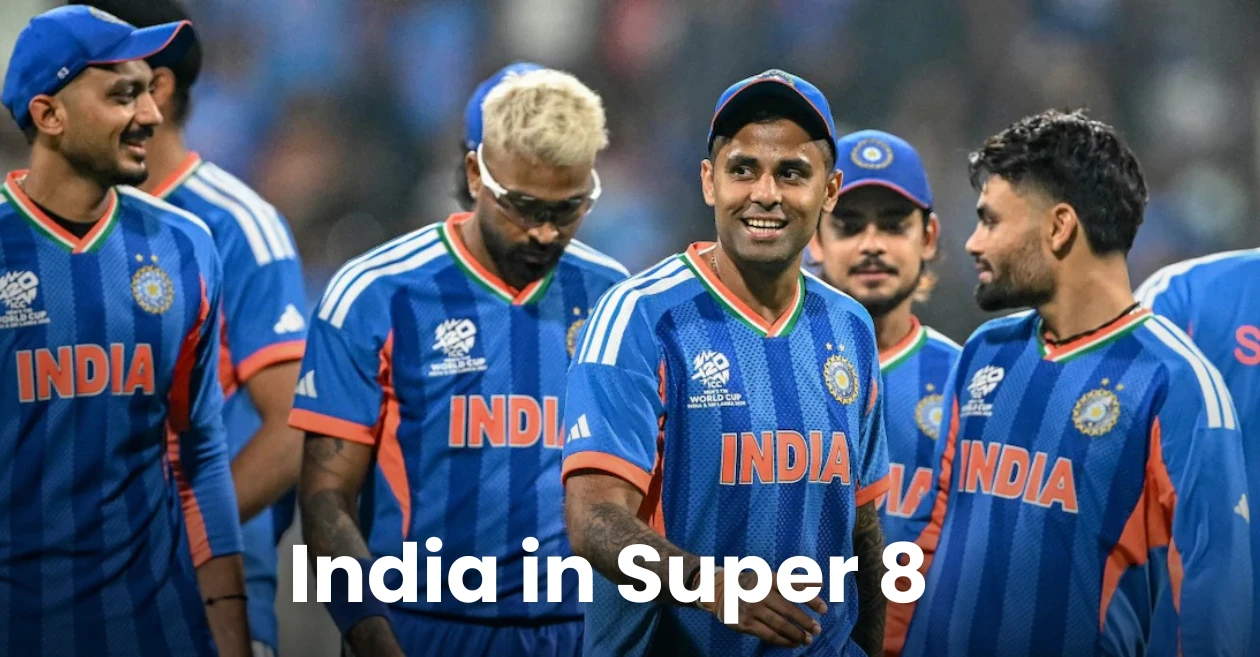
The Super 8 stage of the ICC Men’s T20 World Cup 2026 is officially set, and defending champions India now know the teams standing between them and a semi-final berth. Following Zimbabwe’s dramatic qualification on Tuesday, India have been placed in Group 1 alongside South Africa, Zimbabwe and West Indies.

Led by Suryakumar Yadav, the Men in Blue now prepare for a challenging second phase of the tournament, with matches scheduled at three iconic venues across India.

India’s Super 8 Schedule: Dates and Venues

India will begin their Super 8 campaign against South Africa on Sunday (February 22) at the Narendra Modi Stadium in Ahmedabad. The clash promises to be a high-intensity encounter, as South Africa were runners-up in the previous edition.

The team will then travel south to Chennai to face Zimbabwe on February 26 at the historic MA Chidambaram Stadium. India will conclude their Super 8 group fixtures against the West Indies on March 1 at the iconic Eden Gardens.

Only the top two teams from each Super 8 group will advance to the semi-finals, making every match critical.

How India secured their Super 8 spot?

India qualified for the Super 8 stage with dominant performances in Group A. Their campaign was highlighted by a commanding 61-run victory over arch-rivals Pakistan in Colombo on February 15.

Earlier wins against the USA and Namibia set the tone for their unbeaten run in the group stage. Wicketkeeper-batter Ishan Kishan played a starring role against Pakistan with a blistering 77 off 40 deliveries, while the bowling unit, spearheaded by Jasprit Bumrah and Varun Chakaravarthy, consistently dismantled opposition batting lineups.

India’s emphatic 93-run win over Namibia in Delhi also marked their largest winning margin in T20 World Cup history, underlining their dominance in the early rounds.

Zimbabwe’s fairytale qualification shakes up the tournament

Zimbabwe’s qualification to the Super 8s came under dramatic circumstances. Their group match against Ireland in Pallekele was abandoned due to rain, earning them a crucial point that knocked out both Ireland and two-time champions Australia.

The Chevrons’ progression marks their first appearance in the Super 8 stage, adding an unexpected twist to the tournament narrative. Australia’s early exit has been one of the biggest shocks of the competition so far.

Also READ: Fans react as Australia faces elimination from T20 World Cup 2026 after rain washes Ireland vs Zimbabwe clash in Pallekele

Super 8 format explained

The Super 8 stage comprises two groups of four teams each. India are in Group 1 with South Africa, West Indies, and Zimbabwe. Group 2 features England, New Zealand, Pakistan, and Sri Lanka.

Each team will play three matches in this phase, facing every other side in their group once. Importantly, no points from the group stage are carried forward. The top two teams from each group will progress to the semi-finals on March 4 and 5, with the grand final scheduled for March 8.

Challenges await for India in Super 8

While India enter the Super 8s on a 10-match T20 World Cup winning streak – a tournament record – the path ahead is far from straightforward. South Africa’s balanced squad poses a formidable challenge, while the West Indies have displayed explosive batting throughout the tournament.

Zimbabwe, buoyed by their underdog spirit and momentum, could also prove tricky opponents.

Also WATCH: Mohammed Shami castles Shubham Pundir with a peach in Bengal vs Jammu & Kashmir Ranji Trophy semifinal


Source link

History made! Jammu and Kashmir stun Bengal to enter maiden Ranji Trophy final | Cricket News


History made! Jammu and Kashmir stun Bengal to enter maiden Ranji Trophy final

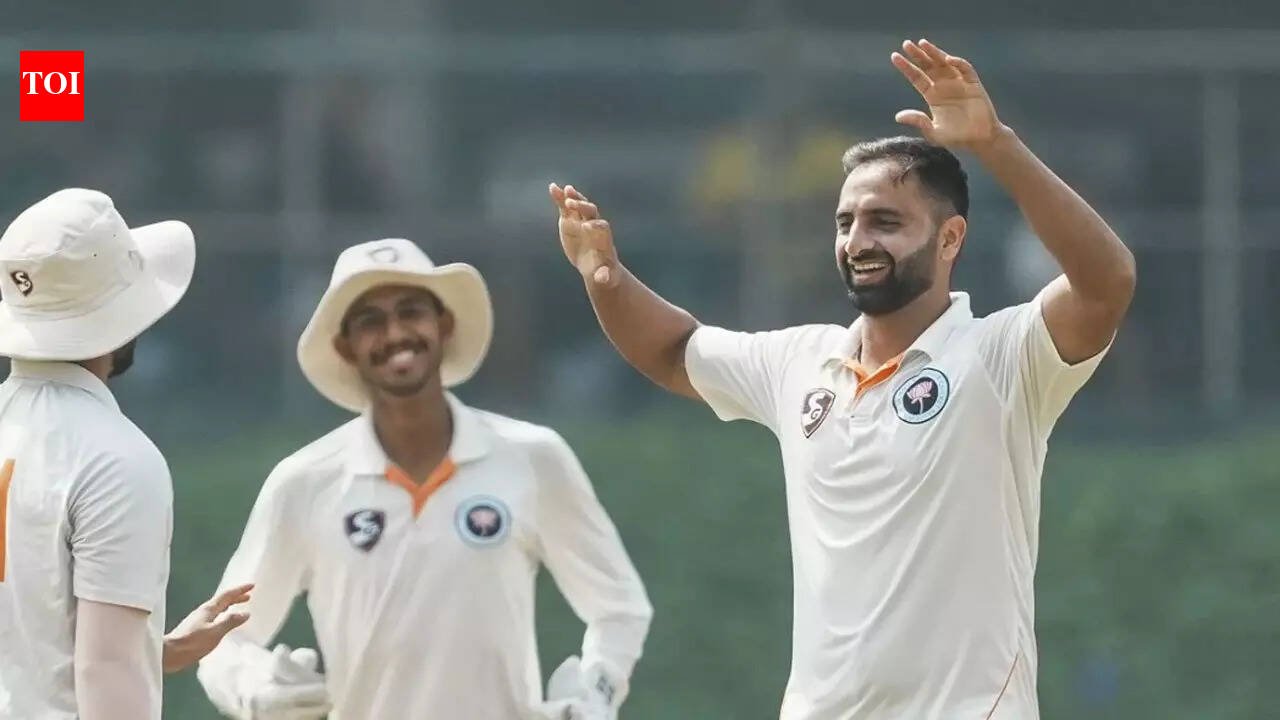
NEW DELHI: Jammu and Kashmir scripted a landmark moment in their cricket history by reaching the Ranji Trophy final for the first time in 67 years on Wednesday. J&K defeated two-time champions Bengal by six wickets in the semifinal at the BCA Ground in Kalyan. Go Beyond The Boundary with our YouTube channel. SUBSCRIBE NOW!Chasing a modest target of 126, J&K showed composure under pressure to seal victory in just 34.4 overs and book their place in the summit clash.

All about Abhishek Sharma’s lonely net session in Ahmedabad

Resuming the day at 43 for 2, J&K suffered early setbacks when overnight batter Shubham Pundir and skipper Paras Dogra were dismissed cheaply, raising hopes of a Bengal comeback. However, Vanshaj Sharma and Abdul Samad turned the tide with remarkable calmness. Vanshaj remained unbeaten on 43, while Samad provided solid support with an unbeaten 30, as their crucial 55-run partnership guided the visitors to a famous win.Earlier, the foundation for the victory was laid by pace spearhead Auqib Nabi, who delivered a match-winning performance. The fast bowler claimed nine wickets in the match, dismantling Bengal’s batting and ensuring the target remained well within reach.The achievement marks a dramatic rise for Jammu and Kashmir, who made their Ranji Trophy debut in the 1959-60 season but had rarely been considered title contenders. Their previous best came in the 2013-14 season when they reached the knockout stage after a long gap.Brief scores:

  • Bengal: 328 and 99 in 25.1 overs.
  • Jammu and Kashmir: 302 and 126 for 4 in 34.4 overs (Vanshaj Sharma 43 not out, Abdul Samad 30 not out).


Source link

‘Chinese products showcased’: Rahul Gandhi calls AI Impact summit ‘disorganised PR spectacle’ | India News


'Chinese products showcased': Rahul Gandhi calls AI Impact summit 'disorganised PR spectacle'

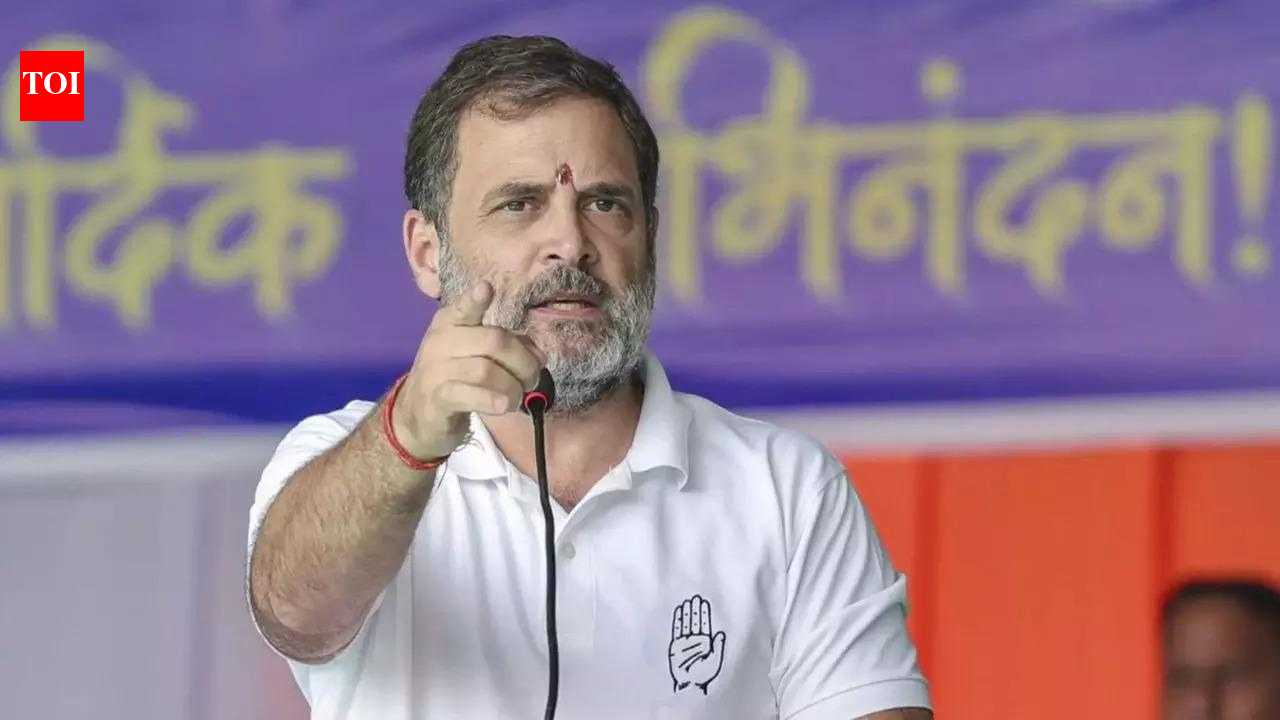
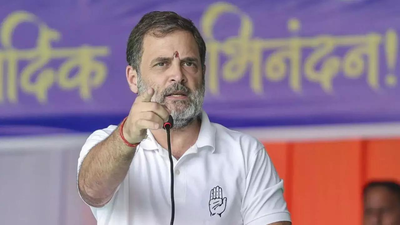
NEW DELHI: Congress leader Rahul Gandhi on Wednesday slammed AI Impact Summit, terming it a “disorganised PR spectacle.”In a social media post on X, the leader of opposition in Lok Sabha claimed that Indian data is up for sale in the event while Chinese products are being showcased.“Instead of leveraging India’s talent and data, the AI summit is a disorganised PR spectacle – Indian data up for sale, Chinese products showcased,” Rahul said.Rahul also quoted a post by Congress which said that Modi government has made a “laughing stock of India globally”, with regard to AI. “In the ongoing AI summit, Chinese robots are being displayed as our own. The Chinese media has mocked us. This is truly embarrassing for India. What is even more shameful is the fact that Modi’s minister Ashwini Vaishnaw is indulging in the same falsehood, promoting China’s robots at the Indian summit,” the party said.“The Modi Government has caused irreparable damage to the image of the country – they have reduced AI to a joke – a field in which we could be world leaders given our data power,” it added.This comes after Galgotia University showcased a robotic dog labled “Orion” at the AI Summit expo. However, the university faced backlash as critics claimed that the product was actually a Chinese-made Unitree Go2 and not an in-house innovation.Meanwhile, Galgotias University has been asked to vacate its stall at the AI Summit Expo immediately, news agency PTI reported citing government sources.


Source link

Civil suit against spouse’s lover for alienation of affection maintainable: Delhi High Court


Civil suit against spouse’s lover for alienation of affection maintainable: Delhi High Court
The matter escalated in March 2023 when the wife overheard and discovered intimate remarks and letters exchanged between the husband and the other woman. (AI image)

In a significant examination of an emerging tort principle in Indian law, the Delhi High Court has held that a civil suit seeking damages from a third party for interfering in a marital relationship and alienating a spouse’s affection is maintainable before a Civil Court. The Court made it clear that these claims are based on tortious interference and not matrimonial relief as such and thus do not come under the exclusive jurisdiction of Family Courts.The order was passed by Justice Purushaindra Kumar Kaurav in Shelly Mahajan v. Ms Bhanushree Bahl & Anr, where summons were issued to the husband and the paramour in a damages suit founded on the concept of “Alienation of Affection” (AoA). The Court denied that the preliminary objections to maintainability were sustained and that the plaint has revealed a civil cause of action that should be adjudicated in the trial.The Court articulated the governing principle:“….a spouse is held to possess a protectable interest in marital consortium, intimacy, and companionship, the correlative legal duty would be that any third party must not intentionally and wrongfully interfere with that relationship by acts calculated to alienate the affection of a spouse to the other spouse, which the other spouse is legally entitled to.”“At the same time, a spouse retains the inherent liberty to make personal choices. Where the conduct of a spouse is completely voluntary, not induced and uncoerced, that exercise of such liberty of one spouse will defeat third-party liability.”At the same time, it acknowledged autonomy in the marriage.Dispute Background and AllegationsThe suit was instituted by the wife (Plaintiff), seeking damages on the premise that she was entitled to the affection and companionship of her husband, who had withdrawn such affection on account of intentional conduct of another woman who had entered into a close relationship with him.The marriage was solemnized in 2012. The couple were blessed with twin children in 2018 and were also involved in shared professional engagements within the family enterprise. The relationship between the husband and the other woman (Defendants) developed after she joined a related venture and gradually became closely associated with him through travel and social interactions. This association continued despite her being aware of the subsisting marriage between the husband and his wife.The matter escalated in March 2023 when the wife overheard and discovered intimate remarks and letters exchanged between the husband and the other woman, indicating an extramarital relationship. This was followed by public association between the husband and the other woman despite confrontation and family intervention. In this backdrop, the husband-initiated divorce proceedings. In view of this, the wife instituted a civil action seeking damages for alienation of affection on the ground that there was deliberate interference by the third party which led to the breakdown of the marriage.Objections to MaintainabilityThe defendants opposed the maintainability of the suit on the grounds that the dispute was a result of a marital relationship and hence was exclusively within the jurisdiction of the Family Court under Section 7 of the Family Courts Act. It was further argued that the allegations of adultery were pending consideration in the matrimonial cases and that the suit was a parallel forum challenge. Additionally, the husband’s counsel used personal autonomy and the principles emerging from the Supreme Court’s decision decriminalizing adultery to argue against judicial interference in private choices.At the threshold, the Court dismissed such submissions, holding that the cause of action alleged was different from matrimonial reliefs including divorce and maintenance. Applying the “cause of action” test articulated in precedent, the Court stated that the suit was not a matrimonial dispute but concerned an independent tortious injury caused by a third party. It emphasized that jurisdiction of Civil Courts cannot be excluded unless expressly or necessarily barred.The Court observed that the claim was brought as compensation arising due to wrongful interference and not enforcement of marital obligations and therefore was not subject to Family Court exclusivity. The pendency of divorce proceedings did not preclude damages claim since remedies pursued in each forum were legally distinct.It held:“The relief sought in this suit, i.e., compensation for tortious interference, is distinct from the remedies pursued under the matrimonial law. Even if there is factual overlap, the Civil Court is competent to proceed…”Doctrinal Examination of Alienation of AffectionThe Court made an extensive doctrinal inquiry into the history of the tort, observing that Indian law does not specifically acknowledge alienation of affection and that the doctrine has its roots in Anglo-American common law ‘heart-balm’ actions. Referring to Supreme Court jurisprudence, it accepted that the interference with the marital consortium could technically be an intentional tort even though it recognized that the doctrine continues to be underdeveloped in India.The Court noted:“Although a third party may be instrumental in alienating the affection or companionship of a spouse, it is rare for the aggrieved spouse to pursue an action against such an intruder…. To date, no Indian Court appears to have granted relief in a civil suit seeking damages solely on the basis of AoA… the Courts have, thus far, not evolved any substantive law or remedies to support its enforcement in practice.”The Court additionally emphasized that while English common law principles may have persuasive value in shaping Indian tort jurisprudence, statutory developments in foreign jurisdictions do not apply proprio vigor, and domestic courts must evolve principles consistent with Indian constitutional and legislative frameworks.The Court, however, found that theoretical acknowledgment of the tort, and convincing common-law principles were sufficient to allow examination of such claims where pleaded facts disclosed intentional interference capable of causing compensable injury.Clarifying the analytical framework for such actions, the Court held that maintainability depends on whether the plaintiff can establish wrongful interference, causation, and measurable loss. It stated:“A civil action for wrongful interference in marriage is sustainable, so long as the plaintiff can… establish intentional and wrongful conduct… clear causation… and that the loss claimed is susceptible of rational assessment.”Elaborating further, the Court identified these requirements as forming the threshold structure governing such tort actions:

  1. proof of intentional interference directed at the marital relationship,
  2. a demonstrable causal nexus to legally cognizable injury,
  3. and loss capable of rational assessment through civil remedies.

This articulation was the basis of allowing the suit to pass beyond threshold scrutiny.The Court further emphasized that recognition of autonomy following decriminalization of adultery does not extinguish civil consequences, stating:“The decision in Joseph Shine decriminalised adultery; it did not create a license to enter into intimate relationships beyond marriage, free from civil or legal implications… such conduct may nevertheless give rise to civil consequences.”By striking a balance between the personal freedoms and social norms, the Court saw marriage as a social and legal institution associated with the norms of exclusivity. It observed that although individual liberty safeguards intimate decision-making against criminal law, civil law could still acknowledge injury that results about the violation of obligating relationship in the event of third-party intervention being claimed.It also reiterated that liability would not arise if the spouse acted entirely independently:“Where the conduct of a spouse is completely voluntary… that exercise of such liberty… will defeat third-party liability.”However, factual determination of voluntariness and inducement requires trial evidence and cannot be resolved at the summons stage.The Court therefore held that the plaint disclosed a civil cause of action grounded in alleged tortious interference distinct from matrimonial remedies and not barred by Section 7 of the Family Courts Act. Finding no statutory exclusion of jurisdiction and noting that the issue required evidentiary adjudication, it directed issuance of summons to the defendants while reserving their right to seek rejection of the plaint at an appropriate stage.CS(OS) 602/2025 & I.A. 21712-21714/2025SHELLY MAHAJAN vs MS BHANUSHREE BAHL & ANR.For Plaintiff: Ms. Malavika Rajkotia, Ms. Purva Dua and Mr. Mayank Grover, Advocates.For Defendants: Mr. K.C. Jain, Advocate for D-1, Mr. Prabhjit Jauhar, Ms. Tulika Bhatnagar and Mr. Sehaj Kataria, Advocates for D-2.(Vatsal Chandra is a Delhi-based Advocate practicing before the courts of Delhi NCR.)


Source link

Gold price prediction today: When will gold rates resume upward bullish trend?


Gold price prediction today: When will gold rates resume upward bullish trend?

Gold price prediction today: Maneesh Sharma, AVP – Commodities & Currencies, Anand Rathi Shares and Stock Brokers is of the view that gold prices are likely to resume their upward trend in the long run. He takes a look at the top factors for gold prices in the coming days:

  • Gold ended the last week marginally on the upside as mixed signals emerged from US macro cues. This was due to softer January Consumer Price Index (CPI) figures, which reinforced expectations that the Federal Reserve (Fed) could cut rates later this year.
  • The US Consumer Price Index rose 2.4% year-over-year (YoY) in January, slowing from 2.7% in December & coming in below the 2.5% forecast. On a monthly basis, consumer inflation moderated to 0.2%, down from 0.3% previously and under market expectations of 0.3%.
  • Meanwhile US Nonfarm Payrolls released last week increased by the most in over a year, while the Unemployment Rate unexpectedly declined, pointing to a stabilizing labor market. Overall mixed physical demand from India and China, profit-booking booking by ETF Investors & Strong US macroeconomic data continues to cap the upside in the current week.
  • Demand for precious metals in the country has been frenetic in recent months, prompting authorities in the retail hub of Shenzhen to issue a stark warning against “illegal gold-trading activities,” ranging from apps offering leverage to retail investors to online live streams promoting bullion sales
  • China Market holidays & profit booking moves to keep Bullion’s sentiment muted in the current week; Dip buying interest could again emerge from lower levels in coming weeks.

Gold Price Weekly View:

  • Spot Gold (CMP $4937/Oz): Range Bound with dips towards $4,790 – 4,750/Oz
  • Spot Silver (CMP $ 74.75/Oz): Could dip towards $ 68 – 70/oz in 1 – 2 weeks.

Gold prices have experienced a choppy trade after regaining its ground towards $ 5000 in February due to thin trading volumes as China & some other Asian markets remain closed for public holidays this week. Profit-taking after a previous 2.5% surge seen on Friday last week have also contributed to the decline. Market movements this week could remain influenced by the holidays in China & other Asian markets amid anticipation of future rate adjustments. Also Asian currencies like yen seen gains this week, could see yen’s weakening trend persisting unless the Bank of Japan adopts a more aggressive rate policy Traders could also closely watch renewed nuclear negotiations between the US and Iran, along with US-led efforts to end the war in Ukraine, both set to resume later in Tuesday session. Any setbacks could sway risk appetite and safe-haven flows. Macro cues from US including US data on GDP & Personal consumption Expenditure (PCE) Inflation numbers combined with Fed meeting minutes scheduled today could continue to keep price direction range-bound in near term.Meanwhile on a longer term basis of 1 – 2 months, expectations remain for gold to resume its upward trend, as the drivers behind a multiyear rally still remain in place. This includes geopolitical tensions, questions over the Fed’s independence, and a broader shift away from traditional assets such as currencies and sovereign bonds which could drive gold towards $ 6000/Oz in second quarter of the year(Disclaimer: Recommendations and views on the stock market, other asset classes or personal finance management tips given by experts are their own. These opinions do not represent the views of The Times of India)


Source link

Meerut Metro: Next station is Meerut: Get ready for India’s fastest metro at 120 kmph | Infrastructure News


Next station is Meerut: Get ready for India’s fastest metro at 120 kmph

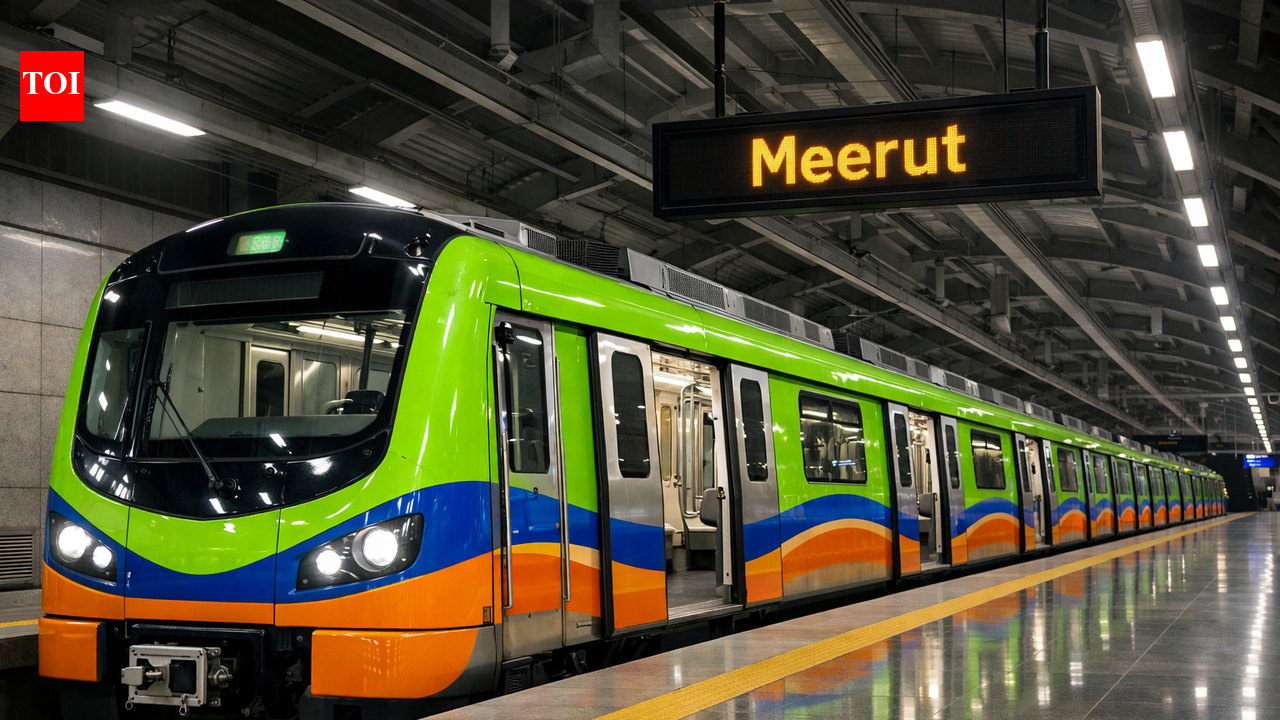
Meerut residents, all set for India’s fastest metro? Meerut is preparing to launch a metro network that officials say will set a new benchmark for speed in the country. With a maximum operational speed of 120 kmph, the upcoming Meerut Metro is expected to sharply cut travel time across the city. The corridor will stretch 21 kilometres from Meerut South to Modipuram and include 12 stations. According to an official cited by PTI, commuters will be able to cover the full route in about 30 minutes, with trains halting at every station along the way.In a first for India, the metro will operate on the same tracks and infrastructure as the semi-high-speed Namo Bharat trains. Officials said that this shared system will create an integrated transport model, bringing together regional rapid transit and city metro services within a single framework.The trains have been designed with stainless-steel bodies and a lightweight structure, finished in a fluorescent green, blue and orange colour scheme. Each three-coach train is energy-efficient and fitted with regenerative braking systems. They are also compatible with Automatic Train Protection and Automatic Train Operation technologies, the official said.

Key features:

  • Every fully air-conditioned train will carry more than 700 passengers, including seating for 173 commuters.
  • The coaches will feature both transverse and longitudinal cushioned seating.
  • Facilities such as luggage racks, USB charging ports and reserved seats for women, senior citizens and passengers with disabilities have been included.
  • CCTV surveillance will cover both stations and trains, while platform screen doors will be installed at all stations.
  • Lifts, wheelchair spaces and designated areas for stretchers form part of the universal access features, the official added.

The project is expected to improve daily commuting, strengthen connectivity and boost economic and social activity in Meerut. The official said that PM Modi will soon inaugurate the services, making Meerut the fifth city in Uttar Pradesh to have a metro network.Until now, the highest operational speed achieved on an Indian metro corridor has been 110 kmph on the Delhi Airport Express Line.


Source link

EXCLUSIVE | Kerala to Canada to T20 World Cup: Joji Varghese’s dream meeting with Sanju Samson | Cricket News


EXCLUSIVE | Kerala to Canada to T20 World Cup: Joji Varghese’s dream meeting with Sanju Samson
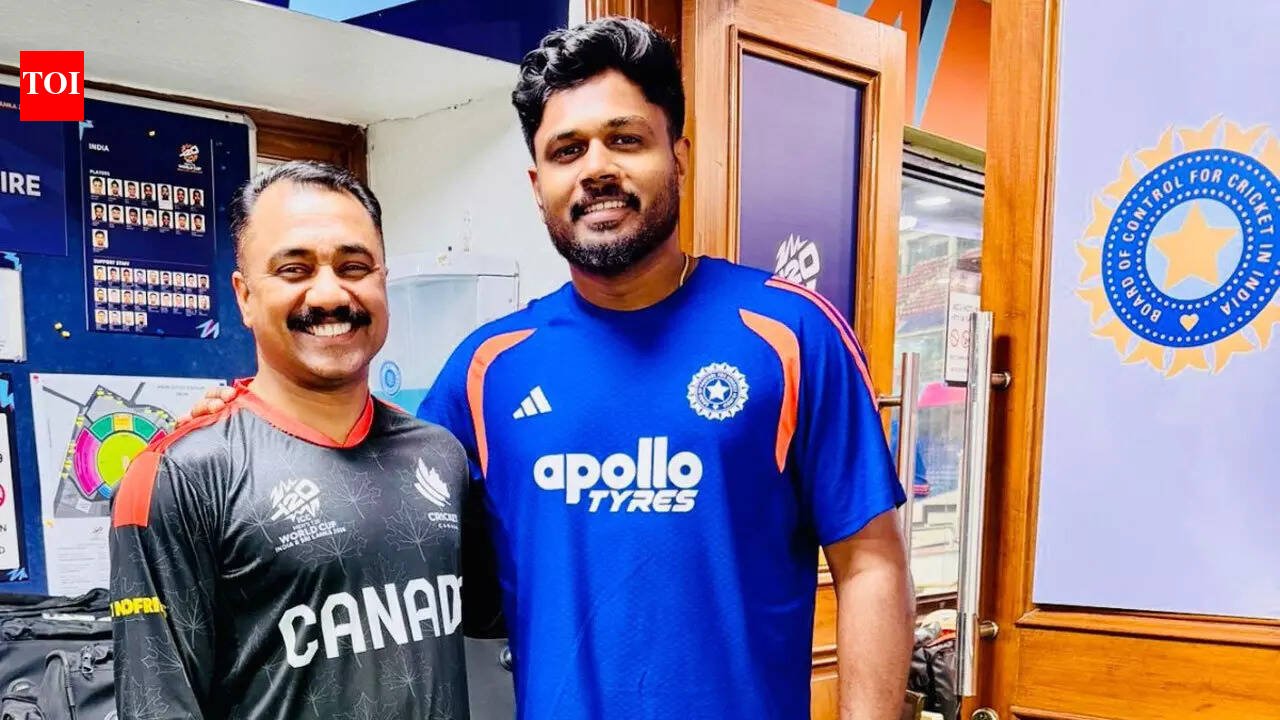
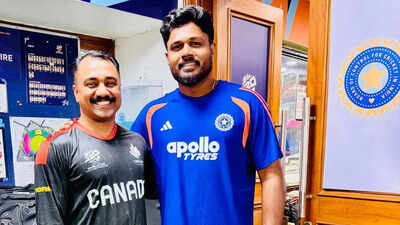
Joji Varghese with Sanju Samson

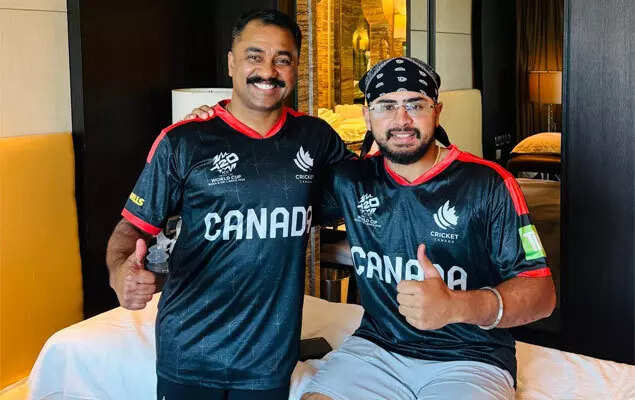
NEW DELHI: In 2017, Joji Varghese packed his luggage, left Thiruvananthapuram forever, and flew to Canada. He had obtained a Canadian PR — a challenging but necessary step to secure a bright future for his children. His wife had been working as a nurse in Italy, but language barriers made settling there difficult. A long-term vision, his children’s future, and a decent life — these were all in Joji’s mind, and hence he chose Canada. While applying for PR, he needed a profession to qualify and chose a six-month massage therapy course. The course eventually helped him secure permanent residency in Canada.Go Beyond The Boundary with our YouTube channel. SUBSCRIBE NOW!He moved to Canada and started living in Brampton, near Toronto.He had achieved all his dreams by then except one — meeting his favourite cricketer, Sanju Samson, whom he had watched play from afar at the same college where he worked as a physical education teacher.

Thomas Draca exclusive: Hardik Pandya, ‘special’ pendant and T20 World Cup dream

Fate, it seems, had its own plans. Destiny served that dream on a platter to Joji, and he became emotional.Over time, Joji made a name for himself as a skilled massage therapist in Canada and later got an opportunity to work with Cricket Canada. Now, he is travelling with the Canadian team for the T20 World Cup 2026 in India. Wearing the Canada jersey, he moves from one corner of a cricket ground to another, meeting cricketers from all over the world and cherishing every moment of his homecoming.Interestingly, his long-cherished dream was fulfilled when India and Canada were scheduled to practice at the Arun Jaitley Stadium recently in different time slots, and Joji got to meet his hero — Sanju Samson.“I was destined to meet him. It’s nothing short of a dream story for me. Finally meeting Sanju was truly a dream come true,” Joji told TimesofIndia.com in an exclusive interview. “Back when he was a college student, I would often see him on campus because we were in the same college. He was at Mar Baselios Engineering College in Thiruvananthapuram for his bachelor’s degree, and I was in the Sports Department in the same campus.

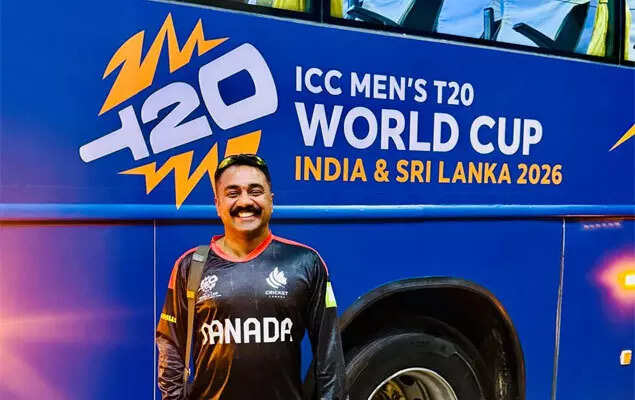
Canada

Joji Varghese with Canada cricket team captain Dilpreet Bajwa

“When I learned that Canada and India were sharing the same practice session, I was really excited. And when I finally saw him on the ground, it became one of the most memorable moments of my life that I will cherish forever. Our conversation took place after his warm-up session when he came to the dressing room. Sanju was extremely humble, approachable, and down-to-earth. When I told him I was from Kerala, he immediately smiled, addressed me as ‘Chetta,’ and asked, ‘Sugamano?’—instantly creating a personal and emotional connection. Despite being such a big international star, he interacted with great simplicity and respect,” he said.“We spoke about Canadian cricket and our journeys. Sanju also has a massive fan following in Canada. The Indian community there, as well as many members of the Canadian team, admire him deeply for his batting consistency and calm leadership. Among young cricketers and fans of Kerala origin, his popularity continues to grow. Every weekend, people form teams and play cricket, and Sanju is a big inspiration for them,” Joji added.Joji has also worked with several international cricketers including Rassie van der Dussen, Dwaine Pretorius, Moeen Ali, Shane Bond, Tim Southee, Yuvraj Singh and Mark Chapman.

Joji Varghese

JOJI’S JOURNEY: KERALA TO CANADAWith his wife working in Italy, Joji managed both children while continuing his job in Thiruvananthapuram.Both Joji and his wife applied for Canadian PR, and once they received it, they didn’t look back. The decision was emotional, but considering the future of their children, they took this bold step.“My daughter missed her mother a lot. We needed money at that time, so my wife had to leave. In Italy, you need to know Italian if you apply for PR. That’s why we chose an English-speaking country, and we chose Canada. My wife is in the medical field, so she easily got PR, and I did a sports massage therapist course. Because of the demand, I got an opportunity too,” he said.“Now, I have four kids. My daughter is 16, my second child, a son, is 13, and I have twin boys who are six years old,” he added.“I worked in a private company and then got the opportunity with the Global T20 Canada tournament. That was a big opportunity for me. Later, I got an offer with Cricket Canada, and with the help of the cricket board, I am now travelling to India,” he said.“Currently, it’s minus 30 degrees in Canada. Cricketers need extra attention in such conditions. We came in the first week of January to Sri Lanka for a practice session to adapt to the climate. We trained there for a whole month,” he added.

Source link

Who is Elana Meyers Taylor’s husband Nic Taylor? Inside Winter Olympics bobsleigh gold medalist’s love story, children, comeback and more | International Sports News


Who is Elana Meyers Taylor’s husband Nic Taylor? Inside Winter Olympics bobsleigh gold medalist’s love story, children, comeback and more (via Nic Taylor/ Instagram)

American bobsledder Elana Meyers Taylor created history at the Milano Cortina 2026 Winter Olympics on February 16. The 41-year-old won the women’s monobob and secured her first Olympic gold medal. It was the sixth Olympic medal of her career. The achievement tied her with speed skating legend Bonnie Blair for the most Winter Olympic medals by an American woman. The win was an emotional moment for her. She won after years of near misses, injuries, and motherhood challenges.Behind her success stands her husband, Nic Taylor. Taylor is a fellow bobsledder and coach. He has been closely involved in her training and recovery. The couple share both sporting and family responsibilities while raising two children. Nic’s experience as an athlete and strength coach has helped Elana to extend her career into her 40s. Their partnership has become a major part of her comeback story and Olympic triumph.

Nic Taylor’s support for Elana Meyers Taylor and their unique love story

Nic Taylor is a professional bobsledder, chiropractor, and conditioning coach. He first competed as a track athlete at Cal State Northridge before moving into bobsledding in 2011. He later became part of Team USA’s program and even served as an Olympic alternate in 2018 and 2022. In 2014, Nic and Elana competed together in a mixed-gender four-person bobsled team, making history in international competition.Their relationship began with a simple phone call. Nic contacted the U.S. Bobsled and Skeleton Federation after losing paperwork, and Elana answered while she was an intern. They talked for hours without meeting. Soon after, they met in person at the Lake Placid Olympic Training Center and started dating the same day. Nic quickly felt he wanted to spend his life with her.Nic proposed in January 2013 when Elana stood on the podium after winning a World Championship silver medal. They married in April 2014 in a ceremony inspired by bobsledding. Today, Nic designs her workouts and supports her competition schedule while also working as a chiropractic doctor with the Sacramento Kings.The couple have two sons, Nico and Noah, both born with hearing impairment. They travel together during the bobsled season and communicate using sign language and cochlear implants. Elana Meyers Taylor once considered retirement after childbirth. However, she returned for the 2026 Olympics and won gold. Her success showed her determination. While her beau’s guidance remained central to her remarkable achievement.


Source link