Breaking News
‘Teen driving at 160 kmph’: How speeding SUV triggered chain collision on Bengaluru; 6 students among 7 dead | Bengaluru News


Image Credit: TOI

BENGALURU: What was meant to be an early-morning joyride turned into a tragedy of unimaginable proportions when a “speeding” SUV was reduced to a mangled heap of metal and shattered glass, snuffing out seven lives — six students, five of them minors, and a bike rider — near Kambalipura Gate in Hoskote taluk of Bengaluru Rural district on Friday.After hitting a bike, the SUV rear-ended a moving truck. In a matter of moments, the Dobbaspet-Hoskote Satellite Town Ring Road (STRR) was transformed into a chilling scene of devastation. Police said the accident occurred between 4.15am and 4.30am.

Deadly Joyride: Teen Driving SUV At 160 Kmph Triggers Chain Crash In Bengaluru, 6 Students Dead

A senior police officer told TOI the SUV was mangled beyond recognition, with all its six occupants found dead inside the vehicle. The deceased were identified as Ahram Sharif, 16; Ashvin Nayar, Eethan George, Ayan Ali, Bharath – all 17 years old; Mohammed Farhan Shaik, 18; and Gagan, 26.Also see: (Photos) 160kmph on 100kmph road: How a joyride ended in 7 fatalities in BengaluruWhile Gagan was riding a bike, the other six were travelling in an XUV 700. Balasubramaniam, 32, the driver of the truck, was injured.

-

About 15 minutes after the multi-vehicle crash, a Brezza headed towards Bengaluru airport rammed into the truck’s detached axle and wheel housing still lying on road. The car was damaged and its two occupants suffered minor injuries. Naresh, who was driving the Brezza, alerted police. Police said the six students were heading towards Devanahalli from Hoskote when, near Kambalipura Gate, Ayan — who was reportedly driving the XUV 700 at 150-160kmph — lost control while speeding and rammed into the bike ridden by Gagan, flinging him into the air. He died on the spot.

-

SUV scraped against barrier for 150 metres

The impact was so severe that the truck’s rear axle and housing broke and separated, causing the heavy vehicle to veer off the main carriageway and on to the service road before it toppled.The truck driver, though, escaped with minor injuries. Chandrakanth MV, SP of Bengaluru Rural, said: “After hitting the truck, the SUV crashed into a crash barrier and scraped against it for almost 150m before coming to a halt.”

-

Ashvin, a resident of Kothanur, and Eethan, from Hulimavu, were I PU students at RV PU College. Ahram, a resident of HV R Layout, and Ayan, of Kothanur, were Class 10 students at CMR School. Bharath, a resident of Frazer Town, was a Class 10 student at Shobhana Memorial School, while Mohammed, from Kammanahalli, was pursuing Class 10 through a correspondence course. Gagan, a resident of Devanayakanahalli in Channarayapatna taluk, was a warehouse supervisor.Also read: Bengaluru multi-vehicle collision: Family loses breadwinner in tragedy; 7 dead

Speed limit: 100kmph

The posted speed limit on STRR is 100 kmph.Despite the presence of CCTV cameras and speed radars along the highway, officials were unable to immediately obtain specific footage of the crash.Balasubramani, the driver of the truck that was rear-ended by the SUV, said the impact was sudden and severe. “The road was calm and I was moving steadily in my lane when my vehicle was hit from behind and toppled within seconds. I lost consciousness,” he said.Also read: ‘I thought he was studying’: Secret dawn drive turns fatal for 6 boys in BengaluruWhen he came to and looked around from the overturned truck, he was stunned by the scale of the destruction. “The force of the collision was so intense that my truck’s axle and the entire housing were torn apart. I couldn’t believe what I was seeing,” he said from his hospital bed.


Source link

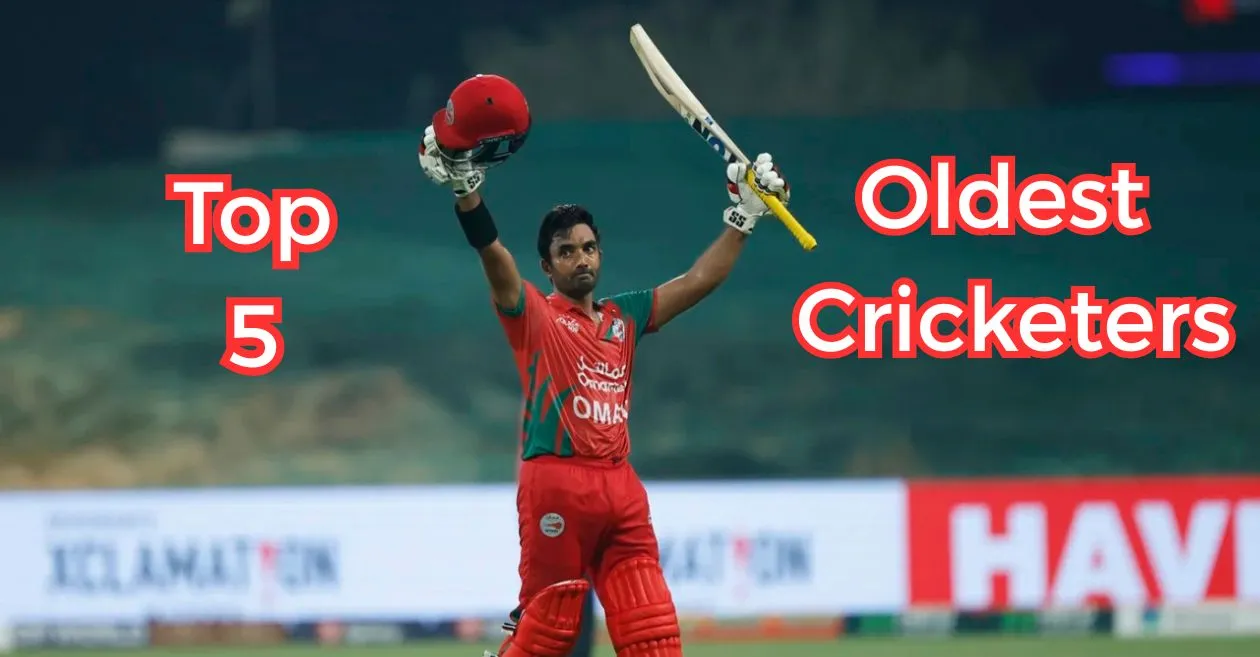
Top 5 oldest cricketers to play in the ICC Men’s T20 World Cup ft. Aamir Kaleem


In the high-octane world of T20 cricket, where power hitting and lightning-fast reflexes are usually the domain of the young, a group of seasoned veterans has consistently defied the biological clock. The T20 World Cup, often seen as a young man’s game, has witnessed several “golden oldies” proving that skill, temperament, and fitness can triumph over age. These players have not just participated; they have left an indelible mark on the tournament’s history, inspiring a generation of cricketers to prolong their careers through sheer discipline.

From wily spinners to steady all-rounders, these icons have showcased the associate spirit and the enduring class of major cricketing nations. On February 9, 2026, the record books were rewritten once again when Oman’s Aamir Kaleem stepped onto the field, reminding the world that the fire of competition doesn’t fade with time.

  1. Aamir Kaleem (Oman) – 44 years, 81 days
(Image source: X)

In the 2026 edition of the T20 World Cup, Oman’s Kaleem etched his name into the annals of cricket history. At the age of 44 years and 81 days, he became the oldest player ever to feature in the tournament during a match against Zimbabwe in Colombo. A versatile all-rounder known for his slow left-arm orthodox bowling and gritty batting, Kaleem was a late addition to the squad as an injury replacement. Despite the pressure of the big stage, his inclusion was a testament to his longevity in the Associate circuit. Kaleem, who debuted in 2015, has been a cornerstone of Omani cricket, and his record-breaking appearance at the SSC Ground remains a beacon of hope for veteran cricketers globally.

  1. Ryan Campbell (Hong Kong) – 44 years, 34 days
Ryan Campbell oldest player in t20 world Cup
(Image source: X)

Before Kaleem’s ascent, the record was held by Ryan Campbell, a man whose career trajectory was as unique as his batting style. Campbell originally played for Australia in the early 2000s, famously known for being the man who pioneered the “scoop” shot. However, it was with Hong Kong in the 2016 T20 World Cup that he made history. At 44 years and 34 days, Campbell opened the batting against Scotland in Nagpur. His transition from an Australian international to a veteran leader for Hong Kong remains one of the most heartwarming stories in cricket. His presence provided invaluable experience to a growing Hong Kong side, proving that tactical brilliance is timeless.

Also READ: Top 5 Associate Nations with most wins in T20 World Cup ft. Netherlands 

  1. Frank Nsubuga (Uganda) – 43 years, 285 days
Frank Nsubuga oldest player in t20 world Cup
(Image source: X)

Uganda’s Frank Nsubuga is the definition of a cult hero in Associate cricket. Making his appearance in the 2024 T20 World Cup at the age of 43, Nsubuga didn’t just show up; he dominated. During Uganda’s historic first-ever World Cup win against Papua New Guinea, Nsubuga delivered one of the most economical spells in the tournament’s history, conceding just 4 runs in his 4 overs while picking up 2 wickets. Having played for Uganda since 2001, Nsubuga’s journey spanned over two decades of the country’s cricketing evolution. His fitness levels, often attributed to a lifelong commitment to a healthy lifestyle, allowed him to compete with players half his age.

  1. Brad Hogg (Australia) – 43 years, 45 days
Brad Hogg oldest player in T20 world cups
(Image source: X)

Brad Hogg is perhaps the most famous name on this list, representing a full member nation at an age when most players have long since moved into the commentary box. The left-arm chinaman bowler had retired from international cricket in 2008, only to make a sensational comeback through the Big Bash League. His performances were so potent that he was recalled to the Australian national side for the 2014 T20 World Cup in Bangladesh. At 43 years and 45 days, his last appearance came against Pakistan. Hogg’s trademark tongue-poking delivery stride and infectious energy made him a fan favorite, and his 100+ T20 wickets after the age of 40 remain a staggering statistical feat.

  1. Khurram Khan (UAE) – 42 years, 273 days
Khurram Khan oldest players in t20 world cup
(Image source: X)

Khurram Khan is widely regarded as the greatest cricketer to ever represent the United Arab Emirates. A prolific left-handed batter and a reliable left-arm spinner, Khurram led the UAE into the 2014 T20 World Cup. At 42 years and 273 days, he faced Zimbabwe in Sylhet, showcasing the same elegance that had defined his decade-long career. Interestingly, Khurram balanced his cricket career while working a full-time job as a flight purser for Emirates Airlines. His ability to perform at the elite level while managing professional commitments made him an inspiration for amateur and associate cricketers alike.

Also READ: Top 5 lowest totals in ICC Men’s T20 World Cup history


Source link

Dubai developers use star power to amplify India outreach


Dubai developers use star power to amplify India outreach

In Dubai’s increasingly competitive real estate market, celebrity endorsements are emerging as a key marketing tool, with developers turning to Bollywood stars to attract Indian buyers and investors.The shift comes at a time when the emirate is entering a crucial phase, with nearly 83,000 new homes scheduled for completion this year. As supply rises, developers are moving beyond traditional sales pitches centred on amenities and views, instead marketing an aspirational lifestyle linked to the “Dubai dream” — often fronted by familiar faces from Indian cinema.

Celebrity-led marketing push

In recent months, several developers have signed high-profile Bollywood actors, transforming marketing campaigns into star-driven branding exercises.Luxury developer DAMAC Properties has brought on actors Alia Bhatt and Ranbir Kapoor to promote its premium residential portfolio, targeting high-net-worth individuals (HNIs) in India as well as the Indian diaspora. Danube Properties has adopted a broader strategy, appointing Shah Rukh Khan as its global brand ambassador while also collaborating with Kartik Aaryan to appeal to younger, mid-market buyers.Imtiaz Developments has partnered with Hrithik Roshan to position its projects as design-led luxury offerings, while HRE Development recently launched a project featuring Salman Khan as the brand’s face.Industry observers say the approach reflects the growing importance of emotional branding in a crowded market.

Bollywood and the ‘trust’ factor

For Indian buyers evaluating overseas property investments, familiarity plays a significant role. Real estate experts say celebrity endorsements help build trust and recall in a market that can otherwise appear complex to first-time international investors.“The celebrity becomes a differentiator in a crowded marketplace. Aspirational branding helps developers command pricing power and achieve faster sales absorption,” said Sankey Prasad, Chairman of Sterling Ark Holding.Dubai’s investment appeal is also supported by financial considerations. Rental yields in Dubai typically range between 6% and 10%, compared with 2% to 4% in major Indian cities such as Delhi and Mumbai. The absence of tax on rental income and capital gains, along with long-term residency options such as the 10-year Golden Visa for investments above AED 2 million, continues to draw Indian investors.

Marketing strategy amid rising supply

Analysts say the growing reliance on celebrity endorsements is also a response to an expanding supply pipeline, Economic Times reports. With a large number of residential units expected to be completed between 2026 and 2027, concerns about oversupply have emerged in certain micro-markets, including Jumeirah Village Circle and Business Bay.Developers are using star-led campaigns to differentiate projects, shorten sales cycles and encourage existing Indian expatriates in Dubai to shift from renting to ownership.

Buyers urged to focus on fundamentals

Despite the marketing push, real estate advisors caution buyers against relying solely on celebrity appeal.“A celebrity can enhance brand recall, but it cannot compensate for weak fundamentals such as poor connectivity, unrealistic pricing or execution risks,” said Ritu Kanth Ojha, a Dubai-based real estate advisor.As Dubai’s property market navigates a high-supply phase, industry experts say investment decisions should continue to be driven by location, developer track record and long-term value rather than promotional appeal.


Source link

T20 World Cup: Lorcan Tucker’s 94 helps Ireland clinch 96-run win against Oman | Cricket News


T20 World Cup: Lorcan Tucker's 94 helps Ireland clinch 96-run win against Oman
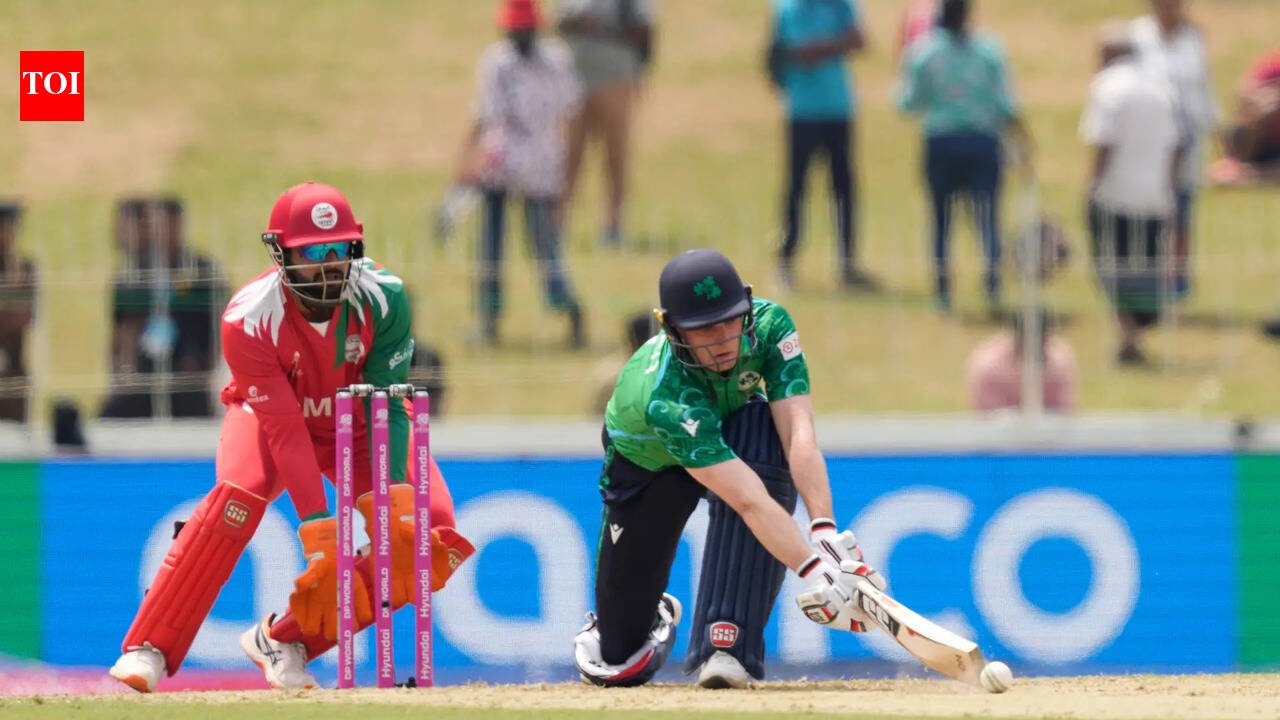
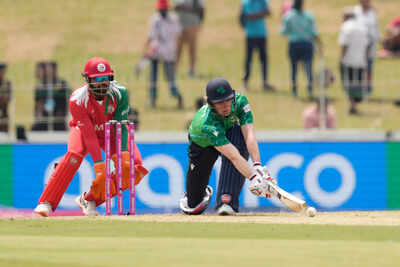
Lorcan Tucker vs Oman (AP Photo/Eranga Jayawardena)

Ireland delivered a dominant all-round performance to crush Oman by 96 runs in their Group B match, powered by a stunning innings from captain Lorcan Tucker and a disciplined bowling display.Sent in to bat, Ireland had a shaky start, losing early wickets and slipping to 47 for 3 as Oman’s spinners applied pressure.

What will be India’s playing XI against Pakistan?

Shakeel Ahmed struck early, removing Tim Tector, Ross Adair and Harry Tector, while veteran Aamir Kaleem added to Ireland’s troubles by dismissing Curtis Campher. Oman looked in control at that stage, but the momentum completely changed once Tucker settled in.Tucker played a sensational knock, smashing 94 off just 51 balls with 10 fours and four sixes. He built a crucial 101-run partnership with Gareth Delany, who scored a quick 56, to steady the innings. Later, Tucker and George Dockrell launched a brutal late assault, adding 70 runs in just 19 balls. Dockrell’s explosive 35 off nine balls included five sixes, and Ireland went on a run spree in the final overs, scoring 86 runs in the last four overs. Their innings ended at a massive 235 for five, the highest team total of the tournament so far.In reply, Oman showed some fight through Aamir Kaleem (50) and Hammad Mirza (46), but once both were dismissed, the chase collapsed. Eight Oman batters failed to reach double figures, and the team was bowled out for 139 in 18 overs. Josh Little led the bowling with figures of 3 for 16, supported by Matthew Humphreys, Barry McCarthy and George Dockrell.Despite the big win, Ireland remained fourth in the group standings, while Oman suffered their third straight loss.


Source link

China to remove tariffs on most African imports from May 1, expands zero-duty policy across continent


China to remove tariffs on most African imports from May 1, expands zero-duty policy across continent

China will remove tariffs on imports from almost all African countries starting May 1, Chinese President Xi Jinping said, according to state media, in a move expected to deepen trade and economic engagement between Beijing and the continent, AFP reported.China already operates a zero-tariff policy for imports from 33 African countries, but Beijing had announced last year that it would expand the policy to all 53 African countries with which it has diplomatic relations.Under the expanded framework, zero levies will apply to all African nations except Eswatini, which maintains diplomatic relations with Taiwan. China claims the democratic island as its own and has not ruled out the use of force to assert control over it.

Trump Threatens Canada With 100% Tariff Over China Trade Push After Carney’s Beijing Visit

China remains Africa’s largest trading partner and has played a major role in infrastructure development across the continent through its Belt and Road Initiative.The move comes at a time when several African countries are diversifying trade relationships, particularly after US President Donald Trump imposed steep tariffs globally last year.Xi said the zero-tariff arrangement “will undoubtedly provide new opportunities for African development”, while announcing the timeline as leaders across Africa gathered in Ethiopia for the annual African Union summit.The expansion of tariff-free access is expected to strengthen China’s economic influence in Africa while boosting trade flows and market access for African exporters.


Source link

Do jism, ek jaan? No thanks: How Gamophobia is changing the language of love | India News


Do jism, ek jaan? No thanks: How Gamophobia is changing the language of love

In a world where relationships have become both more visible and more complex, a curious psychological phenomenon has been quietly gaining attention — gamophobia, the fear of commitment or marriage.It is more than just the occasional cold feet, jitters before a proposal or hesitation about settling down. Gamophobia is a deeply rooted, lived experience that can colour every connection, shape life choices, and define what love looks like for many individuals. Increasingly, mental health professionals, writers and even everyday couples are referring to this concept not just as a quirky term, but as a genuine emotional resistance.Ankur Halder, 27-year-old IT professional, put it perfectly- Like Abhay Deol says in Zindagi Na Milegi Dobara, “mujhe do jism ek jaan nahi chahiye.” The word “gamophobia” itself comes from the Greek gamos (marriage) and phobia (fear). At its core, it speaks about the fear of marrying or entering into long-term intimate commitment. Yet, in practice, it is far more nuanced. People who struggle with gamophobia are not necessarily afraid of love or companionship. Instead, they fear the permanence, vulnerability, expectations, and potential loss of autonomy that life-long attachment can entail.But why is this fear becoming more visible now? Why are more people open to calling themselves “afraid of commitment”? Is this simply a symptom of a generation spoiled for choice, or is it rooted in deeper psychological and social shifts? And importantly — what does this look like in a place like India, where marriage still carries cultural gravity unlike many parts of the world?To explore these questions, we must go beyond the label and into the lived realities that make gamophobia resonate in the twenty-first century.

The many faces of gamophobia

Gamophobia is not a clinical diagnosis in major psychiatric manuals like the DSM-V; it is a loosely defined term used in psychological, cultural and pop-psychology circles. Yet, its emergence reflects real emotional and relational patterns that therapists see every day.For some, it manifests as anxiety or panic when conversations about the future get serious. For others, it shows up as chronic relationship sabotage — starting strong, pulling away, or falling into self-fulfilling breakups before things get too real. Some experience sleeplessness, avoidance, or physical symptoms at the thought of tying their life to another.Importantly, gamophobia is not just about fear of marriage. It can express as:

  • Fear of dependency or vulnerability
  • Fear of repeating past relational trauma
  • Fear of losing one’s identity
  • Fear of failure in love
  • Fear of societal expectations tied to marriage

For a growing number of young Indians, this fear is not abstract. It surfaces at a very specific moment — when romance begins to gather weight.

AI image

In this country, relationships rarely remain suspended in emotional possibility. They are expected to culminate. They must formalise. They must move toward marriage.And it is often at this threshold that something shifts.

When love is easy, but forever is not

Aarav, 32, who works at an MNC in Mumbai said over the past decade, he has been in three serious relationships. Each followed a similar rhythm: an intense beginning, emotional intimacy, shared vacations. For months, sometimes years, everything felt certain.Then came the conversations about meeting parents. About timelines. About “where this is heading,” and began to withdraw.“I don’t know what happens,” he says. “It’s like something switches off. I start imagining all the ways it could go wrong. What if I lose my freedom? What if I’m not ready? What if I choose wrong and can’t undo it?”Gamophobia often unfolds in exactly this way. Individuals form romantic bonds with ease. They are affectionate, attentive, emotionally engaged. But when a relationship approaches formal commitment — engagement, marriage, shared finances — anxiety spikes. The future stops feeling romantic and starts feeling irreversible.

Not equal to inability to love

One of the most persistent myths about gamophobia is that it signals emotional immaturity or incapacity for deep feeling. This assumption could not be further from the truth.People who struggle with commitment anxiety often love intensely. They may be attentive partners, emotionally available in the present, and genuinely invested in their relationships. The difficulty does not lie in affection. It lies in anticipation.For some, the fear is rooted in childhood experiences. For others, it stems from witnessing marital dissatisfaction. And for many in contemporary India, it arises from the weight of making the “right” decision in a world that offers both endless choice and irreversible consequences.In that sense, gamophobia is less about rejecting love and more about fearing a mistake that cannot be undone.A 29-year-old woman (choosing to stay anonymous) grew up watching her parents argue behind closed doors while maintaining a composed public image. Divorce was never discussed. Silence was easier than separation.“When people talk about marriage,” she says, “I don’t picture romance. I picture staying even when you’re unhappy.”Children absorb more than they realise. When marriage is modeled as endurance rather than companionship, commitment can subconsciously begin to resemble confinement.

AI image

Why fear of commitment might be growing

A culture of choice and comparison

We live in an age where options, especially romantic ones, feel infinite. Dating apps, social media, global mobility, and curated images of “the perfect relationship” create an illusion of endless possibility. When one believes that the next swipe might be better, committing to one person can paradoxically feel limiting rather than reassuring.This reflects deeper cognitive patterns of comparison, fear of missing out, and choice overload. Instead of narrowing options feeling comforting, it can trigger anxiety about losing potential alternatives forever.

Individual identity over collectivism

In recent decades, individualism has become central to people’s sense of self. Career goals, personal growth, and self-discovery are prioritized more than ever. While this is empowering, it also changes how relationships are viewed. Commitment starts to feel like a trade-off — balancing autonomy with attachment. Ankur Halder said, “I believe a healthy relationship should consist of two independent individuals choosing to be together. Relationships today have evolved, unlike older generations like say my grandparents, where partners were often overly dependent on each other. I appreciate that relationships now allow more individuality.”

Witnessing relationship breakdowns

We grow up surrounded by stories of failed marriages, divorces, and high-profile celebrity breakups. Seeing relationships fall apart shapes our ideas about commitment — making it feel risky rather than romantic.

Trauma and attachment styles

How we bond emotionally is influenced by early life experiences. People with avoidant attachment often fear losing independence in close relationships. Those with anxious attachment may fear being abandoned, even in healthy partnerships. Someone whose early friendships ended abruptly may struggle to fully commit to a partner, worrying that closeness will lead to inevitable loss.

Changing gender roles and expectations

Traditional roles, like men as sole breadwinners and women as primary caregivers, have changed, but old expectations don’t disappear overnight. Women don’t want to be bound by household duties, and years of social conditioning have made many feel that, at some point, they’ll have to sacrifice their dreams to fulfill the expectations of a relationship. People everywhere often find themselves balancing new possibilities with inherited norms, creating tension in romantic relationships as they navigate who does what, how decisions are made, and what each partner “should” contribute.

Gamophobia in India: Between tradition and modernity

In India, marriage has long been treated as a central life milestone- expected, celebrated, and often orchestrated by family. Urbanisation, increased female workforce participation, and exposure to global culture have changed how young Indians think about partnership. Emotional compatibility and personal growth matter more than ever before.At the same time, entrenched expectations persist:

  • Marriage as familial responsibility
  • Pressure to settle down early
  • Fear of “what will people say”
  • Arranged marriage traditions
  • Gendered expectations around roles

In this environment, gamophobia can take on unique contours. For some, it becomes resistance against pressure, a boundary against societal coercion. For others, it reflects genuine uncertainty about whether traditional marital structures align with their evolving identities.Adding another layer of complexity, leaving a partner in India is often socially difficult. Relationships are not just between two individuals — they are entwined with family expectations, social judgment, and, in many cases, children. In India, many hesitate to end relationships even when they feel unfulfilled, fearing the stigma of separation or the impact on their children. This has created a common misconception: staying despite unhappiness is often interpreted as commitment or proof of love, when it may instead reflect social pressure and obligations.

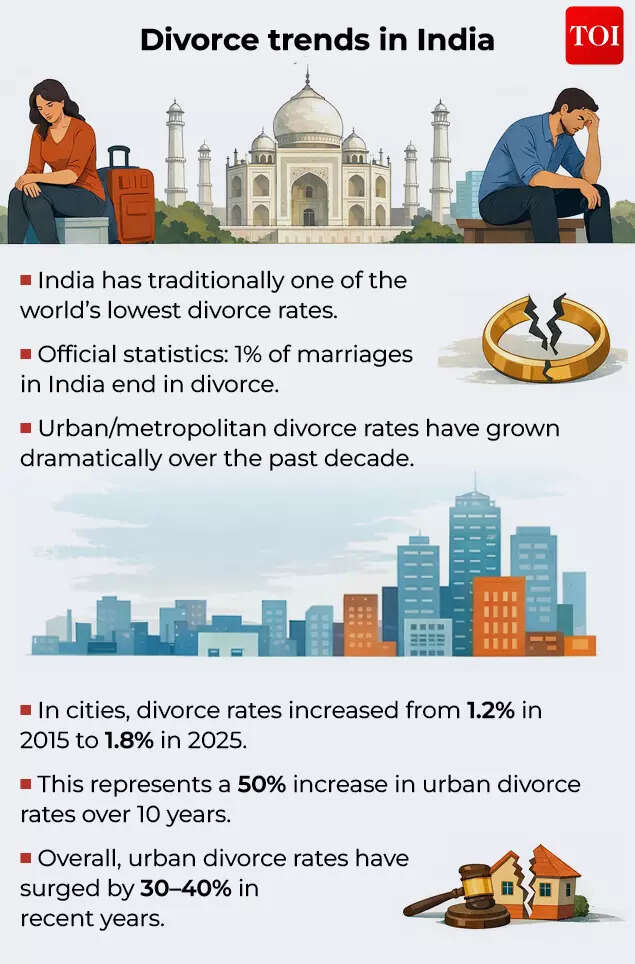
Divorce trends in India

Intergenerational values also play a role. Many Indian families prize endurance and sacrifice in relationships. While admirable, these ideals can unintentionally silence emotional needs. Young adults may find themselves torn between honoring tradition and honoring their own readiness.Mental health awareness in India is still developing. Anxiety around commitment may be dismissed as stubbornness or irresponsibility rather than understood as emotional complexity. Without language for their fears, many individuals internalise guilt instead of seeking support.

Not all fear is pathology

It is crucial to recognise that gamophobia is not always dysfunction. Fear can be protective, especially after painful or unstable relationships. It may signal the need for clarity, healing, or stronger identity formation.In a society that often equates marriage with success, choosing to pause or question is not necessarily avoidance. It may be discernment.Challenging conventional marriage norms, Ankur said, “I have a somewhat sceptical view of marriage. While I understand that it works well for many people, most marriages I’ve observed seem complicated and full of ongoing issues. That has made me question whether the institution itself is necessary, or whether commitment can exist in other forms.”Gamophobia is a mirror. It reflects personal insecurities and broader cultural change. It reminds us that commitment is not merely a social contract, but an emotional decision shaped by history, identity, and context.In India and beyond, the increasing visibility of commitment anxiety does not mean a generation is incapable of love. It suggests that people are thinking more deeply about what love demands.And perhaps, in asking those difficult questions, we are not drifting away from commitment but are learning to approach it with greater awareness.Love, after all, is not weakened by reflection.It is strengthened by choice.




Source link

‘Clearly dishonest’ ads that Sam Altman said made him ‘laugh’ seems to have worked well for Anthropic, the company that made fun of ChatGPT


'Clearly dishonest' ads that Sam Altman said made him 'laugh' seems to have worked well for Anthropic, the company that made fun of ChatGPT

OpenAI CEO Sam Altman was not pleased with Anthropic’s Super Bowl ads making fun of ChatGPT. But it seems they did the job that OpenAI’s arch-rival Anthropic intended to. According to data analyzed by BNP Paribas, the maker of the Claude chatbot Anthropic saw visits to its site jump 6.5% following its Super Bowl advertisement that made fun of rival OpenAI’s decision to bring ads to ChatGPT. As per the report, the Claude gain, which took it into the top 10 free apps on the Apple App Store, beat out chatbot and artificial intelligence competitors OpenAI, Google Gemini and Meta. Daily active users also reportedly saw an 11% jump post-game, the most significant among AI companies. OpenAI’s ChatGPT had a 2.7% bump in daily active users after the Super Bowl and Gemini added 1.4%. But what is important to note here is that Claude’s user base is still much smaller than ChatGPT and Gemini.Advertisements from artificial intelligence brands took center stage at the big game, which brought in an audience of 125 million in the U.S., as platforms made their pitch to lure more customers in a competitive market that’s showing no signs of slowing.Anthropic’s Super Bowl ads that mae un of OpenAI for showing adsAnthropic spent millions of dollars on ads during America’s National Football League championship game to slam rival OpenAI for its plan to sell ads on its ChatGPT. Anthropic’s 30-second ads took a thinly veiled jab at OpenAI’s intentions to introduce ads in ChatGPT. The punchline: “Ads are coming to AI. But not to Claude,” the name of Anthropic’s chatbot.

Sam Altman called Anthropic’s ads ‘clearly dishonest’

Not surprisingly, OpenAI CEO Sam Altman was not happy with Anthropic’s Super Bowl ad campaign. In a post to social media platform X, formerly, Twitter, Altman called the commercials “deceptive” and “clearly dishonest.”Here’s what Sam Altman wrote in his 400-word long note on Anthropic adsFirst, the good part of the Anthropic ads: they are funny, and I laughed.But I wonder why Anthropic would go for something so clearly dishonest. Our most important principle for ads says that we won’t do exactly this; we would obviously never run ads in the way Anthropic depicts them. We are not stupid and we know our users would reject that.I guess it’s on brand for Anthropic doublespeak to use a deceptive ad to critique theoretical deceptive ads that aren’t real, but a Super Bowl ad is not where I would expect it.More importantly, we believe everyone deserves to use AI and are committed to free access, because we believe access creates agency. More Texans use ChatGPT for free than total people use Claude in the US, so we have a differently-shaped problem than they do. (If you want to pay for ChatGPT Plus or Pro, we don’t show you ads.)Anthropic serves an expensive product to rich people. We are glad they do that and we are doing that too, but we also feel strongly that we need to bring AI to billions of people who can’t pay for subscriptions.Maybe even more importantly: Anthropic wants to control what people do with AI—they block companies they don’t like from using their coding product (including us), they want to write the rules themselves for what people can and can’t use AI for, and now they also want to tell other companies what their business models can be.We are committed to broad, democratic decision making in addition to access. We are also committed to building the most resilient ecosystem for advanced AI. We care a great deal about safe, broadly beneficial AGI, and we know the only way to get there is to work with the world to prepare.One authoritarian company won’t get us there on their own, to say nothing of the other obvious risks. It is a dark path.As for our Super Bowl ad: it’s about builders, and how anyone can now build anything.We are enjoying watching so many people switch to Codex. There have now been 500,000 app downloads since launch on Monday, and we think builders are really going to love what’s coming in the next few weeks. I believe Codex is going to win.We will continue to work hard to make even more intelligence available for lower and lower prices to our users.This time belongs to the builders, not the people who want to control them.


Source link

Access Denied


Access Denied

You don’t have permission to access “http://www.ndtv.com/world-news/bjp-bangladesh-jatiya-party-makes-its-mark-in-bangladesh-general-elections-wins-1-seat-andaleeve-rahman-partho-bnp-tarique-rahman-11002179” on this server.

Reference #18.c4f5d217.1771065682.58cb0018

https://errors.edgesuite.net/18.c4f5d217.1771065682.58cb0018


Source link

Cabinet clears Rs 1 lakh crore Urban Challenge Fund to drive market-led city infrastructure push


Cabinet clears Rs 1 lakh crore Urban Challenge Fund to drive market-led city infrastructure push

The Union Cabinet has approved the launch of the Urban Challenge Fund (UCF) with a total Central Assistance of Rs 1 lakh crore, aimed at driving market-linked urban infrastructure development and catalysing investments worth around Rs 4 lakh crore over the next five years.The fund marks a shift in urban development model away from grant-based financing towards “market-linked, reform-driven and outcome-oriented infrastructure creation, according to government statement.The scheme will be operational from FY 2025–26 to FY 2030–31, with an extendable implementation window till FY 2033–34.

Market-led financing model with reform-linked funding

Under the framework, Central Assistance will cover 25% of the project cost, while at least 50% of funding must be mobilised from market sources such as municipal bonds, bank loans and Public–Private Partnerships (PPPs). The remaining portion can be funded by states, Union Territories, urban local bodies or other sources.The fund is designed to leverage private investment, strengthen municipal finance systems and improve governance, while supporting citizen-centric urban reforms and high-quality infrastructure delivery.The PIB statement said the fund aims to create “resilient, productive, inclusive and climate-responsive cities”, positioning urban centres as key drivers of India’s next phase of economic growth.

Rs 5,000 crore credit support to boost smaller cities’ market access

A dedicated Rs 5,000 crore corpus will be used to enhance the creditworthiness of 4,223 cities, including Tier-II and Tier-III urban centres, particularly those accessing market financing for the first time.The Cabinet has also approved a Credit Repayment Guarantee Scheme of Rs 5,000 crore to support urban local bodies in Northeastern and hilly states, and smaller cities with populations below one lakh.The scheme will provide a Central guarantee of up to Rs 7 crore or 70% of the loan amount, whichever is lower, for first-time loans. For subsequent loans, the guarantee will be up to Rs 7 crore or 50% of the loan amount.This is expected to support projects worth at least Rs 20 crore in smaller cities initially and Rs 28 crore in subsequent phases.

Challenge-based project selection

Projects will be selected through a competitive challenge-based framework focusing on transformative impact, sustainability and reform orientation.Funding will be linked to reform milestones, defined outcomes and performance benchmarks. Continued fund release will depend on sustained reform progress, with monitoring to be carried out through a digital portal of the Ministry of Housing and Urban Affairs.Focus on growth hubs, city redevelopment and water infrastructureThe fund will support projects across three major verticals:

  • Cities as Growth Hubs: Integrated spatial and economic planning, transit-linked development, urban mobility and infrastructure projects to improve economic competitiveness.
  • Creative Redevelopment of Cities: Revamp of central business districts, heritage zones, brownfield regeneration, transit-oriented development and climate-resilient urban upgrades.
  • Water and Sanitation: Upgradation of water supply, sewerage and stormwater systems, integrated solid waste management, legacy waste remediation and rurban infrastructure.
  • Wide coverage across urban centres: The fund will cover all cities with populations of 10 lakh or more, all state and Union Territory capitals, and major industrial cities with populations above one lakh.

Smaller cities, including those in Northeastern and hilly states, will be supported through the credit guarantee component, with the government indicating that “in principle all cities will be covered under UCF”.

Reform-driven urban governance

Funding will be linked to reforms across governance, financial systems, service delivery and urban planning, including digital governance, credit strengthening measures and transit-oriented development.Projects will be evaluated based on their ability to deliver economic, social and climate outcomes, including revenue generation, private investment mobilisation, job creation, improved safety, inclusiveness and service delivery.The government expects the Urban Challenge Fund to catalyse large-scale private investment, improve urban governance and accelerate the development of future-ready cities aligned with national development priorities.


Source link

Govt approves Rs 10,000 crore Startup India Fund of Funds 2.0, key details to know


Govt approves Rs 10,000 crore Startup India Fund of Funds 2.0, key details to know

The Union Cabinet has approved the Startup India Fund of Funds 2.0 (Startup India FoF 2.0) with a total corpus of Rs 10,000 crore to mobilise venture capital for the country’s startup ecosystem.The scheme is aimed at accelerating the next phase of India’s startup growth by mobilising long-term domestic capital, strengthening the venture capital ecosystem and supporting innovation-led entrepreneurship across sectors.

Piyush Goyal Says Startup India Generated Over 21 Lakh Jobs, Credits PM Modi

The fund builds on the Startup India initiative launched in 2016, under which India’s startup ecosystem has expanded from fewer than 500 startups to over 2 lakh Department for Promotion of Industry and Internal Trade (DPIIT)-recognised startups. The year 2025 recorded the highest-ever annual startup registrations.Startup India FoF 2.0 follows the Fund of Funds for Startups (FFS 1.0), launched in 2016 to bridge funding gaps and catalyse the domestic venture capital market.Under FFS 1.0, the entire Rs 10,000 crore corpus was committed to 145 Alternative Investment Funds (AIFs). These AIFs have invested over Rs 25,500 crore in more than 1,370 startups across sectors including agriculture, artificial intelligence, robotics, automotive, clean tech, consumer services, e-commerce, education, fintech, healthcare, manufacturing, space tech and biotechnology.The first phase helped nurture first-time founders, crowd in private capital and strengthen the domestic venture capital ecosystem.

Focus on deep tech, manufacturing and early-stage innovation

Startup India FoF 2.0 will follow a targeted and segmented funding approach, focusing on:

  • Deep tech and tech-driven innovative manufacturing requiring long-term capital
  • Early-growth stage founders to reduce funding-linked early failures
  • Wider national reach beyond major metro startup hubs
  • Addressing high-risk capital gaps in priority sectors
  • Strengthening domestic venture capital, especially smaller funds

The fund is expected to support startups building globally competitive technologies, products and solutions, while boosting manufacturing, job creation and innovation-led growth.The government said the fund aligns with the Viksit Bharat @ 2047 vision, and is aimed at strengthening India’s economic resilience, innovation capacity and global competitiveness in emerging technologies and high-growth sectors.


Source link